Home Blog Page 166

Trump orders Israel to stop bombing Gaza, as Hamas agrees new proposal

0

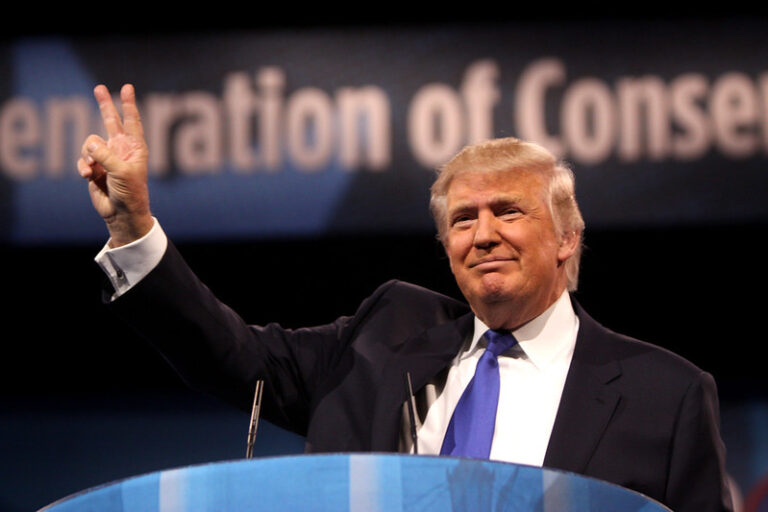
THE United States’ President Donald Trump has called on Israel to “immediately stop the bombing of Gaza” following a statement from Hamas signalling readiness to enter a ceasefire agreement under his proposed peace plan.

In a post on Truth Social on Friday, October 3, Trump said Hamas appeared prepared for “a lasting peace” and urged Israel to halt its military operations to allow the safe release of hostages. 

“Based on the Statement just issued by Hamas, I believe they are ready for a lasting PEACE. Israel must immediately stop the bombing of Gaza, so that we can get the Hostages out safely and quickly! Right now, it’s far too dangerous to do that. We are already in discussions on the details to be worked out. This is not about Gaza alone, this is about long sought,” he wrote.

The statement came hours after Hamas announced its willingness to enter negotiations through mediators for the release of hostages and hand over governance of Gaza to a Palestinian authority of independents, supported by Arab and Islamic states. 

“Other issues mentioned in President  Trump’s proposal regarding the future of the Gaza Strip and the legitimate rights of the Palestinian people are connected to a unified national position and relevant international laws and resolutions,” Hamas said.

“They will be addressed through a comprehensive Palestinian national framework, in which Hamas will participate and contribute responsibly.”

Although the group didn’t state disarmament or the exclusion of Hamas from future governance, their response showed enthusiasm for possible solutions to the nearly two-year-long war.

Israel’s Prime Minister Benjamin Netanyahu’s office confirmed that the government and military were preparing to implement the first phase of Trump’s proposal, which includes the release of hostages in exchange for Palestinian prisoners.

“In light of Hamas’s response, Israel is preparing to immediately implement the first phase of Trump’s plan for the immediate release of all hostages,” the statement was quoted to have read.

It also noted that Israel “will continue to work in full cooperation with the President and his team to end the war in accordance with the principles set forth by Israel that are consistent with President Trump’s vision.”

The ICIR reports that under Trump’s proposal, Hamas would free the remaining hostages, relinquish control of Gaza, and eventually disarm, while Israel would gradually withdraw its forces as an international stabilisation force led by Arab partners takes over. 

Israel will also “release 250 life sentence prisoners plus 1700 Gazans who were detained after October 7th 2023, including all women and children detained in that context.”

“For every Israeli hostage whose remains are released, Israel will release the remains of 15 deceased Gazans,” CNN reported the updated proposal to have read.

A temporary Palestinian authority, overseen by a global “Board of Peace,” would administer Gaza until a reformed Palestinian Authority assumes control.

The force “will train and provide support to vetted Palestinian police forces in Gaza, and will consult with Jordan and Egypt, who have extensive experience in this field.”
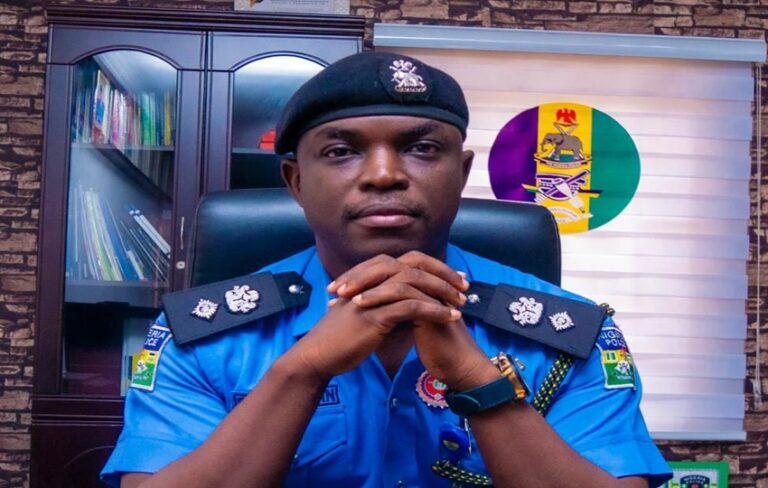

Police yet to be served court order on tinted glass permits – PRO

0

THE Nigeria Police Force (NPF) said they have not recieved the Federal High Court order halting the enforcement of tinted-glass permits.

Force Public Relations Officer, Chief Superintendent of Police (CSP) Benjamin Hundeyin, made this announcement on Saturday, October 4, in response to an existing court order that restrains the police from arresting or prosecuting motorists with tinted windows.

The ICIR had reported that the Federal High Court, in Suit No. FHC/WR/CS/103/2025: John Aikpokpo-Martins v. Inspector-General of Police & Nigeria Police Force issued an order on Friday directing the police to suspend enforcement of tinted-glass permits pending the determination of the main case.

The court order directed the police to maintain the status quo, suspending any action against motorists until the case is resolved. However, Hundeyin stated on X that the police had not yet been formally served with the order.

“While we have not been officially served the court order you’re referring to, let me, in the meantime, show point number eight (of the same order) since you left that part out and focused only on point number six. Nigerians deserve a complete picture, not a skewed one,” he wrote while attaching a picture of the court document.

The clarification came after human rights lawyer Inibehe Effiong shared excerpts of the court ruling that restrained the police from enforcing the regulation on tinted glass.

The police had earlier resumed the permit scheme in April 2023 under the Police Specialised Services Automation Project, following its suspension in 2022.

ICIR reports shortlisted for West African media excellence awards

AT least two investigative reports published by the International Centre for Investigative Reporting (ICIR) have been shortlisted among 26 finalists for the 2025 edition of the prestigious West Africa Media Excellence Awards (WAMECA 2025).

The shortlisted reports were authored by former ICIR investigative reporter Ijeoma Opara and ICIR’s Open Contracting Reporting Project fellow, Abdulrasheed Hammad.

WAMECA is an initiative of the Media Foundation for West Africa (MFWA) that seeks to promote media excellence in the sub-region.

According to the organisers, the 26 finalists were selected by a four-member jury made up of distinguished and experienced African media experts, after a rigorous review of 793 stories submitted by journalists from 15 West African countries.

“This year, the Awards received 793 entries from 15 West African countries. The entries were filed by journalists from about 600 media organisations in the West Africa region,” MFWA said in a statement.

The statement added that the winners will be announced at the awards event scheduled for Saturday, October 11, 2025, at the Alisa Hotel, Accra, Ghana.

All 26 finalists will receive a Certificate of Merit, while the ultimate winners will be honoured with plaques, certificates, and cash prizes.

Below is the comprehensive list of finalists for WAMECA 2025:

Taiwo Adebulu, The Cable, Nigeria

Fleur Birba, Sidwaya, Burkina Faso

Clinton Yeboah, Luv FM / Multimedia, Ghana

Kunle Adebajo, HumAngle, Nigeria

Patricia Sia Ngevao, Awoko Publications (SL) Ltd., Sierra Leone

Kanssouguibe Douti, Laabali, Togo

Jemilat Abdulrasheed Nasiru, The Cable, Nigeria

Yaye Awa Niang, Freelancer, Senegal

Bakare Majeed, Premium Times, Nigeria

Alfred Koroma, Concord Times Newspaper, Sierra Leone

Ijeoma Opara, International Centre for Investigative Reporting (ICIR), Nigeria

Oumarou Rabo, Sidwaya, Burkina Faso

Pape Bocar Mbow, CESTI TV, Senegal

Fousseni Saibou, Le Ténor, Togo

Folashade Ogunrinde, Premium Times, Nigeria

Mahougnon Angèle Adanle, Bénin WebTV, Benin

Al’amin Umar, HumAngle, Nigeria

Pape Ibrahima Ndiaye, La Maison des Reporters, Senegal

Ibrahim Mansur, The Cable, Nigeria

Edem Venunye Alley, Le Nouveau Reporter, Togo

Faruk Umar Shuaibu, Daily Trust, Nigeria

Daouda Zongo, Wakatsera, Burkina Faso

Theophilus Adedokun, National Record, Nigeria

Ndiémé Faye, La Maison des Reporters, Senegal

Olayide Soaga, Foundation for Investigative Journalism (FIJ), Nigeria

Abdulrasheed Hammad, Pen Press, Nigeria


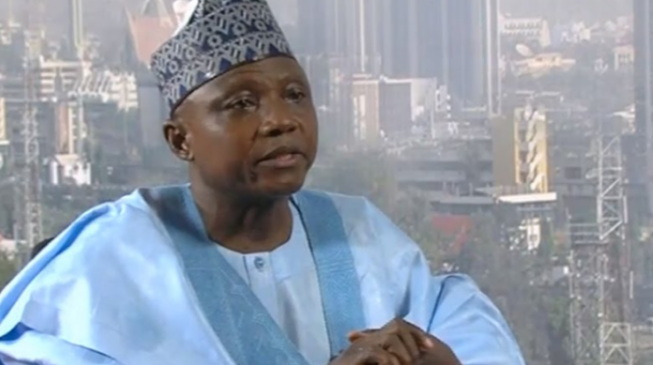
Boko Haram never nominated Buhari as mediator, says Garba Shehu

0

FORMER presidential spokesperson Garba Shehu has rejected claims by ex-President Goodluck Jonathan that Boko Haram once chose the late Muhammadu Buhari to represent the group in negotiations with the Federal Government during the peak of the insurgency.

Shehu, who served as Senior Special Assistant on Media and Publicity to Buhari, in a statement on Friday, October 3, described Jonathan’s remarks as false and politically motivated, linking them to a possible 2027 presidential ambition. 

Jonathan, at the public presentation of Scars, a book authored by former Chief of Defence Staff, Lucky Irabor (retd.), in Abuja on Friday, October 3, had said that his administration set up several committees to explore dialogue with the sect, and in one such attempt, the insurgents nominated Buhari as their preferred negotiator.

“One of the committees we set up then, the Boko Haram nominated Buhari to lead their team to negotiate with the government,” Jonathan said. “So I was feeling that, oh, if they nominated Buhari to represent them and have a discussion with the government committee, then when Buhari took over, it could have been an easy way to negotiate with them and they would have handed over their guns. But it was still there till today.”

He recalled that Boko Haram, which became violent in 2009 when he was vice president, carried out some of its deadliest attacks during his tenure, including the bombing of the United Nations headquarters in Abuja in 2011 and the abduction of over 270 Chibok schoolgirls in 2014.

The former president added that Buhari’s inability to defeat the group after assuming power showed that the crisis was more complex than often portrayed.

“I thought that after I left, within a reasonable time, General Buhari would wipe them out. But even today, Boko Haram is still there. The issue of Boko Haram is far more complex than it is often presented,” he said.

Shehu’s rebuttal

Responding to Jonathan’s claim, explained that the speculation about Buhari’s alleged nomination emerged in 2012 when a faction of Boko Haram, through a certain Abu Mohammed Ibn Abdulaziz, announced Buhari’s name alongside other northern leaders as potential mediators. 

However, Shehu noted that this claim was disowned by Abubakar Shekau, who said Abdulaziz lacked the mandate to speak for the sect.

“What led to the misleading information was that a faction of the terrorist group, possibly sponsored by Buhari’s opponents, staged a press conference in Maiduguri, Borno State, through a certain Abu Mohammed Ibn Abdulaziz, who claimed to be the Boko Haram commander in charge of Southern and Northern Borno, saying that the sect would prefer the former military leader, General Muhammadu Buhari, ex-Yobe State governor and the then Senator, now late Bukar Abba Ibrahim, first Nigerian Minister of Petroleum, Shettima Ali Monguno, also late, Chairman of the Presidential Committee on Insecurity in the North-East, Ambassador Gaji Gatimari, and other prominent members of the Borno Emirate to mediate between them and the federal government.

“Abdulaziz was roundly condemned by the leaders of Boko Haram who claimed that he had no mandate of their leader, Imam Abubakar Shekau,” he said.

Shehu recalled that in 2014, Buhari survived a Boko Haram-linked bomb attack in Kaduna that left members of his convoy injured. 

He stressed that Buhari’s campaigns consistently centred on fighting Boko Haram and restoring security to Nigeria, positioning him directly against the terrorists.

At the time, Shehu explained that Buhari’s party, the Congress for Progressive Change (CPC), also dismissed the claims, adding that the then party secretary, Buba Galadima, said Buhari was unaware of any such nomination.

He also stressed that CPC publicity secretary, Rotimi Fashakin, accused Jonathan’s administration of exploiting the claim to divert public attention from corruption allegations.

CBN working with SEC on framework for crypto regulation, says Cardoso

0

GOVERNOR of the Central Bank of Nigeria (CBN), Olayemi Cardoso, has announced that the bank is working with the Securities and Exchange Commission (SEC) to create a sustainable framework for digital currencies in the country.

Speaking at the CBN governor’s annual lecture series at Lagos Business School (LBS) on Friday, October 3, Cardoso noted that cryptocurrencies, fintech, and blockchain innovations will influence the future of currency policy, though the extent of their impact is still uncertain.

“We are deeply in collaboration to ensure that all the different regulatory authorities can midwife the process that is sustainable with respect to digital currency.”

He recalled that Nigeria gained global attention in the crypto space two years ago when regulators faced challenges in controlling coin exchange markets, placing the country among the world’s largest hubs for crypto trading.

“Suddenly, over a period of time, coin exchange became very difficult to protect. Many people, not just youngsters, turned to crypto, and a whole architecture started to evolve,” he said.

The ICIR reported that the apex bank issued a directive in February 2021, instructing banks and other financial institutions to close accounts of individuals engaged in cryptocurrency transactions. 

According to the CBN, this directive was prompted by the inherent risks of money laundering and terrorism financing (ML/TF), vulnerabilities inherent in their operations, and the absence of regulations and consumer protection measures.

However, it lifted the ban on cryptocurrency transactions in the country in December 2023, issuing a guideline to financial institutions under its regulatory purview regarding their banking relationship with Virtual Assets Service Providers (VASPs) in Nigeria.

Cardoso, in his latest remark, stressed that steady policies and ongoing reforms have helped rebuild confidence in Nigeria’s economy, sparking renewed interest from global investors.

“In many respects, regulators left it alone, and people believed that perhaps it didn’t exist until certain things happened. It became clearer that there was a need to understand the market better,” the CBN governor added.

The governor urged students aspiring to become future leaders to protect their integrity, remain steadfast in the face of challenges, and develop strong communication skills, particularly when dealing with complex issues such as monetary policy.

“The danger in not communicating is that only you know what you are doing. People need to understand the journey, the challenges, and the hope for the future,” he said.

On innovation, Cardoso noted that the apex bank has already adopted digitisation and artificial intelligence (AI) in its operations, with all approval processes fully digitised and a pledge to maintain a paperless office.

2027: Lagos NURTW chair faces SSS over viral incitement video

0

THE Lagos State Chairman of the National Union of Road Transport Workers (NURTW), Mustapha Sego, has honoured an invitation from the State Security Services (SSS) following allegations that he made inciting comments ahead of the 2027 general elections.

Sego was summoned after a video went viral showing him addressing members of the union. In the footage, he warned that “what happened in 2023 would not be allowed to repeat itself in 2027.”

He was also heard saying in Yoruba: “Anybody who makes any mistakes in 2027 will be dealt with. Let them know that the All Progressives Congress is the party you’ll vote for, anybody, who refuses to do so will meet us.”

The remarks sparked outrage among opposition figures and civil society groups, who accused the NURTW boss of threatening Lagos voters and attempting to instill fear ahead of the polls.

But Sego has denied the allegations. In a disclaimer video released after meeting with SSS officials, he insisted his words were directed only at union members and not the general public.

“I have always been a man of peace, and my messages are directed only to our members. Everyone has the right to associate freely and choose their affiliations, and I fully respect that,” he said.

He further alleged that the controversy was part of a plot by rival union members to destabilise his leadership.

“There is always an enemy in every job, and we know where this is coming from. This is clearly an attempt to destabilize me and the NURTW in Lagos State,” Sego stated.

The SSS has yet to issue an official statement on the matter.

The development comes as opposition politics in Lagos face internal turbulence. In July, Lagos PDP chairman Philip Aivoji dismissed claims that the party’s structure had collapsed into the APC following the defection of former publicity secretary Hakeem Amode and governorship candidate Abdul-Azeez Adediran (Jandor).

Aivoji described those who left as few and politically irrelevant, insisting the PDP remains intact across all 245 wards in the state. He also accused the ruling party of derailing democracy, warning that electoral reforms were needed to rebuild public trust.

“This is not the democracy MKO Abiola died for,” he said.

Shadows of 2023 violence

The controversy around Sego’s remarks recalls the widespread violence that marred Lagos elections in 2023. Investigations by The ICIR documented harrowing accounts from victims across Surulere, Ojo, Somolu, Ikeja, Oshodi, and other parts of the state, where voters were stabbed, beaten, and in some cases killed.

One victim, Jennifer Edifi, was attacked in Surulere on February 25 but returned to cast her vote with a battered face. In Somolu, 68-year-old Simon Maduekwe collapsed and died after a clash between thugs and voters at his polling unit. In Ikeja, Queen Ezeogu sustained a fractured arm after being assaulted while trying to monitor irregularities.

Several opposition party members also told The ICIR that thugs loyal to the ruling APC unleashed violence to suppress voter turnout. The then Labour Party’s publicity secretary in Lagos, Olubunmi Odesanya, described the violence as “incontrovertible,” noting that many of their members were stabbed and injured.

The police later confirmed arrests but dismissed reports of widespread violence, insisting that the cases represented less than 1 per cent of polling units across the state.

Heightened tension ahead of 2027

With less than two years before the 2027 polls, Lagos politics is already under intense scrutiny. Civil society organisations warn that inflammatory rhetoric from influential figures, combined with the state’s history of politically motivated violence, poses serious risks for the credibility of the next election.

Paul James of YIAGA Africa told The ICIR that unchecked violence undermines democracy. “The purpose of electoral violence is to disrupt and undermine the electoral process. Unless perpetrators are punished, it will remain a recurring feature of Nigerian elections,” he said.

Jonathan: Boko Haram once chose Buhari as negotiator

0

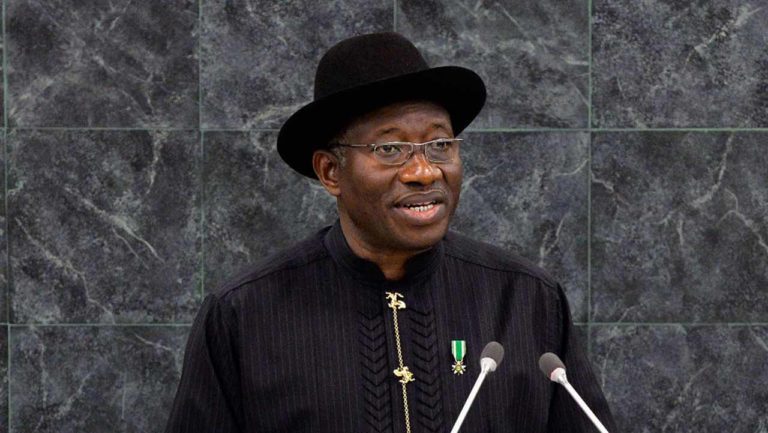
FORMERPresident Goodluck Jonathan has revealed that Boko Haram insurgents once nominated his successor, Muhammadu Buhari, to represent them in peace talks with the Federal Government.

Jonathan made the disclosure on Friday, October 3, in Abuja at the public presentation of Scars, a book authored by former Chief of Defence Staff, Lucky Irabor, according to media reports.

He stressed that his administration established several committees to explore dialogue with the insurgents, noting that in one of such instances, the group named Buhari as its preferred negotiator.

“One of the committees we set up then, the Boko Haram nominated Buhari to lead their team to negotiate with the government,” Jonathan said. “So I was feeling that, oh, if they nominated Buhari to represent them and have a discussion with the government committee, then when Buhari took over, it could have been an easy way to negotiate with them and they would have handed over their guns. But it was still there till today.”

The former president added that Buhari’s inability to defeat the group after assuming power showed that the crisis was more complex than often portrayed.

“If you conduct research and interview many people, you will only get part of the story, but never the full story of Boko Haram. I was there. Boko Haram started in 2009 when I was vice president. I took over in 2010 and spent five years battling the insurgency until I left office.

“I thought that after I left, within a reasonable time, General Buhari would wipe them out. But even today, Boko Haram is still there. The issue of Boko Haram is far more complex than it is often presented.

“So, it’s a bit complex, and not a matter of a single story. But I believe, as a nation, we have to look at the Boko Haram issue differently from the conventional approach. I believe one day we’ll overcome it. Once again, let me thank General Irabor for this, because I always appreciate people who document events clearly. That way, when we write our own accounts, we can borrow from such documentation,” he said.


He said Boko Haram, whose activities began in 2009 when he was vice president, was not simply a product of poverty or hunger, stressing that his administration employed multiple approaches that failed to end the insurgency,” he said.

He said Boko Haram, which began in 2009 when he was vice president, was not simply a product of poverty or hunger, stressing that his administration employed multiple approaches that failed to end the insurgency.

Jonathan further described the 2014 abduction of the Chibok schoolgirls as a “permanent scar” he ‘will die with,’ and urged that future governments adopt a carrot-and-stick approach to resolving the crisis.

He further expressed hope that leaders of the sect might one day document their actions, just as actors of the Nigerian Civil War did, to provide greater understanding of the insurgency’s motives.

“What did they really want? Our chairman once raised the issue when he interviewed some of them, and they gave him certain perspectives. But I pray that one day, some of the Boko Haram leaders may be literate enough to document what they have done, so that people will truly understand what they wanted. It is similar to the story of the Nigerian Civil War.”

Background

Boko Haram, which refers to itself as Jama’at Ahl al-Sunna li al-Da’wa wa al-Jihad, was founded in the early 2000s by Mohammed Yusuf became violent after his death.

The group carried out a string of deadly attacks during Jonathan’s presidency (2010–2015), including the bombing of the United Nations headquarters in Abuja in 2011 and multiple assaults on churches, mosques, and schools. 

Also, in April 2014, more than 270 schoolgirls in Chibok, Borno State, were abducted by the terror group,

When Buhari assumed office in 2015, he pledged to end Boko Haram ‘within months.’ His administration initially recaptured territories held by the insurgents and announced their ‘technical defeat’ in 2015. 

However, the group splintered into factions, including the Islamic State West Africa Province (ISWAP), which has since become the dominant force in the region. 

In July 2025, The ICIR reported that both the Jama’atu Ahlis Sunna Lidda’awati wal-Jihad (JAS) and ISWAP had conducted over 300 attacks in the North-East region since the beginning of 2025.

The report stressed that while JAS was responsible for the highest number of attacks, ISWAP overran at least 16 military bases in Nigeria within the first six months of 2025.

Morocco Gen Z protests enter day six with calls for government’s dismissal  

Mass protests in Morocco have continued for the sixth day on Friday, driven by the youth-led movement GenZ 212, which is calling for the government’s removal. 

The protests gained momentum following reports last month of eight pregnant women dying at a public hospital in the southern city of Agadir.

GenZ 212, whose key organisers have not been identified, relied largely on the online messaging platforms, including TikTok, Instagram and the gaming application Discord to organise demonstrations.

“Moroccan youth are taking to the streets to call for functioning hospitals, quality schools and decent jobs. They’re rejecting billions being spent on stadiums for the World Cup, while basic services are collapsing,” a researcher and secretary general of the Moroccan Association for Human Rights, Tahani Brahma, told journalists, noting that “Most importantly, Moroccan youth do not want promises, they want their rights.”

On Wednesday, security forces fired on protesters in Leqliaa, a small town near the southern city of Agadir, leaving three people dead.

Morocco’s Interior Ministry said the three people were killed while attempting to seize police weapons, a claim that witnesses have not confirmed. 

Moroccan Association for Human Rights reported that the protests have left hundreds injured, and around 1,000 people have been arrested since the protest started on September 28.

Meanwhile, the interior ministry said more than 400 young people had been arrested since the protest started, adding that 80 public and private buildings as well as hundreds of cars had been vandalised.

The group accused the government of failing to uphold citizens’ constitutional rights and address essential social needs, calling for the government’s removal in a constitutional provision that grants the king authority to appoint and dismiss the prime minister and cabinet.

GenZ 212 has also demanded the release of everyone detained over what it describes as peaceful demonstrations, while continuing to emphasise that it does not endorse the violence and vandalism reported in various towns and cities.

Prime Minister Aziz Akhannouch, leader of the National Rally of Independents, held a meeting on Tuesday with coalition partners Fatima Zahra Mansouri, Mohamed Mahdi Bensaid, and Nizar Baraka.

“After reviewing the developments linked to youth expressions in online and public spaces, the government affirms that it listens carefully to and understands the social demands.

“We are ready to respond positively and responsibly through dialogue and discussion within institutions and public forums, and by finding realistic, implementable solutions that serve the interests of the nation and citizens,” they all said in a communique.

Health Minister Amine Tehraoui told parliament on Wednesday that several reforms are in progress but admitted they remain inadequate to fully address the sector’s shortcomings.

Through chants like “Stadiums are here, but where are the hospitals?” and placards, protesters have drawn attention to the billions being invested in preparations for the 2030 World Cup, contrasting it with the severe underfunding and poor state of many schools and hospitals.

Last October, Morocco was selected alongside Portugal and Spain to host the 2030 centenary World Cup, with six venues designated in Morocco, three in Portugal, and 11 in Spain.

Expenditure on building new stadiums and upgrading existing ones for the World Cup and the upcoming Africa Cup of Nations is projected to surpass €5 billion.

With Morocco set to host the Africa Cup of Nations later this year and parliamentary elections approaching in 2026, growing attention is being focused on the country’s stark economic inequalities.

While Morocco has seen recurring peaceful protests over economic and social conditions, this week’s unrest marks the most violent demonstrations since 2016–2017, when clashes erupted between protesters and security forces in the northern Rif region.

Morocco has now joined the growing list of countries where Gen Z-led protests have emerged in recent weeks.

The ICIR reported in September that the wife of former Prime Minister of Nepal, Rajyalaxmi Chitrakar, was killed in violent Gen Z protests sparked by a social media ban after Monday’s killing of 19 people.

The protests began on September 8 when thousands of young people stormed the city, wielding weapons and setting ablaze the Supreme Court, the Attorney General’s office, the Prime Minister’s residence, Parliament, and several homes of politicians. 

Barely two weeks after the Nepal protest, the police in Madagascar had to declare a dusk-to-dawn curfew after violent protests by Gen Z on September 26, sparked by recurring power outages and water shortages.

In Antananarivo, hundreds of mostly young protesters took to the streets, but the demonstration was forcefully broken up as police fired rubber bullets and tear gas to disperse the crowd.

Court orders police to suspend tinted glass permit enforcement

0

THE Federal High Court in Warri, Delta State, has ordered the Nigeria Police Force (NPF) and the Inspector-General of Police (IGP), Kayode Egbetokun, to suspend enforcement of the controversial tinted glass permit policy, pending the determination of suits challenging its legality.

The interim order, delivered on Friday, October 3, in Suit No. FHC/WR/CS/103/2025, followed a motion filed by human rights lawyer John Aikpokpo-Martins, who is challenging the constitutionality of the policy.

Justice of the Federal High Court directed the police authorities to “respect judicial processes pending further proceedings in the matter,” effectively halting the nationwide enforcement of the directive.

Kunle Edun, a senior advocate of Nigeria who led the petitioner’s legal team, described the ruling as a significant step toward upholding the rule of law while the substantive issues in the case are being heard.

The ICIR reported that the Nigerian Bar Association (NBA) cautioned the police against disobeying court processes on the issue.

In a statement issued on Friday, October 3, through its Section on Public Interest and Development Law (SPIDEL), the association reminded the Force of a pending suit filed at the Federal High Court, Abuja (Suit No. FHC/ABJ/CS/1821/2025), challenging the same policy.

The NBA disclosed that copies of the originating summons and a motion for interlocutory injunction were served on the police on September 25, but expressed concern that the authorities went ahead to announce that enforcement would begin on October 2.

“Consequently, we admonish your good office to allow the rule of law to prevail by halting any further attempt to enforce a policy whose legality is a subject for judicial determination,” the NBA stated.

The association further warned that proceeding with the enforcement could amount to contempt of court, adding that disciplinary and contempt proceedings may be initiated against erring officers, including Force spokesperson CSP Benjamin Hundeyin, for statements considered to undermine the judiciary.

The ICIR reports that the tinted glass permit scheme has remained contentious for years. The Police initially suspended issuance of permits in 2022 following widespread complaints of extortion and abuse by officers at checkpoints.

However, in April 2025, the Force announced that it had resumed issuance through the Police Specialised Services Automation Project (POSSAP). The IGP later set August 12 as the compliance deadline, which was extended to October 2.

The police defended the policy, citing the Motor Vehicles (Prohibition of Tinted Glass) Act of 1991 and national security concerns. But civil rights groups, motorists, and lawyers faulted the initiative, arguing that factory-fitted tinted windows were common and that enforcement created loopholes for corruption.

In Delta and Sokoto States, the Police Commands had only days earlier announced that it would commence full enforcement of the tinted glass regulations on October 2, alongside bans on unauthorised sirens, strobe lights, and defaced number plates.

The development has once again highlighted recurring conflicts between law enforcement practices and constitutional rights.

In its past reports, The ICIR documented how motorists complained of harassment during earlier enforcement drives, with officers demanding bribes or threatening arrest despite the suspension of permits at the time.

Legal experts note that the Warri ruling, reinforced by the NBA’s position, represents another test of the Police Force’s willingness to respect judicial oversight.

Analysts have also argued that if the court’s directive is ignored, it could deepen public mistrust in the institution and expose the Force to contempt proceedings.

Meanwhile, the matter is expected to return to court for further hearing, where the legality of the tinted glass policy will be decided. Until then, the court order remains binding on the Police, requiring full suspension of enforcement, The ICIR reports.

UK names Mullally as first female Archbishop in England

PRIME Minister of the United Kingdom Keir Starmer’s office has announced Dame Sarah Mullally as the new Archbishop of Canterbury on Friday, with the formal consent of King Charles, becoming the first woman to lead the Church of England.

“The Church of England is of profound importance to this country. Its churches, cathedrals, schools, and charities are part of the fabric of our communities,” Starmer said, noting that “The Archbishop of Canterbury will play a key role in our national life. I wish her every success and look forward to working together.”

Meanwhile, a day for her enthronement ceremony is yet to be announced.

A historic departure from the past, The ICIR reports that this is the first time in nearly 500 years of history that the church nominated a woman to lead it.

The Archbishop of Canterbury is widely regarded as the spiritual head of the Anglican Church worldwide.

They also play a significant role in public life, holding a seat in the UK Parliament’s House of Lords.

In this capacity, they take part in debates, address national and global issues, including matters of religious freedom and offer responses to events of national significance.

Lord Evans of Weardale, who oversaw the process of selecting Justin Welby’s successor, described it as a “great privilege” to chair the Crown Nominations Commission.

“I would like to thank all those who took part in this process, particularly those who took time to share their views in the consultation and the members of the commission who worked so diligently over several months,” he said.

The Church had gone nearly a year without a leader following Justin Welby’s resignation over his handling of a prolific child abuse case.

“As I respond to the call of Christ to this new ministry, I do so in the same spirit of service to God and to others that has motivated me since I first came to faith as a teenager.

“At every stage of that journey, through my nursing career and Christian ministry, I have learned to listen deeply – to people and to God’s gentle prompting – to seek to bring people together to find hope and healing,” she said in her first speech address, where she acknowledged the ‘huge responsibility’ of her new role.

Mullally, who is the 106th cleric to be in the position, said, “We’re witnessing hatred that rises through fractures across our communities,” reacting to the wake of Thursday’s deadly attack on a Manchester synagogue, which was a day before her appointment.

She said the Church is responsible for standing with the Jewish community against antisemitism.

“Hatred and racism of any kind cannot be allowed to tear us apart,” she added.

She urged the Church to grow in confidence in the gospel, to proclaim the love found in Jesus Christ, and to let that love guide its actions.

“And I look forward to sharing this journey of faith with the millions of people serving God and their communities in parishes all over the country and across the global Anglican Communion.

“I know this is a huge responsibility, but I approach it with a sense of peace and trust in God to carry me as He always has,” she added.

Mullally’s background 

At 63, the newly appointed Archbishop had already been breaking new ground in her field long before she was ordained as a priest.

Mullally, who served for over seven years as the Bishop of London, the Church’s third most senior position and the first woman to hold the role, made history in 1999 when she became England’s youngest-ever chief nursing officer.

The Church of England has only allowed women to be ordained as priests since the mid-1990s, yet some senior bishops remain openly opposed to women entering the priesthood, let alone leading the Church.

By law, Archbishops of Canterbury must retire at 70, which may be one reason Mullally was not widely seen as a frontrunner for the role.

Married with two children, she spent over 35 years in the NHS before she became a priest in 2006.

Though she was already volunteering in the Church at the time, it was only a few years later that she chose to pursue the priesthood and was soon entrusted with helping to reform how the institution handled cases of abuse.

In 2012, she was appointed canon treasurer at Salisbury Cathedral, and three years later, in 2015, she became Bishop of Crediton in the Diocese of Exeter.

During her tenure as Bishop, she was regarded as drawing on her background as an NHS administrator to help modernise the diocese.

Since becoming Bishop of London, Sarah Mullally has chaired a group tasked with guiding the Church of England’s deliberations on whether to allow blessings for same-sex marriages.

Mullally described the decision to finally allow priests to bless same-sex couples in 2023 as “a moment of hope for the Church”.

“I know that what we have proposed as a way forward does not go nearly far enough for many, but too far for others,” she said.