Home Blog Page 166

Collaboration takes centre stage on world teachers day

0

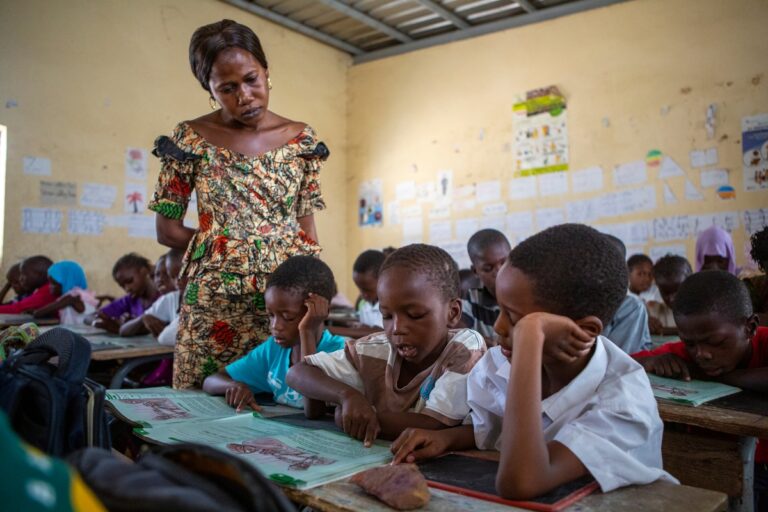
AS the world marks World Teachers’ Day 2025, educators and policymakers are turning their attention to the power of collaboration in shaping the future of learning.

This year’s theme, “Recasting Teaching as a Collaborative Profession,” underscores the need for teamwork, mentorship, and shared responsibility among teachers, school leaders, and the wider education community. The focus reflects a growing recognition that collective effort, rather than isolated practice, is key to improving education quality and sustaining teacher growth.

Educators highlight that collaboration remains a key part of effective teaching, noting that no teacher is an island of knowledge while stating that collaboration could be a process of joint lesson planning, idea sharing, and collective problem-solving aimed at enhancing the learning experience.

When collaboration strengthens understanding

For Abisola Alare-Saheed, an English tutor in a secondary school, she states that teachers sometimes face challenges in delivering certain topics, and in such situations, collaborating with colleagues who have greater expertise in that area proves highly beneficial.

She recounted being assigned to teach Business Studies to junior students and encountering difficulty with the topic ‘Trial Balance’ and after seeking guidance from a colleague who specialised in Business Education, the concept became clearer, enabling her to successfully teach the topic to her learners.

“As an English Educator there was a time I was saddled with the responsibility of teaching Business Studies in the junior secondary 3, I took it perfectly until when I had the challenge of taking the topic ‘Trial Balance’.

I couldn’t understand it well enough until I met with a colleague in another school whose discipline is Business Education, she explained to me well after which I delivered several lessons to my learners,”  Alare-Saheed told The ICIR

Teaching a subject outside one’s field of expertise can hinder effective delivery, leading to challenges like lack of deep knowledge, student disengagement, and reduced academic outcomes for students but such situations often highlight the value of collaboration.

By seeking support from colleagues with deeper knowledge, teachers not only overcome content gaps but also improve lesson quality and professional competence.

Farida Saidu, a chemistry teacher noted that although she had not co-taught in the same classroom, collaborating with more experienced teachers helped her improve their approach to teaching lower primary pupils.

“I was a teacher who had less experience in teaching lower primary schools.  fellow teachers shared their ideas and practices and it made teaching-learning effective,” she stated.

She added that sharing ideas and observing others’ methods made lessons more effective, and during their teaching practice, they also gained valuable experience through team teaching.

For Saidu, collaboration involves teachers working together. Although not widely practiced in many classrooms, it helps simplify teaching and encourages greater student participation.

Barriers to teachers collaboration 

Despite its benefits, several factors continue to hinder teacher collaboration. These include lack of time, professional isolation, poor communication skills, resistance to change, and differing professional ideologies.

The factors mentioned above were identified by respondents as major barriers to effective collaboration among teachers. They noted that some educators are reluctant to move away from traditional teaching methods or lack the necessary training and awareness to adopt collaborative practices. Heavy workloads and limited time also make it difficult for teachers to plan and work together, underscoring the need for schools to create specific periods for joint planning or co-teaching.

“Teachers may be unwilling to move away from traditional teaching methods, show a lack of cooperation, or lack training and awareness on collaborative teaching,” Saidu stated.

Additionally, weak leadership support was highlighted as a challenge, as some school heads do not actively promote teamwork or shared instructional practices among their staff.

“Another reason might be poor leadership support, some school heads may not support team teaching or collaboration. School leaders should be trained to model and encourage team-based approaches and shared decision-making,” Alare-Saheed noted.

Breaking the barriers 

While these barriers pose real challenges, they are not insurmountable. Educators explained that with proper guidance, administrative support, and a shift in mindset, teachers can embrace collaboration as an essential part of their professional growth.

“To overcome these barriers, more training should be provided on collaborative teaching while encouraging an interactive environment among teachers. Professional training for teachers on collaborative practices, government policies that promote collaboration in education, and improved access to digital tools would greatly enhance teaching and learning outcomes,” Saidu stated

Also, creating a supportive culture where educators feel valued and empowered to share ideas is seen as a vital step toward overcoming these obstacles.

“As a teacher, I would like to see more time set aside for teachers to plan lessons together and share ideas. I also hope schools can provide regular training that encourages teamwork and create a supportive environment where teachers feel free to learn from one another. Having strong leadership that values collaboration would also make a big difference.” Alare-Saheed concluded

Report exposes how Tinubu’s minister forges UNN, NYSC certificates

2

FRESH controversy has hit President Bola Tinubu’s administration after an investigation revealed that the Minister of Science, Technology and Innovation, Uche Nnaji, forged his university degree.

This exposè is the outcome of a two-year investigation by Premium Times, which found that both Nnaji’s university certificate and his National Youth Service Corps (NYSC) discharge certificate were forged.

The report quoted a response to a freedom of information sent by the newspaper, which stated that while Nnaji was admitted in 1981, there is no record that he completed his studies or graduated in July 1985, as his certificate claims.

In a letter dated October 2, 2025, and signed by the Vice-Chancellor, Prof. Simon Ortuanya, UNN disowned the certificate being currently paraded by the minister.

From every available records and information from the University of Nigeria, Nsukka, we are unable to confirm that Mr Geoffrey Uchechukwu Nnaji, the current Minister of Science and Technology, graduated from the University of Nigeria in July 1985, as there are no records of his completion of study in the University of Nigeria, Nsukka.

“Flowing from above, the University of Nigeria, Nsukka DID NOT and consequently, COULD NOT have issued the purported certificate, or at all, in July 1985 to Mr Geoffrey Uchechukwu Nnaji, the current Minister of Science and Technology. This conclusion is also in consonance with an earlier letter dated May 13, 2025, ref. No, RUN/SR/R/V, issued by the University to the Public Complaints Commission in respect of the same subject matter,” the letter was quoted.

Further checks by the paper showed that although Nnaji was admitted to study biological sciences, he failed several courses, before he was advised to  withdraw.

In 1986, he reportedly wrote to the university seeking another opportunity to retake an examination, one year after claiming to have already graduated.

Premium Times reported that forensic analysis of the minister’s NYSC certificate also revealed glaring inconsistencies. 

The certificate bore the signature of a corps official who only assumed office 18 months after the date it was supposedly issued. 

The report also noted that the certificate carried an invalid numbering system and suggested that Nnaji served for 13 months, contrary to the statutory 12-month programme.

The newspaper, said despite repeated requests for clarification, the minister failed to respond to the findings of its investigation.

Jonathan dismisses linking Buhari to Boko Haram, says comments misrepresented

0

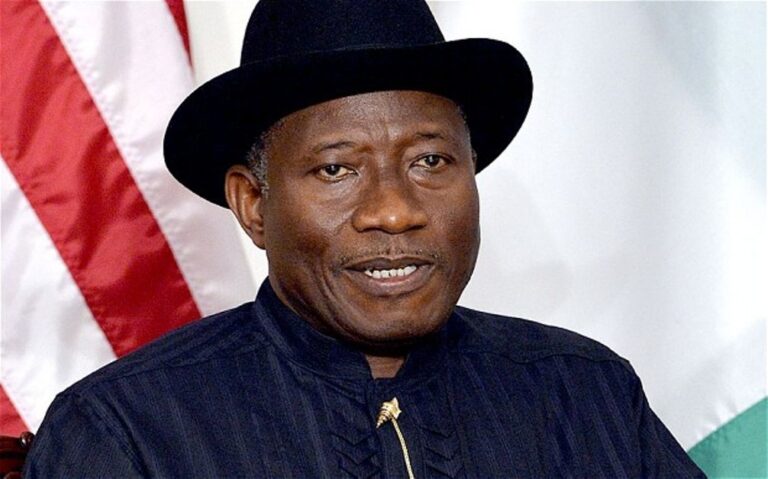
FORMER President Goodluck Jonathan has dismissed claims suggesting he accused the late President Muhammadu Buhari of having ties to Boko Haram.

The clarification followed his earlier claims that Boko Haram once chose the late Buhari to represent the group in negotiations, during the book launch of former Chief of Defence Staff, Lucky Irabor, on Friday, October 3.

A statement signed by his spokesman, Ikechukwu Eze, on Saturday, October 4, noted that Jonathan’s remarks were taken out of context.

The ICIR reported that Jonathan, at the public presentation of Scars, had said that his administration set up several committees to explore dialogue with the sect, and in one such attempt, the insurgents nominated Buhari as their preferred negotiator.

“One of the committees we set up then, the Boko Haram nominated Buhari to lead their team to negotiate with the government,” Jonathan said. “So I was feeling that, oh, if they nominated Buhari to represent them and have a discussion with the government committee, then when Buhari took over, it could have been an easy way to negotiate with them and they would have handed over their guns. But it was still there till today.”

His comments, however, generated mixed reactions, including backlashes from Buhari’s loyalists.

While reacting to this, Jonathan, in a statement by his spokesperson, Ikechukwu Eze, clarified that he was not accusing Buhari of complicity with the insurgents, adding that his reference was to the confusing internal rifts within Boko Haram in 2012.

We wish to make it abundantly clear that the former President’s comments were grossly misrepresented. At no time did Dr Jonathan suggest, imply, or insinuate that President Buhari had any connection with Boko Haram or that he supported the group in any form.”

The statement added that “Jonathan’s remarks, made in the course of a broader discussion on Nigeria’s security challenges, were meant to illustrate the deviousness and manipulative strategies employed by Boko Haram in their early years.”

The statement further said his reference was to a documented episode in the early days of the insurgency when factions claiming to represent Boko Haram falsely listed prominent Nigerians, including Buhari, as possible mediators, often without their knowledge or consent.

“The point Dr Jonathan sought to make was that Boko Haram, in its characteristic deceit, often invoked the names of respected public figures to sow confusion, exploit political divisions, and undermine public confidence in government,” the statement continued.

He further argued that if Buhari had indeed been a preferred negotiator for the group, the insurgency should have ended when he became president in 2015.

Jonathan stressed that both he and Buhari were committed to fighting terrorism during their tenures and that the former president himself was also a target of Boko Haram attacks.

“The point Dr Jonathan sought to make was that Boko Haram, in its characteristic deceit, often invoked the names of respected public figures to sow confusion, exploit political divisions, and undermine public confidence in government. His comments were therefore an illustration of the group’s duplicity, not an accusation against the late former president or any individual for that matter.”

Recall that Garba Shehu, former presidential spokesperson under Buhari, had earlier dismissed Jonathan’s remarks as false and politically motivated. 

Shehu argued that Jonathan was reviving a discredited claim to deflect attention, adding that Buhari himself was a target of Boko Haram attacks, including a bomb attempt on his convoy in Kaduna in 2014.

Super Falcons forward, Ifeoma Onumonu retires from football

0

SUPER Falcons striker Ifeoma Onumonu has announced her retirement from football, ending a professional career that spanned over a decade, which took her across the United States, France, and Nigeria.

In a statement posted on Instagram on Saturday, October 4, the 31-year-old expressed appreciation for her football journey, describing her retirement as a “natural conclusion” to a passion she discovered at just eight years old.

“It is with a heart full of gratitude that I bid farewell to my playing career on the pitch.

“We played in white, black, and green jerseys at the AYSO fields near my house. I remember how vast I thought the field was. I don’t remember if I played an actual position or if I even passed the ball,” he stated.

Onumonu noted that her passion for football drove her for 22 years, leading to remarkable experiences at both club and international levels.

She recalled the highlights of her career, including winning the National Women’s Soccer League (NWSL) championship, representing Nigeria at the Olympics and World Cup, and helping the Super Falcons secure a record 10th African Cup of Nations title.

Onumonu said her love for football began with a simple desire to run and score goals, adding that winning or losing mattered little to her because she simply enjoyed playing the game.

She explained that this passion sustained her for 22 years, leading to memorable moments at both club and international levels.

She recounted winning an NWSL championship, representing Nigeria at the Olympics and World Cup, and helping the Super Falcons clinch a historic 10th African Cup of Nations title.

The American-born forward, who earned her first senior cap for Nigeria in 2021, was a member of the Super Falcons squad at the 2023 Women’s World Cup and also competed at the 2024 Olympic Games in Paris.

She was part of the team that clinched the Women’s Africa Cup of Nations title in July 2025, marking Nigeria’s record 10th continental victory.

Early career development

Born in California to a Nigerian father, Onumonu grew up in the United States and launched her professional career in the National Women’s Soccer League with the Boston Breakers.

She later played for Portland Thorns, Seattle Reign FC, Utah Royals, and NJ/NY Gotham FC before moving to France to join Montpellier HSC.

A graduate of the California Golden Bears collegiate program, she initially represented the United States at the U-23 level before switching allegiance to Nigeria, where she gained recognition for her intelligent play, calm finishing, and strong work ethic.

Reflecting on her decision, Onumonu noted that her retirement does not signify the end of her connection to football.

“This is not a goodbye to football, but a new beginning.

“I am excited to explore opportunities off the pitch, using the skills and lessons learned from my time on it,” she stated.

She expressed heartfelt gratitude to everyone who had supported her throughout her career, including staff, teammates, coaches, medical personnel, fans, friends, and family.

Onumonu said their unwavering encouragement meant a great deal to her, adding that although her playing days were over, her love and commitment to the game would remain constant.


Trump orders Israel to stop bombing Gaza, as Hamas agrees new proposal

0

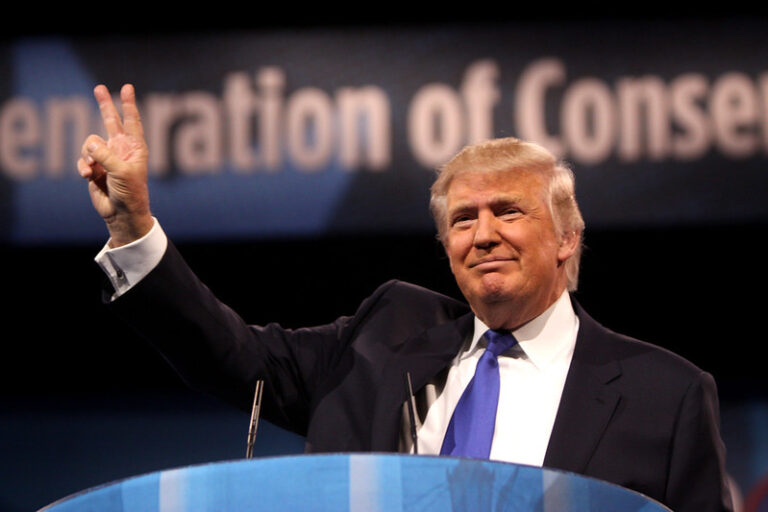
THE United States’ President Donald Trump has called on Israel to “immediately stop the bombing of Gaza” following a statement from Hamas signalling readiness to enter a ceasefire agreement under his proposed peace plan.

In a post on Truth Social on Friday, October 3, Trump said Hamas appeared prepared for “a lasting peace” and urged Israel to halt its military operations to allow the safe release of hostages. 

“Based on the Statement just issued by Hamas, I believe they are ready for a lasting PEACE. Israel must immediately stop the bombing of Gaza, so that we can get the Hostages out safely and quickly! Right now, it’s far too dangerous to do that. We are already in discussions on the details to be worked out. This is not about Gaza alone, this is about long sought,” he wrote.

The statement came hours after Hamas announced its willingness to enter negotiations through mediators for the release of hostages and hand over governance of Gaza to a Palestinian authority of independents, supported by Arab and Islamic states. 

“Other issues mentioned in President  Trump’s proposal regarding the future of the Gaza Strip and the legitimate rights of the Palestinian people are connected to a unified national position and relevant international laws and resolutions,” Hamas said.

“They will be addressed through a comprehensive Palestinian national framework, in which Hamas will participate and contribute responsibly.”

Although the group didn’t state disarmament or the exclusion of Hamas from future governance, their response showed enthusiasm for possible solutions to the nearly two-year-long war.

Israel’s Prime Minister Benjamin Netanyahu’s office confirmed that the government and military were preparing to implement the first phase of Trump’s proposal, which includes the release of hostages in exchange for Palestinian prisoners.

“In light of Hamas’s response, Israel is preparing to immediately implement the first phase of Trump’s plan for the immediate release of all hostages,” the statement was quoted to have read.

It also noted that Israel “will continue to work in full cooperation with the President and his team to end the war in accordance with the principles set forth by Israel that are consistent with President Trump’s vision.”

The ICIR reports that under Trump’s proposal, Hamas would free the remaining hostages, relinquish control of Gaza, and eventually disarm, while Israel would gradually withdraw its forces as an international stabilisation force led by Arab partners takes over. 

Israel will also “release 250 life sentence prisoners plus 1700 Gazans who were detained after October 7th 2023, including all women and children detained in that context.”

“For every Israeli hostage whose remains are released, Israel will release the remains of 15 deceased Gazans,” CNN reported the updated proposal to have read.

A temporary Palestinian authority, overseen by a global “Board of Peace,” would administer Gaza until a reformed Palestinian Authority assumes control.

The force “will train and provide support to vetted Palestinian police forces in Gaza, and will consult with Jordan and Egypt, who have extensive experience in this field.”

Police yet to be served court order on tinted glass permits – PRO

0

THE Nigeria Police Force (NPF) said they have not recieved the Federal High Court order halting the enforcement of tinted-glass permits.

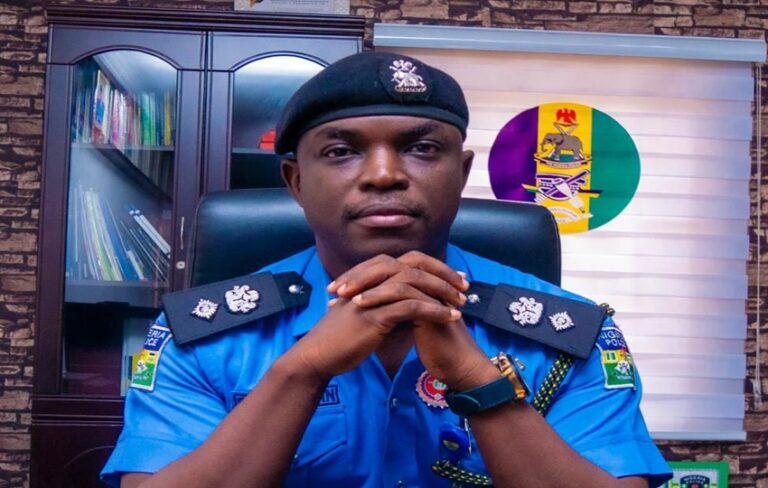
Force Public Relations Officer, Chief Superintendent of Police (CSP) Benjamin Hundeyin, made this announcement on Saturday, October 4, in response to an existing court order that restrains the police from arresting or prosecuting motorists with tinted windows.

The ICIR had reported that the Federal High Court, in Suit No. FHC/WR/CS/103/2025: John Aikpokpo-Martins v. Inspector-General of Police & Nigeria Police Force issued an order on Friday directing the police to suspend enforcement of tinted-glass permits pending the determination of the main case.

The court order directed the police to maintain the status quo, suspending any action against motorists until the case is resolved. However, Hundeyin stated on X that the police had not yet been formally served with the order.

“While we have not been officially served the court order you’re referring to, let me, in the meantime, show point number eight (of the same order) since you left that part out and focused only on point number six. Nigerians deserve a complete picture, not a skewed one,” he wrote while attaching a picture of the court document.

The clarification came after human rights lawyer Inibehe Effiong shared excerpts of the court ruling that restrained the police from enforcing the regulation on tinted glass.

The police had earlier resumed the permit scheme in April 2023 under the Police Specialised Services Automation Project, following its suspension in 2022.

ICIR reports shortlisted for West African media excellence awards

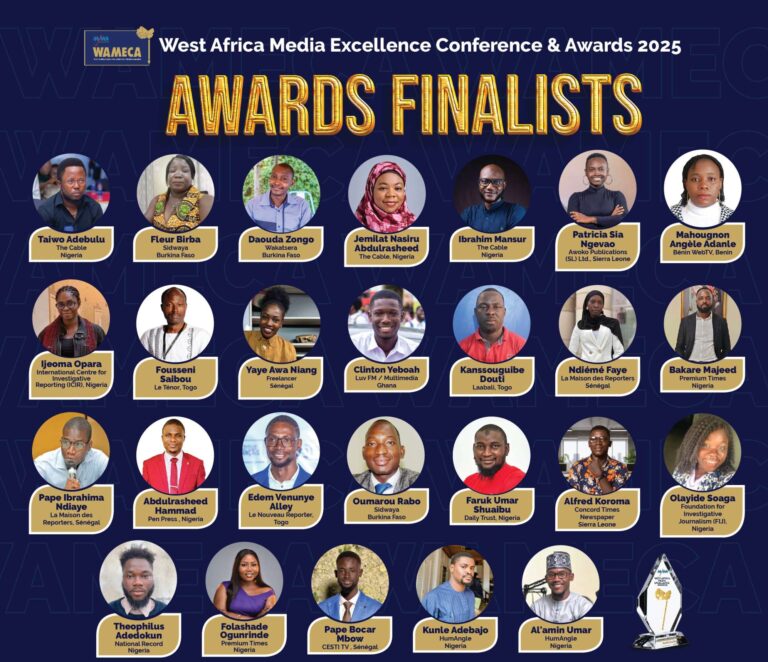
AT least two investigative reports published by the International Centre for Investigative Reporting (ICIR) have been shortlisted among 26 finalists for the 2025 edition of the prestigious West Africa Media Excellence Awards (WAMECA 2025).

The shortlisted reports were authored by former ICIR investigative reporter Ijeoma Opara and ICIR’s Open Contracting Reporting Project fellow, Abdulrasheed Hammad.

WAMECA is an initiative of the Media Foundation for West Africa (MFWA) that seeks to promote media excellence in the sub-region.

According to the organisers, the 26 finalists were selected by a four-member jury made up of distinguished and experienced African media experts, after a rigorous review of 793 stories submitted by journalists from 15 West African countries.

“This year, the Awards received 793 entries from 15 West African countries. The entries were filed by journalists from about 600 media organisations in the West Africa region,” MFWA said in a statement.

The statement added that the winners will be announced at the awards event scheduled for Saturday, October 11, 2025, at the Alisa Hotel, Accra, Ghana.

All 26 finalists will receive a Certificate of Merit, while the ultimate winners will be honoured with plaques, certificates, and cash prizes.

Below is the comprehensive list of finalists for WAMECA 2025:

Taiwo Adebulu, The Cable, Nigeria

Fleur Birba, Sidwaya, Burkina Faso

Clinton Yeboah, Luv FM / Multimedia, Ghana

Kunle Adebajo, HumAngle, Nigeria

Patricia Sia Ngevao, Awoko Publications (SL) Ltd., Sierra Leone

Kanssouguibe Douti, Laabali, Togo

Jemilat Abdulrasheed Nasiru, The Cable, Nigeria

Yaye Awa Niang, Freelancer, Senegal

Bakare Majeed, Premium Times, Nigeria

Alfred Koroma, Concord Times Newspaper, Sierra Leone

Ijeoma Opara, International Centre for Investigative Reporting (ICIR), Nigeria

Oumarou Rabo, Sidwaya, Burkina Faso

Pape Bocar Mbow, CESTI TV, Senegal

Fousseni Saibou, Le Ténor, Togo

Folashade Ogunrinde, Premium Times, Nigeria

Mahougnon Angèle Adanle, Bénin WebTV, Benin

Al’amin Umar, HumAngle, Nigeria

Pape Ibrahima Ndiaye, La Maison des Reporters, Senegal

Ibrahim Mansur, The Cable, Nigeria

Edem Venunye Alley, Le Nouveau Reporter, Togo

Faruk Umar Shuaibu, Daily Trust, Nigeria

Daouda Zongo, Wakatsera, Burkina Faso

Theophilus Adedokun, National Record, Nigeria

Ndiémé Faye, La Maison des Reporters, Senegal

Olayide Soaga, Foundation for Investigative Journalism (FIJ), Nigeria

Abdulrasheed Hammad, Pen Press, Nigeria


Boko Haram never nominated Buhari as mediator, says Garba Shehu

0

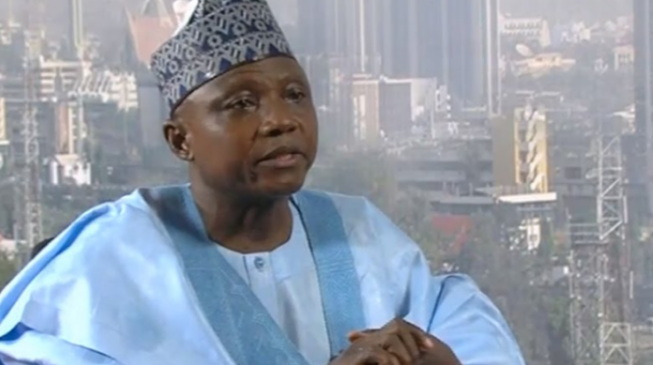
FORMER presidential spokesperson Garba Shehu has rejected claims by ex-President Goodluck Jonathan that Boko Haram once chose the late Muhammadu Buhari to represent the group in negotiations with the Federal Government during the peak of the insurgency.

Shehu, who served as Senior Special Assistant on Media and Publicity to Buhari, in a statement on Friday, October 3, described Jonathan’s remarks as false and politically motivated, linking them to a possible 2027 presidential ambition. 

Jonathan, at the public presentation of Scars, a book authored by former Chief of Defence Staff, Lucky Irabor (retd.), in Abuja on Friday, October 3, had said that his administration set up several committees to explore dialogue with the sect, and in one such attempt, the insurgents nominated Buhari as their preferred negotiator.

“One of the committees we set up then, the Boko Haram nominated Buhari to lead their team to negotiate with the government,” Jonathan said. “So I was feeling that, oh, if they nominated Buhari to represent them and have a discussion with the government committee, then when Buhari took over, it could have been an easy way to negotiate with them and they would have handed over their guns. But it was still there till today.”

He recalled that Boko Haram, which became violent in 2009 when he was vice president, carried out some of its deadliest attacks during his tenure, including the bombing of the United Nations headquarters in Abuja in 2011 and the abduction of over 270 Chibok schoolgirls in 2014.

The former president added that Buhari’s inability to defeat the group after assuming power showed that the crisis was more complex than often portrayed.

“I thought that after I left, within a reasonable time, General Buhari would wipe them out. But even today, Boko Haram is still there. The issue of Boko Haram is far more complex than it is often presented,” he said.

Shehu’s rebuttal

Responding to Jonathan’s claim, explained that the speculation about Buhari’s alleged nomination emerged in 2012 when a faction of Boko Haram, through a certain Abu Mohammed Ibn Abdulaziz, announced Buhari’s name alongside other northern leaders as potential mediators. 

However, Shehu noted that this claim was disowned by Abubakar Shekau, who said Abdulaziz lacked the mandate to speak for the sect.

“What led to the misleading information was that a faction of the terrorist group, possibly sponsored by Buhari’s opponents, staged a press conference in Maiduguri, Borno State, through a certain Abu Mohammed Ibn Abdulaziz, who claimed to be the Boko Haram commander in charge of Southern and Northern Borno, saying that the sect would prefer the former military leader, General Muhammadu Buhari, ex-Yobe State governor and the then Senator, now late Bukar Abba Ibrahim, first Nigerian Minister of Petroleum, Shettima Ali Monguno, also late, Chairman of the Presidential Committee on Insecurity in the North-East, Ambassador Gaji Gatimari, and other prominent members of the Borno Emirate to mediate between them and the federal government.

“Abdulaziz was roundly condemned by the leaders of Boko Haram who claimed that he had no mandate of their leader, Imam Abubakar Shekau,” he said.

Shehu recalled that in 2014, Buhari survived a Boko Haram-linked bomb attack in Kaduna that left members of his convoy injured. 

He stressed that Buhari’s campaigns consistently centred on fighting Boko Haram and restoring security to Nigeria, positioning him directly against the terrorists.

At the time, Shehu explained that Buhari’s party, the Congress for Progressive Change (CPC), also dismissed the claims, adding that the then party secretary, Buba Galadima, said Buhari was unaware of any such nomination.

He also stressed that CPC publicity secretary, Rotimi Fashakin, accused Jonathan’s administration of exploiting the claim to divert public attention from corruption allegations.

CBN working with SEC on framework for crypto regulation, says Cardoso

0

GOVERNOR of the Central Bank of Nigeria (CBN), Olayemi Cardoso, has announced that the bank is working with the Securities and Exchange Commission (SEC) to create a sustainable framework for digital currencies in the country.

Speaking at the CBN governor’s annual lecture series at Lagos Business School (LBS) on Friday, October 3, Cardoso noted that cryptocurrencies, fintech, and blockchain innovations will influence the future of currency policy, though the extent of their impact is still uncertain.

“We are deeply in collaboration to ensure that all the different regulatory authorities can midwife the process that is sustainable with respect to digital currency.”

He recalled that Nigeria gained global attention in the crypto space two years ago when regulators faced challenges in controlling coin exchange markets, placing the country among the world’s largest hubs for crypto trading.

“Suddenly, over a period of time, coin exchange became very difficult to protect. Many people, not just youngsters, turned to crypto, and a whole architecture started to evolve,” he said.

The ICIR reported that the apex bank issued a directive in February 2021, instructing banks and other financial institutions to close accounts of individuals engaged in cryptocurrency transactions. 

According to the CBN, this directive was prompted by the inherent risks of money laundering and terrorism financing (ML/TF), vulnerabilities inherent in their operations, and the absence of regulations and consumer protection measures.

However, it lifted the ban on cryptocurrency transactions in the country in December 2023, issuing a guideline to financial institutions under its regulatory purview regarding their banking relationship with Virtual Assets Service Providers (VASPs) in Nigeria.

Cardoso, in his latest remark, stressed that steady policies and ongoing reforms have helped rebuild confidence in Nigeria’s economy, sparking renewed interest from global investors.

“In many respects, regulators left it alone, and people believed that perhaps it didn’t exist until certain things happened. It became clearer that there was a need to understand the market better,” the CBN governor added.

The governor urged students aspiring to become future leaders to protect their integrity, remain steadfast in the face of challenges, and develop strong communication skills, particularly when dealing with complex issues such as monetary policy.

“The danger in not communicating is that only you know what you are doing. People need to understand the journey, the challenges, and the hope for the future,” he said.

On innovation, Cardoso noted that the apex bank has already adopted digitisation and artificial intelligence (AI) in its operations, with all approval processes fully digitised and a pledge to maintain a paperless office.

2027: Lagos NURTW chair faces SSS over viral incitement video

0

THE Lagos State Chairman of the National Union of Road Transport Workers (NURTW), Mustapha Sego, has honoured an invitation from the State Security Services (SSS) following allegations that he made inciting comments ahead of the 2027 general elections.

Sego was summoned after a video went viral showing him addressing members of the union. In the footage, he warned that “what happened in 2023 would not be allowed to repeat itself in 2027.”

He was also heard saying in Yoruba: “Anybody who makes any mistakes in 2027 will be dealt with. Let them know that the All Progressives Congress is the party you’ll vote for, anybody, who refuses to do so will meet us.”

The remarks sparked outrage among opposition figures and civil society groups, who accused the NURTW boss of threatening Lagos voters and attempting to instill fear ahead of the polls.

But Sego has denied the allegations. In a disclaimer video released after meeting with SSS officials, he insisted his words were directed only at union members and not the general public.

“I have always been a man of peace, and my messages are directed only to our members. Everyone has the right to associate freely and choose their affiliations, and I fully respect that,” he said.

He further alleged that the controversy was part of a plot by rival union members to destabilise his leadership.

“There is always an enemy in every job, and we know where this is coming from. This is clearly an attempt to destabilize me and the NURTW in Lagos State,” Sego stated.

The SSS has yet to issue an official statement on the matter.

The development comes as opposition politics in Lagos face internal turbulence. In July, Lagos PDP chairman Philip Aivoji dismissed claims that the party’s structure had collapsed into the APC following the defection of former publicity secretary Hakeem Amode and governorship candidate Abdul-Azeez Adediran (Jandor).

Aivoji described those who left as few and politically irrelevant, insisting the PDP remains intact across all 245 wards in the state. He also accused the ruling party of derailing democracy, warning that electoral reforms were needed to rebuild public trust.

“This is not the democracy MKO Abiola died for,” he said.

Shadows of 2023 violence

The controversy around Sego’s remarks recalls the widespread violence that marred Lagos elections in 2023. Investigations by The ICIR documented harrowing accounts from victims across Surulere, Ojo, Somolu, Ikeja, Oshodi, and other parts of the state, where voters were stabbed, beaten, and in some cases killed.

One victim, Jennifer Edifi, was attacked in Surulere on February 25 but returned to cast her vote with a battered face. In Somolu, 68-year-old Simon Maduekwe collapsed and died after a clash between thugs and voters at his polling unit. In Ikeja, Queen Ezeogu sustained a fractured arm after being assaulted while trying to monitor irregularities.

Several opposition party members also told The ICIR that thugs loyal to the ruling APC unleashed violence to suppress voter turnout. The then Labour Party’s publicity secretary in Lagos, Olubunmi Odesanya, described the violence as “incontrovertible,” noting that many of their members were stabbed and injured.

The police later confirmed arrests but dismissed reports of widespread violence, insisting that the cases represented less than 1 per cent of polling units across the state.

Heightened tension ahead of 2027

With less than two years before the 2027 polls, Lagos politics is already under intense scrutiny. Civil society organisations warn that inflammatory rhetoric from influential figures, combined with the state’s history of politically motivated violence, poses serious risks for the credibility of the next election.

Paul James of YIAGA Africa told The ICIR that unchecked violence undermines democracy. “The purpose of electoral violence is to disrupt and undermine the electoral process. Unless perpetrators are punished, it will remain a recurring feature of Nigerian elections,” he said.