Home Blog Page 17

Ramaphosa vows crackdown as xenophobic attacks trigger regional alarm, evacuations

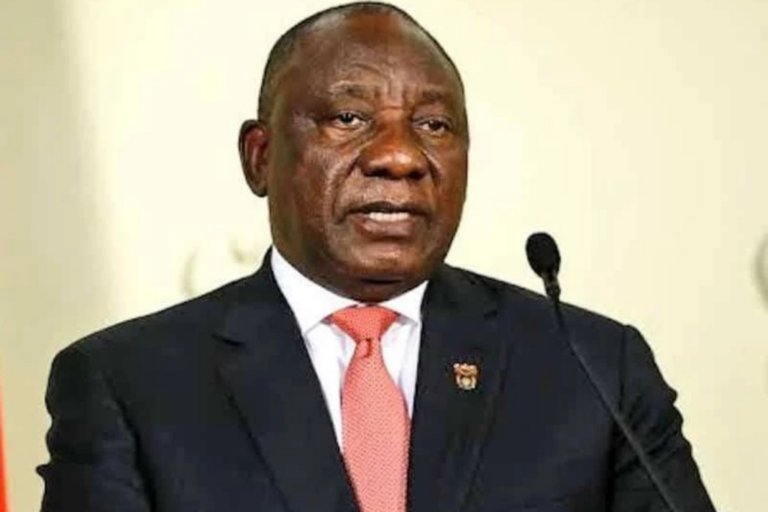
SOUTH African President, Cyril Ramaphosa, has vowed to crack down on groups behind the latest wave of xenophobic violence in the country, as renewed anti-immigrant protests continue to trigger regional concern, diplomatic tensions and evacuation plans by affected African countries.

Ramaphosa, in a televised address, said the government would not allow individuals or groups to exploit public frustration over illegal immigration to incite violence, lawlessness or political instability.

The attacks, which have spread across parts of South Africa and in some cases turned violent, have led to repatriation efforts by countries including Nigeria, Ghana, Malawi and Mozambique. 

According to reports, Mozambique has said at least five of its citizens were killed during the unrest.

“We will act against forces who are exploiting the concerns of our people about illegal immigration to further their own political, personal and criminal agendas,” Ramaphosa said in a televised address, without specifying the actions.

“We will and must not allow groups to use the legitimate concerns of South Africans to destabilise our country through inciting lawlessness and violence,” he said.

The ICIR reports that violence has also reignited longstanding concerns about xenophobia in South Africa, where migrants are frequently blamed for unemployment, poverty and rising crime.

Nigeria extends evacuation screening of citizens

In response to the worsening situation, on June 7, Nigeria extended screening of its citizens willing to be evacuated from South Africa until Wednesday.

According to the Ministry of Foreign Affairs, over 500 Nigerians have already been screened and cleared for evacuation, with five chartered flights approved under arrangements involving private carrier Air Peace.

The ministry said the first evacuation flight, expected to carry about 270 passengers, may depart Johannesburg if all permits are secured.

Officials added that the extension was necessary to allow more stranded Nigerians to register for voluntary evacuation amid fears of further violence.

Background

The current crisis follows earlier warning issued by Nigeria’s Nigerians in Diaspora Commission (NiDCOM), which had advised citizens in South Africa to avoid confrontation, monitor local developments, and in some cases temporarily close businesses due to escalating protests.

NiDCOM said intelligence from the Nigerian Consulate in Johannesburg indicated planned demonstrations in parts of Gauteng Province, where foreign-owned shops were expected to be targeted.

The commission’s advisory came after viral videos circulated online showing groups of South Africans confronting and assaulting individuals believed to be foreign nationals. In one widely shared clip, a Ghanaian man was harassed and told to leave the country.

The incidents also triggered diplomatic reactions, including Ghana summoning South Africa’s acting High Commissioner over what it described as harassment and intimidation of its citizens.

Ghana’s Foreign Affairs Minister, Samuel Okudzeto Ablakwa, said the incidents were xenophobic in nature and demanded accountability from South African authorities.

The protests have largely been linked to anti-immigrant movements such as Operation Dudula and March on March, which accuse foreign nationals of contributing to unemployment, crime and social pressure in South Africa.

Viral footage from recent demonstrations showed mobs attacking individuals suspected of being undocumented migrants, while others were subjected to public harassment and threats.

South African authorities have repeatedly condemned the attacks.

Acting Police Minister, Firoz Cachalia, warned that no group has the authority to enforce immigration laws outside the state, stressing that those involved in violence would be arrested and prosecuted.

Fetisov Journalism Awards 2026 seek entries

THE Fetisov Journalism Awards (FJA) invites professional journalists, freelance reporters, and media organisations worldwide to submit entries for its annual awards celebrating excellence in journalism.

The competition recognises impactful reporting across key categories, including investigative journalism, environmental reporting, civil rights, and contributions to peace.

Entries are free and open to original journalistic work published within the eligibility period. Applicants may submit their own work or be nominated by organisations, and submissions must be completed online through the official FJA portal.

All entries are reviewed through a transparent judging process conducted by an independent panel of international media professionals.

The awards aim to spotlight journalism that promotes truth, accountability, and positive social impact, with winners selected based on the quality, integrity, and influence of their reporting.

All entries must be submitted in English. Stories originally published in another language must be accompanied by a professional English translation.

The deadline for applications is September 15, 2026. Interested applicants can apply here.

Nigerian-British musician Talay Riley stabbed to death in London

NIGERIAN-BRITISH singer and songwriter Mark Yinka Orabiyi, popularly known by his stage name Talay Riley, has been stabbed to death.

Riley, 35, was killed last Friday in the Silvertown area of East London. Emergency responders rushed to the location after receiving distress calls, but efforts to save the musician were unsuccessful.

Authorities have since commenced a homicide investigation, with detectives working to determine the circumstances surrounding the killing.

The development was confirmed by his family, who released a statement expressing their grief over the loss.

“It is with overwhelming sadness that we confirm that Mark ‘Yinka’ Orabiyi professionally known as Talay Riley passed away yesterday morning,” the statement reads in part.

“Talay will fondly be remembered by those who knew him publicly for his incredible talent as a Grammy Award winning, multi-platinum selling songwriter & artist. For those that knew and loved him personally it is his humour, generous spirit and unmistakable presence that will be missed the most.”

The family also thanked friends, colleagues and supporters for their sympathy.

Riley built a successful career in music, earning recognition for his songwriting abilities and artistic contributions. He entered the entertainment industry as a teenager after securing a publishing agreement and later gained wider attention through collaborations with several notable acts.

Throughout his career, he shared stages with major performers in both the United Kingdom and the United States, while also working alongside respected names in contemporary R&B.

The late singer was the elder brother of acclaimed producer Scribz Riley, who paid tribute to him in an emotional Instagram post.

“I never thought the day would come where I’d be writing this, but unfortunately I can confirm that on the morning of Friday 5th June, my big brother YINKA (Talay Riley) passed away,” he wrote.

He added, “My heart is shattered! This doesn’t feel real. It feels like a bad dream. Just before he went to sleep, we spoke about the future, staying positive and about everything we still had left to do. I never imagined that would be our last conversation. Yinka wasn’t just my brother. He was my mother’s son, a friend to many, a mentor, an inspiration, and a light in so many people’s lives.

Nigeria extends screening of citizens seeking to leave South Africa

NIGERIA has extended the screening of its citizens who are willing to be evacuated from South Africa following the recent wave of xenophobic attacks against Blacks in the country, to Wednesday.

Spokesman of the Ministry of Foreign Affairs, Kimiebi Ebienfa, disclosed this in a statement on Sunday.

According to him, President Bola Tinubu has approved five evacuation flights, which will be operated by Nigeria’s private airliner, Air Peace.
He added that the first flight that would transport about 270 passengers should leave Johannesburg Monday evening if the necessary permits and clearance are secured for the aircraft.
“I’ve just received confirmation from our Mission in Pretoria that the screening exercise of Nigerian nationals, who have indicated interest to be evacuated back home, has been extended to Wednesday.
“So far, over 500 persons have been screened and cleared,” Ebienfa said.
He further noted that the flight’s departure and estimated time of arrival in Lagos would be provided in due course, subject to updates from Nigeria’s High Commission in South Africa.

The ICIR reports that incidents of xenophobia targeting African migrants in South Africa have intensified in recent weeks, with groups of protesters staging demonstrations against the presence of foreign nationals in several communities. Reports indicate that some migrants have been subjected to harassment, intimidation and physical attacks in public spaces, including streets, schools, shops and workplaces.

The renewed anti-immigrant sentiment has sparked concern among human rights organisations, community leaders and regional observers, who warn that such actions could undermine social cohesion and endanger vulnerable populations. Many of the migrants affected come from other African countries and have sought refuge or economic opportunities in South Africa.

The developments have reignited debate over immigration, unemployment and public service pressures in South Africa, while advocacy groups have urged authorities to uphold the rule of law, protect all residents from violence and hold perpetrators accountable.

(NAN)

Nigeria seeks €59m EU support to fight illegal fishing, bolster marine protection

0

NIGERIA is seeking to benefit from a €59 million European Union-backed programme aimed at enhancing the protection and management of marine resources across West Africa.

The Minister of Marine and Blue Economy, Adegboyega Oyetola, made this known during a meeting with the European Union Ambassador to Nigeria, Gautier Mignot, in Abuja. The discussion focused on expanding collaboration in maritime safety, environmental protection, and the sustainable use of ocean resources.

A statement issued on Sunday by the minister’s special adviser, Bolaji Akinola, said the latest engagement reflected growing efforts to address a long-standing problem that continued to affect marine resources and the economic wellbeing of coastal communities across the country.

Oyetola praised the EU for its continued support to Nigeria, particularly in efforts that have helped improve safety within the Gulf of Guinea, an important maritime corridor for trade and economic activities.

According to the minister, the West Africa Sustainable Ocean Programme (WASOP) offers an opportunity for countries in the region to work together and address challenges affecting marine resources while promoting responsible ocean management.

He stated that Nigeria was ready to participate actively in the programme to access both expertise and funding that could improve the country’s capacity to monitor and protect its waters, while also supporting the growth of the blue economy.

The minister expressed concern over the activities of illegal, unreported and unregulated fishing operators, saying their operations continue to damage marine habitats and negatively affect communities that depend on fishing for survival.

“Illegal, unreported, and unregulated (IUU) fishing is a direct threat to national security, food sovereignty, and the survival of our coastal communities. We cannot afford to stand by and watch our marine ecosystems depleted and economic livelihoods eroded. We are calling for an era of stronger international collaboration, backed by aggressive monitoring and uncompromised enforcement systems, to permanently dismantle these illicit operations and safeguard our waters.”

Oyetola noted that the Federal Government was implementing changes within the maritime sector through the National Policy on Marine and Blue Economy, which encourages innovation, investment, and the responsible development of marine resources.

He added that cooperation between Nigeria and its international partners should extend beyond efforts to tackle piracy. According to him, greater attention should also be given to environmental offences, human trafficking, and unlawful fishing activities through coordinated regional action.

The minister further appealed for additional support from the European Union in areas such as surveillance technology, fisheries oversight, and enforcement operations to help Nigeria better protect its maritime domain and the Gulf of Guinea.

Responding, the EU ambassador reaffirmed the EU’s commitment to working closely with Nigeria on maritime matters and supporting programmes that promote healthier and safer oceans.

He explained that WASOP was designed to improve cooperation among countries along the West African coastline, strengthen compliance measures, and encourage the development of a sustainable blue economy that benefits local populations.

Nigeria’s renewed push for international assistance highlights the persistent challenge posed by illegal fishing despite ongoing reforms in the maritime sector. Industry observers note that unlawful fishing activities continue to reduce fish populations, weaken legitimate businesses, and threaten food supplies for millions of people who rely on the sector.


MTN blames users’ digital habits for rapid data depletion

MTN Nigeria has denied allegations that it manipulates or secretly depletes customers’ data, attributing most complaints about disappearing data bundles to changing digital consumption habits and background activities on smartphones.

According to the News Agency of Nigeria, the telecom giant made the clarification during a public engagement tagged “Data on Trial” held in Lagos, where company executives, regulators, auditors, media professionals, and digital content creators examined how mobile data is consumed and billed.

The event comes amid growing frustration among Nigerian subscribers who have repeatedly complained that mobile data bundles expire faster than before, despite purchasing larger plans.

For years, telecom operators have faced accusations from consumers who claim their data subscriptions disappear within days or even hours of purchase. The complaints have become more pronounced following 2025 tariff adjustments approved by the Nigerian Communications Commission (NCC), which increased the cost of voice calls, SMS and data services.

Speaking at the event, MTN Nigeria Chief Executive Officer, Karl Toriola, said the company organised the session to subject its data billing processes to public scrutiny and provide evidence to address customers’ concerns.

“For some time, discussions have centred on data consumption. Today, consumers are the judges. Our responsibility is to provide facts and transparency,” he said.

According to Toriola, many complaints stem from the increasing amount of data consumed by modern digital services such as video streaming platforms, cloud storage, software updates, artificial intelligence applications, and background activities running on smartphones.

He said many users were unaware of how much data applications consumed even when they were not actively using them.

“We are not asking customers to trust us blindly. We want them to see the evidence and understand exactly how data is consumed,” he said.

The telecommunication company further announced that its Data Analyser Portal, which allows subscribers to track data usage, had undergone an independent audit by KPMG and review by the NCC.

The company also disclosed plans to integrate the portal into the MyMTN App before the end of June to enable customers monitor their data consumption more easily.

Toriola also dismissed calls for unlimited mobile data plans, arguing that no mobile network operator could sustainably offer unrestricted high-speed internet because network capacity must be shared among millions of subscribers.

He said telecom operators were also battling infrastructure challenges, including vandalism of telecom facilities, fibre cuts, and persistent power supply problems that affect service delivery.

The MTN boss noted that the company had increased investments in network expansion and maintenance following the recent tariff review, which operators argued was necessary to keep the telecommunications industry financially viable.

On his part, Chief Technical Officer of MTN Nigeria, Yahaya Ibrahim, said the quality of online content had significantly improved in recent years, leading to higher data consumption.

He explained that applications such as TikTok, YouTube, Instagram and Facebook automatically preload videos and other content, often consuming data without users noticing.

According to him, automatic software updates, cloud backups, and synchronisation features on smartphones also contribute to rapid data usage.

Ibrahim rejected claims that telecom operators intentionally deplete customer data, describing the perception as a misunderstanding of how modern internet services operate.

He said MTN’s monitoring systems enable the company to identify which applications consume the highest amount of data whenever subscribers lodge complaints.

The ICIR reports that data depletion has remained one of the most contentious issues in Nigeria’s telecommunications sector, with consumer repeatedly calling on the NCC to investigate complaints from subscribers who believe their data is exhausted faster than expected.

In previous months, the NCC directed operators to improve transparency in data usage reporting and encouraged subscribers to utilise available tools for monitoring consumption.

In April 2026, activist Omoyele Sowore accused MTN of poor service delivery, unexplained data depletion and a lack of accountability to subscribers. He argued that many Nigerians were paying more for services that did not meet expectations.

The agitation escalated in May when Sowore led dozens of protesters to MTN’s headquarters in Abuja under the banner “Occupy MTN.” The demonstrators accused telecom operators of exploitative pricing, rapid data depletion, poor network quality and high internet costs, while demanding more affordable data plans and improved service delivery.

Protesters also criticised the NCC,

Why food poisoning persist in Nigeria despite regulations — Expert

0

AS Nigeria joins the rest of the world to mark World Food Safety Day 2026, a food and nutrition security expert has warned that foodborne diseases, driven by weak enforcement, poor hygiene practices, and gaps in food systems, remain a persistent public health threat to citizens. 

The World Health Organisation (WHO) estimates that unsafe food causes about 866 million illnesses and 1.52 million deaths every year. This year’s World Food Safety Day, themed “From burden to solutions – safe food everywhere,” highlights how climate variability is already worsening food safety risks globally by affecting food storage conditions, water quality, and pathogen survival rates.

The ICIR reports that the WHO data show that foodborne diseases cause about 200 different illnesses globally and affect nearly 1 in 10 people annually. Children under five are especially vulnerable, carrying a disproportionate burden. In 2021, they accounted for roughly 29 per cent of cases and up to 143,000 deaths.

The organisation also noted that low- and middle-income countries, including Nigeria, carry the highest burden due to weak regulatory systems, limited access to clean water, and inadequate food safety infrastructure.

This, according to Nigerian food expert, Azeez Salawu is due to structural and behavioural failures across the food chain. Speaking with The ICIR, Salawu, founder of Community Action for Food Security (CAFS Africa), said weak enforcement, poor awareness, and widespread informality continue to drive foodborne diseases in Nigeria, despite existing regulations. 

He said the problem cuts across production, processing, transportation, and consumption stages, adding that poor hygiene practices among food handlers remain a major driver of contamination across the country.

“Many food vendors and handlers operate with limited knowledge of food safety standards…there is usually minimal access to clean water facilities that would help them maintain a clean environment and ensure proper waste management to further reduce contamination risk,” he said.

Salawu explained that Nigeria’s largely informal food system makes regulation difficult, as a significant proportion of food sold in urban and rural markets bypasses formal inspection channels. Therefore, “monitoring and compliance are almost nonexistent. People buy food without knowing its source or handling conditions,” he noted.

Corroborating the WHO’s warning on climate variability, he reiterated that rising temperatures are increasing food spoilage, pest infestation, and microbial growth in stored food items.

“Regulatory bodies have standards, but implementation is often slow due to limited resources, inadequate inspection capacity and weak surveillance systems,” he said.

Gaps in Nigeria’s food safety system

According to Azeez Salawu, while policies exist, compliance remains inconsistent, particularly among small and medium-scale food operators and open markets. “Infrastructure is a major challenge. Poor storage facilities, unreliable electricity, weak cold chain systems, and poor transport networks all contribute,” he said, adding that many Nigerians are still not sufficiently aware of basic food safety practices, making them vulnerable to preventable foodborne illnesses.

Salawu stressed that food safety is an economic and developmental concern and, therefore, to address the crisis, he suggested a multi-layered response involving government, food vendors, and consumers.

“For government and regulators, there is a need to strengthen routine inspection and compliance monitoring in the short term. In the long term, there should be investment in modern cold chain infrastructure and food testing facilities, a digitised food traceability system across value chains, and stronger coordination among regulatory agencies. This is important to mainstream food safety into national food and public health policy,” he said.

For food vendors, the food and nutrition security expert recommended strict adherence to basic hygiene practices, improved food storage, and participation in regular food safety training programmes. He also urged consumers to take more responsibility by checking product labels, properly washing food items, and reporting suspected food safety violations.

“As we commemorate World Food Safety Day 2026, the key message is that food safety is everyone’s responsibility. Safe food saves lives, protects livelihoods, reduces health costs, improves nutritional outcomes, and strengthens trust across food systems,” he said.

FIFA World Cup 2026: Durable Themes in Troubled Times

0

By Chidi Anselm Odinkalu

WHEN the FIFA World Cup kicks off on June 11, Nigeria will be on the menu but not as a competitor.

Nigerian musician, Burna Boy, will headline the opening ceremony in a duet with Colombian superstar, Shakira, who will be be making a second appearance at the opening of the World Cup. Her first was at the  2010 edition in South Africa.

Despite challenging trade and diplomatic relations between them, Canada, Mexico, and the United States will jointly host the tournament. This will be only the second time in history that the World Cup will be shared among joint hosts. South Korea and Japan did so in 2002.

This year’s tournament occurs in a time of profound uncertainty and serious questions as to the future of international peace and security. It could also be a showcase for coexistence in a time of global fragility.

To be sure, awkward political and diplomatic subtext have never been far from the World Cup. Uruguay hosted the first edition in 1930 at the onset of the Great Depression. Underscoring an anti-colonial subtext, Montevideo’s Estadio Centenario venue of the final match was built to commemorate 100 years of Uruguay’s independence from Spain in 1830. Spain kept away.

Thirteen countries participated in that inaugural edition. The hosts subsidised the costs of travel and accommodation, which ultimately enabled four European countries to participate -Belgium, France, Romania, and Yugoslavia.

Italy’s ruler, Benito Mussolini, hosted the tournament in 1934 and turned it into a prop for fascist iconography. Political machinations on and off field enabled Italy’s emergence as eventual winners. It was the beginning of an Italian spring in world football.

Two years later, Italy were again ascendant, beating Austria to the gold medal at Adolph Hitler’s Olympics in Berlin in 1936.

By the time the third edition of the World Cup turned up in France on June 4, 1938, Austria, one of the favorites for the title, was no longer in existence. Three months earlier, on March 12 – one day after the abdication of Kurt von Schuschnigg as Austria’s Chancellor – Hitler’s troops crossed the border from Germany and the Anschluss was underway.

Austria’s annexation was formally pronounced the next day and Hitler turned up in Vienna, capital of Austria, to celebrate it two days later on March 15.

Italy’s triumph at the final game on June 19 1938 was the first time a defending champion would retain the World Cup. It was also approaching a highpoint of Hitler’s Nationalsozialismus – National Socialism – and Mussolini’s fascism. Fourteen and a half months later, Germany invaded Poland to mark the beginning of World War II.

Racism was an early theme in the World Cup. Brazil’s Leônidas da Silva, the highest scorer in the 1938 World Cup, was a black whose skill and talent upset then prevalent notions of white supremacy. In his absence, Italy prevailed over Brazil in the semi-final amidst suspicions that his exclusion from the match had been procured under pressure from the tournament administration.

The competition was to suffer an abeyance for the following 12 years. By the time it returned in 1950 in Brazil, Hitler and Mussolini were defeated and decolonisation had begun. India, less than three years as an independent country, was one of the qualifiers but withdrew shortly before the tournament began.

The 1978 World Cup in Argentina was a propaganda victory for the host country’s military dictatorship. Located at the Navy Mechanical School in capital city, Buenos Aires, the regime’s largest torture center was within earshot of Estadio Monumental, venue of the final match, which Argentina won for the first time.

This year, despite ongoing conflict and an uncertain ceasefire between Iran and the U.S., FIFA has confirmed that Iran will compete in the tournament and will play all of its three group stage matches inside the U.S.

Iran is one of 48 countries that will compete in the tournament over 104 matches scheduled across 16 venues in the three host countries.

The opening match between Mexico and South Africa on June 11 will be one of five matches to be played at the Azteca Stadium, the venue that hosted the coronation of Argentina’s Diego Maradona as the king of world football at the final match in 1986. Guadalajara and Monterrey, also in Mexico, will respectively host four matches each.

Thirteen matches will be played in Canada, seven in Vancouver and six in Toronto.

The MetLife Stadium in East Rutherford, New Jersey, will host the final game. It is one of 11 venues for the 78 games to be played in the U.S. Other U.S. venues include Atlanta, Boston, Dallas, Houston, Kansas City, Los Angeles, Miami, Philadelphia, San Francisco Bay Area, and Seattle.

The Gillette Stadium in Foxborough, Massachusetts, will host seven matches, including a quarter-final on July 9. The countries scheduled to compete in the group matches at Gillette Stadium—or Boston Stadium, as it will be known during the tournament—include England, France, Ghana, Haiti, Iraq, Morocco, Norway, and Scotland.

Despite widespread concerns about the effects of current U.S. immigration policies, many of these countries share rich histories with the New England area which could make for intriguing contests and guarantee enthusiastic fan interest.

For much of its history, the World Cup was in fact a contest between European and Latin American countries. Decolonization changed this. The result is expansion from 13 countries at the inception to the 48 who will compete this summer. Over the years, decolonization has remained a durable sub-text of the World Cup. That is likely to be true of the 2026 World Cup.

The first match at Boston Stadium will be on June 13 between Haiti and Scotland. For Haiti, the site of the first successful slave revolt in the world and a country affected by current U.S. immigration restrictions, there is evocative irony to the fact that it will play its first-ever World Cup match in the Boston area, once a hub in the transatlantic slave trade.

Similarly, Scotland and Boston share a storied history dating back to the earliest Scottish prisoners of war who were banished to the Boston Bay colony during the rule of Oliver Cromwell and Charles II in the mid-17th century. The Scots Charitable Society founded in 1657 in Massachusetts to help those in need after they completed their forced indentured servitude is reputed to be the oldest charitable organization in the western hemisphere.

Three days later, on June 16, the Metlife Stadium in New Jersey will host the second post-colonial derby at the world cup between France and Senegal. When both teams met at the opening game of the 2002 World Cup, Senegal ran away shock but deserving victors. This time, Senegal will be likely to enjoy significant support from the substantial population of Senegalese origin in the New York-New Jersey neighbourhood.

The contest between England’s Three Lions and former colonial subjects, Ghana’s Black Stars, on June 23 could similarly inspire the absorbing passions of a post-colonial derby in a competition that will have a few more.

When Spain turns up three days later to take on Uruguay in Guadalajara, Mexico, on June 26, both countries will be re-enacting the original post-colonial narrative present at the birth of the World Cup.

This absorbing interplay of history, memory, identity, skill, athletic ability, and entertainment is why the FIFA World Cup continues to evoke passion on a scale unknown to any other single sporting event. Whether it will leave any lasting legacies on the major questions facing our world today will be debated long after a winner is settled on July 19. For 39 days, meanwhile, the world can take a break.

A lawyer and a teacher, Odinkalu can be reached at chidi.odinkalu@tufts.edu

2 infants die as Army rescues 360 abducted women, children in Borno

0

THE Nigerian Army troops of Operation Hadin Kai, in conjunction with Special Operations Forces, have rescued the 360 civilians, mainly women and children, abducted by terrorists from Ngoshe community in Gwoza Local Government Area of Borno.

Abdulsalam Abubakar, a major general and theatre commander of the North East Joint Task Force Operation Hadin Kai, told the News Agency of Nigeria (NAN) that the rescue followed a coordinated special operation conducted on June 6 across multiple fronts around the Mandara Mountains.

According to him, Special Operations Forces initially carried out preliminary missions that created confusion within terrorist camps, paving the way for ground troops of the 26 Task Force Brigade to extract the captives successfully.

“The rescued civilians were among residents abducted during a terrorist attack on Ngoshe community on March 3, 2026.

“However, the operation recorded a tragic setback as two infants died during the rescue effort due to the harsh and difficult terrain encountered while moving the victims to safety,” he said.

He added that all rescued persons underwent immediate medical screening upon arrival, while those requiring urgent medical attention were stabilised by brigade medical personnel and admitted to the General Hospital in Gwoza for treatment.

“The victims were also provided with food and water before being moved to a secure holding facility pending their handover to relevant authorities and reunification with their families,” he said. (NAN)

Police rescue Adelabu’s sister, twin sons as abducted Oyo students remain in captivity

0

THE Oyo State Police Command has confirmed the rescue of the younger sister of former Minister of Power and 2027 governorship aspirant, Adebayo Adelabu, and her twin sons, three days after they were abducted by gunmen in Ibadan.

The rescue comes as dozens of students and teachers abducted in the state remain in captivity.

Confirming the development to The ICIR on Saturday night, the Police Public Relations Officer in the state, Ayanlade Olayinka, said the victims had regained their freedom.

“They have been rescued unhurt,” Osifeso told The ICIR.

Olayinka, however, has not provided the details surrounding the rescue operation as of press time but promised to release an official statement soon.

However, Arise Television quoting police sources, stated Adelabu’s sister, Olaide John-Paul and her 12-year-old twin sons, Peter and Paul, were rescued during a late-night operation carried out at about 7:30 p.m. on Saturday.

According to the police, sustained intelligence gathering and tactical pressure mounted on the kidnappers forced a confrontation with security operatives, leading to the successful rescue of the victims.

Two suspected kidnappers were killed during a gun duel with police operatives, while two firearms were recovered from the gang.

The ICIR reported that John-Paul and her 12-year-old twin sons were abducted on Wednesday, June 3, at the Elewura area of Challenge in Ibadan South-West Local Government Area.

The victims were travelling from their residence to connect to the expressway when armed men intercepted their vehicle and whisked them away.

Following the abduction, the Oyo State Police Command said it deployed tactical teams and other operational units to track down the kidnappers. The victims’ vehicle was later recovered during the investigation.

The latest rescue came amid heightened concerns over insecurity in Oyo State following the abduction of pupils and staff from schools in Oriire Local Government Area, 22 days ago.

The attacks, which prompted nationwide protests by the Nigeria Union of Teachers and other Nigerians, involved armed men storming schools, killing a teacher and abducting about 40 pupils and seven teachers.