Home Blog Page 1738

MRA condemns jungle justice, incitements by religious leaders

THE Media Rights Agenda (MRA) has condemned incitements by religious leaders and murder of persons accused of blasphemy in the country.

MRA, in a statement by its Programme Director Ayode Longe, through its Communications Officer Idowu Adewale, called on both the federal and respective state governments to take decisive actions to arrest the situation.

The organisation said the current situation where both the federal and state governments turned a blind eye in the face of incessant calls by so-called religious leaders on their followers to kill other citizens  alleged to have insulted any religion or religious figure or committed  blasphemy was unacceptable and unjustifiable as incitement to violence or murder was an offence under the Nigerian law.

“Nobody has the power or right to call for the killing of another person for any reason whatsoever or under any circumstance when the person has not been charged and tried before a court of competent jurisdiction, convicted and sentenced to death for an offence that carries the death penalty.

“Anybody who calls for the killing of another person is a criminal in the eyes of the Law and should be arrested and prosecuted accordingly. We fail to understand why the Government continues to encourage and enable such lawlessness by ignoring the criminal conduct of such individuals parading themselves as religious leaders,” said Alonge in a statement made available to The ICIR on Friday.

He stressed that “the government has a duty to protect the lives of all citizens, including those who are accused of offences with an obligation to check the conduct of those who have arrogated to themselves the roles of the complainant, prosecutor, judge and jury that are quick to condemn others to death for utterances that they disagree with or even find offensive, in violation of the 1999 Constitution and the laws of the land.”

According to him, although blasphemy was an offence in some parts of Nigeria, it was not within the authority of anybody to take another person’s life or incite others to do so without the due process of the law, saying that any person alleged to have committed an offence was entitled under the Nigerian Constitution and international human rights law to a fair trial before any punishment could be imposed on them.

He said by condoning the barbaric conduct of those seeking to subvert and circumvent this sacred principle of justice, the government was complicit in portraying Nigeria before the world as a country where jungle justice was a culture and persons could be killed with impunity for alleged offences without the due process of law and without being given an opportunity to defend themselves.

MRA called on the federal government and the government of Sokoto State not to overlook the latest of such incidents in the state where an Islamic cleric, Sheikh Bello Yabo, while delivering a sermon in Hausa in a mosque in the state, reportedly ordered the murder of a young man, Isma’il Isah, who was arrested on allegations of blasphemy against Prophet Mohammed.

In his sermon, a video of which is currently in circulation, Sheikh Yabo was heard ordering the killing of Isma’il whenever he would be released from custody. Isma’il reportedly made comments considered blasphemous on Facebook in frustration over his failure to secure an appointment with a local government in the state and was arrested as a result.

MRA called on the Attorney General of the Federation and Minister of Justice Abubakar Malami as the chief law officer of the country to intervene and ensure that no harm befell Isma’il, urging that the rule of law prevailed in the handling the matter as it was his duty to do so.

It also called on the Sokoto State government to ensure that no harm befell Isma’il as a result of citizens taking the law into their own hands.

Telcos contradict APC, insist Nigeria has capacity for electronic transmission of election results

OPERATORS of Nigeria’s telecommunications sector have disagreed with senators elected on the platform of the All Progressives Congress (APC) who claim that the country does not have the capacity to implement electronic transmission of election results.

Telecoms operators who spoke with The ICIR in separate interviews on July 16 said the level of telecommunications infrastructure and network coverage available in Nigeria at the moment could effectively sustain electronic transmission of election results across the country.

APC members in the Senate, who opposed moves to adopt electronic transmission of election results in amendments to the Electoral Act, had on July 15 voted in support of an altered clause which stated that the Nigerian Communications Commission (NCC) and the National Assembly would determine whether the Independent National Electoral Commission (INEC) could transmit results through electronic means or not.


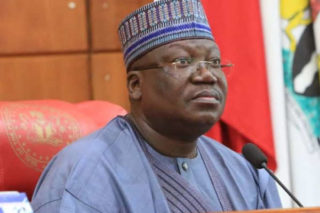
Senate President Ahmed Lawan, a member of the APC. APC senators rejected electronic transmission of election results

Read also:

Again, court voids NBC’s powers to fine broadcast organisations

Banditry: Coalition condemns NBC sanctions on Trust TV, others


There were reports that the leadership of the APC had instructed its members in the National Assembly to reject moves, supported by the majority of Nigerians, to adopt electronic transmission of results in the 2023 elections.

Although it is widely believed that the APC’s opposition to electronic transmission of results is based on poor performance in the last six years, the party’s members in the Senate justified their decision to reject electronic transmission of results with the claim that the NCC had said that only 43 per cent of Nigeria had internet network.

Following the endorsement by 52 APC senators, the Senate adopted the amended Section 52(3), which read, “INEC may consider electronic collation of results provided the national network coverage is adjudged to be adequate and secured by the Nigerian Communications Commission and approved by the National Assembly.”

Initially, Section 52(3), in the report submitted by the Senate Committee on INEC, had read: “The commission (INEC) may transmit results of elections by electronic means where and when practicable.”

We have capacity to deliver electronic transmission of results -Telecoms operators

The provisions of Section 52(3), as adopted by the Senate, implies, if signed into law,  the NCC – the telecommunications sector regulator – would have to convince the National Assembly before the lawmakers could approve electronic transmission of results in future elections in Nigeria.

By further implication, it also means that should the provision come into law, it was the National Assembly, rather than Nigerians, that would determine if election results would be transmitted electronically. And going by the APC’s majority in the federal legislature and the party’s leadership’s opposition to the moves to include electronic transmission of election results in the Electoral Act, it is highly unlikely that the National Assembly would approve the arrangement.

The APC senators and others who oppose the move raised concerns over the capacity of the telecommunications sector to guarantee electronic transmission of results.

However, representatives of telecoms operators, including captains of industry associations, have insisted that the current level of infrastructure and internet network coverage in Nigeria can guarantee the transmission of election results through electronic means.

Chairman of the Association of Licensed Telecom Operators of Nigeria (ALTON) Gbenga Adebayo told The ICIR that telecoms operators in Nigeria had the capacity to transmit election results electronically in all parts of the country.


Gbenga Adebayo President Association of Licenced Telecom Operators of Nigeria


Adebayo noted that the telcos were ready to deploy their services for election coverage once NCC gave them the go-ahead.

“Yes, with what we have today, the telecommunications sector can support INEC and the country in whatever they want to do. Telecoms services are available in all the local governments of the country, so that is not a problem at all.

“With what we have, the industry can support the electoral commission and the government in this regard.  The NCC is fully prepared to guarantee electronic transmission of results. In terms of capacity, we have more than enough capacity to ensure electronic transmission of results across the country.

“The integrity of the service is guaranteed, the quality of service is assured and I am sure once the NCC gets the right communication from government, it will tell the industry what next to do and we are good to go. There are no concerns and no worries at all. The industry is prepared,” Adebayo said.

The 3G network, which is the minimum requirement for data services, is available in most towns, villages and communities across Nigeria, while the 4G network is obtainable in most cities.

“We have 3G and 4G networks in most areas and once you have 3G network you can do data services so I think we are more or less covered.”

Adebayo added that there would be no questions concerning the integrity and credibility of the election results transmitted through the infrastructure of the telecoms operators.

“The telecoms industry will not be a party in the electoral system, it will only be a vehicle for electronic transmission of results. The NCC and the sector have no role to play in the outcome of the electoral process, they can’t determine the results,” he stressed.

Also speaking with The ICIR, the immediate past president of the Association of Telecoms Companies of Nigeria (ATCON) Olusola Teniola noted that some of the members of the National Assembly who were opposing the inclusion of electronic transmission of results in the Electoral Act were giving excuses with unfounded concerns over the reliability of the telecoms sector.


Olusola Teniola immediate past president Association of Telecoms Companies of Nigeria (ATCON)


But he stressed that NCC was very much aware of the reliability and sustenance of telecoms infrastructure which he said represented more than ‘$16 billion worth of investment by at least one company in the industry and collectively $72 billion dollars.’

Dismissing claims that available capacity in the sector could not guarantee reliable electronic transmission of results, Teniola said, “We (telecoms operators) can only state that the political arena should feel comfortable that the technology that would be adopted for electronic transmission of results will actually work and will not be subjected to failure.”

Noting that there were suggestions that, maybe, during collation and transmission of results all the telecoms companies could go offline, he said, “That has never happened in Nigeria. That statement is just scaremongering and is not backed by any empirical evidence.”

“I think we should be thinking of ways of ensuring that technology benefits the people through the process of electronic voting because all over the world, it has demonstrated transparency and delivered results in a timely manner,” he added.

The National Association of Telecoms Subscribers (NATS), an umbrella body of consumers of telecommunications services in Nigeria, also faulted the APC senators’ claim that the level of telecoms services and infrastructure in the country could not be relied upon for electronic transmission of election results.

Chairman of NATS Deolu Ogunbanjo, in an interview with The ICIR, noted that should the NCC eventually be given the responsibility of determining whether the telecommunications network coverage in the country was adequate for electronic transmission of election results when the amended Electoral Act came into law, the commission would have no reasons to advise against the transmission of results through electronic means.

“NCC cannot tell us that electronic voting or transmission of election results through electronic means cannot be done at this stage when broadband penetration is deep and high. And NCC is proud about this. They are deepening broadband penetration every day,” Ogunbanjo said.

He further faulted the amended Section 52(3) passed by the Senate, noting that the clause brought NCC into the electoral process and could thereby politicise the commission.

“It is INEC that is given the responsibility through the Electoral Act to conduct elections. The INEC will now liaise with the NCC to ensure that electronic voting or electronic collation and transmission of results is possible.”

Data from the NCC show that broadband penetration in Nigeria, which refers to the amount of the internet access market that high speed or broadband internet has captured, increased from 21.21 per cent in April 2017 to 40.66 per cent in April 2021.


NCC Executive Vice-Chairman Umar Danbatta


NCC data show that in April 2021, 77.605 million Nigerians were connected to the internet, up from 40.481 million in April 2017.

However, Nigeria has recorded a decline in broadband penetration in recent months following the Nigerian government’s recent policy of linking the National Identity Number (NIN) with SIM cards. The Nigerian government had announced that it hoped to achieve 90 per cent broadband penetration in the country by 2023.

The reported claim by the APC senators that the NCC said only 43 per cent of Nigeria had internet network could not be verified, but there are indications that the lawmakers were referring to the level of broadband penetration in the country.

However, chairman of Association of Licensed Telecom Operators of Nigeria, Adebayo, noted that, currently, there were no infrastructural or internet network coverage challenges that could prevent electronic transmission of election results in Nigeria as telecoms services were available in all the local governments across the country.


INEC postpones physical registration of voters to July 26

THE Independent National Electoral Commission has rescheduled the physical registration of voters earlier slated for July 19 to July 26.

“The physical registration of voters will now commence on Monday 26 July 2021. Online registrants that have scheduled appointments from 19th July 2021 to 23rd July 2021 will have their appointments rescheduled,” said INEC Chairman on Information and Voter Education Committee Festus Okoye in a statement on Wednesday.

Okoye said that the postponement was due to the Federal Government’s declaration of July 20 and July 21 as public holidays.


Read also:

Bye-elections: INEC raises alarm over plans to disrupt process

SDP’s Ajaka accuses INEC of manipulating Kogi poll, says won’t go to court

Off-cycle polls: SERAP urges INEC to identify, arrest electoral offences’ sponsors

INEC declares Diri winner of Bayelsa poll


The commission assured that no eligible Nigerians would be left out in the continuous voters’ registration which, according to Okoye, had been designed to last for a year.

“It is important to emphasise that this Continuous Voter Registration will take place over a period of one year. The Commission assures all Nigerians that no citizen eligible to register as a voter will be left behind.”

He said about 542,576 persons had already registered on its online portal which it launched on June 28 for voters to input and edit their information before they could complete the physical registration at designated centres across the country.

Sixty-six per cent of these figures, the commission said, were youths between the ages of 18 and 34.

“Out of 542,576 online registrants so far, 356,777 (or 66%) are young people between the ages of 18 and 34 years. This is followed by 134,719 middle-aged registrants who fall between 35 and 49 years. The third category is elderly persons aged between 50 and 69 years of which 44,896 Nigerians have registered,” Okoye said.

Ozigbo, Soludo excluded as INEC releases list of Anambra guber candidates

The Independent National Electoral Commission (INEC) has left out the People’s Democratic Party (PDP) candidate Valentine Ozigbo on the list of cleared candidates for the November 6 Anambra governorship election.

The commission also excluded the factional candidate of the All Progressives Grand Alliance (APGA) Chukwuma Soludo from the list.

INEC Chairman on Information and Voter Education Committee Festus Okoye stated this in a statement on Wednesday.

Okoye, who is also one of INEC national commissioners, cited persisting court orders for the exclusion of Ozigbo.

Before the primary elections, APGA had been rocked by a leadership crisis with two factions laying claims for leadership of the party.

While the Victor Oye-led faction conducted the primaries that produced Soludo, the Jude Okeke faction conducted the primary that declared Chukwuma Micheal Umeoji as the party’s candidate.

Also, a state High Court sitting in Awka, Anambra State, had earlier this month barred INEC from accepting any individual presented by the PDP as its governorship candidate until the outcome of a suit brought before it was determined.

A parallel candidate of the November 6 poll in the state Ugochukwu Uba had dragged INEC, PDP and Valentine Ozigbo before the court in a suit marked A/230/2021, praying, among others, for the nullification of the poll which produced Ozigbo.

Granting his prayers, the presiding judge, O. A. Nwabunike ordered INEC not to accept anybody presented as the candidate of the second defendant, the PDP, until the determination of the outcome of the suit.

“The defendants are hereby ordered and directed to await the determination or outcome of this suit and restrained from presenting, receiving, parading, or accepting any person as the governorship candidate of the 2nd defendant’s party for the governorship election fixed for November 6, 2021 to elect governor of Anambra State,” the order read.

Inflation rate drops further to 17.75% in June, but Nigerians can’t buy food

THE Consumer Price Index (CPI) released by the National Bureau of Statistics (NBS) on Friday reveals that food prices in Nigeria remain unaffordable despite a drop in the country’s inflation rate to 17.75 per cent. 

“…NBS says food prices continued to rise in June but at a slower pace than in May 2021.”

The inflation statistics released by the NBS showed that the rate dropped from 17.93 per cent in May to the present rate of 17.75 in June, representing a decrease of o.18 per cent. 

The current composite food index (June, 2021) rose to 21.83 per cent, when compared to 22.28 per cent in May. Although food prices were on the to rise, it was at a much slower speed than in the previous month (May, 2021). 

Food Index

The composite food index rose to 21.83 per cent in June 2021 compared to 22.28 per cent in May 2021. This rise resulted from the increase in prices of bread and cereals, potatoes, yam and other tubers, milk, cheese and eggs, fish, soft drinks, vegetables, oils and fats and meat. 

Inflation Trend, June 2021.

On month-on-month basis, the food sub-index increased by 1.11 per cent in June 2021, up by 0.06 per cent points from 1.05 per cent recorded in May 2021. 

The average annual rate of change of the food sub-index for the 12-month period ending June 2021 over the previous 12-month average was 19.72 per cent, 0.54 per cent points from the average annual rate of change recorded in May 2021 (19.18 per cent). 


Core Inflation

The core inflation, which excludes the prices of volatile agricultural produce, stood at 13.09 per cent in June 2021, down by 0.06 per cent when compared with 13.15 per cent recorded in May 2021. 

The core sub-index increased by 0.81 per cent in June 2021 on month-on-month basis. This was down by 0.43 per cent when compared with 1.24 per cent recorded in May 2021. 

The prices of garments, passenger travel by air and by road, motor cars and vehicle spare parts, shoes and other footwear, pharmaceutical products, medical services, hairdressing salons and personal grooming establishments, cleaning, repair and hire of clothing, clothing materials, other articles of clothing and clothing accessories, furniture and furnishing and fuels and lubricants for personal transport equipment, recorded the highest increases. 

One an average 12-month annual rate of change, the index was 11.75 per cent for the 12-month period ending June 2021. This is 0.25 per cent point higher than 11.50 per cent recorded in May 2021. 

State Profiles

All Items Inflation 

All-items inflation on year on year basis was highest in Kogi (23.78), Bauchi (20.67per cent) and Jigawa (19.81per cent), while Cross River (15.53per cent), Delta (15.18per cent) and Abuja (15.15per cent) recorded the slowest rise in headline year-on-year inflation.

On month-on-month basis, however, in the same month,  all-items inflation was highest in Kano (2.22per cent), Akwa Ibom (1.98per cent) and Osun (1.92per cent), while Bauchi (0.00per cent) recorded no change in headline month-on-month with Abuja and Cross River recording price deflation or negative inflation (general decrease in the general price level of food or a negative food inflation rate). 


Food Inflation 

In June 2021, food inflation on year-on-year basis was highest in Kogi (30.34per cent), Enugu (25.18per cent) and Kwara (24.78per cent), while Bauchi (18.97per cent), River (18.92per cent) and Abuja (17.09per cent) recorded the slowest rise in year on year inflation.

On month-on-month basis however, June 2021 food inflation was highest in Jigawa (2.67per cent), Edo (2.43) and Cross River (2.16per cent), while Lagos (0.14per cent), Borno (0.06per cent) and Kwara (0.02per cent recorded the slowest rise in food inflation. 

 In addition to the impact of insecurity and COVID-19, food inflation has been an important metric in determining economic recovery and stability. High costs of feeding has its toll on living and displaces citizens below poverty line. 

A Benue State-based farmer Daniels Terver explained that the major problems affecting farmers such as herder-farmer crisis, logistics and high cost of production  were yet to change in the country, attributing it to high cost of food in the country.

“Many farmers in Benue, which is the food basket of the nation, are not farming due to herdsmen who are ready to destroy farms and kill people. What then do you expect?”

Terver, also an economist, explained that fall in general inflation could be attributed to open borders since December 2020 and ease of COVID-19  lockdown.

NBC warns television, radio stations against glamourising insecurity

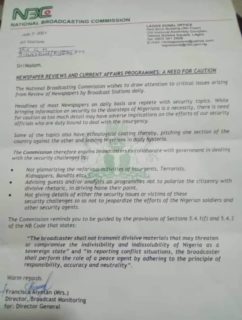
THE National Broadcasting Commission (NBC) has warned television and radio stations in the country against ‘glamourizing’ the nation’s insecurity in their daily newspaper reviews.

This was contained in a warning letter written to broadcasting stations by the Director of Broadcast Monitoring Francisca Aiyetan on July 7, 2021.

The letter, which was seen by The ICIR on Friday, enjoined broadcasters to collaborate with the Federal Government in dealing with the security challenges by not amplifying the nefarious activities of insurgents, terrorists, kidnappers and bandits.


Read also:

Insecurity: Nigerians shun Police ‘Rescue Me’ app

Insecurity: Resign if you can’t cope, Atiku tells Tinubu


She also urged broadcast stations to advise guests and analysts on their programmes not to polarise the citizenry with divisive rhetoric, in driving home their point.

Copy of the letter seen by The ICIR

Aiyetan said while bringing information on security to the doorsteps of Nigerians was a necessity, there was a need for caution as too much detail might have adverse implications on the efforts of the security officials who were duty-bound to deal with the insurgency.

She urged broadcasters and analysts not to give details of either the security issues or victims of these security challenges so as not to jeopardise the efforts of the Nigerian soldiers and other security agents.

“The National Broadcasting Commission wishes to draw attention to critical issues arising from Review of Newspapers by Broadcast Stations daily,” the letter read in part.

“Headlines of most Newspapers on daily basis are replete with security topics.

“Some of the topics also have ethnological coating thereby, pitching one section of the country against the other and leaving Nigerians in daily hysteria.”

The commission reminded broadcast stations to be guided by the provisions of sections 5.4.1(f) and 5.4.3 of the NB Code, which stated that “The broadcaster shall not transmit divisive materials that might threaten or compromise the indivisibility and indissolubility of Nigeria as a sovereign state.

“In reporting conflict situations, the broadcaster shall perform the role of a peace agent by adhering to the principle of responsibility, accuracy, and neutrality.”

Attention turns to Reps after APC senators’ conspiracy against electronic results transfer

AFRAID of losing the 2023 general elections, the All Progressives Congress (APC) senators voted against the wish of Nigerians on Thursday by rejecting electronic transfer of election results.

Fifty-two senators of the ruling party placed electronic transfer of results at the behest of the Nigerian Communication Commission (NCC) and the National Assembly – a move seen  by lawyers as unconstitutional.

All eyes are now on the House of Representatives members who have the opportunity to re-write the APC senators’ faux pas and give the people their wish on Friday.

Most People’s Democratic Party (PDP)’s senators voted in favour of transmitting election results without any interference in line with the wish of Nigerians.

There were contentions and disagreements by lawmakers on Thursday over a new amendment to Section 52(3) of the Electoral Act Amendment  Bill moved by the Senate Deputy Whip Sabi Abdullahi. The APC senators said the section should be amended to read:

“The commission may consider electronic transmission provided the national network coverage is adjudged to be adequate and secure by the Nigerian Communications Commission and approved by the National Assembly.”

The original copy of Section 52(3) of the Act had read that “The Commission may transmit results of elections by electronic means where and when practicable.”

Abdullahi’s motion, which was immediately adopted by lawmakers from the ruling APC), sharply divided the Senate  along political lines, plunging the session into a rowdy one.

It immediately forced the Senate into a closed-door session as Senate President Ahmad Lawan could not bring the chamber back to order.

After the Senate ended its closed-door session, Senate Minority Leader Enyinaya Abaribe called for a division, challenging the Senate President’s ruling on clause 52(3) on electronic transmission.

He said he wanted Nigerians to know who was voting for what.

At the end of voting, 28 senators, mostly from the opposition PDP, voted for the original amendment in the report, while 52 senators from the APC voted for the amendment proposed by Senator Sabi Abdullahi.

This means the majority of Senators voted that Independent National Electoral Commission(INEC) might consider electronic transmission provided the national network coverage was adjudged to be adequate and secure by NCC and approved by the National Assembly.

Lawyer and human rights activist Abdul Mahmud said the priviso of Section 52(3) of the Electoral Act Amendment Bill, “Before INEC can transmit electronically, NCC must adjudge national coverage is adequate and secure, and National Assembly must approve,” was in conflict with Section 78 of the 1999 Constitution, which provided that “the registration of voters and conduct of elections shall be subject to the direction and supervision of INEC.”

Many APC senators argued that due to low broadband penetration in Nigeria, electronic transfer of results might produce controversial results.

However, INEC has argued that it has the capacity to transmit elections electronically, having done so in Edo and Ondo elections already.

Many Nigerians have argued that if  the Unified Tertiary Matriculation Exam (UTME), bank transactions, and National Identification Number (NIN) were done online, why should APC senators stand against electronic results transfer.

Many Nigerians say the senators and the APC, having performed poorly in the last six years, area afraid of losing the 2023 election.

“We know why this is happening. They are afraid of losing power in 2023. Power is sweet, isn’t it?” Head of Anambra Voters Forum Frank Umeh said.

A Twitter user @tobennaOGB said, “We are gradually getting there with the deliberate loophole they have created in the law.”

“Remember, 2015 card reader compliance was 50+%,while 2019 dropped abysmally to to 19+%,” the Twitter user added.


The fallacy of herders-farmers crisis

FORMER Lagos State Governor and chieftain of the All Progressives Congress (APC), Bola Tinubu, made a profound statement when he paid a condolence visit to the family of elder statesman and Afenifere leader, Reuben Fasoranti, in Akure on July 14, 2019.

Fasoranti’s daughter, Funke Olakunrin, was gunned down two days earlier at Ore junction on the Sagamu-Benin highway, and her driver, Tayo Ogundare, said hooded men emerged from the bush to attack them.

Announcing the tragedy the same day, the then Afenifere spokesperson, Yinka Odumakin, blamed herdsmen for it. His claim was echoed by the deceased’s brother, Kehinde Fasoranti, who told journalists that policemen at Ore police station confirmed that his sister was killed by herdsmen.

Tinubu was not impressed and cautioned against stigmatising herdsmen.


READ ALSO: 

Climate change: Oyo smallholder female farmers count losses, seek govt. support

The many hurdles of women farmers in Niger

Niger women farmers help each other when banks fail them


“I am extremely concerned about security but I don’t want stigma. I can go through history of kidnapping and we know how it started, where it all started. There are lots of copycats. How many years ago have we faced insecurity in this country and cases of kidnapping? Is Evans a herdsman who was arrested?” he asked.

Then, what seem like an alibi for herdsmen. “I don’t want to be political, I will ask you where are the cows?” he asked journalists.

Tinubu was right even though he was being sarcastic and many Nigerians, particularly his Yoruba kinsmen, rightly took umbrage at what they perceived as an unfortunate sarcasm.

But speaking tongue-in-cheek, as he did, does not detract from his message, which is, can there really be herdsmen without a herd of domesticated animals? The answer is no. A herdsman looks after a herd of animals such as cattle or goats. And those who killed Olakunrin were not herdsmen. They were terrorists.

For too long, Nigerians have been deceived by their leaders that there is a conflict between farmers and herders.

But that is a false narrative that obfuscates issues.

What have those who go in the dead of the night to sack entire villages, kill and maim indigenes and occupy their ancestral homes got to do with the quest for herders to rediscover age-long grazing routes?

What has farmers-herders conflict got to do with abduction of students and demand for millions of naira ransom? Do they want to convert the schools to grazing reserves?

This false narrative has been pushed by no less a person than President Muhammadu Buhari and top officials of his administration. But there is no intractable conflict between farmers and herders in Nigeria, at least not one that accounts for the ongoing horrendous bloodbath.

Fulani herdsmen have always co-habited with other ethnic nationalities across the country. Desert encroachment is not a new phenomenon.

So, when Buhari tells his Attorney General and Minister of Justice, Abubakar Malami, to dig up a so-called First Republic grazing gazette as a solution to the acts of terror that is about to consume the country, he is being economical with the truth.

Adopting the euphemism of banditry is equally deceitful. What is going on in all the nooks and crannies of Nigeria is terrorism. Simple!

Many people have wondered why the country is unable to tame this monster. The answer is simple. Those in positions of authority are pretending that what ails Nigeria is malaria (herders-farmers crisis) when it is malignant tumor (full-blown terrorism).

They are either living in denial or deliberately mischievous.

Buhari knows the truth. Those killing and maiming indigenes in states like Benue, Plateau, Nasarawa, etc., are not herdsmen. They are dyed-in-the-wool terrorists. There is no conflict between farmers and herdsmen in the Southwest.

Those who have taken over the forests here are not herders. They are inveterate gunmen and anarchists. The fact that the government would rather protect such vile characters, most of who are not Nigerians, while haranguing the likes of Sunday Igboho who volunteered to defend their people in the face of abdication of duty by security operatives explains why there is no solution in sight.

But the president should be mindful of the inescapable verdict of history. Enabling terrorists and terrorism is a slippery slope.

Anyone in doubt should ask Nasir el-Rufai, Kaduna State Governor.

On July 15, 2012, el-Rufai tweeted boastfully: “We will write this for all to read. Anyone, soldier or not that kills the Fulani takes a loan repayable one day no matter how long it takes.”

And what was his angst? He was miffed that the administration of President Goodluck Jonathan was waging a war against terrorists, some of them Fulani, in the North.

And true to his word, when he became Governor in 2015, he told his Fulani kinsmen that one of their own has ascended the throne. Rather than waging war against terrorists, he went looking for them in their countries with sacks of tax-payers’ money for alimony.

But as John F. Kennedy, former U.S. President once said, “Those who foolishly sought power by riding the back of the tiger ended up inside.”

El-Rufai has found out to his chagrin why those who ride a tiger are always afraid to dismount.

This week, his government disclosed that bandits killed 222 people, injured 266 and kidnapped 774 in the last three months, and have started collecting protection levies from farmers in communities across 12 of the 23 local government areas of the State.

“Many farmers in these areas, fearing for their lives and safety, have abandoned their fields altogether. This has already begun to affect crop yields, and the threat of food insecurity looms large,” Commissioner for Internal Security and Home Affairs, Samuel Aruwan, told el-Rufai and other top government officials on Tuesday.

Receiving the security report, a highly flustered el-Rufai simply called on citizens to be law-abiding – whatever that means. The swagger is gone. That is the danger inherent in condoning evil and pampering terrorists.

In the same Kaduna State, terrorists have attacked five schools and abducted 204 students since January.

Last Friday, the State Commissioner of Police, Umar Muri, told the visiting Inspector General of Police, Alkali Baba Usman, that Kaduna State, the capital of Northern Nigeria, has become a failed state, literally.

Highways in the state – Kaduna-Abuja highway, Kaduna-Birnin Gwari Road and Kaduna-Zaria Road – are no-go areas for law-abiding citizens. Terrorists hold sway.

Schools are so unsafe that the brash el-Rufai, the state’s chief security officer, secretly withdrew his son from school to be taught at Kashim Ibrahim House, probably the only safe haven in the entire state. He has shut down 13 other schools because of terrorists.

El-Rufai, the roaring lion, is now a lily-livered executive governor, subdued by the same Frankenstein Monster he fed. He is no longer loquacious. Terrorists have forced him to eat the humble pie. What is happening to him is poetic justice, many insist, a deserved comeuppance for the injustice he has meted out to non-ethnic Fulani in the state.

A highly distressed CP Muri narrated his ordeal to IGP Usman thus: “From our records, the schools that have been attacked and students abducted in Kaduna State from January 2021 to date alone include:

“College of Forestry and Mechanisation, Mando Afaka where 37 students were kidnapped on March 11, 2021 and subsequently rescued.

“Green Field University along Kaduna-Abuja Highway where 23 students were kidnapped on April 20, 2021 and five of the students were gruesomely killed by their abductors while the rest were released.

“Nuhu Bamalli Polytechnic, Zaria where two kidnapping incidents were recorded, first involving three students on December 14, 2020 who were later released by their abductors and the second incident was recorded on June 10, 2021 involving two lecturers and seven students.

“The National Centre for Tuberculosis and Leprosy in Saye, Zaria LGA of Kaduna where eight staff were kidnapped on July 4, 2021 and Bethel Baptist Academy, Maraban Rido, Kaduna where 135 students were kidnapped on July 5, 2021 out of which 28 were rescued and the remaining 107 victims still in captivity.”

To be sure, none of these students was rescued. They either escaped or were released by their abductors after their parents paid millions of naira as ransom. In Kaduna, the state is non-existent, literally. Terrorists are the lords of the manor.

When in 2018 kidnappers abducted a prominent traditional ruler in the state, Maiwada Raphael Galadima, the Agwom Adara, and murdered him after demanding N18 million ransom, el-Rufai chastised the victims rather than go after the villains.

Today, the chicken has come home to roost for both him and Kaduna State – as it has, indeed, for both Buhari and Nigeria.

Buhari should jettison this herders-farmers fallacy and wage a decisive war against terrorists. If not, the fate that has befallen Kaduna State under El-Rufai’s watch will also befall the entire country.

I hope it is not too late for him to listen. And to take action.

Human rights activist Chidi Odinkalu joins The Fletcher School

THE Fletcher School has announced the appointment of international human rights law expert Chidi Anselm Odinkalu to a Professor of Practice faculty position for a three-year term beginning in the Fall of 2021.

He will join Fletcher’s multi-disciplinary faculty focused on preparing tomorrow’s leaders to use the latest legal, political, economic, and business thinking to generate policies and inform decisions that shape global events, the educational institution said.

“Chidi Odinkalu is a renowned human rights activist with a distinguished record of public service who has spent more than three decades working at the front line of human rights law and research, development advocacy, international institutional law and governmental policy,” said  Academic Dean at The Fletcher School Kelly Sims Gallagher.


Read also:

Human rights violations thrive under Tinubu – Amnesty International

NBC Broadcasting Codes infringe on human rights – ECOWAS Court


“His profound contributions to the advancement of human rights intersect with Fletcher’s mission and core values,” she noted. “We are delighted to welcome him to the Fletcher community.”

Odinkalu’s background reflects an extensive record of research, publishing and teaching in the areas of human rights, development law and public policy throughout Africa, Europe and the US.

Most recently, he was part of a three-member team that mediated the readmission of The Gambia into the Commonwealth, where he litigated human rights before national and regional courts as well as in transnational contexts.

From 2011 to 2015, he chaired Nigeria’s National Human Rights Commission, the country’s lead institution for the protection of human rights and promotion of human rights policy. He also worked within human rights philanthropy.

For 10 years prior, he was involved in drafting the Protocol for the African Court on Human and Peoples’ Rights through to adoption by the Organisation of African Unity (OAU), in Ouagadougou, Burkina Faso in 1998.

In 2004, he led the advocacy effort for its entry into force with the creation of the Coalition for the African Court on Human and Peoples’ Rights.

For more than three years, until 1993, Odinkalu was head of legal services for the Civil Liberties Organization in Lagos, where he was responsible for litigation, advocacy and constituent building strategies, as well as managing relationships with the military government and its institutions.

“I am honored to join the Fletcher community and look forward to working with Fletcher’s students, faculty and administration to apply intellectual and strategic innovation to the most pressing challenges in governance and international human rights law,” said Odinkalu.

A native of Nigeria born into internal displacement during the country’s civil war, he received his PhD in law from the London School of Economics and Political Science.

PIB: Senate okays 3% allocation to host communities amidst protest by South-South lawmakers

THE Nigerian Senate has adopted the three per cent allocated to host communities in the controversial Petroleum Industry Bill (PIB) amidst protest by lawmakers from the South-South region.

The southern lawmakers led by George Sekibo and Seriake Dickson, representing Rivers and Bayelsa states respectively, had urged the chamber to peg the fund to five per cent for host communities.

Sekibo said he was not part of the vote on the allocation clause and Senator Dickson said his privilege had been breached as his views were not accommodated.


Read also:

PIB: Buhari shows no regard for the feelings of Niger Delta people -PANDEF

Nigeria’s overbearing subsidy era to end once PIB gets presidential assent -Minister


However, Senate President Ahmad Lawan replied that the Senate had taken a resolution on the matter and could not go back on its decision.

The host community allocation was one of the clauses left in consideration after the National Assembly passed the PIB earlier this month.

The PIB is expected to transform Nigeria’s oil industry.

The three per cent is different from the 13 per cent derivation fund  paid to oil-producing communities from the federation account.

Instead, the three per cent allocation will come from an entity’s actual yearly operating expenditure of the preceding financial year in the upstream, midstream and downstream sectors.

All contributions will be deposited in a trust fund for host communities.

According to a draft of the PIB, the trust fund will enhance peace and cordial relationship between oil companies and host communities.