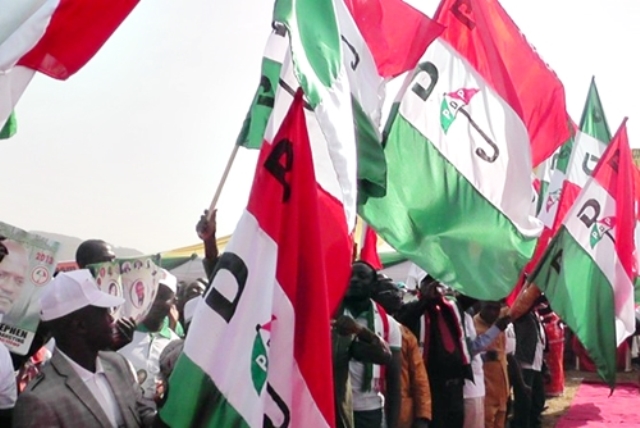
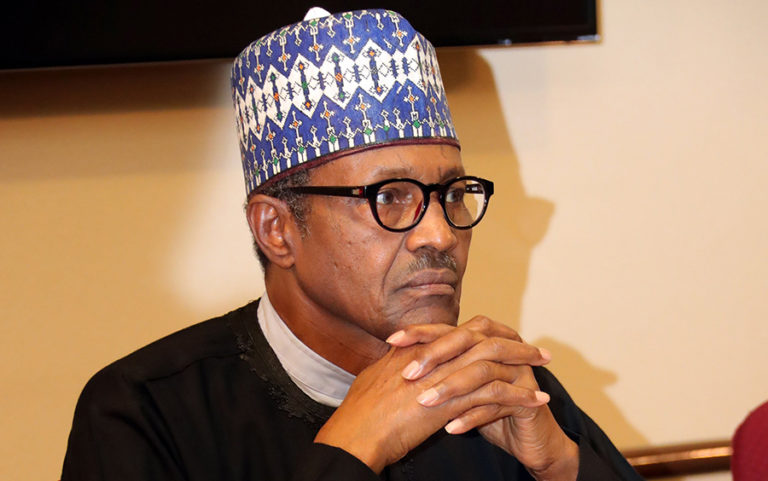
The People’s Democratic Party (PDP) is planning to mobilise its members across Nigeria to protest against insecurity, the Twitter ban by President Muhammadu Buhari and other ills facing the nation.
The party is also perfecting processes for legal action against the Nigerian government’s suspension of the microblogging site, including the directive to broadcasting stations to pull out of the platform.
In a statement signed by its National Publicity Secretary Kola Ologbodiyan on Monday, the party warned the government against harassing foreign envoys and other members of the international community in the country.
The #RevolutionNow campaigner and Sahara Reporters Publisher Omoyele Sowore is also leading Nigerians to protest on June 12, Nigeria’s Democracy Day.
PDP’s warning came on the backdrop of the government’s invitation to some prominent envoys in the country on Monday.
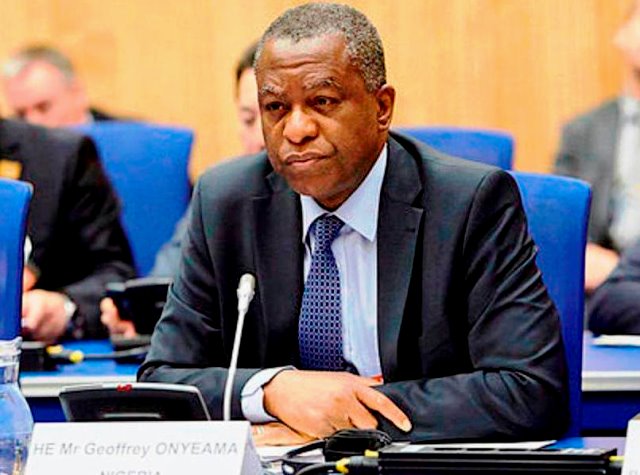
Minister of Foreign Affairs Geoffrey Onyeama had invited the envoys, including those of Canada, the Republic of Ireland, the United States, the European Union, the United Kingdom, and the Republic of Ireland and briefed them on the motive behind Twitter’s suspension.
The envoys had said they were strongly disappointed by the action of the Nigerian government, hours after the platform was suspended last Friday.
“We strongly support the fundamental human right of free expression and access to information as a pillar of democracy in Nigeria as around the world and these rights apply online as well as offline. Banning systems of expression is not the answer,” the envoys jointly said in a statement.
Minister of Information Lai Mohammed had announced the suspension last Friday over “persistent use of the platform for activities that are capable of undermining Nigeria’s corporate existence.”
Twitter had deleted Buhari’s tweet suggestive of a repeat of the onslaught against the South-East – the region that lost millions of its people to the country’s 30-month civil war.
The war took place between July 6, 1967 and January 15, 1970.
Buhari spoke against rampaging secessionists who wanted the Biafran nation for the South-East.
The agitation has led to attacks on security formations, killings of security officers, destruction of electoral institutions and other crimes in the region.
Security agencies and some governors in the region have blamed the proscribed Indigenous People of Biafra (IPOB) and its security arm, the Eastern Security Network (ESN), for the attacks.
In its statement, PDP said it was alarmed by the invitation of the envoys, which it claimed smacked of intolerance towards the international community “as obtained in Idi Amin’s dictatorial Uganda of 1971 to 1979.”
It said the defence of freedom of expression was a fundamental duty that envoys owed their host nations and the international community.
The party argued that no law or statute prohibited foreign envoys from speaking out against the violation of internationally enshrined freedom of expression and right to social interactions as provided by Twitter and other social media platforms.
“It is instructive for the APC and the Buhari administration to note that given the current downturn of our national life under their misrule, Nigeria cannot afford to be declared a pariah nation. The PDP is worried that the APC administration has been overheating our polity leading to escalation of insecurity, killings, bloodletting and violence in the country.
“Nigerians would recall that ahead of the 2019 general elections, one of the leaders of the APC, the Kaduna State governor, Mallam Nasir el-Rufai, had threatened that some of the foreign election monitors would be returned to their countries in body bags.
“Our party, therefore, demands that the Federal Government should listen to the voice of reason, end its misrule and desist from infringing on the rights of Nigerians as being witnessed in the illegal and vexatious ban on Twitter,” the party said.
PDP took charge of the Nigerian government from May 1999, when the country returned to democratic rule, till May 2015 after its candidate at the presidential poll and incumbent president Goodluck Jonathan was defeated by Buhari.
Meanwhile, as many Nigerians bypass the government using virtual private networks (VPN) to continue the use of Twitter, two clergymen with large followerships in the country defied the government’s order on Monday and vowed to continue to use the platform.
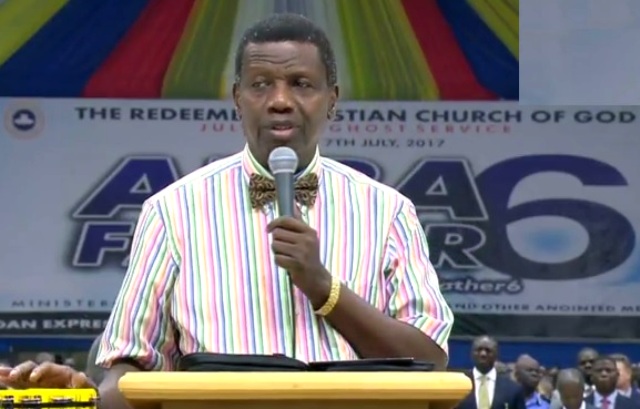
General Overseer of the Redeemed Christian Church of God Enoch Adeboye said he had his church in over 170 countries, adding that tweeting was in accordance with Article 19 of the UN universal declaration of human rights.
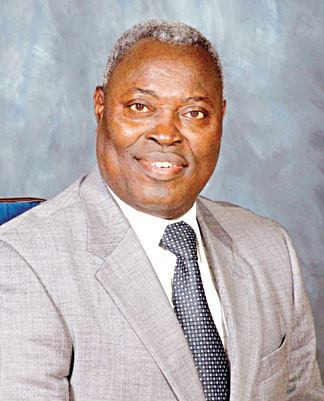
On his part, founder and General Superintendent of the Deeper Christian Life Ministry Williams Kumuyi said he had members in five continents of the world who shared the contents of the church’s Twitter page.
It was the first time both men would openly disobey the Nigerian government.
FORMER Chairman of the Independent National Electoral Commission (INEC) Attahiru Jega says that Nigeria has been afflicted with the misfortune of having greedy and visionless leaders who are essentially clueless in matters of governance.
According to a report, Jega said this on Saturday while delivering a lecture in honour of the First Civilian Governor of Lagos Lateef Jakande.
Describing Jakande as an undoubtedly selfless leader, the former INEC boss stated that Nigerian leaders’ lack of selflessness and vision had led to recklessness in the handling of governmental affairs.
“One of the major challenges of good democratic governance in Nigeria is that of having selfless, patriotic, inclusive and effective leadership in order to drive Nigeria national affairs and the development of the political economy towards the goal of democratic governance,” he said.
Jega also noted that getting things right in Nigeria would require selflessness and vision on the part of the leaders.
Part of the lecture posted on his Twitter handle on Monday was met with mixed reactions by Nigerians on the social media.
While some Twitter users described Jega’s statements as hypocritical and accused him of being the ‘architect of our doom,’ other Nigerians stated that he was entitled to his sentiments and described elections under him as largely free and fair.
Jega was chairman of INEC in 2015, during which he presided over the general elections that ushered the Muhammadu Buhari-led government into power. He had previously conducted the 2011 election that brought in Goodluck Jonathan.
THE Media Rights Agenda (MRA) and the International Press Centre (IPC) have condemned the Federal Government’s suspension of Twitter in Nigeria, describing the action as a violation of citizens’ rights to freedom of expression and access to information.
In a statement released on Monday, the organisations threatened to lodge a formal complaint on the Twitter ban before the African Union (AU) and the United Nations (UN), citing the UN Human Rights Council resolution on the promotion, protection and enjoyment of human rights on the Internet, adopted in 2018.
They also cited the Declaration of Principles, which frowned upon states’ interference with the rights of individuals to seek information through any means of communication and upon removal, blocking or filtering of content, unless such interference was justifiable and compatible with international human rights law and standards.
“The Government’s claim on the persistent use of the platform for activities that are capable of undermining Nigeria’s corporate existence is not only unsubstantiated but is clearly bogus and illogical.
“The pertinent questions here are: who is the government accusing of using the platform for activities capable of undermining Nigeria’s corporate existence? Is it the owners of Twitter that are posting such tweets? Is it foreigners using the platform for such activities? Or is it all Nigerians who are on Twitter or some of those Nigerians who use Twitter? The Government needs to be specific on this.
“If some Nigerians on Twitter are using it in a manner that displeases the Government, how is banning Twitter for all Nigerians, in contravention of international norms an appropriate response? And if the government is convinced that people should not be allowed to post whatever they like on Twitter, no matter how divisive, hateful or inciting, why was the Government itself so angry when Twitter deleted a tweet by President Muhammadu Buhari, which it adjudged to be in violation of this same principle?”
Executive Director of the IPC Lanre Arogundade stated that while the government appeared to be in a fight against Twitter, it was actually acting against its citizens by infringing on their constitutionally guaranteed human rights.
“If anything, the threat by the Minister of Justice, Mr. Abubakar Malami (SAN), to prosecute anyone that disobeys the ban is indicative of the fact that if this government has its way all social media platforms would be shut down because they have become veritable avenues for citizens to express their disaffection with its acts of mis-governance,” he said.
The organisations called on the Federal Government to comply with internationally agreed norms and standards and rescind the ban, which had put Nigeria in danger of becoming a rogue nation constantly violating international human rights and international laws.
THE General Superintendent of the Deeper Christian Life Ministry William Folorunso Kumuyi has tweeted despite the ongoing ban on Twitter by the Nigerian government.
Kumuyi, who tweeted on Monday, said he would continue to reach out to millions of his followers spread across five continents of the world despite the government’s ban.
“In view of the Twitter ban in Nigeria, please note that the content shared on this handle is targeted at a global audience in more than 5 continents and over 100 nations and we shared the contents from any of these locations,” he said.
Kumuyi’s tweet.
This is coming hours after his counterpart from the Redeemed Christian Church of God Enoch Adeboye also defied the ban.
Adeboye said that his action was in accordance with Article 19 of the United Nations Universal Declaration of Human Rights.
“The Redeemed Christian Church of God is domiciled in more than 170 Nations & Territories. The tweets here are in accordance to Article 19 of the UN universal declaration of Human Rights,” he said.
Minister of Culture and Information Lai Mohammed had announced the ban in a statement on Friday shortly after Twitter deleted a controversial and violent tweet by President Buhari.
The Association of Licensed Telecoms Operators of Nigeria (ALTON) announced, in a statement on Saturday, that it had complied with the government directives. However, millions of Nigerians have continued to use the platform through Virtual Private Networks (VPN).
The Nigerian government has, however, said it will lift the ban if only the platform can be used responsibly.
Minister of Foreign Affairs Geoffrey Onyeama gave the condition in a meeting with envoys of the United States, United Kingdom, Canada and the European Union in Nigeria on Monday.
Onyeama noted that the micro-blogging platform was not taken down because it was threatening the country, but the ban was meant to stop Twitter from being used for criminal activities.
“The condition would be responsible use of the social media and that really has to be it,” he said, when asked when the ban would be lifted.
“We are not saying that Twitter is threatening the country or any such thing. Why we have taken this measure is to stop them to be used as platforms for destabilisation and facilitation of criminality or encouragement of criminalities.”
The minister stressed that while the government would accommodate criticisms and diverse opinions, it would not sit back and watch social media become a tool for destabilising the country.
THE General Overseer of the Redeemed Christian Church of God (RCCG) Enoch Adeboye has tweeted despite Nigerian government’s ban on Twitter.
Adeboye, who defied the ban on Monday, said his action was in accordance with Article 19 of the United Nations Universal Declaration of Human Rights.
“The Redeemed Christian Church of God is domiciled in more than 170 Nations & Territories. The tweets here are in accordance to Article 19 of the UN universal declaration of Human Rights,” he said.
Article 19 of the UN Universal Declaration of Human Rights, which Nigeria subscribes to, by the virtue of its membership in the UN, reads that:
“Everyone has the right to freedom of opinion and expression; this right includes freedom to hold opinions without interference and to seek, receive and impart information and ideas through any media and regardless of frontiers.”
File: Pst. Adeboye’s tweet.
Minister of Culture and Information Lai Mohammed had announced the ban in a statement on Friday shortly after Twitter deleted a controversial and violent tweet by President Buhari.
The Association of Licensed Telecoms Operators of Nigeria (ALTON) announced, in a statement on Saturday, that it had complied with the government directives. However, millions of Nigerians have continued to use the platform through Virtual Private Networks (VPN).
The Nigerian government has, however, said it will lift the ban if only the platform can be used responsibly.
Minister of Foreign Affairs Geoffrey Onyeama gave the condition in a meeting with envoys of the United States, United Kingdom, Canada and the European Union in Nigeria on Monday.
Onyeama noted that the micro-blogging platform was not taken down because it was threatening the country, but the ban was meant to stop Twitter from being used for criminal activities.
“The condition would be responsible use of the social media and that really has to be it,” he said, when asked when the ban would be lifted.
“We are not saying that Twitter is threatening the country or any such thing. Why we have taken this measure is to stop them to be used as platforms for destabilisation and facilitation of criminality or encouragement of criminalities.”
The minister stressed that while the government would accommodate criticisms and diverse opinions, it would not sit back and watch social media become a tool for destabilising the country.
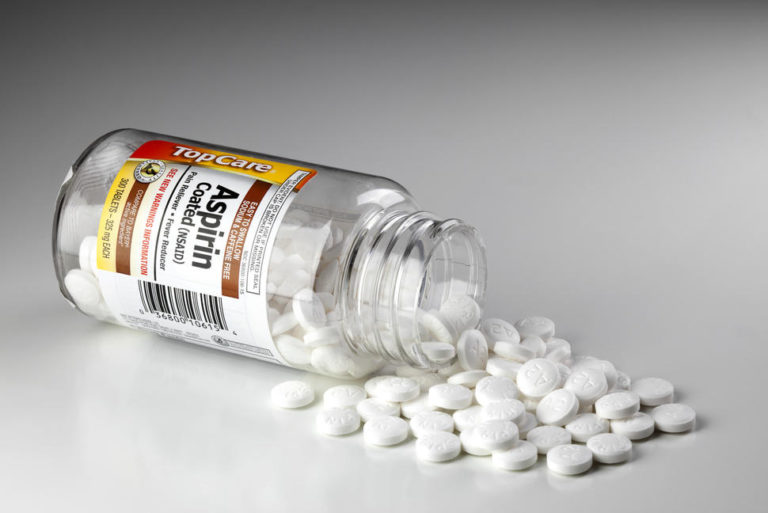
A CLAIM circulating on several WhatsApp groups in Nigeria says that aspirin, antibiotics and anti-inflammatory drugs are the best cures for COVID-19.
The claim started spreading in 2020 in various parts of the world, especially the United States, but it gained momentum in Nigeria between March and May 2021.
“After a period of scientific discovery, doctors in Russia explained the treatment method by saying that the disease is a global trick,” part of the claim said.
“It is nothing but coagulation inside blood vessels (blood clots) and a method of treatment. Antibiotic tablets anti-inflammatory and take an anticoagulant (aspirin). This indicates that it is possible to treat the disease.”
The propagators of the information attribute the drug prescription to the Ministry of Health of the Russian Federation, which, they say, claims that ventilators are no more necessary.
In this report, the reporter investigates the efficacy of aspirin, antibiotics and anti-inflammatory drugs in treating COVID-19 patients.
Who is circulating the claim?
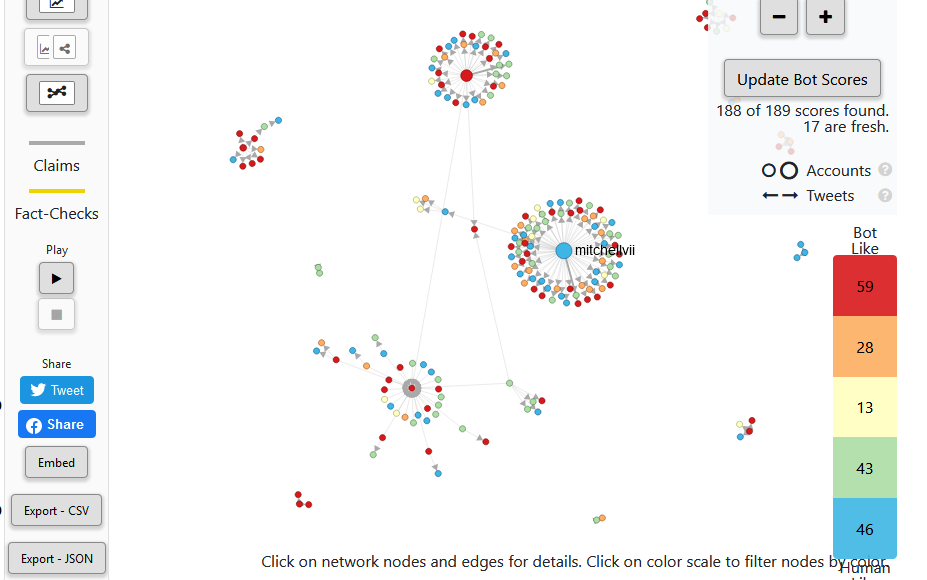
From the WhatApp platforms, the information is investigated on Twitter to identify those spreading it. Open-source intelligence (OSINT) is used to achieve this result. One of the OSINT tools, Hoaxy®, is deployed by the reporter to visualise the spread of the information on Twitter.
Hoaxy® identifies several individual Twitter handles spreading the information to various communities. One of them is @unseen1_unseen, which has spread the information to at least five communities.
The communities have further disseminated the claim to eight other communities of Twitter users.
The Twitter handle @unseen1_unseen has 26 500 followers and follows 11 700 handles. It does not look like anyone’s real name, but it is an influential handle. The handle was created in July 2017, but a reverse image search shows that the handle stole the profile picture. The picture belongs to Frédéric Bastiat (1801-1850), one of the leading advocates of free markets and free trade in the mid-19 century.
Two of the handle’s followers are @Matt_VanDyke and @MurrayNewlands, founder of Sons of Liberty International Mattew VanDyke and contributor at Forbes Murray Newlands. Tweets from @unseen1_unseen support former President Donald Trump of the United States to handle shared sentiments with the former president.
The handle criticised the media for blaming the ex-president for January 6, 2021 insurrection in Washington D.C. It also lampooned Jim Acosta of CNN for criticising Trump’s claim that COVID-19 originated in China.
Donald Trump is a well-known disseminator of false information. Washington Post identified 30,573 Trump’s misleading claims in four years. Most of his supporters are known to spread some of his false information.
Hoaxy visualization produced @mitchellvii, @unseen1_unseen and @cofefe777as spreaders claiming that aspirin, antibiotics, and anti-inflammatory drugs are cures for COVID-19.
Another identified disseminator of the information is a Twitter account, @mitchellvii, which posted the same claim on August 12, 2020. This particular handle has spread the information mainly to a large number of Twitter users in a community. It is operated by Bill Mitchell, an American whose tweets support the Republican Party. In one of his posts, he casts aspersions on Liberals and immigrants in the United States. His tweets on immigration and COVID-19 are not different from Donald Trump’s.
However, the handle has been suspended by Twitter. It is not clear why the social networking service took that line of action.
One other major player visualised by Hoaxy is @cofefe777. This account quoted another Twitter user, @knucklebuster80, on October 15, 2020, regarding a claim that “doctors rate Hydroxychloroquine ‘most effective’ coronavirus treatment.”
The account has, however, been suspended by Twitter. It is also not clear why Twitter has taken that step.
But Twitter often takes action against the spread of false or misleading information or, in this case, disinformation. Trump’s tweets were once deleted, and his account later suspended by Twitter.
Covfefe or cofefe is a misspelling used by Donald Trump in a viral tweet in 2017. The meaning is not clear up to the moment.
All the three accounts are of American origin, not Russian, though the information was said to have emanated from the Eastern European country.
Did Russia claim that aspirin, antibiotics and anti-inflammatory drugs are the best cure for Covid-19?
Russia has taken unusual steps in handling COVID-19. In June 2020, barely six months after the virus broke out, Russia approved an anti-influenza drug, Aviifavir, for the treatment of COVID-19 and the country planned to start delivering it to hospitals that month. In September, the country approved another drug, R-Pharm’s Coronavir, for treatment of outpatients with mild to moderate COVID-19 infections.
The information on aspirin, antibiotics and anti-inflammatory drugs being cures for COVID-19 was attributed to the Ministry of Health of the Russian Federation.
However, findings show that the ministry has not approved aspirin, anti-inflammatory drugs or antibiotics for COVID-19 treatment.
The reporter combs through the Ministry of Health of the Russian Federation’s website, but there is no evidence that it supports or has approved the use of those drugs to treat COVID-19.
Russia’s support for the three sets of drugs is also not published in all the papers investigated online. Russia, in March 2021, debunked some of the accompanying claims, such as the assertions that COVID-19 was man-made and it did not exist.
Antibiotics Credit: www.nps.org.au
How effective are aspirin, antibiotics and anti-inflammatory drugs for COVID-19 treatment?
A fact-check done by Reuters in April 2021 said symptoms of COVID-19 “can be treated with anticoagulants and anti-inflammatories, but antibiotics are not effective against the viral infection, and are only recommended for COVID-19 patients who also have a bacterial infection.”
The World Health Organization (WHO) guidance says the body has not recommended antibiotic therapy or prophylaxis for patients with mild or moderate COVID-19 unless signs and symptoms of a bacterial infection exist.
“Antibiotics cannot affect viruses,” a virologist, Bola Oyefolu, professor of virology at the Lagos State University (LASU), tells this reporter.
He says viruses are acellular and do not have enzymes that can digest food.
“If viruses infect a man, they would live in the body. They are like the military that appoints the best hands to man various government ministries,” he notes.
“They direct the enzymes to start digesting their own food. Thus, antibiotics cannot affect virus, but it is possible to prepare chemicals that can affect the virus. However, they have bad side effects.”
He concludes that it is false to claim that antibiotics can cure COVID-19 – a virus.
Medicals News, an online magazine, supports Oyefolu’s claim.
“Antibiotics do not treat viruses but are only effective against bacterial infections. People with COVID-19 may receive antibiotics to treat secondary bacterial infections,” the magazine says in one of its 2020 articles.
On aspirin, the WHO has not approved the drug for the treatment of COVID-19, but health researchers claim it can affect the virus.
A group of researchers surveyed 24 COVID-19 patients.
They found that mortality in the aspirin group was significantly lower than that in the non-aspirin group (P = .021 and P = .030, respectively).
A news magazine HealthDay News supports this claim, asserting that low-dose aspirin can shield people from COVID-19.
But a Nigerian trader Joy Ikonne claims that she used aspirin in March 2021 while suspecting COVID-19 infection – without conducting tests.
“I had terrible side effects such as abdominal pain, and I had heartache,” she says.
“I nearly died,” she added.
Biochemist Ife Azih, who has studied aspirin for over 30 years, tells this reporter that “aspirin in a minute concentration increases the body’s immunity.” Azih explains that the mechanism of treating COVID-19 with aspirin is not yet known.
He warns Nigerians and the world against using drugs without doctors’ prescriptions.
“Do not use it if it is not approved; it can kill. And let nobody assume that aspirin is a cure for COVID-19,” he says.
So far, there is no approval for the use of aspirin to treat COVID-19. The WHO and the National Agency for Food and Drug Administration and Control (NAFDAC), the body regulating drug use in Nigeria, has not conducted clinical trials on aspirin and have only approved the AstraZeneca vaccine for prevention and treatment COVID-19.
On anti-inflammatory drugs, Harvard Medical School advises doctors to prescribe dexamethasone and other corticosteroids as potent drugs against the virus.
Oyefolu agrees, explaining that any anti-inflammatory drug can ginger an immune response.
“The body is hostile to anything foreign. When there is something foreign in the system, the cells will send microphages – their first line of reaction,” he says.
“The microphages are like soldiers. They have strong enzymes that will tear those foreigners into pieces. Other cells in the body will produce antibodies,” he explains.
Anti-inflammatory drug Credit: www.nationalelfservice.net
Researchers, however, say that “it is biologically plausible that anti-inflammatory therapy should be revisited or explored.”
They argue that “only safe and efficacious vaccines and antiviral drugs were possibly the final answers to the control of the new coronavirus pandemic.”
NAFDAC, on its part, has not approved aspirin, antibiotics and anti-inflammatory drugs for the treatment of COVID-19 in Nigeria.
“Clinical trial is not a thing one can handle casually; it requires guidance, supervision and experiment before approval so that it will not cause further damage,” NAFDAC’s Director-General Mojisola Adeyeye says.
“The trial is to determine whether it is actually working or not, after a sustained observation. NAFDAC is supposed to be the centre of the regulation of clinical trial effects,” she explains.
“Nobody can do any job of the clinical trial in the clinic or anywhere without passing through NAFDAC protocol,” she warns.
This publication was produced as part of IWPR’s Africa Resilience Network (ARN) programme in partnership with the International Centre for Investigative Reporting (ICIR) and the Centre for Information Resilience (CIR), and Africa Uncensored.
PRESIDENT of the Senate Ahmed Lawan, on Monday, said the much-awaited Petroleum Industry Bill (PIB) would be passed this month.
Lawan gave this information on Monday at the ongoing Nigerian International Petroleum Summit -a four day event organised by the Federal Ministry of Petroleum Resources.
The Senate President did not give any particular date for the passage of the all-important bill that provides the framework for the oil and gas sector in Nigeria, but he revealed that the bill, when passed into law, would represent the ‘Nigerian interest’ and ensure that the oil and gas sector worked for the benefits of Nigerians.
“The legislature and the executive have been working harmoniously towards the passage of the bill and the PIB would have been passed by May. We need speed and accuracy, and want to be fair in listening to everyone in getting the bill passed,” he said.
He stressed that one factor that had quickened the passage of the bill process was largely the harmonious collaboration between the executive and the legislature.
“The previous solo efforts by the executive arm of government since 2008 dragged down the effort to get the best of this all-important bill and its quick passage,” Lawan said.
He remarked that the National Assembly could not pass the bill again in 2011 because of the solo efforts by the executive arm of government while working on the bill. He also pointed out that in 2015, there was a reversal when the National Assembly conceived the bill, yet the PIB could not materialise.
“In our legislative agenda for 2019-2023, in the 9th National Assembly, we decided that we have to work together both the executive and the legislature, and not the solo efforts of any of the arms in delivering the PIB. This will enable us to have a bill that narrows down our differences through the robust engagement of all stakeholders.
“We’ve been able to achieve that significantly, and the speed the National Assembly has shown in working on the PIB and reaching where we are today shows that we’ve chosen the right path.
“As I speak, the joint committee of both the Senate and federal House of representatives on the PIB has finished work, and are finalising their reports on what we submitted at both chambers. Our expectations are that we would pass the PIB, within this month of June by the grace of God,” he explained.
Why PIB matters:
Despite operating in the oil and gas sector for more than 50 years, there is no proper fiscal framework that guides the operations of the sector to sustain investor confidence, amid concerns of a global shift away from the oil to clean energy.
Analysts believe that the PIB needs to be passed despite its imperfections, stressing that it is important to put a stop to an overwhelming subsidy regime in the country.
“Pass the PIB to grow investor confidence, which would enable commercialisation of the sector for investments and put a stop to these overwhelming subsidy,” oil sector governance expert Henry Ademola Adigun told The ICIR.
President of the Major Oil Marketers Association of Nigeria Adetunji Oyebanji also told The ICIR that the government would save up funds for its infrastructural development if it stopped subsidy payment and passed the PIB.
Some of the key objectives of the PIB include: safeguarding the long-term macroeconomic stability of the country, reformation of the extractive industry institutional framework, provision of better clarity for Nigeria and its partners (particularly IOCs), entrenching a domestic gas-to-power market, increasing oil and gas production, protecting the environment while supporting the economic diversification agenda of the country.
THE Nigerian government has said it will lift the current ban on Twitter if only the platform can be used responsibly.
Minister of Foreign Affairs Geoffrey Onyeama gave the condition in a meeting with envoys of the United States, United Kingdom, Canada and the European Union in Nigeria on Monday.
Onyeama noted that the micro-blogging platform was not taken down because it was threatening the country, but the ban was meant to stop Twitter from being used for criminal activities.
“The condition would be responsible use of the social media and that really has to be it,” he said, when asked when the ban would be lifted.
“We are not saying that Twitter is threatening the country or any such thing. Why we have taken this measure is to stop them to be used as platforms for destabilisation and facilitation of criminality or encouragement of criminalities.”
The minister stressed that while the government would accommodate criticisms and diverse opinions, it would not sit back and watch social media become a tool to destabilise the country.
“Differences of opinion is not a problem; everybody will not think alike. But lives matter; Nigerian lives matter and we have to do everything we can to preserve Nigerian lives. And when we feel our goals are threatened, actions need to be taken.”
The envoys had, in a joint statement on Saturday, condemned the ban on Twitter by the Nigerian government. They also decried the move by President Buhari’s administration to gag free speech which, according to them, was not associated with democratic governance.
While pledging to continually support Nigeria in achieving unity, peace and prosperity, the envoys noted that the ban was coming at a critical time when Nigeria needed to accommodate more communication to address a host of challenges facing it as a nation.
Minister of Culture and Information Lai Mohammed had announced the ban in a statement on Friday shortly after the platform deleted a controversial and violent tweet by President Buhari.
On Saturday, the Association of Licensed Telecoms Operators of Nigeria (ALTON) announced, in a statement on Saturday, that it had complied with the government directives. However, millions of Nigerians have continued to use the platform through Virtual Private Networks (VPN).
THE Nigerian government is meeting with envoys of the United States, the United Kingdom, Canada and the European Union in Nigeria over their joint statement on the suspension of Twitter, a social media platform in the country.
Head of Crisis Monitoring and Public Communications Division of the Nigerian Ministry of Foreign Affairs Kimiebi Ebienfa made this known in an invitation to newsmen in Abuja on Monday.
According to the statement, the meeting would take place by 12 noon on Monday at the Minister’s Conference Room, 8th Floor of the ministry.
“I am directed to inform that following the recent ban on Twitter by the Federal Government and Press Statement issued by some Heads of Diplomatic Missions Accredited to Nigeria on the subject matter, the Honourable Minister of Foreign Affairs, His Excellency, Geoffrey Onyeama has invited the affected Ambassadors to a meeting today at 12 noon,” it said.
The diplomatic missions had, in a joint statement on Saturday, condemned the ban on Twitter by the Nigerian government. They also decried the move by President Buhari’s administration to gag free speech which, according to them, was not associated with democratic governance.
But the diplomatic missions noted that the move was coming at a critical time when Nigeria needed to accommodate more communication to address a host of challenges facing it as a nation.
“These measures inhibit access to information and commerce at precisely the moment when Nigeria needs to foster inclusive dialogue and expression of opinions, as well as share vital information in this time of the COVID-19 pandemic,” they said.
The diplomatic missions, however, pledged to continually support Nigeria in achieving unity, peace and prosperity.
“The path to a more secure Nigeria lies in more, not less, communication to accompany the concerted efforts of Nigeria’s citizens in fulsome dialogue toward unity, peace and prosperity. As Nigeria’s partners, we stand ready to assist in achieving these goals.”
TWENTY-FOUR hours after the gruesome murder of no fewer than 15 persons in Igangan, Oyo State, by suspected Fulani herdsmen, the Presidency is yet to communicate to Nigerians on the death of its citizens.
Igangan, a southern Oyo town, came under a night attack on Sunday, which left several persons dead and properties destroyed.
The agrarian community has been in the spotlight for over five years, with intermittent clashes between farmers and Fulani herders leading to several deaths.
Minister of Information and Culture Lai Mohammed had called a press conference in Abuja last week barely two hours after President Muhammadu Buhari’s tweet was deleted by Twitter for threatening to use the civil war-like force against the people of the South-East.
“It is not acceptable anywhere in the world for anybody, anywhere, to stay in the comfort of wherever he is and now give directives to go and kill soldiers, go and kill policemen,” Mohammed said.
However, the recent killing of Nigerian citizens in Igangan, Oyo State, has not elicited the same response from the minister as his office has been silent on the recent killings.
Also, there has been no official statement issued by media aides to President Mohammadu Buhari such as Special Adviser on Media and Publicity Femi Adesina, and Senior Special Assistant on Media and Publicity Garba Shehu on the recent killings.
Governor of Oyo State Oluseyi Makinde, in a statement on his Facebook page, said he received the ‘shocking news’ of the attack but did not mention the Fulani. Makinde indicated that he was still being briefed on the circumstances behind the attack.
The recent attack comes on the heels of the ejection of two Fulani leaders, Seriki Saliu and Iskilu Wakili, from Igangan by local security outfits after they were accused of conniving with kidnappers who abducted some of the indigenes of Ibarapa, a town in Igangan, for ransom.