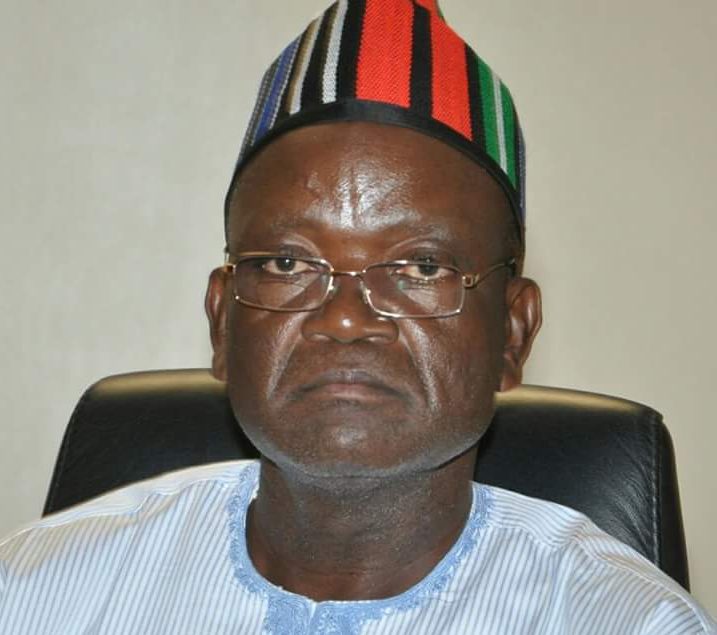
SPECIAL Assistant to Benue State Governor Samuel Ortom on Security Christopher Dega has been assassinated in Jos, Plateau State.
A statement by the State’s Police Spokesperson Ubah Ogaba confirmed that the late Dega was killed by some yet-to-be-identified three gunmen at a restaurant in Bukuru, in the Jos South Local Government Area of the state on Tuesday night.
According to him, preliminary investigation revealed that Dega who left Makurdi on Tuesday was trailed to Jos where he was shot.
The statement added some suspects connected to the murder have been arrested and are in police custody while investigations are ongoing to fish out perpetrators.
Reacting to the development in Markurdi on Wednesday, Ortom described Dega’s death as very sad.
The governor said that the late aide who was a former Commissioner of Police in both Edo and Borno states was one of the active hands in his administration.
“Retired AIG Dega served with me here, and this is someone who has retired but is not tired and was very active. So, for him to have been murdered in the manner they did, a retired AIG gunned down. This is very sad,” he said.
Why sympathizing with his family, he decried the growing insecurity across all regions of the country.
Dega’s death is coming days after Ahmed Gulak, the former Political Adviser to President Goodluck Jonathan was murdered in Owerri, Imo State on Saturday where was said to have gone to spearhead the South-East zonal constitutional review.
THE Committee to Protect Journalists (CPJ) has urged Nigerian authorities to conduct a swift and thorough investigation into the death threats received by BBC journalist Peter Nkanga and ensure his safety.
Nkanga is the BBC reporter who produced the documentary on Ahmed Isah, popularly known as ‘Ordinary President,’ host of the Brekete Family programme, a popular human rights radio show. The host of the programme was seen slapping a woman who allegedly set her niece’s hair on fire.
Since the documentary was shot on May 17, the journalist has been receiving calls and text messages from unknown and angry people threatening to harm and kill him over the piece which generated a lot of mixed reactions on social media and eventually led to the suspension of the programme by the Nigerian Broadcasting Communication (NBC), CPJ said.
“Nigerian authorities must promptly and thoroughly investigate the threats made to BBC journalist Peter Nkanga and ensure his safety,” said CPJ’s Africa Program coordinator Angela Quintal, in New York.
“Death threats and systematic harassment can be a form of censorship, and authorities must take any attempts at intimidation seriously.”
Similarly, the BBC has asked the Nigerian Inspector General of Police Usman Alkali Baba to investigate the alleged threat to Nkanga and other crew members who produced the documentary.
In a letter written to the IGP by the Editor of the BBC Africa Eye Marc Perkins, the news medium urged the police to hold Isah accountable if anything should happen to any member of the crew or their family members.
Perkins noted that the documentary was objectively carried out and not targeted at the work of the Brekete Family Program host.
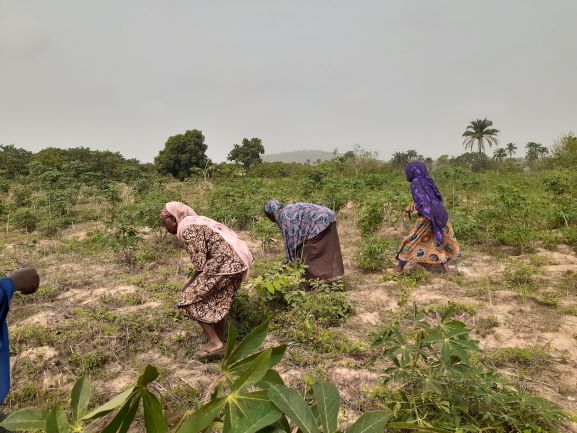
WOMEN farmers in Oke-Ogun, Oyo State, have alleged that support meant for them are being diverted to non-farmers.
They say their travails occasioned by insecurity, climate change, and obsolete farm implements are worsened by the COVID-19 pandemic despite various programmes and interventions by the government at both state and federal levels.
But the Special Adviser to Governor Seyi Makinde of Oyo State on Agribusiness Debo Akande said the state had provided palliatives for more than 9,000 farmers in the state.
“There is some support that has been allocated to smallholder farmers and also young people. More than 9,300 smallholder farmers were supported last year by the state government with inputs. They are farmers that we have their records and that are in the biometrics within the state, and they were supported.”
The special adviser said the government also initiated a scheme to mitigate the effects of the pandemic on smallholder farmers.
“In addition to that, Oyo State has also subscribed to a project called N-CARES, which has to do with the mitigation of the impact of COVID-19 on smallholder farmers that would be supporting more than 6,000 farmers this year, including youths,” Akande added.
During the COVID-19 pandemic, the Central Bank of Nigeria (CBN) rolled out interventions to cushion the effects of the pandemic on micro, small, medium and large scale businesses in Nigeria.
The interventions included a one-year extension of the moratorium on principal repayments for the bank’s intervention facilities, regulatory forbearance granted to banks to restructure loans given to severely affected sectors by the pandemic.
Other measures were: Creation of a N100 billion credit facility for affected households, including for micro, small and medium enterprises (MSMEs) through NIRSAL Microfinance Bank.
A visit to some smallholder women farmers in the Oke-Ogun region of the state did not show any result of these incentives as many complained of neglect in the scheme.
Even in Iseyin, Iwajowa, Saki East, Irepodun and Olorunsogo local government areas of the region, women farmers said the palliatives meant for farmers were given to non-farmers.
But Akande insisted the state budget for agriculture for 2021 was the third largest of all the overall budget.
Governor Makinde also said his administration would remain determined to utilise agriculture to drive its economy. It had allocated 4.43 per cent of the total budget proposal to the agricultural sector.
For the benefit of hindsight, in the 2019 budget, there was a provision for the purchase of agricultural equipment worth N50 million and other equipment at N10 million. Still, such provisions were not made in the 2020 budget in Oyo State Ministry of Agriculture.
Also, the production of farm seedlings was put at N350 million in 2019, but no appropriation was made in 2020.
In 2020 budget estimates under the Agribusiness Development Agency, N48.5 million was slated for special projects and assignment, while N130 million was budgeted for educational programmes and N3.3 billion for empowerment in the agric scheme. About N68 million was for farm development.
Findings show that the state’s average provision for the agriculture sector from 2015 to 2019 has hovered around four per cent of the total budget, according to Centre for Social Justice data.
The Small Scale Farmers Organisation in Nigeria argues that budgetary provisions for agriculture are too small and that this hinders productivity in the agricultural sector and affects the income of smallholder farmers, especially women.
For Latifat Muritala, a smallholder farmer in Olorunsogo Local Government Area of Oyo State, her major complaints are funds and farming inputs.
Latifat Muritala at farm
“We do not have funds for farming, and we lack the implements for doing farming work in the modern-day. Various programmes rolled out by either the state or federal government didn’t get to us at all,” she said.
Muritala, a middle-aged woman who works with other nine smallholder female farmers, also complained about huge loss on her investments.
She said: “We have been incurring losses in recent years due to low yield.
“My colleagues and I spent more than N150,000 on farming, and we did not realise up to 50 per cent of the production cost.
“We buy seeds and fertiliser from the market or those who were not farmers but got seeds and fertiliser from the government.
“We pray that this planting season will be better than the past.
“We need rain for farming to go well this year.
“As it stands now, rain ought to have fallen so that cultivation would go well, but we have yet to have rainfall, and that was the cause of devastation to crops during the planting season in 2020.”
Similarly, Jemila Yunisa, another smallholder farmer from Irepodun Local Government Area of the state, said she and many of her colleagues did not receive anything from the state government and accused the state government of diverting support to people who had nothing to do with farming.
Yunisa said: “We didn’t receive any support or palliatives from the government to the farmers.
“The real farmers are not the beneficiaries here, but those who pretend to be farmers take advantage of the real farmers to get the benefits from the government.
“They use Facebook, WhatsApp and other social media technologies to pose as the real farmers, and they get the benefit.
“We take loans from cooperatives and banks, and we find it difficult to repay our loan because of the challenges we are faced with.
“We leased the land we use for farming at N5,000 per acre.
“If we leased 10 acres, it means we pay N50,000.
“Lack of adequate rainfall is the number one challenge we were faced with in 2020; we are equally faced with the issue of cattle devastating our farmlands.”
Musilatu Ashiru, a 55-year-old smallholder farmer in Saki East Local Government Area, corroborated this, saying: “We only hear of the various government interventions, but we have never received any.
“I was part of the Anchor Borrowers Scheme, but in the past, we did not benefit from the scheme, and when we wanted to opt out of the scheme, they appealed to us and promised that there would be a change and the benefits would go round, but till now we are yet to receive any support or benefit.
“We do hear that the government gives out seeds, fertilisers and other support, but we have never benefited from these till now.
“Those who are not into farming business receive these support and gestures; they, in turn, sell whatever they were given to farmers.
“Those of us in dire need of this support don’t receive them.”
Alimotu Sulaiman, a smallholder farmer in Iseyin Local Government Area, also said: “We have yet to receive any benefit from the government at both state and federal level.
“We are doing farming business with the little money we have.
“The microfinance banks that promised us loans have kept failing us.
“We filled out forms, we exhausted the passport photograph we took, and they kept saying next month till rainfall stopped.
“We know of the Anchor Borrowers Scheme, but we have never benefited from it.
“We are part of the All Farmers Association of Nigeria.
“In fact, I hold a women leader position there, but we have yet to get any benefit from the government; we keep hearing promises.”
Sulaiman, a 60-year-old smallholder farmer, recounted how she sent all her children to get formal education with the proceeds from her investment in agriculture.
She said: “We experienced total loss on the maize we planted last season. The same for yam and termites devastated our cassava plantations. It was providence that made us have some yields; we experienced losses due to lack of rainfall.
“We pay N50,000 interest rate on every N250,000 loan we secured.
“So we pay back N300,000, but we barely realise N100,000 from our venture in a year due to the devastation we experience.”
Taiwo Okunlola, a 48-year-old smallholder farmer in Iwajowa Local Government Area, said she and other farmers had to employ other means of funding their agriculture business when help failed to come from the government.
Okunlola said: “We have yet to receive any support from the government at all levels. We make contributions or take loans to fund our farming business. We buy fertilisers, chemical and seeds we use for our cultivation. We buy fertiliser at N8,000, or we buy at N9,000 if we need it in a hurry. We borrow tractors to do tilling and clear our land in preparation for planting.”
Last year, we hired a tractor at N6,000 per hectare, but this year it goes for N7,000, and we farm on 10 hectares of land.”
Almost all the smallholder women farmers interviewed said they lost a significant part of their investments, sometimes up to about 80 per cent, in the 2020 farming season.
These women feared that the ripple effects of their losses might affect food production in the 2021 planting season as they did not have resources.
Beyond the issue of palliatives are climate change and insecurity starring smallholder women farmers in the face in the region.
Though they said they had received various training on irrigation farming and other modern farming practices, they cannot practise them due to paucity of funds.
They appealed to the government to go through their unions in identifying and supporting real farmers.
Ashiru, the leader of SWOFON in Saki East Local Government Area, said the government could identify true farmers by going through the farmers association to know the true farmers such as AFAN.
He said: “We urge our government in all that they want to do for farmers that they should include AFAN in their plans.
“AFAN should have certain benefits it gets from each local government per time.
“If it gets to AFAN, then women farmers under SWOFON would get their due share.”
Aside from the lack of funds, other challenges facing smallholder women-farmers who constitute 60 per cent of the food production chain in Nigeria lack modern and women-friendly farming implements.
Given this, SWOFON, which has been at the vanguard of empowering smallholder women farmers in its charter of demand, advocates zero interest on loans for female farmers and supply of gender-friendly equipment, among others.
Part of the demands in the SWOFON charter states that there should be a review of customary land laws for small-scale women farmers to inherit the land for sustainability.
Others are that arable farmland should be allocated to smallholder women farmers’ cooperatives. The government should commit to smallholder women farmers in implementing policies, among other provisions.
However, there have been many partnerships with Oyo State Government to boost the agricultural sector: one of them was by German BMZ co-funded by the European Union, Nigeria Competitiveness Project, a four year €10 million project commissioned in 2020 with a focus on processing of tomatoes, pepper, chilli and ginger, among others.
In one of such collaborations in February 2020, the African Development Bank selected Oyo State as one of the two Strategic Agro-processing Industrial Zones and the hub for industrial cassava, poultry, fisheries, crop and livestock production.
The discussion is ongoing and will be finalised for implementation within the year, the government of Oyo State said.
Observers, therefore, note that with all these and more on the pipeline, there is hope for smallholder women farmers.
The state government has said it will work with medium and large scale enterprising to boost the state’s economy, and many stakeholders expect it to fulfil this promise.
. Emiola works with the News Agency of Nigeria.
This report was made possible with support from the International Budget Partnership and International Centre for Investigative Reporting.
THE Nigerian-American Diaspora Community has held a discussion with the U.S. Department of State on ways to address Nigeria’s security and economic challenges.
The discussion, which was coordinated by officials of the Nigerian-American Public Affairs Committee (NAPAC), centred around the Biden administration’s interest in ensuring a stable Nigeria.
President of NAPAC Nelson Aluya told the News Agency of Nigeria (NAN) in New York that the community was concerned and frustrated with the seeming ineptitude and lack of leadership in security leading to loss of lives.
He said the department was interested in the concerns expressed by Nigerians about creating a stable country back home and had expressed readiness to work with NAPAC.
“They (U.S. officials) recognised that there are multiple problems in Nigeria and they recognised the potential of the Nigerian-American Diaspora Community in the U.S. in solving those issues.
“Our goal is to pull Nigerians in the U.S. and across the globe together, into a strong and formidable force, so that together, we can collaborate with other Nigerian associations,” Aluya said.
He further explained that the essence of the interaction was to bring Nigerians in the U.S. together on a platform to listen to what the U.S. could offer Nigerian–Americans in their quest to provide help and resources.
In addition, he said, the meeting also provided an avenue to tell the U.S. officials what Nigerians in the U.S. could offer them and the possible avenues for collaboration.
The NUPAC president said the group would organise more town hall meetings to interact with the U.S. and Nigerian governments to brainstorm on ensuring a prosperous and peaceful Nigeria.
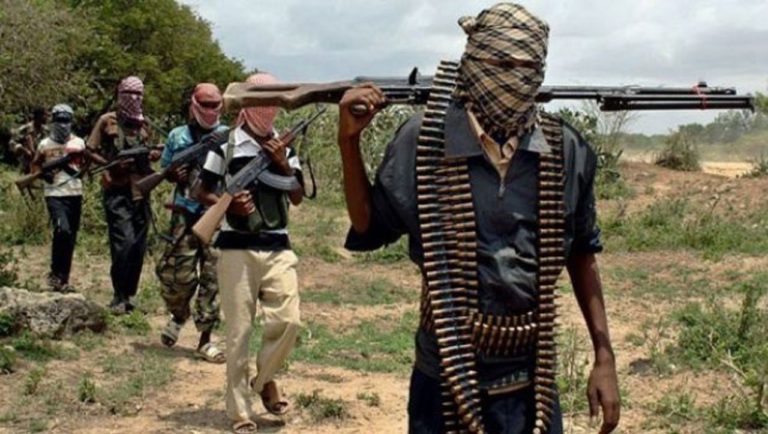
TERRORISTS have claimed responsibility for the kidnap of about 200 pupils of the Salihu Tanko Islamiyya School in Tegina, Niger State.
According to a report, the terrorists made contact with the school management on Monday, demanding the sum of N110 million for the release of the pupils by the end of Wednesday.
The headmaster of the institution Abubakar Alhassan stated that the terrorists threatened to kill the kidnapped pupils if the deadline was not met.
Alhassan also said that the message had been passed on to officials of the state government, who maintained that ransom would not be paid to terrorists.
In a statement signed by the Chief Press Secretary of the state Mary Noel-Berje, Deputy Governor Ahmed Mohammed Ketso disclosed that the government was in pursuit of the kidnappers, and measures were being taken to ensure the safe release of the Tegina Islamic School Children.
“We don’t pay ransom to abductors. We are trying to negotiate to see how we can bring them back safely,” it read.
The statement also noted that the government had identified some parents of the abducted pupils and assured them of the safe return of the children.
The ICIR had reported the kidnap of the pupils from the Islamic school in Niger State on Sunday. One person was shot dead, while another was injured during the incident.
In a statement released on its Twitter page two days ago, the Niger State government, announced that some of the younger kidnapped pupils had been released by the terrorists.
“Meanwhile, 11 children who were too small and couldn’t walk among the kidnapped Islamiyya Students, were released by the Gunmen,” it read.
THE Nigerian government has said that 88 per cent of people who received the first dose of COVID-19 vaccine in the country were frontline and healthcare workers.
Executive Secretary of the National Primary Health Care Development Agency (NPHCDA) Faisal Shuaib stated this on Tuesday at a media briefing in Abuja.
He said the elderly took the remaining 12 per cent of the vaccine.
The ICIR reports that while healthcare workers comprise nurses, doctors, and other workers in health facilities who help manage the virus, frontline workers, as implied by Shuaib, consist of security agents, politicians, journalists, and other people considered by the government to fit into that category.
Shuaib said nearly two million people (1.956 million) had received the first dose of Oxford/Astrazeneca vaccine in Nigeria.
Through COVAX Facility, a partnership between CEPI, Gavi, UNICEF and the World Health Organization (WHO), Nigeria received its first shipment of AstraZeneca/Oxford vaccine on March 2 this year.
The shipment contained 3.9 million doses from the Serum Institute of India (SII), the vaccine manufacturer.
Nigeria began its vaccination against the virus on March 15.
The Nigerian primary healthcare chief said the country recorded 10,027 adverse effects from people who took the first jab.
He explained that cases of mild, moderate and severe adverse events following immunization (AEFI) ranged from pain and swelling at the site of vaccination to more severe symptoms such as headaches, abdominal pain, fever, dizziness and allergic reactions.
Nigeria reported 86 cases of moderate to severe incidents, adding that all people who reported adverse effects from the vaccine had since fully recovered, he noted.
Five States with the highest records of AEFI are: Cross River (1,040); Kaduna (1,071); Lagos (796); Yobe (555); and Kebbi with 525 cases.
Meanwhile, the NPHCDA boss urged support from the public as it continued with the second and last phase of the vaccination.
About 73,465 people had received the second dose of the vaccine across Nigeria, Shuaib said.
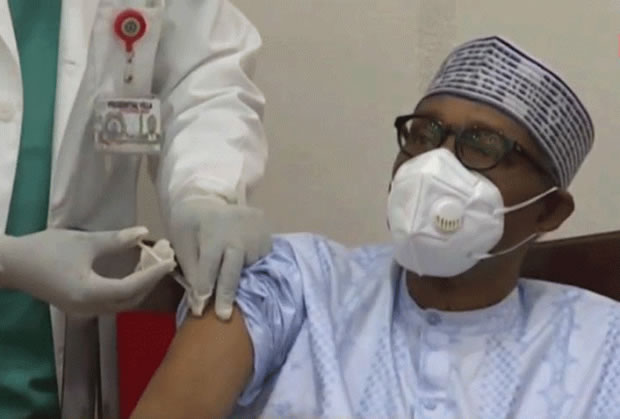
They include: President Muhammadu Buhari and Vice President Yemi Osinbajo, who got their final jab last Saturday.
GAVI, the Vaccine Alliance through UNICEF in partnership with Nigerian Centre for Disease Control (NCDC) and NPHCDA donated $8 million worth of personal protective equipment (PPE) to be used by the vaccinators.
“We continue to advise that all Nigerians who have received their first dose should check their vaccination cards for the date of their second dose and proceed to the same health facility where they got their first jab, to ensure full protection against COVID-19…
“We acknowledge the possibility of some people relocating from the states where they took their first doses. For this reason, we have made provision for special vaccination sites that could accommodate administering their second doses.
“It is also possible that due to certain circumstances, some of the sites used for the first dose vaccination may no longer be available. In this case, you are kindly advised to go for your second dose at the nearest vaccination post. The list of the vaccination sites is available on our website (www.nphcda.gov.ng),” said the agency.
Meanwhile, the country will wait till between July and September to get additional COVID-19 vaccine through the COVAX facility, Shuaib stated.
He, however, explained that bilateral conversations were ongoing to obtain from surplus vaccines “being stockpiled by developed countries.”
He also said the Federal Ministry of Health was working with critical stakeholders to fast-track the establishment of local vaccine production plants in the country.
PRESIDENT Muhammadu Buhari, on Tuesday, warned Biafran agitators who destroyed INEC offices in the Southeast that they “will soon have the shock of their lives.”
While promising to give the electoral body the needed support against further attacks, the president vowed to protect the Independent National Electoral Commission (INEC) offices and other national assets across the country.
Buhari disclosed this when he received the INEC Chairman Mahmood Yakubu in Abuja.
He announced that he received, on daily basis, security reports of the attacks on critical infrastructure in the country, saying that those behind the numerous incidents were determined to pull down his administration.
But he vowed to deal with the perpetrators behind the multiple attacks.
“Whoever wants the destruction of the system will soon have the shock of their lives. We have given them enough time….we will not allow those behind them to achieve their evil objectives,” he stated through his verified Twitter handle.
“I have assured INEC that we will make available to them everything they need to operate efficiently, so that no one will say we don’t want to go, or that we want a third term. There will be no excuse for failure. We will meet all INEC’s demands.”
Describing the series of attacks as totally unacceptable, Buhari emphasised that his administration had changed the service chiefs as demanded by the people. Thus, the responsibility lied with the security operatives to address the lingering security challenges confronting the country, he noted.
Besides, he warned the Biafra agitators against further tensions, stressing that some of those involved in the push for secession were too young to understand the level of destruction and loss of lives that occurred during the nation’s civil war in 1970. The civil war started from May 1967 to January 1970. No fewer than a million people reportedly died during the war.
Meanwhile, reports show that the nation’s electoral offices have witnessed multiple attacks in recent times. About 41 INEC offices have been reportedly attacked from February 2019 to May 2021.
INEC, had, as a result, condemned the multiple incidents and called for urgent intervention.
Political actors also shared similar concerns over the reoccurring situation.
The Indigenous People of Biafra (IPOB) have repeatedly been accused of those atrocities, especially in the South-East part of the country.
THE Speaker of the House of Representatives Femi Gbajabiamila has faulted the 1999 Constitution, stating that it falls short of standard because it was a product of a hurried national compromise to return the country to democratic governance.
Speaking at the South-West zonal public hearing on the ongoing constitutional amendments in Lagos on Tuesday, Gbajabiamila admitted that the constitution failed to address some critical national questions confronting the country.
He said that the National Assembly would need the inputs and support of the Nigerians to be able to amend the constitution to give it a national outlook.
“A nation’s constitution is the foundation of its existence. It is supposed to set the terms of our nationhood and define who we are in a manner that reflects both our common truths and highest aspirations,” he said.
“Our constitution falls short of this standard because the 1999 Constitution is the product of a hurried national compromise that we entered into two decades ago in other to ensure that the military returned to the barracks and that we returned to democratic government.”
Gbajabiamila said though the current exercise is not the first of its kind, it might be the most important one in the nation’s recent history as the decisions to be made would have far-reaching consequences for the future of Nigeria.
Dismissing the doubts about the ongoing exercise, the Speaker noted that there was no perfect constitution anywhere in the world, but that it was imperative for Nigeria to have a near-perfect constitution to enable the country to confront and resolve many of its political, economic and socio-cultural challenges.
The Speaker, therefore, urged Nigerians to participate fully in the ongoing process so that their inputs would be captured for the country to have a new direction, adding that they could not afford to miss the opportunity of addressing their challenges and sustaining their future at this critical moment.
He assured Nigerians of the sincerity of purpose of the 9th National Assembly to deliver a reviewed constitution that everyone would be proud of.
“The foundational constitution of the United States of America deemed people of colour to be ‘less than’ and denied women the right to vote. It did not include any limits on the President’s term of office and allowed for citizens to be denied the right to vote for failure to pay the ‘poll tax’. Twenty-seven reviews and amendments, over one hundred years cured these and other defects.
“No nation in the world has a perfect constitution, but we need a near-perfect constitution in Nigeria and we can achieve that through substantive amendments that significantly alter the character of our nation.
“Therefore, the task before us now is to use this process of review and amendment to devise for ourselves a constitution that resolves the issues of identity and political structure, of human rights and the administration of government, resource control, national security and so much else, that have fractured our nation and hindered our progress and prosperity.
“Our job is to produce a constitution that turns the page on our past, yet heeds its many painful lessons. It is not an easy task, but it is a necessary and urgent one.”
He added that the National Assembly would not be able to deliver on the assignment if it restricts itself to tinkering around the edges of the constitution or by imposing upon itself artificial redlines that restrict an honest conversation.
He pledged that the House of Representatives would work conscientiously and in good faith to bequeath to the nation a constitution that recognises the country’s diversity and draws strength from it, and addresses once and for all, the fault lines that distract from nation-building.
“It is all too clear that many of our citizens have come to expect too little of our politics and government. We are suffering from the tyranny of low expectations and the cynicism that causes us to believe that the political process cannot produce anything worthy or worthwhile.
“I understand the causes of this cynicism, but I refuse to share in it. I still believe that politics and government in Nigeria can be a force for good and that by our common endeavour we can achieve the vision of a just, peaceful, and prosperous society.”
He said beyond these public hearings, citizens still have the opportunity to make submissions and it would be considered.
THE Minister of Information and Culture Lai Mohamed has said the insecurity challenges in the country would not define the legacy of Nigerian President Muhammadu Buhari.
Mohammed said this during a press conference in Abuja on the Mid-Term Report of Buhari’s second term in office.
The minister said more attention was being given to security challenges facing the country but it would not define Buhari’s administration because they were fleeting.
“Let me say that President Buhari’s legacy is assured, and will be defined by his massive achievements in office.
“The roads, rails, bridges, mass housing, port development, improvement in power supply and other massive infrastructural development will last for generations to come and will help propel economic growth and national development,” Mohammed said.
He stated that Buhari’s administration had done ‘so much with so little’ citing the decrease in crude oil in 2015 when the president came into office.
According to him, it was ‘monumental’ that the administration had achieved ‘so much’ despite the paucity of fund.
During his election campaign in 2015, Buhari had hinged his promises on security and other sectors but the minister has said the administration would not be defined by it.
The ICIR’s May 29 series on Buhari’s six years in government has highlighted how the president has failed to deliver on the promises of securing the lives of Nigerians.
An analysis of Buhari’s military spending since 2015 to date has also shown that despite a huge military budget, Nigeria has continued to witness more attacks.
Data obtained by The ICIR from the National Security Tracker (NST) between May 20, 2015, and May 23, 2021, shows a significant decline in Boko Haram casualties from 1,122 deaths in 2015 to 780 in 2021. Within the period, the group had killed a total of 10,451.
In the series, The ICIR also reported that since the inception of Buhari’s administration, Nigeria has recorded an increase of debt stock by 161.16 per cent, unemployment rate at 33.3 per cent from 10.4 per cent in 2015, inflations rate at 18.12 per cent from 9.55 per cent in 2015
GOVERNOR of Zamfara State Bello Mattawale has sacked the secretary to government (SSG) and chief of staff while dissolving the entire cabinet.
This was contained in a series of tweets on his official Twitter account @Bellomatawalle1 on Tuesday concerning the dissolution of the state’s executive council.
According to the governor, all the commissioners in Zamfara State were to hand over to the permanent secretaries of their various ministries.
Mattawale also dissolved all chairmen and members of the state commission as well as other agencies of the government.
The governor ordered that Zamfara State Ministry of Security and Home Affairs be overseen by Mohammed Ibrahim Tsafe.
“Chairmen of commissions and boards are hereby directed to hand over to their most senior directors. The head of service is to oversee the office of the SSG. Furthermore, The Emir of Dansadau is under investigation. Consequently, he is suspended with immediate effect,” part of the tweet read.
He also ordered that the district head of Dansadau oversee the affairs of the Dansadau emirate, suspending the district head of Nassarawa Mailayi with immediate effect.
However, Mattawale did not state reasons for dissolving the cabinet. Like Mattawale, some governors in Nigeria have also recently sacked some of their appointees.
Governor of Cross River State Ben Ayade sacked four commissioners and five aides following his defection from the People’s Democratic Party (PDP) to the All Progressives Congress (APC).
On May 12, Imo State Governor Hope Uzodinma sacked 20 commissioners in what he tagged an attempt to ‘rejig’ his government.