Home Blog Page 1791

Kogi governor seeks 20% revenue derivation on solid minerals

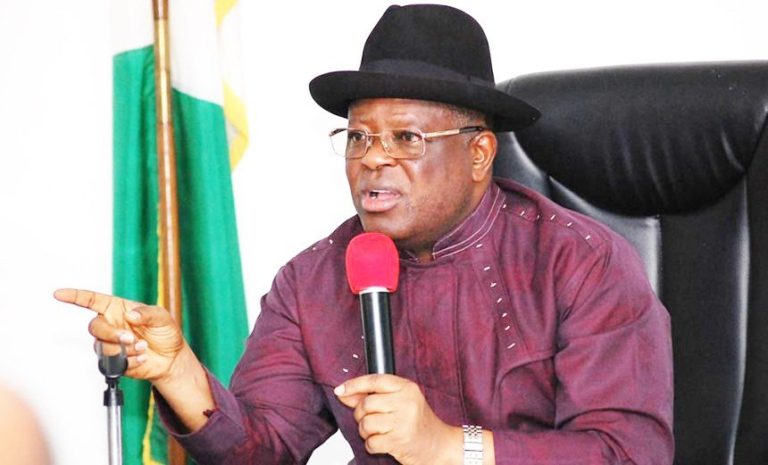
KOGI State Governor Yahaya Bello is demanding an upward review of the revenue given to states that produce solid minerals. 

He wants the allocation to be reviewed from the statutory 13  per cent to 20 per cent.

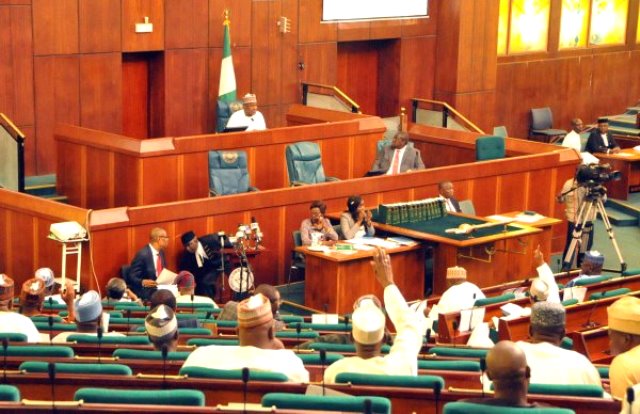
Bello stated this at the North-Central zonal public hearing on the ongoing constitutional amendments in Lokoja on Tuesday.


READ ALSO:

Chinese, others in search of solid minerals endanger lives in Ogun 

10 months after launch, N732 million Nigeria’s solid minerals web portal is deficient

How Enugu police illegally arrested, detained 14-year-old boy, 8 others on allegation of murder


He argued that the current 13 per cent did not measure up to the attended negative consequences of mining activities.

“Thirteen per cent derivation is not commensurate to degradation and other effects of mining in host communities. I recommend 20 per cent equity share for states on solid mineral mining,” he said.

He expressed his support for the constitutional review exercise, stressing that review was “one of the tools to address issues in the national polity.”

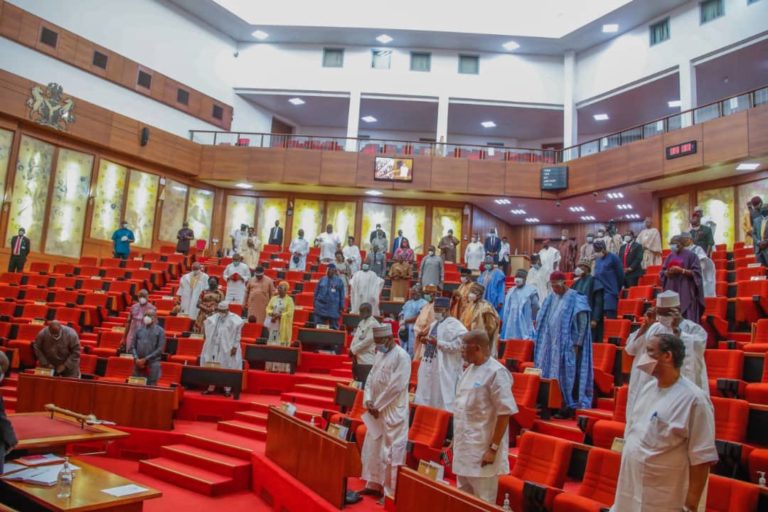
The hearings, which are organised by the Senate across all geo-political zones of the country, are aimed at getting suggestions from the public on what they want to see in the imminent 1999 Constitution.

There have been a lot of agitations and concerns by various state governments and socio-political associations since the hearing began last week.

Although the proposed amendment hopes to proffer solutions to the many crises the 1999 Constitution has created, senior legal experts are of the opinion that the exercise will end in futility and deadlock.

A Senior Advocate of Nigeria Afe Babalola, who described the current constitution as a fraud, said that the nation should call for a national constitutional conference to fashion out a new ‘true federal constitution and come up with a parliamentary system of government like’ the 1963 Constitution, which recognised regions and not states, with a central government headed by a prime minister or head of state.

He said that the 1999 Constitution was an impediment to the nation’s progress and had brought Nigeria to the brinks of extinction.

Similarly, Chairman of Presidential Advisory Committee Against Corruption (PACAC) Itse Sagay had also called for the adoption of the 1963 constitution.

Sagay said the 1963 Constitution would address the various agitations by Nigerians concerning true federalism.

“If we had that, with amendments here and there to make it accommodate states rather than regions, which we used to have, I think all these agitations will die down and everybody will be happy, ” he had said.

CSOs push for quick passage of electoral bill, threaten to occupy NASS

0

A coalition of civil society organisations (CSOs) has called for the quick passage of the bill seeking an amendment into the nation’s electoral law.

The group, under the aegis of Alliance of Civil Society Organisations for Expansion of Electoral and Democratic Space (ACCESS),  also threatened to stage a protest to occupy the National Assembly if prompt action was not expedited on the bill by both chambers.

In a statement issued on Tuesday, the coalition said the bill contained fresh innovations that would help to revolutionise the country’s electoral process, stressing that it was the only ‘panecea’ to the unrelenting attacks on facilities of the Independent National Electoral Commission (INEC) in parts of the country.

The statement added that the passage of the bill was one of the cardinal responsibilities of the Senate.

“We are also concerned with the ongoing arson and destruction of the offices of the Independent National Electoral Commission (INEC) which is casting doubts already on the 2023 general elections. We are of the view that the passage of the electoral act (amendment) bill remains the panacea for this ugly developing situation,” parts of the statement said.

“This is more or less based on the fact that the bill contains fresh provisions for digitalisation of the electoral process.

“We hereby give notice that if both houses of the National Assembly (the Senate and the House of representatives) continue their reluctance to the question of passage of the electoral act (amendment) bill, we will be left with no choice but to activate #OccupyNASS2 to push our demands.”

The group included: The Electoral Hub, Centre for Liberty, Raising New Voices, Movement for Socialist Alternative and Aspilos Foundation.

The leadership of the National Assembly had promised to pass the bill in June this year during a working visit to the British High Commissioner to Nigeria Catriona Laing in April, a development the UK welcomed.

Rejected three times for various constitutional and drafting issues by President Muhammadu Buhari, the electoral bill was passed by the 8th Senate led by Bukola Saraki in 2019.

The opposition People’s Democratic Party (PDP) has severally charged the president to show commitment to reform of the electoral system.

Igbo youth behind attacks in Ebonyi – Governor

EBONYI State Governor Dave Umahi has said people of Igbo extraction were behind a wave of attacks in the state.

He stated this on Tuesday while speaking on Channels TV magazine programme, Sunrise Daily.

Nigeria’s South-East has been experiencing a string of attacks in recent months on public infrastructures, especially electoral institution and security formations.

The region is populated predominantly by people of Igbo extraction.

Members of the proscribed Indegenous People of Biafra (IPOB), a secessionist group, and its security arm, the Eastern Security Network (ESN), are allegedly responsible for recent attacks on the region.

The governor said: “From what is happening in Ebonyi State, where the youth go to attack the Army, the Police, burn down INEC offices when these people confront the security agencies, they kill the security agents; sometimes the security agents will kill.

“We profiled them and saw that they were not unknown gunmen. They are our brothers, mainly from the South-East, most of them from Ebonyi State. They are never outside the country.”

He frowned at labelling gun-wielding criminals in the state as ‘unknown gunmen.’

“In Ebonyi State, they are known; (they are) our youths,” he stated.

As part of efforts to address youth grievances in the state, Umahi said his administration came up with different programmes to engage the youth.

According to him, the state government will absorb three thousand youths into the state civil service.

He said his government would announce job vacancies in different sectors in the state.

Umahi, who recently defected from the Peoples’ Democratic Party (PDP) to the All Progressives Congress (APC), lamented that many criminals such as cultists, armed robbers were joining aggrieved youths in the state to perpetrate crime.

“Let our people come out to speak out that the unknown gunmen are not unknown gunmen. They are our young men and women who will defend our land tomorrow. They should stop being killed. They should stop giving themselves to  be killed.”

The governor noted that two factors were responsible for the ongoing assaults in the region. He said young people were being brainwashed, while some others consulted magicians and herbalists to seek charms to protect them against bullets of security agencies.

He lauded security agents in the state and dismissed possible human rights abuses when the officers engaged ‘criminals’.

He said the security agents had been targets of attacks even when they were not running after criminals.

“They have such courage to come to the police station, go to military check-point, and they will be killing them. They (security agents) have to return fire for fire…I am happy with security agents in my state,” he said.

The governor, however, gave assurance that there would be no more herders attack on the people of Ebonyi State.

He urged the people of Benue State and other states experiencing frequent attacks to defend themselves. “If you don’t defend yourselves, you will continue to blame the president. The killing will continue. Until you make up your mind with your people to defend yourself, the killing will continue. We’ve made up our minds to defend ourselves.”

The ICIR had reported in May this year how gunmen killed 15 officers and attacked 21 police stations in the South-East in seven months.

Media reports show there have been more attacks on the region since the report was published.

Governor’s residence, offices of the Independent National Electoral Commission (INEC) have come under attacks in the region in recent weeks.

IPOB has vowed to ensure elections no longer hold in the region as part of its secession plans.

President Muhammadu Buhari signed the proclamation proscribing the group in 2017.


Global shift to clean energy tests Nigeria’s over-reliance on oil, as Buhari drags feet to deliver PIB

NIGERIA currently faces the dilemma of the global shift to cleaner energy, as delays in the passage of the Petroleum Industry Bill punctures investors’ interest in oil, a resource on which the country benchmarks its annual budget.

The Nigerian government’s inability to profitably run its national oil company -the Nigerian National Petroleum Corporation, (NNPC), has left it with unsustainable subsidy payment, especially with its budget conspicuously linked with the global oil prices.

Already, many European countries, the majority of who buy Nigerian oil had fixed deadlines to shift priority to cleaner energy, as global concerns on climate change heighten. For instance, the European Union targets at least 30 million zero-emission vehicles on its roads by 2030.

And funding from international organisations such as World Bank and International Finance Corporation, IFC is shifting already from oil to clean energy.

Similarly, lenders to international oil companies, IOCs are laying more emphasis once clean energy transition. Energy analysts say this development could threaten Nigeria’s reliance on oil since IOCs own as much as a 45 per cent stake in the country’s oil blocs.

“International lenders, comprising mainly of World Bank, IFC, are now very attentive where they invest their money. They want to see green-friendly companies investing in clean energy, “Executive Director and Chief Finance of Total E&P Nigeria Tai Oshinaya told The ICIR during the Oloibiri lecture series and Energy Forum in Abuja.

She confirmed that Total E&P Nigeria has devoted efforts towards a transition to cleaner, affordable energy, being a member of the Paris Climate Change.


READ ALSO:

From Worse to Worse: Buhari’s six years and the fight against insecurity

PPPRA, NNPC to be scrapped as Buhari sends PIB to National Assembly

Analysis: Nigeria health sector after Buhari’s six years in office


“Lenders have put stringent measures on environmental issues, and safety guides must be urgently passed to have a better fiscal framework to drive investments in place. We still need oil and gas to fund clean energy space, which is why the Petroleum Industry Bill,(PIB) is needed to drive this.”

Positive investment drive by Buhari without PIB

President Muhammadu Buhari on November 4 2019 assented to the Deep Offshore and Inland Basin Production Sharing Contract(Amendment), Act 2019,(the deep offshore Amendment Act). The Act originally provides for the legislative framework guiding Nigeria’s Deep offshore oil production and was driven by the need to encourage upstream investments in offshore acreages. The amendment seeks to augment Nigeria’s earnings from the oil and gas sector, thereby increasing the revenue of the federal government and establishing and enforcing business and relationships with investors.

The amendment also imposes an additional royalty rate to account for an increase in the price of crude in excess of $20 per barrel. It also includes a new section 17 which prescribes that all product sharing contracts shall be reviewed every eight years.

One of the key benefits of the amended act was the recently executed agreements to renew oil mining lease OML 118, the first deep-water block developed in Nigeria for another 20 years by the National Petroleum Corporation,(NNPC) and its production sharing contract partners Shell Nigeria Exploration and Production Company)SNEEPco), Total Exploration and Production Nigeria Limited,(TEPNG), (ESSO) Exploration and Production Nigeria Limited (EEPNG) and Nigeria Agip Exploration, (NAE). It is expected that the deal will unlock $10billion worth of investments by this contractual deal in the Bonga bloc.

Promotion of auto-gas as alternative cheaper fuel

The Federal Ministry of Petroleum resources working with the Nigerian National Petroleum Corporation, (NNPC), has weighed into the current challenge of rising petrol price with a viable alternative. According to the NNPC, there are the gradual deployment of 1 million conversion kits for trucks and smaller vehicle nationwide to be completed in 2022.15 000 stations also targeted for co-location of autogas nationwide.46 NNPC owned and over 600 NNPC leased co-location stations. The conversion of vehicles to cheaper fuel would see people pay N96 for autogas. This is geared towards providing alternative and cheaper fuel options for Nigerians.

PIB yet to be passed  under Buhari’s administration

Recently at the national colloquium on the Petroleum Industry Bill, deputy Senate President Ovie Omo-Agege said Nigeria has so far lost $235 billion to the non-passage of the Petroleum Industry Bill by successive administrations in the country.

The deputy Senate President lamented that  Nigeria has lost significant amounts of a potential investment to other African countries because the country now has one of the least competitive fiscal terms in Africa.

“As a result, Nigeria with more significant reserves has attracted very little investment, whereas Egypt, Angola and Ghana with about half of Nigeria’s reserves combined, have attracted more investment for new projects, because they offer more attractive deepwater fiscal terms to encourage investors,”

Shell, one of the International Oil Companies, (IoCs) is currently working on divesting from Nigeria’s onshore oil assets as it pushes for a future of investments in renewable and cleaner energy. Shell is Nigeria’s biggest oil producer.

The Nigerian government stunned by the development is encouraging Royal Dutch Shell Plc to keep its onshore oil and gas business in the country instead of divesting it, as the company seeks to focus more on cleaner energy and offshore production.

While the government is in discussions with Shell about its future in the country,” some actually feel also that Shell should not hurriedly divest and to at least stay” onshore, Timipre Sylva, Nigerian minister of state for Petroleum resources told reporters recently in Abuja. To have a situation “where Shell has completely divested from a sector is not good for us.”

What  PIB  delay costs Nigeria

The passage of the PIB is expected to drive reforms by strengthening governance institutions, establish a strong regulatory framework, ensure transparency and accountability in oil and gas resource management.

Surprisingly, the PIB has been one of the longest existing bills in Nigerian legislative history as it has been an ongoing conversation in the last 20 years. In the 8th national assembly, the bill was disaggregated into four bills. Three of the four were not passed by the National Assembly while one which was the petroleum Industry Bill was passed but denied assent by President Muhammadu Buhari.

A further delay of the passage of the PIB is far from being an option as the Nigerian Extractive Industries Transparency Initiative, NEITI has stated that Nigeria recorded losses to the tune of $200 billion for failing to pass the bill.

What does the PIB say?

The Petroleum Industry Bill is expected to repeal up to 17 Acts and provide a new framework for natural resource governance, especially in the petroleum industry. The bill proposes the creations of the Nigeria Upstream Regulatory Commission,(The commission) which will act as the regulator of the upstream sector and the Nigerian Midstream and Downstream Petroleum Regulatory Authority,(The Authority) functioning as the regulator of the midstream and downstream sectors of the petroleum industry. It is anticipated that the creation of the Commission and the Authority will provide better enforcement of standards to streamline inter-agencies responsibility.

As proposed by the new bill, the recommended replacement of the NNPC with NNPC Limited positions the sector more efficiently as an operator with no form of regulatory role directly or indirectly.

Also in the proposed bill, the prohibition of flaring or venting of natural gas with fines not subject to tax deduction further discourages gas flaring. More so, a vital role for the host community Development Trust requires oil operators to contribute 2.5 per cent of their actual expenditure. However, there has been increasing demand to raise it to the tune of 10 per cent, an issue that raised concern among industry stakeholders.

Buhari’s regime push for the bill still a dream in six years

Energy analysts are worried that President Buhari being the substantive Minister of Petroleum Resources should prioritise reforms in the Petroleum Sector since it is the main resource that pays the national bills. However, the assurance on the passage of the bill came from the Minister of State for Petroleum Resources-Timipre Sylva.

The Minster had assured Journalists at a press conference that the bill currently before the National Assembly will be passed into law before the end of June.

“I want to tell you that PIB is fully on course and we are very happy because we have focused on that for a long time and we had many meetings with the National Assembly and stakeholders. Today, I believe that we are basically satisfied with where we are. The National Assembly has given a timeline, they actually gave April. We are hopeful that between now and June, they will pass the PIB. I don’t think we are far away with the passage of the PIB,” Sylva assured.

Delayed passage fueling opaque  subsidy regime

With the Central Bank of Nigeria, CBN’s adoption of the Investors and Exporters, I& E window rate, subsidy claims have risen while discrepancies in the volume of consumed fuel create concerns about transparency in the administration of subsidy.

While organised labour retains its stance on subsidy payment, development finance institutions, petroleum marketers and some members of the organised private sector see the practice as not sustainable, pushing fiscal authorities to the cliff.

“We may be eating up the future with the way we are going. For some of us, we cannot say this enough. This is not the way to go. Most often, I wonder what the Nigerian Labour Congress wants to achieve in the way and manner they tread with the government on the subsidy issue. We cannot keep making economic decision political all the time You can see the way we’re struggling to pull this through.” the Chairman of Major Oil Marketers Association of Nigeria Adetunji Oyebanji told the ICIR.

Global rise in oil price at slightly above $60 per barrel could have ushered  Nigeria into a golden era. It should ordinarily have increased foreign exchange inflows into the country in dire need of it. However, the Federal Government has pledged to continue with the subsidy regime in the next six months, amounting to N720 billion, putting the country’s fiscal status in further peril.

“What we are gaining from the rising oil price, we are losing through unsustainable subsidy payment,”   an oil sector governance expert Henry Ademola Adigun told the ICIR.

The number of PMS trucks shipped per day is estimated at  80.23million litres,  as confirmed by the Petroleum Product Pricing Regulatory Agency (PPPRA), spiralling the subsidy cost. Energy experts allege that some of Nigeria’s petroleum products find their way to neighbouring West African countries which benefit largely from a corrupt subsidy regime.

Analysts put the blame on the doorstep of the NNPC, which is the sole PMS importer, wondering why it cannot superintend the industry as expected.

“NNPC cannot play the role of an importer and a regulator at the same time. This is why we are seriously advocating for the passage of the Petroleum Industry Bill. It may not be a perfect document, but it would definitely deal with a lot of issues that have been impeding the growth of the petroleum sector.” Adigun stated.

Experts say for Nigeria to address concerns of sole importation by the NNPC, there is a need to have a market-driven exchange rate since the government has been the sole importer of PMS, and most of its detailed import statistics shrouded in secrecy.

The government must find the courage to deregulate the sector and not prioritise economic issues over politics, they stressed.

The PIB is a key framework that gives us fiscal governance about the Petroleum sector, we have delayed long enough on it, said a Professor of Energy Economics at the University of Ibadan, Adeola Adenikinju.

He stressed that the global shift to cleaner energy is already affecting investment in the sector, hence necessitating the urgent implementation of enabling policies in the oil sector.

NECO registrar, Goodwill Obioma, not assassinated – Police, son

THE Nigeria Police Force and son of Registrar of the National Examination Council (NECO) Goodwill Obioma have disputed reports that he was assassinated.

A spokesperson for the Niger State Police Command Wasiu Abiodun, in a statement, said contrary to reports of assassination, Obiamo died after a brief illness.

“The attention of Niger State Police Command has been drawn to a publication circulating in some section of social media and national dailies that NECO Registrar Prof. Godswill Obioma was murdered by unknown gunmen in Minna. This story is totally false, untrue and a pure piece of fake news,” the statement read.

Abiodun noted that the families of the late registrar had ‘formally’ announced that he passed to eternal glory after a brief illness at National Hospital Abuja.

NECO Head of Information and Public Relations Azeez Sani also confirmed the death of the registrar, saying the family of the deceased had reported that he died due to an illness.

Premium Times reported that the late registrar’s son Goodwill Obioma Jnr said his father died after a brief illness.

Obioma was appointed registrar of NECO on 14th May, 2020, by President Muhammadu Buhari after serving as  executive secretary of the Nigerian Educational Research and Development Council (NERDC).

The late registrar was born on 12th December 1953 and hailed from Bende Local Government Area of Abia State. He was until his appointment as NECO registrar, Ebonyi State resident electoral commissioner of the Independent National Electoral Commission (INEC).

Several news outlets,  The ICIR not included,  had reported that  Obioma was assassinated in his residence in Minna, Niger State, on Monday night.


Moghalu declares interest to run for 2023 presidential election

FORMER Deputy Governor of the Central Bank of Nigeria (CBN) Kingsley Moghalu again has expressed interest to run as a presidential candidate in the 2023 general elections.

Moghalu had run during the 2019 presidential elections under the Young Progressive Party where he secured 21,886 votes in an election that was won by President Muhammadu Buhari who scored 15,191,847 votes.

He expressed disappointment and blamed his loss on the low turnout of Nigerian youths in the election.

He ran on a four-point agenda which he code-named ‘SWAG’ with a commitment to run a government with a team of highly competent Nigerians from all parts of the country.

“SWAG means Security for all Nigerians and Nigeria’s territory; War against poverty: skills, jobs for our youths and an innovation economy; Accelerated education and healthcare reform; Good governance: inclusive, transparent, effective and accountable.”

However, in a statement on social media on Monday, Moghalu said he would run because of the Nigerian people, adding that the only hope for Nigeria out of its current woes was for competent and compassionate people in leadership.

“2023: I will run because the people matter,” he said.

READ ALSOReps minority caucus says insecurity in Imo beyond governor’s capacity

“There is no hope out of our troubles until Nigeria faces the leadership question and looks for capacity, competence, and a compassionate heart for the suffering poor.”

Moghalu also reaffirmed his ambition to run for the presidency, stating that inclusive national leadership and constitutional restructuring can curb the ongoing violence in the country.

The former presidential candidate berates the level of insecurity, “collapsing” economy, and hunger in the country.

“Only the emergence of a visionary, competent, and inclusive national leadership on the one hand, and the fundamental constitutional restructuring of Nigeria on the other, can arrest Nigeria’s ongoing and violent disintegration into a completely failed state.

“For the sake of the youths of our country, I intend, with all humility, to present myself again to Nigerians as a candidate for the Office of the President of the Federal Republic of Nigeria in the 2023 general elections,” he declared.

From Worst to Worst: Buhari’s six years and the fight against insecurity

For more than a decade,  Nigeria has been embroiled in fatal violent attacks ranging from insurgency, kidnapping and banditry.

President Muhammadu Buhari promised to turn the tide, but his administration has been marred by more killings, despite huge military budgets.

DURING  campaign ahead of 2015 election, Buhari, a retired general who led the country as a military dictator in 1983, condemned Nigeria’s fight against insurgency under former President Goodluck Jonathan, describing his government as  ‘lacking leadership’.

A few months later, Nigerians voted massively for Buhari hoping that a solution had arrived. Six years down the line, Nigerians still seek solution that seems elusive.

In his first term, it took him less than two months to appoint new service chiefs to drive against insurgency in the Northeast.


READ ALSO

Special Report: How Nigeria’s foreign relations have fared under Buhari

Buhari’s top three agenda in six years

Buhari’s lopsided appointments in six years continue to generate controversy


As the president settled into his new role, the country recorded a total of 405 attacks, that killed 3,026 civilians across the nation.

The total releases for security affairs according to the Office of the Accountant General in 2015 was N66 billion, but data obtained by The ICIR from the Stockholm International Peace Research Institute shows that military spendings for that year was N397 billion.

At the end of 2016, the situation did not improve, Nigeria recorded 790 attacks, that killed 1,196 civilians.

Although there was a reduction in number of civilian deaths, there was still an increase in the kidnapping rate, as 347 persons were kidnapped during that year compared to 2015 where 112 kidnapping cases were recorded.

The president scaled up funds for the military and released N140 billion to the security outfit including the Nigeria Police Force, Ministry of Defence and the Office of the National Security Adviser. Stockholm data shows that the total military spending including interventions was N444 billion for that year.

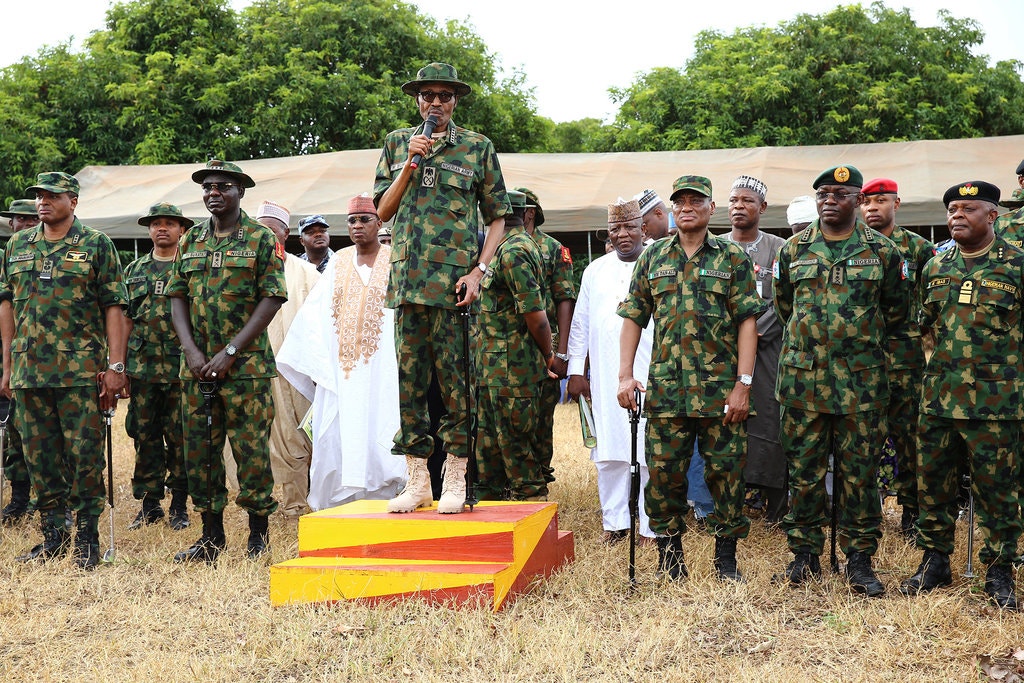
President Muhammadu Buhari of Nigeria, center, flanked by former service chiefs and other senior military officers, spoke during the Army Day celebration in Dansadau, in Zamfara, in 2016.
President Muhammadu Buhari of Nigeria, center, flanked by former service chiefs and other senior military officers, spoke during the Army Day celebration in Dansadau, in Zamfara, in 2016. Credit: Agence France-Presse — Getty Images

In the following year, 2017, there was no sign of improvement still. Schoolchildren were still being kidnapped, Boko Haram insurgents still attacking civilian communities. In 2017, there were 919 attacks across the country, 1600 civilian deaths, while 484 citizens were kidnapped despite the release of N162 billion to the security parastatals.

Ambivalence began to creep into the minds of Nigerian citizens who had hoped the retired general would infuse his military experience to purge insecurity from their country.

During Buhari’s third year in office, he released N204 billion to the security parastatals and agencies, the highest the nation had spent on security since the return of civilian rule in 1999. But insecurity was still prevalent.

Data shows that in the same year, there were 1,148 attacks resulting into the killing of 1,566 civilians and 987 persons kidnapped across the country.

By the end of his first term in office in 2019,  not fewer than 2,232 civilians had been killed, 1,386 kidnapped and 1,513 attacks recorded, despite a budget release of 98 billion.

That year, Nigerians, again, planted another seed of hope in the President who promised to take them to the “Next Level”. Buhari won his second term in office.

The following year, 2020, as the world battled the COVID-19 pandemic, Nigerians had to contend with the virus, hunger and killings.

That year, Nigeria recorded 1839 attacks, the death of 2,551 civilians and 2,860 were kidnapped including schoolchildren.

Despite all the spending, a major-general and then commander of operation Lafiya Dole Olusegun Adeniyi, complained about inadequate arms to fight insurgents adding that his men were being killed by Boko Haram insurgents due to lack of adequate weapon.

Adeniyi was eventually court-martialled, convicted and demoted for three years on grounds of violating sections of the policy on the use of social media for personnel of the armed forces of Nigeria.

Nigerians at home and in the diaspora became more concerned as life continued to lose meaning under Buhari’s watch.

In his last six years in office, there have no less than 7,630 attacks. Killing more than 13,608 civilians despite spending over N5 trillion on security.

In a statement issued by the European  Parliament on resolutions about Nigeria with particular reference to the recent terrorist attacks in Nigeria, the Union reminded Buhari that he was re-elected due to the promise of fighting insurgency.

The EU said it ‘deplores that progress has stalled in the fight against Boko Haram, ISWAP and the increased occurrence and severity of suicide attacks and direct attacks against military positions’.

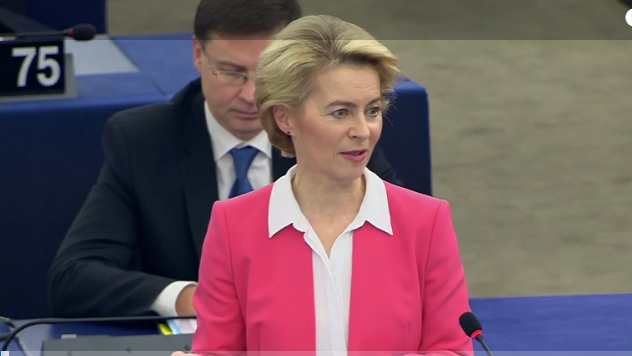
Von der Leyen
Von der Leyen, European Union President Photo Credit: ec.europa.eu

According to the Union,  ‘its investigations in relation to terrorism in Nigeria shows that the Buhari’s administration’s action was ‘limited in depth and in scope’.

Some members of the National Assembly also began to speak up, which led to the summon of the President to answer questions on why the insecurity in the nation had persisted but he did not honour the invite.

Reluctance to sack ‘non-performing’ service chiefs

Agitated by the killings and state of insecurity in the country, many Nigerians, stakeholders and civil society organisations called for the replacement of service chiefs but the president paid no attention to the demands.

Chairman of the Nigeria Governor’s Forum Kayode Fayemi also demanded their sack adding that after spending several years and there was no peace in the country, the service chiefs deserved to go.

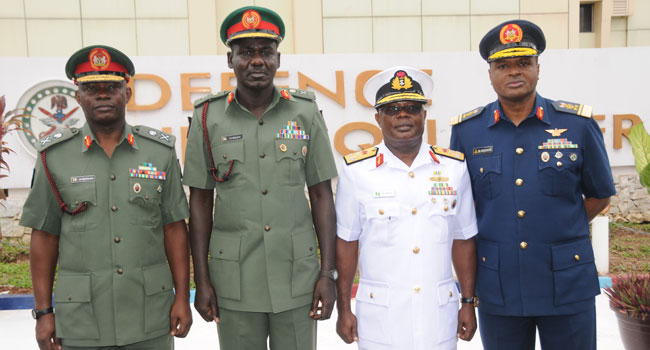
Former service chiefs appointed by Buhari

In response to the demands of Nigerians, whose compatriots were being killed, the Presidency said calls for the sack of the service chiefs were out of place.

It took the President more than one year before he finally replaced the service chiefs in January 2021.

In five months in 2021, Nigeria has recorded 1,016 attacks, 1,437 deaths of civilians, while 2,276 persons have been kidnapped.

As insecurity continues to ravage many communities in Nigeria, schools remain unsafe especially in some part of the northeastern states, offices of electoral bodies and police formations are being targeted in the eastern states, while kidnapping and abduction are rife in southwestern states as well as other regions. It remains uncertain if the situation will improve or worsen within the next two years of Buhari administration.

Stay-at-home order: High level of compliance recorded in South-East

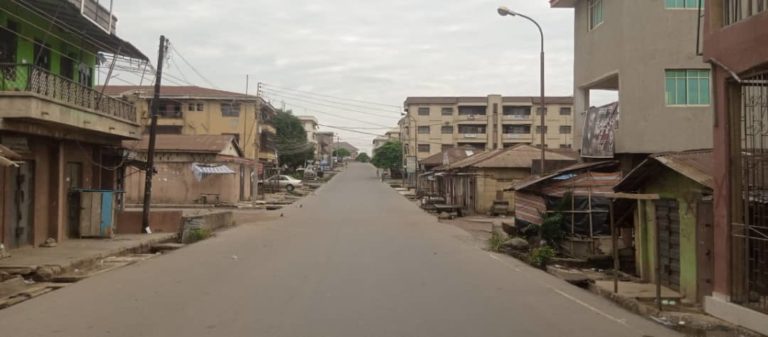
STATES in South-East region of Nigeria recorded high level of compliance with the stay-at-home order issued by the Indigenous People of Biafra (IPOB) as activities within the region were brought to a stand-still.

Reports gathered by The ICIR showed that markets, banks, and schools within the region were shut down in total compliance with the order.

In Enugu, the situation was described by a source as totally compliant with the order. Roads were deserted, and there was minimal violence recorded in the state.

Sit-at-home at Ifite, Awka, Anambra State

“There was total compliance. Total. In Emene, we heard the report that soldiers pursued people into their houses and asked them to roll on the road this morning. But when their commander came, he reprimanded some of the soldiers and told them that there is no reason for that because people are staying in front of their houses and don’t constitute any nuisance,” he said.

The ICIR also gathered from residents in Anambra State that the order was obeyed with no records of violence within the state.

A source, however, stated that there was heavy security presence at strategic places such as Aroma and Ekwulobia.

“All the markets in Nnewi, Onitsha, everywhere, are closed. No vehicular movements, even no human movement. It’s total compliance,” he said.

Owerri recorded 100 per cent compliance as commercial activities were brought to a halt as a result of the order. A resident in Owerri stated that there were no violent cases recorded yet, as security officials were stationed in different parts of the state.

“It is 100 per cent compliant. People are indoors. No violence, what we are seeing here is just security operatives either forming barricades on the road or patrolling round the town,” he said.


READ ALSO:


The situation seems to be different in Ebonyi State, as two suspected IPOB members were killed in Abakiliki, in a shoot-out with the police.

According to a report, the deceased men were part of a group that attacked some residents at Nnodo and Ogbaga road axis, for flouting the sit-at-home order issued by the IPOB. A shoot-out ensued between members of the group and the police after the attack, during which two of them were killed and many others, arrested.

Commissioner of Police in Ebonyi Aliyu Garba was reported to have confirmed the incident, stating that it was the duty of the police to ensure that nobody’s right was trampled upon.

The IPOB had earlier stated that movement would be restricted in states within the South-East to mark the 54th anniversary of Biafra.

Reps minority caucus says insecurity in Imo beyond governor’s capacity

THE minority caucus of Nigeria’s House of Representatives has said that insecurity in Imo State is beyond the capacity of  Governor Hope Uzodinma.

This was contained in a statement signed by Minority Leader of the House Ndudi Elumelu on Monday in reaction to the killing of an ex-presidential aide, Ahmed Gulak, in Imo State, on Sunday.

“As representatives of the people, our caucus believes that the situation has gone beyond the capacity of the government of Imo State, especially given its failure to gain control since inception,” the statement read in part.

The minority caucus said it was heavily disturbed by the worsening insecurity, violence, and killings in Imo State, particularly since the All Progressives Congress (APC) administration took over the state.

The ICIR reported on Sunday that Gulak was shot and killed by gunmen on Sunday at Obiangwu, Ngor-Okpala Local Government Area, close to the airport.

However, on the same day of the incident, the Imo State Police said they killed six persons involved in Gulak’s murder.

According to the Police, the perpetrators of the crime were identified as members of the Indigenous People of Biafra (IPOB)/ Eastern Security Network (ESN).

Imo State has recently been one of the hotspots of insecurity in the south-eastern part of Nigeria as frequent clashes between security agencies and ESN members have caused civil unrest.

There have also been attacks on government facilities including the residence of Governor Uzodinma in Omuma, Oru East Local Government Area.


Two persons injured as explosion hits motor park in Rivers

NO fewer than two persons were injured in an explosion that rocked a motor park in Rivers State.

The explosion, which happened around Mile 3 Park in Port Harcourt, left traders and motorists scampering for safety on Monday.

Residents of the area said they heard a loud sound at about 6.20 am when traders were bringing in their goods and others opening for business.

The explosion occurred at the dry fish section of the park.

In the confusion that ensued, two persons were severely injured, while scores, mostly women, suffered various degrees of injuries. The injured have been rushed to a nearby hospital.

The police have attributed the cause of the explosion to a local and fabricated dynamite.

Spokesperson of the State Police Command Nnamdi Omoni said no life was lost in the explosion, but two persons sustained injuries and were currently receiving treatment at a medical facility.

He said an investigation was ongoing to unravel the cause of the incident.

“In the meantime, the Commissioner of Police, Eboka Friday, has ordered a full-scale investigation into the incident with a view to ascertaining the cause of the explosion and bringing the perpetrators to justice,” he said.

“He wishes to reassure the good people of the State that the State is generally calm and they should go about their lawful activities uninterrupted and without fear of molestation from any quarters,”

“The two persons that sustained injuries are currently receiving medical attention.”