Home Blog Page 18

FIFA World Cup 2026: Durable Themes in Troubled Times

0

By Chidi Anselm Odinkalu

WHEN the FIFA World Cup kicks off on June 11, Nigeria will be on the menu but not as a competitor.

Nigerian musician, Burna Boy, will headline the opening ceremony in a duet with Colombian superstar, Shakira, who will be be making a second appearance at the opening of the World Cup. Her first was at the  2010 edition in South Africa.

Despite challenging trade and diplomatic relations between them, Canada, Mexico, and the United States will jointly host the tournament. This will be only the second time in history that the World Cup will be shared among joint hosts. South Korea and Japan did so in 2002.

This year’s tournament occurs in a time of profound uncertainty and serious questions as to the future of international peace and security. It could also be a showcase for coexistence in a time of global fragility.

To be sure, awkward political and diplomatic subtext have never been far from the World Cup. Uruguay hosted the first edition in 1930 at the onset of the Great Depression. Underscoring an anti-colonial subtext, Montevideo’s Estadio Centenario venue of the final match was built to commemorate 100 years of Uruguay’s independence from Spain in 1830. Spain kept away.

Thirteen countries participated in that inaugural edition. The hosts subsidised the costs of travel and accommodation, which ultimately enabled four European countries to participate -Belgium, France, Romania, and Yugoslavia.

Italy’s ruler, Benito Mussolini, hosted the tournament in 1934 and turned it into a prop for fascist iconography. Political machinations on and off field enabled Italy’s emergence as eventual winners. It was the beginning of an Italian spring in world football.

Two years later, Italy were again ascendant, beating Austria to the gold medal at Adolph Hitler’s Olympics in Berlin in 1936.

By the time the third edition of the World Cup turned up in France on June 4, 1938, Austria, one of the favorites for the title, was no longer in existence. Three months earlier, on March 12 – one day after the abdication of Kurt von Schuschnigg as Austria’s Chancellor – Hitler’s troops crossed the border from Germany and the Anschluss was underway.

Austria’s annexation was formally pronounced the next day and Hitler turned up in Vienna, capital of Austria, to celebrate it two days later on March 15.

Italy’s triumph at the final game on June 19 1938 was the first time a defending champion would retain the World Cup. It was also approaching a highpoint of Hitler’s Nationalsozialismus – National Socialism – and Mussolini’s fascism. Fourteen and a half months later, Germany invaded Poland to mark the beginning of World War II.

Racism was an early theme in the World Cup. Brazil’s Leônidas da Silva, the highest scorer in the 1938 World Cup, was a black whose skill and talent upset then prevalent notions of white supremacy. In his absence, Italy prevailed over Brazil in the semi-final amidst suspicions that his exclusion from the match had been procured under pressure from the tournament administration.

The competition was to suffer an abeyance for the following 12 years. By the time it returned in 1950 in Brazil, Hitler and Mussolini were defeated and decolonisation had begun. India, less than three years as an independent country, was one of the qualifiers but withdrew shortly before the tournament began.

The 1978 World Cup in Argentina was a propaganda victory for the host country’s military dictatorship. Located at the Navy Mechanical School in capital city, Buenos Aires, the regime’s largest torture center was within earshot of Estadio Monumental, venue of the final match, which Argentina won for the first time.

This year, despite ongoing conflict and an uncertain ceasefire between Iran and the U.S., FIFA has confirmed that Iran will compete in the tournament and will play all of its three group stage matches inside the U.S.

Iran is one of 48 countries that will compete in the tournament over 104 matches scheduled across 16 venues in the three host countries.

The opening match between Mexico and South Africa on June 11 will be one of five matches to be played at the Azteca Stadium, the venue that hosted the coronation of Argentina’s Diego Maradona as the king of world football at the final match in 1986. Guadalajara and Monterrey, also in Mexico, will respectively host four matches each.

Thirteen matches will be played in Canada, seven in Vancouver and six in Toronto.

The MetLife Stadium in East Rutherford, New Jersey, will host the final game. It is one of 11 venues for the 78 games to be played in the U.S. Other U.S. venues include Atlanta, Boston, Dallas, Houston, Kansas City, Los Angeles, Miami, Philadelphia, San Francisco Bay Area, and Seattle.

The Gillette Stadium in Foxborough, Massachusetts, will host seven matches, including a quarter-final on July 9. The countries scheduled to compete in the group matches at Gillette Stadium—or Boston Stadium, as it will be known during the tournament—include England, France, Ghana, Haiti, Iraq, Morocco, Norway, and Scotland.

Despite widespread concerns about the effects of current U.S. immigration policies, many of these countries share rich histories with the New England area which could make for intriguing contests and guarantee enthusiastic fan interest.

For much of its history, the World Cup was in fact a contest between European and Latin American countries. Decolonization changed this. The result is expansion from 13 countries at the inception to the 48 who will compete this summer. Over the years, decolonization has remained a durable sub-text of the World Cup. That is likely to be true of the 2026 World Cup.

The first match at Boston Stadium will be on June 13 between Haiti and Scotland. For Haiti, the site of the first successful slave revolt in the world and a country affected by current U.S. immigration restrictions, there is evocative irony to the fact that it will play its first-ever World Cup match in the Boston area, once a hub in the transatlantic slave trade.

Similarly, Scotland and Boston share a storied history dating back to the earliest Scottish prisoners of war who were banished to the Boston Bay colony during the rule of Oliver Cromwell and Charles II in the mid-17th century. The Scots Charitable Society founded in 1657 in Massachusetts to help those in need after they completed their forced indentured servitude is reputed to be the oldest charitable organization in the western hemisphere.

Three days later, on June 16, the Metlife Stadium in New Jersey will host the second post-colonial derby at the world cup between France and Senegal. When both teams met at the opening game of the 2002 World Cup, Senegal ran away shock but deserving victors. This time, Senegal will be likely to enjoy significant support from the substantial population of Senegalese origin in the New York-New Jersey neighbourhood.

The contest between England’s Three Lions and former colonial subjects, Ghana’s Black Stars, on June 23 could similarly inspire the absorbing passions of a post-colonial derby in a competition that will have a few more.

When Spain turns up three days later to take on Uruguay in Guadalajara, Mexico, on June 26, both countries will be re-enacting the original post-colonial narrative present at the birth of the World Cup.

This absorbing interplay of history, memory, identity, skill, athletic ability, and entertainment is why the FIFA World Cup continues to evoke passion on a scale unknown to any other single sporting event. Whether it will leave any lasting legacies on the major questions facing our world today will be debated long after a winner is settled on July 19. For 39 days, meanwhile, the world can take a break.

A lawyer and a teacher, Odinkalu can be reached at chidi.odinkalu@tufts.edu

2 infants die as Army rescues 360 abducted women, children in Borno

0

THE Nigerian Army troops of Operation Hadin Kai, in conjunction with Special Operations Forces, have rescued the 360 civilians, mainly women and children, abducted by terrorists from Ngoshe community in Gwoza Local Government Area of Borno.

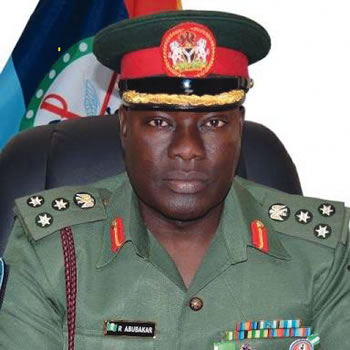
Abdulsalam Abubakar, a major general and theatre commander of the North East Joint Task Force Operation Hadin Kai, told the News Agency of Nigeria (NAN) that the rescue followed a coordinated special operation conducted on June 6 across multiple fronts around the Mandara Mountains.

According to him, Special Operations Forces initially carried out preliminary missions that created confusion within terrorist camps, paving the way for ground troops of the 26 Task Force Brigade to extract the captives successfully.

“The rescued civilians were among residents abducted during a terrorist attack on Ngoshe community on March 3, 2026.

“However, the operation recorded a tragic setback as two infants died during the rescue effort due to the harsh and difficult terrain encountered while moving the victims to safety,” he said.

He added that all rescued persons underwent immediate medical screening upon arrival, while those requiring urgent medical attention were stabilised by brigade medical personnel and admitted to the General Hospital in Gwoza for treatment.

“The victims were also provided with food and water before being moved to a secure holding facility pending their handover to relevant authorities and reunification with their families,” he said. (NAN)

Police rescue Adelabu’s sister, twin sons as abducted Oyo students remain in captivity

0

THE Oyo State Police Command has confirmed the rescue of the younger sister of former Minister of Power and 2027 governorship aspirant, Adebayo Adelabu, and her twin sons, three days after they were abducted by gunmen in Ibadan.

The rescue comes as dozens of students and teachers abducted in the state remain in captivity.

Confirming the development to The ICIR on Saturday night, the Police Public Relations Officer in the state, Ayanlade Olayinka, said the victims had regained their freedom.

“They have been rescued unhurt,” Osifeso told The ICIR.

Olayinka, however, has not provided the details surrounding the rescue operation as of press time but promised to release an official statement soon.

However, Arise Television quoting police sources, stated Adelabu’s sister, Olaide John-Paul and her 12-year-old twin sons, Peter and Paul, were rescued during a late-night operation carried out at about 7:30 p.m. on Saturday.

According to the police, sustained intelligence gathering and tactical pressure mounted on the kidnappers forced a confrontation with security operatives, leading to the successful rescue of the victims.

Two suspected kidnappers were killed during a gun duel with police operatives, while two firearms were recovered from the gang.

The ICIR reported that John-Paul and her 12-year-old twin sons were abducted on Wednesday, June 3, at the Elewura area of Challenge in Ibadan South-West Local Government Area.

The victims were travelling from their residence to connect to the expressway when armed men intercepted their vehicle and whisked them away.

Following the abduction, the Oyo State Police Command said it deployed tactical teams and other operational units to track down the kidnappers. The victims’ vehicle was later recovered during the investigation.

The latest rescue came amid heightened concerns over insecurity in Oyo State following the abduction of pupils and staff from schools in Oriire Local Government Area, 22 days ago.

The attacks, which prompted nationwide protests by the Nigeria Union of Teachers and other Nigerians, involved armed men storming schools, killing a teacher and abducting about 40 pupils and seven teachers.

Abducted ex-defence spokesman, wife call for release of detained suspects

0

A RETIRED Nigerian Army officer and former Director of Defence Information, Rabe Abubakar, a Major General and his wife have appealed to government authorities to release three suspected terrorists arrested by security agencies in order to secure their freedom.

The couple made the appeal in a fresh, now viral video released by their abductors.

In the video, the couple appealed to the Katsina State Governor, Dikko Radda, traditional rulers and local government authorities to address demands reportedly made by their captors.

Speaking in Hausa, Abubakar’s wife said the kidnappers were demanding the release of three individuals identified as Aminu, Sani and Nasiru, whom they claimed had been arrested by security agencies.

She also said the abductors were seeking the return of hundreds of cattle and sheep allegedly confiscated from them.

The woman specifically appealed to authorities in Matazu, Musawa, Kankia, Kurfi and Dutsin-Ma local government areas to intervene, urging community leaders and government officials to help resolve the matter.

According to her, two of the detained men were arrested in Jikamshi, while the third was apprehended in Kano State.

“Three of their children have been arrested: Aminu, Sani and Nasiru, along with some others. They are appealing for their release, as well as the return of their property.

“Their cattle and sheep were also seized. Three hundred cows were taken from them. We are openly appealing and begging, for God’s sake, that anyone who has a role in this matter, anyone with the authority to act, and whom God has entrusted with leadership in Katsina State, should please assist us and intervene in this matter so that these people may regain their freedom.

“Apart from God, these three young men need help. Two of them were arrested in Jikamshi, while the third was arrested separately in Kano State,” she said.

The ICIR reported that Abubakar, a former spokesman of the Armed Forces of Nigeria, was travelling with his wife towards Katsina when gunmen reportedly ambushed their vehicle in Matazu Local Government Area.

On his part, Abubakar, who appeared in a blue kaftan and black cap said their abductors had expressed interest in peace and urged the government to enter dialogue so as to bring lasting peace to the region.

The Katsina State Police Command had then confirmed their abduction, saying the attackers opened fire during the incident, forcing the driver to flee with gunshot injuries.

The attack adds to a growing list of retired military officers who have either been abducted or killed by terrorists, bandits and other armed groups in recent years.

The ICIR reports that Nigeria’s security crisis, fuelled by Boko Haram insurgency, armed banditry and communal violence, has persisted for more than a decade.

While Boko Haram and its splinter faction, the Islamic State West Africa Province (ISWAP), continue to launch attacks in the North-East, armed bandit groups have expanded their operations across the North-West and parts of the North-Central region, carrying out kidnappings, village raids and highway ambushes.

A review of reported incidents shows that at least 10 retired senior military officers, including former Chiefs of Defence Staff, major generals, brigadier generals, colonels and an air vice marshal, have either been kidnapped or killed in attacks linked to the country’s insecurity challenges over the past eight years.

Among them was Idris Alkali, a retired Major General whose body was recovered from a well in Plateau State in 2018 after he disappeared while travelling through Jos South Local Government Area.

The same year, former Chief of Defence Staff, Air Chief Marshal Alex Badeh (retd.), was shot dead by gunmen along the Abuja-Keffi Road while returning from his farm in Nasarawa State.

In November 2021, retired Air Vice Marshal Muhammad Maisaka and his grandson were killed when gunmen invaded his Kaduna residence.

Other victims include retired Colonel Rabi’u Garba Yandoto, who was abducted alongside two of his children in Zamfara State in 2023; retired Major General Richard Duru, who was kidnapped and later killed in Imo State despite the payment of ransom; and retired Brigadier General Uwem Udokwere, who was stabbed to death by gunmen during a home invasion in Abuja in June 2024.

In February 2025, retired Brigadier General Maharazu Tsiga, a former Director-General of the National Youth Service Corps, was kidnapped in Katsina State and spent weeks in captivity before regaining freedom.

Similarly, retired Major Joe Ajayi was abducted in Kogi State in May 2025 and later died in captivity despite the payment of ransom by his family.

Earlier this year, retired Colonel Joseph Ajanaku was kidnapped from his residence in Plateau State but was rescued by troops during a security operation.

Amusan wins New Taipei 100m hurdles with meet record 12.72s

0

NIGERIAN hurdler and world record holder, Tobi Amusan, on Saturday won the women’s 100m hurdles at the New Taipei Athletics Open in Taiwan, clocking a meet record of 12.72 seconds (-0.3).

Amusan dominated and finished well ahead of host athlete Bo Ya Zhang, who placed second in 13.17s.

A meet record refers to the fastest time ever recorded at a particular athletics competition. Amusan’s 12.72s performance therefore became the fastest women’s 100m hurdles time ever recorded at the New Taipei Athletics Open.

Although the performance secured another title for the Nigerian star, it was slower than her season’s best of 12.28s, which she set earlier this year. Her personal best and the world record remain 12.12s, achieved at the 2022 World Athletics Championships in Eugene, Oregon, United States.

The New Taipei Athletics Open is an annual World Athletics-sanctioned track and field meet held in New Taipei City, Taiwan. It features both local and international athletes competing for ranking points and early-season form ahead of major championships.

The 2026 edition of the meet took place on Saturday, June 6, at Banqiao Stadium.

The victory comes less than a week after Amusan claimed her first Diamond League meeting win of the season at the Rabat Diamond League in Morocco.

The Diamond League is the premier annual series of track and field competitions organised by World Athletics. Athletes compete across several meetings held in different cities around the world, earning points towards qualification for the season-ending Diamond League Final, where overall champions are crowned.

In Rabat, Amusan clocked 12.28s to win the women’s 100m hurdles and break her own meeting record, finishing ahead of Devynne Charlton and Nadine Visser.

The 29-year-old had earlier finished third in her opening Diamond League race of the season before placing second in Xiamen, China, where she also ran 12.28s.

A three-time Diamond League champion, Amusan is among the favourites for this season’s title, although she faces stiff competition from several in-form rivals, including American hurdler Masai Russell.

FIFA eases water bottle rules for 2026 World Cup after criticism

0

FIFA has revised its water bottle policy for the 2026 World Cup, allowing spectators to enter stadiums with a sealed disposable plastic water bottle following widespread criticism of its earlier restriction on refillable containers.

The decision was announced on Friday, June 5, by World Cup Chief Operating Officer, Heimo Schirgi, in a video shared on FIFA’s X account.

“All fans will be permitted to bring in one, soft, plastic 20 ounces (590ml), factory-sealed disposable water bottle into any FIFA World Cup 2026 match in the USA and Canada,” Schirgi said.

FIFA described the announcement as a clarification of its existing policy. The update came just two days after the football governing body stated that reusable water bottles would not be permitted inside World Cup venues.

The earlier rule marked a departure from previous expectations and raised concerns among supporters, particularly because many matches will be played during summer conditions. Critics argued that the restriction could leave fans with no option but to buy bottled water inside stadiums.

FIFA defended the original decision, saying it was necessary “to prevent risk and injury to players and attendees.”

The organisation also noted that “Outside bottles are already prohibited at several of these venues for safety considerations, and FIFA is applying this consideration across its tournament stadiums.”

Despite the latest adjustment, FIFA said safety concerns remained unchanged. Schirgi explained that “fans will not be permitted to bring in hard-sided, reusable water bottles due to safety and security reasons,” while displaying examples of approved and prohibited containers.

The policy has attracted attention because of concerns about extreme heat during the tournament, which will be jointly hosted by the United States, Canada and Mexico.

Weather experts have warned that high temperatures could pose health risks to supporters attending matches in open-air stadiums. A study released last month by the World Weather Attribution research group projected that 26 of the tournament’s 104 matches could be played in conditions where the Wet Bulb Global Temperature (WBGT) exceeds 26 degrees.

WBGT is a heat-stress measurement that takes into account temperature, humidity, wind and sunlight to assess the effect of weather conditions on the human body.

Similar complaints emerged during the FIFA Club World Cup in the United States last year, where supporters reported intense heat and were also not allowed to carry water bottles into venues.

FIFA has said measures such as hydration points, cooling tents, misting stations and fans will be available around stadium premises to help spectators cope with hot weather conditions.

The organisation added that bottled water sold inside venues would be priced in a manner that “remain consistent with other events held at each stadium.”

Lagos tops 2026 common entrance registration with 13,228 candidates, Taraba records 15

0

A TOTAL of 58,187 candidates on Saturday sat for the 2026 National Common Entrance Examination (NCEE) conducted by the National Examinations Council (NECO) for admission into Federal Government Colleges across the country.

The Registrar of NECO, Ibrahim Wushishi, a professor, disclosed this while briefing journalists after monitoring the examination alongside the Minister of State for Education, Prof. Suwaiba Ahmad, in Abuja.

Wushishi said the figure represented a decline from the 64,578 candidates who registered for the examination in 2025.

He added that female candidates accounted for the majority of those who registered for this year’s examination.

According to him, more than 31,000 female candidates registered, compared to about 26,000 male candidates.

“I think this reflects the efforts of the ministry in promoting girl-child education and shows that positive results are being achieved in that regard,” he said.

Speaking on the conduct of the examination, Wushishi said reports received from across the country indicated that the exercise was largely hitch-free.

Following inspection visits to three centres in Abuja, Ahmad expressed satisfaction with the organisation of the examination.

According to her, candidates were orderly, adequately supervised and commenced the examination on schedule.

“We have been to three schools, and I am happy with the conduct of the examination in all the centres visited. The students are orderly, well seated and the examination started on time.

“I have also looked at the registration documents of the students and observed that the guidelines regarding the prescribed age bracket for the examination were adhered to,” she said.

The minister, however, expressed concern over the number of absentee candidates recorded in some centres.

She said about 18 candidates were absent in one of the halls visited and stressed the need to ascertain the reasons for the development.

Ahmad also noted that the schools visited had the necessary facilities for the conduct of the examination and reaffirmed the Federal Government’s commitment to improving infrastructure for effective teaching and learning.

Taraba recorded the lowest number of candidates, with 15 registrations, while Lagos had the highest, with 13,228 candidates.

The minister and NECO management visited Model Secondary School, Maitama; Government Science Technical College, Garki; and Federal Government Boys’ College, Garki, during the monitoring exercise. (NAN)

Family rejects police account, accuses EFCC of killing 16-year-old in Makurdi

0

THE family of a 16-year-old boy, Sesugh Atsar, has rejected the police account of his death and accused operatives of the Economic and Financial Crimes Commission (EFCC) of killing him in Makurdi, Benue State.

The boy’s mother, Jennifer Atsar, in an interview published by Punch Newspaper on Saturday, June 6, said her son was shot by EFCC operatives on May 23, 2026, shortly after he was arrested and released by the anti-graft agency.

She alleged that Sesugh, a Junior Secondary School 3 student and apprentice furniture-maker, had told her days before his death that EFCC officials arrested him, released him on bail, but withheld his phone and demanded N100,000 for its return.

According to her, the teenager was at home when he received a call and left with a friend before the incident occurred.

She claimed that two EFCC operatives, operating in plain clothes, invited his friend to a hotel where they were staying.

On arrival at the hotel on a motorcycle, she alleged that one of the officers drew a firearm, prompting her son to flee before he was chased and shot at close range.

“I was told that two EFCC operatives, who were in mufti, called my son’s friend to come to a hotel located around the community where the EFCC men were staying.

“When they (my son and his friend) arrived at the hotel on a motorcycle, Sesugh got down, opened the gate, and they rode inside. Upon sighting them, one of the EFCC officers drew a gun. I was told that my son ran when he saw the gun. They chased him and shot him at close range,” she said

Atsar said neighbours later informed her that her son had been killed, adding that residents insisted the operatives should take responsibility for the incident.

She also alleged that EFCC officials have since withheld her son’s body and denied the family access to his remains.

The mother rejected allegations linking her son to internet fraud, cultism and drug-related activities, insisting he was a hardworking teenager who supported his family through menial jobs and apprenticeship work.

Police account

However, the Police in Benue State had in a statement by their spokesperson, Udeme Edet, stated that Sesugh alongside his friends opened fire at EFCC operatives and were killed during the gunfire.

The statement, first reported on May 25, noted the deceased was among three suspects earlier arrested by the commission on April 28, 2026, over alleged fraud and cybercrime offences.

The police said the suspects later escaped from EFCC custody on May 4 and went into hiding.

Edet stated that EFCC operatives, acting on intelligence, later stormed a hideout in Kanshio, Makurdi, on May 23, 2026, where they reportedly encountered suspected cultists who opened fire, resulting in a gunfire exchange.

According to the statement, Sesugh was later found lying in a pool of blood and was rushed to the Police Cottage Hospital, Makurdi, where he was confirmed dead.

The police added that the body had been deposited at the mortuary of the Benue State University Teaching Hospital for preservation and autopsy, while investigations into the incident were ongoing.

However, two weeks after the incident, the EFCC has yet to issue official statement addressing the allegations.

When The ICIR reached out to the commission spokesperson Dele Oyewale, he said a statement would be released on the matter ‘soon.’

Family demands justice

Speaking further, Atsar demanded justice for her son and the release of his body to the family.

She called on authorities to conduct a transparent investigation and ensure that anyone found responsible for his death is held accountable.

Terrorists attack Borno military base, kill eight

TERRORISTS have attacked a Nigerian Army Forward Operating Base in Mandaragirau, Biu Local Government Area of Borno State, killing five soldiers and three members of the Civilian Joint Task Force (CJTF).

The incident occurred in the early hours of Friday, June 5.

Confirming the incident in a statement on Friday, the Acting Media Information Officer of Operation HADIN KAI, Haruna Sani, a lieutenant colonel, said that the attack targeted the military formation under the 25 Brigade, Sector 2 of Operation HADIN KAI but troops successfully repelled the assault despite heavy rainfall and poor visibility.

“Troops of Forward Operating Base (FOB) Mandaragirau under 25 Brigade of Sector 2, Operation HADIN KAI, successfully contained a terrorist attack in the early hours of this morning despite adverse weather conditions and poor visibility occasioned by heavy rainstorms,” Sani said.

According to him, the insurgents launched the attack at about 3:00 a.m., attempting to breach parts of the Forward Operating Base under the cover of adverse weather conditions.

He added that troops mounted a fierce counteroffensive that prevented the attackers from making further advances and inflicted casualties on the insurgents.

“Determined troops responded with a fierce counter-offensive, decisively frustrating further incursions and inflicting casualties on the attackers. The counter-assault underscores the resilience of the troops at FOB Mandaragirau and reflects the courage and determination of our troops across the theatre,” he said.

“Regrettably, in the course of the battle, five gallant soldiers paid the supreme price during the intense firefight and close-quarter engagement, while some equipment was also affected by the firefight,” he added.

He said wounded personnel had been airlifted by the Air Component Command and were receiving treatment in stable condition, describing the fallen personnel as heroes whose sacrifice reflected the highest standards of service and commitment to the defence of Nigeria.

“Operation HADIN KAI honours their heroism and the bravery of all personnel who stood firm in the face of a determined but ultimately futile enemy assault. Three members of the CJTF also fell alongside troops, while those wounded have been promptly airlifted by the Air Component Command and are currently in stable condition while receiving appropriate medical care,” he said.

He further assured that troops remained in full control of the base and are conducting follow-up operations in the area.

“These failed attacks further underscore the growing desperation of terrorist elements who continue to suffer devastating losses under sustained operational pressure. All necessary measures are being taken to protect communities and sustain relentless pressure, with the deployment of additional troops and critical combat enablers throughout the North-East theatre,” he said.

The ICIR reports that the attack is part of growing assaults on military formations across Nigeria by terrorists comprising members of the Islamic State West Africa Province (ISWAP), Boko Haram, Lakurawa and other armed non-state actors in Nigeria.

The groups have also unleashed mayhems in several communities in the country, including killing and abducting unarmed civilians.

The ICIR reported that while the Nigerian security forces have been unable to contained the crisis for nearly two decades, the menace haunts them when they leave service. However, this is not to undermine the efforts of soldiers and commanders on the frontlines, many of whom have paid the supreme price in the course of securing their fatherland.

The ICIR reported that the abduction of former Director of Defence Information, Rabe Abubakar, a retired major general, and his wife while travelling along Matazu Local Government Area, Katsina State, on May 30.

The report also captures the horrible experiences of senior military officers who were victims of insecurity after leaving office. While some of them are lucky to pay ransoms and get freed after days in their captors’ dena, other failed to return home alive.

Meet ‘Trionda’, the AI-powered FIFA 2026 official football

0

AT every FIFA World Cup, one of the eagerly anticipated subjects has been the design of the official football.

From the Telstar at the FIFA 2018 in Russia to the Brazuca at the 2014 edition in Brazil, the official ball has always been a talking point.

Who will forget the famous Jabulani when South Africa hosted the tournament in 2010? It was despised by goalkeepers but loved by attackers, especially Uruguay’s Diego Forlan!

It was at the Qatar tournament in 2022 that the official ball assumed even more curiosity, with Al Rihla becoming the first World Cup ball infused with semi-AI performance functions.

If football enthusiasts think that Al Rihla (meaning the journey in Arabic) impressed with offside technology, life data sharing, etc, then, they are in for a surprise at the performance of the 2026 World Cup ball.

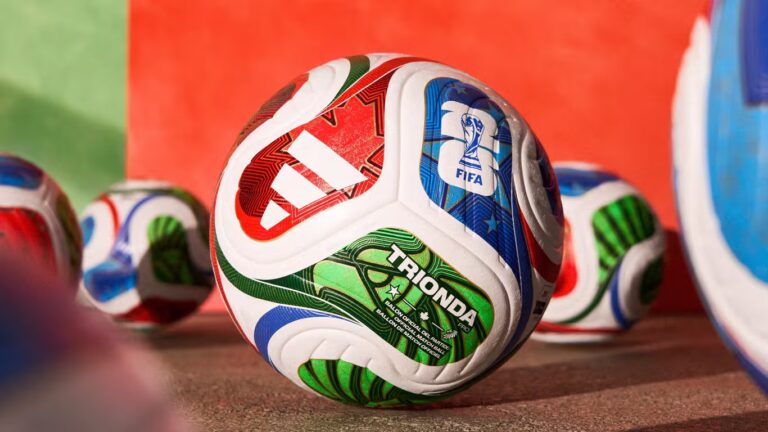
Designed by Adidas, Trionda is a high-tech masterpiece which stakeholders have described as more than just sporting equipment.

During its unveiling, Adidas said Trionda “is a connected piece of engineering designed to handle the unique physics of North American altitudes while celebrating a historic three-nation host union”.

The name was derived from a linguistic blend into the prefix “tri” to represent the three host nations of Canada, Mexico and the U.S. and “onda”, the Spanish word for wave.

Thus, Trionda, or Three Waves, symbolises the fluid unity of the host countries and the three coastline (Atlantic, Pacific and the Gulf) framing the tournament.

Unlike the balls used previously, Trionda has fewer and lighter panels but remains stable with its aerodynamic features.

Its four panels are the fewest ever used on a World Cup match ball. This reduces the number of seams, making the ball’s surface more consistent.

It also features intentionally deep seams that act like the dimples on a golf ball, ensuring stable air drag and a predictable flight path, with a surface embossed with subtle iconography of the three host nations.

However, Trionda’s most mind-blowing feature is that it requires a charging station! A full 90-minute-charged ball runs for up to six hours.

Its motion sensor, suspended at the centre of the ball, tracks every touch, kick and deflection in real-time, sending data 500 times per second to the VAR centre!

FIFA said the technology allows for Semi-Automated Offside Technology, identifying the exact point of kick with millisecond precision to resolve tight offside calls in seconds rather than minutes.

Trionda also has some symbolic and aesthetic features, such as each host country having its unique ball colour; Canada (red), Mexico (green) and the U.S. (blue).

It is also made entirely with water-based glues and inks for sustainability, featuring a maple leaf, golden eagle and five-pointed star.

Finished with gold embellishments that pay homage to the FIFA World Cup Trophy itself, Adidas said it is their most visually playful ball yet, designed with both infield and broadcast visual considerations. (NAN)