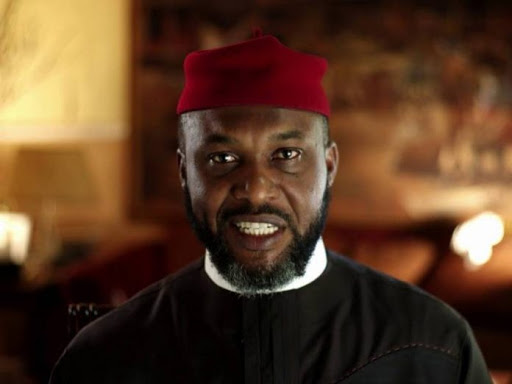
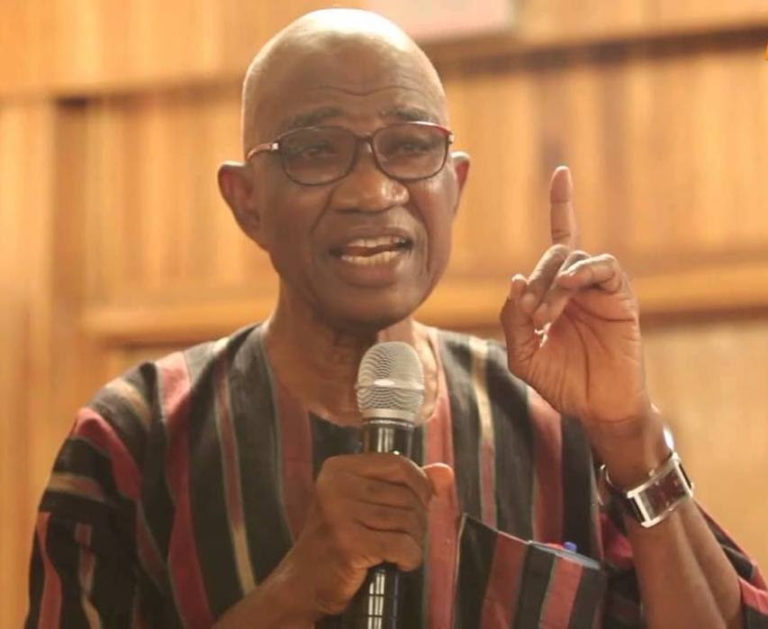
FORMER Minister of Aviation Osita Chidoka has said that most Nigerian state governors are abdicating their responsibilities, stressing that the problems of the country lie at the sub-nationals rather than in Abuja.
He said most of the governors agitating for power devolution had not fully exercised the powers conferred on them in the 1999 Constitution.
These, he said, while speaking at ‘The Platform,’ a programme facilitated and hosted by Senior Pastor of Covenant Nation Poju Oyemade, on Saturday,
“The powers of our states are guaranteed. So, the states have no business going to Abuja except to collect their allocations,” he explained.
“If they want to establish universities, they are at liberty. If they want to set up medical health centres and attract doctors from around the world, they are at liberty. What is holding them back is work avoidance. Our state governments are avoiding work and we the people have been deceived that the problem is in Abuja. No, the problem is not in Abuja. The problem is in our states.”
He cited the Federal Capital Territory as a classical example of the devolution of powers, reiterating that if state governments eschewed laziness, the country would live up to its potential.
He stressed that those calling for restructuring needed to come out clearly and state the items that should be restructured in the constitution.
“Tell me what you (restructuring proponents) want removed from the Exclusive List and brought to the Concurrent list,” Chidoka asked.
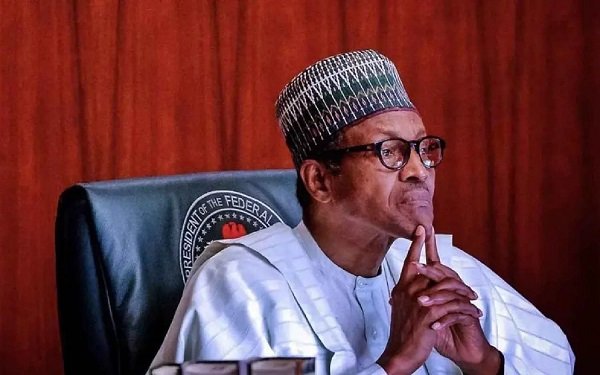
He lamented that many young Nigerians had disconnected from the country, because of lack of sense of belonging reflected on the President Muhammadu Buhari-led administration.
According to him, there was the need to infuse into young people what he referred to as ‘Naija spirit’ in order to tap and unleash their potential and creativity.
“The young people have disconnected from Nigeria. Let us take the spirit of Naija and infuse it into Nigeria. Nigeria has failed. Young people should not wait at home and wait for reform. Reform is a scam.”
“So, what you need is to take the spirit of Naija. That space where you have freedom; where there is no federal character; that space where we don’t know tribes and tongues; that space where we are discussing how to make the next I. T business, that space where you are talking about the next innovation,” he said.
BANDITS’ attacks in Niger State have escalated in recent months with deadly cases recorded almost on a daily basis. The bandits attack and ransack villages, abducting the inhabitants for ransoms and subjecting even the women and children to untold horror. The security apparatus appears to be overwhelmed by all these and seems to be losing the battle. JUSTINA ASISHANA visited Munya, one of the most affected local government areas, and reports on the plight of its inhabitants.
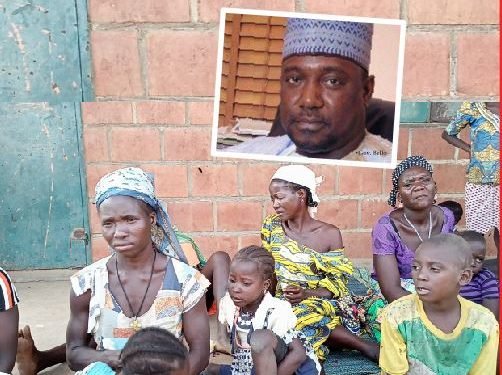
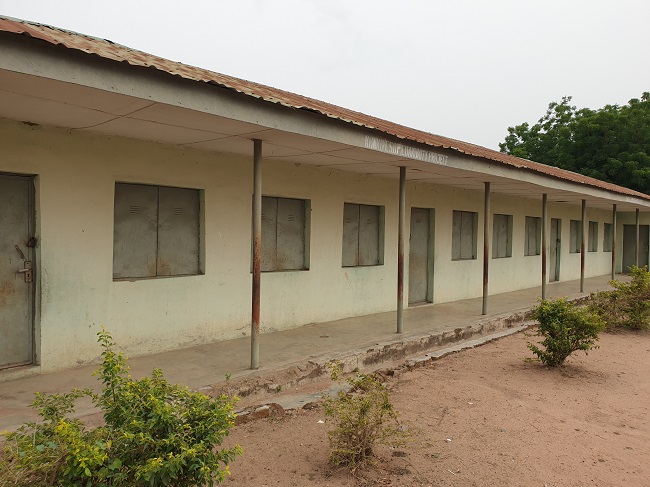
ASABE Mathew, a middle-aged woman, was in a pensive mood. She sat in front of a classroom at the Internally Displaced Persons (IDP) camp at Central Primary School, Sarkin Pawa, Munya Local Government Area, Niger State, gazing intensely at something that only her own eyes could see. She was brooding over the horror she had passed through since the bandits holding a significant part of Niger State to ransom abducted her daughter and son, forcing her to sell everything she owned to pay for their release.
“They have finished me, as I am now,” she said, as her eyes glistened with tears. “I have sold all my farm produce and I have loans to pay because I had to borrow money to pay the ransom for my children abducted by bandits. Now I have absolutely nothing left.”
Recalling how her two children were kidnapped by bandits and how she had to raise money as ransom to redeem them, she said: “My son was kidnapped when he was returning from school, and we were asked to pay N1 million to rescue him. What can I do? I had to pay because if I didn’t, they would kill him. I sold my farm produce, added my salary to the proceeds and also obtain a loan to raise the sum demanded as ransom.
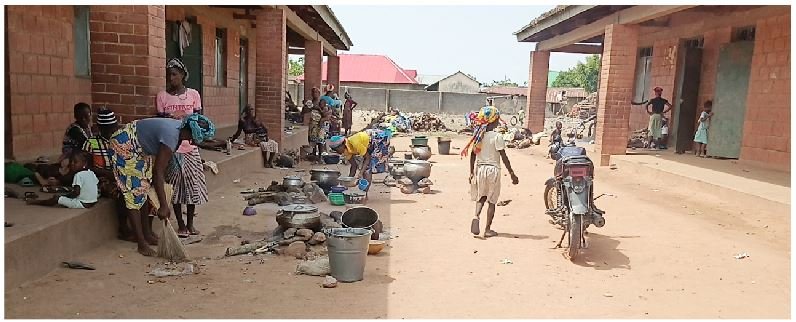
An IDP Camp in Sarkin Pawa
“My daughter was also kidnapped. But that happened before they kidnapped my son. We also had to pay a ransom to rescue her. Right now, I don’t have anything left. It has not been easy for us in Munya.”
But Asabe was not alone in her plight. Mohammed Isah currently has two of his sons in the den of the bandits while he currently stays at the IDP camp at the Central Primary School, Sarkin Pawa. His two sons were taken in a recent attack on his Dangunu community in Munya Local Government Area.
He said: “Yesterday, before I ran to this camp, two of my sons were taken on motorcycles when the thieves came to our village. They have not been released because we do not have money to pay for their release. What they asked for is in millions. Where will I get it from? I cannot go back to the village to take my farm produce and sell because that will be equal to dying.”
The Vice-Chairman of Munya Local Government Council Luka Garba is not left out of the ordeal. Two months ago, he lost his younger brother to the bandits. According to him, his younger brother was a member of the local vigilantes in Kachu village and was killed during an ambush.
Rising spate of insecurity in Munya LG
Munya is a local government area on the border between Niger and Kaduna states. Because it shares border with Kaduna State, many inhabitants of the local government area believe that most of the bandits come from Kaduna to carry out their attacks.
Banditry attacks in Munya Local Government Area began about six years ago and have literally turned the area into a terror zone everyone avoids like leprosy. The bandits make sporadic attacks in villages, maiming, killing and abducting people with reckless abandon.
The situation has crippled socio-economic activities in the local government as the farmers can no longer go to their farms for fear of being attacked. Traders who used to go to the local government area to buy farm produce are no longer turning up, causing revenue generation in the local government to reduce drastically.
On April 21, bandits invaded a military camp in Zazzaga community in the local government area barely two weeks after they had attacked the military base in Allawa, Shiroro Local Government Area, killing five soldiers and a mobile policeman and burning down the base before they moved into the communities where they also killed seven people and abducted several others.
The majority of bandit attacks occurring in Munya Local Government Area go unreported because much of the focus is on Shiroro Local Government Area of the state probably because of the latter’s economic importance as the host of one of the country’s major power stations.
The attacks are usually carried out with the aid of motorcycles.
When the reporter visited Munya Local Government’s headquarters two days after the attack in the military camp in Zazzaga community, some women were seen running back from their farms. Asked what the matter was, they said some bandits had invaded their farms and they had to run for dear lives.
One of the women, who identified herself as Louis, said: “We were working on the farm when we saw them coming. We had no option but to run. We had harvested some of the crops, but we could not carry them because we had to run.”
Other Munya residents who spoke with the reporter said that was the way they lived now because they could no longer farm in peace in an area where the majority of the people were farmers.
A youth leader, who asked not to be named for security reasons, said that the invaders moved like breeze and usually carried out their attacks on new motorcycles.
He said: “They all ride on new motorcycles. That is why before you have the time to react to their invasion, they are by your side. They move like breeze.”
Hon. Luka Garba
The Vice-Chairman of Munya Local Government Council, Hon. Luka Garba, said that the people in the communities were currently running away from their homes and they were either entering Sarkin Pawa, Gwada and Kuta or running to Minna, Niger State capital, for safety.
“At Kuchi two weeks ago, bandits killed three mobile policemen. They slaughtered one of them with a knife. That is why security has moved from Kuchi to Sarkin Pawa. Even yesterday, they killed one man called Jacob in Zazzagi, then they went to the military camp and burnt the army vehicles and properties,” Garba said.
‘Does government still care about us?’
One question that is constant on the lips of Munya Local Government residents is whether the government is unaware of what is happening to them or simply does not care since there has been no visible effort made by the government to safeguard their lives and properties.
Garba said government paid deaf ears whenever the chairman of the council took their complaints to it, adding that the council was overwhelmed with the spate of insecurity.
He asked: “What is the government waiting for? We don’t know what is happening. Does that mean that there is no government or what? As a local government, we are trying our best. As the vice-chairman, I sleep here with my people to know what they are facing. This is more than us. The governments at state and federal levels need to look into this issue.
“Another question we are asking is where are they getting the weapons they use from? Who is providing these guns for them? Is it that the government cannot retrieve these weapons and give them to the security people?”
Asabe Mathew noted that since the insecurity problems began in the council, the people had not felt the presence of government in any way, adding that the government seemed to have abandoned them to their fate.
She said: “Government should look into this security challenge for us. We are suffering and they are supposed to be there for us. Why can’t they help us? If the bandits kill us all, who will they govern? We are the ones who elected them, why are they treating us like this? Why have they abandoned us?
“People are no longer coming here to trade. Government is not helping us to solve this insecurity problem. Are we not human beings? Can’t the government do something to help us?”
Ransom payments have rendered us bankrupt, say residents
Many families in the Munya Local Government Area are currently bankrupt as they have had to sell their farm produce, lands and other forms of property and even obtain loans to pay the ransom for kidnapped loved ones.
Kidnapping incidents in the area have become so rampant that the people no longer ask when the next kidnapping will occur but whose family would be affected. It was learnt that the residents have now hit on the idea of contributing money for anyone whose family member is kidnapped.
The youth leader said: “If they kidnap anyone, we contribute money for those that are kidnapped to enable their families pay for their ransoms and secure the release. If I don’t do it, when it is my turn, no one will join hands to help me. I must help others so that when it is my turn, they will help me.
“You don’t usually hear about small amounts but large ones between N1 and N5 million naira. Just one family cannot pay it. A lot of people don’t have any farm produce anymore because they sold them to raise ransoms.”
Garba said that there were currently about 20 women with the bandits and they were asking for N20 million as ransom.
“Presently, we have about 20 women with the bandits and they are asking for N20 million for their release. We are trying our best to raise money for their release,” he said.
Youths to government: Give us the weapons, we’ll face them
The youths in the area expressed their readiness to battle the bandits if they were given weapons. Mathew John, one of the youth leaders, said that the youths do not have the weapon to face the bandits, but if given the weapons, they can defend the council.
He said: “Our youths can take action against these bandits, but they are afraid because we have no weapon to face them. However, if given the weapon, we are ready to defend ourselves. But we cannot go there with catapults. We can’t face them with sticks or cutlasses. This suffering is too much.”
Garba is in support of the idea that security agencies equip the youths in the council to help in securing it, saying: “I will support the youths if they want to defend the council because I am telling you that this suffering is too much. Anyone who is not here cannot feel what we are feeling.
“I can tell you sincerely that if we have weapons, we would face these criminals. But the security agencies always have a problem with us mentioning rifle or guns, and the moment you hold a rifles or gun in public, they will start challenging you.
“That is why they are killing us anyhow because we have no weapon to face them.”
Churches, mosques deserted
In the past four months, it was learnt that four churches in the local government area had been burnt while Christians and Muslims had become scared to gather for worship in the villages. According to Garba, the Christians suffered it more as the bandits attacked churches on Sundays, pursued and shot at worshippers.
He said: “At Dongulu, they burnt a church to ashes. They also burnt the Cherubim and Seraphim Movement Church in Kampana. They destroyed another church in Tantana. In all, they have burnt about three churches.
“Anytime these bandits see people worshipping on Sunday, they will come and surround the church, pursue the people and shoot at them. How can we worship God when there is no peace in Munya?
“In terms of religion, they are disturbing us because most of these people in the communities affected cannot worship God properly.”
Musa Luka, another youth leader, said that the churches burnt were up to five.
Munya is known to be one of the top producers of yam, corn and rice in Niger State and its markets had been highly patronised before the banditry attacks. However, this has changed as the markets are no longer full like before while the majority of the farmers no longer have farm produce to sell. Others have to take their produce to Minna, the state capital.
A female farmer, Martha Egbe, recalled that people used to come to their farms in the past to buy crops even before they were harvested, but it had become difficult to get a buyer as everyone cited insecurity as the reason they could not go to Munya.
Asabe, stating the difficulty in selling her crops, said: “I have to take my goods to Minna because people have refused to come because of insecurity. It has affected the sales of our goods. Sometimes, getting transportation to Minna is a problem because some of the vehicles will refuse to carry your goods or they will charge extravagant fees.
“People are no longer coming here. They are scared of being caught up in bandit attacks. But we that are here are human beings. We have goods to sell and need people to come. We cannot go anywhere because this is our fatherland.”
IDPs seek government’s help to return home
The Internally Displaced Persons (IDPs) at the Central Primary School in Sarkin Pawa have cried out for hunger and are seeking government’s help to return home. They are also seeking help for their children and relatives who have been kidnapped by the bandits who are demanding ransoms they cannot afford.
Ladi Shehu, a farmer from Geshu, said that they left their village for Zazzaga, and after the Zazzaga attack, they had to move to Sarkin Pawa.
Shehu said: “The bandits chased us out of our homes and we cannot return home because going back is like inviting death. We are not happy to be here. We have no food here, and in our home where there is food, we cannot go there to get the food. Our children are not feeding well.”
Another IDP said the bandits kidnapped their children and killed their young men and husbands, adding that they did not know what to do since the government had refused to come to their aid.
He said: “If the government would come and end this problem, we will be okay. If these bandits are no more here, we will be able to stay in our communities and live normally.
“It is sad that we have not got anything from the government apart from this building we are given to stay in. The government has not done anything for us, and we want them to act.”
Isah Mohammed, a native of Dangunu community, said that all they needed was security as their community hasdbeen repeatedly attacked by bandits.
“We are managing here. We have food problem here whereas in our homes, we have no such problem. We are not enjoying ourselves here. We need security to return to our homes.”
Calls heighten for declaration of state of emergency
Various people across Niger State have called on the state government to declare a state of emergency in the Niger East Senatorial Zone which has been taken over by bandits. Top among the voices is the lawmaker representing Bosso Constituency in the state House of Assembly, Hon. Madaki Malik Boss.
Boss said the declaration of a state of emergency would enable the government to tackle the insecurity problem bedeviling the zone. Bosso, who visited the IDP camps, explained that insecurity in the zone was getting worse by the day and had spread to most of the local government areas in the zone.
He noted that all the schools in the zone had been turned into camps for internally displaced persons (IDPs), lamenting that the people could no longer sleep with their eyes closed.
This story was part of the IBP-supported Smallholder Women Farmers’ Project funded by the International Centre for Investigative Reporting (The ICIR).
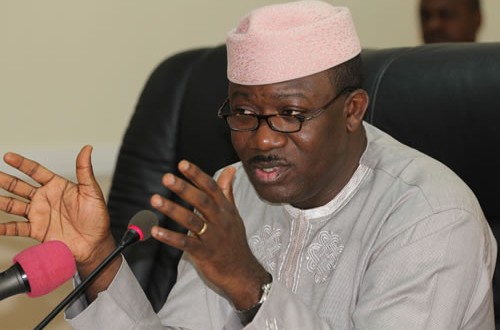
GOVERNOR of Ekiti State and Chairman of Nigeria Governors’ Forum (NGF) Kayode Fayemi said limitations in the Nigerian Constitution and practical challenges were hindering governors from protecting residents in their states.
Fayemi said this while delivering his address at 2021 ‘The Platform’ organised by The Covenant Nation with the theme, ‘Is devolution of powers the solution to Nigeria’s problem’ held in Iganmu, Lagos State, on Saturday.
According to Fayemi, all governors in Nigeria were committed to protecting the lives of residents of their states, saying, however, that they were theoretically chief security officers of their states.
He said although they had the power to engage with all heads of security formations operating in their states, the governors’ directives were often not adhered to until they were cleared by ‘higher authorities.’
“…What would probably not surprise you because you’ve heard this before now is that sometimes that commissioner of police may not necessarily take your directive until he has cleared it with higher authorities,” Fayemi said.
When asked if he meant that governors could not secure their states, Fayemi noted that they could do so but beyond the reliance on federally-controlled policing arrangement.
Speaking on the political structure of Nigeria, the NGF chairman said there was no federation in the world with a unitary policing system except Nigeria.
In Nigeria, due to the rising state of insecurity, some regions have established regional security outfits to protect lives and properties in selected areas. In some northern states, there is Hisbah; South-West has the Western Nigeria Security Network (WNSN) codenamed Operation Amotekun, while South-East has Ebube Agu security network.
Over the years, many Nigerians, including lawmakers, ethnic groups and religious heads, have called for ‘true federalism’ and restructuring of the country.
However, the Presidency has replied that “such unpatriotic outbursts are both unhelpful and unwarranted” as the government would not succumb to threats and take any decision out of pressure.
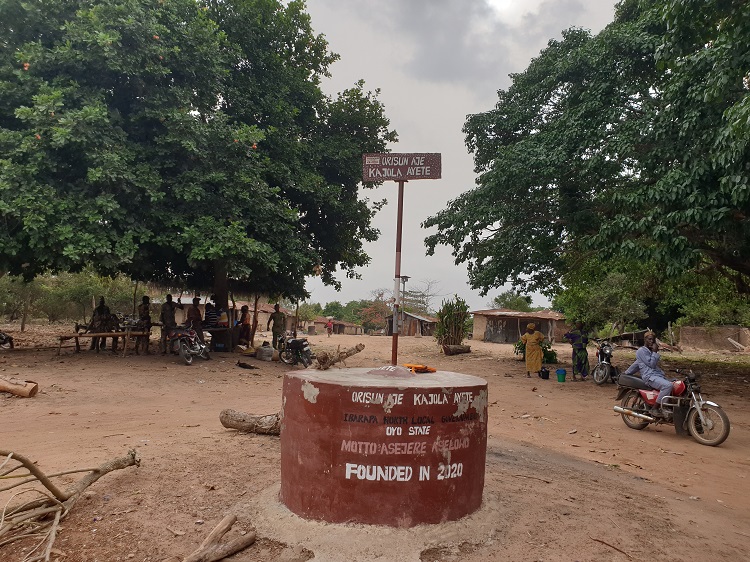
Residents of Ibarapa-North Local Government Area (LGA) still live in fear despite the arrest of Iskilu Wakili, a suspected Fulani man recently apprehended by members of the Oodua Peoples Congress (OPC). The residents who recounted their sordid experiences in the hands of herders loyal to Wakili believe their lives are still in danger. Though Wakili has been remanded at the Abolongo Correction Centre, Ibadan, Oyo State, residents of the agrarian communities continue to live as displaced people in nearby communities for fear of reprisal. Olugbenga Adanikin, who visited Kajola community, reports the ordeals of the farmers.
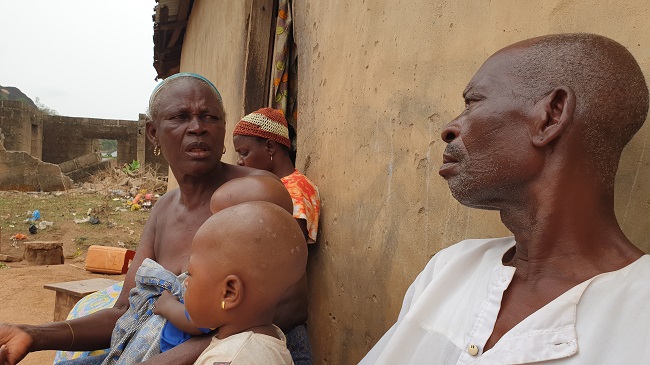
“Take a look at this mark; it was Wakili’s boys that caused it during an attack on our farm,” Mulikat Michael, 68, says as she shows a scar just below her neck, by her shoulder blade.
Mulikat knows Wakili and most of the herders that attacked her. She related with them before the tragic incident. She sells maize and Tapioca, a starchy product derived from cassava tubers, to the locals, including the Fulani and the Bororos. They like the delicacy because it is prepared with milk and sugar. Many of them patronised her, including herders in Kajola and adjoining communities where Wakili reigned as terror lord.
Mulikat Michael (Middle), one of the women, attacked Awikonko village, a neighbouring community in Kajola, Ibarapa North LGA, Oyo State. She currently takes refuge in Ayete town with her grandchildren. Photo Credit: Olugbenga Adanikin, The ICIR.
Describing the attacker, she said: “They were hooded. Immediately they grabbed my friend, and we screamed for help while I struggled to assist her. Suddenly, they brought out cutlasses. And we were yelling louder. It was during the struggle to escape that a sharp wood pierced my neck.”
She spent four weeks receiving treatments., she recalls, with fear still in her eyes. The incident happened four years ago.
Sidi Ibrahim, Mulikat’s cousin who sits nearby, adds that the herders are used to hanging on Mango trees to monitor passers-by before carrying out their crime.
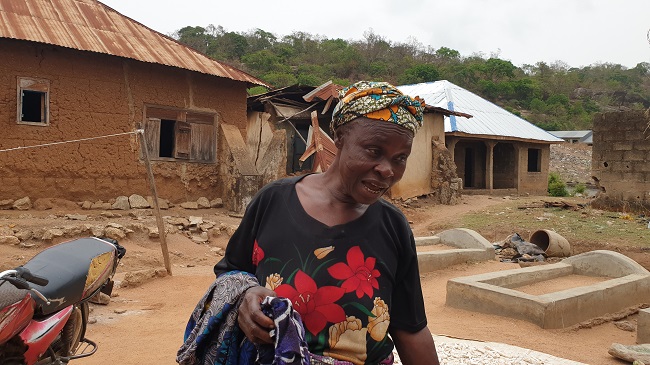
Sidi Ibrahim, another displaced woman farmer, taking refuge in Ayete town, Ibarapa North LGA, Oyo State. Photo Credit: Olugbenga Adanikin, The ICIR.
“We no longer have peace of mind. All our cassava plantations have been destroyed, our women are raped, and we can no longer farm until today. They (herders) are still there,” says Ibrahim.
In Ibarapa axis, Fulanis are categorised into two types – the ‘Bororo’, core Fulanis from northern Nigeria, and those born and raised in Yorubaland in Southwestern Nigeria.
Mulikat has traded with many of them, whom she describes as Wakili’s boys.
Wakili is a white-bearded, elderly man, “but he is troublesome”. He used to visit the market square during the market days, she says. Residents of Kajola describe him and beyond as a notorious kidnapper, whose age-long atrocities, among Ibarapa residents give sleepless nights. Aside from being blamed for the destruction of farmlands, he is infamous for seizing acres of lands belonging to the local farmers, yet evades arrest until recently.
Mulikat is among scores of other women farmers, school pupils and other residents sacked from their homes in Kajola, Ayete, Mobilu, Dagbere, Afoa, Aatan, Afunije, Baba Isego communities in Ibarapa North following Wakili’s arrest on Sunday, March 7.
The ICIR spoke to at least 15 persons, including women, the elderly, youths, and government officials, while investigating the ethnic crisis in the community.
Journeying from Iwo road to Kajola, Wakili’s host community is about 126 kilometres. But from Ayete, the community governing Kajola, the distance is nearly 27 kilometres. It was tough getting transportation to the village because residents, including commercial motorcycle taxis, avoid the place.
“What are you going there to do? It’s not safe, except you are fortified with some spiritual powers,” commercials cyclists who have neglected the communities warn. Jimoh Aliu, an elderly man whose wife was a victim of the attacks, eventually offers help. He owns a farm at Mobilu, one of the affected communities.
For over two hours, the reporter was on the motorcycle meandering the dusty, bumpy road which leads to the sacked villages.
The sights of several abandoned communities flip past as The ICIR reporter approaches Kajola. Next to Kajola is Alagba. The only school in the community was under lock and key. There was no presence of students or teachers. Alagba market was also deserted. At Kajola, shops and houses were locked up, many with broken windows and doors. There were no domestic animals in sight. Those that came were only there to pack their remaining belongings. Kajola was a shadow of itself.
Mobilu, a desolated community along Kajola village
Deserted Alagba market, few distance to Kajola community where herders allegedly warned villagers to avoid the market or get killed.
An abandoned park previously used by commercial motorcyclists in Kajola now empty.
Empty homes in Kajola community.
Road within Kajola community leading to Wakili’s enclave deserted
Empty open stores in Alagba market
Suspended school activities in Alagba, close to Alagba market
Burgled and abandoned shop in Kajola
A further trip to Konko community shows a similar scenario as found in the previous communities. Seven persons were seated at a shed by the entrance to the community. Two community schools nearby Konko village were also shut as of the time of visit. There was almost no life activity at the settlements.
Multiple sources say the herders issued warnings, asking locals to avoid the markets, and their homes, particularly at nights, the reason why the rural dwellers continue to live in panic. Though Ngozi Onadeko, the State Commissioner of Police had earlier visited the community to assure them of safety, the residents were not persuaded.
“They [Fulani] vowed to revenge. That’s why we cannot remain there anymore because they may invade our communities in the middle of the night,” Mulikat says.
Victims recount torments
“Wakili is a strong man.”
That was Jimoh, the farmer who lost his marriage due to injustice meted out to his ex-wife, Rashidat. She had just delivered a set of twins in 2007 when she encountered herders believed to be Wakili’s ‘boys’. The mother of two was attacked while on the farm around Mobilu Alagba, two villages away from Kajola.
Displeased that her husband could not defend her, but agreed with the community elders to forgo the assault, she left the marriage the following year, leaving her children behind.
“My wife was one of those they (herders) assaulted. And because the police frustrated the case, and the elders decided we rest the case, she left the marriage in annoyance. She is now married to another man,” says the aggrieved Jimoh, with an expression of regret.
He also agonises over the case of his late father, Baba Oja Alaagba, whom he said was hit with a rod by the herders. He died shortly after.
“They will destroy cocoa farms, cashew plantations and we must not complain. They will often assault our wives and still threaten us that we cannot do a thing. And at most, the cost of a cow will settle the case with the police,” he adds, narrating alleged atrocities committed by the herders.
He did not establish any rape case in his community but he recalls a woman from Fedegbo, a neighbouring village, whom herders allegedly raped.
Jimoh now visits the farm during the day and returns to Ayete in the evening.
Meanwhile, when Wakili’s problems became unbearable, the communities resolved to seek the support of the Oyo State Joint Security Task Force, otherwise known as ‘Operation Burst’, but it ends a fruitless effort. It was gathered that in October 2015, the Police were invited to help address a similar issue allegedly involving Wakili’s men in a neighbouring community to Kajola, but one of the deployed police officers, Akinwale Akande was shot dead by the herders in the process.
Residents who identify the deceased as ‘pastor’ say since then, the police would ask aggrieved community members to visit their station with an accused person, especially once the issues concern the Fulanis, rather than dispatching their officers for an arrest.
Further findings show that the police could not arrest, and prosecute the herders not until after the OPC arrests Wakili, March 7, and a court sitting in Iyaganku, March 16, prosecutes the accused of murder of the 32-year-old police officer.
Saheed Adebisi, an indigene of Kajola, lived all his life in the rural community, except when he visited Ayete. He is among those whose farm produce was affected. Recalling the experience is a bad memory for him. “Wakili destroyed my life because as I am, I can no longer go to the farm,” Adebisi asserts, adding that meeting his family demands has become a huge challenge. The crises have forced his children to stop school until one of his relatives decides to take up schooling responsibility.
Adebisi is particularly concerned about the destruction of his father’s cocoa farm, which almost led to his attempted murder by the herders when he complained over the damage. He had to make a run for safety. The herders, he said, told him categorically that it would only cost them a cow, and the reported case would be settled.
“If I cultivate two acres of land, the herders would destroy it completely. We are really tired of the situation. Our wives can no longer go to the farms because these people rape them.”
Saheed Adebisi, a cocoa farmer shows one of the burgled rooms when the herders allegedly attacked his community. Photo Credit: Olugbenga Adanikin, The ICIR
Findings by The ICIR reveal it is a norm for the locals to reside in the farm settlements for weeks, and then return home after cultivation. Some farmers have even made the settlement a permanent abode.
But herders often attack them on the farm. Multiple interviews conducted by the reporter reveal the police could not penetrate the forest where Wakili resides when cases against the herders are reported.
“Once we tell them the accused is in Wakili’s camp, the police would not stop there,” says Adebisi. He also mentioned Akande, the police officer who was shot in 2015. He told The ICIR the incident happened around ‘Magbeje,’ a nearby village to Kajola. He could not identify name of the deceased. Still, he affirms the late officer is nicknamed ‘pastor.’ Adebisi further alleges a cover-up as the herders for a long time was not arrested, or prosecuted.
If a police officer can be shot dead, how much more of the civilians, he asserts, adding an account of a rape case.
“There was a lady who was raped recently around our area. They caught her in the farm, defiled her, and collected her money,” Adebisi adds.
Racheal Olawore, a cassava farmer; Olusola Akintola and Eniola David nod in support as he narrates his accounts. David, a father of six, with two wives was visibly restless during the interview. He did not wait for Adebisi to complete his thoughts before he abruptly cuts in to express his worry. His children and two wives currently live far away, leaving the community due to the state of insecurity.
“Where do we run to, how do we feed ourselves, we are only waiting until 5 pm. You won’t find anyone in this village once it’s that time because of them (herders),” says David.
Racheal Olawore, a farmer whose husband was allegedly attacked by herders while returning from the farm. Photo Credit: ICIR
The gradual surge in insecurity has become a source of worry to Nigerians from across the six geo-political zones. Beyond the decade-long Boko Haram insurgency, banditry and kidnapping have taken a centre stage. Not only is kidnapping seen as a new lucrative venture, but it is also carried across Nigeria including the South-West – the South West Governors established a major reason the Amotekun Security Network in January 2020.
Herders have largely been held responsible for the kidnapping. As of February, over 881 students have been kidnapped from 2015. Ransom collected for the kidnappings under the current government alone, as of March 2020, accounts for, “just below $11 million,” says the SBM report, titled the Economics of Kidnap Industry in Nigeria.
A recent study funded by the Open Society for West Africa (OSIWA) and Global Rights notes that over 300, 000 persons were displaced with 1,868 deaths, just in four states, since 2018 due to the farmers-herders crises.
As a fact, the situation in Kajola is similar to the Alagba community. Ojoawo Jamiu, a farmer turned commercial motorcyclist was seated at the empty park, endlessly waiting for passengers from the deserted communities. He resolves to the new business, as farming is no longer viable. He had waited several hours before the reporter bumped into him. The Alagba market, from which he could have possibly gotten passengers was also empty as of the visit.
Ojoawo was particularly pained by the frustrations and the cases of rape, kidnapping, and destruction of farmlands in his community.
“…when we got tired, we took a letter to them to vacate the community. That very day, we never knew they were positioned on a mango tree with guns. They started shooting at us. So, we ran and called Amotekun.”
Multiple sources confirmed that, for about five days, Amotekun officers who visited the communities could not gain entrance into Wakili’s enclave but remained in the Ayete community. “He told us no one can relocate him from the community,” Ojoawo adds.
Photograph of another locked-up school at Konko community. Nearby is the community market also left empty. Photo Credit: Olugbenga Adanikin, The ICIR.
Comrade Rotimi Oluomo, Oyo state OPC Coordinator added to the above submission. He put the figure of Amotekun officials on the operation to at least 200. Already, some of the 150 members of the OPC integrated into Amotekun were also part of the team.
Still, Oluomo said they could not enter Wakili’s premises purportedly because they were allegedly not instructed until it became worse. The OPC members had to independently intervene under the authority of the Aare Ona kakanfo of Yorubaland, Gani Adams. Since then, until the visit, the herders have instructed the locals to stay away from Alagba market or bear the consequences.
But, Ojoawo will annually plant Maize, Cassava, and Cucumber from which he uses the proceeds to meet his family demands. His maize plantation alone covers 15 acres of land while the cucumber farm is as big as 10 acres. He cultivates the same farm size during the last season but lost everything to the herders. He currently has no harvest.
“I complained but the herders referred me to Seriki Salihu. He said Salihu would meet me in court, and when I went with them to their settlement, Salihu said we should meet in Abuja but I can’t match them financially. So, I left everything to God. Still, they have grabbed the land and built on it.”
Meanwhile, Ayete Divisional Police Command could not provide any information on the concerns including the reported rape cases as the Divisional Police Officer (DPO) is said to have travelled out of town. His deputy did not provide any details as he says he is not authorised to speak. He refuses to share the DPO’s contact. However, Olugbenga Fadeyi, the state former police spokesperson acknowledges the case of the shot officer. He says the locals did not report an issue of rape to the Commissioner when she visited. He did not provide an exact figure of reported cases of rape from the affected communities but those, “already submitted are being looked into.”
“We are treating them one after the other. I can’t give you a specific figure now,” he told The ICIR.
Exclusive video of Ojoawo Jamiu
How the crisis started
Kajola and several other terrified Oyo communities have been in the news, mainly, since Sunday Adeyemo, also known as Sunday Igboho visited Igangan community to oust Saliu Abdulkadir, the Seriki of Fulani in the state. This was due to criminalities such as kidnapping, rape, and assault allegedly perpetrated by the herders. Igboho’s action followed a seven-day ultimatum to the Fulanis to vacate Ibarapaland.
But after Abdukadir’s exit, Wakili’s reign of terror became pronounced. When he was finally arrested on Sunday, March 7, the crisis in the community worsened, leading to the arrest of Awodele Adedigba, 45; Dauda Kazeem, 38; and Hassan Ramon, 33. Though they were released on bail two days after, the controversy took a new twist on Wednesday, March 19, when the detained OPC members got remanded at the Abolongo Correctional Centre for alleged arson. Efforts to secure their release failed. They were remanded on the order of Chief Magistrate at Iyaganku Magistrate Court Olaide Hamzat for conspiracy, murder, and arson. The OPC members were fingered in the death of a woman who died during Wakili’s arrest.
Since then, the incident has stoked tension in the Southwest, leading people to query the rationale behind the arrest and subsequent prosecution. The people view the accused OPC members as Messiahs, who should be celebrated rather than being persecuted.
Overwhelmed by fear of reprisal attack, occupants of the attacked communities have vacated their homes and relocated to nearby towns in Eruwa, Ayete and Igboor where they can no longer farm.
Wakili’s ‘boys’ behind atrocities of rape, kidnapping, assaults, say Kajola’s residents
Contrary to popular belief, The ICIR‘s check shows that Wakili’ is not directly involved in the atrocities committed, due to his old age, health status, and failing sight but his sons, and allies. Some of the persons interviewed at different locations allege the accused persons were working under instructions of the aged man. ‘Iche’, a man identified as Wakili’s brother, has since taken over the mantle after Wakili’s arrest.
In Kajola, where the villagers mostly complained about rape, destruction of farmlands, cause of bodily harm, among other threats. The group of villagers identified some individuals accused of the atrocities.
At least eight names were mentioned to The ICIR. They include Isiaka Wakili identified as Wakili’s sibling ‘Iche’. Others are Saleh Wakili, Babangida Wakili, Yakubu Wakili, Samaila Wakili and Buderi Wakili and Laolo Wakili.
Beyond the identified persons, the locals also recognise eight wives of Wakili, four of whom are deceased while four others are alive. They list Yayache Wakili as one of those still alive.
Tijani Seekenat, who had lived in Kajola for more than two years recalled how she lost her mum over the same problem when her farm was destroyed. She alluded to the claims that Wakili’s children were responsible for the atrocities. She and her 70-year-old father identify Wakili and affirmed his identity through a viral video, played back by The ICIR, showing Wakili’s arrest during the OPC’s intervention.
Tijani, now a mother of three further recognises one Abu in the same footage. He narrates how one of Wakili’s sons was caught on her mother’s three acres of farmland. “He was apprehended on the farm and taken to Wakili but after much argument, Wakili asked his son if he was responsible for the farm destruction, the boy answered no, and that was the end.”
Besides, checks by The ICIR further reveal that among those mentioned by the communities, at least two names – Abu and Samaila surfaced. They were charged with Wakili for murder, kidnapping, conspiracy, and armed robbery, and eventually remanded by the Magistrate Court, Ibadan.
Wakili lived in Kajola for 18 years, illegally amassed acres of land without consent – Chief Odomofin
Chief Saubana Oyewole, the Odomofin of Ayeteland has been the custodian of Kajola community and adjoining villages for decades. His great grandparents own Kajola community, and for 60 years, he farmed on the land with his children and grandchildren. Most times, he will spend months at the farm settlement cultivating major crops, after which he returns to Ayete to take a break, and then return to the farm.
Saubana Oyewole recognises Wakili and has known the accused for at least 18 years. Photo Credit: The ICIR.
Sadly, he is at the centre of the crisis. He meets Wakili on several occasions and he admits Wakili also paid him a visit in Ayete. As such, he is being accused of selling the land occupied by the herders to Wakili. So, he is blamed for the chaos confronting the entire communities. But, he has vehemently denied the allegation, saying he was not consulted before Wakili took over the land just behind his farm.
“I’m just tired of the problems,” Odomofin says, and paused.
It was 18 years ago. Oyewole was on his farm when his attention was called to a settlement just behind his farmland. So, he approached the person and found out it was Wakili.
“I challenged him but he said God owns all lands.” Yes, God owns all lands but he made people custodians, he tells Wakili, in his response. Strangers should at least seek permission before taking over peoples’ lands, he adds.
The herder would later agree to pay some due for the land but Oyewole says, since then, Wakili paid no dime. He had to swear before the deity before his community believed his innocence.
In 2018, he recalls how Wakili was summoned to court for trespassing over the land. He was charged to the State High Court of Justice, Igboora, while Wakili also got his lawyer. Eventually, Oyewole was advised by the presiding judge to settle the case out of court due to the lingering crisis. Both lawyers agree to an out-of-court settlement, while Oyewole is to secure another land for Wakili.
“We got another land, took him there but he refused to go, inflicting more hardship on the people.”
According to Odomofin, at some point, his people were buying farm produce from Wakili’s men because farmlands belonging to the locals were destroyed through cattle grazing. The aged man challenged The ICIR to visit nearby streets, approach the locals to verify his assertions.
Saliu Abdulkadri, the Seriki Fulani of Igangan town. Credit: File Photo
Despite several accusations against the Fulani communities in Ibarapa-North LGA, getting the side of Wakili proves difficult. No civilians dare access ‘Gaa Wakili’, mainly since the OPC arrested him. But, the residents of Kajola say from the community to Wakili’s settlement is about 1 kilometre apart.
To reach out to at least a trusted relative of Wakili, The ICIR contacted Alhassan Saleh, Secretary-General of the Miyetti Allah Kautal Hore Fulani Association. He promised to reach out to some individuals within the area and revert, but he is yet to share the contacts as of the time of filing this report.
Ibrahim Jaji, Oyo State Chairman of the Fulani socio-cultural association was contacted severally but remained unreachable.
Mustapha Modibo, secretary of the association in Oyo state initially agreed to grant an interview but subsequently rejected repeated calls to his line. Text messages sent to his line were not returned.
Abdulkadir, the ousted Seriki of Igangan, eventually agreed to speak via phone interview on Thursday, March 18.
“Yes, I can confirm that Bororo raped a girl in Igangan. That, I know. And when it happened and I was told, I traced him and he was arrested and taken to the police,” says Abdulkadir. The Fulani leader says the rapist was further transferred to the criminal investigation department (CID), from which he was remanded.
That was one of the cases he recalled. Beyond that, Abdulkadir recognises Wakili but he could not make a categorical statement on the alleged atrocities levelled against him. Nevertheless, he said he made attempts to ensure Wakili lives harmoniously with the people, especially in advice to meet with Oyewole.
Proposing a lasting solution, he says the federal government should promote peace by persuading the locals to embrace other ethnic groups. He also called for fairness.
“I heard a farmer was killed today,” he states further. “This kind of thing should not persist. Whoever committed crime should be arrested and punished.”
Rivalry between OPC and Amotekun poses concerns
The ICIR finds that there is a silent rivalry between the Amotekun group and the OPC. Though Amotekun comprises individuals from the public, Agbekoya, local hunters, and selected OPC members, there is a level of distrust on performance and credibility of the state-formed security outfit.
Amotekun is a product of the South-West governors. A regional intervention aimed to nip the growing state of insecurity, especially kidnapping in the southwest region. It is backed by the laws of each participating state, and meant to complement the efforts of the conventional police.
On the other side, the OPC had existed for decades. Popular among people of the southwest, it is rooted across the local governments and wards, just as Amotekun. And recognised for its metaphysical powers, but not recognised by the State laws from which it operates.
Meanwhile, on-ground findings reveal much was expected from Amotekun, especially during the crisis. “Amotekun only procrastinated to enter Wakili’s settlement. Eventually, they spent five days without effecting an arrest. We were never informed,” says Oluomo, the Oyo state coordinator of the OPC.
His members within Ayete, Ibarapa decries failure of Amotekun, and the persistent attacks days after Amotekun’s withdrawal.
“Our members complained to us, and since the Police and Amotekun could not do anything, we informed Chief Gani Adams, and we got his instruction to make the arrest,” says Oluomo, while explaining the rationale for the arrest.
He told The ICIR that even if Amotekun had invited the OPC, the arrest might be unsuccessful due to the different calibre of persons who comprise the group. Not all intelligent information could be shared with Amotekun due to possible sell-out, he notes.
“There are ordinary people in Amotekun, and you can’t be certain of their antecedents. There are moles within the Yoruba tribe. And when the OPC was invited, they only gave us slots for 150 people. Kazeem Akinro, the second in command of Amotekun, is also our member. So, we cannot divulge all our intelligent information.”
On the alleged murder, arson, he says scores of Wakili’s boys returned to the site after Wakili’s arrest to set the houses ablaze.
In his argument, Wakili’s boys initiated gunshots before the arrest while his members, through a supposed supernatural power, got shielded from the shots, until they were forced to retaliate.
“Didn’t the Fulanis shoot at us,” Oluomo asks rhetorically?
“They had AK 47s and they were shooting. It is from their gunshots the woman was killed. If it were to be the Police that visited, won’t they shoot when attacked?”
He insists on his argument highlighting an incident of reprisal attack in Igijan, still within Ibarapa, where four persons were reportedly killed and houses set ablaze. He identifies one of the victims as Okanlawon. “Will you also blame the OPC for that incident?”
Still, Oluomo expresses hope that justice would prevail on the accused OPC members. He also exonerates them of the allegations.
Olayanju Olayinka, state coordinator of Amotekun, earlier accused the OPC of conducting an independent arrest without their involvement. The retired Colonel also justifies why his team could not penetrate Wakili’s settlement saying their job was to complement the police, as they “don’t just carry out operations.”
The OPC, however, advised the need for all security operatives to work in collaboration, as the Police cannot unilaterally guarantee the safety of the people, especially at the grassroots. The Police, he suggests, would need intelligent information from the OPC, Agbekoya, local hunters, and ordinary members of the communities.
“The police are reluctant to enter the forest, yet that remains the abode of these criminals,” says Oluomo as he offers sustainable solutions. In his narration, he was quick to add how he was contacted two days to the interview regarding the abduction of some persons along Ibadan – Ijebu-Ode road.
“…And they have been on the search for 15 days. A relative of those declared missing, who is a DPO, have also called to inform me that the police will join the OPC to search for the missing persons in the forest. So, this is how things should be,” he says affirming the need for cooperation.
Police react
For two days, March 18 and 19, The ICIR attempted to visit Fadeyi, the state police spokesperson to verify evidence used against all those accused including the rationale behind the arrest of the OPC members.
But, he simply says the matter is in court.
He says Wakili has been remanded and, thereafter, vows not to disclose further information on the incident. He denies all of the reporter’s findings, even when The ICIR offers to provide footages, photographs including multiple interviews conducted.
“The current concerns have been submitted to the CID. Even those that happened years back, they (villagers) have been told to itemise them and submit to the CID,” says Fadeyi. “Police formation has been dispatched to protect the people, and we have encouraged them to report any case to the nearest police station.”
He concludes by assuring the people of safety and advises the locals to, henceforth, officially submit their grievances to the police with valid proofs to pursue their case effectively.
Taiwo Adisa, Chief Press Secretary to Seyi Makinde, the state governor, did not respond to calls and text message sent to him. He was also not available when visited at his office. But, Makinde had earlier assured the people of justice and advised against ethnic profiling.
“Anyone that is found wanting or that has broken the law, irrespective of their ethnic background or their religion, will be dealt with by the law of the land,” he had said.
Timothy Avele, a security expert, accused the government and security operatives of shortage of workforce. He also called for deliberate peace-building efforts with active participation of the governments and respected individuals – Obas, Emirs, Senators including local and grassroots mobilisers to restore confidence among the various tribes.
“Bad eggs among the settlers engaging in these criminal activities must be fished out and handled legally.”
Beyond this, he asked state and local governments to be proactive when there is a disagreement between both parties. He said there is a need to set up crisis intelligence monitoring groups.
“Finally, I am of the view that the government should help cool tempers by releasing those suspects from remand and pay for damages.”
On a national scale, he believes Nigeria can only breathe fresh air once actionable intelligence is put at the forefront, supported with modern technologies such as enterprise drones, cybernetics capabilities, recruitment, and training of more intelligence analysts including taking officers welfare as a top priority and restructuring the various intelligence agencies.
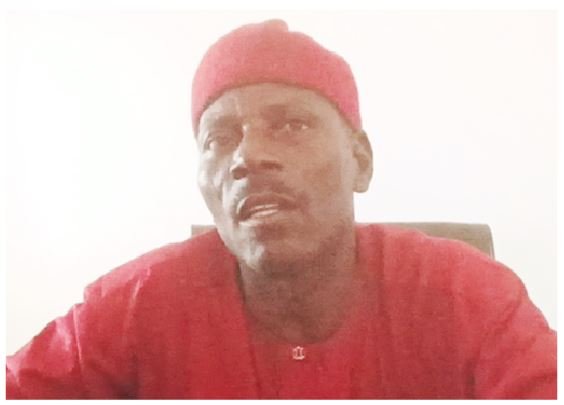
CONSTITUTIONAL Lawyer and Security Expert Charles Omole has said that those who did not make centralisation work for the Nigerian nation would equally limit devolution.
Omole, who spoke during ‘The Platform,’ a programme facilitated and hosted by the Senior Pastor of Covenant Nation Poju Oyemade on Saturday, stated this in response to calls by various state governments and socio-political organisations for devolution of power.
He noted that there were elements of decentralisation with power-sharing among the three tiers of governments, stressing that various state governments presently calling for devolution of power had not allowed it to work.
“Those who did not make centralisation work for the nation will equal limit devolution or whatever. So, rather than purely canvassing for devolution, we need to become the city and be involved in making sure the players are not the same people,” he said.
“Have you devolved power in your state to local government as the constitution requires? No, now you want the nation to devolve power to you. So, that is part of the question you need to ask those governors when you see them. Before you ask the nation to devolve power to your state, it’s important for us to understand that if we don’t ask this detailed question just like what happened in the old Soviet Union, we are simply going to remove or replace one monopoly with another one,” he said.
He also warned that devolution would not translate into good governance.
Omole opined that for a devolution of power to work in Nigeria, efforts must be made to ensure that the current players in the Nigerian state were not the ones implementing it, noting that if the “system changes but keeps the actors, the intended output of devolution cannot be guaranteed.”
“I want people to know that devolution of power does not automatically mean better governance? It’s a step in the right direction, but it can still be a failure if the citizens do not see beyond headlines and embrace details.
“So it’s not just about the devolution of power, it is about the evolution of new kind of Nigerians, new kind of politicians, new kind of people in the arena.”
He encouraged youths to be actively involved in grassroots governance if the narratives of politics must be changed.
“You know, many of them just want the title, ex-presidential candidate, on their bios. That’s what they’re interested in. You need to begin to engage at the lowest level. To be a councillor in some local governments, all you need are 500 votes. We need our best and brightest to sit to participate at the local level and not everybody fighting to be president. See, if we look at our current constitutional settlement, even though the president has a lot of power, there are lots of powers in local government.”
THE United States government will not grant Nigerian President Muhammadu Buhari’s request to relocate the headquarters of the US Africa Command (AFRICOM) to Africa, investigations by The ICIR have revealed.
AFRICOM, one of the 11 unified combatant commands of the US Department of Defense responsible for military operations in Africa, has its headquarters in Stuttgart, Germany.
Buhari had, during a virtual meeting with US Secretary of State Antony Blinken, on April 27, urged the US government to relocate AFRICOM’s headquarters to Africa.
Nigerian President Muhammadu Buhari urged the US government to relocate AFRICOM’s headquarters to Africa.
Buhari’s requested the backdrop of growing security challenges in West and Central Africa, the Gulf of Guinea, Lake Chad region and the Sahel.
In making the request, the Nigerian president noted that US assistance to African countries in the campaign against terrorism would be more effective if AFRICOM had its headquarters closer to the theatre of operations.
But a spokesperson for the Pentagon, the US Department of Defense headquarters, has informed The ICIR that AFRICOM would not be relocated to Africa, as requested by Buhari.
Pentagon Spokesperson (Africa/Central Asia/Middle East), Office of the Secretary of Defense, Cynthia King, disclosed in response to The ICIR.
Following Buhari’s request, The ICIR had contacted the Pentagon, the US Department of Defense, to find out if the US government would relocate AFRICOM’s headquarters to Africa.
Responding to The ICIR’s questions, Pentagon spokesperson, King, explained that the relocation of AFRICOM was not part of an ongoing ‘Global Posture Review’ of the operations of US combatant commands.
In a series of emails exchanged with The ICIR’s correspondent, King said previous studies conducted by the US government on the possible relocation of AFRICOM’s headquarters to Africa concluded that the cost of the relocation would undermine the effectiveness of the command’s operations.
US President Joe Biden
She said, “Although there is an ongoing Global Posture Review, the relocation of Combatant Command headquarters is outside the scope of its assessment.
“In the case of AFRICOM, previous studies have concluded that the cost associated with the relocation of this headquarters is significant and likely to incur the expense of other engagement opportunities and activities that more directly benefit our valued African partners.”
“We greatly value the partnership with Nigeria and appreciate President Buhari’s recognition of the United States’ positive contribution to African peace and security, as well as other regional partners that have made similar past pronouncements. The United States remains committed to continuing our close partnership with African countries and organisations to promote security and stability,” the Pentagon spokesperson added.
Following the response, The ICIR’s correspondent pointedly asked whether the previous studies mentioned by the Pentagon spokesperson ruled out the relocation of AFRICOM’s headquarters to Africa and whether it means that the US government would not grant Buhari’s request.
Responding to the follow-up questions by The ICIR, the Pentagon spokesperson said the studies ruled out the relocation of AFRICOM’s headquarters to Africa.
According to her, the studies noted that the relocation would be very costly and would undermine the impact of operations.
King said, “Yes, the previous studies indicated the costs would be significant to move the AFRICOM headquarters.
“The previous studies ruled out relocating of AFRICOM’s headquarters to Africa, as it was determined that a move would incur significant costs that would detract from engagement opportunities and activities that more directly benefit our African partners.”
She added, “It would be inappropriate to speculate on any future actions; however, at this time, moving this headquarters to Africa is not part of any plans.”
Although the US government would not be relocating AFRICOM’s headquarters to Africa, the Pentagon spokesperson said the US was committed to assisting African countries in overcoming challenges associated with terrorism and other forms of insecurity.
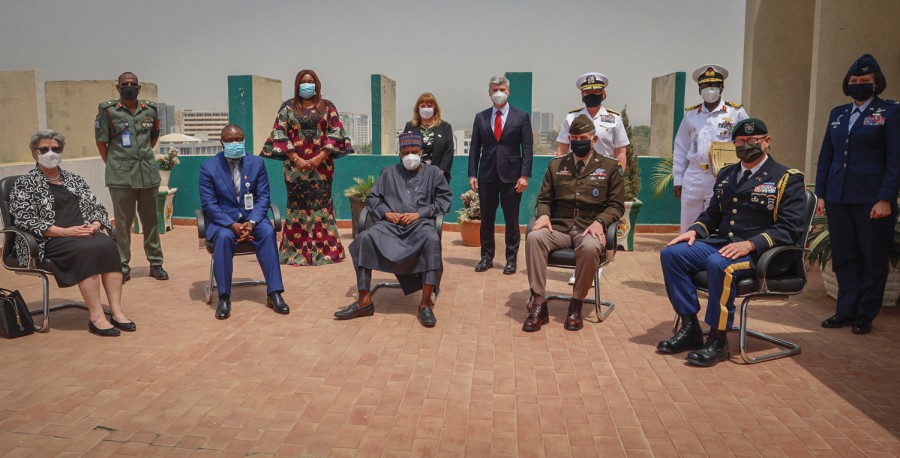
AFRICOM Commander Stephen Townsend, seated second from right, during a visit to Nigeria in February 2021. Photo credit: US Embassy Nigeria
“AFRICOM’s commitment to their mission, our African and other partners, remains as strong today as when we launched this command more than a decade ago,” King observed.
Trump administration planned to relocate AFRICOM’s headquarters
Although the Pentagon ruled out any possible relocation of AFRICOM’s headquarters to Africa in the interview with The ICIR, the US Department of Defense in September 2020, had considered the relocation of the command after the administration of former President Donald Trump announced plans to move 12,000 troops out of Germany.
Then Acting Defense Department policy chief James Anderson had told the House Armed Services Committee that AFRICOM would be moving out of Germany “to a different location” to be determined based on the costs involved and the receptivity of potential host nations to its presence.
However, Chairman of the House Armed Services Committee Chrissy Houlahan had, at the public hearing in September 2020, observed that the Trump administration’s decision to move AFRICOM’s headquarters out of Germany without any agreement on where it would be relocated “does not seem to make any sense”.
In line with the Global Posture Review, Pentagon, under the present US government led by President Joe Biden, is reviewing how US overseas forces are positioned worldwide.
As part of the review, US military authorities are reportedly assessing the plan by the Trump administration to move AFRICOM out of Germany along with thousands of troops.
There were concerns that the moves by the Trump administration to pull out troops from Germany would have ended the US’s military presence in the European country. However, although the plan is officially on hold, the Pentagon has not formally cancelled the decision taken by the former US President.
Nigeria, other African countries initially opposed US plans to locate AFRICOM’s headquarters in Africa
The Pentagon had intended to have AFRICOM’s headquarters in Africa when the command was established in 2008, but that plan was dropped after stiff opposition from several African countries, arguing that hosting the military outfit on the continent would amount to another form of colonisation by the US.
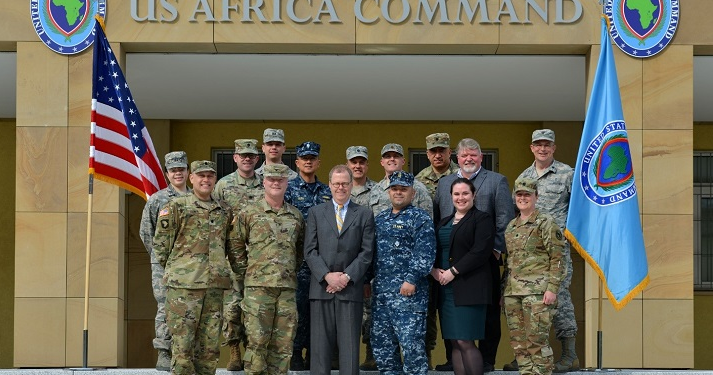
Officers of the US African Command (AFRICOM)
In 2007, a US delegation led by the Principal Deputy Under-Secretary of Defense for Policy Ryan Henry could not make any headway in a series of consultations with different African countries while trying to secure facilities and local back up for the new command in Africa.
Several African countries, including those considered Washington’s friends on the continent, pointedly told the US that they did not welcome a permanent US military presence in their territories.
Besides issues relating to sovereignty, the African countries were concerned that AFRICOM’s facilities could become a target of terrorist attacks, thereby exposing them to terrorism. The concern trumped suggestions that the military command would come with economic incentives, including prospects of hundreds of local jobs.
In September 2007, weeks after the Southern African Development Community (SADC) released a public objection to the presence of American soldiers in all Southern African countries, the Nigerian government then headed by late President Umaru Yar’Adua rejected plans by the US to host AFRICOM in Africa.
Nigeria also opposed any plans to locate the command in any other country in West Africa.
Nigeria, Libya and South Africa had spearheaded continent-wide rejection of plans to locate AFRICOM’s headquarters in the continent.
Buhari’s recent call on the US government to relocate AFRICOM to Africa suggests that some of the previous opposition to hosting the US command in Africa has faded.–_ However, sentiments expressed by a former Senator representing Kaduna Central Shehu Sani indicate that there are still misgivings over the matter.
Sani recently expressed concerns that Buhari’s request that AFRICOM is relocated to Africa was an open invitation for recolonisation of Africa by other world powers who might want to follow suit immediately after the US moved in.
“The President’s call for world powers military HQ on African soil is an open invitation for recolonisation of Africa. It’s easier to tell and get them to come, and when they come, it’s impossible to tell and get them to go out.
“Once the US relocates their HQ to Africa, Russia, China, Iran, Saudia, Israel, and co would follow suit with establishing their Commands HQs, and then Africa will be militarily balkanized; then we either become like Korea or like Syria,” Sani tweeted.
AFRICOM became a fully operational command on October 1, 2008, following a directive issued by then US President George Bush in February 2007 to create a US African Command. The decision was the culmination of several years of deliberation within the Department of Defense acknowledging the growing strategic importance of Africa.
On its website, africom.mil, its mission statement said: “US Africa Command, with partners, counters transnational threats and malign actors, strengthen security forces, and responds to crises to advance US national interests and promote regional security, stability, and prosperity.”
“A safe, stable, and prosperous Africa is an enduring American interest,” it added.
The website further explained that AFRICOM was responsible for all US Department of Defense operations, exercises, and security cooperation on the African continent, island nations, and surrounding waters.
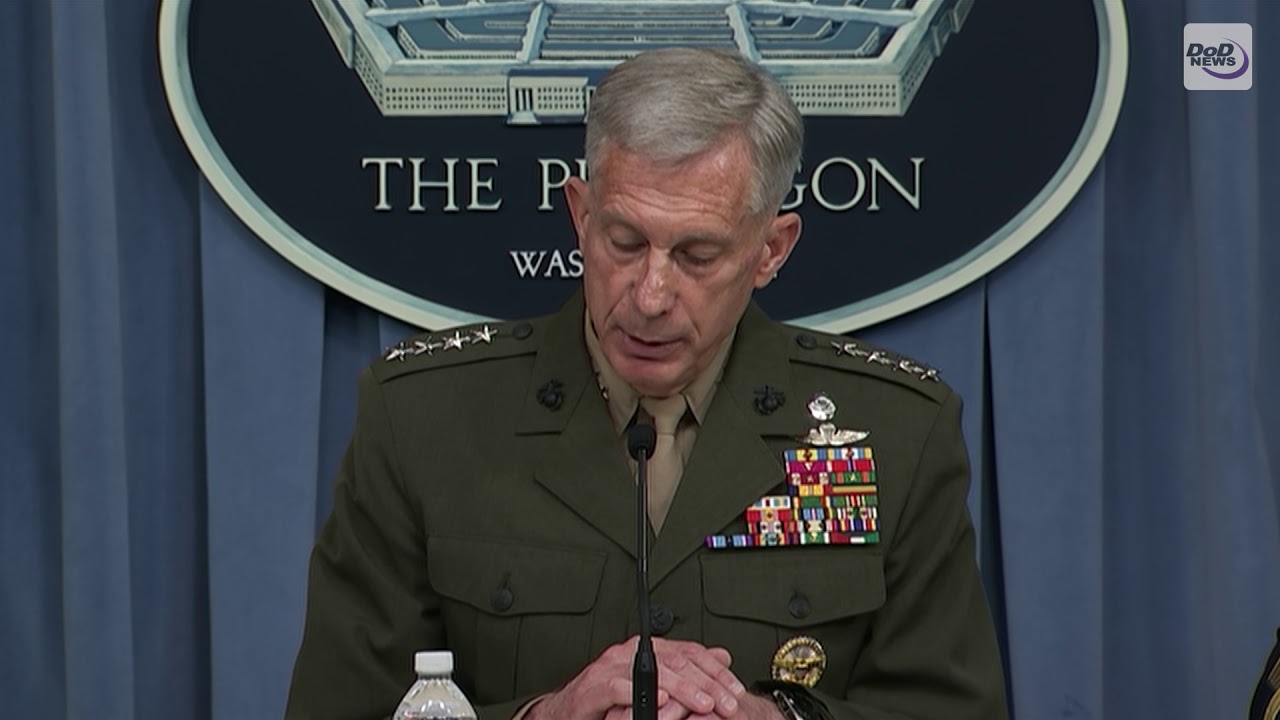
AFRICOM Commander Stephen Townsend
Its area of responsibility consists of 53 African states, more than 800 ethnic groups, over 1,000 languages, vast natural resources, a landmass of 11.2 million square miles (three-and-a-half times the size of the US), and nearly 19,000 miles of coastland.
However, questions about whether Germany was the right location for AFRICOM had lingered since the formation of the command. Some political leaders in the US had reportedly lobbied to have AFRICOM’s headquarters in their home districts in the hopes of gaining jobs and the economic ripple effects of hosting a major command.
THE military and a vigilante group, on Thursday afternoon, repelled bandits’ attack in Sarkin Pawa, Munya Local Government Area of Niger State.
The attack took place at about 1 pm, but it was resisted by members of Vigilante Corps with air support from the Nigerian Air Force.
Eyewitnesses said the bandits killed an unidentified man as they entered the town with sophisticated weapons, revealing that some residents were injured in the gun battle that lasted for about an hour.
The ICIR learnt that the bandits took off after the military and vigilantes overpowered them.
An eyewitness Ibrahim Kabir confirmed the victory for the military but urged the government to send in more security personnel and equipment that would enable operatives to successfully defeat the bandits and other terrorists in the country.
Another eyewitness Lanre Sadiq dislcosed that some rifles and an AK-47 guns were recovered from the fleeing bandits.
Co-Convener of Concerned Shiroro Youths Sani Abubakar Kokki ,who also confirmed the attack, said the combined efforts of the military, members of Vigilante Corps and air support from the Nigerian Air Force were enough to drive away the bandits.
“The bandits were forcefully chased out of the town. After a fierce gun battle, the deadly criminals withdrew from the town. The casualty figure is, however, still sketchy at the moment,” he said.
Calls and text messages made to the Niger State Police Spokesman Wasiu Abiodun were not answered as at the time of filing this report.
A former Executive Secretary of the National Health Insurance Scheme (NHIS) Usman Yusuf has said that Governor of Kaduna State Nasir El-Rufai is endangering the lives of Nigerians and his family by insisting on not paying ransom to bandits.
Yusuf said this in a statement dated May 1 titled, ‘Gov. El-Rufa’i: Deaf, Dumb and Blind,’ seen by The ICIR.
According to Yusuf, the ‘boastful’ comments of El-Rufai about not paying bandits was responsible for the increase in banditry in Kaduna State.
“His unguarded utterances are irresponsible, dangerous and unbecoming of a leader at a time of national crisis. He is endangering the lives of millions of people including his family by saying that he would not pay ransom even if his family member is kidnapped,” Yusuf said.
He also suggested that the Nigerian government and El-Rufai had been lenient in the recovery of abducted students in the state because most of them were Christians.
Yusuf claimed that the Nigerian government was quick to secure the recovery of the Muslim students that were abducted in Kankara, Kagara and Jangebe in Katsina, Niger and Zamfara states respectively.
“Sheikh Gumi and I have been inundated by subtle and sometimes not so subtle suggestions that Gov. El-Rufai and the Federal Government do not care about the fate of these students because they are predominantly (82 per cent) Christian,” said Yusuf.
The former NHIS boss also said he was aware that hundreds or thousands of residents in Kaduna state were dialoguing daily with kidnappers to secure the release of their loved ones as a result of the failure of the government to live up to its responsibility of protecting the people.
The ICIR had reported that El-Rufai had insisted that he would neither negotiate nor pay ransom for the release of any resident of Kaduna State and would prosecute anyone caught doing so on behalf of the state.
‘There is only one option, that is the only logical and sensible option. All other options are irrational emotional and stupid,” said El-Rufai.
Against his current stance, El-Rufai while criticising the administration of President Goodluck Jonathan in an interview in 2014, had suggested that every option should be adopted to rescue the Chibok girls kidnapped that year.
“I am in support of any option to rescue the girls because when you have the lives of your citizens at risk, you should not take any option off the table; you should be flexible,” he had said.
In 2016, El-Rufai was quoted as saying that he paid Fulanis to stop the killings in Southern Kaduna.
In April, Kaduna State witnessed several violent attacks, ranging from kidnap and abduction to the killing of innocent civilians.
ON April 22 this year, the Minister of Defense, Bashir Salihi Magashi (71) (rtd), a Major General, was on the spot. He told State House correspondents that “Nigeria is bleeding.”
During the media chat, he informed us all that he had been a lawyer for the past thirty-four years. I guess the country knows him more as a general than a legal practitioner. To bleed is simply a blood loss, you must have been wounded before you can bleed. “Make no mistakes that our nation is bleeding now,” Major- General Magashi declared.
Wikipedia describes bleeding, also known as a haemorrhage, or simply blood loss, as blood escaping from the circulatory system from damaged blood vessels. Bleeding can occur internally, or externally either through a natural opening such as the mouth, nose, ear, urethra, vagina or anus, or through a wound in the skin. Hypovolemia is a massive decrease in blood volume, and death by excessive loss of blood is referred to as exsanguination. Typically, a healthy person can endure a loss of 10–15 per cent of the total blood volume without serious medical difficulties (by comparison, blood donation typically takes 8–10 per cent of the donor’s blood volume).
According to Wikipedia, the stopping or controlling of bleeding is called hemostasis and is an important part of both first aid and surgery. On February 18 this year, the same General Magashi told defenseless Nigerians to defend themselves and appealed to them not to be cowards. While wondering why people were ‘running from minor things,’ referring to attacks by bandits, he said that victims of banditry should resist such attacks and signal to the criminals that “even the villagers have the competency and capability to defend themselves.”
He added that the bandits would sometimes carry only a few rounds of ammunition. “Is it the responsibility of the military alone? It is the responsibility of everybody to keep alert and to find safety when necessary. But we shouldn’t be cowards,” the minister told reporters. “At times, the bandits will only come with three rounds of ammunition. When they fire shots, everybody runs. In our younger days, we stand to fight any aggression coming for us.”
Major General Magashi is not new to controversy. His declaration to “Nigeria is bleeding” captures what is going on in the country at the moment. When he was appointed the Minister of Defence in 2019, I wrote a piece on “ALL EYES ON MAGASHI.” I do not intend to delete what I wrote. Let us look at the schedule of the Minister of Defence. In the past the Ministry of Defence used to have four Ministers. There was Minister of Defence, there was also Minister of State for Navy, Minister of State for Army and Minister of State for Air Force. There was also a time when there was Minister of Defence and Minister of State for Defence. I am referring to post-1999 era. Now General Magashi has no Minister of State. The man who said, “Nigeria is bleeding,” is no doubt a super Minister under President Muhammadu Buhari, GCFR.
Let us examine his schedule and responsibilities as Minister of Defence combined. This include formulation and implementation of policies and programmes on defence, co-ordination of defence programmes that commit the entire military to matters of military operation, ensuring the combat readiness of the Armed Forces, advises the president and commander-in-chief on deployment of troops, strategic doctrines, procurement decisions, and defence policy, co-ordinates the execution of Armed Forces Development Project, and approves the clearance of foreign military aircrafts and warships.
He also signs defence agreements, liaises with Armed Forces of foreign countries, approves the appointment of Defence attaches and is a member, Armed Forces Council/Board, and Chairman, of Armed Forces Tenders Board. He is a member, boards of Armed Forces Training Institutions (NDA, National War College and Staff College); member, Joint Intelligence Board; member, Defence Council and Security Council and any other duties that may be assigned by the president, commander-in-chief. Other responsibilities are: Welfare of Ex-Service men including Military Pensions Boards; co-ordination of the Armed Forces Resettlement Scheme, matters of war graves, military museums and national cenotaph, and matters of the Nigerian Legions; supervision of the parastatals of the ministry: Defence Industry Corporation and Tafawa Balewa Square Investment Limited.
I must, however, add that he became the military governor of Sokoto State between August 1990 and January 1992. Between September 1985 and August 27, 1993, General Ibrahim Babangida appointed seventy-four military governors. General Magashi was one of them. He took over from Colonel Ahmed Muhammadu Daku and he was succeeded by Colonel Yahaya AbdulKarim. Military governors appointed by General Babangida at that time were Colonel Danladi Zakari, Colonel John Ewerekumoh Yeri, Wing Commander Mohammed Ndatsu Umaru, Major Abubakar Dangiwa Umar, and Colonel Anthony Ukpo. Others were Colonel Olayinka Sule, Group Captain Abubakar Salihu, Colonel Raji Alagbe Rasaki, Commander Eben Ibim Princewill, Lt-Colonel Oladayo Popoola, Police Commissioner Fideli Oyakhilome, Colonel Sasaenia Adedeji Oresanya, Colonel Ekundayo Opaleye, Colonel Lawrence Onoja, Group Captain Emeka Omeruah, Lt-Colonel Adetunjii Idowu Olurin, Navy Captain Sunday Abiodun Olukoya, Commander Anthony E. Oguguo, Colonel Jonathan Tunde Ogbeha, Wing Commander I.O. Nkanga, and Colonel Abdullahi Sarki Mukhtar.
There were also: Group Captain Gbolahan Mudashiru, Wing Commander Isa Mohammed, Commander I. E. Mohammed, Colonel Garba Mohammed, Lt-Colonel Garba Ali Mohammed, Lt-Colonel Ahmed Mohammed, Lt-Colonel Abdullahi Mohammed, Colonel Abdul One Mohammed, Lt-Colonel Mohammed Buba Marwa, Lt-Colonel David Bonaventure Mark, Lt-Colonel Fidelis Makka, Colonel Mohammed Maina, Colonel Bashir Salihi Magashi, Navy Captain Allison Madueke, Lt-Colonel Yohanna Ateyan Madaki, Colonel Joshua Mamman Madaki, Colonel John Yahya Madaki, Group Captain M.A. Lawal, Colonel Alwali Jauji Kazir, Lt-Colonel Aliyu Kama, Navy Captain Oladeinde O. Joseph, Group Captain Jonah David Jang, Lt-Colonel John Mark Inienger, Lt-Commander Amadi Ikwecheghi, Lt-Colonel Lawan Gwadabe, Navy Commander Olabode George and Lt-Colonel Chris Abutu Garuba.
Other appointees were: Colonel Idris Garba, Lt-Colonel Herbert O. Eze, Commissioner of Police Sani Ahmed Daura, Colonel Ahmed Mohammed Daku, Colonel Ishaya Bakut, Colonel Patrick Aziza, Colonel Abubakar Tanko Ayuba, Lt-Colonel Ernest Kizito Attah, Navy Captain Ekpo Archibong, Colonel Dan Archibong, Major Abdulmumuni Aminu, Lt-Colonel Mohammed Christopher Alli, Lt-Colonel Abu Ali, Group Captain Ibrahim Alkali, Colonel Robert Akonobi, Navy Captain Mike Okhai Akhigbe, Group Captain Frank Ajobena, Colonel Leo Lapade Ajiborisha, Adeyinka Afolahan, Navy Captain Adeyemi Afolabi, Colonel Abdulkarim Adisa, Group Captain Ernest Olawunmi Adeleye, Group Captain Luke Chijiuba Achulor, Navy Captain Joseph Abulu, Lt-Colonel Ahmed Aboki Abdullahi and Colonel Godwin Osagie Abbe.
In 1997, General Bashir Magashi was appointed a member of the Provisional Ruling Council headed by General Sani Abacha. It was the council that was to decide on the fate of General Oladipo Diya, Major General Tajudeeen Olanrewaju alias Jasper, Major General Abdulkareem Adisa, Major Seun Fadipe, Colonel Olu Akiode and others. The 22 members of the Provisional Ruling Council included General Sani Abacha, Lt. General Jeremiah Useni, Alhaji Ibrahim Coomasie, Inspector General of Police, Major General John Inienger, Major General Abduallahi Sarki Mukthar, Major General Mufu Balogun, Rear Admiral Taiwo Odedina, Major General Victor Malu, Rear Admiral Rufus Eyitayo, Commodore Victor Ombu, Lt. Gen. B. Haladu, Air Commodore Kamis Uwenwailiri, Major General Felix Mujaperuo, Major General Ishaya Bamaiyi, Major General Peter Shaa, Rear Admiral Mike Akhigbe, Commodore Anthony Oguguo, Major General Bashir Magashi and the Chief of Defence Staff, Major General Abdusalami Abubakar. The Provisional Ruling Council was scheduled to meet on June 8, 1998, but it could not because of General Sani Abacha’s death on that day. If you read the book “THE VINDICATION OF A GENERAL” by General Ishaya Bamaiyi, you will be better informed on who Major General Magashi is.
After General Sani Abacha’s death in 1998, he was appointed as a member of the Provisional Ruling Council headed by General Abdulsalam Abubakar. It was this council that handed power to President Olusegun Obasanjo on May 29, 1999. Other members of the Provisional Ruling Council at that time were Musuliu Smith (Assistant Inspector General of Police, Zonal Headquarters, Kano, Group Captain Ikechukwu Nnamani, Commodore Emmanuel Acholonu, Rear-Admiral Victor Ombu, Major-General Idris Garba, Major General Yunana Nom, Air Vice-Marshall Mohammed Ndatsu Umaru, Air Vice-Marshal Emmanuel Edem, Air Vice-Marshal Isaac Mohammed Alfa, Rear-Admiral Peter Ebhaleme, Rear-Admiral Taiwo Odedina, Rear-Admiral Ibrahim Ogohi, Major-General Samuel Victor Leo Malu, Major-General Oladayo Popoola, Major-General Ekpo Archibong, Major-General Peter Gyang Sha, Major-General Abdullahi Sarki Muktar, Air Vice-Marshal Idi Musa, Major-General Suleiman Said, Major-General Bashir Salihi Magashi, Major-General John Mark Inienger, Major-General Godwin Abbe, Lt-General Rufus Kupolati, Ibrahim Coomasie, Air Marshal Nsikak Eduok, Vice-Admiral Jubril Ayinla, Lt-General Ishaya Rizi Bamaiyi, Air Marshal Al-Amin Daggash, Vice-Admiral Okhai Mike Akhigbe and General Abdusalam Abubakar.
On his assumption of power on May 29, 1999, President Olusegun Obasanjo later retired 93 military officers who had earlier served in various political positions during the military era. General Magashi was one of them. The others were: Major-Generals Leo Ajiborisha, Samud Omlago Ango, Patrick. Aziza, ldris Garba, Joshua Madaki, Bashir Salihi Magashi, Abdul-One Mohammed, Garba Ali Mohammed, Abdullahi Sarki
Mukhtar, Brigadier Generals Yusuf Abubakar, Sule Ahman, Ibrahim Aliyu, Bassey Asuquo, Ernest Attah, Salihu Tunde Bello, Samai!a Bature Chamah, Cletus Komena Emein, Lawal Ja’afaru Isah, Aliyu Kama, Fidelis Makka, Mohammed Buba Marwa, Yakubu Mu’azu, Dominic Oneya, Olagunsoye Oyinlola, John Yeri, Colonels Bzigu Afakirya, Usman Ahmed, Daniel Akintonde, Hameed Ali, Anthony Amebo, Theophilus Bamigboye, John Dungs, Moses Fasanya, Dauda Musa Komo, and Aminu Konragora.
Others were: Mohammed Mana, Musa Mohammed, Anthony Obi, Peter Ogar, Aina Joseph Owoniyi, Habibu Idris Shuaibu, Musa Shehu, Ahmed Usman, Jibril Bala Yakubu, Tanko Zubairu, Lt-Colonels Joseph Akaagerger, Mohammed Bawa, Ahmadu Garba Hussaini, Abubakar Maimalari, Bawa Mande, Rear-Admiral Afolabi Afolahan, Oladehinde Joseph, Sunday Olukoya, Adetoye Sode, Commodore Emmanuel Acholonu, James Aneke, Temi Ejoor, Amadi Ikwechegh, Anthony Oguguo, Kayode Olofinmoyin, Navy Captains Adedurotimi Adeusi, Adewunmi Agbaje, Walter Feghabo, Joe Kalu-Igboamah, Omoniyi Olubolade, Anthony Onyearugbulem, Christopher Osondu, Rasheed Raji, Anthony Udofia, Atanda Yusuf, Air Vice Marshals Gregory
Agboneni and Frank Ajobena, Air Commodore Ibrahim Dada, Peter Gana, Baba Iyam, Ibrahim Kefas, Ndong Essiet Nkanga, Abubakar Salihu, Group Captains John Ebiye, Sam Ewang, Rufai Garba, Lawal Haruna, John Ben-Kalio, Joe Orji, Wing Commander Adamu Mshelia and EU Ukaegbu, Assistant Inspector General of
Police Dabo Aliyu, Simeon Oduoye, Amen Oyakhire and Commissioner of Police Mustapha Ismail.
After retirement, General Magashi vied to be Governor of Kano state under Democratic People’s Party (DPP) and later became the National Chairman of the Party. Along with President Muhammadu Buhari, he became a member of the All Nigeria Peoples Party (ANPP) and in 2007, he was the Kano’s state governorship candidate of DPP. Major General Bashir Magashi is representing Kano State in the Federal Executive Council and at present Kano State has two ministers of full cabinet rank, including Sabo Nanono, Minister of Agriculture and Rural Development, unlike states like Ondo and Kogi states, who for the two terms of President Muhammadu Buhari have been compensated with just Ministers of State.
Leadership is a lonely job. Very lonely indeed. The success and failure of a leader is always judged by actions taken or actions not taken. But a leader can only take an action based on information available to him. Sometimes, friends and aides can mislead a leader, because most of the time, leaders are imprisoned by those close around them. General Magashi is not just a Minister; he is a man who has been in power and government for years. He knows the mechanics and rudiments of power structure. For him to say that “Nigeria is bleeding,” we have to take him seriously.
I am told General Magashi is extremely close to his boss and friend, President Muhammadu Buhari. He should tell President Buhari not to allow Nigeria to bleed to death, the consequences of which will be too grave to imagine.
“WE must practice revolutionary democracy in every aspect of our Party life. Every responsible member must have the courage of his responsibilities, exacting from others a proper respect for his work and properly respecting the work of others. Hide nothing from the masses of our people. Tell no lies. Expose lies whenever they are told. Mask no difficulties, mistakes, failures. Claim no easy victories…” ― Amilcar Cabral, Revolution in Guinea: African People’s Struggle
IN one of his speeches to comrades during the struggle for the liberation of Guinea Bissau from the clutches of Portuguese colonial exploitation, Amical Cabral admonished comrades and revolutionaries to take their responsibilities seriously, refrain from telling lies, respect all comrades regardless of their age, admit mistakes when one is made and desist from claiming easy victories.
All of these characteristics epitomise the life and commitment of Prof. Olorode to the struggle for a better Nigeria—a struggle he has devoted his entire adult life to prosecuting. As we celebrate this scholar, revolutionary intellectual and an ‘iroko’ of the people’s struggle in Nigeria, I want to ponder a moment to reflect on my personal encounter with him. I decided to start with this famous quote from Cabral because Olorode and Cabral have so many things in common – both were trained in the sciences. Cabral trained as an agronomist while Olorode trained as a botanist. Both were theoreticians, intellectual powerhouses, mobilisers of people, and fervently commitment to the ideals of socialism and the emancipation of all Africans, brutally honest and down-to-earth.
Thus, how might one start a write about such an icon and an epitome of modesty in a country where conspicuous consumption and gluttony are the markers of success? In Nigeria today, those who engage in conspicuous consumption of our commonwealth at the expense of the toiling masses are daily celebrated. Pages of our daily newspapers and weekly magazines are often filled up with advertorials celebrating those who daily engage in the pillaging of our national wealth using the same stolen wealth to pay for the advertorials. In the age of neoliberal appurtenances where digital platforms have also become a site for the display of such profligacy, our sensibilities are daily bombarded with different forms of wealth celebration—again stolen wealth—such that the louder your social platforms are, the more pungent your celebration becomes especially in the ‘comments’ and ‘likes’ sections of such platforms. The world of our youths, engineered by the marauding capitalist elite, is now defined by the number of ‘likes’ and emojis you can acquire through your Facebook, Instagram and Snapchat platforms. Today’s youth now measure success by the number of emojis posted and not the degree of iconoclastic ideas that can transform our country. In the midst of the folly where rational beings who put national interest above all else are now considered irrational because of their repugnance at the pursuit of wealth by the ruling elite. It beholds on all of us to roll out the drums in celebration of our icon and champion of the working class and oppressed people of Nigeria, Africa and the world.
As we roll out the drums to celebrate Professor Omotoye Olorode on his 80th birthday, it is imperative to pay attention to the significant contribution that this iconic figure has made to the development of a Nigeria where justice, fairness and equitable distribution of our national wealth mattered. My first encounter with Professor Olorode was in 1989 when I attended a National Association of Nigerian Students (NANS) zonal meeting hosted by the University of Ibadan Students Union. I was a teenager and an undergraduate at the then Ondo State University, Ado-Ekiti (OSUA), and had just been inducted as a member of the Marxist Youth Movement (MYM). Thus, I was selected as part of the delegation to attend the zonal meeting as an observer. On our way to the meeting, we stopped at the Obafemi Awolowo University (OAU), Ile-Ife, to meet with comrades and officials of the union. It was that stop-over at OAU that began a life-long friendship and appreciation for the important contribution that Prof. Olorode continues to make towards making Nigeria a better place for all. As we finished our initial consultation with comrades at OAU that evening, Comrade Yomi Gidado, who was president of the OSUA Students Union, suggested we go see Prof. Toye. As a young and enthusiastic member who was attending a big meeting for the first time, I asked, “who is Prof. Toye?” Yomi responded that he was referring to Professor Olorode, a botanist and Marxist. We all marched to his office in the Department of Botany. On entering the office, Prof. Toye immediately stood up, extended his hands of welcome to all of us with his usual unassuming voice in a way that suggested he had known all of us for a very long time even when people like myself were meeting him for the first time. This amazed me and made say, “If this is how Marxists behave, then I am proud to be one.” We were in the office for a brief period but his words of encouragement and support for what we were doing endeared him to many of us.
Our path would cross again a year later after his release from over three months of illegal detention by the brutal General Ibrahim Babangida military dictatorship. On April 22nd, 1990, there was a failed coup against the Babangida administration. The coup was led by Major Gideon Orkar, who, in his early morning broadcast, had announced the overthrow of the administration, levelling several allegations including corruption and lack of respect for human rights, against the regime. The coup failed and the Babangida administration used the opportunity to tighten his hold on power by clamping down on many voices of dissent across the country. Among Babangida’s targets were intellectuals, revolutionaries, human rights and pro-democracy activists. As history has shown, the greatest fear that every authoritarian regime harbour is always the fear of revolutionary intellectuals. Revolutionaries are always ready to defeat might with ideas. To the Babangida administration, Professors Olorode and Idowu Awopetu of the Obafemi Awolowo University represented this threat, hence their decision to illegally detain them. Olorode and Awopetu found company in Professor Obaro Ikime of the University of Ibadan. They were accused of ‘teaching’ the students what they were not being paid to teach. Teaching what they are not being paid to teach is the usual refrain by every successive administration in Nigeria for describing lecturers considered to be radical. Few days before their arrest, Olorode and Awopetu had visited the offices of comrades John Odah and Chom Bagu, both staff members of the Nigeria Labor Congress (NLC) in Lagos. As I recall, the visit led to the suspension of comrades Odah and Bagu by the Paschal Bafyau-led conservative NLC for their audacity to host ‘renegades’ in the Labour House. Comrades Odah and Bagu were later recalled to their position after serving one week of suspension but they were lucky to have escaped the jackboot of the Babangida administration who was desirous of using the opportunity of the coup to ‘destroy’ all voices of opposition in the country. Professors Olorode and Awopetu were not that lucky. They were both detained and summarily dismissed from their job at OAU, Ile-Ife, by the military dictator.
On their release from illegal detention, the Students Union Government of the Ondo State University, Ado-Ekiti, with the support of the Marxist Youth Movement (MYM) organised a symposium in their honour.
Few days before the symposium, the university administration told us to cancel the event for ‘security reasons and order from above’ but we refused. Of course, we knew that the administration was acting on the orders of General Babangida who had declared Olorode and others persona non grata on university campuses and in the country. They refused to be cowed. The symposium held, Olorode and Awopetu spoke and the entire students at the university were appreciative of their knowledge and commitment to the struggle for the emancipation of the people. I remember vividly how thousands of students swarmed around Olorode and Awopetu immediately after the symposium. Fearing for what the state could do to harm them, we quickly ferried them to a ‘safe house’ in the Ado-Ekiti area.
While many of us were fearful for his life, Olorode remained resolute and never stopped talking about the next step in reclaiming the country back from the jackboot of the military. He also made it clear to us that we were not just fighting against the military dictators but that the struggle transcended just ousting Babangida from power. As Olorode told many of us then, “Comrades, our effort would amount to naught f we succeed in sending the military back to the barracks only for them to be replaced by their civilian counterparts”. These words remain indelible as I continue to ruminate about the state of our beloved country, Nigeria today. We succeeded in driving the military back to the barracks, but they have only been replaced by their civilian counterparts who have mastered the practice of pillaging our national wealth and engaging in conspicuous consumption while the majority of our population languish in abject avoidable poverty.
Professor Olorode’s idea about the struggle for a better Nigeria is anchored on three important and interconnected pillars. The first is the notion that a vibrant students’ movement and an educated student represent the pillar of any sustained struggle against oppression. A vibrant students’ movement and an educated students’ population must also see the staff and faculty at the university as an ally in the prosecution of a successful struggle against oppression. Thus, a university community should be seen as a microcosm of how and what a struggle for emancipation should be like in any nation-state. Connected to this is the idea that labour represents a center that welds all sites of struggle together. Labour as a center, Olorode believes, must be the source of inspiration that brings all segments of the Nigerian society together in order to form a solid foundation for a vanguard party that leads the people to freedom from the claws of capitalism. While labour might serve as the bedrock of the vanguard party, the education of the working people, students and peasants on the centrality of power to the attainment of economic power is what would make the vanguard successful. Without the proper education of the masses through a reinvigorated curriculum that shows the fangs of capitalism and its failings, the struggle of the people would stand the chance of being truncated by the bourgeoise. In order to avoid this pitfall, Olorode is of the school of thought that believes strongly in the notion that all the three pillars, the university (students, staff and faculty), labor (workers unions, peasants, farmers unions etc.) and the vanguard (the political party) must act in concert in order to be successful. For many years, Professor Olorode has devoted his life to the actualisation of these three pillars by working tirelessly with labour, students and several other organisations across the country. Olorode’s ideas, in many ways, resonate with those of Amical Cabral. As Cabral noted during his address to the first Tricontinental Conference of the Peoples of Asia, Africa and Latin America held in Havana in January 1966, “When the African peoples say in their simple language that no matter how hot the water from your well, it will not cook your rice,” they express with singular simplicity a fundamental principle, not only of physics, but also of political science. We know that the development of a phenomenon in movement, whatever its external appearance, depends mainly on its internal characteristics. We also know that on the political level, our own reality — however fine and attractive the reality of others may be — can only be transformed by detailed knowledge of it, by our own efforts, by our own sacrifices” (The Weapon of Theory).
Olorode is not only a theoretician, revolutionary intellectual and a mobiliser of the people, he is a bridge builder who puts into practice Cabral’s notion that we can only transform society if we study it, have adequate knowledge of the reality of the people and are ready to make sacrifices to actualise what we stand for. He is a comrade who embodies the spirit and letter of Marxism. The maxim, do not just do the talk but work the talk, is crucial to him, hence you will not only see him theorising about the revolution, but he will also be in the trenches with you. Age and hierarchical organogram have no place in his lexicon of revolutionary struggle. Everyone, regardless of your race, ethnic origin, age, religious affiliation is welcome in his comity of friends and comrades as long as you are respectful, honest, committed and ready to put into practice what you have read in the books. It is rare in today’s Nigeria finding a comrade like Toye Olorode. As we gather to celebrate his 80 years of revolutionary commitment to the social transformation of Nigeria, I join many of his admirers and comrades in wishing him good health and many more years of revolutionary service to Nigeria and the world.