THE United Kingdom government says it is extremely concerned about the deteriorating security situation in Nigeria.
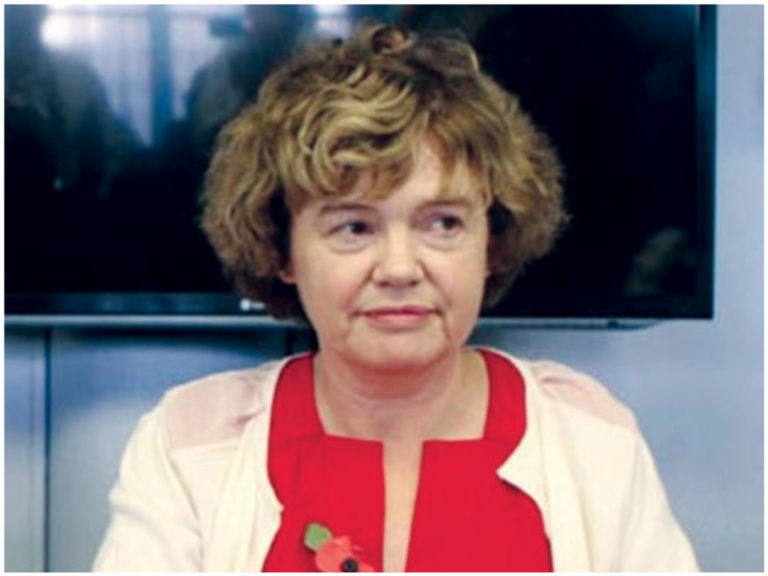
“We are extremely concerned about the deteriorating security situation,” said Catriona Laing, British high commissioner to Nigeria, in a reception held to welcome home the 2019/2020 UK Chevening Scholarship beneficiaries in Abuja on Tuesday.
While stating that the UK government was keen on supporting Nigeria win its fight against insecurity, Laing said her country had been helping the Nigerian military in the areas of training, campaign planning, and countering of IEDs.
“I mean, Nigeria is facing a lot of problems everywhere – in the northeast, terrorism; in the northwest, banditry, kidnapping; in the middle belt, the farmers-herders conflict; in the south, the Niger Delta conflict everywhere.
“And the secession movements in the south-east. So, Nigeria is really struggling.
“Well, we are here to support and help. We have the military team here, who came here after the Chibok girls were kidnapped actually. We are still here, training the Nigerian military, helping them to do campaign planning, how to counter IEDs.”
She said the recent visit of the UK minister of armed forces to Nigeria showed the commitment of the UK government.
“So, we are here for a long time. This is a Nigerian partnership. Your insecurity becomes our insecurity if we don’t help you tackle it. So, we are here and we are trying to do our best to support you,” she said.
Commending the Chevening programme, Laing said it was an initiative of the UK government aimed at preparing future leaders who would not only excel in the academic sphere but also give back to their respective countries.
She said Nigeria already had 1,300 Chevening alumni “currently occupying important positions in power” and providing the UK with both “access and influence.”.
The high commissioner’s statement came barely 24 hours after Nigerian Senate president Ahmad Lawan had claimed on the social media that security in Nigeria was gradually improving.
Lawan had stated that more resources needed to be deployed to enable security operatives to deliver on their mandate.
“The security situation is gradually improving and I am sure that when we have more resources to our security agencies, we will see even faster recovery of our situation.”
The data
According to data obtained from the Nigeria Security Tracker, 115 civilians died from banditry, insurgency and inter-communal clashes, while 51 persons were kidnapped or abducted between March 21 and 27.
Insecurity in Nigeria has worsened in recent times, from clashes between the Eastern Security Network and the military in the South-East, to herders/farmers clashes in the South-West, as well as insurgency and banditry in the northern region of the country.
In Kaduna State alone, more than 150 persons have been kidnapped in the state. Although some of them have been released, some are still languishing in the kidnappers’ dens.
Other northern states like Yobe, Adamawa, Zamfara, and Niger faced a recurrent violent crisis that led to the closure of some schools in the states earlier in February.
A civil society organisation Amnesty International had lamented the ‘strings of attacks’ on schools in northern Nigeria, stating that security operatives were not doing enough to curb the trend.
Much of the crisis is particularly perpetrated by Boko Haram insurgents, bandits, farmer/herders, secessionist groups, and others.
Within the last seven months, Canada, United Kingdom, United States, andAustralia have warned their citizens against travelling to Nigeria, citing insecurity and other crises.
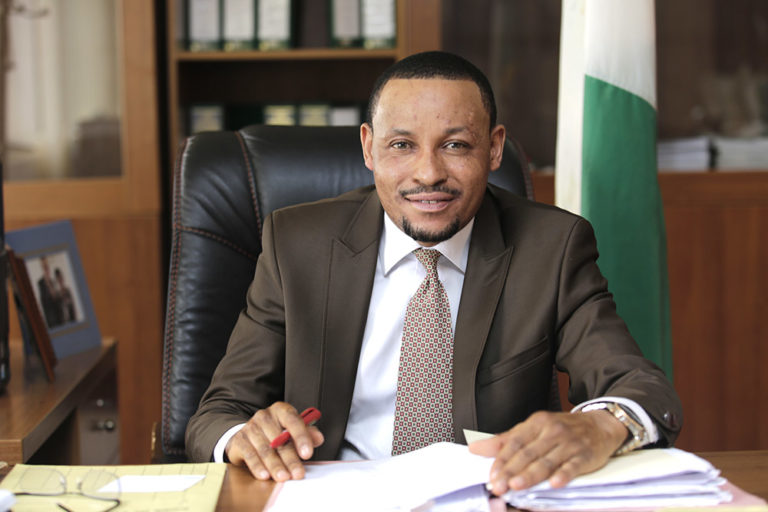
CHAIRMAN of the Code of Conduct Tribunal (CCT) Danladi Umar has said that a security guard, whom he assaulted in Abuja, was rude to him.
Umar was caught in a viral video on social media physically assaulting a security man over a parking lot at Banex Plaza, Wuse 2, on Monday.
The CCT chairman, who seemed to be angry, was seen scolding and violently kicking the guard while he was being booed by an angry crowd who wondered what the guard had done wrong to deserve such treatment.
He was later restrained and was led into his car by police officers.
Reacting to the video in a statement on Tuesday, CCT spokesperson Ibraheem Al-Hassan said the security man was rude and had threatened Umar.
Narrating what transpired, Al-Hassan said the “altercations started over a parking lot which chairman met vacant, and it was directly opposite a shop where he wanted to make a purchase and to fix his phone.”
“When the young security guard sighted him, he ordered that the chairman should not park his car in that particular space.”
Al-Hassan said the security personnel could not provide a reasonable explanation as to why Umar could not park in the empty space.
He said although the tribunal chairman did not identify himself, “the boy was rude in his approach and threatened to deal with chairman if he refused to leave the scene.”
“Again, if the chairman had gone there to cause trouble or intimidate someone, as suggested, he would have gone there in his full official paraphernalia. But he went there alone with his younger brother,” the statement reads.
“The policemen seen in the video clip were not the chairman’s police team. They were policemen operating around the plaza, who at first instance intervened before the arrival of the police team from Maitama police station.”
Narrating further, he said a mob in the plaza started throwing machetes and sharp objects at Umar’s car, “which led to a deep cut and dislocation in one of his fingers, causing damage to his car and smashing his windscreen.”
“At the point he attempted to leave the scene, these same miscreants ordered for the closure of the gate, thereby assaulting him before the arrival of police team from Maitama police station,” Al-Hassan added.
HAUWA’u Adamu, a 30-year-old pregnant mother, had modest expectation from the Dogon Jeji Primary Health Centre when she enrolled for the antenatal routine. She looked forward to obtaining basic healthcare support and service through her maternity period.
But the local health facility has only one volunteer midwife who attends to an average of 60 pregnant women every day. Some of the women come from neighbouring Jigawa State. It is a tough call for the middle-aged nurse and even tougher for her patients.
“Sometimes seeing the midwife does not guarantee treatment or remedies to your health challenges; you can see her and end up going home without any medicine,” Adamu told this reporter.
There are hardly any drugs in the health centre to dispense to patients.
Umma Sani, a 35-year-old mother suffering from High Blood Pressure, told The ICIR that she made several visits to the General Hospital Bayara, only to hear the same words each time – “the doctor is not on seat”.
“They either tell you to come back tomorrow or next week to see a doctor, and there is no assurance that if you come back the next day, you will be lucky that the medical doctor sees you,” she said.
The ICIR checks show that the only medical doctor in the General Hospital is Dr Mohammed Maaji. For most patients, seeing him is an ultimate accomplishment. Umma’s major worry is that her several attempts to meet with the doctor have been unsuccessful.
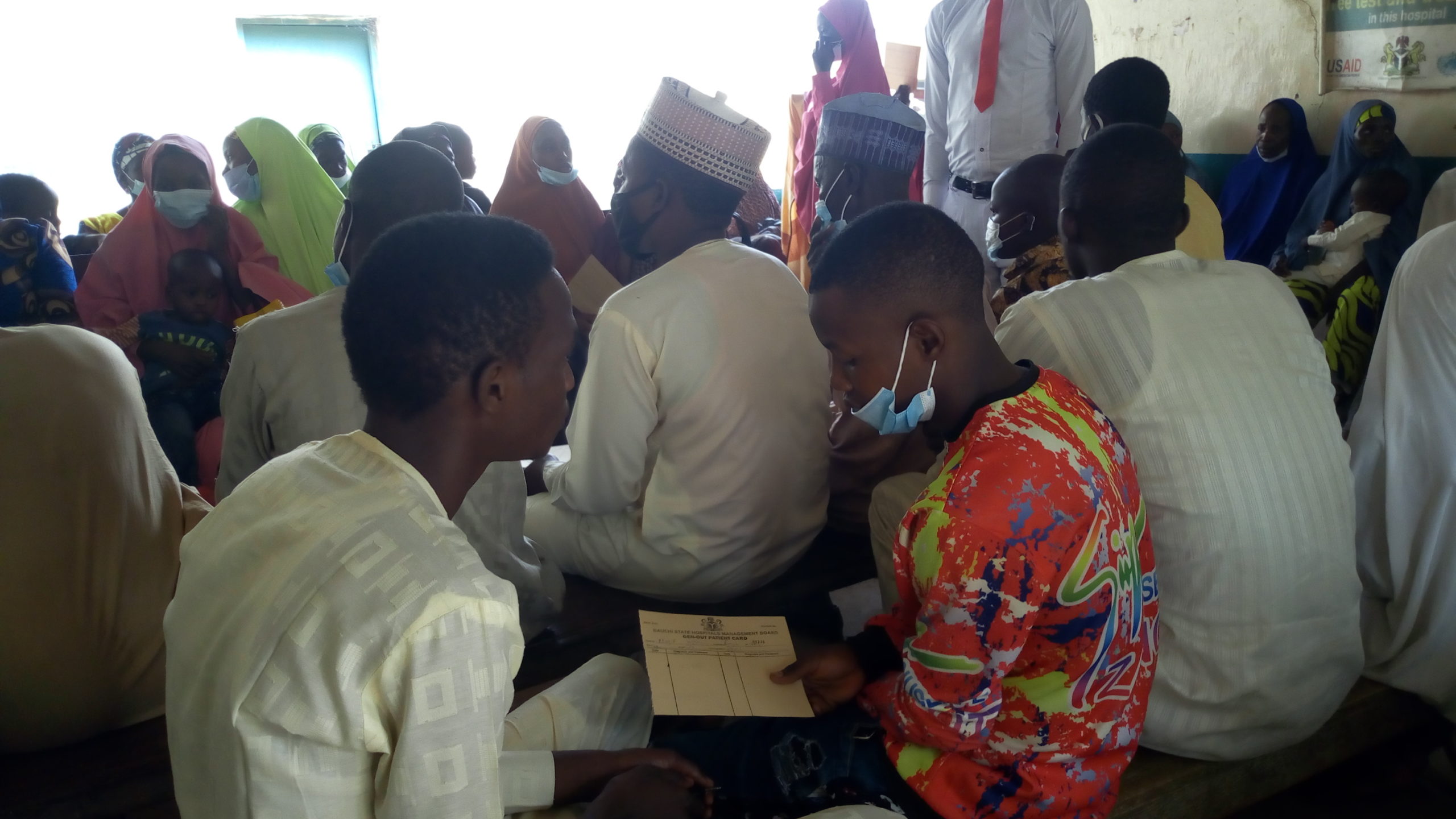
“You will come very early in the morning, join a long queue, and if you are not lucky, the doctor may not even see you. Before it’s your turn, the doctor might have been exhausted and you will be asked to come the following day. So, you (would) have wasted the whole day without getting any attention irrespective of the kind of illness you may be suffering from,” she lamented.
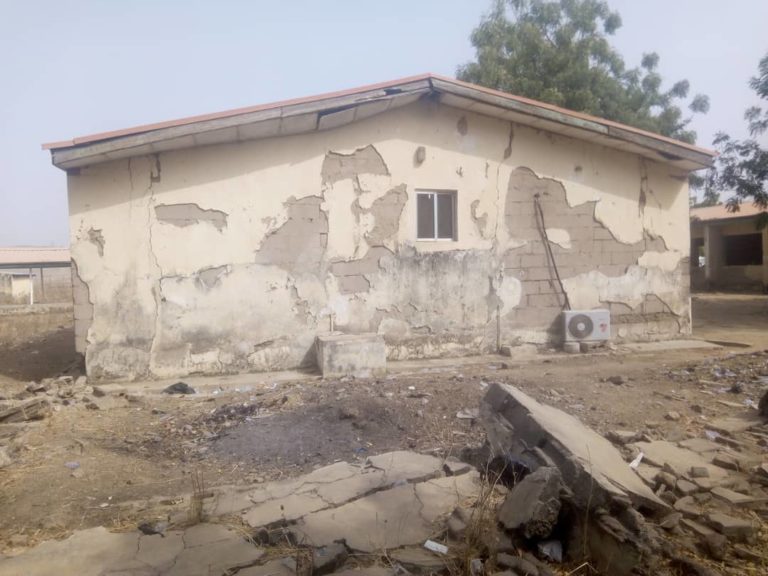
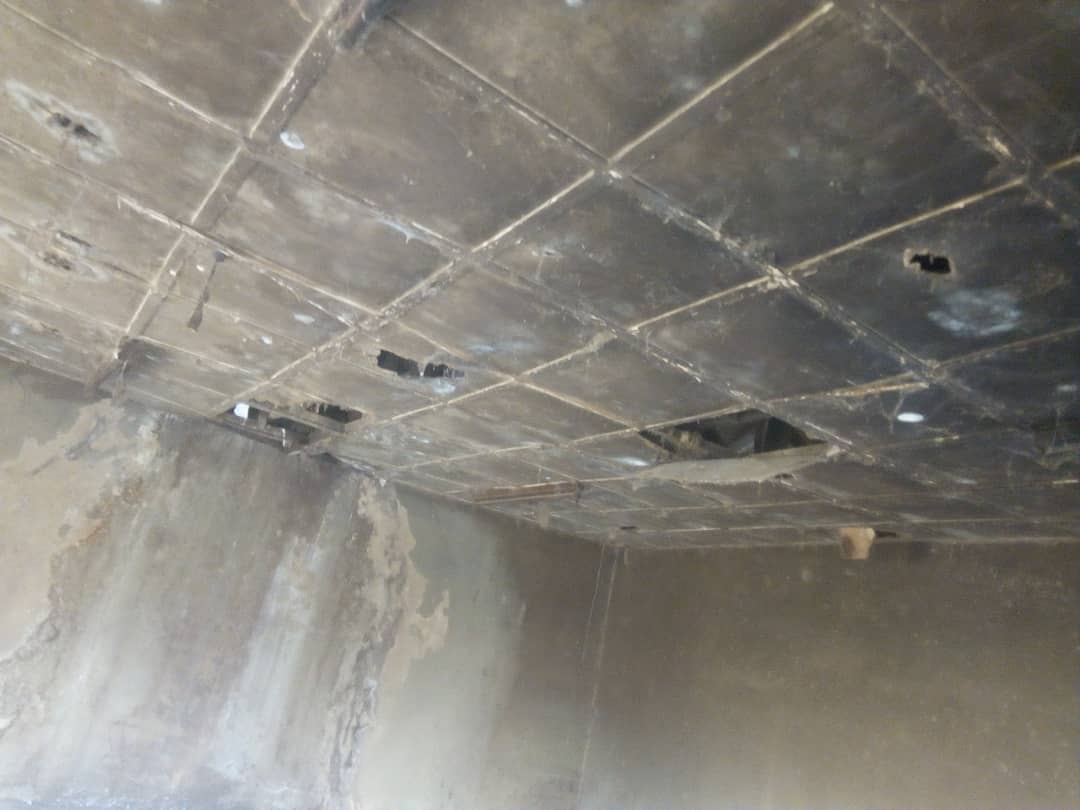
A section of Dogon Jeji PHC where patients Receive Treatment
Health care system in rot
Investigations by The ICIR revealed that Jama’are, a local government in Bauchi state with approximately 176,075 people as at 2018, has only 2 medical doctors and 21 nurses working in the general hospital, the other 29 public health facilities and three private clinics in the area are poorly staffed.
In contrast, the Bauchi Local Government has 113 health care facilities, of which 105 are government-owned, while eight are private clinics. There are 83 doctors spread across the 105 government facilities, which serve an estimated 737,575 people, according to the National Population Commission report of 2006.
Two tertiary health facilities in the state, the Abubakar Tafawa Balewa University Teaching Hospital and the Bauchi State Specialist Hospital currently attending to 20,700 and 18,750 patients, have only 37 and 25 doctors, respectively.
In Darazo Local Government Area, about 100km from the state capital, there are only 2 medical doctors under the state government’s employment. With an estimated population of 375,796, the local government has 61 healthcare facilities staffed with 16 nurses, 16 laboratory staff, eight midwives, and 54 community health extension workers.
A similar pattern was observed in the personnel data from Gamawa Local Council Area, made available to our reporter. Two medical doctors and 17 nurses working in the state’s general hospital cater to about 427,761 people. All the other 58 health facilities in the local council have no medical doctor and no nurse.
Kirfi Local Government Area, with an estimated population of 220,488, has 39 health care facilities with two medical doctors, one pharmacist and nine nurses to attend to its routine healthcare delivery needs. There are also seven midwives, six laboratory personnel and 36 non-professionals called community health extension workers serving in the area.
Our investigation found out that only two medical doctors in Tafawa Balewa Local Council Area are the on-call duty in the two government general hospitals in the council -Boto General Hospital and Tafawa Balewa General Hospital. The local government has an estimated population of 339,755 people. Put together, both hospitals have 17 nurses.
In Alkaleri Local Government Area, where the State Governor Bala Mohammed hails from, the situation is similar. The council has 56 healthcare facilities, including the Alkleri General Hospital, staffed with two medical doctors, 18 nurses, 17 midwives, 30 laboratory staff, and 72 community health extension workers.
The understaffing of health facilities in the state is starker put against the fact that some residents from neighbouring border communities in states like Plateau and Jigawa also seek medical attention from these centres.
Lack of drugs and medical equipment also plague the health care sector
Hospitals in the state not only grapple with inadequate staffing but also the dearth of critical medical supplies.
There are indications that significant budgetary provisions and interventions have been targeted at the state’s health sector by local and international donor agencies. Our investigation showed that health facilities in the state had not shown corresponding improvements in terms of increased personnel, hospital equipment or supplies.
A nurse (names withheld for fear of victimisation) who has served at the Warji General Hospital for close to five years said, “There was never a time when government-supplied drugs or medical consumables in this hospital.”
A Health Ward where patients receive treatment at Warji General Hospital
The standard practice is that patients outsource their medical prescriptions from outside the hospital. For instance, women on admission for child delivery in the facility provide every consumable required for delivery.
“This is discouraging and forcing women to opt to deliver at home. This increases the challenge of complications that endanger the lives of the women,” a midwife in one of the state hospitals lamented.
“Sometimes they wonder why they have to come to the health facility to deliver their babies, because of the financial burden they incur and the series of delays as a result of inadequate health care providers,” she said.
Another nurse at a General Hospital in the state confided in The ICIR that “the situation is very pathetic, too much workload on us sometimes force us to make blunders which have adverse effects on patients.”
A medical doctor in one of the state’s hospital corroborated the assertion, saying, “When you sleep after work hours, you don’t want to wake up the following day because you were mentally drenched the previous day as a result of too much work.”
The doctor recalled how he made some blunders by prescribing wrong drugs on a patient meant for another patient, “because I was very tired and could not recall that the prescription I gave her was for another patient suffering from different ailments.”
Patients on queue to see a doctor at a Bauchi General Hospital
Ikram Zayd (not real name), who works with General Hospital Bayara, told this medium that he works as a staff nurse for eight hours on three shifts a week, attending to at least 20 patients on average in a day.
“It depends on the flow of patients; if there is high flow of patients you can attend to about 40 to 100 patients per day, especially when one is posted to the General Out Patients unit or Emergency Unit of the Hospital.”
The high number of patients Ikram attends to touches on the quality of service rendered to the patients because of pressure from the healthcare seekers.
The pressure of a high number of patients demands makes Ikram made a mistake while discharging his duty saying,” I fix an IV fluid on the patient admitted to the ward. Because of the flow of patients, I was rushing to attend to another patient. His relative talked to me that the fluid has been exhausted and that blood started flowing through the pipe that connects the fluid to his vein.
“I was so overloaded to the extent that I ignored him, thinking that he only needed my attention until he became angry and started shouting at me before I realized what was going on,” he said.
Sometimes Ikram feels mentally and physically exhausted, which in return affected his performance. “I feel demoralized and regret why I opted to go for nursing.”
In another instance, a medical doctor also recalled how in 2018, “a baby I misdiagnosed died because I was too exhausted to examine her thoroughly.”
The ICIR has interviewed 40 nurses and doctors across the three senatorial zones of the State; all of whom narrated how too many workloads, inadequate equipment, lack of basic consumables at hospitals sometimes put them at loggerheads with patients; just as tendencies to misdiagnose continue to exacerbate. In the maternity wards that this reporter visited across the several general hospitals in the state, there were often no basic provisions and equipment such as delivery beds, suction machines, incubators and resuscitation machines.
A medical doctor who pleaded anonymity listed such critical equipment currently lacking in the hospital to include X-ray machine, computed tomography machine, electrocardiography, ultrasound scan, clinical chemistry machine, magnetic resonance imaging machine, haematology machines, incubators, infusion machine and pumps as lacking in the hospital where he operates.
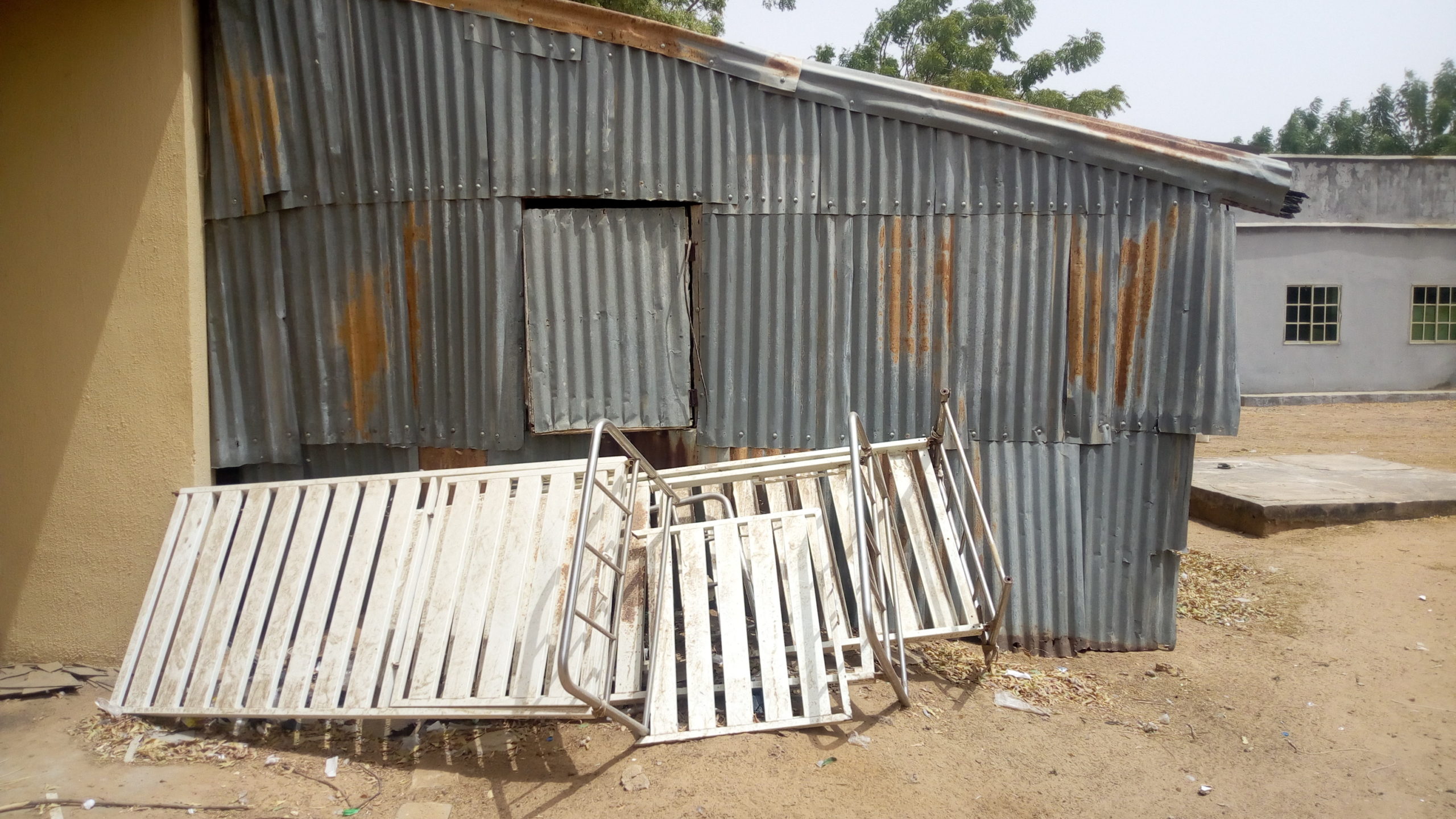
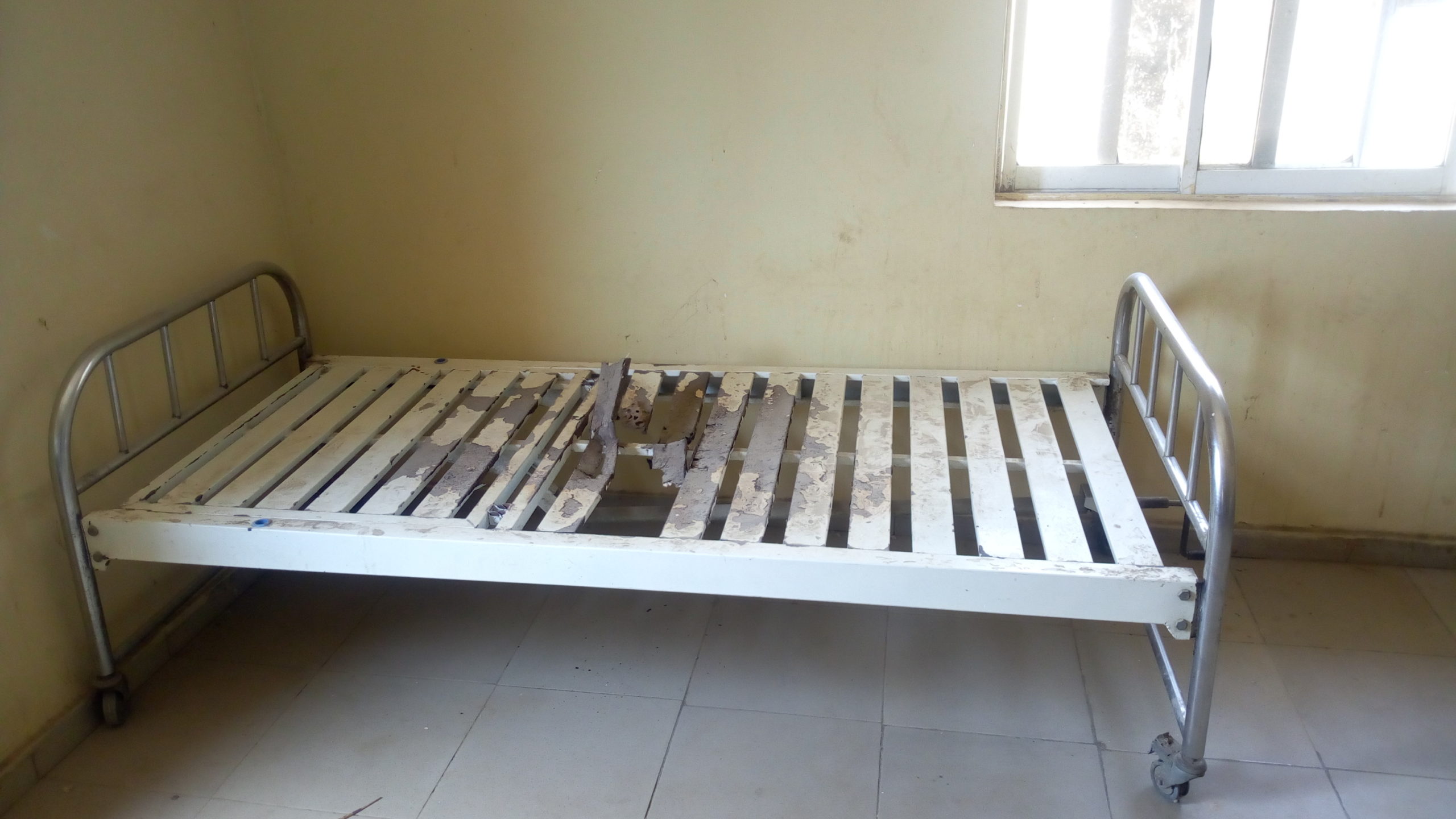
Worn out bed at Bauchi PHC
Even other items as basic as beds and couches are in very short supply in the hospital. It was almost not surprising that there are no neonatal couch, blood warmer, and phototherapy machine in the hospital.
It is generally believed that the prevailing lack of critical requirements in health facilities in the state result in steady grave consequences for the people. However, this investigation closely analysed available data, which revealed a pattern of serious consequences on women and children’s health.
For instance, of the 113 health care facilities in Bauchi local council, 81 are designated centres for the prevention of mother to child transmission. Yet, only five were equipped for the designated service. Of the 80 health facilities offering remedies on childhood illness in Bauchi local council, only 23 met the basic supply milestone.
A medical doctor familiar with the health care system in the state confirmed that “almost all the general hospitals including the state Specialist Hospital lack some of the required medical supplies.”
In Jama’are General Hospital, the emergency unit has only one blood pressure testing machine. “We don’t have anything in the emergency unit of the hospital,” one medical personnel (kindly mention name) told this reporter.
The emergency unit has two wooden chairs. The ambulance, procured in 2008, is completely grounded. It was the same situation in all the General Hospitals visited in the course of investigating this story.
Demoralized Workforce
In the hospitals and health facilities visited, while patients voiced their frustration at the poor services rendered, staff complained of being owed salaries. One medical doctor (kindly state the name of the doctor) explained, “the high number of patients looking for the attention of few workers who are stretched and overworked is a major problem. Thorough examination of patients is hampered. This affects the quality of care, the idea of patient-centred clinical method (PCCM) becomes difficult to practice.”
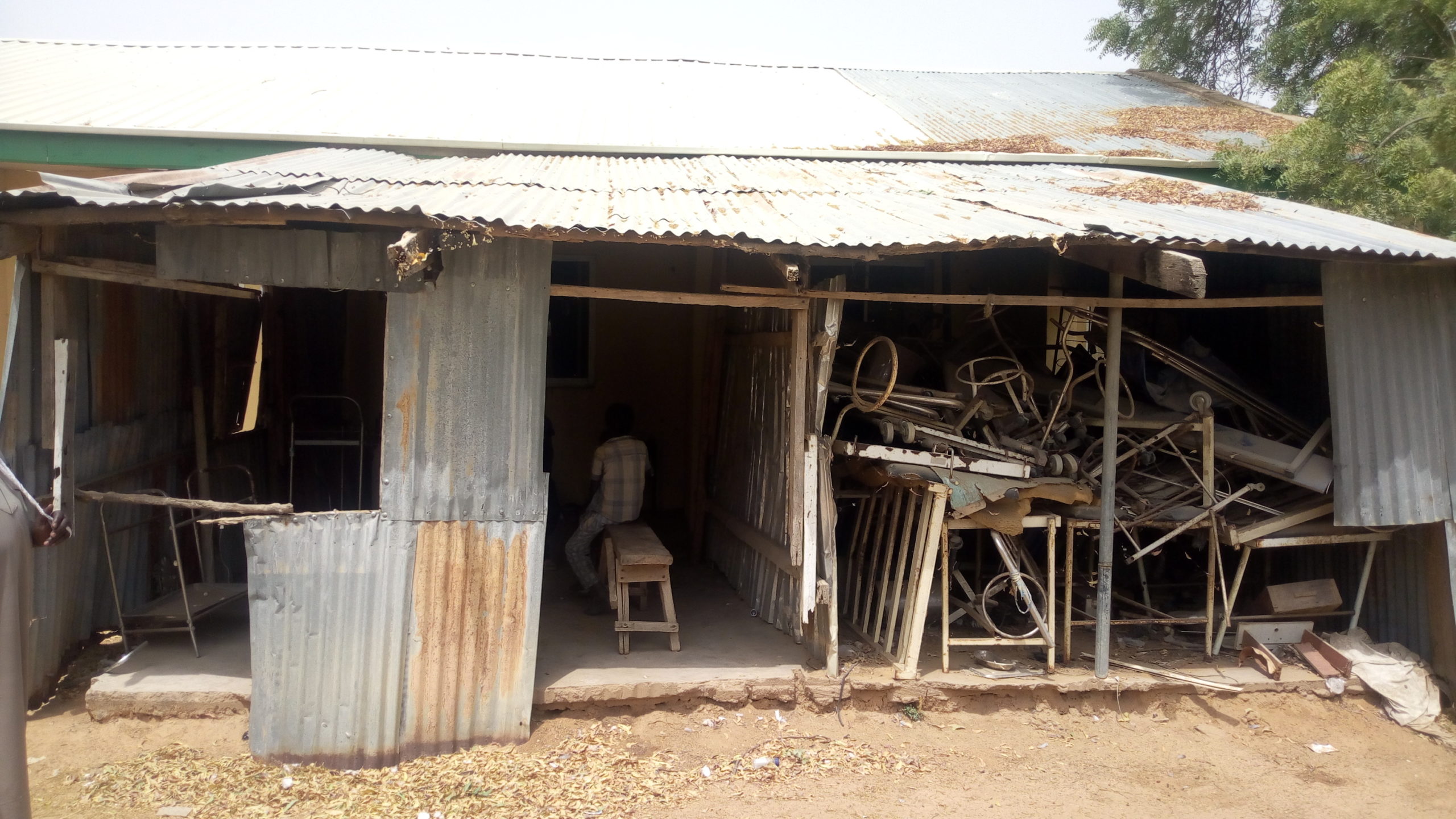
A tent used for consulting
He said that doctors and nurses, on average, attend to between 30-100 patients every day, a situation he described as risky. “It is exhausting enough for one person to work for eight hours with nothing less than 100 patients. It reduces our performance and accuracy with which we deliver our work due to work stress,” the doctor added.
Many health workers who accepted to speak with our reporter off the record attributed the increasing but “avoidable mistakes” by medical personnel to inhuman and stressful working conditions prevalent in the state’s health sector.
Ratio of Doctors to patients in some Bauchi state hospitals
Inadequate training for healthcare workers
Sometimes too, nurses are compelled to play specialists interchangeably to make up for the gaps caused by workforce shortage. For instance, a nurse at Boto General Hospital said she was stationed at the maternity unit of the hospital where she works “because we don’t have professional midwives”.
The ICIR’s check shows that the state’s health care workers are rarely exposed to requisite training. For example, of the 1,577 staff whose job descriptions underline a focus on ANC, none obtained the commensurate training to render such services, according to the public record shared with the reporter.
The report further called attention to the ongoing practice of assigning some of these unqualified staff rendering services on basic emergency obstetric care, another area in which none of them got the requisite training within the period under review.
The data also shows that of the 1,446 facility staff rendering services on Community Management of Acute Malnutrition (CMAM) in all the 113 clinics in Bauchi local council, only five were trained as at the first, second and third quarters of 2018, respectively.
According to the report, only five health care providers in the state have the requisite training to offer child and young infant feeding and counselling.
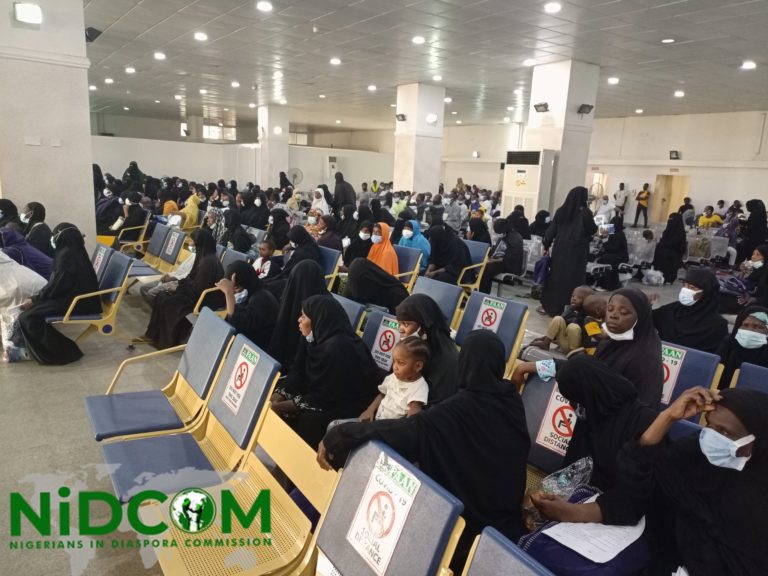
A new batch of 395 Nigerians stranded in the Kingdom of Saudi Arabia arrived into Nnamdi Azikiwe International Airport Abuja on Tuesday via Saudi Air Flight SV3401, the Nigerians in Diaspora Commission (NIDCOM) has announced. Another batch is expected before the end of the week.
The ICIR can report that at least 6, 975 Nigerians have been evacuated in the first quarter of 2021, according to records gathered from the NIDOCM and the Federal Ministry of Foreign Affairs.
Five thousand persons were repatriated from Cameroon earlier this month, representing the highest number of Nigerian returnees from any single country this year, after fleeing their indigenous homes for six years due to Boko Haram insurgency in the North-East. They were received by Borno State government in Amchiide, a border community between Nigeria and Cameroon close to Banki in the Bama Local Government Area of the state.
From Saudi Arabia, 1, 969 stranded Nigerians were evacuated by the Nigerian government in direct response to a viral video showing hundreds of Nigerians held in unsanitary and abusive conditions at an immigration detention facility in Riyadh for many months over expired visas. Their evacuation was delayed due to issues around the Covid-19 protocol and the first batch did not return to Nigeria until 28th of January.
India, on the other hand, deported six Nigerians in January for overstaying their visas and not having valid passports.
Meanwhile, some Nigerian embassies have remained closed since Covid-19 pandemic started, making it more difficult for diaspora Nigerians to have their expired passports renewed. In some other cases, restriction to movements has stalled the process.
A doctorate student in Arkansas Oyeronke Afolabi applied for the renewal of her passport in Atlanta last year and was informed after the biometrics and necessary documentation that she would get her passport through the mail box latest by 10th of February.
“Up until now, we are yet to get the passports. My studentship status depends on this passport. I have mailed and called the embassy and yet no response,” she lamented.
Another Nigerian who simply gave her name as Busari narrated a similar tale. She had applied for the renewal of her passport online since December 2020 but there has been no communication from the embassy on how to proceed with the process.
“It’s so frustrating to be a Nigerian to be honest because of what you go through just to get things done using the Nigerian system. Here is the thing, I applied for Nigerian passport renewal at the consulate in New York City. (The) first problem is the appointment that will be automatically generated to pick up your passport after completing your online registration was not available,” she said.
She further explained: “I decided to visit the embassy at 828 2nd Avenue New York in person to know how to proceed. On getting there, no plan or communication as to what or how and reason for no appointment.”
Responding to this issue, spokesperson for the Nigeria Immigration Service Sunday James explained that some countries had directed that all embassies should be shut down, and that the Service would not contravene the law of any country.
When asked if they were plans to find alternative ways to address the problem, James replied rhetorically: “Can you guarantee the security of the passport booklets? If we say that we should take the process to a destination that is not a recognised centre, can you guarantee the country of the safety of the passports?”
It would be recalled that the NIS recently launched an e-temporary passport to afford Nigerians abroad the opportunity of returning to the country in emergency situations.
James confirmed that the circular to this effect had been sent to all the embassies. However, it would take two months from the 9th of March when the new document was launched for countries to perfect the administration process of acceptance before approvals for travels with the e-temporary passport could be granted.
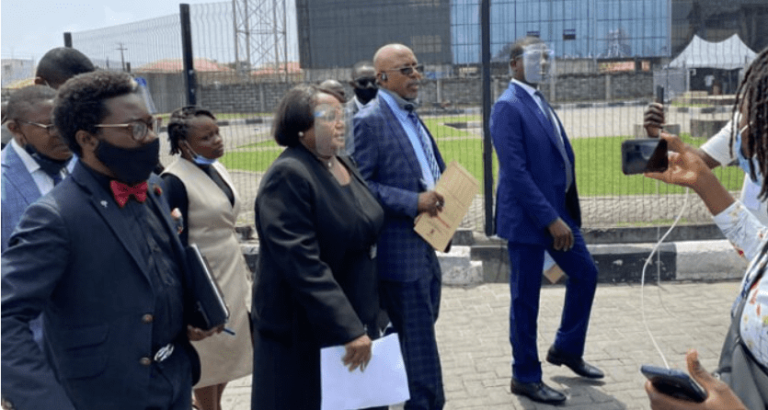
THE Lagos State Judicial Panel on Restitution for Victims of SARS Related Abuses and Other Matters has secured a three-month tenure extension.
Chair of the panel Doris Okuwobi made this known on Tuesday during the resumed hearing, saying that the panel would continue to hear submitted petitions and make further recommendations until July 19 as against the initial deadline of April 19 by the state government.
Governor Babajide Sanwo-Olu of Lagos State had inaugurated the panel on October 19, 2020, following several days of protests by Nigerian youths against the extrajudicial killings and other misconduct perpetrated by operatives of the defunct Special Anti-Robbery Squad (SARS) and other units of the Nigeria Police Force.
When the hearing of petitions commenced in Lagos, several police brutality victims narrated painful encounters with trigger-happy police officers.
The victims sought justice before the panel, from unjust killings to illegal detention, bribery, seizure of properties.
The ICIR gathered that the Lagos panel had received 235 petitions from police brutality victims across the state.
During the course of the panel hearings, the Nigerian Army was summoned to appear before it concerning petitions bordering on the shooting of Nigerians at Lekki Toll Gate on October 20, 2021.
Initially, the Army failed to appear but eventually did before finally disbanding its legal team appearing before the panel.
The Army pulled out of the hearing after Reddington Hospital testified that it treated victims from the #EndSARS protest with bullet wounds on October 20, 21 and 22.
Hearings relating to Lekki shootings have not been concluded.
Division inside the Lagos panel
The panel has been faced with internal clashes due to members’ failure to agree on some decisions.
The disagreement led to the youth’s pull-out and civil society representatives, who were also members of the panel.
This followed the decision of Okuwobi to reopen the Lekki Toll Gate before the conclusion of the hearing.
One of the youth representatives, Rinuola Oduola, said she was not part of reopening the toll gate, noting that a quorum was not formed before the panel chair made the decision.
“It should also be noted that the ruling did not include our dissenting opinions as members of the panel. Five other members of the panel held the view that the toll gate should be allowed to reopen,” Oduola said.
Following her dissonance to the panel decision, Oduola pulled out of the panel, saying that she would not be part of a ‘cover-up.’
Victims receive compensations
The ICIR had also reported that some of the petitioners before the Lagos panel had been awarded monetary compensations.
More than N30 million has been awarded to five victims who petitioned the panel, including a widow, Tolulope Openiyi, whose husband was shot dead by the Nigerian police operatives.
Some other victims who have been compensated were Blessing Esanbor, Felicia Opara, and Tella Adesanya.
The panel awarded N10 million to Openiyi and N 5 million to Esanbor. Opara received N750,000, while Adesanya got N500,000.
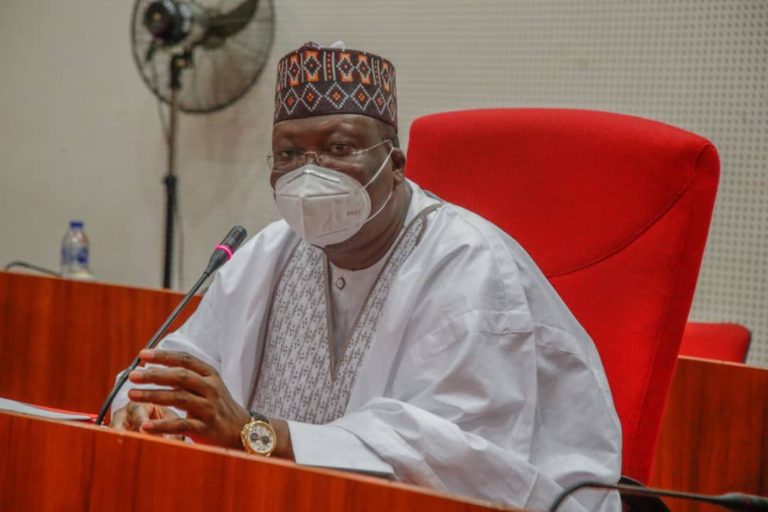
DESPITE evidence to the contrary, President of the Nigerian Senate Ahmad Lawan has said that Nigeria’s security situation is gradually improving.
Lawan said this in a post on his official Twitter page on Tuesday, stating that he and the Speaker of the House of Representatives Femi Gbajabiamila had met President Muhammadu Buhari on Monday in Abuja.
According to Lawan, the meeting was about important national issues, most especially COVID-19 vaccination.
He stated that they also discussed the state of insecurity in Nigeria and concluded that more resources must be provided to enable security operatives to deliver on their mandate.
“The security situation is gradually improving and I am sure that when we have more resources to our security agencies, we will see even faster recovery of our situation,” Lawan said.
The security situation is gradually improving and I am sure that when we have more resources to our security agencies, we will see even faster recovery of our situation.
However, the Senate president’s claim is contrary to the facts and current situation across the 36 states.
According to data obtained from the Nigeria Security Tracker, 115 civilians died from banditry, insurgency and inter-communal clashes, while 51 persons were kidnapped or abducted between March 21 and 27.
Insecurity in Nigeria has worsened in recent times, from clashes between the Eastern Security Network and the military in the South-East to herders/farmers clashes in the South-West, as well as insurgency and banditry in the northern region of the country.
In Kaduna State alone, more than 150 persons have been kidnapped in the state. Although some of them have been released, some are still languishing in the kidnappers’ den.
Other northern states like Yobe, Adamawa, Zamfara, and Niger also faced a recurrent violent crisis that led to the closure of some schools in the states earlier in February.
A civil society organisation Amnesty International had lamented the ‘strings of attacks’ on schools in northern Nigeria, stating that security operatives were not doing enough to curb the trend.
Most of the crisis is particularly perpetrated by Boko Haram insurgents, bandits, farmer/herders, secessionist groups, and others.
Within the last seven months, Canada, United Kingdom, United States, andAustralia have warned their citizens against travelling to Nigeria, citing insecurity and other crises.
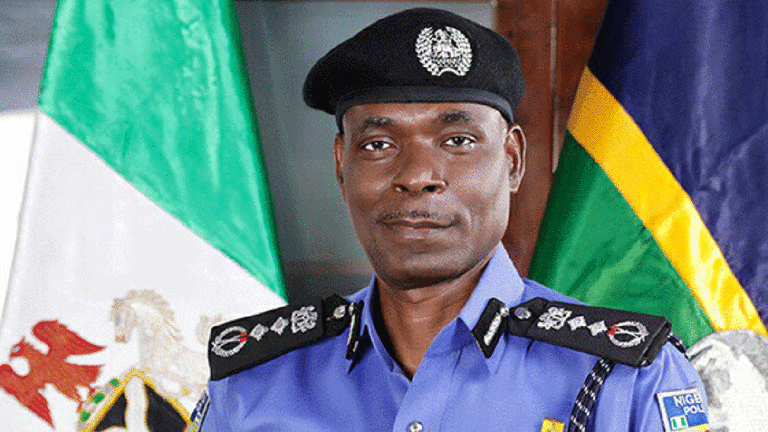
AN Abuja high court has fixed April 16 to deliver judgement on the suit challenging the legality of the three-month tenure extension granted to the inspector-general of police (IGP) Mohammed Adamuby President Muhammadu Buhari.
The presiding judge Ahmed Mohammed adjourned the matter for judgement after all the parties had adopted their final briefs of argument on Tuesday.
Listed as defendants in the suit, which was brought before the court by a constitutional lawyer Maxwell Opara, were President Buhari, the police chief, the attorney-general of the federation (AGF) and minister of justice Abubakar Malami, and the Nigeria Police Council.
The plaintiff, through his lawyer Ezekiel Ugochukwu, urged the court to declare the continued stay of Adamu as IGP illegal and unconstitutional, but the defendants prayed the court to dismiss the suit for lacking in merit.
Lawyer to the IGP Alex Izinyon, who maintained his position on the matter, argued that the decision to retain Adamu as the police chief was not in breach of either the 1999 Constitution, as amended, or the Police Act.
The counsel to the President I. Elodimuo also urged the court to uphold the preliminary objection of the first, third, and fourth defendants raised against the suit on the ground that President Buhari – the first defendant – retained Adamu in office as the IGP in the exercise of the executive power conferred on him by the constitution.
According to him, the constitution empowered President Buhari to appoint a serving police officer as the IGP, in consultation with the Police Council.
The legal practitioner stressed that neither the council nor the Police Service Commission disclosed that Adamu was no longer a serving police officer.
In a five-paragraphed counter-affidavit jointly filed with the AGF, President Buhari described the case of the plaintiff as “frivolous, unmeritorious and undeserving of the court’s attention.”
He, therefore, urged the court to dismiss the suit ‘with heavy cost.’
Iziyon, who also urged the court to dismiss the suit, argued that going by Section 136 of the Nigeria Police Act, his client could remain in office as the IGP until 2024.
Adamu, who attained the maximum 35 years in service on February 1 but got a three-month extension of his tenure by President Buhari two days later, argued that his tenure had not elapsed.
He said the new Nigeria Police Act gave him a four-year tenure which would only expire in either 2023 or 2024.
According to the police chief, his tenure would elapse in 2023 if counted from 2019 when he was appointed as the IGP, or 2024 if counted from 2020 when the new Nigeria Police Act came into force.
He, therefore, prayed the court to dismiss the suit.
Opara had, in his suit, contended that by the virtue of Section 215 of the Nigerian Constitution and Section 7 of the Nigeria Police Act, 2020, Adamu could not validly continue to function as the IGP having retired as a member of the Nigeria Police Force from midnight of February 1, 2021.
The plaintiff, among other things, prayed the court to restrain Adamu from exercising any form of command or control over the Nigeria Police Force.
He equally sought an order of court mandating President Buhari and the Police Council to immediately appoint a new IGP, in line with the provisions of Section 7 of the Nigeria Police Act.
Similarly, the plaintiff asked for a declaration that by the combined effect of the provisions of Sections 215 and 216 of the 1999 Constitution and Section 7 of the Nigeria Police Act, 2020, the second defendant (Adamu) could not lawfully continue to function as the IGP, not being a serving member of the Nigeria Police Force as from midnight of February 1, 2021, stressing that all actions taken thereafter were illegal, null and void and constituted a breach of the constitution and the Police Act.
He also sought a declaration that the failure of the first (Buhari) and fourth (Police Council) defendants to appoint an IGP as of February 1, 2021, constituted an abdication of their duties under Section 215 of the 1999 Constitution and Section 7 of the Police Act.
NIGERIANS involved in an online affiliate marketing platform known as Racksterli have continued to express fear and doubts over the legality and genuineness of the business venture.
Many are concerned about the possibility of getting their returns on investments (ROI) and their capital, following the decision of the chief executive officer Michael Oti to liquidate the company.
“…Even though we have glitches, nothing must happen to your capital. In order to do that (return the money), in addition to the available raw capital, we might need to start selling out some of our properties, or we start liquidating our properties to raise more funds to add to the funds we have. But we are not going to wait for that. We will start with the available funds,” he said in a viral video.
In another video found on one of the communication channels of the platform, Oti disclosed that he had stopped further registration of new investors. Described as an honourable decision, he said it was to maintain a good reputation and offset outstanding ROI.
“We were faced with an option to either continue functioning, keep some people to pay the price, but if we had continued, it would have simply been at some peoples’ expense. So we decided to take the tougher decision, which is to honourably stop registrations,” he stated in another 13: 31-second video.
On March 28, the organisation claimed it had commenced repayment, but few individuals who made comments on the post still expressed their disappointments, while others commended him for addressing the subscribers.
Racksterli CEO, Michael Oti Source:www.browse.ng
On March 4, it became a trending issue on social media. Chris Ani, @iamchrisani was among those who shared worries about the scheme, describing it as a ‘full branded scam and Ponzi.’
In his opinion, Nigerians involved in the venture should have learned from similar mouth-watery Ponzi schemes which crashed in recent years. This was after some Nigerians had invested a huge sum in the schemes. The MMM is such a good instance.
“Hi, racksterli, I ought to withdraw last week Thursday, but my dashboard is showing me a different date,” a former student of Joseph Sarwuan Tarka University, Makurdi, Ochaizy Ochai said, expressing his concerns on the platform’s social media account.
Mary Uduak, SEC DG Source: ThisDay
Another subscriber, identified as Michael, a Lagosian, said he was yet to collect his money.
Khaled, who lives at Ifako-Ijaiye, also in Lagos State, was displeased he could not access the investment platform.
“Hello, I have tried everything, but it’s not working. There was a time I successfully submitted my details but when I tried to log in, it says invalid details. I must have tried over 30 times now,” Khaled stated. Other concerned subscribers were Mercy John, Edochie Princewill, Peter Oghenero, Okunola Abbey.
Checks by The ICIR showed the last posts by Racksterli through the Racksfamilyofficial were on March 23, at about 1:18 pm. The posts were to respond to scores of concerns. “Kindly note that we would no longer be attending to complaints via any of our social media platforms rather than sending your complaints to the emails below related to your issues: racksothercomplaints@gmail.com, rackspaymentissues@gmail.com, and racksprofileissues@gmail.com.”
As such, the business platform has no known address or office.
Nevertheless, the Racksterli investment platform offers a similar service to an earlier Ponzi scheme called Racksterly.
Racksterly has since shut down, after which Racksterli came on board. They are clearly synonymous in pattern, and identity, except for the ‘i’, which replaces the ‘y’ in the earlier crashed scheme.
“Racksterly before now was doing the same thing and a whole lot of people also invested in it, but it crashed and packed people’s money away,” Victor Udochukwu posted on his social media.
“Racksterly crashed months ago and now this is a new racksterli.”
By March 8, the apprehension grew to its peak as some of the subscribers realised they could no longer access the firm’s web portal , denying them access to track their investments.
As of March 12, when The ICIR examined the websites, the web portal was still not active. There was confusion about whether the portal was still maintaining its original domain extension – .com or switched to .org.
On March 27, the reporter checked www.racksterli.org ,but rather than display service information of the purported investment company, a full blank website popped up with a simple tiny inscription, stating – welcome to me.
The ICIR also realised it was being promoted by David Adeleke, a notable Nigerian musician known as Davido. The promotional footage of Racksterli uploaded since last year December has garnered almost 4, 000 views as of date. This is despite using an invalid official website promoted in the 32-second video.
How it works
The Ponzi-like initiative offers its subscribers different packages, which include Standard, Diamond, Premium, Ruby, Platinum, Emerald, Gold up to Topaz. They are 11 in different packages.
For the Standard package, subscribers are encouraged to invest N14, 000 and they could earn about N722 daily, while ROI for the platform was pegged at N21,600 in 30 days. This is more than 154 percent profit in a month.
Premium package attracts ROI of N44,460 after N28,000 investment, with daily earnings of N1,482 per day. Once again, the ROI is above 100 percent.
The Platinum attracts N88,960 ROI, starting from N28, 000 investment. It attracts daily earnings of N2,964.
While the Golden package offers N177,840 ROI starting with N112,000 investment, daily earnings are 5,028. Also, the Diamond bundle provides ROI of N444,600 with investment starting at N280,000, indicating a daily earning of N14,820.
Ruby and Emerald attract some of the highest ROI after an investment offer of N560,000 and N1.12 million respectively.
The Ruby package has N848, 370 ROI, while Emerald attracts N1,690, 050 return. These further imply that subscribers of each package get daily earnings of N28,279 and N56, 335 after 30 days, respectively.
Other top packages include Pearl, Jasper, Sapphire, and Topaz. Investment for the Topaz package is N20 million. The company claimed that what was expected of subscribers was to share sponsored posts daily on their personal Facebook accounts through the Racksterli platform.
The firm claimed the accumulated funds were invested into real estate, forex trading, and sales of gadgets. While investments in real estate are considered one of the lucrative businesses to make good ROI, it can hardly be said of forex trading and sales of gadgets because these are unique business areas with relative risks.
Forex trading, though largely done by governments, institutions, and currency speculators, it involves trading in international currencies such as the euro, dollar, and these are also based on speculations – high risks.
According to US-based online trading academy, “when you go long on EUR/USD, for example, you are hoping that the value of the Euro will increase relative to the U.S. Dollar. As with any investment, you could guess wrong, and the trade could move against you. That’s the most obvious risk when trading the FX markets.”
Other possible risks included interest rate, liquidity risk, risk of ruin, exchange rate risk, country risk, among others.
The Central Bank of Nigeria (CBN) has often expressed concerns on forex-related issues, especially purchases made through black markets. It has also warned against several Ponzi schemes.
Besides, the Securities and Exchange Commission (SEC) has also been at the forefront of urging Nigerians to guard against investments such as Racksterli. For instance, in 2019, a Ponzi scheme identified as Loom Money Nigeria emerged. It deployed similar social media technologies to amplify the venture, but SEC kicked against it due to its volatility.
At least four of the suspicious investment platforms were shut down by the commission in 2019, some of which included Money Rite, X-World, No Failure Development, and MGB Global.
By April 2020, 11 extra similar Ponzi schemes were discovered, with severe warnings from the commission to Nigerians on the need to be mindful of fraudulent investments.
However, despite the possibility of real estate producing high ROI, the sector has not performed well in recent times. In fact, for six consecutive quarters before the fourth quarter (Q4) of 2020, the sector returned negative growth, showing that it was not growing.
The real estate sector returned to positive growth in Q4 of 2020, reporting 2.81 percent y/y growth, according to the National Bureau of Statistics (NBS)
Scheme transits from racksterli to goldomc.com
By March 13, Racksterli had switched to www.goldomc.com with 442,058 users. But findings revealed that as of March 27, the number of users on the website, which also displayed the name of the scheme – Racksterli- had reduced to 395, 019.
The ICIR attempted to contact Racksterli on official mobile lines on its website and social media accounts, but it was unsuccessful. Text message sent to the line was also not replied to.
Experts’ Position
Muda Yusuf Director General, Lagos Chamber of Comerce and Industry. Photo Credit: LinkedIn
An economist Muda Yusuf has warned against the business and was particular about the loss Nigerians could experience, citing instances of past Ponzi schemes.
Yusuf, who is also the director-general of Lagos Chamber of Commerce and Industry (LCCI), recalled how SEC issued several warnings against similar business outfits. Because SEC plays an oversight role on investments, he advised Nigerians to steer clear of any investment venture unrecognised by the commission.
“It is the individual’s responsibility to do due diligence before investing. You may need to seek advice from financial market experts before investing your money in any venture. It is these financial experts that will determine if an investment is realistic or not,” Yusuf advised.
“Any company that is not registered by SEC can easily be fraudulent.”
A lawyer who shared his opinion on the issue Solomon Okedara said it would be inappropriate to literarily label the organisation as fraudulent. According to him, “on the face of it, it may look fraudulent, but it is an institution of government such as police or any other government authority that can investigate and say it is a fraudulent organisation.”
“There are businesses that run offices, yet they are fraudulent. But the very nature of their operations can be questioned by the people before investing in their activities. Do they have the expertise, structure and staff ?” he queried.
However, a business analyst Chidiebere Obasi noted that Nigerians must be wary of businesses that gave very high returns.
“Currently, returns in the economy are very low, starting with fixed income to other markets. So, it is impossible for a company to promise you 50-100 percent ROI and keep it,” he said.
“Economic fundamentals do not support that. Let’s be careful and not fall victims. Always consult a financial expert if you are confused about an investment or want to invest.”
Head of corporate communications at SEC Efe Ebelo was contacted through a text message for reaction, but she did not respond to both the text message and calls put to her line.
PRESIDENT Muhammadu Buhari has said that rising global demand for cleaner energy sources has offered Nigeria an opportunity to exploit gas resources for the country’s good.
Buhari, who said this on Monday in Abuja at the official launch of ‘The decade of gas in Nigeria,’ explained that his administration had decided to confront the paradox of over-reliance on oil by declaring 2020 as a year of gas.
“Global developments have indeed presented us an opportunity. Gas will become the dominant fuel for generating power across the world and in Africa. The question now is: can we rise to the challenge?”
The president emphasised that the current administration’s major objective was to transform Nigeria into an industrialised nation with gas, stressing that his government was committed to deepening gas value chain by reviewing and gazetting policies and regulations to enhance operations in the sector as contained in National Gas Policy 2017.
“Remarkable progress has been made to achieve this target through developing gas infrastructure, promoting domestic utilisation of LPG and CNG, commencing the process of commercialising gas flares, development of industrial transport gas markets and increasing gas to power.”
The president noted that the federal government had kickstarted other policies and projects, including the National Gas Expansion Programme, Autogas Policy and the contraction of the 614km Ajaokuta-Kaduna-Kano gas pipeline.
He pointed out that Nigeria had enormous potential to diversify and uplift the economy, emphasising that its potential of about 600 trillion cubic feet of gas put it on the path to drive the economy through gas.
President Buhari further called for the collaboration of stakeholders in actualising government’s push for a gas-driven economy.
The president also noted that the Nigerian Liquified Natural Gas (NLNG) had been the government’s arrowhead in reducing gas flaring in Nigeria, stressing that it had contributed $114 billion in revenues over the years.
“Nine billion dollars in taxes,$18bn in dividends to the federal government,$15 billion in feed gas purchase and all were achieved with 100 percent Nigerian management and 95 percent Nigerian workforce,” he noted.
Minister of state for petroleum resources Timipre Sylva said the Petroleum Industry Bill (PIB) would unlock market potential for Nigeria’s 203 billion tcf of gas reserves, assuring that the National Assembly had shown commitment passing the 13-year-old bill into law in April 2021.
Sylva, at the event, said the PIB was solution to the unending blame game that had surrounded the development of gas in Nigeria.
He said Nigeria had gone in the wrong direction in the oil business since the 1950s as a country but expressed optimism that a lasting solution was in sight with the PIB coming on board soon.
“As a country, we went in the wrong direction in oil business since the 1950s. But it is not too late. From what has been said, you know, as usual, we try to trade blames. Some would say it was from government side that the investors decided to focus on oil and where they found gas. They shut it in and decided to focus on oil. So, gas sector was not explored adequately. From the investors’ side, they will say the fiscal framework was not there to recoup their investment in the gas sector. From today, I will say that the solution to all these is in sight. The solution is PIB. The National Assembly has told us, and they have shown commitment that the PIB will be passed in April. And when the PIB is passed, those blame games will end,” he said.
A WOMAN identified as Blessing Jimoh in Ondo State has narrated how she killed her mother, Ijeoma Odo after she was told by her pastor that her mother was a witch responsible for her misfortune.
Blessing, who was paraded at the state police headquarters, Akure, on Monday, confessed that she killed her mother with a cutlass.
Punch newspaper reported that the 30-year-old mother of four from Enugu state allegedly committed the crime while she and the victim were working on a farm at Ile Oluji in the Ile Oluji Oke Igbo Local Government Area of the state.
She also claimed to have committed the act because her mother was allegedly responsible for her mental illness.
“My pastor told me that my mother was a witch that she was the one behind my insanity,” she said.
“So, after appealing to her and there were no changes, I had to kill her. I cut her neck with a cutlass. It was like something was wrong with me that made me kill my mother. I am not happy with what I did.”
Speaking on the incident, the state Commissioner of Police, Bolaji Salami, said the suspect would soon be charged after the investigation.