Home Blog Page 1855

South-South, North-West receive largest chunk of N619bn FAAC allocation in January

IN January 2021, the Federation Account Allocation Committee (FAAC) disbursed the sum of N619.3 billion to the three government tiers from the revenue generated in December 2020, according to the National Bureau of Statistics (NBS).

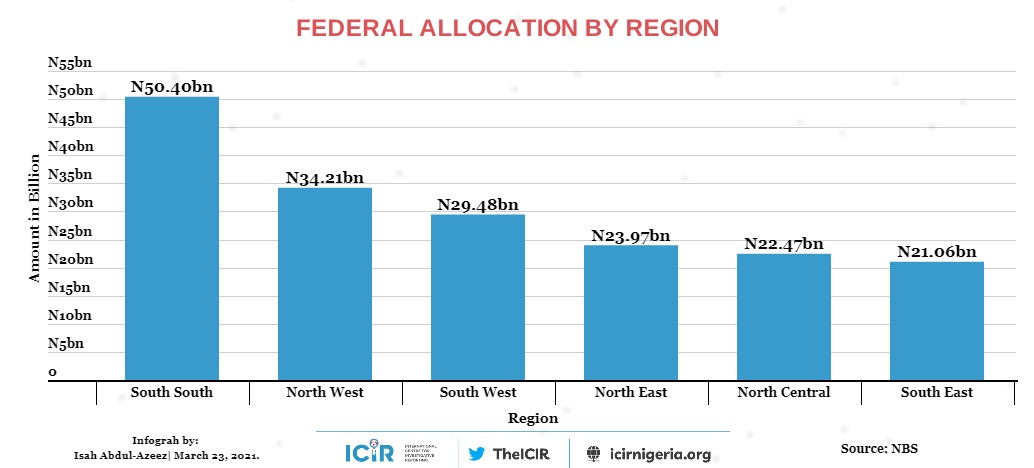
South-South and North-West regions got the lion’s share, receiving 46.6 percent of the total allocation, The ICIR analysis shows.

Out of the six geo-political zones in the country, the South-South region received the largest share of the total allocation. The region received  N50.4 billion, representing 27.76 percent of the total allocation to states. Next to the South-South is North-West, which got N34.21 billion (18.84 percent), followed by South-West- N29.48 billion (16.23); North-East- N23.97 billion; North-Central- N22.47 billion (12.38 percent), and the South-East- N21.06 billion (11.60 percent).

The amount disbursed in January represents a 3.03 percent increase when compared with N601.1 billion disbursed in December 2020.

The revenue disbursed constitutes N437.26 billion from Statutory Account, N3.83 billion from Exchange Gain Difference, N6.90 billion from Distribution of FOREX Equalisation and N171.36 billion from Valued Added Tax (VAT).

The total amount received by the federal government was N218.0 billion, while N178.30 billion was shared to state governments. On the other hand, local governments got N131.79 billion. The sum of N32.83 billion was shared among oil-producing states as 13 percent derivation fund, the NBS report said.

It was revealed in the report that revenue-generating agencies such as the Nigerian Customs Service (NCS), Federal Inland Revenue Service (FIRS), and Department of Petroleum Resources (DPR) received  N6.99 billion, N10.43 billion and N6.36 billion respectively as cost of revenue collections.

Restructuring, resource control, other issues, dominate Okowa’s interaction with journalists

Breakdown of the allocation showed that the sum of N146.33 billion was given to Nigeria’s federal government (FGN) consolidated revenue account. The sum of N3.69 billion was a share of derivation and ecology, while N1.85 billion was for stabilisation fund. Also, N6.20 billion was earmarked for the development of natural resources, just as N5.22 billion was given to the Federal Capital Territory (FCT) Abuja.

Infographics by Isah AbdulAzeez


1 year after first COVID-19 death in Nigeria, mortality rate stands at 1.25%

NIGERIA recorded its first COVID-19 case on February 27, 2020, when an Italian citizen working in the country returned from Milan, Italy, to Lagos on the 25th of February 2020. He was later confirmed positive for COVID-19 by the virology laboratory of the Lagos University Teaching Hospital.

On March 23, 2020, exactly 25 days after the first COVID-19 case in Nigeria, the country recorded its first COVID-19 death. According to the Nigeria Centre for Disease Control (NCDC), which made the announcement, the country’s 1st COVID-19 death was a 67-year-old male, who returned home following medical treatment in the UK.

The NCDC also added that the man had underlying medical conditions―multiple myeloma and diabetes and was undergoing chemotherapy. He was later recognised as former managing director of the Pipelines and Products Marketing Company (PPMC) Suleiman Achimugu,

Nigeria COVID-19 data stands at 161,868 total cases, 2030 deaths

When Nigeria recorded its first COVID-19 death last year, the country’s total COVID-19 case was just 41. The pandemic had just been recorded in five out of the 36 states of the federation, with the Federal Capital Territory (FCT) also making the list.

As of then, Lagos State had the highest COVID-19 cases with 48, followed by FCT with 7 cases. Ogun had 2 cases while Edo, Ekiti and Oyo State had 1 case each.

Meanwhile, one year after, the COVID-19 pandemic has spread to all the 36 states of the federation, although the death rate and infection rate differ by states.

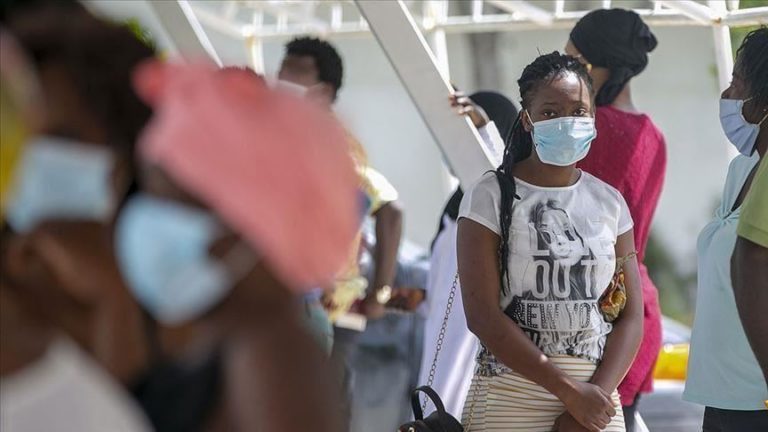
As at Tuesday,  March 23,  total COVID-19 cases in the country stood at 161,868 while COVID-19 death was 2030, equating to 1.25 percent mortality rate.

It is also important to note that 1.727 million COVID-19 test samples have been carried out in the country so far, with 161,868 (equating 9.4 percent) returning positive.

No fewer than 148,125 people, who had tested positive for COVID-19, have been discharged so far, making the country‘s active COVID-19 cases stand at 11,713.

Lagos, FCT, Plateau, Kaduna and Rivers have the highest COVID-19 cases

Out of the total 161,868 COVID-19 cases in Nigeria as at Tuesday, fives states have been recognised as the states where the pandemic is prevalent.

Lagos State is the hotspot of COVID-19 in Nigeria with 57,337 cases, followed by Abuja that has 19,584 cases; Plateau with 9,015 cases; Kaduna, 8,869 cases; and Rivers with 6,867.

Covid-19 mortality rate in Nigeria

The five states alone account for the 63 percent of the total COVID-19 cases in Nigeria.

While Kogi, Zamfara and Yobe are having the least COVID-19 cases in the country with 5 cases, 231 cases and 293 cases respectively so far.  However, Kogi governor Yahaya Bello has made disparaging comments about the virus, resisting attempts at carrying out tests in the state.

Consequently, the Presidential Task Force (PTF) has warned against travelling to Kogi after classifying the state, Yobe, Jigawa, Zamfara and Kebbi as ‘high-risk’ COVID-19 states.

The PTF hinged its decision on Kogi State government’s repeated denial of the existence of the deadly disease and its poor attitude towards report tests and isolation centres.

Visit the ICIR COVID-19 portal

Lagos, FCT, Edo, Oyo and Kano have the highest COVID-19 mortality rate

According to the NCDC data, Lagos, FCT, Edo, Oyo and Kano are the top five states with highest COVID-19 mortality rates in Nigeria. The five states account for the 49.3 percent COVID-19 mortality rate in the country.

The five states have a total of 1,000 COVID-19 deaths out of 2030 cases recorded in the country so far. Lagos alone has 426 COVID-19 deaths; 156 people have died of COVID-19 in FCT; 192 deaths in Kano; 116 in Oyo, and 110 in Kano.

In Zamfara, only eight people have died of the virus. Yobe has recorded 9 COVID-19 deaths; Ekiti has 11, and Nasarawa has 13.

Prominent Nigerians that have died of COVID-19

Below are the prominent Nigerians that are among the 2,030 people that have died of COVID-19 in the country so far:

Former Chief of Staff to Nigerian President, Abba Kyari

Former Chief of Staff to Nigerian President Muhammadu Buhari Abba Kyari had tested positive for coronavirus disease after returning from a trip to Germany on March 15, 2020.

His death was later confirmed on April 18, 2020, in a statement posted by  presidential spokesperson Femi Adesina.

Several reports had it that Kyari had a history of medical complications, including diabetes and was transferred from Abuja the capital city to Lagos for medical care before his eventual death.

Kyari died at the age of 67.

Former Governor Abiola Ajimobi

Former Oyo State governor Abiola Ajimobi was another prominent Nigerian who died of COVID-19.

Ajimobi died on June 20,2020, a week after news of his death had circulated before it was confirmed.

Ajimobi,  under the platform of the Alliance for Democracy, served as senator representing Oyo South between 2003 and 2007. In 2011, he won the Oyo State governorship election under the platform of Action Congress of Nigeria (ACN), and was re-elected for a second term in 2015, making him the first governor in the history of the state to complete two terms in office.

Wahab Adegbenro

Former Ondo State commissioner of health Wahab Adegbenro was another prominent Nigerian that succumbed to the cold hands of death due to COVID- 19 in 2020.

Adegbenro, who was at the forefront of the fight against the disease in the state, died of the virus on July 2, 2020.

Senator Esho Jinadu aka Buruji Kashamu

A senator, Esho Jinadu, popularly known as Buruji Kashamu, died of COVID-19 on August 8,2020.

Kashamu had served as the senator representing Ogun East in the National Assembly at the 8th assembly.

He was the flag bearer of the People’s Democratic Party in the 2019 Ogun State gubernatorial election and lost against Dapo Abiodun of the All Progressives Congress coming in a distant 4th.

Second wave: How Nigeria’s COVID-19 cases surged to highest daily record

Dan Foster

Popular Nigerian-American broadcaster Daniel ‘Dan’ Foster was another prominent Nigerian who died of COVID-19.

Dan foster died on June 17, 2020.

He was a veteran radio host, who worked with Cool FM, Inspiration FM, and Classic FM. He was also a judge on Idol West Africa alongside Dede Mabiaku and Kate Henshaw on Nigeria’s Got Talent.

Prior to his relocation back to Nigeria, Foster had worked with numerous radio stations in the United States of America.

This report is part of COVID-19 Response: Together For Reliable Information Project, implemented by Paged Initiative supported by the European Union and Dress Press Unlimited.

Nigeria among top 3 countries facing worsening food insecurity, acute hunger

THE ‘Hunger Hotspots’ report released by the Food and Agriculture Organisation of the United Nations (FAO) and the World Food Programme (WFP) on March 23 rank Nigeria among top three countries where acute hunger and food insecurity are set to worsen in the coming months.

The report – Hunger Hotspots: FAO-WFP Early Warnings on Acute Food Insecurity, March to July 2021 Outlook – warns that acute hunger is set to soar in over 20 countries.

However, Yemen, South Sudan and northern Nigeria top the list with populations in the three areas facing catastrophic levels of acute hunger and starvation if urgent action is not taken to address food insecurity.

The other countries listed among areas where acute hunger is set to worsen include Afghanistan, Democratic Republic of Congo, Ethiopia, Syria, Venezuela, Sudan, South Sudan, Haiti, Guatemala, Zimbabwe, Honduras, Mozambique and Zimbabwe.

Others are Burkina Faso, Somalia, Central African Republic, Niger, Sierra Leone, Madagascar, Mali and El Salvador.

The FAO and WFP note that, already, over 34 million people in various areas in the concerned countries are grappling with emergency levels of acute hunger (IPC4) – meaning they are one step away from starvation.

  • Conflict-hit areas in North-East responsible for Nigeria’s inclusion among top 3 countries with starving citizens

Nigeria’s poor ranking in the latest edition of the ‘Hunger Hotspots’ is largely due to the situation in the North-East, particularly Borno State, which has been destabilised as a result of the activities of Boko Haram and other insurgents.

The report observes that ‘in conflict-hit northern Nigeria,’ projections for the June-August lean season show that the number of people in emergency level of acute food insecurity is likely to almost double – to over 1.2 million – since the same period last year.

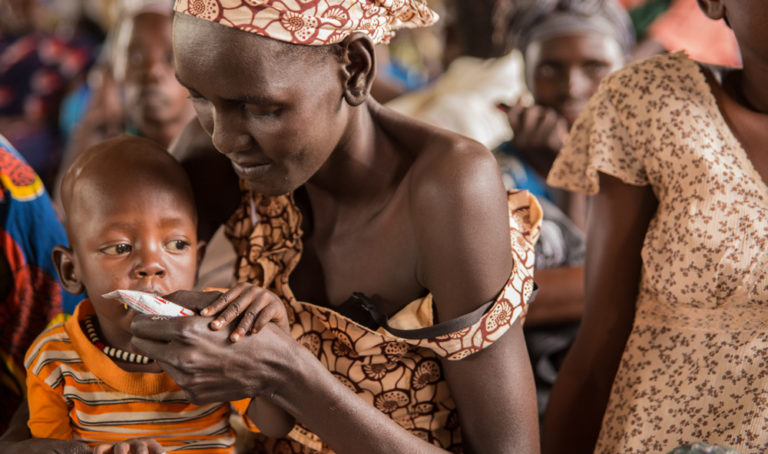
“In the next six months, food and nutrition insecurity is set to rise considerably in northern Nigeria with some 13 million people affected unless food and livelihood assistance is scaled up,” the report says.

While the countries in the list have areas or hotspots, which are at risk of further deterioration in food security, situations in northern Nigeria, Yemen and South Sudan are identified as particularly concerning due to the scale, severity and trends of the existing food crises. 

“In such fragile contexts, any further shocks could push a significant number of people over the brink and into destitution and starvation,” the report notes.

Last October, FAO and WFP raised the highest alert for urgent humanitarian action in Burkina Faso, northern Nigeria, Yemen and South Sudan, to save lives, protect livelihoods and avoid further  deterioration of extremely critical conditions.

Back then, the FAO-WFP Hunger Hotspot report warned that specific areas in the four countries – Jonglei State in South Sudan; Al Jawaf, Marib, Amran and Al Mahwit governorates in Yemen; Soum and Oudalan provinces of Burkina Faso, and parts of Borno State in North-East Nigeria – were facing a combination of factors: high percentages of the population living in Emergency (IPC Phase 4) conditions of food insecurity, heavy constraints to humanitarian access, and a likelihood of worsening food insecurity levels due to  conflicts, economic blows and climate shocks. 

The October 2020 report warned that any further deterioration in these factors could lead to an elevated risk of famine in those countries.

However, while the alert level for Burkina Faso has been lowered in the latest Hunger Hotspots report due to specific interventions undertaken by the Burkinabe government, Yemen, South Sudan and Nigeria remain countries with the highest alert for the March to July 2021 outlook period.

Top 20 acute food insecurity hotspots

The latest Hunger Hotspots report further observes that in the conflict-affected areas of northern Nigeria, the situation is extremely concerning given the marked deterioration of food security conditions despite the recent harvest. 

“Projections for the upcoming lean season (June-August 2021) portray a further marked deterioration with people in emergency acute food insecurity (CH Phase 4) likely to almost double, rising to over 1.2 million compared to over 669,000 people estimated in June to August 2020. 

“The majority of people with critical food insecurity are in Borno State, as a result of heavy humanitarian access constraints and ongoing conflict,” the report says.

The FAO and WFP say the situation in Borno localities such as Abadam, Dikwa, Guzamala, Kukawa and Marte, as well as other only-partially accessible garrison towns, remain of extreme concern. 

  • COVID-19 aggravates food insecurity, malnutrition in northern Nigeria

The report adds that, overall, in the next six months, northern Nigeria is expected to face a marked deterioration of food security and nutrition due to conflicts and economic factors, aggravated by the secondary effects of COVID-19.

Thirteen million people are projected to be in high acute food insecurity (CH Phase 3 and 4) between June and August 2021, if food assistance and livelihood support are not scaled up. 

The development would represent a further increase on the 9.2 million people estimated in November 2020.

The report notes that the prevailing situation is particularly concerning, given that the October to December period is post-harvest, and, usually, there should be a considerable improvement in the overall food security situation.

“A steady deterioration that has already pushed 9.2 million people into crisis or worse levels of acute food insecurity over the past two years is likely to continue. If this negative trend persists, it may lead to an increased risk of famine for areas of Borno State.”

  • North-East, Nigeria’s major conflict zone

The North-East remains the key hotspot of conflict in Nigeria. According to the report, as of November 2020, 2.1 million people were internally displaced, largely in Borno, Yobe and Adamawa States, as a result of the Boko Haram insurgency.

The FAO and WFP observe that violence in the North-West and North-Central regions, which have increased the number of people in need of food and livelihood assistance, has been exacerbated by the “growing spread from the North-East of insurgent groups formerly known as Boko Haram.”

The impact of the conflict, according to the Hunger Hotspots report, is compounded by the detrimental economic effects of the COVID-19 pandemic, which has led to decline in remittances, and lowered global prices for oil accounting for 50 percent of the country’s revenue. The report further notes that Nigeria’s real Gross Domestic Product (GDP) is not expected to return to pre-crisis levels before 2023 or 2024, as income losses and rising food prices result in sharp losses in purchasing power.

  • 13 million people to face starvation in North, despite region being Nigeria’s major food producer

Recently, parts of southern Nigeria experienced scarcity and high cost of staple foodstuffs after northern traders under the aegis of the Amalgamated Union of Foodstuffs and Cattle Dealers of Nigeria (AUFCDN) imposed a food blockade on the South.

The development underscores the fact that the North is Nigeria’s major food producer,  forcing governments, groups and investors in the South to reconsider ways of improving food production in the region.

However, the latest FAO/WFP Hunger Hotspots report says “across 15 states in northern Nigeria, nearly 13 million people are expected to face crisis or worse levels of acute food insecurity (CH Phase 3 and above) in the next lean season (June to August 2021), up from 9.2 million between October and December 2020.”

It continues that the situation marks a steady trend of serious deterioration, having risen from 8.7 million in mid-2020, adding that of the 13 million, 3.9 million are projected to be in the North-East and 5 million in the North West, where there is little humanitarian presence.

In coming months, the report says, people living in emergency acute food insecurity (CH Phase 4) are likely to almost double, rising to over 1.2 million for June to August. 

Over 600 deaths recorded in North-East within six months, Borno ranks top

A total 970, 000 of these people are in the North-East, with 700 000 in Borno State alone, where the situation remains of extreme concern due to heavy humanitarian access constraints and ongoing conflict, particularly in the localities of Abadam, Dikwa,  Guzamala, Kukawa and Marte. 

The FAO and WFP stress that, should the situation deteriorate further, the areas may be at risk of famine.


After deputy speaker’s gaffe, Reps accept petition by Nigerian diaspora group

A controversial petition filed by a group of Tiv indigenes residing in the diaspora under the auspices of Mzough U Tiv Amerika (MUTA) was re-presented during Tuesday’s plenary at the House of Representatives.

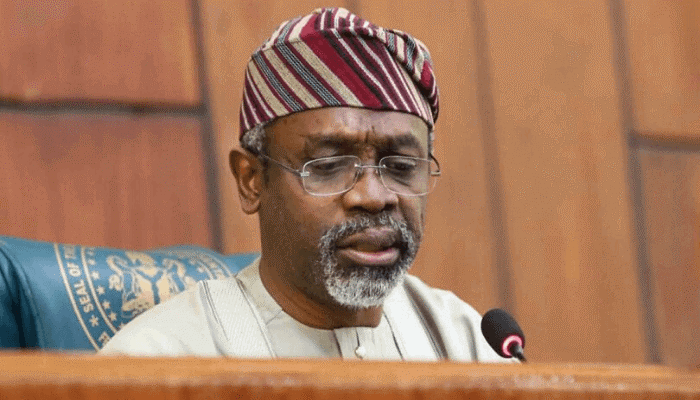
Speaker Femi Gbajabiamila, who presided over the meeting, held that Nigerians abroad had a right to send petitions over issues affecting any part of the country. He entertained the petition on worsening insecurity in Benue, Nasarawa and Tararba states tabled by the House member representing Gwer East/ Gwer West Constituency of Benue Mark Gbillah on behalf of the diaspora group.


Read Also:


“I believe this is the same petition that has been causing a lot of misunderstanding… The misunderstanding came from the issue of signature…Having cleared that misunderstanding, please go ahead and lay your petition to be given proper attention,” Gbajabiamila said.

It would be recalled that the Nigerian diaspora community had petitioned the leadership of the House of Representatives to make its position clear on the rights and privileges of citizens residing abroad after  Deputy Speaker Ahmed Idris Wase declined hearing the petition on 10th March on the excuse that Nigerians should not sit in their comfort zones abroad and know what was happening in the country.

Wase, who was standing in for the speaker during the controversial plenary session, did not refer to a discrepancy in signature of the petition, but was baffled at MUTA’s concern over the insecurity challenges affecting certain parts of the country.

His position drew a lot of criticisms from the public, prompting him to issue a statement on the 15th of March, alleging that the coverage and reportage of the incident were mostly “doctored, slanted and bent to give political and ethnic coloration to an event that was otherwise based on Rules of Parliamentary Procedures.”

Diaspora Nigerians petition NASS, threaten to halt remittances over deputy speaker’s comments

“To set the records straight, let it be categorically stated that the crux of the encounter between the Deputy Speaker, presiding as Speaker and Honourable Mark Gbillah was on the LEGAL IDENTITY of the petitioners and not on whether Nigerians in diaspora have a right to petition the House or not,” the statement read in part.

Wase further added: “The House of Representatives belongs to all Nigerians and can be accessed by Nigerians wherever they may reside.”

CBN licenses 47 money transfer operators, retains interest rate at 11.5%

THE Central Bank of Nigeria (CBN) has licensed 47 international money transfer operators (IMTOs) in the country, with Flutterwave, NIPOST, Paypal and Western Union making the list. 

The apex bank listed names of the 47 IMTOs on its website on Monday in a bid to ward off unapproved or unauthorised IMTOs from playing in the space.

The list  shows that 17 of the IMTOs are based in the United Kingdom; 14 in Lagos; eight in the United States of America; three in Abuja; two in Senegal and  each in Ibadan, Morocco and Belgium.

IMTO list

Apart from Flutterwave, NIPOST, Paypal and Western Union, others that were licensed included UK-based Aftab Currency Exchange Limited; Lagos-based Colony Capital; Lagos-based Interswitch and Pagatech; Ibadan-based VTNetwork Limited; Abuja-based Simplify International Synergy, among others.

The apex bank recently warned Nigerians (home and abroad) over the activities of unlicensed IMTOs, urging citizens to avoid using them in overseas transactions.

Meanwhile,  the bank rose from the Monetary Policy Committee (MPC) meeting on Tuesday retaining all the major monetary parameters, including the Monetary Policy Rate (MPR) at 11.5 percent; asymmetric corridor of +100/-700 basis points around the MPR; Cash Reserve Ratio (CRR) at  27.5 percent, and liquidity ratio at 30 percent.

The apex bank cited inflation as a key influencer of the decision to retain all the parameters.

While the MPR is the benchmark interest rate in the country, the CRR is the “the portion of reservable liabilities that commercial banks must hold onto, rather than lend out or invest,” according to Investopedia, an online investment dictionary.

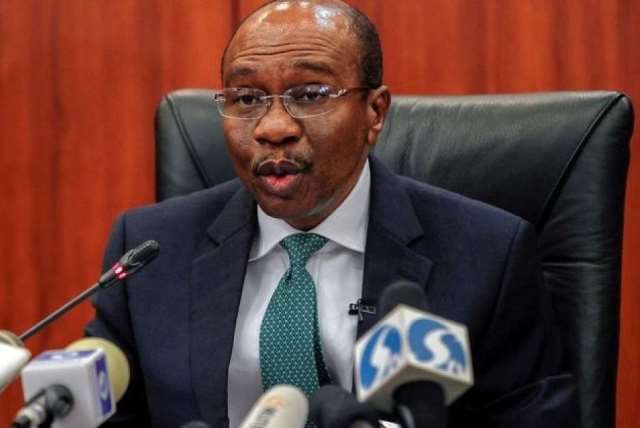
“The MPC felt that loosening will trigger excess liquidity and worsen inflation,” CBN governor Godwin Emefiele said after a two-day MPC meeting in Abuja.

“The MPC also felt that excess liquidity might impact demand pressure and fuel further depreciation of the naira,” he added.

He said the committee was of the opinion that the ‘hold’ decision would benefit the current fragile period and trigger the growth of the economy. ‘Hold’ means that all the parameters are constant or not changed.

Emefiele noted that MPC members felt that  inflation was substantially a supply side factor,  meaning there was a need to continue to focus on consolidation of recovery process by taking those steps that would continue to stimulate output growth while creating jobs.

“Most members voted in favour of reversing the trend and achieving medium-to-long-term economic stability,” Emefiele further said.

Analysts Speak

In a statement sent to The ICIR, director-general of Lagos Chamber of Commerce and Industry (LCCI)  Muda Yusuf said the holding policy
stance seemed to be most appropriate decision at this moment, considering recent macro developments in the economy.

Yusuf said the chamber  endorsed the position of the MPC on the need for fiscal authorities to expedite actions in addressing current economic challenges and other investment climate issues constraining the supply side of the economy and fuelling inflationary pressures.

“We request that the MPC to give more attention in its deliberations to the foreign exchange policy because of its profound implications for economic performance and the confidence of investors,” he said.

“The forex policies are as important as liquidity management concerns. Foreign exchange framework is key to the price stability mandate of the CBN. The Chamber notes with concern the divergent positions of both the fiscal and monetary authorities on the country’s foreign exchange policy framework. It is important for the fiscal authorities, CBN and Economic Advisory Council to be on the same page as far as the country’s foreign exchange policy framework is concerned,” he noted, adding that lack of coherence among policymakers sent a negative signal to the investment community, aggravated uncertainty and undermined the confidence of investors.

An economic analyst  and managing director of MD Services Mathew Ibe justified the CBN’s position, saying that it was the best considering the current inflationary pressure and high unemployment,

“If you reduce MPR, for instance, you incur more inflationary pressure, and if you increase you suffocate the economy,” he said.

Financial Derivatives chief executive Bismark Rewane said earlier in the year when the  CBN also retained all the parameters that Nigeria had an inflation problem.

He attributed inflationary pressure, in an interview on Channels TV, to increasing money supply growth, devaluation effect, Boko Haram, logistics and distribution costs, among others.

Nigeria’s inflation rose to 17.33 percent in February 2021, from 16.47 percent reported in January 2021, according to data from the National Bureau of Statistics (NBS).

CBN retains interest rate, warns against second lockdown

Growth in the fourth quarter of 2020 was merely 0.11 percent, which was insufficient to bolster the economy with a population growth rate of 2.6 percent, say analysts.

Unemployment rose to 33.3 percent in the last quarter of 2020, from 27.1 percent in the second quarter, NBS data noted.

Parliamentary workers in Ogun, Lagos, Sokoto, 5 others shut down House of Assembly complexes

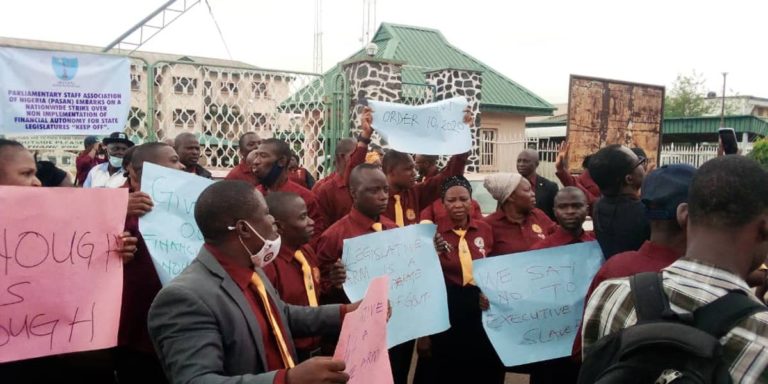
AGGRIEVED parliamentary workers in Lagos, Ogun,  Sokoto and four other states, on Tuesday, shut down House of Assembly complexes over non-compliance with financial autonomy.

The protesters, under the aegis of the Parliamentary Staff Association of Nigeria (PASAN), are demanding that the budget of the legislature be removed from the control of the executive arm of the government.

The ICIR gathered that the protesters stormed the House of Assembly complexes in Osun, Ekiti, Sokoto, Jigawa, Imo and Oyo states.

In Oyo State, the protesters carried placards that read: “Give us our autonomy. Enough is enough,” “We say no to executive slavery,” “Legislative arm is a separate arm of government,” “AGF, implement Order 10, 2020,” and “Legislative financial autonomy is a constitutional right,” among others.

Speaking on behalf of the protesters, PASAN chairman in Oyo State Yemi Alade alleged that Nigeria Governors Forum was behind the non-implementation of the financial autonomy of lawmakers.

Read AlsoAbandoned secretariat building contributes to state workers’ frustration in Sokoto

Lagos-Parlliamentary-Protests
Lagos-Parliamentary-Protests

Alade argued that their demands were over non-implementation of the financial autonomy as it was a provision in  Constitution of the Federal Republic of Nigeria.

He said there could be no true democracy in Nigeria if the legislative arm of the government was not emasculated from the executive arm.

“As a staff of the House of Assembly, if there is no true democracy; no independence, it will affect the democracy of the country.

“It is affecting the entire country, not only the staff of the House of Assembly because the principle of separation of power stipulates that each arm of government must act separately, because if there is no financial autonomy, all other arms of government will be in slavery to the executive arm,” Alade said.

Also in Dutse, the Jigawa State capital, the PASAN members who protested at the Jigawa State House of Assembly said they had joined the protest following the directive from the national headquarters.

“All we are demanding is a full implementation of the Financial Autonomy Act, condition of service, consolidated salary and allowances structure and 40 instead of 35 years or 65 instead of 60 years’ retirement age,” said PASAN chairman in Jigawa State Umar Adamu.

On Monday, PASAN national president  Usman Mohammed had declared a nationwide strike over federal government’s unwillingness to implement financial autonomy for legislative workers.

Mohammed said this during a press conference held in Abuja on Monday to declare the commencement of the nationwide strike.

ASUU-UDUS to continue with strike as local chapters debate FG’s proposals

“The union has exhausted all attempts aimed at asking for the implementation of the Financial Autonomy by the federal government after 21 days, 14 days and 7 days’ ultimatum. At this juncture, the union has no other option than to direct our members to embark on an indefinite strike,” Mohammed said.

Thirst in the midst of lagoon: Nigeria’s largest slum where residents drink contaminated water while government plays dumb

By Jennifer UGWA


ALTHOUGH the plastic container held little water, Hopunke Abigail, 23, still bent it over the cup. She was thirsty, but this action is about to change her perception of the water she has drunk all her life.

Abigail had fetched the water from a ‘clean water borehole’ in her community two days ago. But the big blobs of brownish substances she spotted in the liquid had her rooted to the spot in shock.

Abigail’s family had drunk from the same container the previous night at dinner and a few hours ago during breakfast too.

“Come see!” she called to her sister from the shanty storeroom that also serves as a kitchen for the family of seven.

Abigail’s house, like every other structure in the community, is built from wooden planks on poles driven deep into the waterbed more than five feet over the murky waters of the Lagos lagoon.


Read Also:


“We have been cooking and drinking germs”, said the bewildered girl, handing the cup of water to her companion.

According to the 2020 United Nations water fact report, over 2.2 billion people lack access to safely managed drinking water services, and the sitch is quite gloomy for Africa’s most populated country.

With over 200 million estimated populace, more than 55 million people, unfortunately, lack access to clean water.

And for Abigail, whose family lives in Makoko, Nigeria’s largest floating slum in Lagos state with no infrastructures like electricity and proper waste disposal services, potable drinking water is a luxury.

The blight in a glitz

With a dynamic and boisterous economy of its own, Lagos State is the fourth largest and the fastest-growing economy in Africa, with an estimated population of over 14 million people and a Gross Domestic Product (GDP) set at $96 billion

Despite its wealth, the city has not solved its water problems as residents living in slums like Makoko are without access to potable water and resort to drinking from contaminated open wells and boreholes at a cost. 

Makoko, originally founded as a floating fishing community, is home to an estimated population of over 85,000 people – the slum was not counted during the 2006 census. 

Living in crudely constructed wooden shacks that locals claim their ancestors have lived on these waters for over a century, the occupations of residents in the community are mainly fishing and sand dredging.

Read AlsoHow failed water projects worsen food insecurity in southwest Nigeria

Oluwatobi Aide, a 37-year-old widower and son of the community chief described the fortunes of the community as a “disgrace” abandoned to languish in poverty amid plenty.

“On 22 July 2012, the Lagos state government under the administration of the then governor Babatunde Fashola sent us a letter of eviction to evict us from our homes and in less than 72 hours, the security operatives which started enforcing the governor’s directive killed Timothy who was a chief in the community.

“We were promised hospitals, schools and water after that incident but we have not seen anything. Nobody remembers us in anything now,” he said.

Tucked away in a universe of its own, the residents of the slum live in constant trepidation of their government and depend on each other to provide required amenities for themselves.

Girls at the frontline

Husu Bola, 14, always hopes that the water containers in her house are not empty whenever she comes back home from school.

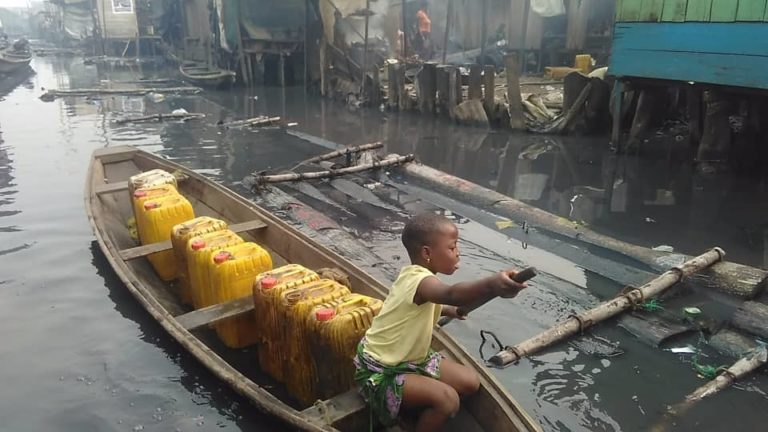
Being the youngest child in a family of eight, her daily chore involves getting water for the family which is a less enticing task. Bola makes the exhausting trip twice every day, on some days before and after school.

Speaking to this reporter, Bola said she often arrives late to school which she blames on the domestic routine of fetching water as she prepares for the common entrance exams into secondary school.

“My friend Elizabeth follows me sometimes to the borehole. When I get tired she helps me row the boat. I also help her when she is going to fetch in their house. We are in the same class,” she explained.

According to 2018 data obtained from the United Nations International Children’s Emergency Fund, UNICEF, when water is not connected directly to the home, the burden of fetching it falls on the women and children especially in Sub- Saharan Africa.

The statistics revealed that women and girls spend more than 25 to 33 minutes daily in rural and urban areas respectively on one round trip to collect water, often done twice or more, a task that could make the girl-child lag in her academics.

Bola purchases 10 containers of 20 litres of water daily sold for ₦200 (49 cents). This quantity barely serves her large family’s drinking, hygiene and cooking needs for a  day even when frugally rationed. 

This contradicts the position of the World Health Organisation, WHO, which stipulates that 20 litres of water daily should be the minimum requirement per individual for their basic hygiene needs, excluding amounts needed for laundry and bathing, which demand larger quantities of water.

Bola’s parents who try to keep the family afloat through the little profits that come from selling fish in the community spend at least an average of N6,000 monthly on their domestic water needs in a country where almost 50 per cent of the population survive on less than ₦700 ($1.90) daily according to the world poverty clock.

The sun had set when Bola managed to row her canoe down to a privately owned borehole. In between paddles, she stops to stuff her mouth full with cuts of biscuits—a remnant from her lunch pack.

“I have to fetch water every day. But I will soon stop. My older brother said when we move to the Mainland, we will have water in the house,” she said with a big grin, revealing little tiny dots on her chin.

Until then, she will have to join the queue at the borehole and wait her turn before she could fetch water this evening.

Poisons in their cups

In Makoko, the idea of boreholes is 500 to 2,000 litres of water tanks connected to metal pipes that run underwater from close water sources on land.

These substandard constructions owned by individuals provide the only source of ‘usable’ water to households and businesses living in the slum.

However, unknown to the residents, every drop of water drank from the submerged pipes, could be killing them. 

Results of laboratory analysis on 20 water samples collected from drinking water sources in the slum revealed that they were unfit for consumption based on the World Health Organisation parameters.

The test carried out by the University of Lagos Consults in collaboration with Code for Africa showed that the samples were highly acidic with a low Potential of Hydrogen (PH) of 3.3 to 6.2 and compared to the 6.5 to 8.5 standard of the World Health Organisation.

The electrical conductivity (µScm-1) level of some samples recorded very high conductivity ranging from 264.0, 1,124.0 to 1,250.0 against 1.20 X 10³  accepted standard.

This finding is no wonder, as total dissolved solids (TSD) and suspended particles found in some of the drinking water samples were equally very high at 562.0 to 625.0(ppm) against 500(ppm)  WHO standard.

In this floating slum, sights of gleeful half-clad and naked children playing water games in the brackish lagoon water and canoes of different sizes ferrying passengers, goods and eatables are normal activities. 

However, the highest level of TSD detected in a sample at 198,70.0(ppm) which is 40 times higher than the WHO standard was from the lagoon and tested positive for E-Coli, with a Nitrate level thrice the WHO Limit of 30 (ppm).

A pungent odour was also detected in the water linked to trace amounts of Ammonia, an indicator of faecal pollution which can affect the taste and easy purification processes of water. 

According to Dr Bridget Nwagbara, public health analysts and researcher, proper sanitary facilities deprivation in the slum heightens the possibilities of water contamination.

E-Coli in water has public health implications for both adults and children. It can lead to chronic malnutrition, poor brain development with cognitive impairment and growth stunt in children. 

“This bacteria can also cause infections such as acute watery diarrhoea and dehydration,  and worse, result in death”.

While more than 70,000 children under five die from the water-borne disease in Nigeria annually, Ojoniyi Oladipupo, a chartered Chemist and Environmental Analyst at the Unilag Consult, also observed that the slum could be at the precipice of chronic Lead poisoning as high levels of lead were also detected in its drinking water sources.

Also, three drinking water specimens including the sample drawn from the lagoon lack the colourless quality of potable water, having a brownish hue.

The murky lagoon water upon which the slum is anchored unfortunately also no longer supports marine life.

A health gamble 

Based on data from the UN-Habitat 2018 report on world development indicators, 53.9 percent of the population of Nigerians live in informal slums in urban areas in impoverished conditions and cannot afford proper health care.

Shounde Monday, 27, a nurse and resident of Makoko in an interview with this reporter noted that the health of residents in Makoko especially that of women and children is on a downward slide.

“When you see the darkened insides of water containers in Makoko, the harsh reality of the implications of the harm that bad water is wrecking on their health hits home.

“No week goes by that I don’t administer treatment for malaria or typhoid for children and women.

“The truth is that there is so little that Artesunate, Ciprolaxion or Azythromicin treatments can do if the cause of the ailment is constantly ingested the same way these drugs are taken,” Monday explained.

Despite the waning health conditions of residents, leaders of the settlement expressed little enthusiasm about any government interventions in the beleaguered community.

“During the COVID-19 lockdown, we had fish but nowhere to sell them and with our large families, we all shared the little materials we had,” said the chief’s son.

“Some families have up to 10 to 20 persons living together and don’t even have enough money to feed. So, they cannot keep buying sachet water at N150(39 cents) for 20 sachets.

“I know that the water we drink is not properly treated, but in the end, we drink what we have and pray that we are safe,” he said in a resigned voice.

Meanwhile, in this slum, unorthodox herbal remedies are the primary medication mainly used by residents in the community.

Although Nigeria is a signatory to the Sustainable Development Goals SDG, of which goal 6 specifies that by 2030, countries who are part of the pact should achieve universal and equitable access to safe and affordable drinking water for all their citizens.

However, it is unlikely Nigeria will meet this target, Wilson Atumeyi, a water activist who tracks government spending for water, sanitation and hygiene in rural communities blamed the government’s lack of political will in making the goal realisable.

Zero access to safe water supplies is due to government negligence, and systemic corruption,” he said.

Perhaps, taking a leaf from Bangladesh water and sanitation management strategies in Chattogram slum where anecdotal evidence has proven that collaboration between state, and non-governmental bodies have helped in the provision of access to treated drinking water has greatly improved the health and sustainability of slum dwellers.

Attempts to reach the Lagos state ministry of environment and water resources and Water Corporation through multiple emails and phone calls to the agencies and its spokespersons were snubbed.

Bola still dreams of the day she will move into a house with running water just like in the movies.

But sadly, while the government turns a blind eye to their plight, families in Makoko slum will keep drinking water that is killing them, and the future of their children held hostage.

This WanaData Story was supported by Code for Africa as part of the WaterCommons initiative and the Code for All Exchange Program, funded by the National Democratic Institute and the National Endowment for Democracy.

 

Amid climate change threat, 80% of Nigerians lack handwashing facilities

DESPITE having some of the poorest data on water, sanitation and hygiene (WASH) globally, Nigeria is facing the hurdle of climate change as it hopes to achieve the Sustainable Development Goal (SDG) Six, which requires that nations deliver clean water and sanitation to their people by 2030.

Similarly, WASH data in Nigeria, published by WaterAid, show that four in five people in the country, amounting to 80 percent of the population, lack handwashing facilities at home.

Climate change became the focus of major stakeholders as the world commemorated this year’s World Water Day on March 22.

Nigeria is among nations facing the challenges posed by climate change.

In 2009, the United Nations Development Programme (UNDP) charged Nigeria to take the lead in climate action. Citing predictions of the Nigeria Meteorological Agency (NIMET) on vagaries of weather during the year, the agency said it was high time that the country took the lead in tackling the challenge.

Read AlsoHow failed water projects worsen food insecurity in southwest Nigeria

The United Nation’s Children Fund, WaterAid and the Nigerian government were among institutions that identified climate change as one of the issues to address in their World Water Day commemoration message this year, so the world would enjoy freer access to potable water.

The most official data on WASH in Nigeria are from the yearly survey conducted by the Federal Ministry of Water Resources tagged, ‘National Outcome Routine Mapping of Water, Sanitation and Hygiene Service in, Nigeria 2019.’

The survey was carried out by the Nigerian government with the support of European Union, World Bank, UNICEF and UK Aid.

It shows that nine percent of people living in the country have access to basic water, sanitation, hygiene services, while 70 percent of the population use basic drinking water services.

Rural population in the country use nine litres average per capita volume of water per day; 44 percent use basic sanitation services, while 46 million practise open defecation, according to the report.

Further analysis of the report shows that 16 of households have access to basic hand hygiene services; 14 percent of schools have basic water and sanitation services; seven percent of health facilities have basic water and sanitation services, while 14 percent of markets and motor parks have basic water and sanitation services.

Snapshot of WaterAid website containing data on WASH in Nigeria

The figures nearly tally with what has been published by WaterAid Nigeria, an international non-governmental organisation, which focusses on water, sanitation and hygiene.

The WASH data, published by WaterAid, show that three in 10 people in Nigeria do not have clean water close to home just as three in five people in Nigeria have no toilet of their own.

In its message to commemorate World Water Day, the organisation said without easy access to clean water, people’s lives would be blighted by sickness, poverty and the endless drudgery of collecting water.

It argued that climate change was threatening access to water for the world’s poorest,

The organisation noted that unless urgent action was taken to help the world’s poorest communities adjust to changing weather patterns, climate change would bring the progress recorded on clean water decades backward.

WaterAid says its latest report ‘Turn the tide: The state of the world’s water 2021,’ shows how people lose access to clean water, following changing climate.

The report shows that longer droughts dry up springs and seawater infiltrates groundwater supplies and landslides.

It argues that investing in water systems that provide a reliable supply, whatever the weather, is a frontline defence against the impact of climate change.

“With less than a decade to deliver on Sustainable Development Goal 6 – clean water and sanitation for all, WaterAid is calling on governments at sub-national and national levels to address current and future threats to water access as part of climate actions plans –including the National Action Plan for the Revitalisation of the Water, Sanitation and Hygiene sector (NAP), and national budgets. We are also urging the government to ensure the voices of local communities and marginalised groups are heard in planning decisions around adaptation,” the NGO state’s.

It adds: “Inadequate access to potable water, sanitation and hygiene (WASH) can negatively impact health, in addition to having huge socio-economic consequences in a society. Use of contaminated drinking water and poor sanitary result in increased vulnerability to water-borne diseases such as diarrhoea which is a serious threat to many Nigerians.

Read Also: Food crisis looms as climate change negatively impacts Anambra communities

“Absence of proper WASH services has also been linked to malnutrition and educational attainment among young children and loses in economic and environmental resources. Nigeria barely met its SDGs for water supply. Progress with the sanitation goals, on the other hand, has declined over the years and millions of people were left without access to toilet in 2015.”

Meanwhile, the United Nations Children Fund (UNICEF) said climate change affected water supply. In a message on its website, the agency said extreme weather events and changes in water cycle patterns were making it more difficult to access safe drinking water, especially for the most vulnerable children.

The agency said around 450 million children lived in areas of high or extremely high water vulnerability.

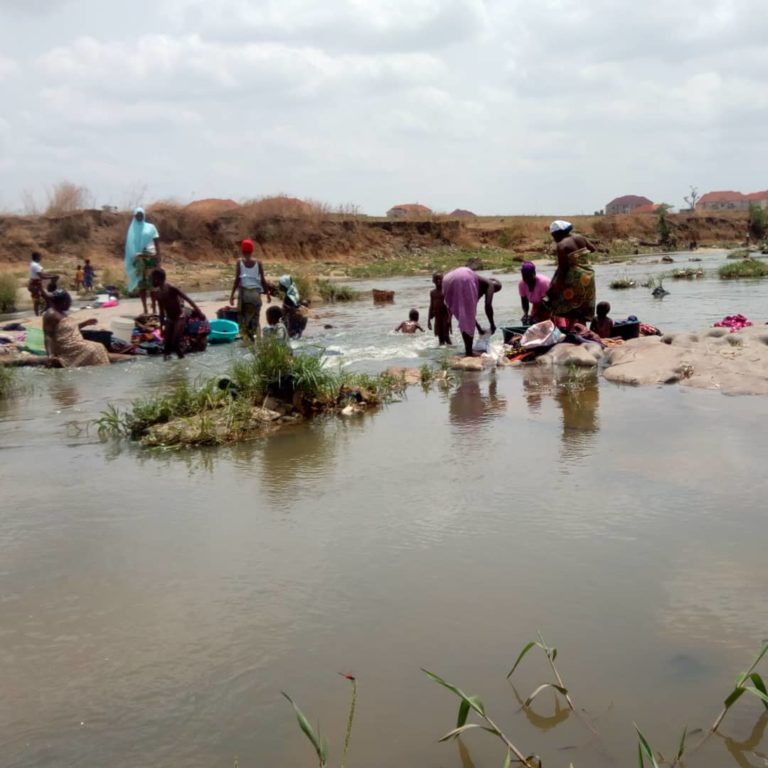
People queueing for water at Iddo community in Abuja some years ago.
Photo credit: Marcus Fatunmole

UNICEF said contaminated water posed a huge threat to children’s lives, stressing that water and sanitation related diseases were some of the leading causes of death in children under 5 years old.

According to the organisation, over 700 children under five died from diarrhoea linked to inadequate water, sanitation and hygiene, predicting that by 2040, almost one in four children would live in areas of extremely high water stress.

It added that around 74 percent of natural disasters between 2001 and 2018 were water-related, and that the frequency and intensity of such events were only expected to increase with climate change.

Water resources minister Suleiman Adamu said the day was being commemorated to achieve the goal of water for all.

“Water for all implies that the elderly, disabled, marginalised and poor people get access to clean drinking water and proper sanitation in line with Sustainable Development Goals (SDG) 6.1 and 6.2,” he said in his address while briefing journalists before proceeding to commission a water project executed by the federal government at Chika, along Airport Road, Abuja.

Adamu emphasised the value of water, which was the theme for this year’s commemoration and highlighted efforts of President Muhammadu Buhari government to give value to waters in the country.

He listed some of the successes recorded by the Buhari government in the water sector, including the challenges facing the sector in the country.

Meanwhile, the World Health Organization (WHO) focussed on using water to defeat neglected-tropical diseases (NTDs) within the next decade, in its message for the World Water Day.

WHO said without clean water and soap, “it is difficult to implement simple and effective public health actions that can prevent and manage debilitating NTDs: face-washing for trachoma, a disease which leads to painful, irreversible blindness; limb-washing for lymphatic filariasis, in which worms invade the lymph system and cause severe oedema, especially of the legs; wound-washing for rabies, where cleaning the lesion thoroughly after a dog-bite can decrease the chances of infection by the virus from canine saliva; and hand-washing for intestinal worms, whose eggs are ingested with food inappropriately manipulated and contaminated with soil.

“Large inequalities in access to WASH continue to persist: at least 2 billion people rely on water supplies that are unsafe; 673 million practice open defecations, and, an estimated 3 billion people have no access to basic handwashing facilities1 to practice personal hygiene.

“The need for a joint WASH/NTD initiative to integrate the relatively unconnected activities of these two important sectors became evident after the publication of the first NTD road map in 2012. This led to the publication, in 2015, of the first strategy and action plan that provided a framework for collaboration and joint planning, delivery and evaluation of programmes,” the organisation said.

Of the N13.6 trillion signed into law as 2021 budget by the federal government, N10.073 billion and159.74 billion were approved as recurrent and capital expenditures on water respectively.

Globally, 818m children lack access to soap and water in their schools – Report

The figures do not include other water projects to be executed by other agencies and departments of government, including the members of the National Assembly who might have included water projects into their constituency programmes.

There are about 210 million people in Nigeria currently, according to the National Population Commission.

Suspend bill seeking to institutionalise hijab in schools, CAN tells NASS

THE Christian Association of Nigeria (CAN) has called on the House of Representatives to suspend a bill before it seeking to institutionalise the use of hijab in schools.

“The bill titled ‘Religious Discrimination (Prohibition, Prevention) Bill, 2021’ is seeking to provide a mechanism for enforcing certain provisions of the Constitution and other international laws that recognise the right of a female to adorn hijab in public and private establishments in Nigeria,” CAN said.

Read AlsoAmid climate change threat, 80% of Nigerians lack handwashing facilities

CAN, in a statement by its general-secretary Joseph Daramola, said that the bill was ill-timed and uncalled for.

“We wonder what the sponsors of the Bill seek to gain from it other than to compound the security problem and the wearing of hijab in public and Christian schools,” part of the statement read.

“To what extent does this controversial bill seek to promote peace, order and good governance? Has dress code become part of the Exclusive Legislative List?”

The statement added that while Nigerians were expecting the National Assembly to make laws that would address the lopsided appointments, insecurity, unemployment and economic predicament, lawmakers were interested in making laws seeking to promote one religion.

Such a disposition, according to CAN, was totally unacceptable in a country with multiple religions.

The bill is coming on the heels of controversy surrounding the use of hijab in missionary schools in Kwara State.

In the height of the controversy and crisis which have pitched adherents of both the Christian and Muslim religions against each other, Kwara State government ordered the indefinite closure of the schools in concern.

Hijab controversy: Violence erupts in Kwara as missionary schools reopen

CAN has accused  Governor Abdulrahman AbdulRazaq of Kwara State of taking sides in the crisis.

#ENDSARS: Nigerian-Ukrainian narrates how police killed his football dream

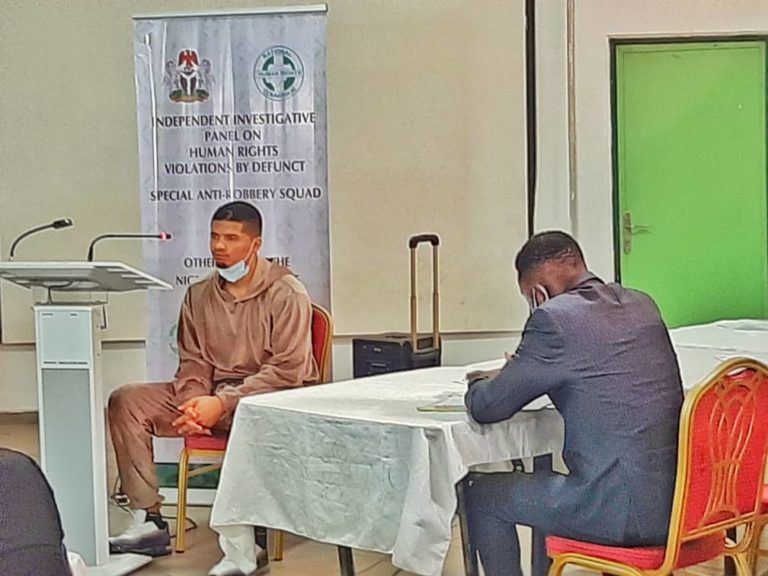
A Nigerian-Ukrainian and petitioner at the independent panel investigating allegations of human rights violations by the defunct Special Anti-Robbery Squad (SARS) and other units of the Nigerian police, on Monday, narrated how police quenched his dream of becoming a professional footballer.

Chigaemezu Ojinnaka told the panel that on April 14, 2020, he was shot in the leg by officers of the Nigerian police while he was on his way to visit his sick grandfather at the hospital.

Read Also#ENDSARS: Abuja panel approves N578m as compensation for victims of police brutality

He explained that he was riding a motorcycle before he was stopped by two police officers at a T-junction along Amuzie- Omanze road, Umuku/Isu Njaba community in Imo state.

Ojinnaka said while he was trying to park the motorcycle, one of the policemen shot him in the foot at close range. The two policemen fled the scene in a van marked No. 18   with the inscription ‘Flush and Search.’

He told the panel that he was immediately taken to a hospital where he was rejected. He was thereafter rushed to the Federal Medical Centre Owerri, saying that the bullets were still stuck in his leg despite three separate surgeries to remove them.

Few weeks after the ugly incident, Ojinnaka said his leg began to swell and he was in pains because the bullets were still inside as doctors in the FMC were already contemplating amputating his foot.

According to him, he had to be flown to Ukraine, where the Ukrainian doctors did a series of surgeries on his leg and saved him from possible amputation.

However, he said the incidence deformed his limb with no sensation in his feet and consequently killed his dream of becoming a footballer.

He lamented that all efforts to get the perpetrators to justice had proven difficult, alleging that the police were more interested in shielding the culprits than getting justice for him.

The 20-year-old prayed the panel to apprehend and prosecute the policemen involved in the incident.

During cross-examination, police counsel James Idachaba counsel asked Ojinnaka if he was sure the people he saw were actually police officers and not members of the state-owned security outfit.

The panel countered Idachaba and charged him to produce the investigating police officer (IPO) Dan Iroakazi at the next hearing so he could tell the panel the steps that had been taken to investigate the incident.

In addition, Idachaba was ordered to find out who were the policemen stationed at that T-junction along Amuzie Omanze road, Umuku/Isu Njaba community on the 14th April 2020, and which officer(s) were assigned the van marked No 18 with the inscription ‘Flush and Search’ in Imo State.

Sad story of Kaseem Yebsaya, member of Nigeria U23 Dream Team now roaming the street in Taraba

Acting chairman of the panel Garba Tetengi adjourned the case to 27th April 2021 for continuation of the hearing and charged the police counsel to ensure the presence of Dan Iroakazi at the next sitting.