Home Blog Page 186

Darkness envelopes Nigeria cities as national grid collapses again

0

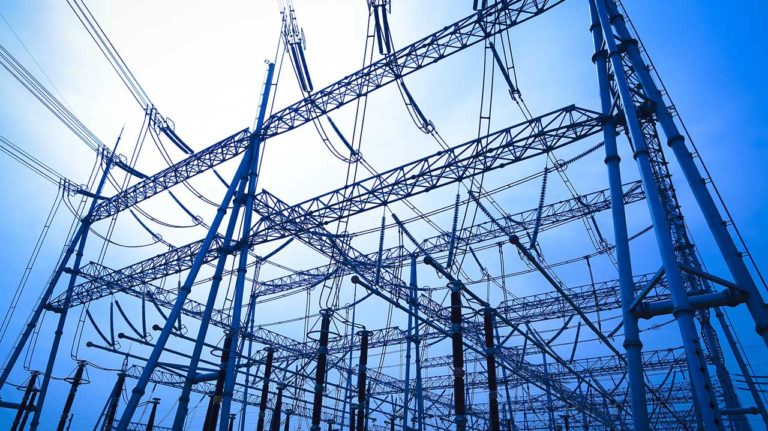
MANY Nigerian cities have been thrown into darkness as the national grid experienced yet another collapse  on Wednesday, marking the third this year.

Data obtained from the Independent System Operator (ISO) showed that the megawatt (MW) generated dropped from 2,917.83 MW to 1.5 MW between 11 am and 12 pm on Wednesday, September 10, 2025.

The Abuja Electricity Distribution Company (AEDC) confirmed the collapse in a statement to its customers on Wednesday.

The AEDC said the loss of electricity in the system franchise area is due to a loss of supply from the grid around 11:23 am.

“Please be informed that the power outage currently being experienced is due to a loss of supply from the national grid at 11:23 hrs today, affecting electricity supply across our franchise areas.

“Rest assured, we are working closely with the relevant stakeholders to ensure power is restored once the grid is stabilised.

“Thank you for your patience and understanding,the statement said.

The ICIR reported in February that many Nigerian cities were plunged into darkness as the national grid experienced a second collapse that year.

Grid collapse affects households, businesses, and critical sectors, such as healthcare, where a consistent power supply is essential.

The February grid disturbance came after the one that occurred on January 11, 2025.

The ICIR reported that the national power grid has experienced several collapses in recent times. This comes at a huge cost to power infrastructure and businesses relying essentially on grid power.

In 2024, the national grid collapsed about 11 times, raising concerns over grid stability and reliance on a centralised grid system.

Energy analysts say the decentralisation of the grid is feasible with states now keying into the new electricity and establishing their regulatory commissions to attract investments.

Further findings revealed that one of the major causes of grid collapse is instability and overload.

When the electricity demand exceeds the capacity of the transmission lines, they can become overloaded. It may lead to overheating, equipment failure, or cascading outages.

The ICIR in April revealed that Nigerians are still battling with epileptic power supply in their households, despite the government’s claim that it has reported notable progress in the stability of the power grid.

The  government credited the grid stability to the addition of 700 megawatts (MW) in transmission capacity.


2027 elections: Again, INEC reads riot act over early campaigns by politicians

0

THE Independent National Electoral Commission (INEC) has raised concerns over the growing early campaigns by politicians and their followers towards the 2027 general elections.

According to INEC national commissioner and Chairman of the Board of The Electoral Institute (TEI), Abdullahi Zuru, a professor, the early campaigns are a clear violation of extant laws.

Zuru stated this at a stakeholders’ roundtable convened to examine “The Challenges of Premature Political Campaigns” in Abuja on Wednesday, September 10.

According to INEC, politicians and their followers are now using “appreciation” or “philanthropy,” done via billboards, social media, and even physical gatherings, to conceal early campaigns.

This is not the first time INEC has complained about early campaign by politicians. In August, the electoral body warned politicians and political parties not to start campaigning ahead of the 2027 general elections.

The warning was issued by the Chief Press Secretary (CPS) to the INEC Chairman, Rotimi Oyekanmi. He said the electoral body had not yet released the timetable for the 2027 elections, so any form of campaigning now is against the law.

“The Independent National Electoral Commission has not released the timetable and schedule of activities for the 2027 general elections. As such, no political party has conducted primaries or nominated any candidate for the election,” the statement revealed in August.

Quoting Section 94(1) of the Electoral Act, INEC reminded politicians that campaigns are only allowed to begin 150 days before an election and must stop 24 hours before the election starts.

The statement further pointed to Section 95(1), which says that all campaigns must follow INEC’s rules.

The commission noted that while individuals are free to express their political views, organised endorsements, mobilisation drives, and campaign-style adverts in support of candidates are not permitted before the official campaign period.

It added that the issue had been raised at its last meeting with political parties, where all actors were warned to comply with electoral laws.

He appealed to politicians and their supporters to uphold the electoral process and refrain from campaign activities until the official timetable is released.

The warning followed the increasing circulation of public endorsements and posters promoting President Bola Tinubu and other politicians’ bids for a second term in different parts of the country.

Nigerians are expected to head to the polls in 2027 to elect a new set of leaders. Although the election is still nearly two years away, it has already begun to stir significant tension across the country.


Childhood obesity now main form of malnutrition worldwide – UNICEF

0

CHILDHOOD obesity has overtaken underweight for the first time worldwide, affecting one in ten school-age children and adolescents, according to a new UNICEF report.

The study, ‘Feeding Profit: How Food Environments are Failing Children,’ which was released on Tuesday, September 10, finds that 188 million children between the ages of 5 and 19 now live with obesity. 

While the prevalence of underweight in this group has declined from nearly 13 per cent in 2000 to 9.2 per cent, obesity has more than tripled over the same period, from 3 per cent to 9.4 per cent.

When we talk about malnutrition, we are no longer just talking about underweight children,” said UNICEF Executive Director Catherine Russell. “Obesity is a growing concern that can impact the health and development of children. Ultra-processed food is increasingly replacing fruits, vegetables and protein at a time when nutrition plays a critical role in children’s growth, cognitive development and mental health.”

According to the report, obesity now exceeds underweight in every region of the world except sub-Saharan Africa and South Asia. 

It noted that Pacific Island nations record the highest rates, with 38 per cent of children in Niue, 37 per cent in the Cook Islands, and 33 per cent in Nauru living with obesity. 

In high-income countries, obesity affects 27 per cent of Chilean children, 21 per cent in the United States and 21 per cent in the United Arab Emirates.

Globally, about 391 million children are overweight, with many already obese. 

UNICEF warned that the trend poses long-term risks such as diabetes, heart disease and certain cancers, and could cost the global economy over $4 trillion annually by 2035.

“The report warns that ultra-processed and fast foods – high in sugar, refined starch, salt, unhealthy fats and additives – are shaping children’s diets through unhealthy food environments, rather than personal choice. These products dominate shops and schools, while digital marketing gives the food and beverage industry powerful access to young audiences.

“For example, in a global poll of 64,000 young people aged 13-24 from over 170 countries conducted through UNICEF’s U-Report platform last year, 75 per cent of respondents recalled seeing advertisements for sugary drinks, snacks, or fast foods in the previous week, and 60 per cent said the advertisements increased their desire to eat the foods. Even in conflict-affected countries, 68 per cent of young people said they were exposed to these advertisements. 

“Without interventions to prevent childhood overweight and obesity, countries could face lifetime health and economic impacts exceeding, for example, US$210 billion in Peru, due to obesity-related health issues. By 2035, the global economic impact of overweight and obesity is expected to surpass US$4 trillion annually,” the report added.

UNICEF therefore urged more countries to act by banning junk foods in schools, restricting food marketing, enforcing clearer labelling, and expanding social protection so families can afford nutritious meals.

“In many countries, we are seeing the double burden of malnutrition – the existence of stunting and obesity. This requires targeted interventions,” said Russell. “

“Nutritious and affordable food must be available to every child to support their growth and development. We urgently need policies that support parents and caretakers to access nutritious and healthy foods for their children.”

France protesters push to ‘block everything’ as Macron confronts political chaos

0

PROTESTERS took to the streets across France on Wednesday, blocking roads, setting fire to rubbish bins, and clashing with police in a campaign to “Block Everything” in anger against President Emmanuel Macron and proposed budget cuts.

Many protesters directed their frustration at President Macron, who is already grappling with political upheaval after his government was defeated in parliament on Monday by a united opposition.

The ICIR reported that Prime Minister François Bayrou’s government collapsed on Monday following a failed confidence vote, raising uncertainty over President Emmanuel Macron’s future and the stability of the eurozone’s second-largest economy.

France’s parliament voted out Bayrou over a disputed budget plan that sought $52 billion in spending cuts to reduce the fiscal deficit. 

President Macron named his fifth prime minister in less than two years on Tuesday, choosing close ally Sebastien Lecornu, a move that sparked outrage among left-wing politicians.

Police said on Tuesday that they prevented around 1,000 protesters from storming the Gare du Nord train station in Paris, and Interior Minister Bruno Retailleau reported that demonstrators set a bus ablaze in the western city of Rennes and hurled heavy cobblestones at police.

Retailleau, told reporters that 80,000 security forces had been deployed throughout the country, including 6,000 in Paris. Nearly 200 people were arrested, and sporadic clashes broke out.

In Paris, police used tear gas to disperse youth protesters blocking a high school entrance, while firefighters cleared burnt debris from a barricade.

In Nantes, protesters blocked a highway with burning tires and rubbish bins, while police fired tear gas to disperse crowds attempting to take over a roundabout.

In the southwestern city of Montpellier, clashes broke out as protesters erected a barricade to block traffic at a roundabout. Police responded with tear gas after demonstrators threw objects at them, while some carried a banner reading: “Macron resign.”

Officials said the “Block Everything” movement, a loosely organised protest with no central leadership and coordinated mainly through social media, first emerged online in May among right-wing groups but has since been taken over by left- and far-left activists.

The “Block Everything” drawing comparisons to the 2018 “Yellow Vest” protests, which arose over fuel price hikes but morphed into a broader movement against Macron and his plans for economic reform.

No plans to implement 5% fuel tax immediately, says FG

0

THE Minister of Finance and Coordinating Minister of the economy, Wale Edun, said the Federal Government had no plans to implement the five per cent fuel surcharge contained in the newly signed Tax Administration Act 2025 immediately.

He disclosed this at a news conference in Abuja on Tuesday, September 9.

Edun clarified that the surcharge was a long-standing provision first introduced in 2007 under the Federal Road Maintenance Agency (FERMA) Act, and not a new tax measure created by the President Bola Tinubu administration.

According to him, the surcharge’s inclusion in the 2025 Act was part of efforts to consolidate and harmonise existing laws for clarity and ease of compliance.

“It is important to make this distinction; the inclusion of the surcharge in the 2025 Nigeria Tax Administration Act does not mean an automatic introduction of a new tax. It doesn’t mean fresh taxation automatically,” he said.

Edun disclosed that the new law would not take effect until January 1, 2026, noting that any implementation of the surcharge would require a formal commencement order by the Minister of Finance, published in an official gazette.

“There is a whole formal process involved, and as of today, no order has been issued, none is being prepared, and there is no plan. There is no immediate plan to implement any surcharge,” he said.

He further said that the Tax Administration Act was one of the four legislative instruments passed to improve transparency, simplify compliance for individuals and businesses, and modernise revenue collection.

He noted that the other laws include the Revenue Service Bill, the Joint Revenue Board Bill, and the overarching Tax Reform Bill.

Edun said that the process of preparing the reforms followed years of consultation, technical work and collaboration.

He also clarified that moving from legislation to implementation would also involve significant preparation, including institutional realignment, capacity building, and public sensitisation.

He said that the goal of the tax reforms was not to impose new burdens on Nigerians but to create a more transparent and effective tax system that curbs leakages, boosts efficiency, and fosters investor confidence.

“This government is fully aware of the economic pressures of the time and will not take decisions that will make things even more burdensome.

“Our priority is to strengthen tax governance, block revenue leakages, and improve efficiency rather than just levy new taxes, charges, and costs,” Edun said.

The minister explained that the ongoing macroeconomic reforms had begun to yield results, improve investor sentiment and affirmations from development partners and international rating agencies.

He said there would be a need for proper communication and implementation of the new tax framework in the months ahead.

“As you know, with all policies, once the policy is passed into law, the next step is implementation.

“There will be publicity, sensitisation, education and information on the new tax law,” Edun said.

An earlier report by The ICIR disclosed that the Trade Union Congress of Nigeria (TUC) rejected the five per cent tax on petroleum products, describing it as a “reckless proposal” which is “nothing but an act of economic wickedness against already overburdened Nigerians”.

The union said that the government policy, if implemented, would compound suffering, cripple businesses, and push millions of citizens deeper into poverty.

It stated that the Federal Government could not continue to use Nigerians as sacrificial lambs for its “economic experiments”.

NUPENG calls off strike, reaches agreement with Dangote

0

THE Nigeria Union of Petroleum and Natural Gas Workers (NUPENG) has called off its strike following an agreement with the management of Dangote Refinery to recognise workers’ rights to unionise.

The agreement was reached at a closed-door meeting convened by the Department of State Services (DSS) and attended by the Minister of Finance, Wale Edun and representatives of the Nigeria Labour Congress.

Acting Nigeria Labour Congress (NLC) General Secretary, Benson Upah, confirmed the outcome, while the Ministry of Labour said it would issue a formal statement on the decision.

The resolution followed a conciliatory meeting convened by the Federal Ministry of Labour and Employment on Monday, September 8, 2025, after NUPENG threatened to embark on strike over the company’s initial refusal to recognise workers’ rights for join existing unions.

According to the Memorandum of Understanding (MOU) signed at the meeting, both parties agreed that unionisation is a right under extant labour laws, and employees of Dangote Refinery and Petrochemicals who wish to unionise would be allowed to do so.

The agreement said the process of unionisation would begin immediately and be completed within two weeks. After exhaustive deliberations, the following resolutions were reached by both parties:

“That since workers’ unionisation is a right in line with the provisions of the extant laws, the management of Dangote Refinery and Petrochemicals agreed to the unionisation of employees of Dangote Refinery and the unionisation of employees of Petrochemicals, who are willing to unionise.

“That the process of unionisation shall commence immediately and be completed within two weeks (9th – 22nd September, 2025), and it was agreed that the employer would not set up any other union.

The notice further said that no worker or employee of Dangote Refinery and Petrochemicals will be victimised.

In line with the agreement, NUPENG suspended its strike with immediate effect, while both parties are expected to report back to the Minister of Labour a week after the conclusion of the exercise.

The ICIR reports that the memorandum was signed on behalf of the management by Managing Director Dangote Group, Sayyu Dantata, O.K. Ukoha, for Nigerian Midstream and Downstream Petroleum Regulatory Authority (NMDPRA)

Other labour union officials who signed include: Benson Upah for the Nigeria Labour Congress (NLC), N.A. Toro for Trade Union Congress (TUC), NUPENG President Akporeha Williams, and General Secretary of NUPENG, Afolabi Olawale.

The Federal Ministry of Labour and Employment was represented by Amos Falonipe, Director, Trade Union Services and Industrial Relations, signing on behalf of the minister.

An earlier report by The ICIR disclosed that the strike began with NUPENG (fuel tanker drivers’ union) on Monday, alleging that Dangote Refinery was hiring new drivers on the condition that they would not join the union.

Notably, Transport Owners’ Union previously ignored the Federal Government’s last-ditch efforts to suspend its planned industrial action, vowing to proceed with the strike in solidarity with NUPENG.

The ICIR reports that NUPENG’s strike gained both domestic and international support, including from the NLC, global union IndustriALL (Switzerland), and the International Lawyers Assisting Workers (ILAW) network (Washington).

Reps issue Transport Minister 48-hour ultimatum to either keep or lose job

0

THE House of Representatives Committee on Land Transport has issued a 48-hour ultimatum to the Minister of Transportation, Sa’idu Alkali, to appear before it over the derailment of an Abuja–Kaduna train on August 25.

The ultimatum followed the minister’s failure to honour an earlier invitation by the committee regarding the incident on Tuesday.

The Kaduna-bound train was carrying 618 passengers when it derailed.

According to the News Agency of Nigeria (NAN), the chairperson of the committee, Blessing Onuh, said it was improper for the minister toturn his back on Nigerians at a time they need him most.

“A toad does not run in the daytime for nothing. We are on recess, but many of us chose to cut our break and come all the way from Lagos due to this national tragedy,she stated.

She added that the minister had snubbed the parliament and stressed that members took strong exception to his absence. She argued that Nigerians’ lives were endangered, and the issue was not a joke.

She announced that the meeting was suspended on Tuesday and directed the minister to appear in person within 48 hours.

Similarly, the Deputy Spokesperson of the House, Philip Agbese, described the minister’s absence as a demonstration of incompetence and disregard for the Nigerian people.

He reiterated that President Bola Tinubu had warned that no minister or agency should ignore a parliamentary invitation.

“This minister has chosen contempt. If he fails to show up, Nigerians should know there is effectively no minister of transportation in this country,he said.

The committee unanimously resolved to suspend its hearing until the minister appears in person, warning that continued indifference would be reported directly to the president.

Recall that a passenger train travelling from Abuja to Kaduna derailed around Jere, Kaduna State, at about 11 a.m. on Tuesday, August 26.

The derailment triggered fear among passengers and their relatives.

The train was carrying 618 passengers when it derailed.

The ICIR reports that the Abuja-Kaduna train corridor is a very sensitive route. Despite being one of Nigeria’s most active rail corridors, used daily by hundreds of commuters, it has faced many challenges.


Nepal former first lady, 19 others killed in protests against social media ban

0

WIFE of former Prime Minister of Nepal, Rajyalaxmi Chitrakar, has been killed in violent Gen Z protests sparked by a social media ban after Monday’s killing of 19 people.

The protests began on Monday when thousands of young people stormed the city, wielding weapons and setting ablaze the Supreme Court, the Attorney General’s office, the Prime Minister’s residence, Parliament, and several homes of politicians.

Chitrakar, the wife of former Prime Minister Jhalanath Khanal, was reportedly killed after being trapped inside the residence, while at least 500 people have been injured in the violent protests that broke out earlier this week.

Young protesters carrying placards with slogans such as “enough is enough” and “end to corruption” said they were also demonstrating against what they described as the government’s authoritarian stance, while authorities have since imposed curfews in several districts.

In Damak, some protesters threw stones at Prime Minister KP Sharma Oli’s residence, prompting security forces to deploy tear gas and water cannons in an effort to safeguard politician’s homes.

“Kathmandu is burning. Smoke is emanating across the capital’s seat of power as protesters have set fire to many important offices,” a member of parliament, Rajendra Bajgain told The Telegraph.

In the weeks leading up to the ban, a “nepo kid” campaign gained traction on social media, exposing the extravagant lifestyles of politicians’ children and raising allegations of corruption.

Last week, the government directed authorities to shut down 26 social media platforms including Facebook and YouTube, after they failed to meet the deadline to register with the Ministry of Communication and Information Technology.

The government defended the social media ban as a move to curb fake news, hate speech, and online fraud, shutting down platforms which millions of Nepalis depend on for news, entertainment, and business.

After seeing the angry reaction by the protesters, the government lifted the ban hours later.

A minister said they lifted the ban after an emergency meeting late Monday night to “address the demands of Gen Z”.

Prime Minister Oli said he was “deeply saddened” by the violence and casualty toll. He blamed the incidents on infiltration by various vested interest groups”.

He announced that the government would establish a panel to investigate the protests, while also pledging “financial relief” for the families of those killed and free medical care for the injured.

Home Minister, Ramesh Lekhak, resigned on Monday evening after facing heavy criticism over his administration’s handling of the protests and the use of force against demonstrators.

Police detain FIJ reporter in Ekiti over reports on FUOYE VC’s alleged sexual harassment

0

A SENIOR Reporter with the Foundation for Investigative Journalism (FIJ), Sodiq Atanda, is currently being held at the state headquarters of the Nigeria Police Force in Ado-Ekiti after honouring an invitation by the police on Tuesday.

The ICIR reports that the police summoned Atanda on September 1 following a petition by the on-leave Vice Chancellor of the Federal University Oye-Ekiti (FUOYE), Abayomi Fasina, who accused him of cyberbullying, blackmail, and criminal defamation.

Signed by Assistant Commissioner of Police Musa Hadi, the invitation letter indicated that the petition was submitted by Fasina’s lawyers against the reporter and the FIJ.

“This office is investigating a complaint via petition from T. S Adegboyega & CO. (Solicitors, Advocates and Notary Public) of 141, Station Road, Idi-Seke, Osogbo, Osun State, Nigeria on behalf of his Client Prof. Abayomi Sunday Fasina,” Hadi wrote.

The petition was captioned “Petition Against Mr Sodeeq Atanda and Foundation for Investigative Journalism on Conspiracy, Criminal Defamation, Blackmail, Malicious Misrepresentation and Cyberbullying,” and dated August 22, 2025. It was signed by T. S. Adegboyega, a lawyer.

The letter added, “Please, note that attendance is not by proxy and you are to attend and honoured this invitation [sic] on Thursday 4th September 2025 by 12:00Hrs prompt [sic].”

Atanda’s summon followed a series of reports published by the FIJ, alleging that Fasina sexually harassed a director at the university, Folasade Adebayo, and humiliated her after she repeatedly rejected his advances.

The reports contained audio recordings in which Fasina allegedly admitted to bribing two former governing council members to secure the appointments of the current bursar and registrar of the university.

Additionally, the reports said the governing council further traumatised Adebayo by downplaying Fasina’s actions as a mere friendly relationship and demanding that she apologise to the council.

Amid these publications, Fasina allegedly secured the council’s approval for a six-month leave in April to allow a review of the earlier internal report that had cleared him of wrongdoing.

The embattled VC has filed a lawsuit against Adebayo for defamation in an Ekiti court.

The FIJ has seen a number of its reporters locked up by the Nigerian security agencies since its launch in 2021.

Among those locked up is Daniel Ojukwu, who was incarcerated in 2024.

Ojukwu was also reportedly attacked by the police in Lagos State last month.

Meanwhile, the FIJ announced on X Tuesday night that Atanda had been freed by the Ekiti Police.

Note: This report has been updated to include that Atanda has regained freedom.

Residents forced indoors as Oro festival grounds Ogun LGA

0

COMMUNITIES across Ipokia Local Government Area of Ogun State were again thrown into lockdown on Tuesday, September 9, as the annual Oro festival forced residents, particularly women and non-initiates, to remain indoors.

The ICIR gathered that the traditionalists had warned that anyone caught outside during the festival risked being killed, with no guarantee their remains would be found. 

Residents who spoke with The ICIR stressed that only male indigenes were permitted to come out, but such males should have reasons for doing so, and they must provide reasonable answers when questioned by the traditionalists.

All women and non-indigenes are compelled to stay indoors throughout the day. The restriction also crippled economic and social activities across the LGA as markets, and offices remained shut. 

The ICIR reports that only policemen were seen patrolling some parts of the towns namely Ajegunle, Idi-Iroko, among others.

The development has triggered tension in the area, where religious groups and other residents have repeatedly condemned the practice as an imposition of the wishes of one religious belief on the others. Islam and Christianity are other two dominant religions in the LGA.

In past editions, the festival had sparked violent clashes, attacks on worship centres, and mass arrests.

Tuesday’s lockdown came just weeks after Oro rites were held between July 21 and August 19, 2025, as part of burial ceremonies for the late Oniko of Ikoland, Oba John Adekunle.

During that period, similar daytime restrictions were imposed, sparking protests from religious leaders and rights groups.

This reportedly led to a petition by Muslim leaders under the League of Imams and Alfas in the state, who had opposed the curfew, describing it as unconstitutional and an imposition of traditional practices on other faiths. 

They petitioned Governor Dapo Abiodun, warning that forcing residents indoors during the day violated freedom of movement and religion, and risked triggering conflict. 

The cleric in the petition, signed by Imam Tajudeen Mustapha Adewunmi, Secretary-General of the League, also recalled 2019 and 2020 peace agreements in which traditionalists, Christians, and Muslims agreed that Oro observances should be confined to midnight hours only.

The 2019 agreement, according to the petitioners, restricted Oro rites from midnight to 4 a.m.

However, during that period, daytime curfews were said to have be enforced, despite the agreements and a 2017 Ogun State High Court ruling that also restricted Oro activities to between midnight and 4 a.m.

The High Court rulng in 2017 had declared daytime Oro curfews unconstitutional, restricting the ritual to between midnight and 4 a.m., but the enforcement of that ruling has remained a challenge.

The case was filed by the Christian Association of Nigeria (CAN) and the Muslim community against Oro worshippers, after cult members began extending rituals into towns and imposing daytime lockdowns.

The presiding judge Sikiru Owodunni, issued a perpetual injunction restraining Oro worshippers and their agents from declaring curfews that infringed on the fundamental rights of residents in Ipokia, Idi-Iroko, Ihunbo, Ifonyintedo, Ogosa, Koko, Ilashe, Ibatefin, Agosasa, Oniru, Mede, Ajegunle, and surrounding villages.