Home Blog Page 1876

7 officers confirmed dead in military plane crash

0

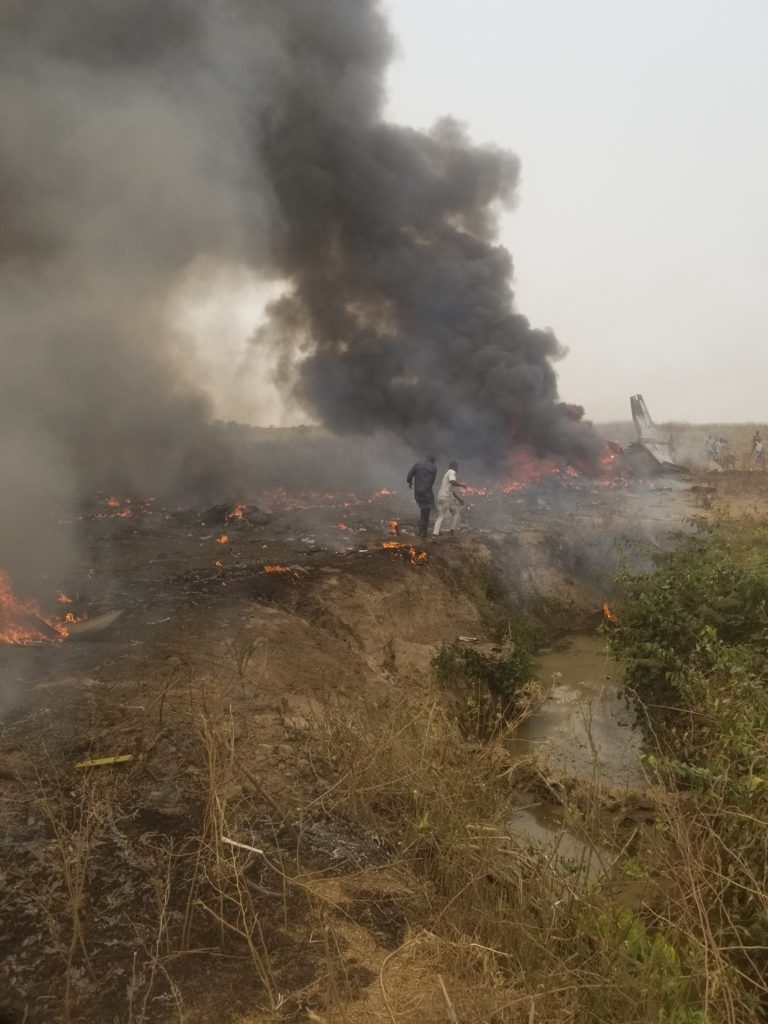
The Nigeria Air Force has confirmed the death of seven officers following a military plane crash in Abuja, the nation’s capital.

Ibikunle Daramola, spokesperson for the Nigeria Airforce, disclosed this via a statement on his official Twitter handle @KunleDaramola3 on Sunday.

According to Daramola, the aircraft Beechcraft B350i crashed very close to the Nnamdi Azikwe International Airport in Abuja after reporting an engine failure en-route to Minna, Niger State.

“This is to confirm that a Nigerian Air Force (NAF) Beechcraft KingAir B350i aircraft crashed while returning to the Abuja Airport after reporting engine failure en-route Minna. First responders are at the scene. Sadly, all 7 personnel on board died in the crash,” said Daramola.

READ ALSOFLASHBACK: How four teenagers hijacked a Nigeria Airways plane ‘for MKO Abiola’

He added that Isiaka Oladayo Amao, chief of the air staff, had ordered an immediate investigation into the incident.

Hadi Sirika, Nigerian minister of aviation, also confirmed the incident on Sunday via his official Twitter handle.

According to the minister, the plane crash occurred at the Abuja runway shortly after reporting an engine failure. He added that the incident appeared  to be fatal.

“A military aircraft King Air 350 has just crashed short of our Abuja runway after reporting engine failure en-route, Minna. It appears to be fatal. We should remain calm & wait for the out come of an investigation by the military, while we pray for the departed soul/souls if any,” said Sirika.

Nigeria has witnessed many military aircraft crashes, most especially the 1992 crash that killed 192 persons in Lagos.

In Abuja, AEPB enforcement officers collect illegal monthly ‘protection’ levies from petty traders

THE Abuja Environmental Protection Board (AEPB) was set up to enforce all environmental laws in the Federal Capital Territory, including the ban on street hawking, but investigations by The ICIR have shown that some of AEPB’s enforcement officers are abusing the agency’s mandate by collecting illegal monthly ‘protection’ levies from petty traders.

Payment of the monthly levies, ranging from N1500, N2000 and above, protects the petty traders from harassment, including seizure of their wares, during raids by AEPB agents.

Categories of petty traders that are being forced to make the ‎illegal payments in parts of the FCT include owners of small businesses that operate by the roadside such as food and suya sellers, drinking bars, kiosks that deal on general goods and provisions, salons, mobile point of sale (POS) operators and others.

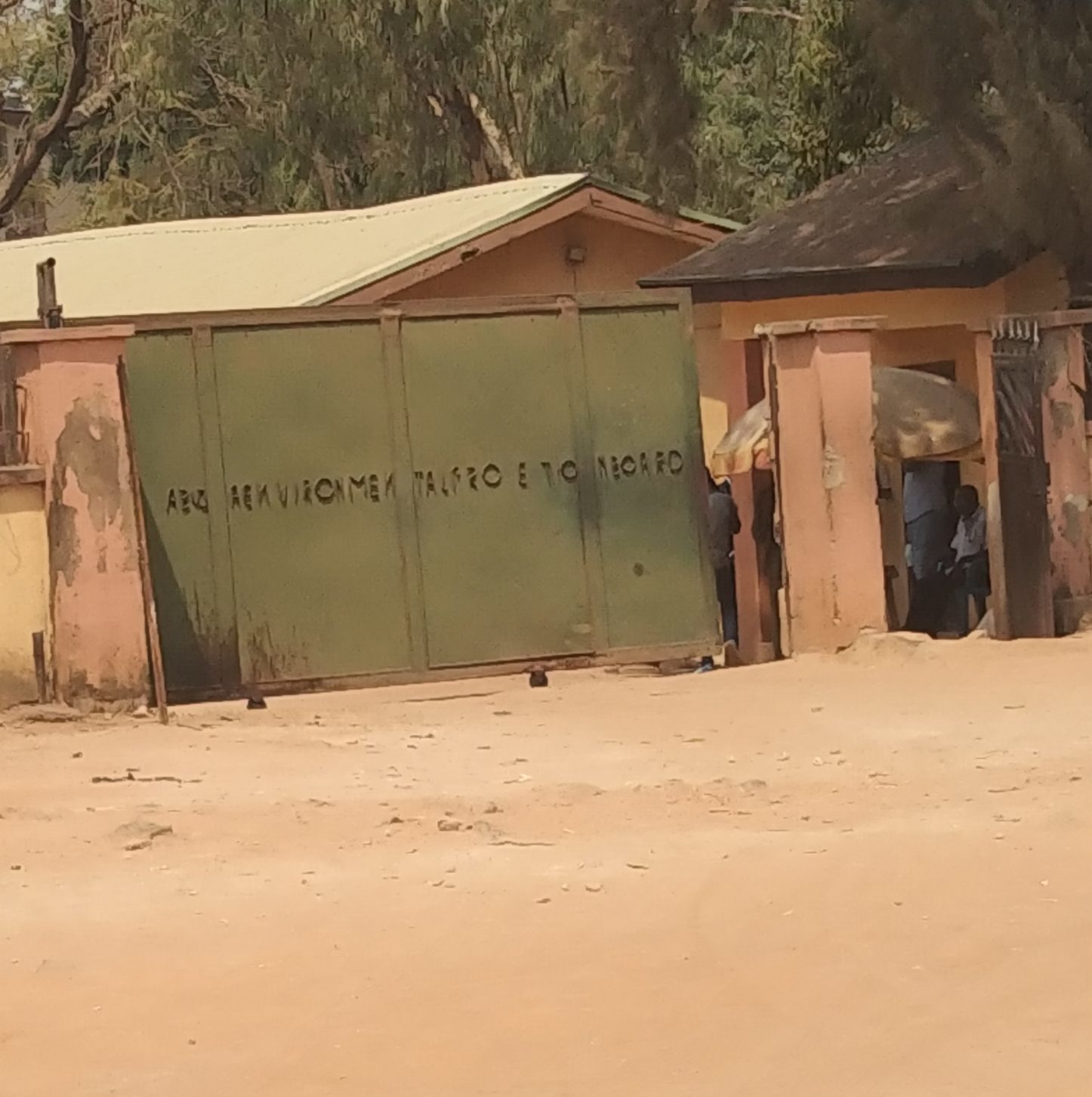
The gate of the AEPB office at Area 3, Abuja

The investigation, which involved interviews with some traders as well as encounters with AEPB officials, revealed a pattern of abuse of office, exploitation and extortion on the part of the enforcement officers.

As Nigeria’s unemployment rate continues to rise, forcing many people to struggle for survival, raids by AEPB enforcement officers have become a routine occurrence in‎ the FCT as the authorities clamp down on street hawking, which has been embraced by many as the only available source of livelihood.

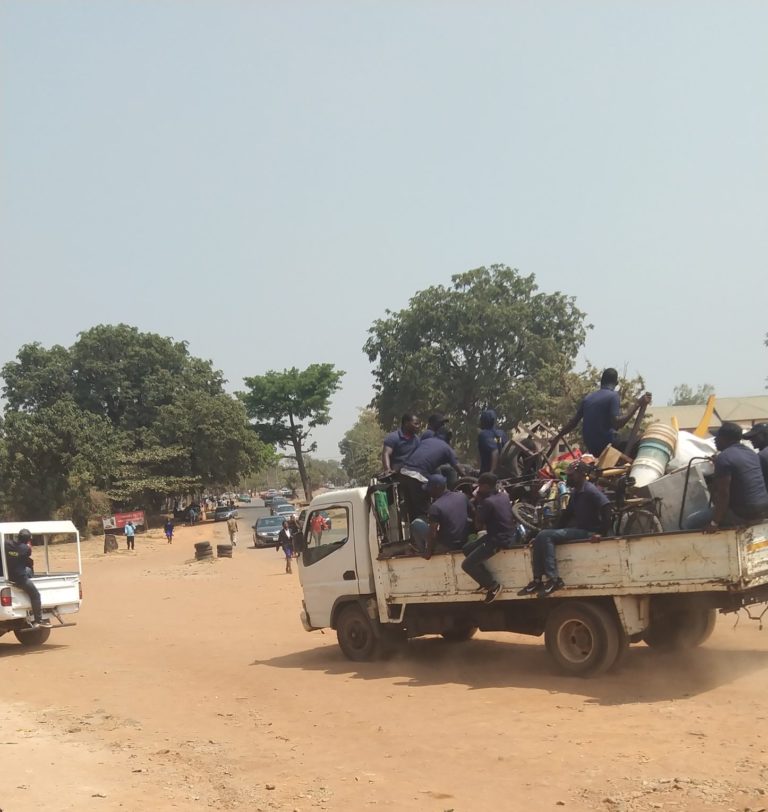
In the raids, busloads of ‎AEPB enforcement officers, usually in blue shirts, go after street hawkers and other petty traders who are operating in unauthorised locations in different parts of Abuja. For Abuja residents, AEPB agents chasing after hawkers is a common sight. The hawkers, and petty traders, who were caught are arrested while their wares are seized. In most cases, the traders flee, leaving their goods behind. The AEPB officers cart the items away.

The seized items are taken to the premises of the AEPB ‎mobile court at Area 3.

Normally, arrested hawkers are prosecuted at the mobile court, after which they are made to pay a fine for engaging in street hawking. The mobile court, in most cases, orders the confiscation of the seized goods.

  • Enforcement raids turned into money-making racket
    ‎However, The ICIR’s investigations revealed that some corrupt AEPB officers have turned the raids into a lucrative money-making venture whereby the seized goods are returned to the hawkers upon the payment of fines, without any prosecution.

Also, The ICIR discovered that the ‘illegal’ fines are being imposed arbitrarily – in some cases, enforcement officers bargain with the traders whose wares were seized.

During a visit to the AEPB Area 3 office‎, The ICIR‘s correspondent met a number of hawkers and petty traders who came around to retrieve their goods which were seized during a raid.

It was observed that some staff of the AEPB were hanging around in front of the office, and once they sight a visitor, they immediately offer to help the trader to ‘talk’ to the storekeepers for the release of the seized items. The storekeepers are AEPB officers that are in charge of the storeroom, where seized items are kept.

After our correspondent explained that he was at the office in respect of the seizure of his brother’s goods during a raid at the Wuse Berger ‎area of Abuja, one of the AEPB staff explained that he would facilitate the release of the seized items without the hawker having to undergo prosecution. But he added that payment has to be made for that to happen.

“Usually, the fine imposed after the trial is N2000 but the process takes time. To release the goods immediately, your brother (the hawker) should pay N5000,” he said, after asking of the nature of the supposedly seized items, and when the raid took place. The AEPB man, who did not give out his name when our correspondent sought his identity, advised our correspondent to ask the supposed hawker to come to the office so as to make the payment and personally identify the seized items.

A staff of the AEPB at Area 3 facilitates the release of seized goods and payment of the illegal monthly protection levies. He did not disclose his identity/CREDIT: ICIR

The man also suggested that our correspondent should tell the hawker to discuss with AEPB officers stationed at Wuse Berger to work out an arrangement that would ensure that his goods are not seized during future raids in that area.

‎* Petty traders give accounts of extortion, exploitation by AEPB enforcement officers

Many of the petty traders and hawkers who were at the AEPB office on account of their seized goods, told our correspondent, in separate encounters, that they don’t have the amounts of money they were asked to bring for the release of their wares.

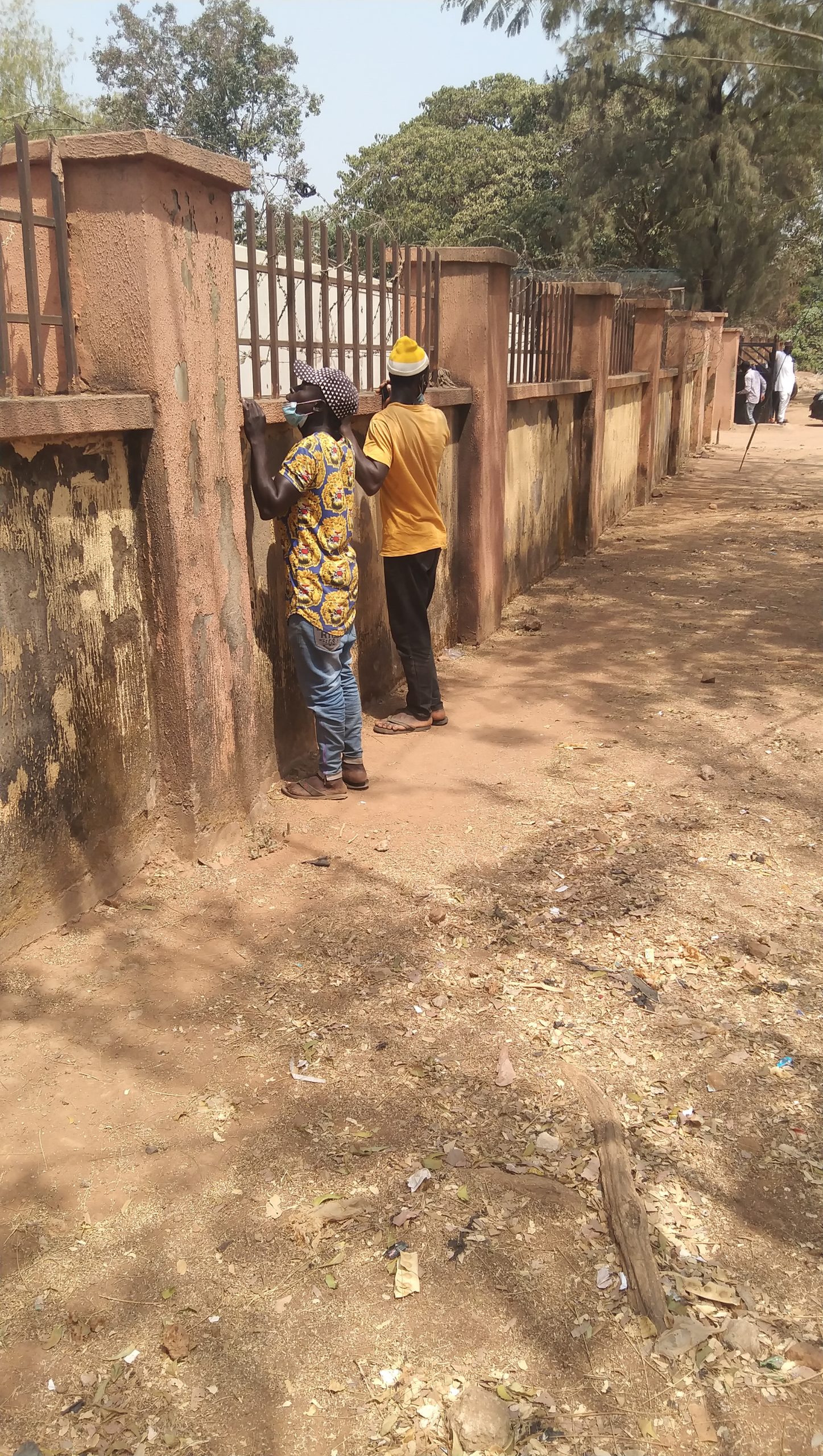
Our correspondent observed as many of them, who stood outside the fence, looked into the compound of the AEPB office where their goods littered the grounds, alongside other seized items. Valuables such as pots, plates, tables, chairs, cupboards and sunscreen umbrellas, which were seized from petty traders during raids, could be seen piled up inside the compound. Some of the items, which seemed to have stayed there for a long time, appeared damaged.

During the visit to the visit to the AEPB Area 3 office, our correspondent met a lady who identified herself as Iniobong. Iniobong, who told our correspondent that she sells fish and drinks in the Kado Estate area of Abuja, said she was told to come to the AEPB office to make arrangements that would ensure that her goods are no longer seized during raids.

Petty traders, Iniobong (black shirt) and Favour (red dress) at the AEPB office

Iniobong told our correspondent that when her goods were seized during a previous raid, she was advised to pay monthly levies to AEPB agents so that she would be allowed to operate without hindrance. She could not make the payment at the time, and her goods were seized during a subsequent raid.

Shedding further light on the situation, Iniobong, who spoke in a mournful tone, said, “They (AEPB enforcement officers) charge people monthly and when they meet you for the first time they will say you should bring N30,000 but if you have information about what others are paying you will tell them that you heard others are paying N2000 and they will collect that amount from you. Once you start paying they will not arrest you any other time they come on raid but you will give them something, like N500.”

Iniobong further revealed that payment of the illegal levies to the AEPB agents was a closely guarded secret among petty traders.

She added, “The sad thing is none of your fellow traders will disclose this information to you until your goods have been seized, that is when you will find out what is happening. It was one woman that sell handbags by the roadside that gave me the information. I asked her why they (AEPB agents) don’t disturb her anytime they raid the place and she told me to meet them so I can start paying monthly. She told me others are also paying monthly so as to be allowed to operate without any disturbance.

“I am here to make arrangements so I can start paying monthly. The person that told me to come here will take me to the oga. I sell fish and alcoholic drinks and the problem now is the man I met said ‎I will not be allowed to sell drinks again but I told him that I can’t sell only fish, it goes with drinks. He said if I want to sell fish and drinks I will have to pay N30,000 monthly. How can I pay N30,000 monthly? How, much do I make? I told him that other traders told me they are paying N2000 monthly. Even the POS operators are paying N2000 monthly.

“After that he told me to wait, that he will discuss with his Oga. He later called to tell me that the other girls that were paying N2000 are doing ‘something’ with the Oga, that is why they are paying that amount. He said if I can do something I will also pay N2000.”

When our correspondent observed that the ‘something’ could be of a ‘sexual’ nature, Iniobong said she refused to ‘sleep’ with the AEPB official.

“I am not ready to sleep with anybody. For what? When I will still pay N2000 every month. I am not ready for that. I don’t want any other thing apart from paying N2000 each month. That is what I told him and later he said ok if I have the N2000 I should bring it. Unfortunately, at that time I couldn’t afford the N2000 so they later seized my goods again.”

Iniobong told our correspondent that she was now ready to pay the monthly N2000 illegal levy.

Another petty trader, Favour, who was at the AEPB office to retrieve her seized goods, said she was the only one targeted by the enforcement officers during the raid on her location.

“The night they seized my things, they ‎left other traders who were selling around me. It was only me that they came after. I later realised that the other traders have settled them,” Favour told our correspondent.

Traders looking at their seized wares through the fence of the AEPB office
  • AEPB describes bribe-taking enforcement officers as ‘bad eggs’, says many of them have been dismissed

The ICIR confronted the management of the AEPB with the discoveries from the investigation. Janet Audu Peni, the spokesperson of the AEPB, told The ICIR that the organisation had dismissed several enforcement officers who were found to be involved in shady activities.

But, apparently trying to absolve the organisation of wrongdoing, she noted that most of the enforcement officers were ‘casual workers’ and as a result, not full staff of the AEPB.

“The thing is usually most of the enforcement officers are casual workers. The management has terminated so many appointments. The management is not happy about it because when people talk they will say that the AEPB is exhorting money from the general public,” Peni said.

She added, “What I can tell you is that hawking is prohibited in the FCT. We don’t allow people to hawk. I can’t deny or say that our people are not collecting or they are collecting money. Just what you should know is that in every group you will have bad eggs, even among the press there are bad eggs. In this case, now, the giver and the taker are committing the same offence because this trading is illegal. If not why will they have to pay?”

  • Monthly payment to AEPB enforcement officers by petty traders illegal, not authorised

Peni further noted that the money being paid by petty traders to the enforcement officers was illegal and not authorised by the management of the AEPB.

“It is illegal. ‎It is an act of corruption. Once you are not in the shop, or you are not in the market or in an area that is allowed for trading you are doing illegal trading. We have informal markets that petty traders can go to and sell their items but they must not come on the road. AEPB did not authorise such monthly payments. We did not authorise anybody to collect such monies from traders,” she stressed in response The ICIR‘s enquiries.

She also explained that the AEPB was not a revenue-generating, or revenue collecting agency.

“We provide social services and the money we charge is just for the services we render. We are not a revenue-generating agency,” she said when our correspondent asked whether the money being paid to the enforcement officers by petty traders are being remitted to government as revenue.

Teni urged members of the public to report AEPB enforcement officers that are engaged in the act.

She added, “The only thing I can tell you is, honestly, we are looking for such officers. If there is any way they can get us names, honestly with the director I have, he is going to discipline them. If the traders can help us to know the names of the staff they ‎are dealing with it will be very helpful. We don’t want to only punish the traders, we also want to punish the staff that are collecting money from them.”

The AEPB spokesperson suggested that the concerned enforcement officers can be identified by the numbers on their shirts.

“If they (petty traders) get the number or even take their pictures, we will use that number in tracing those officers,” she observed.

Insecurity: Canada warns citizens against travelling to Nigeria

IN its latest travel advisory, the Canadian government has warned its citizens against non-essential’ travels to Nigeria due to the high level of insecurity and crime in the West African country.

Canadians who happened to be in Nigeria were advised to exercise a ‘high degree of caution.

The travel advisory on Nigeria, issued on February 16, 2021, was rated as ‘Still Valid’ on February 21, 2021.

In the travel advisory posted on travel.gc.ca, a website of the Canadian government, Canadians were advised to “avoid non-essential travel to Nigeria due to the unpredictable security situation throughout the country and the significant risk of terrorism, crime, inter-communal clashes, armed attacks and kidnappings.”

But the Canadian authorities specifically warned the country’s nationals to “avoid all travel” to some parts of Nigeria, particularly the North-Western states of Kaduna, Kano, Katsina, Sokoto and Zamfara, as well as well as the North-Eastern states of Adamawa, Bauchi, Borno, Gombe, Jigawa and Yobe.

Other states Canadians were advised to avoid in Nigeria included Plateau, in the North-Central, and Niger Delta states – Akwa Ibom, Bayelsa, Delta, and Rivers.

Two South-Eastern states – Imo and Anambra – were equally classified as ‘no go’ areas for Canadians in Nigeria.

  • Threat of terrorism, sectarian violence, kidnapping, piracy high in Nigeria

READ ALSODon’t travel to Borno, Yobe, Kaduna, US warns citizens in Nigeria

The travel advisory noted that acts of terrorism and kidnapping were likely to occur in Kaduna, Kano, Katsina, Sokoto, Zamfara, Adamawa, Bauchi, Borno, Gombe, Jigawa and Yobe states.

It also pointed to sporadic episodes of inter-communal and sectarian violence in Plateau as one reason why Canadians should steer clear of the state.

The Canadian government also told its citizens that the security situation in the Niger Delta region was fragile, with conflicts between militant groups, armed robbery and kidnapping posing significant threats.

Piracy was identified as an ongoing threat in the Niger Delta states, with pirate attacks, armed robbery against ships, ship hijackings, kidnappings and hostage-takings occurring in coastal waters in the Gulf of Guinea.

In the Niger Delta, insurgents equipped with speedboats and high-calibre weapons posed a risk, according to the travel advisory.

“If you choose to remain in the Niger Delta states despite this advisory, be extremely vigilant at all times. If travelling for business, ensure that meetings are held at a secure location and that your contact is known to you,” the Canadian government further advised.

  • Canadians advised to exercise ‘high degree of caution’ in Abuja, Calabar

The Canadian government told its citizens to exercise a high degree of caution in Abuja, the Federal Capital Territory, and in Calabar, the capital of Cross River State, where it said “the security situation is more stable and facilities are relatively well developed compared to the rest of the country.”

  • Level of criminality in Lagos high

Canadians visiting Nigeria were also advised to exercise a high degree of caution in Lagos, Nigeria’s commercial centre, especially within the area covering Ikeja in the north down to Lagos Island, Victoria Island and Ikoyi, and from Mile Two (west end of Lagos) to Chevron Estate on the Lekki Peninsula (east end of Lagos).

READ ALSOInsecurity: UK advises Britons in Nigeria against travelling to Kaduna, other states

“Avoid non-essential travel beyond this area. The level of criminality in Lagos is high and incidents of violent crime, including assaults and armed attacks, have occurred against foreign nationals and in areas frequented by foreigners,” the advisory noted, while also warning against all unnecessary travel in the night.

  • High level of crime throughout Nigeria

The Canadian government observed that “there is a high level of crime throughout Nigeria,” listing regular criminals activities to include armed robbery, kidnapping for ransom, home invasions, carjacking and violent assault.

“Criminal activity is high in urban areas, robberies and muggings conducted by large, well-armed groups, in places frequented by expatriates, are common. Some have been committed by persons posing as police or military personnel, particularly in the Niger Delta,” the travel advisory noted.

Canadians were also warned of the threat of kidnapping in Nigeria. The travel advisory noted that foreigners were kidnapped throughout the country.

“Those crimes, often perpetrated by small groups of armed individuals, are indiscriminate. Residents and foreigners alike have been abducted and held captive, sometimes for days, until a ransom was paid. Deaths have also been reported,” the advisory said while noting that “kidnappings for ransom targeting Westerners have increased in the affluent areas of Lagos and the surrounding states of Ogun, Osun and Ondo.”

To avoid being kidnapped, Canadians were advised to be more vigilant in
Warri, Delta State, Port Harcourt, Rivers State, and in Abia, Anambra and Imo states.

  • Law enforcement officers at checkpoints use aggressive methods to extort bribes

The travel advisory noted that “police checkpoints are very frequent on roads throughout the country,” adding that “law enforcement officers and gangs often use aggressive methods to extort bribes.” Canadians were advised to be wary of the checkpoints while in Nigeria.

  • Bad roads, poor road safety in Nigeria

To further dissuade its citizens from visiting Nigeria, the Canadian government painted a very grim picture of road transportation safety and infrastructure in the country.

“Road conditions and road safety are poor throughout the country. Drivers often drive at excessive speeds, and accidents are common. Visibility is poor due to lack of adequate lighting,” it said, adding that “incidents of armed carjacking occur along main roads throughout the country.”

Canadians in Nigeria were advised to avoid car hire services, desist from driving at night and always keep their car windows closed and doors locked at all times.

READ ALSOAustralian govt warns citizens against travelling to Nigeria

They were also advised against using public transportation in Nigeria “due to the risk of petty theft and armed attacks.”

Warning its citizens to avoid taxis while in Nigeria, the travel advisory noted that sometimes thieves would hide in the trunk and emerge through the back seat once the taxi was in motion and rob the passenger.

The Canadian government, in the same vein, warned its citizens about credit card and Automated Teller Machine (ATM) fraud in Nigeria.

Canadians in Nigeria were further advised to pay special attention when Nigerians were handling their ATM cards during transactions, and always look out for unauthorised transactions on their bank statements.

  • US, Australia, UK also advised citizens to avoid Nigeria over insecurity

In November 2020, the Australian government, in a travel advisory, warned its citizens to avoid travelling to Nigeria due to safety concerns arising from violent protests, terrorism, kidnapping and Internet scams.

The travel advisory issued by the Australian government suggested that Nigeria was perceived as a dangerous, volatile destination for prospective visitors.

Also, in August 2020, the United State government, in a travel advisory, warned its citizens against travelling to Nigeria due to the coronavirus pandemic, terrorism, civil unrest, kidnapping, widespread inter-communal violence, and others.

In the same vein, in a current travel advisory issued by the Foreign, Commonwealth & Development Office (FCDO), the United Kingdom advised against non-essential travel to several parts of Nigeria.

The UK government warned its citizens that visiting Nigeria would expose them to terrorism, kidnapping, armed robbery and other risks.

“There’s a high threat of kidnap throughout Nigeria. Kidnaps can be motivated by criminality or terrorism and could be carried out for financial or political gain. Anecdotal evidence suggests that the risk of kidnap increases after dark,” the UK authorities observed.

It also observed that nationwide protests in Nigeria lead to the breakdown of law and order.

* CSOs demand Buhari’s resignation over escalating insecurity

The level of insecurity in Nigeria has escalated in recent times, with cases of kidnapping, armed robbery, sectarian violence, communal clashes and banditry being reported in different parts of the country.

The country is still grappling with the Boko Haram insurgency, which had led to the loss of thousands of lives over several years.

Recently, some students of a secondary school in Kankara, Niger State, were abducted by bandits and have not been freed. With the security agencies unable to address the situation, there are reports that governments at different levels had resorted to negotiating with bandits and other criminals.

Last week, a coalition of civil society organisations (CSOs) said President Muhammadu Buhari had abdicated his constitutional responsibility of protecting the lives and property of Nigerians due to his poor handling of rising insecurity in some parts of the country.

Insecurity: Buhari has abdicated his responsibility-CSOs

The coalition demanded that Buhari “step aside or the National Assembly should initiate impeachment proceedings against him on grounds of gross misconduct as provided for in Section 143 of the 1999 Constitution of the Federal Republic of Nigeria” if he cannot address the country’s security challenges.

Nigerian Army contradicts Imo govt, describes Orlu shooting as fake news

CONTRARY to Imo State government’s claim that it invited the military to flush out members of the Eastern Security Network (ESN) in Orlu, the Nigerian Army says it did not carry out a military operation in the town, describing a video circulating on the social media on the incident as fake news. 

A video circulated on the social media on February 18 showing a military helicopter flying at low level in Orlu, with sporadic gunshots heard as the aircraft flew.

Imo State government, through Cyprian Akaolisa, attorney-general and commissioner for justice in the state, had told journalists in Owerri, the state capital, that Imo government invited the military to help put an end to the criminal activities of members of the ESN.

“The attacks on police stations and killings of policemen during #EndSARS were carried out by IPOB and protesting youths for the sole purpose of hijacking and stealing weapons. They are now using those arms to destroy Orlu.

“They killed 10 policemen, a prominent Orlu son, Ignatius Obiezu, and one Emmanuel Okeke and collected their Hilux vehicles,” Akaolisa stated.

He also accused the IPOB group of being responsible for the deaths of four Muslims who were carrying out their legal businesses in Orlu, stressing that they were shot and killed on claims that they were herdsmen.

Recall that footages of gunshots and aerial surveillance conducted by the security operatives emerged on February 18 on the social media. The video caused apprehension among residents in the state and some concerned indigenes of South-East states.

At the initial stage, many Nigerians were confused on whose instruction the military visited the state to conduct the operation, hence the blame on President Muhammadu Buhari.

“I agree that ESN should be properly set up with all the legal frameworks, but to send in air bombardment into civilian populated areas is an act of terror.

“Buhari should call off this madness now,” Mr Integrity @Integrity56 stated in his post.

In another post, Chiukwujioke @chiukwujioke expressed surprise saying, “So it’s actually true that the Nigerian Army did the #OrluAirAttack all because of the ESN…well blame the south-east governors for being too weak. If Hisbah and Amotekun are recognised, why is ESN different?”  However, there was a twist in the whole story.

READ ALSOWike redeems N200m pledge to families of security operatives killed by IPOB

Attack on Orlu is Fake News – Nigerian Army

As part of the verification process, The ICIR visited the official social media handle of the Nigerian Army, but there was no information concerning a planned operation in the state.

Further check on the Army’s website also did not contain such information. It is, however, unusual for the army to embark on special missions, especially within the country without announcing it to the public.

Several instances are multiple operations carried out in the North-East, as part of measures to overcome the insurgents. In September 2017, Operation Python Dance was initiated by the Army. Before then was Operation Lafiya Dole. There had also been Operation Gama Aiki, Operation Safe Corridor, Operation Safe Corridor, Operation Delta Safe, Operation Crocodile Smile and several others.

The ICIR contacted Mohammed Yerima, a brigadier-general and Army spokesperson, to validate the viral video of the incident, but he simply described it as fake news.

His attention was drawn to the official website and social media handles of the Army as information regarding the Orlu operation was missing on the official channels, but he emphasised his stance: “That’s why I told you it is false.”

Foreign Affairs Ministry denies statement about Benin aspiring to become Nigeria’s 37th state

0

Ministry of Foreign Affairs has refuted statement attributed to the Minister Geoffrey Onyeama that Republic of Benin, has indicated interest to become  the 37th state of Nigeria.

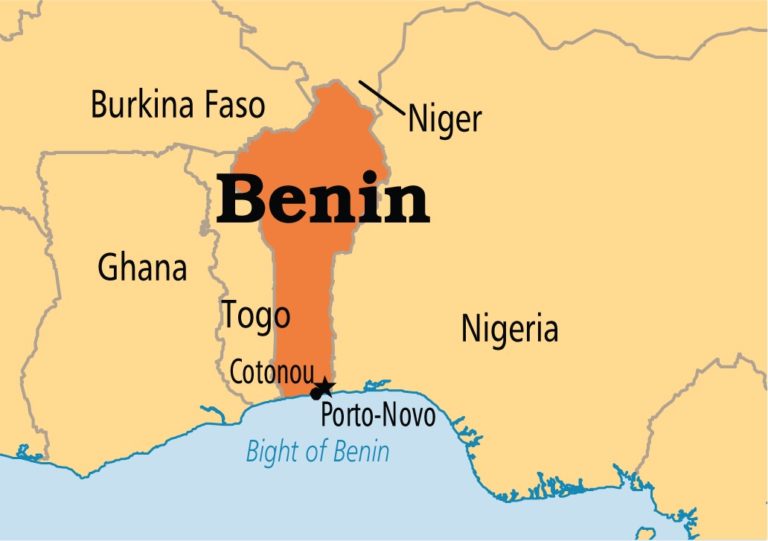
Benin Republic is Nigerian neighbour on the east side.

Ferdinand Nwonye, the foreign ministry spokesperson, in a statement on Saturday evening said the minister was quoted out of context.

Earlier, the Nigerian media was awash with news that the Benin Republic has signalled its intention to become the 37th State in Nigeria.

Several news outlets had quoted Onyeama to have said Patrice Talon, President of Benin Republic, had expressed readiness for his country to be part of Nigeria.

He had reportedly said this after meeting with Aurélien Agbenonci, his counterpart from the Benin Republic.

The report, which created the impression that the country was planning to cede its sovereignty to Nigeria, has generated a lot of reactions among Nigerians on social media, with many welcoming the development, while others mocked the plan, giving the deteriorating security situation in the country

Nwonye has debunked the statement.

READ ALSOINVESTIGATION: With just N1000, I “smuggled” foreign rice from Benin Republic to Nigeria despite government’s restrictions

“The attention of the Ministry of Foreign Affairs has been drawn to misleading reports in the media that the Republic of Benin is aspiring to be the 37th State of the Federal Republic of Nigeria,” Nwonye’s statement read.

“The Honourable Minister of Foreign Affairs, Geoffrey Onyeama in the presence of his counterpart from the Republic of Benin granted a press interview after a very fruitful meeting between ministerial delegations from both countries and stated therein ‘… the President of Benin Republic said he would like the relations between the two countries to be so close as if Benin was the 37th State of Nigeria.

“The Federal Republic of Nigeria has no territorial ambition and has never aspired to make Benin or any country as part of Nigeria.”

The Ministtry said Mr. Onyeama was misquoted, and implored the public to disregard the “wrong information.”

Ekiti government seeks resolution of missing scripts crisis in EKSU

0

THE Ekiti State government says it will engage the management of Ekiti State University (EKSU) on allegations of missing scripts brought against it by students of the institution.

Students of EKSU recently trended a hashtag #SaveEksu to draw the attention of Ekiti State government and the national body of the Academic Staff Union of Universities (ASUU) to intervene in the controversial mass failure recorded in the institution due to missing scripts.

The students also used the opportunity to call for no increase in the institution’s fees.

READ ALSOWe are losing N19.3million monthly to 362 ghost workers, says Ekiti govt

https://twitter.com/oapaynigeria/status/1363031082749337600?s=20

https://twitter.com/divine_chichi/status/1362901487601483777?s=20

https://twitter.com/lawanson_ismail/status/1363021875316727808?s=20


Reacting, Akin Omole, state commissioner for information and values orientation, said the government was monitoring the situation and would support the institution to comprehensively address the situation.

“The Government of Ekiti State has come to learn of a trending hashtag #SaveEksu, which has become a rallying point for students and other stakeholders in the Ekiti State University (EKSU) to vent their displeasures about issues affecting them,” he said.

“Government would like to assure everyone that @ekitistategov is monitoring the development and engaging the authorities at the Ekiti State University to support them in addressing the issues comprehensively.

“You have a voice, you have spoken, and we have heard you.”

Why we can’t punish police officers who arrested Lekki Toll Gate protesters – PSC

0

THE Police Service Commission (PSC) says there are reasons behind its inability to punish police officers who arrested Lekki Toll Gate protesters last Saturday in Lagos State.

Rommy Mom, commissioner for human rights, PSC, said last Thursday during a virtual round table hosted by the International Centre for Investigative Reporting (ICIR) to discuss many issues surrounding police brutality and the #ENDSARS protests.

Mom said this while responding to a question by the moderator of the discussion over the failure of the PSC to discipline officers who arrested the protesters at the Lekki Toll Gate last Saturday.

“Undoubtedly, the issue of police discipline is that of the Police Service Commission. As with everything that is official and government, you need to have some sort of instrument to act on; it could be petition or complaint or whatever. I think there are a lot of layers to where the police commission can be activated in terms of exercising the powers over police officers.

“We need to understand that the Police Service Commission is not on the street with the protesters. It acts on petitions; it acts on complaints and, for me, this is where there was a gap in terms of identification of those police officers and submitting their names and actions to the commission for discipline,” Mom said.

He stated that most Nigerians did not understand the mechanism of discharging the duties of the PSC.

READ ALSOFalana to sue police over arrest of #ENDSARS protesters at Lekki Toll Gate

According to him, most Nigerians did not know about the PSC until the #ENDSARS protests in October 2020.

Mom further lamented that the PSC was not properly empowered to perform its functions as established in the PSC Act, noting the commission, which was supposed to discipline police officers across the country, was located only in Abuja, the Federal Capital Territory.

“So much money has been poured into police reform, but not very much has been put into the Police Service Commission which is the oversight mechanism,” the PSC commissioner added.

Rinu Oduola, an #ENDSARS campaigner, who attended the virtual roundtable discussion, said Mom’s explanation meant that Nigerians were in trouble.

“We are all in a lot of trouble because a police officer would threaten to shoot you and he would shoot. With what Mr Rommy is saying,  it means that we are all in a lot of trouble. So it is not the protesters alone, it is everyone,” Rinu added.

Reacting to Mom’s comment, Femi Falana, a human rights activist and Senior Advocate of Nigeria (SAN), said the PSC should be funded in time to come following the Police Trust Fund Act of 2019.

“What we have done with respect to funding of the police is a campaign, and there is now a law what we call Police Trust Fund Act of 2019 which has provided 2.5 percent of the entire money in the federation account as well as 0.0005 percent of companies’ profit in Nigeria to be paid into the Police Trust Fund account in buying weapons and providing accommodation for police officers in Nigeria.

“But it has not been allowed to function. I think it was only last week that the National Assembly passed the budget of the police with a bill to release part of that money,” Falana said.

He stated that currently, there was a disciplinary process at the state level through state commissioners of police, stating that this was being done through an orderly room trial of police personnel. Falana noted that the officers would be referred to the commission after the trial.

“In the case of Lagos, with respect to the case of human rights infringement that occurred on (previous) Saturday, the commissioner of police has set up an enquiry to investigate the officers. Again, this is where the PSC has not even lifted a finger,” Falana stated.

He added that there was already a decentralisation of police discipline in Nigeria and there are cases that are handled in orderly room trial so that Nigerians would not have to go to Abuja, for every case of police misconduct.

Buhari govt would never offer N800m ransom to bandits, says Garba Shehu

0

PRESIDENT Muhammadu Buhari would never pay 800 million naira ransom to bandits to secure the release of kidnapped schoolboys. said his spokesman, Garba Shehu. 

Shehu told The ICIR on Saturday while commenting on trending reports that the federal government paid 800 million naira to bandits for the release of the kidnapped schoolboys at the Government Science College, Kangara Niger State.

“A Buhari government cannot do a thing like that,” Shehu told The ICIR in a text message.

Similarly, Lai Mohammed, minister of information, also denied reports that the government would pay or had already paid ransom to the bandits.

Mohammed also said this Saturday when he featured on Channels TV’s Sunrise Saturday programme.

“All these stories about ransom are conspiracy theories… I can assure you that the government is on top of the matter – but it is not a subject matter for television discussion,” Mohammed said.

Early Saturday morning, #800m was the leading trend on Twitter, a social media platform commonly used in Nigeria.

Many Nigerians took to Twitter to react to the reports that their government had paid 800 million NAIRA to bandits in Niger State.

A Twitter user identified as Bianca Adeniran, with the handle @quinbeemodellar, slammed the government for allegedly spending tax payers’ money to pay ransom to bandits.

“So, after collecting tax, stamp duty, they will use the money and pay bandits #800m, am sorry but this government is the worst thing that happened to Nigeria since inception. Sani Abacha was right all along ‘If insurgency lasts for more than 24 hours, the gov. has a hand in it,” said Adeniran in a tweet liked and retweeted more than 1,500 times.

READ ALSODubai Properties: Buratai’s wife, Jimoh Ibrahim and other prominent Nigerians who own properties in UAE

Another user identified as Chinaks Chris, with the handle @ChrisTalker247, lamented the government’s inability to yield to the demands of the Academic Staff Union of Universities (ASUU) but ready to pay ransom to bandits.

“I am still trying to wrap my head around the facts that ASUU strike went on for close to 1 year without FG making the payment ASUU demanded but the same FG was comfortable giving bandits #800m.  It’s official, FG spend (sic) more on terrorism than Education,” Chris said.

Many other users in a similar line of thought expressed their dissatisfaction over the unconfirmed report.

As of the time of filing this report, there had not been an official pronouncement that the schoolboys had been released from the bandits’ custody.

Meanwhile, Abubakar Gumi, a renowned Islamic scholar, has advised the federal government to grant ‘blanket amnesty’ to bandits in Niger State.

Gumi, who met with the bandits, said this while giving an update about their demands on Friday.

“The federal government should give them blanket amnesty. Then if somebody continues, then we will deal with them,” Gumi said.

Tafa Balogun, Olisa Metuh and other prominent Nigerians who own properties in Dubai

0

Additional report by Damilola Ojetunde, Samson Samuel and Isah Abdul Azeez


SOME prominent Nigerians who had held political offices or had been in the corridors of power are owners of luxury properties in Dubai, a city in the United Arab Emirate (UAE).

The list includes Mustafa Balogun, a former Inspector General of Police, Olisa Metuh, former spokesperson of the People’s Democratic Party, his wife, Kanayo Olisa Metuh, Attahiru Bafarawa, former governor of Sokoto State as well as Orji Uzor Kalu, the former governor of Abia State and senator in the 9th Assembly.

According to a dataset shared with The ICIR by Center for Advanced Defense Studies (C4ADS), a US-based nonprofit newsroom, Nigerians own over 800 properties in Dubai.

Transparency International had in 2019 described Dubai as a ‘Money Laundering Paradise’ due to the heavy flow of illicit funds into the city which is one of the seven emirates of UAE

Most of these Nigerians do not have clean slates, as corruption charges have been hung on their necks in the past.

While some have been acquitted of corruption charges, others are still caught in the web of multiple allegations of financial crimes.

And there are those who yet have not been accused of corruption.

Mustafa Balogun (Former Inspector General of Police)

Balogun served as the IGP of the Nigeria Police between 2002 – 2004 before he resigned his position following several allegations of corruptions.

The Nuhu Ribadu-led Economic Financial Crimes Commission (EFCC) prosecuted Balogun on eight count charges bordering on diversion and embezzlement of public funds.

READ ALSOSenator James Manager, Mike Ozekhome, other prominent Nigerian owners of real estate in Dubai

In 2005, after pleading guilty to the charges levelled against him, Binta Nyako, a judge of the Federal High Court, Abuja sentenced Balogun to six months imprisonment after he had spent 67 days in custody of the EFCC.

Although the EFCC said $150m-worth of cash and property acquired by Balogun would be seized by the government, records made available to The ICIR shows that the former IG still owns 10 choice apartments in Dubai.

Some of the buildings are located in the Lake City Tower, Marina Park, Waterfront, Goldcrest View, Dec Towers T1 and T3 among others.

Orji Uzor Kalu (Former Abia State Governor and sitting Nigerian Senator)

Kalu, a former governor of Abia state and serving senator of Nigeria was convicted by the Lagos Division of the Federal High Court on Thursday, 5 December 2019 over allegations of fraud worth N7. 65 billion fraud.

Dubai Property Owners

Idris Mohammed, the justice who sentenced Kalu to 12 years in prison found him guilty of defrauding the Abia State government through his company Slok Nigeria Limited.

After spending six months in jail, his sentence was overturned by the Supreme Court on the basis that the judge who sentenced him had been elevated to the Court of Appeal at the time of the judgement hence had no authority to deliver the judgement.

Although the court did not acquit him of the charges, it only ordered a retrial of the former governor.

The ICIR records show that Kalu currently owns an apartment at Marina Heights in Dubai, UAE capital.

Former PDP spokesperson, Olisa Metuh and his wife, Kanayo

Metuh and his wife Kanayo are owners of four properties including hotel apartments in Dubai. The Metuh’s properties are located in Fakhrudeen Hotel Apartment and the Summit in Dubai.

The former PDP Publicity Secretary was convicted on February 25, 2020, by Okon Abang, a judge of the Federal High Court in Abuja.

Metuh was found guilty among others to have fraudulently received 400 million naira from the Office of the National Security Adviser in November 2014.

READ ALSODubai Properties: Buratai’s wife, Jimoh Ibrahim and other prominent Nigerians who own properties in UAE

Following a review of the High Court’s judgement by the Abuja Division of the Court of Appeal, Metuh was discharged of the sentence.

On December 16, 2020, the Appeal ruled set aside the conviction handed down on him by Abang citing bias, without considering the merits in the money laundering case.

However, his case was not over yet, the EFCC later approached the Supreme Court to set aside the judgment of the Court of Appeal on the grounds that the appellate court erred by restricting itself to only two grounds (12 and 14) of the appeal that dwelt on the alleged bias of the trial judge, without examining the merit of the judgment of Justice Abang,” EFCC Alert, January 2021 edition, said.

He was later sentenced to seven years in jail.

Attahuru Bafarawa, former governor of Sokoto

Bafarawa, served as the governor of Sokoto State between 1999 – 2007, after his eight-year term, he was arraigned alongside four others by the EFCC on 33 count charge of conspiracy, criminal misappropriation, theft and receiving of stolen funds.

Bafarawa was discharged and acquitted of the allegations by a Sokoto High Court in July 2018.

The EFCC kicked against his acquittal and promised to challenge the judgement.

The former governor of Sokoto, is the owner of six properties located in M5 Community B-V-165, Residences North and Residences South in Dubai.

Participants at town hall meeting call for e-election to curb vote-buying

0

PARTICIPANTS  at a one-day town hall meeting held in Abuja have called for the use of electronic voting to reduce incidences of vote-buying.

The town hall meeting with the theme, ‘Eliminating Vote Buying And Corruption During Elections In Nigeria,’ was organised by the Progressive Impact Organization for Community Development (PRIMORG) with support from the MacArthur Foundation on February 28th, 2021. It was aimed at discouraging citizens from selling their votes during elections.

The meeting highlighted the dangers of vote-trading for Nigerian politics, democracy and development, while proffering solutions to these challenges.

It noted that vote-buying was a criminal act according to the law and a deliberate creation of poverty by politicians to enable them to occupy their desired political offices.

READ ALSOANALYSIS: Five reasons why TraderMoni might just be a vote-buying strategy

It also expressed concerns that politics had now become the only available job for politicians, hence the increasing rate of vote-buying.

While stating that poverty was one of the reasons why people sold their votes during elections, the meeting noted that poor awareness against voter inducement was helping vote-buying to gain grounds in Nigerian elections, lamenting that the National Orientation Agency was not sensitising citizens enough on dangers of vote-buying.

It also agreed that vote-buying gained prominence due to competition between the All Progressives Congress {APC} and People’s Democratic Party {PDP), and that vote-buying started from delegate nomination (internal party election). It added that political parties had commercialised candidates’ nomination tickets.

Lack of laws and penalties for perpetrators and institutional frameworks were highlighted as reasons for vote-buying.

In addition to electronic voting, the meeting called for a serious sensitisation of citizens and youths on the dangers of vote-buying, stressing the need for a truly independent Independent National Electoral Commission (INEC).

The meeting, which called for security operatives to be answerable to INEC on election days, also charged them to be patriotic when involved in the conduct of elections.

It called on Nigerians to desist from selling their votes and canvassed a proper voter education to curb vote-buying.

Participants at the meeting included Shehu Gabam, national secretary, Social Democratic Party; Amos Dunia, editor-in-chief, Forefront Magazine and Online; Ezenwa Nwagwu, convener, Say No Campaign; Fidelia Usman, practitioner, Joe Abraham’s SAN & Co.; Emmanuel Edet, executive director, Youngsmart Development Initiative.

E-election: Is Nigeria ready?

In 2019, INEC ruled out the adoption of electronic voting method in the country  in the nearest future because of the absence of ‘robust technical and physical infrastructure.’

Okey Ibeanu, one of INEC national commissioners, had noted at a stakeholders’ meeting in Abuja that there were key factors to be taken into consideration before e-voting could be adopted in the country. According to him, these factors included stable power supply and the ability of electorates to conquer their ‘fundamental trust issues in the system’ by believing in the capability of the electoral body to function independently without external manipulations.

“Each time we are demanding more ‘complexification’ of our election, we should remember that our infrastructure may not be adequate to take care of the process,” he said.