Home Blog Page 1878

Nigerian pediatric surgeon makes history in Canada

NIGERIA-BORN Tito Daodu has been recognised by the American Pediatric Surgical Association (APSA) as the first black woman pediatric surgeon practising in Canada.

In a tweet to mark the Black History Month celebrated every February, @APSASurgeons wrote: “Dr. @TitoDaodu was born in Nigeria. She is the 1st black woman #pedsurg practicing in Canada @ACHFKids. She believes that by helping the worst off or those with the least access, she does a service to the entire system.”

Daodu was born in Nigeria and emigrated permanently to Canada when she was eight, after first being deported. She grew up in a rough neighbourhood in Winnipeg’s inner city and found early mentors at West Broadway Youth Outreach, a local drop-in centre for kids, which spurred her to become a voice for children and youths.

Claim that Nigerian-born Kaycee Madu is Canada’s Minister of Justice is MISLEADING

“I was challenged by the inequality I saw and experienced, especially with regard to safety, security and health. As I looked around at many of my peers, I discovered that the level of safety and security that I felt was not universal –in fact, far from it,” she said. 

Daodu later attended medical school at the University of Manitoba and went on to complete her residency and fellowship in Calgary. As a medical student, she co-developed a project in Tanzania focused on adolescent gender and reproductive health. Daodu spent her summers researching childhood pneumonia in Nigeria, and more recently launched a surgical needs assessment for the country. 

Currently completing a master’s of public health at Harvard University, Daodu is part of a team led by Dr. Mary Brindle working to revise the safe surgery checklist for high-income countries around the world. She has amassed a long list of peer-reviewed publications and awards on topics including colorectal surgery, pediatric trauma and global health.

READ ALSOWeak economy, insecurity, bad governance push Nigerians to rush to Canada—API study

She has a passion for Global Health and promoting justice and equity in medicine. She is actively involved in Global and Public Health Research, focusing on improving surgical outcomes and making surgical care more equitable and accessible in Canada and around the world. 

In Calgary, her research is focused on the effect of socioeconomic status on surgical outcomes and access to care. She was recognised in 2019 by AvenueCalgary magazine as one of the top 40 people under the age of 40 doing great things, for her contributions to humanity. 

Insecurity: FG, states to compensate victims of violence

0

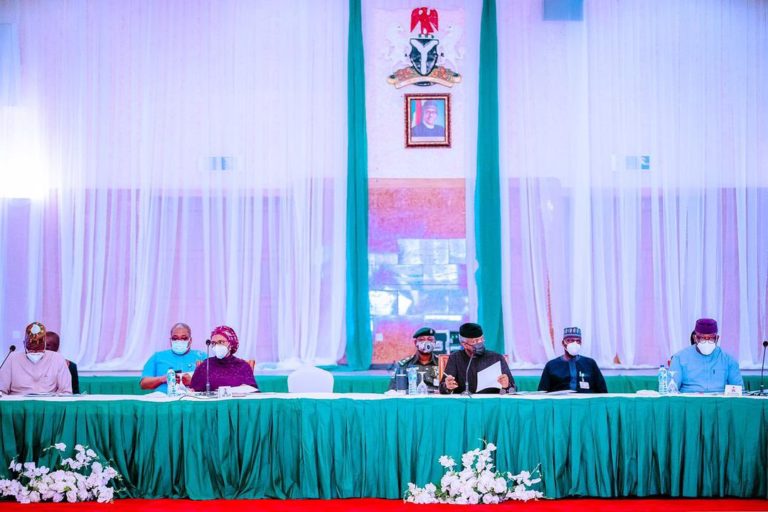
THE federal government of Nigeria and the 36 states have resolved to reconstruct homes and pay compensations for property and livelihoods targeted during the recent spate of violence across the country.

This was part of a 12-point resolution made Thursday during the National Economic Council (NEC) meeting presided by Yemi Osinbajo, vice president of Nigeria.

According to a State House statement released after the NEC meeting, all perpetrators of crime across the country were to be immediately arrested and prosecuted.

Apart from compensating victims of the violence, the NEC said it would also ensure that deceased victims of such violence were duly accorded burial rites.

The council made recommitments to immediately issue public and unequivocal condemnation on all manifestations of hatred, targeted violence, and other hate crimes against ethnic, religious, and minority groups.

On local security initiatives, the council resolved that due consideration be given to  adequate representation of non-indigenous or minority resident communities.


Read also:

Other commitments of the council included ensuring that innocent citizens and entire communities were not slandered, harassed or victimised for the crimes perpetrated by criminal elements within those communities on the basis of ethnic or religious affiliation as well as employing  the National Livestock Transformation Plan to address farmers-herders conflicts across the country.

On the jurisdiction of forest reserves, the NEC resolved that state governments had statutory jurisdiction over them and would seek federal support for efforts to eradicate forest-based crime.

The resolution was a result of the recent spate of violence across the country, from banditry in Zamfara State to kidnapping of schoolboys in Kangara, Niger State and Fulani-herders clashes in Oyo and Ogun states.

While some governors have made controversial statements that received critical responses from Nigerians, some stakeholders, including Abdulsalam Abubakar, a former military head of state, have  warned state governors to guide their ulterances in order to douse the tension in the country.

Cape Verdean opposition faults government over escalation of int’l conflict in Saab’s case

0

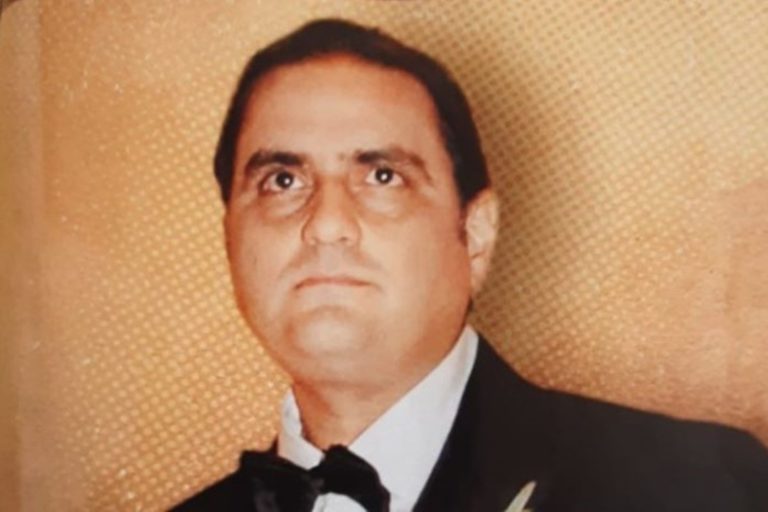
THE Independent and Democratic Cape Verdean Union (UCID), the opposition party in Cape Verde, has blamed the government for dragging the country  into an international conflict with Venezuela over the arrest and detention of Alex Saab.

This was contained in a communique, signed by Júlio de Carvalho, vice president of the party, who described the action of the Cape Verdean government as ‘arrogant and incompetent.’

He said the government led by Jorge Carlos Fonseca was escalating an international conflict due to its reluctance to fully comply with the ruling of an Economic Community of West African States (ECOWAS) court on the case.

UCID accused the government of having ‘obscure’ interest while urging it to allow the institutions of justice to function without internal or external political pressure.

The opposition party also warned the government on the implication of its continued non-adherence to international law, including multilateral and bilateral agreements.

“Cape Verde needs to pay attention to obscure diplomatic maneuvers, pressures of any kind or truculent and unreasonable promises”, the statement read in part.

Carvalho called on the government to apply the laws of the Republic with respect for international law, including multilateral and bilateral agreements of which it was a party to.

He further urged the government to take advantage of the ongoing case to show and affirm the country’s respect for democratic rights.

“In this context of alignments and inconsistencies, certain countries have sought to exploit our weaknesses, using pressure factors and pulling their interests, in particular, political and geostrategic conflicts, with complete disregard for our institutions and national interests,”  Carvalho noted.

The ICIR had reported the issues behind the detention of Saab, a special envoy of the Venezuelan government under detention in Cape Verde, following an order from the United States.

Femi Falana, counsel to Saab, had written to the ECOWAS court over the partial compliance of Cape Verde to the court’s ruling.

According to Falana, the Cape Verdean government had not stopped the process of extradition despite the court ruling that the process be stopped until the determination of the case brought before it.

Unlawful detention: AG orders discontinuation of criminal suit against Ondo CJ’s ‘brother’

0

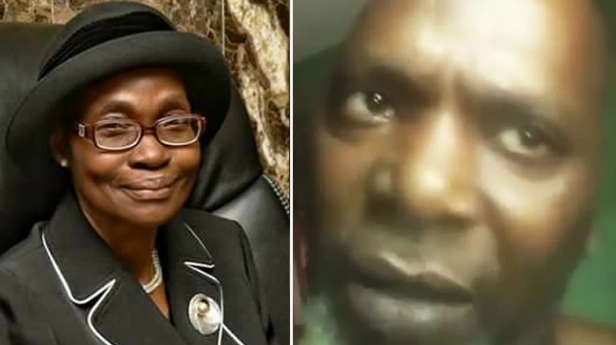
THE Ondo State attorney-general has ordered the discontinuation of the criminal suit against Olupelumi Fagboyegun, alleged brother of Olarewaju Akeredolu, state’s chief judge.

Charles Titiloye, state attorney-general and commissioner of justice, gave the directive in line with the power conferred on him by Section 211 of the Constitution of the Federal Republic of Nigeria 1999.

This was contained in a report of the investigation carried out by the attorney-general to look into the allegation of unlawful detention by Fagboyegun against the state’s chief judge.

He directed contending parties in the case to seek resolution of their dispute in court through civil action or other means of alternative dispute resolution.

Titiloye also invited the state Judicial Service Commission to investigate issues relating to the delay in the hearing of the case before the magistrate court. He also referred the matter to the Ondo State House of Assembly for investigation.

The ICIR had reported how Fagboyegun, who claims to be the chief judge’s half-brother, was seen in a viral video on Monday calling on President Muhammadu Buhari and all well-meaning Nigerians to get justice for him after accusing the judge of using her office and influence to cause his arrest and subsequent detention because he went to their father’s house.

He said he had been arraigned five times while the charges had also been amended five times all in a bid to delay his trial.

While reacting to the allegation, the chief judge told newsmen that the matter had nothing to do with her, lamenting that it was the handiwork of some persons who were using him against her family.

She said that two years after her father died, somebody bearing his name filed a suit against her mum, two of her brothers, and the eldest male of her father’s family, saying he was a son of their father.

The judge said a Writ of Summons demanding that the body of her late father be exhumed for a possible DNA test by Fagboyegun’s lawyer was also served on her mum.

She added that Fagboyegun was only arrested after he invaded one of her father’s premises with thugs wielding cutlasses.

In response, Rotimi Akeredolu, state governor, directed the state’s attorney-general to investigate the allegation with a promise to be thorough and fair to all parties.

Findings

However, in the report, the attorney-general said the case started on the 15th day of March 2018, through the allegation made by one Ibrahim Abdullahi at the area commander’s office of the Nigeria Police Force, Owo, against Fagboyegun.

In his statement before the police, Abdullahi complained that accused locked up JOF Farms, Oke Ogun Owo, that was given to him to use through a license issued by the chief judge of Ondo State. He also stated that on his complaint to Akeredolu of the interference of Fagboyegun who claimed to be the son of Late Jide Fagboyegun (the father of Justice Akeredolu), the chief judge directed him to lodge a complaint of impersonation at the police station against accused while insisting that Fagboyegun was not a son of her father and not a member of Fagboyegun family.

The report stated that the police thereafter arrested Olupelumi Fagboyegun (52 years old as at 2018). In his statement before the police, the accused noted that his mother informed him that his real father was  Jide Fagboyegun, the father of Justice O. O. Akeredolu, and that he lived abroad and only returned to Nigeria after the death of his father. Fagboyegun noted that he went to stay at his father’s house at Owo where he was arrested by the police for forcible entry into his father’s house. He said he had met members of Fagboyegun family and Justice O.O Akeredolu on this issue of his paternity and Justice O.O Akeredolu said he was not a member of their family and had threatened him and his kids.

“The police, after taking statement from the Complainant, the Defendant and some members of Fagboyegun family charged the Defendant to Court in Suit No MOW/102C/2018 for Forcible entry thereby committing the offence of conduct likely to cause the breach of peace.”

Contrary to claims by the accused he had been in detention for the past three years, the report noted that “Olupelumi Fagboyegun was granted bail by the trial Magistrate since he was arraigned on 19th March 2018, and he is still on bail till date. It is untrue that he is under any form of custody.”

“That truly there was a change of Magistrate presiding over this matter on three different occasions. The following Magistrates have presided over the case (1.) S. O. Adedapo, (2) O. Aladeniyi. (3) O. W. Dosunmu and there was once a substitution of charge preferred against the suspect Olupelumi Fagboyegun upon which his plea was taken afresh.”

The report, however, added that criminal charge of conduct likely to breach peace had no link with the determination of the issue of paternity of Olupelumi Fagboyegun which was a civil action that could be resolved through a DNA test, noting that intra-family scrambling for the property of the deceased should not have been criminalised but settled through civil suits and alternative dispute resolution means.

The report also regretted that the trial of a case of conduct likely to breach peace, which was a misdemeanour (a simple offence punishable with 1-year imprisonment), had taken a period of three years in a magistrate court with summary jurisdiction.

Why Nigerians should anticipate increase in petrol’s pump price despite assurances from NNPC

0

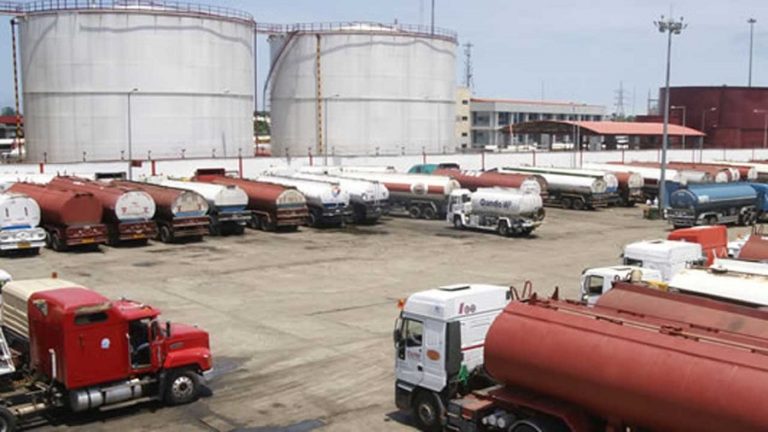
BRENT, Nigeria’s crude oil equivalent, crossed the 60 dollar per barrel mark in February for the first time since the outbreak of the coronavirus last year. This means more revenue for the nation’s economy but also a possible hike in petrol pump price in the country.

Timipre Sylva, minister of state for petroleum resources, at the official inauguration of the Nigerian Upstream Cost Optimisation Programme (NUCOP) in Abuja recently, said Nigerians should prepare for an increase in the pump price of petrol despite the new fortunes of crude oil in the global oil market.

“Since we are optimising everything, the Nigerian National Petroleum Company, NNPC, needs to also think about the optimisation of product cost because as we all know, oil prices are at 60 dollars per barrel.

“As desirable as this is, it has serious consequences as well on product prices. Today the NNPC is taking a big hit from this as we all know that there is no provision in the budget for subsidy payments,” he said.

In March 2020, the Petroleum Products Pricing Regulatory Agency, PPPRA, announced the removal of subsidy on petrol, stating that the prevailing market dynamics would regulate the pump price of petrol.

Data obtained from the Central Bank of Nigeria (CBN) show that the country’s external reserves gained 700 million dollars from the rebound in global oil prices as the reserves increased from 35.37 billion dollars on December 31, 2020, to 36.43 billion dollars in February.

This means that Nigeria could generate more revenue than its intended target of 2 trillion naira, as the current Brent crude price of 63.5 dollars per barrel (as of 10.01 on February 19) has overshot the 40 dollars per barrel benchmark of the 2021 budget.

However, the minister’s comments raised concerns on why Nigerians should bear the pains of an expected hike in the petrol pump price despite the steady recovery of international crude oil prices.

READ ALSONNPC in precarious situation as investments could turn into losses – Report

In a tweet on Thursday morning, NNPC’s group general manager, public affairs division, Kennie Obateru, discounted rumours that an upward review of petrol price would occur in February.

“NNPC has not increased its ex-depot price. I am certain that NNPC is not likely to increase its ex-depot price in February,” Obateru stated.

He added that the NNPC had a stock of petrol that could last over 40 days, and allayed fears of an impending scarcity of the product.

With the petrol pump price currently hovering between 165 to 170 naira per litre across the country, The ICIR examines the circumstances likely to lead to an imminent hike in petrol price in confirmation of the minister’s assertion.

Hidden ‘under-recovery’ charges re-surfaces

Nigeria spent 1.09 trillion naira to import petrol within the first six months of 2020, indicating a 42 percent increase when compared to 766.06 billion naira that was spent on the product in 2019, according to data from the National Bureau of Statistics, NBS.

Subsidy payments were initially made directly to petrol importers until President Muhammadu Buhari, in 2015, directed the NNPC to take charge of petrol imports in a bid to absorb the difference between the landing costs and the price at the pump.

The removal of subsidy payments announced by the federal government in April 2020 showed the subsidy payments that were previously deducted from the remittances of the Federation Account Allocation Committee, FAAC, by National Petroleum Investment Management Services, NAPIMS, a subsidiary of the NNPC.

The PPPRA sets the depot price based on a template, and marketers are allowed to fix prices at the pump to balance the oil market modalities.

Data obtained from the Petroleum Product Marketing Company, PPMC, a subsidiary of the NNPC, show that the current landing cost of the importation of petrol is estimated at 180 naira per litre, which is 15 naira higher than the pump price at 165 naira.

In a bid to maintain the current price at 165 naira per litre, the NNPC pays at least 15 naira per litre to sustain supply. Given that the country consumes 57.2 million litres per day, according to the NBS mid-2020 data, the NNPC pays at least 858 million naira each day on subsidy.

The Nigerian government resorts to subsidy payments since its refineries do not have the capacity to refine crude oil.

On Thursday, the West Texas Intermediate (WTI) for March traded above 60 dollars per barrel while the Brent settled at 63 dollars per barrel as crude benchmarks added over 12 percent since the beginning of February.

Data from NBS reveal that 1.003 trillion naira was spent on petrol imports for the first quarter of 2020, as against 190.78 billion naira which was spent in the corresponding quarter in 2019.

About 87.08 billion naira was spent on petrol imports in the second quarter as against 575.28 billion naira in the same quarter in 2019. However, the total petrol imports account for 2.16 percent of the total import into the country for the second quarter of 2020.

READ ALSONNPC seeks $1 billion to refurbish Port Harcourt Refinery which posted losses 5 years in a row

Nigeria’s expensive crude oil production 

Nigeria is ranked as one of the major oil-producing countries with the highest cost of crude oil production in the world which, according to the group managing director of the NNPC Mele Kyari, was unsustainable. Kyari said to produce a barrel of crude oil costs the country 17 dollars, which was one of the highest rates in the world.

In Saudi Arabia, it costs an average of 8.38 dollars to produce a barrel of crude oil, while Iran spends 9.08 dollars on the production of a barrel of crude. On the other hand, Iraq spends 10.57 dollars to produce the same quanitity.

The World Bank had projected that Brent crude oil would be sold at an average of 41 dollars per barrel during the second half of 2020 and 50 dollars per barrel during 2021, stating that unless the price of crude oil production was reduced it would be difficult to maximise revenue to be generated from its  sale.

At the Central Bank of Nigeria, CBN, Round Table discussion in Abuja in March 2020, Kyari had said that high oil production costs for countries such as Nigeria might put the country out of business if the oil price dropped below 30 dollars per barrel.

“In a production environment like Saudi Arabia, it is about 5 dollars (to produce) a barrel. You cannot do it here. The best of our production system is at about 15 to 17 dollars to a barrel.

“And beyond that also, there is competition because people are producing at a lower cost than you are, which depresses the potential of coming out of the impact of coronavirus for a long while,” he said.

Nigeria’s break-even crude oil price is 133 dollars, ranked as the highest in the world, based on its high refining costs, according to Fitch Ratings. The implication is that when the global price of crude oil drops below Nigeria’s projected benchmark, the country would generate losses for barrels of crude oil it produces.

An oil-exporting country’s fiscal break-even oil price is the minimum price per barrel for a country to meet its expected spending needs while balancing its budget.

Broken Refineries, Expanded Bills

Between 1976 and 1989, the federal government, through the NNPC, built three refineries in Port Harcourt, Warri and Kaduna. The Port Harcourt refinery was built by Shell and BP in 1965 before it was bought over by the NNPC.

The nation’s major refineries, which are subsidiaries of the NNPC, include Kaduna Refining and Petrochemicals, KRPC; Warri Refining & Petrochemicals Company, WRPC; and Port Harcourt Refining Company, PHRC, Limited.

According to a 2020 report published by the Nigeria Natural Resource Charter,(NNRC), the NNPC spent 396.33 million dollars between 2013 and 2017 to carry out repair works under the Turn Around Maintenance, TAM, scheme on the three refineries which contribute little to the nation’s economy.

Within the same period, the sum of 36 billion dollars was spent on importation of petroleum products, which is sufficient to build four brand new refineries of similar capacity with the 650,000 barrels per day.

The records show that the three refineries reported a combined loss of 154.4 billion naira, with Kaduna refinery posting zero revenue for the 2018 financial year. This was despite the huge investments by the NNPC to renovate the refineries.

In April 2020, the refineries were shut down pending rehabilitation as the NNPC awarded the contracts for repairs and upgrades at the various refineries.

In 2019, the refineries lost some 167 billion naira and only Warri refinery processed crude oil. In April 2020, they were all shut pending rehabilitation.

Nigeria’s four refineries have a combined capacity of 445,000 barrels per day.

OPEC and a Russia led oil-producing nations formed an alliance tagged as OPEC+ which had agreed to cut down inventories and remove 1.2 million barrels per day of crude oil from global markets in a bid to raise oil prices.

With Nigeria’s pressured revenue, petrol subsidy is not sustainable. This is also largely because Africa’s biggest economy cannot refine its crude, which analysts say is unfortunate.

Buhari appoints Audi, Nababa as heads of Civil Defence, Correctional Service

0

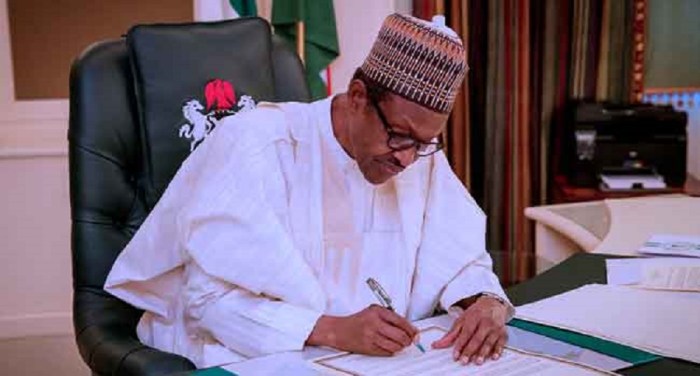
PRESIDENT Muhammadu Buhari has appointed Abubakar Audi and Haliru Nababa as new heads of the Nigeria Security and Civil Defence Corps (NSCDC) and the Nigeria Correctional Service (NCS) respectively.

This was disclosed in a statement signed by Mohammed Manga, director of press & public relations, Ministry of Interior, on Thursday.

According to Manga, the appointment of Audi followed the retirement of Abdullahi Gana Muhammadu, outgoing NSCDC commandant.

“Audi emerged the top best candidate out of those that went through the transparent selection process initiated by the Ministry of Interior through the board to ensure that the most suitable among the top-ranking officers in the service was appointed to replace the out-going commandant,” the statement read.

Read also: Buhari appoints new chief of Army staff

Manga added that Buhari also nominated Nababa as the new comptroller-general of NCS, subject to the confirmation of the Senate, in line with the provision of the new Act establishing the Nigerian Correctional Service 2019.

Manga wrote that Rauf Aregbesola, minister of interior, who is also the chairman of the Civil Defence, Correctional, Fire and Immigration Board (CDCFIB), had sent his congratulatory messages to the newly appointed heads.

He noted that Aregbesola had called on the appointed heads to ensure full implementation of the mandate of their services and work towards achieving synergy with other security agencies in the country.

He said the minister asked them to ensure synergy with a view to providing efficient internal security services and citizenship integrity for Nigerians and foreigners alike in line with the policy thrust of the Buhari-led administration.

Falana to sue police over arrest of #ENDSARS protesters at Lekki Toll Gate

0

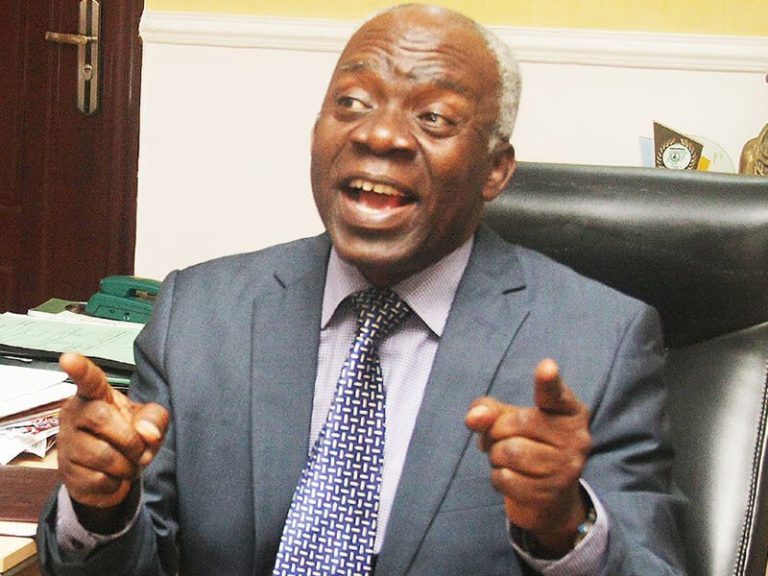
FEMI Falana, a human rights lawyer and Senior Advocate of Nigeria (SAN), says he has received instructions to charge the Nigeria Police Force to court over the arrest of some #ENDSARS protesters at Lekki Toll Gate last Saturday.

Falana said this during a virtual roundtable discussion organised by the International Centre for Investigative Centre (The ICIR) to discuss issues surrounding the #ENDSARS protests which occurred at Lekki Toll Gate in Lagos on February 13.

“I already have instructions, at least from a couple of #ENDSARS protesters, to approach the court for legal redress and we are going to do that next week,” said Falana.

He noted that another suit would also be filed with respect to #ENDSARS protesters whose bank accounts were frozen by the Central Bank of Nigeria (CBN).

“These cases are meant to ask for reparation for the victims of injustice and human rights infringement in Nigeria so that those cases would serve as a deterrent and to help expand the democratic space– until we are able to win our rights, until we are able to get the government of Lagos State to compel and the police as well as others to appreciate the need for us to sit down and work out the mechanism for allowing people to enjoy their right to protest. That is the essence of the cases that we are going to file,” Falana stated.

Responding to questions over the arrest of ENDSARS protesters last Saturday, Falana maintained that it was against the provision of the Nigerian law, stressing that there was no need to obtain a police permit before holding a protest in the country.

Falana noted that the tradition of police permit before protests was merely a relic of colonialism, stressing that rather than stop protesters, the duty of the police was to protect them.

“Police permit was a relic of colonialism. In 2015, the National Assembly said we needed a law to compel the police to protect the protesters. Based on that, the Police Act of 2020, Section  83, Subsection 4 provides that during protests the police shall provide security for the protesters,” said Falana.

READ ALSOWhy we can’t punish police officers who arrested Lekki Toll Gate protesters – PSC

He noted that his son, Folarin Falana, who is a lawyer, told him that truly, COVID-19 regulations were violated, but it was violated by the police.

According to Falana, the Lagos State law on COVID-19 allowed the gathering of 50 persons once they maintained social distancing and wore facemasks, but all that was violated when they were arrested and kept in a Black Maria.

Speaking on the events that occurred during the second #ENDSARS protests on Saturday, Rinu Oduola, an ENDSARS campaigner, also faulted the arrest of her fellow protesters at the Lekki Toll Gate.

She said most of the protesters were arrested even before starting the protest either by the police or workers of the Lekki Concession Company (LCC).

She added that the action of the police was ‘shocking’ because it was against the provision of the Constitution of the Federal Republic of Nigeria.

“Are people not allowed to protests again? They were thrown into the Black Maria and transported to three police stations.

“They were beaten, brutalised and harassed. They were not even allowed to see their lawyers until the evening,” Rinu lamented.

She stated that the protesters were arraigned in a mobile court on bogus charges bordering on contravening COVID-19 rules and breach of public peace.

On whether the protest was necessary, she added that no one would dictate the necessity of a protest, whether necessary or not, because it was permitted according to the nation’s constitution.

Insecurity: IGP deploys 275 special police officers to Zamfara

0

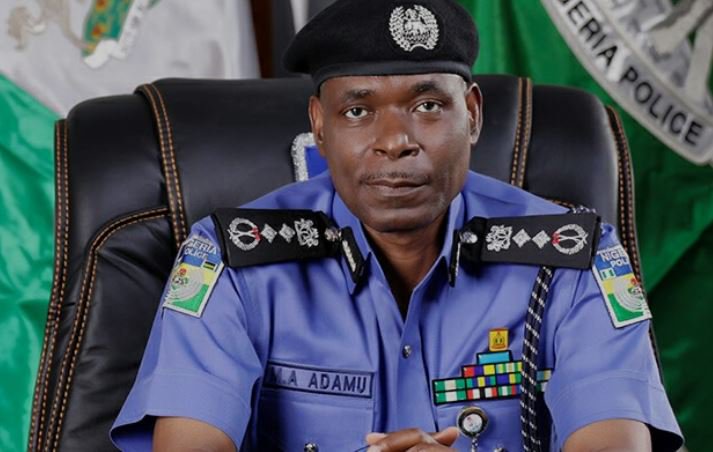
MOHAMMED  Adamu, inspector-general of police, has deployed 275 special police officers to Zamfara to tackle security crisis that has engulfed the state.

Adamu had Monday flagged-off  Operation Puff Adder 2 at the Nigeria Police Force headquarters in Abuja.

According to Adamu, the special security forces were aimed at reinforcing the fight against banditry, kidnapping, armed robbery, and other violent crimes being perpetrated across the country.

Adamu stated that the new unit would be intelligence-driven and executed in sustained collaboration with the armed forces, intelligence community, and other sister security agencies.

Read also: Nigerian dailies share false claim on rescue of Zamfara schoolgirls

He explained that the troops under Operation Puff Adder 2 were drawn from the Counter-Terrorism Unit, Mobile Force, and Special Forces of the Nigerian police.

While addressing the troops deployed to Zamfara, Abutu Yaro, state commissioner of police, urged the officers to discharge their duties in line with rules of engagement and operation.

Yaro said the state government was worried over the incessant terror attacks and banditry in the state.

He added that the troops would be deployed to all ‘red flag’ areas across different parts of the state.

“We will deploy them to all the areas, to all the red flag points. We had problems with inadequate personnel in the past but that is no longer a problem with the coming of these troops. They will be deployed to Munya, Shiroro, Mariga and the Lapai-Agaie axis,” Yaro said.

Zamfara is among states in the northern part of the country besieged with lots of violence, including kidnapping, banditry and terrorism.

Apart from Zamfara, Borno, Niger and Yobe states have also witnessed several violent attacks on civilian residents.

Bill to eliminate casual work undergoes second reading in Senate

0

For the second time, Nigerian senators read a bill to abolish casualisation of workers in private and public sectors in Nigeria.

The senators voted Thursday in support of the bill which went through its second reading.

The bill entitled ‘Prohibition of Casualisation in all forms of Employment in the Private and Public Sector in Nigeria and for Related Matters, 2021 (SB. 329)’ had earlier passed the first reading in the red chamber.

Voting on the bill, Biodun Olujimi, senator representing Ekiti South constituency, lamented that the tradition was prevalent in the banking industry and there was an urgent need to have a legal framework that would ensure the practice was eradicated in Nigeria.

Olujimi noted that casualisation of workers emanated from the inability of the government to functionally perform its duties.

Read also: Senate confirms Olukoyede, Hammajoda as EFCC chairman, secretary

“All this boils down to one thing – the government has not done its part well. Creation of jobs is most essential. If we have jobs, nobody will be doing this to our children. And the best way to go is to pass this Bill and let it go for a public hearing,” Olujimi said.

Barau Jibrin, senator representing Kano North, said the bill was necessary to protect Nigerian workers from being poorly treated by businesses seeking to cut costs.

“I stand to support this bill in its entirety. We need to protect our citizens and our youths. Every business wants to cut cost. Those areas that we are talking about, like in developed countries, have strong laws that are used to protect the workers.

“There is a need to look at our laws and review our laws to make sure that we protect our youths. Sometimes this issue of casualisation is not due to necessity but to cut cost,” said Jibrin.

“I am in support that the bill passes for second reading. Some of the issues raised here are already being addressed in the labour laws, but we have to be able to reach a melting point.” Senator Opeyemi Bamidele said.

Ovie Omo-Agege, deputy Senate president, stated that his major concern was how the bill related to the public sector. He urged that the bill be read for the second time so as to enable other senators to make contributions.

Sani Musa, senator representing the Niger East Senatorial District, urged the Senate to be ‘careful’ with the bill because there were some Nigerian sectors that could not operate without casualisation.

“I think we need to be careful with this bill. There is no way you can operate in the aviation industry without casualisation. So, I think we should seriously look into this bill before we go ahead,” Musa said.

After comments and votes from the Senators, the bill was read the second time and referred to the Committee on Employment, Labour and Productivity to report back within four weeks.

The ICIR investigation had revealed how workers were treated in foreign-owned industries in Lagos and Ogun states.

Apart from poor payment, in cases of injuries, the workers were either neglected or poorly treated.

Nigeria exits recession, records 0.11% growth on ease of lockdown

FIGURES from the National Bureau of Statistics (NBS) show that Nigeria’s gross domestic product (GDP) for the fourth quarter of 2020 grew by 0.11 percent, indicating an exit from recession.

The Nigerian economy plunged into its second recession under the present administration of President Muhammadu Buhari in the third quarter of 2020.  Recession occurs when there are two consecutive quarters of negative growth. However, recovery happens when economic or GDP growth occurs after recession.

The GDP growth rate measures the economic output or activities of a nation by comparing growth in one-quarter to the previous one.

“Nigeria’s gross domestic product (GDP) grew by 0.11 percent (year-on-year) in real terms in the fourth quarter of 2020, representing the first positive quarterly growth in the last three quarters,” the report read.

The NBS noted that while the growth was weak, the gradual return of economic activities following the ease of restricted movements and limited local and international commercial activities in the preceding quarters was responsible for the positive growth.

READ ALSOGanduje stops payment of N30,000 minimum wage, cites recession

On a quarter on quarter basis, real GDP growth was 9.68 percent, indicating a second positive consecutive quarter-on-quarter real growth rate in 2020 after two negative quarters.

“Overall, in 2020, the annual growth of real GDP was estimated at –1.92 percent, a decline of –4.20 percentage points when compared to the 2.27 percent recorded in 2019.” 

The report also revealed that an average daily oil production of 1.56 million barrels per day (mbpd) was recorded in the fourth quarter of 2020- 0.11mbpd lower than the production recorded in the third quarter.