Home Blog Page 192

Outrage trails mob killing of woman in Niger State

0

NIGERIAS have strongly condemned the mob killing of a young woman in Niger State over alleged blasphemy against the Islamic faith.

Recall that the Niger State Police Command spokesperson, Wasiu Abiodun, confirmed the incident in a statement, stating that the victim, identified only as Ammaye, was set ablaze by the mob before security reinforcements could intervene.

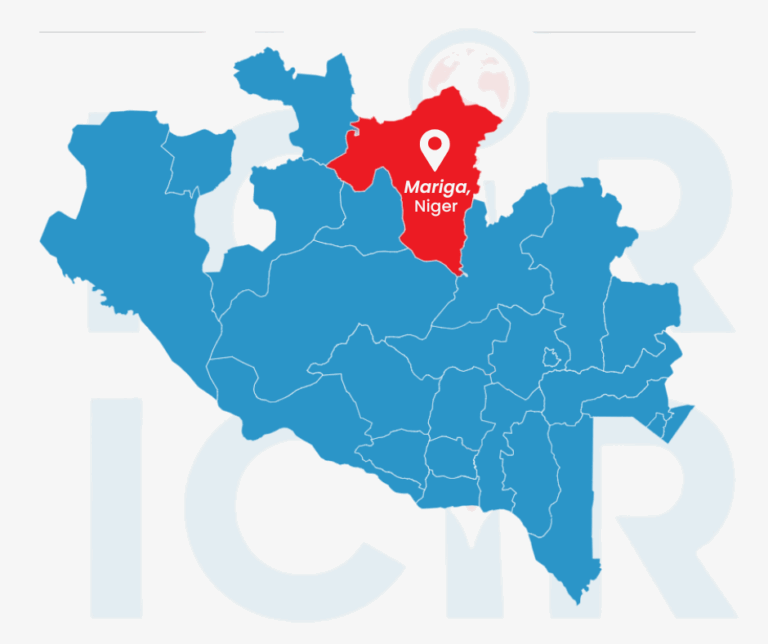
Abiodun explained that the incident occurred on August 30 at about 2:00 p.m. in Kasuwan Garba, Mariga Local Government Area, where Ammaye, a devoted Muslim and popular food vendor, reportedly had a heated exchange with a young man identified as her nephew.

Reports indicate that the young man jokingly told Ammaye he wished to marry her to “fulfil the Sunnah,” meaning the teachings of the Prophet Muhammad after which she allegedly made remarks that were deemed blasphemous.

The remarks reportedly angered youths in the neighborhood, prompting them to take the matter to the palace of the District Head of Kasuwan Garba. There, Ammaye was interrogated and allegedly repeated what she said earlier.

The District Head reportedly handed Ammaye over to security operatives for further investigation, but a mob of irate youths overpowered them, demanding her immediate execution.

Abiodun stated that before reinforcements could arrive, the mob, consisting of young men, had stoned Ammaye to death.

The spokesman added that while normalcy had since been restored to the area, the Police Command strongly condemned the act of jungle justice and assured that efforts were underway to identify, arrest, and prosecute all those involved in the crime.

However, Nigerians have taken to social media to express outrage over the incident. They are also demanding justice for the deceased.

An X user, official Big Milly, called for the perpetrators’ arrest. 

Another user, GB Master, queried, “Why should someone go to this length to protect their God?”.

ILearntthat wrote “This is painful. Even where ‘blasphemy’ is alleged, no Nigerian has the right to take another’s life. Section 33 of the Constitution is clear: right to life is non-negotiable. Once we accept mob rule, we all lose.”

IB Bright opined that “Jungle justice kills many innocent people but injustice in Nigeria kills many innocent people too. May her gentle soul rest in peace if she’s truly innocent.”

Jasper Aniet Louis penned his thoughts this way, “According to the religion of peace, how is killing in a man’s name related to the word peace?” 

Kelvin Eze wrote, “Only God can judge souls, not man with wicked hearts.”

Izuhuwu expressed shock with the killing. “Yet again! In a supposedly democratic nation,” he reasoned.

Recall that a similar case was reported in Sokoto State involving Deborah Samuel, a 200-level Home Economics student of Sokoto State College of Education, who was lynched and burnt by a mob of Muslim youths in May 2022.

She was accused of blasphemy against the Prophet Muhammed on a student’s WhatsApp group.

Despite the global outrage that followed her killing, with the United States Government describing her death as one driven by hatred, the Nigeria Police Force failed to arrest the key suspects one year later.

Meanwhile, the Sokoto State Government and Police Command in the state kept mute over the prosecution of some of the arrested suspects.

One billion people with mental disorders at risk over underfunding – WHO

0

THE World Health Organization (WHO) has warned that global progress on mental health is faltering, with most countries allocating only two per cent of their health budgets to the issue.

The global health body noted that the percentage had not changed since 2017. 

The agency, in a statement on Tuesday, September 2, said this “chronic underfunding” had left more than one billion people worldwide living with mental health disorders without adequate care.

It warned that conditions such as anxiety and depression were placing immense human and economic burdens, with insufficient global investment threatening progress in care delivery.

The findings, captured in two reports, World Mental Health Today and the Mental Health Atlas 2024, showed that while many countries have strengthened mental health policies since 2020, glaring gaps remain in financing, service delivery, and legal protections. 

According to the WHO Director-General, Tedros Adhanom Ghebreyesus, a doctor, Transforming mental health services is one of the most pressing public health challenges.”

He added that “Investing in mental health means investing in people, communities, and economies – an investment no country can afford to neglect. Every government and every leader has a responsibility to act with urgency and to ensure that mental health care is treated not as a privilege, but as a basic right for all.”

WHO estimated that depression and anxiety alone cost the global economy about US$ 1 trillion yearly, mainly through lost productivity. 

Suicide, described by the agency as a devastating outcome of mental health neglect, was said to have claimed an estimated 727,000 lives in 2021. It is also one of the leading causes of death among young people worldwide.

“Despite global efforts, progress in reducing suicide mortality is too low to meet the United Nations Sustainable Development Goal (SDG) of a one-third reduction in suicide rates by 2030. On the current trajectory, only a 12 per cent reduction will be achieved by that deadline.

“The economic impact of mental health disorders is staggering. While health-care costs are substantial, the indirect costs – particularly in lost productivity – are far greater. Depression and anxiety alone cost the global economy an estimated US$ 1 trillion each year,” the statement added.

Also, according to WHO’s 2024 mental health atlas report,  while high-income nations spend as much as US$ 65 per person on mental health, low-income countries spend as little as US$ 0.04. 

It also noted that the global median number of mental health workers remained at just 13 per 100,000 people, with severe shortages in poorer nations.

Median government spending on mental health remains at just two per cent of total health budgets – unchanged since 2017. Disparities between countries are stark; while high-income countries spend up to US$ 65 per person on mental health, low-income countries spend as little as US$ 0.04. The global median number of mental health workers stands at 13 per 100 000 people, with extreme shortages in low and middle-income countries,” WHO added. 

Eid-ul-Mawlid: FG declares Friday, September 5, public holiday

0

THE Federal Government has declared Friday, September 5, as a public holiday to commemorate Eid al-Mawlid, the birthday of Prophet Muhammad.

This was announced in a statement on Tuesday by the Permanent Secretary of the Ministry of Interior, Magdalene Ajani, on behalf of the Minister, Olubunmi Tunji-Ojo.

Tunji-Ojo congratulated Muslims in Nigeria and beyond on the occasion and urged them to uphold the Prophet’s virtues of peace, love, humility, tolerance, and compassion, noting that these values were essential for building a united and progressive nation.

He also appealed to Nigerians of all faiths to use the celebration as a moment of reflection and prayer for peace, security, and stability in the country. He said such collective efforts would strengthen national harmony and drive sustainable development.

“The celebration of Eid-ul-Mawlid offers us yet another opportunity to strengthen the bonds of brotherhood, promote peaceful coexistence, and imbibe the Prophet’s teachings of mutual respect and selfless service to humanity,” the statement quoted him as saying.

The minister further encouraged citizens to remain law-abiding, vigilant, and supportive of government programmes aimed at improving the lives of Nigerians.

He wished Muslim faithful a joyous and peaceful Eid ul-Mawlid celebration.

BPE to list 2 Discos, GenCo in NGX, privatise 91 FG assets

0

THE Bureau of Public Enterprise (BPE) has announced plans to list two electricity distribution companies (DisCos) and one generation company (GenCo) on Nigerian Exchange Limited.

The BPE also informed of an ongoing arrangement to privatise 91 government enterprises.

The ICIR reports that listing a company in the Nigerian Exchange Limited offers numerous benefits which include access to capital, increased visibility, diversified shareholder base, improved corporate governance, and enhanced credibility.

The Director General of BPE, Ayodeji Gbeleyi, made these remarks during a press briefing in Abuja on Tuesday, September 2.

According to him, the move became necessary to attract investment into the sector.

He, however, did not mention the names of the agencies to be listed on NGX and privatised.

Of the enterprises earmarked for privatisation or commercialisation, 16 are in the oil and gas sector, including refineries; 12 operate in agriculture; 20 in aviation; and 28 are in other public enterprises.

“There are 91 public enterprises that are still outstanding within the purview of the Public Enterprises Act. You may want to know the estimated values and why we want to sell,” Gbeleyi said.

Nigeria’s power sector has been unable to manage its liquidity crisis despite numerous supports from global lending institutions comprising mainly of the World Bank and the African Development Bank (AfDB).

Despite privatisation in 2013, the Nigerian government did not stop intervening financially in the power sector, with recent pledge to settle N4 trillion owed generation and distribution companies a case in point.

The ICIR reported that the World Bank has been supporting Nigeria’s power sector through the Power Sector Recovery Programme (PSRP), which has seen about $500 million lent to support the ailing sector.

Besides, a discussion on $1.5 billion loan is ongoing between the global bank and the Nigerian government for the sector to address metering access and improving power infrastructure.

NNPCL appoints Odeh, Adewunmi to head Communications, Relations offices

0

THE Nigerian National Petroleum Company Limited (NNPCL) has announced the appointment of two  executives, Andy Odeh and Morenike Adewunmi, to key  communications positions.

Odeh assumes the role of Chief Corporate Communications Officer, while Adewunmi has been appointed Chief Relations Officer.

According to a statement obtained by The ICIR on Tuesday, September 2, Odeh brings over three decades of extensive experience in communications and business administration across the oil and gas, advertising, and broadcasting sectors.

Prior to joining the NNPCL, he had a distinguished 26-year career at the Nigeria LNG (NLNG), where he held various leadership roles in Community Relations and Development; Business Logistics and Services; Information Management and Technology; Corporate Communications and Public Affairs; Government Relations and Regulatory Compliance, and most recently, General Manager of External Relations and Sustainable Development.

He is recognised for his work on major public relations and advertising campaigns for top brands.

At NLNG, he successfully managed the company’s rebranding and implemented one of Nigeria’s best-run micro-credit schemes for host communities. Odeh was also instrumental in instituting the NLNG Prize for Energy Reporting.

He is an alumnus of the University of Jos, the University of Lagos, INSEAD Business School, and the Nigeria Institute for Policy and Strategic Studies (NIPSS), among others.

In the same vein,Adewunmi is a legal professional with over 25 years of experience in the oil and gas industry. Her expertise is in stakeholder management and advocacy, particularly from her extensive tenure at the Shell Companies in Nigeria (SCIN).

She is highly regarded for her ability to navigate complex external landscapes, ensuring regulatory compliance and protecting the company’s “licence to operate”.

At Shell, she held key roles, including Regulatory Affairs Manager, where she managed all mandatory regulatory engagements and permits.

As the Government Relations Manager, she built and maintained constructive relationships with the Presidency, ministries, departments, and agencies.

Adewunmi is known for her strong leadership skills, emotional intelligence, and ability to build robust stakeholder networks.

She is a subject matter expert on non-technical risks and has a background in law from the Nigerian Law School and Olabisi Onabanjo University.

The appointment of Odeh and Adewunmi reflects NNPC Limited’s commitment to enhancing communication and engagement with stakeholders, the statement said.

The ICIR reported that the former  Chief Corporate Communications Officer of the NNPCL, Olufemi Soneye, resigned in June.

Soneye confirmed the resignation  in a statement he shared on his Facebook handle on Saturday, June 21.

The NNPCL has been in the eye of the storm for alleged financial misappropriation.

The ICIR reported on Thursday, June 19, that the Senate Committee on Public Accounts, during an investigative session with a team from NNPCL, raised concern over the N200 trillion unaccounted funds in the audited financial statements between 2017 and 2023.

The committee had flagged the discrepancies, questioning the NNPCL over the absence of detailed records to justify massive legal and auditing fees, as well as contradictions in receivables said to be worth approximately N210 trillion.


ChatGPT to introduce parental control features after teenager’s death

0

OPENAI, the maker of ChatGPT, has announced it would introduce new parental control features on its artificial intelligence chatbot after facing a lawsuit from a United States (US) couple who alleged the system encouraged their 16-year-old son to take his own life.

The teenager, Adam Raine, reportedly killed himself after months of conversations with the chatbot.

According to the BBC, the parents of the teenager, Matthew and Maria Raine, filed the case in California last week, claiming that ChatGPT validated their son Adam’s suicidal thoughts and provided him with instructions that ultimately led to his death in April.

In response, OpenAI said it was strengthening protections for teenagers and would roll out parental control features within the next month.

Under the new system, parents will be able to link their accounts with their children’s accounts, manage features such as chat history and memory, and receive notifications if the chatbot detects their child is in “acute distress.”

The company stated that experts in youth development, mental health, and human-computer interaction were helping design the safeguards.

According to OpenAI, the feature will be guided by professional input to support trust between parents and teens.

OpenAI acknowledged that its system had not always behaved as intended in sensitive situations but stressed that it continued to improve how its models recognise and respond to signs of emotional or mental distress.

The company also revealed plans to redirect some sensitive conversations to more advanced “reasoning models,” which it said applied safety guidelines more consistently.

The lawsuit has placed a spotlight on the safety of young users of AI platforms. ChatGPT requires users to be at least 13 years old, with parental consent needed for those under 18.

The case comes amid growing global pressure on technology companies to improve online safety.

OpenAI said it remained committed to building “an evidence-based vision for how AI can support people’s well-being and help them thrive.”

The ICIR reports that ChatGPT, released in November last year, is capable of writing logical essays and solving mathematical puzzles, as well as producing computer code.

But this new artificial intelligence tool has been opposed by many academic institutions around the world for ethical reasons, like plagiarism and misinformation.

For instance, the Sciences Po school in Paris, one of the most prestigious universities in France, has banned the use of ChatGPT for oral or written assignments.

It said anyone found to have used the chatbot for an assignment would face “sanctions which can go as far as expulsion from the establishment, or even from higher learning.”

Officials in New York and other jurisdictions have also forbidden its use in schools, according to several reports.

Why PoS merchants support geo-tagging but fear disruption from CBN’s 60-day deadline

PONIT-OF-SALE (PoS) merchants are currently kicking against the 60-day geo-tagging directive from the Central Bank of Nigeria, noting that it’s going to disrupt business operations for over 4.2 million agency banking operators across the country.

The apex bank has officially introduced the PoS system also known as agency banking in 2013, to achieve financial inclusion and develop a cashless economy.

However, having observed recurrent incidences of fraudulent businesses transactions in PoS operations, the CBN, on August 25, issued a directive for all PoS terminals to be geo-tagged within 60 days, effective August 26, 2025, with a deadline of October 20, 2025.

Geo-tagging is the process of adding geographic identification metadata, such as latitude and longitude, to digital content like photos, videos, websites, and SMS messages. This embedded location data allows content to be displayed on a map and correlated with other location-based information, enabling users to find items by location, track assets, or simply share their whereabouts.

The apex bank directive in geo-tagging states that all existing and new PoS devices must have native geolocation features and double-frequency GPS receivers.

According to CBN, devices must be registered with payment terminal service aggregators (PTSAs) and linked to their exact physical locations.

The policy stated that location data must be captured and included in the message payload for each transactions.

But the Acting Chairman of the Association of Mobile Money Bankers Association of Nigeria (AMMBAN), Obioha Oti, told The ICIR that the 60-days ultimatum for such policy directive has negative consequences on PoS merchants who serves as the last hope in areas not covered by commercial banking services.

The Acting President of Association of Mobile Money Bank Agents of Nigeria,AMMBAN,Obioha Oti

“PoS merchants supports CBN’s geo-tagging to monitor fraudulent financial transactions, however, a matching order of a 60 day implementation is a problem.

“The geo-tagging is something that cannot just happen in a twinkle of an eye. We suggest to the CBN to embrace phase implementation of the policy to avoid disruption of over 4.2 million agency bankers,” he further said.

Oti expressed worry  that the 60-day ultimatum could disrupt businesses for majority of operators many of whom are still finding their feet in the business, with low market share.

Citing an example with the harrowing experiences of small scale businesses in the recent naira redesign policy, he noted that PoS operation serves the remotest part of the country where commercial banks are non-existent.

“Even if the CBN decides to load more cash on various ATM points, it would not be able to cover the most rural areas, as ATMs are mostly located within urban and developed cities.

He also stressed the importance of stakeholders engagement for a successful implementation of the policy which he said, would facilitate broader financial inclusion and fraud tracking.

He further citied instances where over 40 per cent of PoS operators are not using Android, and will need to update their devices with necessary software instalments to meet the geo-tagging targets.

He noted that the government may need to thinker with the policy to accommodate businesses in transport value chain whose operations require movement from one location to the others beyond required 10 metres radius.

“Transport company use PoS as a means of reviewing payments from one location to the other in most intra-states businesses. Enforcement could be difficult in this case. We also have roaming PoS agents who work on specific markers days in in rural communities who might be affected. Such persons need to be given special concessions to avoid business disruption,” Otti added.

Incidences abound where PoS operators are used for fraudulent purposes.

The ICIR spoke with Maryann Ayoola, a POS operator in Abuja, who confirmed that occasional encounters with fraudulent customers seemed to outweigh the benefits of the agency banking business.

“Some of them will come and make transfers and most times they are in a haste. They usually download an app that will show you the transfer is successful on their phones. When you tell them to wait so you can get an alert, they start pleading with you to trust them.

“Believing that the transaction was successful from their phone, we end up giving them the money,” she said.

She told The ICIR that she had experienced this repeatedly, and expressed belief that the the geo-tagging could help in tracking fraudulent transactions in the agency banking business.

10,000 Nigerians killed in North within 2 years under Tinubu – Atiku

FORMER Vice President Atiku Abubakar has accused President Bola Tinubu of neglecting the North-Central region, following persistent attacks and killings in parts of Kwara, Niger, Plateau, and Benue States.

In a statement released on his official Facebook page on Tuesday, September 2, Abubakar said the resurgence of violence in the region was evidence that the Federal Government had “abandoned the North-Central to bloodshed.”

He said the North, with 19 of Nigeria’s 36 states and the Federal Capital Territory (FCT), Abuja, had lost 10,000 citizens under Tinubu’s watch in two years that he assumed office.

Abubakar argued that Benue State, battling perennial croppers-herders conflict, recorded more than a half of the deaths.

According to him, Kwara, once considered relatively safe, has become a hotspot for banditry and kidnappings, while Niger State has recorded cases of militants attacking military bases, killing soldiers, and massacring worshippers in mosques.

He added that Plateau and Benue States continued to witness frequent mass burials as a result of recurring violence.

“At the end of May this year, just two years into Tinubu’s rule, over 10,000 lives had been lost in Northern states, with Benue accounting for more than half,” he alleged.

He added, “Since then, mass killings continue weekly, while the government pretends nothing is wrong. This is a monumental failure in the basic duty of securing lives and property.”

While The ICIR has yet to verify Abubakar’s claim, this organisation reported on June 20, this year, that over 18,000 people died from insecurity-related causes in Nigeria under the Tinubu’s watch.

Within the period, the Defence Headquarters (DHQ) said Nigerian armed forces eliminated 6,260 terrorists and arrested 14,138 terrorists across the country.

Speaking further, Abubakar accused the ruling All Progressives Congress (APC) of focusing on political intimidation rather than addressing insecurity.

The presidential candidate of the People’s Democratic Party (PDP) in the 2023 election that brought Tinubu into power, also alleged that meetings of opposition political groups in Kaduna, Kebbi, and Ogun States had been disrupted by “thugs, infiltrators, and hired hooligans,” with security agencies failing to intervene.

“The silence of the APC leadership is proof of complicity,” he stated, stressing that “Violence is a vicious circle that will eventually consume those who use it. Any politician who needs violence to win is desperate, unpopular, and dangerous to democracy.”

Abubakar urged the Nigeria Police to remain neutral. He said their loyalty should be to the public and the Constitution, not to any political party.

“You are funded by taxpayers, not by the APC. Your duty is to remain neutral, fair, and constitutional. Anything less is betrayal of public trust,” he said.

The ICIR reports that there have been deep-rooted and complex drivers of violence in the North-Central region over the years.

The ICIR reported that cropper-herder clashes remained a dominant factor, often triggered by disputes over land use. The report highlighted how environmental pressures and forced migration by herders have worsened these conflicts, with weak justice systems and political manipulation fueling cycles of reprisal attacks.

Beyond these structural issues, the human toll of insecurity has been staggering. The ICIR reported that in just the first quarter of 2024, more than 2,300 people were killed nationwide, averaging 26 deaths daily. Of these, 515 deaths occurred in the six North-Central states alone.

The crisis predated the Tinubu’s government. Earlier in 2022, within just seven months, the North-Central region recorded 494 violent incidents, leaving 1,748 people dead and nearly 1,000 kidnapped. Benue, in particular, has borne a disproportionate share of these casualties.

Obasanjo, Abdulsalami, Jonathan, push for accessible, affordable healthcare through innovation

0

FORMER Presidents Olusegun Obasanjo and Goodluck Jonathan, including former Head of State Abdulsalami Abubakar, on Tuesday, September 2, urged the Nigerian government to back a health initiative – Care365 Health Hub product.

Care365 Health Hub product is a new digital product aimed at providing accessible and affordable healthcare solutions for Nigerians.

The launch, held in Abuja under the theme “Enhancing Universal Health Coverage in Nigeria through Innovation and Technology”, brought together policymakers, regulators, and private sector actors to deliberate on fresh approaches to Nigeria’s troubled health sector.

Delivering his address as chairman of the occasion, Obasanjo described the Care365 Health Hub as “a social justice tool, a game changer, and health security,” insisting that healthcare must no longer be a privilege for the few.

“Millions of Nigerians still walk miles to reach a health facility. Many die from preventable conditions,” he said, adding, “This product is not just a technological tool, it is a social justice, a game changer, a health security and moral declaration that no matter who you are, where you live, or how much you earn, you deserve care.

Obasanjo further commended the simplicity and practicality of the innovation, which he said encapsulated a smart kiosk designed as a miniature hospital, equipped with artificial intelligence, telemedicine connectivity, and trained community health workers. 

According to him, the system will enable patients in remote and rural areas to access professional advice, diagnosis, and affordable treatment from trained community health workers.

He urged the federal and state governments to integrate the platform into the country’s primary healthcare system.

The Coordinating Minister of Health and Social Welfare, Muhammad Ali Pate, who commissioned the product, noted that the hub represented a practical solution to the country’s persistent challenges.

He described the initiative as timely, and much-needed, stressing that it aligned with the President Bola Tinubu administration’s four-pillar health reform agenda.

He listed the four pillars as stronger governance, improved health outcomes, unlocking the healthcare value chain, and ensuring health security.

“This hub represents a very practical solution to one of our most persistent challenges, ensuring that quality health services are available and affordable to all Nigerians, especially those in underserved and poor communities,” Pate said. 

“It is an opportunity for our healthcare system to improve, and it fits squarely within the context of what this administration is trying to do. The transformation of our healthcare system is underway,” he added.

Pate stressed the importance of digital technology in driving reform.

“The cross-cutting enabler of all of these pillars is digital transformation, allowing us to organise, use technology to reform.”

Similarly, Jonathan linked the initiative to the global digital revolution and stressed the importance of young Nigerians driving solutions.

“What I want to say is that this gives us the opportunity to work with Nigerian young men and women who are good in technology, to come up with different products like this to move our country forward,” he said.

Nigeria’s former military leader, Abubakar, also lent his voice, calling the initiative timely, given Nigeria’s persistent struggle with quality healthcare delivery.

He emphasised that innovations like Care365 would enable more Nigerians to receive quality care.

On his part, the Care365 Executive Director, Ngozi Odumuko, a doctor, noted that the product was the first of its kind in Nigeria, built to connect local and international providers into a single ecosystem of care.

“The reason for this mission is to make accessible healthcare, affordable healthcare, and quality healthcare available to the citizens of Nigeria,” he said. 

“Through this, we developed a system that connects to applications. You’re able to download this on your phone and connect to doctors in America, Europe, Asia, and Nigeria to discuss your healthcare needs.”

According to him, the mobile kiosk is able to check people’s vitals and conduct tests connected directly to the application, which allows doctors to assess and carry out clinical examinations. 

The event also featured panel discussions, comprising regulators such as the National Agency for Food and Drug Administration and Control (NAFDAC) and the National Primary Health Care Development Agency (NPHCDA), insurers, and private sector stakeholders, who emphasised the need for innovation and technology to complement government efforts in achieving universal health coverage.

‘Japa’: International students with expired visas to face deportation from UK

0

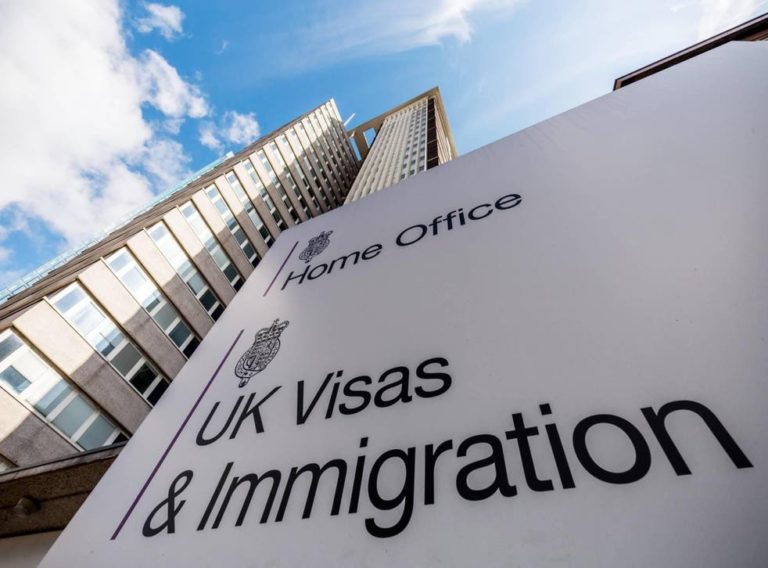
THE United Kingdom (UK) government has contacted tens of thousands of international students directly through text and email, warning them they would face deportation if they overstay their visas.

The UK’s Home Office launched the new campaign following what it described as an ‘alarming’ rise in international students who enter the UK legally on student visas but go on to seek asylum after their visas expire.

Home Secretary Yvette Cooper told the BBC that some international students were seeking asylum “even when things haven’t changed in their home country.”

Home Office data reveals that roughly 13 per cent of about 14,800 cases of asylum applications in the UK since January were made by individuals who had entered the UK on a study visa.

Pakistan accounted for the largest share of these applications, with 5,700 cases, followed by students from India, Bangladesh, and Nigeria.

In Nigeria, many students, professionals and other citizens attempt to leave the country for greener pastures, including the UK, in what is known as ‘japa’ in local parlance.

According to the UK Home Office, while asylum applications from student visa holders have declined compared to last year, the figure remains nearly six times higher than in 2020.

In recent months, the Home Office has increasingly focused on curbing the use of study visas as a pathway to asylum claims.

The ICIR reported in May, that the department revealed plans to introduce new and tighter visa access for citizens of Nigeria, Pakistan, and Sri Lanka, citing concerns over high rates of visa overstays and a surge in asylum applications from these countries.

Starting this September, the plans will introduce tougher requirements on visa refusal and course completion rates that universities must meet to retain their ability to sponsor future visas.

The Home Office announced in March that 43 failed asylum seekers and foreign offenders were returned on a charter flight to Nigeria and Ghana.

The ICIR reported that data from 2024 revealed a sharp rise in UK visa rejections for Nigerians, with the rejection rate increasing from one in 31 applications in 2022 to one in eight by late 2023.

Recall that the UK government announced a rise in visa fees for students, tourists, and other travelers in March.

The student visa fee was increased from £363 to £490, reflecting a 35 per cent rise.