Home Blog Page 1951

Disinheritance: Widows in Igboland battle against culture that men love to preserve (Part 2)

This report by Alfred AJAYI presents the experiences and testimonies of women from South-Eastern Nigeria where the practice of disinheritance of widows is prevalent.


Igbo culture and tradition on disinheritance of widows

THE traditional ruler of Breme Community, Eha-Alumona in Nsukka Local Government Area, Igwe Cassidy Eze, agrees that the custom around inheritance in Igboland is in favour of men, and is unlikely to change soon.

“Whatever a man had when he was alive belongs to the male children. You don’t have to include a girl-child in your property while you are alive sharing it. But if your male children decide to give part of your property to their sister, who happens to be your daughter, that is their goodwill but it is no tradition. When a woman marries, she will not take anything to the husband because she will get new property from the new husband.

“If the girl is not married, the first son of her father can use his discretion and give out anything to the girl. However, if before he dies, the man gives out anything to the daughter, that remains so,” Igwe Eze submitted.

The custom in Ugwaji- Awkunanaw, a community in Enugu South Local Government Area of Enugu State, forbids a childless widow to inherit her husband’s property. This was disclosed by the regent of the community, Onowu Dennis Okeke-Ani, who also recalled past cases which saw uncles or brothers to the deceased dispossessing widows of the property of their brothers.

“Yes, they try to deny the woman the right of inheritance. And, if the woman sees that she has nothing there, she can find her way. Likewise, girls have no inheritance in their father’s family. They are only to pray to have a husband and go out of their father’s house.

“If the girl decides to stay in her father’s compound and start bearing children, she then has the right to be the owner of the compound. If not, the uncles may claim her father’s property. However, if the father has business outfits, vehicles in the cities, he has the right to give the female child anything he wants but not the ones in the village, according to the tradition, the girl has no inheritance right”.

The traditional ruler of Umuawulu in Awka South Local Government Area of Anambra State, Igwe Joel Egwuonwu, agreed that Igbo culture and, indeed, that of his community does not permit female children to inherit their father’s estates. He noted, however, that a widow is at liberty to inherit her husband’s estate.

“In Igboland, girls don’t inherit their father’s estate. Are you saying that when my sister gets married to an American, she will carry my father’s estate to an American husband? That is not possible. However, our culture does not forbid widows from inheriting their late husbands’ estates. In fact, it is expected that the relations of the dead men will rally round their widows to ensure that they and their children don’t suffer. It is not cultural to disinherit the widows”.

The traditional ruler of the Nkaliki Echara Unuhu community in Ebonyi Local Government Area, Eze Sunday Oketa, gave an insight into the dictates of culture in that area concerning the right of widows to inheritance.

“In Igboland, when you marry and God blesses you with children, the first son of the family is the father of the family after the death of his father. He will carry all his brothers along including his mother. But, the mother, being the widow, has the right to tell her children what is supposed to be. And her children will listen to her because their father is no more living.

“In our own custom in Izzi, when your husband dies, it does not mean that the property of your husband does not belong to you anymore. It is just that the children of the dead man will be taking care of the property of the father including the mother. No relation has the right to collect her husband’s property. We don’t do that here”.

What do the laws say on disinheritance?

The right to freedom from discrimination is internationally recognized as a human right and enshrined the principle of egalitarianism, which is recognized in the Universal Declaration of Human Rights and enshrined in international human rights laws.

Article Two of the Universal Declaration of Human Rights states that everyone is entitled to all the rights and freedoms set forth in the declaration, without distinction of any kind, such as race, colour, sex, language, religion, political or another opinion, national or social origin, property, birth, or another status.

The Nigeria Constitution 1999 (as amended), in its Chapter4, Section 42, equally protects citizens from any form of discrimination on the basis of place of origin, sex, religion, or political opinion.

The Chairperson of FIDA in Anambra State, Professor Ikpeze, said there are local laws protecting the interest of widows in the area, especially against disinheritance.

”We have the Widowhood and Widowerhood Rights Law of Anambra State 2005. Section 4 sub-section G, states that you cannot drive a widow out of her husband’s house. The law empowers the widow to inherit her husband’s property.

“Besides, we have the Violence Against Persons Prohibition Act (2015) at the federal level and VAPP Law 2017 in Anambra State, which prescribes punishments for harmful traditional practices, including disinheritance.”

Her counterpart in Enugu State, Sylvia Abana, argued that discrimination against women, including their exclusion from inheritance, is unconstitutional, citing the 2014 Supreme Court judgment in cases of Ukeje Vs Ukeje and Anekwe Vs Nweke, where the court reiterated that any customary law that denied a widow or female child her right to inheritance is repugnant to natural justice, equity and good conscience.

Similarly, Ebonyi enacted VAPP law in 2018 while that of Enugu State came a year after in 2019. Besides, Enugu State has the “Prohibition of Infringement of Widow’s and Widower’s Fundamental Rights Law 2001, which was enacted to make it unlawful for anyone to infringe the fundamental rights of widows and widowers.

The Judiciary has also been acclaimed for handing down judgments meant to give women and girls relief from the obnoxious inheritance custom, by establishing equality under the law, a development that has invalidated the superiority claim of the male folks over the females.

Many legal experts agree that a recent Supreme Court ruling, which gives female children the right to inherit their late fathers, is a victory for all women. In the judgment, the Apex Court ruled that the tradition and custom which forbids female children from taking part in the sharing of their father’s estate is discriminatory and in conflict with the provision of the constitution. The Court ruling on an appeal marked SC.224/2004 and filed by Mrs. Lois Chituru Ukeje (wife of the late Lazarus Ogbonna Ukeje) and their son, Enyinnaya Lazarus Ukeje against Ms. Gladys Ada Ukeje (daughter of the deceased), upheld the earlier positions of Lagos High Court, the Court of Appeal, Lagos, that Lois Ukeje is entitled to her father’s estate.

The Supreme Court held that the Court of Appeal, Lagos was right to have voided the Igbo native law and custom that disinherit female children. According to the lead judgment read by Justice Bode Rhodes-Vivour, “No matter the circumstances of the birth of a female child, such a child is entitled to an inheritance from her late father’ estate”.

The Apex Court further held that the Igbo customary law, which disinherits a female child from partaking in the sharing of her deceased father’s estate is a breach of Section 42(1) and (2) of the constitution, a fundamental rights provision guaranteed to every Nigerian.

“It is victory also for the widows as they will no longer lose from their fathers’ and husbands’ ends,” said Menkiti.

“The practice has been that only the male children share the property of their fathers without allocating anything to the female children, which is really unfortunate because these female children are the ones who take care of their fathers when they are old or are ill. Luckily, things are changing as enlightened families are beginning to do things differently with the understanding that every child is a child. If there are estates to inherit, they should be shared equally among all,” she concluded.

Law should accommodate good parts of culture and traditions

However, some of the traditional rulers, particularly in the South-East, where the practice is believed to be most prevalent are not comfortable with the ruling of the Apex Court, describing as disregarding the rich culture and tradition of the people, which had existed for several decades.

Although the regent of Ugwuaji Awkunanaw, Onowu Dennis Okeke-Ani, agrees that the customary law on inheritance has been unfair to women, he and Igwe Eze noted that it will be hard for people to adopt the judgment of the Supreme Court and respect the country’s constitution on the inclusion of women in the sharing of the property of their late fathers or husbands.

“It will be difficult to implement such ruling because it is against our custom. It is when someone has property outside in the cities that such judgment will be respected. But the property at home (in the village), the man cannot share between male and female children.

“Unless the females are not married, the father may decide to give them (the girls) something because it is not their fault that they are not married. However, such girls must find ways of getting their own children so that nobody will fight to dispossess them of the share they got from their fathers in the future”.

The traditional ruler of Umuawulu, Igwe Joel Egwuonwu, maintained that the laws are primarily foreign and most often an affront on cherished cultural practices.

“I think those, who make our laws should in some cases (not in all) accommodate our culture and traditions, not to import that of Americans and Europeans. That will help us a lot. So that if such should go to court, the court will look at what the culture of the people says and consider such as the basis for their judgment. We cannot uphold the thinking that everything about our cultures is wrong. There are reasons for some of those cultural practices and they are not bad”.

Solutions to the disinheritance of widows

Respondents recommended sustained awareness creation and sensitization campaign as a good approach towards ending the disinheritance of widows while implementation of existing laws must be taken seriously.

Former FIDA Chairperson in Enugu State, Mrs. Nkiru Nwabueze-Ugwu believes that the level of awareness is still very low.

“Most of the disinherited widows feel helpless and keep it to themselves. I think the Governments have done their part, putting the laws in place. But, all the agencies of government and Non-Governmental Organizations must take up the task of sensitizing the public. We are doing something, but much more is yet needed to fill the gaps”.

On her part, Menkiti identified committed implementation of existing laws as very critical to the campaign to put a stop to the inhuman practice.

“It is good having a legislative framework in place. But, it is better for implementing the laws. When people know that they have the right to inherit under the law, they will be encouraged to seek redress when there is a violation. We must the women in the South-East know about the existence of the various laws”.

For Ugwuanyi, the traditional rulers are in the position to extend the frontiers of the campaign. “Some traditional rulers don’t play their roles well. Most of them live outside their domains. They live in Lagos, Enugu, Awka, Onitsha and other cities. I advise the government to ensure that the certificate of recognition is not given to anyone who cannot live within his community to oversee the subjects well,” she stated.

“I also appeal to the traditional rulers to get conversant with the laws and partner relevant organizations to educate the citizens on the consequences of going against the laws. If all of us begin to see everybody as equal before the law, those abuses will naturally we fizzle out,” she said further.

The National President of Non-Governmental Organizations, Lazarus Nwachukwu, argued that education is an eye-opener that must be embraced by all and sundry, as a way of addressing societal problems.

Chief Lazarus Nwachukwu, National President of Council of NGOs and Civil Society Groups

“Education is the bedrock of every human endeavour. I am sure that with what the present Minister for Women Affairs is doing, there is a need for us in the civil society to collaborate with her to help women to actualize their rights. So, it behooves the Ministry of Women Affairs to start shouting with the National Orientation Agency, to propagate the rights of women, the way it should be. And even the National Assembly has a role to play to give relief to women, especially those who had been disinherited”.

What is being done?

It was discovered in the course of this report that FIDA, the NHRC, the Legal Aid Council, the Family Law Centre among others, are making efforts towards ensuring the abolition of harmful practices against widows.

The National President, Council of NGOs, Lazarus Nwachukwu, said efforts are being made to reverse what he called the disservice to women.

“We have seen it as a very great disservice to women. No matter the reason for doing it, it deprives the women of getting their rightful inheritance from their husbands. The society was structured to favour men. But all that is fast changing. The global perspective today is that every hand must be on deck to reverse the practice that deprives women of the right of inheritance. Women must have their rights protected at every point”.

Abana, who attributed the prevalence of the practice to the failure of men to prepare their will before they die, pointed out that dialogue had been employed in settling such issues.

“These days, people are encouraged to resort to mediation, alternative dispute resolution. So it’s either you go by arbitration, mediation, conciliation and it’s more peaceful of settling matters so at the end of the day you will still be friends with whoever that you had issues with. We have broken borders, we have a broken ceiling the much we can because we normally hold mediation every day”.

Efforts are not being spared in Anambra State as explained by Ikpeze, the FIDA Chairperson:

“We have tried to sensitize the women. We are now going round to sensitize the traditional rulers and the Presidents-General because ignorance of the law is not an excuse. Members of FIDA in Anambra State have gone to Ihiala, Achina and so many places to ensure that widows get their dues with their children. And you see some times, very educated people are involved. So, I think the relations should do well to take good care of the widow, lessen her pains and agony instead of deepening the wound of losing her husband. After all, when the woman died, the husband takes everything that belongs to her and still marries another wife”.

To help widows in Ebonyi, many of who are poor, Chima said that FIDA does not charge for its legal assistance to them.

“We don’t charge for our services. But since we don’t have government partnership or sponsorship to take care of certain costs, we tell the clients we cannot render the legal services free and still bear the cost of filing processes among other expenses. The person takes care of the cost, but we don’t charge a dime for our legal services. Since I came on board, we’ve not really gone to court. We have used Alternative Dispute Resolution in partnership with other stakeholders like police, representatives of the Ministry of Justice and other respected individuals in the bar”.

Apart from FIDA, there are several other governmental and non-governmental institutions defending the course of widows and women in society. One of them is the Legal Aid Council of Nigeria. Its Co-ordinator in Ebonyi State, Okwuegbe Egenti, itemized their efforts towards protecting widows against disinheritance.

Barr. Okwuegbu Egenti, Co-ordinator, Legal Aid Council of Nigeria, Ebonyi State (1)

“We have been preaching to our people against disinheriting the widows because there is a plethora of cases especially Mojekwu V Mojekwu, where the Appeal Court ruled that such practice is repugnant to natural justice, equity and good conscience. A woman should be left naturally to take over the property of her husband. No contestation from the relations of the husband.

“Legal Aid Council is the voice for the voiceless, especially widows, who are almost helpless when their husbands are dead. Our services are rendered pro-bono for the indigent.

“Civil servants, who earn more than the minimum wage, will pay ten percent of the cost of pursuing the case to the Legal Aid Council. But, if you don’t have anything or you earn below minimum wage, the Council will plead your case free of charge, even up to the Supreme Court”.

Government not insensitive – state governments

Reacting to prevailing denial of the right of women to inheritance in some communities in the state, the acting Permanent Secretary, Enugu State Ministry of Gender and Social Development, Uzoamaka Uzoechina, said the state government had laws to deal with such cases.

She also asked widows with genuine complaints of marginalization, intimidation and denial of access to their husband’s property, to petition the ministry.

“This Ministry is charged with looking at violence against women, to stop it. We normally intervene immediately, we invite the parties and then we mediate, and most often during the mediation, people take the advice and heed our rules. But when they fail, we have a family court charged with seeing that women are not treated as slaves. They also help us to ensure that people who fail in this matter face the law”.

Mrs. Uzoechina remarked that the government had enacted Violence Against Persons Prohibition, (VAPP) Law, which forbids harmful practices against women and girls, including widows.

The Commissioner for Women and Children Affairs in Anambra State could not be gotten for comments on what Anambra State Government, through her ministry is doing to protect the interest of the widows in the state. She did not pick calls nor replied to the SMS message sent to her on the subject matter.

However, the Permanent Secretary in the Ministry, Dan Ezeanwu, maintained that the Supreme Court ruling on disinheritance of widows cannot be reversed.

“Once there is a Supreme Court ruling, you can’t be talking about any other position. How can you be commenting on what the Apex Court in the land had ruled on? That is government to government. You don’t expect the government to begin to take another position. After all, the Judiciary is an arm of government and theirs is to do the interpretation of laws. When you are looking for comments, go to the non-government actors, go to the civil society and the traditional rulers, who are the custodians of tradition in various communities. They will tell you what is obtainable across the board”.

Ebonyi State Government has also not been insensitive to the plight of the widows said the Director, Child and Women Development in the Ministry of Women Affairs and Child Development, Godwin Igwe.

“The Ministry has been fighting that, in partnership with Development Partners such as the United Nations Population Fund, USAID among others. We have been enlightening the people that women should be given the right to ownership of the property because even if you marry a housewife, that woman is contributing to whatever the husband is earning. When you are away to work, she cooks for you, keeps the compound clean, washes your clothes, and takes care of your children. How do you quantify such an economic contribution? So, the people disinherit them because they think that it is their brother that has everything. But, in legal terms, the truth of the matter is that the property a man owns is community property, meaning it belongs to the man and the wife because she has been contributing indirectly.

“Also, people claim that when you marry a woman, she is more of your property. And if you acquire a property, you are the owner of the woman and the property. So, when the man dies, the kindred, relations, brothers come around to say look, even when my brother was alive, he was the owner of everything, so, how do you now come to claim ownership? We have been intervening in a mature and diplomatic way because it is something that is cultural and you cannot wave it out overnight”.

Most of the respondents including traditional rulers agreed that the custom disinheriting women and girls must be looked into in line with prevailing realities across the world, if not for anything to uphold their fundamental human rights which protect them against any form of discrimination.

CLICK HERE TO READ THE FIRST PART OF THIS STORY.

#EndSARS: Why we delayed distribution of COVID-19 palliatives – CACOVID

0

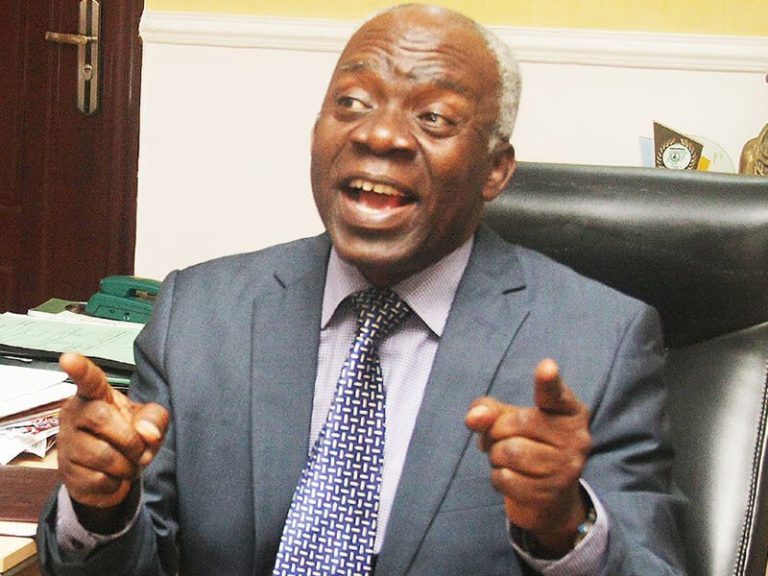
‘We’ve identified their barracks’, Falana speaks on Lekki shootings

0

FEMI Falana, human rights lawyer and chairman of the Alliance on Surviving COVID-19 And Beyond (ASCAB), says the group has identified the barracks of the soldiers who shot at #ENDSARS protesters at Lekki toll gate on Tuesday.

“We have already identified the barracks where the soldiers left for Lekki, we have already identified the barracks,” Falana said.

He made the claim during his appearance on ARISE TV on Monday.

Falana, who stated ASCAB would set up an independent panel of inquiry to investigate the October 20 shootings, said from findings by the group, there were indications that President Muhammadu Buhari was aware of plans to deploy the military to Lekki disrupt the protest.


READ ALSO:

“The President was likely to have been told, soldiers were ordered so I want to believe that’s why it was not addressed and they said it was a rumour but I think the facts are emerging now, that indeed soldiers went to Lekki, indeed they fired at protesters and indeed some of the protesters at least two have been officially acknowledged to have died from gunshot wounds.”

“ASCAB shall establish an Independent National Citizen’s Panel of Inquiry under a number of conditions Composition of the Citizen’s Panel of Inquiry shall comprise representatives of credible and identified organisations of the youth that took part in the #Endsars protest movement, including the Feminist Coalition, among others; representatives of credible and tested civil society organisations,” he said.

Falana also accused the federal government of having no respect for the rule of law and citizens rights to protest.

He noted that constant denials of human abuses by the federal government and its agencies clearly portrays that Nigeria is not a serious country.

“I have never seen it anywhere in the world where in the federal capital of a country where you have all the embassies, you have unmarked vehicles taking thugs round and it was being filmed and the thugs were being ferried by officials of the government and we are being told it’s not the State Security Service and in Lagos it was not the Nigerian Army that shot.

“Such denials do not portray Nigeria as a serious country, because it is the duty of the government anywhere in the world to trace those criminals and bring them to book.

“Nigerian government has no respect for the rule of law and has ensured they stave off all forms of protests in the country.”

The human rights lawyer frowned at continuous efforts by the Muhammadu Buhari administration to crackdown on peaceful protesters across the country.

“Every designated venue for protest in the country has been fenced by the government to prevent demonstrations.

In Lagos, the Gani Fawehinmin square in Lagos has been fenced while the Unity fountain in Abuja has also been fenced, and the same government has said citizens have the right to protest.”

Last week, there were reports of sporadic shootings at unarmed #ENDSARS protesters at Lekki tollgate by soldiers on Tuesday night.

Before the shootings, there was a power outage and alledged removal of CCTV cameras from the toll gate, as captured by video camera.

Several people sustained injuries and from gunshots. An eyewitness account claimed that more than 15 persons were killed by soldiers during the attack.

Also, the Lagos state government also confirmed two persons that died while receiving treatment as a result of the shootings.

The military actions have attracted wide criticism for the Nigerian government with the United Nations and the United States calling for a probe into the incident.

But the Nigerian Defence Headquarters which has continued to deny soldiers were involved in the shootings.

It claimed that the videos circulating on social media as evidence of involvement were photoshopped.

John Eneche, Director of Information, Defence Headquarters, in a press conference on Friday, described it as mere allegations, stressing that some military analysts had dismissed as untrue.

“I will say that for now, don’t take any response from me that yes we did it or no, but from what I can see, from all the evidence, as a general, I will tell you that it may not be true,” said Eneche.

NAFDAC bans India company for manufacturing substandard medicines

THE National Agency for Food and Drug Administration and Control (NAFDAC) has blacklisted an Indian Company, Mars Remedies PVT Limited for manufacturing falsified Ciprofloxacin Tablets BP 500mg with NAFDAC registration NO, C4-0498 for Pinnacle Health Pharmaceutical Limited.

This is contained in a statement signed by Moji Christianah Adeyeye, the Director-General of NAFDAC and made available to The ICIR on Monday.

“In view of the unprofessional practice, the Agency states that all products manufactured by the Mars Remedies PVT LTD, 635, GIDC Estate Waghodia, Vadodara, Gujarat, India, will not be allowed into Nigeria with immediate effect,” the statement read.

NAFDAC said the company was blacklisted in a letter dated October 9, 2020, addressed to the Managing Director of Mars Remedies PVT Limited, and titled; “Notice of blacklisting as a manufacturer of substandard and falsified medicines.


READ ALSO:

According to the statement, the company violated the NAFDAC extant laws and regulations by illegally manufacturing different formulations of Ciprofloxacin tablets instead of the approved formulation for export to Nigeria.

NAFDAC further noted in the statement that the variation in the formulation of the Ciprofloxacin 500mg tablets, which may impact on the product quality and shelf –life, was not approved by the Agency before the changes were made.

“This constitutes a violation of the NAFDAC Act, noting with dismay that the company has displayed a flagrant disregard for compliance with global standards necessary to assure the production of quality assured products,” Adeyeye said.

The Director-General warned other manufacturers and importers of medicines to adhere strictly to the conditions for which their products were registered by NAFDAC or face similar sanctions.

Disinheritance: Widows in Igboland battle culture and society (Part 1)

This report by Alfred AJAYI presents the experiences and testimonies of widows and other stakeholders from South-Eastern Nigeria, where the practice of disinheritance of widows is prevalent.


“AFTER the death of my husband, we put him in the mortuary. But without my knowledge, his close friend connived with my brothers-in-law to take away his corpse from the Teaching Hospital at Nnewi. They then insisted that I must complete the family house my husband was building in the village and I must perform the “Igbuefi” meaning (killing of cow) on behalf of their father, who died since 1991, before the burial could take place”.

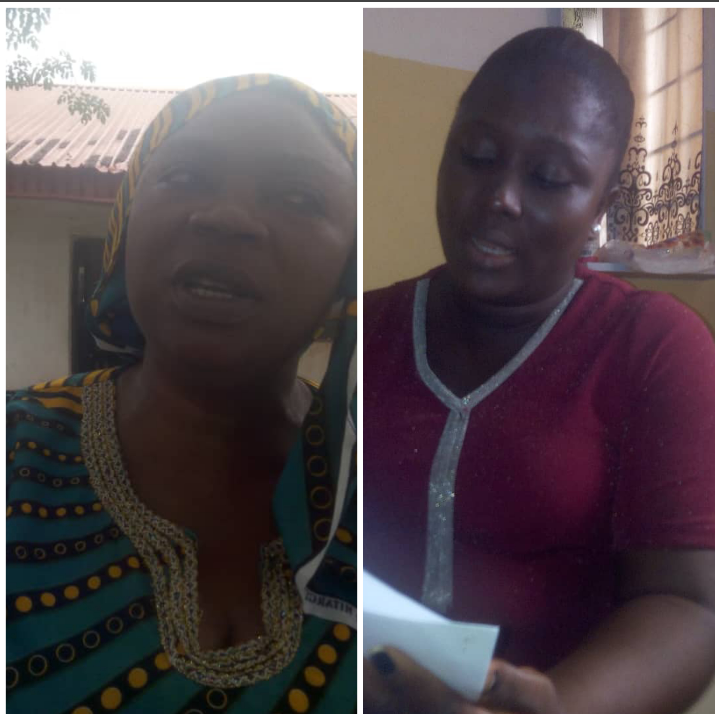
This was thirty-year-old widow, Ijeoma Ubah, narrating her ordeal in the hands of her husband’s family members shortly after he died on 7th January, 2018.

She continued: “My dear, I did it. I even sold my husband’s highlander to meet up. Then, I asked them to bring the corpse for burial. They said no, that it is time for me to go back to my father’s house with my three daughters. They even came and verbally shared the rooms in our house. At that point, I became confused. That was before somebody gave me the contact of National Human Rights Commission”.

Death of one’s husband is unarguably a devastating experience, especially for young women who are still nursing young children. It is naturally expected that the condition of such widows will provoke empathy from relations, friends and people of good conscience. But, in parts of Africa, that is not always the case as some of them face forceful ejection from their home, while others are forced to either sleep with the dead bodies of their husbands or drink the water used to bathe the corpses to prove that they had no hand his death.

The climax of such dehumanizing widowhood practices is the disinheritance of the widows by close or distant relations of their late husbands, who lay claim to all that their brother’s estates, including property and wealth gotten in partnership with their wives. The matter is worse in families where men were the breadwinners and the widowed women had been full – time housewives.

A woman, who has no male child or has no child at all, is usually at greater risk; same as those suspected to have been responsible for the death of their husbands.

Such practices which are common among the Igbo of the South East of Nigeria, have led to abuse, disinheritance, impoverishment and trauma suffered by many widows in the region.

Disinheritance is a violation of the constitutionally guaranteed right of the widows to freedom from discrimination as provided for in Section 42 of the 1999 constitution of the Federal Republic of Nigeria (as amended), which states that no citizen of Nigeria shall be discriminated against regardless of their place of origin, sex, religion or political opinion.

Nigeria is a signatory to several international documents and conventions, which protect women against discrimination in any form, including issues of inheritance. One of them is the Declaration on the Elimination of Discrimination against Women, DEDAW, which was adopted by the United Nations on November 7, 1967. In its Article one, the Declaration maintains that discrimination against women is “fundamentally unjust and constitutes an offence against human dignity”.

Article two abolishes laws and customs, which discriminate against women, for equality under the law to be recognized, and for states to ratify and implement existing UN human rights instruments against discrimination, while article three calls for public education to eliminate prejudice against women.

Another document that frowns at discrimination against the women folks is the legally binding Convention on the Elimination of all forms of Discrimination against Women, CEDAW, which came into existence on 18 December, 1979.

In its article sixteen, the convention, in addressing issue of marriage and family relations, gives equal rights and obligations to women and men with regard to choice of spouse, parenthood, personal rights and command over property. In specific terms, this article gives equal right to the spouses in respect to ownership, acquisition, management, administration, enjoyment, and disposition of property, whether free of charge or for a valuable consideration.

The Charter for Widows’ Rights is another document which particularly, demands the elimination of all discrimination against widows, both within the family, in community and public life.

Article two of the Widow’s Charter states that widows shall have the right to inherit from their husband’s estate, whether or not the deceased spouse left a will, while widows may not be “inherited” as wives or concubines to their husband’s brother, nor forcibly placed in a “levirate” relationship, nor forcibly made pregnant by a relative in order to continue producing children in her dead husband’s name.

The article adds that anyone, who attempts or manages to deprive a widow of any of her property, take custody of her children, without an order of a judge or magistrate shall be guilty of the most serious category of crime, while anyone, whether a relative or a stranger, who seeks or manages to gain control of the dead husband’s bank account, insurance policy, accident compensation claims, without the order of the Court is guilty of the most serious category of crime.

Man’s inhumanity to women

Mrs Cynthia Nweke, a disinherited widow in Ebonyi State

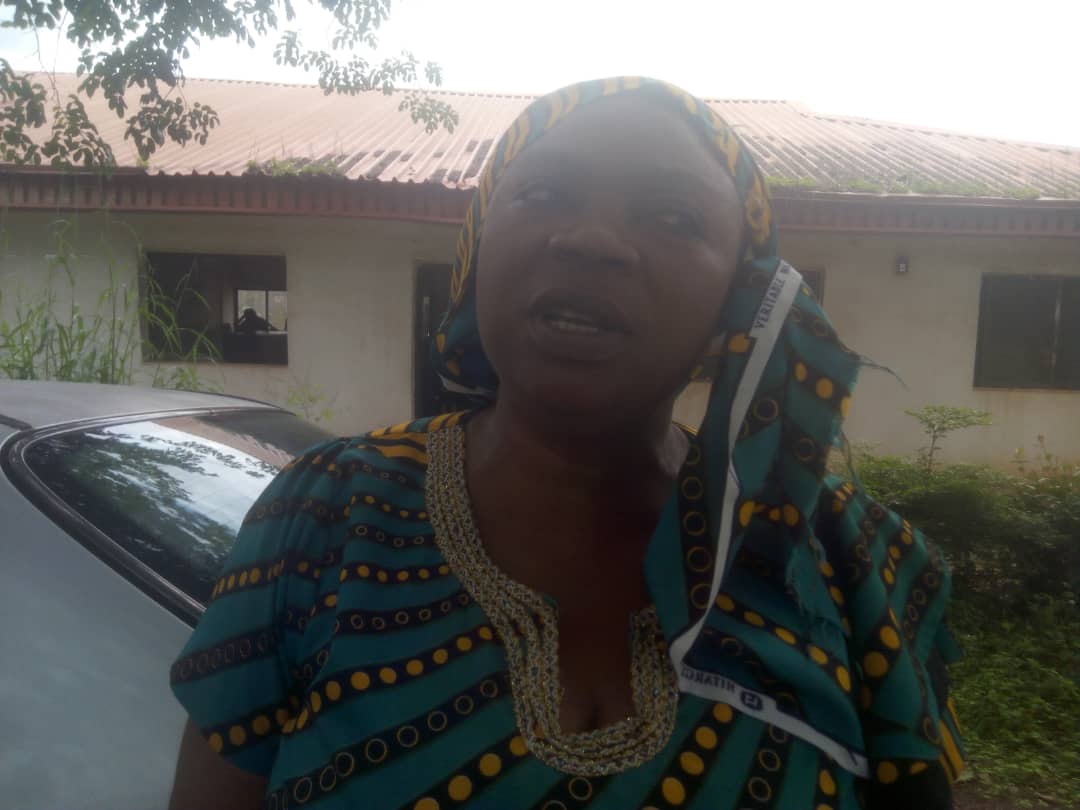
Cynthia Nweke, from Ezzama, in Ezza South Local Government Area of Ebonyi State, was heart-broken as she narrated her experience battling against efforts to disinherit her with royal complicity.

“This is the picture of the only farmland we have now. My husband secured the property by surveying it. But, immediately he died, his brothers came to take away the land. I saw my husband’s relations surveying the land. So, I took the survey plan my husband did many years ago to the Igwe to help me. But, Igwe told me it was rubbish, that my husband has no right to survey a family land.

“My husband’s brothers had collected the frontage of our house and one of our lands we have been cultivating since I married this man. They collected another one in a swampy area. The traditional ruler, Ezeogo passed a judgment that I should leave the land because they will kill me. But, I told him that I will not leave the only land that I am cultivating to feed my children.

“One of those doing this to me was a servant to my late husband, who said my husband did not settle him and also made sexual advances to me after his death but I refused. He promised to deal with me and he is the one who mobilized them against me”.

Mrs Ngozi Nwali, a widow and victim of disinheritance in Ebonyi State

Another widow, Precious Ngozi Nwali, from Amaeka Community, in Ezza South Local Government Area of Ebonyi State, narrated how documents of lands and other property were deceitfully taken away from her after the death of her husband, leaving her with nothing to train her four children.

“My husband died after a brief illness on the February 6, 2019. After his death, his elder brother, Monday Nwali, and his siblings in a meeting in the village, collected his phone from me, harvested the yams and cassava we planted and did not give my children and me from the proceeds.

On February 11, 2019, my husband’s younger sister, who is lawyer, led others to our residence in Abakaliki and deceitfully took all the documents for all our lands, a vehicle and a fridge away. She promised to give back to me in three months when I would have recovered from the shock and agony of his demise, but she has refused to do that”.

Precious also alleged that she had been threatened severally by one of her brothers-in-law for daring to demand for the documents taken away from her.

“On one occasion, he came to the timber shed Nkwoagu with some persons to chase me out of my husband’s shed where I am staying right now to trade. He said he would either give it to his younger brother or rent it out. In facts they have told me severally to go and remarry if I am not comfortable with their actions.”

While this was happening, the widow said her husband’s elder brother “went and claimed one of my husband’s land with the money realized from the burial ceremony.”

It was gathered that the International Federation of Women Lawyers, FIDA, Ebonyi State Chapter had taken up Precious’ matter.


Ijeoma Ubah, a widow who resides in Onitsha, the commercial nerve centre of Anambra State, also recounted her experience after the death of her husband.

“After the burial, I asked my husband’s friend to give me the document of the land he helped my husband to buy at Akpaka Phase Two, Enugu, at the cost of N2.5 million (two million, fifty thousand naira). That was our first project as a family.

“He shouted at me. I explained to him that I have paid all the people my husband owed and needed money to take care of my three daughters. I waited for months, no response from him.

“In January this year, I went back to National Human Rights Commission. Through their efforts, he provided an allocation letter, the commission promised to investigate the genuineness of the document from Ministry of Lands. We are still waiting. But, I noticed that the allocation letter bore March 14, 2016 when my husband was still alive. So, it means he had the document all the while but refused to give to my husband. The allocation letter also carried his name not my husband’s name”.

When Anayo Nnoye got married to her husband from Ifite Enugwu-Agidi, Njikoka Local Government Area, of Anambra State, in 2006, little did she know that the union would not last. Her husband died in 2008 and that marked the beginning of her problems. Shortly after the burial, she was ejected from her house by the senior wife and her son, while the farmland she was cultivating was taken away from her.

She recounted: “The first wife of my husband and her first son have pursued me out of my husband’s house. They no dey pity say I get four pikin. The son, Mike, had been selling the property of my husband. There was one he sold for N7 million, another one for N5 million, he no give me anything. The kindred talk to him to give me my own share. The Igwe and the village people support me but he no dey listen to them.

“It was the Human Rights Commission that is helping me to get my share now. They come with Igwe, kindred, the youths, even the police and vigilante and carry me go to the farm, share five plots of my husband’s land to me and my children but my senior wife and her son did not show up that day.

“Since then, Mike carry juju put there. If I want to sell that land, I no go see buyer. I am not asking for the money of those ones he had sold again, but let him leave the five plots the village, Igwe and relations have given to me,” Nonye appealed.

Obiagali Ogbodo, a widow from Ugwuaji-Awkunanaw community in Enugu South Local Government Area, who had a daughter before her husband’s death, complained that her brother-in-law has taken over the plots of land and shops she owned with her late husband and appeals for help. Her offence, it appeared, was not having a male child for her husband.

“I had twins, a boy and a girl before my husband died but the boy died, so I have just a girl. However, my husband’s younger brother shared ten plots of land and 15 shops but didn’t give me anything because my child is a girl. So I appeal to government to intervene,” Mrs. Ogbodo cries out.

But there are situations where in-laws or the community also dispossesses widows who have male children of their husband’s property. Such was the experience of Elizabeth Obodoeze from Umuofiagu-Ukehe in Igboetiti Local Government Area, who alleged that the leadership of the community destroyed cashew, palm, oil bean and other economic trees in a large expanse of land belonging to her late husband, claiming that it was a ploy to dispose her of the land.

“Nobody informed me that they were going to cut down economic trees planted by my husband and no reason was given for the destruction. They also destroyed my brother in-law’s son’s house that reached the lintel level, cut down all my palm trees, oil bean trees, cashew trees which are my source of livelihood, I don’t know why they did that. The town union and village levy collectors tax us ₦4,400 yearly and we pay but don’t know why, because others are allowed to harvest their own palm fruits without disturbance. The day they destroyed the trees and the building they were well armed with machete, dagger and iron rod,” Mrs. Ogbodoeze lamented.

Mrs Obodoeze passionately appealed to the government to come to her aid.

“We have taken palm wine to the eldest man so that the leadership of the town will explain what we did wrong but they couldn’t tell us anything. It is not land tax but sheer wickedness and cruelty against us, widows. So I am appealing to Government to assist me, a poor widow, they are intimidating and marginalizing us, they want to kill me and my children.”

Disinheritance a grave concern in the South-East

Interviews conducted in the three selected states of the South East Region – Anambra, Ebonyi and Enugu – revealed that disinheritance has always been an epic battle between the culture of the Igbos and the laws of the Federal Republic of Nigeria, which is not likely to be resolved soon

From Ebonyi State, Mrs Elizabeth Nwali, the Chairperson of Family Law Centre, established by the State Government to look into family-related matters, expressed worry that the right of widows to inheritance continues to be violated in the 21 Century, even by educated and enlightened persons.

“Disinheritance of widows is the order of the day here in Ebonyi. People seem not to know that the widows have rights over the husbands’ property. In one of the cases we are handling now, brothers to the late husband took away all the property belonging to him from the wife, even pulling down the wall of the building.

“They said that the woman will not have any inheritance from her husband. They even went to the police and lied against her. But, I am going to the police to counter all they said against her. It is serious worry for us here because it keeps gaining prominence every day”.

The Chairperson, International Federal of Women Lawyers (FIDA), in Ebonyi State, Grace Chima, and the Co-ordinator, Legal Aid Council of Nigeria in the state, Okwuegbe Egenti, also spoke about the interventions by their organizations.

Chima recalled: “After the death of her husband, a widow with four children kept document with somebody and said after the burial give it back to me. And after the burial, the person refused to give her the document. They invited the widow into their family meeting and told her to accept their decision that her sister-in-law will keep the documents or she goes to remarry, if she is no longer comfortable with it.

“So, it was clear that they planned to frustrate her, so they can claim the property of her late husband. But, we promised we would get justice for her. We are on it already, using Alternative Dispute Resolution, ADR. If that fails, we shall go to court until justice is served”.

Egenti noted that widows find it difficult to lay hands on anything belonging to their late husbands.

“We have about three cases like that in Afikpo, where this practice is prevalent. We won one of them last year before my Lord Justice Ogbu. A woman lost her husband (a police Inspector) and the sister to the dead man chased the wife away from the husband’s house, warning her to go back to her father’s house, since she had no child for the late brother. We took it up till we won”

The Co-ordinator of NHRC in Anambra State, Nkechi Ugwuanyi, confirmed that disinheritance is among the biggest challenges facing widows, some of who are even disinherited by their sons.

“It is disheartening, terrible, unthinkable and sad that women in the South-East find themselves in such situation. We have several cases on this issue of disinheritance of widows. When a woman loses her husband, naturally, the extended family immediately comes in. all they are thinking of is the property of the man. Even sons disinherit their mothers. In one of such cases going on in Onitsha, the court had given an order that tenants in the property in conflict should pay to the widow, but her son has refused to obey the court order. Sometimes, the relations are bribed with peanut to side with the violators”.

The Executive Director, Women Information Network, WINET, Enugu State, and former chairperson of Nigeria Association of Women Journalists, NAWOJ, Miriam Menkiti, said she became an advocate against disinheritance of widows when, as NAWOJ leader, she found out in various communities they were being marginalized, disinherited.

“So, we championed what we called the “Prohibition of Infringement of Widow’s and Widower’s Fundamental Rights Bill”, with the assistance of Hon. Uche Anya, the Minority Leader in the House then, who sponsored it as Private Member Bill. It was passed in 2001 and former Governor Chimaroke Nnamani signed it into law.”

“Unfortunately, because of greed, many family members still rob widows of the property of their late husbands’ property, disinherit them, take lands and houses belonging to their husbands, not minding that they have children. A few women had been able to use the law to safeguard themselves from such inhuman practice. Some enlightened people also take part in this repulsive treatment against the widows. But, I must say that there are a few families where they ensure that the widow is taken care of”.

Why widows are disinherited – stakeholders

Why has the practice of disinheriting the widows continued despite all legal frameworks and judicial pronouncements as well as international protocols and documents against it?

The traditional ruler of Umuawulu, in Awka South Local Government Area of Anambra State, Igwe Joel Egwuonwu, attributed it to sheer greed among the relations of the dead as well as bad manners among some women, who quarrel with their in-laws during the life time of their husbands.

HRM Joel Egwuonwu (Ezeudo 11), Traditional Ruler of Umuawulu, Anambra State (1)

“Some women are the architects of their problems. Some of them are hostile to relations of their husbands, especially if such men are rich. They drive brothers, sisters, friends and other relations away. If unfortunately, such men die, the relations who had been badly treated see that as an opportunity to get back at such women.

“However, many relations are very greedy and don’t fear god. They want to take away all the widows had suffered with their husbands to put together. But, if that woman is good to her husband’s relations, friends and other people around before her husband died, she will see people who will stand with her against whoever wants to take away her husband’s property”.

For the chairperson, FIDA, Anambra State chapter, Ikpeze Ogugua, disinheritance of widows cannot be divorced from culture and tradition.

“Disinheritance is a harmful traditional practice. In Igboland, even after you get married to a family, the people there still see as if somebody who came. Then you ask – if they can deny their daughters inheritance, why will they not do the worse to a widow?

“Every culture still in existence in Igboland is pro-men and against the female folks. More unfortunate and annoying is that the easterners claim to be Christians and all they are shouting and glowing about is culture and maybe, fetish. Disinheritance is at variance with 1999 constitution of Nigeria, which in section 42 talks about non-discrimination in whatever guise, whether by state of origin, sex, religion, any form of discrimination”.

Ugwuanyi also enumerated other factors that trigger the problem.“You can’t divorce it from poverty, lack of love and knowledge of existing human rights laws, lack of respect for human rights. In some cases, we discovered that violators don’t know they are offending the law. That speaks to the issue of under-reporting”.

CLICK HERE TO READ THE SECOND PART OF THIS STORY.

Tinubu makes U-turn, commiserates with victims of Lekki shootings

BOLA Tinubu, the National Leader of the All Progressive Congress (APC) has commiserated with victims of the Lekki shootings, after earlier demanding they answer questions about why they were at the scene of the incident in the first place. 

“I heavily grieve for those who have lost their lives or been injured during the period of these protests,” Tinubu shared in a post on his official Twitter handle less than 24 hours after stating that victims of the Lekki shootings were liable for the misfortune of what many have tagged ‘Lekki Massacre.’

Tinubu, while speaking at the Lagos State House in Marina during a visit to Governor Babajide Sanwo-Olu on Saturday, October 24, had demanded that #EndSARS protesters explain what they were doing at the Lekki Toll Gate Plaza when soldiers believed to be from the Nigerian Army opened fire at them while singing the national anthem and waving the Nigerian flag .

“Casualties of Lekki Shootings have some questions to answer; how are they there? How long were they there? What kind of characters are they?,” the APC National Leader had quizzed.

On October 20, #EndSARS protesters gathered at the Lekki Toll Gate plaza to demand an end to police brutality across the country – an exercise that they had carried on for 12 consecutive days in different states in Nigeria.

However, just a few minutes to 7pm on that day, the protesters came under attacks when security personnel in Nigerian Army uniform opened fire at them.

Amnesty International, a global human rights advocacy group confirmed that its on-ground investigations showed that at least a dozen people were killed on that day.

But despite evidence of deaths, the government has denied cases of any fatality.

Babajide Sanwo-Olu, the Governor of Lagos State had in a live broadcast to residents of the state on Wednesday, October 21, said images and video footages of the shootings circulating on social media were false, stating that there were no records of any deaths.

Meanwhile, Fatou Bensouda, top prosecutor at the International Criminal Court (ICC) on Thursday disclosed that her office has received reports of crimes committed during the #EndSars protests and the Court is keeping a close watch on the developments.

The United Nations had also earlier reacted to the killing of protesters in Nigeria by the government forces, calling for calm.

Lekki Shooting: Human Rights Lawyer, Adegboruwa says Fashola tampered with evidence during visit

EBUN Adegboruwa, human rights lawyer and member of the Lagos State Judicial Panel of Inquiry into alleged misconducts of the defunct Special Anti-Robbery Squad (SARS) says Babatunde Fashola, the Minister of Works and Housing tampered with evidence during his visit to the Lekki Toll Plaza after the incident of shootings of protesters on Tuesday, October 20.

Adegboruwa said this in a statement issued on Monday expressing concerns over the minister’s and other governors visit to the site of alleged killings on Tuesday, October 20.

“It was reported that in the course of the visit, the former governor of Lagos State and the Honourable Minister of Works and Housing, Babatunde Fashola, SAN, discovered a hidden camera, which he took,” Adegboruwa said.

“This is a clear case of illegally tampering with exhibits that may become useful to the Panel in the course of its assignment.”

According to him, since the panel has been vested with the jurisdiction over the Lekki Toll Plaza, it is illegal for anyone else to visit the plaza without the authority of the panel.

“Since the Panel has been vested with jurisdiction over the Lekki Toll Plaza, I verily believe that it is illegal for anyone else to conduct any visit to the said Lekki Toll Plaza in the absence of and without the authority and consent of the Panel,” he noted.

“It is contempt of the Panel for anyone to usurp the powers of the Panel in the way that has been reported. In this regard, the Panel will not shy away from summoning anyone who is alleged to be involved in any contemptuous act that may obstruct the course of justice.”

Adegboruwa further appealed to Babajide Sanwo-Olu, the Governor of Lagos State to allow the panel a full autonomy and independence as earlier promised during the inauguration.

In a video seen by The ICIR, Fashola picked up a camcorder at the Lekki toll plaza during the visit of South-West governors and ministers.

Sanwo-Olu had inaugurated the panel of inquiry to investigate alleged misconduct and reports of Police brutality most especially of the defunct SARS officials as demanded by ENDSARS protesters.

However, the governor expanded the panel’s investigation to the alleged killings at the Lekki Tollgate by armed men in military uniforms.

‘Return looted items in 48 hours or face the law’, Police in Plateau warns

THE Plateau State Command of the Nigeria Police Force has issued a 48-hour ultimatum to residents of the state to return ‘looted items’ during attacks on warehouses containing COVID-19 palliatives.

Donbey Peter, the Acting Police Public Relations Officer of the command said this in a statement issued on Monday in Jos, the state capital over the attack in some part of the state.

“We, therefore, wish to give the looters the grace to immediately return every looted item to the nearest local government secretariat not later than Wednesday, October 28,” Peter said.

“Anyone found in possession of any looted item after this date will be arrested and brought to book.”

According to him, Edward Egbuka, the State Commissioner of Police, has condemned the attacks noting that they were aimed at truncating the peace enjoyed in the state.

“The commissioner described it as an act of criminality aimed at truncating the tireless efforts of the Police and other security agencies at ensuring a peaceful Plateau,” he said.

He added that members of the public are also reminded that the 24-hour curfew imposed on the area was still in force, warning that anyone caught violating the order would be decisively dealt with.

For more than five days, residents of some states in Nigeria have invaded warehouses and made away with COVID-19 palliatives some of which were meant to have been distributed to members of the public in response to the pandemic.

Lagos, Ogun, Osun, Kaduna Kwara, Plateau states, and the Federal Capital Territory, Abuja among others have witnessed the attacks on warehouses where COVID-19 palliatives are kept.

Meanwhile, in a viral video, an officer of the Nigerian Army was seen urging residents of Ilorin, Kwara  State capital, to loot but not to destroy public properties or attack anyone.

As the residents rushed out in numbers to take their portion of the COVID-19 palliatives in a warehouse, the soldier continued to chant, ‘just go in peace, don’t attack anybody.’

We kept looted COVID-19 palliatives for vulnerable people – NGF

The Nigeria Governors’ Forum (NGF) has said that contrary to what has been reported, the looted COVID-19 palliatives in warehouses in some states were kept by some governors for the vulnerable in their respective states.

Abdulrazaque Bello-Barkindo, Head of Media and Public Affairs for the Forum, who made the clarification in a statement in Abuja on Monday, said the distribution of palliatives from the Coalition Against COVID-19 (CACOVID), was delayed because some states were yet to receive their own portion of the palliatives.

”While some states are yet to begin distribution because they had not fully received items meant for distribution, palliatives found in warehouses in Lagos and some states were kept for the vulnerable,” Bello-Barkindo.

He stressed that palliatives found in warehouses that were broken into in Lagos and some other states were kept in storage for members of the society, especially our vulnerable citizens.

“For the avoidance of doubt, some of the palliatives had the CACOVID stamp embossed on them, meaning that their source is unambiguous,” he said.

“As we know, CACOVID operations are mainly domiciled in Lagos, being the headquarters of most of the public-spirited organisations, corporate bodies, and individuals that came together to form the Coalition Against COVID-19; CACOVID.”

He added that up to 10 state governments had not participated in the flag-off ceremonies for the distribution of palliatives in their states as of mid-October when the NGF had its last meeting.

This, Bello-Barkindo explained, was because the items meant for distribution in these states had not been completely received from CACOVID.

“Some other states that still had palliatives in their warehouses chose to keep a strategic reserve ahead of a projected second wave of COVID-19.”

“Furthermore, as of a couple of weeks ago, some states were still receiving palliatives from the Federal Government through the Federal Ministry of Humanitarian Affairs, Disaster Management, and Social Development.”

According to him, the NGF also assured all contributors to the palliatives that prior to the looting of the warehouses, states had kept full accounts of all the items received and distributed.

While calling on members of the public to check their facts and to be wearied of narratives that could damage the country, Bello-Barkindo said the governors recognised the need for improved governance.

“The state governors are doing their very best under the circumstances to ameliorate the needs of the teeming population,” he said.

“The NGF stands for justice, improved governance, and a progressive Nigeria. The NGF regrets the loss of lives and property occasioned by the violent protests that erupted and calls for calm. A lot of the information circulating the social media needs to be fact-checked.”

Lekki killings: I don’t own toll gate, didn’t order military actions -Tinubu

BOLA Tinubu, a former Governor of Lagos State and National Leader of the All Progressives Congress (APC) says he does not own the Lagos State Lekki Toll Gate.

“The slander aimed at me is based on the untruth that I own the toll gate concession. The hate mongers prevaricate that I ordered the Lekki assault because the protests had caused me to lose money due to the interruption of toll gate activity,” Tinubu said in an interview. 

There were speculations that the military operations against unarmed #ENDSARS protesters at the Lekki Tollgate were ordered by Tinubu, to protect the toll plaza.

“Minus this alleged ownership, the slander employed against me falls to the ground as a heavy untruth. I ask people to thoroughly investigate the matter of my alleged ownership of the toll gate,” he said.

“By seeking facts, instead of being swayed by gossip, you will find I have no ownership interest or involvement in the toll gate. Having no business interests in the operation, my income remains unchanged whether one or 100,000 vehicles pass through that gate.”

While adding that the tollgate is a public asset, Tinubu proposed that it should be indefinitely closed because of the incident on Tuesday night.

He also called on the State Government to donate revenues from commercial tollgate to confirmed victims of Lekki attacks and police brutality in the state when it is reopened. 

“At the bottom, the toll gate is a public asset. Given what has happened, I would like to propose to the government that the toll gate be left closed for an indefinite period,” he said.

“If it is reopened, revenues should be donated to the confirmed victims of the Lekki attack as well as to other identifiable victims of police brutality in Lagos.”

“Let the government use the money to compensate and take care of those who have lost life or limb in the struggle for all citizens to go about the quiet, peaceful enjoyment of life without fear of undue harassment at this or that checkpoint.”