THE Federal Airports Authority of Nigeria (FAAN) has announced the resumption of direct revenue collection at the cargo terminals of Murtala Muhammed International Airport (MMIA), Lagos, after a 15-year suspension.
According to FAAN, officials from its Directorate of Cargo Development and Services (DCDS) have been deployed to the cargo release points of the Nigerian Aviation Handling Company (NAHCO) and Skyway Aviation Handling Company (SAHCO) warehouses to oversee real-time monitoring of accrued cargo charges.
A statement by the airports authority, on Saturday, August 23, said the development followed months of stakeholder engagement led by FAAN’s Director of Cargo Development and Services, Lekan Thomas, and MMIA Airport Manager, Olatokubo Arewa.
The agency added that the process gained momentum after a high-level meeting involving FAAN’s Managing Director/Chief Executive, Olubunmi Kuku, Comptroller-General of the Nigeria Customs Service, Bashir Adewale Adeniyi, and other key aviation stakeholders.
“For the first time in over a decade, FAAN officials from the Directorate of Cargo Development and Services (DCDS) are now stationed at the cargo release points of the Nigerian Aviation Handling Company (NAHCO) and Skyway Aviation Handling Company (SAHCO) warehouses to oversee real-time collection of accrued cargo charges.
“This strategic development follows months of stakeholder engagement led by FAAN’s Director of Cargo Development and Services, Mr. Lekan Thomas, and the Airport Manager, Mr. Olatokubo Arewa. The initiative received a major boost following a high-level meeting between the Managing Director/Chief Executive of FAAN, Mrs. Olubummi Kuku, and the Comptroller-General of the Nigeria Customs Service, Mr. Bashir Adewale Adeniyi,” the statement read in part.
FAAN noted that the initiative is being implemented in close synergy with the Permanent Technical Committee (PTC) Customs Area Command, headed by Comptroller T. Awe.
The collaboration, the agency said, has already started reducing revenue leakages and improving accountability in the nation’s air cargo value chain.
“This milestone is a testament to FAAN’s renewed commitment to operational efficiency, transparency, and inter-agency collaboration to enhance revenue performance and improve the ease of doing business in Nigeria’s aviation sector.
“The breakthrough at MMIA is expected to serve as a model for replication at other airports across the country, reflecting FAAN’s vision to optimise cargo operations and unlock new streams of value for the industry,” the authority said.
The ICIR reports that MMIA is one of Nigeria’s busiest airports and a major hub for both passenger and cargo traffic.
The African Democratic Congress (ADC) has disowned recent remarks by the Labour Party’s 2023 vice-presidential candidate, Datti Baba-Ahmed, clarifying that his criticisms of the opposition coalition were his personal opinions and not the party’s official position.
In a statement signed by its Deputy National Publicity Secretary, Jackie Wayas, on Saturday, August 23, the party restated its commitment to building a united opposition ahead of the 2027 elections.
Baba-Ahmed, during an appearance on Channels Television’s ‘Politics Today’, on Friday, August 22, accused the coalition of “deceiving Nigerians” and lacking the capacity to rescue the nation from underdevelopment. He also restated his willingness to contest alongside Peter Obi in 2027.
The party, however, stressed that the coalition is a serious and collective initiative aimed at offering Nigerians a credible alternative to President Bola Tinubu’s government.
It explained that the alliance enjoys the backing of key political figures, including former vice president Atiku Abubakar, ex-Kaduna State Governor Nasir El-Rufai, David Mark, Ogbeni Rauf Aregbesola, Rotimi Amaechi, and Mr. Peter Obi.
ADC, also recalled that Peter Obi had publicly endorsed the party as the coalition’s platform for the 2027 elections, noting that he emphasised the need for a united opposition to dismantle Nigeria’s entrenched structures of poverty and insecurity. The party stressed Obi’s stance that no single group could change Nigeria alone, while insisting that a new Nigeria was possible through effective collaboration.
Clarifying further its stance, the party maintained that Baba-Ahmed’s remarks were strictly personal, with Wayas stating that his assertions did not reflect the position of the party or its coalition partners. The party, however, extended a conciliatory hand to him, describing him as a principled leader whose voice remained valuable in the national discourse.
“Senator Datti Baba-Ahmed is a respected voice who has always stood for integrity and justice.
“Since the coalition is a collective effort that requires the strength and skills of all patriots, we sincerely hope he comes on board to contribute to this shared vision for a better Nigeria,” Wayas noted.
The statement reassured on its its mission to unite the opposition under a transformative agenda and urged Nigerians to support the coalition in its efforts to rescue the country.
The contrasting cases of Elizabeth Ochanya Ogbanje and John Otema highlight the complex challenges of prosecuting sexual violence in Nigeria.
Ochanya, a 13-year-old girl from Benue State, suffered years of abuse and died in 2018. Her case dragged on for nearly five years in a regular High Court, weighed down by conflicting medical reports, weak forensic evidence, and repeated adjournments. By contrast, within two years of his arrest, University of Lagos graduate John Otema was convicted and sentenced to 50 years in prison for rape and assault. His case, tried at Lagos State’s specialist Sexual Offences and Domestic Violence Court, benefited from clear victim testimony, corroborating evidence, and a streamlined trial process.
These two cases do not only reflect the difference between regular and specialist courts; they also expose how the quality of evidence, prosecutorial capacity, and judicial prioritisation together determine speedy delivery of justice.
Justice delayed: Ochanya’s long struggle through the courts
In October 2018, 13-year-old Elizabeth Ochanya Ogbanje died after suffering years of sexual abuse while living with the Ochiga-Ogbuja’s family to get a better education in Ugbokolo, Benue State.
Andrew Ochiga-Ogbuja and his son, Victor Ochiga-Ogbuja, both maternal relations of the deceased, were accused of serially raping her.
Ochanya spent four months in diapers’ before seventeen tests revealed that she was sexually violated through her vagina and anus. Doctors later diagnosed Ochanya with Vesico-Vaginal Fistula (VVF) and she was admitted at the Federal Medical Centre in Makurdi for two months before she died on October 17, 2018.
Although Ochanya’s death sparked national outrage, the pursuit of justice moved at a slow pace.
Ochiga-Ogbuja, a lecturer at the state polytechnic was arrested and remanded in custody while his son, Victor was on the run.
Her case was filed before a regular High Court in Makurdi. This meant competing with a backlog of civil, criminal, and land disputes, infrequent hearings, and repeated adjournments.
Nearly four years later, on April 28, 2022, a High Court in the state acquittedOchiga-Ogbuja, ruling that the prosecution failed to meet the burden of proof while his wife, Felicia Ochiga-Ogbuja in a separate Federal High Court was convicted of negligence and received a five-month prison sentence without the option of a fine.
When Ochiga-Ogbuja and his wife were arraigned in October 2019, the National Agency for the Prohibition of Trafficking In Persons (NAPTIP) presented medical reports, video testimony from the victim, and eight witnesses, including police, medical experts, and family members.
However, two conflicting autopsies clouded the narrative, one local autopsy attributed Ochanya’s death to natural causes, while another in Lagos suggested sexual violence.
The court found a gap in the lack of provision of a deoxyribonucleic acid (DNA) evidence or other forensic linkage to Ogbuja, leading to his acquittal.
However, critics condemned the judgment as a technical victory devoid of substantive justice.
One of the advocates, Onikepo Braithwaite noted that “matching a perpetrator’s specimen to the victim should not be the only standard to prove rape.”
Justice delivered: Otema’s swift conviction in Lagos
Meanwhile, in sharp contrast, while Ochanya’s case was ongoing, a University of Lagos graduate John Otema was handed a 50-year prison sentence for raping a student.
Otema was accused of having sexual intercourse with two students without their consent. For student A the incident happened on January 31, 2018 at his home while the incident with Student B had earlier happened on January 17, where he was accused of physically assaulting her around DLI in UNILAG by hitting her several times in the face and biting her back.
According to the prosecution, Otema had asked B for directions to Moremi Hall and compelled her to enter his car under the pretext of giving her a ride.
Upon entering the car, Otema, however, locked the car doors and drove to DLI, where he assaulted her by punching her in the face several times, biting her back, ordering her to undress and taking her nude photos.
In August 2020 the case was tried at the Sexual Offences and Domestic Violence Court in Ikeja. During the trial, the prosecution called six witnesses, which included the two victims and supporting documentation to form a compelling narrative.
The judge, Abiola Soladoye found Otema guilty of raping and assaulting student B.
The case was concluded in less than two years, without procedural stalling or multiple adjournments unlike Ochanya’s case that took over four years.
The Federal High Court claimed that Ochanya’s case was weakened early on by contradictions in the medical findings, a lack of forensic corroboration, no DNA, and no biological evidence tying Ochiga-Ogbuja to the crime.
How specialist courts make a difference
Ochanya’s case illustrates how easily justice can falter within Nigeria’s overstretched judiciary. Regular courts handle an overwhelming mix of criminal, civil, and land disputes, often leading to adjournments, procedural delays, and limited forensic capacity. In sexual violence cases, these delays are especially damaging evidence weakens over time, and survivors are forced to endure prolonged retraumatisation.
By contrast, the Otema trial shows what is possible when both evidence and judicial structures are strong. The case benefited from clear, well-documented testimony and supporting proof, as well as a specialist court designed to fast-track sexual-offence matters.
The Sexual Offences and Domestic Violence Court in Ikeja was established to give such cases priority. Freed from competing dockets and unnecessary procedural hurdles, it could move quickly and decisively, demonstrating how specialised courts can transform outcomes in gender-based violence trials.
Prioritisation – GBV cases are not competing with other cases.
Speed – streamlined processes reduce adjournments and delays.
Focus – trained judges and prosecutors handle sensitive GBV matters.
Survivor-sensitive trials – reducing prolonged trauma for victims.
In 2018, during the inauguration of special offences court in Lagos, the then, deputy governor of Lagos, Oluranti Adebule who represented his principal said, “I am particularly glad about the designation of two courts to handle sexual related offences as it complements our fight against sexual abuse.
“These sexual offences courts will have trained and experienced prosecutors to interact with survivors, provide support and ensure timely prosecution of the cases.”
The Traditional Religion Worshippers Association in Osun State has suggested that the Alaafin of Oyo, Oba Abimbola Owoade, and the Ooni of Ife, Oba Enitan Ogunwusi, may be under a spell following their recurring clashes.
The President of the Association, Oluseyi Atanda, said in an interview that the rituals were necessary to resolve the disputes between the two prominent Yoruba monarchs.
Similarly, renowned poet and Ifa priest, Ifayemi Elebuibon, noted that traditionalists had been offering sacrifices to restore peace in Yorubaland.
Tensions between the monarchs resurfaced on Monday, August 18, after the Alaafin criticised the Ooni’s decision to bestow the title of Okanlomo of Yorubaland on businessman Dotun Sanusi.
Oba Enitan Ogunwusi conferred the title during the launch of an indigenous social media and business networking platform, held at Ilaji Hotel in Ibadan, Oyo State, on Saturday, August 16.
In response, the Alaafin, through a statement by his media aide, Bode Durojaiye, gave the Ooni a 48-hour ultimatum to withdraw the title or “face the consequences,” insisting that only he had the authority to confer titles encompassing the whole of Yorubaland.
But the Ooni’s spokesperson, Moses Olafare, said Oba Ogunwusi had instructed him to disregard the Alaafin’s remarks and allow the matter to be judged by public opinion.
In an interview with The Punch, Atanda voiced concern over the public exchanges between the two monarchs, cautioning their aides to tread carefully.
He described the quarrel as regrettable, noting that it was unnecessary for monarchs who openly practised the traditional religion to engage in such disputes.
“The two monarchs are traditionalists. We are from the same father. What could have caused the fight? May we not be under a spell in Yorubaland? What is happening could be a spell from some people who don’t want the Yoruba race to unite.
“What is happening can turn into a serious crisis; before you know it, some Yoruba monarchs will be queuing behind Alaafin, and others will align with Ooni, and there will be a crisis,” Atanda stated
When asked if he was implying that the Alaafin and Ooni might be under a spell, Atanda said it could be, questioning the reason for their quarrel since both monarchs were wealthy, influential, and exposed.
Similarly, Elebuibon described the renewed rift between the Ooni and the Alaafin as unnecessary, stressing that their focus should be on the progress of Yorubaland rather than a struggle for supremacy.
He added that it was embarrassing for two monarchs who represent the Yoruba race globally to be caught up in such a rivalry.
“We are trying to resolve a matter, but somebody is frustrating the efforts. I wasn’t expecting what was happening. The two monarchs are cool-headed; they are frontline Yoruba monarchs representing the race across the world. If the two of them are exchanging words, it is a disgrace to every Yoruba.” Elebuibon noted
The two monarchs had reportedly clashed in March over control of the Oyotunji African village in South Carolina after its leader, Adejuyigbe Adefunmi, was killed. The Ooni sent a delegation of monarchs to perform traditional rites, but Oba Owoade, who was then in seclusion, reportedly ordered them to leave, insisting the community belonged to Oyo.
THE Nigeria Extractive Industries Transparency Initiative (NEITI), has issued a new policy brief with an alert on what it describes as a “silent fiscal emergency” quietly undermining the economic stability of Nigeria’s states.
Titled: “Beyond federal allocations: the cost of borrowings and debt servicing at state level in Nigeria”, the document provides fresh, evidence-based insights into how debt servicing obligations are constraining states’ capacity to fund essential services, local infrastructure, and poverty reduction initiatives.
Aside providing an incisive examination of the deteriorating fiscal health of Nigeria’s subnational governments, the brief explores the rising burden of debt servicing deductions from Federation Account Allocation Committee (FAAC) revenues and the persistently weak Internally Generated Revenue (IGR) performance across states. Read the full policy brief here.
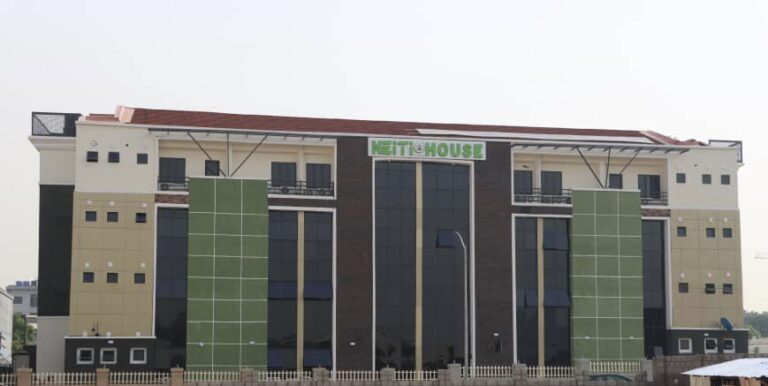
Executive Secretary of NEITI, Orji Ogbonaya Orji, presenting the policy brief to the Executive Director, Africa Network for Environmental and Economic Justice (ANEEJ), David Ugbor (Rev) at NEITI Hose. Photo credit: Communications and Stakeholders Management department, NEITI
The Executive Secretary of NEITI, Orji Ogbonnaya Orji, explained that the decision to undertake the research leading to the policy document was rooted in its statutory mandate under the NEITI Act 2007 and in line with the global Extractive Industries Transparency Initiatives (EITI) standards which requires disclosures on revenue allocations and subnational transfers.
“This policy brief is both timely and strategic. It provides a comprehensive assessment of the growing fiscal vulnerabilities confronting Nigeria’s subnational governments, vulnerabilities that are often masked by seemingly robust gross allocation figures but are, in reality, eroded by mounting debt-servicing deductions.
“At its core, the brief reveals the fiscal truth behind the numbers. It moves beyond surface level figures to unveil the shrinking net revenues available to states after deductions for external debt, contractual liabilities, and statutory obligations. By doing so, it exposes the silent but significant erosion of financial capacity at the state level, he explained.
According to Orji, a silent fiscal emergency is unfolding across the 36 States that demands urgent national attention and coordinated policy action.
“Behind the monthly announcements of federal allocations lies a harsher reality: mounting debts, crippling deductions, and shrinking revenues are eroding the capacity of subnational governments to deliver basic services and critical infrastructure,” he said.
The policy brief, he further explains, is both a diagnostic tool and a call to reform, stressing: “It peels back the veneer of gross FAAC allocations to reveal the unsustainable debt servicing burdens that now consume as much as 30 percent of some states’ revenues.
“It exposes the structural fiscal imbalances, regional disparities, and the fragile underpinnings of our revenue-sharing system that increasingly threaten the stability of Nigeria’s federal architecture.”
Nigeria’s map showing 2024 gross allocation to the geographical zones. PC: NEITI
Underscoring NEITI’s mandate under the Nigeria Extractive Industries Transparency Initiative Act and the global EITI Standard to promote transparency, accountability, and prudent revenue management, Orji said, “This policy brief expands that mandate to interrogate the fiscal health of state governments, especially how extractive- linked revenues are deployed or depleted through opaque deductions, obligations, and weak debt governance under reported frameworks.”
He said the insights presented in the blueprint were drawn from NEITI’s extensive research on the issues, analysis of official data from the Federation Accounts & Allocations Committee which NEITI sits in as Observer, Office of the Accountant- General of the Federation, the National Bureau of Statistics, NEITI’s Oil/Gas and Mining Industry Reports, Fiscal Allocation and Statutory Disbursement Reports, and other covered entities.
“The evidence points to an urgent need for reforms in debt management, public financial accountability, and revenue diversification, particularly in states where the debt- to-allocation ratio has exceeded globally accepted thresholds.
“NEITI, through this policy intervention, seeks to catalyse a national dialogue on subnational fiscal sustainability. We advocate for realistic borrowing anchored on measurable development outcomes, conditional federal support tied to fiscal performance, and institutional reforms that prioritize transparency, real-time reporting, and citizen oversight.”
NEITI Executive Secretary, Orji Ogbonaya Orji, flanked by ANEEJ officials during the presentation of the policy brief. Photo credit: Communications and Stakeholders Management department, NEITI
“This Policy Brief is more than an academic exercise; it is a blueprint for action. It is a tool for federal and state policymakers, development partners, civil society, and oversight institutions to work together in building a more resilient and equitable fiscal future for Nigeria. We must act now before debt becomes destiny,” Orji said.
Inside the policy blueprint
A peek into the policy review shows that using authoritative data from the Office of the Accountant-General of the Federation (OAGF), the National Bureau of Statistics (NBS), and NEITI’s own analysis, the brief uncovers how debt obligations ranging from 10 per cent to over 30 per cent of gross allocations are increasingly crowding out funds for basic public services and infrastructure investment.
Identifying a pattern of unsustainable borrowing practices, compounded by limited economic diversification, fragile tax systems, and weak fiscal transparency, the document presents evidence that many states, especially those with low IGR, are becoming fiscally vulnerable and dependent on volatile oil-derived federal transfers.
The document reveals that in 2024, several states have experienced significant deductions from their gross FAAC allocations ranging from 10 per cent to over 30 per cent to service debts and other financial obligations.
“States such as Kaduna (32.06 per cent), Ogun (26.54 per cent), and Bauchi (26.16 per cent) are among the hardest hit. Simultaneously, the 2023 IGR data indicates that at least ten states, including Taraba, Yobe, Kebbi, and Gombe, generated less than ₦20 billion each in internal revenues.
“These two fiscal stress points’ high deductions and low revenue generation highlight the systemic vulnerability of subnational public finance in Nigeria. The core policy issue emerging from this analysis is the unsustainable reliance on borrowing in the absence of adequate revenue growth.
“Many states continue to depend heavily on volatile federal transfers while accumulating debts that consume an increasing share of their statutory allocations. The consequences are stark: limited fiscal space for capital investment, deferred infrastructure development, and growing public dissatisfaction due to unmet socio- economic needs. Compounding these challenges are weak tax administration systems, low levels of economic diversification, and poor fiscal transparency at the subnational level,” the document reveals.
Against this backdrop, the NEITI policy brief interrogates the true financial health of Nigerian states beyond the headline figures of federal allocations. It examines the growing cost of debt servicing, the implications for public service delivery, and the urgent need for reform.
The research also reveals how unchecked debt servicing and opaque deductions systematically erode the financial capacity of states, thereby encouraging states to plug fiscal drains and retain a greater share of their statutory allocations for critical sustainability.
Underscoring the urgent need to expand state level IGR through digital tax administration, the formalisation of informal enterprises, and incentives for small and medium sized businesses, the policy brief seeks to promote better governance of public resources.
Through its call for the establishment of State Debt Management Offices (DMOs), real time financial disclosures, and independent audits, the brief promotes better governance of public resources. These measures empower states to assess liabilities accurately, negotiate better terms, and avoid high risk borrowing practices.
The policy has also provided recommendations that aim to reduce the burden of debt servicing on core developmental sectors. By advocating for rational borrowing, capped deductions, and improved debt transparency, the brief seeks to secure more fiscal space for infrastructure, healthcare, education, and economic growth initiatives.
Relevance
Aside serving as a diagnostic and reform tool, the brief identifies states with high deduction to allocation ratios, clearly signalling where urgent fiscal interventions are needed to avert financial distress.
It maps out the growing burden of debt and its direct consequences on development planning and public service delivery, while calling for stronger debt management frameworks, transparent borrowing practices, and performance linked fiscal strategies at the subnational level.
By drawing a connection between rising deductions and declining investments in health, education, infrastructure, and economic diversification, the policy makes a powerful case for fiscal sustainability.
While supporting NEITI’s broader transparency agenda, it champions real time disclosure of debt and deductions, helping to deepen Nigeria’s commitment to fiscal openness, accountability, and reform in line with global best practices.
Liabilities and contractual risks
The Policy Brief also flags contractual obligations—notably in Ogun (₦6bn) and Ondo (₦7.73bn) tied to public-private partnerships (PPP) and infrastructure projects—warning that opaque contract terms and excessive deductions can undermine future fiscal space.
Conversely, 18 states, including Abia, Adamawa, and Akwa Ibom, reported zero contractual deductions, signalling more cautious or strategically timed borrowing.
Inequality in revenue sharing formula
In 2024, Delta State received ₦581.27bn — five times the ₦108.32bn received by Nasarawa. NEITI warns that such disparities, compounded by high debt-servicing ratios in smaller-allocation states, could deepen fiscal inequality and stall regional development.
The Policy Brief recommends:
• Establishing State Debt Management Offices (DMOs) in all 36 states.
• Mandatory real-time debt reporting and quarterly public disclosures.
• Linking federal bailouts/support to improvements in IGR and fiscal transparency.
• Revising the revenue allocation formula to address vertical and horizontal imbalances.
• Capping contractual deductions and publishing the full terms of major borrowing agreements.
Proposed solutions
To address the issues identified, the policy brief proposes a set of strategic policy options. “First, there is a compelling need for states to strengthen domestic revenue mobilisation, it states, adding: “This includes broadening the tax base through the formalisation of informal enterprises, digitising tax collection systems, and improving tax compliance and enforcement.
“States must also diversify their economies by investing in sectors such as agriculture, manufacturing, and solid minerals to reduce dependence on oil-derived federal allocations. Second, the implementation of robust fiscal responsibility frameworks is critical. State governments must enact and enforce fiscal laws that limit unsustainable borrowing and link debt acquisition to clear developmental outcomes.
“Rationalising public expenditure is also essential this means prioritising high-impact infrastructure and social investments while eliminating wasteful or redundant spending. Thirdly, enhanced transparency in debt reporting and public financial management is vital to restoring public trust and accountability.
“States should be required to publish quarterly debt service reports and adopt NEITI’s standards in managing extractive revenues, especially in resource rich regions. Furthermore, federal support to states whether in the form of debt restructuring or bailouts should be conditional on verifiable improvements in IGR performance, transparency, and fiscal discipline.”
Need for smarter borrowing, transparent debt management by states
The brief notes that states in Nigeria receive substantial monthly allocations from the Federation Account, much of it derived from extractive revenues. However, when between 10 per cent and 30 per cent of these allocations are deducted at source for debt servicing, the fiscal space for grassroots infrastructure, social services, and poverty alleviation is severely diminished.
By highlighting the scale and implications of these deductions in the policy brief, NEITI says it is providing citizens, policymakers, and development partners with reliable evidence to drive fiscal discipline and prudent debt management.
NEITI further explains that the brief addresses a critical governance gap by complementing national debt management reforms with robust subnational fiscal transparency. High and unsustainable debt servicing obligations pose risks to state-level stability and undermine the developmental impact of extractive revenues.
“Through this disclosure, NEITI empowers citizens, civil society, and the media to hold state governments accountable for their borrowing decisions, while providing a credible, evidence-based platform for dialogue on debt sustainability thresholds, transparent loan agreements, and responsible economic governance.”
Theme of the policy brief blueprint. Source: NEITI
The Policy Brief reveals that between 10 per cent and 30 per cent of monthly FAAC allocations in many states are directly deducted at source for debt servicing, leaving less room for grassroots development investment.
For instance, Kaduna State recorded the highest 2024 deduction ratio at 32.06 per cent, translating to ₦51.2bn deducted from ₦159.7bn in gross allocations.
Ogun State followed with 27 percent (₦33bn from ₦123bn), Bauchi with 26 percent (₦37bn from ₦142bn), and Cross River with 24 percent (₦28bn from ₦119bn).
The NEITI Policy Brief indicates that these high-debt states contrast sharply with low-debt performers such as Borno with only 2.63 percent debt reduction obligations, Jigawa 2.74 percent, Benue -3.58 per cent and Nasarawa -3.82 per cent debt burden exposure. Other States with low debt burden commitments include Kebbi 4.06 per cent, Bayelsa -4.46 percent, and Anambra 4.54 per cent, where prudent borrowing and efficient fiscal management have preserved over 95 percent of gross allocations for direct development spending.
The NEITI Policy Brief also examined Positive Debt-to-GDP Management implications and the possible lessons that subnational governments must consider. It notes that these low-debt states provide practical models for maintaining a healthy debt-to-GDP profile while still leveraging borrowing for development where necessary. This balance between debt and revenue is critical for preserving fiscal sovereignty and avoiding dependency on future bailouts.
Call to Action
The NEITI Executive Secretary, Orji stressed that this is “not a name-and-shame exercise, but a mirror and a map” a mirror to reflect fiscal realities, and a map to guide states toward resilience, transparency, and equitable growth.
“Debt, when managed efficiently, can be a tool for financing development at the grassroots. But when servicing obligations consume up to a third of monthly revenues, it becomes a threat to the future of public service delivery and economic stability.”
Orji affirms that NEITI’s recommendations align with its mandate under the NEITI Act and Nigeria’s obligations under the global Extractive Industries Transparency Initiative (EITI) Standards, particularly on debt transparency, subnational transfers, and revenue governance.
He further affirmed that as Nigeria navigates a challenging fiscal landscape, the Policy Brief stands as both a red flag, a warning bell and a reform blueprint urging state and federal authorities to act decisively with bold reforms before debt becomes not just a burden, but a destination. Specifically, the brief addresses the transparency of subnational transfers is required in tracking how federal allocations and natural resource revenues are shared and used.
“The publication of debt and deduction data supports the EITI’s demand for clear reporting on government borrowing and liabilities, especially when linked to extractive revenue. The safeguarding of development spending, ensuring that debt servicing does not compromise public investments in health, education, and infrastructure,” the document reads.
The brief provides clarification of financial flows related to extractive resources, particularly for oil producing states that benefit from the 13 percent derivation fund.
This policy brief contributes significantly to the discourse on sustainable resource mobilisation at the subnational level by highlighting key gaps, proposing corrective strategies, and aligning fiscal practices with broader development objectives.
NEITI is a government agency that makes sure money from Nigeria’s oil, gas, and mining industries is properly managed. It checks the payments companies make to the government, reports any gaps or problems, and shares the findings with the public.
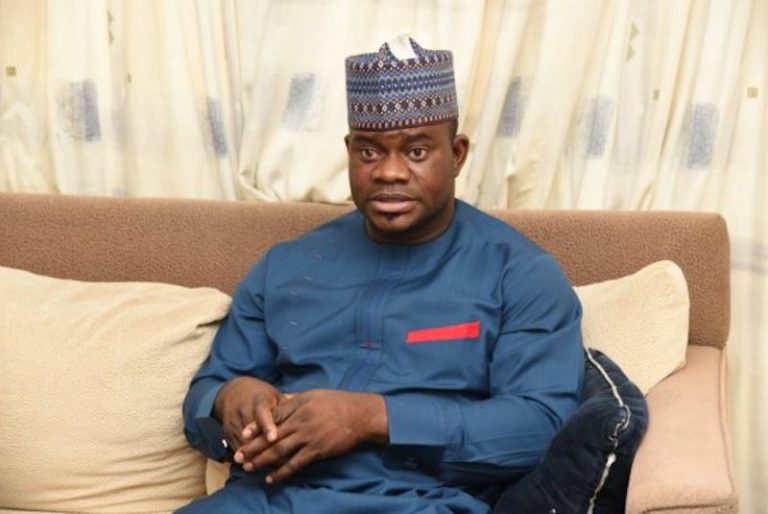
A VIRAL video of former Kogi State governor, Yahaya Bello, instructing newly elected State House of Assembly member, Hassan Shado, and his supporters to cooperate with the Speaker and lawmakers loyal to Governor Usman Ododo has sparked outrage among Nigerians.
In the footage, Bello was seen addressing Shado, the All Progressives Congress (APC) lawmaker-elect for Dekina-Okura II State Constituency, after he was presented to the former governor on Monday.
Shado had recently won the August 16 by-election, polling 55,073 votes against the Peoples Democratic Party (PDP) candidate, Godwin Meliga, who scored 1,038.
Addressing Shado, Bello said during a visit to his house in Abuja, Bello said, “This is democracy is not the way they described it to be. Somebody recommended you; if they allowed it like that, you would not emerge. I’m telling you the truth. This is the practical.
“Tomorrow, somebody will tell you, Why are you there? Are you a stooge? You are an assembly member. Exert your position. You are a legislator. The executive is turning you like this. They turn you left, you go left. They turn you right, you go right. Assembly is not like. No be like that at all,” Bello said.
Bello further instructed Shado, who was seen standing with his hands clasped together at waist level in a restrained posture, while many of his supporters sat on the floor, before warning him to strictly obey every directive of Governor Ahmed Usman Ododo in the discharge of his legislative duties.
“So, as you are going in there now, go and cooperate with the speaker, other members of the House of Assembly of Kogi State, and be part of those who will support Governor Ahmed Usman Ododo. Are you getting my point?
“In everything that comes to the assembly. Everything. Even if you don’t understand, call your brother here. Whatever he tells you, follow. Whatever Okala tells you, follow it to the letter. Are you getting my point? You know our culture,” Bello said.
The former governor further reminded Shado that his victory was not achieved by his efforts alone, but through the support of loyal party members and grassroots mobilisers.
He urged him to ensure inclusivity, consultation, and collective leadership.
The video, widely circulated on X (formerly Twitter) and Facebook, has generated heated backlash, with many Nigerians describing the action as humiliating, authoritarian, and a reflection of the country’s broken political culture.
Many accused Bello of fostering a culture of blind loyalty rather than encouraging independent lawmaking.
Critics also questioned the symbolism of making elected officials sit on the floor, arguing that it undermines the dignity of the office and sends a dangerous message about power relations in Nigeria’s politics.
A facebook user, Princewill Dandison, while reacting to the circulating video, wrote “There is no people representation in Nigeria politics, it is the so called rulers representation because they were recommended and chosen so they’re answerable to those who recommend and choose them, a situation where the next governor is already know from the inside, this is democracy according to them not the definition generally known.”
Also, Gbenga Ajibade, another Facebook user, stated that “You can now understand why we are where we are. Our politicians have a different definition of democracy. Until we rise against them, we will not get what we want.”
Similarly, Zed Ari bemoaned the situation, adding that that’s the hard truth about democracy in Nigeria.
“He said the truth about democracy in Nigeria. I don’t blame him when he said that, after him, another will still come from within their circle.”
THE Nigeria Police Force (NPF) has condemned the conduct of some of its personnel captured in a viral video assaulting a motorist and attempting to forcibly remove glasses during a stop-and-search operation in Lagos.
The officer was captured slapping the motorist after suspecting that the glasses was recording their altercation.
In a statement on Friday, August 22, the Force described the behaviour as unprofessional and said the officers involved, attached to the Lagos State Police Command, have been identified.
“The Commissioner of Police in charge of the Lagos State Command has been contacted and has swiftly acted appropriately to ensure that the officers face commensurate disciplinary actions. He has equally ordered for the restructuring of the squad involved,” the statement read.
Similarly, a statement by the spokesman of Lagos Police Command, Benjamin Hundeyin, on Friday, confirmed that the entire team have been detained.
He also noted that the ‘officers will face an orderly room trial in line with established disciplinary procedures to ensure justice is served swiftly and transparently.’
“In addition, the entire Tactical Squad implicated in this matter has been dissolved with immediate effect. A new Tactical Squad has been constituted, comprising officers who will adhere strictly to international best practices in policing. This new unit will operate with zero tolerance for corruption, while upholding the highest standards of respect for human rights and human dignity,” he wrote.
The NPF further claimed that the incident was isolated and does not reflect the professional standards expected of police officers.
“The Force leadership stands on its commitment to identifying and sanctioning the very few errant officers whose actions embarrass dedicated, hardworking and responsible personnel of the Force,” it added.
Viral video sparks outrage
The ICIR reports that the reaction followed a video circulating on social media, which shows a policeman repeatedly harassing a motorist at a checkpoint.
The officer was seen slapping the driver and attempting to snatch his glasses while accusing him of secretly recording the police.
Despite presenting his vehicle documents and driver’s licence, the motorist was assaulted. In the footage, he protested, “Why are you hitting me? What’s the problem? Why are you touching them? Can’t I wear my glasses again? Why are you touching my glasses, what have I done wrong…,” he said
The officer retorted, “Why do you put us on camera? You are camera police,” before forcefully reaching for the eyewear.
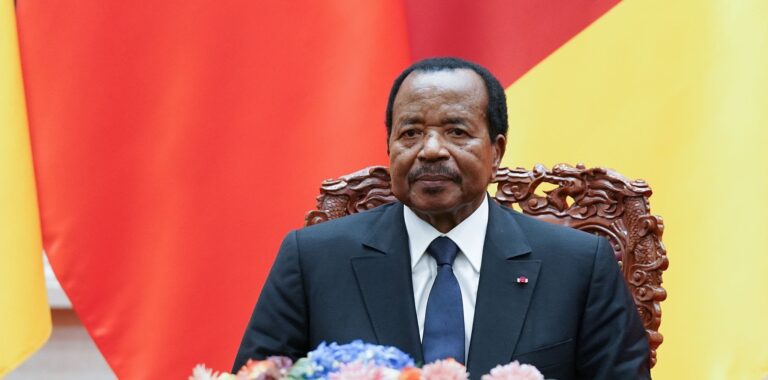
CAMEROON’s constitutional court has dismissed a suit seeking to block longtime leader Paul Biya from running for an eighth term, paving the way for him to extend his nearly 43 years in power.
Court President Clement Atangana, after two hours of legal arguments followed by a closed-door session, dismissed the case on Friday,
The ICIR reported that Biya, who at 92 is the world’s oldest sitting president, is seeking another seven-year mandate in the October 12 elections, even though his age, health and capacity to govern have become a subject of debate.
The bid to stop Biya’s candidacy was filed by Akere Muna of the Universe Party, one of the 12 contenders in the upcoming poll.
Muna, a lawyer and veteran anti-corruption advocate, said he respected the court’s ruling but maintained that doubts over Biya’s competence remained unresolved.
Muna claimed that “President Biya reigns but does not govern,” while his lawyer and supporters cited Biya’s heavy reliance on his cabinet and wife to carry out presidential functions.
Cameroon’s fragmented opposition is finding it difficult to mount a strong challenge against Biya, who has faced accusations from rights groups of silencing political opponents.
The ICIR reported that while some citizens protested online in February during his 92nd birthday demanding his exit when his tenure expires later this year, others see him as a good leader who should continue in office.
Born on February 13, 1933, in Mvomeka’a, South Region, Biya has been Cameroon’s president since 1982. He has been a public office holder since the nation got its independence in January 1960.
THE federal government, states, and local government councils (LGCs) received N2.001 trillion as federation allocation for July.
The Federation Account Allocation Committee (FAAC) revealed this during its August meeting held in Abuja, according to a statement on Friday, August 22, from the Office of the Accountant-General of the Federation (OAGF) by its director, press and public relations, Bawa Mokwa.
It showed that the July allocation represents a N183 billion increase from the N1.818 trillion shared in June.
The N2.001 trillion revenue distributed to the tiers of government comprised N1.282 trillion from statutory revenue, N640.610 billion from value-added tax (VAT), N37.601 billion from electronic money transfer levy (EMTL), and N39.745 billion from exchange difference.
Gross revenue available was N3.836 trillion, total deductions for the cost of collection stood at N152.681 billion, and total transfers, interventions, refunds, and savings at N1.683 trillion.
Also, gross statutory revenue stood at N3.070 trillion, lower than the N3.485 trillion recorded in June.
From the N2.001 trillion distributable revenue, the federal government received N735.081 billion, the states got N660.349 billion, and LGCs received N485.039 billion.
It added that 13 per cent of mineral revenue, amounting to N120.359 billion, was shared as derivation revenue to benefiting states.
Also, Petroleum profit tax (PPT), oil and gas royalties, EMTL, and excise duty recorded significant increases.
While VAT and import duty rose marginally, companies’ income tax (CIT) and CET levies declined.
The ICIR reports that, at a press briefing on Monday, August 18, the Revenue Mobilisation Allocation and Fiscal Commission (RMAFC) said it has begun a fresh review of the revenue-sharing formula for the tiers of government.
Its review comes about three decades after the formula was last adjusted.
At present, the revenue distribution stands at 52.6 per cent for the federal government, 26.7 per cent to states, and 20.6 per cent to LGCs.
According to RMAFC, the review seeks to produce a “fair, just, and equitable” formula that reflects the constitutional responsibilities, financial needs, and capacities of the three tiers of government.
THE National Agency for Food and Drug Administration and Control (NAFDAC) has raised alarm over the circulation of counterfeit Cowbell ‘Our Milk’ 12g sachet in Nigeria, warning that the fake product posed serious health risks to consumers.
The alert, posted on its X handle, on Friday, August 22, followed a report from Promasidor Nigeria Ltd, the manufacturers of Cowbell, which, the agency said, discovered that counterfeiters had illegally reproduced its packaging, trademark, and registration number.
According to NAFDAC, the fake product was packaged using an outdated design last used by Promasidor in September 2023.
NAFDAC explained that while the counterfeit product looked similar to the genuine one, it lacked the creamy texture of real milk and showed signs of poor packaging, including shoddy sealing and inferior coding.
It also noted that unlike the original, which is laser-printed, the fake sachets carried batch details printed with ink.
The agency warned that consuming the fake milk could trigger foodborne illnesses, allergic reactions, or organ damage, with infants, children, pregnant women, and the elderly at higher risk.
It said its state coordinators and zonal directors have been directed to begin surveillance and mop-up operations to remove the counterfeit sachets from circulation.
The regulatory body also urged consumers to remain vigilant when buying milk, to purchase only from licensed distributors, and to report any suspicious products to the agency through its hotlines or official email.
The NAFDAC further called on healthcare professionals to report cases of adverse reactions linked to counterfeit foods through its pharmacovigilance channels.
“All NAFDAC zonal directors and state coordinators have been directed to conduct surveillance and mop up the counterfeit Cowbell 12g sachet Milk products within their zones and states.
“Distributors, retailers, and consumers are advised to exercise caution and vigilance within the supply chain to prevent the distribution, sale, and use of the counterfeit milk product. All food products must be obtained from authorized/licensed manufacturers/suppliers. The products’ authenticity and physical condition should be carefully checked,” the statement added.