Home Blog Page 207

Lagos councillor dies 2 weeks after taking oath of office

0

TWO weeks after taking the oath of office, Oluwakemi Rufai, councillor representing Ward C1 in Ibeju-Lekki Local Government Area (LGA) of Lagos State, has died following a brief illness.

Rufai, the only woman in the Ibeju-Lekki legislative council, was part of the newly elected council officials sworn in by the LGA chairman, Abdullahi Olowo.

The ceremony followed the July 12 local government poll and the July 27 inauguration of council chairmen, where Governor Babajide Sanwolu, charged the officials to prioritise grassroots development, promising support while warning against misuse of council funds.

Speaking with The ICIR, the head of public affairs Ineju-Lekki LGA, Idowo Nathaniel, confirmed her death, adding that the lawmaker died on Tuesday, August 12, after a brief illness.

The news of her death was also reportedly confirmed on Wednesday, August 13, by Ibeju-Lekki LG Chairman and Lekki LCDA Chairman, Rasaki Kasali, both of whom described the loss as a profound shock to the community she served.

According to reports, the state APC spokesperson Seye Oladejo while reacting to her death, said was dedicated to community development and loyalty to the party’s ideals during her brief stay in office. 

He extended condolences to her family, the Ibeju-Lekki community, and her constituents, adding her legacy of service would not be forgotten.

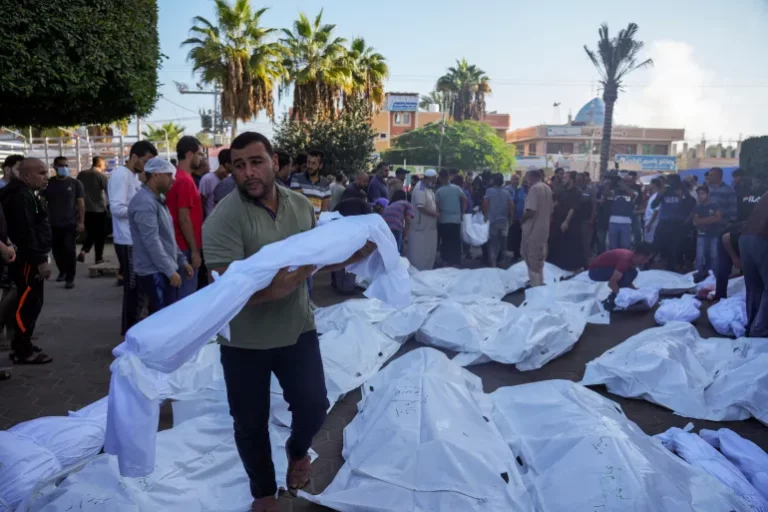
273 Palestinian journalists, media workers killed since Gaza war began

Since Israel launched an attack on Gaza in 2022, 273 journalists and media workers have been killed, making an average of about 12 journalists monthly.

A monitoring group, Shireen.ps, named after Al Jazeera journalist Shireen Abu Akleh, who was fatally shot by Israeli forces in the occupied West Bank in 2022, tracks all victims of the conflicts, including media workers, hundreds of whom have been killed, wounded, imprisoned or displaced.

Veteran journalist Shireen Abu Akleh was killed by an Israeli bullet while covering a raid in the Jenin refugee camp on May 11, 2022, despite putting on vest that marked her as journalist.

Multiple investigations confirmed she was deliberately targeted by an Israeli soldier using a US-made weapon.

Her death sparked massive outrage and mourning, culminating in one of the largest Palestinian funerals in modern history.

Thousands of mourners protested her death across several cities, and her funeral in Jerusalem was marred by Israeli police attacking mourners. Abu Akleh, known as the “Voice of Palestine,” was honored as a national symbol.

Since Abu Akleh’s killing, about 270 other journalists and media workers have died in the conflict.

The ICIR reports that 28-year-old Al Jazeera journalist Anas al-Sharif, and four of his colleagues were killed in what was described as a deliberate Israeli strike on a media tent where journalists had taken shelter outside the main gate of Gaza City’s al-Shifa Hospital.

Al Jazeera reporter Hani al-Shaer said an Israeli drone struck the tent at about 11:35 pm (20:35 GMT) on Sunday, killing seven people, including Al Jazeera correspondent Mohammed Qreiqeh and camera operators Ibrahim Zaher, Mohammed Noufal, and Moamen Aliwa.

Al Jazeera condemned the killings in a statement describing it as “yet another blatant and premeditated attack on press freedom,” stressing that al-Sharif and his colleagues were among the few remaining voices reporting from inside Gaza, with international media still barred by Israel.

According to the media organisation, Sunday night’s strike was not the first time Israel has targeted Al Jazeera journalists in Gaza; at least five had been killed in previous attacks.

A report by Brown University’s Costs of War project shows that more journalists have been killed in Gaza since the war began, than those killed during the United States Civil War, the two World Wars, the Korean and Vietnam wars, the conflicts in the former Yugoslavia, and the post-9/11 war in Afghanistan.

Reporters Without Borders (RSF) revealed that 2024 was the deadliest year for journalists, with over 120 killed. More than 50 journalists and media workers were killed in Gaza that year.

In response to Sunday’s attack, a spokesperson for UN Secretary-General Antonio Guterres called for an investigation and emphasised that journalists must be able to work anywhere without fear of being targeted.

Similarly, Amnesty International described the killings as a war crime and honoured al-Sharif as a “brave and extraordinary” reporter, noting he received the Human Rights Defender Award in 2024 for his commitment to press freedom.

Aviation safety concerns as high-profile passenger incidents raise accountability questions

0

IN recent months, the Nigerian aviation sector has faced mounting scrutiny over passenger behaviour and the enforcement of safety protocols. Several incidents involving prominent individuals have raised questions about oversight, accountability, and potential risks to safety.

Oshiomhole–Air Peace confrontation

On Wednesday, June 11, a confrontation occurred between a senator, Adams Oshiomhole and Air Peace staff at Murtala Muhammed Airport Terminal 1 (Zulu Hall). The incident disrupted flight operations.

According to Air Peace, Oshiomhole arrived at 6:10 a.m. for a 6:30 a.m. flight to Abuja, but boarding had closed, and the flight departed as scheduled. The airline alleged that, upon being told he had missed his flight, the senator became physically aggressive, assaulted staff, and blocked the terminal entrance.

Conversely, Oshiomhole claimed he had checked in online and was unjustly denied boarding, alleging the airline resold seats at inflated prices. He stated he arrived at the terminal five minutes after 6:00 a.m. and was told the counter was closed despite having evidence of online check-in.

Minister of Aviation and Aerospace Development, Festus Keyamo, ordered a full investigation, instructing aviation agencies to hear all sides and avoid premature conclusions. Two months later, no official report or sanctions have been announced, prompting concerns over administrative lapses and safety risks

KWAM 1 Incident at Abuja Airport

Last week, Fuji musician King Wasiu Ayinde Marshal (KWAM 1) clashed with ValueJet staff at Nnamdi Azikiwe International Airport, Abuja, after insisting on boarding with a thermos flask containing liquid. Eyewitnesses allege he spilled some of the contents on a ground staff member.

ValueJet confirmed he was denied boarding for violating liquid restrictions, a standard post-9/11 safety rule.

Analysts queried how the musician was able to beat security protocols manned by Nigerian Civil Aviation Authority (NCAA) and Federal Airports Authority of Nigeria (FAAN) and strategically positioned before Air passengers making their final boarding to fly.

“Would Oshiomole and Kwam 1 behave the way they did were they to be in Accra or Heathrow? Drinks in whatever form, or even water or perfume, are not allowed in your carry-on luggage into the Cabin,” John Ojikutu, Chief Executive Officer at Centurion Security and Safety Consults queried.

Another disruption: Comfort Emmanson

Barely a week after the KWAM 1 incident, another passenger, Comfort Emmanson, was filmed in an altercation with staff at Murtala Muhammed International Airport, Lagos. This eventually led to her being charged and remanded. However, this has now been reviewed.

Implications for Nigeria’s aviation safety 

John Ojikutu, Chief Executive Officer of Centurion Security and Safety Consults, told The ICIR that the recent altercation involving Senator Adams Oshiomhole and other high-profile passengers reflects a deeper administrative gap in enforcing sanctions against those who breach aviation safety protocols.

He said, “it did not start with the woman on Ibom Air, nor KWAM 1, nor did it begin with the former Governor, now Senator Oshiomhole. The records at the Federal Airport Authority of Nigeria (FAAN) and Nigeria Civil Aviation Authority (NCAA) will show that such actions have always been there, especially with the political office holders.”

Ojikutu warned that these events highlight long-neglected risks in the oversight and enforcement of Nigeria’s Aviation Security Programme.

“A few weeks ago, the International Civil Aviation Authority of Nigeria (ICAO) asked us, “What is our threat assessment of the risks at our airports? They would have found some threatening risks in their audits, and so should the NCAA in its annual Audits.”

He further questioned whether gaps identified in airport, airspace, and in-flight security have been adequately addressed by FAAN, NAMA, airlines, ground-handling companies, and the NCAA.

“How have we (FAAN, NAMA, Airlines, Ground handling services providers and the NCAA) been getting the threatening gaps found in Airport, Airspace and In-flight Security closed after their Audits? What we are seeing now resembles the trend that led to 9/11 in America. It looks like a rehearsal or a copying model of something waiting to happen,” he stated.

Legal provisions

Under Section 459A of the Criminal Code Act, anyone who unlawfully obstructs or hinders the movement of an aircraft on the ground or in flight over an aerodrome commits a misdemeanour and faces up to two years in prison. Similarly, Section 472 of the Penal Code prescribes up to two years’ imprisonment, a fine, or both for obstructing aircraft operations.

Analysts say these incidents expose deep flaws in Nigeria’s aviation system. In a properly managed environment, passengers should board via airbridges and never have access to disrupt aircraft operations. Security should also be robust enough to deal instantly with unruly passengers.

“The incidents underscores the need for airlines to engage highly professional crews and regularly evaluate their psychological fitness,” aviation analyst Bankole Bernard said.

Ojikutu stressed that the government must urgently create a contingency plan to deal with unlawful passenger behaviour, whether in terminal holding areas, on aircraft aprons, or in flight.

PMS supply decreases to 1.48 billion litres in June – Report

0

THE volumes of premium motor spirit (PMS) supplied to the market in June by the Nigerian National Petroleum Company Limited (NNPCL) and other oil marketers decreased to 1.48 billion litres from 1.77 billion litres in May.

The Nigerian Midstream and Downstream Petroleum Regulatory Authority (NMDPRA) revealed the figures in its latest monthly report on the supply and distribution of petroleum products submitted to the Federation Revenue Reconciliation  Committee (FRRC).

It showed that PMS supply, popularly known as petrol or fuel, dropped by 16.42 per cent, representing a decline of 290.5 million litres from the 1.77 billion litres supplied to the market in May.

A cursory look at the NMDPRA report revealed that of the total 1.48 billion litres supplied to the market, 1.02 billion litres were from imports, as against 455.19 million litres from local refineries.

This further indicates that Nigeria imports more petrol products than it locally refines.

A further look at the report showed that local refineries’ PMS supply to the market declined in June compared to the 472.07 million litres recorded in May.

The NMDPRA states, “the total evacuation for June 2025 is 1,440,768,129 litres. The daily average reported is 48,025,604 litres.

“The average was obtained by dividing the total volume of 1,440,768,129 by the number of days (30) in June.”

It also revealed that PMS distribution (truck-out) volumes dropped by 246.67 million litres to 1.44 billion litres, representing a 14.62 per cent decline, from  1.69 billion litres distributed in May.

The ICIR reports that the 650,000-capacity Dangote Refinery has largely been supplying petroleum products to the Nigerian market.

The state-owned refineries, Port Harcourt, Kaduna, and Warri refineries, being managed and operated by the NNPCL, have remained comatose despite allegedly gulping about $18 billion in turnaround maintenance, The ICIR reported.

Amid the concern of noticeable operational failures, the NNPCL recently announced to sell off the three refineries.

In a later conversation, the Group Chief Executive Officer (GCEO), Bayo Ojulari, dismissed the earlier plan; however, it is not yet on public notice what the company’s next line of action is regarding the refineries.

Nigerian government mulls airport ambassadorial role for KWAM 1

1

THE Federal Government is considering naming popular musician, Wasiu Ayinde, an “Ambassador for Proper Airport Security Protocol” following his recent misconduct at the Nnamdi Azikiwe International Airport, Abuja.

Similarly, the government has withdrawn its criminal complaint against Comfort Emmanson, another passenger involved in unruly behaviour on Ibom Air flight at the Murtala Mohammed International Airport, Lagos.

The government has consequently reduced sanctions on Ayinde, popularly known as KWAM 1, to a month ban following what it described as outcomes of consultations with aviation stakeholders and appeals by Nigerians.

The Minister of Aviation and Aerospace Development, Festus Keyamo, SAN, announced the decisions in a statement on Wednesday, August 13, saying they were made on compassionate grounds after both passengers expressed remorse for their actions.

Keyamo said the incidents, though regrettable, had raised public awareness about appropriate conduct within airports and among passengers onboard aircrafts, as well as highlighted the need for improved conflict management by aviation officials.

On August 10, 2025, Emmanson was accused of engaging in disruptive conduct during an Ibom Air flight from Uyo, Akwa Ibom State capital to the Murtala Mohammed International Airport, Lagos State, leading to her arrest and remand in Kirikiri Prison. 

The airline subsequently filed a criminal complaint against her, while the Airline Operators of Nigeria (AON) imposed a lifetime ban on her from flying on any Nigerian carrier.

Meanwhile, KWAM 1 was sanctioned by the Nigerian Civil Aviation Authority (NCAA) for alleged misconduct on a ValueJet flight. The musician was placed on indefinite flight ban pending investigation.

He was, however, not charged to court or arrested by the police.

Emmanson’s case sparked heated debate online, with many Nigerians drawing comparisons to KWAM, who had attempted to physically prevent a plane from taking off and was reported to have assaulted the captain by pouring alcohol on her.

Reacting to the cases Wednesday morning, Keyamo said he had engaged Ibom Air’s management, the police, and the AON, leading to an agreement to withdraw the complaint and lift the lifetime ban. 

“In the case of KWAM 1, the NCAA is to reduce his flight ban to a one-month period. FAAN will also work with the music star with a view to engaging him as an ambassador for proper airport security protocol going forward.”

He also announced the government’s decision on Emmanson: “In the case of the unruly passenger, Ms. Comfort Emmanson, on the Ibom Airline on Sunday, the 10th of August, 2025, I have conferred with Ibom Airline to withdraw the complaint against her today. When the Police took her statement in presence of her lawyer, she exhibited great remorse for her conduct.

“Subsequent to the withdrawal of the complaint by the complainant, the CP of Airport Command and the police prosecutor will immediately take the remaining steps to facilitate her release from Kirikiri Prisons within this week,” the statement read.

The minister said he had appealed to the Airline Operators of Nigeria (AON) to lift the lifetime ban imposed on her.

“I have also conferred with the leadership of the Airline Operators of Nigeria (AON) and have appealed to them to lift the life-time flying ban imposed on her, to which they agreed.

The details of the resolution will be made public by the AON subsequently,” the statement added.

Similarly, the minister said the NCAA will withdraw its criminal complaint against the musician. 

“Having publicly demonstrated penitence, the NCAA is also to withdraw its criminal complaints against KWAM 1 earlier lodged with the police,” he said.

Pilots’ licences restored

According to the statement, the ValueJet pilot, Oluranti Ogoyi, and co-pilot, Ivan Oloba, will have their licenses restored after serving a one-month ban and undergoing mandatory professional re-appraisal.

“In the case of Captain Oluranti Ogoyi, and the co-pilot, First Officer Ivan Oloba of VALUEJET, the NCAA is to restore their licenses after the same period of one-month ban after undergoing some mandatory professional re-appraisal. The details will be announced by the NCAA.

“I have directed all relevant aviation agencies in collaboration with other complementary agencies outside aviation to IMMEDIATELY begin a retreat NEXT WEEK to properly retrain and prepare our aviation security personnel on how to deal with errant and disruptive passengers and how to deescalate potentially explosive situations. The retreat will be fully covered by the press with the opportunity to ask all the relevant questions.”

Dangote reduces fuel price to N820/litre

0

DANGOTE Petroleum Refinery said it has reduced the ex-depot price of petrol product to N820 per litre.

The company’s group chief branding and communications officer, Anthony Chiejina, announced this in a statement on Tuesday, August 12.

He said the new price adjustment takes effect immediately.

The cut in the ex-depot price, also known as the gantry price, represents a N30 reduction from N850 per litre.

According to Chiejina, Dangote Refinery’s move reflects the company’s commitment to national development and ensuring an uninterrupted supply of petroleum products.

“Dangote Petroleum Refinery has announced a reduction in the ex-depot (gantry) price of Premium Motor Spirit (PMS), commonly referred to as petrol, by N30.00, from N850 to N820 per litre, effective from 12th August 2025.

“As part of our unwavering commitment to national development, Dangote Petroleum Refinery assures the public of a consistent and uninterrupted supply of petroleum products,” Chiejina said.

He noted that the refinery would begin deploying 4,000 compressed natural gas (CNG)-powered trucks for fuel distribution nationwide from August 15.

“In line with our dedication to operational excellence and sustainable energy solutions, Dangote Petroleum Refinery will commence the phased deployment of 4,000 Compressed Natural Gas (CNG)-powered trucks for fuel distribution across Nigeria, effective August 15, 2025,” Chiejina added.

The Dangote Refinery ex-depot prices reduction comes barely a week The ICIR reported that the pump price of petrol was nearing N1,000 per litre as the Nigerian National Petroleum Company Limited (NNPCL) stations and other filling station outlets across the country raised their prices.

The fluctuations in pump prices among retail outlets range from N900 to N1,000 per litre.

On Monday, August 4, the NNPCL sold N950+/litre in most of its retail outlets in Abuja, dropping its price barely 48 hours later to N900 per litre.

In Lagos, the state-owned oil company dropped its pump price to N875 per litre.

The recent pump price hike was also implemented by filling stations across Lagos and Ogun states.

The upward and downward movement of crude oil prices in the international market are key factors affecting the price of crude oil, The ICIR can report.

IGP orders KWAM1’s probe for ‘obstructing’ ValueJet aircraft in Abuja

0

THE Inspector-General of Police, Kayode Egbetokun, has ordered an immediate and thorough investigation into allegations that fuji musician Wasiu Ayinde Marshal, popularly known as KWAM 1, obstructed the safe operation of an aircraft in Abuja.

 The Nigeria Police Force said on Monday, August 12, that it received a formal petition from the Nigeria Civil Aviation Authority (NCAA) accusing KWAM 1 of allegedly obstructing the safe operation of the ValueJet aircraft at the Nnamdi Azikiwe International Airport, Abuja.

“He is accused of engaging in unruly conduct that allegedly obstructed the safe operation of an aircraft, in violation of the Nigerian Civil Aviation Regulations, 2023 following a reported incident on 5 August 2025 at the Nnamdi Azikiwe International Airport, Abuja. 

“In response, the Inspector-General of Police, IGP Kayode Adeolu Egbetokun Ph.D., NPM, has directed the Commissioner of Police, Airport Command, to immediately commence a thorough investigation into the matter, to unravel the circumstances which led to the ugly incident and ensure justice is served accordingly” the statement signed by the Force spokesperson, Muyiwa Adejobi, said.

The ICIR reports that Nigerians had criticised President Bola Tinubu-led Federal Government for showing double standards in handling KWAM’s case and that of another  passenger Comfort Emmanson, who allegedly attacked Ibom Air crew and airport security at the Murtala Mohammed International Airport, on Sunday, August 10.

While the female passenger was hurriedly charged in court by the police and detained in Kirikiri within 24 hours that she committed the alleged offence, KWAM, who is widely believed to have strong links with the Presidency, has been walking freely on the street for over a week after he was seen in widely circulated videos blocking an aircraft because he was denied boarding.

The ICIR reported that the saga began on August 5 when the Federal Airport Authority of Nigeria (FAAN) announced that the 68-year-old musician had tried to board a ValueJet Airlines flight to Lagos carrying an “unidentified liquid substance.”

Airport authorities claimed that the singer ignored warnings from both Aviation Security (AVSEC) personnel and the flight captain.

They further alleged that the singer spilled alcohol on aviation personnel while they tried to inspect the contents of a flask he intended to travel with.

The singer later argued that the substance was “plain drinking water” given to him at the airport lounge while awaiting boarding and not alcohol.

However, KWAM 1 eventually tendered an apology to Nigerians and the Federal Government on August 8, for his unruly conduct, hours after Nigeria’s Minister of Aviation and Aerospace Development, Festus Keyamo, directed the NCAA to place him on a no-fly list for six months.

In its latest statement, the Force reaffirmed its commitment to ensuring safety and security within Nigeria’s aviation sector, while pledging enhanced collaboration with stakeholders to strengthen aviation security and enforce strict compliance with aviation regulations.


Nigeria meets OPEC’s 1.5million bpd crude oil quota in July

0

NIGERIA’s crude oil production increased to 1.507 million barrels per day (bpd) in July 2025, surpassing the Organisation of the Petroleum Exporting Countries’ (OPEC) 1.5 million daily production quota.

This is the second consecutive month Nigeria’s crude oil output has surpassed the OPEC quota.

The oil cartel revealed this in its latest Monthly Oil Market Report released on Tuesday, August 12.

It stated that the average crude oil production figures were obtained through direct communication with Nigerian authorities.

According to OPEC, it typically sources its crude oil output data from two channels – direct communication with member countries and secondary sources such as energy intelligence platforms.

With the current production level, Nigeria’s crude oil output increased from 1.505 million bpd in June to 1.507 million bpd in July.

It showed that the country maintained its position as Africa’s leading oil producer, followed by Algeria, which recorded an output of 937,000 bpd.

It noted, “Nigeria’s economy continued to grow at a solid pace in 1Q25 (first quarter of 2025), though with a slight deceleration, as real GDP  (gross domestic product) expanded by 3.1%, y-o-y (year-on-year), down from 3.8% in 4Q24 (fourth quarter 2024) and 3.9% in 3Q24 (third quarter 2024).”

Despite meeting its OPEC daily crude oil quota, Nigeria is still far from meeting its crude oil benchmark target of 2.06 million bpd.

There has also been concern that crude oil prices have remained relatively below the $75 per barrel budgetary benchmark.

A recent report by The ICIR pointed to this as it is causing a strain on crude oil revenue that makes up a significant portion of the 2025 budget.

Further worries are that Nigeria relies hugely on the proceeds from crude oil to fund a large chunk of its yearly budget.

Also, the inability to meet the crude oil budget benchmark amid continued crude oil prices below the fixed benchmark rate poses an implementation challenge and setback for the country, The ICIR had earlier reported.

Last week, the chief executive of the Nigerian Upstream Petroleum Regulatory Commission (NUPRC), Gbenga Komolafe, said Nigeria’s oil production surpassed 1.8 million barrels per day (bpd) in July, averaging 1.78 million bpd.

However, the improved crude oil production figure, which he attributed largely to a possible step-up in security operations, remains far below the 2.06 million bpd target for this year.

ValueJet takes over operations of Cross River state airline

VALUEJET airline said it had entered into a sub-lease and operational services agreement with the Cross River state-owned airline, Cally Air.

The agreement would allow the airline to manage and operate two Bombardier CRJ1000 regional jets on behalf of Cally Air.

The leases will be formally held by ValueJet through the airline’s Air Operator Certificate (AOC).

Commenting on the sub-lease agreement, the Managing Director of ValueJet, Omololu Oladapo Majekodunmi, was reported on Tuesday, August 12, to have said, “We are pleased to partner with Cally Air and Cross River State to bring the two CRJ1000s into commercial service quickly and safely.

“This arrangement leverages ValueJet’s regional operations experience to expand reliable connectivity for travellers to and from locations within and outside Nigeria,” he added.

In a statement posted on Cross River State’s official Facebook page, the state Commissioner for Aviation, Imah Eno Utum, noted that “while the two aircraft, Boeing 747, earlier acquired by the immediate past government of Senator Ben Ayade, are being operated by Aero Contractors.

“The newly procured Bombardier CRJ1000 would be operated by Valuejet Airline, pending when the state government secures an Air operational Certification to operate as an independent airline,” Utum added.

Cally Air is the Cross River State Government’s state-owned airline.

It initially partnered with a domestic airline but has now gone into a sub-lease operational services deal with ValueJet to provide operational support.

In July this year, Cross River State took delivery of the first two leased CRJ1000ERs, marking the type’s return to active service on the African continent.

ValueJet has recently been in the news for a breach of safety protocol by its pilots.

The incident happened at the Nnamdi Azikiwe International Airport, Abuja, on Tuesday, August 5. The ICIR had reported.

It occurred as a result of ValueJet pilots’ negligence in the safe procedure and a popular Fuji musician, Wasiu Ayinde, known as K1 De Ultimate,’s unruly behaviour at the airport.

As a result, the Nigerian Civil Aviation Authority (NCAA) had to take enforcement action against the ValueJet pilot, Oluranti Ogoyi and the co-pilot, Ivan Oloba, suspending their licences with immediate effect.

The aviation authority further placed the musician on a ‘no-fly’ list pending a thorough investigation into the matter.

EFCC replies ADC, Atiku, denies partisanship claims

0

THE Economic and Financial Crimes Commission (EFCC) has declared that it had been non-partisan in its approach to tackling graft.

The agency stated this on Tuesday, August 12, while reacting to allegations of bias levelled against it by the African Democratic Congress (ADC), former Vice President Atiku Abubakar, and other opposition parties, 

Recall that Abubakar had alleged that the EFCC was a political tool in the hands of President Bola Tinubu’s government for intimidating and decimating opposition parties.

Abubakar said this while reacting to the detention of former Sokoto State Governor and current senator, Aminu Waziri Tambuwal, by the EFCC.

The ICIR reported that the EFCC arrested Tambuwal over alleged fraudulent cash withdrawals totaling N189 billion.

The withdrawals were said to violate the Money Laundering (Prevention & Prohibition) Act, 2022.

Tambuwal reportedly arrived at the EFCC headquarters in Abuja around 11:30 a.m. on Monday, August 11, to be interrogated by investigators.

A member of the Peoples Democratic Party (PDP), Tambuwal served as governor from 2015 to 2023 and was previously the Speaker of the House of Representatives.

He is also seen as a key member of the coalition ADC led by Atiku and others.

Abubakar, while reacting to Tambuwal’s arrest on his X handle, claimed the move was part of a bigger agenda to “harass, intimidate, and decimate” members of the opposition coalition.

“The only reason the EFCC has detained the former Governor of Sokoto State, Senator Aminu Waziri Tambuwal, is because he is a member of the opposition coalition,Abubakar said.

“It is a continuation of the Tinubu-led administration’s agenda to intimidate the opposition,he added.

He further claimed that the EFCC had become a political tool to coerce opposition members into the ruling party, stressing that those who resisted were targeted with corruption allegations.

“Today, anyone who associates with the opposition is a target for phantom corruption allegations. As soon as they are coerced into the political agenda of President Bola Ahmed Tinubu, their ‘sins’ are forgiven,” he further claimed.

Earlier, on Monday, the ADC, in a statement signed by its National Publicity Secretary, Bolaji Abdullahi, alleged that the EFCC was carrying out selective investigations targeting opposition politicians.

The party declared that recent EFCC summons to senior members of the opposition coalition were politically motivated and connected to their political affiliations.

According to ADC, some of the cases being pursued were not based on new findings but involved reopening files from past years.

Reacting in a statement signed by its spokesperson Dele Oyewale, on Tuesday, the EFCC said the ADC’sunprovoked attackon the commission, concerning its handling of cases involving politically exposed persons came as a rude shock and unwarranted blame game.

The anti-corruption agency said every objective and discerning watcher of events in the national political scene would admit that the commission had been circumspect and dispassionate in the exercise of its mandate.   

According to the EFCC, the ADC’s claim that its members received EFCC summons and that such summons were politically motivated was self-serving, diversionary, narrow, and idle.  

The EFCC said the question should be, what determinesfresh cases and old cases?”

“Every corruption allegation deserves to be investigated, and there is no constraint of time and season in criminal investigations.

“Available records in our courts showed that several political figures of all divides are answering charges of alleged economic and financial crimes and other acts of corruption.  It is also public knowledge that the EFCC is busy investigating some key figures of the ruling party owing to allegations of corrupt practices.   

“Besides, many serving state governors of various political colouration are on the investigative radar of the Commission,the EFCC stated.

The Commission said it would not be blackmailed into making full disclosures of its discreet investigations of any state or non-state actor, no matter the provocation, adding that it agreed with the ADC that the EFCC belonged to the Nigerian people, funded by taxpayers, and not the ruling party.   

The EFCC said the ADC and other political groups should focus on their partisan activities and allow the commission to do its job.