Home Blog Page 229

‘Buhari wept’: Why Nigeria must stop mistaking emotion for leadership

0

By Odeh FRIDAY

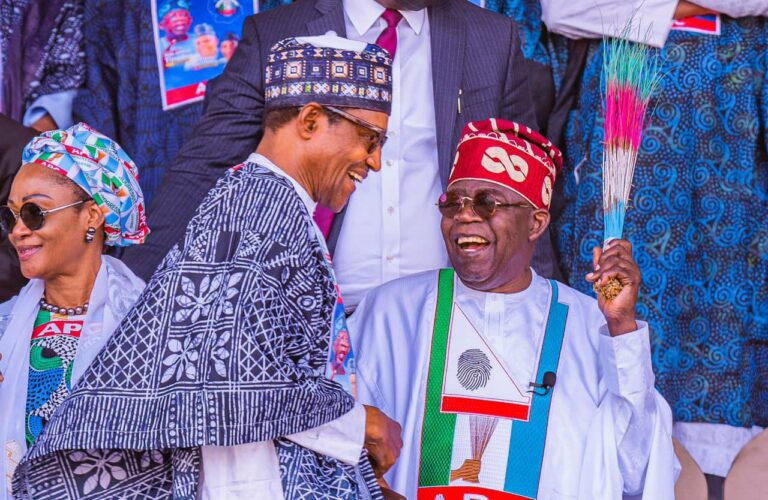
FEMI Adesina, former media adviser to President Muhammadu Buhari, claims in a ThisDay article that the President once shed tears in a private meeting in 2017.

The occasion? Buhari had just learned he was misled into approving a $10 million transaction that was not in Nigeria’s best interest, a decision connected to the Nigeria Bulk Electricity Trading (NBET) under the leadership of Marilyn Amobi. The story humanises Buhari and projects him as a leader moved by remorse. But beneath the tears lies a harder truth: Nigerians are conditioned to be moved by sentiment rather than institutional accountability. A tear from the President generates more public discourse than the corrupt systems that enabled such missteps in the first place.

Generally, tears may symbolise feelings of being overwhelmed in the workplace, but they do not signify effective governance. Crying is not an anti-corruption strategy. Emotion is not a substitute for ethical decision-making. Members of the WhatsApp group who confuse sentiment with accountability must stop.

The issue isn’t that Buhari was misled. The questions to debate are: what actions were taken after he became aware of the situation? Were those who manipulated the process held accountable? Was the $10 million recovered? Were procurement processes reformed or strengthened? Femi’s article offers no answers, instead, he leans on an emotional arc to soften public memory and frame Buhari’s image as caring and sincere. However, will these qualities make governance work for me and you?

Ethical leadership is not measured by how a leader feels but by how decisively they act in the face of wrongdoing. It requires the courage to correct mistakes and enforce consequences, especially when the stakes are high. Globally, we witness instances where leaders have faced accountability for transgressing ethical boundaries. President Park Geun-hye in South Korea faced impeachment in 2017 and jail in 2018 for allowing shadow advisers to influence state decisions. High-ranking officials in Botswana have been successfully prosecuted by the Directorate on Corruption and Economic Crime as part of the Corruption and Economic Crime Act (CECA), an effective accountability framework. Instead of resorting to sentiment or apologies, as is often the case in Nigeria, institutional action effectively addressed these issues.

Nigeria continues to prioritise emotional optics over ethical processes. Buhari’s administration was marred by financial crimes and corrupt procurement processes, selective enforcement by the judiciary and anti-corruption agencies, and unresolved questions about transparency, despite being the African Union’s Anti-Corruption Champion.

åΩåΩSo if a President discovers he was misled into signing away public funds yet takes no public corrective action, Nigerians must question the system, not just the man. The civil servant in the picture, according to the article, Marilyn Amobi, did what public officers are expected to do: document concerns, follow procedure, and raise red flags in a high-stakes environment.

However, another day we will discuss how history will be fair to her or judge her actions, given there are other documented experiences of her corruption allegations. But amplifying her courage should have been a key point to focus on. Programmes like Integrity Icon Nigeria also exist to name and fame such public servants who uphold ethics amid pressure. These are the role models our public discourse should elevate, not emotional anecdotes that shield power from scrutiny.

I think Femi, in telling this story, missed that point. Yes, he’s entitled to his perspective, but he chose to focus on Buhari’s tears instead of highlighting a trendsetter of institutional integrity. In a country where breaches of the Public Service Rules, Procurement Act, and the Code of Conduct happen on a daily basis, the experience was a chance to celebrate the courage to do what’s right. Instead, sentiment took centre stage. Rather than using this story to advocate for ethical reform or to challenge the culture of impunity that enables public sector mismanagement, Femi framed it around personal emotion. In doing so, he missed the opportunity to push for a national conversation about civil servants who take a stand in a system designed to silence them. In a broken bureaucracy where many have gotten away with illegality, a story like Amobi’s is a positive case study worth reinforcing in the Nigerian Public Service Training Institutes.

Research from behavioural science is clear: people’s actions are influenced by what is rewarded, punished, or socially reinforced. According to the World Bank’s 2015 report Mind, Society, and Behaviour, when institutions reward loyalty over competence or ignore misconduct, they inadvertently normalise unethical behaviour. The environment becomes one where silence is safe and courage is costly.

Similarly, the Organization for Economic Co-operation and Development’s (OECD) 2020 Policy Framework on Sound Public Governance states that ethical behaviour is more likely to thrive in systems where consequences are predictable and leadership models integrity. Without enforcement, ethical decisions become symbolic gestures with minimal systemic impact.

Every time Nigerians describe a political leader as a father to the nation or highlight their supposed compassion but overlook the decisions they’ve made that undermine the people they claim to love, we reinforce a dangerous disconnection between emotion and responsibility. Governance is not parenting, it is accountability! Nigeria’s over-reliance on personal virtue, whether perceived humility, religious affiliation, or emotional vulnerability, continues to weaken our public institutions.

We have normalised a pattern where leaders offer public prayers, including in their inbox, while overseeing systems that fail their citizens. I am not shocked, the Buhari-Amobi meeting ended with a prayer session. However, although public prayers may provide solace, they do not safeguard public funds or dismantle corrupt networks ingrained in government structures and processes.

When Buhari discovered the truth about the Accugas deal, did he order an audit? Did he issue a public statement? Without answers to these questions, the tears become a distraction, not a place for renewed hope. Ethical decision-making means creating systems where mistakes are traceable, decisions are understandable, and consequences are certain. It necessitates the development of feedback loops, transparency, and public trust rather than personal regret behind closed doors.

As Chinua Achebe rightly noted in The Trouble with Nigeria, the trouble with Nigeria is simply and squarely a failure of leadership. This is not a failure of emotion, it has always been a failure to take action. Nigeria has to ensure that in building stronger societies and making governance work, justice must reflect equality, where no one is above the law.

My view is not a personal attack on Buhari. It is a reflection on a political culture that too often substitutes emotion for accountability and regret for reform. If the erroneous approval of $10 million implies that the President was sad, then we are continuing to gamble with Nigeria’s future.

Nigerians must demand more from those in leadership, past and present, as the social contract risks are deeper than we know, and citizens bear the consequences of silence daily. The problem is not that Buhari cried. The problem is that our governance culture often stops at tears and forgets the systemic rot that causes them.

Emotion may soften history, but it does not build a future. Empathy without reform is performative. Let us be practical with leadership, place less emphasis on sentiment when public officials make a mistake, and more on strengthening systems. Until then, integrity will remain the exception, and impunity the norm.

Friday is Accountability Lab Nigeria’s Country Director.
PDP tasks IGP over ‘assassination attempt’ on Anambra gov candidate in Abuja

0

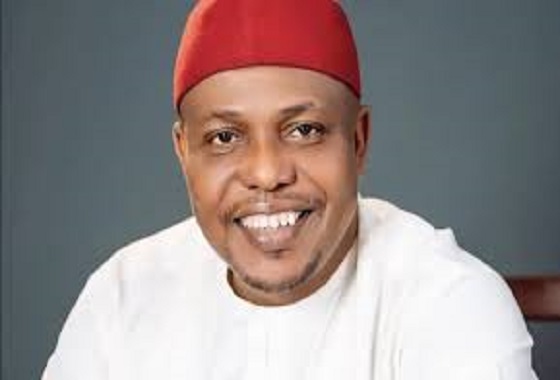
THE Peoples Democratic Party (PDP) has  condemned the attempted assassination of its Anambra State governorship candidate for the upcoming November 8 election, Jude Ezenwafor, in Abuja.

In a statement released on Sunday, July 20, and signed by its spokesperson Debo Ologunagba, the party called for the immediate arrest of those responsible for the attack and reaffirmed that the incident would not shake the party’s willpower.

News emerged on Saturday that Ezenwafor was  attacked by unknown gunmen at the Wuse axis of Abuja.

The unidentified gunmen reportedly opened fire on him while he was returning from a meeting.

Speaking about the attack on Sunday, the PDP, through Ologunagba, said some desperate interests, intimidated by Ezenwafor’s rising popularity, are attempting to stop him from contesting the election.

The party said after a critical analysis of the violent incident, it believes that certain interests, ostensibly being uncomfortable with the growing popularity of the PDP candidate ahead of the November election, are desperate to prevent him from participating in the coming poll.

“Our party has also been made aware of other plots by some anti-democratic elements in Anambra State to commence a series of smear campaigns against our candidate following the failure of the assassination plot.

“This attack on the PDP candidate is another sad commentary on the alarming level of insecurity in the country under the overtly insensitive, corrupt, and abysmally rudderless All Progressives Congress administration,the PDP stated.

The party urged the Inspector General of Police (IGP), Kayode Egbetokun, to swiftly arrest the attackers and their sponsors. The party also called for strengthened security around its candidate ahead of the election.

The PDP said the attack will not deter their candidate or the people of Anambra State from electing a PDP administration.

The party expressed confidence in Ezenwafor’s destiny to win the election, citing his divine destiny and the people’s support.

The Anambra governorship election will be held on Saturday, November 8.

The ICIR had reported that Ezenwafor of the PDP will be slugging it out with incumbent governor Chukwuma Soludo of the All Progressives Grand Alliance (APGA) and a former member of the House of Representatives, Nicholas Ukachukwu, who clinched the All Progressives Congress (APC) ticket.

Also in the picture is a former managing director of the National Inland Waterways Authority (NIWA), George Muoghalu, who won the Labour Party’s governorship ticket.


Falana to Governor Okpebholo: Withdraw death threat against Obi

0

FEMI Falana, a human rights lawyer, has asked the Edo State Governor, Monday Okpebholo, to withdraw his alleged threat to life against the presidential candidate of the Labour Party in the 2023 general election, Peter Obi.

He advised the governor on this in a statement on Sunday, July 20, 2025.

According to the senior advocate, the threat to Obi’s life issued by the “new sheriff in town” in Edo State, constitutes a violation of Section 33 of the Constitution and Article 4 of the African Charter on Human and Peoples’ Rights (Ratification and Enforcement), which guarantees the fundamental right of every citizen to life.

The ICIR reports that Okpebholo had on Friday, July 18 at a political rally held at Uromi, Esan North East Local Government Area, warned Obi not to enter the state without notifying him or obtaining security clearance.

The governor had said, “There’s a new sheriff in town”, and as such, Obi cannot just come into Edo State without informing him.

He went further to warn the former Anambra State Governor that his security would not be guaranteed and that if anything happens to him in Edo State, Obi would have himself to blame, adding, “I’m not joking.”

Okpebholo’s threats to Obi’s life have since generated concerns, public backlash and criticism.

Asking the Okpebholo to withdraw his threat, Falana said, “Given Section 14(2)(b) of the Constitution, which stipulates that the security and welfare of the people shall be the primary purpose of government, Governor Okpebholo should withdraw the threat, apologise publicly to Peter Obi and assure him of the safety of his life in Edo State.”

He asked Obi to seek legal action to enforce his fundamental human rights if Okpebholo refused to tender a public apology as advised.

“If Governor Okpebholo does not withdraw the illegal threat because of sheer arrogance of raw power, Obi should proceed to apply to the Benin Judicial Division of the Federal High Court to secure the enforcement of his fundamental right to life.

“Obi should act with utmost urgency given the prevalence of mob justice and other forms of extrajudicial killings in the country,” Falana advised.

In a joint press release on Sunday, three civil society organisations, namely, ImpactHouse Centre for Development Communication, Accountability Lab Nigeria, and Kimpact Development Initiative (KDI), strongly condemned Okpebholo’s threats against Obi.

The groups described the governor’s remarks as a “veiled death threat” and an assault on Nigeria’s democratic principles.

Among other concerned groups and individuals, the Ohanaeze Ndigbo Youths had on Saturday condemned Okpebholo’s threat against Obi, demanding presidential intervention and visa sanctions from the United States and United Kingdom on the governor over his threat to Obi.

Why we are currently operating below full capacity-Dangote Refinery

0

THE Dangote Petroleum Refinery has explained why it is currently operating below full capacity, saying it is expected to hit 700,000 barrels per day (bpd) before the end of the year.

The chairman of the Dangote Group, Aliko Dangote, hinted this to journalists during a tour of the refinery in Lekki, Lagos State.

He said the refinery is undergoing modifications to increase its nameplate capacity from 650,000 bpd to 700,000 bpd.

The billionaire businessman explained that the upgrade, which is expected to be concluded in the fourth quarter of this year, has limited the refinery’s current ability to operate at full capacity.

He believes an upgrade of the refinery would boost output beyond initial projections.

“Our RFCC [Residue Fluid Catalytic Cracking unit] is at 85 per cent. We’re not at 100 per cent because of ongoing modifications. Once completed, we expect to hit 700,000 bpd. Some other units are even running at 145 per cent capacity,” Dangote said.

The RFCC unit is a critical component in converting heavy crude into lighter, more valuable products such as gasoline and diesel, and is central to the refinery’s operation.

The Dangote boss further hinted that the refinery had purchased 19 million barrels of crude oil from the United States between June and July, with its imports now accounting for 55 per cent of its feedstock needs.

“This month alone, we bought 10 million barrels from the US,” he said.

He said the failed attempt to acquire Nigeria’s state-owned refineries eventually led him to embark on building the $20 billion refinery, described as Africa’s largest single-train refinery.

“Building a refinery is not like building a house. If I had known the challenges ahead, I probably wouldn’t have started. But we pushed through, and we’re proud of what we’ve achieved,” Dangote said.

He pointed out that many African countries, apart from Algeria and Libya, still rely on imported fuels, making the refinery project crucial.

“This is how they attack our industries. Even in South Africa, only one refinery is still operating. We took the risk, and we’re delivering,” he added.

The upgrade of the Dangote Refinery came amid plans by the Nigerian National Petroleum Company Limited (NNPCL) to sell the state-owned refineries – Port Harcourt, Warri, and Kaduna refineries.

The refineries have gulped billions of dollars over the years and have remained largely moribund.

Citing complications in revamping the refineries, NNPCL said it would be better if the facilities were sold off.

Its decision came after the moribund refineries had allegedly gulped about $18 billion in turnaround maintenance, The ICIR reported.

Rights group drags Tinubu govt to ECOWAS Court over failure to publish NDDC report

0

THE Socio-Economic Rights and Accountability Project (SERAP) and four concerned Nigerians have filed a lawsuit against the government of President Bola Tinubu at the ECOWAS court over the failure to publish the NDDC report.

The group said it is challenging the failure of Tinubu’s administration to publish the report of the forensic audit carried out on the Niger Delta Development Commission (NDDC), which allegedly indicts top officials and politicians over missing N6 trillion from the commission between 2001 and 2019.

The four concerned Nigerians in the suit are Ben Omietimi Tariye, Jude Igbogifurotogu Pulemote, Taiwo Aiyedatiwa, and Elizabeth Egbe.

Recall that in 2019, former President Muhammadu Buhari ordered a forensic audit of the NDDC due to corruption allegations.

Also, the Minister of the Federal Capital Territory (FCT), Nyesom Wike, recently alleged that Judith Amaechi, wife of former Transportation Minister Rotimi Amaechi, collected N48 billion from the NDDC for a women’s empowerment programme.

According to Wike, Judith’s company received N4 billion monthly for 12 months, totalling N48 billion, under the guise of training women in the Niger Delta region.

Wike called on President Tinubu to release the forensic audit report of the NDDC, which he claims contains details of the controversial payments. He also stated that he would resign as FCT Minister if the audit report doesn’t indict Amaechi’s wife.

In the suit with number ECW/CCJ/APP/35/25 filed last Friday before the ECOWAS Community Court of Justice in Abuja, the plaintiffs are seeking: a declaration that the failure of the Nigerian government to publish the NDDC forensic report amounts to a fundamental breach of the country’s international human rights obligations.

The plaintiffs sought an order directing and compelling the Nigerian government to publish and ensure access to the NDDC forensic report, which has been submitted to the government but remains shrouded in secrecy.

The plaintiffs are also seeking a court order to compel the Nigerian government to increase transparency and accountability in the NDDC spending.

They claim the government’s withholding of the NDDC forensic audit report violates their right to information and perpetuates corruption.

The plaintiffs argued that the Nigerian government has failed and refused to publish the NDDC forensic report and has failed to provide any reasons or grounds for withholding the report from the plaintiffs and the Nigerian public.

The suit was filed on behalf of SERAP and the four concerned Nigerians by their lawyers, Kehinde Oyewumi, Andrew Nwankwo and Kolawole Oluwadare.

They claim this violates their human rights under international law, including the African Charter on Human and Peoples’ Rights and the International Covenant on Civil and Political Rights.

The plaintiffs believe access to the report is essential for holding the government accountable, promoting democratic participation, and combating corruption.

They argue that any limitations on access to information must be exceptional, lawful, and proportionate, and that the government has failed to justify withholding the report.

No date has been fixed for the hearing of the suit.

Ondo varsity student murder: Police confirm death of prime suspect in custody

0

THE Ondo State Police Command has confirmed the death of a murder suspect, Femi Oladele, also known as Tallex, during a brief illness in its custody.

Oladele was earlier arrested and detained for his alleged role in the abduction and death of two students of the Adekunle Ajasin University (AAU), Akungba Akoko.

The victims, Abah John Friday, a 25-year-old student of the Department of Economics, and Okah Andrel Eloho, 19, from the Department of History and International Studies, were found dead three weeks after they were declared missing.

Among the arrested suspects is Femi, the landlord of one of the victims, whom police identified as the alleged mastermind behind the crime.

The state police commissioner, Adebowale Lawal, while addressing the media on Wednesday, July 16, described the incident as a premeditated and brutal crime.

Meanwhile, the Ondo Police Command on Saturday, July 19, confirmed the death of Femi, also known as Tallex, during a brief illness.

Femi reportedly fell sick while in custody and was rushed to a hospital by the police, where he died.

The state police public relations officer (PPRO), Olayinka Ayanlade, confirmed the death of the suspect, stating that Femi had been receiving treatment but surrendered to death in the early hours of Friday, July 18.

“Yes, he is dead. He had been under medical supervision since his arrest and had been in and out of the hospital. He passed away yesterday (Friday). We have recovered the decomposing body of Okah and are still searching for Abba’s remains.

“We urge the public to disregard any attempt to twist the facts. The command remains fully committed to justice. Everyone involved will face the full weight of the law,the PPRO told Punch.

Backstory

The two victims had been missing since June 20, 2025, when fellow students noticed their prolonged absence from class. The alarm raised by their colleagues triggered a series of actions by the university’s Student Union Government (SUG), which engaged multiple security agencies, including the anti-kidnapping squad and the Scorpion Unit of the Nigerian Police Force in Akure, the Ondo state capital.

On Sunday, July 13, the police recovered the lifeless body of Okah in a forest near Ode-Ekiti, at the Ondo-Ekiti border. 

Abah’s body remains missing but is believed to have been dumped in a river by one of the accomplices, still at large.

In a statement on Monday, July 14, the SUG president, Akeem Ologbon, described the incident as painful and devastating, assuring students that the union would ensure justice is pursued.

He stated that once the union became aware of the students’ disappearance, it responded swiftly and responsibly by promptly engaging the relevant security agencies to aid in their location.

According to the police commissioner, Lawal detectives began an investigation after a petition was filed on June 24 by Emmanuel Peter, the elder brother of Abah John.

He noted that the investigation led police to Computer Village, Ikeja, where they recovered an iPhone 14 Pro Max belonging to one of the victims from a 38-year-old suspect, Abdul Mohammed Mubarak.

 According to him, Mubarak explained that he bought the phone from Ojo Michael, who was later arrested in Aramoko-Ekiti, where the victims’ Lexus RX 350 vehicle was also recovered.

Under interrogation, Michael reportedly confessed to his role in the crime and implicated Femi, the landlord of Abah John, as the mastermind. 

According to the police, Femi had recruited Michael and one Kola (currently at large) to rob and abduct the students.


How impact of flooding, insecurity can be minimised – Agbugba

0

Ikechi Agbugba is an Associate Professor of Agricultural Marketing at the Rivers State University. In this interview with the ICIR, he speaks on ways to minimise the impact the recent flooding in Niger and insecurity in Benue are likely to have on food production in the coming harvest season.


The ICIR: To what extent do you think the recent flood incident in Niger state and insecurity in Benue will affect food supply in the next harvest season?

Agbugba: The recent flooding and insecurity in Niger and Benue states, respectively, will have significant negative impacts on the food supply chain in the next harvest season. Undoubtedly, the fusion of these factors could lead to reduced harvests and escalate food prices.

On the one hand, floods can demolish crops, damage farmlands, and displace communities. Sadly, it can inundate farmlands, affect staple crops, such as rice, maize and yam, which are abundantly grown in the region. So, the extent of damage depends on the flood’s duration, depth, and the crops’ growth phase.

Flood can also degrade the topsoil, erode farmland, and contaminate water sources, affecting soil fertility and making it difficult to cultivate crops. More so, floodwaters can force farming communities to abandon their farms and livelihoods, disrupting planting and harvesting cycles.

These factors can result in reduced harvests, creating food shortages and increasing food prices. It can also impact food utilisation, affecting the food nutritional value, food safety, and the ability of communities to access and prepare food properly.

On the other hand, insecurity can disrupt farming activities and restrict farmland access. The impact of the insecurity situation in Benue can be colossal. We must not forget that Benue is referred to as the ‘Food Basket of the Nation’. As the leading producer of several key crops in Nigeria, including yam, rice, maize, cassava, and soybeans, the impact can be felt in many ways, including disruption in farming activities, lean access to cultivate farmlands, and forceful abandonment of farmland by farmers, which could lead to a loss of livelihoods and exacerbate food insecurity.

The ICIR: How can we address the expected shortfall in agricultural produce from these two states in the next harvest season? 

Agbuba: First, to mitigate potential shortfalls in agricultural produce, a multi-faceted approach like the Brain Re-Engineering Initiative can help. In my position, it’s not just a policy initiative, but also an entrepreneurial approach, educational strategy, business model, as well as a sustainability framework. The initiative involves addressing perception challenges, fostering ideation and entrepreneurship, integrating technological solutions, promoting sustainability and circular economies, and advancing social equity in public policy. Food chain security is intricately connected and can be enhanced through these strategies.

Second, to address the expected shortfall in Niger state’s agricultural produce, there will be a need to focus on both immediate flood mitigation and long-term resilience building. This will include improving flood management infrastructure, adopting climate-smart agricultural practices, and strengthening farmer support systems. Immediate flood mitigation entails strengthening flood defences by constructing or reinforcing levees, dikes, and flood walls along rivers and flood-prone areas can physically prevent water from inundating farmland.

Third, there is a need to fortify drainage systems by improving drainage networks, including canals and pumping stations, which can help quickly remove excess water from fields.

Fourth, implementing offline flood storage ponds or reservoirs can temporarily hold excess water during heavy rainfall, reducing the impact on agricultural land. And fifth, there will be a need for long-term resilience building, which will include climate-smart agriculture.

Other considerations will be to strengthen support for farmers by establishing a fund to provide low-interest loans. This can help them recover and replant. Also is to train them on risk management, climate-smart agriculture, and post-harvest storage.

Ikechi Agbugba, agricultural economist
Flooding can demolish crops, damage farmlands, and displace communities while insecurity can disrupt farming activities and restrict farmland access – Ikechi Agbugba

Infrastructure upgrades are also needed to improve road networks and bridges which can help ensure access to markets and facilitate the transportation of agricultural inputs and outputs. There should also be a focus on upgrading irrigation infrastructure, to provide more efficient water management, especially in areas prone to drought. By combining these strategies, Niger State can enhance its ability to withstand future flood events and maintain a robust agricultural sector.

To mitigate the expected shortfall in agricultural produce due to insecurity in Benue state, there will be a need to promote bolstering security in farming areas, promoting peaceful coexistence between farmers and herders, investing in modern farming techniques and infrastructure, and ensuring access to resources like fertilisers and credit. In addition, addressing climate change impacts and strengthening food storage and distribution are crucial steps.

Enhanced security measures will entail deploying more security personnel to vulnerable farming areas and establishing community policing initiatives can deter criminal activities and protect farmers. Utilising drones and other surveillance tools can enhance monitoring and early warning systems, helping to identify and prevent potential threats. Strengthening the implementation of laws like the Benue Open Grazing Prohibition Law can help reduce conflict between farmers and herders.

The need to foster a peaceful coexistence has become imperative by establishing designated grazing reserves for herders. This can minimise conflicts over land use and reduce the likelihood of attacks on farms. Also, facilitating dialogue between farmers and herders can help resolve disputes peacefully and promote understanding. The local communities should be empowered to participate in conflict resolution and security efforts which can foster a sense of ownership and responsibility.

Let me explain that modernising agriculture is the focus of the brain re-engineering agenda. It’s created for driving sustainable change in the agriculture sector among the younger generation to foster their entrepreneurial capabilities through new dimensions in agricultural technologies. This agenda proposes that stakeholders of agricultural development provide farmers with the training and support in modern farming techniques, such as using high-yield crop varieties and implementing climate-smart agricultural practices, which can enhance productivity and resilience.

Further is to ensure that farmers have access to quality fertilisers, pesticides, and other essential inputs at affordable prices. This is crucial while investing in irrigation systems, storage facilities, and transportation infrastructure, which can improve productivity and reduce post-harvest losses. Farmers need to be provided access to credit and other financial resources that can enable them to invest in their farms and adopt new technologies.

I’ll add that strengthening food and agricultural systems can lead to improved storage facilities, efficient food distribution networks, diversified production, and promoting local food systems. With these suggestions, the capacity of Benue State to mitigate the impact of insecurity on agricultural production and build a more resilient and sustainable system can be actualised.

The ICIR: Tomatoes and peppers have been scarce, especially in markets in Lagos state. Are there major issues to this that we don’t know?

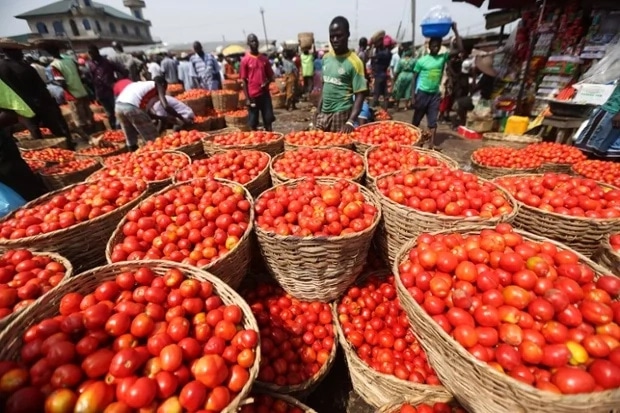
Agbugba: A mini research I carried out indicates that the scarcity situation and high prices of tomatoes and peppers in Lagos can be traced to the interplay of factors, including the tomato ebola disease (Tuta absoluta), withdrawal of fuel subsidies, and the rainy season. These issues have led to increased cost of transportation, lower harvests, and ultimately, lofty prices for buyers. Due to these challenges, some farmers are hesitant to invest in tomato and pepper cultivation. Despite the high prices, the demand for tomatoes and peppers remains strong, contributing to the scarcity and price hikes.

Regarding its impacts on consumers and traders, there will be high prices, low patronage and difficulty in restocking. While consumers are struggling to afford tomatoes and peppers, with prices reaching unprecedented levels, the traders are reporting low patronage as consumers cut back on purchases due to the high prices, while some traders are finding it challenging to restock their supplies due to the scarcity and high prices.

As a food and agricultural economist, may I underline that the hidden issues surrounding the scarcity of crops resonate around five factors. First, the crops are not native to Nigeria. Second, the scarcity is also a seasonal issue, with fluctuations in supply and price cycles depending on the time of year and harvest cycles. Third, the scarcity of tomatoes and peppers is not an isolated issue. Other food items like rice, beans, garri, and yam are also experiencing price surges, suggesting a broader food security concern. Fourth, the government has taken steps to address the situation, including deploying experts to tackle the insect infestation and sensitising farmers about weather patterns. Fifth, there is hope for improvement as efforts are underway to develop solutions to the Tuta absoluta infestation and stabilise the tomato market.

Consequently, resilient Nigerians have devised new ways to survive the scarcity of tomato and pepper by now cooking their stews with different ingredients. However, the possible ways of tackling these issues rise and fall on pest control measures, improvement of infrastructure, and government support.

The ICIR: There is relative peace in the south compared to the north. What critical steps can be followed to improve agricultural production in this region?

Agbugba: Yes, there is relative peace in the region and I could categorically speak about this because my primary affiliation and place of work, Rivers State University, is situated in this region. The critical steps that can be taken to improve agricultural production and foster peace include investing in infrastructure, providing access to finance and markets, improving soil health and water management, and promoting sustainable farming practices. Addressing climate change, empowering communities, and fostering social cohesion are also crucial for long-term stability and agricultural development.

Let me also highlight the need to connect smallholder farmers with reliable markets for their produce. Importantly, strategies to adapt to climate change, such as water conservation, drought-resistant crops, and improved irrigation systems should be implemented.

From the angle of government and policy, strengthening policy dialogue and coordination among different stakeholders to ensure effective agricultural development strategies will benefit the stakeholders. I believe strongly that by implementing these steps critically, the region would be in the position to leverage its agricultural potential to achieve both food security and sustainable peace and development.

LG autonomy unrealistic, says Fashola

0

A former Lagos State governor, Babatunde Fashola, said it is “unrealistic” to expect local governments in Nigeria to function independently under the current constitution.

Fashola, a senior advocate, SAN, shared this view on Channels Television’s Sunrise on Saturday, July 19.

This came amid the growing call for local government autonomy, following a recent Supreme Court ruling.

In July 2024, the apex court barred governors from dissolving democratically elected local government councils and granted financial autonomy to local governments in Nigeria, The ICIR reported.

In his argument, Fashola pointed out that local councils cannot carry out their responsibilities without the interference of the State House of Assembly and the State Government.

He said the state houses of assembly make laws for local governments, which are external influences that contradict the idea of autonomy.

“I think that the debate we must have is whether we really want autonomous local governments. It’s a debate that must be heard. As it stands today, it is unrealistic to expect autonomy for local governments created by the Constitution.

“They were not meant to be autonomous; that is my view after a very close reading of certain provisions of the Constitution. Some of those provisions provide, for example, that the local government in its economic activities and all of that will have laws made for it by the state House of Assembly,” Fashola said.

According to him, the legal and ordinary meaning of autonomy suggests that one is acting independently without any outside influence and authority.

The fact that state houses of assembly make laws on how local governments function, Fashola maintained that this external influence contradicts the idea of autonomy.

He further posited that land, which is an asset that local governments require to provide infrastructure, is controlled by the state governments.

“The next thing, of course, is to look in the Fourth Schedule of the constitution and look at all of the responsibilities that are assigned to local governments, such as the operation of slaughterhouses, abattoirs for animals, cemeteries, building of rules, advertising hoardings, primary schools, primary healthcare centres, all of those responsibilities are dependent on one item, land.

“And to the extent that the state government controls land, which affects how the local governments will carry out these functions, I didn’t think that autonomy was intended. Now, if we decide that we want autonomous local governments, those are some of the things we have to free up if that is our decision, Fashola argued.

To Fashola, autonomy was not intended, but what he thinks is some sort of collaboration, supervision, and oversight of local governments.

This is what is inherent and can be found in Section 162 of the Constitution, which he cites, that deals with the state’s joint local government account.

He further argued that the cases of many local governments defaulting in the payment of salaries and pensions of primary healthcare workers, primary school teachers, at the return of democracy in 1999, partly gave rise to a joint account between the states and the councils.

“And there’s history behind the enactment of that section because up till 1999, the local governments used to collect their money directly from the Federation account under a process that I think was known as JAAC (Joint Accounts and Allocation or something).

“But in the advent of the democratic era, it was found out that there were so many of them, or not a few of them, who had defaulted in the very basic obligation of paying staff salaries, primary healthcare workers, primary school teachers, salaries and pensions, and there was a backlog of debt, and I met some of that debt when I became Governor and we were working there,” Fashola explained.

He, however, noted that the conduct of council elections was a good step towards making local governments independent.

Traditional worshippers threaten to sue Ogun govt over late monarch burial rites

0

TRADITIONAL worshippers also known as Isese under the aegis of the International Council For Ifa Religion (ICIR), has threatened to sue the Ogun State Government and the family of the late Awujale of Ijebuland, Sikiru Adetona, for violating the legal and laid down procedures of burying a traditional ruler in the state.

In a statement signed by its President, Fayemi Fakayode, spokesperson, Ayanladun Fajemisin and the legal representative, Ifasola Opeodu on Saturday July 19  in Ibadan, vowed to challenge the method of the Awujale’s burial.

The ICIR reports that the Awujale passed away on Sunday, July 13, 2025 at the age of 91, and was buried according to Islamic rites on Monday July 13.

The burial which was performed by Islamic clerics has however generated controversy across the land.

Reacting to the way the revered monarch was buried, the ICIR vowed to correct what they termed an anomaly.

The group of Isese worshippers described the manner the Awujale was buried as a departure from the laid down traditional practice of the Yoruba.

According to the ICIR, the last judicial pronouncement over the matter upheld the burial of traditional rulers according to the customs and traditions of the Yoruba people as against that of foreign religions like Islam and Christianity.

The group said after the recent controversy surrounding the burial rites of Awujale in Ogun State, they commended the Osugbo Confraternity of Ijebu-Ode for their exemplary show of courage in the face of adversity, a virtue which they said aligns with their teachings.

“The Islamic clergies as led by the Chief Imam of Ijebu-Ode violated the law of the land and as a result, demonstrated the lawlessness character and nature of their religion.

“This poignant moment reminds us that the gentleness of a lion is not a sign of weakness, but rather a testament to its wisdom and strength.

The Ifa council added that any action contrary to the judgment of the court and the laws of the land would be a disregard for the customs and traditions that have been the cornerstone of their heritage.

It stressed that the burial of the late Kabiyesi was not in consonance with the law of the state, and it is obvious that the burial arrangement contravened Part 8, Section 55, Sub-section ii of the Ogun State Chieftaincy law.

“This issue transcends a mere burial rite; it represents a challenge to the very fabric of our customs and traditions, the actions taken at the event were part of a larger agenda to erode the cultural practices that have defined us for generations and strategic plan towards annihilation of our race by invaders who mischievously naturalized and whose offsprings are now pursuing their fore fathers’ agenda,” ICIR stated.

The group urged the sons and daughters of Ijebu-Ode and the entire Yoruba race to recognize that the institution of Obaship is not only a sacred tradition but also a choice that demands respect for cultural heritage.

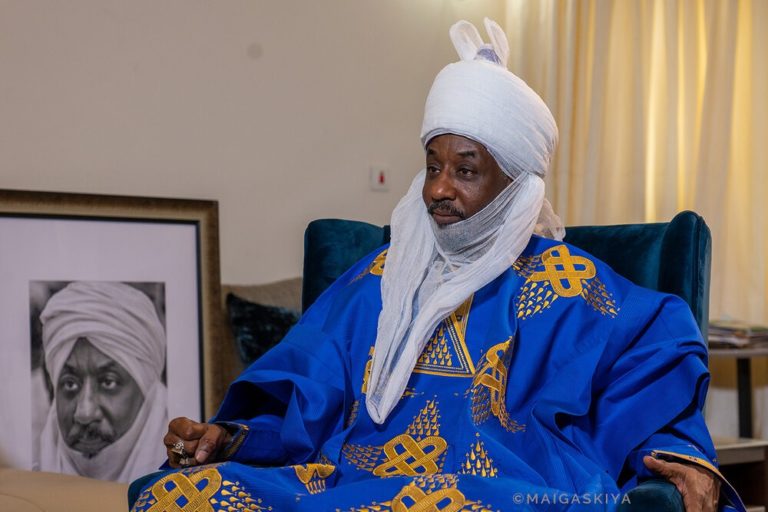
Charly boy’s 2024 comment falsely attributed to Emir Sanusi

0

A statement attributed to the Emir of Kano, Muhammad Sanusi II,, allegedly responding to President Bola Tinubu’s assertion that he inherited a dilapidated Nigeria from former President Muhammadu Buhari, has surfaced online.

Tinubu, during a courtesy visit to Anambra in May 2025, had stated that he inherited a near-insolvent treasury and a chaotic economic structure upon assuming office in 2023. He said his administration had since undertaken bold and painful reforms to stabilise the country.

A Facebook user, Mary Idonibiye Freeborn, posted the lengthy message claiming it was from the Emir responding to Tinubu’s assertaion.

According to the statement, he disagreed with the assertion and criticised the president for extravagant public spending, listing several multi-billion-naira allocations for government renovations, luxury vehicles, allowances for top officials, and controversial infrastructure projects.

The message concluded by describing Tinubu’s cabinet as the largest ever and questioned the government’s spending pattern, given the president’s earlier claim of inheriting an empty treasury.

The post read:

“BREAKING !!!
EMIR SANUSI REPLIES TINUBU ABOUT BUHARI
President Bola Ahmad Tinubu I Totally Disagree With You That You Inherited A Dilapidated Nigeria From The Former President Muhammadu Buhari Below Are My Reasons – Emir Mohammed Sanusi Mohammed Message to Tinubu.
How Can A President That Claimed To Have Inherited A Dilapidated Nigeria Be Spending Public Funds Extravagantly As If You Inherited A Rich And Prosperous Country
How Would You Justify The Following Extravagant Spendings Under Your Government
21 Billion Naira To Renovate The Vice President House
70 Billion Naira To The National Assembly Members To Buy SUVs At The Cost 160 Million Naira Per One For Senators And House Of Representatives Members Specifically
4 Billion Naira To Renovate Dodan Barrack Lagos Another 3 Billion Naira To Renovate Aguda House
5 Billion Naira Was Given To Presidential Tax Reforms Committee Of Less Than Twenty People Headed By Taiwo Oyedele With Nothing To Show For It
1.5 Billion Naira To Purchase Cars For Your Wife Senator Oluremi Tinubu Despite The Fact That First Lady Office Is Not Recognised By Our Constitution
300% Salary Increase For The Judges Which Was Speedily Passed By The Insensitive And Irresponsible Senators
5 Billion Naira Was Budgeted For Presidential Fleet Of Cars For President Bola Ahmad Tinubu
5 Billion equally budgeted for Presidential Yatch
225 Billion naira spent on so-called Presidential Jet
90 Billion naira spent on 2024 Hajj pilgrimage
Billions of Naira Was Budgeted For Your Trips Including The Vice President Kashim Shettima To The Detriment Of The Citizens
Every Senator Is Paid 21 Million Naira Monthly
House Of Representatives Are Earning 13.5 Million Monthly All The Increment Was Done By Your Government
15 Trillion Naira Lagos Calabar Coastal Road Was Awarded Illegally To Your Friend A Lebanese Gilbert Chagoury Who Was Repatriated Back To His Country By The Former President Obasanjo
You Have The Largest Ministers Ever.”

Since it was posted on Tuesday, July 15, 2025, the claim has attracted significant engagement on social media. It can also be seen here and here.

CLAIM

Sanusi criticised President Tinubu over his claim of inheriting a dilapidated Nigeria from Buhari.

THE FINDINGS 

Findings by The FactCheckHub reveal that the claim is FALSE!

Screenshot of the claim ; INSERT False verdict
Screenshot of the claim; INSERT False verdict

A keyword search on Google did not reveal any credible report or evidence showing that the Emir of Kano, Muhammad Sanusi II, made such a statement criticising President Tinubu.

Similarly, no reputable Nigerian media outlet published the claim, which is unusual for a figure of Sanusi’s stature, whose public comments typically receive wide coverage.

Further checks showed that the quote being circulated was from Nigerian entertainer Charles Oputa, popularly known as Charly Boy. He posted the statement via X (archived here) on August 4, 2024.

This statement was also reported by BusinessDay and attributed to him.

In addition, a review of Sanusi’s known social media platforms, including his verified Instagram page, provided no record or related post referencing President Tinubu or the allegations of extravagant spending.

There was also no evidence of any recent public commentary matching the viral quote.

The FactCheckHub has previously debunked multiple misattributed quotes and statements to Sanusi in the past, which can be seen here and here.

THE VERDICT

The claim that Emir Sanusi criticised President Tinubu over his claim of inheriting a dilapidated Nigeria from Buhari is false; the quote was originally authored by Charly Boy in August 2024.

This report is republished from the FactCheckHub.