Home Blog Page 23

How Oyo’s first major school abduction shattered families, emptied villages

IN the aftermath of what is now known as the first major school-targeted abduction in southwest Nigeria, The ICIR visited Oriire Local Government Area of Oyo State, where gunmen attacked three schools and abducted dozens of pupils, students, and staff. In this report, parents and community members recount the terrifying morning that changed their lives and turned their communities into ghost settlements.


Khadija Umar looked exhausted and emotionally drained. Her face bearing the strain of days without sleep as she spoke about her 8-year-old abducted son, Muhammed Ibrahim.

Seated among other grieving parents, Umar’s son was among the dozens of children abducted when armed men stormed Baptist Nursery and Primary School in Yawota, Oriire Local Government of Oyo state on May 15. The gunmen had also attacked two other schools in the state.

“For the past days, I have not slept or rested,” she told The ICIR, in a trembling voice. “After everything calmed down, we wanted to go and get our children, and that was when we realised they had taken them.”

Relieving the horror of that day, the grieving mother said the gunmen had announced their arrival on motorcycles, wearing military uniforms. Like many others, she mistook them for actual soldiers in pursuit of criminals. Until sporadic gunshots erupted, forcing her and several residents to scamper for safety. 
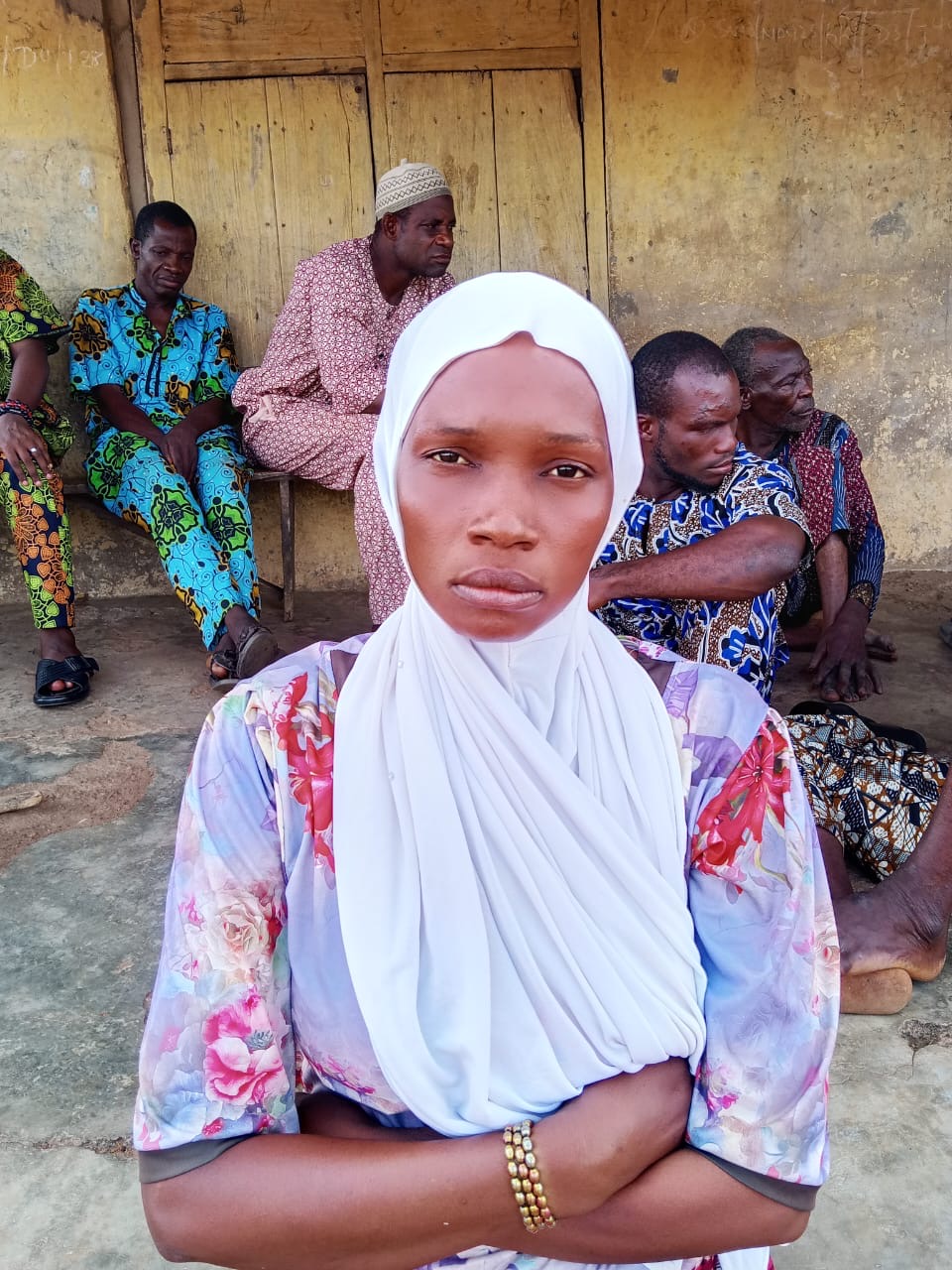
Khadija Umar

When the gunfire subsided and frightened residents began to emerge from their hideouts, Umar made the discovery that threw her into panic and days of sleepless nights. The terrorists had stormed her son’s school, which is about 10 minutes away, and whisked him away.

Days later, the pain remains fresh. She says some private individuals and politicians recently brought money to the affected parents but they rejected it. “We told them we don’t want money,” Umar said. “It is our children we want.”

The mother of five is one of dozens of parents whose lives were shattered after coordinated attacks on three schools in Oriire Local Government Area. The affected schools are Baptist Nursery and Primary School in Yawota, Community Grammar School and L.A Primary School in Esin Ele, marking what appears to be the first large-scale school-targeted abduction in southwest Nigeria.

Residents say on the day of the attack, armed men had invaded the communities, surrounding schools and abducting pupils, students, and staff, including Alamo Folawe, the Vice Principal of Community Grammar School. They told The ICIR that a total of 46 persons, including seven teachers and 39 students, were abducted from the schools while four motorcycles were snatched from villagers.

Since the incident, schools have been shut down and entire communities transformed into ghost settlements, plunging families into uncertainty.
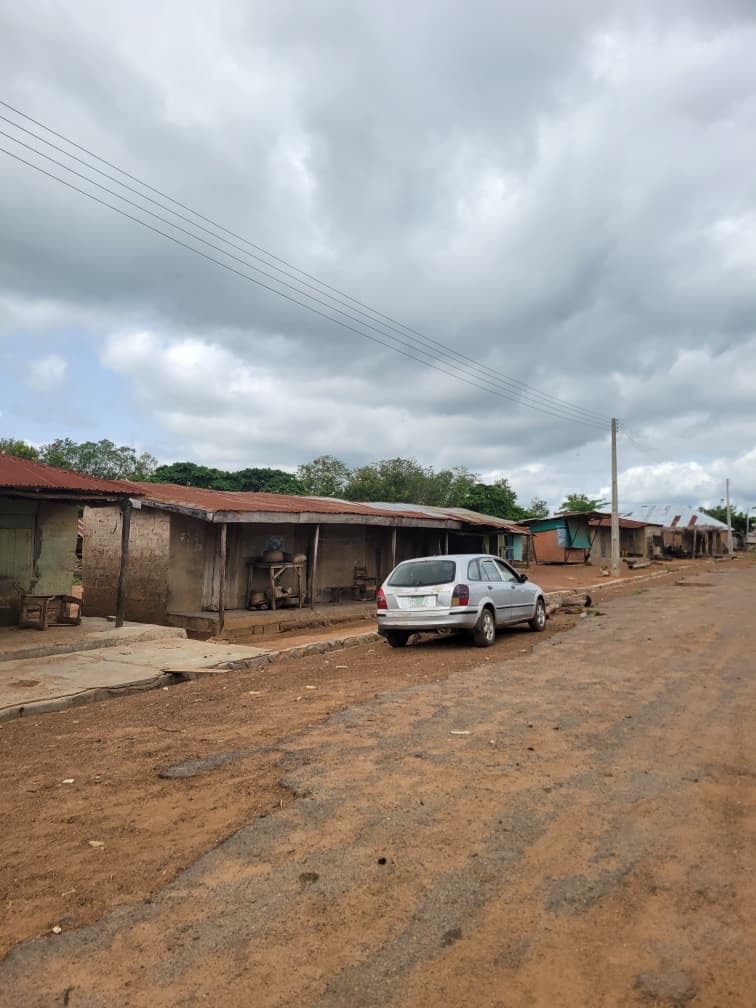
Esin-Ele community deserted after terror attack

The morning the gunmen came

That Friday had started like any other day in Yawota and Esin Ele. Parents prepared their children for school, farmers set out for their fields, and residents settled into their routines, unaware that within minutes, their communities would descend into chaos.

A few minutes after 9 a.m., armed men riding motorcycles and dressed in military uniforms stormed the communities. Residents had initially mistaken them for security personnel responding to the growing insecurity around the area. That assumption quickly dissolved when gunfire erupted.

According to multiple eyewitness accounts, the attackers split into groups and simultaneously targeted Baptist Nursery and Primary School in Yawota, Community Grammar School, and L.A Primary School in Esin Ele. The coordination of the assault left little room for escape. In Yawota, the gunmen stormed the unfenced school premises with ease, firing shots into the air as terrified pupils and teachers scattered.

Some children fled through classroom windows in the opening moments of the attack before the assailants blocked possible escape routes. Others, particularly younger pupils who were too frightened or too small to escape, were rounded up. Witnesses said the attackers moved quickly, forcing children onto motorcycles, sometimes loading several onto a single bike.

As the attack unfolded in Yawota, another group struck Esin Ele, where both the primary and secondary schools were attacked almost simultaneously. Residents said the armed men appeared organised and heavily armed, moving victims from one point to another with calculated speed. When motorcycles proved insufficient, they reportedly seized vehicles, including one belonging to a school staff, to transport abducted children deeper into nearby forest routes.

Days after the attack, the affected communities remain largely deserted. Families have fled, schools are shut and farms have been abandoned. “Everything we planted is there,” a resident, Olufemi Afolabi, said. “We cannot access it now. Animals are eating it.”

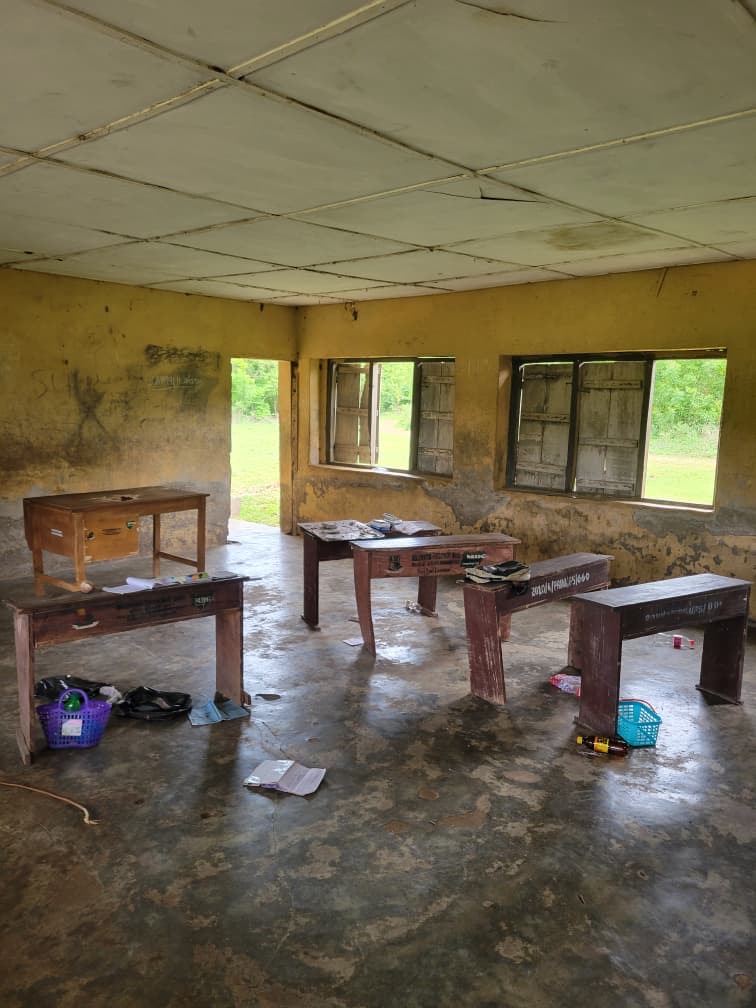
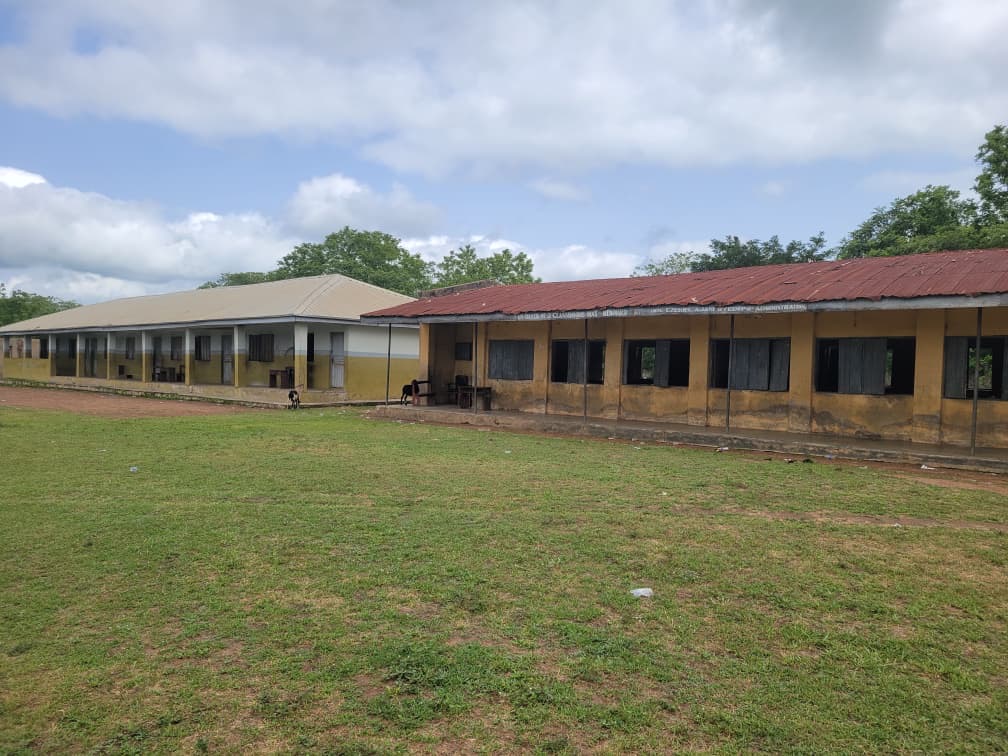
In Esin-Ile, classrooms still tell the story of sudden terror when The ICIR visited. School bags remain where children left them. Exercise books lie open. Tiny sandals sit abandoned. No lessons are taking place.
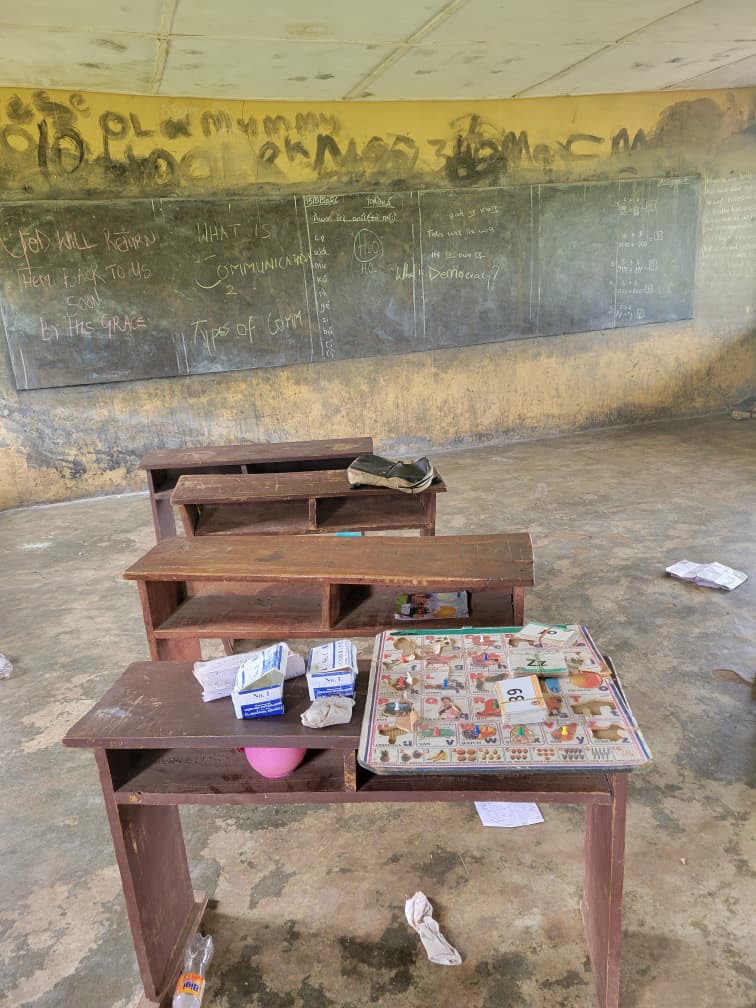
School materials abandoned by pupils

For many parents, even if their children return, trust in the schools has collapsed.

“I never thought I would withdraw my child,” one of the parents, Ojo Adekunle said. “But if he comes back, I will remove him.”

Agonies of victims’ parents

There is an old saying in many Yoruba communities that it is easier to mourn a dead child than to live with the torment of not knowing where that child is. For Sikiru Abiodun, that painful proverb has become a daily reality since armed men abducted his two-and-a-half-year-old son, Abdulsalam Sikiru.

Describing the toddler as unusually bright for his age, Abiodun said his son was well known and loved in the community. Like many parents in Yawota, he had started that Friday morning without the slightest indication that disaster was approaching.
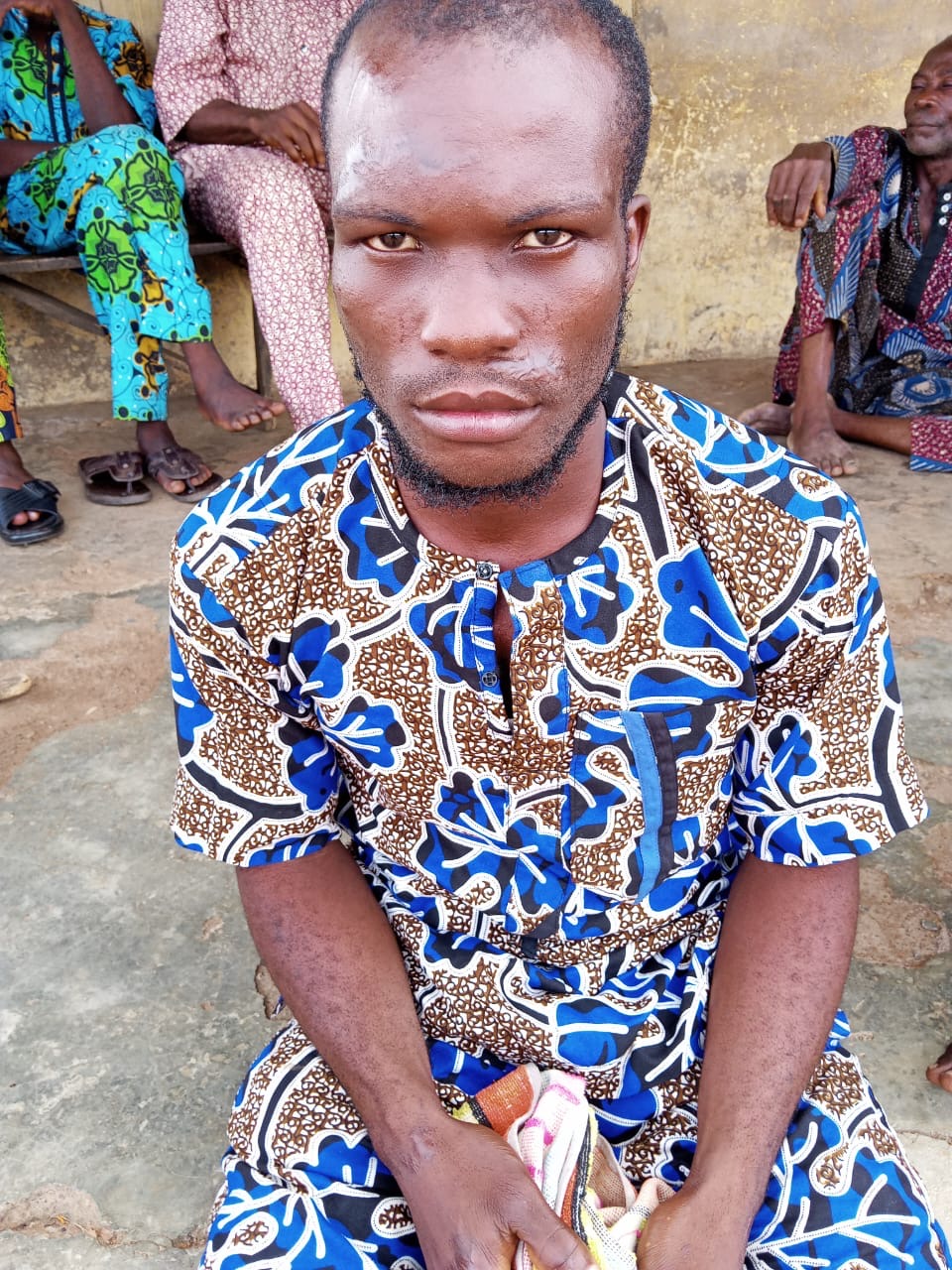
Sikiru Abiodun’s 2-year-old toddler was among the children abducted

He was sitting outside when he saw armed men arriving on motorcycles. At first, neither he nor the other residents suspected danger. According to him, the men suddenly diverted toward the school, and before residents could fully understand what was happening, gunshots rang out across the community. Panic spread immediately, with residents scrambling for safety.

“We thought they had killed all the children in the school,” he recalled.

In the confusion, some residents asked him to alert local vigilantes. But even as he tried to navigate the chaos, he found himself running into another group of attackers who had apparently split into separate units to carry out the coordinated assault. Abiodun said he narrowly escaped, but not without the terrifying realisation that the attack had been carefully planned.

For Abiodun, the tragedy was devastating, but not entirely shocking. He said the community had experienced recurring security threats in the past, even though though residents had never successfully confronted the armed men.

Since the abduction however, schools have emptied, with frightened parents unwilling to send their children back. But beyond the fear lies a deeper emotional torment for parents like Abiodun, who say the uncertainty is harder to bear than grief itself.

“An adage says it is better for your child to die than for your child to be missing,” he concluded.

Days after the attack, grief remains fresh across Yawota and Esin Ele, where many parents still struggle to process how an ordinary school morning turned into a nightmare. The panic was further fuelled by the video released by the abductors, which showed one of the teachers slain. The victim was later identified as Michael Oyedokun, a mathematics teacher. The rest were videoed pleading for help.

For Esuola Mutairu, the emotional burden is even heavier. The attack took four of his children — Ahmed, 8; Muiz, 5; Sohibu, 12; and Jomiloju, 7 — all in one morning.

Mutairu said he had sent them to school that day, believing they were heading to a safe environment to learn, only to later hear that armed men had stormed the schools, rounded up children, and marched them toward the forest around the reserve.

Struggling to conceal the pain in his voice, he told The ICIR  as he described the days since the abduction as some of the hardest of his life. “It has been heartbreaking,” he said. “We have not experienced peace of mind.”

He said sleep had become almost impossible, as every passing hour without information deepened the family’s anguish.

“I couldn’t sleep,” he said. “Four children! We sent them to school to learn, now we don’t even know where they are.”

Deborah Ayano’s granddaughter, 14-year-old Taiwo Olunlege, was among the victims. According to the old woman, her abducted granddaughter had dreams, saying she often spoke confidently about what she hoped to become.
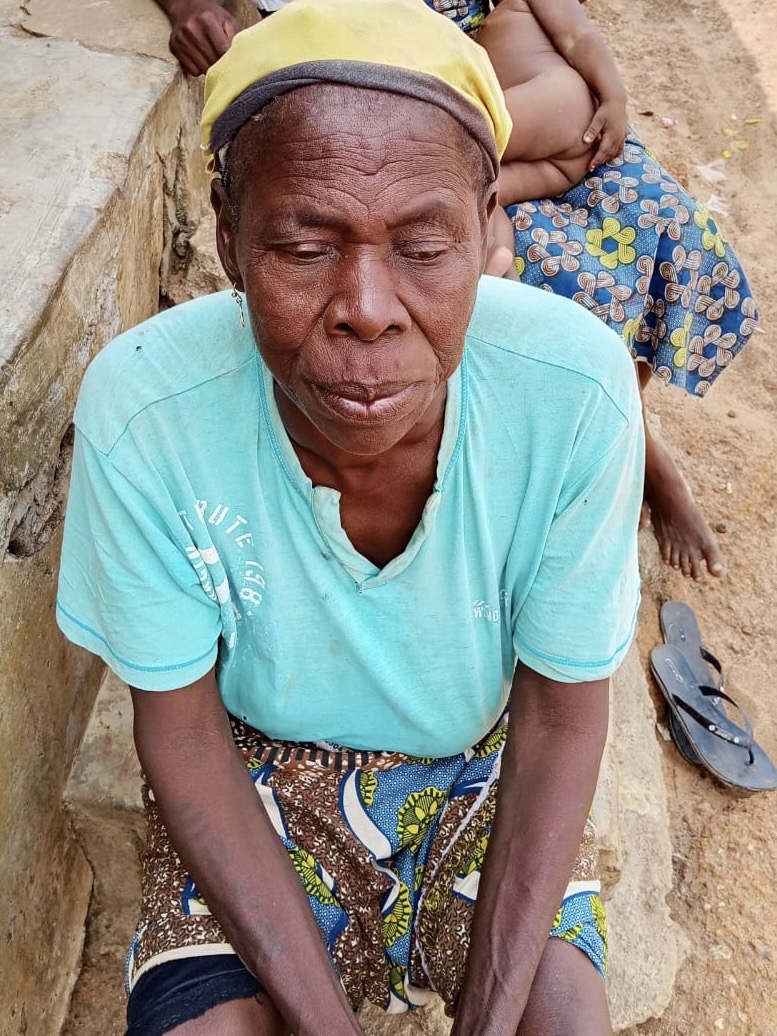
Deborah Ayano

“She used to tell me she would make it in life and carry me inside her car,” she recalled.

She said the emotional toll has been severe. Since the abduction, she has barely eaten, struggled to sleep, and remained in constant distress over her granddaughter’s fate.

Community High School Ahoro Esiele Billboard

“They even brought sleeping pills for me,” she said. “I still couldn’t sleep. If we survive this, we will leave here,” she said.

Olohunloluwa Femi described his nine-year-old daughter, Lydia, as a child whose love for education often outweighed the family’s financial struggles.

He said there were times he discouraged his children from going to school because he simply could not afford some of the associated costs, but Lydia would insist. According to him, she was often the first to wake up in the morning, eager to prepare for school. That determination now haunts him.

The father was on his farm when gunshots shattered the calm that Friday morning. Like many residents in the agrarian community, he had gone out early for work, unaware that armed men were invading the schools back home. It was his older son who called with the devastating news.

When he rushed back, panic had gripped the community. Residents had gathered in confusion, and reports had already emerged that one person had been killed.

He said the most painful for him to bear is the cruel irony that his daughter’s determination to get an education may have placed her directly in harm’s way. “It is that same desire to learn that has now taken her to the kidnappers’ den,” he reiterated.

Like many others in the community, he said insecurity had been lurking around for some time. For years, they heard stories of school kidnappings in distant parts of the country and never imagined such violence would one day arrive at their doorstep. But in recent months, armed attacks had become a growing concern.
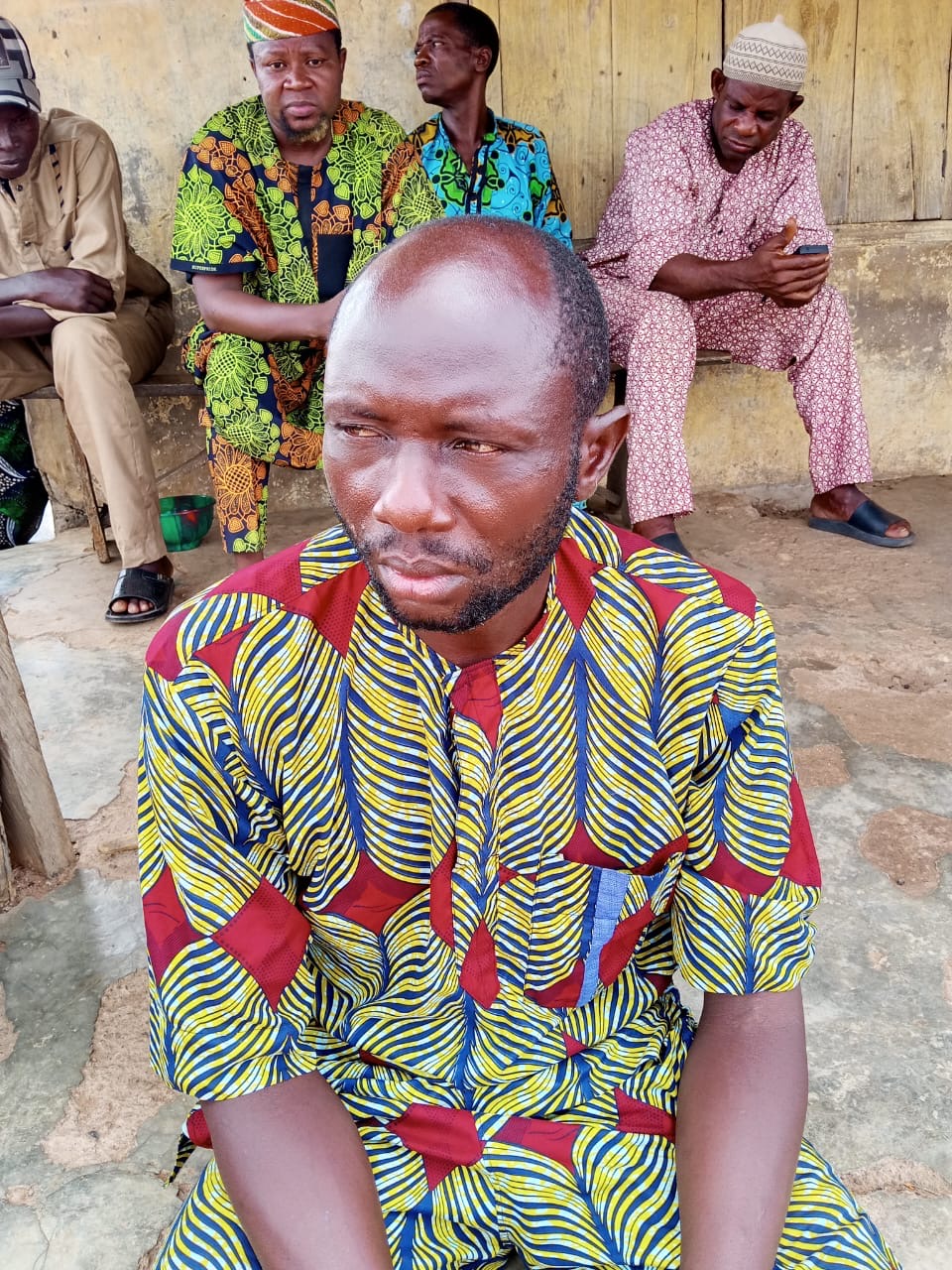
Femi’s daughter was among the children abducted

“Sometimes they kill people on farms,” he said adding that, the attack has destroyed whatever confidence remained in the safety of local schools.

Warning signs ignored?

For some residents, the attack did not come without warning. Ojo Adekunle, whose son Joseph was abducted, said the community had repeatedly raised concerns about insecurity.

“We had been noticing security issues and reporting them to the police, but they did not take us seriously,” he said.
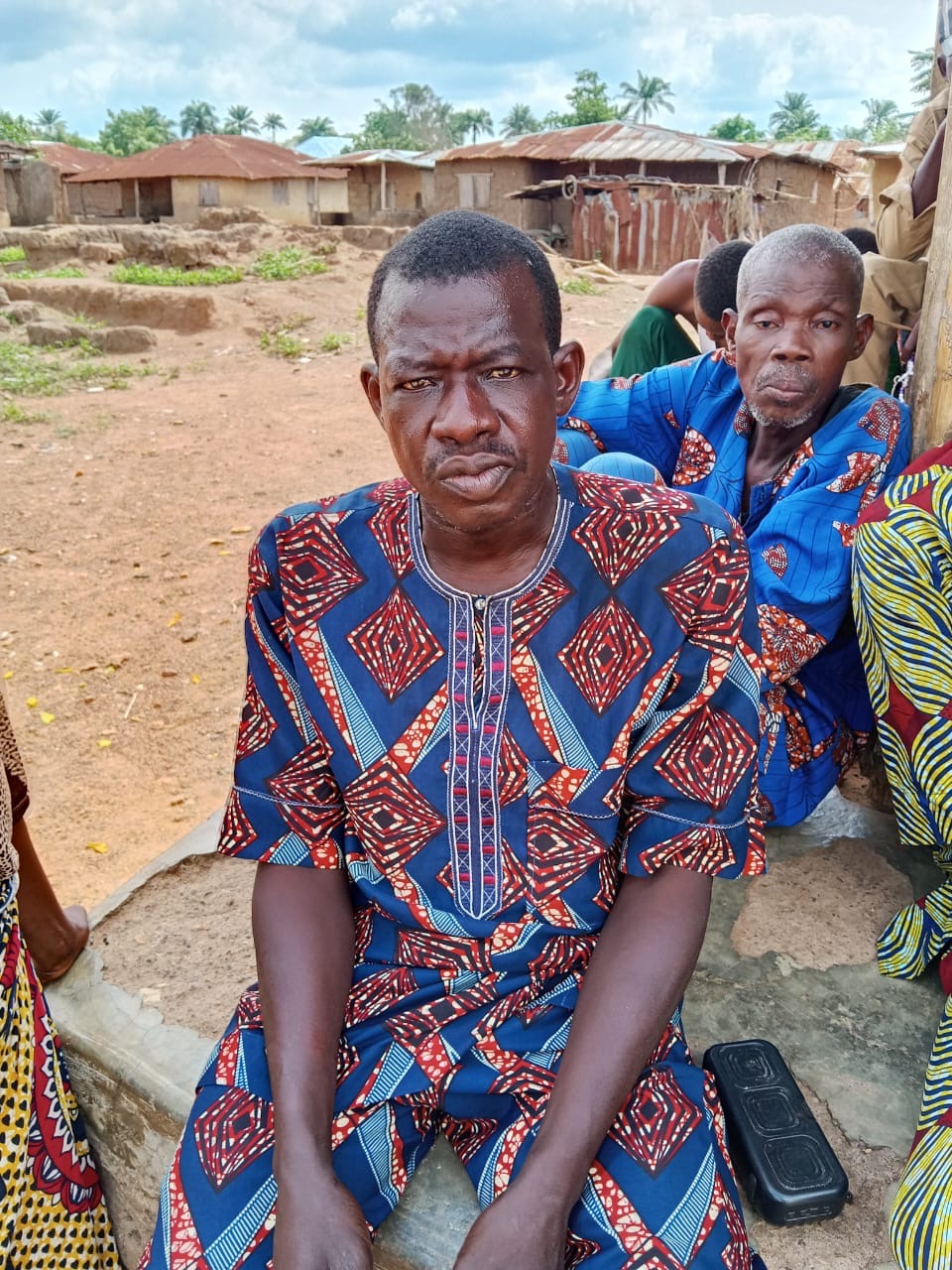
Ojo Adekunle

Residents said there had been past attempted attacks and rising movements of armed men in nearby areas.

“It is not the first time they have been disturbing this community,” said Olohunlowufemi, whose daughter was abducted.

Some residents said local vigilantes existed, but a formal security presence remained weak.
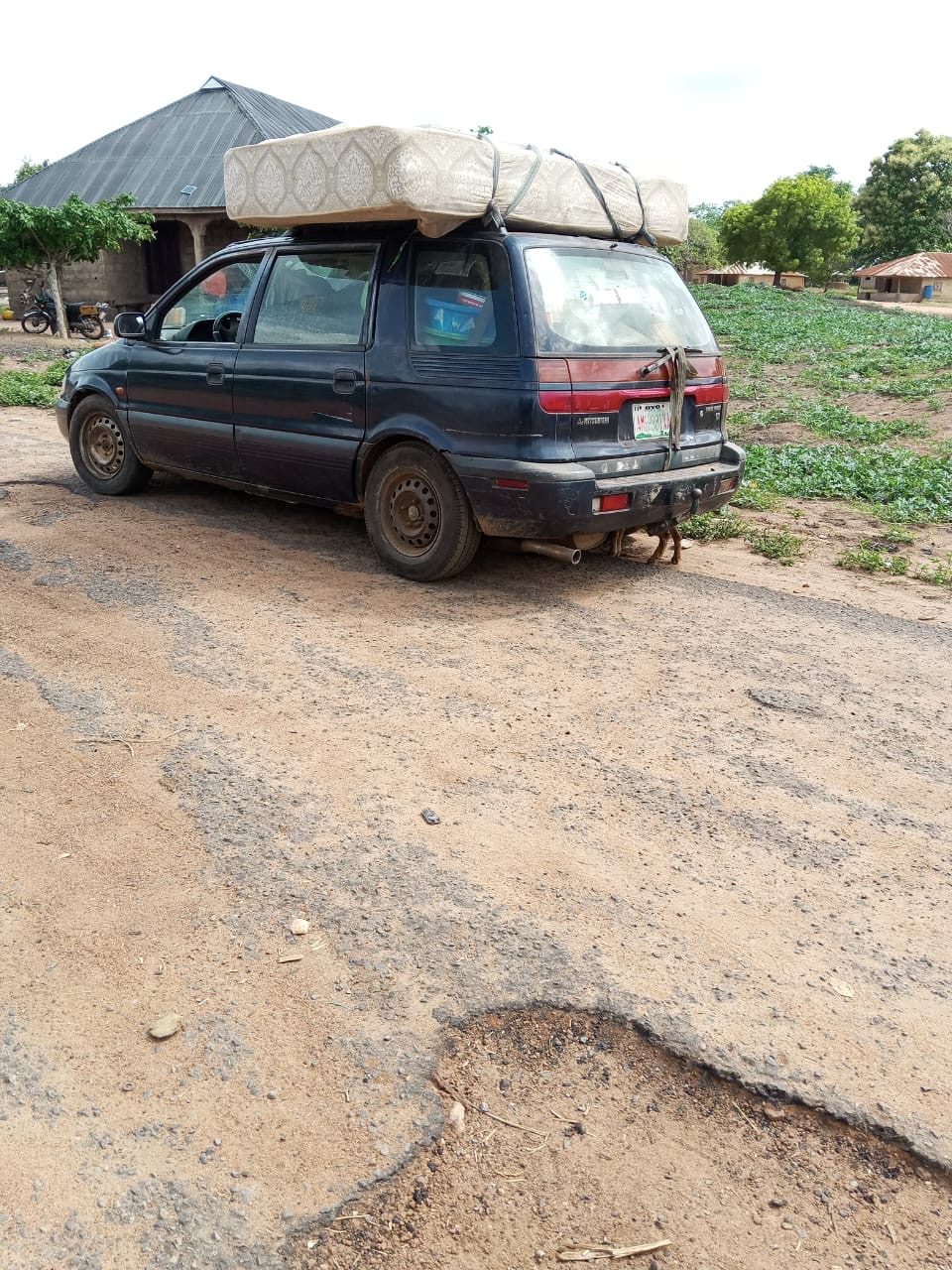
A picture showing one of the residents running away from the Esin-Ele community

One of the community leaders in Yowata, Emmanuel Alade, explained that there have been times when kidnappers killed one of the residents trying to deliver ransom to secure the release of a victim. A resident had also been killed before the attack.

The ICIR also reported that on January 6, 2026, armed attackers launched a deadly assault on Old Oyo National Park located in the Oriire Local Government, killing five forest guards and sending shockwaves through surrounding communities.

Residents of Igbeti, Igboho, Saki, and surrounding communities in the Local Government had told The ICIR at the time that criminal gangs used the forest as a launchpad for kidnappings, farm invasions, and deadly raids, retreating into the park after each operation.

A new front in Nigeria’s school abduction crisis?

Until recently, mass school abductions in Nigeria were largely seen as a crisis confined to the country’s northern region, where armed groups have repeatedly exploited weak rural security, porous borders, and delayed emergency response to targeted schools.

But the coordinated attack on schools in Oyo has confirmed that the threat has now spread to the South West, previously considered relatively safer.

Yawota and Esin Ele, the communities affected by the Oyo attack, are agrarian settlements in the Ogbomoso axis, where many residents depend on farming for survival. Like many rural communities across Nigeria, they are surrounded by bush paths, isolated routes, and limited security presence, conditions that can make coordinated attacks easier to execute and harder to repel.
Femi’s daughter was among the children abducted
Classes left deserted after attack at LA primary school, Esin-Ele

On the day of the Oyo abduction, another school attack in Borno State, Northeast Nigeria, saw armed men abduct scores of children from schools, underscoring how schoolchildren continue to remain easy targets in Nigeria’s worsening security crisis.

Before then, terrorists had, in November 2025, stormed St. Mary’s Private Catholic Primary and Secondary School at Papiri in Niger State, abducting 253 students and 12 staff members in one of the state’s largest school kidnappings in recent years.

The first school abduction that attracted global outrage occurred in April 2014, when Boko Haram kidnapped 276 schoolgirls from Government Girls Secondary School in Chibok, Borno State. Although some later escaped or were released, several remain unaccounted for, and the attack became a defining symbol of Nigeria’s inability to protect schoolchildren.

Since then, the attacks have continued in waves. In February 2018, Boko Haram abducted 110 schoolgirls from Government Girls Science and Technical College in Dapchi, Yobe State, an attack that left at least five students dead. In December 2020, armed men stormed Government Science Secondary School in Kankara, Katsina State, taking more than 300 boys. The following year, more than 300 schoolgirls were abducted in Jangebe, Zamfara State, while Kaduna recorded multiple school kidnappings, including attacks on the Federal College of Forestry Mechanisation in Afaka, Greenfield University, and Bethel Baptist High School.

In March 2024, about 287 pupils were kidnapped from Kuriga in Kaduna State, reigniting national outrage over school insecurity among several other instances.
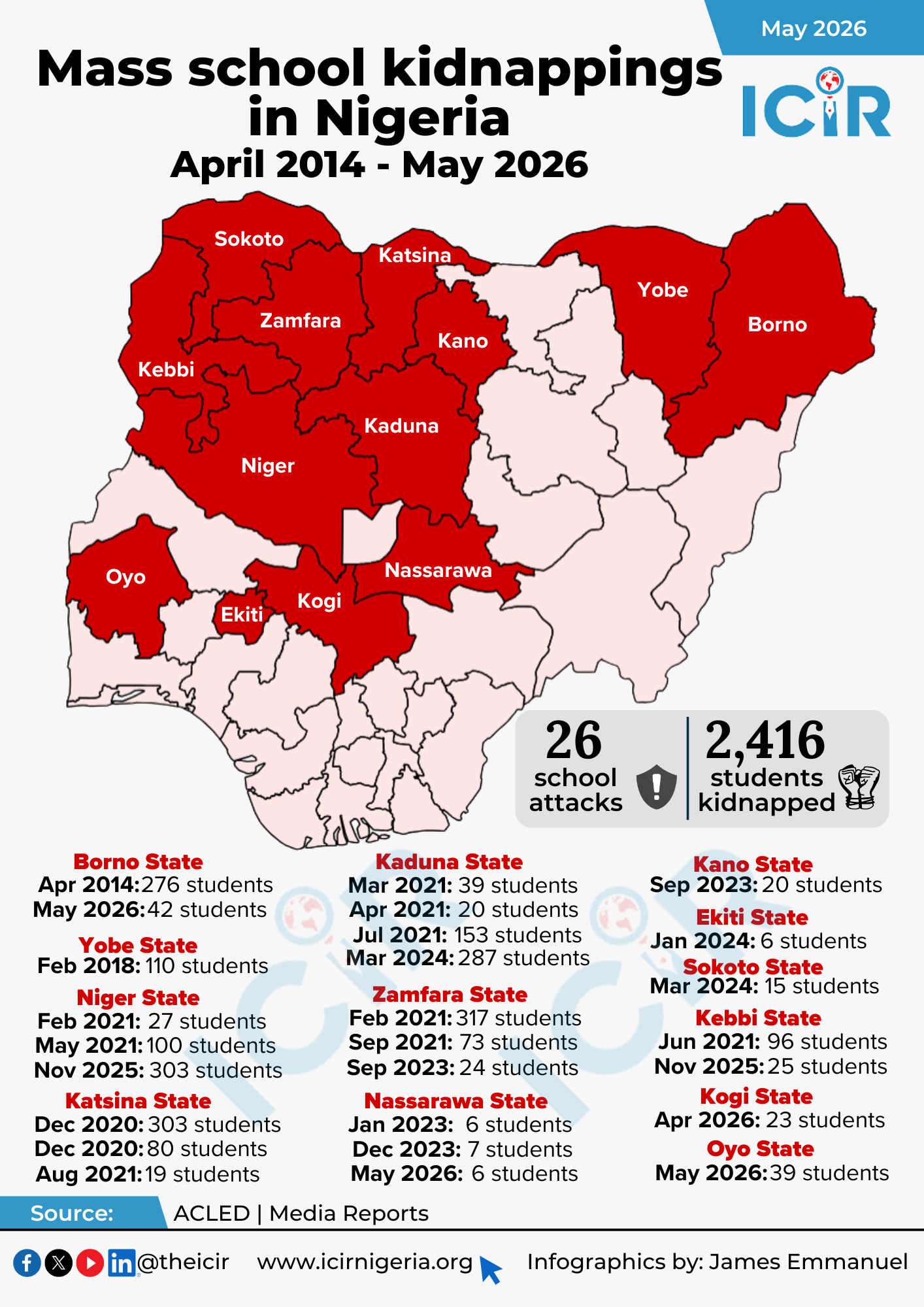
Timeline of school abduction

In response to repeated attacks, the Nigerian government launched the Safe Schools Initiative (SSI) in 2014, designed to strengthen security around vulnerable schools, particularly in high-risk regions. Not less than $30 million was spent over the years to school protection programmes, emergency response systems, and broader education security interventions.

Speaking with The ICIR, an Abuja-based education researcher and consultant, Isiaq Oluwatosin, said one of the major reasons school abductions persist is the country’s failure to adapt its school security systems to modern threats.

According to him, many public schools across Nigeria’s rural communities like Esin Ele and Yawota, still operate in physically vulnerable settings with little or no security infrastructure.

“Most schools are still in open fields like they were under colonialism,” he said. “Most are not fenced and lack adequate security architecture.”

He argued that the focus of security should not merely be on responding after attacks occur, but on preventing them through proactive intelligence gathering and threat disruption.

Oluwatosin said the consequences of school abductions stretch far beyond the immediate victims, leaving lasting psychological scars on teachers, pupils, and entire communities.

“Only those children can truly tell what they witnessed. We can only imagine and still not come close to the horrors they may be facing in the hands of total strangers,” he said.

He noted that teachers are also deeply affected, having to grapple with the trauma of seeing children they interact with almost daily suddenly disappear in violent circumstances.

“As a teacher, you become a parent to those students as well. How do you return to teaching when children you saw five times a week are suddenly gone, not because of a holiday, but because of kidnappings? It is a long road to recovery.”

He warned that repeated attacks on schools could worsen Nigeria’s already severe education crisis, especially with the country’s growing population and millions of out-of-school children.

On solutions, he stressed the need for stronger collaboration between communities and security agencies, expanded intelligence gathering, and the urgent strengthening of school protection infrastructure. According to the educationist, “Government must be intentional about its responsibility because security is one of the core reasons people pledge allegiance to the state. Once that trust is broken, dangerous alternatives begin to emerge.”

Government intensifies rescue efforts

Following the attack and the widespread fear it triggered across affected communities, the Oyo State government ordered the temporary closure of primary schools in neighbouring local government areas, including Surulere, Oyo East, Oriire, and Olorunsogo, as a precautionary measure to prevent further attacks and allow security agencies to stabilise the area.

Governor Seyi Makinde also assured residents that the government was committed to securing the safe return of the abducted pupils and teachers, even as the crisis took a darker turn with the reported killing of one of the kidnapped teachers.

Addressing journalists after an emergency security meeting on Sunday, May 18, Makinde described the incident as deeply troubling and appealed for calm, saying authorities were deploying both kinetic and non-kinetic measures in response to the abduction.

He also appealed to community leaders, residents, and religious stakeholders, particularly the Baptist Convention linked to one of the affected schools, to support efforts aimed at securing the victims’ release.

When contacted, Suleman Olanrewaju, the Chief Press Secretary to the Governor refused to comment on the incident and directed this reporter to the Police.

The ICIR visited the Ikoyi Ile Divisional Police Command in Oriire Local Government Area but was directed to the Oyo State Police Command. When contacted, the spokesperson of the command, Olushola Ayanlade said efforts were on in collaboration with other security agencies to ensure the safe return of the children and arrest of the perpetrators.

He, however, did not provide further response, as of the time of filing this report.

At the federal level, President Bola Tinubu condemned the killing of the abducted teacher, describing the attack as barbaric while expressing sympathy to the affected families and the Oyo State government.

In a statement by the Presidency, Tinubu said security agencies had been directed to intensify rescue operations and ensure the safe return of all remaining victims.

The president also renewed his call for the establishment of state police, arguing that the persistence of kidnapping and violent attacks across parts of the country had reinforced the need for decentralised policing.

“The IGP, following my instructions, is personally leading the tech-driven operation. We expect a breakthrough soon. The bandits and all their local collaborators will be fished out and made to face the full wrath of the law,” the president said.

For the families in Yawota and Esin Ele, however, the promises offer little immediate comfort. As rescue efforts continue, many remain hold onto hope that the children taken from their classrooms will return home alive.
Mass atrocities worsen as Nigeria records over 30,000 deaths in 6 years

RECENT school attacks in Borno and Oyo states have left Nigerians grappling with the troubling pattern and spread of insecurity in the country. 

In Borno state, gunmen stormed Government Day Junior Secondary School in Askira-Uba Local Government Area, abducting dozens of pupils on May 15, 2026. On the same day, three schools in Orire LGA, of Oyo State were attacked with dozens of pupils and teachers abducted, spreading fear to the South-West.

These incidents revive memories of past mass abductions such as the Chibok and Dapchi kidnappings in the North East that plunged Nigeria’s security challenges into global consciousness and drew international outrage.

Occurring a few days before the National Day of Mourning and Remembrance, these incidents highlight a surge in mass atrocities committed against Nigerians. Data mined by the ICIR, reveal that these atrocities have persisted for six years, shrinking safety in communities, markets, schools and other public spaces.

32,667 killed, 23,187 kidnapped in six years

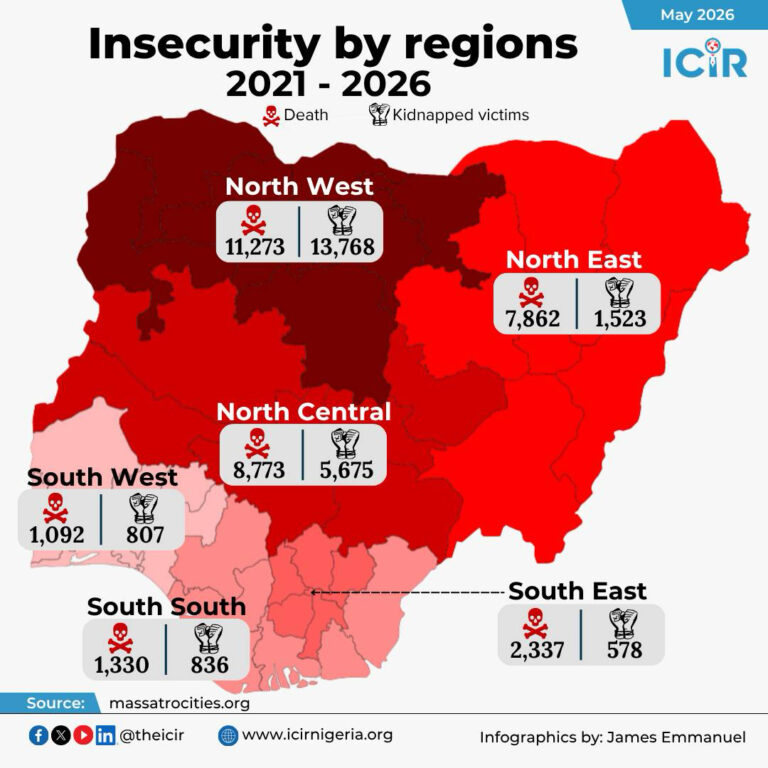
According to figures obtained from Mass Atrocities Tracker, no fewer than 32,667 people were killed across Nigeria between 2021 and 2026. This translates to an average of about 15 deaths per day over the six-year period. 

The figures, compiled from incidents linked to insurgency, banditry, activities of the Indigenous People of Biafra (IPOB) and communal violence, show the spread in killings and abductions across different parts of the country despite repeated military operations and government assurances.

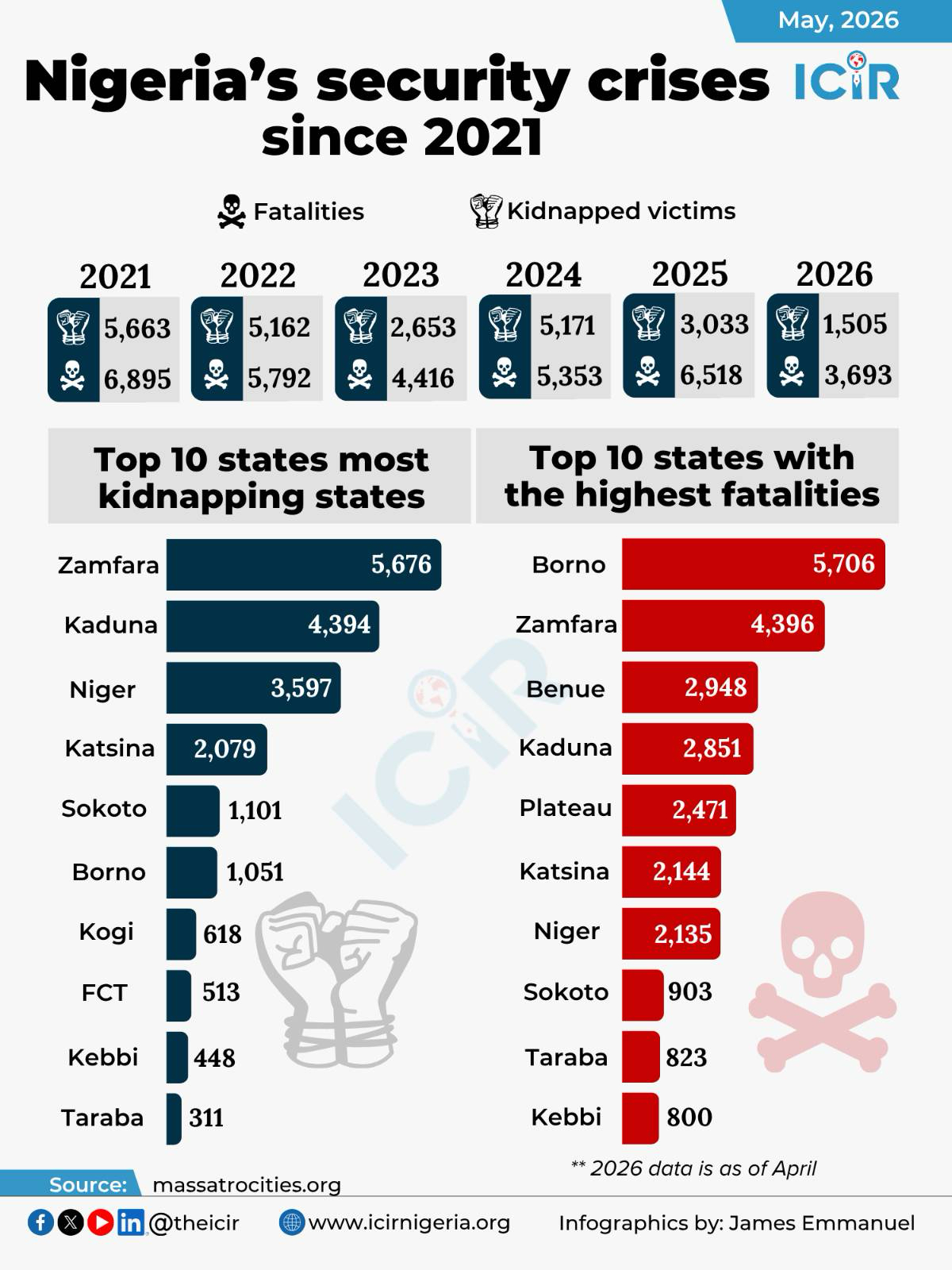
Based on the data, 6,895 were killed in 2021, at a time when several communities in Zamfara and Kaduna faced repeated mass raids by armed groups, with entire villages ransacked and residents either killed or forced to flee.

In 2022, about 5,792 deaths were recorded. The ICIR gathered that during this period, bandit attacks and communal clashes intensified across parts of the North-West and North-Central, with communities in Plateau and Benue continuing to report killings in farming settlements.

Further breakdown of the data shows that at least 4,416 people were killed in 2023 while, in 2024, deaths rose again to 5,353, with renewed attacks in Borno and continued violence in the North-West. School attacks, village raids and highway ambushes again became more frequent.

In 2025, at least 6,518 people were killed. The year saw renewed insurgent attacks in the North-East and sustained bandit violence in Zamfara, where entire communities were again forced to abandon their homes after repeated assaults. The latest data shows that between January-April, 2026, at least 3,693 people have been killed.

Top 5 states with highest killings 

Further breakdown shows that Borno recorded the highest number of deaths with 5,706 victims between 2021 and 2026. This is followed by Zamfara which recorded 4,396 deaths within the same period. Benue recorded 2,948 deaths making it the third most hit state. It was closely followed by Kaduna which 2,851 deaths and Plateau with 2,471 deaths within the period under review.

Other states in the ranking include Katsina with 2,144 deaths, Niger with 2,135 deaths and Sokoto with 903 killed.  Tarawa recorded 823, and Kebbi, 800 killed in the last six years.

Why Borno leads as epicentre of killings

In Borno, the state’s long-running insurgency crisis has made it the main theatre of operations for Boko Haram and its breakaway faction, ISWAP (Islamic State West Africa Province). Boko Haram emerged around 2009 as an armed Islamist insurgent group in north-eastern Nigeria, launching attacks on police stations, military bases, schools, places of worship and civilian communities. The group’s campaign of violence escalated sharply after 2011, leading to mass displacement and the destruction of entire towns.

In 2016, the group split, leading to the emergence of ISWAP, which aligned itself with the Islamic State network. Since then, both groups have operated in different parts of the Lake Chad basin, with ISWAP becoming more dominant in some areas due to its more structured operations and control over territories around the Lake Chad axis.

Over the years, both groups have carried out repeated raids on rural communities, often targeting farming villages, highways, military outposts and internally displaced persons’ routes. These attacks have forced many residents in Borno to flee their homes, with thousands still living in camps or host communities years after displacement.

Nigeria’s security crises since 2021

Banditry pushes Zamfara to the brink 

The crisis in Zamfara is largely driven by armed bandit groups operating across forested areas that stretch into neighbouring Katsina, Sokoto, Kaduna and Niger states. These groups have evolved over the years from loosely organised criminal gangs into more structured networks carrying out coordinated attacks on rural communities.

Communities across Zamfara have also reported a disturbing system of imposed levies, where residents are forced to pay “taxes” or risk renewed attacks. In some areas, bandits have taken over mining fields and entire villages have been emptied after repeated raids, with survivors fleeing into nearby towns or internally displaced camps.

At different points in the crisis, some local communities entered negotiated peace deals with armed groups, but these arrangements have often collapsed, leading to fresh waves of violence. Many rural settlements remain deserted, with farms abandoned and livelihoods disrupted, as residents live with the fear of returning to areas where attacks often happen without warning.

Benue, Kaduna, Plateau hit hard

Benue was the third most hit state with much of the killings linked to recurring clashes between farming communities and armed herders, as well as wider communal violence in rural areas. For years, villages in the state have face attacks during farming seasons and entire communities displaced. In 2025, The ICIR reported how several villages in Benue were caught in a deadly cycle of violence.

Kaduna, with a long history of sectarian violence follows closely behind Benue recording high fatalities in the last six years. The state has within this period faced multiple security challenges that include bandit raids, to farmer herder crisis and communal conflicts.

The death toll from Plateau State is largely driven by long-standing tensions between farming and herding communities that have repeatedly escalated into deadly attacks on villages, often leaving dozens dead in single incidents. Plateau is also confronted by ethno-religious tensions in Jos and some major cities that often lead to road blocade and killings.   

Kidnappings spread across states

The data shows that kidnapping remains one of the most widespread crimes across Nigeria. At least 23,187 people were kidnapped in the last six years. The data shows that in 2021, at least 5,663 people were abducted and 5,162 abducted the following year. In 2023, the crime dropped to 2,653 but picked up to 5,171 in 2024. In 2025, records on kidnapping dropped again to 3,033. However, data records from January to April reveal at least 1,505 abduction cases. Many of the victims include farmers, traders and schoolchildren. In states like Zamfara, Kaduna and Niger, abductions often occur in waves, with entire communities negotiating ransoms to secure the release of captives.

Zamfara, Kaduna top kidnapping list

The North west remains the focal point of Nigeria’s banditry and records more kidnapping incidents than any other region. Zamfara leads with 5,676 kidnapped victims between 2021 and 2026. The ICIR reports that the state has become one of the main corridors of abduction in the North-West, where armed groups popularly called bandits routinely raid villages, block rural roads and seize residents for ransom.

Kaduna follows with 4,394 kidnapping cases. Many of the victims are schoolchildren, commuters and farmers taken during attacks on villages or ambushes along highways.

Niger recorded 3,597 kidnappings within the period, with attacks concentrated in rural communities and travel routes linking the North-West to the Federal Capital Territory and Kwara state.

Similarly, Katsina recorded 2,079 kidnappings, making it the fourth on the list of states with the highest kidnapping incidents.

Other affected states include Sokoto, Borno, Kebbi and Taraba, where similar patterns of rural attacks and ransom-driven abductions have persisted over the years.

Expert query government on rising killings 

The Co-Chair of the Community of Practice Against Mass Atrocities in Nigeria, Ken Henshaw, while speaking at a conflict-specific dialogue marking the 2026 National Day of Mourning, said the continued rise in mass killings and abductions reflects a clear failure of government to meet its constitutional responsibility of protecting lives and property.

Henshaw said Nigeria’s insecurity crises, which has persisted across multiple administrations, shows that security institutions have consistently performed below expectation despite repeated promises and military operations aimed at curbing violence.

According to him, data tracking mass atrocities in the country indicates sustained levels of killings and kidnappings over the past several years, arguing that the figures point to systemic failure rather than isolated security lapses.

Henshaw said the persistence of attacks across different regions, coupled with rising casualty figures, suggests that existing security strategies have not been effective in addressing the scale and spread of violence.

“The violence continues to be driven by multiple armed actors operating across different regions of the country, including insurgent groups, armed bandits, separatist militias and communal armed groups, resulting in widespread displacement, destruction of livelihoods and growing civilian vulnerability,” he said.

The activist also criticised the increasing resort to amnesty programmes for armed groups, arguing that such measures weaken law enforcement and reduce pressure on authorities to prosecute offenders.

He further noted that the security architecture remains overstretched and under-resourced, saying that police deployment priorities, including the diversion of personnel to VIP protection, have affected public safety outcomes.

Presidency threatens legal action against VDM over alleged Tinubu audio

THE Presidency has threatened legal action against popular social media commentator Martins Otse, also known VeryDarkMan (VDM), over alleged circulation of an AI-generated audio he attributed to President Bola Tinubu.

The president’s Special Adviser on Information and Strategy, Bayo Onanuga, issued the warning on Wednesday in reaction to a video in which VDM played the audio and asked followers to judge its authenticity.

“This VDM needs to face the weight of the law for being the conveyor and disseminator of a fake audio of President Tinubu. This is a clear case of an egregious abuse of the social media platform,” he wrote.

Onanuga’s reaction followed a quote-retweet of a post by an X user identified as Aneex, who criticised the video and accused VDM of exploiting emotions for political propaganda.

In the video VDM posted, he urged his followers in a mix of Pidgin English and English to judge the authenticity of the audio for themselves.

“You people watch it, see this next video I’m about to play. After you people watch it, we’ll come decide whether na for shrine them cook una mind. All the people wey wan support Bola Ahmed Tinubu for 2027, you go come know whether they don cook your mind,” VDM said.

The audio allegedly featured Tinubu’s voice making controversial remarks, including claims that insecurity in the South-East was deliberate, that he had asked Labour Party presidential candidate Peter Obi to step down for him in 2022, that he was unconcerned about Nigerians’ hardship, and that World Bank loans were being used to finance elections.

“This man does not have anything to offer. Come 2027, any other option is welcome. But for me, myself and I, President Bola Ahmed Tinubu cannot offer us anything anymore. So, he should go,” after playing the audio, VDM added.

However, checks by The ICIR shows VDM questioning the credibility of the video shared by Bolaji Fesomade on X.

“You will soon tell the world where you saw that video and how you guy edit it,” VDM wrote in reaction to the video.


NRC suspends Warri-Itakpe train service over operational glitches

0

THE Nigerian Railway Corporation (NRC) has suspended operations on the Warri–Itakpe Train Service (WITS) over what it described as operational and technical concerns.

In a statement issued on Tuesday, the corporation said the decision followed advice from its engineers and was aimed at allowing critical assessments on the rail corridor.

According to the NRC, the temporary halt is part of efforts to improve safety, reliability and service delivery on the route, which connects parts of Delta, Edo and Kogi states.

“The temporary suspension has become necessary to enable the corporation to carry out critical operational assessments aimed at ensuring continued safety, reliability, and improved service delivery on the corridor,” the statement said.

The NRC explained that engineers were already working to address the issues, adding that passengers would be informed before the end of the week when normal operations would resume.

While apologising for the disruption the development may cause commuters and businesses that rely on the service, the NRC assured the public that steps were being taken to restore operations as quickly as possible.

The agency also reaffirmed its commitment to providing safe and efficient rail transport services across the country.

The latest development comes days after the Federal Government announced a 50 per cent reduction in train fares for travellers during the Sallah celebration.

The fare reduction was disclosed in a statement by the Permanent Secretary of the Federal Ministry of Transportation, Funsho Adebiyi, who said the move was introduced to ease transportation costs for Nigerians travelling during the festive period.

The ICIR reports that the Warri-Itakpe service has been shut down several times due to operational glitches.

ADC postpones results collation as Atiku leads party primary in 22 states, FCT

THE African Democratic Congress (ADC) has postponed the collation of results for its presidential election.

Chairman of the party’s presidential primary election committee, Ikechi Emenike, announced the postponement Tuesday night after more than four hours of result collation at the congress hall of the Transcorp Hilton Hotel in Abuja.

Emenike said the decision to suspend the collation was taken to allow Muslim party members to observe Eid-el-Kabir, adding that the exercise would resume at 8 p.m. today (Wednesday)

The ICIR reported that ADC conducted a nationwide direct primary on Monday to select its candidate for the 2027 presidential election, with former Vice-President Atiku Abubakar, former managing director of the defunct FSB International Bank, Mohammed Hayatu-Deen, and a former Minister of Transportation, Rotimi Amaechi emerging as the leading contenders.

According to the Cable, the results collated so far show that Abubakar is leading with 1,390,276 votes, while Amaechi secured 248,455 votes and Hayatu-Deen trails with 156,075 votes.

Abubakar is currently ahead in 22 states, including Kebbi, Anambra, Abia, Ekiti, Ondo, Gombe, Oyo, Imo, Yobe, Nasarawa, Enugu, Benue, Osun, Kogi, Taraba, Kano, Adamawa, Sokoto, Zamfara, Borno, Niger, Plateau, as well as the Federal Capital Territory (FCT)

However, Amaechi, is leading in Akwa Ibom and Ebonyi states.

The ICIR reported that the primary was marred by controversy, as Amaechi and Hayatu-Deen rejected the results, alleging widespread irregularities and voter disenfranchisement.

Amaechi, said that the process was neither free nor transparent, alleging that about 80 per cent of party members were denied the opportunity to vote.

He stressed that ADC could not be engaging in the same practices it accused the ruling All Progressives Congress and the Independent National Electoral Commission of committing.

Hayatu-Deen also rejected the process and announced that he would not attend the official declaration of the results.

Abducted Oyo pupils remain in captivity as Nigeria marks Children’s Day, governor reacts

Oyo State Governor, Seyi Makinde, has expressed concern and support for the families of schoolchildren and teachers currently being held captive by bandits in the state.

The governor shared his concern in a message marking the dual celebration of Eid-el-Kabir and National Children’s Day shared on his official X handle Wednesday morning.

“As we mark this year’s Eid and Children’s Day, our thoughts are with every family awaiting the return of their loved ones, and with security agencies working to keep our communities safe,” he wrote.

The ICIR reports that Nigeria has set aside May 27 for the annual celebration of Children’s Day, to honour children, advance their protection, education, and well-being, but in a rare coincidence, the date also aligned with the 2026 Eid-el-Kabir celebrations, a major Islamic festival symbolising sacrifice, devotion, and faith.

Makinde’s message is coming early two weeks after terrorists attacked three schools in the Oriire Local Government Area of the state on May 15, abducting dozens of pupils, including toddlers, as well as teachers.

One of the teachers, Adesiyan Adegboye, was killed during the attack, while a Mathematics teacher, Michael Oyedokun, was reportedly beheaded in captivity, sparking outrage and renewed calls for the swift rescue of those still in the kidnappers’ custody.

The ICIR reported that the State Police Command confirmed another abduction of two staff members of the Cocoa Research Institute of Nigeria (CRIN) in Ibadan by gunmen, two days after.

Makinde in his latest remark, acknowledged the pain and uncertainty being experienced by affected families during what should have been a period of celebration and togetherness.

“We are working to ensure the safe return of those who were kidnapped in Oriire LGA. May this holy season fill our state with peace,” the governor explained.

According to PUNCH, the suspected terrorists responsible for abduction opened communication channels with the state government on Saturday. However, it remains unclear whether the negotiations are being handled directly by the governor or through representatives of the state or the Federal Government.

Amaechi, Hayatu-Deen reject ADC presidential primary over alleged rigging

TWO of the three presidential aspirants of the African Democratic Congress (ADC), Rotimi Amaechi and Mohammed Hayatu-Deen, on Tuesday rejected the party’s presidential primary over alleged rigging and voter disenfranchisement.

The protests came as the party continued collation of results from the nationwide exercise held  on Monday, May 25., ahead of the 2027 presidential election

Amaechi, a former Minister of Transportation, in a statement, on his X handle, said the process was neither free nor transparent.

“Following reports of widespread voter disenfranchisement in most parts of the country during the African Democratic Congress (ADC) presidential primaries yesterday, I unequivocally reject the concocted results being announced,” he said.

Amaechi alleged that about 80 per cent of party members were denied the opportunity to vote.

“There’s no way that about eighty per cent of members of the party were not allowed to vote, and you expect me to accept such results,” he said.

He stressed that ADC could not be engaging in the same practices it accused the ruling All Progressives Congress and the Independent National Electoral Commission of committing.

“A party that criticises the ruling  APC and INEC for vote buying, rigging and writing of results cannot be engaging in vote buying, writing of results, and other electoral malpractices that leads to the disenfranchisement of voters who are party members,” he added.

Hayatu-Deen also rejected the process and announced that he would not attend the official declaration of the results.

“I will not be attending the announcement of the ADC presidential election results today. I am concerned by reports from across the country of widespread vote rigging, some of which I myself observed, and will therefore be taking advice on my next steps,” he said.

Reacting to the allegations, the ADC National Publicity Secretary, Bolaji Abdullahi in an interview om Channels Television, said the party had not established any evidence of irregularities.

“We don’t have any evidence to be able to support his position or to deny his position because we’ve not collated the results,” Abdullahi said.

“We’ve not noticed any pattern in the result, and we’ve not seen enough to be able to establish a pattern,” he added.

Meanwhile, the ADC announced that collation of results had begun at the party’s national secretariat.

In a statement on its official handle, the party said the process reflected its commitment to transparency and internal democracy.

The latest crisis adds to the internal challenges that have trailed the opposition coalition built around the ADC ahead of the 2027 elections.

The coalition had attracted key opposition figures, including former governors Peter Obi and Rabiu Kwankwaso, who joined the platform as part of efforts to build a united front against President Bola Tinubu of the APC ahead of 2027.

However, both politicians dumped the coalition earlier this month and moved to the Nigeria Democratic Congress, NDC,  amid internal disputes and legal wranglings within the ADC.

Ex-Southampton Nigerian footballer Victor Udoh dies at 21

FORMER Southampton and Royal Antwerp forward, Victor Udoh, has died at the age of 21.

According to UK mirror, the Nigerian footballer was found dead in Abuja under what was described as suspicious circumstances.

Udoh had recently returned to Nigeria following the end of his spell with Czech club Dynamo České Budějovice, which he joined after leaving Southampton in 2025.

Southampton confirmed his death in a statement, expressing grief over the loss of the former academy player.

“We are devastated by the tragic passing of former player Victor Udoh at the age of 21,” the club said.

“The thoughts of everyone at the club go out to Victor’s loved ones at this extremely difficult time.”

Royal Antwerp also mourned the player, describing the news of his death as heartbreaking.

“With great dismay, RAFC has learned of the passing of former player Victor Udoh,” the Belgian club said.

“Our thoughts are with Victor’s family, friends, and loved ones. We wish them much strength, support, and warmth during this particularly difficult time.”

Udoh joined Southampton in February 2025 on a three-and-a-half-year deal but spent only a brief period at the club, featuring in eight matches for the under-21 side in Premier League 2 without making a senior appearance.

He later left by mutual consent in search of regular playing time before joining Czech second-tier side Dynamo České Budějovice.

Before moving to England, the deceased grew at Royal Antwerp after joining from Abuja-based Hypebuzz in 2023.

He impressed with Antwerp’s reserve side, scoring 12 goals in 27 appearances for the Young Reds, before breaking into the first team, where he made 28 appearances.


Eid-el-Kabir: Abuja ram sellers blame insecurity, transport costs for price surge

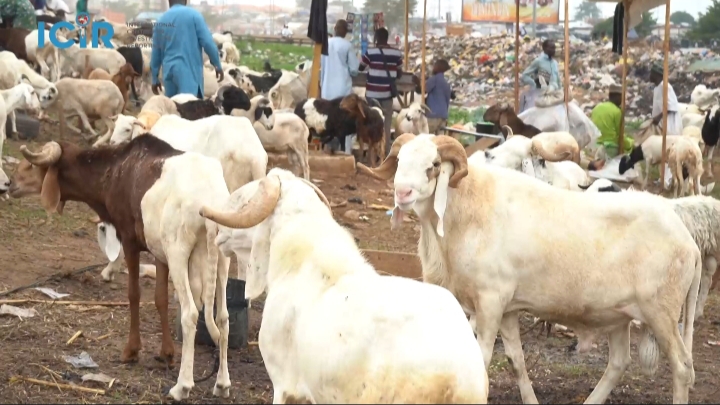
Less than 24hours to Eid-el-Kabir, livestock markets in Lugbe, a suburb situated within the Abuja Municipal Area Council are experiencing low patronage. Traders attribute the downturn to increase in livestock prices driven by rising transportation costs and persistent insecurity in sourcing regions. The ICIR reports on how the current economic realities are affecting the supply of livestock in Lugbe Market.

For livestock sellers in the market, the current sales cycle falls short of previous years.

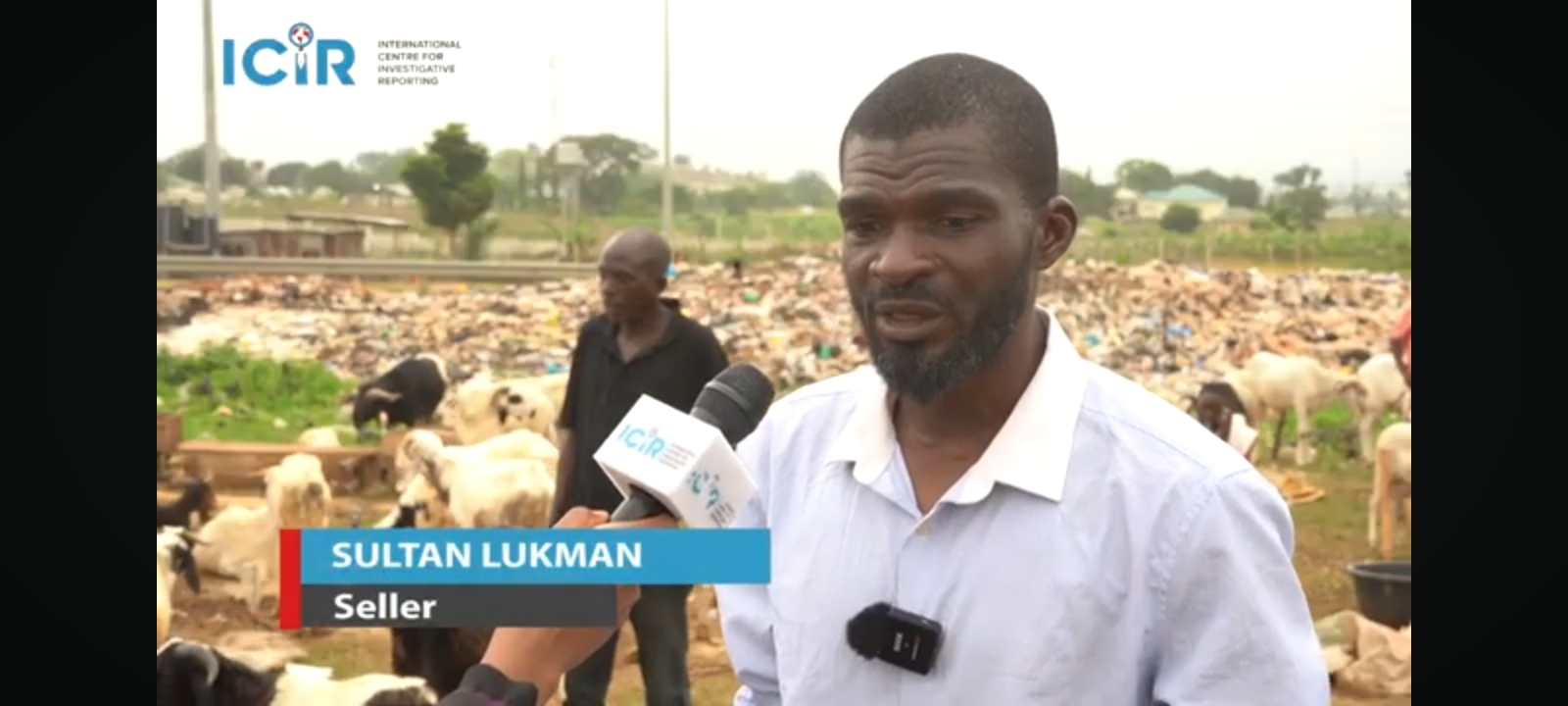
Sultan Lukman, a ram seller, said sales volume have dropped by more than half compared to the same period last year. He noted the low patronage due to the high cost of the animals.

“I came here with more than 12 rams, and I’ve barely sold four, compared to last year, where I sold everything. I was even helping my partners here to sell theirs. But this time around, it is very poor,” Lukman lamented.

Sultan Lukman

He explained that the price hike is a direct reflection of the expenses incurred in moving the animals from parts of the northern region to the capital city.

“They are complaining that the rams are too expensive, and it’s not our fault. Transportation is too expensive. I spent hundreds of naira just to bring in these rams,” he noted.

He didn’t end it there, he spoke about the feeding expenses of the stocks, saying the incessant hike in transportation has made everything harder to reach.

Another seller, Mukhtar Yahya, corroborated this, factoring fuel prices and transportation cost as the major factor for the massive price spike in the livestock market.

But a ram seller simply identified as Aliyu Muhammadu said insecurity and particularly banditry have disrupted traditional supply chains in rural communities.

“Many people that sell to us are nowhere to be found,” he said adding that “in Zamfara, they ran away because bandits were always going to their villages.”

Buyers adjust budgets amid price inflation 

The ICIR observed that the impact of the price hike is felt heavily by residents and buyers who visited the market with fixed budgets, only to find that prices have doubled or tripled over the past 12 months.

A buyer, identified as Bello Abubakar, expressed surprise at the market realities after failing to secure an animal within his planned budget. He was forced to review his household festive spending to accommodate the purchase. He said the price has ruined lots of planning he had done.

“This ram, I bought it for 350,000 naira. I was thinking I would find a good one for 250,000 naira, but I did not get any. Now, I have to go back home and review my budget, as what I planned to buy will have to reduce because I have spent too much on the ram,” he said.

Another buyer, Chukwuemeke, noted that the rates mentioned by the sellers shocked him, as he was only expecting the changes in price to be slightly different from last year.

“Walai, rams are too costly. When I bought a ram last year, the price was just 300,000 to 400,000 naira, but today, I’m hearing 800,000 naira and above.”

The leadership of the livestock market confirmed to the ICIR that the current economic situation has severely altered their sales patterns. Speaking on behalf of other sellers, Firdaus Sanni observed that while inquiries from buyers are high, they still record low sales because consumers cannot afford the price rates given to them.

Sanni stated, “The ram we used to sell for N200,000 to N300,000 is now going for N500,000 to N600,000. People are crying that there is no money.”

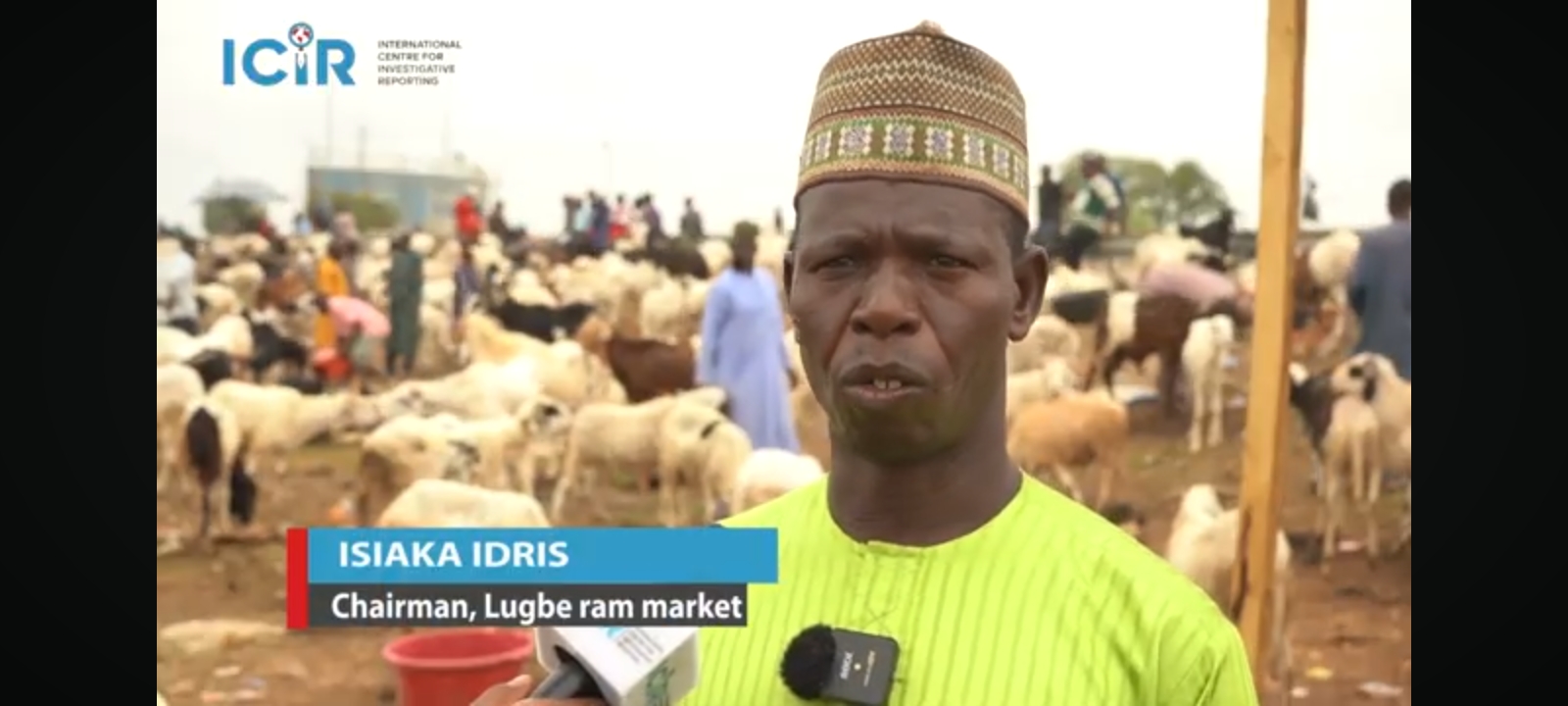
However, Isiaka Idris, the chairman of the livestock market said the turnout this year hasn’t been impressive. He added that corporate and bulk buyers who usually purchase large quantities for distribution have been noticeably absent.

“In previous years, people would come and buy in bulk, up to 50 pieces. But I haven’t seen them this year,” he stated.

Idris speaking with the ICIR reporter

Despite the slow start, traders express hope that market activity will improve in on Eid day as civil servants receive their monthly salaries.

AAC adopts Sowore as consensus candidate for 2027 presidential election

THE African Action Congress (AAC) has adopted its former presidential candidate, Omoyele Sowore, as its consensus candidate for the 2027 presidential poll.

Chairman of the AAC presidential primary committee, Kayode Babayomi, announced the adoption during the party’s 2027 presidential primary, stating that the party had resolved to present a consensus candidate ahead of the next general election in line with the 2026 Electoral Act.

Following his adoption, Sowore formally handed over his position as national chairman of the party to Samuel Ajeyigbe, the AAC Deputy National Chairman (Administration).

Addressing party members and supporters after the adoption, Sowore described the AAC as “the only registered socialist party in Nigeria” and “the only genuine opposition” capable of confronting what he called the “criminal conspiracy” masquerading as democracy in the country.

Sowore said the party represented “the oppressed masses gathered in every shanty, village, and town across the country,” insisting that the AAC was not interested in joining Nigeria’s political establishment but in dismantling it.

The activist, publisher, and politician also accused the government of implementing “copy-and-paste neo-colonial policies” dictated by the International Monetary Fund (IMF) and the World Bank.

According to him, the removal of fuel subsidy without adequate palliatives deepened economic hardship and widened inequality across the country.

“The economic pain we feel today is a policy choice,” he said, adding that “the cruel decision to remove fuel subsidies without any palliative measures or local refining capacity was a decree handed down from Washington, D.C.”

Sowore also criticised what he described as the “privatisation of security” in Nigeria, alleging that security institutions had become tools for the protection of the elite rather than ordinary citizens.

“The police have become an enforcement organ of the ruling class,” he said, adding that the State Security Service had become “a vicious attack dog.”

He linked the country’s insecurity to unemployment, inequality, and the concentration of wealth among a few powerful individuals, arguing that the rise of banditry, kidnapping, and insurgency reflected deeper structural failures within the Nigerian state.

“These people did not fall from the sky. They are the bitter fruits of the diseased tree we call a country.”

Sowore further accused powerful business interests of monopolising key sectors of the economy, including fuel distribution, cement production, and telecommunications, which he described as “economic terrorism.”

“When a private businessman can hold an entire nation hostage over fuel prices, that is no longer capitalism — it is economic terrorism,” he stated.

Campaign promises

Speaking further, the AAC candidate promised that, if elected, his government would nationalise strategic sectors, dismantle monopolies, prosecute corrupt public officials, and invest heavily in education, healthcare, transportation, and job creation.

“The new economic direction must be people-centered, color-coded, and driven by the specific needs and strengths of our population. The true measure of economic success must no longer be the obscene wealth of a few oligarchs, but the prosperity, dignity, and opportunities available to ordinary Nigerians,” he said.

He also unveiled what he called four “people-driven economic models,” which he listed as the Orange and Yellow Economy, Purple and Pink Economy, Blue Economy, and Green Economy.

According to him, the models are aimed at empowering youths, women, and environmentally sustainable industries.

Sowore further announced that the party would declare a “Nationwide State of Resistance” on August 5 against “tyranny, oppression, corruption, exploitation, and the destruction of Nigeria’s future.”

“It was on August 5th that the #RevolutionNow protests erupted across Nigeria,” he said. “History is speaking to us again.”