Home Blog Page 231

ICPC, FCC partner to fight job racketeering, promote transparency in public service

0

THE Independent Corrupt Practices and Other Related Offences Commission (ICPC) and the Federal Character Commission (FCC) have partnered to fight job racketeering and promote transparency in public service in Nigeria.

Consequently, the two organisations agreed to form a joint task force to achieve these goals.

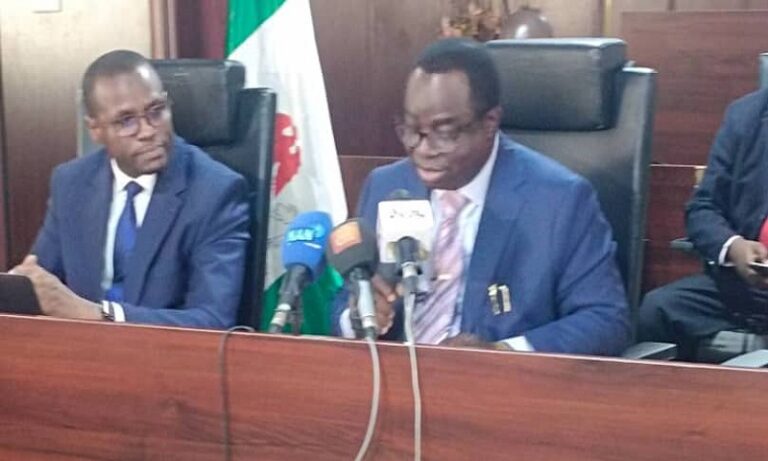
The decisions were reached when the ICPC Chairman, Musa Adamu Aliyu, a senior advocate, paid a courtesy visit to the acting chairman of the FCC, Kayode Oladele, on Thursday, July 17, in Abuja.

According to the ICPC chairman, the visit reflects deep respect for the FCC and a strong interest in building strategic collaboration.

He said the FCC played a critical role in safeguarding fairness and national unity by ensuring equitable representation of all Nigeria’s diverse groups in public institutions, as enshrined in Section 14(3) and Section 153(1)(c) of the 1999 Constitution.

Aliyu acknowledged that the FCC’s work was vital in ensuring that no segment of society is left behind in accessing federal opportunities.

He added that the ICPC’s mandate was to prevent, investigate, and prosecute corruption, as well as to educate the public and advise institutions on building systems that resist abuse, as spelt out in Section 6 of the ICPC Act.

“This is in line with Section 15(5) of the Constitution, which directs the Nigerian State to abolish all corrupt practices and abuse of power.

“Both our institutions are united by a common goal: to protect fairness, integrity, and justice in public service. As part of this mandate, ICPC is currently investigating several cases of job racketeering, where public sector recruitment processes have been compromised for personal gain,” the ICPC boss stated.

He expressed concern that Nigerian youths were the primary victims of illegal recruitment schemes and backdoor appointments in public sector job placements. He noted that this exploitation not only violated due process and equity but also eroded hope and trust in institutions.

He cited a striking case where a senior official allegedly influenced recruitment in a federal agency, resulting in an imbalance in job allocations. He said the official’s geopolitical zone received 189 slots over two years, while the next closest zone received 94, and a particular state received 97 slots. This disparity, according to the chairman, undermines the federal character principle and the fight against corruption.

“This imbalance, driven by abuse of office, clearly undermines both the federal character principle and the fight against corruption. This reinforces the urgency of closer collaboration between ICPC and FCC,” he added.

He said the United Nations Convention Against Corruption (UNCAC), particularly Articles 5 and 36, required that institutions like the ICPC and FCC work together, share intelligence, strengthen systems, and coordinate national anti-corruption efforts.

He proposed the establishment of a joint task team or technical working group between ICPC and FCC to monitor recruitment patterns, investigate breaches of the federal character principle, prevent job racketeering, and protect the rights and future of young Nigerians.

Aliyu said collaboration between the two government agencies would serve as a model of institutional synergy.

The FCC Acting Chairman, Kayode Oladele, in his remark, welcomed the proposal and said it marked the first time both agencies were coming together to jointly tackle recruitment irregularities.

He said the FCC was committed to ensuring proportional representation of all groups in public service.

“The public often associates us only with employment. But we also work to ensure that development projects are evenly spread across the federation,” Oladele stated.

He revealed that the commission had set up a directorate to oversee the monitoring of infrastructure distribution in line with its broader mandate and assured the ICPC that the FCC was ready to work with it to sanitise the system and ensure compliance with the Federal Character principles.

He described job racketeering as a major concern and pledged that the FCC would support efforts to revive integrity and fairness in public sector recruitment.


Trump diagnosed with vein condition behind swollen legs

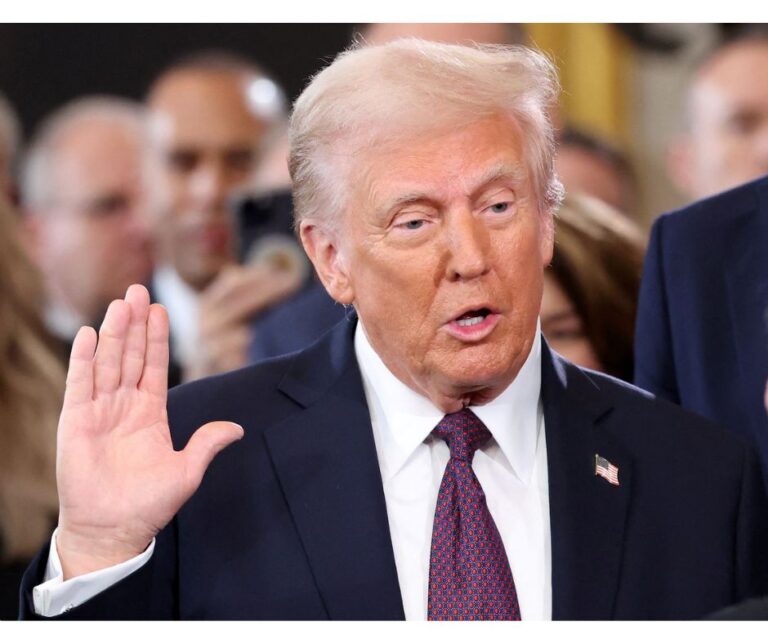
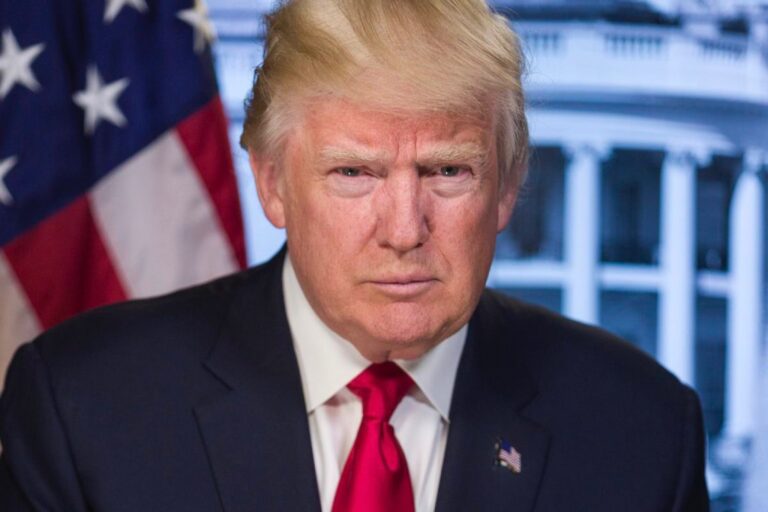
UNITED States President Donald Trump has been diagnosed with a vein condition following a medical evaluation for swelling in his lower legs.

The White House announced this development on Thursday, July 17, through a letter from Trump’s physician.

An ultrasound of the 79-year-old president’s legs revealed chronic venous insufficiency, a common condition among individuals over 70 years.

The White House said there was “no evidence” of more serious conditions like deep vein thrombosis or arterial disease.

Further examinations also showed “no signs of heart failure, kidney dysfunction, or any systemic illness,” it added.

The result indicated that Trump was not feeling any discomfort related to the condition.

According to MedlinePlus, a service of the US National Library of Medicine, “Venous insufficiency is a condition in which the veins struggle to return blood from the legs back to the heart.”

The medical result was announced hours to the debate on Trump’s budget by the House.

The ICIR reported that the House is expected to approve the spending cuts tomorrow, following the Senate Republicans’ overnight approval of $9 billion in reductions to foreign aid and public broadcasting. The cuts, proposed by Trump’s Department of Government Efficiency, were passed under budget rules that allow Republicans to bypass Democratic support.

 Several Republican senators on Tuesday argued that slashing the programme’s funding would undermine decades of progress in the global HIV/AIDS fight.

Trump signed stringent executive orders on his inauguration day on January 20, including pulling out the US from the World Health Organisation (WHO), and health aid to developing countries,  a move that shattered the hope of millions of Nigerians living with HIV/AIDS who rely on the programme.

Tinubu renames University of Maiduguri after Muhammadu Buhari

0

PRESIDENT Bola Tinubu has announced the renaming of the University of Maiduguri as Muhammadu Buhari University, in honour of his late predecessor, who died on Sunday, July 13, 2025.

Bayo Onanuga, Special Adviser to the President on Information and Strategy. made the announcement on Thursday, July 17, after a Federal Executive Council (FEC) session of tributes held in Abuja to commemorate the life and contributions of former President Muhammadu Buhari to Nigeria.

Established in January 1975, University of Maiduguri is one of the second-generation universities, which formed part of the programmes of the Third National Development plan (1975-80) by the then Federal Military Government.

Currently, the university comprises 37 faculties and centres, 103 departments and over 83,000 students, among others.

The announcement comes amid a week-long national mourning declared by the Federal Government.

Buhari, who served as Nigeria’s military Head of State from 1983 to 1985 and later as a democratically elected president from 2015 to 2023, passed away in a London hospital at the age of 82 after a prolonged illness.

On Monday, July 14, the Federal Government declared Tuesday, July 15, a public holiday in Buhari’s honour. Flags are flying at half-mast across the country and Nigerian missions abroad.

Minister of Interior Olubunmi Tunji-Ojo, who conveyed the government’s announcement, described the day as one of reflection on Buhari’s life and public service.

The former president’s remains were laid to rest in his hometown of Daura, Kastina State, on Tuesday, July 15, after a janazat prayer by Muslim clerics at his house in Daura.

He was buried at his favourite garden relaxation spot – the exact place where he always rested on a chair.

This was after Tinubu received Buhari’s body at the Yar’Adua International Airport in Katsina.

At the airport were former and current governors, ministers, National Assembly members, and other government officials.

The body of the late leader was accompanied to Nigeria from London by Vice President Kashim Shetima, Tinubu’s Chief of Staff, Femi Gbajabiamila, Buhari’s wife, Aisha Buhari, and other family members.

Though Buhari hailed from Daura, Katsina State, his presidency saw major spending on security in the North-East region, including Borno State, where the renamed university is located.

In December 2024, the Nigerian government renamed the University of Abuja after former Head of State, Yakubu Gowon, a retired general.

Again, Sanwo-Olu awards N10m to LASU best graduating student

THE Lagos State Government has awarded N10 million to the best graduating student of the Lagos State University (LASU)

A first-class graduate in Biochemistry, Isioma Sybil Nwosu, an indigene of Aniocha, Delta State, bagged the prize for the 2023/2024 academic session.

She graduated with a 4.93 CGPA, according to the school’s Vice Chancellor, Ibiyemi Olatunji-Bello, a professor, who announced her victory during a press briefing to kick off activities for the 28th Convocation ceremony of the institution.

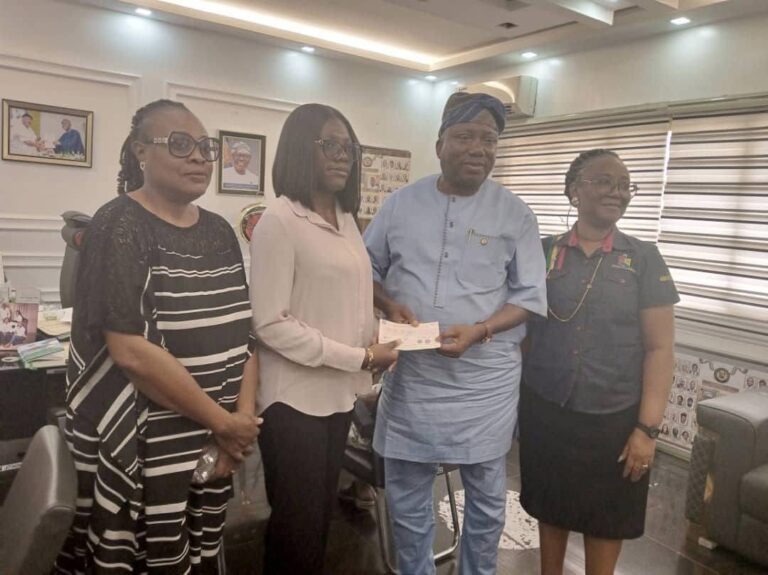
The N10 million award was presented to Nwosu by the Lagos State Commissioner for Tertiary Education, Tolani Sule, at his office in the Secretariat, Alausa, according to a post on the Lagos State Government account on Facebook on Thursday, July 17.

Sule noted that the state government under the leadership of Governor Babajide Sanwo-Olu remained committed to promoting academic excellence, scholarship, and innovation across state-owned tertiary institutions.

According to the commissioner, the gesture reflects the state’s broader mission to produce globally competitive graduates.

He said the government ensured inclusivity by rewarding deserving students regardless of their state of origin, urging the recipient to remain focused in her academic journey and serve as a role model to other students within the state.

Reacting to the award, Nwosu, accompanied by her mother, appreciated the Lagos State Government for the honour and cash reward.

She described the award as a life-changing opportunity and assured that the fund would be used judiciously to further her education.

The ICIR reports that Sanwo-Olu’s administration has offered the award for the best graduating student at the state-run university for the second time in a row.

In 2024, a graduate in Accounting Education, with a CGPA of 4.98, won the prize.

The governor rewarded Olawale at the university’s 27th convocation grand finale in the state on Thursday, June 6.


Why CBN should cut interest rate by 25 basis points – Bismarck Rewane

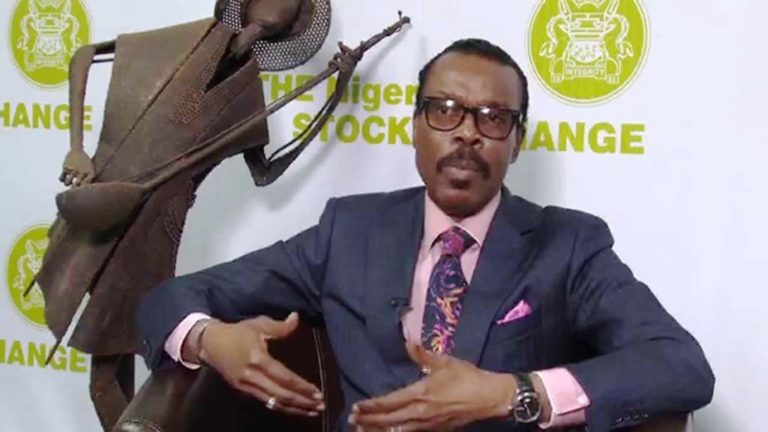
THE Central Bank of Nigeria (CBN) should cut the benchmark interest rate at its next committee meeting following the trend in domestic and global inflation rates, the Chief Executive Officer of the Financial Derivatives Company (FDC), Bismarck Rewane, has said.

His expectation is that the Monetary Policy  Committee (MPC) of the CBN would likely cut the rate by 25 basis points.

Rewane shared this view on Thursday, July 17, during Channels Television’s Business Morning programme while commenting on Nigeria’s latest inflation figures.

According to him, the increasing rate of global inflation relative to the declining inflation rate in Nigeria is an obvious sign for the CBN to cut interest rates.

“Definitely, I’m not a gambling man and I’m not a speculator. My instincts and intuition tell me that there will be a cut of 25 basis points.

“Why do I say that? Because global inflation has increased and Nigerian inflation is declining,” he said.

The benchmark interest rate is the official rate that guides banks and other financial institutions on their lending rates to macro, small, and medium enterprises.

Rewane explained that, depending on the methodology used, the expectation is that the interest rate should come down.

The renowned economist explained further that because in the United States, the United Kingdom, and even in Europe, inflation is increasing while it is declining in Nigeria, it gives the country some wiggle room to cut rates.

“Therefore, the probability is that maybe 40 per cent up or 60 per cent drop of about 25 basis points. And that will not kill the currency.

“The currency is strengthening because of the discipline in the monetary policy framework, explicit inflation targeting and actually having a transparent foreign exchange market. That has helped,” Rewane explained.

He believes everyone seems to agree that the Nigerian economy is leaping out of crisis, adding that if not by now, the country’s inflation would have been worrisome for local and international players.

On the latest inflation figure, Rewane explained that looking at the figure year-on-year and month-on-month would always bring one back to ask what the base year is.

He said it would also make one ask what the economy looked like this time last year.

“If you look at all those variables, you can see that the downward trend in inflation was maybe due to the base year effect.

“Having said that, because core inflation, food and month-on-month have increased, it tells you something that there is a structural defect in the economy that still remains,” Rewane maintained.

According to him, the general expectations are that the price of oil is going to decline as the Dangote Refinery is doing all it can to achieve uniform pricing across the country.

“The exchange rate is stabilising, even though it is shooting against the dollar, but the fear of massive devaluation is no longer there.

“And, there is every indication that the Central Bank of Nigeria is trying to contain money supply,” he said, adding that these are signs that inflation is moderating.

The ICIR reports that the CBN had scheduled Monday, July 21 and Tuesday, July 22, to hold its MPC meeting.

At its last MPC meeting in May, the apex bank committee kept the benchmark interest rate unchanged at 27.5 per cent along with other parameters, The ICIR reported.

The decision marked the second time in a row it held rates unchanged despite the easing of headline inflationary pressure.

Police arrest 11 Kano students for allegedly killing schoolmates accused of homosexuality

0

THE Kano State Police Command has arrested 11 suspects who allegedly killed two students over homosexuality claims.

The victims were killed during a violent attack at Government Secondary School Bichi in the Bichi Local Government Area of the state.

The incident occurred around 11.30 pm on Monday, when a group of students allegedly attacked four of their colleagues over claims of participation in homosexual activity.

According to reports, two of the victims were beaten to death at the scene, while others sustained serious injuries and were rushed to Bichi General Hospital for treatment.

A source who spoke with Daily Trust said a crisis broke out in the school, starting as a typical fight between students.

However, it emerged that the victims were targeted over accusations of homosexuality.

Speaking on the incident on Thursday, July 17, spokesperson of the Kano State Police Command, Abdullahi Haruna Kiyawa, said police had launched an investigation into the incident and that those responsible would be prosecuted.

The Kano State Commissioner for Education, Ali Haruna Makoda, speaking through the Permanent Secretary in the Education Ministry, Bashir Baffa, has ordered an immediate probe into the matter.

The state’s Director of Senior Secondary School Management Board, Abbas Abdullahi, described the incident as disturbing.

Nigeria to keep getting HIV support as US Senate rejects Trump budget cuts

IN a move that offers hope to millions of Nigerians living with HIV/AIDS, the United States Senate has taken steps to shield the President’s Emergency Plan for AIDS Relief (PEPFAR), from the sweeping foreign aid cuts proposed by President Donald Trump’s administration.

The decision came after strong opposition from key Republican senators who pushed back against the White House’s proposal to cut $400 million from the PEPFAR budget.

The ICIR reported that Trump signed stringent executive orders on his inauguration day on January 20, reversing several policies of his predecessor, Joe Biden.

Some of the orders included pulling out the US from the World Health Organisation (WHO), and health aid to developing countries,  a move that shattered the hope of millions of Nigerians living with HIV/AIDS who rely on the programme for life-saving treatment and support.

The U.S. President’s Emergency Plan for AIDS Relief  (PEPFAR) programme faced major disruptions as the Trump administration slashed foreign aid budgets, including funding to the United States Agency for International Development (USAID), PEPFAR’s primary implementing agency.

The ICIR reports that several Republican senators on Tuesday argued that slashing the programme’s funding would undermine decades of progress in the global HIV/AIDS fight.

According to a report by Time Magazine, White House Budget Director Russell Vought confirmed that the administration would back a revised amendment preserving PEPFAR funding, after a closed-door meeting with Senate Republicans.

“There is a substitute amendment that does not include the PEPFAR rescission, and we’re fine with that,” Vought told reporters, adding that the overall size of the spending cuts package would remain about $9 billion.

He said the amendment required the legislation to be sent back to the House of Representatives for another vote before the Friday deadline.

Launched in 2003 under President George Bush, PEPFAR has, according to the US government, delivered life-saving antiretroviral treatment and healthcare support to over 25 million people globally.

In Nigeria and other developing countries, PEPFAR is vital to the national HIV response, providing up to 90 per cent of the funding for HIV treatment.

It has committed over $6 billion to Nigeria, enhancing HIV testing, treatment, and strengthening the country’s health systems.

Public health officials and civil society groups raised concerns over the proposed cuts, warning that any reduction could jeopardise treatment for millions and lead to dangerous interruptions in care.

Police confirm death of missing AAUA students, arrest landlord, 4 others

0

THE Ondo State Police Command have arrested five suspects in connection with the abduction and murder of two students of the Adekunle Ajasin University, Akungba-Akoko (AAUA), whose disappearance had sparked outrage within the university community.

The victims, Abah John Friday, a 25-year-old student of the Department of Economics, and Okah Andrel Eloho, 19, from the Department of History and International Studies, were found dead three weeks after they were declared missing.

Among the arrested suspects is Oladele Femi, the landlord of one of the victims, whom police identified as the alleged mastermind behind the crime.

The state police commissioner, Adebowale Lawal, while addressing the media on Wednesday, July 16, described the incident as a premeditated and brutal crime. 

Backstory

The two undergraduates had been missing since June 20, 2025, when fellow students noticed their prolonged absence from class. The alarm raised by their colleagues triggered a series of actions by the university’s Student Union Government (SUG), which engaged multiple security agencies, including the anti-kidnapping squad and the Scorpion Unit of the Nigerian Police Force in Akure, the Ondo state capital.

On Sunday, July 13, the police recovered the lifeless body of Okah in a forest near Ode-Ekiti, at the Ondo-Ekiti border. 

Abah’s body remains missing but is believed to have been dumped in a river by one of the accomplices, still at large.

In a statement on Monday, July 14, the SUG President, Akeem Ologbon, described the incident as painful and devastating, assuring students that the union would ensure justice is pursued.

He stated that once the union became aware of the students’ disappearance, it responded swiftly and responsibly by promptly engaging the relevant security agencies to aid in their location.

“Specifically, we reached out to the anti-kidnapping squad in Akure, which has the mandate and expertise to handle such sensitive cases,” he said.

“In addition, we alerted all relevant security formations within the state. We can confirm that the newly appointed Commissioner of Police has been fully briefed on the situation and is taking the matter seriously,” the statement added.

How suspects were caught

While briefing journalists in Akure, the Commissioner of Police said detectives began an investigation after a petition was filed on June 24 by Emmanuel Peter, the elder brother of Abah John.

He noted that the investigation led police to Computer Village, Ikeja, where they recovered an iPhone 14 Pro Max belonging to one of the victims from a 38-year-old suspect, Abdul Mohammed Mubarak. 

According to him, Mubarak explained that he bought the phone from Ojo Michael, who was later arrested in Aramoko-Ekiti, where the victims’ Lexus RX 350 vehicle was also recovered.

Under interrogation, Michael reportedly confessed to his role in the crime and implicated Oladele Femi, the landlord of Abah John, as the mastermind. 

According to the police, Femi had recruited Michael and one Kola (currently at large) to rob and abduct the students.

Michael was also said to have admitted that during their captivity, ₦800,000 was transferred from the victims’ account. 

The police stressed that he also confessed to raping Okah, after which both victims were killed when she recognised one of her attackers.

“Michael also admitted to raping the female victim. Upon recognising him and unmasking his identity, she was executed along with her friend to prevent them from exposing the perpetrators.

”Their bodies were subsequently disposed of at separate locations between Agbado and Ode-Ekiti.


“Further investigation led to the arrest of Oladele Femi, who, during confrontation, confessed to initiating the plot and aiding in the concealment of the murders,” the commissioner said.

Clampdown on CrossRiverWatch threatens accountability reporting in Cross River

By Ogar MONDAY

IN the dim light of early morning on August 22, 2019, armed men stormed Agba Jalingo’s Lagos residence. His wife and daughter barely had time to react before the shouting began. The founder and publisher of CrossRiverWatch was taken away by security operatives, leaving his family stunned and terrified.

“I knew the risks when I started. But I never imagined the intensity of the attacks that would follow—or how deeply it would shake my family, my staff, even my own resolve,” Jalingo said.

Since its founding in 2012, CrossRiverWatch has worked to scrutinise official claims, investigate allegations of corruption, and amplify grassroots voices—earning both praise from the public and pushback from authorities.

For Jalingo and his team, the consequences of challenging power have included arrests, legal pressure, financial instability, and ongoing surveillance.

For Jalingo and his team, the consequences of challenging power have included arrests, legal pressure, financial instability, and ongoing surveillance.

What’s happening in Cross River State is not isolated. Nigeria’s ranking on the World Press Freedom Index has declined in recent years, with watchdog organisations warning of a growing trend of using state institutions to suppress independent journalism.

However, CrossRiverWatch experiences in Cross River have drawn particular attention for their intensity.


The making af a target


The August 2019 arrest was not Jalingo’s first encounter with authorities, but it was his most public. The trigger? A report questioning the status of N500 million reportedly approved for the establishment of the Cross River State Microfinance Bank.

The state government claimed the report was defamatory. Security operatives treated the matter as a national security concern.

Following his arrest, the Association of Cross River Online Journalists (ACROJ) described the situation as evidence that the state had “taken a huge leap backwards in terms of the protection of journalists.”

The Association criticised the police, who had arrested Jalingo, and driven him by road to Calabar, stating that the very institution meant to “protect and uphold the integrity of our Constitution and the rights of journalists has instead taken the opposite role.

The association criticized the police for arresting Jalingo and transferring him by road to Calabar, stating that the agency responsible for protecting rights was instead undermining them.

“This poses a great concern that must not be overlooked,” ACROJ stated.

Jalingo was charged with terrorism, treasonable felony, and attempting to overthrow the Cross River State government, then led by Governor Ben Ayade. He spent 179 days in detention, much of it in the Afokang Medium Security Custodial Centre in Calabar.

Thirty months later, Ijeoma Ojukwu, a judge of the Federal High Court in Calabar, citing Section 355 of the Administration of Criminal Justice Act, dismissed the case and acquitted Jalingo on all four counts.

“Their intention was to scare me, push me until I break,” Jalingo said.

But it was not the last time he would face detention.

A new arrest

On August 19, 2022, officers from the FCT Police Command again arrived at Jalingo’s Lagos home. According to his account, his wife and daughter were held for hours before he was arrested and moved to Abuja. The arrest according to CrossRiverWatch followed a petition from Alami Ayade, sister-in-law to former Governor Ayade, who alleged defamation after a published a story implying she had received assistance during her bar examinations.

Jalingo was detained at Kuje Medium Security Custodial Centre for one week before being granted bail. Joyce Abdulmalik, a judge, later dismissed the charges. The police have since filed an appeal.

Not just Jalingo

Other CrossRiverWatch staff have also faced harassment.

Jonathan Ugbal, the site’s Managing Editor, was covering the #EndHunger protest in Calabar on August 1, 2023, when he says armed police operatives targeted him.

“They asked for ‘the guy doing the livestream,’ and I was the one in the green shirt,” Ugbal said.
“When I identified myself, they kicked and beat me. They demanded my phone. When I refused, they tied my hands and dragged me to the State CID.”

He says he was stripped, beaten again, and thrown into a cell. He was only released after intervention from the Commissioner of Police.

It wasn’t the first time. In August 2019, shortly before Jalingo’s arrest, Ugbal, CrossRiverWatch’s then-Managing Editor Jeremiah Archibong, and The Nation newspaper correspondent Nicholas Kalu were detained while covering a protest. While Kalu was released the same day, Ugbal and Archibong spent two nights in detention before securing bail. They were charged with unlawful assembly and breach of public peace, but were later acquitted by a magistrate in 2020.

“The prosecutor woefully and helplessly failed to establish a prima facie case,” ruled Chief Magistrate Rita Marshall, now a High Court judge.

“It was a needless and long trial,” Ugbal said. “It cost me an admission to the London School of Journalism and left me thoroughly traumatised.

When journalism becomes a crime

The repeated arrests have had a chilling effect on the newsroom. After Jalingo’s 2019 detention, CrossRiverWatch had to shut its office for nearly seven months.

“Five staff members left us due to fear and intimidation,” Ugbal said.
“They just didn’t want to deal with the constant troubles, and I understand.”

Finding new office space proved difficult. 
“Our lawyer would negotiate rent, but once they heard the space was for CrossRiverWatch, they backed out. Always with an excuse: It was clear what was happening.”

There was also a sharp drop in financial support. During Governor Liyel Imoke’s administration, the state government maintained a small retainership with CrossRiverWatch, enough to cover essential operations. That support reportedly ended after the publication of the microfinance bank article.

“That retainership was only paid about four times, and then stopped suddenly.

“We had advertisers and donors pull away. People were careful not to be seen associating with us, they didn’t want to be labeled enemies of the government,” said Ugbai.

Timeline of ordeals

April 10, 2011: Jonathan Ugbal and Smart Agbor were arrested after Jalingo shared a photo of then-Attorney General Joe Oshie Abang asleep during a budget signing. They were later released.

August 5, 2019: Ugbal, Archibong, and Kalu were arrested during a protest. Ugbal and Archibong were detained for two days before being charged. Kalu was released same day.

December 2, 2019: Patrick Obia and another journalist was briefly detained during Jalingo’s trial as ordered by the judge. The Judge ordered that from January 2020, phones were no longer allowed and journalists needed to be vetted

June 12, 2021: Jalingo and other activists were arrested and reportedly assaulted during a protest in Rabana, Calabar.

August 19, 2022: Jalingo was arrested again, this time based on a defamation petition from Alami Ayade.

August 19, 2022: An unmarked vehicle reportedly followed two CrossRiverWatch reporters. The occupants of the vehicle brandished a weapon. Police denied involvement.

February 22, 2023: Ugbal was attacked while covering a protest by youths from the Ikot Abasi Obori community in Calabar Municipality.

August 1, 2023: Ugbal was detained again during the #EndHunger protest.

Living under watch

Beyond legal and financial threats, the psychological toll has been severe.

“We joke about it, but it’s real,” said Ugbal.
“Sometimes, when you’re out reporting, you check your rearview mirror more than your notes. You plan your exit before you park. You avoid routines. It’s mentally draining.”

Staff members report being followed, receiving anonymous threats, and, at times, being discreetly warned by sympathetic insiders to avoid certain topics or areas.

“The pressure is not abstract; it’s targeted. It feels personal,” said an editor with a local news outlet in Calabar, speaking anonymously.

“The kind of work CrossRiverWatch does embarrasses powerful people. They don’t want that kind of scrutiny, so they use it to send a message—one meant to scare the rest of us into silence,” the source added.

National groups have taken notice. The Coalition for Whistleblowers Protection and Press Freedom (CWPPF) described the harassment, particularly in Cross River, as a violation of press freedoms.

“It is the responsibility of government and all stakeholders to enforce protections that ensure journalists can do their work without fear. Anything less is a betrayal of democratic values and a disservice to the journalism profession,” CWPPF said in statement.

Still, CrossRiverWatch persists. While their physical office remains closed, the team continues to publish remotely, with official correspondence now routed through their lawyer.

“Running a newsroom shouldn’t feel like operating a resistance cell,” Ugbal said. “But that’s what it’s come to. Still, we continue.”

This report republished from CrossRiverWatch was produced by CrossRiverWatch in collaboration with the Centre for Journalism Innovation and Development ((CJID)), under its Strategic Lawsuits Against Public Participation (SLAPPs) project, documenting issues related to press freedom in Nigeria.

GTCO share becomes first bank stock to cross N100 mark

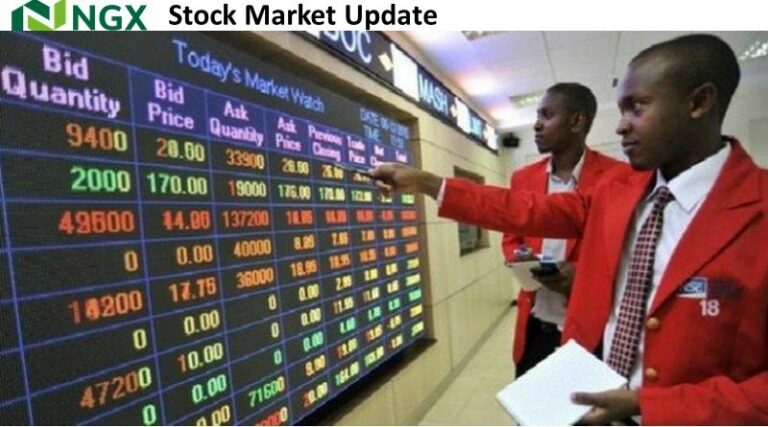
GUARANTY Trust Holding Company Plc (GTCO) share price crosses the N100 on Wednesday, July 16 to become the first bank on the Nigerian stock market to hit the mark.

The share broke through the N100 threshold to close at N101 after trading as high as N103.

The bank’s achievement followed its recent dual listing of 2.29 billion ordinary shares on the London Stock Exchange on July 9 and a subsequent listing of 2.28 billion shares on the Nigerian Exchange Limited (NGX) the following day.

Analysts believe that the GTCO stock rally is further buoyed by positive market reaction around its cross-border listing and strong first-quarter earnings.

Opening trading on the NGX floor at N57 this year, its share has gained N44 as of the close of trading on Wednesday.

Speaking during a post-listing media chat in London, the Group Chief Executive Officer of GTCO, Segun Agbaje, reportedly said, “I think we still have a long way to go in terms of finding the right valuations, and if you look at the valuations of most companies in Nigeria, they’re trading below book or just above book.

“So, for discerning people, Nigeria is actually a pretty cheap place to shop at the moment in terms of what you can buy. You have companies that are doing over 30 per cent ROE [return on equity], trading at book or below book value.”

Meanwhile, the Nigerian stock market reported a significant performance on Wednesday as the market capitalisation increased by N1.44 trillion, to close at N81.58 trillion.

The N1.44 trillion gained signals continued investors’ optimism and sustained confidence in the market.

It also reflects deepening market liquidity and heightened investor interest
interest, as positive sentiment continued to dominate in the stock market.

Despite the overall positive tone, profit-taking persisted as 41 companies’ shares appreciated against 44 companies’ shares that declined during the day’s trading.

Banking stocks remained upbeat gaining 7.02 per cent to close at 1,589.55 basis points.

Consumer goods, industrial goods, and commodities indices also appreciated while insurance and oil and gas indices closed in the red.