Home Blog Page 243

Business activity slows further in June as output hits 7-month low

BUSINESS activity in Nigeria’s private sector slowed further in June as output levels hit a seven-month low.

This is according to the latest Purchasing Managers’ Index (PMI) report by Stanbic IBTC Bank released on Monday, June 1.

It showed the rates of expansion in output, new business, and inventories eased from May, except for the employment level.

The ICIR reports that Stanbic IBTC uses the PMI monthly report to gauge the health of the manufacturing and services sectors, reflecting on trends in new business, output, inventories, and employment.

The report showed that the Nigerian private sector remained in growth territory as the first half of 2025 ended, and that business
confidence improved markedly in June.

However, business activity slowed to 51.6 points in June from 52.7 in May and was the lowest in the current growth sequence.

Notably, a PMI above 50.0 points signals growth and below 50.0 points to contraction in business activity, which is an unhealthy condition for businesses.

“The rate of output growth eased particularly sharply, slowing for the second month running to a seven-month low.

“Sector data indicated that the slowdown in the pace of expansion reflected a fall in manufacturing production as activity continued to rise elsewhere,” Stanbic IBTC stated.

The report indicated that where output rose among businesses in the service sector, respondents linked it to higher new business and the securing of new customers.

“Indeed, new business increased solidly in June, albeit here too the pace of expansion slowed and was at a five-month low,” it explained.

Despite the pace of inflation easing to a 25-month low of 22.97 per cent in May, the Stanbic IBTC report indicated that the cost of purchase increased in June.

Data from the National Bureau of Statistics (NBS) has shown a sharp drop in the inflation rates since the rebasing of the consumer price index earlier this year, but the prices of goods and services have yet to mirror that reality.

The Stanbic IBTC report noted that supplies were hampered in June, which some firms blamed on poor road conditions, as many roads in the country are notably in bad condition.

Commenting, the Head of Equity Research West Africa at Stanbic IBTC Bank, Muyiwa Oni, said, noted that business conditions remain in the expansionary territory but the pace of expansion slowed for the third consecutive month after peaking in March.

“Manufacturing posted the fastest increase in output prices of the four broad sectors covered by the report.

“The employment level was broadly stable in June as companies that took on extra staff often did so to try to keep on top of workloads,” Oni said.

He believes that, given that inflation is expected to remain softer compared to the 2024 average, interest rates are likely to be lower this year and next.

“We expect a 150/200 basis points (bps) rate cut in 2025 and a 200/250 (bps) rate cut in 2026,” he said.

In addition to other policy measures, Oni added that the Stanbic IBTC still maintains its expectation that the Nigerian economy is likely to grow by 3.5 per cent year-on-year in real terms in 2025, but post-GDP rebasing may amplify this growth to 4.2 per cent year-on-year.
David Mark officially resigns from PDP, leads opposition coalition

0

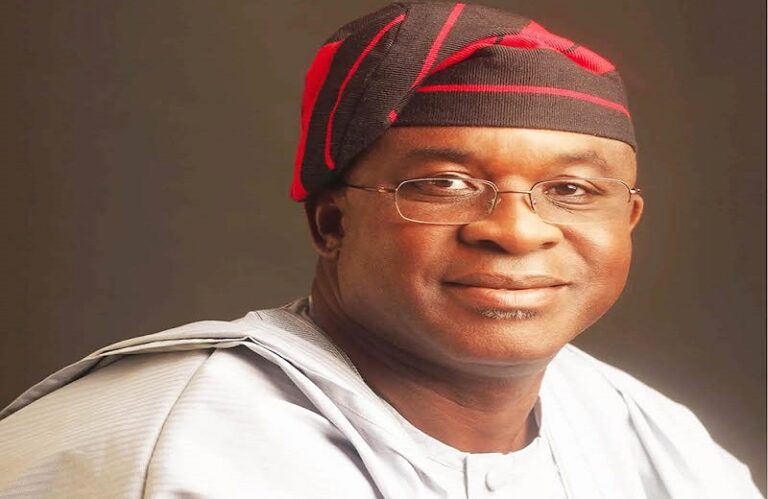
FORMER Senate President David Mark has officially resigned from the Peoples Democratic Party (PDP).

He cited worsening internal divisions and an unresolved leadership crisis in the PDP as reasons for his resignation.

This was disclosed in a letter dated June 27 and addressed to the PDP chairman in his Otukpo Ward, Benue State.

In his resignation letter, Mark highlighted deep-seated internal issues that have diminished the party’s stature.

“You may recall that over the years, I have remained firm and deeply committed to the ideals of the PDP. Even when nearly all stakeholders departed the party following our loss in the 2015 presidential election, I pledged to remain the last man standing,Mark stated in his letter.

He stated that although his efforts had previously restored the party to national relevance, recent developments had severely weakened the PDP.

“After wide consultations with my family, friends, and political associates, I have resolved to join the National Coalition of Political Opposition Movement in Nigeria as part of the collective effort to rescue our nation and preserve our hard-earned democracy,Mark added.

The ICIR reported that Mark and ex-Osun State Governor Rauf Aregbesola have emerged as the interim chairman and secretary of the African Democratic Congress (ADC), respectively.

Recall that as part of its strategies to dislodge the ruling All Progressives Congress (APC) in the 2027 elections, leading opposition figures, including former Vice President Atiku Abubakar, Labour Party presidential candidate in the 2023 poll, Peter Obi, former Rivers State governor Rotimi Amaechi, and former Kaduna State governor Nasir El-Rufai, launched a coalition in Abuja on March 20.

After months of speculation over which platform the coalition would pursue its agenda, the ADC now appears as a key opposition party that will challenge President Bola Tinubu’s APC in the 2027 elections.

According to a former spokesperson of the PDP, Kola Ologbodiyan, who was present at a meeting of PDP leaders that met with Abubakar on Tuesday in Abuja, the coalition unanimously agreed to adopt ADC as their new political platform.

They also endorsed Mark and Aregbesola to lead the party. El-Rufai also confirmed the decision in a post on his X handle.

Media reports also suggested that a former Sports Minister, Bolaji Abdullahi, was picked as the interim National Publicity Secretary of the ADC.

The ICIR reports that the new leaders may be unveiled in Abuja today.

Coalition: Mark, Aregbesola emerge ADC interim chairman, secretary

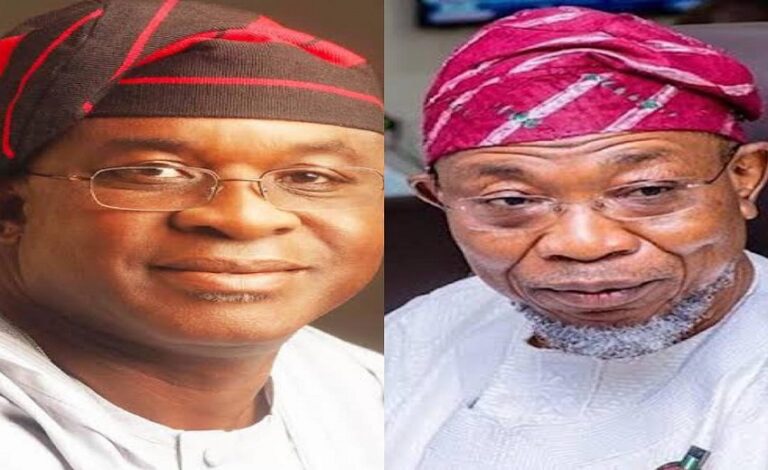
FORMER Senate President, David Mark, and ex-Osun State Governor, Rauf Aregbesola, have emerged as the interim chairman and secretary of the African Democratic Congress (ADC).

Recall that as part of its strategies to dislodge the ruling All Progressives Congress (APC) in the 2027 elections, leading opposition figures, including former Vice President Atiku Abubakar, Labour Party presidential candidate in the 2023 poll, Peter Obi, former Rivers State governor Rotimi Amaechi, and Nasir El-Rufai, launched a coalition in Abuja on March 20.

After months of speculation over which platform the coalition would pursue its agenda, the ADC now appears as a key opposition party that will challenge President Bola Tinubu’s APC in the the 2027 elections.

According to a former spokesperson of the Peoples Democratic Party (PDP), Kola Ologbodiyan, who was present at a meeting of PDP leaders that met with Abubakar on Tuesday in Abuja, the coalition unanimously agreed to adopt ADC as their new political platform.

They also endorsed Mark and Aregbesola to lead the party..

El-Rufai confirmed the decision in a post.on his X handle.

According to him, Aregbesola stated that he accepted the appointment with humility, a sense of duty, and hope for the party and the nation.

He emphasised that parties should prioritise people’s interests, serve as more than just election-winning platforms, and play critical role in mobilising, organising, and empowering citizens towards their development and emancipation.

Media reports also suggested that a former Sports Minister, Bolaji Abdullahi, was picked as the interim National Publicity Secretary of the ADC.

The new leaders may be unveiled in Abuja today.

Wharton seminars for business journalists open

THE University of Pennsylvania’s Wharton School is organising Wharton Seminars for Business Journalists. 

This year’s seminar will take place in Philadelphia, between October 20 and 22, 2025.

The programme will provide an exceptional opportunity for national and international journalists to improve their reporting skills and gain valuable insights through faculty lectures and dynamic discussions.

Topics include accounting principles, financial markets, taxation and more.

Journalists interested in business reporting can attend this event.

Funding opportunities are available for international and US-based journalists who are interested in attending the seminar. Apply for funding here.

The National Press Foundation (NPF) is offering all-expense-paid fellowships for two US-based journalists to attend the seminar.

The deadline to apply for the NPF fellowships is September 3, 2025. Apply here.

The application deadline for the seminar is September 3, 2025. Interested applicants can apply here.

Trump threatens to deport Musk amid escalating feud

UNITED States (US) President Donald Trump has reignited his feud with Elon Musk, saying he would consider deporting the billionaire tech mogul to his native South Africa following Musk’s latest criticisms of the president’s tax and budget bill.

Trump issued the threat while addressing reporters on July 1, just hours after posting on Truth Social that he might direct the Department of Government Efficiency, previously headed by Musk, to review the billions of dollars in federal contracts awarded to his companies.

“We’ll have to take a look,” Trump said when asked whether he would deport Musk. “We might have to put DOGE on Elon. You know what DOGE is? DOGE is the monster that might have to go back and eat Elon. Wouldn’t that be terrible? He gets a lot of subsidies.”

For the first four months of Trump’s second term, Musk headed DOGE, a federal agency tasked with aggressively downsizing the government by targeting “waste, fraud, and abuse.” He stepped down from the role in late May.

The ICIR reports that Trump’s attacks followed renewed criticism from Elon Musk, the world’s richest man, who took to X on Monday to slam Trump’s “big, beautiful bill” as it entered its fourth day of Senate debate. 

In a series of posts, Musk, CEO of Tesla and SpaceX and a former senior White House adviser, warned that he would back primary challengers against Republican lawmakers who support the legislation.

“Elon may get more subsidy than any human being in history, by far, and without subsidies, Elon would probably have to close up shop and head back home to South Africa,” Trump wrote in a post on Truth Social.

“No more rocket launches, satellites, or electric car production, and our country would save a FORTUNE. “Perhaps we should have DOGE take a good, hard, look at this? BIG MONEY TO BE SAVED!!!”

Over the past two decades, Musk’s companies have secured billions of dollars in US government contracts, with SpaceX notably benefiting from partnerships with the Department of Defence and NASA.

Musk responded to Trump in a post on X about 30 minutes later. “I am literally saying CUT IT ALL. Now,” he wrote.

Musk cited the bill’s projected $3.3 trillion increase to the national debt over the next decade as the reason for his strong opposition. 

However, Trump has dismissed the claim, arguing that Musk’s real motive is the bill’s plan to eliminate a consumer tax credit for electric vehicle buyers, an incentive introduced under former President Joe Biden.

On his first day in office, Trump signed an executive order repealing what he called the “electric vehicle mandate”, an Environmental Protection Agency rule that requires automakers to reduce greenhouse gas emissions by 50 per cent in new light and medium-duty vehicles, starting in 2027.

“Elon Musk knew, long before he so strongly endorsed me for President, that I was strongly against the EV Mandate. It is ridiculous, and was always a major part of my campaign. Electric cars are fine, but not everyone should be forced to own one,” Trump wrote in his social media post.

“Elon is very upset that the EV mandate is going to be terminated,” Trump later told reporters.

The ICIR reports that Musk, born in South Africa, became a naturalised US citizen in 2002 after previously gaining Canadian citizenship through his mother. 

Musk obtained an exchange visa allowing him to study in the US and later a work visa prior to becoming a citizen.

A Washington Post analysis found that Musk and his companies had received at least $38 billion in government contracts, loans, subsidies, and tax credits, often at pivotal moments in their growth.

Minna General Hospital outdated, unsafe for patients, says governor

0

NIGER State Governor Mohammed Bago has raised the alarm over the state of Minna General Hospital, describing the facility as outdated and unsafe.

He declared a state of emergency on the hospital, saying the facility was unfit to take care of patients.

The governor stated this during the State Executive Council (SEC) meeting.

At the meeting, Bago said the hospital, which was built over 50 years ago, had decayed significantly and was no longer fit to serve the medical needs of the state’s increasing population.

In a statement on Tuesday, July 1, by his Special Adviser on Print Media, Aisha Wakaso, the governor revealed that during an unscheduled visit to the hospital,  he sat on a bench at the eye centre that had been there since his childhood, highlighting the facility’s outdated state.

He said the hospital could no longer serve its purpose, describing its condition as overstretched, outdated, and unsafe.

“What we need now is a modern, functional, and efficient health facility that reflects our vision for a healthier Niger State,” the governor stated.

He has, therefore, established a committee comprising special advisers and stakeholders to conduct a thorough assessment of the facility and recommend actionable solutions.

He said plans were underway to demolish the current structures and begin the reconstruction of new units and wards for the hospital.

He said during the period of reconstruction, essential departments and services would be temporarily relocated to select primary healthcare centres across the state to ensure continuity in care.

“This decision is part of a broader plan to revamp the entire healthcare sector in Niger State, ensuring that citizens have access to quality and dignified medical services,” the governor noted.

Bago said his administration was committed to building effective systems, with health being a top priority.

African Investigative Journalist of the Year Award seeks entries

THE African Investigative Journalism Conference (AIJC), with support from Absa, is accepting entries for the African Investigative Journalist of the Year Award.

The award recognises outstanding investigative reports from Africa that reveal untold stories, hold the powerful to account, question those in public life and serve the public interest.

Stories published or broadcast in African media between July 1, 2024 and July 1, 2025, are eligible for submission.

The winner stands to win US$5 000, while flights, accommodation and fees to attend the AIJC conference are covered for all finalists.

The award is open to all African journalists or teams of journalists working in any media for stories from and about Africa published or broadcast in African media.

The deadline for the application is July 15, 2025.

Interested applicants can apply here.

Petrol pump price to drop as Dangote slashes price to N840/ltr

0

THE pump price of petrol is expected to come down in the coming days as the Dangote Petroleum Refinery slashed its ex-depot price to N840 per litre.

The 650,000 capacity built refinery announced the ex-depot price reduction on Monday, June 30.

The development, which reflects the decline in crude oil prices in the international market, industry analysts say, should see the pump price of petrol fall likewise.

On Monday, Brent crude settled to $67.61 a barrel and the Unìted States West Texas Intermediate (WTI) to $65.11 a barrel after the two-week Israel-Iran crisis saw oil prices shoot above $75.

The ICIR can report that following the recent Middle East tension, pump prices of petrol were adjusted upward, and are currently selling as high as N945 per litre in most parts of the country.

The Nigerian National Petroleum Company Limited (NNPCL) and Dangote Refinery retail outlets partners, including MRS Oil and AP (Ardova), adjusted their pump prices upward at the time.

In its latest ex-depot price reduction, the Dangote Refinery said it had dropped the price by N40 to N840 with immediate effect as the two-week Israel-Iran conflict eased.

The downward review came about a week after the refinery jacked up the ex-depot price per litre of petrol to N880.

As such, filling stations including MRS Oil, Ardova, Heyden, and other retail outlets partnering with the Dangote Refinery are expected to reduce their pump price to below N900 to reflect the marginal reduction in the ex-depot price of the premium commodity.

The ICIR reported on June 23 that MRS filling stations, a major key retail outlets partner with Dangote Refinery, adjusted its pump price to N925 per litre in Lagos, N935 in other south-west states, N945 in north-west and north-central, and N955 in north-east, south-south and south-east.

The Dangote Refinery ex-depot price reduction by N40  followed a drop in oil prices as the two-week Middle East conflict between Israel and Iran eased.

The ceasefire between the two countries saw Brent crude fall to close at $67.61 a barrel from around $80 a barrel after the United States bombed Iran’s nuclear facilities.

The ICIR can also report that before the recent conflict between Israel and Iran, the Dangote Refinery had on Sunday, June 15, announced plans to start free distribution of petrol and diesel to marketers, dealers, and other large users across the country to reduce pump prices.

The initiative, expected to take off on August 15 this year, has been greeted by mixed feelings from oil marketers as some believe it would take away jobs from operators within the value chain, while others see it as a welcome scheme.

The pump price of petrol, which has risen fivefold since President Bola Tinubu removed fuel subsidy in May 2023, many analysts believe, is fueling the hardship Nigerians face.

The pump price of petrol has jumped from about N190/litre in May 2023 to close to N1000 per litre at the moment, spiking inflation and causing the prices of all goods and services to skyrocket.

APC fixes NEC meeting for July 24 as PDP scrambles out of explosion

THE ruling All Progressives Congress (APC) has fixed its National Executive Committee (NEC) meeting for July 24.

The party announced this through its Deputy National Secretary, Festus Fuanter, after the party’s National Working Committee met on Monday in Abuja.

The announcement came four days after the party’s National Chairman, Abdullahi Ganduje, resigned.

It was also made hours after the warring factions of the People’s Democratic Party (PDP) sheathed their swords and reunited in Abuja. With the truce, the party leaders believe the PDP would be strong enough to wrest power from the President Bola Tinubu-led APC government in 2027.

In the statement announcing its planned NEC meeting, the APC said on Tuesday, July 1: “And during the meeting, if they so desire that a new chairman be nominated, we’ll also accept such nomination and then wait for the convention, where the final position of the party will be made as far as the substantive chairman is concerned.”

The ICIR reported that Ganduje announced his resignation in a letter on Friday, June 278, citing health concerns as the reason for his decision.

A former Kano State Governor, Ganduje was elected as the APC national chairman in August 2023, amidst internal party conflicts. 

The ICIR reports that his tenure as APC chairman was fraught with controversies, suspensions, and litigations, as sources said that internal rifts within the party might have influenced his decision to step aside.

Shortly after his resignation,  the Deputy National Chairman (North) of the APC, Ali Bukar Dalori, was directed to assume the role of the party’s acting national chairman.

Dalori was also asked to urgently convene a meeting of the NEC to formally address the leadership vacuum.

Dalori hails from Borno, the same state as Vice President Kashim Shettima, who has recently been embroiled in controversy over speculation about his potential replacement as running mate in the 2027 election by the president.

Meanwhile, opposition parties like the Labour Party (LP), PDP, and Social Democratic Party (SDP), expected to challenge the ruling APC, are instead mired in internal crises.

Tinubu, while addressing the joint session of the National Assembly in commemoration of June 12 Democracy Day in Abuja on Thursday, June 12, said he took pleasure in seeing opposition parties in crisis.

He also said he was not interested in a one-party state, despite welcoming all opposition figures defecting to the APC.

NNPCL declares N6trn crude oil sales as output stalls in May

0

THE Nigerian National Petroleum Company Limited (NNPCL) has declared a N6.008 trillion crude oil sale in May, as total production for the month failed to improve.

The state-owned oil company disclosed this in its Monthly Report Summary for May 2025, released on Monday, June 30.

Its report highlights key figures, including crude oil and condensate production, natural gas output, revenue, profit after tax, and strategic initiatives during the period.

It shows that crude oil sales, also known as revenue, increased slightly to N6.008 trillion from N5.972 trillion in April, while the NNPCL posted a profit after tax of N1.054 trillion, up from N926 billion in April.

The rise in crude oil sales despite stalled output, analysts say, was not unconnected with the geopolitical tensions that have continued to be shaped by several key factors, including the ongoing Russia-Ukraine conflict and unrest in the Middle East.

Data from the Central Bank of Nigeria (CBN) shows that crude oil sales closed at $65.73 per barrel in May, relative to $64.88 in April.

The latest monthly NNPCL’s report indicates that crude oil and condensate production rose to 1.63 million barrels per day (bpd) from 1.61 million bpd in April, peaking at 1.72 million bpd for the month.

A breakdown of the report, however, shows that crude oil output held flat at 1.35 million bpd from the same figure in April.

The condensate volumes, however, recovered slightly to 280,000 bpd in May from 260,000 bpd in April.

“On strategic efforts, progressed technical interventions or AKK to resolve challenges of River Niger crossing and conducting detailed evaluation on OB3 RNC to determine the best project execution path going forward,” NNPCL said.

Giving the status of the Port Harcourt, Warri, and Kaduna refineries, the NNPCL said a review is in progress.