Home Blog Page 25

Nigeria’s economic growth rate falls to 3.8% in Q1 2026, says NBS

THE National Bureau of Statistics (NBS) has said that Nigeria’s economy expanded by only 3.89 per cent at N51.26 year-on-year in real terms in the first quarter of 2026, reflecting a slight slowdown in growth.

The figures were released in the bureau’s latest GDP report published on Monday, May 25. It noted that the Q1 2026 growth rate was lower than the 4.07 per cent recorded in the fourth quarter of 2025, but higher than the 3.13 per cent posted in the same period last year.

“During the quarter under review, agriculture grew by 3.15 per cent, an improvement from the 0.07 per cent recorded in the corresponding quarter of 2025. The growth of the industry sector stood at 3.50 per cent from 3.42 per cent recorded in the first quarter of 2025, while the services sector recorded a growth of 4.31 per cent from 4.33 per cent in the same quarter of 2025,” the NBS said.

According to the bureau, the services sector accounted for a larger share of Nigeria’s GDP in the first quarter of 2026, contributing 57.73 per cent to the aggregate economy, compared with 57.5 per cent in the corresponding period of 2025. It added that aggregate GDP for the quarter stood at N110.78 trillion in nominal terms.

“The real growth of the oil sector was 2.57 (year-on-year) in Q1 2026, indicating an increase of 0.70 per cent points relative to the rate recorded in the corresponding quarter of 2025 (1.87 per cent). Growth decreased by 4.22 per cent points when compared to Q4 2025, which was 6.79 per cent. On a quarter-on-quarter basis, the oil sector recorded a growth rate of 9.31 per cent in Q1 2026,” the NBS said.

This performance, the organisation said, was higher when compared to the first quarter of 2025, which recorded an aggregate GDP of N94 trillion, indicating a year-on-year nominal growth of 17.79 per cent.

The report also showed a decline in oil production as Nigeria recorded an average daily crude oil output of 1.55 million barrels per day (mbpd) in Q1 2026, lower than the 1.62 mbpd produced in the same quarter of 2025, and below the 1.58 mbpd recorded in Q4 2025.

Despite the drop in production, the oil sector grew by 2.57 per cent year-on-year in real terms, an improvement from the 1.87 per cent growth recorded in Q1 2025. However, this was lower than the 6.79 per cent growth posted in the previous quarter, meaning that the sector recorded a growth rate of 9.31 per cent on a quarter-on-quarter basis.

The oil sector contributed 3.92 per cent to total real GDP in Q1 2026, slightly lower than the 3.97 per cent contribution recorded in the same period of 2025, but higher than the 2.87 per cent contribution in Q4 2025.

Meanwhile, the non-oil sector continued to dominate the economy, contributing 96.08 per cent to GDP during the quarter, slightly above the 96.03 per cent share recorded in Q1 2025, though below the 97.13 per cent recorded in Q4 2025.

The NBS said the non-oil sector grew by 3.94 per cent in real terms, compared with 3.19 per cent in the corresponding quarter of 2025 and 3.99 per cent in the preceding quarter.

“The non-oil sector grew by 3.94 per cent in real terms during the reference quarter (Q1 2026)”

The bureau added that growth in the non-oil economy was largely driven by telecommunications, crop production, trade, cement manufacturing, financial institutions, real estate, construction, and road transportation activities.

“This rate was higher by 0.75 per cent points compared to the rate recorded in the same quarter of 2025, which was 3.19 per cent, and lower than the 3.99 per cent recorded in the fourth quarter of 2025,” it added.

Kogi graduate found dead in Abuja canal

0

A 29-YEAR-OLD Kogi State University graduate, Blessing Moshood, was found dead in a canal in Jikwoyi, Abuja, on Thursday, May 21.

According to the deceased’s sister, Abigail Moshood, who spoke with Daily Trust, Blessing had stepped out of their home around 8pm after receiving a phone call. She explained that the deceased later reached out again about an hour later, mentioning she would briefly return home to collect her phone charger, which she had left behind.

However, concern grew when Blessing did not return as said and could not be reached the following day.

“We later heard people talking about the body of a woman discovered inside a canal, and someone described the type of hairstyle the deceased had on, which matched my sister’s,” she said.

She added, “My mother started crying, and we also learnt that policemen from the Jikwoyi Police Station had evacuated the corpse, which was found half-naked with only a top on, to a mortuary in Mararaba, Nasarawa State.”

Her sister further explained that when she visited the Jikwoyi Police Station to seek clarity, she was shown images of the recovered body, which confirmed her worst fears.

In the neighbourhood, residents described Blessing as warm and intelligent. One of them, Margaret, said she was well-educated and easy to talk to.

“I learnt she graduated with a Second Class Upper in Sociology, and whenever she spoke, you could hardly fault her English,” she said.

“She was also very friendly in this neighbourhood and will be greatly missed by all of us, especially the children who have been crying since they learnt of her death.”

Another resident, Abdullahi Musa, called on security agencies to step up patrols and intensify operations around the Jikwoyi Medical Centre axis, noting that cases of phone snatching and other crimes were common in the area.

Daily Trust reported that the spokesperson of the Federal Capital Territory Police Command, Adeh Josephine, a superintendent of police, confirmed the incident and said investigations are ongoing. However, when The ICIR reached out to her, she said she was not aware of the incident but would look into it.

Abuja has witnessed a disturbing rise in suspected “one chance” attacks involving unpainted commercial vehicles, with victims reportedly robbed, assaulted, and in some cases pushed out of moving vehicles.

Apart from the once chance menace, there are other major crimes in the city, including armed robbery and kidnapping.

Among such cases reported by THE ICIR was that of Chinemerem Chuwumeziem, a nurse at Federal Medical Centre, Jabi, who was said to have boarded a vehicle after work but was later found dead by the roadside.

Another victim, Nwamaka Chigbo, a senior lawyer and former Nigeria Bar Association (NBA) Abuja branch treasurer, was reportedly attacked after boarding a vehicle along the Kubwa Expressway and pushed out while the vehicle was in motion, leading to her death.

The incidents have raised growing concern over residents’ safety in the nation’s

Global leaders demand shift from donor-driven health financing

0

GLOBAL health leaders meeting in Geneva have intensified calls for a shift from donor-driven health funding and programming towards country-led financing and delivery systems. 

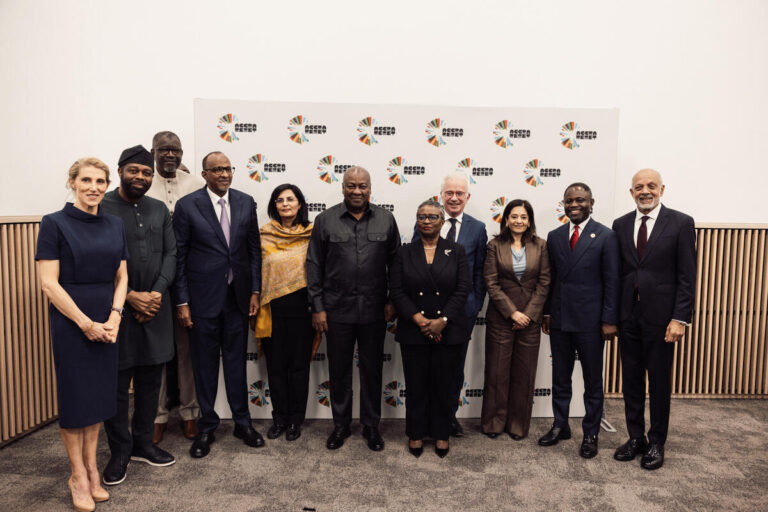
The push dominated the Accra Reset High-Level Dialogue on Global Health Architecture, held on the margins of the 79th World Health Assembly (WHA79), where more than 250 heads of state, ministers, and global health leaders gathered to debate the future of global health governance.

A statement released after the event on Monday, May 25, said discussions focused strongly on the Accra Reset initiative, launched in 2025 by Ghana’s President John Dramani Mahama, which aims to reshape global health around country sovereignty, domestic resource mobilisation, and stronger national control of priorities and implementation. 

Mahama told participants at the event that global health reform must move beyond fragmented donor coordination towards systems where countries define and execute their own health agendas.

He described health as “the vanguard, the proof of concept, and the moral imperative” for broader development reform.

The initiative, according to the statement, proposes new mechanisms, including a Reform Observatory and a financing gateway platform, aimed at channeling investment into country-designed programmes rather than externally structured interventions.

“If the Accra Reset can move health commitments into working programmes, it can do so for any sector,” said President Mahama. “Health is the vanguard, the proof of concept, and the moral imperative.” 

The statement noted that several Ministers from Indonesia, Brazil, Kenya, and Ghana backed the proposal, arguing that sovereignty must translate into real control over health financing and delivery rather than symbolic policy shifts.

Indonesia’s Health Minister, Budi Sadikin, said financing pathways remained a key constraint, urging stronger alignment between health ministries, finance ministries, and international financial institutions.

“The money is there,” said Sadikin, adding that “As an Accra Reset Co-Chair, my proposal is to help all countries develop proper health care financing pathways, so health ministers can convince their finance ministers and the big banks to invest in health.” 

Also, the Brazil’s Health Minister, Alexandre Padilha, noted that sovereignty must be backed by stronger national systems and sustainable financing, warning against treating it as a rhetorical aspiration.

On his part, Kenya’s Health Minister, Aden Duale, said African countries were already increasing domestic funding for universal health coverage,

He also noted that it signalled what he described as a gradual reduction in dependency on external support.

“Kenya and Ghana are leading in terms of creating a practical health sovereignty. How do we do that? By making sure that we take charge of the health systems and health financing in our country,” said Duale. “In 18 months, we have mobilized domestically to fund our health care and universal health coverage.” 

According to the statement, major global health financing institutions, including the Global Fund, Gavi, and the Pandemic Fund, present at the meeting also expressed support for the reform agenda while acknowledging the difficulty of transitioning from long-standing donor-dependent systems.

Meanwhile, Nigeria’s National Health Insurance Authority highlighted ongoing efforts to consolidate fragmented health programmes into a single national framework, with the Director-General, Kelechi Ohiri, a doctor, saying the “one plan, one national dialogue” approach was improving coordination and reducing duplication.

“[In Nigeria], the Health Sector Blueprint became the foundation and the platform for coordinating activities across the entire country and our relationship with partners…the whole principle of having one plan, one national dialogue was put in place,” Ohiri said.

“With the Global Fund, we began to pilot the integration of [HIV, TB, and malaria] vertical programmes, not just in the health system broadly, but also in health insurance,” he added.

Despite broad consensus on the need for reform, participants warned that the global health space risks further fragmentation due to overlapping initiatives and the absence of a unified implementation roadmap.

World Health Organization Regional Director for Africa, Mohamed Yakub Janabi, urged that reforms be judged by their impact on populations rather than institutional redesigns.

He further said the sector must move “from promises to progress and from commitment to impact.”

ADC picks Tinubu’s challenger in 2027 race today

THE African Democratic Congress (ADC) has begun the process of selecting its presidential candidate for the 2027 election through a primary holding nationwide today.

The candidate will be among the major opponents of the All Progressives Congress’ candidate and incumbent President Bola Tinubu in the general election.

The ADC adopted direct primary, making party members across the 36 states and the Federal Capital Territory to choose who will fly the party’s flag at the poll.

Three leading aspirants namely former vice president Atiku Abubakar, former Minister of Transportation Rotimi Amaechi, and ex-banker Mohammed Hayatu-Deen are heading for the primary after efforts by party leaders to field a consensus candidate reportedly failed.

Although the ADC had initially considered an affirmation process similar to the one adopted by the Nigeria Democratic Congress, party leaders insist the direct primary aligns fully with the provisions of the Electoral Act 2026.

After his exit from the Peoples Democratic Party in November 2025, the former vice president has led efforts to build a broad opposition coalition aimed at unseating President Bola Tinubu in the 2027 election

Prominent political figures believed to be backing him include former Attorney General of the Federation and Minister of Justice, Abubakar Malami, former Kaduna State Governor Nasir El-Rufai, and former Secretary to the Government of the Federation Babachir Lawal.

However, despite his vast political experience and nationwide appeal, political analysts have said Abubakar may encounter stiff opposition from party members who believe the time has come for a younger generation of leaders to emerge. Critics contend that after remaining active in politics since 1992 and seeking the Presidency six times, the Waziri of Adamawa should transition into the role of an elder statesman.

Meanwhile, Amaechi, who served as Minister of Transportation under former President Muhammadu Buhari, rose to national prominence through the railway projects delivered during his tenure. As a founding member of the All Progressives Congress, he was regarded in the closing years of the Buhari administration as one of the party’s most influential figures.

Now contesting under the ADC platform, Amaechi is positioning himself as a credible alternative capable of restoring public confidence in governance. While Amaechi he considerable support in some regions of the country, political analysts argue that it remains uncertain whether he can garner sufficient nationwide momentum within the ADC to challenge Abubakar’s political structure.

The crisis within the party deepened on Sunday as the faction loyal to Dumebi Kachikwu dissolved the party’s National Working Committee led by former Senate President David Mark and former Osun State Governor Rauf Aregbesola, serving as chairman and secretary respectively.

It declared Kachukwu its sole presidential candidate during its national convention and presidential primary held in Abuja, where delegates adopted Kachikwu through a voice vote.

The faction consequently unveiled a new set of national officers which includes Kingsley Oggah as Chairman of the Board of Trustees, Abdulkadir Bashir as National Chairman, Johnny Derek as National Secretary, Kennedy Odion as National Treasurer, Amirigoye as National Financial Secretary, Chris Ugwu as National Legal Adviser, alongside a National Publicity Secretary.

The ICIR reported that Tinubu formally received the APC certificate of return and party flag as the party’s presidential candidate for the 2027 general election on Sunday, May 24, at the Bola Ahmed Tinubu International Conference Centre in Abuja, where the APC National Chairman, Nentawe Yilwatda,a professor, handed over the certificate to the president in the presence of party leaders and supporters.

Presenting the certificate, Yilwatda said Tinubu’s nomination reflected the mandate of millions of party members across the country.

2027: Tinubu receives APC certificate of return, clinches party’s presidential ticket

PRESIDENT Bola Tinubu has formally received the All Progressives Congress’ (APC) certificate of return and party flag as the party’s presidential candidate for the 2027 general election.

The presentation took place on Sunday, May 24, at the Bola Ahmed Tinubu International Conference Centre in Abuja, where the APC National Chairman, Nentawe Yilwatda,a professor, handed over the certificate to the president in the presence of party leaders and supporters.

Presenting the certificate, Yilwatda said Tinubu’s nomination reflected the mandate of millions of party members across the country.

“This certificate represents the voices of millions of APC supporters across the country. Over 10 million members are represented in this certificate of return. Your Excellency, congratulations,” he said.

He added that the president’s emergence as the party’s flagbearer demonstrated overwhelming support within the APC and expressed confidence in victory at the 2027 polls.

Tinubu received the certificate alongside his wife, Oluremi, and Vice President Kashim Shettima.

The event was attended by APC governors, members of the National Executive Committee, National Working Committee, National Assembly members and other party stakeholders.

In his acceptance speech, Tinubu thanked the party leadership and members for the confidence reposed in him, saying he accepted the nomination with humility and renewed commitment.

The president said continuity was necessary to consolidate reforms initiated by his government and deepen economic recovery.

He defended key policies of his administration, including the removal of fuel subsidy, exchange rate reforms and tax measures, arguing that they had laid the foundation for long-term economic stability.

Tinubu said his administration had also recorded progress in education, power, infrastructure and social investments.

According to him, the Nigerian Education Loan Fund has disbursed over N282 billion to more than 1.5 million beneficiaries, while efforts to improve electricity supply have led to the distribution of 2.5 million meters and increased power generation.

He also acknowledged the economic hardship facing many Nigerians, saying his government remained focused on addressing the factors responsible for it.

“Many Nigerians still struggle with rising costs and economic adjustment. We do not dismiss these concerns; we understand them and govern not in comfort, but in reality, with honesty and action,” he said.

On insecurity, Tinubu said his administration had intensified efforts to strengthen the country’s security architecture and renewed his call for constitutional amendments to allow the creation of state police.

He said his administration would continue to pursue economic expansion, industrialisation, food security and democratic consolidation if re-elected.

Tinubu emerged as the APC presidential candidate after polling 10.99 million votes in the party’s primary election conducted across 8,809 wards nationwide.

He defeated his sole challenger, Stanley Osifo, who secured 16,504 votes.

NCAA suspends services to 11 airlines over unpaid charges

THE Nigeria Civil Aviation Authority has directed its departments to suspend services to 11 domestic airlines over unpaid statutory charges owed to the regulator.

The directive was contained in an internal memo dated May 22, 2026, and released on Sunday.

The memo placed the affected operators on the authority’s updated “No-Pay-No-Service” list, ordering all departments to withhold regulatory and administrative services until the airlines settle their outstanding debts or agree on repayment terms.

At the centre of the dispute are the five per cent Ticket Sales Charge and Cargo Sales Charge, statutory levies collected by airlines on behalf of the NCAA to fund safety oversight, personnel training and economic regulation in the aviation sector.

The memo also directed that no service should be rendered to the affected airlines without financial clearance from the Directorate of Finance and Accounts.

Signed by the Director of Finance and Accounts, Olufemi Odukoya, the directive was circulated to the NCAA’s regional offices and copied to the Director-General of Civil Aviation and other top officials.

The affected airlines are Air Peace, Ibom Air, Arik Air, United Nigeria Airlines, Umza Air, NG Eagle, Max Air, Caverton Helicopters, Overland Airways, Rano Air and ValueJet.

“The DGCA has directed that no directorate should render any service to the above airline without financial clearance from the Director of Finance and Accounts,” the memo stated.

The directive is coming barely a month after President Bola Ahmed Tinubu approved a 30 per cent reduction in charges owed by domestic airlines to aviation agencies.

President Tinubu approved the reduction on April 23, 2026, in a move aimed at easing mounting financial pressure within the sector.

However, one month later, the government is yet to implement the incentive for the affected airlines.

The Director-General of the NCAA, Chris Najomo, a captain, while explaining the delay a few weeks ago, said: “No, the 30 per cent discount has not been implemented. It is a process. A process that must be followed by all the agencies and airlines. You must call all the airlines together and say take 30 per cent off and pay us our money.”

Nigerian man arrested in US, faces deportation over ‘bank fraud, identity theft’

A 49-year-old Nigerian man, Etinosa Osahon, has been taken into custody by the United States Immigration and Customs Enforcement (ICE) in Los Angeles over alleged involvement in fraud-related crimes.

ICE confirmed the arrest in a statement shared on X, noting that Osahon is currently being held while deportation procedures continue.

According to the agency, the Nigerian national is accused of several offences, including theft, possession of stolen mail, bank fraud and aggravated identity theft.

“ICE Los Angeles arrested Etinosa Osahon, 49, of Nigeria, May 21,” the agency wrote.

“Osahon’s criminal record includes stealing and being in possession of stolen mail, bank fraud, and aggravated identity theft. He is in ICE custody pending removal.”

The development is one of several recent cases involving Nigerians arrested by US immigration authorities over alleged criminal activities.

Earlier in April, another Nigerian identified as Olatunde Olusanjo was arrested by ICE over accusations linked to sexual-related offences.

The agency disclosed that Olusanjo was detained by its Enforcement and Removal Operations (ERO) division and remains in custody as deportation proceedings continue.

US immigration officials have recently stepped up actions against foreign nationals said to have criminal backgrounds.

The administration of President Donald Trump has also introduced stricter immigration measures affecting Nigeria and several other countries, as part of broader efforts aimed at tightening immigration enforcement.

The Case for the Office of Judge Dan Maliki

By Chidi Anselm Odinkalu

Divine right is an old, established principle. It means that kings have the right – ordained by God – to act in any way they wish. Human-made laws are of no consequence beside the awesome power of God, and God’s representative, namely the monarch.”

Vija Prashad, Washington Bullets, 23 (2020)

Sovereignty is a complex concept in law and political science, but its primary attributes entail three inter-dependent monopolies. One is a monopoly of legitimate dispute resolution. The second is a monopoly of legitimate taxation; and the third is a monopoly of the instrumentality of legitimate violence.

Students of political science are most familiar with the last of these monopolies, but it is actually the first that guarantees coexistence in society. The polarising 19th century German philosopher, Georg Hegel, was quite clear about the place of dispute resolution in the job specification of the ruler: “the administration of the law is to be looked upon as the duty quite as much as the right of the public authority. Whether to delegate the discharge of this office to some power or not is not at the option of any individual.”

Few – if any – of the offices in the state rival the judiciary in the skill of the dark arts. Professors in law faculties feed students with a deadly doctrinal diet of judicial independence. Some even manage to persuade themselves that judges are, indeed, independent.

In reality, judicial independence is more about appearances than reality. In his Draught of a new plan for the organisation of the judicial establishment in France issued in 1790, Jeremy Bentham boils down the expectations of a judge to two: “that he be a good one and that he be thought to be so.” To the question who must think the judge a good one, there has never been a straight answer and reasonable people mostly differ.

Judges are not instruments of revolution. In reality, the judge has two primary jobs about which few, least of all lawyers, are willing to be honest: to protect themselves by protecting the sovereign. Put simply, the judiciary is an organ of the status quo. Therefore, strategic defection from the path of dependency on the ruler does not come easily to them.

For this purpose, every country maintains a judicial administration. Of the organs of the public service, few are as hierarchical as the judiciary. Judges may think themselves independent, but every judge is under the authority of an administration which must determine whether the judge measures up. Through this structure, every system determines what quantity and kind of judicial independence it can tolerate or live with in the interest of the ruler(s).

This is why judicial administration is a dark art. Those who run the judicial branch have to perform independence while at all essential times doing dependence. For this purpose, every system needs a “Judge dan Maliki”, that is to say; the judge who best embodies the attributes of a loyal son of the ruler.

Judicial administration under colonial rule found this relatively easy to accomplish because judges under that system held office at the pleasure of the foreign sovereign. They were expendable and there was no pretence about the absence of independence. To the natives, the language of the system and its traditions were foreign. Its location and routines were equally distant. There were also few natives knowledgeable enough in the ways of colonial law.

Following independence, judicial administration did not much depart from the path of fidelity to the interests of the ruler. In Uganda, for instance, the president appoints the Chief Justice, who notionally heads the judiciary; but real power lies in the Chief Administrator of the judiciary, who is the Permanent Secretary and chief accounting officer of the judicial branch. He is also an appointee of the president.

Unlike the Chief Justice who is bound by the optics of judicial independence, the Chief Administrator has latitude to deploy dirty tricks or dark arts as the situation warrants and usually has a direct line to the president. When President Yoweri Museveni appointed a new Chief Administrator in July 2019, the leading newspaper in the country reported it the following day under the caption “[Pius] Bigirimana takes over judiciary.”

Below the office of the Chief Justice, different countries have other designations for the dispersal of hierarchies for judicial management. In Tanzania, the Jaji (Judge) Kiongozi is the name given to the principal judge, with responsibility for the administrative management of the High Court in Tanzania. The Judge Kiongozi is effectively the second-in-command in the country’s judicial hierarchy and manages deployment, postings, and dockets in the high court.

In Nigeria, that role falls to the respective chief judges of the various high courts across the country at both state and federal levels. The chief at this level is both sorcerer and serpent. The most important role of the chief is docket management and case assignment. For this purpose, the chief must have a good nose for the predilections of all the judges under him or her as well as their foibles and failings.

The most important decision made on a case, especially one affecting the essential interests of the sovereign or his party, is which judge is to hear it. With just one stroke of the pen to assigning a case, the outcome is foreclosed. The most important role of the Chief Judge at this level, therefore, is to divine the will or interest of the ruler and to allocate case work so as to ensure that nothing concerning the ruler suffers in his court.

For this purpose, every chief encourages the cultivation of judges deeply solicitous and protective of their ruler. As judges have become the ultimate deciders of electoral fates in Nigeria, the Federal High Court – which has primary jurisdiction in such cases – has emerged as the court system where this species of judging has become a career path and a guarantor of judicial career progression.

The most recent list of elevations to the Court of Appeal demonstrates why or how this works. The most prominent names on the list were judges of the Federal High Court whose claim to fame was that they enjoyed a near monopoly of cases involving high political interests of the ruling party or its acolytes. The predictability with which these cases ended up before them suggested that they had been cultivated or identified by the chief for precisely that talent.

This is why it felt odd recently when it looked as if the Chief Judge of the Federal High Court was in trouble with allegations of code of conduct violations and appearances of high law enforcement interest in the peregrinations of Ghana-Must-Go bags of foreign currency reportedly associated with the movement of his spouse. As magically as they had appeared, those reports vanished with predictable alacrity. Whatever the problem was – assuming there was any – had been quickly settled.

With the resumption of normal judicial service in these circumstances, the search is on for a candidate in the Federal High Court for the role of Judge dan Maliki. The terms of the order granting bail to the former governor of Kaduna State, Nasir el-Rufai, in his on-going trial before the Federal High Court, suggest that the search may already be over. The judge, Abdulmalik, granted him bail in the sum of N100 million. She required his surety to be a senior civil servant with property in the choicest part of Abuja.

The surety, she continued, must deposit their title instrument with the court together with their international passport. Importantly, the judge did not offer the putative civil servant any protection against reprisal. This is the art of the judicial dan Maliki at its finest – performing independence even when under “superior” orders.

Of course, any civil servant who meets these conditions will be neither free nor civil servant for much longer. The cap fits Abdulmalik. All that awaits now is the formalization of the office of Judge dan Maliki.

A lawyer and a teacher, Odinkalu can be reached at chidi.odinkalu@tufts.edu

World fistula day: Nigeria records progress, yet thousands suffer in silence

Every year, on May 23, the world marks the International Day to End Obstetric Fistula, also known as “World Fistula Day.” The day aims to draw global attention to one of the most devastating but preventable childbirth injuries affecting women and girls, especially in Nigeria.

In 2026, the commemoration theme: Her health is a right: Invest in ending fistula and childbirth injuries, comes amid renewed concern that thousands of Nigerian women are still slipping through the cracks in the health system.

For decades, poverty, weak maternal healthcare systems, child marriage, insecurity and poor access to emergency obstetric care have forced thousands of Nigerian women, especially in the Northern region to live with obstetric fistula (OF), which is caused by prolonged labour that leads to incontinence of urine, faeces or both.

There are two main types of obstetric fistula. Vesicovaginal Fistula, commonly known as VVF is a condition that causes uncontrollable leakage of urine while Recto-vaginal fistula (RVF), where the opening is between the rectum and the vagina results in leakage of faeces.

The ICIR reported that about 114,000 women and girls are currently living with obstetric fistula in Nigeria, while around 12,000 new cases occur every year due to prolonged obstructed labour and lack of timely medical intervention.

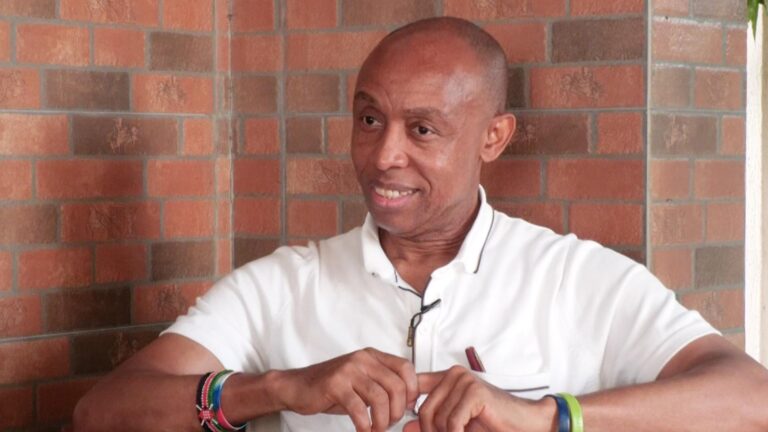
Amid this persistent health crisis, medical experts however say Nigeria is also recording measurable progress. According to the Lead surgeon and Project Director of the Evengel Vesicovaginal Fistula Center, Sunday Lengman, the latest figures represent significant progress compared to previous estimates, which showed that Nigeria once had as many as 150,000 women living with fistula. 

“That’s about a third of what used to be, from 150,000 to 114,000,” he said.

Behind these numbers are real women across Nigeria that have shared their stories with The ICIR, many of them young, poor, and abandoned, who see VVF as a life sentence of leaking urine, rejection, poverty and silence.

What is VVF?

Vesicovaginal Fistula is the most common fistula among females. According to United Nations Population Fund, VVF is a type of obstetric fistula with an abnormal hole between the bladder and vagina caused mainly by prolonged obstructed labour. Without timely medical care, it leads to uncontrollable leakage of urine.

The condition often occurs when a woman stays in labour for days without access to emergency obstetric care, particularly Caesarean Section. Medical experts say the prolonged pressure cuts off blood supply to tissues in the birth canal, leaving permanent injuries. In nearly 90 per cent of cases, the baby does not survive.

Living in isolation 

In Bauchi State, The ICIR documented the hidden world of girls and women living with fistula, many of them confined indoors, rejected by their families, and cut off from social life because of constant urine leakage and foul odour. Some were married as teenagers, others became pregnant too early, and many endured prolonged labour without skilled medical help.

Their stories reflect a shared reality of social isolation, as the women described being ostracised by families who are ashamed of their condition, while others lived in silence, believing their situation a was punishment and irreversible. 

Although obstetric fistula has been virtually eliminated in many countries with strong healthcare systems, it remains a major public health crisis in Nigeria. In many rural communities, women still deliver at home or in poorly equipped facilities, while some travel for hours during labour to reach hospitals, often too late.

Nigeria has specialised fistula treatment centres supported by government, donor agencies and organisations like the United Nations Population Fund, but access remains limited. 

Dr. Lengman explained that obstetric fistula is not merely a medical problem but a human rights issue adding that universal access to free and compulsory education may offer a more sustainable path to reducing fistula cases.

“Policies should be developed in the area of ensuring there’s a universal education that is basic and free for all people,” he said.

He said that ensuring that every girl completes primary and secondary education could naturally reduce early marriages and early pregnancies, which significantly increase childbirth complications.

The health expert said that Nigeria’s fistula response will remain relatively stable in 2026 because the biggest supporter of fistula treatment globally is not the US government but the Fistula Foundation, a California-based non-governmental organisation and one of the world’s leading funders of fistula treatment.

“Last year Fistula Foundation increased funding and actually extended their funding to many more national NGOs that are participating in the work in Nigeria. Also, last year the Nigerian government was also interested, so through the National Health Insurance Authority, fistula work is being supported, especially the surgery in several other centres in Nigeria,” he added.

Lengman said that data has shown that there are currently 45,000 women with fistula awaiting surgery because of inadequate funding, shortage of trained surgeons and lack of awareness.

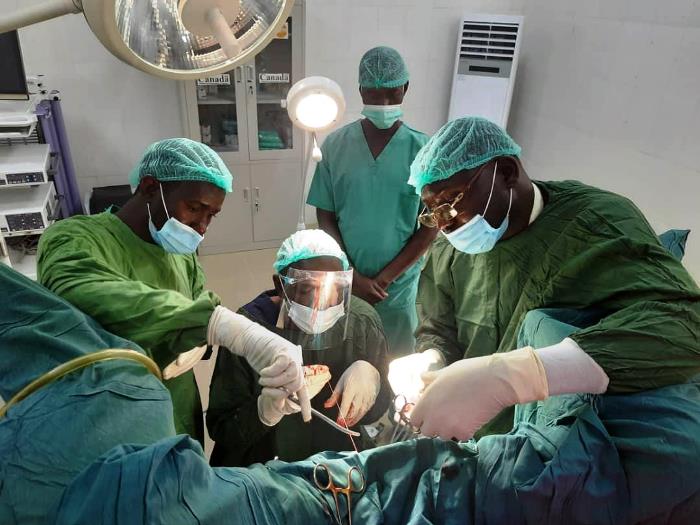
The ICIR reported that in Jigawa State, the structured fistula treatment programmes are transforming lives at facilities such as Jahun General Hospital, where data revealed nearly 5,000 free fistula surgeries have been conducted at the hospital between 2008 to February 2026.

As the world observes this year’s World Fistula Day, thousands of Nigerian women are reminded that safe childbirth should never destroy lives. No woman should endure lifelong injuries simply because she tried to give birth.

Man shot dead after opening fire near White House checkpoint

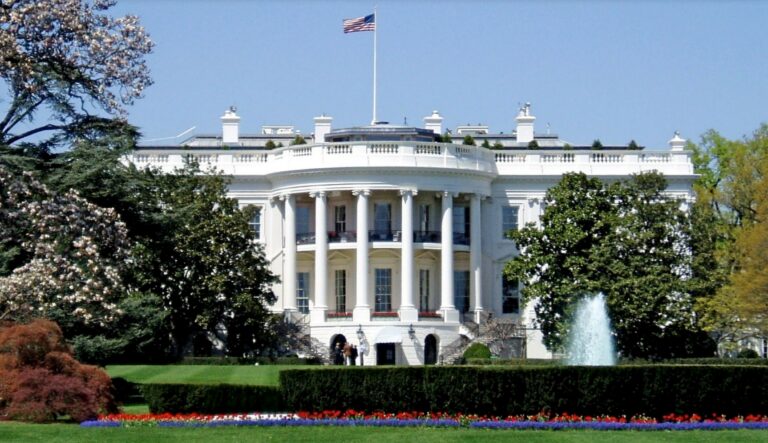
A man was shot dead by United States Secret Service on Saturday after opening fire at a security checkpoint near the White House. A bystander was also wounded in the incident.

The shooting occurred shortly after 6pm local time on Saturday at the intersection of 17th Street and Pennsylvania Avenue in Washington, DC.

According to the Secret Service, the suspect approached the checkpoint, pulled a firearm from a bag and began shooting at stationed officers.

The law enforcement agency said officers immediately returned fire, hitting the suspect, who was later pronounced dead at a nearby hospital.

CBS identified the suspect as 21-year-old Nasire Best, who was reportedly known to the secret service and had a documented history of mental health issues.

Authorities said a bystander was also struck during the incident, although it remained unclear whether the person was hit by the suspect’s gunfire or during the exchange with officers.

No Secret Service personnel were injured.

President Donald Trump was said to be inside the White House when the shooting occurred but was not harmed. The White House was immediately placed under lockdown.

Reacting to the incident, Trump praised the Secret Service and other law enforcement personnel for their swift response.

“Thank you to our great Secret Service and Law Enforcement for the swift and professional action taken this evening against a gunman near the White House,” Trump wrote on Truth Social.

He described the suspect as having a violent history and a possible obsession with the White House, adding that the incident underscored the need for enhanced presidential security.

Saturday’s shooting comes less than a month after what authorities described as an attempted assassination plot involving Trump.

On April 25, law enforcement agents arrested a suspect who was armed with guns after he charged past a security checkpoint in a Washington hotel where President Trump was due to speak.