
Home Blog Page 2663

Weight Loss Revolution: Why scientists are worried about ketogenic diet

An increasing number of Nigerians are embracing the controversial ketogenic diet. This diet has shown dramatic weight loss but its effect on dieters is highly open to question. The keto diet is based on unproven scientific claims, especially with regard to its long-term efficacy and safety.


Justina Ude, 35, loved to show off her figure and flaunted her body like a model. But the visible excess fat she carried gave her no confidence for the red carpet pose until she was introduced to a miraculous diet that appeared to have changed her life for good.

She achieved a dramatic weight loss of 31 percent within one year of going against conventional dietary advice. All she had to do was to deny herself intake of carbohydrate and consumed more high-fat foods.

“Ketogenic lifestyle is indeed the best lifestyle,” Ude says excitedly.  “I can’t believe it’s a year already I embarked on this journey. From 120kg to 82kg, still ketoing hopefully I will get to 75kg.”

A balanced diet is ideal for healthy living, according to the mainstream dietary recommendation, but not anymore with the ketogenic diet that is helping people like Ude to achieve their goal of weight loss.

In Nigeria where the quantity of carbohydrate is always higher in most meals –among the classes of nutrients except water – she fastidiously upheld the dietary regimen of Low Carbohydrate High Fat (LCHF). This diet put the body into ketosis, upon which ketogenic or keto diet is derived.

The success story of the ketogenic diet is a deluge, especially among people who have been struggling with weight loss for a long time. According to 2017 Global Nutrition Report, 40 percent of Nigerian women are overweight and 15 percent are obese while 24 percent of men are overweight and 5 percent obese.

Obesity is as much a public health problem as undernutrition. Nigeria has the double burden of malnutrition – a growing health problem that affects many developing countries. Obesity is not just a forerunner of diabetes but also has been linked to cancer. A new study, published in the medical journal The Lancet Diabetes and Endocrinology, found that diabetes and obesity accounted for nearly 6 percent of new cancer cases.

While losing weight does not always equate to good health, conscious effort to decrease body weight through healthy diet and physical activity have been found to reduce the risk of non-communicable diseases.

Conventional medical advice for weight loss has consisted of low-calorie and low-fat diet as well as eating less and exercising more. This dietary advice has done little to help already overweight and obese people to lose weight. Rather, obesity and diabetes have been on the rise worldwide.

 QUICK FIX, THE KETO WAY

Carbohydrate-restricting diet for weight loss is not new. In the 17th century, William Banting, a British undertaker was highly overweight. After changing to low carbohydrate diet – on the advice of William Harvey, a medical doctor – Banting had a drastic weight loss and felt healthier. Harvey wrote about the experience in 1862. In some countries, like South Africa, LCHF is known as Banting.

Robert Atkins, a cardiologist, published his Diet Revolution in 1972 in which he recommended a carbohydrate-restricted diet with increased protein as well as saturated fat intake. While keto diet has to do with high fat with moderate protein, Atkins diet dwells on high protein with the total fat intake.

While the claims of LCHF diet on weight loss are controversial, it has been found to have significant therapeutic effects on certain diseases. The ketogenic diet has an anti-seizure effect, according to a systematic review published in the journal Neuropharmacology, and can be used in the treatment of epilepsy. The diet is also showing promise for the treatment of Alzheimer’s disease, according to a study published in the journal Food Science and Human Wellness.

The argument for ketogenic diet focuses on insulin resistance which is considered the major driver of obesity and diabetes epidemic. Promoters of keto diet have argued that the conventional dietary advice does not account for insulin resistance.  Insulin facilitates the uptake of glucose by cells in the body to be used to produce energy or to store it as fat.  When the body becomes insulin resistant, it means the body cells are unable to take up glucose into the cells and this causes glucose to build up in the blood.  In response, the person produces more insulin but still is hard for the excess insulin to drive glucose into the cells.

This insulin resistance can put a person at high risk of developing type 2 diabetes mellitus or gestational diabetes if not well managed. One of the main causes of insulin resistance is an intake of a high-calorie diet, high-carbohydrate or high-sugar diet, weight gain and sedentary lifestyle.

When the body takes in carbohydrate, it is digested and converted into glucose for energy. If the carbohydrate is excess, the body spends as much as it can and store the remaining as glycogen in the body which makes the consumer gain weight.  Also, insulin is released as soon as a person consumes carbohydrates to help in driving the glucose into the cells.

The essence of the ketogenic diet is that it denies the body of carbohydrate, the main source of energy. When this happens, the body goes into ketosis where it is forced to burn stored fat and glycogen as well as dietary fat for energy, rather than carbohydrate.  This also helps in regulating the release of insulin and minimises the risk of insulin resistance.

To maintain body weight, the amount of energy intake must be equal to energy expenditure. And to achieve weight loss, negative energy balance is required. That is the amount of energy expenditure must be higher than energy intake.

Carbohydrate is the main source of energy in the body and ketogenic diet revolves around restricting carbohydrate to facilitate weight loss. In trying to restrict carbohydrate intake to near zero, ketogenic dieters restrict the type of foods they take and also take in a lot of high-fat foods. This raises the big question of how well the ketogenic diet can meet the nutritional demand of the dieters and the potential long-term effect of high-fat foods.

Ngozi Nnam, a Professor of Community and Public Health Nutrition at the Department of Nutrition and Dietetics, University of Nigeria, Nsukka, and former President of the Nutrition Society of Nigeria, who spoke to the ICIR, believes that ketogenic diet is not nutritionally adequate.

“When we say that diet is adequate, that diet has to contain all the food nutrients,” Nnam explains. The problem with ketogenic, she says, is that the body is not using the normal source of energy that some organs in the body need to function properly.

“I know that many people on ketogenic diet avoid fruits and vegetables that contain carbohydrate. They avoid whole grain food that contains carbohydrate. They are losing on some vital nutrients that are needed for the body to function well.”

Nnam argues that the good way to lose weight is to eat a balanced diet at a moderate portion so that no nutrient will be marginalised and also do a lot of physical exercises to burn the excess energy or already accumulated body fat.

A study, published in The Lancet Diabetes and Endocrinology, has shown that Ketogenic diet facilitates weight loss but its safety and efficacy in the long term is still largely unknown and will require randomised clinical trials.

KETO CRUSHES BODY FAT

Photo Credit: AFP

The ketogenic diet holds much promise in curbing the global rise in obesity and non-communicable diseases if eventually the diet gains scientific consensus.

Without exercise, Chekwube Nnaji achieved 10kg weight loss within three months by simply sticking to the ketogenic diet plan. She replaced her garri “swallow” with eggplant and cabbage swallow. She made cauliflower rice instead of the normal rice. She turned to coconut flour and used coconut and olive oil. She ate a lot of meat, fish, and avocado.

To maintain her abstinence from carbohydrate, she shunned sugary foods, grains, starchy roots, fruits and vegetables like a carrot.

“Keto makes you look much younger than you are,” Nnaji told the ICIR. “It reduces every part of your body – your tummy, your hand, every part normalises. People were coming to my office to ask me what I was doing and a lot of them joined.”

Since she embarked on the keto diet, Nnaji says, she has become healthier than she used to be. The problem was having fatigue and headache when she started on a keto diet. But that did not last more than a week, she says.

Joy Aghogho, the host of one of Nigeria’s biggest online ketogenic diet support groups with over a million members, explains that starters on keto diet usually have certain symptoms.

“You may have the keto flu also known as carbs withdrawal. A very common happening when people start a ketogenic diet is getting headaches and “brain fogginess.’”

With a growing number of Nigerians taking the keto diet for weight loss, the diet has created business opportunities.  Ketogenic markets have sprung up in major cities across the country. In Lagos, Port Harcourt and Enugu, suppliers of ketogenic products are using Whatsapp and Facebook to sell their products and keto-compliant restaurants are the new rave.

However, not every overweight person is keen on consuming keto diet. “My younger sister lost 4kg within a week of starting keto,” Chioma Eze, a lawyer, told the ICIR. “But I can’t do that diet. I love my fried plantain biko.”

THE FOOD FIGHT  

Nigerian keto dieters replace carbohydrate-based food swallow with eggplant or cabbage swallow

Through the ages, scientists have classified food into six classes: protein, carbohydrate, fat and oil, mineral, vitamin and, water. Scientific evidence suggests that it is better to eat a diet that that has all the food groups.

A study conducted by Catherine Champagne and her team which was published in the journal The American Dietetic Association points out that a great deal of interest surrounds the question of what dietary changes may be most effective in weight loss and maintenance efforts. The study which utilised 828 successful weight loss participants in randomized controlled trial concluded that “increases in fruits, vegetables, and low-fat dairy, as part of a calorie controlled diet, help both achieve and maintain weight loss”.

Certain studies, however, suggest that low fats intake causes weight loss in the short term while other studies suggest that low carb diet with high fat and high protein achieves a better result for weight loss.

The DASH diet has consistently ranked the best diet, by the U.S. News and World Report, in lowering blood pressure as well as being effective for weight loss and weight maintenance. It recommends eating a diet rich in fruits, vegetables, whole grains, low-fat dairy, and lean proteins. In addition, the DASH recommended food sources that are also low in sodium but rich in potassium, calcium, and magnesium. DASH means Dietary Approaches to Stop Hypertension.

The World Health Organisation (WHO) recommends that reducing the amount of total fat intake to less than 30 percent of total energy intake helps prevent unhealthy weight gain in the adult population. According to WHO, the risk of developing non-communicable diseases is lowered by reducing saturated fats to less than 7-10 percent of total energy intake, and trans fats to less than 1 percent of total energy intake, and replacing both with unsaturated fats, reduced intake of free sugars to less than 5- 10 percent of total energy intake, increased dietary fibre to at least 20g daily intake and reduced salt intake.

Ketogenic diet contradicts these WHO recommendations as well as previous research findings on the effect of high consumption of dietary fats such as high cholesterol which is a risk factor for heart disease.

“You might be getting an immediate and positive result from keto diet but what about the long run effect,” asks Rachael Fakunle, Head of Dietetics Department, University College Hospital, Ibadan. “Whether you call it healthy or unhealthy fat, fat is fat. When it is in excess, it can cause a lot of damage to the organs.”

Fakunle urges people on Keto diet to consider the long-term effect, rather being driven by the immediate benefit of achieving dramatic weight loss.

Existing scientific consensus favours reducing the level of dietary fats as a means to prevent heart disease. However, scientists like Tim Noakes who advocate for keto diet see no adverse effect for high consumption of dietary fat. He is a professor in the Research Unit for Exercise and Sports Science in the Department of Human Biology, the University of Cape Town and the Sports Science Institute of South Africa, Cape Town, South Africa.

“In answer to your question: does it mean that all we have been told about animal fats and cholesterol as a risk factor for heart disease is invalid? The answer is a very strong yes,” Noakes responds to an inquiry by the ICIR.

“It is diabetes and insulin resistance and a high carbohydrate diet that causes arterial disease,” he insists.

Noakes has been a vocal supporter of LCHF diet since he joined the movement in 2012. He has published academic articles, written books and established a foundation to promote ketogenic diet. He once advised a nursing mother to wean her baby onto LCHF diet which he described as the real food. The Health Professions Council of South Africa subsequently instituted a professional misconduct case against Noakes based on this advice.

The conflicting and confusing messages from notable scientists put people at a loss for what to believe. At the moment, however, the weight of scientific evidence is at odds with keto diet. The majority of scientists perceive ketogenic diet to be extremely dangerous with unproven and exaggerated scientific claims.

This article was made possible through funding from the Africa Science Desk, an initiative of the African Academy of Sciences and partners.

Journalists should not be targeted for doing their jobs – Paradigm Initiative


Tope Ogundipe, Director of Programs at Paradigm Initiative, says the focus of arrests and prosecution for comments made online have shifted from ordinary citizens to journalists across Africa.

She said journalists should not be targeted for doing their legitimate jobs by African governments that seek to silent media and stifle press freedom.

“One of the key developments noted in our Digital Rights in Africa Report 2017 was the increased wave of attacks on the press in Africa. In 2016, most of the arrests for comments made online were of ordinary citizens, in 2017 the focus of arrests and prosecutions for comments made online shifted to journalists. Journalists should not be targeted for doing their legitimate jobs, Ogundipe said in a statement to mark the 2018 World Press Freedom Day.

She noted that the celebration of the 2018 World Press Day came at a time of increased press attacks across Africa, “an unfortunate reality that is partly behind shrinking civic spaces in the continent.”

“The years 2017 and 2018 have witnessed a record number of journalist arrests in Nigeria. Media houses were also broken into as overzealous security officers did the bidding of their paymasters. Journalists and the media played a crucial role in the establishment of democracy in Nigeria, so we cannot sit back and watch their right trampled upon,” Ogundipe added.


READ ALSO:


Similarly, Boye Adegoke, Paradigm Initiative’s Program Manager for Digital Rights said, “the Cybercrimes Act of 2015 has emerged as the principal tool in the hands of the rich and powerful in persecuting Nigerian citizens and Journalists for comments made online.

“We have initiated lawsuit challenging the constitutionality of sections 24 and 38 of the Cybercrime Act, which has been the legal basis for much of the abuse of press freedom we have seen in Nigeria.

“As we celebrate World Press Day 2018 on May 3 2018, let’s all join hands together to ensure that Press Freedom is respected in Nigeria, Africa and the rest of the world,” Adeboye said.

EXTRA: Buhari’s administration and the love for ‘technicality’


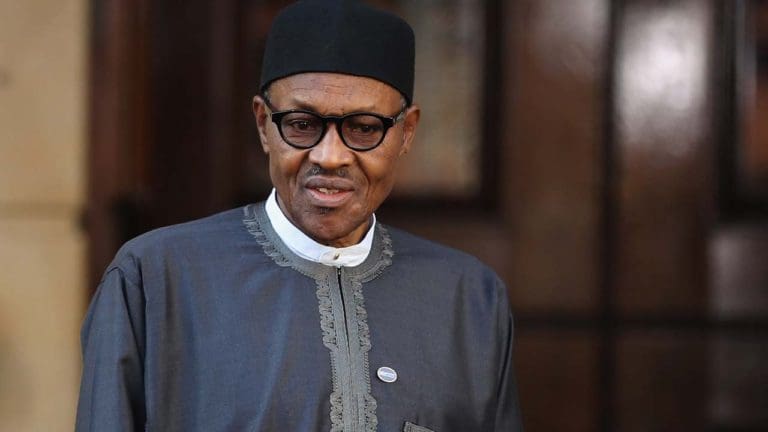
President Muhammadu Buhari “had a technical stopover in London and will be on his way back soon”. This was the response of Garba Shehu, Special Assistant to the President on Media and Publicity, on Thursday, when contacted on why Buhari has not arrived Nigeria almost 48 hours after leaving the United States of America.

Shehu’s response, and the use of the word ‘technical’, reminds one of the many times Buhari or some members of his inner circle had used the term to wriggle the presidency out of knotty situations.

Given the fact that Buhari had spent more than 150 days of 2017 in hospital in the UK, many Nigerians are wont to jump to the conclusion that whenever the President is said to be in London, he most probably must have gone to see his doctors. Hence the need for Shehu to clear the air that this particular stop-over was due to technical – not medical  – reasons.

This is the third time the term ‘technical’ is featuring significantly in the lifespan of the Buhari administration so far.

BOKO HARAM ‘TECHNICALLY’ DEFEATED

The President had used the term to explain the success so far recorded in the anti-terrorism campaign, which is one of the three major policies of his government.

In an interview with the BBC in December 2015, barely seven months after assuming office, Buhari boasted that Boko Haram had been technically defeated and was merely grasping for breath.

“Boko Haram has reverted to using improvised explosive devices (IEDs) (and) indoctrinating young guys… they have now been reduced to that,” Buhari said.

“So I think technically we have won the war because people are going back into their neighbourhoods. Boko Haram as an organised fighting force, I assure you, that we have dealt with them.”

Well, that was before the sect ambushed a team of NNPC oil explorers searching for oil at the Lake Chad Basin, killing almost 50 persons and abducting three. That was also before Boko Haram did a repeat of Chibok, when they attacked another girls secondary school in Dapchi, Borno State, and abducted over 100 girls. That was also before the National Economic Council (NEC) approved the withdrawal of $1 billion from the Excess Crude Account (ECA) to fight an already technically defeated Boko Haram.

NIGERIA ‘TECHNICALLY’ IN RECESSION

A little over a year after Buhari assumed office in 2015, it became obvious to most Nigerians that all was not well. There seemed to be less money in peoples’ pockets, and the little money people had could not purchase as much as it would have.

Many said it was due to Buhari’s Treasury Single Account (TSA) policy, which meant that all the loop holes, from which corrupt civil servants and public office holders hitherto siphoned government monies, had been blocked. But it was not until July 2016, that Kemi Adeosun, Minister of Finance, broke the bad news.

Addressing the senate on what caused the biting hardship in the land, Adeosun said that “technically, Nigeria is in recession“.

Adeosun, however, reassured that “the economy is in good hands and we are absolutely doing our best”.

True to her word, by September 2017, figures from the National Bureau of Statistics (NBS) showed that Nigeria had officially exited recession, even though things remain tough, food prices remain high and the value of the Naira still wobbles.

Buhari set to arrive today after ‘technical stopover’ in London


Garba Shehu, the president’s Senior Special Assistant on Media and Publicity, has confirmed on Thursday morning that President Muhammadu Buhari had a stop over in London, following his official visit to Donald Trump, president of the United States.

Buhari had arrived in Washington D.C. on Sunday, met with Trump on Monday, and left the United States on Tuesday.

Bashir Ahmed, one of the president’s media aides, on Monday tweeted to say the president had “departed Joint Base Andrews Airport for Nnamdi Azikiwe Airport, Abuja”, without any mention of a stop-over.

“They had a technical stopover in London,” Shehu had stated. “I am sure if you keep your ears to the ground, you will hear of his arrival soon.”

Femi Adesina, Special Adviser on Media and Publicity, later confirmed on Thursday through his Twitter account that Buhari is set to arrive in Abuja on Thursday evening.

“PMB arrives Abuja this evening. The good work of rebuilding Nigeria continues,” he stated

Court remands Dino Melaye in police custody for 39 days


Dino Melaye, Kogi State senator, has been denied bail on Thursday after he was arraigned before a magistrate court in Lokoja, Kogi State capital, with the Magistrate ordering that he be remanded in police custody for 39 days.

Melaye, lying on a stretcher, was transported to Lokoja in a police Ambulance which left Abuja at about 4 am and arrived at 7 am. He was arraigned on fresh charges of conspiracy and aiding of jail break.

At the commencement of hearing, Alex Isihon, the prosecution council, argued that the court did not have the jurisdiction to entertain the case. But Mike Ozekhome, Melaye’s lawyer, argued that the court had the power by virtue of the Constitution to try the case, while also pleading the court to grant his client bail according to the Kogi State Administration of Criminal Justice.

However, Suleiman Abdulahi, the Magistrate in charge of the case, rejected the bail application and ordered that Melaye be remanded in police custody for the next 39 days. He subsequently adjourned the case till June 11.

Melaye had been granted a N90 million bail on Wednesday, when he was arraigned at an Abuja court for alleged attempted suicide and escape from lawful custody. But the police rearrested him as he left the court premises.

Jimoh Moshood, spokesman of the Police, explained that the bail granted Melaye on Wednesday does not cover the other offences for which he was to be arraigned in Lokoja. He also said that doctors at the National Hospital had discharged Melaye and declared him fit to stand trial.

Melaye was brought to court on stretchers as he is yet to recover from the injuries he sustained when he allegedly jumped out of the window of a moving police vehicle last Tuesday in an attempt to escape. In a video clip of the incident which went viral on the social media, Melaye could be heard saying “I will kill myself and put all of you (policemen) in trouble”.

The police had declared Melaye wanted after two arrested armed robbery and kidnapping suspects allegedly confessed during interrogation that the senator supplied them the guns they used for operations.

Melaye has another criminal suit against him, filed by the Nigerian police, who accused him of of providing false information about an assassination attempt on his life in April 2017.

This is despite the fact that few weeks after Melaye’s assassination claim in 2017, the police arrested and paraded six suspects who Jimoh Moshood, Police PRO, said were arrested in connection to the assassination attempt.

In fact, Moshood had said at the time, that the arrested suspects confessed that they were recruited by Edward Onoja, Chief of Staf to Governor Yahaya Bello of Kogi State, to kill Melaye.

Melaye denies all the allegations against him, insisting that his ordeal was being orchestrated by Bello, who, though is of the same All Progressives Congress (APC) as the embattled senator, does not see eye to eye with him.

Nigeria signs 848 billion naira currency swap deal with China


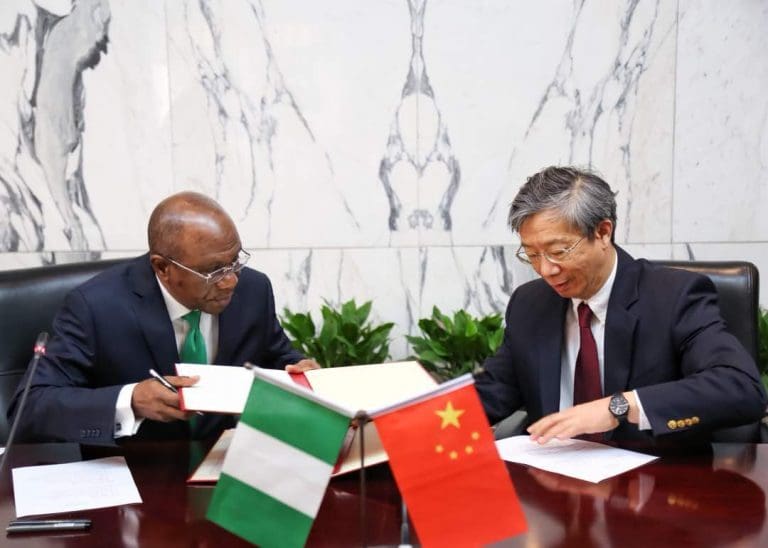
The Central Bank of Nigeria (CBN) and the Peoples Bank of China (PBoC) have signed a three-year bilateral currency swaps agreement worth 844 billion naira or 15 billion yuan ($2.36 billion).

The Chinese apex bank said on its website the swap deal will facilitate trade and investment, and safeguard stability of financial markets of both countries.

Isaac Okorafor, the CBN spokesman in a statement, said the agreement will reduce the challenges encountered in the search for third currencies by industrialists and other business persons from both countries.

“Among other benefits, this agreement will provide naira liquidity to Chinese businesses and provide RMB liquidity to Nigerian businesses respectively, thereby improving the speed, convenience and volume of transactions between the two countries,” Okorafor said.

“It will also assist both countries in their foreign exchange reserves management, enhance financial stability and promote broader economic cooperation between the two countries.

“The deal, which is purely an exchange of currencies, will also make it easier for Chinese manufacturers seeking to buy raw materials from Nigeria to obtain enough naira from banks in China to pay for their imports from Nigeria. Indeed, the deal will protect Nigerian business people from the harsh effects of third currency fluctuations.”

The currency swap deal was one of the issues discussed when President Muhammadu Buhari paid a working visit to China in April 2016.

Innoson writes Buhari, wants AGF to take over case against GTB, EFCC


Innocent Chukwuma, Chairman of Innoson Motors, has written an open letter to President Muhammadu Buhari, pleading with him to direct the Attorney General of the Federation (AGF), to take over the case between him, the Economic  and Financial Crimes Commission (EFCC) and Guarantee Trust Bank (GTB).

The EFCC had arraigned Chukwuma in court for allegedly obtaining loans running into billions of naira from GTB using forged documents.

However, Chukwuma denies the charges, saying that it was GTB that was indebted to him to the sum of N55 billion.

In the letter to Buhari, Chukwuma said his company, Innoson Motors, had a good relationship with GTB prior to their face-off. Though he did not state the nature of the face-off or what led to it, he said that he sued the bank before the Federal High Court, Ibadan, and on February 6, 2014, a monetary judgement of over N2 billion was delivered in his favour.

Later in December pf the same year, Chukwuma said he obtained another judgement of N5.9 billion against GTB, from the Court of Appeal, Enugu division, “with 22% interest till the liquidation of the judgment debt”.

“As at today, GTB owes me over N22 Billion. Subsequent to the two said judgments of the Court of Appeal, the GTB had tried in futility to negotiate the judgment sums ridiculously downwards,” the letter read in part.

“GTB had earlier in one of its affidavits at the Court of Appeal Enugu Division deposed to the fact that if it pays the judgment debts, it will face serious liquidity deficiency which will adversely affect its banking operations.

“Consequent upon the failure of GTB to achieve a comfortable and downward negotiated figure with my company in respect of the two judgment debts, it colluded with some corrupt men and officers of the Nigerian Police Force, to contrive a false criminal charge of forgery against me and my company.

“Also in a bid to arm-twist, blackmail and compel me to forego and drop the two judgments and another fresh claim of thirty billion Naira against it, GTB corruptly and in a sudden twist, colluded with The Economic and Financial Crimes Commission- EFCC and concocted a false complaint of forgery of about two bills of lading against me.”

Chukwuma pointed out that during the court cases at the high court and the appeal court, “GTB did not at any time raise the issue of forgery as a defence”.

He also stated that after receiving the petition against him, the EFCC carried out its investigation and could not indict him or establish any case of fraud or forgery or any other offence against him.

“Mr President, I do not know why EFCC allowed itself to be used by GTBank to abuse court process in a matter it had earlier investigated without mentioning of fraud or forgery in its various reports … and for which it has deposed in a counter affidavit … that it cannot confirm GTB’s allegation against me,” Chukwuma stated.

“EFCC as a Federal Government Agency is supposed to be unbiased in resolving the dispute between Innoson and GTB, but its actions indicated it is doing the bidding of GTB.”

Chukwuma said GTB intends to frustrate his business and scare away his foreign partners or, worse still, have him killed.

“In the circumstance, I humbly request that Mr. President directs that the Honourable Attorney-General take over the case and continue or discontinue it based on its merit.

“I shall appear in any court or any investigative panel to answer any questions or charges relating to the allegation particularly in a court in which there is due process, compliance with rule of law, fair hearing and the charge did not constitute an abuse of process,” he stated.

Over 2,295 teachers killed by Boko Haram in nine years, says Minister of Education


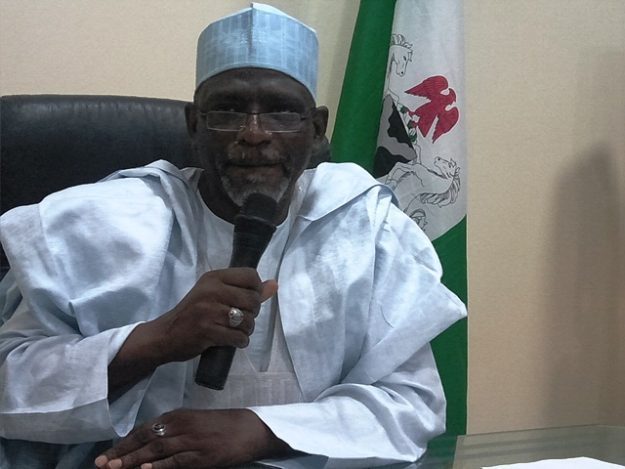
Adamu Adamu, Minister of Education, says over 2,295 teachers have been killed and 19,000 others displaced in Adamawa, Borno and Yobe states in the last nine years as a result of insurgency.

He also revealed that an estimated 1,500 schools have been destroyed since 2014, with over 1,280 casualties among teachers and students, thereby devastating the school system.

Adamu made the revelation in his keynote address at a Workshop for Review of the Legal Framework on the Safe School Declaration; an initiative for Protection of Education from Attack in Nigeria on Wednesday was organized by the Federal Ministry of Education with support from its development partners.

He said there is an urgent need to protect education from attacks, pointing out that without access to quality learning, the children are not only being deprived of education, they are also being robbed of future opportunities which will affect the entire society.

Represented by Sonny Echono, Permanent Secretary, Federal Ministry of Education, Adamu stressed that the idea that education can and should continue during and despite conflict was not evident for many people, especially compared to basic life- saving services such as medical assistance, shelter, food or water and sanitation.

He said that by joining Nigeria in the struggle to address the challenge, the partners have committed to undertake common-sense steps to make it less likely that students, teachers and schools will be attacked, and to mitigate the negative consequences when such attacks occur.

Earlier in a welcome address, Justina Ibe , Director of Education Support Services, who represented the Permanent Secretary, said there was need to develop a sound legal framework to ensure proper implementation of the Safe School Initiatives for protecting schools from attacks.

According to him, the workshop was meant to formally inform stakeholders about the legal review research study on the protection of education from attack and to interact and share experiences with countries that have implemented the Safe School Declaration.

Officials were invited from some federal government educational institutions that have been victims of attack by insurgents to give detail account of how the attacks were carried out on their institutions.

Representatives of International Development Partners and other organizations presented goodwill messages at the occasion, expressing their commitment to the declaration to protect education from attack.

Despite N514 million budget in 6 years, public institutions still ignore FOI requests


Ministries, departments and agencies (MDAs) of government have continued to ignore requests for public information despite the budgetary allocation of over N514 million for the implementation of freedom of information act (FOIA).

The freedom of information bill was passed into law by former President Jonathan on May 28, 2011 But the law is yet to guarantee access to public information.

When the FOI Bill was enacted, Nigerians hoped that the law would bring an end to secrecy in government business and usher in an era of probity, transparency, and accountability. However, response to requests by non-governmental organisations, civil societies, media and the general public has removed such hopes.

Interestingly, N80 million was budgeted for the implementation of FOIA by the office of the head of civil service in 2013 — the only public institution that made budgetary provision for the implementation of the Act that year.

In 2014, of more than 40 ministries, only five, ministries of culture and tourism, water resources, lands and housing, environment and office of the head of civil service, budgeted N331 million in total for the implementation of FOIA. The ministry of water resources earmarked N3.6 million; ministry of environment — N2 million; ministry of lands and housing — N10 million; ministry of culture and tourism — N295 million and office of the head of civil service earmarked N20 million.

In 2015 and 2016, ministry of defence budgeted N17.9 million and N31.8 million respectively for providing the public information  that relates to security matters by implementing the freedom of information act.

Also, in 2017, the total amount budgeted for the implementation of FOIA was N53.1 million, shared among four ministries. The ministry of power, works and housing made two provisions in the budget; N5 million for FOIA training and sensitisation programme and N10.8 million for the implementation of FOIA as it relates to the housing sector in the 36 states field offices and the FCT. Ministry of defence budgeted N20 million, ministry of water resources budgeted N11.5 million and ministry of budget and national planning had N5 million for the domestication of FOI.

FOI COMPLIANCE RANKING FOR PUBLIC INSTITUTIONS

The Public and Private Development Centre (PPDC), commenced an annual FOI compliance and transparency rankings in 2014. The compliance benchmark used to rank public institutions emanates from the FOIA 2011 and includes levels of proactive disclosure, timelines for disclosing information on request, levels of disclosure on request and the cost of disclosure.

Ministries, departments and agencies of government have continued to remain adamant to request of public information at their disposal even after four years into the annual FOI compliance ranking of public institutions.

In 2014, the FOI compliance ranking revealed that the Infrastructure Concession Regulatory Commission (ICRC) and Office of the Accountant General of the Federation (OAGF) ranked first out of 67 public institutions that were assessed, with over 40 institutions breaching the FOI law. Specifically, the Ministry of Information — the custodian of information in the country, Nigerian National Petroleum Commission (NNPC), Police Service Commission, Federal Ministry of Petroleum Resources all ranked last among other public institutions as they could not do proactive disclosure, respond to request for information or give full disclosure of public information at their disposal.

It was the same story in 2015 FOI complaince ranking, over 70 public institutions breached the law by not granting request of public information that were sent to them. 116 institutions were ranked, Nigeria Export Promotion (NEPC), Veterinary Council of Nigeria, Consumer Protection Council of Nigeria, Federal Character Commission and National Insurance Commission (NAICOM) all ranked first.

The 2016 FOI compliance ranking was not different from the previous one. Out of 131 institutions that were ranked, over 100 of them also breached the law. The Bureau for Public Sector Reform (BPSR) came first in the ranking.

In 2017 the Bureau for Public Sector Reform (BPSR) topped a list of 166 public institutions’ compliance with Freedom of Information provisions that require them to proactively and fully disclose public information. The rest 165 flouted at least one requirement.

It was the second year in a row BPSR topped the ranking by the PPDC — this time getting all greens for proactive disclosure, responding to an FOI request within seven day, and fully disclosing information as requested.

From the rankings, it can be established that ministries that have budgetary allocation for the implementation of FOIA don’t have good rankings on the compliance ranking of public institutions.

The question is : If public institutions with budgetary provisions for the implementation of FOIA fail to respond to FOI requests, what was the allocation for? And what was it used for?

Melaye re-arrested after arraignment before Abuja magistrate court


The police on Wednesday, brought Dino Melaye, senator representing Kogi west, before a magistrate court in Abuja, and re-arrested him immediately after his arraignment.

He was taken to the courtroom on a stretcher by police officers. Journalists were, however, denied access into the court premises and were prevented from moving close to the senator.

The movement of persons and vehicles was also brought to a halt around the court vicinity.

A source told TheCable that Melaye was granted a N90 million bail.

Melaye sustained injuries and was hospitalised after he jumped out of a moving vehicle conveying him to Kogi state based on accusations of conspiring with suspects arrested for kidnapping, political thuggery and illegal arms possession.