back to top
Home Blog Page 3

Connected by touch: Advocacy groups push for inclusion of deafblind people

June 27 started as a day to commemorate the birthday of disability rights advocate Helen Keller, who was the first deafblind person in the U.S. to earn a bachelor’s degree. Since then, the day has been dedicated to celebrating International Day of Deafblindness, also known as International Day of Persons with Deafblindness.

Deafblindness is a condition characterised by little or no useful hearing and little or no useful sight. Because of this, deafblind people require varied management plans to improve their outcomes in areas such as communication, education, work, and general life satisfaction.

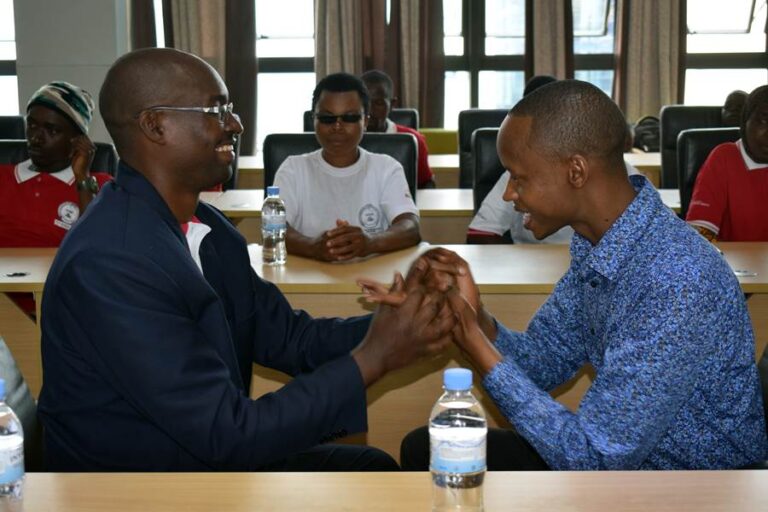
According to the Helen Keller National Centre, the theme for this year is: “Connected by Touch: Breaking Barriers, Building Bridges.” It highlights the fundamental role of touch in communication, connection, and access for deafblind individuals.

Touch is said to be the foundation of how deafblind individuals navigate the world. From protactile language, tactile sign language, and haptics to the use of braille, assistive technology, and everyday interaction. Through touch, deafblind individuals communicate, learn, work, and thrive.

In December 2023, James Lalu, Executive Secretary of the National Commission for Persons with Disabilities (NCPWD) revealed that 35.1 million persons are currently living with disabilities in Nigeria. This means that 16% of Nigeria’s 216.8 million population has some form of disability. The ICIR observed that no official statistics or census is tracking the number of people living with deafblindness or dual sensory impairments in the country.

Speaking with The ICIR in commemoration of the day, the Vice President of the National Association of Persons with Physical Disabilities, Beatrice Awala Mube, called for unity and inclusion in the education sector, saying it will prevent deafblind children from being overlooked.

“The disability community strongly advocates for inclusive education, where children with disabilities and children without disability learn under the same roof but in a different classroom to promote inclusion,” she said.

“With this system, you can agree with me that deafblind children will be fully included under the principles of leave no one behind,”

Regarding the barriers to tracking this population, Mube pointed to national policy failures. Speaking from her perspective within the Joint National Association of Persons with Disabilities (JONAPWD), she explained that the inability to monitor and support deafblind individuals stems from a lack of policy enforcement rather than a lack of existing laws.

“The major barriers are the poor implementation of the Discrimination Against Persons with disabilities prohibition Act 2018,” she said.

Given the high cost of communication tools and equipment, she emphasised that the government must take responsibility for learning tools.

“My take on this is, if the Government can input working tools and implement them for other organisations, learning instructional materials for deafblind children should not be an exception. We from JONAPWD have always advocated for import-free duties from all forms of assistive device mobility aids for all persons with disabilities,” she noted.

However, speaking from a perspective as a visually impaired leader who has managed these systemic gaps firsthand, Ishaku Adamu, former National President of the Nigeria Association of the Blind and the current National Secretary for JONAPWD explained that structured inclusion had begun for the deafblind, following a directive from the World Blind Union to identify and organise the population. The initiative, he said, led to the recent launch of a national association to ensure they can represent themselves.

“We received a letter from the World Blind Union instructing all member states to start mobilising, identifying those who are deaf-blind and trying to put them into a kind of formidable or well-organised structure or association, so that they can advocate for themselves,” he said.

Adamu acknowledged that deafblind individuals face severe neglect, even within the disability community, and said their ongoing integration into the national frameworks will better accommodate them.

“There is nothing we do in the Joint Association of Persons with Disabilities that we leave them behind. We make sure they are part of the advocacy in whatever we do. We call them the most marginalised among the disability group, you know, even their voices are less heard, so we always try to give them a kind of opportunity, because deafblind and those with intellectual disability, they have been neglected for long, even within disability community.”

He also highlighted the mode of communication for them, where he mentioned the two trainings they undergo.

“One is the tactile mode, where we communicate by touching the body, and the other person also has to touch you to understand the communication. The second one is training them to understand technology. They can learn Braille. After learning braille, certain technologies will help them to adapt.”

He concluded by calling on the government to implement policies that provide support for visually impaired and deafblind individuals as they face the same economic exclusion. Adamu also urged the government to remove all import duties on assistive devices and support local manufacturing to make the tools both available and affordable. He stressed that government ministries must explicitly include these devices in their annual budgets so they can be purchased and distributed for free to those who need them.

ADC, Peter Obi raise fresh concerns over state police bill

0

THE African Democratic Congress (ADC) and former Labour Party presidential candidate, Peter Obi, have criticised the National Assembly’s passage of the state police bill, warning that the proposed reform could be vulnerable to abuse if implemented without adequate safeguards.

In separate statements on Friday, June 26, they described the establishment of state police as a necessary constitutional reform but argued that the legislative process had been rushed and lacked sufficient public consultation.

The criticisms came days after the National Assembly passed a constitutional amendment bill seeking to establish state police as part of efforts to address Nigeria’s worsening insecurity.

The ADC said while it had consistently supported decentralised policing, it could not endorse what it described as the Tinubu administration’s ‘panicky’ handling of the reform.

For Obi, one of his biggest concerns about the development is that President Bola Tinubu’s administration could use the new policing structure to influence the 2027 general election.

In its reaction, the ADC said state police had been a long-standing constitutional proposal that enjoyed broad national support and should not be presented as a new initiative or an immediate solution to the country’s security challenges.

“What we are witnessing is a hurried response to a worsening security crisis, not the careful institutional planning required to build a functional, accountable, and effective policing system,” the party said.

The party argued that the legislation was being rushed through the National Assembly without the broad consultation required for a constitutional amendment of such significance.

“It is too important, and the security of Nigerians too urgent, to be reduced to a quick legislative fix or rushed through the National Assembly without the broad consultation such a far-reaching reform demands,” the party stated.

The opposition party questioned why Tinubu’s administration waited until the latter part of its tenure before pursuing the constitutional amendment if it was genuinely committed to decentralised policing.

It also warned that passing the law would only mark the beginning of a much more complex process involving recruitment, training, funding, operational guidelines, command structures and oversight mechanisms.

The ADC further raised concerns over the absence of clear safeguards to prevent state police from becoming instruments of political intimidation.

Similarly, Obi described the passage of the bill as a significant legislative milestone but expressed concerns over what he called a disorderly legislative process.

He said decentralised policing had long been advocated by security experts and stakeholders because Nigeria’s centralised policing system was ill-suited to a country of its size and diversity.

However, Obi faulted the manner in which the bill was passed, saying there was no public hearing on such a sensitive constitutional amendment.

“The process should involve greater community participation. Policing should be more visible at the local government and community levels,” he said.

According to him, the speed with which the legislation was enacted had fueled suspicion about possible political motives.

Obi said the greatest concern was not logistics but the possibility that governors could weaponise state police against opponents.

“There is a widespread, justifiable fear that state police forces could become instruments in the hands of governors,” he said, adding that such forces could be used to suppress opposition, disrupt political rallies and influence elections.

He called for the establishment of independent state Police Service Commissions insulated from executive control to oversee recruitment, discipline and operations.

Court sentences Boko Haram member to death by hanging

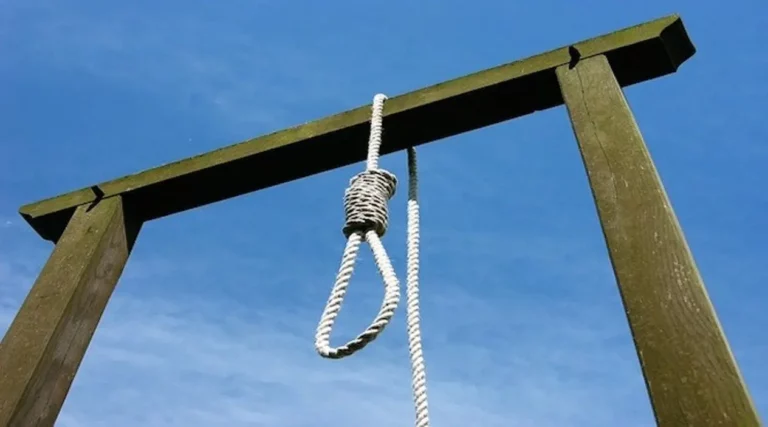
THE FEDERAL High Court in Abuja has sentenced a member of the Boko Haram terrorist group, Alkali Yarima, popularly known as La’ari, to death by hanging after finding him guilty of taking part in the 2015 attack on Maiduguri, the Borno State capital.

The judgement was delivered on Friday by one of the court justices, James Omotosho, who also imposed several prison terms on the convict for other terrorism-related offences.

Apart from the death sentence, the court ordered that Yarima serve life imprisonment for undergoing weapons and arms training in preparation for terrorist activities. He was also sentenced to 35 years in prison for belonging to the outlawed Boko Haram sect, while another charge earned him a 30-year jail term. In addition, the judge handed him 10 years’ imprisonment on each of three separate counts.

The seven-count case, marked FHC/KNJ/CR/971/2026, was brought before the court by the Federal Government. The charges were dated May 26 and filed on May 29 by the Director of Public Prosecutions of the Federation, Rotimi Oyedepo, a senior advocate.

According to the prosecution, Yarima, identified with Chest Number 1636 from the Lawanti area of Mafa Local Government Area in Borno State, remained a member of Boko Haram between 2009 and the time he was arrested in 2015.

The government further alleged that he accepted “Da’awah from Mohammed Yusuf (founder of Boko Haram)”, an offence punishable under Section 16(1) of the Terrorism (Prevention Amendment) Act, 2013.

On the count that resulted in a life sentence, prosecutors told the court that the convict engaged in conduct in preparation to commit acts of terrorism when he travelled to an Arab country for training on arms and weapon handling. The offence is punishable under Section 21 of the Terrorism (Prevention Amendment) Act, 2013.

The court also found him guilty of participating in the 2015 assault on Maiduguri, an offence under Section 2(1) of the same law. That conviction attracted the death penalty.

Although terrorism trials are commonly conducted at the Federal High Court in Kainji, Niger State, this particular case was heard and concluded in Abuja.

Speaking after the judgement, the Attorney-General of the Federation and Minister of Justice, Lateef Fagbemi, a senor advocate, reaffirmed the Federal Government’s commitment to tackling terrorism across the country.

He said, We will fight with every inch of our blood to ensure that we make Nigeria a safe place for everybody.”

The minister added that the government would continue to pursue individuals involved in terrorism and other violent crimes to strengthen national security and protect the lives of citizens.

(NAN)

Court overturns judgment recognising NDC as political party

A FEDERAL High Court in Lokoja on Friday set aside its earlier judgment directing the Independent National Electoral Commission (INEC) to register the Nigeria Democratic Congress (NDC) as a political party.

The presiding judge, Isah Dashen, held that all relevant parties must be heard before any substantive decision could be made in the matter.

The court upheld the application filed by the Peace Movement Party (PMP), ruling that the party was a necessary party to the suit.

According to the judge, the earlier judgment was constitutionally defective as it was delivered without hearing from all interested parties.

He declared that such an omission rendered the entire process null and void.

Dashen further ruled that the status quo be restored to what it was before the December 2025 judgment, pending the determination of the substantive suit.

He also observed that certain material facts were suppressed in the earlier proceedings, which justified the decision to set aside the judgment.

Consequently, the court ordered that the substantive suit should begin afresh, with INEC, the PMP and the NDC as parties to the case.

Counsel to the applicant, Chikezie Ekeocha, told journalists that the PMP approached the court after discovering that NDC’s registration was based on a logo it had previously submitted to INEC before the commencement of the suit.

According to Ekeocha, the court agreed that the applicant’s rights had been affected and consequently vacated the earlier judgment.

“The court has ordered all parties to return to the position they occupied before the judgment of December 10, 2025, and directed the claimants to join all necessary parties to ensure the issues in dispute are effectually and completely determined,” he said.

He explained that the implication of the ruling was that every action taken by INEC in compliance with the now-vacated judgment stands reversed.

“The recognition of the NDC, the issuance of its certificate of registration, its inclusion in INEC’s records, and any appearance on ballot papers arising from that judgment must be withdrawn pending the final determination of the substantive suit,” Ekeocha stated.

He, however, clarified that the substantive case remained before the court and had not been decided.

“The matter has not been concluded. The court merely set aside its previous judgment and directed that the party whose interests were affected be joined so that all sides can be heard before a fresh decision is reached.”

Ekeocha also dismissed suggestions that the court merely ordered parties to maintain the status quo, insisting that the ruling specifically directed a restoration of the position that existed before the December 10, 2025, judgment.

The ruling effectively returns the dispute over the registration of the NDC to the Federal High Court for a fresh hearing, with all relevant parties expected to participate before a new determination is made. (NAN)

The ICIR reports that former Bayelsa State governor, Seriake Dickson, led the process for the party’s registration and has since been its national leader.

Former Labour Party presidential candidate, Peter Obi, is running as the party’s presidential candidate for the 2027 poll, alongside his running mate, former Kano State governor, Musa Kwankwaso.


Rescuers race against time as Venezuela earthquake death toll climbs to 235

RESCUE teams are working around the clock to locate survivors trapped beneath collapsed buildings in Venezuela after twin earthquakes killed at least 235 people and injured about 4,300 others.

According to CNN, Venezuelan authorities said many people remain missing following the powerful earthquakes, which struck on Wednesday and devastated large parts of Caracas, La Guaira and surrounding communities, flattening homes and leaving thousands homeless.

Emergency responders are racing to save those still trapped before the critical 48- to 72-hour “golden window” for finding survivors closes.

International search-and-rescue teams from Chile, the Dominican Republic, El Salvador, Mexico and Switzerland have arrived in Venezuela to support local emergency workers, according to state broadcaster VTV.

The Chilean Air Force said it transported 30 members of the Chilean Fire Brigade’s Urban Search and Rescue (USAR) unit to the disaster zone, while Venezuelan authorities released footage showing Mexican rescue personnel and specially trained search dogs arriving to assist recovery efforts.

The International Federation of Red Cross and Red Crescent Societies (IFRC) said rescue operations had become a continuous, 24-hour effort as humanitarian workers struggle to reach those trapped beneath the rubble.

The IFRC’s Regional Director, Loyce Peace, told CNN that the search and rescue effort was constant and is 24 hours around the clock, noting that they lacked enough time and people necessarily to reach everyone.

Peace warned that while emergency rescue remains the immediate priority, the humanitarian consequences would persist long after global attention fades.

The disaster has prompted a broad international response despite longstanding political tensions involving Venezuela.

The United States announced a $150 million humanitarian aid package, deploying elite rescue teams, medical resources and military assets, including the amphibious transport ship USS Fort Lauderdale and transport aircraft to support relief operations.

The United Nations said it was coordinating the deployment of additional urban search-and-rescue teams.

Neighbouring Colombia is sending more than 60 rescue personnel and trained search dogs, while El Salvador has dispatched 300 rescuers and paramedics alongside 50 metric tonnes of humanitarian supplies, including medicines and essential relief materials.

Spain is deploying a field hospital, funding emergency assistance and sending 58 search-and-rescue specialists, firefighters and canine units. France, the Czech Republic, Panama, Cuba, Mexico, China, Japan and several other countries have also pledged personnel, medical teams, equipment or humanitarian support.

Mexico said it had deployed 261 military personnel, doctors, nurses and National Guard officers aboard two Air Force transport aircraft carrying rescue equipment and medical supplies, with additional shipments expected.

The European Union said it was ready to provide assistance if requested by Venezuelan authorities, while Pope Leo donated an initial emergency relief package worth €100,000.

In a temporary easing of sanctions, the United States Treasury Department authorised all transactions related to earthquake relief efforts in Venezuela from June 26 through October 23, allowing the transfer of humanitarian funds and resources to support emergency operations.

Meanwhile, frustration is growing among many Venezuelans over what critics describe as the government’s slow initial emergency response.

Emergency officials continue to warn that the death toll could rise as rescue workers gain access to heavily damaged neighbourhoods and more victims are recovered from the rubble.

Insecurity: Oyo govt extends curfew in 10 LGAs by 24 hours

OYO State government has extended the 48 hours curfew imposed on the 10 local government areas bordering the Old Oyo National Park by 24 hours.

This was announced by the Secretary to the State Government, Musibau Babatunde, a professor, in a memo issued on Thursday evening in Ibadan.
The state government had, on Tuesday, announced a 48-hour curfew from 4.00p.m. to 8.00a.m. in the 10 local government areas.
With this extension, the 48-hour curfew in the first instance, will continue till Saturday.
The affected local government areas are: Oriire, Orelope, Irepo, Saki West, Saki East, Atisbo, Itesiwaju, Iseyin, Olorunsogo and Atiba LGAs.
The curfew is part of government’s efforts to secure the release of pupils and teachers abducted by gunmen at the Baptist Nursery and Primary School, Yawota; Community Grammar School, Ahoro-Esiele; and L.A. Primary School in Oriire Local Government Area on May 15.
The pupils, numbering 39, and seven teachers have since been with their captors. The attackers reportedly killed at least one teacher during the operation before marching the victims into the forest. Reports also showed that they beheaded another teacher in captivity.
The ICIR reported that the victims had remained with their captors 40 days after they were whisked away.

Building collapse: LASEMA recovers 9 bodies, rescues 27

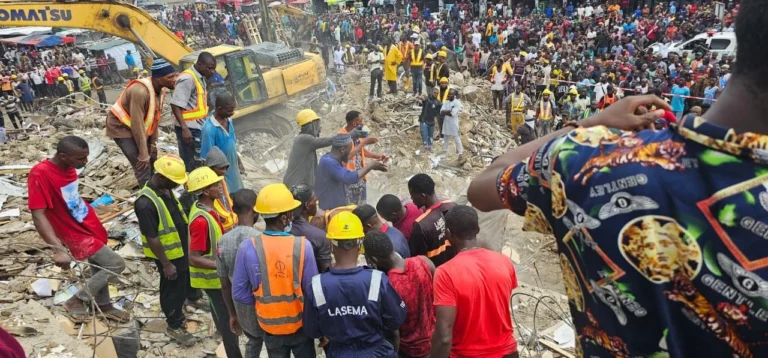
THE Lagos State Emergency Management Agency (LASEMA) has concluded search, rescue and recovery operations at the site of the collapsed two-storey building at Alakija Bus Stop, Satellite Town, rescuing 27 persons alive and recovering nine bodies.

The News Agency of Nigeria (NAN) reports that the building collapsed at about 12:47 p.m. on Thursday in the Amuwo-Odofin area of Lagos.

LASEMA, in a statement issued on Friday by its Head of Public Affairs, Afolabi Olawale, said the agency immediately activated its emergency response teams.

It said its Sharks Response Team from Lekki Base and Alpha Cobra Squad from Onipanu arrived at the scene within 40 minutes alongside other emergency responders.

According to the agency, emergency responders involved in the operation included the Lagos State Fire and Rescue Service, Lagos State Ambulance Service (LASAMBUS) and the Lagos State Traffic Management Authority.

Others are the Lagos State Neighbourhood Safety Corps, Federal Road Safety Corps, Lagos State Building Control Agency (LASBCA), the Nigeria Police Force, the Nigerian Army, the Nigerian Red Cross and the China Civil Engineering Construction Corporation (CCECC).

LASEMA said all 27 rescued victims received immediate pre-hospital care from LASAMBUS before being taken to nearby hospitals for further treatment.

It said the fatalities comprised four adults confirmed dead before emergency responders arrived and five additional victims, including a two-year-old girl, recovered during the rescue operation.

According to the agency, the remains were handed over to the State Environmental Health Monitoring Unit for identification and release to their families.

It said its heavy-duty excavator complemented two excavators deployed by CCECC, enabling responders to safely access trapped victims and complete the operation.

The agency said rescue operations ended at about 4:00 a.m. on Friday after responders reached ground zero.

It added that the Commissioner for Special Duties and Intergovernmental Relations and the Permanent Secretary of the ministry provided strategic oversight throughout the operation.

LASEMA also said Governor Babajide Sanwo-Olu had directed LASBCA to immediately assess the structural integrity of adjoining buildings and enforce compliance with building regulations in the area.

The agency expressed condolences to the families of the deceased and wished the injured speedy recovery.

It urged residents to promptly report distressed buildings to LASBCA or through LASEMA’s toll-free emergency lines, 112 and 767, to help prevent similar incidents. 

The ICIR reports that the incident adds to growing concerns over building safety and enforcement of construction standards in Lagos, where authorities have repeatedly pledged stricter oversight to prevent similar tragedies.

Building collapses remain a recurring challenge in Nigeria’s commercial capital, often linked to structural defects, substandard construction materials, poor regulatory compliance, or inadequate maintenance.

The ICIR reported how regulatory failures fuels building collapses in the state and other parts of Nigeria.

History of building collapses in Lagos

Lagos State has a long history of building collapses and accompanying human casualties and loss of valuables. The ICIR investigation revealed that regulatory failure is largely responsible for these preventable tragedies. The disasters happen almost yearly with alarming tolls.

The ICIR reported how eight building collapsed under the watch of the state former Commissioner for Physical Planning and Urban Development, Idris Salako, a doctor, under whose watch many buildings gave way. He resigned over continuous crumbling of buildings in the state.

The state government often reacts after a building has caved in, with threats to pull down substandard structures.

In 2019, the state government vowed to pull down old buildings at the Ita Faji area of Lagos Island after a three-storey building collapsed.

A two-storey building, located at No. 54 Cole Street, near Cemetery Bus Stop, collapsed in the early hours of Monday, October 27, trapping several occupants under the rubble when many of its occupants were asleep.

A five-storey building fell in the state in April 2023 at Ladipo Oluwole Street in the GRA area of Apapa.

At least five people died after another building gave way on Wilson Mba Street, Arowojobe Estate Maryland in July 2024.

In September 2022, a three-storey building collapsed on Sonuga Street, Palm Avenue, Mushin, Lagos. Two people were rescued from its rubbles.

No fewer than two people died following the collapse of a seven-storey building in the Lekki area of Lagos in September 2022.

What appears the most tragic of building collapse in the state in recent years was the 21-storey building under construction which crumbled and killed its owner and others at the Ikoyi area of the state in November 2021.

All these happened under the watch of successive governments and the Lagos State Building Control Agency (LASBCA) “set up to ensure that basic minimum standards are maintained in building construction and renovation of existing and new buildings to be safe, healthy, accessible and habitable for present and future generations.

“The agency works together with developers/owners to provide a highly quality service and make sure that all buildings are satisfactorily carried out,” according to information on its website.

Climate Story Fund opens applications for documentary filmmakers, podcasters, audio storytellers

INDEPENDENT filmmakers, audio producers, podcasters, and documentary storytellers worldwide are invited to apply for the Climate Story Fund, a global grant programme supporting compelling climate-related storytelling and audience impact campaigns.

The fund, administered by the Climate Story Unit and Doc Society, provides grants of up to $125,000 for nonfiction projects that help audiences imagine a just transition and inspire climate action.

The programme supports documentary films, nonfiction series, radio documentaries, and nonfiction podcasts that explore climate themes and their intersection with issues such as equity, migration, agriculture, conservation, technology, and community resilience.

The Climate Story Fund offers grants of up to $125,000 for production, post-production, and impact campaigns; support for completed projects seeking impact-only funding; funding for documentary films, nonfiction series, radio documentaries, and podcasts; and special encouragement for short documentary films of 40 minutes or less.

Applications are open to emerging and established storytellers worldwide. Eligible applicants include producers, directors, impact producers, independent filmmakers, and audio creators.

The organiser says, “Since its launch in 2021, the Climate Story Fund has awarded millions of dollars to projects across Africa, Latin America, Asia, and other regions, supporting storytellers who are reshaping climate narratives through film, audio, and innovative media”.

The deadline for applications is July 6, 2026. Interested applicants can apply here.

Why Nigeria is failing survivors of sexual and gender-based violence – Dorothy Njemanze

Survivors of sexual and gender-based violence (SGBV) in Nigeria continue to face enormous barriers to justice, medical care and rehabilitation due to systemic failures and inadequate government support, says gender rights advocate Dorothy Njemanze and founder of the Dorothy Njemanze Foundation (DNF). In this exclusive interview with The ICIR, Njemanze, who is also a sexual violence survivor, shares how her personal experiences fueled her passion to protect vulnerable women and children in society.

You’ve devoted much of your life to supporting women and children who have suffered abuse and violence. What inspired this journey, and what keeps you motivated?

I am a survivor of sexual and gender-based violence. I survived child sexual abuse, I survived sexual abuse and intimate partner violence as an adult. And so, for the rest of my life, I will be working on systems that will support vulnerable persons, especially survivors of abuse, to have better access to services and resources and also to prevent these things from happening.

Because if, in the first place, it was prevented, then we wouldn’t need to take action to save lives. So, to do that, the Dorothy Ndemanzi Foundation was born. There was a time, because of the random abduction and gross violation of women and girls in Abuja by the Abuja Environmental Protection Board, we needed to work with an organisation that can sue and be sued, and that birthed the Dorothy Ndemanzi Foundation, which people popularly call DNF.

Now, the majority of the people on the board, the management, and the staff of the organisation are survivors of violence. And with data, we see that the majority of the people who suffer violence are women and children. And the reason is because of the patriarchal culture, ideologies and practices. People justify these ideologies that shrink other human beings or make them relinquish their emotional status or their human rights very often.

One thing we pride ourselves on is that we are grounded in human rights. They say one in three females has experienced sexual violence. One in six children has experienced sexual violence. One in 18 men experienced sexual violence. And so, the question is across the board; it touches everybody, but there should be systems in place that recognise that everybody could be the victim. It could be a male, a female or a child.

Irrespective of who it is, there should be access to whatever resources are needed at a point in time, whether it is for preventive or for responsive.

What steps did you take to heal and turn your experiences into a source of strength and advocacy?

It’s more like experiences because it’s not one experience. Trying to know has expanded my views about a lot of things. It was, first of all, recognising that I am a human being with human rights. It was first of all me recognising that I am an emotional being with human rights and demanding accountability across the board, from everybody I encountered that way. Are there things I still live with? Yes, there’s a lot of depression. There’s a lot of anxiety that comes. I mean, exposure to trauma puts you on a disability spectrum, because in dealing with anxiety, you can’t sleep.

There are medical options for managing it, and that puts you on the disability spectrum. But because of the amount of stigma that exists, a lot of people choose to live in denial.

I prepare for the worst every day, but I try to live the best quality of life every day. I am deliberate about reflections. I am deliberate about what hurts me. I am deliberate about the extent to which things hurt me because many times, living in denial is like covering a sore. I have exposed myself to being open, but at the same time, I have learned to use my voice. I have learned to be assertive. I’ve learned to tell my story myself, and that is what made me take Nigeria to the ECOWAS (Economic Community of West African States) court.

There was a landmark court judgment in which Nigeria was the first country to be pronounced guilty of gender-based violence in the Dorothy Njemanze and three others versus the Federal Republic of Nigeria case.

Can you take us through the journey of establishing the Dorothy Njemanze Foundation and share some of the notable cases you have handled?

It’s a wide range of stories. We handle an average of three cases daily. In a month, there are usually a minimum of 40 active cases. And this is just a non-governmental organisation. We are not law enforcement. We render free confidential services around the clock to survivors of sexual and gender-based violence. We run a survival support centre, a working facility that people can come to and report cases in Abuja.

What we found out with providing medical care is that the medical results are corroborative evidence of whatever these people are going through. And so it helps the legal dynamics of their cases. And I’m proud to be a part of the system that has brought that degree of clarity for a lot of people.

Now, with the police, you still pay to buy a file in many places. You pay to be attended to and to have officers inspect the crime scene or invite the alleged perpetrator. The cost of all of this is on the survivor or the victim, right? Let’s use a two-year-old, for instance. A two-year-old who is raped is expected to foot the full medical and legal bills? All bills, you know, if the two-year-old wants justice. How much does a two-year-old earn? In light of that, imagine now how that affects adults who are expected to be able to look for money. So there’s an unfair burden that is placed on people who want to access justice.

There is now a lot of soft landing for perpetrators. There are many forced settlements, amongst other things. Many people who deserve justice cannot afford the increasingly high cost of accessing justice. Some children have been abused. I mean, one of the things I still cringe about is a three-year-old whom I had encountered saying, ‘Please, it’s itching me.’ I said, “What is itching you? She said, ‘My bum bum is itching me.’ And then, okay, we took her to the hospital. She had tears around her vagina and her anus. And it was her father who was the perpetrator. The child said, ‘Daddy gives me his peepee to eat,’ and this, amongst other things. Now, till today, that matter has not been prosecuted.

We report these matters to law enforcement, but not much is done. There was a matter in which we effected a citizen’s arrest. We dropped the perpetrator off at the NAPTIP office. In December this year, the child who was produced from the rape that led us to effect a citizen’s arrest is going to be six years old. Nothing has been done about that. The last we know of that case was the perpetrator was granted bail. Fine and good. It’s your duty to grant bail. But after granting bail, what happens next? Where does justice go?

In the case of a 12-year-old who was put to bed. We heard that a 10-year-old was about to be married off in Abuja, and so I gave my colleagues an ultimatum to locate the person within 48 hours. Indeed, we traced the child. At the time, the child said she was 11 years old, and she said they were living like husband and wife with the man.

We had heard that the parents had demanded a bride price from the person who got her pregnant to give legitimacy to the pregnancy the child was carrying. He was in his 30s, and the child turned 12 years old in December of 2025. I mean, the Rapid Response Squad of NAPTIP was fantastic and swung into action. We offered antenatal services, and that was the first time the child had been seen for anything related to antenatal care. She was over four months gone at the time, and so the perpetrator came with her to the hospital. We called the Rapid Response Squad, and they picked him up. But they released him on bail. This was done in November 2025. My question is, between November 2025 and April 2026, especially in the case of a minor who has been raped, is something not supposed to have been done?

We sent in several petitions, but none of them has been responded to. And then the perpetrator called my personal number last year, saying that NAPTIP says that his wife is with me, and that they had finished with him, and he’s written his undertaking so he can go and work. For somebody who has passed through NAPTIP to keep calling a child his wife, I worry about the quality of the kind of orientation or reorientation happening in the process of investigation, because there’s a gap.

In the first instance, how did he get my personal phone number? I’m not talking about an office number. And it seemed like I wasn’t giving him the response he wanted. Then he went on social media to the DNF platforms, and he sent messages saying: “You people are with my wife. Can I have my wife? And the office responded, “We don’t know who you’re talking about. Then he had the audacity. He sent a picture of the child as his wife.

Running a survivor support organisation in Nigeria comes with enormous demands. What would you say is the biggest challenge your foundation faces, and what kind of support do you need from the government and the public to sustain the work?

Let me give you an insight. In feeding, for instance, every day, we feed no fewer than 35 people breakfast, lunch, and dinner. Let us peg it at three meals a day at N4,500 a day, per person. Now, times 35, you’re talking about N157,500 a day. When you times this by 30, you get N4,725,000 monthly. Then in a year is N56,700,000. This is feeding alone. This is not a power bill. This is not school fees. This is not medical bills. This is not legal bills. This is not law enforcement engagement. This is not transportation at all. At the end of last year, we celebrated largely when a bus was donated to the organisation. And then by the end of March, the people who provided the bus retrieved their donation. So, it left us stranded.

We mobilise resources through partnerships. Schools have given us partnerships, a lot of people have said, oh, bring survivors, this is the business I do. And now we’re calling on people, are you a techie person, are you a developer? Give us resources and let us empower survivors. A lot of our people are very industrious.

We need to get free medical care, and we need to get health insurance for our survivors. Within the first year, at least, hospitals can help to manage these people. Because I watch people die so often, and it’s not good for us. The vicarious trauma that those of us on the front lines face is very unfair. So, if you have a business, please give us gadgets, you have a farm, give us food. We need resources to be able to support survivors.

Your organisation is based in Abuja, but cases of gender-based violence cut across Nigeria. How can survivors in other states access your services?

All our social media platforms are active. info at dnf.org.ng or communications at dnf.org.ng are emails that are very reliable. And then, Dorothy Njemaze Foundation on Facebook, Dorothy Njemaze Foundation on Instagram, DN Foundation on X, you know, Dorothy Njemaze Foundation on LinkedIn. Our social media platforms are always buzzing with a lot of information. And the information is relevant to all parts of Nigeria. And so please, I encourage everybody to follow, subscribe. The DNF helpline is 07013333307.



1 dead, 2 rescued in Lagos three-storey shopping complex collapse

ONE person has been confirmed dead while two others were rescued after a three-storey shopping complex collapsed Thursday morning in the Alakija area of Ori-Ade Local Council Development Area of Lagos State.

The Lagos State Emergency Management Agency (LASEMA) Permanent Secretary, Olufemi Oke-Osanyintolu confirmed the incident in a statement, noting that emergency responders were making efforts to locate victims feared trapped beneath the rubble.

“To facilitate the rescue efforts, heavy-duty equipment, including an excavator, has been deployed to the site to assist in clearing debris and gaining access to trapped persons,” he said.

Osanyintolu explained that emergency responders were mobilised immediately after distress calls were received, triggering a coordinated rescue operation involving LASEMA, the Lagos State Building Control Agency (LASBCA), and the China Railway Construction Corporation (CRCC).

The LASEMA scribe said that rescue teams successfully pulled two people alive from the debris, while the body of an adult male was later recovered from the collapsed structure.

He added that preliminary assessments indicated that more people could still be trapped beneath the rubble, including shop owners and other occupants who had resumed business activities in the building before it gave way.

He appealed to residents and onlookers to stay away from the scene to allow emergency personnel unrestricted access to conduct life-saving operations.

LASEMA assured the public that verified updates would be provided as rescue efforts continue, noting that investigations would commence after the conclusion of the ongoing rescue operation.

The ICIR reports that the cause of the collapse has not yet been determined, as the incident adds to growing concerns over building safety and enforcement of construction standards in Lagos, where authorities have repeatedly pledged stricter oversight to prevent similar tragedies.

Building collapses remain a recurring challenge in Nigeria’s commercial capital, often linked to structural defects, substandard construction materials, poor regulatory compliance, or inadequate maintenance.

The ICIR reported how regulatory failures fuels building collapses in the state and other parts of Nigeria.

History of building collapses in Lagos

Lagos State has a long history of building collapses and accompanying human casualties and loss of valuables. The ICIR investigation revealed that regulatory failure is largely responsible for these preventable tragedies. The disasters happen almost yearly with alarming tolls.

The ICIR reported how eight building collapsed under the watch of the state former Commissioner for Physical Planning and Urban Development, Idris Salako, a doctor, under whose watch many buildings gave way. He resigned over continuous crumbling of buildings in the state.

The state government often reacts after a building has caved in, with threats to pull down substandard structures.

In 2019, the state government vowed to pull down old buildings at the Ita Faji area of Lagos Island after a three-storey building collapsed.

A two-storey building, located at No. 54 Cole Street, near Cemetery Bus Stop, collapsed in the early hours of Monday, October 27, trapping several occupants under the rubble when many of its occupants were asleep.

A five-storey building fell in the state in April 2023 at Ladipo Oluwole Street in the GRA area of Apapa.

At least five people died after another building gave way on Wilson Mba Street, Arowojobe Estate Maryland in July 2024.

In September 2022, a three-storey building collapsed on Sonuga Street, Palm Avenue, Mushin, Lagos. Two people were rescued from its rubbles.

No fewer than two people died following the collapse of a seven-storey building in the Lekki area of Lagos in September 2022.

What appears the most tragic of building collapse in the state in recent years was the 21-storey building under construction which crumbled and killed its owner and others at the Ikoyi area of the state in November 2021.

All these happened under the watch of successive governments and the Lagos State Building Control Agency (LASBCA) “set up to ensure that basic minimum standards are maintained in building construction and renovation of existing and new buildings to be safe, healthy, accessible and habitable for present and future generations.

“The agency works together with developers/owners to provide a highly quality service and make sure that all buildings are satisfactorily carried out,” according to information on its website.