Home Blog Page 317

Youth minister counters colleague on 2 years NYSC service for corpers

0

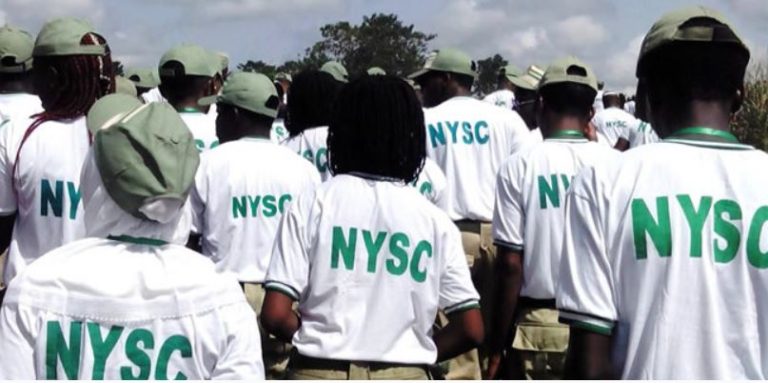
THE Minister of Youth Development, Ayodele Olawande, has called for a comprehensive reform of the National Youth Service Corps (NYSC) programme to better equip corps members with the skills necessary to create jobs and thrive in the modern workforce. 

Olawande, who spoke with journalists, made the remarks during the 2025 Annual Management Conference of the NYSC in Abuja on Monday, April 7.

He stressed the importance of priortising the skill-for-job component in training corps members.

He also complemented the recent calls for reform of the youth service and growing concern among many over the lack of practical training and job readiness among corps members.

He emphasised the need to shift the focus from service to the fatherland, towards empowering corps members with relevant skills and knowledge that would prepare them for life after service. 

He further advocated for a National Internship Scheme that would better prepare corps members for post-service life by providing them with relevant training and certifications that could lead to more fulfilling career opportunities.

“The only way we can make things better, even better than applause and praise, is to reform the NYSC. I’m not saying that things aren’t being done properly, no, I’m not saying that things are not going well,” he said.

While Olawande’s call for reform to make the NYSC’s one year more effective, his stance appeared to contradict the recent proposal from the Minister of Education, Olatunji Alausa. 

On Friday, April 4, Alausa had suggested extending the mandatory service period from one to two years.

Alausa made the call when the NYSC Director-General, Olakunle Nafiu, visited him in Abuja on Friday, April 4.

According to a statement on Saturday, April 5, by the NYSC Public Relations Director, Caroline Embu, the minister advocates for the extension of national service from one to two years.

He believes it will enable the expansion of the NYSC Skill Acquisition and Entrepreneurship Development (SAED) training programme content for corps members.

“You have done so well as an organisation. Let NYSC give people more opportunities to become job creators that will meet the needs of the country,” Alausa told the NYSC boss.

His reaction, however, generated public concern as some Nigerians expressed their displeasure with the proposed extension.

Established in 1973, the NYSC is a programme designed by the Nigerian government to foster national unity, promote patriotism, and equip young people with self-employment skills, among other objectives.

In recent years, various stakeholders have called for the reform of the NYSC to better align it with the skills and training needed by young Nigerians to succeed in the workforce. 

Bauchi Accountant General, others arraigned over N8.3bn fraud

0

THE Economic and Financial Crimes Commission (EFCC) arraigned the Accountant General (AG) of Bauchi State, Sirajo Muhammad Jaja, on Monday, April 7, 2025, before O.A. Egwuatu of the Federal High Court (FHC), sitting in Maitama, Abuja, over alleged N8.3bn fraud.

Jaja was arraigned alongside a bureau de change operator, Aliyu Abubakar, and his company, Jasfad Resources Enterprise.

According to a statement released by the EFCC through its head, media and publicity, Dele Oyewale, on Monday, others involved in the case, who are currently at large, include a former Secretary to the Bauchi State Government, Ibrahim Kashim; the incumbent SSG, Aminu Hammayo, Saleh U. Mohammed; and Balarabe Abdullahi.

The defendants are facing a nine-count charge paon money laundering, diversion of public funds, and criminal misappropriation of funds to the tune of N8. 3 billion.

They pleaded not guilty to all charges, following which prosecution counsel, Abba Mohammed, a senior advocate, requested a trial date and urged the court to remand them to a correctional facility, while defence counsel, Mohammed Ndayako, also a senior advocate representing the first and second defendants, and Chris Uche, senior advocate, representing the third defendant, moved for their bail.

Uche told the court that the third defendant, the Accountant General of Bauchi State, played a central role in the state’s financial operations and was already on administrative bail.

He urged the court to grant him bail on self-recognition or release him to the Attorney General of Bauchi State, who would undertake to produce him in court.

The prosecution counsel, in opposing the applications, drew the attention of the court to the fact that the first defendant had previously jumped administrative bail and further informed the court that the third defendant did not reside in Abuja, which made him a flight risk.

“We filed a 17-paragraph counter-affidavit on April 4, 2025, deposed to by Ogundana Peter Kolawole, alongside a written address. We adopt both and urge the court to refuse the third defendant’s application for bail,” he said.

After hearing the arguments from both sides, Egwuatu granted bail to the defendants in the sum of N200 million each with two sureties in like sum.

The sureties, the court held,  must be residents of Abuja, of which one must be a federal government employee not below Grade Level 17 and must present evidence of tax payment for the past three years.

The court further held that the defendants must deposit their passports with the court registrar.

Pending the perfection of their bail conditions, the third defendant was released to the Attorney General of Bauchi State, Hassan L. Yakubu, while Jaja, the first defendant, was remanded in Kuje Correctional Centre, Abuja.

The matter was adjourned till June 17, 2025, for the commencement of trial.

Ndume to Tinubu: Your appointments violating federal character

0

THE SENATOR representing Borno South, Ali Ndume, has urged President Bola Ahmed Tinubu to adhere to the federal character principle in political appointments, warning that failure to do so could have repercussions in the future.

Ndume, who criticised President Tinubu for what he termed a failure to adhere to the federal character principle in political appointments, stressed that such actions are necessary to ensure equitable representation for all Nigerians.

The lawmaker who appeared on Arise TV’s Prime Time, late Monday, insisted that the current appointments do not comply with the federal character principle by the law,  accusing the President of violating the constitutional mandate for fair representation in government appointments.

“The figures are there. It’s not that I’m just making accusations. And it’s not that I’m saying, well, the president has no right to do that kind of thing. When you look at it vis-a-vis the appointments made so far, and there are political appointments, the constitution is very clear,” he said.

Ndume referred to Section 14(3) of the 1999 Constitution, which stipulates that political appointments should mirror the country’s diversity.

“It is because of avoiding such infractions that the constitution clearly states that appointments, especially political appointments, should reflect the federal character, and that is not the case here.

“And all I am saying is to call the attention of Mr President to such infractions so that it can be corrected; otherwise, you know, these things can boomerang at a certain period”, Ndume stated.

Ndume, a senior member of the National Assembly, emphasised that his remarks were not intended as a personal attack on the President, but rather as part of his responsibility as a lawmaker.

“I know, as you rightly say, people look at me as somebody critical of the government. I have the right to do that in the first place. And in fact, that’s why I’m in the National Assembly in the first place.

“Collectively, we are supposed to oversight the acts of Mr President and point out some of these irregularities. That is what we swore to do. It’s not personal”, he added.

Ndume further expressed concerns that his comments might provoke attacks from individuals loyal to the President, stating, “But from tomorrow, those so-called Tinubu boys or people will start attacking Ndume. These are the facts.”

“Each one of us will stand before God, and God will ask him to account for what he is responsible for. Besides, we are all in this government. What will we tell our people? When you have these figures out, it is already viral, it is already in circulation.

“But you know what, after this interview, those attack dogs or maga-dogs will start attacking Ndume, not the message.

The ICIR reports that on March 28, President Tinubu appointed Felix Morka, the National Publicity Secretary of the All Progressives Congress (APC), as Board Chairman of the Nigerian Television Authority (NTA).

Tinubu approved the appointment of Fatuhu Mohammed Buhari from Katsina State as Director-General of the National Agricultural Seed Council and other Nigerians as board chairmen of various federal government institutions.

The federal government’s latest pending nominations and appointments, reported on April 6, indicate that screening has begun for applicants to diplomatic posts across all 109 missions, including 11 international consulates, 22 high commissions, and 76 embassies.

Although the names of all nominees remain confidential,  presidency sources reveal that the list includes a mix of career diplomats and political appointees.

According to reports, former Minister of Aviation under the Obasanjo administration, Femi Fani-Kayode, and former Deputy Governor of Lagos State, Femi Pedro, are among the nominees. Other names reportedly under consideration include Fola Adeola, founder of Guaranty Trust Bank.


Diamond Bank founder Pascal Dozie dies at 85

PASCAL Dozie, the founder of the defunct Diamond Bank Plc and a former chairman of MTN Nigeria, has died

The business leader reportedly passed away in the early hours of Tuesday at the age of 85, according to a statement released by his family on Tuesday, April 8, 2025.

The statement from his son, Uzoma Dozie, who represents the family reads, “With deep sorrow, but with gratitude to God for a life well spent, we announce the passing of our beloved father, Pascal Gabriel Dozie, on 8th April 2025.

“He was a devoted husband, father, grandfather, and a man of unwavering Catholic faith. His life was marked by service–to God, his family, and his country.”

Dozie played a critical role in Nigeria’s banking and telecom industries. In 1990, he founded Diamond Bank, which became one of Nigeria’s most respected financial institutions before its eventual merger with Access Bank. He later handed over the management of the bank to his son, Uzoma who was the chief executive officer at the time the bank was merged with Access Bank.

Furthermore, Dozie was instrumental in the launch of MTN Nigeria, serving as its pioneering chairman and playing a key role in the country’s telecommunications revolution.

“He is survived by his loving wife, Chinyere, his children, grandchildren, and all who were blessed to know him.

“We thank God for the gift of his life and the legacy he leaves behind. May his soul rest in perfect peace,” Uzoma stated.

His son said he was born April 9, 1939 in Egbu, Owerri, Imo State and was raised in a Catholic home.

Acting VCs, Rectors, must resign before seeking permanent roles—FG

0

THE Federal Government has barred acting Vice Chancellors, Rectors, and Provosts from applying for substantive leadership positions in their institutions unless they resign from their current acting roles. 

The directive, contained in a circular dated April 28, 2025 and signed by the Ministry of Education Director, Press and Public Relations Boriowo Folasade, noted that the new policy is aimed at eliminating the unfair advantage acting heads often wield during selection processes.

According to the circular, anyone serving in the capacity of an acting Vice Chancellor, Rector, or Provost shall not be eligible to apply for the substantive position while still holding the acting appointment.

The government mandated that to be eligible for appointment into any of these principal offices, an acting head must voluntarily step aside before the end of their non-renewable six-month acting tenure.

“This policy has become necessary following a pattern of undue advantage observed over the years, where officers serving in acting capacities often leverage their positions to influence appointment outcomes, thereby compromising the fairness and transparency of the selection process.

“To eliminate this practice, ensure a level playing field for all qualified candidates, and strengthen institutional governance, the policy stipulates that any officer serving in an acting capacity as Vice Chancellor, Rector, or Provost shall not be eligible to apply for the substantive position while still holding the acting appointment. However, in the interest of fairness, such officers may choose to recuse themselves from their acting positions before the expiration of their non-renewable six-month tenure, thereby becoming eligible to apply for the substantive roles,” the circular read in part.

The circular further noted  that the policy is intended to complement the existing 2013 Federal Guidelines, along with all other extant regulations on the Appointment of Vice Chancellors, Rectors, and Provosts.

“Governing Councils, Managements, and relevant stakeholders are hereby requested to ensure strict compliance with the new directive. For clarity and ease of implementation, the policy document is enclosed as Annex I, while the 2013 Guidelines are enclosed as Annex II,” it added.

The ICIR reports that this move followed widespread allegations that some acting heads use their positions to manipulate internal systems, intimidate competitors, and influence the appointment process in their favour. 

Over the years, critics have described the system as skewed, giving incumbents undue access to resources and decision-makers that tilt outcomes before the selection process even begins.

In October 2024, UNIZIK’s Governing Council appointed Professor Bernard Odoh as the university’s seventh substantive Vice-Chancellor. However, this appointment was marred by allegations of procedural irregularities and concerns about Odoh’s academic credentials. 

The Federal Ministry of Education nullified the appointment, citing breaches in the selection process and discrepancies in Odoh’s professorship claims. 

Subsequently, President Bola Tinubu dissolved the university’s Governing Council over the controversy.

Similarly, UNIABUJA faced turmoil in late 2024 during the appointment of its Vice-Chancellor. The Governing Council’s selection of Professor Aisha Maikudi was contested by some senate members and council members, who alleged that the selection process was manipulated to favor Maikudi.

Some university senior officials had accused the governing council of favouring Maikudi, alleging that she lacked the required years of experience necessary for the position of vice-chancellor.

Consequently, Tinubu sacked her and dissolved the institution’s governing council.

Foreign Affairs Ministry debunks claims of Saudi entry ban on Nigeria

0

THE Ministry of Foreign Affairs has dismissed online rumours that Nigeria is among 14 countries banned from entering Saudi Arabia starting April 13, 2025, insisting that the only official travel guidelines currently in effect relate to the Hajj pilgrimage, 

The ministry said that the only official restriction applies to holders of tourist visas during the Hajj season, noting that from April 29 to June 11, 2025, individuals with tourist visas will not be allowed to enter Makkah or perform Hajj.

In a statement issued on Monday, April 7, by the media aide to the Minister of Foreign Affairs, Alkasim Abdulkadir, the ministry explained that the claims being peddled in some quarters are false, adding that Saudi authorities have also confirmed that no such entry ban is in place.

“The Ministry of Foreign Affairs wishes to categorically refute the false claims circulating online, alleging that Nigeria has been included in a list of countries facing an entry ban into Saudi Arabia from April 13, 2025”, the statement reads. 

The ICIR reports that a social media post surfaced online over the weekend, alleging that Saudi Arabia has imposed a visa ban on Nigeria, 13 others ahead of the Hajj.

Saudi Arabia has announced a significant change to its visa policy, restricting nationals from 14 countries, including Nigeria, from applying for new short-term visas. The restriction, which takes effect on 13 April 2025, impacts multiple visa categories, including business visas (both single and multi-entry), tourist e-visas, and family visit visas.

According to the official notice, Nigerian nationals currently holding valid Saudi visas may continue travelling to the Kingdom until 13 April 2025, but must exit no later than 29 April. After this deadline, affected individuals face potential penalties, including a possible 5-year ban from entering the country” the post said. 

The social media post referenced a Gulf News report, claiming that Saudi authorities introduced the entry ban as part of efforts to manage travel ahead of the 2025 Hajj season, emphasising that other countries affected include Egypt, Morocco, Algeria, Sudan, Ethiopia, India, Tunisia, Yemen, Jordan, Iraq, Indonesia, Pakistan, and Bangladesh.

However, in its latest statement, the Ministry of Foreign Affairs noted that the Saudi Tourism Centre stated that the viral memo, which suggested that several countries, including Nigeria, Egypt, India, and Pakistan, would face visa restrictions, was untrue.

“The Saudi Arabian authorities have officially denied the validity of this viral memo, which falsely claims that several countries, including Nigeria, Egypt, India, Pakistan, and others, would be subject to visa restrictions and an entry ban.

“The Saudi Tourism Centre has confirmed that no such directive exists and that the only official travel guidelines currently in place pertain to the Hajj pilgrimage,” the statement read.

“For clarity, the only restriction applies to tourist visa holders during the Hajj season. Individuals holding a tourist visa are not permitted to perform Hajj, enter, or stay in Makkah between April 29 and June 11, 2025 (corresponding to 01 Thul Quda to 14 Thul Hijjah 1446 AH),” the statement clarified.

The ministry urged Nigerians to ignore the misleading document and stressed the importance of confirming travel information through official and authorised channels.

The ministry encouraged travelers to consult the Nigerian Ministry of Foreign Affairs or Saudi government sources for accurate, up-to-date information and reiterated the importance of verifying travel details from official sources before taking any action.

“The ministry urges the public to disregard the misleading document and to always verify travel information from official sources before taking action. Spreading unverified information can cause unnecessary confusion and disrupt travel plans,” the statement read.

The ICIR reports that Hajj is the sacred pilgrimage performed by Muslims at the holy mosque of Masjid al-Haram in Makkah, Saudi Arabia. 

Hajj is a spiritual duty in Islam and one of its five pillars, making it obligatory for every Muslim to undertake at least once in their lifetime, provided they are financially, physically, and emotionally able to do so.

Hajj follows the Islamic lunar calendar and takes place during the month of Dhul Hijjah, the twelfth month. It begins on the 8th of Dhul Hijjah and lasts until the 13th of Dhul Hijjah.

This year, Hajj is expected to occur between June 4 and June 9, 2025, on the Gregorian calendar, depending on the sighting of the moon.


How many more? Tinubu frequent trips to France raise eyebrows

PRESIDENT Bola Ahmed Tinubu frequent trips to France, the eighth of which began on Wednesday, April 2, have drawn criticism from some Nigerians, who question their necessity amid pressing domestic challenges.

Data gathered by The ICIR indicates that since his inauguration in 2023, the President has embarked on at least 38 international trips, frequently described as official or private, with France being the most frequently travelled.

In a statement released on Wednesday, April 2, by Bayo Onanuga, the Special Adviser to the President on Information and Strategy, the President’s latest journey was described as a working trip intended to review the administration’s mid-term performance.

The statement noted that the trip provides the President with an opportunity to reflect on ongoing reforms and assess key national development priorities for the coming year.

“He will also use the retreat to review the progress of ongoing reforms and engage in strategic planning ahead of his administration’s second anniversary,” the statement added.

It further stated that President Tinubu will also meet with French President Emmanuel Macron during this trip.

It is worth recalling that the two leaders previously met in February during President Tinubu’s earlier visit to the country, described as a “private visit.”

The ICIR reports that President Tinubu has made eight publicly acknowledged trips to France thus far.

Tinubu many visits to France

In 2023, just weeks after taking office, President Tinubu made his first international trip to France for the New Global Financial Pact Summit.

Shortly afterwards, the President visited France again in September 2023 for a short break.

In January 2024, President Bola Tinubu went to France, for a private visit. His then spokesman Ajuri Ngelale stated that the trip which commenced January 24 will see the president returning in the first week of February, 2024.

He also embarked on a brief working stay in France in August 2024, departing from Abuja, the nation’s capital.

Not long after, Tinubu travelled from London, United Kingdom and to Paris, France, in October 2024. This time according to his spokesperson, was part of his two weeks leave.

A month later in November 2024, the President, accompanied by the First Lady, Oluremi Tinubu, undertook a three-day state visit to France.

In February 2025, he travelled to France on a private visit before proceeding to Addis Ababa to join other African leaders for the 46th Ordinary Session of the Executive Council and the 38th Ordinary Session of the AU Heads of State Assembly.

He is currently on his eight trip which he embarked on this April.

Tinubu international travels

Data gathered by The ICIR indicates that since his inauguration in 2023, the President has embarked on at least 38 international trips, frequently described as official or private, and often aimed at strengthening Nigeria’s bilateral ties with other nations.

In 2023, he travelled abroad 13 times, followed by 19 trips in 2024, and 6 in 2025, with France being the most frequently visited country.

However, some Nigerians have expressed concerns about the President’s frequent trips.

Following his recent travel, Olabode George, former Deputy National Chairman of the Peoples Democratic Party (PDP), strongly criticised the President for travelling to France amid escalating security challenges in Nigeria.

George expressed deep concern over the state of the nation in a statement, accusing those in power of disregarding reason and pursuing policies that could push Nigeria towards disintegration.

He said, “Today, and with the series of crises, insecurity, hunger, joblessness, and other vices in the country, President Bola Tinubu has taken off to Paris, France, for reasons best known to him and his handlers.”

Similarly, human rights activist Omoyele Sowore criticised the President for prioritising a trip to France over pressing national issues, such as the recent killings in Edo State.

“There is a crisis in Edo State and other parts of the country and the President travels to France on a working visit.”

Shehu Gazali Sadiq, a public opinion commentator, also posted on his X (formerly Twitter) handle, “How many times in a year will Tinubu jet out to France for what his l**rs call ‘a working visit’? So they rigged elections for Tinubu to be working in France every other day. Nigeria is broke, yet money is being wasted on an old sickly man who does nothing…”

It is worth noting that the President undertook a medical trip to France before assuming office.

You can stay updated on Tinubu travels, via The ICIR Tinubu travel tracker. 

Sowore condemns police action against protesters in Abuja

0

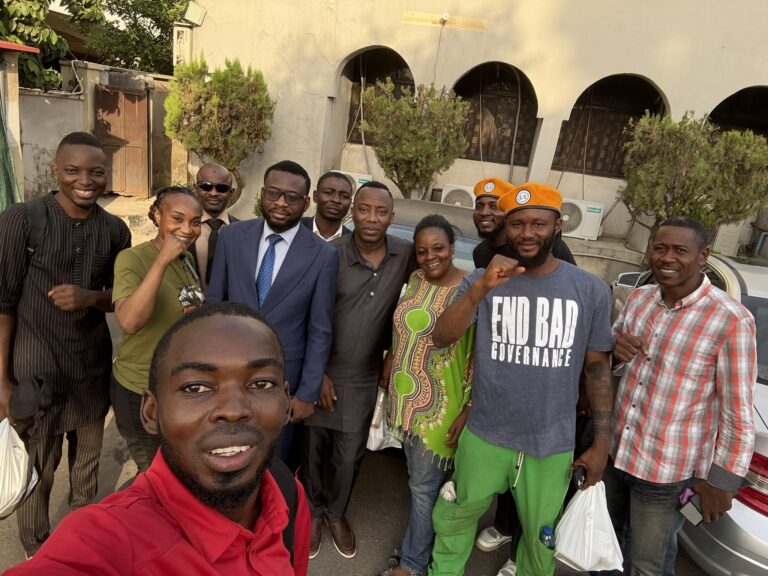
HUMAN rights activist and the 2023 presidential candidate of the African Action Congress (AAC), Omoyele Sowore, has condemned the Nigeria Police Force (NPF) for the arrest and alleged torture of protesters during demonstrations in Abuja on Monday, April 7.

In a post on his X  handle, Sowore said security agents attacked peaceful protesters who demanded the repeal of the controversial Cybercrime Act and arrested several activists, including a campaigner known as @FlagboyFCTabuja.

Abuja experienced a tumultuous day in the wake of earlier protests and unprovoked attacks on activists during the  #RepealTheCyberCrimeAct. 

“Law enforcement officials at the ignoble @policeng arrested some of our comrades, including @FlagboyFCTabuja, who were subjected to torture and dehumanisation before being taken into custody at the infamous Abattoir Police station,” Sowore wrote.

He, however, confirmed that all those arrested were released same day, accompanying the post with pictures of their release.

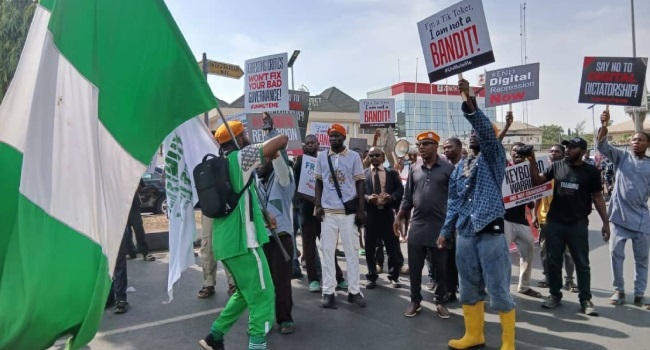
The protest in Abuja was part of the planned nationwide action by the Take It Back Movement, which staged demonstrations in several cities, including Lagos, Port Harcourt, and Ibadan, demanding the repeal of the Cybercrime Act.

The Cybercrime Act, it would be noted, has faced increasing criticism from civil society groups, Nigerians, and journalists who accuse the government of using it to stifle dissent and suppress press freedom.

Earlier on Monday, The ICIR reported that police officers fired tear gas to disperse protesters in Abuja and Port Harcourt. 

In Abuja’s Maitama district, for instance, police cracked down on demonstrators, according to reports.

The police had described the protest as “ill-timed and mischievous,” claiming it was aimed at maligning the force on a day declared by the federal government as National Police Day.

The Police believed that holding protests on such a significant day could ‘malign its image and the nation as a whole.’

“In line with best global practices adopted by nations in celebrating the achievements of their Police institution, the Nigerian government has taken the bull by the horns by declaring every April 7 as National Police Day. 

“The rationale behind staging a nationwide protest on the same day is, however, questionable and perceived to be a deliberate attempt and unpatriotic act that is capable of rubbishing and maligning the image of the Nigeria Police and the nation as a whole,” police said in a statement on Sunday.

However, members of the Take It Back Movement, on Monday, proceeded with the protest in parts of the country.

In Lagos, the demonstrators could be seen (archived here) raising placards and banners that read ‘any law that forbids us from speaking out truths against oppression in Nigeria is no longer a law but shackles of slavery.’

In Ibadan, Oyo State, protesters marched through the streets with banners calling for ‘good governance and the total repeal of the Cybercrime Act.’

Amnesty International slams Nigerian security forces over crackdown on protesters

0

AMNESTY International (AI) Nigeria has slammed the attacks by Nigerian security forces on protesters in Port Harcourt, Rivers State, and Abuja.

AI also condemned the attack on protesters in Damaturu, Yobe State.

The global human rights organisation described the attacks as alarming and unacceptable.

AI, in a statement released on its X handle on Monday, April 7, said it is deeply concerned by security forces’ attacks on protesters.

“Amnesty International is deeply concerned by security forces’ attacks on protesters in Abuja and Port Harcourt. Protesters and journalists were beaten in Port Harcourt.

“In Damaturu, Yobe state, 4 activists have been unlawfully arrested. These atrocities are unacceptable & must be investigated,the group tweeted.

The ICIR reported that operatives of the Nigeria Police Force (NPF), on Monday, April 7, fired tear gas canisters at protesters in Port Harcourt and Abuja, disrupting a demonstration organised by the Take It Back Movement.

The protesters had converged at Isaac Boro Park in Port Harcourt, Rivers state, around 9 am to demand the repeal of the Cybercrime Act and call for responsible leadership, but were met by a heavy deployment of police officers who insisted the protest would not hold, according to a Channels Television report.

In Abuja, the Punch reported that the FCT police dispersed protesters, who had gathered peacefully to express their grievances, with tear gas in the Maitama area of the capital city.

The ICIR reported that the crackdown came barely 24 hours after the NPF issued a statement urging the group to shelve the planned protest, describing it asill-timed and mischievous.’

The police said the protest coincided with National Police Day,  a newly declared holiday set aside by the federal government to honour police officers.

Force Public Relations Officer, Assistant Commissioner of Police (ACP) Olumuyiwa Adejobi, in a statement issued on Sunday, April 6, had accused the organisers of attempting tomalignthe image of the police, warning that the demonstration could disrupt official activities attended by both local and international dignitaries.

The Police believed that holding protests on such a significant day couldmalign the image of the Nigeria Police and the nation as a whole.’

However, members of the Take It Back Movement, on Monday, proceeded with the protest in parts of the country.

In Lagos, the demonstrators could be seen (archived here) raising placards and banners that read,Any law that forbids us from speaking out truths against oppression in Nigeria is no longer a law but shackles of slavery.’

In Ibadan, Oyo State, protesters marched through the streets with banners calling forgood governance and the total repeal of the Cybercrime Act.’

According to pictures and videos shared from the locations by the movement on its X page, the protests have been peaceful without threat from the security operatives.  The Take It Back Movement, a civic group known for its vocal criticism of government policies, had announced mass protests across several states, including the Federal Capital Territory. 

The demonstration, according to the group, is aimed at drawing attention to thebad governanceand shrinking civic space in Nigeria. According to one of the organisation’s announcements on social media, theCybercrime Act creates an environment of fear and censorship. We must #RepealCyberCrimeAct for a free Nigeria!”

Supreme court judgement: Abure faction alleges plot to invade LP national secretariat

0

THE Julius Abure faction of the Labour Party (LP) has raised alarm over an alleged plan by the Nigeria Labour Congress (NLC), the National Caretaker Committee (NCC), and the National Transition Committee (NTC) to invade the party’s national secretariat in Abuja.

This was disclosed by the National Secretary of the LP, Umar Farouk Ibrahim, in a statement issued on Sunday, April 7.

He said the target of the invasion is to cart away sensitive documents and also damage the properties belonging to the party.

The LP national secretary stated that the planned action could disrupt peace in the Federal Capital Territory (FCT) and viewed it as an irresponsible act and a sign of desperation for the  NLC.

He also accused the NLC of engaging in partisan politics, which is prohibited by its founding laws, and cited past instances where the union allegedly mobilised thugs to attack the party’s national headquarters and vandalise its properties.

It must be noted that the judgement of the Supreme Court delivered on the 5th of April, 2025, is very clear and unambiguous. The judgement simply mandates political parties to always resolve their crisis using internal mechanisms and that the issue of leadership is an internal affair of the political parties.

“There is nowhere in the judgement that gave NLC, the National Caretaker Committee, or any other body by whatever nomenclature to take over the leadership of the Labour Party,Ibrahim stated.

He stated that Abure remains the national chairman after being validly elected at a March 2024 convention and warned that any attempt to forcibly take over the leadership would be resisted.

The faction urged security agencies, including the police and the Department of State Service (DSS), to prevent any activities that could disrupt peace in the FCT. They also called for the arrest and prosecution of anyone behind such actions, regardless of their position.

The ICIR reports that the Supreme Court sacked Abure as the national chairman of the LP on Friday, April 4.

The court set aside the judgment of the Court of Appeal in Abuja, which recognised Abure as chairman of LP.

The apex court in a unanimous judgment held that the Court of Appeal lacked the jurisdiction to declare Abure as the national chairman of the LP, having earlier decided that the case was about the party’s leadership.

The Supreme Court ruled in favour of Nenadi Usman, a former senator who heads the caretaker committee of the LP.

INEC had earlier claimed that the LP’s national convention held in Nnewi violated the Nigerian Constitution and Electoral Act and failed to meet legal requirements.

The electoral body claimed Abure’s tenure as LP chairman expired in June 2024 and refused to recognise him as the party’s national chairman.

The commission stated this in response to a lawsuit filed by the LP challenging its exclusion from INEC’s refresher training for uploading party agents ahead of the Edo and Ondo governorship elections.

The INEC’s legal team, led by Tanko Inuwa, a senior advocate, said that the LP’s lawsuit seeking declaratory reliefs would not be granted.