Home Blog Page 318

Foreign Affairs Ministry debunks claims of Saudi entry ban on Nigeria

0

THE Ministry of Foreign Affairs has dismissed online rumours that Nigeria is among 14 countries banned from entering Saudi Arabia starting April 13, 2025, insisting that the only official travel guidelines currently in effect relate to the Hajj pilgrimage, 

The ministry said that the only official restriction applies to holders of tourist visas during the Hajj season, noting that from April 29 to June 11, 2025, individuals with tourist visas will not be allowed to enter Makkah or perform Hajj.

In a statement issued on Monday, April 7, by the media aide to the Minister of Foreign Affairs, Alkasim Abdulkadir, the ministry explained that the claims being peddled in some quarters are false, adding that Saudi authorities have also confirmed that no such entry ban is in place.

“The Ministry of Foreign Affairs wishes to categorically refute the false claims circulating online, alleging that Nigeria has been included in a list of countries facing an entry ban into Saudi Arabia from April 13, 2025”, the statement reads. 

The ICIR reports that a social media post surfaced online over the weekend, alleging that Saudi Arabia has imposed a visa ban on Nigeria, 13 others ahead of the Hajj.

Saudi Arabia has announced a significant change to its visa policy, restricting nationals from 14 countries, including Nigeria, from applying for new short-term visas. The restriction, which takes effect on 13 April 2025, impacts multiple visa categories, including business visas (both single and multi-entry), tourist e-visas, and family visit visas.

According to the official notice, Nigerian nationals currently holding valid Saudi visas may continue travelling to the Kingdom until 13 April 2025, but must exit no later than 29 April. After this deadline, affected individuals face potential penalties, including a possible 5-year ban from entering the country” the post said. 

The social media post referenced a Gulf News report, claiming that Saudi authorities introduced the entry ban as part of efforts to manage travel ahead of the 2025 Hajj season, emphasising that other countries affected include Egypt, Morocco, Algeria, Sudan, Ethiopia, India, Tunisia, Yemen, Jordan, Iraq, Indonesia, Pakistan, and Bangladesh.

However, in its latest statement, the Ministry of Foreign Affairs noted that the Saudi Tourism Centre stated that the viral memo, which suggested that several countries, including Nigeria, Egypt, India, and Pakistan, would face visa restrictions, was untrue.

“The Saudi Arabian authorities have officially denied the validity of this viral memo, which falsely claims that several countries, including Nigeria, Egypt, India, Pakistan, and others, would be subject to visa restrictions and an entry ban.

“The Saudi Tourism Centre has confirmed that no such directive exists and that the only official travel guidelines currently in place pertain to the Hajj pilgrimage,” the statement read.

“For clarity, the only restriction applies to tourist visa holders during the Hajj season. Individuals holding a tourist visa are not permitted to perform Hajj, enter, or stay in Makkah between April 29 and June 11, 2025 (corresponding to 01 Thul Quda to 14 Thul Hijjah 1446 AH),” the statement clarified.

The ministry urged Nigerians to ignore the misleading document and stressed the importance of confirming travel information through official and authorised channels.

The ministry encouraged travelers to consult the Nigerian Ministry of Foreign Affairs or Saudi government sources for accurate, up-to-date information and reiterated the importance of verifying travel details from official sources before taking any action.

“The ministry urges the public to disregard the misleading document and to always verify travel information from official sources before taking action. Spreading unverified information can cause unnecessary confusion and disrupt travel plans,” the statement read.

The ICIR reports that Hajj is the sacred pilgrimage performed by Muslims at the holy mosque of Masjid al-Haram in Makkah, Saudi Arabia. 

Hajj is a spiritual duty in Islam and one of its five pillars, making it obligatory for every Muslim to undertake at least once in their lifetime, provided they are financially, physically, and emotionally able to do so.

Hajj follows the Islamic lunar calendar and takes place during the month of Dhul Hijjah, the twelfth month. It begins on the 8th of Dhul Hijjah and lasts until the 13th of Dhul Hijjah.

This year, Hajj is expected to occur between June 4 and June 9, 2025, on the Gregorian calendar, depending on the sighting of the moon.

 

How many more? Tinubu frequent trips to France raise eyebrows

PRESIDENT Bola Ahmed Tinubu frequent trips to France, the eighth of which began on Wednesday, April 2, have drawn criticism from some Nigerians, who question their necessity amid pressing domestic challenges.

Data gathered by The ICIR indicates that since his inauguration in 2023, the President has embarked on at least 38 international trips, frequently described as official or private, with France being the most frequently travelled.

In a statement released on Wednesday, April 2, by Bayo Onanuga, the Special Adviser to the President on Information and Strategy, the President’s latest journey was described as a working trip intended to review the administration’s mid-term performance.

The statement noted that the trip provides the President with an opportunity to reflect on ongoing reforms and assess key national development priorities for the coming year.

“He will also use the retreat to review the progress of ongoing reforms and engage in strategic planning ahead of his administration’s second anniversary,” the statement added.

It further stated that President Tinubu will also meet with French President Emmanuel Macron during this trip.

It is worth recalling that the two leaders previously met in February during President Tinubu’s earlier visit to the country, described as a “private visit.”

The ICIR reports that President Tinubu has made eight publicly acknowledged trips to France thus far.

Tinubu many visits to France

In 2023, just weeks after taking office, President Tinubu made his first international trip to France for the New Global Financial Pact Summit.

Shortly afterwards, the President visited France again in September 2023 for a short break.

In January 2024, President Bola Tinubu went to France, for a private visit. His then spokesman Ajuri Ngelale stated that the trip which commenced January 24 will see the president returning in the first week of February, 2024.

He also embarked on a brief working stay in France in August 2024, departing from Abuja, the nation’s capital.

Not long after, Tinubu travelled from London, United Kingdom and to Paris, France, in October 2024. This time according to his spokesperson, was part of his two weeks leave.

A month later in November 2024, the President, accompanied by the First Lady, Oluremi Tinubu, undertook a three-day state visit to France.

In February 2025, he travelled to France on a private visit before proceeding to Addis Ababa to join other African leaders for the 46th Ordinary Session of the Executive Council and the 38th Ordinary Session of the AU Heads of State Assembly.

He is currently on his eight trip which he embarked on this April.

Tinubu international travels

Data gathered by The ICIR indicates that since his inauguration in 2023, the President has embarked on at least 38 international trips, frequently described as official or private, and often aimed at strengthening Nigeria’s bilateral ties with other nations.

In 2023, he travelled abroad 13 times, followed by 19 trips in 2024, and 6 in 2025, with France being the most frequently visited country.

However, some Nigerians have expressed concerns about the President’s frequent trips.

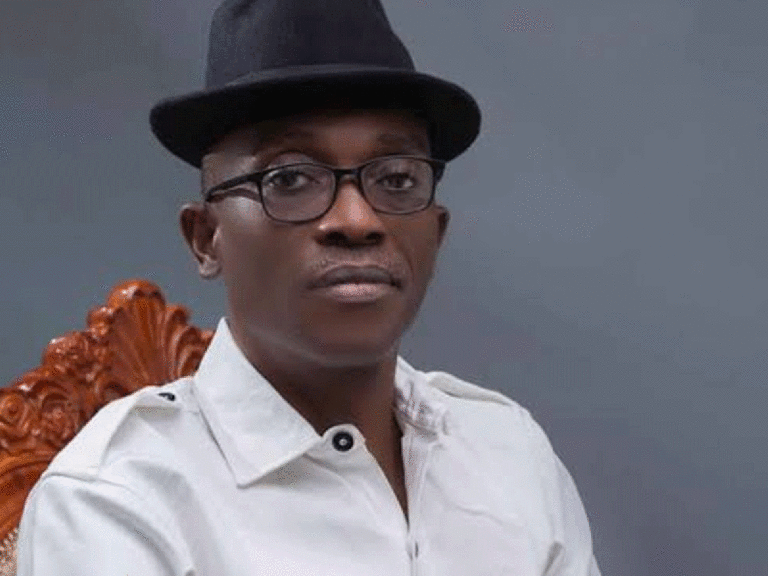
Following his recent travel, Olabode George, former Deputy National Chairman of the Peoples Democratic Party (PDP), strongly criticised the President for travelling to France amid escalating security challenges in Nigeria.

George expressed deep concern over the state of the nation in a statement, accusing those in power of disregarding reason and pursuing policies that could push Nigeria towards disintegration.

He said, “Today, and with the series of crises, insecurity, hunger, joblessness, and other vices in the country, President Bola Tinubu has taken off to Paris, France, for reasons best known to him and his handlers.”

Similarly, human rights activist Omoyele Sowore criticised the President for prioritising a trip to France over pressing national issues, such as the recent killings in Edo State.

“There is a crisis in Edo State and other parts of the country and the President travels to France on a working visit.”

Shehu Gazali Sadiq, a public opinion commentator, also posted on his X (formerly Twitter) handle, “How many times in a year will Tinubu jet out to France for what his l**rs call ‘a working visit’? So they rigged elections for Tinubu to be working in France every other day. Nigeria is broke, yet money is being wasted on an old sickly man who does nothing…”

It is worth noting that the President undertook a medical trip to France before assuming office.

You can stay updated on Tinubu travels, via The ICIR Tinubu travel tracker. 

Sowore condemns police action against protesters in Abuja

0

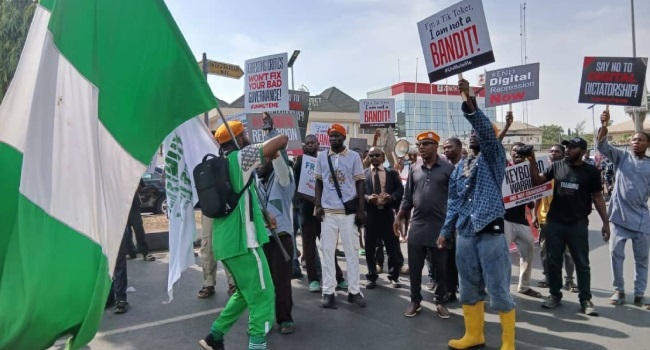
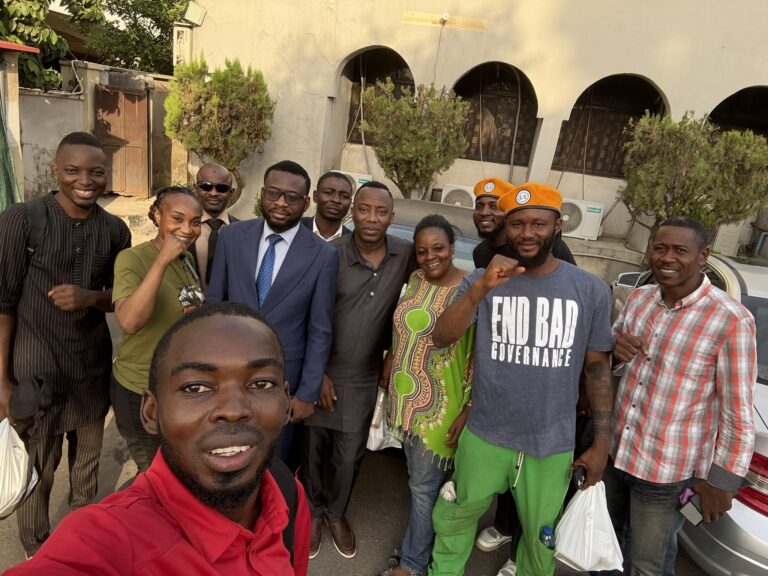
HUMAN rights activist and the 2023 presidential candidate of the African Action Congress (AAC), Omoyele Sowore, has condemned the Nigeria Police Force (NPF) for the arrest and alleged torture of protesters during demonstrations in Abuja on Monday, April 7.

In a post on his X  handle, Sowore said security agents attacked peaceful protesters who demanded the repeal of the controversial Cybercrime Act and arrested several activists, including a campaigner known as @FlagboyFCTabuja.

Abuja experienced a tumultuous day in the wake of earlier protests and unprovoked attacks on activists during the  #RepealTheCyberCrimeAct. 

“Law enforcement officials at the ignoble @policeng arrested some of our comrades, including @FlagboyFCTabuja, who were subjected to torture and dehumanisation before being taken into custody at the infamous Abattoir Police station,” Sowore wrote.

He, however, confirmed that all those arrested were released same day, accompanying the post with pictures of their release.

The protest in Abuja was part of the planned nationwide action by the Take It Back Movement, which staged demonstrations in several cities, including Lagos, Port Harcourt, and Ibadan, demanding the repeal of the Cybercrime Act.

The Cybercrime Act, it would be noted, has faced increasing criticism from civil society groups, Nigerians, and journalists who accuse the government of using it to stifle dissent and suppress press freedom.

Earlier on Monday, The ICIR reported that police officers fired tear gas to disperse protesters in Abuja and Port Harcourt. 

In Abuja’s Maitama district, for instance, police cracked down on demonstrators, according to reports.

The police had described the protest as “ill-timed and mischievous,” claiming it was aimed at maligning the force on a day declared by the federal government as National Police Day.

The Police believed that holding protests on such a significant day could ‘malign its image and the nation as a whole.’

“In line with best global practices adopted by nations in celebrating the achievements of their Police institution, the Nigerian government has taken the bull by the horns by declaring every April 7 as National Police Day. 

“The rationale behind staging a nationwide protest on the same day is, however, questionable and perceived to be a deliberate attempt and unpatriotic act that is capable of rubbishing and maligning the image of the Nigeria Police and the nation as a whole,” police said in a statement on Sunday.

However, members of the Take It Back Movement, on Monday, proceeded with the protest in parts of the country.

In Lagos, the demonstrators could be seen (archived here) raising placards and banners that read ‘any law that forbids us from speaking out truths against oppression in Nigeria is no longer a law but shackles of slavery.’

In Ibadan, Oyo State, protesters marched through the streets with banners calling for ‘good governance and the total repeal of the Cybercrime Act.’

Amnesty International slams Nigerian security forces over crackdown on protesters

0

AMNESTY International (AI) Nigeria has slammed the attacks by Nigerian security forces on protesters in Port Harcourt, Rivers State, and Abuja.

AI also condemned the attack on protesters in Damaturu, Yobe State.

The global human rights organisation described the attacks as alarming and unacceptable.

AI, in a statement released on its X handle on Monday, April 7, said it is deeply concerned by security forces’ attacks on protesters.

“Amnesty International is deeply concerned by security forces’ attacks on protesters in Abuja and Port Harcourt. Protesters and journalists were beaten in Port Harcourt.

“In Damaturu, Yobe state, 4 activists have been unlawfully arrested. These atrocities are unacceptable & must be investigated,the group tweeted.

The ICIR reported that operatives of the Nigeria Police Force (NPF), on Monday, April 7, fired tear gas canisters at protesters in Port Harcourt and Abuja, disrupting a demonstration organised by the Take It Back Movement.

The protesters had converged at Isaac Boro Park in Port Harcourt, Rivers state, around 9 am to demand the repeal of the Cybercrime Act and call for responsible leadership, but were met by a heavy deployment of police officers who insisted the protest would not hold, according to a Channels Television report.

In Abuja, the Punch reported that the FCT police dispersed protesters, who had gathered peacefully to express their grievances, with tear gas in the Maitama area of the capital city.

The ICIR reported that the crackdown came barely 24 hours after the NPF issued a statement urging the group to shelve the planned protest, describing it asill-timed and mischievous.’

The police said the protest coincided with National Police Day,  a newly declared holiday set aside by the federal government to honour police officers.

Force Public Relations Officer, Assistant Commissioner of Police (ACP) Olumuyiwa Adejobi, in a statement issued on Sunday, April 6, had accused the organisers of attempting tomalignthe image of the police, warning that the demonstration could disrupt official activities attended by both local and international dignitaries.

The Police believed that holding protests on such a significant day couldmalign the image of the Nigeria Police and the nation as a whole.’

However, members of the Take It Back Movement, on Monday, proceeded with the protest in parts of the country.

In Lagos, the demonstrators could be seen (archived here) raising placards and banners that read,Any law that forbids us from speaking out truths against oppression in Nigeria is no longer a law but shackles of slavery.’

In Ibadan, Oyo State, protesters marched through the streets with banners calling forgood governance and the total repeal of the Cybercrime Act.’

According to pictures and videos shared from the locations by the movement on its X page, the protests have been peaceful without threat from the security operatives.  The Take It Back Movement, a civic group known for its vocal criticism of government policies, had announced mass protests across several states, including the Federal Capital Territory. 

The demonstration, according to the group, is aimed at drawing attention to thebad governanceand shrinking civic space in Nigeria. According to one of the organisation’s announcements on social media, theCybercrime Act creates an environment of fear and censorship. We must #RepealCyberCrimeAct for a free Nigeria!”

Supreme court judgement: Abure faction alleges plot to invade LP national secretariat

0

THE Julius Abure faction of the Labour Party (LP) has raised alarm over an alleged plan by the Nigeria Labour Congress (NLC), the National Caretaker Committee (NCC), and the National Transition Committee (NTC) to invade the party’s national secretariat in Abuja.

This was disclosed by the National Secretary of the LP, Umar Farouk Ibrahim, in a statement issued on Sunday, April 7.

He said the target of the invasion is to cart away sensitive documents and also damage the properties belonging to the party.

The LP national secretary stated that the planned action could disrupt peace in the Federal Capital Territory (FCT) and viewed it as an irresponsible act and a sign of desperation for the  NLC.

He also accused the NLC of engaging in partisan politics, which is prohibited by its founding laws, and cited past instances where the union allegedly mobilised thugs to attack the party’s national headquarters and vandalise its properties.

It must be noted that the judgement of the Supreme Court delivered on the 5th of April, 2025, is very clear and unambiguous. The judgement simply mandates political parties to always resolve their crisis using internal mechanisms and that the issue of leadership is an internal affair of the political parties.

“There is nowhere in the judgement that gave NLC, the National Caretaker Committee, or any other body by whatever nomenclature to take over the leadership of the Labour Party,Ibrahim stated.

He stated that Abure remains the national chairman after being validly elected at a March 2024 convention and warned that any attempt to forcibly take over the leadership would be resisted.

The faction urged security agencies, including the police and the Department of State Service (DSS), to prevent any activities that could disrupt peace in the FCT. They also called for the arrest and prosecution of anyone behind such actions, regardless of their position.

The ICIR reports that the Supreme Court sacked Abure as the national chairman of the LP on Friday, April 4.

The court set aside the judgment of the Court of Appeal in Abuja, which recognised Abure as chairman of LP.

The apex court in a unanimous judgment held that the Court of Appeal lacked the jurisdiction to declare Abure as the national chairman of the LP, having earlier decided that the case was about the party’s leadership.

The Supreme Court ruled in favour of Nenadi Usman, a former senator who heads the caretaker committee of the LP.

INEC had earlier claimed that the LP’s national convention held in Nnewi violated the Nigerian Constitution and Electoral Act and failed to meet legal requirements.

The electoral body claimed Abure’s tenure as LP chairman expired in June 2024 and refused to recognise him as the party’s national chairman.

The commission stated this in response to a lawsuit filed by the LP challenging its exclusion from INEC’s refresher training for uploading party agents ahead of the Edo and Ondo governorship elections.

The INEC’s legal team, led by Tanko Inuwa, a senior advocate, said that the LP’s lawsuit seeking declaratory reliefs would not be granted.

Police Day: Officers teargas protesters in Abuja, Portharcourt

0

OPERATIVES of the Nigeria Police Force (NPF), on Monday, April 7, fired teargas canisters at protesters in Portharcourt and Abuja, disrupting a demonstration organised by the Take It Back Movement.

The protesters had converged at Isaac Boro Park in Port Harcourt, Rivers state, around 9 am to demand the repeal of the Cybercrime Act and call for responsible leadership, but were met by a heavy deployment of police officers who insisted the protest would not hold, according to a Channels Television report.

In Abuja, the Punch reported that the FCT police dispersed protesters, who had gathered peacefully to express their grievances, with tear gas in the Maitama area of the Capital city.

The ICIR reported that the crackdown came barely 24 hours after the Nigeria Police Force issued a statement urging the group to shelve the planned protest, describing it as ‘ill-timed and mischievous.’

The police said the protest coincided with National Police Day,  a newly declared holiday set aside by the federal government to honour police officers.

Force Public Relations Officer, Assistant Commissioner of Police (ACP) Olumuyiwa Adejobi, in a statement issued on Sunday, April 6, had accused the organisers of attempting to “malign” the image of the police, warning that the demonstration could disrupt official activities attended by both local and international dignitaries.

The Police believed that holding protests on such a significant day could ‘malign the image of the Nigeria Police and the nation as a whole.’

“In line with best global practices adopted by nations in celebrating the achievements of their Police institution, the Nigerian government has taken the bull by the horns by declaring every April 7 as National Police Day. 

“The rationale behind staging a nationwide protest on the same day is, however, questionable and perceived to be a deliberate attempt and unpatriotic act that is capable of rubbishing and maligning the image of the Nigeria Police and the nation as a whole,” the statement added.

However, members of the Take It Back Movement, on Monday, proceeded with the protest in parts of the country.

In Lagos, the demonstrators could be seen (archived here) raising placards and banners that read ‘any law that forbids us from speaking out truths against oppression in Nigeria is no longer a law but shackles of slavery.’

In Ibadan, Oyo State, protesters marched through the streets with banners calling for ‘good governance and the total repeal of the Cybercrime Act.’

In the locations, according to the pictures and videos shared by the Movement on its X page, the protests have been peaceful without threat from the security operatives. The Take It Back Movement, a civic group known for its vocal criticism of government policies, had announced mass protests across several states, including the Federal Capital Territory. 

Screenshot of a video shared by the Take it backMovement on its X page.

The demonstration, according to the group, is aimed at drawing attention to the ‘bad governance’ and shrinking civic space in Nigeria. According to one of the organisation’s announcements on social media, the “Cybercrime Act creates an environment of fear and censorship. We must #RepealCyberCrimeAct for a free Nigeria!”

The protest is the latest in a string of demonstrations against the Cybercrime Act, which activists say is being used to clamp down on free speech and press freedom. 

Many Nigerians have argued that the law has become a tool for silencing dissenting voices, especially online.

This is not the first time the police have attempted to prevent citizens from exercising their right to protest. Over the years, security agencies have repeatedly warned against peaceful demonstrations, often citing ‘security concerns.’

Lakurawa attack: Police confirm death of 16 villagers in Kebbi

0

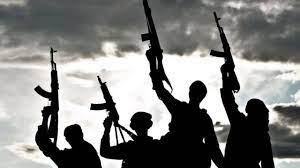
THE Kebbi State Police command has confirmed the death of 16 villagers following a deadly bandit attack on Tungan Taura and Tungan Ladan communities in Augie Local Government Area.

A statement by the Police Public Relations Officer (PRO), Nafiu Abubakar, on Monday, April 7, said the attack occurred around 6:00 p.m. on Saturday, April 6, 2025. 

According to him, the assailants, suspected to be members of the notorious Lakurawa group, invaded the villages in large numbers, launching a violent assault.

“The attackers, who arrived in large numbers, rustled an unspecified number of cattle and engaged in a deadly confrontation with community members, which led to the tragic loss of sixteen lives,” the statement read.

Reacting to the incident, the statement added that the state Commissioner of Police, Bello Sani, condemned the killings and vowed that the perpetrators would be brought to justice. 

He also announced the immediate deployment of additional tactical units comprising police operatives, military personnel, the Nigeria Security and Civil Defence Corps (NSCDC) and local vigilante groups to the affected areas.

“Our resolve to rid Kebbi State of banditry and other violent crimes remains firm. We are deploying all available resources to ensure that the perpetrators of this senseless act are brought to justice,” Sani stated.

The commissioner, while urging residents to remain calm and cooperate with security agencies, added that normalcy has since been restored in the communities.

The ICIR reports that Lakurawa is an emerging terrorist group operating between Sokoto and Kebbi states in Nigeria; they are known for carrying out attacks, cattle rustling, and other criminal activities.

They enforce zakkat payment, confiscating cattle from non-compliers. Similar to Boko Haram, they communicate in Azbinanci, Zabarmanci, Barbanci, and Hausa. Lakurawa recruits you


ths with ₦1,000,000, according to reports.

This incident followed past attacks by the group in Kebbi state. 

On January 2, over 50 Lakurawa fighters attacked a checkpoint on the Augie-Kangiwa road, killing two policemen before raiding a ranch near Natsini village.

Amid oil price slump, Trump tariff, FG plans to rejig 2025 budget

THE Federal Government said it is prepared to rejig the 2025 budget amid a slump in global oil prices and current tariffs imposed by the United States (U.S) President Donald Trump.

The Minister of Finance and the Coordinating Minister of the Economy, Wale Edun, hinted at this on Monday, April 7, in Abuja.

He gave information on the sidelines of the Ministry of Finance Incorporated (MOFI) governance scorecard meeting in Abuja, which was themed: ‘Ensuring Value Creation in State-Owned Enterprises Through Better Corporate Governance.’

Edun expressed worries that the government has to adjust, possibly, where necessary, its 2025 budget plans as a result of the global shift in Trump’s policies.

“We are monitoring developments globally, and we are adjusting accordingly. We’ll be speaking to the National Economic Council on this. It’s not our exclusive decision to make, however, we’ll make adjustments where necessary,” he said.

“Budget adjustment and prioritisation, where possible, as well as innovative non-debt financing strategies, would be embraced,” Edun said.

Adding that the government is planning adjustments in the budget to reflect the realities, the minister said, “We are also looking at opportunities and giving global companies opportunities to make more money, while they invest in Nigeria.This is why we are intensifying efforts to ensure our corporate governance structure is top-notch to attract more private capital into our infrastructure financing.

The ICIR reported that U.S. President Trump slapped a 14 per cent tariff on Nigerian exports, arguing that Nigeria had already imposed a 27 per cent tariff on U.S. exports to the country.

He, however, exempted oil and minerals-related exports from the new tariff.

Trump also imposed a 34 per cent tariff on China’s exports to the U.S.; the country is Nigeria, a major trading partner, and 31 per cent on South Africa, Nigeria’s economic rival in Africa.

The new tariffs announced on Wednesday, April 2, which came with immediate effect, affected over 50 countries, including major trade partners such as China, the European Union (EU), India, and Japan, along with developing economies across Asia, Africa, and Latin America.

Trade statistics 

Nigeria-U.S. trade statistics have been in surplus in the last 3 years (2022-2024).

The minister noted that Nigeria’s exports to the U.S. were N1.8 trillion, N2.6 trillion, and N5.5 trillion in 2022, 2023, and 2024, respectively.

Fortunately, oil and mineral exports accounted for 92 per cent, implying that oil and minerals exports amounted to N5.08 trillion in value, while non-oil exports were just N0.44 trillion.

“Consequently, the tariff effect on exports is negligible if we sustain our oil and minerals export volume,” Edun said.

U.S. tariffs’ effect

According to Edun, the adverse effect of the new tariff on Nigeria will be through the oil price plunge.

On Friday, April 4, Brent crude oil price fell to $65.58 per barrel for the first time in four years.

This could be a setback for the Nigerian 2025 budget, which will most likely face implementation challenges with the consistent drop in crude oil price, The ICIR reported.

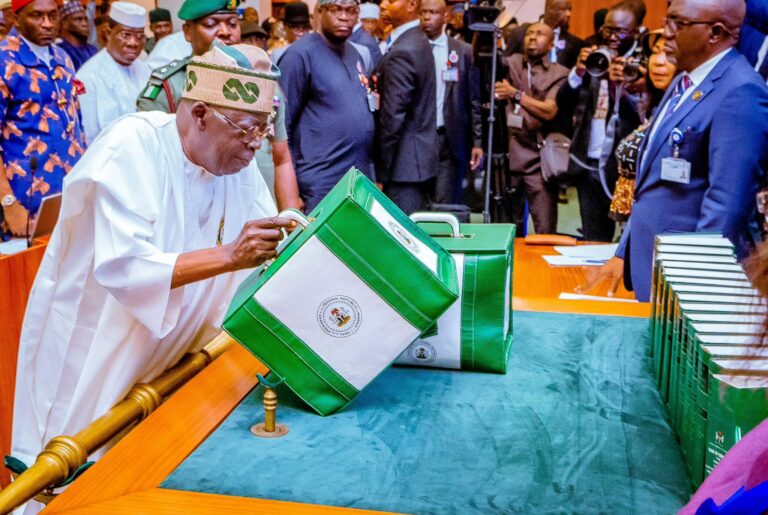
President Bola Tinubu had on February 28 signed the 2025 budget of N54.99 trillion, which shows a crude oil budgetary benchmark price of $75 per barrel, a 2.06 million barrels per day (bpd) production target at an exchange rate of N1,500 per dollar.

His lead administration is targeting N34.8 trillion in revenue to fund the budget, of which the bulk of the revenue will come from crude oil proceeds.

He projects that crude oil will bring in N19.6 trillion in revenue, while non-oil sources would come in at N15.22 trillion.

But with Nigeria far from meeting its crude oil output benchmark and falling price in crude oil prices, the proper implementation of the 2025 budget appears gloomy.

In his submission to these worries,  Edun added, “We are intensifying efforts to ramp up crude oil production to curtail any price effect.

“We are also focusing on non-oil revenue mobilisation by FIRS and Customs.”

How Trump policies triggered “Hands Off” mass-protests across US

OVER one thousand protesters gathered in Washington D.C, joining a mass protests across all 50 states of the United States on Saturday, April 5, against President Donald Trump and his billionaire ally, Elon Musk.

The protest tagged “Hands Off!” was organised by a pro-democracy movement in response to what they describe as a “hostile takeover” and an attack on American rights and freedoms, the event was expected to be the largest single day of protest.

The ICIR that the protests took place at state capitols, federal buildings, congressional offices, the Social Security headquarters, as well as in parks and city halls across the country.

Hundreds of anti-Trump Americans living in Europe also gathered in cities like Berlin, Frankfurt, Paris, and London just hours before the protests began in the United States, to express their opposition to Trump’s sweeping overhaul of US foreign and domestic policies.

“We can make sure they hear us,” the organisers said. “Hands Off!” demands “an end to this billionaire power grab.”

Organisers told Reuters that over 20,000 people were expected to attend a rally at the National Mall. According to the event’s website, around 150 activist groups had signed on to participate, with protests planned across all 50 states, as well as in Canada and Mexico.

“Whether you are mobilised by the attacks on our democracy, the slashing of jobs, the invasion of privacy, or the assault on our services – this moment is for you,” the event flyers read.

“We are setting out to build a massive, visible, national rejection of this crisis.”

Organisers say they have three demands: “an end to the billionaire takeover and rampant corruption of the Trump administration; an end to slashing federal funds for Medicaid, Social Security, and other programs working people rely on; and an end to the attacks on immigrants, trans people, and other communities.”

“Our founders wrote a Constitution that does not begin with ‘We the dictators,’ the preamble says ‘We the people,’” Raskin said in front of a crowd of thousands gathered at the Washington Monument, holding signs condemning the administration. “No moral person wants an economy-crashing dictator who knows the price of everything and the value of nothing.”

A crowd was said to gather around the Washington Monument under gloomy skies and light rain, as some carried Ukrainian flags and others wore Palestinian keffiyeh scarves and carried “Free Palestine” signs, while Democrats from the United States, including the House of Representatives, blasted Trump’s policies on stage.

Terry Klein, a retired biomedical scientist from Princeton, New Jersey, was among those who gathered by the stage beneath the Washington Monument.

She said she drove down to attend the rally to protest Trump’s policies on “everything from immigration to the DOGE stuff to the tariffs this week, to education. I mean, our whole country is under attack, all of our institutions, all the things that make America what it is.”

The ICIR reported that Trump unsettled the global markets and sparked international concern this week by imposing a series of trade tariffs.

With Trump’s approval, Musk’s Department of Government Efficiency has slashed over 200,000 jobs from the 2.3 million-strong federal workforce. The downsizing has at times been chaotic, even leading to the recall of essential specialists.

On Friday, April 4, the Internal Revenue Service began laying off over 20,000 employees, amounting to roughly 25 per cent of its workforce.

Several hundred protesters gathered outside the Social Security Administration headquarters to oppose cuts to the agency, which provides benefits to the elderly and disabled.

Linda Falcao, who will turn 65 in two months, told the crowd she had been contributing to the Social Security fund since she was 16.

“I’m terrified, I’m angry, I’m pissed, I’m bewildered this could happen to the United States,” she said. “I do love America, and I’m heartbroken. I need my money. I want my money. I want my benefits!” The crowd chanted, “It’s our money!”

However, White House Assistant Press Secretary Liz Huston rejected the protesters’ claims, stating that President Trump does not intend to cut Social Security or Medicaid.

Most of Trump’s agenda has been challenged by lawsuits arguing that he has exceeded his authority in efforts to dismiss civil servants, deport immigrants, and roll back transgender rights.

The ICIR reports that Trump returned to office on January 20, issuing a list of executive orders and actions that critics have condemned.

Police withdraw Sanusi Abuja invitation over Sallah violence in Kano

0

THE Nigeria Police Force (NPF) has withdrawn its invitation for Emir of Kano, Muhammadu Sanusi II, to appear in Abuja for questioning over the violence that marred the Eid-el-Fitr celebrations in Kano.

The police instead opted to send investigators to obtain his statement in the state.

This development followed growing concerns from prominent Nigerians, including Chidi Odinkalu, a former Chairman of the National Human Rights Commission, and Kano residents that the invitation could further escalate political tensions in the ancient city, already simmering due to a heated Emirship dispute.

In a statement issued on Sunday, April 6, Force spokesperson Assistant Commissioner of Police (ACP) Olumuyiwa Adejobi said the Inspector-General of Police, Kayode Egbetokun, has directed operatives of the Force Intelligence Department (FID) to proceed to Kano for the interview. 

The move, he said, is in line with efforts to ensure that police actions are not ‘politicised or misinterpreted.’

The ICIR reports that Sanusi had earlier been summoned via a letter dated April 4 to report to the FID headquarters in Abuja on April 8. 

The letter, signed by CP Olajide Ibitoye on behalf of the Deputy Inspector-General (DIG) in charge of FID, sought his appearance over violence involving members of his entourage after the Eid prayers at Kofar Mata.

Sanusi presided over prayers attended by Governor Abba Yusuf and other officials. However, while returning to the palace, violence erupted when Sanusi mounted a horse, according to the police.

The altercation led to the death of one vigilante and injuries to others.

One of the victims, Surajo Rabiu, a local vigilante, was said to have been stabbed to death, while another, Aminu Suleman, sustained severe injuries among the Sanusi entourage.

According to reports, the vigilante members were attacked while they were providing a shield for Sanusi.

The Kano State Police command subsequently launched an investigation, setting up an eight-member panel to probe the incident.

The panel was tasked to unravel the immediate causes of the violence and “any defiance to the command’s overt ban on all forms of Durbar or horse riding throughout the Sallah celebration, based on security concerns in the state.”

Withdrawing the invitation to question Sanusi in Abuja on Sunday, the police stated, “The invitation was initially issued to enable Alhaji Sanusi to provide his account of the events that led to the breakdown of law and order in the state.  

“However, following advice from respected stakeholders and in line with the Inspector-General of Police’s commitment to ensuring that policing actions are not politicised or misinterpreted, the IGP has directed that the invitation be withdrawn. Instead, operatives of the Force Intelligence Department (FID) have been mandated on the instructions of the IGP to proceed to Kano to obtain Alhaji Sanusi’s statement.

“The Force also wishes to reiterate that its actions are guided solely by the principles of justice, neutrality, and professionalism,” the statement added.

The police said it had warned all the parties involved in the Sallah celebrations about the risks of holding parallel ceremonies and viewed the incident as avoidable in the lead-up to the Eid celebration.

It noted that credible intelligence at the disposal of the NPF had indicated that the two ‘disputed Emirs’ in Kano State – Alhaji Ado Bayero and Alhaji Lamido Sanusi were planning to hold separate Durbar Festivals. 

“To forestall possible violence, the Inspector-General of Police, IGP Kayode Adeolu Egbetokun, Ph.D., NPM, deployed the Coordinating DIG for the North West who also serves as the  Deputy Inspector-General of Police in charge of the Force Criminal Investigation Department, DIG Abubakar Sadiq, mni, to engage in dialogue with the two disputed Emirs in kano and the Kano State Government.

”It was mutually agreed that no Durbar Festival would be held to preserve peace and public safety, and none of the disputed emirs would ride on horse on Sallah day,” the statement added.

This latest incident adds to the ongoing power struggle in Kano’s traditional institution, which has been fraught with controversy since Sanusi’s reinstatement in 2024.

The Supreme Court is set to deliver a judgment on the matter, which has been ongoing since Sanusi’s reinstatement was validated by a recent law repealing the Kano State Emirate Council Law 2024.