Home Blog Page 319

Beyond the flames: Uncovering the scars of Lagos market fires

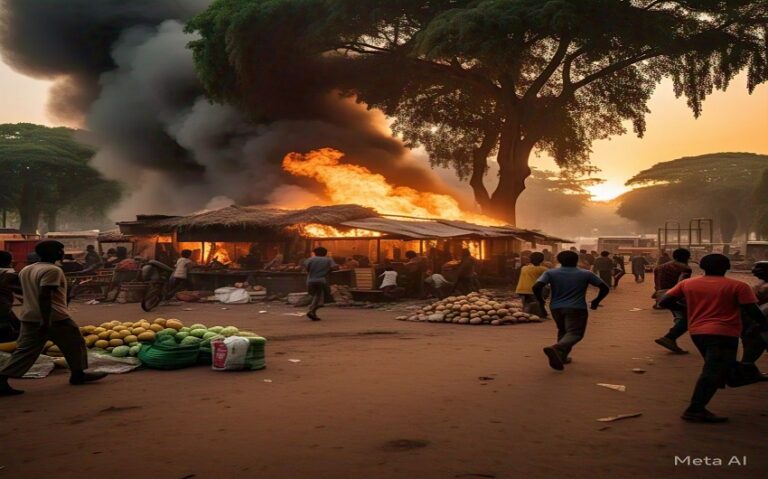
IN 2024 alone, seventeen markets in Lagos, once bustling hubs of activity, were reduced to ashes, leaving a trail of tears, losses, and hopelessness. A visit by The ICIR to some of the affected markets revealed that the sound of shattering glass, the smell of burning goods, and the cries of desperate traders still lingered.

For Chibuike Udeh, a spare part seller at Akere Market, Ajegunle, the nightmare began on the night of March 11, 2023, with a distressing phone call. He received the devastating news that his stall at the market was engulfed in flames, consuming goods worth nearly N15 million.

The phone call was like a punch to the gut, leaving him breathless and in disbelief. As he rushed to the scene, his mind raced with thoughts of his livelihood, his family, and his future. The sight that greeted him was one of utter destruction – his stall, his goods, and his dreams, all reduced to smouldering ruins.

Chibuike’s story is just one of many that have become all too familiar in Lagos. The constant fire outbreaks in the city’s markets have left many people hopeless, frustrated, and injured. The emotional toll is evident in their eyes, their voices, and their stories.

Recent fire outbreaks in Lagos markets

On September 11, 2024, the Itamaga Plank Market in Ikorodu was consumed by flames, reducing the once-thriving hub of activity to a blazing ruin. Both merchants and consumers stared in terror as their livelihoods were destroyed.

The Lagos State Emergency Management Agency (LASEMA) spokesperson, Nosa Okunbor, said the agency received distress calls and and immediately dispateched its Lion Squad to the scene. Upon arrival, they found a shop engulfed in flames, caused by a power surge.

On November 26, 2024, the Alayabiagba Boundary Market in Ajeromi Ifelodun experienced the same fate as its stalls and shops reduced to ashes. The fire seemed to have a mind of its own, striking without warning and leaving destruction in its wake.

LASEMA’s Permanent Secretary, Femi Oke-Osanyitolu, and Lagos Fire Service Director, Margaret Adeseye, confirmed that no lives were lost in the fire incident. However, at least 11 shops were destroyed, with millions of naira in property damage, after a leak from filled cylinders at a gas shop sparked the blaze.

Inferno in the city of excellence: Exposing the realities of Lagos' market fires
The remains of Ebute Ero Market after the inferno that gutted it in November 2024. Photo Credit: Bankole Abe/ICIR 16/012025

Similarly, on December 23, 2024, the Oshodi Resettlement Market was the next to feel the wrath of the fire. Its traders and customers were forced to flee as the flames consumed the stalls.

LASEMA’s Oke-Osanyintolu confirmed the fire incident, stating that one shop was 50 per cent damaged, another slightly affected, with no reported casualties or injuries.

The Idumota area of Lagos State was not immune to the devastation either. On Friday, November 29, 2024, a fire outbreak at a spare parts market destroyed property worth millions of naira, leaving the owners and traders to pick up the pieces.

Reacting to the fire incident, Oke-Osanyintolu reported that multiple shops selling car parts were destroyed in the fire. Although the cause remains unknown, he confirmed that properties and goods worth hundreds of millions of naira were lost.

Visualisation of Lagos market fires in 2024.

On Thursday, November 7, a furniture market in the Ojota area of Lagos State was affected, with goods worth millions of naira destroyed.

Reacting, the Lasema boss stated that an afternoon fire at the market, sparked by an electrical surge from a nearby transformer, destroyed millions of naira worth of furniture in several shops.

Similarly, on Sunday, September 15, 2024, emergency workers battled to put out a fire at the Oko Baba Plank Market by Ibadan Street, Ebute Metta, Lagos.

LASEMA spokesman, Okunbor, said officials of the agency embarked on a search and rescue operation at the market after the incident. He said the immediate cause of the fire is unknown, adding that no life was lost or injuries sustained as a result of the incident.

As the source of income for many individuals is suddenly cut off, desperation sets in. The loss of livelihood can lead to a surge in crime rates. The implications of market fires go beyond the realm of physical security. The mental health of those affected is also a pressing concern.

Inferno in the city of excellence: Exposing the realities of Lagos' market fires
A trader who claimed he lost millions in the fire disaster at Akere spare part market, Chibuike Udeh. Photo Credit: Bankole Abe ICIR 17/01/2025

Victims share their experiences

The vice chairman of the Alaba Rago Market Central committee, Mohammed Lawal, said the fire that engulfed the popular market in November 2024 caused significant damage. He claimed goods worth several millions were consumed by the fire, which was the second within two months.

Regarding the traders’ preparation to tackle fire incidents, Lawal said a modern market has been planned by the government that will boast the necessary facilities.

Inferno in the city of excellence: Exposing the realities of Lagos' market fires
Mohammed Lawal, the vice chairman of the Alaba Rago market central committee. Photo Credit: Bankole Abe ICIR 16/01/2025

“There were two incidents in this market last year [2024]; one was in October, and this one was in November. It was very serious, but we thank the fire service for their quick response,” he said.

On the issue of Insurance for the traders at the market, Lawal said they have never been any discussion regarding that in the market.

On the way forward to prevent future fire incidents, Lawal said the modernisation of the market will be the best solution.

A petty trader at the Alaba Rago market, Shuaibu Sabo, confirmed that he lost goods worth N700,000 in the fire incident and pleaded for government assistance.

Inferno in the city of excellence: Exposing the realities of Lagos' market fires
A burnt section of the Alaba Rago market. Photo Credit: Bankole Abe ICIR 16/01/2025

“Whatever government can do to assist me now will be appreciated,” he said, almost in tears.

At the Okobaba plank market in Ebutte Meta, a trader, Karim Aweda, alleged the fire that destroyed the market was an act of arson. According to him, some people who were accompanied by security agents set fire to the market.

Inferno in the city of excellence: Exposing the realities of Lagos' market fires
Karim Aweda and Kelechi Edi, both victims of the Okobaba market fire. Photo Credit: Bankole Abe ICIR 17/01/2025

“It affected us seriously; this is where we are managing to survive,” Aweda, who said he had been barely surviving since the incident, stated.

He added that not long after the incident, the government intervened and declared that the land belonged to the government.

A signpost stationed at the Okobaba plank market after the fire incident indicating that the Land belongs to the Lagos State government
A signpost stationed at the Okobaba plank market after the fire incident indicating that the land belongs to the Lagos State government. Photo Credit: Bankole Abe ICIR 17/01/2025

At the Akere Spare parts market in the Ajegunle area of Lagos, a victim, Udeh, said he lost about N15 million naira in the fire incident.

“Life became very difficult. I had to manage with one of our members like that for months.

“We have to survive with the support we get from our close relatives and some individuals that came to support us at that moment.”

On whether there was government support to alleviate their suffering, Udeh said the financial assistance was too small to alleviate their plight.

“Actually, I got part of the support from the government but when somebody lost about N15 million and you gave him N600,000 it does not go anywhere.”

Inferno in the city of excellence: Exposing the realities of Lagos' market fires
Traders at the Akere Spare part market, Ajegunle, Lagos, getting back on their feet after the fire disaster. Photo Credit: Bankole Abe ICIR 17/01/2025

On the cause of the fire at the Ajegunle spare part marker, traders like Udeh and others believe it was arson motivated by political influences.

“The APC people said we did not vote for Tinubu during the election, and we have received a lot of threats before that time,” Udeh stated.

He said some of his colleagues who suffered various losses in the incident have long relocated to their villages, and some even lost their lives due to shock from the incident.

Another trader at the market, Obinna Uzor, said he received a call that the market was on fire, but before he could reach his shop, the whole place had been destroyed.

“I lost about N10 million. It wasn’t easy at all. Others lost. Even eating became difficult at that time. The government came, they gave me N1 million, but it was not enough.

 Inferno in the city of excellence: Exposing the realities of Lagos' market fires
Obinna Uzor, a victim of the inferno at Akere Spare Parts market. Photo Credit: Bankole Abe ICIR 17/01/2025

At the Ebute Ero Market in Lagos Island, which was destroyed by fire on November 29, the chairman of the Progressive Auto and Article Dealers Association (PRAADA), Ajibola Okunowo, said property and goods worth billions of Naira were destroyed in the inferno.

He said that since then, members of his association have been expecting government intervention but to no avail.

When asked if PRAADA members and their properties are insured, Okunowo said some members are involved in ‘small’ insurance packages that cannot match the magnitude of loss they suffered in the inferno.

Inferno in the city of excellence: Exposing the realities of Lagos' market fires
The chairman of the Progressive Auto and Article Dealers Association (PRAADA), Ajibola Okunowo.Photo Credit: Bankole Abe ICIR 17/01/2025

On the preparedness of the market to counter fire before the incident, Okunowo said, “We sell fire fighting equipment here, we deal with it, if you go round you will see it mounted everywhere. We tried our effort, all we need now is government intervention.

“We are all Nigerians, anyone that this kind of thing happened to, will feel the pain. As of now, all my marketers who are involved are reaching out so that we should please assist in any way we can. Some of them are about to pay their children’s school fees. Please we are seeking government assistance, come and help us out,” he pleaded.

Lagos market fires timeline.

80% of Lagos market fires caused by carelessness – State Fire Service

A peek into the Lagos State budget for 2024 shows that a total of N4.39 billion was earmarked for the state’s Fire Service, however, N5.19 billion was eventually approved. 

According to the Lagos State budget performance report, N3.86 billion was disbursed, raising the question as to why such market fires were not curtailed despite the budgetary provision and releases.

According to the Public Relations Officer of the Lagos State Fire Service, Shakiru Amodu, in a chat with The ICIR on Monday, January 20, 2025, most of the fires were due to carelessness on the part of the traders. 

According to him, the service has carried out sensitisation rallies to these markets as a preventive strategy to control fire disasters.

Amodu said the causes of fires can be categorised into four main types:

  1. natural causes,
  2. arson,
  3. accidents,
  4. and carelessness.
Inferno in the city of excellence: Exposing the realities of Lagos' market fires
Director, Lagos State Fire and Rescue Service, Margaret Adeseye

He stated that natural causes, such as wildfires, are rare in Africa and that arson, a deliberate act of setting a fire, is not a common cause of market fires in Lagos.

He explained that accidents, which are events that occur despite the presence of safety measures and without human error or negligence, are also relatively rare.

However, he emphasised that carelessness, which includes human error and negligence, is the leading cause of fires, accounting for approximately 80 per cent of all fire incidents.

Amodu noted that carelessness can take many forms, including leaving a kitchen unattended, experiencing electrical surges due to underlying negligence, or using generators and gas cylinders improperly.

“When you leave your kitchen unattended, it results in fire. When you have electrical upsurge, there must be underlying negligence or the other,” the Lagos fire spokesperson stated.

He also highlighted the importance of investigating fires to determine their causes, saying, “If we don’t investigate, we won’t be giving you these statistics.” 

Amodu emphasised that the response time of the fire service is affected by various factors, including the accuracy of the information provided by the caller and the accessibility of the location.

He noted that the Lagos State Government has made available emergency toll-free numbers since 2007, but many Nigerians are not aware of the numbers.

Lagos market fire
Governor of Lagos State, Babajide Sanwo – Olu

He boasted that the Lagos State Fire Service is well-equipped, with at least two fire engines and one backup utility vehicle at each fire station.

On the way forward, he emphasised that prevention is the best way to fight fires and that the fire service is working to educate the public on fire safety and prevention.

He also appealed to the market leaders to take responsibility for their protection and to work with the fire service to prevent fires.

Lagos State government reacts

The ICIR asked the Special Adviser to the Governor of Lagos State on Media and Publicity, Gboyega Akosile, What the government is doing to curtail fires in Lagos markets in 2025.

According to him, people should be aware of the kind of things they put in their shops.

“For example, don’t put generator sets on the first or second floor and electrical appliances. Make sure that you put them off when you’re closing your markets daily,” he stated. 

He added that people should not use market spaces without the necessary approval from the appropriate authorities, the planning committee and different agencies that are responsible for the construction of the market. 

“When there is a big fire, it’s also to let people know what to do and what not to do to prevent fire outbreaks.

“So, this year, going forward, we would expect fewer fire incidents in Lagos, that I can assure you,” he added.

On the claim of arson put forward by some victims of the market fire, Akosile said, “That is not true, how can the government put fire? You know, that’s criminal. How can someone accuse the government of putting fire in the market?  For what reason?” he asked.

He said if any land is to be taken by the government to override public interest, the government will go ahead and take the land and give necessary compensation to the landowners. So the government does not need to take over the land. 

Data reporting was done by James Emmanuel. 

Shelve your protest as it clashes with ‘Police Day’, Police tell ‘Take it Back Movement’

0

THE Nigeria Police Force (NPF) has asked the ‘Take It Back Movement’ to shelve its planned nationwide protest because it coincides with the country’s first-ever National Police Day scheduled for Monday, April 7.

The Take It Back Movement, a civic group known for its vocal criticism of government policies, had announced mass protests across several states, including the Federal Capital Territory. 

The demonstration, according to the group, is aimed at drawing attention to the ‘bad governance’ and shrinking civic space in Nigeria. According to one of the organisation’s announcements on social media, the “Cybercrime Act creates an environment of fear and censorship. We must #RepealCyberCrimeAct for a free Nigeria!”

It further asked citizens to “join the masses on April 7, at Iwo Road, Ibadan,”

But in a statement by the Force Public Relations Officer, Olumuyiwa Adejobi, on Sunday, April 6, the police described the protest as ‘ill-timed and mischievous,’ arguing that the date should be left to celebrate the sacrifices and achievements of police officers.

According to him, April 7 has been officially designated by the Federal Government as National Police Day.

He noted that the day will, for the first time, bring together dignitaries from within and outside Nigeria, including foreign Inspectors-General of Police and diplomats, to celebrate the achievements of the Nigeria Police Force.

The Police believed that holding protests on such a significant day could ‘malign the image of the Nigeria Police and the nation as a whole.’

“While not against the exercise of citizens’ right to peaceful assembly and association in Nigeria as enshrined in the Constitution, the Nigeria Police Force is deeply concerned about the motive behind such protest scheduled on the same day the contributions of the Nigeria Police Force to national security is to be celebrated, putting into consideration that such glamorous event would bring together dignitaries from all spheres of life internationally and within the country, including foreign  Inspectors-General of Police and Diplomats.

“In line with best global practices adopted by nations in celebrating the achievements of their Police institution, the Nigerian government has taken the bull by the horns by declaring every April 7 as National Police Day. 

“The rationale behind staging a nationwide protest on the same day is, however, questionable and perceived to be a deliberate attempt and unpatriotic act that is capable of rubbishing and maligning the image of the Nigeria Police and the nation as a whole,” the statement added.

The police further called on the organisers to reconsider their plans and opt for dialogue instead.

The ICIR reports that this attempt by the police has become a recurring response to civic mobilisations as they often ask or threaten citizens not to embark on planned


protest.

In recent times, the police have routinely cited ‘security concerns,’ among others, to discourage public demonstrations.

Nigerian gov’t decries impact of US President,Trump tariff on businesses

THE Federal Government of Nigeria has said that the recent tariff measures imposed by the United States  President, Donald Trump, would adversely impact its oil and non-oil export businesses.

The Minister of Industry, Trade, and Investment, Jumoke Oduwole, in a statement on Sunday, April 6, said the new tariffs pose ‘destabilising challenges’ to Nigerian trade.

She said it could potentially disrupt trade relations and affect the competitiveness of Nigerian products in the US market, especially in sectors reliant on market access and price competitiveness.

She noted Nigeria’s exports to the US averaged $5 to $6 billion annually in the last two years.

“A significant portion (of Nigeria’s exports) — over 90 per cent — comprises crude petroleum, mineral fuels, oils, and gas products. The second-largest export category, accounting for approximately 2–3 per cent, includes fertilizers and urea, followed by lead, representing around 1 per cent of total exports (valued at approx $82 million).

“Nigeria also exports smaller quantities of agricultural products such as live plants, flour, and nuts, which account for less than 2 per cent of our total exports to the U.S,” Oduwole pointed out.

While oil has long dominated Nigeria’s exports to the US, non-oil products—many previously exempt under the African Growth and Opportunity Act (AGOA)—now face potential disruption, she said.

“A new 10 per cent tariff on key categories may impact the competitiveness of Nigerian goods in the US.

“For businesses in the non-oil sector, these measures present destabilising challenges to price competitiveness and market access, especially in emerging and value-added sectors vital to our diversification agenda,” Oduwole said.

The minister also pointed out that smaller businesses, particularly small and medium-sized enterprises (SMEs), that rely on the AGOA exemptions would feel the brunt of the new tariff.

The businesses are also feeling it because of the rising costs and uncertain buyer commitments that are likely to make market access even more difficult, she said.

“This development strengthens Nigeria’s resolve to boost its non-oil exports by strengthening quality assurance, control, and traceability in Nigerian exports to meet global standards and improve market acceptance in more economies across the globe,” Oduwole added.

The ICIR had reported that the new tariffs decision by the US president has been widely criticised by global trade organisations, including the International Monetary Fund (IMF) and the World Trade Organisation (WTO) criticised Trump’s tariff measures, asserting that they pose a significant risk to the global economy.

Trump’s position was that Nigeria’s 27 per cent tariff on US exports has been disadvantageous to American businesses, hence the imposition of the 14 per cent tariff on Nigeria’s exports as necessary to address the imbalance.

The imposition of the new tariffs, announced on April 2, came with immediate effect and would impact the economies of over 50 countries, including major trade partners such as China, the European Union (EU), India, and Japan, along with developing economies across Asia, Africa, and Latin America.

Sweden Crown Princess to visit Nigeria, bilateral talks on the table

0

THE Crown Princess of Sweden, Victoria Désirée, will be coming to Nigeria for a state visit for both countries to expand their bilateral relationship, the Ministry of Foreign Affairs announced on Sunday, April 6.

The crown princess will be in Nigeria for a three-day official visit starting from Monday, April 7, to Wednesday, April 9, according to a statement signed by the acting spokesperson for the ministry, Kimiebi Ebienfa, on Sunday.

It said the Crown Princess would engage in high-level meetings with Nigerian officials to strengthen the diplomatic and economic ties between the two nations.

The ICIR can report that Sweden remains one of the notable trade partners out of over 170 countries Nigeria trades with.

According to the United Nations COMTRADE database on international trade, Nigeria’s exports to Sweden stood at $789.86 million in 2023.

Ebienfa stated that the crown princess, to be received by the Minister of Foreign Affairs, Yusuf Tuggar, is scheduled to hold discussions with Vice President Kashim Shettima, as well as the Governor of Lagos State, to discuss some trade matters.

“The Ministry of Foreign Affairs is pleased to announce the upcoming official visit of Her Royal Highness Victoria, Crown Princess of Sweden, to Nigeria, scheduled for Monday, 7th to Wednesday, 9th April 2025.

“The visiting royalty will be received by high-ranking Nigerian officials and also engage in a series of high-level discussions aimed at further strengthening diplomatic and economic ties between both nations,” Ebienfa said.

The visit is to strengthen the bilateral relationship between Nigeria and Sweden, with a focus on areas including trade, sustainable development, gender equality, and cultural exchange.

Marking her significant visit will be the unveiling of the Swedish Trade Office in Lagos.

“This visit underscores the strong and cordial bilateral relations between Nigeria and the Kingdom of Sweden, as well as our shared commitment to fostering cooperation in areas of trade, sustainable development, gender equality, and cultural exchange.

“Nigeria remains committed to deepening its relationship with Sweden, and we look forward to a fruitful engagement that will benefit both nations,” Ebienfa added.

Ex-Oyo governor, Olunloyo dies days before 90th birthday

0

A FORMER governor of Oyo State, Victor Olunloyo, has passed on just days before his 90th birthday. 

His family confirmed his death in a statement on Sunday, April 5, expressing their sorrow.

The statement, which was signed  by Oladapo Ogunwusi on behalf of the Olunloyo family, noted that Olunloyo’s record of service to the nation and humanity is a source of pride to his family.

Olunloyo, who held notable titles such as the Balogun of Oyo and Otun Bobasewa of Ife, had an illustrious career. 

He was a former Rector of Ibadan Polytechnic and Kwara State Polytechnic, among other significant appointments. 

“With a heavy heart but gratitude to the Almighty, we announce the passing into glory of isVictor Omololu Olunloyo, former governor of Oyo State, mathematician and engineer and renowned technocrat, a few days before his 90th birthday.

“The Balogun of Oyo and Otun Bobasewa of Ife, Olunloyo was first Rector, Ibadan Polytechnic and first Rector, Kwara State Polytechnic among other notable appointments.

“His long record of service to the nation and humanity is a source of pride to his family and associates even as we come to grip with this devastating event,” the statement issued by the family read in part.

 Born on April 14, 1935, the deceased served as the governor of Oyo State for a brief period from October 1, 1983, to December 31, 1983. His tenure came to an abrupt end when the military regime of General Muhammadu Buhari took power.

Olunloyo ran for governor under the platform of the National Party of Nigeria (NPN) and won, defeating the incumbent, Bola Ige of the Unity Party of Nigeria (UPN). 

Before then he was said to be appointed as the Commissioner for Economic Development for the Western Region in 1962 at the age of 27, in the cabinet of Dr. Moses Majekodunmi. 

He was re-appointed when Colonel Adeyinka Adebayo was appointed military governor of Western State.

Other positions he served while alive included Commissioner for Community Development, Education, Special Duties, Local Government and Chieftaincy Affairs which includes crowning of two of Nigeria’s monarchs namely the Alaafin of Oyo, Oba Lamidi Adeyemi III and the Soun of Ogbomosho King Oyewunmi.

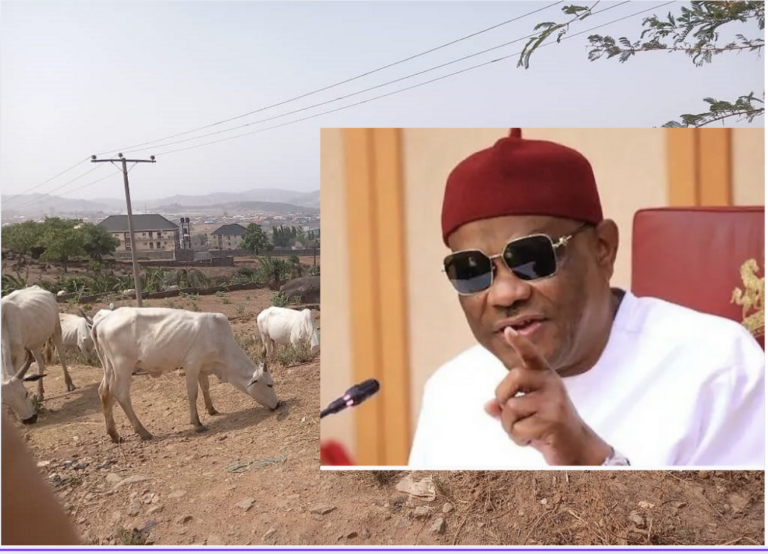
Grazing as usual: Despite Wike threats, cows continue to roam Abuja streets

EIGHTEEN months ago, Nyesom Wike, the Minister of the Federal Capital Territory (FCT), pledged to ban open grazing, warning that cows (cattle) roaming the streets would no longer be tolerated. However, a recent survey of the FCT reveals little change; cows continue to wander freely, seemingly unchallenged by authorities.

Despite the minister’s firm warning, the status quo remains, prompting many to question whether Wike’s threat was merely rhetoric.

We will consult with the herdsmen to see how we will stop open grazing because we cannot allow cows inside the city. They can be outside the city because the grasses are outside the city,” Wike stated in August 2023. He reiterated this stance in March 2024 during a meeting with the Belgian Ambassador to Nigeria, Daniel Bertrand.

Cows still dominate major locations in FCT

By August 2025, it will be two years since  Wike promised to end open grazing in Abuja. The ICIR monitored major spots around the city to assess the implementation of the policy. The findings reveal that cows are still grazing in the city.

The ICIR observed cows continue to roam Abuja’s streets unimpeded, defying Wike’s vow. 

Recent sighting of cows include a large herd spotted around the Berger Bridge heading towards the Jabi area in March 2025.

Photo collage of cows seen at Berger Bridge, Wuse, FCT.

Cattle were also seen calmly walking along a roadside in Maitama, near the General Hospital, on a sunny Saturday in March 2025.

Similarly, another herd of cows was spotted in the Katampe axis of Mpape recently.

The Wuye axis of the FCT was not spared, with cows grazing on highway grasses and almost blocking roads. In Pyakassa side cows stopping traffic is almost an every other day occurrence. 

Despite the minister’s threat, cows continue to graze openly in many other areas of the city, including Bwari, Guzape, Airport Road, and Dei Dei, a rapidly growing satellite town in the FCT.

In some cases, vehicles are forced to stop to allow cows, which are mostly shepherded by young boys, to cross the road.

Residents react

Residents attribute the inaction to the politicisation of the issue, with some suggesting Wike’s directive is perceived as targeting a community predominantly engaged in cattle rearing. Others propose more practical solutions, such as coordinating herders’ movements and activities.

A taxi driver operating between Wuse and Lugbe told The ICIR  that Wike’s initial threat was suppressed by influential figures who own the cattle.

“Its big men, and politicians that own all these cows you are seeing here. It will be difficult for Wike to stop them,he said, pointing to a herd near the Military Cemetery at the city gate.

Despite Wike's threat, cows continue to roam FCT roads unchallenged 18 months later
Cows seen at Katampe, Mpape, FCT. Photo: The ICIR/2025

Another resident in Mpape, Genesis, told The ICIR that open grazing can never stop in the FCT and Nigeria as a whole because, according to him, the leaders lack the political will to stop it due toselfishpolitical interests.

He suggested ranching, where cattle are kept and fed in designated areas, as a viable solution.

Residents have also expressed concern over the damage roaming cattle inflict on public infrastructure, including roads and footpaths. The ongoing issue of open grazing is a major concern, with many residents feeling it needs urgent resolution to prevent further deterioration of the city’s infrastructure.

Creation of livestock ministry’s impact questioned

Some residents were pinning their hopes on the newly created Ministry of Livestock, believing it could bring about more practical solutions to the issue of open grazing in the FCT.

For instance, the Miyetti Allah Cattle Breeders Association of Nigeria (MACBAN) urged the federal government to emulate other nations in West Africa by establishing a livestock ministry to harness the full potentials of the sub-sector of the nation’s economy.

In 2020, the then National Secretary of MACBAN, Othman Ngelzarma, in an interview, said the action will help to confront and solve some of the sector’s challenges.

He stressed that a mere department under the Ministry of Agriculture will not be able to address the challenges and allow Nigeria to benefit fully from the endowments of the livestock sector.

According to him, some of the challenges confronting the sector include cattle rustling, farmer-herder conflicts, kidnapping, banditry, and neglect, especially with regard to the demarcation of grazing reserves.

President Bola Tinubu, on Tuesday, July 9, announced the creation of the Federal Ministry of Livestock Development.

According to the president, the move is expected to end the constant clashes between herders and farmers. 

The president, on Wednesday, October 23, appointed Idi Mukhtar Maiha as the minister for the new ministry.

The development attracted optimism that the government might finally address the longstanding problem in a more effective and sustainable manner.

But months after the creation of the ministry, open grazing persists in most parts of the FCT, and the country as a whole.

Not the first broken promise

Findings show that this is not the first time Wike’s orders have been disregarded since he became the minister of the FCT.

For instance, in October 2024, Wike declared war on beggars, accusing them of desecrating Abuja city and posing a security risk.

Wike made the declaration during the official commencement of the access road construction from the  Nnamdi Azikiwe Expressway to Judges Quarters in Katampe district.

The minister said the move was necessary following concerns that Abuja was turning into a beggars’ city.

The ICIR reports that while Wike, battles sleepless nights over the rising influx of indigenous beggars into the nation’s capital city, their foreign counterparts have also found their way into Abuja and are taking refuge at some satellite locations within the the city thereby compounding the issue.

Begging without borders: Security concerns as foreign beggars are ‘smuggled’ into Abuja in trucks

These beggars, comprising young, aged, and disabled, mount both sides of some bridges from 7 am daily. Some squat on the hard concrete, while others stand, plates stretched out, in a silent plea for alms from commuters.

A visit to the location showed mothers cradling crying infants, their weary faces etched with struggles, while barefoot children weaved between the clusters of pedestrians.

Similarly, the minister on Monday, January 13, also banned used item markets, popularly known asPanteka,in the FCT for two weeks.

Wike said the ban on Panteka markets in the FCT took effect from Tuesday,  January 14, 2025.

However, Panteka operators were seen still operating during the period, especially at Mpape in the Bwari Area Council.

Attempts to get Wike’s reaction on the open grazing issue in the FCT were unsuccessful, as his media aide, Lere Olayinka, didn’t respond to calls or messages sent to his mobile phone.

CBN gives reason for naira depreciation despite $197 million intervention

0

THE Central Bank of Nigeria (CBN) has given reasons for Nigeria’s naira depreciation, despite its intervention to the tune of $197.71 million to boost liquidity and stability in the country’s foreign exchange (FX) market.

The naira saw its worst decline on Friday, April 4, but the Apex bank said the country’s currency problems are caused by a global macroeconomic shift triggered by Trump tariff tension, which saw the American government impose tariffs on most countries to protect its economy.

The ICIR reports that the weakening of the naira may also be  not be unconnected to the recent drop in global oil price which is the main revenue accrual for the Nigerian government.

According to data from the CBN, the official exchange rate crashed to N1,600/$1 at the end of trading on Friday.

It was the worst decline since December 4, 2024, when it closed at N1,608/$1.

On Thursday, April 3, the naira had closed at N1,569/$1; compared to Friday’s closing figure, the naira depreciated by 1.9 per cent.

Amid its weakest level on Friday, the naira also weakened by 3.9 per cent in the first four days of April, after closing March at N1,537/$1.

In a statement on Saturday, April 5, CBN’s Director of the Financial Markets Department, Omolara Duke, the apex bank, said the United States (U.S) tariffs measures have continued to rattle the global markets.

“In line with its commitment to ensuring adequate liquidity and supporting orderly market functioning, the CBN facilitated market activity on Friday, April 4, 2025, with the provision of US$197.71 million through sales to Authorised Dealers,” CBN said.

It noted recent movements in the FX market between April 3 and 4, which reflected broader global macroeconomic shifts currently affecting several emerging market and developing economies.

Nigeria, like most other countries, is currently experiencing economic shock with the tariffs imposed by U.S. President Donald Trump.

The American president had recently imposed a 14 per cent import tariff on products from Nigeria.

This development has affected the value of the naira to the dollar in the last few days, CBN further stated.

These developments were a result of the recent announcement of new import tariffs by the United States government on imports from several economies, which has triggered a period of adjustment across global markets.

“Crude oil prices have also weakened, declining by over 12% to approximately US$65.50 per barrel – presenting new dynamics for oil-exporting countries such as Nigeria,” the apex bank pointed out.

According to the CBN, the injection of FX into the market aligns with the bank’s broader objective of fostering a stable, transparent, and efficient foreign exchange market.

“The CBN continues to monitor global and domestic market conditions and remains confident in the resilience of Nigeria’s foreign exchange framework, which is designed to adjust appropriately to evolving fundamentals.

“All Authorised Dealers are reminded to adhere strictly to the principles outlined in the Nigeria FX Market Code and to uphold the highest standards in their dealings with clients and market counterparties,” it added.

Ukachukwu, Muoghalu, clinch Anambra governorship tickets

0

A FORMER member of the House of Representatives, Nicholas Ukachukwu, has won the All Progressive Congress (APC) governorship primary in Anambra, defeating Valentine Ozigbo in the contest.

Ukachukwu became the party’s flag bearer on Saturday, April 5, by a landslide vote, ahead of the Anambra governorship election, which will be held on November 8, 2025.

He secured 1,455 votes, while Ozigbo secured 67 votes.

Johnbosco Onunkwo came third with 26 votes, while Edozie Madu polled 8 votes.

Before Saturday’s primary, three aspirants withdrew from the exercise due to violence that erupted earlier in the morning when thugs attacked some delegates, according to reports.

The aspirants who withdrew are, former federal lawmaker, Chukwuma Umeoji, Obiora Okonkwo, and Paul Chukwuma.

According to reports, Chukwuma resigned from the APC in its entirety after he withdrew from the polls, citing the presence of “unprogressive elements” in the party.

Also, confirming his withdrawal, Okonkwo expressed concern over the safety of his supporters.

“This decision to withdraw from the race was a difficult but necessary one because of some developments that are inconsistent with my principles and values. The project is not worth risking the lives of my supporters,” Okonkwo said in his withdrawal letter.

Meanwhile, in his acceptance speech, Ukachukwu said he wants to be the ‘father of the father’ as he has had a hand in the past winners of the Anambra governorship election.

“We shall deliver Anambra to the APC. One thing I want to say here; nobody has won the governorship of Anambra without my support; it has never happened before. I have been playing godfather, but now I want to be the father of the father — no more godfather,” he said.

Barring any development, Ukachukwu will be contesting for the Anambra governorship seat with the incumbent governor of the state, Chukwuma Soludo, and former Managing Director of the National Inland Waterways Authority (NIWA), George Muoghalu.

Muoghalu, also on Saturday, won the Labour Party’s governorship ticket ahead of the state governorship elections.

Muoghalu polled 575 votes at the party’s primary held in Awka, the Anambra State capital.

His closest rival, John Nwosu, who had withdrawn from the contest earlier on Saturday, secured nineteen votes during the election.

This was as Soludo won the All Progressives Grand Alliance’s (APGA) primary for the November 8, 2025, governorship election in the state.

The governor emerged as the flag bearer unopposed while also securing 3,168 votes from the delegates of the party during the primary on Saturday, April 5. 

Anambra 2025: Soludo emerges winner of APGA primary election unopposed

0

ANAMBRA State Governor Chukwuma Soludo has won the All Progressives Grand Alliance’s (APGA) primary for the November 8, 2025, governorship election in the state.

The governor emerged as the flag bearer unopposed while also securing 3,168 votes from the delegates of the party during the primary.

The election was conducted at the Alex Ekwueme Square, Awka, on Saturday, April 5.

While announcing the results, the returning officer for the election, Uche Nwegbo, stated out of the 3,260 delegates, 3,175 delegates were accredited to vote during the primary.

“Total delegates for this election are 3,260, 3,175 are accredited delegates, 3,172 are the total votes, while four votes were invalid.

“The total yes-votes garnered by the governor are 3,168, while there were no no-votes. So, in line with the INEC guidelines and with the powers conferred on me as the chief returning officer for this election, I, Uche Nwegbo, hereby declare the governor, Prof. Chukwuma Soludo, as returned, as the candidate of our party,” the returning officer said.

In his acceptance speech, the governor expressed his gratitude to the support he received and assured the party members that the state will continue to rise with the progressive leadership.

“I want to say that I am humbled by this historic display of solidarity to be able to raise the flag of our party again, and I want to say that I accept this nomination wholeheartedly.

“Anambra keeps rising with the progressive leadership that we have had through APGA, and I will continue to appreciate the leadership of the party.

“I appreciate the members of our party and the INEC observers. I do not think that we have ever had this kind of peaceful election where everything was orderly and in one hour everyone was able to cast their votes,” he stressed.

Soludo also announced that he would retain his current deputy, Onyekachukwu Ibezim, as his running mate.

Tinubu condemns Plateau killings, as Atiku faults security architecture

0

PRESIDENT Bola Tinubu has vowed that those behind the gruesome attacks on several communities in Plateau State will be apprehended and made to face the full weight of the law. 

Reacting to the spate of killings in Bokkos Local Government Area, the President, in a statement on Saturday, April 5, described the violence as “unacceptable” and directed security agencies to hunt down the perpetrators.

The statement, which was released by Special Adviser on Information and Strategy to the president, Bayo Onanuga, extended his condolences to the families of victims in Ruwi, Hurti, Tadai, Manguna, and Dafo communities, where dozens were killed and homes destroyed. 

The renewed violence, which began on March 28, 2025, escalated with a series of coordinated attacks on villages across Bokkos LGA.

The ICIR reported that the death toll, which rose after the recovery of 40 additional bodies to 52, on Wednesday and Thursday, has left communities in mourning and further exposed the vulnerability of rural populations to violent attacks. 

According to the Bokkos Cultural Development Council (BCDC) Vanguard, 31 victims were buried in a mass grave, including five children burned beyond recognition in Hurti village. 

Other victims were killed in Ruwi, Manguna, and Daffo villages. 

Reacting to this, Tinubu commiserated with Governor Caleb Mutfwang and the people of Plateau State, assuring them of his support in ending the spate of ‘wanton bloodletting on the Plateau.’

He further directed the National Emergency Management Agency (NEMA) to work closely with state authorities to bring immediate relief to survivors and help rebuild affected communities.

“These intermittent attacks should have no place in our country at a time when we are working so hard to restore peace and order in all parts of our country. This unfortunate incident will never dampen or slow us down in our duty to protect every Nigerian citizen. Instead, we will work harder to exterminate forces of evil wherever they are lurking in our country,” the president read.

Background 

On Wednesday, April 2 alone, over 10 people were reportedly killed when gunmen stormed several communities, burning homes, injuring dozens, and leaving many still unaccounted for.

This was according to the initial comment by the Bokkos Cultural Development Council (BCDC) Vanguard.

The affected communities include Mongor, Daffo, Manguna, Hurti, and Tadai.

These attacks came just six days after gunmen killed 10 others during a wake in the Ruwi community, bringing the weekly death toll to 20. 

However, local leaders and rescue teams have said the actual number has now hit 52.

Speaking to journalists after the  Wednesday attack, Chairman of the Bokkos Cultural Development Council (BCDC), Farmasum Fuddang, said more than 50 villages in Bokkos have been attacked in the past six months. 

He accused suspected Fulani herders of carrying out the assaults, an allegation denied by the Plateau Gan Allah Fulani Development Association (GAFDAN), which called it “a mere fabrication.”

The chairman of the Fulani Association, Garba Abdullahi, dismissed the allegation that Fulani carried out the attacks, describing it as “a mere fabrication.”

He said, “While we sympathise with all the affected communities, we condemn the attacks in totality. It is barbaric and uncalled for. The Fulani community wishes to state categorically that the allegations by Bokkos Cultural Development Council of Fulani’s involvement in attacking their communities are a mere fabrication and falsehood.”

Atiku blames attack on  ‘failed’ security architecture

Meanwhile, former Vice President Atiku Abubakar has blamed President Bola Tinubu’s administration for the deteriorating security situation in the country, following the death of 52 people in a recent attack on communities in the Bokkos Local Government Area of Plateau State.

Atiku, reacting to the tragedy, said the persistent loss of lives across Nigeria is a direct consequence of the government’s failed security architecture, which he described as “an endemic nationwide phenomenon.”

The failure of Bola Tinubu’s security architecture has now become an endemic nationwide phenomenon with repeated killings, more of which do not even make the headlines.

“Nigerians are now being forced to get used to such news of wanton killings, and I again offer my condolences to the bereaved communities of Bokkos Local Government Area of Plateau State and the affected families.

“I wish to restate my counsel to the Tinubu-led FG to reconfigure its security architecture to meet the needs of protecting the lives and properties of our people,” he wrote.