THE Minister of Education, Tunji Alausa, has proposed the extension of the National Youth Service Corps (NYSC) to run for two years for serving corps members.
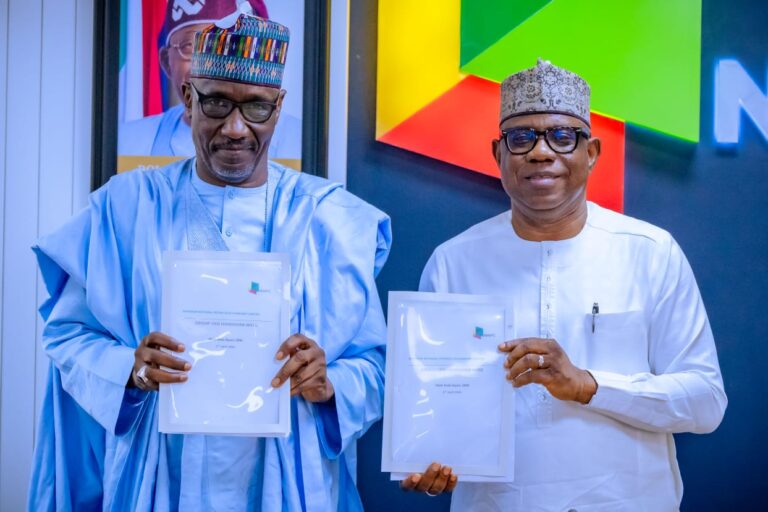
Alausa made the call when the NYSC Director-General, Olakunle Nafiu, visited him in Abuja on Friday, April 4.
According to a statement on Saturday, April 5, by the NYSC Public Relations Director, Caroline Embu, the minister advocates for the extension of national service from one to two years.
He believes it will enable the expansion of the NYSC Skill Acquisition and Entrepreneurship Development (SAED) training programme content for corps members.
“You have done so well as an organisation. Let NYSC give people more opportunities to become job creators that will meet the needs of the country,” Alausa told the NYSC boss.
Responding, Nafiu said the scheme is ready to comply with policy guidelines as directed by the federal government.
“We are also trying to reform the scheme to conform to the present national needs,” the NYSC DG said in response.
The minister was quoted to have hinting at ongoing reform efforts to tackle certificate racketeering.
He commented that efforts were ongoing in the ministry to digitise the verification of foreign-trained graduates of Nigerian origin.
Alausa stressed that the ministry and NYSC would further strengthen their alliance towards the improvement of education for national development.
Further in his remarks, Nafiu called for the establishment of a database of Nigerian youths going abroad to study for degree programmes.
The NYSC DG added that it would help the government have detailed records of Nigerians studying abroad and also eliminate fake graduates.
The ICIR reported in August 2024 that a federal probe revealed that about 22,789 Nigerians were parading fake foreign degree certificates, which were then used to enrol for the NYSC scheme.
It showed that between 2019 and 2023, about 21,600 Nigerians obtained fake certificates from unaccredited universities in the Benin Republic, while another 1,105 got theirs from unaccredited universities in Togo.
In that same year, the government initiated probes and sweeping reforms to block certificate rackets exploiting the system as a result.
AMID President Donald Trump’s impact on global trade, the Nigerian Foreign Affairs Minister Yusuf Tuggar held bilateral talks with the United States Secretary of State, Christopher Landau, to strengthen the relationship between the two countries.
This comes amid the recent U.S. imposition of a 14 per cent tariff on imports from Nigeria, and the announcement of new tariff measures on other countries, including China and the European Union.
According to a post on Friday, April 4, by the U.S. Department of State, the phone conversation focused on a range of issues, including the enhancement of commercial ties, improving security, and furthering the bilateral relationship between the two nations.
Quoting the spokesperson, Tammy Bruce, the statement read, “Deputy Secretary of State Christopher Landau spoke today with Nigerian Foreign Minister Yusuf Tuggar. The call highlighted the United States’ commitment to a strong and enduring partnership with Nigeria.
“Deputy Secretary Landau and Foreign Minister Tuggar discussed several key areas of mutual interest, including strengthening commercial ties, enhancing security, and deepening the bilateral relationship.”
President Donald Trump announced on Wednesday, April 2, that exports from Nigeria to the U.S. would be subject to a 14 per cent tariff.
The decision that he made public during a “Make America Wealthy Again” event in the Rose Garden on Wednesday was part of his plan to address what he perceives as unfair trade practices.
Trump had pointed out that Nigeria imposes a 27 per cent tariff on U.S. exports, which he claimed has been disadvantageous to American businesses.
He sees the imposition of the 14 per cent tariff on exported goods from Nigeria as necessary to address the imbalance.
The U.S. president also framed the tariff as a key part of a larger initiative aimed at protecting American industries.
He emphasised the need for foreign nations to follow what he described as “fair” trade practices.
The ICIR reported earlier that Trump’s new tariffs, which came with immediate effect immediately, affected over 50 countries, including major trade partners such as China, the European Union (EU), India, and Japan, along with developing economies across Asia, Africa, and Latin America.
Trump’s sweeping tariffs are already intensifying a global trade war, sending the international markets into a tailspin and challenging long-established free trade norms.
China and the European Union have vowed retaliation against the levies, The ICIRreported.
NIGERIA’s total public debt rose to N144.67 trillion as of December 31, 2024, the Debt Management Office (DMO) has disclosed.
The debt office revealed this in its latest publication on Nigeria’s debt portfolio on Friday, April 4.
It indicates that the country’s debt stock rose by 48.58 per cent from N97.34 trillion reported as of December 31, 2023.
In dollar terms, Nigeria’s debt profile stood at $94.23 billion as of December 31, 2024 relative to $108.23 billion as of the same period in 2023.
Analysis of the report shows that Nigeria’s public debt worsened by N47.32 trillion in one year under review.
The surge in public debt was driven primarily by significant increases in both external and domestic borrowings.
According to the report, Nigeria’s external debt rose by 83.89 per cent to N70.29 trillion from N38.22 trillion.
This sharp increase was largely attributed to new external borrowings obtained during the year, as well as the impact of the naira depreciation, which inflated the naira equivalent of dollar-denominated debt.
Domestic debt also increased by 25.77 per cent to N74.38 trillion from N59.12 trillion
On a quarter-on-quarter basis, the debt stock rose by N2.35 trillion from N142.32 trillion reported as of September 30, 2024.
The increase can be traced to the additional foreign loans obtained within the last three months to the end of 2024, coupled with the weakening of the naira against major international currencies.
A look at the report indicates that the composition of the debts of December 2024 shows external debt constituted 48.59 per cent against 51.41 per cent of domestic debt.
The continued increase in external borrowings, however, suggests a growing reliance on foreign debt to bridge budgetary shortfalls.
Economic analysts have been wary of the continued rise in Nigeria’s public debt, given its huge implications to the country’s fiscal stability.
The ICIR reports that the federal government depends on both external and domestic borrowing to fund critical projects as it has always witnessed revenue shortfalls.
Amid the revenue shortfalls, there have been calls on the government to be more prudent in its spending while utilising its limited resources for strategic purposes.
The ICIRreported in January this year that each Nigerian was owing over N656,000 in debt per capita as of September 30, 2024.
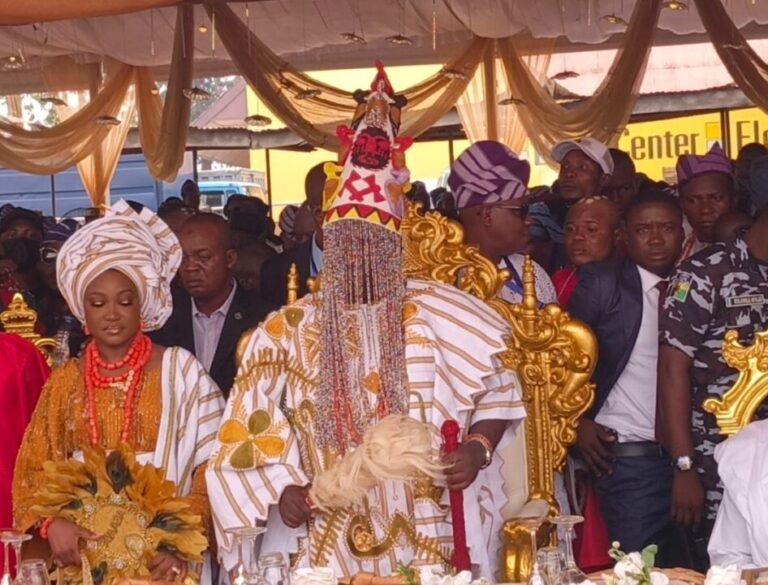
ABIMBOLA Owoade has been officially crowned as the 46th Alaafin of Oyo.
He succeeds the 45th Alaafin of Oyo, Lamidi Adeyemi II, who died in April 2022.
His coronation, held on Saturday, April 5, at Oliveth Baptist High School in Oyo town, drew a crowd of traditional rulers and dignitaries led by Oyo State Governor Seyi Makinde.
Among those present were the Olubadan of Ibadan, Oba Owolabi Olakulehin; the Ooni of Ife, Oba Adeyeye Ogunwusi; the Soun of Ogbomoso, Oba Ghandi Olaoye; Oluwo of Iwo, Oba Abdulrasheed Akanbi; and the Aare Ona Kakanfo of Yorubaland, Iba Gani Adams.
The state governor had on January 13 presented the staff of office to Owoade at the Governor’s Office in Agodi, Ibadan, formally recognising him as the new custodian of the ancient Oyo Kingdom.
At the time, the governor expressed confidence in the monarch’s ability to unify the kingdom and uphold its rich cultural legacy.
Makinde described the monarch as a custodian of Oyo’s rich heritage, expressing optimism that the new Alaafin’s reign would foster unity and preserve the cultural legacy of the historic kingdom.
He said, “We are assured that Oba Owoade will lead with wisdom, integrity, and a strong commitment to fostering unity.”
The ICIR reports that the new Alaafin’s installation came over a year after the demise of Oba Adeyemi III, who reigned for over five decades.
His installation also followed months of deliberations by the Oyomesi, with the traditional kingmakers, who had earlier recommended Lukuman Gbadegesin as the preferred choice to occupy the revered stool.
However, despite his selection by the Oyomesi, who have the responsibility of vetting and recommending kings, Owoade was appointed by the state government on January 10, paving the way for his coronation.
Consequently, the Oyomesi opposed the appointment, describing it as illegal and invalid.
In a letter addressed to the governor and signed by their lawyer, Adekunle Sobaloju, on Friday, January 10, five of the Oyo kingmakers declared the appointment null and void, asserting that they had not recommended the appointee to the state government.
The kingmakers, who made this declaration include Yusuf Akínade, Bashorun of Oyo; Wakeel Akindele, Lagunna of Oyo; and Hamzat Yusuf, Akinniku of Oyo.
Others are Wahab Oyetunji, a warrant chief stand-in for Asipa of Oyo; and Gbadebo Mufutau, a warrant chief stand-in for Alapinní of Oyo.
Although there were controversies surrounding Gbadegesin’s recommendation, the Bashorun of Oyo, Yusuf Akinade, in 2023, insisted that the selection process adhered to due process and was unanimously approved by all seven kingmakers.
THE Kaduna State Police command has disowned and arrested a man identified as Hadaina Hussaini, also known as Dan-Taki, after he threatened violent reprisals over the recent killings in Edo State.
A statement by the command’s spokesperson, Deputy Superintendent of Police (DSP), Mansir Hassan, stressed that Hussaini, who was seen on social media dressed in a police uniform while making the threat, is not a member of the Nigeria Police Force.
Hussaini’s threats surfaced after the murder of 16 northern residents in Uromi, Esan North-East Local Government Area of Edo State.
The ICIR had reported that the victims, who were travelling in a Dangote Cement truck were waylaid around 1.30 pm in the Udune Efandion community by local security.
The incident sparked outrage, with political leaders, including President Bola Tinubu, former Vice President Atiku Abubakar, and former Anambra State Governor and Labour Party (LP) presidential candidate in the 2023 election, Peter Obi, strongly condemning the attack.
Reacting to the attack, in a Facebook post on Tuesday, Hussaini vowed that northerners would retaliate against southerners living in the North.
“I swear to Almighty God, we must do something for you guys, have you forgotten all your brothers that are leaving here in the North? Mark my word, after one week, you shall see the result,” he wrote.
While dismissing the suspect as a police officer, the command’s spokesperson said Hussaini was a former volunteer under the Police Special Constabulary attached to the Kaduna State command.
He noted that he had lost the position two years ago due to ‘questionable character.’
“To set the records straight, Hadian Hussaini is neither a member of the Nigeria Police Force nor a personnel of Kaduna State Police command.
“It is pertinent to note that his picture captured on police uniform as displayed on the social media, which is an improper dressing, is that of him when he was a member of the Police Special Constabulary attached to Kaduna State Constabulary Office. But he was dismissed from the voluntary outfit two years ago due to his questionable character.”
While urging members of the public to carefully observe the identity card attached to the uniform, which he said contains the word ‘PSC/KD’, he stressed that the pictures of him in uniform were posted on the Facebook platform two years ago, before his dismissal.
The police said Hussaini had been taken into custody and would face charges once preliminary investigations are completed.
“The suspect has been arrested and will be charged in court upon the completion of preliminary investigations by extant laws,” he added.
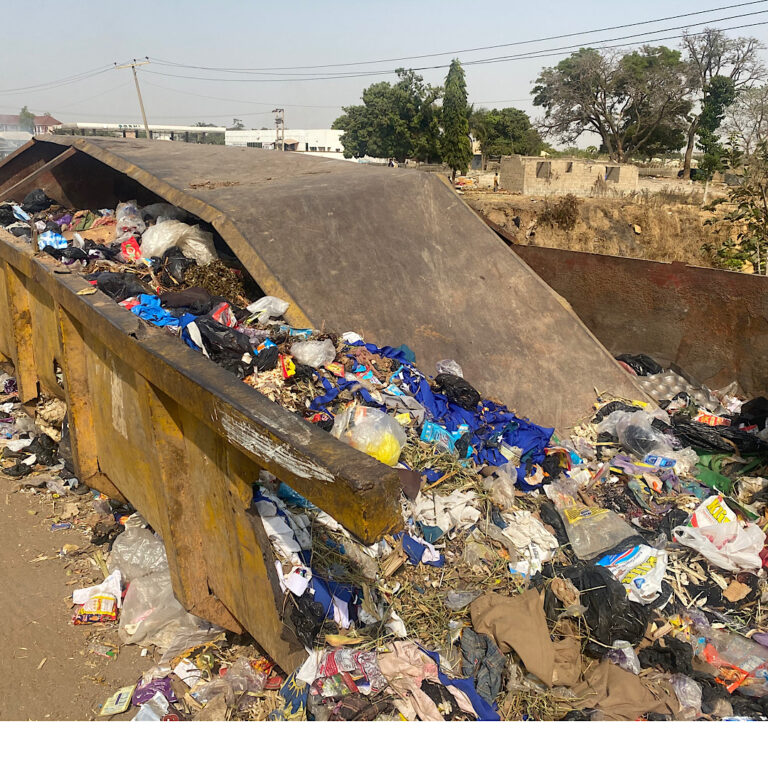
COMMUNITIES within Nyanya and Karshi in Abuja Municipal Area Council (AMAC) continue to be overwhelmed by decaying garbage due to poor waste evacuation, as the regulatory body, Satellite Town Development Department (STDD), fails to take action despite the health implications. Findings reveal that the lack of strategically placed waste collection bins and overall negligence jeopardise public health, pollute the environment, and leave vulnerable communities to suffer dire consequences.
Tessy Akanbi, 33, stood at the entrance of her home, her face etched with a deeply troubled expression as she braided the hair of her neighbour’s four-year-old daughter. It was an intensely sweltering Monday afternoon on January 13, 2025. The oppressive heat palpable in the air enveloped Kurudu community in the Federal Capital Territory (FCT).
Tessy’s focus was fixed on the intricate weaves she was crafting, but every few seconds, she paused to sniff. The air around her was thick and tainted, a cloying mix of acrid smoke and pungent odours wafting from the nearby dumpsite.
Tessy’s home stood just a short distance from the site of a wrecked waste collection bin and huge, indiscriminate dumpsite that had become a nightmare for her and the entire community. When The ICIR visited the area on that particular afternoon, the dumpsite was ablaze, releasing thick plumes of smoke into the air.
Tessy’s placed the blame squarely on the shoulders of the Satellite Town Development Department (STDD), accusing the agency of gross negligence and an appalling approach to waste management. She recounted the distress she and her children had endured over the years, battling various illnesses, some of which she couldn’t even identify.
Tessy Akanbi stood in front of house in kurudu community Photo Credit: Muritala Abdullahi/The ICIR
The Satellite Town Development Department (STDD)is responsible for the planning, development, and maintenance of satellite towns—urban areas designed to ease congestion in major cities. It oversees infrastructure projects, including road construction, waste management, drainage systems, and public utilities, to ensure sustainable urban growth.
“We’ve had to battle all kinds of diseases. Malaria is the most common because of the mosquitoes breeding in the waste. Sometimes my children and I experience bouts of diarrhoea, but I assume it’s caused by the heat because I always had to shut the windows and doors to block out the bad odour from the dumpsite. But during the rainy season, no amount of closure can stop the odour from coming in,” Tessy said.
Daily struggles with garbage, diseases
Tessy’s frustrations were echoed by other residents, who confirmed the challenges posed by the STDD’s mismanagement. Many criticised the department not only for placing the garbage bin in such an unsuitable location but also for its negligence toward waste disposal and their failure to replace the wrecked bans, which had made life unbearable for the community.
Tessy recalled how residents had repeatedly pleaded with the STDD to relocate the garbage bin, but their appeals were ignored. She highlighted the agency’s failure to clear the waste regularly, leaving the area overflowing with garbage for months at a time and enveloping the neighbourhood in a nauseating stench.
Dumpsite at Karu community close to the road after the garbage bin was removed.
“The worst part is that they leave the waste unattended for so long, allowing the pile to grow and the environment to smell,” she lamented.
The hairstylist and mother of two said, “Last December they came to pack the waste only once, and they made us celebrate Christmas and New Year’s Eve in this mess.
“In the space of a week, I had to rush my two children to Jikwoyi Primary Healthcare Centre (PHC). It started with my firstborn, Sharon, who had a very wild temperature, and I took her to the hospital. In less than a week my 8-month-old baby Ivan, was knocked down too,” she said.
TheICIR observed the baby’s face was covered with rashes when Tessy was asked about what the cause was, she said the baby had rash since birth and maybe had probably transmitted the skin disease to the boy.
Tessy thought of relocating from the area many times, but couldn’t afford rent elsewhere, said, “You know the cost of renting an apartment in Abuja has skyrocketed and my husband and I can’t afford any currently, she added.
Improperly managed waste has been linked to various skin diseases due to direct exposure to harmful substances and pathogens present in indiscriminate waste disposal. A study published in the International Journal of Dermatology on the relationship between garbage exposure and skin diseases, found significant associations with conditions such as skin infections, rashes, and systemic lupus erythematosus.
According to the World Health Organization (WHO) report of international experts on Environmental Health Criteria, exposure to ammonia and other by-products of organic waste decomposition can cause irritation of the respiratory tract, increasing the risk of infections and diseases like asthma and bronchitis.
As of October 13, 2024, Nigeria has reported a total of 14,237 cholera cases and 378 deaths across 35 states and the Federal Capital Territory (FCT). The Nigeria Centre for Disease Control and Prevention (NCDC) has identified northern states such as Borno, Adamawa, Jigawa, Yobe, and Kano as the current epicentres of the outbreak
Muhammadu and his children at their trampoline in Kurudu community. Photo credit: Muritala Abdullahi/ ICIR
Muhammadu Sanni, a 50-year-old internally displaced person, and his family are among the affected residents of Kurudu village. He lives in an uncompleted building near the dumpsite. He was displaced from Talata Mafara, a community in Zamfara State, after bandits ravaged his village in 2019.
Beyond enduring the harsh cold near the river, the presence of the dumpsite has only worsened Muhammadu’s struggles, he said, recounting his harrowing experiences.
Muhammadu also expressed his frustration with the STDD, stating that he had clashed with its supervisor multiple times over the agency’s failures, which, according to him, have led to indiscriminate waste disposal and worsening conditions in the area.
“People dump all sorts of things here—sometimes even dead dogs and other animals. The stench is unbearable, making it difficult for my family to breathe. I often have to collect and burn the carcasses myself. STDD has failed in many ways. Look at that garbage bin—it has been in the same deteriorated state for years, yet they have refused to replace it,” Muhammadu lamented.
Damaged waste collection bin chokes Kpegi community
In the Kpegi market, near Kurudu, the situation is dire. The waste collection bin is not only severely damaged, but its proximity to the marketplace poses significant health risks. Shops are so close, and the nearest one which belongs to Nasiru Muhammed, a 30-year-old fruit vendor, is just a step away from the garbage bin. The fruits on his table are being patrolled by flies.
Three-month-old waste inside wrecked garbage ban in Kpegyi market. Photo: Muritala Abdullahi/ ICIR
When asked why he chose such a location to sell fruits, Nasiru explained that he once left but returned due to demand for fruit in the area.
“In 2020, I had to leave this place after they brought the bin here. I pleaded with them to move it because of my business, but I was told it was a government decision and that I should leave. One of their supervisors even threatened me,” Nasiru said.
He continued, “Since then I have been battling with different issues. First, there is low patronage because many of my customers have stopped buying from me, and my fruits often spoil, which has put me in so much debt. I feel like quitting, but I don’t know how to do something else. I have also frequently battled various illnesses,” Nasiru said.
Nasiru was devastated at his table in Kpegyi market, frowning at his fruit as they got rotten due to lack of patronage. Photo credit: Muritala Abdullahi/ ICIR
Hamisu Aliyu, a 45-year-old shoe vendor who has also endured the bin’s presence, recounted his harrowing experience. Like Nasiru, he explained that he had been running his stall for six years before the bin was placed there and its arrival began to threaten his livelihood.
“I just recovered from malaria and typhoid not too long ago. If you had come here a few days ago, you wouldn’t have met me because I was in the hospital receiving treatment,” he said.
Hamisu revealed that for the past three months, the STDD had failed to clear the waste. He recounted that when some market members lodged a complaint, the agency explained that the garbage bin had collapsed at its base, making it impossible to move.
“They said the only solution would be to get a replacement bin to transfer the refuse into for disposal, but they don’t have a spare bin to do that,” Hamisu explained.
There was a time during the construction of this road when they brought the one from Jikwoyi in addition to the bad one. But it was withdrawn after a short while.” Hamisu narrated.
Bin locations violate professional guideline
Proper placement of waste collection bins is essential to minimise public health risks and environmental contamination. While specific guidelines may vary by region, several best practices are widely recommended. For instance, the City of Waco in the US advises placing bins at the curb or alley line by 6:00 a.m. on the scheduled pickup day. Bins should be positioned at least four feet from any obstruction, including vehicles, fences, mailboxes, and power poles, to allow easy access for collection trucks and ensure public pathways remain clear. Similarly, the City of Olympia also in the US emphasizes the importance of keeping sidewalks and bike lanes unobstructed when placing waste bins to maintain pedestrian and cyclist safety.
A study on waste management in Abuja’s satellite towns reveals inconsistencies in waste collection practices. While the Abuja Environmental Protection Board (AEPB) oversees waste management in areas like Nyanya ward, other wards such as Karu, Orozo, and Karshi fall under the jurisdiction of STDD. The study highlights that, in middle- and high-income areas, waste contractors collect garbage stored in community bins. However, the improper placement of these bins often leads to environmental hazards and public health challenges.
Implementing standardised bin placement guidelines is crucial for effective waste management and safeguarding public health. Clear regulations, such as those recommended by municipalities like Waco and Olympia, ensure that waste is collected efficiently without disrupting community spaces. Adopting similar guidelines in satellite towns could mitigate health risks and improve the overall cleanliness of these areas.
Behind Nasiru’s fruit stand is a food vendor, Covenant Emeka, 46, who also claimed to have been in the market for the last 20 years, However, she was reluctant to speak because of fear of intimidation from STDD. She has had many encounters with STDD, including leading members of the market to their office to lodge a complaint. She also re-echoed Nasiru and Hamisu’s frustration, adding that she suffered different setbacks in her business over the last four years.
“Many people have stopped patronising me because of the dirt. Besides that, people are now forced to pour dirt on the ground. I have been managing the dumpsite now for a while for the sake of my customers and all the market members,” she told ICIR
Emeka said some unknown people who were tired of dirt set the bin on fire, sometimes after they left the market, adding that the fire lasted till the next day with smoke spreading around the market area.
We outsourced waste management contracts – STDD
When ICIR visited the STDD office in Karshi on January 14, 2025, Meeme Felicia, the agency’s Public Relations Officer, denied responsibility, stating that some waste management contracts had been outsourced.
“You can’t say STDD is in charge of all these areas you mentioned, we have contracted some areas out and we are working to evacuate the waste.
“I will have to take permission to speak with you on this and also communicate your request to the coordinator,” she said on the phone.
While explaining that the process occurs at different times across various area councils, she noted that speaking with the coordinator directly required approval from the FCT minister.
Findings indicate that the Satellite Town Development Department (STDD) was allocated ₦116 billion from the FCT 1.15 trillion 2024 Budget for infrastructure and waste management projects. It is however not clear how much was disbursed.
Damaged waste collection bin at STDD’s compound in Karshi village. Photo Credit: Muritala Abdullahi/ICIR
During The ICIR’s visit to the agency’s office, wrecked bins are packed in one corner of the compound.
The ICIR reached out to the Abuja Environmental Protection Board (AEPB), the agency saddled with enforcement and regulations of all environmental legislation in FCT.
The AEPB Head of Information Janet Peni, declined to speak. She asked The ICIR to write to the FCT Minister through the agency’s director.
“We are not permitted to speak with the press.
“You are to write to Wike [FCT minister] that you want to speak with our agency on this subject matter, hence he can ask the AMMC Coordinator to speak with you,” Janet said.
Scavengers inflict more pains
Recall that ICIRreported in 2022 that police clampdown on scavengers after its earlier bans on their operation in the city.
During the visits, The ICIR observed most of the dumpsters and dumpsites were being set on fire. On the site, some groups of people were seen with their sacks hunting and handpicking metals and other materials from the dumpsite.
Collage images of Scavengers terrorizing the Communities including their base in Kurudu community. Photo Credit: Muritala Abdullahi
Community members accused them of setting the waste site on fire for their interest. The burning of waste also contributes to environmental pollution.
Several scavengers, spoken with denied the allegation. One of them, Aliyu Maigatari, 20, who was scavenging at one of the dumpsites, insisted that they are not responsible for the fires. He maintained that there were more valuable materials aside from metals.
Health implications
When The ICIR visited the Primary Healthcare Centres in Kurudu Jikwoyi and Karu on January 14 to document the impact of the poorly managed waste on residents’ health, several patients queued in the facilities for treatment but the doctors on duty barred this reporter from speaking with people despite explaining the purpose of the visit.
The location of the bin at Jikwoyi PHC looked after the bin was taken for waste evacuation. Photo Credit: Muritala Abdullahi/ICIR
The official of the PHC who was regarded as the head, declined to comment on record saying she needed an approval letter to speak.
More tales of garbage disposal
On Tuesday morning of January 14, 2025, the sunlight shone over Karu community, casting a warm glow over Josephine James as she set up her umbrella at the spot where she runs her Point of Sale (P.O.S.) business.
Surprisingly, the 50-year-old appears unfazed by the pungent odour wafting from the massive dumpsite across the road. Despite the overpowering stench, daily activities continue undisturbed, with residents going about their business as if unbothered.
The dumpsite is so vast that it is gradually encroaching onto the road. The deteriorating state of the environment has fallen far below the standards outlined in the UN sustainable development goal (SDG) 11.
Mountain of dumpsite encroaching to the road in Karu village. Photo Credit: Muritala Abdullahi/ICIR
Josephine revealed that the dumpsite had slowly crept into the community over time, stressing that the area had even earned the Hausa name for a dumpsite, “bola,” due to the towering height of the accumulated waste. According to her, the indiscriminate waste disposal in the community stemmed from the irregularities of the Satellite Towns Development Department (STDD) in handling waste management.
She recalled that when she moved into the area eight years ago, there was a garbage bin designated for waste collection. However, its original location near the river led to severe flooding, which destroyed homes before authorities relocated it to the current site.
“We’ve given up on complaining, to be honest. Several media outlets, including Channels TV and Arise News, have come here to interview us, but nothing has changed. We’ve been living in this unhealthy environment, breathing in the foul air from the dumpsite, which has jeopardised our health and businesses. Only those who live here have gotten used to it,” Josephine told The ICIR.
Josephine James a resident of Karu community. Photo Credit: Muritala Abdullahi/ICIR
Josephine said the STDD ought to reposition the waste bin back to the community and ensure consistent evacuation of the waste, because lack of these operation had led to indiscriminate waste disposal even from people outside the community.
Like Josephine, a shop owner Alex Odili, who sells bicycle parts also lamented the effect of the dumpsite on the community, he said aside the health issues posed by the dumpsite it has become a hotspot of crime. He noted that the scavengers feasting on the dumpsite fed day and night and made them use the opportunity to rob people of their belongings.
“When it is 9: pm you can’t walk pass here alone; especially that terrain that the scavengers are. They will rob and injure you if you drag with them,” he said.
Alex Odili, the bicycle part seller in Karu Village. Photo Credit: Muritala Abdullahi/ ICIR
Way forward Expert
Emmanuel Kilaso, an environment and sustainable development expert, said, “The key to effective waste management lies in positioning waste collection bins in areas that allow for efficient waste disposal while minimising exposure to harmful emissions.”
He said poor waste management has severe consequences for public health and the environment.
“One of the most concerning consequences is the air pollution caused by the burning of unsegregated waste, including plastics and hazardous materials, which release harmful chemicals into the atmosphere, leading to respiratory issues and other health problems,” he said.
NIGERIA’s 2025 budget will most likely face implementation challenges with the consistent drop in crude oil price, hitting its lowest level at $65 per barrel in 4 years at the weekend.
Nigeria relies hugely on the proceeds from its oil resources to fund a large chunk of its national budget. However, a drop from the $75 per barrel benchmark will cause possible upset while increasing the chances of further borrowing from the government.
The 2025 budget of N54.99 trillion signed into law by President Bola Tinubu on Friday, February 28, shows a crude oil budgetary benchmark price of $75 per barrel, a 2.06 million barrels per day (bpd) production target at an exchange rate of N1,500 per dollar.
A further highlight is that the government is targeting N34.8 trillion in revenue to fund the budget, of which the bulk of the revenue will come from crude oil proceeds.
It projects that crude oil will bring in N19.6 trillion in revenue, while non-oil sources would come in at N15.22 trillion.
With Nigeria far from meeting its crude oil output benchmark and falling price in crude oil prices, the proper implementation of the 2025 budget appears gloomy.
Crude oil prices have continued on a downward trend in recent times in the international market as the United States (U.S) economic policies tend towards a global trade war.
Since his inauguration on January 20 this year as US President, Donald Trump has been pushing to protect his country’s economy.
This is seen in the many executive orders he signed. Upon resuming office on the first day, he signed about 41 executive orders.
Since then, the 78-year-old Trump has been on a mantra to ‘make America wealthy again.’
He believes his tariff war policies would restore the US economy to a lost “Golden Age.”
He also believes America for decades has been looted, pillaged, raped and plundered by nations near and far, both friend and foe alike.
On Wednesday, April 2, Trump imposed new tariffs, which came with immediate effect, on over 50 countries, including major trade partners such as China, the European Union (EU), India, and Japan, along with developing economies across Asia, Africa, and Latin America.
These new sweeping tariffs on imports from other countries, which appear to indicate that Trump is intensifying a global trade war, have sent the international markets into a tailspin and challenged long-established free trade norms.
China and the European Union have even vowed retaliation against the levies, The ICIRreported.
On Friday, April 4, Brent crude oil price fell to $65.58 per barrel for the first time in four years.
During the day’s trading, Brent crude price, the global oil benchmark, depreciated by seven per cent to trade at $65.58 — the lowest since April 2021.
The US West Texas Intermediate (WTI) also dropped by 7.35 per cent to 62.03 per barrel.
Reuters reported that the crude oil price dropped as China increased tariffs on US goods in a retaliatory move, sharply intensifying a global trade war that has investors worried about a recession.
Nigeria was also affected by the new sweeping global tariffs on all imports into the US as Trump imposed a 14 per cent tariff on Nigerian goods.
The International Monetary Fund (IMF) and World Trade Organisation (WTO), on their part, have warned that the new tariffs pose a significant risk to the global economy as most economies are passing through a time of sluggish growth.
This is as the drop in oil prices also follows an increase in oil production by the Organisation of Petroleum Exporting Countries (OPEC) and its allies (OPEC+) by 411,000 barrels per day (bpd) in May.
The development came as eight member countries decided to phase out oil output cuts.
The unimaginable drop in crude oil price now puts Nigeria’s budget implementation at risk as the country funds about 75 per cent of the yearly budget from revenues from crude oil sales.
Also of concern, as earlier reported by The ICIR, is that Nigeria has not been meeting its OPEC’s daily crude oil production quota of 1.5 million bpd, which it has continued to blame largely on insecurity and infrastructure decay.
There are further concerns that crude oil prices would average and hover around $70 per barrel, with some fluctuations depending on the specific benchmark.
Sources, including Statista, a research firm, project Brent crude oil to average an annual spot price of $74.5 per barrel in 2025.
THE newly appointed Group Chief Executive Officer (GCEO) of Nigerian National Petroleum Company Limited (NNPCL), Bayo Ojulari, has officially taken over the reins of the company, pledging to consolidate on the achievements of his predecessor.
He took over the mantle of leadership from his predecessor, Mele Kyari, at an official handover ceremony at the NNPC Towers in Abuja on Friday, April 4, according to a statement by the company’s chief corporate communications officer, Olufemi Soneye.
The new helmsman at the state-owned oil company noted that the objective of his lead management would be to consolidate the successes of his predecessor and take the company to the next level.
He said though the targets set for his management were quite enormous, he would be relying on the cooperation of the management and staff of the company, as well as the counsel of his predecessor, to achieve the set targets.
He commended Kyari for his contributions to the growth of NNPCL and his sterling service to the nation.
“I will be counting on your support. I will need it. I will be coming around to seek your counsel,” Ojulari told Kyari.
In his remarks, Kyari congratulated Ojulari and thanked the management and staff of the company for their support while in office.
The former NNPCL boss pledged to do everything within his power to support the new management to succeed, stressing that he would only be a call away.
President Bola Tinubu had on Wednesday, April 2, sacked Kyari, along with board chairman Pius Akinyelure and other board members, The ICIRreported.
He replaced the former border with Ojulari as the GCEO and Ahmadu Musa Kida as the non-executive chairman.
The shakeup saw a complete overhaul of the 11-man board appointed in November 2023.
In the new appointment, the President named Adedapo Segun as the chief financial officer and appointed six non-executive directors to represent Nigeria’s geopolitical zones.
They are Bello Rabiu (North West), Yusuf Usman (North East), Babs Omotowa (North Central), Austin Avuru (South-South), David Ige (South West), and Henry Obih (South East).
Tinubu also appointed Lydia Shehu Jafiya, the permanent secretary of the Federal Ministry of Finance, and Aminu Said Ahmed from the Ministry of Petroleum Resources to the board.
The president said he acted in line with Section 59(2) of the Petroleum Industry Act (PIA) 2021, stressing his decision was necessary to enhance operational efficiency, restore investor confidence, boost local content, and advance gas commercialisation and diversification.
He directed the new board to conduct a strategic portfolio review of NNPCL-operated and joint venture assets to align them with value maximisation objectives.
THE Federal Government has officially reopened the Independence Bridge in Lagos after the severe traffic repair work on the site on Wednesday night.
The Minister of Works, David Umahi, reportedly oversaw the reopening on Friday, April 4.
He said the initial closure of the bridge was prompted by a structural failure involving the approach slab of the bridge, which caved in due to a faulty design.
The ICIRreported that the Independence Bridge closure caused severe traffic congestion on Wednesday and Thursday morning due to ongoing repair work on the site.
Its closure was to allow for essential repairs. However Lagosians were left stranded, resulting in poor management of traffic.
As a result, the Lagos State Governor, Babajide Sanwo-Olu had to render a public apology to Lagosians, assuring of adequate deployment of road traffic officers and proper management of the road.
On March 16, the Lagos state government announced the shutdown of the Independence/Mekwen Bridge (inbound Marina/CMS route) for two months to allow emergency repairs, The ICIR earlier reported.
Commenting on the reopening, the minister explained that the initial construction of the approach slab was done as a cantilever, which was structurally inappropriate.
“It’s not supposed to be a cantilever. What we had was a free-standing approach slab, which is incorrect. Every approach slab must have at least one end fixed,” Umahi explained.
He said the slab failed when the sand fill beneath it leaked, compromising the structure and posing a serious risk to commuters.
He admitted that proper procedures were not followed in announcing the closure.
“The mistake that the controller, Olukorede Kesha, made was that she did not notify us. We also didn’t adequately inform Lagosians of the alternative routes,” Umahi said.
Commenting on plans to avert future occurrences; the minister disclosed that the government plans to introduce a standardised national procedure for road and bridge closures.
“Going forward, no road or bridge in Nigeria will be closed without a clearly defined process. Controllers must submit drone surveys, state the nature of the technical problem and solution, propose alternative routes, and publish this information to the public,” Umahi maintained.
He hinted at the government’s plan to redesign the project as a one-span bridge, stressing it will eliminate the lateral head pressure on the abutment and address unknown factors such as piling depth.
He noted that the Third Mainland, Carter, and Iddo bridges, held by skin-friction piling, depend on the surrounding sand for stability.
“Any scouring or sand excavation puts the piles at risk,” he said, noting that ongoing studies will guide further reinforcement work,” he said.
He added that more permanent works are to commence on the site in three weeks, once the integrity of underground pipes is verified.
Umahi said that going forward, the road works would be split into two phases, with each phase lasting about 21 days, even as some construction schedules would be carried out exclusively on weekends or at night.
“This is not just about engineering; it’s about communication, safety, and accountability. We owe it to Nigerians to do better,” the minister stated.
THE Federal High Court sitting in Abuja has restrained Natasha Akpoti-Uduaghan, a senator representing Kogi Central, the Senate President, Godswill Akpabio, and three others from granting press interviews on issues relating to the six-month suspension of Akpoti-Uduaghan.
The case filed by suspended Akpoti-Uduaghan against the President of the Senate, Godswill Akpabio, and three others challenges her suspension by the Nigerian Senate.
In her prayers to the Court, she argued that she was not accorded a fair hearing before the Senate suspended her.
While presiding over the case on Friday, August 4, Binta Nyako, a Justice, barred subsequent press interviews by all parties and their lawyers on the case, according to Channels Television.
Nyako’s ruling followed a complaint raised by Kehinde Ogunwumiju, a Senior Advocate of Nigeria (SAN) and a counsel to Akpabio, who said the plaintiff has been granting interviews on the matter currently pending before the court.
He further mentioned that the plaintiff had appeared on the British Broadcasting Corporation (BBC) and Cable News Network (CNN) to speak on the issue.
Nyako, however, prohibited the parties and their legal representatives from also live-streaming the case proceedings on social media.
During the hearing, Jibril Okutepa, counsel for Akpoti-Uduaghan, informed the court that the case was appearing for the first time after being transferred from Obiora Egwuatu’s court, stating that all relevant documents had been filed and exchanged except one, and requested a consolidated hearing of all pending applications alongside the main suit.
Okutepa emphasised the urgency of the matter, noting that his client’s suspension was for a limited period and she sought a swift resolution.
While counsel for the Clerk of the National Assembly, Charles Iyoila, and Paul Daudu, representing the Senate, did not oppose Okutepa’s request, Ogunwumiju and Umeh Kalu (SAN), representing Senator Neda Imasuem, objected.
But the presiding judge, Nyako, ruled in favour of Okutepa, allowing the consolidated hearing and scheduled proceedings for May 12.
The ICIR reports that Natasha is challenging the Senate’s decision to suspend her for six months over alleged misconduct.
The suspension, which took effect from March 6, means that the lawmaker would be barred from accessing the National Assembly premises, and her office will be locked over the period.
The punishment also extended to her salary and those of her legislative aides being withheld for the duration of the suspension.
The Senate further ruled that Akpoti-Uduaghan would not be allowed to represent Nigeria in any official capacity while serving the suspension.
This was, however, despite the court order that barred the Senate from continuing with the investigation.
Background
The crisis began on February 20 when Akpoti-Uduaghan protested a reassignment of her seat in the Senate without prior notice.
She resisted the change, calling it an attempt to silence her, while Senate Chief Whip, Tahir Monguno, justified the move, citing Senate rules and party affiliations.
Her protest led to a heated exchange with Akpabio, who ordered the sergeant-at-arms to remove her from the chamber.
This led to the Senate’s unanimously referring her to the Ethics Committee for disciplinary review, which later recommended her suspension.
Amid the dispute, in an interview on Arise Television, she accused Akpabio of making repeated sexual advances toward her, which she said she rejected.
She alleged that her refusal was the reason behind their frequent clashes at plenary sessions.
According to her, some of Akpabio’s love proposals were made with her on the phone and face-to-face in her husband’s presence. She further alleged that she had all the evidence for her claims.
The ICIR reported that, amid the crisis, the lawmaker filed a N100 billion defamation lawsuit against Akpabioand his aide, Mfon Patrick.
Akpoti-Uduaghan claimed that a Facebook post by Patrick allegedly contained defamatory remarks about her legislative competence and personal appearance.