MTN Nigeria, in partnership with the Pan-Atlantic University, has launched applications for the 2025 Media Innovation Programme (MIP).
The six-week, fully funded fellowship aims to equip Nigerian media practitioners and content creators with skills in media innovation and telecommunications.
The fourth cohort of the MTN Nigeria programme is set to run from May 19 to October 24, 2025, featuring 20 selected Nigerian journalists from various media organisations.
The programme offers classroom sessions, a study trip to South Africa, and industry visits.
Applicants must be Nigerian media professionals with a valid international passport.
THE senator representing Kogi Central Senatorial District, Natasha Akpoti-Uduaghan, has called on Nigerians to hold Governor Ahmed Ododo, former Governor Yahaya Bello, and Senate President Godswill Akpabio ‘wholly’ accountable for any violence that may arise during her homecoming event in her state.
In a Facebook post hours before the event, on Tuesday, April 1, Akpoti-Uduaghan urged her supporters to maintain a peaceful atmosphere during the visit, which she said was for the celebration of the Eid-el-Fitri.
She warned that if the rally was infiltrated by violence, the aforementioned political figures should be held responsible.
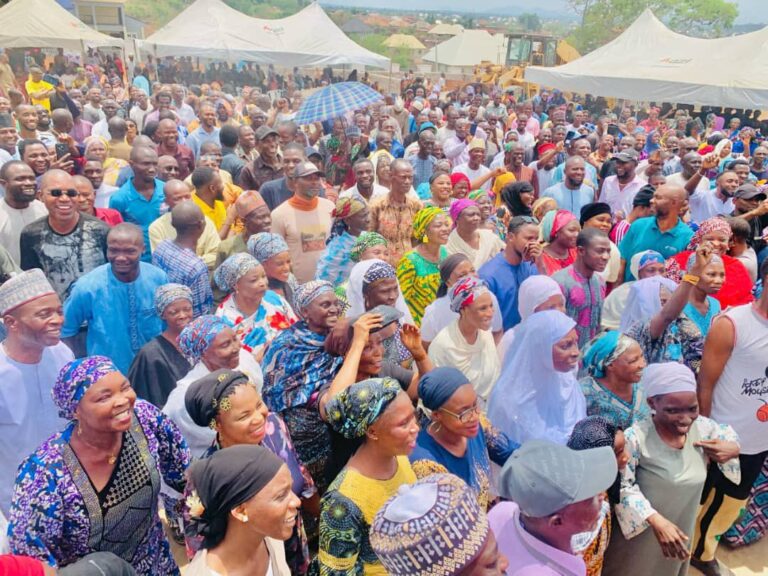
The ICIR reports that despite a police order asking Akpoti-Uduaghan to cancel her homecoming rally, a Kogi State ban on public gatherings, and a curfew imposed in the Okehi Local Government Area where her residence is located, hundreds of Akpoti-Uduaghan’s supporters are currently jubilating at her Ihima home.
The event, widely believed to mark her return to her senatorial district following the crisis she had faced at the Senate, saw her supporters dancing and chanting in her honour, defying the security restrictions and ban, which many Nigerians see as political intimidation.
A video update by AIT showed a lively celebration at her residence despite the curfew that had been imposed by the Okehi Local Government Area.
Similarly, a post on X by Arise TV journalist Rufai Oseni shows hundreds of the lawmaker’s admirers dancing and chanting solidarity songs in her home in Ihima.
The senator who said she had to fly in with helicopter said she was breaking no law.
“Yesterday, we heard on the news that rallies and gatherings will not be allowed, that roads will be blocked, and convoys leading into the state will not be allowed. I knew that we were the targets. But then I said, this is not political season, this is not campaign time.We are not having a rally. This is just me, the Senator representing Kogi Central, coming down to her people to celebrate this festive time – the Sallah with you, and there is nothing wrong with that. I am breaking no law. This is Nigeria. We have the right to be free, to express our choice in gatherings and celebrations, ” she told her supporters.
Backstory
The ICIR reports that the Kogi State Government had, on Monday, March 31, imposed a ban on rallies and public gatherings, citing security concerns and intelligence reports that some individuals were planning violent demonstrations in the name of “political agitation”.
The government also warned that anyone coming into the state with a convoy of security personnel must seek clearance.
“While the government recognises the constitutional rights of citizens to gather and express themselves, security considerations must take precedence in the interest of public safety. As such, no individual, group, or organisation is permitted to hold any form of rally within the state until further notice,” part of the statement read.
This ban was further accompanied by the Nigerian Police Force in the state asking Akpoti-Uduagan to cancel her planned homecoming rally.
The Police Command in the state stated this in a statement signed by its Public Relations Officer, William Aya, and released to journalists hours before the rally.
According to the statement, the Kogi State Commissioner of Police, Miller Dantawaye, said the rally was against the state government’s ban on political gatherings issued on Monday, March 31.
Similarly, the order was followed with a curfew in the Okehi Local Government Area, which restricts movement and gatherings, particularly near Akpoti-Uduaghan’s residence.
“Anyone found gathering or walking around restricted areas without permission from the relevant authorities will be arrested and charged to court. This is in line with the directive of the state government and the Kogi State Commissioner of Police”.
Meanwhile, Akpoti-Uduaghan has insisted that her visit to her district is to enable her to celebrate Eid-el-Fitri with her constituents.
The ICIR reports that with her supporters continuing to gather, dance and sing at the event, many Nigerians have lauded her resilience and determination to fight against what they described as political suppression.
They also questioned the attempt to recall her, considering the number of supporters who gathered at the event.
Recall that the Independent National Electoral Commission (INEC) confirmed the receipt of documents showing that the suspended senator’s constituents are recalling her from the National Assembly.
Akpoti-Uduaghan was suspended from the Senate due to an altercation she had with Senate President Godswill Akpabio over seating arrangement.
Following the altercation, which led to Akpabio ordering the sergeant-at-arm to eject her from the Senate Chamber, the female lawmaker accused the Senate President of sexual harassment.
The report was updated to include Natasha’s comment.
KYIV reported on Tuesday, April 1, that Russian strikes left tens of thousands of people in southern Ukraine without power, despite the Kremlin’s agreement that it was not targeting the country’s energy infrastructure.
This was revealed by the Ukrainian Foreign Minister Andriy Sybiga, who told a news conference that Russia had continued targeting energy infrastructure despite agreeing to a temporary halt on strikes against Ukrainian energy sites.
The ICIR reported that Russia had dismissed a joint United States-Ukrainian proposal for an unconditional ceasefire but claims to have agreed to a temporary halt on strikes against Ukrainian energy sites.
“This morning, another Russian strike damaged a power facility in Kherson, leaving 45,000 residents without electricity,” Sybiga said.
According to the minister, after the talks in Riyadh, Russia targeted energy facilities in Kharkiv, the Poltava region, and Kherson.
He added that in the early hours of Tuesday, another energy facility in the city was attacked, leaving 45,000 residents without electricity.
“After Riyadh, one of the agreements with the United States was to refrain from striking energy infrastructure. At the same time, Russia continues to violate this agreement,”
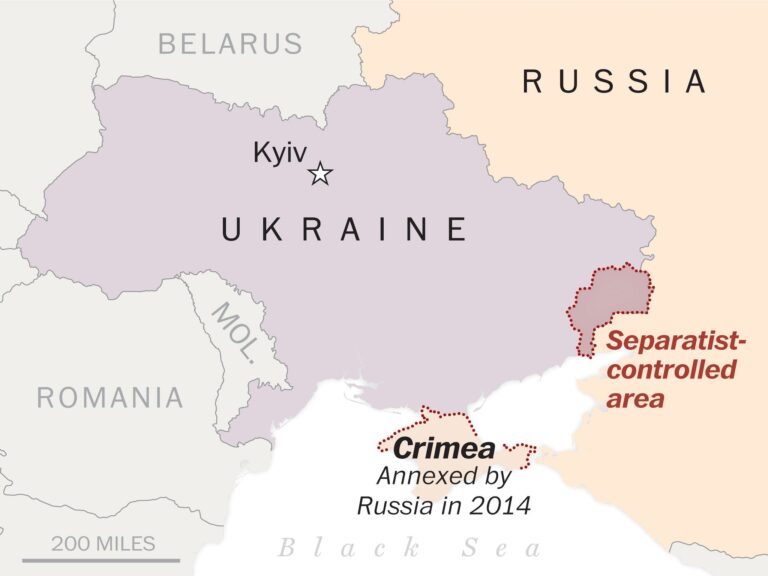
Since invading in February 2022, Russia has carried out systematic aerial attacks on Ukraine.
Moscow has also accused Kyiv of targeting Russian energy sites and reported fresh attacks on Tuesday in Russia’s Belgorod region and the partially Moscow-controlled Ukrainian region of Zaporizhzhia.
Sybiga also said that Kyiv and Washington were engaging in new discussions on a minerals agreement, which would grant the United States access to Ukrainian natural resources in exchange for increased support.
“It is always important to strengthen the presence of American business in Ukraine, so this process is ongoing, and we will work with our American colleagues to reach a mutually acceptable text for signing,” he added.
The ICIR reported that the two countries were set to sign an agreement last month on extracting Ukraine’s strategically vital minerals, but the deal was derailed by a dramatic televised confrontation between Trump and Ukrainian President Volodymyr Zelensky.
However, Trump warned Zelensky on Sunday, March 30, that Kyiv would face “big problems” if it rejected the latest US proposal, the details of which have not been disclosed by either side.
THE Director-General of the Securities and Exchange Commission (SEC), Emomotimi Agama, has announced that the newly signed Investment and Securities Act (ISA) 2025 gives the commission the authority to prosecute individuals promoting Ponzi schemes. These individuals could face a minimum of 10 years in prison.
Agama made this statement during an interview on Arise TV Exchange on Tuesday, April 1, while discussing the new law. President Bola Tinubu signed the ISA 2025 into law on Friday, March 29. The new Act replaces the previous ISA 2007.
The goal of the new legislation is to strengthen the legal framework governing Nigeria’s capital market, better protect investors, and introduce reforms that will promote market integrity, transparency, and sustainable growth.
Agama stated that, previously, the SEC lacked the legal power to prosecute Ponzi scheme operators, which made it difficult to bring offenders to justice. However, under the new law, those convicted of operating Ponzi schemes face a jail term of 10 years or more
“With the new law, they now face a 10-year jail term and beyond,” he said.
He further explained that the Act stipulates a minimum fine of N20 million for anyone operating a Ponzi scheme in Nigeria.
“So, N20 million is not the entire penalty or the entire money that will be charged or sanctioned to any suspecting or any accused capital market or non-capital market operator.
“It is just part of the penalties and or the sanctions that will be meted against such persons” Agama explained.
The SEC Director-General also said that sanctions will include “disgorgement,” meaning that any profits or gains obtained from defrauding Nigerians will be recovered.
He said, “It is not about the quantum of the fraud, it is about sanctions that would deter people from even getting into it.
“The new law provides the SEC the powers to be able to do that and even more to go after these people, bring them to book and make sure that we acanrestitute the citizens as long as much as possible.”
Additionally, the new Act grants the SEC the authority to obtain and request telephone conversations and other communications needed to prosecute Ponzi scheme operators.
Agama stated that the SEC now has the necessary tools to take action against fraudulent operators and provide relief to Nigerians. He added that the new Act will help remove “bad actors” from the market and increase investor confidence in the Nigerian capital market, as the SEC’s ability to protect investors has been enhanced.
THE Pulitzer Center has opened applications for its Data Journalism Grants, aimed at supporting investigative projects that employ advanced data analysis to expose underreported issues.
The grant is open to freelance and staff journalists as well as collaborative newsroom teams globally.
The initiative seeks projects employing machine learning, satellite imagery, spatial data analysis, and other immersive techniques to produce compelling, data-driven storytelling.
Proposals that emphasise diversity and innovation in data collection will receive priority consideration.
Applications are accepted on a rolling basis, and journalists are encouraged to submit well-developed proposals, including a strong distribution plan and letters of interest from publishers.
Interested applicants can complete the application here.
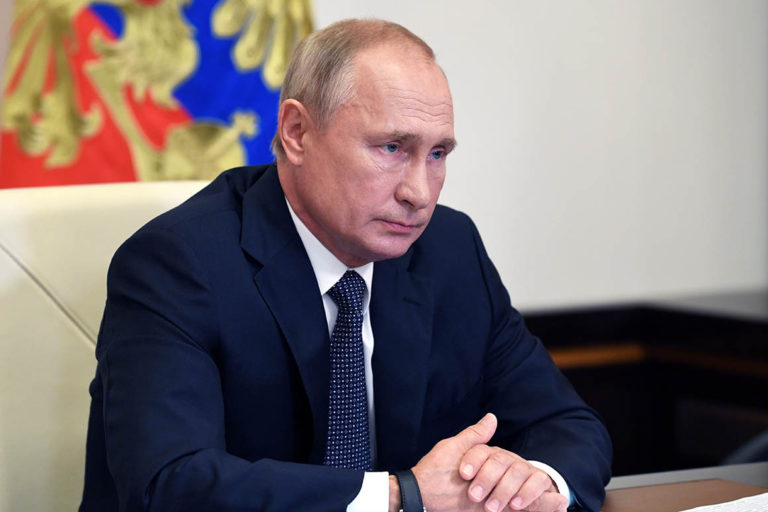
THE Kremlin said on Monday that Russia and the United States (US) were exploring ideas for striking a peace deal in Ukraine following President Donald Trump’s expressing frustration with Vladimir Putin.
The ICIR reported on Sunday, March 30, that Trump told NBC News he was furious after the Russian leader questioned the credibility of Ukrainian President Volodymyr Zelenskiy, threatening to impose secondary tariffs of between 25 and 50 per cent on buyers of Russian oil.
Trump, who said he wanted to be remembered as a peacemaker, has consistently expressed his desire to end the three-year conflict in Ukraine and has warned of its potential escalation into a global war.
Addressing reporters at the White House on Monday, Trump reiterated that he would impose secondary tariffs if Putin refused to cooperate.
“I want to see him make a deal so that we stop Russian soldiers and Ukrainian soldiers and other people from being killed,” Trump said in the Oval Office, adding, “I want to make sure that he follows through, and I think he will.”
Responding to Trump’s remarks, Kremlin spokesperson Dmitry Peskov said that Moscow continued to engage with Washington and that Putin remained open to contacts with Trump.
“We are continuing to work with the American side, first of all, to build our bilateral relations, which were badly damaged during the previous (US) administration,” Peskov said.
He added, “And we are also working on the implementation of some ideas related to the Ukrainian settlement. This work is underway, but so far, there are no specifics that we could or should tell you about. This is a time-consuming process, probably due to its complexity.”
He said that a call between Trump and Putin could be arranged on short notice if needed, though none was planned for this week.
The ICIR reports that on Sunday, Finland’s President, Alexander Stubb, said he told Trump during their meeting in Florida a day earlier that setting a deadline was essential for achieving a Ukraine ceasefire.
“I came out with an impression that obviously he’s the only person who can broker a peace, a ceasefire, because he’s the only one that Putin is afraid of and in that sense, respects,” Stubb told Sky News in an interview on Monday.
“We were talking a lot about the ceasefire, the frustrations he had that Russia was not committing to it,” he stressed.
The ICIR reports that since assuming office in January, Trump’s policy towards Russia has been more of conciliatory, which has left Western allies wary as he seeks an end to the country’s three-year conflict with Ukraine.
His comments about Putin on Sunday reflected his growing frustration over the lack of Russia’s commitment to the ceasefire.
THE Kogi State Police Command has asked the senator representing Kogi Central, Natasha Akpoti-Uduagan, to cancel her planned homecoming rally.
The police disclosed this in a statement signed by the Command’s Public Relations Officer, William Aya, and released to journalists on Tuesday, April 1.
According to the statement, the Kogi State Commissioner of Police, Miller Dantawaye, said the rally was against the state government’s ban on political gatherings issued on Monday, March 31.
The police said its decision was based on an intelligence report indicating security threats in the state and the subsequent ban on all forms of rallies and processions by the Kogi State Government.
“The call for cancellation becomes necessary, noting that intelligence reveals that some hoodlums plan to hijack the process and cause disturbance of peace in the state.
The command cannot afford to jeopardise the existing peace the state is currently enjoying. In view of the security threat received on the planned rally, the Kogi State Police Command is therefore advising the organisers to cancel the event so as to avoid any breakdown of law and order in the state,” the police stated.
The command said it would not hesitate to apply the full wrath of law on anyone who causes disturbance of peace and order in the state.
The state government had on Monday banned all political gatherings in the state over what it called “security reports.”
The government, in a statement by the Commissioner for Information, Kingsley Fanwo, said the action was to avert any form of security breach that might destabilise the state.
The government claimed that intelligence reports indicated that some persons were planning to “stage some violent rallies in the guise of political and religious agitations” in the central senatorial district of the state.
The ICIR reports that the Independent National Electoral Commission (INEC) confirmed the receipt of documents showing that the suspended senator’s constituents are recalling her from the National Assembly.
Akpoti-Uduaghan was suspended from the Senate due to an altercation she had with Senate President Godswill Akpabio over seating arrangement.
Following the altercation, which led to Akpabio ordering the sergeant-at-arm to eject her from the Senate Chamber, the female lawmaker accused the Senate President of sexual harassment.
Akpoti-Uduaghan was suspended from the Senate for six months because of her altercation with the Senate leadership, while the Red Chamber is currently probing her allegation of sexual harassment against its president.
Meanwhile, the female lawmaker has insisted that her visit to her district is to enable her to celebrate Eid-el-Fitri with her constituents.
ARTISANAL coal mines in Ankpa and Omalla Local Government Areas of Kogi State are sites of dangerous labour, involving both adults and children, and have resulted in fatalities. These mining operations supply coal to intermediaries and companies involved in the energy sector.
It was midday in November 2024 in one of the several artisanal coal mines in Olekwu, a rural community in Omalla LGA of Kogi State where stacks of coal in sacks were displayed on the cleared landscape within a forest.
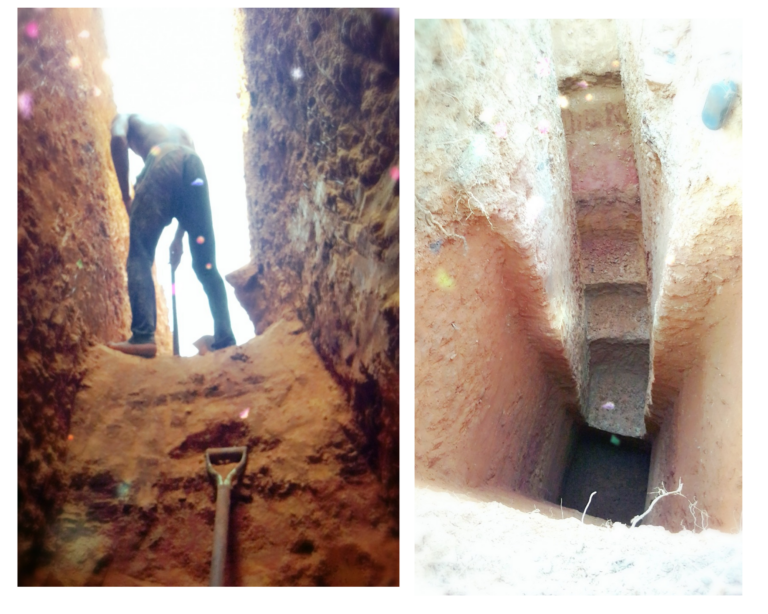
Workers of different age groups and genders with soiled clothes were shovelling, drilling and digging coal from smothering dark pits and hauling the extracted resource up the mineshaft for easy transfer to accessible sites.
They chitchat as they dug deep into the belly of the earth.
Several feet down the surface were children, predominantly between the ages of 9 and 16, who were armed with gears and axes to hollow out soot-coated stones while wearing torchlights on their foreheads meant to illuminate the dark tunnel.
These are indigenes and child miners from villages and communities far and near. They work in artisanal mining pits across communities where coal can be found.
Among them is Josiah Moses, a 13-year-old lad who was smeared from head to toe with blackness from coal.
Moses had been working for over seven hours without a break in the coal pit at the time the reporter met him. Tired and panting, he dropped his sixty-fourth bag of coal, aiming to carry over a hundred bags to sort some bills.
Josiah Moses, a 13-year-old child miner. He was interviewed in the mine-pits linked to Rockbottom Mines and Power Limited. Photo Credit: Adedokun Theophilus/The ICIR.
Like other bruised labourers, he had to toil from morning till nighttime under sweltering or frigid weather to carry 100 bags of coal every day before he could earn a paltry sum of N5,000 as wages, an amount equivalent to $2.95 Dollars for over 12 hours. This sum would be put towards for his educational savings, feeding and additional costs such as transportation.
Though Moses was not compelled to work under any obligation, the cost of living crisis and the need to settle the backlog of his tuition fees pushed the minor into such a pitiable condition.
His parents were aware, but there was little they could do because they are financially handicapped. With a subsistence farmer as a father and an unemployed mother, he was forced to fend for himself at a young age.
Some of his earnings from the mines were used to keep the family going.
“I know that I am missing classes right now, but I am doing this to gather money so that I can pay my last term tuition fees and save for feeding,” he explained, noting that he will return to the classroom immediately if he raised a substantial amount.
He complained that the wage paid to labourers was significantly minimal compared to the risk undertaken and the profit margin pit owners and middlemen rake in their quest to sell for a handful of big firms who struggle to purchase coal for cheap energy. He explained that the demand for coal makes the work lucrative and easy to find.
Some days, he returned to the mining site to do back-aching work after school. His work involves bending, breaking, mining, and carrying heavy loads without Personal Protective Equipment (PPE) in one of the hundreds of illegal coal mine pits where underage artisans and drop-outs work and lose their lives.
An artisanal mining pit in Olokwu linked to Rockbottom Mines and Power Limited. Photo Credit: Adedokun Theophilus/The ICIR.
Other residents in communities like Olokwu, Ichalla, Olufofo, and Odele face similar circumstances, driven by economic hardship.
Even though Joshua was aware of the risk of being a mine worker, the labour guarantees him the fastest way to raise money.
“Many people have died inside pits and when it collapses there is nothing that we can do than to wait for hours till their remains are dug out. This coal that we are mining is sold to Rockbottom Mines and Power Limited because it is close to us and we are not allowed to trade with another company,” Joshua said, stressing that the pits are unsafe due to rainfall, incessant collapses and landslide.
Child labour is prevalent in artisanal and small-scale mining (ASM), according to studies which poses a great danger to children’s development, safety, and health.
Tragically, a 12-year-old, Ibrahim Laginju, died in a mine collapse in November 2024. His brother, Yusuf Laginju, explained that Ibrahim was working to pay his school fees. The family reported that the pit owner fled the scene and they received no compensation.
A Coal soot spotted in Odele. This is an abandoned coal depot. Photo Credit: Adedokun Theophilus/The ICIR.
“Ibrahim left for the mine pit to raise his tuition fees. He registered in private school to become a doctor and paid by himself,” said Ibrahim’s elder brother,
He explained that he owed the school N50,000 in backlog which he intended to pay up with wages gathered from the labour before his death.
“He was buried under the pit for more than 12 hours before he was excavated. I believe the delayed rescue also contributed to his death,” Yusuf said.
The twelve-year-old Ibrahim Laginju who died in a coal pit. Photo Credit: Yusuf Laginju.
“The sad thing is that my brother was killed, and the pit owner walks about as if nothing happened. We still see big companies buying the same coal that took the life of my brother from him,” Yusuf bemoaned.
Data from the National Bureau of Statistics (NBS) in 2022 indicated a significant number of child labourers in Kogi State at 1,220,670. The survey showed 711,003 children aged 5-11 and 229,982 children aged 12-14 engaged in labour.
From daily bread to daily deaths
Lucky Danjuma, a 17-year-old who supported his widowed mother and sisters, died in a mine collapse in November 2023. His mother, Baby Danjuma, reported receiving N100,000 as compensation, part of which went to his pregnant fiancée who subsequently lost the child.
Baby Danjuma, the mother of Lucky Danjuma, one of the children who died in a coal pit due to collapse. Photo Credit: Adedokun Theophilus / The ICIR
“They gave us N100,000 naira out of which N50,000 was given to Lucky’s pregnant fiancée. But the child was lost during delivery because it was born prematurely,” Lucky’s mother decried as a stream of tears rolled down her chin.
A scar on the leg of Baby Danjuma, the mother of Lucky Danjuma: Photo Credit: Adedokun Theophilus /The ICIR
Interviews across mining sites in Odele, Ichalla, Ogboyaga, olufofo, and Olokwu revealed that accidents and fatalities are common. The International Labour Organisation (ILO) has documented the risks to children’s health and safety in mining. Experts emphasise the need for increased awareness, data collection, and oversight at state and federal levels to address child labour in mines.
Jakpor Philips, the Executive Director of Renevlyn Development Initiative (RDI) stressed the importance of government enforcement, community collaboration, and invoking child rights legislation.
“Oversight at state and federal level are important in addressing the impact of mining,” said Philips.
He mentioned that Kogi government should not only enforce environmental standards but collaborate with communities and relevant stakeholders to expose infractions and sanction offenders.
Noting that curbing child labour required concerted efforts between civil society organisations and community activists, he said that the involvement of local authorities and community members is necessary for successful eradication.
***
The death of Ismaila Umar, a 21-year-old young man was recorded in Olofofo village as of November 2024.
Like others, he was abandoned in a coal shaft after a pit collapse. Ismaila was a 200-level student. He had returned home to raise some funds for his upkeep in school before he met his end.
His death has left a sore in the heart of his mother, Fatima. Contrary to the reality, she ascribed Ismaila’s death to a spiritual attack.
“My son died in a mine a day before his proposed return to school.
“He only went to gather some money that he would use in school but what they brought back for me was his corpse. I believe he was attacked,” she said.
Pits, not pen: what mining does for a child
Many children in these mining communities, particularly in Odele and Ogboyaga where schools are scarce, are out of school. This is because there is neither the presence of primary nor secondary school in the two communities while Ichalla has a dilapidated primary school and no secondary school. Children who showed interest in acquiring formal education had to trek several kilometres.
Ismaila Umar, A 200-level student of Public Administration at Prince Abubakar Audu University Anyigba on his convocation gown.
Yahaya Ibrahim, an underage miner in Odele explained he is not interested in what would be learnt in school. “I don’t need to go to school, even if I wish to, there is none in Odele and I cannot travel far because of mining.”
Although many residents across the communities visited preferred to send their children off to coal mines, they are paying a heavy price because both children and adult are dying in tens.
From Agummagun to Olokwu and Olofofo, the insignia of human losses is visible on the faces of grieving mothers rendered childless and children orphaned.
Death watermarked households with grief and many residents attribute this catastrophe to spiritual attacks.
Also, their land has been warped and disfigured because coal was up for grabs.
Josiah Simon, a youth from Odele, noted that there is a high dropout rate due to mining opportunities and the lack of local schools. He mentioned that Mosra Enerji Limited purchases all the coal mined in his community.
“The only school is located in Olokwu and that is where my siblings are. They only come home during short and long vacation. If a school is built within our vicinity/community, children will go. Some people don’t train their children in school and they prefer to use them in mining so that they can make money. It is a choice for community members because there are schools in other communities,” he said.
Though Josiah had once worked as a miner, he said stopped due to the constant losses he ran into from the business.
“At some point, I borrowed some money to fund my mining, but I stopped because it is not a profitable business for me. I lost a lot of money and any money I invested in it was lost.
“The problem is that these children are exposed to earning at a tender age and do you expect a child making such amount to be serious with education? If they see N5,000 today and tomorrow, do you expect them to go to school?”
“All the coal that is mined by both adult and underage in this community is sold to Mosra Enerji Limited and they don’t bother to know who is mining it or what happens to those mining it,” Josiah added.
A truck of Dangote Group carrying coal from Olokwu Village. Photo Credit: Adedokun Theophilus / The ICIR.
Child miners flood every community visitedand anyone who attempts to speak against it is shunned. It is a means of survival for many families who are working across all its value chain.
Some who intend to be educated, like Moses Josiah, and Ibrahim Laginju are handicapped. With nobody willing to sponsor them, they are pushed to work as labourers in a mine shaft.
“Odele is lacking substantial development and basic amenities,” said the traditional chief, Joshua Solomon, while lamenting that his community is in dire need of standard communal learning facilities as there are no primary and secondary schools despite the heavy presence of mining activities.
“If you come very early, you would see children from this community trekking to neighbouring communities to school,” he said, adding that aside from a borehole that was constructed, Odele has not benefited from the five years presence of Mosra Enerji Limited in the community.
Coal mining: A fast lane out
Plumes of dust hung in the air after every truck’s passage like sandstorm blurring sight from Ankpa town to villages where coal is mined.
During a ride from Ankpa town to Ichalla, observation showed that the untarred roads marked with potholes were laced with soot of coal and mud.
Findings also showed that numerous miners had perished while plying the precarious roads. Locals stated that falls from trucks and braking failure are among the causes.
A local resident, Habeeb Tijani, said that there have been several incidents where people fell off high trucks and died. “What happened is that in an attempt to cut costs, miners climb trucks that are loaded with coal to their location, but some fell off on the road either because of the potholes or they are not properly seated.”
The junction of Ankpa Local Government. Photo Credit: Adedokun Theophilus/The ICIR.
A miner, Yusuf Muftua, believed that the roads had turned into death traps.
“Every time we see is big companies passing by to get coal, yet our road is in a bad state, and they do nothing about it.
“If you sit here, you will see different trucks of Dangote, Mosra Enerji and Rockbottom passing by, but they do not even care to fix our road. It is exploitative and they are cheating us.”
The World Health Organization indicated that road traffic crashes result in the deaths of approximately 1.19 million people globally: leaving between 20 and 50 million people with non-fatal injuries.
The report emphasised that nine in 10 fatalities on the roads occur in low and middle-income countries, even though these countries have around 60 per cent of the world’s vehicles.
Noting that tens of mineworkers have died in road accidents caused by heavy trucks and trailers conveying coal in the communities, Abdullahi Habib, an erstwhile miner explained that he stopped mining due to the hazard associated with all the supply chain of the mining process.
“You will see people die by falling from trailers carrying coal or crashing. Some would even be buried under the mining pit during collapse for hours,” he said.
Mining activities
Findings from the Ministry of Mine and Solid Mineral Development showed that Mosra Enerji Limited possesses a coal mining (archived here) Lease with licence number 24884 to explore and extract coal in Omala local government. The lease awarded on the June 1, 2017, will expire on May 31, 2042 . With 47 claim units, Mosra’s licence spans a total area (m2) 9952835. These areas covered by its licence are located in Omala.
A coal depot of Mosra Enerji Limited in Odele with a heavy machine. Photo Credit: Adedokun Theophilus / The ICIR.
A similar check on the Integrated Automation and Interactive Solid Mineral Portal (IAISMP) Project, an online portal that facilitates the electronic filing of licences, permits, and other applications in the mining industry in Nigeria showed that Rockbottom Mines and Power Limited exploration lease (archived here) for coal has expired. it expired on Saturday January 18, 2020. The licence with no 24485 covers Agatu, which is in Benue State.
Any person or company planning to engage in mining operations must possess a valid mining lease, small-scale mining lease, or quarry lease, says section 43(1) of the Nigeria Minerals and Mining Act (2007).
Data accessed February 2025 shows Rockbottom Mines and Power Limited licence have expired.
Further findings shows that it is currently operating under an exploratory licence for limestone and iron, according to further findings gathered from the Mine Cadastral Office.
Rockbottom is currently operating under an exploratory licence for limestone and iron.
Section 47 of the NMMA (2007) stipulates that mineral titles must be granted expressly for the discovery of certain minerals.
A list of active approved Community Development Agreements (CDA) published by the Nigeria Extractive Industries Transparency Initiative (NEITI) and signed as of January 2021 showed that Rockbottom has an acknowledged agreement with its host communities – Olokwu, Iga-Ebije & Ajobe in Kogi State where it has mineral title 26529SSML for granite.
The truck of Mosra Enerji Limited in Odele going to Ichalla village to carry coal mined by artisanal miners and children. Photo Credit: Adedokun Theophilus/The ICIR.
It was also found out that Dangote Industries Limited is running (archived here) a mining (archived here) operation in Ankpa Local government. The operation is predominantly meant to extract coal and clay.
Coal mined by child-artisans
“Many of the children in Olokwu work for Rockbottom,” said Nejiru Nasiru, who said he is worked for Rockbottom revealing that the byproduct of these minors ends in their warehouse while emphasising that he started up as a child miner.
Explaining that the company consciously avoid putting these children on their payroll, he stressed that the artisanal mines within areas covered by the lease of the company is prevented from selling to third parties except the company.
“They know that children are used in these mining pit and they are aware that purchasing coal from artisanal miners is cheap which is why they are not waging war against them,” he said, adding that he started as a child miner in one of the pits.
Corroborating Nejiru’s claim, Habib expressed that during his time their employers who were artisans were barred from trade with businesses except from Rockbottom Mines and Power Limited, Mosra Enerji Limited directly.
“They have stopped many of these small-scale miners from trading with buyers outside. They did this because they believe it is cheaper to buy from us than employ miners,” he noted.
A road laden with coal soot. This road leads to several communities like Ogboyaga, Ichalla, Odele and Others. Photo Credit: Adedokun Theophilus
That is easy to achieve for the companies because there was no accessible road across the forested mining pits.
When asked how to get land to mine, Akeem Ibrahim, who owns a coal depot in Olokwu, stated that buying a plot of land to start mining operations is best done directly from traditional rulers. However, their involvement in the entire process does not ensure that an investor would not be defrauded, stating that the risk is higher without these traditional rulers.
When asked about how a start-up company could commence operation with affordable labour, he clarified that securing coal at a low cost required the service of untrained labourers, unskilled villagers and minors.
Although Ibrahim said that there was no visible land to extract at the time, he said to visit the chiefs of Odele and Ichalla.
Investigation also revealed that aside from the companies, indigenes are converting their farmland into coal pits and leasing it to businessmen with no mining lease.
Although the traditional ruler of Ichalla, Steven Gago initially denied that children are working in mining pits in his community, he later said children who mine are not forced. “We don’t force them to mine they are doing it willingly and it is not a problem, and we value education in our community.”
“Everywhere you see mining is under the control of Mosra and children are mining in the pits. All those mining is for Mosra and I don’t know about it. It is a cooperate mining done for Mosra,” he said.
“It is a general mining and many communities in our local government are mining. It should not be a big issue. This happen in all area in Ika district.”
All our artisanal miners were certified by Mosra and even the community. It was instructed by Mosra that open the land surface to mine. We don’t sell coal to another company we work for Mosra,” he noted.
Dangote, Morsa Energy, Rockbottom Kogi government silent
Between Sunday, December 1 and Wednesday, January 8, multiple enquiries were to sent Dangote Industries Limited, Mosra Enerji Limited, and Rockbottom Mines and Power Limited to clarify the findings and verify the allegations.
The messages includes what steps were taken to guarantee that their supply chain was free of child labour and how they were being monitored to confirm adherence to national and international labour and ethical standards, but they did not respond.
Additional requests for these businesses to disclose their coal suppliers in the local government districts of Omalla and Ankpa, as well as the steps taken against non-complaint suppliers linked to child labour who provide in Ichalla, Ogboyaga, Olufofo, Olokwu, and Odele, were not answered.
Also, in order to confirm adherence to labour and ethical standards, the firms were asked how they manage and trace their supply chain and whether they have distinct policies to deal with child work.
Meanwhile, as of the time this report, the Kogi State Ministry of Environment and Natural Resources had not responded to inquiries on the matter.
EDO State Governor Monday Okpebholo has confirmed that suspects arrested in connection with the brutal killing of travellers in Uromi would be transferred to Abuja for further interrogation after the Eid-el-Fitri public holiday.
Okpebholo disclosed this on Monday, March 31, during a meeting with his Kano State counterpart, Abba Yusuf, and the deceased families.
The ICIRreported that the victims were travelling in a truck when they were waylaid around 1.30 pm in the Udune Efandion community, Uromi area of Edo State by local security.
The incident sparked outrage, with political leaders, including President Bola Tinubu, former Vice President Atiku Abubakar and former Anambra State Governor and Labour Party (LP) presidential candidate in the 2023 election, Peter Obi, strongly condemning the attack.
While speaking at the gathering, Okpebholo reiterated his commitment to ensuring justice for the victims.
“We have made significant progress in our investigations. President Bola Ahmed Tinubu is not happy about this incident and has directed security agencies to go after the culprits. I can assure you that justice will prevail.
“So far, about 14 suspects have been arrested, and after the holiday, they will be transferred to Abuja for further interrogation. More arrests will follow as investigations continue,” Okpebholo said.
On his part, Governor Yusuf commended Okpebholo for his swift intervention but insisted that those responsible for the killings must be publicly paraded to ensure transparency and accountability.
The governor stressed that the majority of the victims were from two local governments in Kano state.
“It is a known fact that our people were traveling from Port Harcourt through Edo State when they were brutally attacked. Many were maimed, burnt, and murdered in cold blood,” Yusuf said.
“Kano people trust you, and you have assured us that the perpetrators will be brought to justice. We appeal to you to ensure that they are not only arrested but also paraded publicly so that the world sees those responsible for this heinous crime.”
He further expressed his trust in the Edo government’s assurance of bringing the culprits to justice.
“We trust his assurance that the culprits will be brought to book, as justice remains our utmost priority. The people of Kano are peaceful and hospitable.
“This tragedy serves as a lesson to all, and I urge all leaders across Nigeria to ensure the safety and protection of all citizens, regardless of their location. Governor Okpebholo’s visit today is a mark of true leadership, and we appreciate his gesture,” he said.
PRESIDENT Bola Tinubu has approved a tenure extension for Comptroller-General (CG) of Nigeria Immigration Service (NIS), Kemi Nanna Nandap.
This was disclosed in a statement by the Special Adviser to the President on Information and Strategy, Bayo Onanuga, on Monday, March 31.
According to the statement, under Nandap’s leadership, the NIS has witnessed significant advancements in its core mandate, with notable improvements in border management, modernisation of immigration processes and national security.
Tinubu commended the CG for her “exemplary leadership” and urged her to continue dedicating herself to the Service’s strategic priorities, which he said aligned with his administration’s agenda.
The president reaffirmed his administration’s commitment to supporting the NIS in fulfilling its mandate to protect Nigeria’s territorial integrity and promote safe, legal, and orderly migration.
Nandap began her career in the NIS on October 9, 1989.
Tinubu appointed her as CG of the NIS on Wednesday, February 21, 2024, to serve till August 31, 2025.
Until her appointment, Nanna was the Deputy Comptroller-General (DCG) in charge of the Migration Directorate of the NIS.
She took over from Caroline Wura-Ola Adepoju, whose term in office expired on February 29.
Though the president extolled Nandang’s feats at the NIS, The ICIR, in a report, revealed that all has not been completely well with the organisation under the CG’s watch.
A major issue captured by the report is the manner the Service’s staff approach the black markets where street vendors are major producers of their identity cards.
Beyond security implications, The ICIR’s investigation shows that the trend, which has been ongoing for years, has not abated even with the recent commissioning of the Bola Ahmed Tinubu Technology Innovation Centre, touted by the NIS to be a “one of a kind” data and biometric hub in Africa.
On December 10, Tinubu commissioned the NIS Technology Innovation Centre at the agency’s Abuja headquarters.