Home Blog Page 339

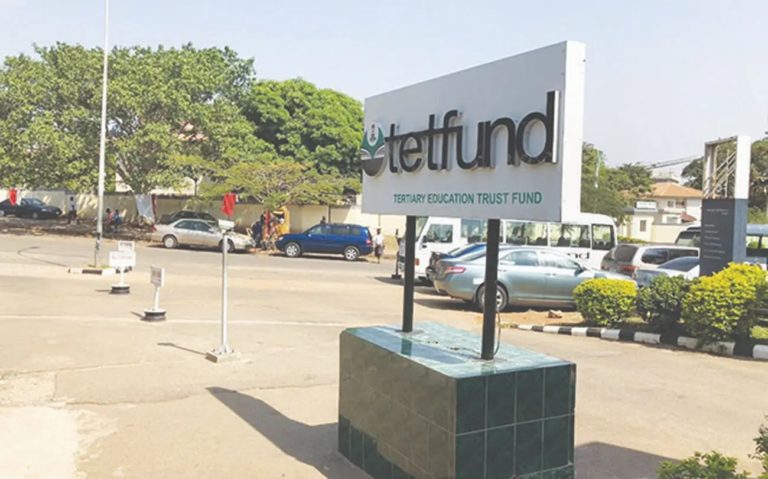
TETFund to disburse N700bn to Nigerian public tertiary institutions – Official

0

THE Tertiary Education Trust Fund (TETFund) has announced plans to disburse N700 billion to public tertiary institutions in Nigeria this year. 

Its Executive Secretary, Sonny Echono, detailed the disbursements during a strategic workshop in Abuja on Thursday, March 13, noting that each university would receive N2.8 billion for both normal and zonal allocations. 

The TETFUND boss, according to a report by Punch, added that each polytechnic would get N1.9 billion while colleges of education would receive N2.1 billion per institution.

Ehono said: “Under this current disbursement cycle, each university will get N2,560,562,352.66 under normal allocation, with an additional N300,000,000.00 for zonal allocation, making N2,860,562,352.66 for each university.

“Each polytechnic will get N1,794,335,731.71 for normal allocation, with N200,000,000.00 for zonal allocation, amounting to N1,994,335,731.71.

“Each College of Education will receive N1,978,428,260.79 for normal allocation, with N200,000,000.00 for zonal allocation, amounting to N2,178,428,260.79.”

He urged leaders of respective institutions to fully utilise their 2024 and expedite procurement processes to access the 2025 funds.

He said following the federal government’s directives, 2025 allocations for physical infrastructure development would focus on upgrading, rehabilitating, and renovating existing facilities.

Echono also noted a significant boost in funding for research, innovation, academic staff development, manuscript and book development in this cycle. 

This was as he noted that TETFund had ‘significantly’ increased the number of beneficiary institutions for its special and designated projects.

According to him, the  2025 disbursement plan allocates 91.08 per cent of funds directly to institutions, with 48.90 per cent as annual direct disbursements and 42.18 per cent as special direct disbursements.

“The total direct disbursement of 91.08 per cent is made up of 48.90 per cent as annual direct disbursement and 42.18 per cent as special direct disbursement. Designated projects account for 8.72 per cent, while stabilisation funds are 0.20 per cent. In this regard, each category of beneficiary institution has been allocated the annual direct disbursement as follows.

“Under the special direct disbursement category, key initiatives include increased funding and expanded participation in the Special High Impact Programme completion of the National Library building in Abuja, establishment of mechanised farms in some universities, and accelerated provision of student hostels through public-private partnerships, and direct construction in fulfillment of the President’s promise to Nigerian students and in furtherance of plans for our institutions.

“Other key focus areas in the 2025 disbursement guidelines include expanding infrastructure to enhance student intake for doctors, nurses, pharmacists, and dentists in our universities and colleges of medicine, adoption of medical simulation and technology to improve curriculum delivery and patient care, provision of alternative power to selected beneficiary institutions to mitigate current difficulties in coping with energy costs,” he added.

He further called on institutions to partner with the private sector for infrastructure development and facility management, starting with student hostels, to reduce reliance on government funding.

Reps adopt controversial tax reform bills, keep VAT at 7.5%

THE Federal House of Representatives has adopted the controversial Tax Reform Bill as a working document.

The bill has faced significant challenges in gaining nationwide acceptance. Meanwhile, Northern governors previously made recommendations to the federal government as a precondition for supporting the bill.

Speaker Tajudeen Abbas, addressing the House during a committee session on Thursday, March 13, stated that after deliberations on the bill’s clauses, the House adopted it as a working document.

Abbas commended the finance committee for their efforts, describing the report as reflective of Nigeria’s collective interests.

“All the 36 states, including the Federal Capital Territory have their representatives in the sub-committee.

“This is the first time such a report is getting hundred per cent approval by almost all members,” he said.

Earlier, while presenting the report, the Chairman of the Finance Committee, Representative James Faleke, stated that contentious areas had been adequately addressed.

Faleke noted that the committee recommended that Value-Added Tax (VAT) be based on consumption, maintaining the rate at 7.5%.

He also disclosed that the committee recommended repealing the Federal Inland Revenue Service Act to establish the Nigeria Revenue Service, which would be responsible for collecting federal government revenues.

Faleke expressed optimism that the Nigeria Revenue Service would enhance seamless tax harmonisation and administration.

The ICIR reports that the committee modified several clauses, expunged some, retained many, and introduced new provisions in the bills.

The ICIR has also reported President Bola Tinubu’s stance on tax reforms, describing them as “non-negotiable for the Nigerian economy.”

The Tinubu administration emphasized that most of its pro-poor policies would be realized if the tax reform bills secured legislative approval.

“Tax reform is here to stay. We cannot continue to do what we were doing yesterday in today’s economy. The essence of the tax reform bills is to eliminate the influence of colonial rule on Nigeria’s economy,” Tinubu said in a recent presidential broadcast monitored by The ICIR.

Notably, President Tinubu had in October 2024 transmitted the four tax reform bills to the National Assembly for consideration and passage.

  • A Bill for an Act to Provide for the Assessment, Collection of, and Accounting for Revenue Accruing to the Federation, Federal, State, and Local Governments; Prescribe the Powers and Functions of Tax Authorities, and for Related Matters (HB.1756). (Referred: 12/2/2025)

  • A Bill for an Act to Repeal the Federal Inland Revenue Service (Establishment) Act, No.13, 2007, and Enact the Nigeria Revenue Service (Establishment) Bill to Establish the Nigeria Revenue Service, Charged with the Powers of Assessment, Collection of, and Accounting for Revenue Accruing to the Government of the Federation, and for Related Matters (HB.1757). (Referred: 12/2/2025)

  • A Bill for an Act to Establish the Joint Revenue Board, the Tax Appeal Tribunal, and the Office of the Tax Ombud for the Harmonization, Coordination, and Settlement of Disputes Arising from Revenue Administration in Nigeria, and for Related Matters (HB.1758).

  • A Bill for an Act to Repeal Certain Acts on Taxation, Consolidate the Legal Frameworks Relating to Taxation, and Enact the Nigeria Tax Act to Provide for the Taxation of Income, Transactions, and Instruments, and for Related Matters (HB.1759).

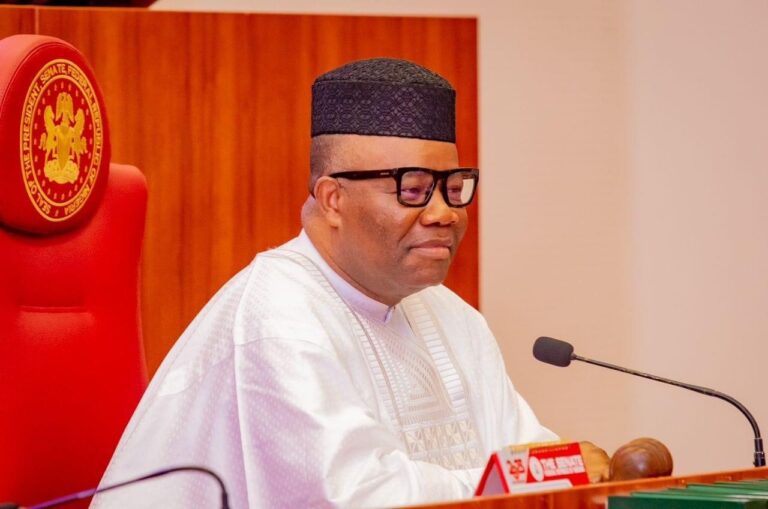
Senate passes vote of confidence on Akpabio amid sexual harassment allegations

0

AMID public outrage and demands for a thorough investigation into the sexual harassment allegations against Senate President Godswill Akpabio, the Nigerian Senate has reaffirmed its confidence in his leadership.

The lawmakers resolved a motion moved by Senate Leader, Opeyemi Bamidele, under Orders 40 and 51, in response to the controversies surrounding the sexual harassment allegations against Akpabio and the suspension of his accuser – Natasha Akpoti-Uduaghan, a senator representing Kogi Central – from the Senate.

The ICIR reported that Akpoti-Uduaghan was suspended for six months on Thursday, May 6, following a heated exchange with Akpabio on February 20 over seating arrangements, which later resulted in sexual harassment allegations against the Senate president.

In an interview on Arise Television, Akpoti-Uduaghan had accused Akpabio of making repeated sexual advances toward her, which she said her rejection led to their frequent clashes at plenaries.

According to her, some of Akpabio’s love proposals were made with her on the phone and face-to-face in her husband’s presence. She further alleged that she had all the evidence for her claims.

Although the Kogi senator, on Wednesday, March 5, submitted an official petition regarding the sexual harassment and abuse of office by Akpabio, the Senate’s Ethics Committee responsible for probing the claims, threw out the petition, citing key procedural oversights that allegedly undermined the petition’s legitimacy.

The female lawmaker subsequently resubmitted the petition, shortly before her suspension, but the fate of the petition, which detailed the sexual harassment allegation, now hangs in the balance.

Rather, the lawmakers defended the Senate’s decision to suspend Akpoti-Uduaghan, asserting that at no point between August 2023 and March 2024 was the Senate informed of any sexual harassment allegations.

They added that the matter was solely about disciplinary actions concerning violations of Senate rules.

Bamidele said, “I want to make it clear that the matter referred to the Committee on Ethics and Privileges had nothing to do with sexual harassment. The Senate President did not preside over any case related to such allegations. What was addressed was a flagrant disregard for Senate rules and we followed due process as guided by the Constitution”.

Recall that Akpoti-Uduaghan had, on Tuesday, March 11, reported her suspension and ordeal to the United Nations Inter-Parliamentary Union (IPU) in New York.

The lawmaker, while describing her suspension from the Senate as unlawful,  demanded intervention from the IPU.

But on Wednesday, March 12, the Senate addressed her complaint to the IPU, stating that her suspension was unrelated to her sexual abuse allegation against Akpabio but was instead due to gross misconduct and a violation of Senate rules.

Addressing the matter further on the Senate floor on Thursday, Bamidele acknowledged the growing public interest, fueled by allegations made by the Kogi lawmaker.

He dismissed allegations that the Senate exceeded its constitutional authority, emphasising that suspension was the only means to prevent disorder within the chamber.

He added that “It was never an issue before us that any senator was sexually harassed. We need to move past the events of the last two weeks and focus on our legislative responsibilities. There is critical work before us, including electoral reforms, economic recovery, and tax reform bills.

“The 7th Schedule of the 1999 Constitution is clear, and we all swore by oath that we will make laws for the good of this country. We swore to that oath and ensured everyone abides by that oath”.

Court orders arrest of VeryDarkMan for allegedly defaming gospel singer

0

AN Abuja Chief Magistrate Court has issued a bench warrant for the arrest of social media influencer Martins Otse, popularly known as VeryDarkMan (VDM).

The order, issued on Thursday, March 13, followed a criminal defamation case brought before the court by a female gospel singer, Mercy Chinwo.

In his ruling, the magistrate, Emmanuel Iyana, directed the Nigeria Police Force (NPF) and other law enforcement agencies to arrest VDM and deliver him before the court at Zone 6 in Abuja to enable him to answer to criminal allegations levelled against him.

The court observed that the defendant ignored a March 5 summons to appear in court.

Despite his lawyer, Deji Adeyanju’s, plea, the judge upheld the arrest order.

Adeyanju had pleaded with the court to allow him to bring his client to court on the next adjourned date.

VDM is accused of posting defamatory comments about Chinwo on his social media page.

VDM allegedly accused Chinwo of being embroiled in a contractual dispute, claiming she diverted $345,000 from her former record label boss, Eezee Tee.

Chinwo, who claimed the allegation damaged her reputation, presented documentary evidence, including emails and payment receipts, to the court to prove her innocence and refute the claims.

The gospel singer’s legal team, led by Pelumi Olajengbesi, demanded that the defendant’s action was contrary to Sections 391 of the Penal Code and Section 24 (1)(B) of the Cybercrime (Prohibition, Prevention, etc.) Act 2015.

In a related development, Chinwo’s lawyers have also filed a N1.1 billion lawsuit against VDM at the Abuja High Court.

The lawyer is seeking a court order to compel VDM to delete and retract the defamatory statements and issue a public apology to Chinwo.

The ICIR reports that VDM is not new to defamation suits. On October 14, a judge, Matthias Dawodu, while ruling on a defamation suit against him by Femi Falana, a senior advocate, and his son, Folarin, popularly known as Falz, held that they possessed legal rights safeguarding them against slander.

The court directed VDM to remove an allegedly defamatory video he posted on September 24 against Falana and his son.

Besides, VDM was restrained from further releasing, publishing, or circulating defamatory content on his social media handles and pages pending the hearing of the suit.

The judge ordered that all processes in the matter be served on VDM through his lawyer, Adeyanju.

The Falanas had initiated separate suits, claiming N500 million each in damages over VDM’s video, alleging he and his son had accepted N10 million from Idris Okuneye (Bobrisky) to compromise justice.

The litigants maintained that VDM knowingly published unverified claims, recklessly injuring their reputation.

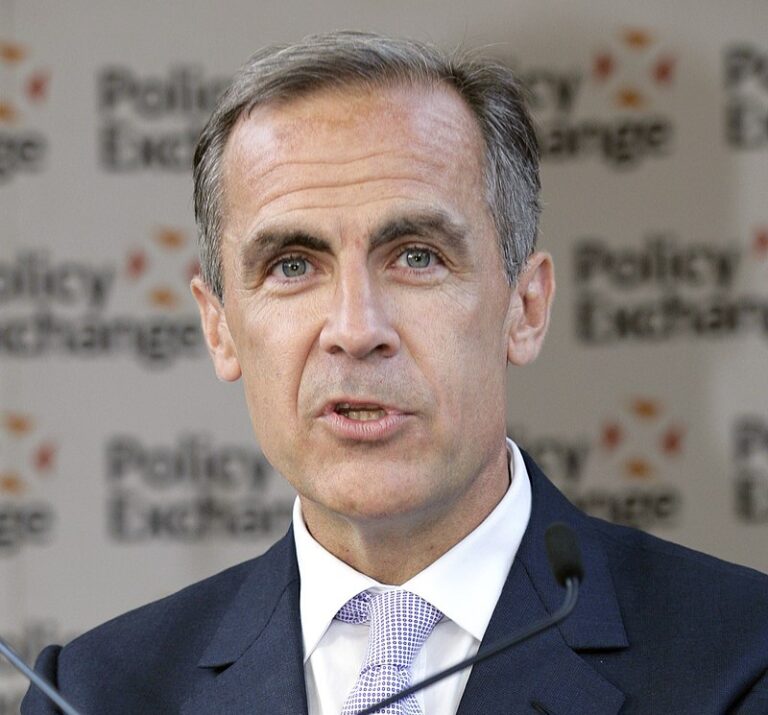
Mark Carney to be sworn in as Canada PM Friday

FORMER Central banker Mark Carney will be sworn in as Canada’s next prime minister tomorrow, March 14, along with his cabinet, marking the final day of Justin Trudeau’s nearly a decade tenure.

Governor-General Mary Simon’s office announced this on Wednesday, noting that she would preside over Carney’s swearing-in and his cabinet ministers on Friday at 11 a.m.

The new Liberal leader had promised a “seamless and quick” transition as he takes over from Trudeau, who announced his resignation in January.

The ICIR reported that Carney, a former central banker who led the Bank of Canada and Bank of England, was elected leader of the Liberal Party of Canada on Sunday. He will become Canada’s 24th prime minister.

Carney will assume leadership during a turbulent period in Canada, as the country navigates a trade war with its longtime ally, the United States, under President Donald Trump, while also preparing for an upcoming general election.

In his victory speech to supporters, Carney struck a defiant tone towards Washington, saying: “In trade as in hockey, Canada will win.”

On Wednesday he said he was “ready to sit down” with US President Donald Trump to negotiate a renewed trade accord in a bid to avoid further economic tussling.

The ICIR reported that Trump imposed new tariffs on Canada, Mexico and China on March 4.


EFCC witness tells court how former Kwara governor Ahmed allegedly diverted N5.8bn UBEC fund

0

AN Economic and Financial Crimes Commission (EFCC) witness, Musa Oladimeji Dasuki, on Thursday, March 13, testified to a case on how N5.8 billion allocated to the Kwara State Universal Basic Education Board (SUBEB) was allegedly diverted under the administration of former Governor Abdulfatah Ahmed and his Commissioner for Finance, Ademola Banu.

Dasuki, a retired Permanent Secretary at SUBEB, testified during the continuation of the trial by the EFCC before a judge, Mahmud Abdulgafar, of the Kwara State High Court sitting in Ilorin, where the former governor was arraigned for the alleged diversion.

He recounted that the Kwara State Government, under the leadership of Ahmed and the second defendant, Banu, had requested Universal Basic Education Commission (UBEC) funds for the years 2013 and 2014, purportedly for the payment of teachers’ salaries.

Dasuki claimed that the funds were subsequently utilised for purposes other than those originally specified.

During the court proceedings, Dasuki stated that Banu initially made an oral request for the release of the 2013 UBEC matching grant to pay teachers’ salaries.

He recalled that SUBEB had initially insisted on a written request, which was subsequently provided along with the governor’s approval for the release of funds.

He further testified that the money was deposited into the state government’s Skye Bank account.

Dasuki also noted that although SUBEB had reservations about diverting funds initially intended for ongoing projects, the board later approved the request after receiving assurances from Banu regarding repayment.

A letter was written to that effect from the office of the Commissioner for Finance, signed on his behalf, and the money was released immediately upon receiving the letter.

“According to the 2013 action plan submitted to UBEC, the funds were intended for the construction of 40 standard classroom blocks with offices, 40 VIP toilets, and Information and Communication Technology (ICT) centres in primary and junior secondary schools across the 16 Local Government Areas of Kwara State. However, many of these projects could not be executed because the funds had been diverted,Dasuki stated.

During cross-examination by Jimoh Mumini, counsel for the first defendant, Dasuki confirmed that the former governor and finance commissioner were not part of SUBEB.

The presiding judge, Abdulgafar, adjourned the matter until Thursday, March 13, 2025.

Ahmed, who was governor of Kwara State between 2011 and May 2019, and Banu were first arraigned on a 12-count charge of mismanagement of public funds before a judge Anyadike on April 29, 2024, to which they pleaded not guilty.

According to the EFCC, the presiding judge was transferred in the course of the trial, forcing the case to start afresh.

The EFCC also accused the former governor, among others, of allegedly spending N1.6 billion meant for the security and administration of the state to charter private jets through Travel Messengers Limited, contrary to Section 22(5) of the Corrupt Practices and Other Related Offences Act, 2000 and punishable under the same section.

The erstwhile governor and his finance commissioner were also accused of conspiring to steal money meant to pay salaries of teachers working with the Kwara State Universal Basic Education Board and also to provide security and other infrastructural facilities for the people of the State.

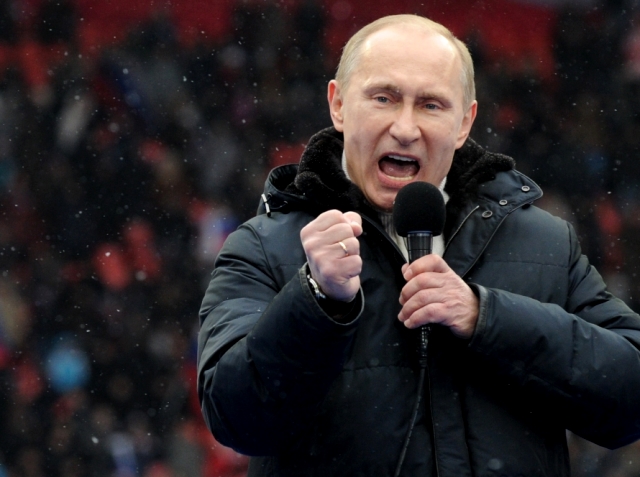
Putin orders Ukrainian forces’ trouncing ahead of US-backed ceasefire

RUSSIA’S President Vladimir Putin, on Wednesday, March 12, ordered prompt defeat of Ukrainian forces in western Russia, ahead of ceasefire talks scheduled for Thursday, March 13.

Speaking at the White House on Wednesday, March 12, the United States President Donald Trump expressed hope that the Kremlin would accept his government’s proposal for a 30-day ceasefire, which Ukraine has signaled its willingness to support.

A few hours after Trump’s remarks, the Kremlin released footage of Putin, dressed in a green camouflage uniform, visiting Russia’s western Kursk region, where a swift Russian offensive was poised to drive Ukrainian forces from their last foothold.

“Our task in the near future, in the shortest possible timeframe, is to decisively defeat the enemy entrenched in the Kursk region,” Putin said in the video.

Putin, who did not mention the ceasefire proposal, added that “And of course, we need to think about creating a security zone along the state border,”

Russia’s invasion of Ukraine in early 2022 has resulted in hundreds of thousands of casualties, displaced millions, devastated towns, and sparked the most intense confrontation between Moscow and the West in six decades.

According to Kremlin spokesperson, Dmitry Peskov, Russia’s leader will meet in Moscow with Belarusian President Alexander Lukashenko and may address the ceasefire proposal later today.

The ICIR reported that the United States agreed on Tuesday to resume weapons supplies and intelligence sharing with Ukraine after Kyiv, during talks in Saudi Arabia, expressed readiness to support a ceasefire proposal.

“It’s up to Russia now,” Trump said on Wednesday, adding that he hoped the ‘bloodbath’ of the war would end. And if we can get Russia to stop, then we have a full ceasefire. And I think it’ll never go back to war.”


UN unveils plan to advance women’s rights

0

THE United Nations has launched a new agenda to advance women’s rights and achieve gender equality.

The UN unveiled the plan on Wednesday, March 12, in a video message delivered by its Deputy Secretary-General, Amina Mohammed, at the ongoing 69th Session of the Commission on the Status of Women at its headquarters in New York.

Amina described 2025 as a “call to action,” highlighting the immense challenges women and girls face, including conflicts and the persistent threat of violence that claims lives daily.

“With just five years left to achieve the SDGs, this must be our turning point to succeed in our aspirations to achieving gender equality,” she said.

She urged participants to use the opportunity availed by the meeting to turn UN commitments into lasting impact.

She emphasised that the new agenda prioritised adolescent girls and young women while also focusing on financing for gender equality and strengthening gender data collection.

“From embarking on a digital revolution to fill the gaping gender divide to ensuring a seat at decision making tables, the new plan builds on the landmark 1995 Beijing Declaration and Platform for Action, which presented a blueprint for achieving gender equality and advancing women’s rights” she added.

Responding, the Executive Director of UN Women, Sima Bahous, said despite some progress made, women had yet to enjoy full rights as their male counterparts.

“The Beijing+30 Action Agenda aims to achieve the following for all women and girls: a digital revolution, freedom from poverty, zero violence, full and equal decision-making power, an equal say in peace and security matters as well as climate justice” she said as she launched the new agenda.

Sima said that the UN sought to align the Beijing+30 Action Agenda with national priorities while reinforcing the global effort to achieve the 17 Sustainable Development Goals (SDGs) by 2030.

“Together, these six actions will help to realise the vision of the Beijing Platform for Action and accelerate delivery of the SDGs,” she stated.

The ICIR reports that the launch of the new UN agenda comes four days after International Women’s Day on March 8, which was commemorated with the theme, “Accelerate Action.”


Rivers unending political turbulence: Is Governor Fubara on the firing line?

THE enduring crisis in Rivers State has raised fundamental questions about the nature of powerplay, politics, and governance in Nigeria. Specifically, it has, again, brought to the front burner the debate about the nature of relationship between political godfather and godson.

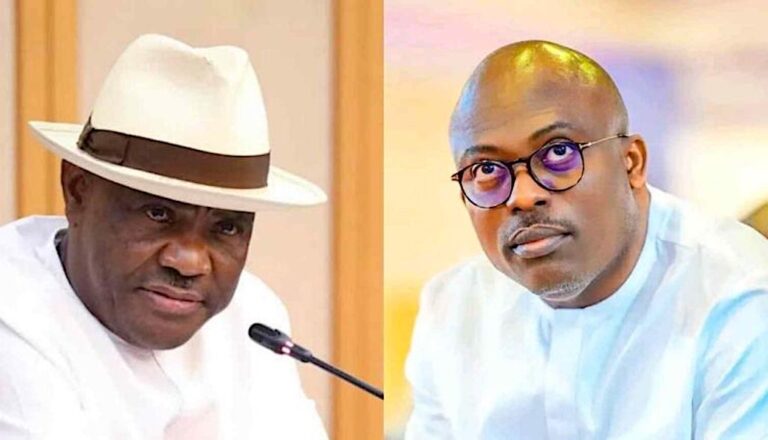
At the heart of the ongoing maelstrom is the fierce battle for supremacy between the embattled governor of the oil rich state, Siminalayi Fubara, and his perceived political godfather, Nyesom Wike. The former appears to be facing a titanic battle in his quest to assert authority and maintain control over his immediate predecessor, who currently holds sway as the Minister of the Federal Capital Territory (FCT).

For keen watchers of the unfolding political drama in Rivers State, the battle for political supremacy between godfathers and godsons did not start with Wike and Fubara. Since the return to democracy in 1999, political godsons in the state have had to part ways with their estranged godfathers.

For instance, soon after occupying the Creek House, Peter Odili, parted ways with his erstwhile godfather, the late Harry Marshall. Odili was eventually driven out of town after his tenure by his successor, Rotimi Amaechi, who was his political godson.

Nyesom Wike, an erstwhile Chief of Staff and political enforcer for Rotimi Amaechi also fought and severed relations with Amaechi, his former godfather in a bitter feud that lingered for over eight years.

Godfather, godson conflicts in Nigeria

Checks by The ICIR show that conflicts between political godfathers and their estranged godsons are not peculiar to Rivers State. Some of the epic battles since 1999 include that of former Governor Chimaroke Nnamani of Enugu State and his political godfather, Jim Nwobodo; former Governor Mala Kachallah of Borno State and his godfather, Ali Modu Sherriff; ex-Governor Chris Ngige and his godfather, Andy Uba in Anambra State; ex-Governor Willie Obiano and his godfather, Peter Obi in Anambra State, and former Governor Rauf Aregbesola and his godson, Gboyega Oyetola in Osun State.

Other examples are, ex- Governor Orji Uzor Kalu of Abia State and his former godson, Theodore Orji; ex- Governor Chimaroke Nnamani and his godson, Sullivan Chime in Enugu State, former Governor Musa Kwankwaso and his erstwhile protege, Umar Ganduje in Kano State, Adams Oshiomhole and his former godson Godwin Obaseki in Edo State; former Governor Ibrahim Wamakko and his former godson, Aminu Tambuwal in Sokoto State; former Governor Liyel  Imoke and his erstwhile godson, Ben Ayade in Cross Rivers State; former Governor George Akume and his godson, Gabriel Suswan in Benue State, the late Governor Chinwoke Mbadinuju and his godfather Emeka Offor in Anambra State, and the late governor Danbaba Suntai in Taraba State and his estranged godfather, Jolly Nyame, a reverend.

Although many of the fights ended in favour of the godsons, some of the godfathers who could not succeed in dislodging their successors aligned with other forces either to thwart their second term ambitions or get them removed by the election petition tribunals.

How things fell apart between Fubara, Wike

No sooner had the footsteps of guests who had attended the inauguration of Governor Fubara faded away than signs began to emerge that the political honeymoon between Fubara and Wike was over. The theatrics of Rivers politics started witnessing scenes of dramatic events that clearly indicated things were falling apart.

Findings show that it all started when the list of commissioners, special advisers and other key aides, as well as their portfolios, was reportedly handed over to Fubara, by his predecessor, Wike. Fubara was said to have had no input into his cabinet appointments as his ‘godfather’ was solely responsible for their selection and appointment.

The resignation of some of the commissioners afterwards was believed to be a confirmation that they were not the governor’s choices but imposed by Wike.

Some of  those who resigned from the Fubara led State Executive had worked as commissioners under the administration of Wike for eight years before being reappointed by Fubara.

The political turbulence took another dramatic turn when 27 lawmakers defected from the People’s Democratic Party (PDP) in the state to the All-Progressives Congress (APC). This development which sparked fresh power tussle between Fubara and Wike forced the legislators to relocate to the Government House in Port Harcourt for their sessions, raising questions about the separation of powers as well as the legitimacy of the laws passed by the state assembly.

This was followed by the alleged setting of the State House of Assembly ablaze by political thugs believed to be loyal to the governor.

The ICIR reports that the political brouhaha also led to initial moves to impeach Governor Fubara, and the consequent declaration of the defected lawmakers’ seats vacant by a factional Speaker of the State Assembly loyal to the governor.

Although President Bola Tinubu had intervened, proposing an eight-point peace agreement aimed at restoring harmony in the troubled state, the crisis failed to abate. Among other things, the agreement, which was signed by both parties, required that, “All matters instituted in the courts by the Governor of Rivers State shall be withdrawn immediately.”

The agreement also provided that, “All impeachment proceedings initiated against the governor of Rivers State by the House of Assembly should be dropped immediately…”

However, implementation became another controversial issue with governor Fabura challenging some of the provisions in the peace deal.

Supreme Court’s bombshell

The crisis reached a crescendo with the Supreme Court’s ruling validating the defection of the 27 lawmakers from the PDP to APC.

The court also ruled that the Central Bank of Nigeria (CBN) and the Accountant-General of the Federation must halt further release of budgetary allocations to Rivers State until a valid Appropriation Act is passed by a legally constituted House of Assembly.

Also, the apex court overturned the previous ruling of the Court of Appeal, which had held that the Federal High Court lacked jurisdiction over cases related to Rivers State funds. It further nullified the local government elections conducted in Rivers on October 5, 2024, stating that they violated relevant laws.

Ijaw groups read riot act as Wike taunts  Fubara over possible impeachment

Reacting to the judgment, Wike during a media live chat on Wednesday, March 12, said Fubara should be impeached if he has commited an impeachable offence. He expressed frustration over the situation, emphasising the importance of upholding the rule of law and criticising those in the governor’s inner circle.

“Politics is not play. If you have committed an offence to be impeached, what’s wrong if you have committed an infraction of the constitution, and the assembly deems it fit to say you should be impeached?

“I have heard people say, ‘Oh, if they impeach him, there will be a breakdown of law and order.’ Rubbish! Nothing will happen,” Wike said.

Wike said for peace to return in the state, the governor must do the right thing, stressing that Fubara must represent the 2025 budget to the State Assembly led by Martin Amaewhule, and also resubmit the names of his commissioners for clearance.

“What is important is, let the right thing be done. When the right things are done, there will be peace. But if the right thing is not done, how would you say you want peace? Peace is predicated on doing the right thing.

“Go and re-present the budget, go and submit the list of the commissioners. You cannot do illegality,” Wike said.

Wike’s impeachment comments were in apparent reference to the warning by the Ijaw National Congress (INC) and the Ijaw Youths Council (IYC) to the effect that impeaching Governor Fubara, could rupture the peace enjoyed in the state or disrupt oil production.

Benjamin Okaba, the INC president, a professor, said, “If Governor Fubara’s tenure is truncated by the Martin Amaewhule-led Assembly or anybody else, the INC cannot guarantee the sustenance of the current peace in the Niger Delta, nor the continued rise in oil production.”

Fubara’s olive branch rejected?

Although the embattled Governor has assured that his administration will fully implement the Supreme Court judgment, emerging signals from the state indicate that there are still many rivers for him to cross.

While inaugurating the new Judges’ Quarters, at Old GRA, in Port Harcourt, Fubara said, “It has not been an easy 16 months, but what is important is the interest of our state, which must be above our personal interest.

“The Supreme Court has given a judgement, and my administration is going to implement the judgement to its fullest. The reason is clear: It is not about me, it is about the good of this State.”

While alluding to the quantum of loss, in terms of money expended in prosecuting the political crisis, on both sides, Fabura said such financial resources and other efforts would be more profitable, if they were synergised and channelled to courses that promoted the genuine well-being and good of the state, adding that something more assuring would have been showcased.

However, an apparent move to extend an olive branch to the Martins Amaewhule led members of the divided State Assembly, failed as the lawmakers refused to attend a peace meeting scheduled for Monday March 10.

The governor had, in a letter signed by the secretary to the state government, Tammy Danagogo, invited the speaker, Martins Amaewhule, and the other 26 lawmakers for a peace meeting in Government House.

Danagogo, in the letter dated March 7, said the invitation came after the Fubara received a Certified True Copy (CTC) of the Supreme Court judgement on the political crisis in the state.

At the top of the agenda of the meeting were the presentation of the 2025 budget to the assembly, payment of allowances of the lawmakers, allocation of a sitting venue for the assembly and others.

However, the meeting that was to hold 10 am at Government House, Port Harcourt, could not hold because the lawmakers did not show up. The lawmakers had reportedly turned down the invitation on the grounds that it was not properly handled and only posted on social media platforms.

One of the invitees, the member representing Akuku-Toru Constituency II, Rivers State House of Assembly, was quoted as stating that the lawmakers would not honour the invitation.

He reportedly said, “It is time for us to have our day… How can you write a letter and post it on social media and expect us to come? No, we are not kids. The governor should write to the Assembly in a proper way; that is all.”

However, a drama ensued at the State House of Assembly complex on Wednesday March 12 when Fubara arrived at the quarters for the presentation of the 2025 budget only to meet the entrance gate locked.

The security personnel at the complex were said to have locked the gates when the governor’s convoy arrived at the complex, hinging their action on the position that there was no official communication between the governor and the Assembly.

So, the pertinent question is whether Governor Fubara is holding the short end of the stick.

The answer is complex and multifaceted. On one hand, the governor’s inability to get the assembly on his side is an indication of his weakened position. Furthermore, observers say the Supreme Court’s ruling handed a significant advantage to the APC, leaving the embattled governor with the short end of the stick.

Fubara’s predicament is further compounded by the fact that the APC, now firmly in control of the assembly, has vowed to scrutinise his every move, including his budget proposals and appointments. This level of legislative oversight, while legitimate, has the potential to cripple his ability to govern effectively.

However, others say Fubara’s fate may not be entirely sealed. “The governor still retains significant executive powers, including the ability to appoint and dismiss officials, grant pardons, and exercise emergency powers in times of crisis.

“Moreover, Fubara’s PDP still maintains a strong presence in the state, and the governor can potentially mobilise popular support to counterbalance the APC’s legislative dominance,” a political analyst, said.

The analyst, who preferred anonymity, said Fubara’s survival will depend on his ability to navigate the treacherous waters of Rivers State politics.

The governor must walk a fine line between asserting his authority and avoiding confrontation with the APC-dominated assembly. He must also cultivate alliances with other stakeholders, including traditional rulers, civil society groups, and the federal government,” the source said.

Tinubu meets PANDEF, urges Fubara to comply with court ruling

During a meeting with representatives of the Pan-Niger Delta Forum (PANDEF) at the Presidential Villa in Abuja on Tuesday March 11, President Bola Tinubu urged them to counsel Governor Fubara on the need to comply with court rulings on the crisis in the state.

Obong Victor Attah, a former governor of Akwa Ibom, and Alfred Papapreye Diete-Spiff, Amanyanabo of Twon-Brass Kingdom; were among the PANDEF leaders who attended the meeting.

Recalling his earlier intervention in the crisis with an agreement signed with the warring parties, Tinubu said, “Yes, Niger Delta is the goose that lays the golden egg. We must care for the goose; otherwise, we lose the golden egg.

“We reached an agreement, written agreement, and both parties signed. This is a nation governed by the rule of law. I should not be here as president without rule of law. I have total confidence in our judiciary. We have expectations. Human beings can make errors. But once the court has spoken, that is it.

Will the curtains at Government House, Port Harcourt eventually fall against Governor Fubara? Only time will tell.

OPEC confirms petroleum regulator data on oil quota drop in February

0

THE Organisation of Petroleum Exporting Countries (OPEC) has affirmed data from Nigeria’s petroleum regulator, reporting that Nigeria’s average daily crude oil production declined to 1.465 million barrels per day (bpd) in February, falling below its quota.

In its monthly crude oil data released on Wednesday, March 12, the OPEC report corroborates the Nigeria Upstream Petroleum Regulatory Commission (NUPRC) data released on Tuesday, March 11.

Both data indicated that Nigeria’s oil production fell below the 1.5 million bpd OPEC quota.

According to OPEC, Nigeria’s crude oil production dropped by 72 million bpd from 1.539 million bpd reported in January.

The oil cartel, at its ministerial meeting on November 30, 2023, set a daily production target of 1.5 million barrels per day (bpd) for Nigeria and, in December 2024, extended the quota until 2026.

However, Nigeria has continued to produce below OPEC’s quota, exceeding the target only in January this year.

According to OPEC, its crude oil production figures are based on direct communication with the Nigerian government.

The NUPRC, which regulates the country’s upstream petroleum operations, reported a day earlier that Nigeria’s average daily crude oil production declined by about five per cent in February.

Its data showed that average crude oil production dropped to 1,465,006 bpd in February from 1,538,697 bpd in January, falling below OPEC’s quota of 1.5 million bpd.

“The average crude oil production was 98% of OPEC quota (1.5 Mbps),” NUPRC said.

According to the NUPRC, the figures exclude condensates which OPEC does not include in its calculations of its monthly crude oil report.

But with condensates, the NUPRC data showed daily average production was 1,671,953 in February. It comprises 1,465,006 crude oil and 206,948 condensate barrels of oil per day.

The NUPRC stated further that Nigeria recorded a total production of 41,020,155 barrels of crude oil in February, with 1,599,693  and 4,194,849 barrels of blended and unblended condensates, respectively.

This was below the output in January, when the total production of crude oil was 47,699,593 barrels, excluding 1,910,213 barrels and 4,252,071 barrels in blended and unblended condensates.

Daily average production peaked at 1.7 million and was lowest at 1.6 million in the review month, the NUPRC data added.

Analysts observed that the drop in crude oil quota for February could impact negatively on the 2025 budget implementation.

While presenting the 2025 budget to the National Assembly on December 18, 2024, the president highlighted that the government was targeting N34.8 trillion in revenue to fund the budget of which the bulk of the revenue will come from crude oil proceeds.

He projected that oil revenue would bring in N19.6 trillion while non-oil sources would come in N15.22 trillion.

He set a 2.06 million barrels per day (bpd) crude oil production target at a benchmark rate of $75perr per barrel and adjusted the exchange rate benchmark to N1,500 per dollar.