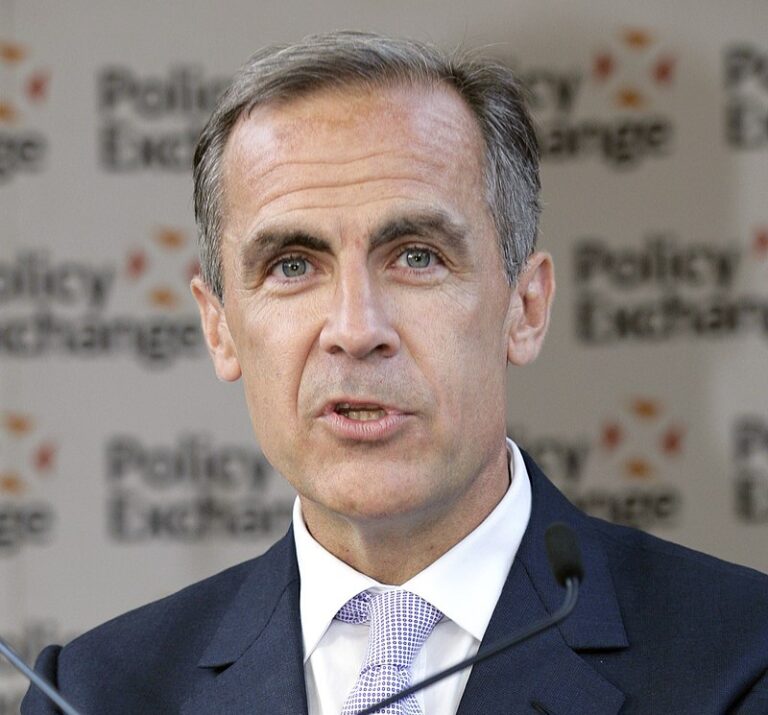
FORMER central banker Mark Carney has been elected leader of Canada’s ruling Liberal Party and will replace Justin Trudeau as prime minister.
According to official results released on Sunday, Carney, 59, received 86 per cent of the votes cast to beat former Finance Minister Chrystia Freeland in a contest in which just under 152,000 party members voted.
Carney will assume leadership amidst a trade war with his country’s longtime ally, the United States, under President Donald Trump, while also preparing for an upcoming general election.
“There’s someone who’s trying to weaken our economy,” Carney said of Trump. “He’s attacking Canadian workers, families, and businesses. We can’t let him succeed.”
Carney assured the party, “This won’t be business as usual. We will have to do things that we haven’t imagined before, at speeds we didn’t think possible.”
Trudeau announced his decision to step down in January 2025 after more than nine years in power, prompting the ruling Liberal Party to swiftly organise a leadership contest to find his replacement.
“Make no mistake, this is a nation-defining moment. Democracy is not a given. Freedom is not a given. Even Canada is not a given,” Trudeau said.
Despite being a political newcomer, Carney argued that he was the best candidate to revitalise the party and lead trade negotiations with Trump, who is threatening further tariffs that could severely impact Canada’s export-driven economy.
The ICIR reported that Trudeau imposed C$30 billion of retaliatory tariffs on the United States in retaliation to tariffs Trump levied on Canada.
“My government will keep our tariffs on until the Americans show us respect,” Carney said.
Carney’s victory marks the first time an inexperienced politician has become Canada’s prime minister.
He said his experience as the first person to govern two G7 central banks in Canada and England makes him the most qualified candidate for the prime minister’s office.
THE chairman of the All Progressives Congress (APC) in Rivers State, Tony Okocha, has given Governor Siminalayi Fubara a 48-hour ultimatum to resign or face impeachment.
Okocha stated this at a news briefing in Port Harcourt on Monday, March 10.
He said the governor disrespected President Bola Tinubu and violated the Nigerian Constitution.
He also accused Fubara of insulting Tinubu when he attempted to propose a political solution to the crisis in the state.
“The Supreme Court Judgement is final. There is nothing anybody can do about it. The only option available to the governor now is for him to resign or be impeached,” Okocha stated while reacting to the governor’s request that the state House of Assembly meet with him for a dialogue.
The ICIR reported on Sunday, March 9, that Fubara invited the Martins Amaewhule-led House of Assembly for a dialogue.
The meeting was scheduled for Monday, March 10, at the Governor’s Office in Port Harcourt, the state capital.
The notice of the meeting was signed by the Secretary to the State Government, Tammy Danagogo.
The request for the meeting followed the judgment of the Supreme Court, which recognised Amaewhule as the speaker of the state House of Assembly.
According to the letter of invitation addressed to the House members through the speaker, the invitation followed the receipt of the Supreme Court judgment by Fubara.
The meeting seeks to, among others, discuss the provision of a befitting space for the Assembly’s sittings; payment of all outstanding remuneration or allowances of members; presentation of the 2025 budget and sundry matters; and any other matter(s) that may be necessary for the good of the state.
The ICIR reported that following the Supreme Court ruling in favour of the Amaewhule-led Assembly, the House had, on Monday, March 3, given Fubara 48 hours to re-present the 2025 budget.
Responding, the government said it had yet to receive any official communication regarding the ultimatum.
In a letter dated March 5, addressed to Amaewhule, the secretary to the state government noted that the administration only learnt about the letter containing the ultimatum on social media.
He explained that as of the close of business on March 4, neither the offices of the governor, the deputy governor, nor the accountant general had received any such correspondence.
The ICIR reports that the Supreme Court judgment reinstated Amaewhule and his faction as legitimate members of the Assembly, which consequently invalidated the previous budget presentation made by Fubara to a splinter faction of the Assembly.
The court deemed Fubara’s presentation of an appropriation bill before a small faction of the Assembly as absurd.
It also annulled the recent local government election conducted in the state by Fubara.
The ICIR reports that Fubara and his predecessor, Nyesom Wike, currently the Minister of the Federal Capital Territory (FCT), have been at loggerheads over who controls the PDP structure in the state, with President Bola Tinubu’s efforts to resolve the stalemate yielding no result.
Fubara has vehemently resisted Wike’s insistence on controlling the party in the state, with both leaders, who were allies before the 2023 governorship election, turning arch-rivals months after Fubara assumed power.
A Nigerian travel content creator, Alma Asinobi, has expressed frustration in getting multiple visas for her intercontinental travel tours.
Currently, Asinobi is hoping to make history by attempting to break the Guinness World Record for the fastest journey across all seven continents in just 60 hours.
She broke the news on her X handle saying she will begin on March 15, to shed light on the challenges Africans face due to low-mobility passports.
“On March 15, in just a few days, I’ll be flying from Antarctica to Australia stepping foot on every continent in between to break the Guinness World Record for the “fastest time to visit all seven continents “.
“This is one of two world records I am attempting this month (more on the second one later). I’m doing this with a Nigerian passport to shed more light on the issue of passport privilege, or in our case, the lack thereof”, she wrote.
Asinobi said that she has been frustrated with spending money on multiple visa applications with her Nigerian passport, only to experience repeated rejections.
“I’m pushing the limits of one of the lowest-ranking passports in the world on this adventure, to show you what’s possible, and inspire you to see the world regardless of the limitations. This is while holding the spotlight over a much-overlooked subject that affects over half of the world’s population with the most affected people being Africans, both at home and in diaspora,” she said.
The content creator stated that she has thoroughly researched and planned her journey, which will cover all seven continents with nine flights and seven short layovers.
She wrote: “When I fully recover from having to apply for 10+ visas for this, and being rejected for two of them a total of five times, I’ll go in-depth about why we simply cannot afford to accept and be silent about the second-class treatment we’re subjected to when it comes to travel and visa requirements for citizens with low-mobility passports.
She aims to set the record by stepping beyond airport boundaries on each continent and meticulously documenting every part of her journey.
“The rules for the record are strict. Visit all the seven continents, not just the airport. Precise timing and zero room for error.”
Asinobi’s attempt highlights the ongoing challenges of passport privilege that continue to impact travelers from Africa and beyond.
Africans face significant challenges when applying for visas, with many countries imposing strict requirements and lengthy processing times.
The ICIRreported recently that the US excluded Nigeria and other African countries from its 2025 Visa Waiver Programme (VWP) as part of policy updates on permit eligibility and other travel regulations.
Nigeria has never been part of the US VWP, because the programme primarily includes countries with strong security protocols, low visa overstay rates, and reciprocal travel arrangements with the US.
FACED with an increasing population of over 25 million people crowding within the smallest land mass in Nigeria, prioritising health and environmental matters should be a core mandate the Lagos State government should enforce. However, findings indicate overwhelming challenges of poor sanitary conditions, heightening cholera outbreaks and compromising public health safety of residents.
A tragic loss
The death of Chiemela came so shocking last year that it devastated his family. His father who couldn’t bear the shock of the loss of a son, upon receiving the sad news, followed suit. Since then, his mother has been traumatised by the death of her son and husband.
“Chiemela’s death really devastated his mother. Reaching her now over his son’s death could mean opening an old wound yet to heal,” a professor of medical microbiology, public health and medical laboratory science at the Abia State University Teaching Hospital, Ada Carol Ngwogu, told The ICIR. She was his supervisor.
Chiemela was a graduate of medical laboratory science from Abia State University before his untimely death. He died of cholera infection during the period of his internship programme at the Military Hospital Lagos.
He is was said to have contracted the infectious disease after he drank a tiger nut drink, a locally made non-alcoholic beverage. Many of such drinks sold on the street are not registered with regulatory bodies and often fall short of the required hygienic standards.
Chiemela started stooling and vomiting uncontrollably after drinking the tiger nut and retired to his hostel. His roommates weren’t around at the time to help him get immediate medical care. He was so weak that he couldn’t even pick up his phone to call for help.
The cholera infection rendered him helpless till his roommates returned and carried him to the hospital, but unfortunately, Chiemela died.
“I told you that cholera can kill in hours because of its severity,” Ngwogu said as she painfully recalled the death of Chiemela, one of the graduate students assigned to her to supervise last year.
“That last outbreak in Lagos took the life of one of my students, my supervisee. The person had already graduated from medical lab science and was doing his internship in Lagos, in one of the hospitals,” she recounted.
Chiemela is just one among many victims killed by cholera during the outbreak in Lagos State last year.
Outbreak becoming endemic in Lagos
According to the Nigeria Centre for Disease Control and Prevention (NCDC), cholera is an acute diarrhoea disease caused by vibrio cholerae, a gram-negative rod-shaped bacterium. It is a potentially life-threatening, primarily waterborne disease.
On June 9, 2024, the Lagos State government declared a cholera outbreak. As of July 6, over 1,600 suspected and 70 confirmed cases had been reported in the state. Fifty-Eight people suspected to have contracted the disease have reportedly died.
The affected victims were children aged 0-4 years and persons aged 20-40 years, the United Nations Children’s Fund (UNICEF) said in a report covering the cholera incident between June 15 to July 8, 2024.
In early July, some parts of Lagos, including areas that reported cholera cases, experienced temporary flooding due to torrential rainfall. Across the country, Nigeria had recorded 2,102 suspected cholera cases from 33 states as of June 30, 2024, while Lagos State accounted for 49 per cent of the cases.
‘Cholera is a disease that has to be treated quickly’, how do you go about it?
Cholera, an acute ailment that causes severe diarrhoea, affects everybody – children, adults and the elderly, a public health specialist, Tope Ogunniyan told the reporter when he visited the infectious disease centre.
Ogunniyan, who works there, pleaded to speak as a medical personnel member and not to quote data authoritatively. He explained that people infected react to cholera by vomiting but that the main symptom is diarrhoea which leads to severe dehydration, a situation where the body loses so much water and affects its normal functioning system.
“If not quickly controlled, it can lead to death,” Oguuniyan said, pointing out that people contaminate cholera when they come in contact with food, drink, or water carrying the bacteria.
“It can affect anybody and kill them in hours after contracting the disease. By extension, it usually occurs in areas with poor sanitation, bad food habits and water storage or lack of potable water.
The ward where cholera patients were treated at the Lagos State Infectious Disease Centre in Mainland Hospital, Yaba, during the cholera outbreak.
“Cholera is a disease that has to be treated quickly because it causes people to lose a lot of body fluids and the organs in the body shut down rapidly,” he explained, adding that it can be treated, but timely.
Ogunniyan explained further that to manage a cholera patient is to quickly restore the lost fluid which most health centres can administer. However, he warned that some primary health centres may not have the personnel or facilities to quickly respond to severe cases.
“Treating cholera does not require a specialist centre, it can be treated at a private or public health centre. But the major thing is to restore the body fluids which can be done by giving the person a drip.
The major canal in Iwaya at the other end of the lagoon is also blocked with water hyacinths. It causes floods and damage to buildings and residents’ properties when it rains. Image source: The ICIR
“But when giving the patient drip, the medical personnel must ensure that the accurate quantity of fluid the body loses is restored,” Ogunniyan advised.
He pointed out that where critical issues mostly arise is if there is an epidemic. In this case, people can be spread across various health facilities for proper monitoring and treatment.
“When there is an outbreak of cholera it results in diarrhoea. Although other ailments can cause diarrhoea. For cholera, the frequency and amount are much.
“That is why any infected person must quickly rush down to the medical centre for treatment,” Ogunniyan advised, explaining that cholera contracting is not necessarily a case of lacking personal hygiene, but could be from things people buy, facilities they use, and their exposure to the environment.
It breaks out in an environment where hygiene is poor, where people’s sewages are not demarcated from drinking water and not necessarily at a particular time of the year.
In the rainy season, poor sewage, refuse disposal and contaminated rainwater can carry the bacteria into various places and contaminate foods not well stored or other items people use, compromising peoples’ health.
Dangerous for densely populated city
For a state like Lagos with a large population, Ngwogu, a professor of medical microbiology, public health and medical laboratory science at ABSUTH, said the cholera outbreak portends danger.
“Cholera itself is often described as a disease of poverty and overcrowded vicinity. It’s contagious for a city like Lagos with a large population.
“When people don’t have a good water source or lack it, or water is not adequately distributed, they tend to scout for it from the limited sources. In that way, many people are affected if the water has been contaminated with the organisms,” she said.
Ngwogu averred that the danger of cholera is that when a person infected with it stools or vomits in an open place and flood carries it to other places, it becomes infectious to other people.
“It is a gastrointestinal waterborne disease that comes as a result of poor sanitation and sanitary conditions, she said, adding, “Acute cases of cholera are so contagious that in a few hours, the person is gone. You can imagine somebody stooling and vomiting, the person is losing all water; all the fluid and electrolytes in the body system.
“Those are the things that keep the body working properly. So, before you know it the body can no longer function. Imagine that our blood is 80 per cent water. When a person loses this, in hours the person will die.”
Low budgetary allocation worsens cases
Lagos State currently has a population size of over 25 million people, and according to a report from the state, its population is projected to hit 32.6 million by 2050, and over 80 million by 2100, citing a report by Global Cities Institute at the University of Toronto.
The state is faced with significant environmental challenges that make it highly prone to public health matters. The challenges include poor drainage systems, refuse disposal, lack of potable water, and other infrastructure deficits compromising sanitary conditions for residents.
The challenges are evident in places not limited to communities in Ojuwoye in Mushin, Iwaya in Yaba, Oworonshoki in Kosofe, and suburbs like Eti-Osa, Agege, Alimosho, Ojo, Ikeja, Badagary, Oshodi-Isolo, Lagos Island, and Lagos Mainland.
The image shows Ferry, one of the slums in Oworonshoki where people live in unhealthy environmental conditions. Source: The ICIR
Across vicinities are issues of dirty markets, littered streets, blocked drainages, open defecation and indiscriminate waste disposal which the state has been failing to promptly address to restore a clean, hygienic environment for the residents.
According to the 2021 Water, Sanitation and Hygiene National Outcome Routine Mapping (WASHNORM) statistics, only 15 per cent of households in Lagos have access to safely managed sanitation services and only 35 per cent have access to hygiene services.
Amid the environmental challenges, Lagos has yet to prioritise spending on infrastructure, health and environment, despite governor Babajide Sanwo-Olu’s promises and mantra on THEMES agenda.
The mantra stands for, traffic management and transportation; health and environment; education and technology; making Lagos a 21st-century economy; entertainment and tourism; and security and governance.
With less than three years to complete his second tenure in office, Sanwo-Olu hasn’t kept his promise of improving the health budget to 15 per cent which he promised during his governorship campaign in March 2019.
A cursory look at the Lagos State budget in 2024 showed it allocated N162.08 billion for health, which represented 7.15 per cent of its approved N2.27 trillion in that year. In 2023, it allocated N149.06 billion for health, which represented 8.42 per cent out of the N1.77 trillion overall budget for that year.
The allocation has been of concern despite Governor Babajide Sanwo-Olu’s promises to raise the health budget to a double-digit percentage.
In March 2019, during one of his governorship campaigns, Sanwo-Olu promised to raise the budgetary allocation for health from 8.6 per cent to 15 per cent. He had earlier in February 2019, also promised to ensure available and sustainable management of water and sanitation for the residents of Lagos as contained in the United Nations’ Sustainable Development Goals (SDGs).
Despite his yet-to-be fulfilled promises, Sanwo-Olu further made health and environment one of the pillars of his THEMES agenda, since assuming office in May 2019, however, health and sanitation infrastructure have remained inadequate to meet the needs of the people.
Residents resort to self-help
Faced with environmental challenges, including a poor drainage system in the neighbourhood community in Iwaya, a resident, Somide Samson, has to rely on self-help.
Iwaya is a residential and commercial neighbourhood in the Yaba local council development area, a council carved out of the Lagos Mainland LGA and bounded by the Lagos Lagoon, Makoko (a slum) and the University of Lagos.
The neighbours he shares a fence with have evacuated their belongings as the building was seen enmeshed with still water that had turned into a coloured scum on the surface.
This house covered with ‘algal bloom’ shared a fence with Pa Samson’s compound. Image source: The ICIR
When it rained, the neighbourhood would experience flooding into their houses. The canal would overflow with dirty waters, carrying all manner of unhygienic substances and spread into many houses.
“You can see I’m trying to fence this place to prevent water from entering my house,” Pa Samson, a pensioner said.
“The constructed canal is not good enough. This is our gutter, and the water comes from the canal. The people who constructed the canal blocked our gutter from flowing into it. I asked why, and they said the water coming from here will not enter here,” he lamented.
Pa Samson complained that the canal which is beside his compound was blocked, causing water to overflow into his compound. He has to start building a perimeter fence to wade off the flood. Image source: The ICIR
It was observed that the canal is even blocked at both ends with floods of plastic waste at one end and water hyacinths at the other end from the lagoon.
Olusola Akinsomi, a resident in Onike, corroborated that many places within his community have been turned into landfills as a result of the negligence of the Lagos Waste Management Authority (LAWMA), a parastatal saddled with ensuring among others the collection, removal and disposal of waste materials.
“Omotola and Owodunni streets have turned into dump sites. Down in Iwaya, which we call extension or Balogun extension, has also become a dump site,” he pointed out.
Akinsomi recounted an incident in October 2024 when a heavy downpour caused terrible damage as it flooded many people’s houses, blaming losses on the negligence of the state authorities.
Akinsomi, a resident of Iwaya, expressed concerns over the unsanitary conditions faced by residents arising from the negligence of Lagos state authority, LAWMA. Image source: The ICIR
“On the other side of Iwaya called Makoko, the canal is blocked with moulds and sand. Now, the canal is here, but it is not serving its purpose because it is not well constructed and has not been completed.” Akinsomi, an estate surveyor, complained.
Their woes are compounded by the fact that officials of the LAWMA rarely come into the community to pick up refuse. This has been endangering the health of the residents in the community, giving room for dumping of refuse materials at the gutters and canals.
Many places, he said, have been turned into dump sites, including a National Union of Road Transport Workers’ garage, lamenting the plight of the people living in those slums when it rains.
“Towards the other side of Iwaya that goes to Makoko, the canal is also blocked with sand. So, there is serious flooding here. If you had been here at that time, many houses were hit, and school pupils had to leave because of flooding in their compound.
“People couldn’t go out. Mattresses were floating in the rain, especially those that were very close to the canal on the other side. It was a terrible sight. Still, the canal is here, but it’s not serving its purpose because it was not fully constructed,” Akinsomi lamented.
There are other environmental issues, including poor building construction, Akinsola said, blaming the Lagos government for lacking an effective monitoring system on environmental issues across the state.
“How can the government allow construction on muddy ground with a bad foundation”, he asked.
According to him, the LAWMA workers pick up refuse, maybe once or twice a month, and expects the people to pay for such services.
“The people have to find a way to dispose of their refuse into the canals which are not cleared and yet to be completed. For me, majorly, that’s what’s happening within this community,” Akinsomi said.
He also cast blame on local governments, expected to be the first point of call on environmental matters, for lagging behind in community development.
“If one of their priorities is ensuring proper waste management, then the environment will be better for all the residents to live in without suffering any of the public health diseases,” he said.
“But the government has been reactive in responding to reoccurring environmental issues in the state,” Akinsola maintained, adding, “If they are proactive, we should have a safer environment to operate.”
At Oworoshoki, a community in the Kosofe local government area, Wasiu Adeleke Segun, living in Ferry, one of the slums, told The ICIR that the government needs to clean up many environments within the state as it is affecting the health of the people.
He believes that people living in shanties and suffering similar living conditions are looking for money to feed and not to pay hospital bills.
Segun, one of the area boys living in Ferry, a slum in Oworonshoki, pleaded with the government to provide basic social amenities. Image source: The ICIR
“Government, help your nation, give us better things. We need social amenities such as hospitals, water, good roads, electricity, because health is wealth,” Segun urged the state authority.
Low enforcement, negligence
The Lagos State government seems not to be enforcing its environmental law as a majority of its provisions are openly flouted.
In March 2017, the Lagos State Environmental Management Protection Law was passed into law. It consolidates all the laws and regulations applicable to the management, protection and sustainable development of the environment in the state.
It delves into more modern cosmopolitan environmental issues like littering, dumping of untreated toxic and or radioactive material into public drains, street trading and hawking.
It further prohibits urinating and defecating in open and public drains; discharge of waste matters and wastewater into the public drain or environment and dumping of refuse on the road and into the public drain.
Others include unhygienic toilet facilities, and non-provision of toilet facilities at home, hotels, restaurants/bars.
‘Providing potable water, a challenge’
“We’ve never gotten that universal coverage for potable water which has been a major issue across the board,” the executive director of Development Communications (DevComs) Network, Akin Jimoh, averred.
Cholera comes and goes but is usually found in instances where the hygiene situation is not really good enough, said the boss of DevComs, a non-governmental organisation promoting public health among others.
“When we look at the source of water, how do you treat the water? What do we do after we’ve treated the water and so on?
“Those days, there used to be a public water supply, where are they now? So, having universal coverage in terms of potable water is very key at any point in time. If we don’t have that, what else can you do? Jimoh quarried.
“Recently, I was at Abesan Estate, [a low-income housing estate]. The people there have a first-class water supply, but they don’t use it because every building has a borehole,” he said.
Measures to prevent outbreak
The Lagos State government must first and foremost look into the issue of sanitary conditions in the state, Ngwogu suggested.
“What is the cause or reason why people defecate outside or in an open place? It is because they don’t have good toilets or can’t find any good public toilets.
“Nobody will see a neat toilet that has a good water source and defecate outside or in an open place,” she asserted.
She said the state agencies saddled with the responsibilities of public health environmental issues must also start visiting residents and offices to ensure sewage disposal and other toilet facilities are well in place.
“Government agencies need to visit houses to find out the sanitary conditions of the people, especially in the slums and shanties. They should also note that cholera is not restricted to people living in slums as those people go to offices in Victoria Island and other commercial centres,” she said.
Government silence: Commissioner, medical centre decline enquiries
In the course of the fieldwork, several efforts were made to get data and other enquiries from the Lagos State authority to match the UNICEF report but to no avail.
The state commissioner for health, Akin Abayomi, didn’t respond to emails, calls, texts and WhatsApp messages sent to him, despite follow-ups and reminders. When the reporter visited the Mainland Hospital, the state’s Infectious Disease Hospital in Yaba, he was told to direct his enquiries to the state health ministry.
Similarly, the Federal Medical Centre (FMC), Ebute Metta, Lagos, didn’t grant The ICIR request to speak with its health practitioners at the forefront of treating and mitigating the spread of the cholera disease.
The chief medical director, Adedamola Dada, didn’t approve the request to engage the hospital’s research unit for enquiries and data on the cholera outbreak, despite initial and follow-up letters acknowledged by his office.
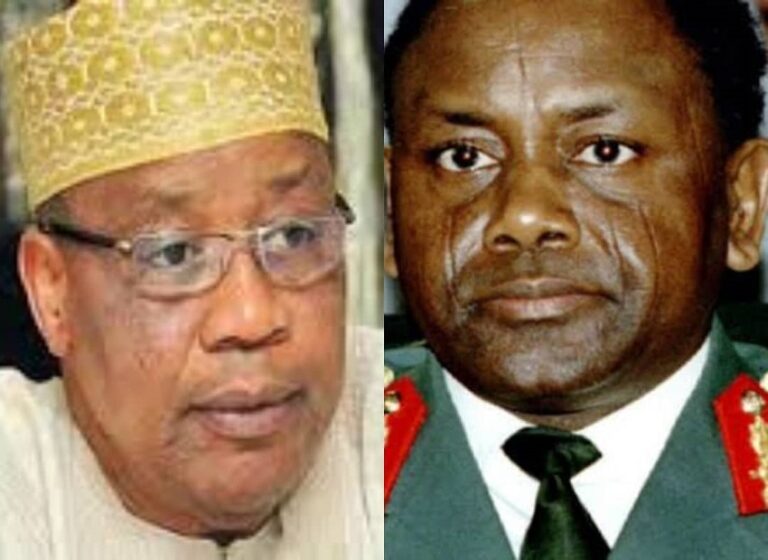
THE family of former Nigerian military leader, Sani Abacha, has rejected claims by a former military President Ibrahim Babangida that the late general was responsible for the annulment of the June 12, 1993, presidential election.
In Babangida’s memoir released on Thursday, February 20, titled ‘A Journey in Service’, he claimed Abacha was behind the annulment of the June 12 election.
However, Mohammed Abacha, the late general’s son, fired back, accusing Babangida of twisting historical facts.
Mohammed Abacha accused Babangida of trying to rewrite history, urging Nigerians to beware of false narratives that shift blame away from those truly responsible.
The family stated that Babangida’s claims have sparked widespread controversy and necessitated a clear response to set the record straight.
They emphasised that Abacha was neither the Head of State nor the Commander-in-Chief at the time of the annulment, and therefore, could not have been responsible for the annulment.
“The decision to annul the election was made under the administration of General Ibrahim Babangida, who, as the then Head of State, held absolute executive powers and was solely responsible for the actions of his government.
“Any attempt to shift this blame onto General Sani Abacha, who was a very senior military officer within the regime, is a deliberate distortion of historical facts,” the Abacha family stated.
The family added that Abacha remained loyal to Babangida throughout his lifetime, even protecting him when his life was under threat.
The Abacha family also urged Nigerians to be wary of what they termed “revisionist narratives” intended to manipulate public perception for political gain.
The ICIRreported that during the book launch, Babangida admitted for the first time at the event that the late businessman, Moshood Abiola, won the presidential election conducted on June 12, 1993.
The event, attended by prominent African leaders, former Nigerian presidents, heads of state, andother dignitaries, also served as a fundraising initiative for the IBB Presidential Library.
The ceremony was chaired by former President Olusegun Obasanjo, who lauded Babangida for documenting his leadership experiences and ensuring that future generations have a written record of Nigeria’s political history.
The ICIR reports that Babangida, who served as Nigeria’s military ruler from 1985 to 1993, became military president after taking over power from Muhammadu Buhari on August 27, 1985.
He introduced economic policies such as the Structural Adjustment Programme (SAP), which altered the course of the nation’s economy.
His regime is best remembered for several controversial events, particularly the annulment of the June 12, 1993, presidential election, which was widely seen as Nigeria’s freest, fairest, and most credible poll.
The election was widely believed to have been won by Moshood Abiola of the Social Democratic Party (SDP).
Another significant event that characterisedBabangida’s government was the murder of veteran investigative journalist Dele Giwa.
These two events have continued to echo his administration, with critics accusing him of human rights violations.
THE Rivers State Government, headed by Governor Siminalayi Fubara, has invited the Martins Amaewhule-led House of Assembly for a dialogue.
The meeting is scheduled for Monday, March 10, at the Governor’s Office in Port Harcourt, the state capital.
The notice of the meeting was signed by the Secretary to the State Government, TammyWenike Danagogo.
The request for the meeting followed the judgment of the Supreme Court, which recognised Amaewhule as the speaker of the state House of Assembly.
According to the letter of invitation sent to the House members through the speaker, the invitation followed the receipt of the Supreme Court judgment by Fubara.
The meeting seeks to, among others, discuss the provision of a befitting space for the Assembly’s sittings; payment of all outstanding remuneration or allowances of members; presentation of the 2025 budget and sundry matters; and any other matter(s) that may be necessary for the good of the state.
The ICIR reported that following the Supreme Court ruling in favour of the Amaewhule-led Assembly, the House had, on Monday, March 3, given Fubara 48 hours to re-present the 2025 budget.
Responding, the government said it had yet to receive any official communication regarding the ultimatum.
In a letter dated March 5, addressed to Amaewhule, the secretary to the state government noted that the administration only learnt about the letter containing the ultimatum on social media.
He explained that as of the close of business on March 4, neither the offices of the governor, the deputy governor, nor the accountant general had received any such correspondence.
In a resolution signed by Amaewhule, the lawmakers cited the Supreme Court’s directive halting federal allocations to the state and prohibiting spending from the Consolidated Revenue Fund until a properly passed Appropriation Bill is in place.
The ICIR reports that the Supreme Court judgment reinstated Amaewhule and his faction as the legitimate members of the Assembly, which consequently invalidated the previous budget presentation made by Fubara to a splinter faction of the Assembly.
The court deemed Fubara’s presentation of an appropriation bill before a small faction of Assembly as absurd.
It also annulled the recent local government election conducted in the state by Fubara.
Fubara had signed the N1.18 trillion 2025 appropriation bill into law on January 2, after presenting it to a four-member assembly led by Victor Oko-Jumbo.
The lawmakers on Monday also referenced constitutional provisions and the Rivers State Local Government (Amendment) Law, 2023, which prohibits the administration of local governments by unelected officials, as directed by Fubara shortly after the Supreme Court ruling.
The ICIR reports that Fubara and his predecessor, Nyesom Wike, currently the Minister of the Federal Capital Territory (FCT), have been at loggerheads over who controls the PDP structure in the state, with President Bola Tinubu’s efforts to resolve the stalemate yielding no result.
Fubara has vehemently resisted Wike’s insistence on controlling the party in the state, with both leaders, who were allies before the 2023 governorship election, turning arch-rivals months after Fubara assumed power.
At the onset of the crisis, 27 members of the state House of Assembly who were loyal to the former governor decamped to the All Progressives Congress – the party in which Wike serves as minister in Abuja.
In addition to declaring the defectors’ seats vacant, Fubara sacked all 23 local government chairmen elected under Wike and declaredthat their tenure had expired.
He went on to conduct a new poll, which the Supreme Court annulled.
THE National Working Committee (NWC) of the Peoples Democratic Party (PDP) has again postponed the much-awaited National Executive Committee (NEC) meeting of the party, scheduled for Wednesday, March 13.
The party has earlier been postponed three times. It was initially scheduled for October 24, 2024, but was postponed to November 28, 2024, to allow the party to focus on the Ondo gubernatorial election. It was again pushed to March 13, 2025, and now May 15, 2025.
According to the new schedule, the NEC meeting will now be held on May 13, 2023.
This announcement was made in a statement released on Sunday, March 9, and signed by the party’s national secretary, Sunday Udeh Okoye.
According to the NWC, the postponement is due to emerging issues that require attention, including the need to conclude pending zonal, state, local government, and ward congresses. The party also said it wants to allow for further consultation to ensure a hitch-free meeting.
The NWC stated that it arrived at this decision after consulting with party leaders, stakeholders, and relevant organs, including the Board of Trustees (BoT), the PDP Governors’ Forum, and the PDP National Assembly Caucus.
“All NEC Members should please note the date change and be guided accordingly. The NWC sincerely regrets any inconveniences this change of date will cause Distinguished members of NEC,” the party stated.
The PDP NEC meeting, which was initially scheduled to be held on March 13, was meant to address the festering crisis within the party, including the contentious issues of the national chairman and the 2025 general elections.
The leadership crisis in the PDPbegan when the party’s national chairman, Iyorchia Ayu, was suspended by the party’s NWC over allegations of misconduct and financial irregularities.
The suspension of Ayu sparked intense resistance from some stakeholders in the party, who insisted that his removal didn’t follow due process.
This development ignited a fierce power struggle within the party, with various factions vying for dominance. While some members were demanding Ayu’s removal, others were adamant that he should be reinstated.
The party’s Board of Trustees (BoT) has attempted to address the crisis by setting up a committee to resolve the dispute over the national secretary position. However, some party members remain skeptical about the committee’s ability to resolve the crisis, citing the need for more decisive action to address the party’s internal divisions.
Since the last NEC meeting of the party in April 2024, the struggle has been to remove Damagum and allow the north-central zone to complete the tenure of office of Ayu, who was suspended and later resigned.
But within that period, an Abuja High Court restrained the PDP from removing Damagum as national chairman pending the completion of the tenure in December 2025.
At the time of reporting, it’s unclear if the court order has been lifted or overturned.
The last time the PDP NWC met in Abuja in January 2025, it was dominated by the news of a feud between Samuel Anyanwu and Ude-Okoye, who are struggling for the office of the National Secretary of the party.
The PDP’s internal conflicts have intensified due to factional struggles, with rival camps emerging in support of prominent figures like former Vice President Atiku Abubakar and Minister of the Federal Capital Territory (FCT), Nyesom Wike.
The NEC meeting, which is the highest decision-making body of the party, is expected to make key decisions, including leadership of the party, constitutional amendments, and policy direction.
THE Nigeria Midstream and Downstream Petroleum Regulatory Authority (NMDPRA) has issued refining licences to three companies to build new refineries in Abia, Delta, and Edo States.
This development is expected to improve local refining and close the importation shortfall gaps by major petroleum marketers in the country.
The NMPDRA revealed on its official x handle that it granted a 100,000 barrels per day (bpd) refining license to Eghudu Refinery Limited in Edo State, a 30,000 bpd license to MB Refinery and Petrochemicals Company Limited in Delta State, and approval for a 10,000 bpd refinery to HIS Refining and Petrochemical Company Limited in Abia State.
“These licenses, which would add 140,000 barrels per day to Nigeria’s domestic refining capacity, were presented to the MDs of the companies,” the regulatory authority said in an official statement issued on its X handle.
The ICIRreported on February 20 that the NMDPRA expressed concern over the insufficient output of Nigerian-owned refineries, noting that local production supplies less than 50 percent of the country’s fuel consumption.
The regulatory authority said the significant shortfall is being filled through the importation of refined petroleum products in line with the 2021 Petroleum Industry Act (PIA) provisions.
NMDPRA Chief Executive, Farouk Ahmed, however, stated that no oil company owning a refinery had imported petroleum products into the country in 2024.
He explained that the oil marketing companies (OMCs) are the ones importing to enable them to bridge the shortfall gap and avert petroleum scarcity across the country.
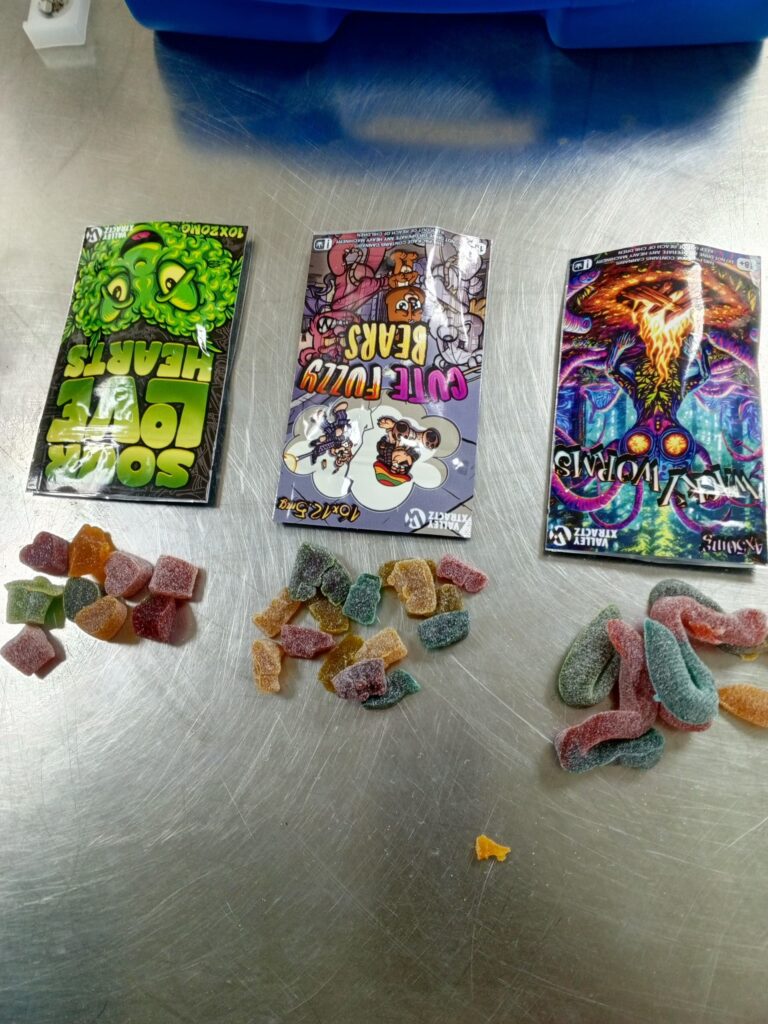
THE National Drug Law Enforcement Agency (NDLEA) has discovered a shipment of cannabis-infused candies meant for sale at a children’s store in Lagos State.
The agency’s spokesperson, Femi Babafemi, disclosed this on Sunday, March 9, on X.
Babafemi said the imported candies, marketed as sweet treats for children, contained a potent strain of cannabis, sparking serious concerns about the safety of children’s snacks.
“One of the latest seizures by @ndlea_nigeria officers is candies confirmed to contain a strong strain of cannabis,” he said.
He urged parents to stay vigilant in monitoring their children’s snacks, revealing that the importer brought the candies in for sale at his kiddies’ shop in Lagos, where he sells children’s items, suggesting that school kids were the intended target.
“Parents, let’s stay alert to the sweets and snacks our kids take to school or bring home,” he added.
The ICIRreported in January, that the NDLEA arrested a traditional chief priest of the Igunuko Shrine, Bariu Aliu, in the Alpha Beach area of Ajah, Lagos State, and recovered 2,760 kilograms of skunk from his shrine.
In February, ICIR also reported the arrest of a 24-year-old Thai lady, Pattaphi Wimonnat, at the Murtala Muhammed International Airport, Lagos State, with 43 parcels of Canadian Loud, a synthetic strain of cannabis, weighing 46.60 kilograms.
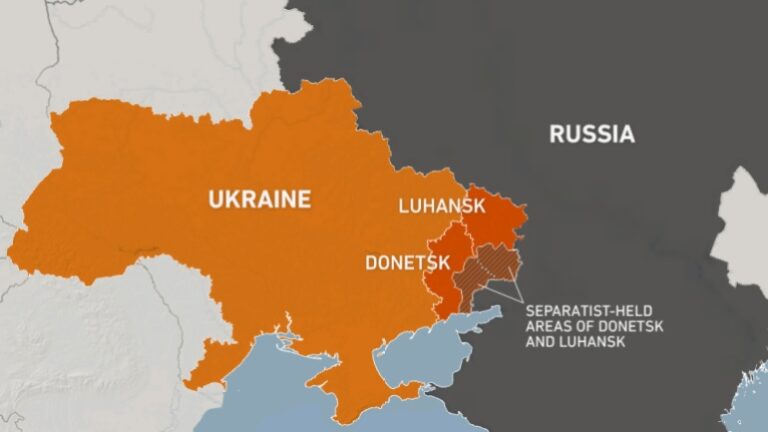
UKRAINE’S Air Force said Russian forces launched multiple strikes on Dobropillia, a city in Donetsk Oblast, Friday night, resulting in casualties and injuries.
The development has raised intense worries, following intelligence sharing withdrawal by the U.S. authorities to Ukraine as recently hinted by President Donald Trump.
Governor Vadym Filashkin of Donetsk Oblast reported that at least 11 people were killed and 30 injured, adding that more victims might be trapped under the rubble of eight damaged apartment buildings.
This comes amid a week of intensified Russian aerial assaults on Ukraine, following U.S. President Donald Trump’s decision to halt intelligence sharing with Kyiv, raising concerns that Russian missile strikes could now hit cities without prior warning.
Ukraine’s Air Force reported that Russia launched two ballistic Iskander missiles and one cruise missile from the Rostov region into Ukraine, along with a total of 145 drones, including Shahed attack UAVs and dummy drones, from multiple locations.
Ukraine said the cruise missile and 79 drones were intercepted by fighter jets and mobile fire groups on the ground.
Ukrainian diplomat and politician Maj Volodymyr Omelyan, speaking in a BBC Breakfast interview on Saturday, stated that Ukraine will continue fighting “because there is no other option for us.”
“Russians are extremely inspired by recent statements of Trump that he’s leaving Europe, he’s going to remove sanctions against Russia, cutting Ukrainian intelligence and also supplies,” Omelyan says.
Reacting to reports that Washington has revoked access to satellite imagery, Omelyan said it now feels “like fighting blind.”
“We don’t see what Russia is preparing to do on its territory anymore,” he adds. “It’s very difficult to see the main direction of their future attacks and supplies.
“You hear the noise and feel the enemy but you cannot see it.”
The ICIRreported that a much-anticipated meeting between Ukraine’s president and Donald Trump seven days ago escalated into a public dispute.
Hopes for the signing of a highly anticipated minerals deal and a step toward peace were dashed as the U.S. president criticised Volodymyr Zelensky for being “disrespectful” to the U.S.
The following day, the UK’s Sir Keir Starmer welcomed Zelensky, and a day later, European and Canadian leaders convened for a summit to discuss the continent’s support for Kyiv.
And yesterday, March 7, the European leaders met again with the group backing plans to jointly borrow €150 billion to lend to European Union governments for military expenditure against the backdrop of the US pausing military aid and intelligence sharing with Ukraine.
Also, the latest sign of the tide turning, the US and Ukraine said their teams will meet in Saudi Arabia next week for talks on ending the war in Ukraine.