Home Blog Page 343

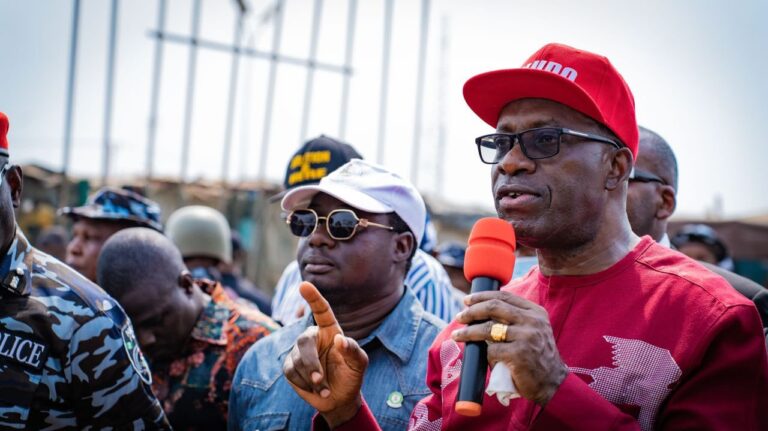
Rivers: Fubara bows, invites Amaewhule-led House of Assembly for dialogue

THE Rivers State Government, headed by Governor Siminalayi Fubara, has invited the Martins Amaewhule-led House of Assembly for a dialogue.

The meeting is scheduled for Monday, March 10, at the Governor’s Office in Port Harcourt, the state capital.

The notice of the meeting was signed by the Secretary to the State Government, TammyWenike Danagogo.

The request for the meeting followed the judgment of the Supreme Court, which recognised Amaewhule as the speaker of the state House of Assembly.

According to the letter of invitation sent to the House members through the speaker, the invitation followed the receipt of the Supreme Court judgment by Fubara.

The meeting seeks to, among others, discuss the provision of a befitting space for the Assembly’s sittings; payment of all outstanding remuneration or allowances of members; presentation of the 2025 budget and sundry matters; and any other matter(s) that may be necessary for the good of the state.

The ICIR reported that following the Supreme Court ruling in favour of the Amaewhule-led Assembly, the House had, on Monday, March 3, given Fubara 48 hours to re-present the 2025 budget.

Responding, the government said it had yet to receive any official communication regarding the ultimatum.

In a letter dated March 5, addressed to Amaewhule, the secretary to the state government noted that the administration only learnt about the letter containing the ultimatum on social media.

 He explained that as of the close of business on March 4, neither the offices of the governor, the deputy governor, nor the accountant general had received any such correspondence. 

In a resolution signed by Amaewhule, the lawmakers cited the Supreme Court’s directive halting federal allocations to the state and prohibiting spending from the Consolidated Revenue Fund until a properly passed Appropriation Bill is in place. 

The ICIR reports that the Supreme Court judgment reinstated Amaewhule and his faction as the legitimate members of the Assembly, which consequently invalidated the previous budget presentation made by Fubara to a splinter faction of the Assembly. 

The court deemed Fubara’s presentation of an appropriation bill before a small faction of Assembly as absurd.

It also annulled the recent local government election conducted in the state by Fubara.

Fubara had signed the N1.18 trillion 2025 appropriation bill into law on January 2, after presenting it to a four-member assembly led by Victor Oko-Jumbo.

The lawmakers on Monday also referenced constitutional provisions and the Rivers State Local Government (Amendment) Law, 2023, which prohibits the administration of local governments by unelected officials, as directed by Fubara shortly after the Supreme Court ruling.  

The ICIR reports that Fubara and his predecessor, Nyesom Wike, currently the Minister of the Federal Capital Territory (FCT), have been at loggerheads over who controls the PDP structure in the state, with President Bola Tinubu’s efforts to resolve the stalemate yielding no result. 

Fubara has vehemently resisted Wike’s insistence on controlling the party in the state, with both leaders, who were allies before the 2023 governorship election, turning arch-rivals months after Fubara assumed power.

At the onset of the crisis, 27 members of the state House of Assembly who were loyal to the former governor decamped to the All Progressives Congress – the party in which Wike serves as minister in Abuja.

In addition to declaring the defectors’ seats vacant, Fubara sacked all 23 local government chairmen elected under Wike and declared that their tenure had expired.

He went on to conduct a new poll, which the Supreme Court annulled.

Again, PDP postpones NEC meeting amid crisis

THE National Working Committee (NWC) of the Peoples Democratic Party (PDP) has again postponed the much-awaited National Executive Committee (NEC) meeting of the party, scheduled for Wednesday, March 13.

The party has earlier been postponed three times. It was initially scheduled for October 24, 2024, but was postponed to November 28, 2024, to allow the party to focus on the Ondo gubernatorial election. It was again pushed to March 13, 2025, and now May 15, 2025.

According to the new schedule, the NEC meeting will now be held on May 13, 2023.

This announcement was made in a statement released on Sunday, March 9, and signed by the party’s national secretary, Sunday Udeh Okoye.

According to the NWC, the postponement is due to emerging issues that require attention, including the need to conclude pending zonal, state, local government, and ward congresses. The party also said it wants to allow for further consultation to ensure a hitch-free meeting.

The NWC stated that it arrived at this decision after consulting with party leaders, stakeholders, and relevant organs, including the Board of Trustees (BoT), the PDP Governors’ Forum, and the PDP National Assembly Caucus.

“All NEC Members should please note the date change and be guided accordingly. The NWC sincerely regrets any inconveniences this change of date will cause Distinguished members of NEC,” the party stated.

The PDP NEC meeting, which was initially scheduled to be held on March 13, was meant to address the festering crisis within the party, including the contentious issues of the national chairman and the 2025 general elections.

The leadership crisis in the PDP began when the party’s national chairman, Iyorchia Ayu, was suspended by the party’s NWC over allegations of misconduct and financial irregularities.

The suspension of Ayu sparked intense resistance from some stakeholders in the party, who insisted that his removal didn’t follow due process.

This development ignited a fierce power struggle within the party, with various factions vying for dominance. While some members were demanding Ayu’s removal, others were adamant that he should be reinstated.

The party’s Board of Trustees (BoT) has attempted to address the crisis by setting up a committee to resolve the dispute over the national secretary position. However, some party members remain skeptical about the committee’s ability to resolve the crisis, citing the need for more decisive action to address the party’s internal divisions.

Since the last NEC meeting of the party in April 2024, the struggle has been to remove Damagum and allow the north-central zone to complete the tenure of office of Ayu, who was suspended and later resigned.

But within that period, an Abuja High Court restrained the PDP from removing Damagum as national chairman pending the completion of the tenure in December 2025.

At the time of reporting, it’s unclear if the court order has been lifted or overturned.

The last time the PDP NWC met in Abuja in January 2025, it was dominated by the news of a feud between Samuel Anyanwu and Ude-Okoye, who are struggling for the office of the National Secretary of the party.

The PDP’s internal conflicts have intensified due to factional struggles, with rival camps emerging in support of prominent figures like former Vice President Atiku Abubakar and Minister of the Federal Capital Territory (FCT), Nyesom Wike.

The NEC meeting, which is the highest decision-making body of the party, is expected to make key decisions, including leadership of the party, constitutional amendments, and policy direction.

Three companies licensed to build new refineries in Edo, Delta, Abia, says NMDPRA

THE Nigeria Midstream and Downstream Petroleum Regulatory Authority (NMDPRA) has issued refining licences to three companies to build new refineries in Abia, Delta, and Edo States.

This development is expected to improve local refining and close the importation shortfall gaps by major petroleum marketers in the country.

The NMPDRA revealed on its official x handle that it granted a 100,000 barrels per day (bpd) refining license to Eghudu Refinery Limited in Edo State, a 30,000 bpd license to MB Refinery and Petrochemicals Company Limited in Delta State, and approval for a 10,000 bpd refinery to HIS Refining and Petrochemical Company Limited in Abia State.

“These licenses, which would add 140,000 barrels per day to Nigeria’s domestic refining capacity, were presented to the MDs of the companies,” the regulatory authority said in an official statement issued on its X handle.

The ICIR reported on February 20 that the NMDPRA expressed concern over the insufficient output of Nigerian-owned refineries, noting that local production supplies less than 50 percent of the country’s fuel consumption.

The regulatory authority said the significant shortfall is being filled through the importation of refined petroleum products in line with the 2021 Petroleum Industry Act (PIA) provisions.

NMDPRA Chief Executive, Farouk Ahmed, however, stated that no oil company owning a refinery had imported petroleum products into the country in 2024.

He explained that the oil marketing companies (OMCs) are the ones importing to enable them to bridge the shortfall gap and avert petroleum scarcity across the country.


NDLEA seizes drug-laced candies found inside Lagos children’s shop

THE National Drug Law Enforcement Agency (NDLEA) has discovered a shipment of cannabis-infused candies meant for sale at a children’s store in Lagos State.

The agency’s spokesperson, Femi Babafemi, disclosed this on Sunday, March 9, on X.

Babafemi said the imported candies, marketed as sweet treats for children, contained a potent strain of cannabis, sparking serious concerns about the safety of children’s snacks.

“One of the latest seizures by @ndlea_nigeria officers is candies confirmed to contain a strong strain of cannabis,” he said.

He urged parents to stay vigilant in monitoring their children’s snacks, revealing that the importer brought the candies in for sale at his kiddies’ shop in Lagos, where he sells children’s items, suggesting that school kids were the intended target.

“Parents, let’s stay alert to the sweets and snacks our kids take to school or bring home,” he added.

The ICIR reported in January, that the NDLEA arrested a traditional chief priest of the Igunuko Shrine, Bariu Aliu, in the Alpha Beach area of Ajah, Lagos State, and recovered 2,760 kilograms of skunk from his shrine.

In February, ICIR also reported the arrest of a 24-year-old Thai lady, Pattaphi Wimonnat, at the Murtala Muhammed International Airport, Lagos State, with 43 parcels of Canadian Loud, a synthetic strain of cannabis, weighing 46.60 kilograms.


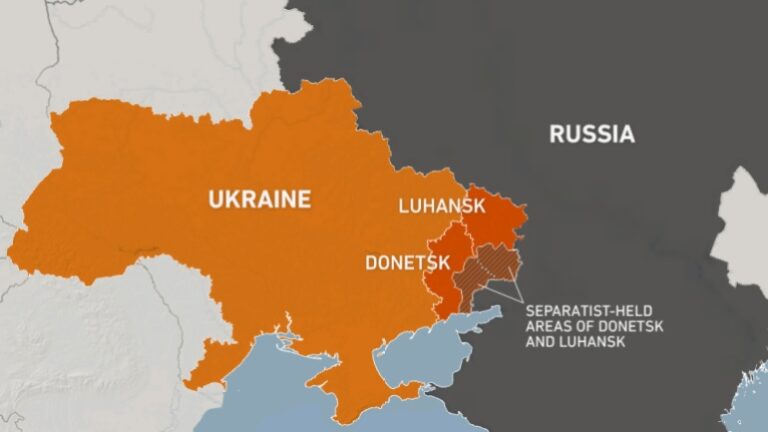
Russian strike kills 11 near Donetsk amid US intel withdrawal

UKRAINE’S Air Force said Russian forces launched multiple strikes on Dobropillia, a city in Donetsk Oblast, Friday night, resulting in casualties and injuries.

The development has raised intense worries, following intelligence sharing withdrawal by the U.S. authorities to Ukraine as  recently hinted by President Donald Trump.

Governor Vadym Filashkin of Donetsk Oblast reported that at least 11 people were killed and 30 injured, adding that more victims might be trapped under the rubble of eight damaged apartment buildings.

This comes amid a week of intensified Russian aerial assaults on Ukraine, following U.S. President Donald Trump’s decision to halt intelligence sharing with Kyiv, raising concerns that Russian missile strikes could now hit cities without prior warning.

Ukraine’s Air Force reported that Russia launched two ballistic Iskander missiles and one cruise missile from the Rostov region into Ukraine, along with a total of 145 drones, including Shahed attack UAVs and dummy drones, from multiple locations.

Ukraine said the cruise missile and 79 drones were intercepted by fighter jets and mobile fire groups on the ground.

Ukrainian diplomat and politician Maj Volodymyr Omelyan, speaking in a BBC Breakfast interview on Saturday, stated that Ukraine will continue fighting “because there is no other option for us.”

“Russians are extremely inspired by recent statements of Trump that he’s leaving Europe, he’s going to remove sanctions against Russia, cutting Ukrainian intelligence and also supplies,” Omelyan says.

Reacting to reports that Washington has revoked access to satellite imagery, Omelyan said it now feels “like fighting blind.”

“We don’t see what Russia is preparing to do on its territory anymore,” he adds. “It’s very difficult to see the main direction of their future attacks and supplies.

“You hear the noise and feel the enemy but you cannot see it.”

The ICIR reported that a much-anticipated meeting between Ukraine’s president and Donald Trump seven days ago escalated into a public dispute.

Hopes for the signing of a highly anticipated minerals deal and a step toward peace were dashed as the U.S. president criticised Volodymyr Zelensky for being “disrespectful” to the U.S.

The following day, the UK’s Sir Keir Starmer welcomed Zelensky, and a day later, European and Canadian leaders convened for a summit to discuss the continent’s support for Kyiv.

And yesterday, March 7, the European leaders met again with the group backing plans to jointly borrow €150 billion to lend to European Union governments for military expenditure against the backdrop of the US pausing military aid and intelligence sharing with Ukraine.

Also, the latest sign of the tide turning, the US and Ukraine said their teams will meet in Saudi Arabia next week for talks on ending the war in Ukraine.


US trade wars with China – and how they play out in Africa

0

By Lauren JOHNSTON, University of Sydney

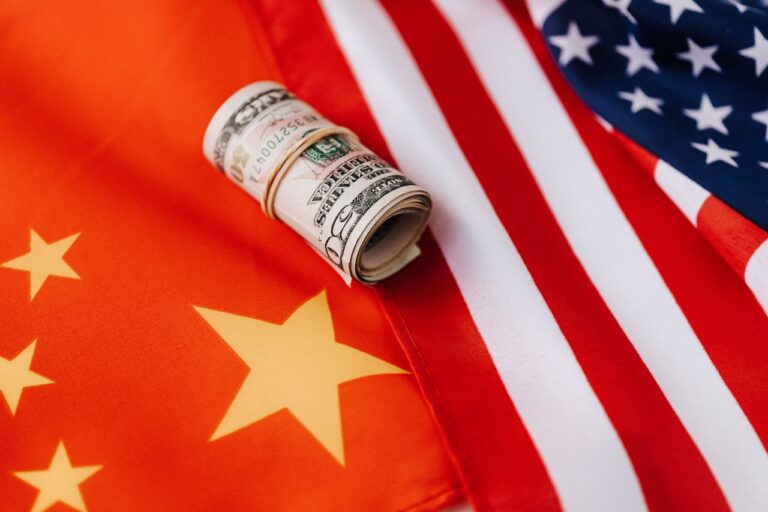
SINCE taking office, US president Donald Trump has implemented policies that have been notably hostile towards China. They include trade restrictions. Most recently, a 20 per cent tariff was added to all imports from China and new technological restrictions were imposed under the America First Investment Policy. This isn’t the first time US-China tensions have flared. Throughout history the relationship has been fraught by economic, military and ideological conflicts.

China-Africa scholar and economist Lauren Johnston provides insights into how these dynamics may also shape relations between Africa and China.


How has China responded to hostile US policies?

First, China tends to have a defiant official response. It expresses disappointment, then states that the US policy position is not helpful to any country or the world economy.

Second, China makes moves domestically to prioritise the interests of key, affected industries.

Third, China will sometimes impose retaliatory sanctions.

In 2018, for instance, China imposed a 25 per cent tariff on US soybeans, a critical animal feed source. The US Department of Agriculture had to compensate US soybean farmers for their lost income.

Another example is how, following US tech sanctions, China took a more independent technology path. It has channelled billions into tech funds. The goal is to make financing available for Chinese entrepreneurs and to push technological boundaries in areas of US sanction, such as semiconductors. These efforts are backed up by subsidies and tax reductions. In some cases, the Chinese state will invest directly in tech companies.

More recently, China retaliated to the US trade war by announcing tariffs on 80 US products. China is set to place 15 per cent tariffs on certain energy exports, including coal, natural gas and petroleum. An additional 10 per cent tariffs will be placed on 72 manufactured products including trucks, motor homes and agricultural machinery.

Agricultural trade has been hard hit. The day the US announced a 10 per cent tariff on Chinese imports, China announced “an additional 15 per cent tariff on imported chicken, wheat, corn and cotton originating from the US”. Also, “sorghum, soybeans, pork, beef, aquatic products, fruits, vegetables and dairy products will be subject to an additional 10% tariff”.

How have these Chinese responses affected Africa?

We can’t say for certain that China’s response to US trade tensions has explicitly affected its Africa policy, but there are some notable coincidences.

Less than one month after Trump’s return to the White House in 2025, and soon after the first tariffs were slapped on China’s exports to the US, China announced new measures to foster China-Africa trade efforts. The policy package aims to “strengthen economic and trade exchanges between China and Africa.”

This is the latest in a series of Chinese actions.

In January 2018 trade hostilities began to escalate after Trump imposed a first round of tariffs on all imported washing machines and solar panels. These had an impact on China’s exports to the US.

Later the same year, China imposed 25 per cent tariffs on US soy bean imports and took steps to reduce dependence on US agricultural products. China also took steps to expand trade with Africa, agricultural trade in particular.

In September 2018, Beijing hosted the Forum on China and Africa Cooperation summit, a triennial head of state gathering. It was announced that China would set up a China-Africa trade expo and foster deeper agricultural cooperation. In the days after the summit, China’s Ministry of Agriculture and Rural Affairs was already acting on this. A gathering of African agricultural ministers took place in Changsha, Hunan province.

Hunan province has since taken centre stage in China-Africa relations. It’s now the host of a permanent China-Africa trade exhibition hall and a larger biennial China-Africa economic and trade exhibition (known as CAETE).

Hunan also hosts the pilot zone for In-Depth China-Africa Economic and Trade Cooperation. The zone has numerous initiatives designed to overcome obstacles to China-Africa trade and investment, like support in areas of law, technology and currency, and vocational training.

Finally, the zone is located in a bigger free-trade zone that is better connected to Africa by air, water and land corridors. African agricultural exports to China pass through Hunan, where local industry either uses these imports or distributes them across the country to retailers.

Companies in Hunan are well placed to play a key role in supporting China-Africa trade, capitalising on the opportunities left by China-US hostilities.

Hunan’s agritech giant Longping High-Tech, for instance, is investing in Tanzanian soybean farmers.

Hunan is also home to China’s construction manufacturing and electronic transportation frontier. This includes global construction giant Sany, which produces heavy industry machinery for the construction, mining and energy sectors. China’s global electronic vehicle manufacturing BYD and its electronic railway industry are also in Hunan. They have deep and increasing interests in Africa and can also support China’s key minerals and tech race with the US.

As US-China hostility enters a new era, what are the implications for China-Africa relations?

As my new working paper sets out, African countries are, for example, responding to the new opportunities from China.

At the end of 2024, while the world waited for Trump’s second coming, various African countries made moves to strengthen economic ties with China, Hunan province especially.

In December 2024, Tanzania became the first African country to open an official investment promotion office in the China-Africa Cooperation Pilot Zone in Changaha.

In November 2024, both the China-Africa Economic and Trade Expo in Africa and the China Engineering Technology Exhibition were held in Abuja, Nigeria. Equivalent events were hosted in Kenya.

Early in 2025 in Niamey, Niger, a joint pilot cooperation zone was inaugurated , and which is direct partner of the China-Africa Pilot zone in Hunan.

As China moves away from US agricultural produce, for instance, African agricultural producers can benefit. Substitute African products and potential exports will enjoy a price boost, and elevated Chinese support.

China’s newly elevated interest in African development and market potential will bring major prospects. The question will be whether African countries are ready to grasp them, and to use that potential to foster an independent development path of their own.The Conversation

Lauren Johnston, Associate Professor, China Studies Centre, University of Sydney

This article is republished from The Conversation under a Creative Commons license. Read the original article.

China retaliates, imposes new tariffs on Canadian food products

IN a retaliatory move, China has announced plans to impose tariffs on Canadian products, including rapeseed oil and pork, following an investigation into the tariffs Canada placed on Chinese goods last year.

Beijing’s commerce ministry announced on Saturday, March 8, that it would impose a 100 per cent tariff on Canada’s imported rapeseed oil, oil cakes, and peas.

The ministry said the measures would take effect on March 20, with aquatic products and pork facing a 25 per cent tariff.

Canada announced 100 per cent tariffs on Chinese electric vehicle imports last August, aligning with U.S. measures aimed at curbing the influx of state-subsidised Chinese cars into North America.

Canada also imposed a surtax on imports of steel and aluminum products from China. A surtax is an additional tax on something already taxed. The surtax can be calculated as a percentage of a certain amount or can be a flat dollar charge.

In its latest announcement, Beijing’s commerce ministry stated that an investigation into these measures revealed that Canadian policies had “disrupted the normal trade order and harmed the legitimate rights and interests of Chinese enterprises.”

“China urges Canada to immediately correct its bad practices, lift its restrictive measures, and eliminate its negative effects,” a ministry spokesperson said.

Canada is one of the world’s leading producers of canola, an oilseed crop used for cooking oil, animal feed, and biodiesel fuel, with China historically being one of its largest buyers.

However, the bilateral relations deteriorated in 2018 after Canada detained a senior executive of Chinese tech giant Huawei, Meng Wanzhou, leading Beijing to arrest two Canadian nationals in retaliation.

According to reports that in December 2024, China exported $4.05 billion and imported $6.11 billion worth of goods from Canada, resulting in a negative trade balance of $2.06 billion.

The ICIR reports that this development comes just four days after President Donald Trump imposed new tariffs, further escalating trade tensions between Canada, China, and the United States.

Soludo imposes N500,000 fine on loud preaching in Anambra markets

0

ANAMBRA State Governor Chukwuma Soludo has issued a strong warning to roadside preachers using loudspeakers in public spaces, especially markets.

The governor said using loudspeakers for preaching in public places contributed to noise pollution and disruption of residents’ peace.

A viral video circulating on social media on Saturday, seen by The ICIR, captured the governor warning an unidentified roadside preacher in a market to stop disturbing traders with his preaching.

Soludo advised the preacher to either preach in a church or rent an open field, adding that those interested in listening would seek him out there.

“If you want to preach the word of God, go to your church. Those who want to listen will come to you; you cannot force people in the market to hear your message. You are causing noise pollution here. You cannot come to a marketplace and disturb everyone,” the governor said.

The governor stressed that taking over a public space and turning it into a church is a violation of the law. He warned that anyone caught violating the noise pollution order would face a ₦500,000 fine.

“You will pay ₦500,000 because we cannot allow this. We have banned loudspeakers in markets due to noise pollution, which affects people’s eardrums. You cannot force people to listen to your preaching. We are cracking down on fake pastors and prophets in Anambra,” he added.

The ICIR reported on February 23, that Governor Soludo expressed shock over the infiltration of illicit drugs into Nigerian markets following the National Agency for Food and Drug Administration and Control (NAFDAC)’s closure of over 11,000 drug shops in Onitsha (Anambra State), Aba (Abia State), and Idumota (Lagos State), along with the seizure of 77 truckloads of counterfeit drugs and the arrest of 40 suspects.

Soludo said this when he visited the Ọgbọ Ogwụ Market in the Onitsha area of the state on Saturday, February 21.

The ICIR also confirmed that the NAFDAC has officially announced the reopening of the Ogbo Ogwu Market in Onitsha, Anambra State, after a one-month closure.

The South-East Zonal Director of NAFDAC, Martins Iluyomade, confirmed the market reopening after a meeting with state government officials, led by the Commissioner for Health,  Afam Ben Obidike, and market leaders at the market premises.


Women’s Day: INEC commits to boosting women participation in elections

0

THE Independent National Electoral Commission (INEC), has pledged support for increased women participation in the electoral process.

The electoral body, made this known in a statement on Saturday, March 8, to mark International Women’s Day, saying the future of democracy is deeply tied to the empowerment of women and their full participation in the electoral process. 

The statement was jointly signed by the  Director of Voter Education and Publicity, Victoria Eta-Messi.

The commission said it is dedicated to fostering an inclusive environment where women can actively contribute to shaping the country’s electoral landscape.

To achieve this, INEC said it has prioritised gender equality in all aspects of its work, ensuring women have equal opportunities to participate in the electoral process.

“As the theme for the 2025 International Women’s Day isAccelerate Action,INEC recognises that gender equality is not only a matter of fairness but also a critical pillar in strengthening democracy. 

“Leadership that reflects gender balance, where women equally participate in decision-making, leads to more inclusive and responsive governance. INEC continues to make efforts to ensure that women hold leadership positions within the Commission,the statement said.

INEC assured that it was committed to breaking down the barriers women face, including societal expectations, a lack of support systems, and gender-based violence.

It urged Nigerians to promote gender equality in all areas of life, not just in elections

On inclusivity, the electoral body said its current leadership composition shows some progress in achieving gender balance, but there’s still more work to be done.

According to INEC, currently, two out of 12 National Commissioners are women, making up 16.7 per cent of the total leadership.

The commission said the position of secretary, overseeing its operations, is currently being held by a woman, and while four out of 32 Resident Electoral Commissioners (RECs) are also women, accounting for 12.5 per cent of this critical leadership group.

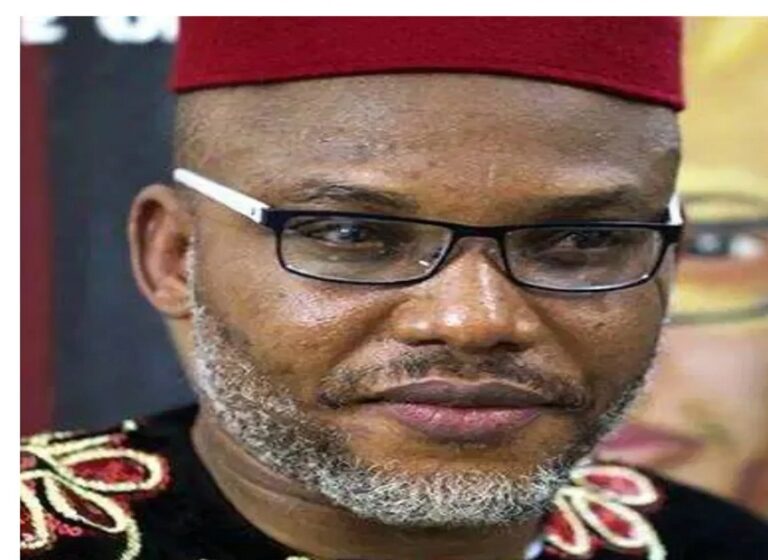
Finally, Nnamdi Kanu’s case reassigned to new judge

0

THE Chief Judge of the Federal High Court (FHC), John Tsoho, has finally reassigned the case of the leader of the Indigenous People of Biafra (IPOB), Nnamdi Kanu, to another judge.

This was disclosed in a statement on Saturday, March 8, by Kanu’s lawyer, Aloy Ejimakor, on behalf of his team.

According to the statement, Kanu is ready to face trial because he’s convinced of his innocence.

Ejimakor stated that on Friday, March 7, before the legal team conducted their routine visitation to Kanu, they received two separate official letters regarding his case. He described the letters as “momentous and somewhat pyrrhic.”

According to him, the first letter was from the Chief Justice of Nigeria (CJN), Kudirat Kekere – Ekun who responded to the team’s request for her administrative intervention in reassigning Kanu’s case after the previous judge recused.

The second letter was from the Chief Judge of the FHC, informing the team that Kanu’s case had been reassigned to another judge.

He also disclosed Kanu’s instruction to his legal team to appreciate the CJN for her prompt response and to the public for their support in demanding a lawful reassignment of his case.

“It was given these untoward developments that we were propelled to resort to taking extraordinary measures to ensure that his case is properly reassigned and conducted by the law,” Ejimakor stated.

He added that since the first steps have been taken by the authorities to do the ‘lawful’ thing, Kanu and his legal team shall take stock and prepare his defense.

The ICIR reported that at the last hearing of the case, a judge of the FHC in Abuja, Binta Nyako, adjourned the trial of Kanu indefinitely.

Nyako adjourned the suit on Monday, February 10, following Kanu’s insistence that the judge could not preside over his case since she had recused herself.

Kanu challenged Nyako to take a definitive stance regarding his detention, specifically requesting that she either restores his bail conditions or directs his release from custody.

Kanu stressed that Nyako lacked the jurisdiction to review or revisit his case, owing to her prior recusal from the case.

Nyako had initially recused herself from Kanu’s trial on September 24, 2024, in response to a request from the defendant, who had expressed a lack of confidence in her ability to preside over the case impartially.

Following her recusal, the case file was returned to the Chief Judge of the FHC, Tsoho, for reassignment.

However, in a subsequent development, the case file was returned to Nyako, who has since been asked to continue the trial.

The ICIR reported that Nyako stepped down as the judge handling Kanu’s trial when Kanu declared he no longer trusted the judge and challenged her to step down.

Kanu is facing a seven-count charge concerning terrorism, brought against him by the Nigerian government.

The charges against him include treason, inciting public violence through radio broadcasts, and defamation of Nigerian authorities.

Kanu’s troubles began in 2015 when he was arrested by Nigeria’s secret police and the State Security Service (SSS), in Lagos State.

He was granted bail but later fled Nigeria after his home was raided by the Nigerian military in September 2017.

In June 2021, Kanu was rearrested in Kenya and extradited to Nigeria to face trial. 

His trial, which began in October 2021, has been marked by protests and sit-at-home in the South-East by his supporters.