Home Blog Page 347

China retaliates Trump’s new import tariffs, Canada, Mexico ready for response

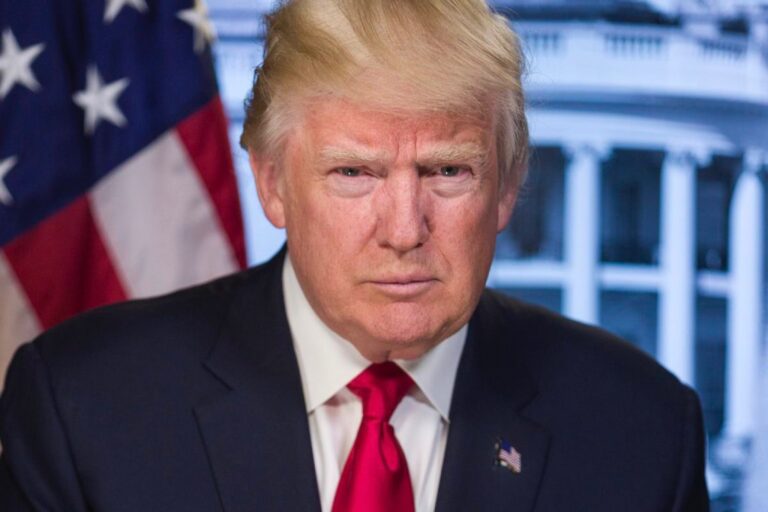
CHINA has responded sharply to United States (US) President Donald Trump’s new 25 per cent tariffs on imports from Mexico and Canada.
The tariffs, which took effect on Tuesday, February 4, include a doubling of duties on Chinese goods, raising them to 20 per cent.
The tariffs became effective in the early hours of Tuesday, shortly after Trump criticised Mexico, Canada, and China for failing to adequately control the flow of the deadly fentanyl opioid and its precursor chemicals into the US.

China responded immediately according to a statement from the State Council Tariff Commission, announcing additional 10-15 per cent tariffs on chicken, wheat, corn, and cotton imports from the U.S., effective March 10, along with new export restrictions on selected U.S. entities.

While stating that it had lodged complaints about the new measures with the World Trade Organization (WTO), China announced an additional 10 per cent tariff on sorghum, soybeans, pork, beef, aquatic products, fruits, vegetables, and dairy products.

In a separate statement, China’s Ministry of Commerce announced the addition of 15 American companies, including drone manufacturer Skydio, to its export control list, restricting Chinese companies from exporting dual-use equipment to them.

Speaking at a briefing on Tuesday, a spokesperson for China’s Foreign Ministry, Lin Jian, said: “China will fight till the end” if the US “insists on waging a tariff war, trade war or any other kind of war.

“I want to reiterate that the Chinese people have never feared evil or ghosts, nor have we ever bowed to hegemony or bullying. Pressure, coercion and threats are not the right ways to engage with China. Trying to exert maximum pressure on China is a miscalculation and a mistake,” Jian said.

The head of the China Center for the Conference Board, Alfredo Montufar-Helu, said the China’s retaliatory tariffs followed a restrained targeted approach aimed at causing pain to those industries that matter the most to the supporters of the Trump administration, noting that the China’s tariffs gave room for negotiations to potentially avoid even more damaging tariffs.

In the same vein, Canada and Mexico, which have maintained a virtually tariff-free trading relationship with the U.S. for the past three decades, were set to launch immediate retaliatory measures.

Canadian Prime Minister Justin Trudeau announced that Ottawa would impose 25 per cent tariffs on C$30 billion ($20.7 billion) worth of US imports, with an additional C$125 billion in tariffs if Trump’s measures remained in place after 21 days.

He had earlier said that the tariffs would target American beer, wine, bourbon, home appliances, and Florida orange juice.

 

Retired Immigration Comptroller-General David Parradang confirmed dead

0

THE Nigerian Immigration Service (NIS) has confirmed the death of its former Comptroller General, David Parradang.  

Speaking with The ICIR, on Tuesday, March 4, the NIS spokesperson Akinsola Akinlabi, stated, “It’s true that he’s late. We will release a statement soon.”

However, no details have been provided regarding the circumstances of his death.  

When asked whether Parradang was killed, the spokesperson said the Service did not have such information, adding that the police would be in a better position to confirm that.  

Meanwhile, reports from Zagazola Makama, a counterinsurgency publication, claimed that Parradang was abducted by gunmen in Area 1, Abuja, after being trailed from a bank where he had withdrawn money. 

The report alleged that he was killed after his abductors took the cash from him.  

However, when The ICIR reached out to the spokesperson of the Federal Capital Territory (FCT) Police Command, Josephine Adeh, for confirmation, she dismissed the claim as ‘misinformation.’

Parradang served in the NIS for over 30 years, holding various positions across the country before becoming Comptroller-General. 

He was appointed as the  13th CG  on June 10, 2013. 

Parradang was suspended in 2015 over allegations related to the recruitment exercise into the Service.

The exercise had been approved by former President Goodluck Jonathan as part of efforts to address the failed 2014 aptitude test, which resulted in loss of several lives.  

Following his suspension, former President Muhammadu Buhari appointed Martin Abeshi as CG, and shortly after, Muhammad Babandede, resulting in Nigeria having two substantive CGs for Immigration within six months.

OPEC quota rises, crude oil price to impact Nigeria’s 2025 budget

0

PLAN by the Organisation of Petroleum Exporting Countries (OPEC) and its allies, OPEC+, to increase crude oil output, coupled with falling crude oil, is likely to impact Nigeria’s 2025 budget implementation, The ICIR reports.

OPEC announced the rise in quota for its members at its OPEC+ meeting on Monday, March 3.

The meeting was held by eight countries that previously announced additional voluntary adjustments in April and November 2023 to review global market conditions.

The countries include Saudi Arabia, Russia, Iraq, the United Arab Emirates, Kuwait, Kazakhstan, Algeria, and Oman.

The ICIR reports that on Friday, February 28, President Bola Tinubu signed N54.99 trillion 2025 budget into law, initially put at N49.7 trillion, representing a 99.96 per cent rise from the 2024 budget.

The upward adjustment was driven by N1.4 trillion in additional revenue from the Federal Inland Revenue Service (FIRS), N1.2 trillion from the Nigeria Customs Service (NCS), and N1.8 trillion generated by other government-owned agencies.

While presenting the 2025 budget to the National Assembly on December 18, 2024, the president highlighted that the government was targeting N34.8 trillion in revenue to fund the budget of which the bulk of the revenue will come from crude oil proceeds.

He projected that oil revenue would bring in N19.6 trillion while non-oil sources would come in N15.22 trillion.

He set a 2.06 million barrels per day (bpd) crude oil production target at a benchmark rate of $75perr per barrel and adjusted the exchange rate benchmark to N1,500 per dollar.

Nigeria has been struggling to meet OPEC’s daily crude oil production quota of 1.5 million bpd, which it has continued to blame largely on insecurity and infrastructure decay.

Checks by The ICIR showed that crude oil prices have averaged $73 since the beginning of the year amid Nigeria’s challenges in meeting the daily benchmarked crude oil production target.

On Monday, March 3, Brent crude oil price declined marginally to $71.42 per barrel, from $72.81.

These raise concerns following the projection by analysts that crude oil prices would average and hover around $70 per barrel, with some fluctuations depending on the specific benchmark.

According to sources, including Statista, a research firm, Brent crude oil is projected to average an annual spot price of $74.5 per barrel in 2025.

The OPEC said its OPEC+ members had taken into account the healthy market fundamentals and the positive market outlook.

It stated, “They reaffirmed their decision agreed upon on December 5, 2024, to proceed with a gradual and flexible return of the 2.2 million barrrels per day (mbd) voluntary adjustments starting on 1st April 2025 while remaining adaptable to evolving conditions.

“Accordingly, this gradual increase may be paused or reversed subject to market conditions. This flexibility will allow the group to continue to support oil market stability.”

It said the eight countries reiterated their collective commitment to full conformity with the additional voluntary production adjustments as agreed under the 53rd Meeting of the joint ministerial monitoring committee (JMMC) on April 3, 2024.

It stated further that the OPEC+ members also confirmed their intention to fully compensate for any overproduced volumes since January 2024  by the compensation plans submitted to the OPEC Secretariat, ensuring that all compensations are completed by June 2026.

“The countries with overproduced volumes have also agreed to frontload their compensation plans, so that more of the overproduced volumes are compensated in the earlier months of the compensation period, and will submit their updated compensation schedules to the OPEC Secretariat by the 17th of March 2025 which will be posted on the Secretariat’s website,” OPEC added.

EFCC drags six Kwara SUBEB officials to court over alleged N96m fraud

THE Economic and Financial Crimes Commission (EFCC) has arraigned six officials of the Kwara State Universal Basic Education Board (SUBEB) before the State High Court in Ilorin over the alleged diversion of N96 million in public funds.

In a statement issued by the EFCC’s Head of Media and Publicity, Dele Oyewale, on Tuesday, the officials allegedly conspired between 2018 and 2020 to misappropriate government funds for personal gain while serving in various capacities at SUBEB.

Ahmed Olarewaju, Omole Omololu, Fatai Oyerinde, Mujeeb Ibrahim, Salami Bashir, and Dauda Quozim were arraigned before Justice Suleiman Akanbi on a four-count charge bordering on criminal breach of trust and misappropriation of public funds.

“That you, Ahmed Husain Olarewaju, Omole Omololu, Fatai Oyerinde, Mujeeb Ibrahim, and Bashir Temitope Salami, between September 2018 and December 2018, while being public officers entrusted with the sum of N33,891,982.37 from the Kwara SUBEB account domiciled in Sterling Bank Plc, committed a criminal breach of trust, an offence punishable under Section 315 of the Penal Code.” one of the charges read.

Another count accused them of misappropriating N30,406,629.09 from the same account between January and June 2019.

While the defendants pleaded not guilty to all charges, the prosecution counsel, Andrew Akoja, requested a trial date and urged the court to remand the defendants in a federal correctional facility.

The judge, Akanbi, adjourned the case to April 16, 2025, for further hearing and ordered their remand at the Nigerian Correctional Centre in Ilorin, despite an oral bail application by the defence counsel, Abdullahi Lawal.

Recall that in 2020, the ICIR reported that the EFCC uncovered over 1,000 ghost workers within the Kwara SUBEB.

The EFCC stated that it recovered over N138 million in cash from alleged looters of the state treasury during the crackdown.


Nigeria’s private varsities hit 160 as FG approves 11 new provisional licences

1

THE Federal Government has granted provisional licences to 11 new private universities, bringing the total number of private universities in Nigeria to 160.

The Special Adviser to the President on Media and Public Communication, Sunday Dare, announced the approval in a statement on Monday, March 3, following the Federal Executive Council (FEC) meeting chaired by President Bola Tinubu at the State House, Abuja.

The latest approval expands private universities in the South-West, South-East, and South-South regions, which already had the highest number of private institutions in the country, according to data on the number of private universities from the National Universities Commission (NUC)

Over the years, states in the South-West, namely Lagos, Ogun, and Oyo, have hosted more private universities than other regions in Nigeria.

The region hosts institutions such as Covenant University, Babcock University, Afe Babalola University, Landmark University, and Redeemer’s University.

Similarly, the South East and South South regions have notable private institutions like Madonna University, Benson Idahosa University, Igbinedion University, and Rhema University.

However, northern Nigeria has fewer private universities compared to other regions, with institutions such as Skyline University (North-West), Baze University, Nile University (North-Central) and American University of Nigeria (North-East) making the top list in the region.

With the approval of 11 new private universities, the North-Central region now has 36 private universities, including the three new universities approved for it. The North-East and North-West did not benefit from the 11 new universities.

This means that the number of private universities in the North-West and North-East remains at nineteen and five, respectively, , according to data from the NUC.

Similarly, with the new approval, the South-West now has 52 private universities, up from its initial 47. The South-South has 25 private universities, with the addition of two new institutions, while the South-East hosts 23, having previously had 22.

Speaking with journalists after the FEC meeting, the Minister of Education, Tunji Alausa,  explained that the newly approved universities completed the NUC’s ‘rigorous’ 13-step assessment process before being granted their licences.

Meanwhile, Alausa, disclosed that a moratorium had been placed on the approval of additional private universities.

“While we have approved these institutions, we have also placed a moratorium on the establishment of new private universities. This means that only those that have reached the final stages of approval, like the ones announced today, will be considered.”

Alausa further clarified that pending applications already advanced in the NUC’s approval process would still be reviewed.

“For those that have progressed beyond step four and have undergone a second visit, we will assess them, and if they meet all the requirements, they will be approved,” he explained.

The ICIR reports that based on the data from the NUC, Nigeria currently has 129 federal and state universities. With the addition of 160 private universities, the total number of universities in the country now stands at 289.

This figure, however, does not tally with the number of private universities documented by the Ministry of Education on its website. The ministry only has 75 private universities on its website. The last entry on its website was for those licensed in 2018.

It also recorded 47 state universities while also putting the number of federal universities at 43.

Trump pauses military aid to Ukraine days after attacking Zelensky

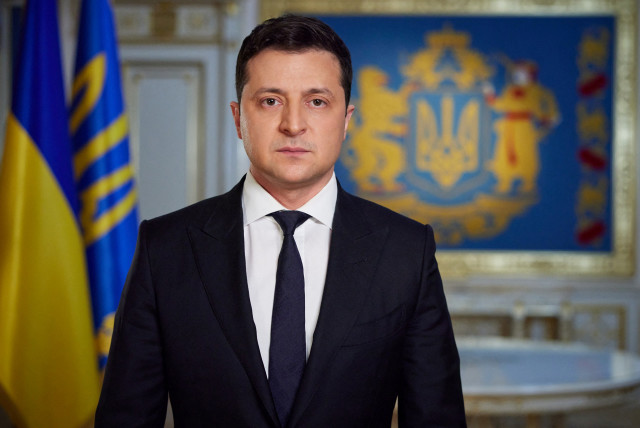
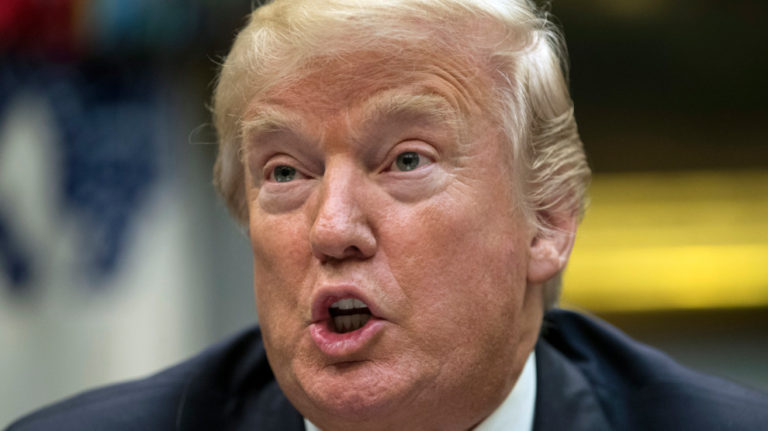
PRESIDENT Donald Trump has ordered a halt to US military aid to Ukraine three days after clashing with the Ukrainian leader, Volodymyr Zelensky at his Oval Office on February 28.

A White House official revealed on Monday that the aid halt followed a series of meetings between Trump and top national security officials.

The official noted that the decision would remain in force until Trump determines Zelensky has committed to seeking peace talks.

“The president has been clear that he is focused on peace. We need our partners to be committed to that goal as well. We are pausing and reviewing our aid to ensure that it is contributing to a solution,” the White House official said.

The official added that the pause would apply to all military equipment yet to arrive in Ukraine and amounted to a direct response to what Trump viewed as Zelensky’s “bad behaviour” during his meeting with the Ukrainian leader at the White House.

In recent weeks, Trump has repeated Russian President Vladimir Putin’s narratives, alleging that Ukraine initiated the war and labeling Zelensky a dictator. 

The Biden administration rushed weapon shipments to Ukraine in its final days, supplying the country with large stockpiles of advanced arms.

Monday’s pause was the clearest sign of the worsening relationship between Washington and Kyiv, despite the European Union’s announcement of a truce to support Ukraine.

While Europe may fill the vacuum created by US shipments of artillery, supplemented by Ukraine’s growing defence industry, the most advanced weapons used by Kyiv come from the United States.

Trump seeks apology 

According to the official, the decision to temporarily pause military aid to Ukraine was made as officials await an acknowledgment from Zelensky regarding the breakdown in relations after Friday’s heated exchange in the Oval Office.

The official said Trump and his senior aides sought an acknowledgment, possibly in the form of a public apology, before proceeding with a deal on Ukraine’s minerals.

Monday’s pause was the clearest sign of the worsening relationship between Washington and Kyiv, despite the European Union’s announcement of a truce to support Ukraine.

The halt further deepens Trump’s rift with the US traditional European allies, including Britain and France, who reaffirmed their support for Zelensky at a summit in London on Sunday.

A European official told CNN that the Trump administration’s decision to pause military aid to Ukraine was “petty and wrong.”

The official said it would immediately deepen distrust in the US government among the Ukrainian people. The official also predicted it would cause unnecessary civilian casualties, adding that Ukraine would not be able to defend against Russian air attacks after they run out of air defence missiles.

Drug baron nabbed in Lagos after 17 years in hiding

THE National Drug Law Enforcement Agency (NDLEA) has arrested a 59-year-old drug baron, Ogbonnaya Kevin Jeff, who had been on the agency’s wanted list for 17 years. 

At a press briefing on Monday in Abuja, the Chief Executive Officer of the NDLEA, Mohamed Buba Marwa, disclosed that Jeff went into hiding while allegedly trafficking illicit drugs worth billions of naira across the globe.

According to Marwa, operatives of the agency’s Special Operations Unit arrested Jeff at his hideout in the Ojo area of Lagos, following an Interpol red notice and intelligence provided by the National Intelligence Service of South Korea.

“On Wednesday, 12th February 2025, we achieved that objective in the successful arrest of Ogbonnaya Kevin Jeff, a 59-year-old drug baron. The suspect was arrested at his hideout at No. 3, Ibukunoluwa Taiwo Close, off LASU Road, Lagos. He has been under the NDLEA investigation before his arrest,” Marwa said.

He noted that his agency had comprehensive intelligence on Jeff’s activities, and ‘incontrovertible facts that he is a notorious drug lord” who recruited young Nigerians as couriers to smuggle illicit substances into the Republic of South Korea.

He added, “We have established that he laundered drug proceeds through the importation of electronics and other goods. Following his arrest, a search of his residence led to the recovery of multiple Nigerian international passports belonging to different individuals, many of which contained Korean visas. Additionally, we recovered some illicit substances in a storehouse at the back of his house,” Marwa said.

Marwa claimed that the suspect was not a typical domestic drug baron, but an international trafficker operating both from Nigeria and abroad.

He said Jeff’s dossier indicated that he served a one-year prison sentence in the Republic of Korea in 2007 and was deported to Nigeria in 2008.

Despite this, the suspect continued his illicit trade, remaining actively involved in drug trafficking operations, Marwa stated.

Giving further insights into the outcome of the NDLEA’s investigations, Marwa said on October 5 2023, at a location in Burkina Faso, the suspect dispatched 6,051.06 grammes of skunk, concealed in dried chillies and jujube, to a Korean, Kim Dong Wook, at a designated address in Jinju City, Gyeongsangnam-do, South Korea.

“In recent times alone, he has sent illicit drugs worth over N1.4bn in street value to South Korea. Ogbonnoya maintains another domestic carrier, identified as ‘Asa’, who delivers for him drug consignments to a warehouse operated by Okori Emmanuel, a Nigerian who is his supply manager in South Korea. As of now, two arrest warrants have been issued against Ogbonnaya by the Seoul Central District Court in January and June 2024.”

The ICIR reported that NDLEA said it arrested 14,480 drug traffickers and seized 2.4 million kilogrammes of illicit drugs in January and October 2024 at seaports, airports, land borders, and communities across the country.

The agency said it secured life imprisonment sentences for some notorious drug traffickers, the arrest of the most wanted drug barons in Lagos, and the recent passage of the NDLEA Act amendment bill as some of the milestones of the agency in 2024.

UK, EU leaders agree to draft, present Ukraine peace deal for Trump

BRITISH Prime Minister Keir Starmer has announced that European leaders would draft a peace plan for Ukraine, which will be presented to the United States.

He described the move as a vital step for Washington to be able to offer security guarantees that Kyiv says are essential to ending its conflict with Moscow.

Starmer revealed this on Sunday during a summit in London, two days after Ukraine President Volodymyr Zelenskiy clashed with U.S. President Donald Trump during a meeting at the White House.    

Zelenskiy had sought to use the meeting to persuade Trump not to align with Russian President Vladimir Putin, who launched a devastating war on Ukraine three years ago.

He was also to sign a US-Ukrainian pact that would allow the US to have access to Ukraine’s mineral resources as part of a US-brokered post-war recovery plan.

The atmosphere became tense as Trump and his vice, James David Vance, clashed with Zelensky, accusing him of gambling with World War III and lacking gratitude for US support during the three-year war against Russia, a development that made Zelensky leave the White House without signing the deal.

However, Moscow thinks Trump’s furious dressing-down of Zelensky in the Oval Office was a trap by the US to discredit the Ukrainian leader and remove him as an obstacle to whatever comes next.  

Moscow is now anticipating talks aimed at rebuilding the US-Russia relationship will continue in the weeks ahead.     

Amid the flurry of European diplomacy designed to shore up Western support for Ukraine, French President Emmanuel Macron said France and Britain had proposed a partial one-month truce between Russia and Ukraine that would cover air, sea and energy infrastructure attacks but not include ground fighting.

“Such a truce on air, sea and energy infrastructure would allow us to determine whether Russian President Vladimir Putin is acting in good faith when he commits to a truce. And that’s when real peace negotiations could start,” French Foreign Minister Jean-Noel Barrot said on Monday.

The European leaders have shown strong support for the Ukrainian president in the past few days, pledging to step up efforts to assist his country, a plan seen as a crucial step for Washington to provide security guarantees that Kyiv considers essential to deter Russia’s further aggression.

European leaders agreed they must spend more on defence to show Trump the continent could protect itself, and the European Commission chief suggested the bloc could ease rules that limit debt levels.

A block’s plan

Earlier, Zelenskiy told reporters that Ukraine would not cede any territory to Russia as part of a peace agreement and said he was willing to sign a minerals deal with the United States.

He said he believed he could salvage his relationship with Trump after Friday’s shouting match, but that talks would have to take place behind closed doors.

The European leaders agreed they must spend more on defence to show Trump the continent could protect itself, and the European Commission chief suggested the bloc could ease rules that limit debt levels.

Starmer, who welcomed a visibly shaken Zelenskiy on Saturday with a warm hug, said Britain, Ukraine, France and some other nations would form a “coalition of the willing” and draw up a peace plan to take to Trump.

“This is not a moment for more talk. It’s time to act. Time to step up and lead and to unite around a new plan for a just and enduring peace,” Starmer said.

Zelenskiy said after the meeting that he left London with “Europe’s clear support” and readiness to cooperate.

“There will be diplomacy for the sake of peace,” he said, adding, “And for the sake of us all being together – Ukraine, all of Europe, and definitely America.”

Europe hopes to ensure that Kyiv is not squeezed out of any talks after the Oval Office clash raised fears that the U.S. could pull out support for Ukraine and impose a peace plan negotiated with Russia.

Starmer increased the UK’s defence spending before he visited Washington last week, and NATO Secretary General Mark Rutte said some European leaders had privately set out new plans on defence spending at the meeting but he declined to give details.

Pressure on Zelenskiy to change course or resign

Top Republicans aligned with Trump are ramping up pressure on Zelenskiy to change his position on the war with Russia or step aside.
Trump’s national security adviser, Mike Waltz, said it was not clear to the administration that Zelenskiy was ready to negotiate an end of the conflict. Waltz underscored Trump’s goal for a permanent peace between Moscow and Kyiv involving territorial concessions in exchange for European-led security guarantees.
“We need a leader that can deal with us, eventually deal with the Russians and end this war,” Waltz told CNN on Sunday.
“If it becomes apparent that President Zelenskiy’s either personal motivations or political motivations are divergent from ending the fighting in his country, then I think we have a real issue on our hands,” Waltz added.
U.S. Senator Lindsey Graham of South Carolina, a top Trump ally and also an advocate for Ukraine, questioned whether the United States could still work with Zelenskiy following the White House clash.

Meranda resigns as Lagos Speaker, Obasa reinstated amid controversy

MOJISOLA Meranda has stepped down as Speaker of the Lagos State House of Assembly, paving the way for the reinstatement of Mudashiru Obasa, whose removal had sparked weeks of political crisis in the state legislature.

With her resignation, Meranda was consequently nominated as the deputy speaker after her former deputy, Mojeed Fatai, resigned and was made the chief whip.

Meranda thereafter took an oath of office as the deputy speaker, while Obasa was, again, sworn in as the speaker.

Meranda’s resignation came amid mounting pressure from Obasa’s camp and heightened tensions in the Assembly. This decision followed interventions by political stakeholders and the All Progressive Party APC, to resolve the lingering crisis.

Obasa, who was removed as speaker on January 13 by a majority of lawmakers over allegations of misconduct, returned to the Assembly on Thursday, February 27, with the backing of security operatives. 

His reemergence was met with resistance from over 26 lawmakers who boycotted the session and reaffirmed their support for Meranda.

Despite the opposition, Obasa proceeded to preside over a plenary session with only four lawmakers present, citing his legal challenge against his removal. Speaking on the development, he maintained that his impeachment was unconstitutional.

“I have told you repeatedly, I have never been removed, there’s nothing like impeachment, I don’t know what you’re saying. Removing, impeachment or whatever was undemocratic and unconstitutional because to have achieved that, you must follow due process,” Obasa stated.

While announcing her resignation, Meranda stated that she was not a quitter but rather taking a personal decision to foster a peaceful atmosphere in the House.

She further appreciated the support of her colleagues, thanking them for making her worthy of the seat.

The ICIR reported that Obasa had earlier challenged his suspension in court, arguing that the Assembly was in recess when the decision was made. 

Rivers Assembly gives Fubara 2-day ultimatum to present 2025 budget

0

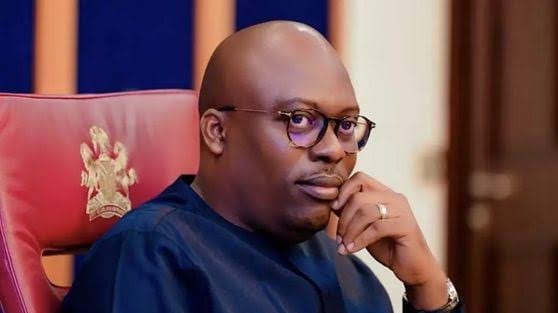
THE Rivers State House of Assembly has given Governor Siminalayi Fubara 48 hours to present the 2025 budget, nullifying the one he signed earlier.

During Monday’s, March 3,  plenary in Port Harcourt, Deputy Speaker, Dumle Maol, moved a motion compelling the governor to submit the budget. 

This development followed last week’s Supreme Court ruling, which reinstated Martin Amaewhule and his faction as the legitimate members of the Assembly.

In dismissing Fubara’s appeal, the court directed Amaewhule to resume sitting immediately with other elected members of the Rivers State House of Assembly.

Fubara had signed the N1.1 trillion budget into law on January 2 after presenting it to a four-member lawmakers headed by Victor Oko-Jumbo. 

However, the Supreme Court’s ruling effectively invalidated legislative actions taken by the Oko-Jumbo-led faction, prompting the demand for a fresh budget presentation.

The court deemed Fubara’s presentation of an appropriation bill before a splinter House of Assembly as absurd.

In a resolution signed by Speaker Amaewhule, the lawmakers cited the Supreme Court’s directive halting federal allocations to the state and prohibiting spending from the Consolidated Revenue Fund until a properly passed Appropriation Bill is in place. 

The resolution stated that, in line with the provisions of the 1999 Constitution, the House expected the governor to submit the 2025 budget within 48 hours.

“That pursuant to the order of the Supreme Court in Suit no.: SC/CV/1174/2024 for the stoppage of Statutory Federal allocations to the Rivers State Government and halting of spending from the Consolidated Revenue Fund of Rivers State pending the passage of an Appropriation Bill, you are requested to present the 2025 Appropriation Bill to the House in line with the provisions of the 1999 Constitution as amended.

“That the House expects you to present the 2025 Appropriation Bill within 48 hours,” the resolution read.

The crisis in the Rivers Assembly stems from the 2023 defection of over 25 lawmakers from the Peoples Democratic Party (PDP) to the All Progressives Congress (APC), a move that created a faction in the House. 

While Fubara backed Oko-Jumbo’s leadership, the faction led by Amaewhule insisted on its legitimacy. The conflict escalated in October when the Court of Appeal in Abuja upheld the judgment of the Federal High Court that nullified the N800 billion 2024 budget passed by the pro-Fubara lawmakers.  

But during the plenary on Monday, a report by Channels TV, indicated that there was no mention of the 2024 budget.                        

The lawmakers referenced constitutional provisions and the Rivers State Local Government (Amendment) Law, 2023, which prohibits the administration of local governments by unelected officials.

This was coming a day after Fubara asked the heads of local government administration to immediately take over the affairs of the 23 councils pending fresh elections by the state electoral body.    

The embattled governor gave the order in a state-wide broadcast on Sunday, March 2, following the Supreme Court judgement on the matter.

I am not afraid of impeachment – Fubara

Reacting further on the incident, Fubara declared that he is not afraid of impeachment, reaffirming his stance amid the ongoing political crisis in the state.

Speaking on Monday, March 3, during the inauguration of Government House Staff Quarters, Fubara addressed the rising tension between his administration and the state House of Assembly.         

The governor stated that while he did not support violence, he would not hesitate to take decisive action when necessary.    

“In as much as I don’t subscribe to violence, when the time comes for us to take a decision, I will lead the cause for that decision. 

“Let me say it again, I am not scared of anything. The worst that would happen is for me to leave the office. Is it not? Am I leaving the earth, is going to stop me from existing? So I am not even bothered about that.   

“But the right thing must be done and must be said when the opportunity is given to us. So let me thank everyone, most especially our youths. Be strong. I assure you, at the right time, you will get instruction,” Fubara said.