Home Blog Page 358

Why is there so much gold in west Africa?

0

By Raymond Kazapoe, University for Development Studies

MILLITARIES that have taken power in Africa’s Sahel region – notably Mali, Burkina Faso and Niger – have put pressure on western mining firms for a fairer distribution of revenue from the lucrative mining sector.

Gold is one of the resources at the heart of these tensions. West Africa has been a renowned gold mining hub for centuries, dating back to the ancient Ghana empire, which earned its reputation as the “Land of Gold” because of its abundant reserves and thriving trade networks. The region remains a global leader in gold production. As of 2024, west Africa contributed approximately 10.8 per cent of the world’s total gold output.

But why is there so much gold in this region? The Conversation Africa asked geologist Raymond Kazapoe to explain.


How is gold formed?

The simple answer here is that we are not certain. However, scientists have some ideas.

Gold, like all elements, formed through high energy reactions that occurred in various cosmic and space environments some 13 billion years ago, when the universe started to form.

However, gold deposits – or the concentration of gold in large volumes within rock formations – are believed to occur through various processes, explained by two theories.

The first theory – described by geologist Richard J. Goldfarbargues that large amounts of gold were deposited in certain areas when continents were expanding and changing shape, around three billion years ago. This happened when smaller landmasses, or islands, collided and stuck to larger continents, a process called accretionary tectonics. During these collisions, mineral-rich fluids moved through the Earth’s crust, depositing gold in certain areas.

A newer, complementary theory by planetary scientist Andrew Tomkins explains the formation of some much younger gold deposits during the Phanerozoic period (approximately 650 million years ago). It suggests that as the Earth’s oceans became richer in oxygen during the Phanerozoic period, gold got trapped within another mineral known as pyrite (often called fool’s gold) as microscopic particles. Later, geological processes – like continental growth (accretion) and heat or pressure changes (metamorphism) released this gold – forming deposits that could be mined.

Where in west Africa is gold found and what are its sources?

Most gold production and reserves in west Africa are found within the west African craton. This is one of the world’s oldest geological formations, consisting of ancient, continental crust that has remained largely unchanged for billions of years.

The craton underlies much of west Africa, spanning parts of Mali, Ghana, Burkina Faso, Côte d’Ivoire, Guinea, Senegal and Mauritania. In fact, most west African countries that have significant gold deposits have close to 50 per cent of their landmass on the craton. Notably, between 35% and 45% of Ghana, Mali and Côte d’Ivoire’s territory sits on it – which is why these areas receive so much attention from gold prospectors.

Gold deposits were formed within west Africa’s craton rocks during a major tectonic event, known as the Eburnean Orogeny, 2.2 billion to 2.08 billion years ago. This event was accompanied by the temperature, pressure and tectonic conditions which promote gold mineralisation events. Most of the gold resources in the west African craton are found within ancient geological formations formed by volcanic and tectonic processes about 2.3 billion to 2.05 billion years ago. These are known as the Rhyacian Birimian granitoid-greenstone belts.

These gold-bearing belts in Ghana and Mali are by far the most endowed when compared with other countries in the region. Ghana and Mali currently, cumulatively account for over 57 per cent of the combined past production and resources of the entire west Africa sub-region.

Ghana is thought to be home to 1,000 metric tonnes of gold. The country produces 90 metric tonnes each year – or 7 per cent of global production. Gold production in Mali reached around 67.7 tonnes in 2023. Mali has an estimated 800 tons of gold deposits.

By comparison, the world’s two largest gold producers are China (which mined approximately 370 metric tonnes of gold in 2023) and Australia (which had an output of around 310 metric tonnes in 2023).

What are some of the modern exploration tools used to find gold?

Gold was traditionally found by panning in riverbeds, where miners swirled sediment in water to separate the heavy gold particles, or by digging shallow pits to extract gold-rich ores. Over time, methods have evolved to include geochemical exploration techniques, advanced geophysical surveys, and chemical extraction techniques, like cyanide leaching.

Geological mapping techniques are always evolving, and at the moment, there is a lot of interest in combining remote sensing data with cutting-edge data analytics methods, like machine learning. By combining these two methods, geologists can get around some of the problems caused by traditional methods, like the reliance on subjective judgement to create reliable maps and the need to spend money prospecting in areas with low chances of success.

In recent years, deep learning computer techniques have made significant progress. They examine various geological data-sets to reduce uncertainty and increase the chances of finding gold mineralisation through advanced artificial intelligence techniques. These methods have proved highly beneficial in identifying specific features and discovering new mineral deposits when applied to remote sensing data.

Another method, which I’ve researched and which could serve as a complementary gold exploration tool, is the use of stable isotopes. Stable isotopes are elements – like carbon, hydrogen and oxygen – that do not decay over time. Some are responsible for helping to carry gold, in fluids, through rocks to form the deposits. As the gold-bearing fluids interact with the rocks, they transfer the stable isotopes to the rocks, thereby imbuing them with their unique signature. The thinking here is to identify the signature and then use it as a proxy for finding gold, since gold itself is hard to identify directly.

Advancements in analytical techniques have reduced the cost, volume, and time involved. This makes it a viable alternative to geochemical approaches – the most widely used and relatively efficient method.The Conversation

Raymond Kazapoe, Senior lecturer, University for Development Studies

This article is republished from The Conversation under a Creative Commons license. Read the original article.
Osun poll: Police seal OSSIEC office, arrest staff – Official

0

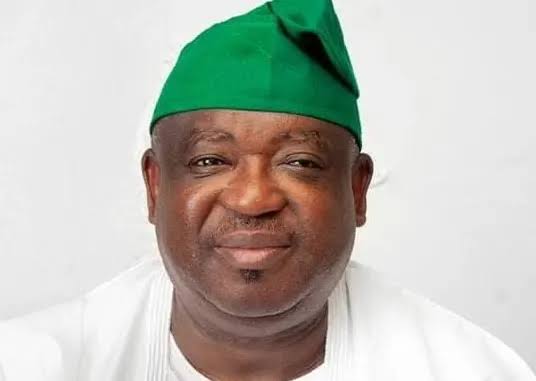
THE chairman of the Osun State Independent Electoral Commission (OSSIEC), Hashim Abioye, has alleged that operatives of the Nigeria Police Force (NPF) arrested the commission’s staff on election duty across the state.

Abioye made the allegation in a statement on the commission’s X account on Saturday, February 22.

While commending voters for turning out to exercise their rights, Hashim apologised to the media for the commission’s failure to accredit them for the exercise.

He explained that the police had sealed the OSSIEC headquarters where the materials were stored.

Abioye explained that delays in delivering materials to some units were caused by the police arresting officials transporting them. He added that new materials had since been deployed and voting was ongoing.

“Operatives of the Nigeria Police Force have arrested staff of the commission who are on election duty across the state.

“For the units where material didn’t arrive early, it was due to police arrest of the officials conveying the materials. However, new materials have been deployed, and voting is now ongoing,” the statement read in part.

The ICIR reached out to the Osun State Police Command spokesperson,  Yemisi  Opalola, for reaction to the allegations by the OSSIEC’s chairman. Her phone line could not be reached via calls.

She did not also respond to text and Whatsapp messages sent to her line.

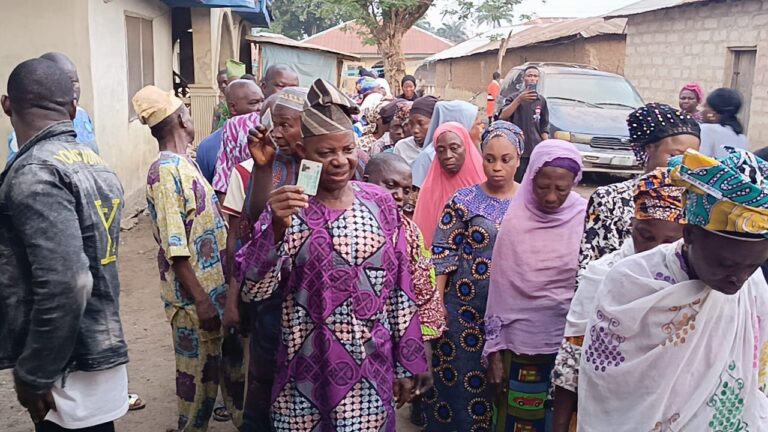
Earlier reports indicates that the Osun poll saw mixed turnout across different LGAs, with some polling units in Osogbo and Ile-Ife reportedly lacking OSSIEC staff, security personnel, and voters.

However, Ede, the governor’s hometown, recorded active participation in the election.

Despite the governor’s order restricting vehicular movement, free human and vehicular movements was observed across the state; though there were police roadblocks on major roads.

Plateau governor suspends mining activities over insecurity

PLATEAU State Governor Caleb Mutfwang has suspended all mining activities in the state over security concerns.

In an executive order dated Friday, February 21, Mutfwang said the suspension, which is with immediate effect, would subsist until further notice.

“I, Barr. Caleb Manasseh Muftwang, the Executive Governor and Chief Security Officer of Plateau State, deemed it necessary to suspend all mining activities in Plateau State for security reasons.” he said.

Mutfwang said that the decision was prompted by the rise in illegal mining activities and the associated security threats across various local government areas in the state.

He added that his administration would carry out a holistic review of the security situation in all the mining areas in the state and ensure an appropriate community development agreement is in place to address the socio-economic contributions of the mining rights holders.

“There is an increased influx of foreigners in the mining areas of Plateau State, which significantly increased insecurity in the state, including but not limited to offences of rape, banditry, illegal possession of firearms, drug trafficking and kidnapping.”

The governor pledged that his administration would work with the Federal Government to establish appropriate standards and monitoring framework involving the state, local government areas, host communities, and mineral rights holders.

The ICIR reported in November 2024 that a deadly mining accident claimed the lives of 13 miners in the state, following the collapse of an artisanal mining site.

This tragedy highlighted the dangers within Nigeria’s largely unregulated mining sector, where miners often work without proper safety protocols in place.

The ICIR reported that despite casualties from unregulated mining collapses and repeated warnings by the government and security agencies, more young people are driven into illegal mining due to poverty, unemployment, and inadequate oversight by regulatory bodies.


Ogun police arrest fake officer on Lagos-Ibadan expressway

0

The Ogun State Police Command has arrested 52-year-old Harry Collins for posing as an officer of the Nigerian Police Force (NPF) while wearing a uniform with a sergeant rank.

The spokesperson of the  state police command, Omolola Odutola, a chief superintendent of police, stated on Saturday, February 22, that the suspect was arrested on February 21, around 2:10 pm during a patrol led by the deputy commissioner of police (Operations) on the Lagos-Ibadan Expressway.

The officers on duty were said to have become suspicious of his presence at the bridge and consequently arrested him.

“Upon interrogation at the station, Collins was unable to provide a satisfactory explanation for his impersonation, raising further suspicion about his activities.”  The statement read in part.

She added that investigations were ongoing to uncover his motives and any possible criminal connections, while warning residents to be vigilant.

“Investigations are ongoing to determine his motives and any potential criminal involvement.

“The suspect will be charged to court upon completion of the investigation. The Ogun State Police Command warns the public to remain vigilant and report any suspicious individuals posing as police officers,” added that statement.

EFCC recovers, returns $132,362, N78.5m to fraud victims

0

THE Economic and Financial Crimes Commission (EFCC) has announced the return of $132,362.43 and ₦78,566,324.81 to American, Spanish, and Swiss nationals defrauded by Nigerians.   

In a statement by the EFCC, the commission disclosed that its chairman, Ola Olukoyede, handed over the funds on Friday, February 20, at the EFCC’s headquarters in Abuja.

The commission said that the handover reflected its commitment to combating economic and financial crimes while ensuring restitution for fraud victims.

The acting Spain ambassador to Nigeria, Maria Higon Velasco, received $1,300 along with evidence of ₦30 million already transferred to the Spanish Embassy in Nigeria for onward delivery to a victim, Maria Del Rosario San Jose.

Vehicles and real estate were also handed over to Spain, the United States, and Swiss citizens.

“Handed over in addition to money are vehicles and real estate to citizens of Spain, the United States of America and Switzerland.  Acting Ambassador of Spain to Nigeria, Maria Higon Velasco received the sum of $1,300 and evidence of N30 million already transferred to the Embassy of Spain in Nigeria for onward transmission to a victim, Maria Del Rosario San Jose.

“Florent Geel, Senior Political Officer, First Secretary, Embassy of Switzerland received $100,011.43 on behalf of a victim, Chantai Helene Lavancy, formerly known as Chantai Helene Maeder. Charles Smith, Legal Attache, Federal Bureau of Investigation, FBI, embassy of the United States received the sum of $7,344; N7,963,483.35, and Bitcoin cryptocurrency valued at $4,470.00 on behalf of the United States Embassy in Nigeria for onward transmission to a victim, Maria Jesus Brockell.

“Also received by Smith was Mercedes Benz E550 4Matic Chasis No: WDDHF9AB6AA111112, Mercedes Benz C450 AMG with Chasis No: WDD20J0641F282467, and one residential bungalow, located at 17/19 Seaman Street, Unguwar Maigero, Kaduna, Kaduna State on behalf of the United States Embassy in Nigeria for onward transmission to the crime victim.

Smith also received $7,527 on behalf of the United States Embassy in Nigeria for onward transmission to a victim, Michael Smith.

He also received $11,710.00 on behalf of the United States Embassy in Nigeria for onward transmission to another victim, Cheryle Williams; and N32,639,358.11 on behalf of the  Embassy in Nigeria for onward transmission to a victim by the name Marva Marrow.

In her remarks, Swiss ambassador, Ambassador Velasco expressed her gratitude, while Geel, on behalf of the Swiss government, thanked the Nigerian government and the EFCC for the recovery and restitution.

The ICIR reported that the EFCC in December 2024 apprehended a suspected internet fraudster, Osang Otukpa, accused of scamming 139 Australians for $8 million.

Otukpa was arrested at Murtala Mohammed International Airport, Ikeja, Lagos, upon arrival from the US on December 6, 2024.

According to a statement issued by the EFCC’s head of media and publicity, Otukpa allegedly operated under five aliases—Ford Thompson, Oscar Tyler, Michael Haye, Jose Vitto, and Kristin Davidson—to defraud the victims.

The ICIR also reported that a 37-year-old Nigerian, Abiola Kayode, was extradited from Ghana to the United States to face allegations of orchestrating a business email compromise scheme that defrauded businesses in Nebraska and other states of over $6 million between 2015 and 2016.

In 2024, the ICIR highlighted five financial scams, among which was investment scams, which Otukpa had defrauded his victims with.


Some parts of Abuja to experience seven-hour blackout – TCN

0

THE Transmission Company of Nigeria (TCN) has announced a seven-hour power outage in some parts of the Federal Capital Territory (FCT).

In a statement issued on Friday, February 21, TCN’s general manager of public affairs, Ndidi Mbah, said the affected areas will experience a blackout on Saturday, February 22, and Sunday, February 23, 2025, from 9:00 am to 4:00 pm each day.

She attributed the action to scheduled annual preventive maintenance on two transformers.

“The Transmission Company of Nigeria informs the public that its maintenance crew will conduct annual preventive maintenance on the 2x100MVA, TR3 & TR4 transformers at the Apo 132/33kV Transmission Substation in Abuja,” the statement read.

“The planned power interruptions are unavoidable, as Abuja DisCo will be unable to receive bulk power supply from the transformers during the maintenance period. Power supply will be restored to the affected areas upon completion of the maintenance exercise.”

Mbah explained that on Saturday, February 22, the power disruptions will affect the National Hospital, G2 Injection Station, Garki, Area 1, and Asokoro for seven hours.

According to the statement, areas including Apo legislative quarters, Apo resettlement, Gudu, Apo mechanic, and surrounding areas will also experience a seven-hour power outage.

Mbah explained that the interruption is necessary as Abuja Electricity Distribution Company will be unable to receive bulk power supply from the affected transformers during maintenance. The transmission company also apologised for any inconvenience caused to the affected customers during this scheduled maintenance time.

“Power supply will be restored once the maintenance exercise is completed. We apologise for any inconvenience this may cause the affected electricity customers,” the company said.

In a separate development, TCN said as part of its transmission expansion programme, it has officially commissioned a new 100MVA power transformer at the 132/33kV  in Osogbo substation-Osun state.

TCN explained that the new transformer boosts the substation’s capacity from 180MVA to 280MVA and enhances bulk power supply to the Ibadan Electricity Distribution Company (IBEDC) customers within the Osogbo township.

TCN noted that the 100MVA power transformer project is part of nationwide initiatives, undertaken in collaboration with the World Bank.

The ICIR reported that the TCN said 128 transmission towers were destroyed by vandals in 2024, raising concern over recurrent epileptic power supply in the country.

The transmission company also said it spent about N8.8 billion to repair and put into adequate use the vandalised transmission towers within the year.

Labour Party, Allied Peoples Movement pull out of Osun LG poll

0

LABOUR Party (LP) and Allied Peoples Movement (APM) have pulled out from the Osun State local government election held today, Saturday, February 21.

The LP chairman in the state, Adebayo Bello, announced the party’s decision on Friday.

Addressing reporters in Osogbo, Bello cited inadequate security arrangements by the Osun State Independent Electoral Commission (OSSIEC) for the peaceful conduct of the poll.

He urged OSSIEC to postpone the exercise for one or two months to allow for adequate preparations, emphasising that the postponement would also provide time to resolve the legal issues surrounding the exercise.

Similarly, the APM chairman in the state, Adewale Adebayo, announced the party’s decision to withdraw from the election.

He noted that when he attempted to submit the official withdrawal letter at the OSSIEC office on Thursday, no commission official was available to receive it.

“We want to confirm that we are not participating in the illegal local government election, slated for Saturday. We are very disappointed that all OSSIEC staff, including its chairman, have absconded from their headquarters since Wednesday,” he said.

Meanwhile, the Osun State Government has dismissed the Nigeria Police Force’s (NPF) security advisory urging the suspension of the election.

The ICIR reports that the NPF had on Friday called for the poll’s suspension based on what it described as credible intelligence it obtained.

In a statement issued by the Force public relations officer, Muyiwa Adejobi, the police said their intelligence indicated a high likelihood of violence and significant security threats should the election is conducted.

However, in a counter statement dismissing the police’s advisory, the state government stated that the grounds for rejecting the advice were based on the rule of law and aversion to police partisanship.

The state government said in the statement signed late Friday by the Commissioner for Information and Public Enlightenment, Kolapo Alimi, that it had reviewed the advisory and concluded that it was biased, partisan and in contravention of democratic tenets.

The state government also accused the police of pursuing partisan interests rather than obeying court orders and working for the rule of law.

The ICIR reported that there were gunshots in the state as supporters of the All Progressives Congress (APC) and the Peoples Democratic Party (PDP) clashed following the attempted reinstatement of sacked council chairpersons in the state on Monday, February 17. The ensuing melee led to the death of seven people, including a former local government chairman of Irewole Local Government Area, Aderemi Abbas.

The crisis followed a disagreement between the state Governor Ademola Adeleke and the Minister of Marine and Blue Economy, Adegboyega Oyetola, over the interpretation of the Appeal Court’s ruling on the chairpersons who were elected on the APC platform but sacked by the Federal High Court in 2022.

The ICIR reported on Sunday that Adeleke raised the alarm over a plot by Oyetola, a former governor of the state, to reinstate the sacked chairpersons. The APC in the state confirmed the plot, which turned out to claim the lives of seven people the following day.

Though the Federal Government through the Attorney-General of the Federation, instructed the state to suspend the conduct of the LG poll, the state governor ignored the order.


Nigeria stock market sustains gain, rises by N196bn amid policy shift

0

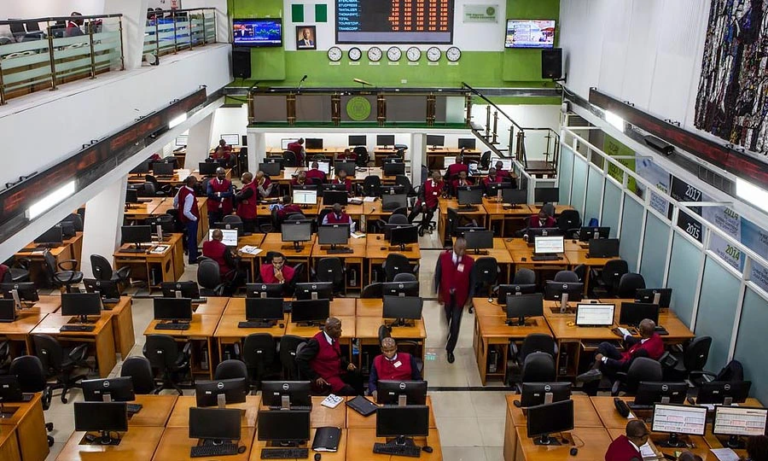
THE Nigerian stock market value appreciated by N195.93 billion in the just concluded week as a bullish trend prevailed amid a mixed sentiment expressed by investors due to changes in key macroeconomic indicators.

The policy shift involved the rebased Consumer Price Index (CPI) data that significantly dropped headline inflation figures from 34.80 per cent to 24.48 per cent.

It also includes the retaining of benchmark interest rate and all other parameters for the first time in more than two years by the Central Bank of Nigeria (CBN).

Analysts had also anticipated that investors would closely monitor further corporate earnings releases and dividend declarations.

During the week’s trading sessions, these key events provided direction for investors as they assessed the potential impact on their portfolios and expressed mixed sentiments on the floor of the Nigeria Exchange Limited (NGX).

At the end of the week’s trading, the market capitalisation rose by 0.29 per cent to N67.61 trillion on Friday, February 21, from the N67.42 trillion it opened with on Monday, February 17.

The appreciation of the market capitalisation left investors with an N195.93 billion gain despite the cancellation of 166.95 million units of ordinary shares of Dangote Cement during the week.

According to the NGX, with the cancellation, the total issued and fully paid-up shares of Dangote Cement have now decreased from 17,040,507,405 to 16,873,559,252 ordinary shares.

However, the All-Share Index (ASI) similarly rose by 0.41 per cent to close at 108,497.40 basis points from 108,053.95 basis points.

While the ASI and market capitalisation appreciated, all other market statistics, including deals, volume, and value of traded stocks, closed in the red.

A total turnover of 2.001 billion shares worth N49.486 billion in 70,853 deals was traded during the week by investors on the floor of the exchange, in contrast to a total of 2.414 billion shares valued at N55.512 billion that exchanged hands in 80,988 deals.

Further analysis of the week’s trading activity showed that on the sectoral front, mixed reactions were witnessed as three indices rose relative to three others that declined.

The consumer goods index saw the highest increase by 6.55 per cent to 1,846.47 basis points from 1,732.99 basis points. This was followed by the insurance index’s 0.62 per cent rise to 744.27 basis points from 739.67 basis points. And the industrial index rose by 0.05 per cent to 3,638.55 basis points from 3,636.85 basis points.

In contrast, the banking index saw the highest decline by -3.42 per cent to 1,200.20 basis points from 1,242.75 basis points. The oil and gas followed with a -2.87 per cent decline to 2,546.46 basis points from 2,621.62 basis points, while the commodity index fell by -0.47 per cent to 1,008.43 basis points from 1,013.18 basis points.

But among the top-performing stocks of the week was BUA Food, whose share price appreciated by N44.50 to close at N418.00, and Dangote Sugar Refinery, whose share price rose by N5.40  to close at N41.40.

Other top gainers were Abbey Mortgage Bank whose share price rose by 50 kobo to close at N3.60, Smart Products Nigeria (by 0.04 kobo to 0.30 kobo), and Sovereign Trust Insurance (by 0.14 kobo to N1.32)

“The equities market demonstrated resilience over the week, recording a 0.41 per cent gain despite investors’ concerns regarding the latest inflation report.

“The positive sentiment reflects investors optimism as they assess the potential impact of the inflationary pressure on monetary policy and corporate earnings,” GTI research analysts said.

Measured by volume, the financial services industry led the activity chart with 1.199 billion shares valued at N26.325 billion traded in 30,527 deals and contributed 59.91 per cent and 53.20 per cent to the total equity turnover volume and value, respectively.

The agriculture industry followed with 234.002 million shares worth N1.683 billion in 3,191 deals, while the consumer goods industry recorded a turnover of 173.829 million shares worth N7.150 billion in 8,903 deals.

According to analysts at Cowry Asset Management, the sustained bullish trend was “driven by investors taking positions for portfolio rebalancing, prompted by pressured sell-offs across various counters and shaped by expectations and outcomes of the newly rebased CPI report and MPC decisions, where the policy committee unanimously decided to pause rate hikes.”

Anticipating how trading activity would fare in the coming week, the analysts at GTI Research said, “Investors will be eager to see if this momentum carries over into the coming week.”

On their part, Cowry Asset Management analysts added, “We anticipate mixed market sentiment in the coming week as investors await further corporate earnings releases and dividend declarations. Additionally, market participants will closely analyse the recently published macroeconomic data on the rebased CPI and the rate hike pause by the CBN to assess their impact on investment portfolios.

“However, we expect a flow of funds into the equities space as investors seek better investment opportunities, particularly in the near term. Investors are advised to remain vigilant, focusing on stocks with strong fundamentals to make informed investment decisions.”

From addiction to protection: An ex- cop’s journey to rehabilitation

IT was a rainy Friday morning, last August when The ICIR crew met Emmanuel Ogwuche popularly known as ‘Emma Police’ while performing his duty as the Chief Security Officer (CSO) at a rehabilitation home for drug survivors in Abuja.


Follow The ICIR Addiction Series HERE.


Sharp and smart, he greeted and ushered the ICIR team  into the building with a pleasant smile.

“My name is Emmanuel Ogwuche, popularly known as Emma Police. What can I do for you?” he asked.

That was the beginning of a long conversation that took us through the life of a young man whose use of drugs drastically changed the trajectory of his life. 

Emma was born in the 80’s into a family of eight including his parents. His father was a security man, and his mother was a market trader.

He started his nursery and primary education at a private school in Kaduna, he wasn’t doing well academically, this led to a change in school. 

“I started school but in my family, I can say my brain was not ready for school; that was how everything started going bad in my life. When they moved me to a government school in Kaduna, my mates  laughed at me. My parents occasionally beat me so whenever I left home and got to my school gate, I would pull my uniforms and put in the bag and follow all these ‘bad boys'”, he said in an emotional-laden voice.

To avoid school, Emma started picking cans for sale to recyclers and was introduced to drug at that stage.

‘My entry into the world of hard drugs’

After avoiding school because he could not cope with academic rigours, Emma joined a group of young boys in his community and was introduced to hard drugs.

Within a short while he started smoking ‘solution gum’ and later graduated to ‘Indian hemp.’

Emma Police as a drug addict on the streets of Kaduna
Emma Police as a drug addict on the streets of Kaduna.
Emma after his rehabilitation and joining the workforce in his church.

According to him, his foray into drugs prevented him from furthering his education as all his other siblings graduated successfully.

Not wanting to be left out, he told his father he wanted to learn how to make furniture.

After completing his training as a furniture maker, he proceeded to join the Nigeria Police Force (NPF).

The journey into the Nigeria Police Force

In January 2000, Emma started his police training in Kaduna. However, instead of learning police rules and tactics, his attention was on illicit drug use. 

“I started using heroin, inside the police college; that’s where I found the substance,” he stated.

Emma police at the Police College, Kaduna.

Off to Lagos

After Emma successfully graduated from the police college he was posted to Lagos, to start his career as a policeman. His expectations were very high but he was shocked to discover something unique about Lagos.

“I didn’t know that Lagos State is the centre of crack and cocaine,” he stated in bewilderment.

Emma, who was posted to Area F in Ikeja, opposite police college area command, stopped using heroine for a short period, but on one sunny afternoon in his third month at the station, he was sent on an operation with some of his colleagues, and the unthinkable happened.

During the operation, he said they seized a consignment of cocaine and instead of declaring it at the station to his superiors, he hid it and started using it.

“I became worse after taking it but then I was still working until I got myself into trouble in Lagos Sate.

“I was the orderly to one Supol, who  was the OC in charge of works, at force headquarters, Obalende, Lagos.”

“I was locked up for days at Alagbon police station before one of my uncles intervened and I was freed and transferred back to Kaduna State.”

Life back to zero in Kaduna

After his ordeal in Lagos, Emma gladly arrived in Kaduna, his old base, and quickly reunited with his old friends.

He continued his drug abuse and was transferred to Kafanchan LGA.

In Kafanchan, Emma could not get drugs to buy. This means regular commute to kaduna to get the substance.

Fired from the police

His use of illicit drugs got to the attention of the Force and Emma said he was sacked. 

On leaving the police, he reunited with his old friends and continued his journey with drug abuse.

Emma as a police officer

He eventually got involved with activities that are on opposite side of the law, which included picking pockets.

According to him, whenever he was arrested, his former colleagues in the police, always found a way to free him and he became a police informant.

He would later move to Keffi where he said a became a junkie.

“I came back to Keffi and became a junkie and no more a user, a crack (cocaine) user. Anything I hustled for through stealing was just to smoke crack,” he said.

“There is a difference between a junkie and a user because the users are those who claim they have money. They come, buy, smoke and go, but me, I couldn’t control it; I stole to smoke. I could’t control it, but with the help of experts, I am free now,” he explained.

Emma as a junkie
Emma Police as a junkie on the streets of Kaduna


Bereavement 

As a result of Emma’s lifestyle and the troubles that came with it, his mother was frustrated to the point of death. Shortly after her burial, the father died too.

“I was in Black Street – an infamous area in Kaduna –  smoking when my mother died; we went for the burial and when we came back, my father too died. I lost my father in the process of this journey of taking drugs,” a sober Emma said.

His parents death made his other siblings to cut him off. 

Road to transformation

On one particular afternoon, while searching for drugs as usual, Emma met a woman named Gloria who promised to help him after he begged her for help.

After speaking with Gloria, he resolved to stop, but his resolution lasted for only two weeks. 

“I was good for that two weeks until I returned to the streets and it became worse,” Emma said,  but Gloria kept encoruaging him to stop, “she kept telling  me that I should stop taking drugs.”

One day she informed him that someone who could help him would be visiting Kaduna for a programme.

A life-changing encounter 

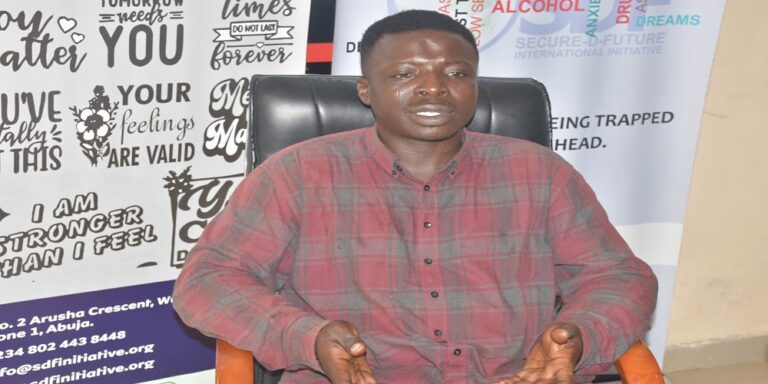
The person in question was Saadatu Adamu, a mental health counsellor and founder of Secure-D-Future International Initiative (SDF). 

“Before I met  Saadatu, I was a living dead.  If you saw me, you would know that I was not just a user, I was a junkie. I could stay for a year and six months without bathing.”

“She asked if I was determined, and she said she would help to rehabilitate me.” 

After the encounter with Adamu, Emma was taken to the Redeemed Christian God Church of God (RCCG) Drug Abuse Ministry (CADAM) for rehabilitation for one year.

Saadatu Adamu of SDF

According to him, he became good and returned to Kaduna but after staying without a job for two months, he returned to the dreaded Black street in Kaduna.

While on Black Street, he met a drug baron who advised him to start selling drugs, a request he gladly accepted until he met an encounter with a customer reintroduced him to taking drugs.

“I met a girl, [where] I went to deliver drugs to her in a hotel. She was a big girl. She said I should smoke crack worth N20,000 that she would pay, but I refused.

“Rather, I asked her to give me the money which she did but said if I won’t  smoke the crack, I should give her back her money.

After his encounter with the lady in the hotel, Emma went back to living on the street and under the bridge in Kaduna before Adamu came to pick him up for rehabilitation, this was his second time rehabilitation journey.

They took him to a medical doctor in Abuja. He stayed there for a week then ran away.  By this time Emma said all his legs were swollen from regular police and soldiers beating because he was always involved in petty theft to fund his drug use, again Adamu reached out and took him in for rehabilitation. 

From the streets to a CSO

After his rehabilitation, instead of letting him go, Adamu decided to give Emma a job and made him the Chief Security Officer at her facility.

“When it was time to leave, she kept me to work here. That was how I started working here,” he said.

As of the time of the interview Emma was almost a year on the job.

He was able to reunite with his siblings through effort by the SDF.

“I am having a very good time with my family more than before.”

Speaking about his wife he said “She is a good woman. But I don’t blame her for leaving me.”

At the peak of his drug use, his wife left him and took the two children with her.


Emma Ogwuche
Emma Ogwuche

Advice 

For people still battling with drug abuse, Emma said first need to have the belief that  they can be free.

“When I see some of my mates now, I hide. My mates in the Police are now ASP but look at me.

“Challenges will come; temptations will always come, but you have to stand strong. You can be free!

Adamu, a mental health counsellor and founder of SDF, said she met Emma for the first time at a Christmas outreach in Kaduna. 

According to her, there were over 80 people there, but she spotted Emma with his girlfriend.

“They came to us and were talking about help, but of course, I left.”

“One year later, I still got a message from that person that he needed help to get off the streets. That was how he came into our space,” she said.

“Two weeks later, he came back to SDF. We had an agreement before he came because they had told me his condition and how he was looking. So I told him he had to abandon the intake of drugs so he could get healed”.

After his rehabilitation,  as he had no place to go, Adamu said they opted to give him a job to ensure stability.

“So I said okay, why don’t we reintegrate this person back into the system because we know, if we do that, it will help. We also knew he needed a life. That was how we reintegrated him back into the system, and he is working now and doing extremely well,” the SDF boss stated. 

Odinkalu criticises Babangida’s autobiography, says it contains ‘unverifiable claims’

0

HUMAN rights lawyer and former National Human Rights Commission chairman, Chidi Odinkalu, has criticised former military president Ibrahim Badamasi Babangida (IBB) for making “unverifiable claims” in his newly released autobiography, A Journey in Service.

In a post shared on Friday, February 21, along with a screenshot from Babangida’s book, Odinkalu accused the former leader of levelling allegations against individuals who are no longer alive to refute or defend themselves.

According to Odinkalu, Babangida “waited until they were all dead” before portraying himself as a ‘victim’ of their actions.

He said “Ibrahim Babangida’s book is filled with allegations against dead men and women. He waited until they were all dead and none of them could controvert him and he portrays himself as a victim of all these dead men and women.” 

In the excerpt from the autobiography shared by Odinkalu, Babangida narrated events and controversies surrounding his time in office specifically with regards to the 1992 election.  He mentioned Sani Abacha who later became a head of state and also MKO Abiola.  Abacha and Abiola are both dead. 

“Conveniently, Babangida, a committed record-keeper, could not produce any contemporaneous records, minutes, notes or other evidence to corroborate any of the serious claims and allegations he makes about these dead men and women,” Odinkalu added.

The book has as appendix, some speeches, interviews and result of the 1992 election.

The ICIR reported that for the first time after nearly 32 years, Babangida admitted during his book launch in Abuja on Thursday, February 19, that Moshood Abiola, known by his name initials – MKO – won the June 12, 1993, presidential poll, which he (Babangida) controversially annulled. 

The launch doubled as fundraising for the presidential library for the former leader and raised over N12 billion in pledges and donations for the book and library.    

While reviewing the book, former Vice President Yemi Osinbajo, said Babangida dedicated a full chapter to the transition to military rule and the annulment of the June 12, 1993, election, widely believed as the most credible, freest and fairest in Nigeria’s democratic history.  

He wrote, “Although I am on record to have stated after the elections that Abiola may not have won, upon deeper reflection and a closer examination of all available facts, particularly the detailed election results published as an appendix to this book, there was no doubt that M.K.O. Abiola won the June 12 elections.”

Babangida, who ruled Nigeria from 1985 to 1993, often faces widespread criticism for key decisions he made during his regime, notably the annulment of the presidential poll won by Abiola and the murder of prominent journalist, Dele Giwa.

His new autobiography has sparked intense debate among political analysts and the public, with some lauding him for finally documenting his experiences in office, and others, like Odinkalu, decrying what they perceived as historical revisionism.