Home Blog Page 360

NERC lists new fines for meter by-pass offenders

0

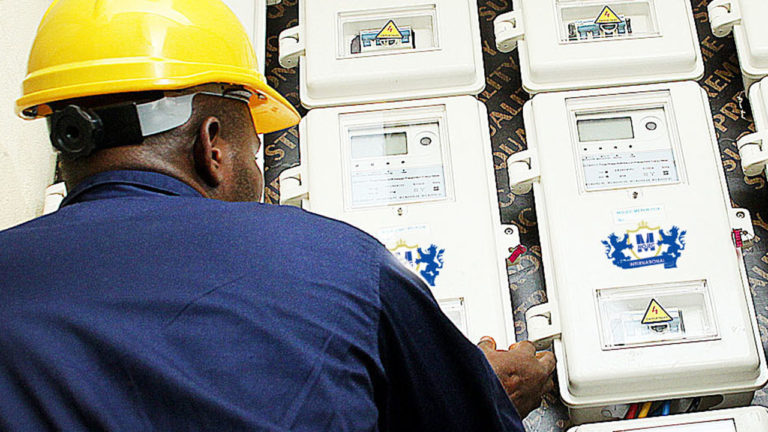
THE Nigerian Electricity Regulatory Commission (NERC) has warned electricity consumers and businesses found guilty of bypassing electricity meters, of a new fine order while reinforcing its stance against power theft.

The regulator in a revised Order on “Unauthorised Access, Meter Tampering, and Bypass” posted on its X (formerly Twitter) account, NERC outlined new regulations to curb illegal connections.

The new order, NERC said seeks to reduce unauthorised access to electricity, meter tampering, and by-pass, and to also establish transparent reconnection guidelines to ensure compliance.

This replaces the previous directive, Order No: NERC/REG/41/2017, and took effect on 22 January 2025.

The order aligns with the Electricity Act 2023 and the Customer Protection Regulations (CPR) 2023, reinforcing compliance measures and ensuring better enforcement against meter violations.

Under the new framework, distribution companies (DisCos) now have the authority to disconnect illegal connections without prior notice. According to the order, clear reconnection guidelines have also been established, ensuring transparency and discouraging repeat offences.

The regulator warned that consumers caught tampering with their meters will face significant financial penalties.

For non-Maximum Demand (MD) meters, the fine for a first offence is set at N100,000 for single-phase meters and N200,000 for three-phase meters. Subsequent violations will attract higher penalties of N150,000 and N300,000, respectively.

The commission has urged consumers to ensure compliance with metering regulations to avoid fines and disconnection.

Notably, DisCos have been directed to launch awareness campaigns to educate customers on the legal and financial consequences of meter tampering, emphasising the need to regularise their electricity connections.

The ICIR reported that  6,156,726, representing 46.15 per cent of 13,339,635 registered electricity customers have been metered as of September 30, 2024.

This means that 7,182,909 customers are yet to be metered, representing 53.85 per cent of unmetered electricity customers across the country.

It stated, “184,507 end-user customers were metered across all the Electricity Distribution Companies (DisCos) with Ikeja, Ibadan, and Abuja DisCos recording the highest number of meter installations – they accounted for 25.45 per cent, 21.48 per cent, and 14.61per cent respectively, of the total installations.

 Reps demand tough penalties for rising cases of femicide in Nigeria

0

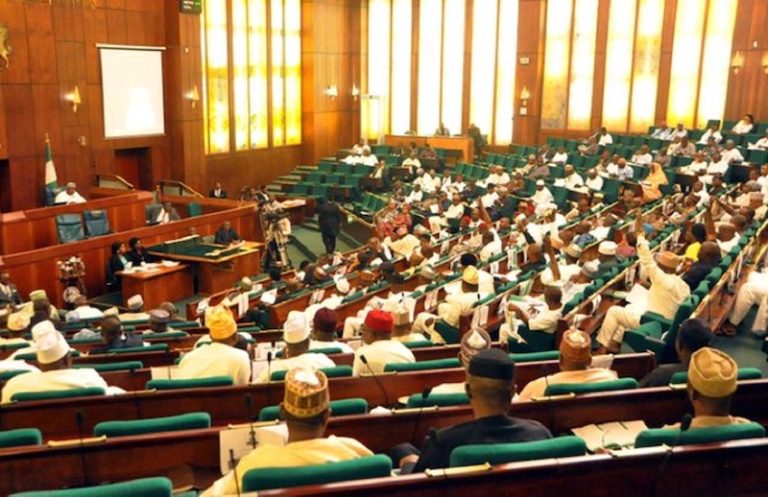
THE House of Representatives has urged relevant Federal Government agencies to enforce stricter penalties against homicide and femicide in Nigeria.  

The House took the stance after adopting a motion sponsored by Rivers lawmaker Awaji-Inombek Abiante and three others during Tuesday’s plenary.

While highlighting the increasing cases of homicide, including murder, manslaughter, and other violent crimes, which have sparked public outcry for justice across the country, Abiante emphasised that the right to life was a fundamental human right enshrined in the Constitution.  

He said, “Fernicide, which is the intentional killing of women and girls due to their gender, has become a significant concern, with several reported cases in recent years.”

Following the adoption of the motion, the House urged the National Judicial Council to establish special divisions within existing courts at all levels to swiftly handle homicide, femicide, and related cases.

Current trends of femicide 

The ICIR reported the recent murder of one Lawal Yetunde, a young lady and private school teacher, allegedly by a cleric Abdulrahman Ballo, in Kwara State on Monday, February 10 2025.

The suspect was said to have lured Yetunde after connecting with her on Facebook and obtaining her phone number. 

Bello confessed that the lady died of an asthma attack after police discovered dismembered remains hidden in a bowl, along with the tools used in the killing.

In January 2025 alone, data shows that 21 cases of femicide were reported in Nigeria.

One of the cases that caused a major outrage in the country was the case of Salome Adaidu, a 24-year-old corps member murdered in New Karshi, Nasarawa State, by a suspect, Timileyin Ajayi, on January 12.

The ICIR reported that Ajayi, who lives in the Pablana area, was caught around Angwan Bako near the Kaja Estate in the New Karu LGA when conveying the severed head of Salomey to an undisclosed destination on a commercial motorcycle.

While the family of the deceased demanded justice for the lady whose life was cut short in a gruesome manner, Ajayi pleaded not guilty on his first appearance in court on January 27.

National Assembly cancels 2025 budget passage over errors

0

THE Senate and House of Representatives have rescinded their decision on the 2025 appropriation bill passed on February 13 to correct discrepancies in capital and recurrent allocations.

The revised budget shows that the total budget remains N54.9 trillion.

Capital expenditure in the reviewed budget was reduced by more than N500 billion, while recurrent expenditure jumped by the same amount. 

With the correction, the allocation for capital projects is now N23.439 trillion while recurrent is N13.588 trillion contrary to what was earlier passed.

The move followed a motion moved by the chairman of the Joint Committee on Appropriations, Adeola Olamilekan, and the chairman of the House Appropriations Committee, Abubakar Kabir.

For proper context, when the National Assembly originally passed the bill last week, N13.064 trillion was allocated for recurrent expenditures and N23.963 trillion for capital projects. 

The initial breakdown of the N54.99 trillion budget proposal also included N3.645 trillion for statutory transfers and N14.317 trillion for debt servicing, with a fiscal deficit of N13.08 trillion and a deficit-to-GDP ratio of 1.52 per cent.

This revision followed President Bola Tinubu’s decision to increase the 2025 proposed budget from N49.7 trillion to N54.2 trillion, which was subsequently passed by both chambers of the National Assembly. 

The budget, titled “Budget of Restoration: Securing Peace, Rebuilding Prosperity,” aimed at consolidating policies to restructure Nigeria’s economy, boost human capital, and stimulate key sectors such as manufacturing and oil and gas production.

On February 13, the chairman of the House Committee on Appropriations, Abubakar Bichi, while presenting the bill for consideration, stated that the committee met with the Presidential Economic Planning team to further discuss revenue projections and expenditure for the 2025 Appropriation Bill.

According to him, the budget was presented late, compared to that of 2024.

He urged the executive to present subsequent budgets to the National Assembly not later than three months before the next financial year, to maintain the January to December budget cycle.

It would be noted that Tinubu on Wednesday, December 18, presented Nigeria’s 2025 budget proposal to a joint session of the National Assembly with key highlights, adjusting the exchange rate benchmark to N1,500 per dollar.

Nigeria inflation drops to 24.48% in January following rebasing, says NBS

NIGERIA’s headline inflation rate declined to a new low at 24.48 per cent year-on-year in January, following the National Bureau of Statistics (NBS) rebasing of the country’s economy.

The statistics office announced this on Tuesday, February 18, after rebasing the Consumer Price Index (CPI) to reflect changes in consumption patterns.

Nigeria’s headline inflation had climbed sharply to 34.80 per cent in December 2024 as a result of President Bola Tinubu’s reforms on fuel subsidy removal and exchange rate unification.

The ICIR reported about NBS’ decision to rebase the Nigerian economy and to release a report on the rebasing exercise last month but the organisation failed to do so.

The awaited report made the Central Bank of Nigeria (CBN) shift its bimonthly monetary policy meeting twice this year.

Following its rebase of the CPI, which measures the rate of change in prices of goods and commodities, inflation declined to 24.48 per cent in January.

The CPI rebasing means updating the reference year used to gauge price levels in the country by essentially changing the basket of goods and services used to measure inflation, to better reflect current consumer spending patterns and ensure the inflation data accurately reflects the economy’s current state.

It involves replacing outdated items with new ones that better represent what people currently buy.

The inflation report from NBS shows that food inflation dropped to 26.08 per cent year-on-year in January from 39.84 in December 2024.

Similarly, core inflation, which excludes the prices of volatile agricultural produce and energy, also declined to 22.59 per cent year-on-year year in January from 29.28 in December 2024.

The statistics office further stated that urban inflation dropped to 26.09 per cent compared to 37.29 per cent in December while rural inflation came down to 22.15 per cent from 32.47 per cent in December.

According to the NBS, the rebased CPI reflects the current inflationary pressure and consumption pattern of people living in the country.

The statistical office, however, stated that the decline in the rebased inflation did not mean the general price level was declining.

It pointed out that the major factor responsible for the drop in inflation was the base year of 2024 being closer to the current year.

“Unlike in the past, where the base year was 2009, the base year for the rebased CPI is 2024. Meaning, we are comparing prices in 2025 with prices in 2024 instead of 2009. Also, the CPI baskets are not the same.

‘The CPI figures provided the needed information for the government, firms, and households to make informed decisions on matters related to price levels and changes in prices,” the NBS said.

Commenting on the rebasing methodology, an economist analyst, Uche Uwaleke, a professor of Capital Market at the Nasarawa State University said what happened was a change in methodology to capture the true inflationary state of the Nigerian economy.

“It all gears towards making our CPI figures marginally comparable to what is obtainable globally. The CPI manual advised that while rebasing, ensure that your price basis is as close to the current year as possible. The pricing methodology previously used was 2009, the rebasing corrected that and used 2024 pricing,” Uwaleke stated.

He noted that the rebased figures would help investors make key decisions about the Nigerian economy and enable researchers to follow inflationary trends accurately.

More explanation on methodology used for current rebasing exercise

According to the NBS, the CPI rebasing was anchored on the 2023 Nigeria Living Standards Survey (NLSS).

It noted that the survey captured general household expenditure on consumption goods and services.

According to the NBS, the survey was conducted for twelve months across the 36 states and the Federal Capital Territory (FCT) in both urban and rural areas, capturing seasonality in the consumption of goods and services.

In order to have more comprehensive household expenditure data, the NBS disclosed that another household expenditure survey was conducted called the survey of rare items (rare items are durable goods like cars, laptops, solar panels and electronics, which households do not necessarily spend on frequently).

The statistics office also informed that the data on expenditure on financial services and insurance was also sourced administratively from institutions like the Central Bank of Nigeria (CBN) and the National Insurance Commission (NAICOM).

[UPDATED] Five institutions named after Tinubu in less than 2 years sparks debate about legality

Since his inauguration, five institutions have been named after President Bola Tinubu, sparking controversy. In this report, The ICIR examines whether it is legally permissible for a president to name institutions after himself.

From May 29, 2023, when President Bola Tinubu assumed office, to date, the number of institutions and edifices named after him has risen to five.

The naming of institutions after Tinubu has generated criticism from a wide range of Nigerians.

Among the institutions named after the president are:

  • National Assembly Library and Resource Centre, which was inaugurated in May 2024;
  • the Nigeria Immigration Service Technology Complex;
  • the recently commissioned Bola Ahmed Tinubu Barracks.
  • Others include the Bola Ahmed Tinubu Polytechnic, Gwarinpa, Abuja;
  • and the Bola Ahmed Tinubu International Airport, Minna, Niger State, formerly called the Abubakar Imam International Airport.
President Bola Tinubu flanked by minister of interior Olubunmi Ojo and the CG Of NIS Kemi Nandap at the commissioning of the Nigerian Immigration Service (NIS) Technology Innovation Centre named after him at the agency’s Abuja headquarters.

In addition to these five institutions, there is a proposal for the Bola Ahmed Tinubu University before the National Assembly.

The bill for the university was sponsored in 2024 by the Deputy Speaker of the House of Representatives, Benjamin Kalu, and eight others. According to them, the establishment of the university is for the promotion of the learning of Nigerian languages.

Controversy 

The controversy surrounding renaming exercises is escalating, with many believing it’s a politically motivated move to consolidate power through symbolic actions.

A recent example is the renaming of Abubakar Imam International Airport in Minna to Bola Ahmed Tinubu International Airport, which has raised eyebrows since it was only named after Imam in June 2023.

This has led some to question the timing and motivation behind such decisions, suggesting that it may be more about making a political statement than a genuine attempt to honour someone’s legacy.

Tinubu's naming spree: 5 institutions bear his name in less than 2 years, Is this legal?
The Bola Ahmed Tinubu International Airport, Minna, Niger state

Many Nigerians have taken to social media to criticise the naming of public institutions after the president.

For instance, the co-founder of BudgIT, a civil society organisation Olúṣeun Onígbindé, in a tweet posted in January, termed it anabuse of norms’.

“In less than a year, four public institutions have been named after President Bola Tinubu. This abuse of norms is rooted in the sycophantic culture that has grown in recent times. The President should put a stop to this, as he’s signalling a culture that’s highly unacceptable,he posted.

Another X user who goes by the name 𝐄𝐫𝐢𝐦𝐮𝐬 posted,So Tinubu built a barracks with Nigeria’s money and named it after himself. Kim Jung Un dey learn work.”

An X user by the name of Miss Pearls in her post on the matter jokingly suggested that the president should name the country after himself.

“Bola Ahmed Tinubu Barracks Bola Ahmed Tinubu Innovation Complex Bola Ahmed Tinubu Polytechnic (approved, coming soon) Just rename Nigeria after yourself!”

Another X user, Olaudah Equiano®, says a leader with “an eye on posterity” won’t have the appetite for the vanity of naming projects after himself.

“A leader with an eye on posterity won’t have the appetite for the vanity of naming projects after himself. This is because true immortality will be bestowed by history, not monuments that can be renamed.

“Tinubu needs to submit himself to some clear-eyed, sober reflection. This preoccupation with self-glorification and immortalisation is a telltale sign,he tweeted.

Action not illegal but morally wrong – Lawyers

The ICIR gathered that naming institutions after a sitting president, even if it’s not against the law, is a questionable practice that raises some serious moral and ethical red flags.

It’s seen as a form of extreme sycophancy and can create the appearance of bias or favouritism.

Many believe it is not right to honour a president who is still in office, as it can be perceived as a way to attract favour or gain influence.

But while many critics see this as a self-serving move that goes against democratic values, some lawyers contacted by The ICIR to speak on the matter say there is nothing legally wrong with the decision but faulted it on moral grounds.

A lawyer, Hassan Idris, said no law prevents people or him (Tinubu) from naming institutions after himself.

“On a legal ground, I am not aware of any law that prevents the president from naming a street after himself. 

But perhaps morally or in practice or tradition, but I’m not aware of any law that prevents him from doing that,Idris told The ICIR.

He said that naming a street or a monument after someone is a way for people to show appreciation for what that person has done.

He said it’s a form of recognition that comes over time for the sake of posterity when someone has made significant contributions.

He, however, faulted the army for naming the barracks after Tinubu. He opined that they would have waited for him to finish his tenure before doing it.

“Are they answerable to him or not? The army reports to him. So, we all know that they’re all doing that to please him; whoever does that, he’s doing that to please him.

“So the government should not encourage that. At least when he’s not in power, and then you are recognised by the military,Idris said.

Another lawyer, Moshood Ibrahim, while speaking to The ICIR on the subject matter, said that based on law and not emotions, there’s no law prohibiting the president from naming government edifices after anybody, including himself, as this is just a ceremonial issue.

However, he said if the edifice is an institution created by law, it requires that the law that created the edifice must also be amended to reflect the change of name.

He said, If, for example, the president wants to change the name of Usmanu Danfodiyo University, Sokoto, to his name or any other person’s name, the National Assembly must be consulted also to amend the establishing Act. This is to reflect the change of name as the law that created the university has also catered for the name the university will carry. Thus, any act of changing the name without equally editing/amending the law is null and void,Ibrahim said.

In his view, Victor Opatola, also a lawyer, said, in the sense of the National Commission for Museums and Monuments Act, the army barracks, universities, that were named after the president cannot be classified as monuments. They can be said to be buildings and institutions.

Opatola added that there is no specific law in Nigeria that expressly prohibits naming a building or institution after the president or the president from naming buildings and institutions after himself.

He said, however, that many have objected to the morality of doing the same and some even termed it not acceptable because, “Your good work should speak for you after you leave office and those behind may decide to honour you as such.”     

According to him, from a moral and ethical standpoint, it should not be encouraged for institutions and buildings to be named after a sitting president or a sitting president to name buildings and institutions after himself while still in office.

“If it is not discouraged, it will eventually lead to a naming frenzy where everybody in the office wants to immortalise himself by himself, which may suggest self-glorification or self-aggrandisement to some people,Opatola stated.

Update June 12, 2025: The International Conference Centre has been renamed after Tinubu, it’s now called Bola Ahmed Tinubu International Conference Centre.

CBN directs bank directors with non-performing loans to resign

THE Central Bank of Nigeria (CBN) has directed bank directors with non-performing insider-related loans to step down immediately.

CBN gave the directive in a circular signed by the acting director of banking supervision, Adetona Adedeji, on Monday, February 17.

According to Investopedia, a non-performing loan (NPL) is a loan that is in default because the borrower has not made the scheduled payments for a specified period. Although the exact elements of non-performing status can vary depending on the specific loan’s terms, “no payment” is usually defined as zero payments of either principal or interest.

Insider loans are loans granted by a bank or financial institution to its executives, directors, employees, major shareholders, or other related parties. However, checks by The ICIR showed some of those loans, as a result of insider influence often violate corporate governance rules while exposing the financial health of the banks.

According to the apex bank, the move is to strengthen corporate governance and risk management within the banking sector.

To mitigate potential risks, the financial regulator urged banks to take steps to recover outstanding debts by enforcing collateral recovery and seizing shareholdings of affected directors.

“Directors with non-performing insider-related facilities are required to step down immediately from the board, while the bank should commence immediate remediation of the loans through the recovery of the collaterals including the shareholdings of the affected directors,” the circular reads.

The CBN further said in line with the provisions of Section 19 of the Banking and Other Financial Institutions Act (BOFIA), 2020, all banks are to implement the following directives regarding the insider-related facilities in their books.

“Insider-Related Facilities Approved by the CBN without Specific Timelines: Banks are required to regularise within 180 days, all insider-related facilities above the limits prescribed in Section 19 (5) of the BOFIA, 2020, which were approved by the CBN without specific timelines,” the apex bank said.

The CBN also instructed banks to take aggressive steps to recover outstanding debts linked to insider-related loans.

The measures include enforcing collateral recovery and taking possession of the shareholdings of affected directors to mitigate financial risks.

Additionally, all banks are now required to ensure that insider-related loans exceeding statutory limits are brought within the approved thresholds within 180 days, a move that is intended to curb excessive exposure to insider-related loans, which could compromise the stability of financial institutions.

Under Section 19(5) of BOFIA, individual bank directors are prohibited from holding insider loans that exceed 5 per cent of the bank’s paid-up capital. Furthermore, the total insider-related credit exposure for an entire bank must not exceed 10 per cent of its paid-up capital.

The ICIR reported that most Nigerian banks are gearing up for consolidation and are currently raising money now in the Nigerian stock market as the deadline for recapitalisation draws nearer.

The apex bank has set a March 31, 2026 target for all commercial, merchant, and non-interest banks to meet the requirements for recapitalisation.

Analysts believe that the CBN’s strengthening the capital base and corporate governance structure of commercial banks would make Nigerian banks investors’ toast for lending and other forms of business.

“It is good the CBN has given this directive. Some of us will be watching closely to see the successful implementation of this to ensure that the banking sector works for the Nigerian people and lend to businesses,” a development economist, Celestine Okeke, told The ICIR.

20,000 communities lack electricity in Nigeria – REA

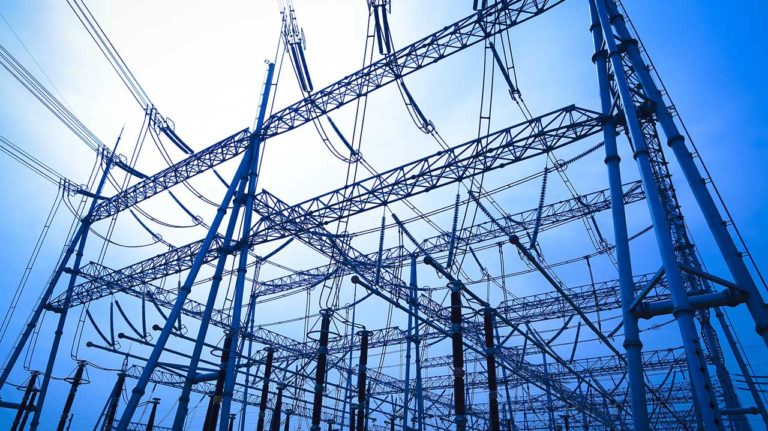
THE Rural Electrification Agency of Nigeria (REA) has said over 20,000 rural communities were without electricity for many years while others remained underserved by energy distribution companies.

The Managing Director of REA, Abubakar Aliyu, represented by the organisation’s Executive Director, Rural Electrification Fund, Dorolis Uboh, disclosed this during the commissioning of a 550kWp interconnected mini-grid in Qua’an Pan Local Government Area of Plateau State on Monday, February 17. 

He noted that the government was working to energise 3,700 communities – 100 per state – with 370 megawatts of clean energy.

“The first phase, which is going to be 25 communities per state, will end up being 925 communities across the board in the entire federation, and we’ll be infusing over 92 megawatts of clean energy into our energy space to serve the communities, mostly the rural communities,” he said.

The REA boss said that it had identified 10,000 of these communities for electrification, using clean and alternative energy as part of its efforts to provide them with electricity.

He added that the project commissioned was part of the Interconnected Mini-Grid Accelerated Scheme (IMAS), which aimed to reach 125,000 beneficiaries in Nigeria – across the six geopolitical regions in collaboration with its development partners, including German Cooperation, European Union (EU), and GIZ.

“ 3,500 households would benefit from the project in Bakin Ciyawa and Kwande communities and the government has decided to scale up projects to be able to mitigate the problem of no energy” he said.

The Backdrop

Hundreds of Nigerian communities, including those in urban areas, are not spared from persistent power outages, worsened by recurring national grid collapse.

The ICIR  reported the alarming frequency of grid collapses, leaving Nigerians without power supply for days.

While the Federal Government has severally claimed it was tackling the challenges, including replacing ageing power infrastructure, the nation has yet to see positive results.

Recently, President Bola Tinubu secured $70 million from the International Finance Corporation (IFC) as funding for the mini-grid projects which targeted underserved Nigerians without electricity.

The fund was part of a $1 billion facility set up by the IFC through grants from the Rockefeller Foundation and the African Development Bank.

Shareholders kick against PZ Cussons’ plan to covert $34.26m debt to equity

0

SHAREHOLDERS of PZ Cussons Nigeria Plc have described the company’s management plans to convert $34.26 million (N51,795,312,646.72) debt to equity as lacking integrity.

Investopedia describes a debt-equity swap as a financial restructuring tool where a company exchanges its outstanding debt for equity shares. This type of transaction allows a company to reduce its debt burden by converting creditors into shareholders.

Many shareholders who spoke with The ICIR about the development said the decision would not be in the best interest of minority shareholders.

The concern came barely a week after PZ Cussons Nigeria Facts Behind the Figures Presentation held at the Nigerian stock exchange in Lagos on Wednesday, February 12.

At that meeting, shareholders had called on the company’s management to be more accountable and return the company to profitability now that they had considered remaining listed on the Nigerian stock exchange, The ICIR  exclusively reported.

The company had approached the Securities and Exchange Commission (SEC) for a smooth exit from the exchange citing its indebtedness.

In a statement on Saturday, February 16, PZ Cussons Nigeria said it wants to convert part of its debts to equity, subject to regulatory approval.

According to the statement, the board of directors decided to convert $34.26 million of the company’s outstanding loan of $40.26 million into equity after careful deliberation.

It stated that the $34.26 million debts would be converted to equity at a price of N23.60 per share and would create 2,194,716,637 new ordinary shares at a value of 50 kobo each for the parent company, PZ Cussons Holdings, increasing its share capital by N1,097,358,318.50.

It would also raise the parent company stake from 73.27 per cent to 82.79 per cent.

“Conversion of debt to equity is a normal practice but I don’t have the details yet. I expect the company to organise an EGM (extraordinary meeting) where the details will emerge and then the shareholders will exhaustively engage with board and management and cross-pollinate ideas and eventually be on the same page,” the chairman, Abuja branch of Noble Shareholders Association, Innocent Peter Nwokocha, said.

He expected that PZ Cussons should have waited for its EGM to make its plans known to shareholders either for approval or for their views before announcing it at the news corridor.

“I think somebody has said that they want to stylishly delist. Delisting is not a bad thing, more so if it is for the overall interest of shareholders.

“I think they have something to hide,” Nwokocha said.

For him, conversion of debts to equity is a normal practice, but the way PZ Cussons reveals its plans shows the company has a lot of skeletons in its cupboard.

Noting that PZ Cussons held its fact behind the figures presentation recently, he said, “If you tell me something in the morning and in the evening you are singing a different song, I have a reason to doubt you. It is a measure of mutual mistrust. And that is exactly what we are seeing. They are having integrity issues. I think they should  be opened and clear to us.”

He believes the parent company which has majority shares in the company, could easily counter the views of the minority shareholders but wondered why the company does not want to follow the down rules.

“If they do a voice vote at the EGM, which is allowed in the Law, by the pool, I think all their majority shareholders will be on their side.

“But it will be important to note that we did say no and it is good we exhaust the issue before the voting, knowing that they have the numbers to counter whatever the minority shareholders say,” Nwokocha said.

Converting $34.26 million debt to equity is not going to solve the problem facing PZ Cussons, the national chairman of the Progressive Shareholders Association of Nigeria (PSAN), Boniface Okezie, said.

He pointed out that parts of the debts swap to equity, if added up to the parent company’s stake, might eat into the 20 per cent free float threshold required to be kept by the Nigerian Exchange Limited (NGX)  rule.

Breaching this rule may lead the company to demand to be delisted from NGX, Okezie explained.

“Where will the shareholders go from there? You can see from my little analysis it may help them to consolidate, and Nigerian minority shareholders will be at a disadvantage or forced to exit from the company. That is the true position of things,” he said.

According to Okezie, the only way out is for PZ Cussons Nigeria to do rights issues to raise money to restructure the company.

It could also ask the parent company to renegotiate the debts since it was part of the problem that caused the debts to be incurred in the first place through over-invoicing or non-remittance of dividends accrued to them.

Okezie further lamented that PZ Cussons Holdings still exports finished products to Nigeria as well as technical services, asserting that these issues helped to increase the company’s foreign debt obligation.

On his part, the national president of New Dimension Shareholders, Patrick Ajudua, said the PZ Cusson’s plan to convert debt to equity would not be fair to minority shareholders.

He believes that the trust between minority shareholders and majority shareholders of PZ Cussons had completely broken down with the new development, criticising the management for trying to box shareholders into a corner.

“It is a way of unboxing shareholders and diluting the value of our shares in the company despite various signals raised by shareholders on the financial performance and sales of assets.

“So, they expect the shareholders to now bear the burden of losses,” Ajudua said.

He expressed that shareholders are not against the debt-to-equity conversion but that their objection is the proposed rate of conversion by the major shareholder, PZ Cussons Holdings, United Kingdom, which is not intended to favour the principle of fairness, equity, and justice.

“It is unjust, reprehensible, and unfair to minority shareholders who have bear the pain of loss of value on their investment and non-payment of dividends.

“This major shareholder has over the past 5 years unceremoniously embarked on the sale of an asset without ploughing back the proceed to bridge financial haemorrhage rather it is deployed in administrative use,” Ajudua maintained.

He asserted the representatives of the major shareholders have been receiving salaries in foreign currency, paying a four per cent fee from gross profit, including technical fees and management fees.

“Therefore, going by the current market value of PZ Cussons via 52 weeks high, the company ought to pay N40 per share, which is just and fair.

“If the rate of N40 is agreed it will be able to address our concern and return the company to profitability,” Ajudua added.

How PZ Cussons Nigeria crawled into $40.26m debts

In June 2022, PZ Cussons Holdings Limited (PZCH) loaned $40.26 million to PZ Cussons Nigeria Plc (PZCN) to help cover raw material and operational costs, which were difficult to manage due to currency shortages.

The significant devaluation of the naira experienced between 2023 and 2024 negatively impacted PZCN’s financial results and led to a rise in its foreign currency-denominated loans.

In response to these challenges, the company’s board decided to strengthen its balance sheet by settling the outstanding shareholder loan obligation and reducing exposure to foreign currency fluctuations.

“After extensive discussions, we have agreed that converting a portion of the outstanding loan, amounting to USD 34.26 million, into equity is the most effective strategy to reduce debt and strengthen the Company’s balance sheet, while significantly minimising the risk of future foreign exchange losses,” the company explained.

If the conversion sails through a remaining shareholder loan balance of $6 million will still be payable to the parent company.

Seven killed in Osun as PDP, APC supporters clashed over planned reinstatement of sacked LG chairpersons

0

SEVEN people have reportedly died as supporters of the All Progressives Congress (APC) and the Peoples Democratic Party (PDP) clashed in Osun State on Monday, February 17.

According to reports, the crisis led to the death of a former chairman of the Irewole Local Government Area, Aderemi Abbas, and others.

The crisis was triggered by a contentious Court of Appeal ruling that allegedly reinstated local government chairpersons and councillors sacked by the Federal Court court in 2022.

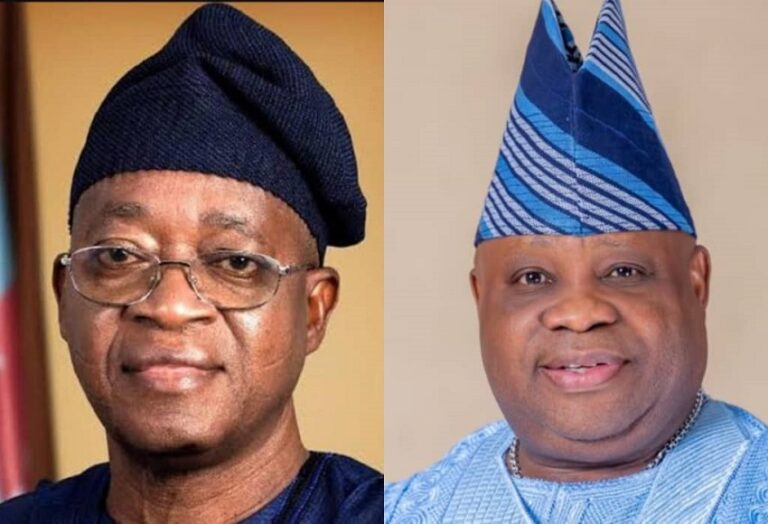
The state governor, Ademola Adeleke, raised concerns on Sunday, February 16, about a plan by the Minister of Marine and Blue Economy, Gboyega Oyetola, and certain security agency heads to enforce the ruling and urged the public to hold them accountable for any violence that arose after the action.

However, violence erupted on Monday as supporters of both parties clashed at local government secretariats across the state, resulting in deaths and injuries.

Witnesses reported seeing hoodlums armed with charms and weapons intimidating bystanders and smashing the phones of those recording the chaos.

The police were deployed to restore order in some areas, including Olorunda Local Government Area, where APC members’ attempts to take over the council secretariat were met with resistance.

The violence spread to various parts of the state, including Osogbo, where gunshots were heard at the gate of Osogbo Central Local Government Area.

However, both parties have traded accusations over the violence.

In a chat with The ICIR on Monday, the spokesperson to the governor, Olawale Rasheed, confirmed that six people died in the violence.

Meanwhile, the Inspector-General of Police (IGP), Kayode Egbetokun, has ordered additional officers to the state.

This was disclosed in a statement by police spokesperson Muyiwa Adejobi.

The police condemned the violence, describing it as a threat to democracy and public safety.

According to the statement, the newly deployed tactical squads will work alongside existing security operatives to restore law and order.

The IGP vowed to identify and prosecute those responsible for the violence and also issued a stern warning against further acts of lawlessness, hooliganism, and anarchy, assuring residents that security operatives would clamp down on anyone attempting to disrupt public peace.

The state governor and other prominent Nigerians have also expressed deep concerns over the violence and loss of lives in the state.

The ICIR reported on Monday that gunshots were fired in Osun State as supporters of the APC and the PDP clashed following the attempted reinstatement of sacked council chairpersons in the state.

Adeleke and Oyetola are at loggerheads over the interpretation of the Appeal Court’s ruling on the chairpersons who were elected on the APC platform but sacked by the Federal High Court in 2022. 

The ICIR reported on Sunday that Adeleke raised the alarm over a plot by Oyetola, a former governor of the state, to plunge the state into chaos by reinstating the sacked chairpersons.

He claimed that the “unlawful takeover” also had the backing of security agencies, including the Nigeria Police Force (NPF), the State Security Service (SSS), and the Nigerian Security and Civil Defence Corps (NSCDC).

Commenting further on the alleged plot, Adeleke noted that the controversy stemmed from the 2022 local government elections in Osun, which were nullified by two separate Federal High Court judgments.

According to Adeleke, the Court of Appeal struck out the PDP’s case against the chairpersons but did not issue any consequential order reinstating them.

The governor also said the judgment obtained by the Action Peoples Party (APP), which also sacked the local government officials, remained unchallenged by the APC.

Reacting to the claim that security agencies in the state were part of the plot to reinstate the sacked officials, the APC in the state, which confirmed its party would reinstate the officials, denied the involvement of security agencies in the plan.

Police declare Portable wanted over alleged violent attack on government officials

0

THE Ogun State Police Command has declared Nigerian singer Habeeb Okikiola Olalomi, popularly known as Portable, wanted for allegedly orchestrating a violent attack on government officials who were carrying out their lawful duties.

In a statement, on Monday, February 17,  by the command public relations officer, Omolola Odutola, the incident occurred on February 5, 2025, when officials from the Ogun State Ministry of Physical Planning and Urban Development’s Ota Zonal Office were conducting an enforcement exercise in the Oke-Osa, Tigbo Ilu Ota area.

The officials, identified as Onabanjo Abidemi, Raymond Lateef, and Ridwan Oyero Akinlesi, were said to be inspecting properties and requesting approved building plans when they encountered an elderly man at Portable’s bar (Odogwu Bar). 

According to the statement, the man, who later identified himself as Portable’s father, informed them that his son was not available to provide the required documents.

However, moments later, Portable allegedly arrived at the scene, leading a group of nine persons armed with firearms and other dangerous weapons. 

The assaulted officials subsequently reported the incident to the Ota Area Command, which escalated the matter to the State Criminal Investigation Department (SCID) for further investigation.

“The enforcement officers sustained various bodily injuries but managed to escape and reported the incident to the Ota Area Command, which subsequently escalated the case to the State Criminal Investigation Department (SCID) for further action.” the statement added.

Portable declared wanted after evading arrest

Following the attack, police operatives arrested nine of Portable’s alleged accomplices, who were later charged in court. However, the singer fled the scene and has since refused to honour multiple police invitations, the police said.

According to Odutola, the Ogun State Police Command extended several formal invitations to Portable, requesting his presence at the command headquarters in Eleweran, Abeokuta. 

However, he allegedly ignored these requests, failing to appear voluntarily or send legal representation.

In response to his repeated evasion, the police noted that it had secured a court order declaring him wanted.

The command further urged members of the public to provide any useful information that could lead to his immediate arrest. 

It also warned that anyone found aiding or harbouring him would face legal consequences.

Nine accomplices arraigned in court

Two weeks ago, nine of Portable’s associates were arraigned before a Magistrate Court in Isabo, Abeokuta, on multiple charges, including felony, assault, unlawful restriction, possession of weapons, and conduct likely to cause a breach of public peace.

The defendants, Nurudeen Warris (21), Adetola Alashe (25), Samuel Adeleke (28), Oluwaseun Ayenuwa (19), Oluwapelumi Adeosun (20), Gospel Kanu (20), Precious Ohiegebo (19), Ifeoluwa Babatunde (27), and Fatimo Muhammed (26), however, pleaded not guilty to the charges.

Prosecuting the case, police prosecutor, Sunday Ekong, told the court that the accused persons, along with Portable, obstructed and assaulted the town planning officers while they were performing their official duties at Odogwu Bar. 

He further alleged that the group was armed and acted in a manner that could incite public unrest.

Ekong cited relevant provisions of the Ogun State Criminal Code Laws of 2006, stating that the defendants’ actions contravened Sections 516 (Conspiracy to Commit Felony), 356(3) (Assault on a Public Officer), 80 (Illegal Possession of Weapons), 249(d) (Conduct Likely to Cause a Breach of Peace), and 320 (Inflicting Bodily Harm).

After hearing the charges, O.M. Somefun, a magistrate, granted each defendant N5 million bail, with sureties of equal value.

The court ruled that the sureties must be licensed bondsmen registered with the Ogun State Government.

The case was adjourned to March 17, 2025, for further hearing. 

This is not the first time Portable has found himself embroiled in legal troubles. The singer, known for his controversial lifestyle and frequent confrontations with law enforcement and other Nigerians, has previously been involved in altercations with both security personnel and government officials.

In 2023, Portable was arrested for assaulting police officers and resisting arrest and was subsequently charged to court for assaulting men of the Nigeria Police Force. 

Similarly, in May 2024, Portable was arrested for refusing to pay the debt he allegedly owed a car dealer in Lagos State from whom he bought a G-Wagon vehicle.

The singer had allegedly purchased a G-wagon worth 27 million naira, paid 13 million naira and refused to pay the 14 million naira balance, claiming the car was bad.

Portable was arrested after the expiration of the 72-hour ultimatum given to him to turn himself in.