Home Blog Page 363

WAEC withholds 2,577 candidates’ results over alleged malpractice

0

THE West African Examinations Council (WAEC) has released the 2024 West Africa Senior School Certificate Examination (WASSCE) Second Series results for private candidates.

It however withheld the results of 2,577 candidates over alleged examination malpractice.

The WAEC’s acting head of public affairs, Moyosola Adesina, in a statement issued on Sunday, February 16, advised affected candidates to visit the organisation’s official portal to resolve their cases.

“Out of the total number of candidates that sat the examination, 62,354 candidates, representing 95.90 per cent have their results fully processed and released while 2,669 candidates, representing 4.10 per cent have a few of their subjects still being processed due to some errors traceable to them,” he said.

He further said that WAEC would investigate and evaluate reported cases including exhibits obtained, alongside candidates’ representations lodged on the portal and reports presented to the appropriate committee of the council for determination.

Performance analysis of the results released showed that 53.64 per cent of candidates secured five credits, including English and Mathematics, marking a 9.35 per cent improvement from the 2023 results.

The ICIR reported that in 2024, WAEC withheld over 215,000 candidates’ results over examination malpractice allegations.

Adesina said 65,023 candidates sat for the 2024 examination across 5,067 centres nationwide, noting that this represented a 20 per cent decrease compared to the previous year.    

What to know about private candidates

A WAEC private candidate refers to individuals who register independently to take the WASSCE, commonly known as the General Certificate Examination (GCE) or WAEC designed for those who are not enrolled in regular secondary schools or who wish to retake the WASSCE.

The examination was conducted between October 25 and December 20, 2024. It introduced a new computer-based hybrid mode alongside the traditional paper and pen option.

Out of the 65,023 candidates that sat for the examination at 5,067 centres spread across the country, 157 candidates, with varying degrees of special needs, were registered for the examination. 

The ICIR reported that WAEC announced a new initiative in January 2025, allowing students to resit their WASSCE papers quickly instead of waiting for nearly a year to resit for the examination.

How to mitigate economic impact of Trump’s policies on Nigeria – CPPE

0

THE Centre for the Promotion of Private Enterprise (CPPE) has suggested ways to mitigate the impact of United States (US) President Donald Trump’s policies on the Nigerian economy.

In a statement on Sunday, February 16, by its director/chief executive officer, Muda Yusuf, the CPPE posited that the Trump administration was having a remarkable change in the dynamics of global trade, global economic outlook and geopolitical trajectory.

The U.S. economy is also experiencing a record disruption in its economic, trade and political governance systems, said the organisation.

It submitted that the developments would have multi-dimensional implications for the Nigerian economy.

“There are immediate and remote consequences for energy prices, trade relations, economic diplomacy, macroeconomic stability, donor funding and capital flows,” it said.

The firm maintained that the evolving outcomes of the Trump presidency on Nigeria’s economy in the near term would be felt, including in the government revenue, crude oil budget benchmark, foreign exchange earnings, and inflation.

The CPPE explained that the heightened prospects of a drop in oil prices would negatively impact government revenue and foreign exchange earnings.

“This has implications for the outlook for revenue, fiscal deficit, government debt and exchange rate.

“The current budget benchmark of $75 per barrel may not stand in the circumstances,” it stated.

According to the organisation, the prospects of a strong dollar are very high with the Trump policies.

“There is an inverse relationship between the strength of the dollar and that of the other currencies.  A stronger dollar will mean a weaker naira.

“This may result in higher import costs for domestic investors and invariably become inflationary,” he said.

It argued further that the current tariff policies of the Trump administration would trigger inflation as the costs of imports into the United States surge, and the U.S. Federal Reserve could respond by tightening monetary policy, which would create a high interest rate scenario in the United States.

This could result in capital flow reversals, posing a risk to the naira exchange rate, it added.

Lesson for Nigerian government 

Stressing that the Trump administration policies would disrupt Nigeria’s economy, CCPE suggested the need for the government to commit more to the policy of self-reliance and less import dependence in critical areas of the economy, especially energy, food, pharmaceuticals and security.

Excessive import dependence poses a major risk to the economic and social security of a country, it warned.

“A key lesson from the disruption is that no country should be too dependent on others for its strategic needs. It has once again underscored the risk of overdependence on other countries. The COVID experience offered a similar lesson.

“Therefore, there is a need to ensure that policies of government are geared towards ensuring economic resilience that minimises vulnerabilities to external shocks.

It said supply chains should be localised as much as possible, asserting that the emerging new global order was progressively leaning towards economic nationalism, deglobalisation and economic fragmentation.

Domestic economic policies must be framed within the context of this reality, the CPPE said, urging the government to deepen backward integration through stronger intentionality to promote domestic production of goods and services and export development.

It believes the current economic reforms are already on course to ensure strategic structural shifts towards reducing dependence on imports.

“There should be a special emphasis on food security, energy security, health security and internal security, leveraging largely domestic resources.

“The government should urgently address current productivity shortcomings in the real sector to make domestic production competitive domestically and internationally,” it said.


Adeleke, Oyetola set for showdown in Osun over reinstatement of sacked LG chairpersons

0

THE Osun State Governor Ademola Adeleke has raised the alarm over an alleged plot by Minister of Marine and Blue Economy, Gboyega Oyetola, to plunge the state into chaos by reinstating local government chairmen sacked by courts in the state in 2022.

He claimed that the “unlawful takeover” also had the backing of security agencies, including the Nigeria Police Force NPF), the State Security Service (SSS), and the Nigerian Security and Civil Defence Corps (NSCDC)

Addressing journalists on Sunday, February 16, Adeleke warned of an imminent security crisis in the state, alleging that Oyetola, in collusion with the Osun State commissioner of police, the SSS, and the state commandant of the NSCDC, had perfected plans to reinstate the sacked LGA chairmen on Monday, February 17.

“The script Mr. Oyetola is playing is about the most reprehensible abuse of power in this Fourth Republic,” Adeleke stated, describing the move as a “fascist anti-democratic agenda” designed to enforce a “non-existent court judgment.”

Commenting further on the alleged plot, Adeleke noted that the controversy stemmed from the 2022 local government elections in Osun, which were nullified by two separate Federal High Court judgments.

According to Adeleke, the Court of Appeal struck out the Peoples Democratic Party’s (PDP) case against the chairmen who were elected on the All Progressives Congress (APC) platform but did not issue any consequential order reinstating them.

The governor also said the judgment obtained by the Action Peoples Party (APP), which also sacked the local government officials, remained valid and unchallenged.

He said he had yet to become the state governor when the chairmen were sacked.

“The only legal recourse open to the APC is to appeal the APP judgment at the Supreme Court,” Adeleke said.

He accused Oyetola, a former Osun governor and nephew of President Bola Tinubu, of exploiting his family ties with the president to strong-arm security agencies into executing an ‘illegal’ directive.

“The fact that Mr. Oyetola is the president’s nephew does not confer any authority on him to instruct security agencies,” he said.

He further alleged that secret meetings had been held to plan the forceful takeover of the local governments, warning of dire consequences if such an attempt is made.

“We will not allow any takeover except through a judicial pronouncement or a democratic process. The Nigerian public should hold Mr. Oyetola and the Osun security chiefs responsible for any breakdown of law and order,” he warned.

The governor called on Tinubu to intervene and prevent the “looming crisis’ by instructing the inspector general of police, the national security adviser, and the attorney general of the federation to ensure that the rule of law prevails.

NLC orders members to stay at home in Osun

Meanwhile, the Osun State chapter of the Nigeria Labour Congress (NLC), has directed local government workers to stay at home from Monday, February 17, following fears of a possible breakdown of order over the alleged plan by the former local government chairmen to return to office.

A statement signed by the NLC chairman in the state, Christopher Arapasopo, and made available to newsmen in Osogbo on Sunday, said the union had noticed the political tension in the state, leading to agitations and fear among its members working in the local government areas.

He stressed the need for the NLC to protect its members from being caught in the web of political conflict that could degenerate into violence in the local governments.

“The NLC is apolitical, but we won’t allow our members to work in an atmosphere of insecurity.

“We urge all political parties and their members to abide by the rule of law. We insist on the rule of law to avoid a descent into anarchy.In furtherance to this, we hereby direct all our members working in all the LGAs in Osun State to withdraw their services effective Monday, 17th February 2025 by midnight.

“We won’t allow our members to return until their safety at work can be assured and guaranteed, which is their constitutional right,” the statement stated.

The NLC further called on all security agencies in the state to ensure the safety of all lives and properties in the local governments and across the state.

“The NLC Osun State remains committed to defending the rights, welfare, and safety of all its members,” the group added.

Oyetola is implementing court’s ruling – APC 

Reacting, the Osun State APC affirmed that Oyetola wanted the chairmen to return to office but denied issuing orders to the police, NSCDC and SSS.

The party said the security agencies knew how best to discharge their duties, and would not wait to be directed to be told.

The party’s spokesperson in the state, Kola Olabisi, accused Adeleke of resorting to blackmail and directed him to proceed to the Supreme Court to get the interpretation of its ruling on the matter.

“Oyetola has not instructed anyone, including security chiefs, on how to do their job. Adeleke should know that blackmail or sentiment will not change the court’s decision,” Olabisi stated.

He argued that the APC-led local government officials were unjustly removed in 2022 and had now been lawfully reinstated through the courts.

“The court has spoken, and those affected by Adeleke’s actions have been left out in the cold for too long. Now that justice has been served, as the leader of the Osun APC, Oyetola is committed to ensuring the ruling is implemented,” he added.

Olabisi said the APC would remain law-abiding but would also ensure that the court’s verdict was upheld.

“Court of law has spoken, and the verdict must be obeyed. So, he should stop this blackmail because that will not work here. As for us in APC, we will remain law-abiding, but we won’t sleep on our right,” he concluded.

Politicians defecting to APC driven by stomach infrastructure – Tambuwal

FORMER Sokoto State governor, Aminu Tambuwal, has described recent defections of some members of the Peoples Democratic Party (PDP), to the ruling All Progressive Congress (APC), as driven by ‘stomach infrastructure’ 

Tambuwal argued that no politician with a conscience would join the APC, given the country’s current economic challenges.

Speaking with journalists after the North-West Zonal PDP meeting in Kaduna on Saturday, February 15, he attributed the defections to personal gains rather than public interest.

“People leave parties for different reasons, but what I have observed recently are defections motivated not by the people’s interest, but by personal benefits,” he said.

Tambuwal, who represents Sokoto South Senatorial District in the Senate, questioned the justification for these moves, insisting that aligning with the APC amid its policies and the economic hardship Nigerians face lacked moral grounding.

“I believe no one with a conscience will join the APC. With the current policies being driven by the APC government, the economic doldrums it has plunged Nigerians into, the hardship across the country, and the dismal performance of Tinubu’s administration, there is nothing attractive beyond stomach infrastructure.

“Defections based on stomach infrastructure are not worrisome. But all of us who believe in this country and in serving the people must unite and work towards ensuring that by 2027, we vote out this administration that lacks focus, compassion, and direction,” he added.

The senator called on PDP members and Nigerians to unite in efforts to defeat the APC in 2027.

Meanwhile, the North-West PDP has pledged to sack the APC from power in the next election.

According to a communiqué read by the North-West Zonal chairman, Bello Gwarzo, the party said it’s committed to promptly resolving all conflicts at the national level.

Recall that three House of Assembly members elected on the platform of the Peoples Democratic Party in Kaduna State defected along with their supporters, to the All Progressives Congress.

The three lawmakers are Henry Mara ( Jaba Constituency), Emmanuel Kantiok (Zonkwa Constituency), and Samuel Kambai (Zango constituency).

They announced their defection on Thursday, February 13, at their various wards.

Similarly, several PDP and other party members defected to the APC in the state on Saturday, February 15.

[EXPLAINER] What are the requirements, procedures for creating new states in Nigeria?

THE House of Representatives Committee on Constitution Review on Thursday, February 6, proposed the creation of 31 additional states across Nigeria.

If approved, it would increase the number of states in Nigeria to 67.

During the plenary session, deputy speaker Benjamin Kalu, who presided in the absence of the speaker, Tajudeen Abbas, read a letter outlining the recommendations of the committee.

Kalu detailed the proposed distribution of the new states, with six allocated to the North Central, four to the North-East, five to the North-West, five to the South-East, four to the South-South, and seven to the South-West.

The proposed new states are New Kaduna and Gujarat from Kaduna State, FCT State, Tiga and Ari from Kano, Kainji from Kebbi State, and Etiti, Orashi, Adada, and Orlu from the South-East.

Others are Okun, Okura, and Confluence states from Kogi; Benue Ala and Apa states from Benue; Amana state from Adamawa; Katagum from Bauchi state; Savannah state from Borno; and Muri State from Taraba.

Also included are Lagoon from Lagos, Ogun, Ijebu from Ogun State as well as Oke Ogun/Ijesha from Oyo/Ogun/Osun States, Ogoja from Cross River State, Warri from Delta, Ori and Obolo from Rivers, Torumbe from Ondo, and Ibadan from Oyo State.

History of state creation in Nigeria

Nigeria currently has 36 states and the Federal Capital Territory (FCT). All the states were created by military heads of state.

It must be noted that no civilian president has ever succeeded in creating any state in Nigeria.

In 1967, former Military Head of State, Yakubu Gowon created 12 states through a military decree. The states he created are the North-Western State, the North-Eastern State, Kano State, Kaduna (North Central), Benue-Plateau State and Kwara State.

Others are the Western State and Lagos State the former western region was split into two States: The former Mid-Western region became the Mid-Western State, while the former eastern region had three new States carved out from it. These were Rivers State, South-Eastern and the East Central State.

In 1976, Murtala Mohammed’s military government created another seven new states, making it 19. The states are Anambra, Bauchi, Benue, Imo, Niger, Ogun and Ondo.

This was followed by two new states in 1987 and another nine new states in 1991, by the Ibrahim Babangida military regime to make it 30 states.

The states created by Babangida are Akwa Ibom, Katsina, Abia, Enugu, Delta, Jigawa, Kebbi, Osun, Kogi, Taraba and Yobe.

The last time Nigeria created new states was in 1996, by the late Sani Abacha, a general.

Abacha created six new states namely Bayelsa, Ebonyi, Ekiti, Gombe, Nasarawa and Zamfara.

Rigorous process of state creation

The House during its session outlined a rigorous process that must be followed to meet the constitutional requirements for the creation of new states in Nigeria.

The process involves securing the approval of at least a two-thirds majority in the National Assembly, as well as endorsements from the House of Representatives, State Houses of Assembly, and Local Government Councils.

In accordance with Section 8 of the Nigerian Constitution, any new state creation must be preceded by a referendum conducted by the State Houses of Assembly.

The proposal also called for the resubmission of proposals in line with the prescribed guidelines, which includes submitting hard copies and electronic copies of memoranda to the committee’s secretariat.

Constitutional requirement

The process of creating new states in Nigeria is a complex and multi-layered one, governed by Section 8 of the Nigerian Constitution.

To understand the requirements and procedures involved, it is essential to carefully examine the provisions of this section.

According to an Ilorin, Kwara state-based lawyer, Moshood Ibrahim, the issue of state creation is a very complex procedure.

“The procedure is so complex that it will be so difficult for any democratically elected government to achieve the creation of a new state. No wonder most of our states were created by the military dictators,” Ibrahim stated.

According to the lawyer, the journey to creating a new state begins with the submission of a bill or request to the National Assembly by the interested parties.

This bill must then be voted on by members representing the areas in question at the national assembly, house of representatives and states house of assembly, with a two-third majority required in both the House of Representatives and the Senate.

Once this hurdle is cleared, the bill is sent to the State House of Assembly and Local Government Council of the area in question, where it must again receive a two-third majority vote. If the bill is successful at this stage, it is then forwarded to the President for assent.

However, the process does not end there. The proposal for the creation of a new state must also be approved by the citizens of the area in question through a referendum conducted by the Independent National Electoral Commission (INEC). For the referendum to be successful, a two-third majority of the people in question must consent to the creation of the new state.

The result of the referendum must then be approved by all states of the Federation through their respective Houses of Assembly, with a simple majority required.

Finally, the President must give his assent to the referendum, marking the final step in the process of creating a new state.

In a nutshell, the creation of additional states involves the following procedures:
  1. Submission of a bill to the National Assembly
  2. Voting by members representing the areas in question, with a two-thirds majority required
  3. Approval by the State House of Assembly and Local Government Council, with a two-thirds majority required
  4. Approval by citizens of the area in question through a referendum, with a two-thirds majority required
  5. Approval by all states of the Federation through their respective Houses of Assembly, with a simple majority required
  6. Final assent by the President
  7. By following these steps, a new state can be created in Nigeria, in accordance with the provisions of the Nigerian Constitution.

Outrage as another lady allegedly killed for ritual in Kwara

0

NIGERIANS on social media have expressed outrage over the murder of one Lawal Yetunde, a young lady and private school teacher, allegedly by a cleric Abdulrahman Ballo, in Kwara State. 

Social media users, particularly on X, voiced their anger after details emerged that the cleric had lured the young lady from Facebook, killed and dismembered her body at a rented apartment in the Olunlade area of Ilorin South Local Government Area.

Already, the state residents and netizens have called for accountability while also demanding that authorities act decisively to end growing ritualistic crimes in Nigeria.

The incident

According to reports, Yetunde, who had just secured a teaching job at a local nursery and primary school, was last seen on Monday, February 10, when she returned from work at about 12.30 pm and attended a naming ceremony.

However, at the ceremony, she abruptly left her food to answer a call and was not seen afterwards.

The suspect was said to have lured Yetunde after connecting with her on Facebook and obtaining her phone number.

Her disappearance immediately sparked concerns as family members and friends searched for her before later reporting her disappearance to the police at the Oja Oba station in Ilorin on Tuesday, February 10.

The deceased’s father, Ibrahim Lawal, while speaking with journalists, shortly after the funeral prayers, said that the police used her phone line to track her call records. 

Tracing her final call led the police to Ballo, who lives in the Offa Garage area of Ilorin, although his family home is in Isalekoto.

“We didn’t see her return on that day and she didn’t sleep at home. We reported at Oja-Oba Police Station on Tuesday that she was missing from home after 24 hours.The tracking of her phone revealed that she was called on the phone by the suspect who later confessed that he murdered her,” Lawal said.

Although he initially denied any involvement, Bello later confessed that the lady died of an asthma attack after police discovered dismembered remains hidden in a bowl, along with the tools used in the dastardly act.

“Some of the items which included horn, black soap, and charms recovered by the police from the room apartment of the suspect clearly showed that Hafsat, who is my second daughter, was murdered for ritual purposes”, the father added.

The ICIR reports that the incident adds to a growing list of such crimes in Nigeria.

Earlier in January this year, The ICIR reported how Eliojo Salomey, a 24-year-old serving National Youth Service Corp (NYSC) member based in Mararaba, a fast-growing community near Abuja, was allegedly butchered by her boyfriend, a gospel singer, Timileyin Ajayi.

Ballo arrested 

Confirming Ballo’s incident, the spokesperson of the Kwara State Police Command, Adetoun Ejire-Adeyemi, said investigations were ongoing into the case.

According to her, “The police detectives swung into action, tracked her number and arrested a suspect, and exhibits recovered. 

She added that the case was transferred yesterday to the state Criminal Investigation Department (CID), for discreet investigations.

Nigerians react

Meanwhile, the incident has ignited reactions from Nigerians as they decried the prevalence of ritual killings while also demanding that authorities take decisive actions against the practice.

A social media user and resident of the state with the handle Mufti of Ilorin online, while bemoaning the killing of Hafsat, urged “respected figures in Ilorin and Kwara State to ensure that justice is served and to support the victim’s family in its pursuit of justice.

“These heinous ritual killings must be addressed. Our sisters continue to fall victim, and our parents are left to mourn. This cycle of violence will persist until perpetrators face the ultimate consequence – death penalty – for their crimes. It’s utterly disheartening that we’re compelled to clarify that women are not romantically involved with their murderers. The reality of what’s happening to women is truly disturbing,” he wrote.

Another user, @teabisz, wrote: “You see, prayer alone is not enough at this point. If she must get justice, we must collectively stand up and not even for her nor the family, but because we do not know who their next target is if eventually the table turns.”

Also, another X user @iamthepreence said the suspect must be investigated thoroughly as he might be working for ‘Yahoo Boy’ (ritualists) or selling the human parts.

“This guy is either selling human parts or working for those G-boys. They need to drill him well and get many more working together (with him). Wicked soul,” he wrote.

A yet another X user, @Oladapomikky1, advised people to exercise caution in meeting people they do not know.

“It is not safe to go and meet a stranger in a private place. Anyone you are meeting for the first time should be in a public place and the location should be your choice.”

Mob kills two suspected one-chance robbers in Abuja

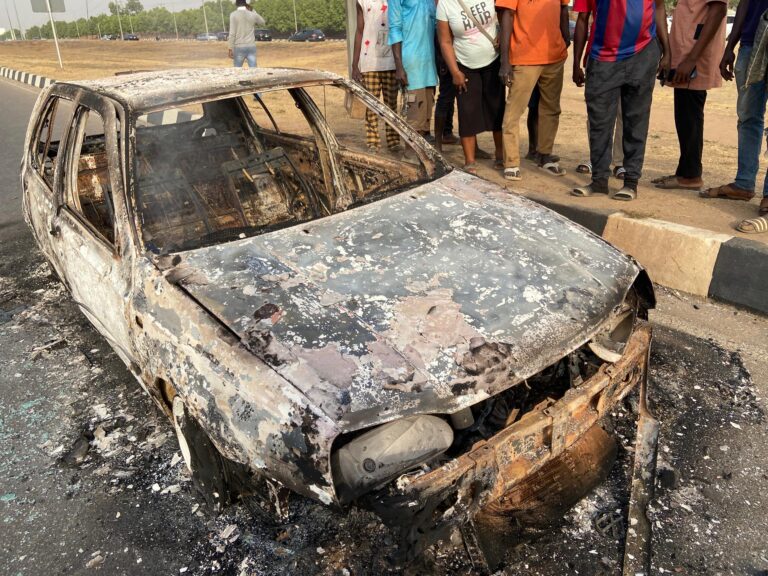
AN angry mob has killed two suspected “one-chance” robbers along the Umaru Musa Yar’Adua Expressway in Abuja after they allegedly robbed and pushed a female victim out of their moving vehicle.

The incident, which occurred around 3 p.m. on Saturday, February 15, started when the suspects, operating in a commercial vehicle, allegedly robbed a woman traveling from the Gosa area toward the city.

After dispossessing her of her belongings, they forcefully pushed her out of the moving car, eyewitnesses told The ICIR.

An eyewitness, who requested anonymity, told The ICIR that the woman narrowly escaped being crushed by another vehicle that was trailing the robbers.

“The vehicle behind them almost ran over the woman, but thank God, the driver managed to stop just in time,” the eyewitness said. “That same driver then started chasing the robbers while honking to alert other road users.”

As the pursuit continued, more motorists and bystanders joined in. Their escape attempt ended at ACO Estate Junction when another motorist blocked their path as they tried to make a U-turn back toward Gosa.

The suspects immediately abandoned their vehicle and attempted to flee on foot, but the growing mob quickly overpowered them.

According to the eyewitness, one of the suspects was intercepted first and beaten severely before being set ablaze. Meanwhile, the second suspect was thrown into a roadside gutter, where he remained motionless, leading many to assume he was dead.

However, upon closer inspection, the eyewitness, who had been videoing the events, realised the suspect was still alive.

“I went closer and saw that he was just sitting in the gutter. I started recording again, and people were asking him questions,” the eyewitness recounted. “They asked for his name, but he refused to say. When they asked where he was from, he said Ogun State. They also asked if he was Yoruba, and he confirmed it.”

While the interrogation continued, members of the mob who had initially assumed he was dead began gathering again. Within moments, the aggression resumed.

“They started coming back, one by one,” the eyewitness said. “Then they poured fuel on him, intending to set him on fire like they did with the other one.”

Sensing imminent death, the suspect attempted to escape. He staggered out of the gutter and ran toward a nearby church, Foundation of Truth Assembly (FOTA), possibly seeking refuge. However, his frail condition made it easy for the mob to recapture him.

“He was very weak because they had already beaten him badly before,” the eyewitness added. “As he approached the church, someone shouted that they shouldn’t kill him there. So, they dragged him away from the church premises to another property nearby.”

There, the mob continued their assault, pelting him with stones until he succumbed to his injuries.

Police, and military reportedly looked away

A military convoy and a police patrol vehicle reportedly passed by the scene while at least one of the suspects was still alive, but they did not intervene.

“I saw an Air Force convoy passing while both men were still alive,” the eyewitness revealed. “Later, after the first one had died, I saw a police patrol vehicle heading toward City Gate. It was on the same lane where the car had burned, but the officers did nothing.”

Many bystanders, including the eyewitness, expressed frustration at the police’s failure to act. “I wasn’t even asking them to rescue him,” the eyewitness said. “At least they could have arrested him to get more information about their gang. These one-chance robbers are a serious menace. I’ve been a victim myself.”

Before the second suspect was killed, he reportedly admitted to being part of a gang of about ten people who had been operating in the area for two years. When asked how many victims he had killed, he allegedly confessed to killing two people.

The ICIR reported that one-chance robberies remain a persistent menace in Abuja, with criminals posing as commercial drivers to lure, rob, and sometimes kill unsuspecting passengers.

Nigeria to absorb 28,000 US-funded health workers – Pate

0

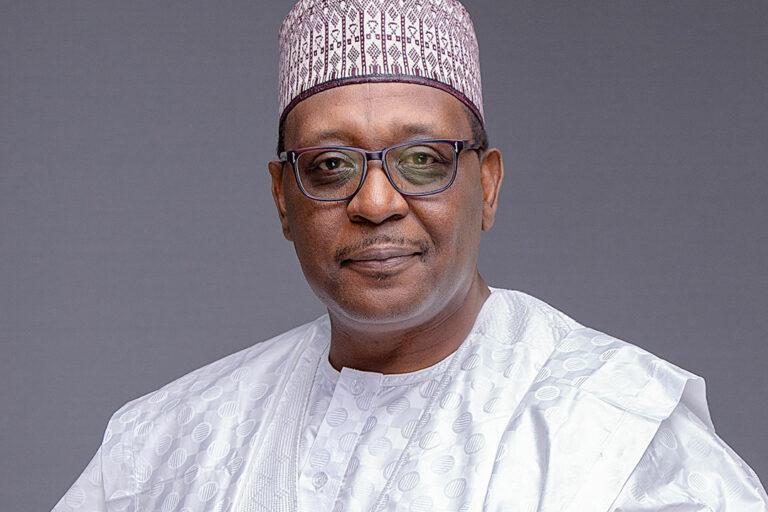
THE Coordinating Minister of Health and Social Welfare,  Ali Pate, has announced Nigeria’s plan to integrate 28,000 health workers formerly supported by US funding into its national healthcare system.

Pate, said this, on Channels Television’s Hard Copy programme, late Friday, February 14, monitored by our correspondent, where he outlined the government’s plan to ensure that the gains made in combating HIV, tuberculosis, and malaria, are preserved as the US government repositions its funding priorities.

The minister stressed that while the Nigerian government, including the state government, is keying to invest more money in healthcare, the private sector actors, the hospitals, and the pharmaceutical industry need to also rise. 

This, according to him, will make Nigeria’s healthcare system serve Nigerians and potentially even serve other parts of our continent.

“Our total health spend in Nigeria, the total health exposure: 30 per cent is public, 70 per cent is private. So, the component of overseas development assistance for health is not the largest chunk of our health expenditure.

“It has been significant. We’re a very large country and while we talk about the total health expenditure overall 70 per cent is domestic private and the 30 per cent that comprises the public as well as the overseas development assistance, I will say about $67 per capita is what the external development assistance is about. Now, that is about $67 per capita if you multiply by 200 million Nigerians, that’s about the figure,” the minister said.

Pate further stressed that the US government had contributed significantly to Nigeria’s healthcare, citing support for HIV, TB, and malaria.

He, however, noted that much of those resources are not channeled through government systems, adding that they’re channeled through implementing partners outside government.

Notably, the policy shift, which has led to a significant reduction in US support for health initiatives, has been a growing concern for many Nigerians, including public health stakeholders. 

Recall that following the controversies surrounding the HIV and other diseases funding by the U.S. the Federal Executive Council (FEC) on Monday, February 3, approved N4.8 billion for the procurement of 150,000 HIV treatment packs to support Nigerians living with the virus.

The ICIR reports that the HIV fund came days after global concerns over the temporary suspension of United States foreign aid funding, which threatened access to lifesaving antiretroviral therapy (ART) among others, for millions of people, including Nigerians.

The freeze, introduced by  President Donald Trump’s administration, had raised fears of treatment disruptions in Nigeria, one of the countries heavily reliant on the President’s Emergency Plan for AIDS Relief (PEPFAR).

Meanwhile, following advocacy from global health organisations, the US granted a waiver for HIV treatment programs, ensuring continued medication supply for affected patients.

Speaking of the support, expressed gratitude for the contributions made by the American people, who, he said, have supported over 1.3 million Nigerians with essential therapies.

However, he stressed that Nigeria must now take ownership of its healthcare destiny.

Minister Pate emphasised that with the current US policy transition, Nigeria is accelerating efforts to build a resilient, self-reliant healthcare system. 

The Federal government is going to do its part. For states, we expect that they will also step in because many things happen at the state level on HIV, TB, or malaria. There are health workers, 28,000 of them who were been paid through US government support. While it has been appreciated, those health workers are Nigerians. We have to find ways to transmit them.

“Our approach, long before the change in US policy has been towards increasing national ownership, increasing domestic resources, improving our healthcare value chain and producing what we use, strengthening our resilience through surveillance, laboratory systems so that we deal with infectious diseases,” he added.

Over 11,500 underage candidates register for 2025 UTME, says Registrar

0

THE Registrar of the Joint Admissions and Matriculation Board (JAMB), Ishaq Oloyede, has disclosed that more than 11,553 underage candidates registered for the ongoing 2025 Unified Tertiary Matriculation Examination (UTME). 

The announcement came during an inspection of approved computer-based test centres in Lagos on Friday, where Oloyede detailed a registration surge that has already seen 782,027 candidates sign up in the past 10 days.

Oloyede said: “Now, we have registered 782,027, and 11,553 of them are underage. So, you can see that as we are registering, the system is reporting from all over the country. Out of the expected two million candidates, we’re not yet at the 14th day.

“Monday will mark our 14th day. So, in two weeks, we would have completed about half of our registration process, and by that time, we expect to have over one million candidates registered. So far, everything has been smooth.”

He noted that on Friday alone, 443 underage candidates were recorded among 18,813 registered that morning. 

According to him, some parents register their children due to peer pressure.

“Today alone, we have 443 underage candidates, and out of the 18,813 registered this morning, 443 are underage. This year, we’ve introduced a system that allows us to identify and track underage candidates.

“This will help us understand their issues and even identify those who might be genuinely gifted but still underage,” he added.

The surge in underage registrations coincided with broader debates on admission age in Nigeria’s tertiary institutions.

In 2024, the Minister of Education, Tahir Mamman, faced criticism for his initial directive to bar candidates below 18 from admission—a policy later revised to admit candidates aged 16 and above following appeals from stakeholders.

Mamman, at the 2024 admission policy meeting organised by JAMB, in Abuja on Thursday, July 18, directed JAMB and tertiary institutions to stop admitting under-18-year-old candidates into higher education programmes.

Mamman gave the order, decrying the activities of some parents, whom he said pressured their underage wards to get admission into tertiary institutions.

“JAMB is hereby instructed this year to admit only eligible students. That is those who have attained 18 years by our laws,” the minister said.

The minister emphasised that his stance is supported by Nigeria’s law governing admissions into tertiary institutions, noting that admission bodies should recognise this requirement without being directed to obey it.

His announcement sparked mixed reactions among vice-chancellors, rectors, and registrars present at the meeting, with some stakeholders present at the meeting protesting the new minimum admission age.

However, during the review of the memorandum for the same 2024 policy meeting on this year’s admissions, Mamman later called for the adoption of 16 years.

The minister agreed that candidates aged 16 and above would be admitted, acknowledging that many of these underage candidates had already taken the UTME without prior knowledge of the directive.

NNPCL dismisses video on fuel quality, threatens legal action

0

THE Nigerian National Petroleum Company Limited (NNPCL) has refuted claims in a viral video alleging that fuel gotten directly from the Dangote refinery lasts longer in engines than the ones sold at its retail stations.

A social media influencer, Ayo Bankole posted a video showing him purchasing the same quantity of fuel from MRS and NNPCL. He then poured the fuels on two different generators, put them on, and set a timer.

According to him, the generator filled with NNPCL fuel lasted for only 17:51 while the one filled with MRS fuel lasted for 30:51.

Reacting to the video in a statement on Saturday, February 15, signed by the chief corporate communications officer of NNPCL, Olufemi Soneye, the national oil company described the experiment as “unverified and amateur research” lacking scientific credibility.

The NNPCL assured Nigerians that its petrol is formulated to meet global standards, ensuring efficiency and durability for consumers.

“A significant percentage of the fuel sold at NNPC retail stations in Lagos—where the viral video originated—is sourced from the Dangote Refinery, which adheres to strict industry standards,” the statement read in part.

The company accused unnamed “economic saboteurs” of attempting to mislead the public and tarnish its reputation, warning that it would take legal action against individuals or groups found spreading false information about its products and operations.

“The company will not tolerate deliberate misinformation designed to undermine its operations and mislead Nigerians,” it said.

It further urged consumers to disregard the viral claims and rely on verified sources for accurate information, reiterating its commitment to ensuring the availability and quality of petroleum products across the country.