Home Blog Page 37

IPI Nigeria unveils Press Freedom Hub as media crackdown concerns mount

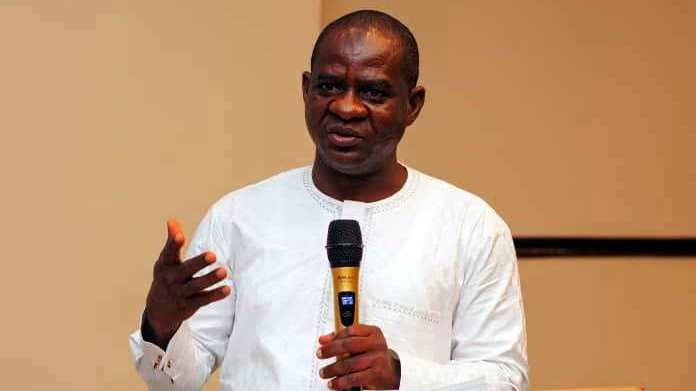
THE International Press Institute (IPI) Nigeria has announced plans to commission a new Press Freedom Hub in Abuja as part of activities to commemorate 2026 World Press Freedom Day.

In a statement on May 4, the organisation said the facility, located along Kado Expressway, Abuja, would be officially opened on Wednesday, May 6.

IPI Nigeria is affiliated with the International Press Institute, a global network of editors, media executives, and journalists operating in over 100 countries.

Established in 1950, the organisation has played a significant role in promoting press freedom worldwide.

According to IPI Nigeria’s Secretary, Ahmed Shekarau, the new headquarters will serve as a central base for advancing press freedom and supporting journalists and media professionals across the country.

“The centre will anchor our media advocacy programmes and accelerate efforts to promote press freedom and protect journalists facing threats and censorship,” the President of IPI Nigeria, Musikilu Mojeed, said.

Mojeed added that the hub would also function as a platform for periodic assessments of media freedom and journalist safety, while promoting policy and legal reforms aimed at strengthening independent journalism.

He noted that it would further provide a space for dialogue between the media and government institutions.

The development is against the backdrop of persistent harassment, intimidation, and arrests of journalists in Nigeria.

The ICIR reports that in recent years, media practitioners have reported increasing pressure from security agencies and public officials, with cases ranging from unlawful detention to the use of cybercrime and defamation laws to silence critical reporting.

According to a recent report by the Reporters Without Borders (RSF), Nigeria currently ranks 112th out of 180 countries in the 2026 World Press Freedom Index.

US, Iran may resume hostilities as ceasefire falters

0

TENSION is rising again between the United States (US) and Iran, following fresh attacks around the Strait of Hormuz, a key route for nearly 20 per cent of global oil movement.

In Dubai, authorities confirmed that US forces engaged Iranian units on Monday while trying to reopen the waterway. During the operation, American helicopters brought down six small boats after they moved close to vessels under protection.

US Central Command leader, Brad Cooper, an admiral, said the boats were part of a wider attempt to disrupt shipping. He explained that Iranian forces also launched cruise missiles, drones, and small boats toward civilian vessels being escorted by the US.

The operation also saw two American-flagged commercial ships pass through the Strait safely, as part of a new plan to move stranded vessels out of the area.

Iran, however, pushed back. A military official denied the US account, while state media described the American move as part of Trump’s ‘delirium.’

The situation quickly spread beyond the water. The United Arab Emirates (UAE) reported that it came under attack for the first time since the ceasefire began early April.

According to the UAE Defence Ministry, four cruise missiles were launched. Three were intercepted, while one fell into the sea. In Fujairah, a drone strike caused a fire at a major oil facility and left three Indian workers injured. At the same time, the British military reported two cargo ships burning off the UAE coast.

The UAE authorities also issued missile alerts, asking residents to seek shelter – the first such warning since the ceasefire started. Some flights heading into the country were forced to turn back mid-air.

The Strait of Hormuz, which lies between Iran and Oman, has remained tense for weeks. Iran had earlier restricted movement through the route, leading to a rise in global fuel prices and concern across international markets.

Despite US efforts to reopen the passage, many shipping companies remain cautious. Iran has already warned that any foreign military presence in the area would be treated as a threat.

Meanwhile, Washington has continued to apply pressure through a naval blockade, stopping dozens of ships from reaching Iranian ports since mid-April.

Diplomatic efforts are still ongoing, but there are signs of slow progress. Iran is asking for sanctions to be lifted, the blockade to end, and foreign troops to leave the region.  However, the US has yet to show clear agreement, and talks remain uncertain.

The ICIR reported that US President Donald Trump had paused strikes on Iran while maintaining a naval blockade, saying the move followed a request from Pakistani mediators to allow talks to continue.


Nigerians to face continuous security vetting after visa approval – US

THE United States Mission in Nigeria has announced that all visa applicants, including Nigerians, are subject to security checks even after their visas have been approved.

In a statement shared on its official X account on Monday, the mission explained that visa security vetting is a continuous, multi-layered process.

“All visa applicants, no matter the visa type and where they are located, are continuously vetted. Security vetting runs from the time of each application, through adjudication of the visa, and afterwards during the validity period of every issued visa, to ensure the individual remains eligible to travel to the United States,” the statement read.

The mission explained that security vetting is used by US authorities to assess applicant’s background, including criminal history, potential security risks, and other factors.

It added that the vetting applied to all applicants regardless of visa type or location and is intended to ensure that applicants are eligible to travel to the United States.

The ICIR reports that the development comes amid growing concerns over a travel policy introduced by former US President Donald Trump in December 2025, which placed Nigeria on a list of countries facing partial entry restrictions into the United States.

On December 16, 2025, the White House announced a sweeping expansion of US travel restrictions affecting dozens of countries. Nigeria was not fully banned but placed under partial restrictions, limiting Nigerians’ entry for several visa categories, including B-1/B-2 business and tourism visas, and F, M, and J student visas. It cited concerns over national security, visa overstays, and gaps in identity verification systems.

Nigeria was grouped among about 15 countries facing partial restrictions, while others, mostly in Africa and the Middle East, faced outright bans.

Washington cited terrorism threats, religious violence, and instability as part of the broader justification for tightening immigration controls involving Nigeria.

In late December 2025, Trump recalled several ambassadors across Africa, including its envoy to Nigeria, Richard Mills Jr, as part of a wider policy shift by the Trump administration which affected nearly 30 diplomats globally. The policy aimed at restructuring the country’s foreign service and installing new envoys aligned with its agenda.

Following Mill Jr’s departure in January 2026, the US embassy in Abuja has since been led by a chargé d’affaires, reflecting a temporary downgrade in diplomatic representation.

The ICIR reported that the mission said in March 2026 that visa restrictions were not permanent. It added that travel policies remained under review and could be eased if security and identity management standards improved.

It further noted that strengthening systems around screening, vetting, and information-sharing would enhance global safety, suggesting that Nigeria could see changes in its status if it meets required benchmarks.

Court remands influencer ‘Justice Crack’ in SSS custody

0

A FEDERAL High Court in Abuja on Monday, May 4, ordered the remand of social media influencer, Justice Chidiebere, popularly known as “Justice Crack,” in the custody of the State Security Service (SSS) over alleged cybercrime-related offences.

Chidiebere was arraigned on a three-count charge bordering on cybercrime, breach of public peace and felony. He pleaded not guilty to the charges.

During the court session, prosecution counsel, Mark Oruba, urged the court to remand him in SSS custody on security grounds, but the defence opposed the request, noting that he intended to file bail application later this week. 

In a brief ruling, the presiding judge, Joyce Abdulmalik, granted the application and adjourned the case until May 25 for trial and hearing of the bail request.

According to reports, tension broke out at the court premises as a group of youths blocked SSS operatives from taking the defendant away.

The protesters formed a human barricade, chanting “Free Justice Crack” and demanding his release. 

Reports further indicated that security operatives made several attempts to move through the crowd without using force. After a brief standoff, they succeeded in escorting the defendant into a waiting vehicle and left the premises.

Background

The case followed growing controversy surrounding the influencer’s recent social media posts on the welfare of Nigerian soldiers.

Chidiebere, known for his commentary on public affairs, had shared viral videos in late April in which some soldiers complained about poor feeding and treatment in conflict areas. The posts sparked widespread reactions online.

Amid the backlash, he was reported missing on April 28 after leaving his Abuja residence, with his family raising concerns over his whereabouts.

The Nigerian Army later confirmed his arrest, stating that he was picked up alongside some soldiers featured in the videos. While the soldiers remain in military custody for internal disciplinary processes, the Army said the influencer was handed over to civil authorities for further investigation.

In a statement released by the Army Acting Director of Public Relations, Appolonia Anele, a colonel, the military stated that the activist was being investigated for a potential breach of the Armed Forces’ Social Media Policy.

The military authorities alleged that Chidiebere’s interactions with the soldiers went beyond reporting welfare issues, claiming he actively incited personnel toward acts of subversion. 

“Preliminary report reveals that the soldiers discussed wide range of issues with Justice Chidiebere who seemed to be inciting soldiers to create discontent within the system. An example was a chat bothering on subversion which Chidiebere had with the soldiers,” she stated.

It further emphasised the danger of such interactions, stating, “A situation where civilians cultivate vulnerable personnel towards acts of subversion has far-reaching implications on discipline and national security.”

PDP crisis deepens as Makinde bloc names Turaki caretaker chairman

THE crisis within the Peoples Democratic Party (PDP) has further deepened as the faction aligned with Oyo State Governor Seyi Makinde appointed Tanimu Turaki, a senior advocate, as the chairman of its 13-member caretaker committee.

The decision was taken at the factional 103rd National Executive Committee (NEC) meeting held on Monday, May 4, in Abuja, amid continued leadership tussles within the opposition party.

The meeting, according to a Punch report, followed a motion moved by Edo State PDP Chairman, Tony Aziegbemi, and seconded by ex-officio member, Clement Fagboyede. 

Taofeek Arapaja was named National Secretary, while other members of the committee include Daniel Ambrose, Hamza Abuya, Ihediwa, Isah Abubakar, Theophilus Dakashan, Ini Ememobong, Aribisala Adewale Idowu, Baru Shaffi and Okechukwu Obiechina.

The latest development comes against the backdrop of a deepening internal crisis in the PDP, which has seen rival factions battle for control of the party’s structure ahead of the 2027 general elections.

The dispute gained fresh momentum following a recent Supreme Court ruling that nullified the Ibadan convention organised by Makinde-backed faction of the PDP in November 2025. The court had lampooned the faction for disobeying subsisting court orders.

The convention produced a National Working Committee led by Turaki. The court also struck out the majority judgment of the Court of Appeal, which in December had upheld the removal of Samuel Anyanwu as the PDP’s national secretary.

Following the judgment, both Makinde and Minister of Federal Capital Territory (FCT) Nyesom Wike-aligned blocs have continued to assert control over the PDP, with each side interpreting the ruling in its favour.

While the Makinde faction has insisted on restructuring the party through its organs, the camp loyal to the minister maintained that the Supreme Court decision validated its control and structures.

The ICIR reported the Turaki-led group’s Board of Trustees announced its readiness to assume the party’s leadership.

The BoT, through a statement by its charman, Adolphus Wabara, a former senator, said it would assume the PDP’s leadership to avoid a vacuum, and “pursuant to the empowering provisions of the constitution of the PDP (As amended in 2017)”

It posited that the Supreme Court verdict nullified both the Ibadan Convention and the Wike-backed convention in Abuja.

Similarly, The ICIR reported that shortly after the Supreme Court verdict, Wike addressed a press conference where he claimed that the ruling had resolved all disputes surrounding the party’s leadership structure.

“Today, the Supreme Court has brought to an end the so-called factions of the PDP. There is no more faction in the party. There is only one PDP. The Supreme Court has validated our (Abuja) Convention and set aside all claims to any parallel structure. What this means is that the PDP has come to stay as one united party,” he said.

Wike added that the PDP remained Nigeria’s leading opposition party and a “credible alternative” to the All-Progressives Congress (APC) – the party he is currently serving in.

Nigeria ranks lowest in global life expectancy

A CHILD born in Monaco can expect to live 30 years longer than a child born in Nigeria.

This is according to the World Bank Group’s 2023 life expectancy data, which puts Nigeria’s average life expectancy as 54.5 years, nearly 20 years less than the global average, as the country sits outside the world’s top 20 for life expectancy.

Monaco leads the world with an average life expectancy of 86.4 years, followed closely by San Marino and others in the top 20. Countries in the top 20 include Liechtenstein, Switzerland, Japan, Spain, Italy, Sweden, and Norway, all of which average above 83 years.

They leave countries like Nigeria and Chad where systemic failures, poverty, and instability continue to shorten lives at 30 on the global scale.

The World Bank Group compiled its data using sources such as the United Nations Population Division and Eurostat. It revealed that countries at the top are typically wealthier, with strong healthcare systems and low rates of early-life deaths while nations at the bottom often struggle with a mix of disease, malnutrition, and conflict factors that continue to shorten lives.

These countries share similarities like universal or near-universal healthcare coverage, low maternal and infant mortality, strong public health systems, high-income levels and education, and clean environments and stable governance.

The report revealed that in Japan, life expectancy hovers around 84 years, driven by preventive healthcare, diet, and social systems that prioritise ageing populations. In Switzerland and Norway, strong welfare systems and healthcare access ensure survival even in old age.

However, the United States ranks around 48th globally, with an average life expectancy of 78.4 years, significantly lower than many peer nations in Europe and Asia.

Africa’s best performers, but still behind

Across Africa, the data shows that while the continent carries the burden of some of the lowest life expectancies globally, a few countries are steadily outperforming others.

Countries often ranked among Africa’s highest life expectancy levels include Mauritius which ranks mid-to-high 70s. It is followed by Algeria, Tunisia, and Morocco, which is around mid-70s. Their performances are linked to expanded primary healthcare systems, improved maternal and child health services, rising literacy and female education rates, and better control of infectious diseases.

At the lowest end of the global scale, life expectancy drops sharply into the 50s and early 60s, as Nigeria ranks 30 with 54.5 years, Chad at 55, Central African Republic at 57.4 years, South Sudan at 57.6 years, Somalia at 58.8 years, Mali at 60.4 years, and Niger at 61.2 years.

The data shows that these countries face overlapping crises like high maternal and infant mortality, limited access to healthcare facilities, malnutrition and food insecurity, conflict and displacement, weak infrastructure and underfunded public systems.

For instance, in Chad and Nigeria, preventable diseases such as malaria, tuberculosis, and complications during childbirth continue to claim thousands of lives annually.

2027: Obi, Kwankwaso dump ADC, join NDC

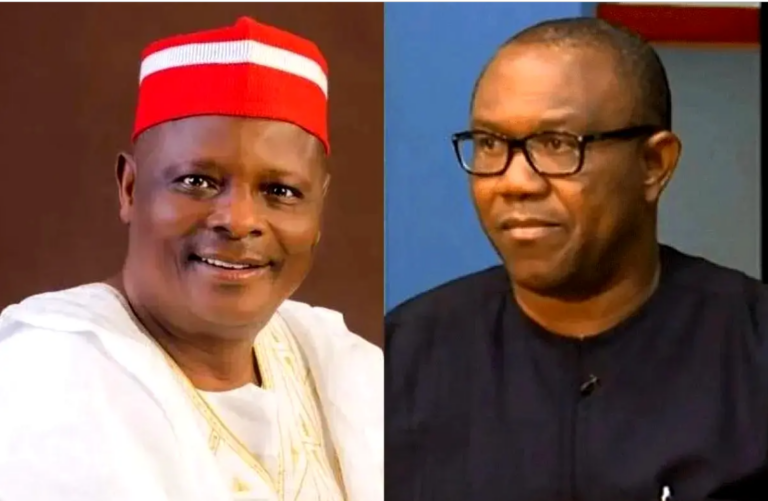
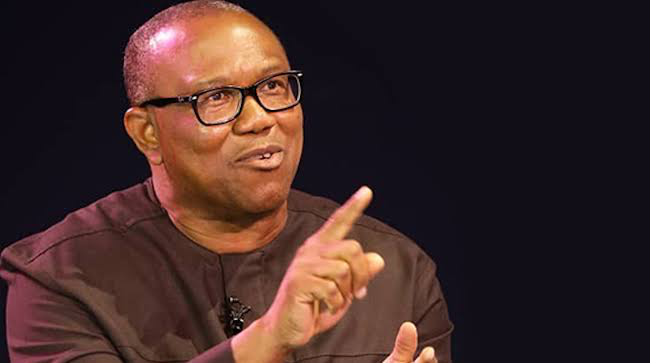
FORMER Anambra State Governor, Peter Obi, and ex-Kano State Governor, Rabiu Kwankwaso, have joined the Nigeria Democratic Congress (NDC).

The received their membership cards in a video shared on Facebook by the party’s National Leader and former Bayelsa State Governor Seriake Dickon Sunday evening.

Footage from the event on Sunday showed the registration process, with Kwankwaso first presented with his membership card before Obi received his, signaling their formal entry into the party.

The development comes amid ongoing political realignments among opposition figures ahead of the 2027 general elections.

Hours before the development, both politicians held a closed-door meeting with the party leaders at Dickson’s residence. Dickson currently represents Bayelsa West at the 10th Senate.

The meeting is believed to be part of efforts to consolidate opposition forces and build a viable coalition ahead of the 2027 elections

Obi and Kwankwaso arrived at about 5:18 p.m., drawing supporters under the Obi-Kwankwaso Movement, who chanted “O-K is okay” as the two leaders were ushered into the premises.

Kwankwaso was dressed in a white babanriga with his signature red-and-white Kwankwasiyya cap, while Obi wore an all-black kaftan and matching cap.

The ICIR had earlier reported Obi dumped the African Democratic Congress (ADC), citing what he described as a ‘toxic’ political environment and internal crises within the party.

In a post on X, Obi said his decision was not due to personal disagreements with party leaders but linked to broader systemic issues. He alleged that the same forces that created crises in the Labour Party (LP), where he contested the 2023 presidential poll, had begun to affect the ADC, with “endless court cases, internal battles, suspicion, and division.”

His exit came hours after the ADC released its timetable for the 2026 primaries and announced nomination fees for aspirants, a development that further underscored the shifting dynamics within opposition politics.

There has been growing speculation that Obi and Kwankwaso will pair to contest the presidency in the next poll.

Obi quits ADC, leaves party’s presidential ticket for Atiku, others

A former presidential candidate, Peter Obi, has announced his exit from the African Democratic Congress (ADC), citing what he described as a toxic political environment and persistent internal crises.

Obi disclosed this in a post shared on X on Sunday, hours after the party released its timetable for the 2026 primaries and approved fees for nomination forms.

In a statement by its National Publicity Secretary, Bolaji Abdullahi, the ADC said the sale of nomination forms would hold from May 5 to May 10, while submission is scheduled for May 11 to May 13.

The party added that screening of aspirants would take place from May 14 to May 15, with results to be published on May 17, while appeals would be heard between May 18 and May 19. The final list of cleared aspirants is expected on May 20.

According to the timetable, primary elections for State Houses of Assembly, House of Representatives and Senate seats will hold on May 21, followed by governorship primaries on May 22 and the presidential primary on May 25.

The ADC also approved nomination fees of ₦100 million for presidential aspirants, ₦50 million for governorship, ₦20 million for Senate, ₦10 million for House of Representatives, and ₦3 million for State House of Assembly seats, with discounts for youths, women and persons with disabilities.

However, Obi said his decision to leave the party was not due to personal grievances against its leadership.

“Let me state clearly: my decision to leave the ADC is not because our highly respected chairman, Senator David Mark, treated me badly, nor because my leader and elder brother, Alhaji Atiku Abubakar, or any other respected leaders did anything personally wrong to me. I will continue to respect them.”

The former Anambra State governor alleged that the same forces that destabilised the Labour Party were affecting the ADC.

“The same Nigerian state and its agents that created unnecessary crises and hostility within the Labour Party that forced me to leave now appear to be finding their way into the ADC, with endless court cases, internal battles, suspicion, and division, instead of focusing on deeper national problems and playing politics built more on control and exclusion than on service and nation-building.”

He added that the political space had become increasingly hostile.

“We now live in an environment that has become increasingly toxic, where the very system that should protect and create opportunities for decent living often works against the people – a society where intimidation, insecurity, endless scrutiny, and discouragement have become normal.”

Obi also said his political decisions were not driven by the pursuit of power but by concern for Nigerians’ welfare.

“Let me assure all that I am not desperate to be president, vice president, or Senate president. I am desperate to see a society that can console a mother whose child has been kidnapped or killed while going to school or work. I am desperate to see a Nigeria where people will not live in IDP camps but in their homes. I am desperate for a country where Nigerian citizens do not go to bed hungry, not knowing where their next meal will come from.”

The ICIR reports Obi and other stalwarts of the ADC had intended to get the party’s presidential ticket ahead of the 2027 election. The major contenders are former vice president Atiku Abubakar and former governors Rotimi Amaechi and Rabiu Kwankwaso.

Kwankwaso is most likely to quit the ADC soon, as he is widely believed to be considering a joint ticket with Obi in the coming election.

Their exits from the party leave Abubakar, Amaechi, and others who may be interested in the ADC’s ticket to vie for it.


Dangote Refinery’s ₦1,820 Jet A1 price to stabilise market – NMDPRA

THE Nigerian Midstream and Downstream Petroleum Regulatory Authority (NMDPRA) has said the indicative gantry price for Aviation Turbine Kerosene (ATK) recently released by the Dangote Petroleum Refinery would ensure market stability and improve compliance among oil marketers. 

The refinery had fixed its gantry price for ATK, popularly known as Jet A1, at N1,820 per litre – a move expected to bring transparency to a sector where airline operators and passengers have long complained about exploitative pricing.

In an interview with the News Agency of Nigeria (NAN) in Abuja on Saturday, May 2, the NMDPRA’s Director of Public Affairs, George Ene-Ita, noted that the daily publication of prices by the refinery would empower the regulator to conduct more effective surveillance.

“The Dangote Refinery, having released its latest indicative gantry prices, which they promised to publish daily going forward, will enable us to ensure tacit compliance by marketers and operators during our routine surveillance operations nationwide,” Ene-Ita said.

The intervention comes as a relief to the aviation industry, which has seen marketers ignore previous regulatory guidelines.

NMDPRA had issued a directive setting a price cap for end-users, ranging between N1,760 and N1,988 per litre in Lagos, and N1,809 to N2,037 per litre in Abuja. Despite this, oil marketers continued to sell the product to airlines at N2,230 per litre and above, deepening the financial crisis for domestic carriers.

Ene-Ita emphasised that while petroleum product prices are deregulated, the refinery’s decision served as a necessary ‘concession’ to prevent the collapse of aviation operations.

“We are not unmindful of the fact that what the Dangote Refinery is doing is a concession to help ease overhead cost pressures in the aviation sector in order not to truncate its operations. So, we will play our part to see that Nigerians benefit from the gesture,” he added.

The regulator clarified that its current pricing framework was derived from Platts average figures recorded between April 17 and 23, 2026, reflecting prevailing global oil market conditions.

According to the NMDPRA, actual market prices often fluctuate based on external factors. It cited heightened global volatility driven by geopolitical tensions, including the ongoing US-Iran conflict, as a primary contributor to the recent hike in aviation fuel costs across Nigeria.

CAF announces AFCON 2027 dates

THE Confederation of African Football (CAF) has announced that the 2027 Africa Cup of Nations (AFCON) would kick off on June 19 and end on July 17, 2027.

The tournament will be jointly hosted by Kenya, Tanzania and Uganda.

In a statement on Saturday, CAF said, “The opening match will be played on Saturday, 19 June 2027, and the final on Saturday, 17 July 2027.”

It added that the dates were approved by the FIFA Council at its recent meeting in Vancouver, Canada, noting that the host country for both the opening match and final would be announced later.

CAF said the tournament would be the first AFCON to be staged by three countries, describing it as an opportunity to expand the competition’s reach to over 400 million people across the East African region.

On the qualification process, the body said the preliminary round had been concluded, with the draw for the qualifiers scheduled for May 19, 2026.

A total of 48 teams, including the three co-hosts, will take part in the qualifiers, which will be played across three FIFA international windows.

“The qualifiers will be played across the three FIFA International Windows. Matchdays 1 and 2: 21 September to 6 October 2026. Matchdays 3 and 4: 9 to 17 November 2026; Matchdays 5 and 6: 22 to 30 March 2027,” CAF stated.

According to the body, the teams will be drawn into 12 groups of four, with the top two from each group qualifying for the tournament.

The 2027 edition will mark the return of the competition to East Africa for the first time since Ethiopia hosted it in 1976.

CAF added that the tournament would build on the success of recent editions, including Côte d’Ivoire 2023 and Morocco 2025, which recorded growth in sponsorship, commercial revenue and global broadcast audiences.

The ICIR reported that Senegal emerged the last AFCON champions after defeating Morocco in the final at the Prince Moulay Abdellah Stadium, in Rabat, marking one of the most significant eras in African football history.

Papa Gueye secured the first position of the tournament for the West African nation in a most dramatic of circumstances at 94th minute of extra time with a goal, after Brahim Diaz missed the controversial penalty awarded to Morocco, which delayed the match by about 20 minutes.

Meanwhile, CAF’s appeals board stripped the country of the title and awarded it to Morocco, ruling that Senegal had forfeited the final by walking off the pitch in protest at a contentious late penalty.

Meanwhile, the Senegalese Football Federation vowed to challenge the controversial decision.

In a communiqué on Tuesday night, March 17, the Senegalese Football Federation confirmed it had received CAF’s March 17, 2026, ruling concerning the disputed final between Senegal and Morocco.

The ICIR reports that the Appeals Board of CAF ruled in favour of the Fédération Royale Marocaine de Football (FRMF), declaring their appeal admissible and setting aside an earlier decision by CAF’s Disciplinary Board.