Home Blog Page 393

WAEC launches resit exams for candidates

1

THE West African Examinations Council (WAEC) has announced a new initiative, allowing students to resit their West Africa Senior School Certificate Examination (WASSCE) papers as early as January and February 2025.

Until now, millions of candidates had to wait for the next private examination cycle to retake their failed exams.

The new programme, dubbed WASSCE PC1, offers a quicker path to improving students’ grades and enabling them to qualify for the next cycle of admissions.  

The head of public affairs at WAEC, John Kapi, while addressing journalists on JoyNews’ AM Show recently stated that the exams would take place from January 24 to February 15, 2025, with the registration closing on January 8.

The exams, according to Kapi, will be conducted in regional capitals, as the maiden edition is expected to attract a relatively small number of candidates.

“Students who access their results now and realise they need to resit one or two papers have until 8th January to register online through our website or at WAEC-accredited internet cafés. The exams will take place from 24th January to 15th February 2025,” Kapi said.

He stated that WAEC intended to fast-track the release of chief examiners’ reports to assist candidates in their preparation. 

He explained that the reports would offer detailed feedback on students’ mistakes and provide guidance on improving their study methods and exam approaches.

“We’ve advertised this programme widely through banners, our website, and our results checker platform to ensure that both students and parents are aware,” Kapi added.

Students whose results were cancelled can take the WASSCE PC1 exams, as long as they have not been barred for a period due to malpractice.

“For now, the exams will be conducted in regional capitals due to the limited number of candidates. Prospective participants are urged to complete their registration by the 8th of January to take advantage of this opportunity.”

The announcement came amidst the challenges in WAEC’s examination, including the withholding of over 215,000 candidates’ results from the 2024 WASSCE due to malpractice allegations.

According to WAEC’s head in Nigeria, Amos Dangut, 11.92 per cent of the 1.8 million candidates who sat for the exams were implicated in malpractice.

Despite these issues, WAEC recorded some successes in the 2024 results, with 72.9 per cent of candidates earning credits in five subjects, including Mathematics and English Language.

However, this marked a 7.6 per cent decline in performance compared to 2023.

He noted that the percentage of candidates who met the criteria for credit in the key subjects decreased by 7.6 per cent compared to the 2023 WASSCE results.

“This is a 7.6 per cent decrease in examination performance compared to last year of 2023 WASSCE. Also, 215,267 results were withheld due to examination malpractice by the candidates. This accounts for 11.92 per cent of the total number of candidates who wrote the examination,” Dangut said.

Police nab suspected manhole cover thieves in Abuja amid rising cases

0

SECURITY agencies have arrested suspected vandals responsible for the stealing of Abuja highway sewage manhole covers.

This was disclosed in a statement on Sunday, January 5, signed by the senior special assistant on public communications and New Media to the FCT minister, Lere Olayinka.

According to Olayinka, some of the suspected criminals are behind the removal of sewage manhole covers on highways in Abuja, the nation’s capital.

He said efforts were also being made to apprehend their collaborators, especially buyers of the manhole covers.

Olayinka added that as directed by the Federal Capital Territory (FCT) minister, Nyesom Wike, relevant stakeholders were already working hard to stop the act.

“The minister, who lamented that Nigerians could go to the devilish extent of removing sewage manhole covers on highways and selling them, thereby putting the lives of road users at risk, vowed that the government would do everything necessary to bring the perpetrators to book.

“Wike said it was sad that the government would use public funds to put amenities in place for the use of Nigerians, and criminally minded citizens would remove the amenities and sell them to (fellow) Nigerians,” Olayinka said.

The ICIR reports that manhole cover theft has been rampant in Abuja.

When removed, the holes left open often result in vehicles driving over them skidding off the highway and involving in accidents.

In 2017, a senior advocate, Femi Falana, was one of the victims in Abuja. He sued the Federal Capital Development Authority for N100 million because of injuries and other harms the accident caused him.

Manholes and gully pots are supposed to be an advantage to urban cities like the FCT, but they often constitute a danger to motorists.

In 2022, The ICIR, in an investigation, exposed how Abuja became the city with uncovered manholes. 

Nathaniel Bassey speaks on performing at American Presidential prayer breakfast

0

AS the United States of America prepare to enter into the President-elect Donald Trump era, renowned Nigerian gospel singer Nathaniel Bassey has expressed his excitement over an invitation to join in the American Presidential Inaugural Prayer breakfast.

The Presidential prayer breakfast is a non-official and non-government event. It is a faith-based  platform where intercessory prayers and worship are offered to God on behalf of the office of the president and government of the nation.

The event is held once in four years preceding the inauguration ceremony as a breakfast prayer meeting ahead of every new administration.

This year’s event is to be hosted by Reverend Merrie Turner and is always attended by leaders and dignitaries across the world.

Bassey took to his  Instagram to share the exciting news, stating: “Let’s raise a sound in America. See you January 20, 2025.

“The 44-year-old gospel artist is clearly thrilled to be a part of this significant event and is inviting his followers to join him in spirit,” he stated.

This prestigious event, held once every four years, will feature a distinguished lineup of speakers, including Alveda King and Mario Bramnick, a pastor, and will be hosted by Merrie Turner at the Waldorf Astoria Presidential Ballroom.

The Akwa-Ibom gospel singer who is also a pastor, is known for his hit songs like “Imela,” “Onise Iyanu,” and “Olowogbogboro” and has established himself as one of the most prominent and most listened-to gospel ministers from Nigeria, with his music spanning across different genres.

Bassey is not a stranger to the US; in 2024, the mayor of Albany, New York, honoured him by declaring October 6 as “Pastor Nathaniel Bassey Day” in the city.

He is a highly-skilled trumpeter and the founder of the popular Hallelujah Challenge- a global online worship movement.

The ICIR reported that former US President Trump, of the Republican Party, defeated current Vice President and Democratic candidate, Kamala Harris, in the 2024 general election.

It came after current US President Joe Biden dropped out of the race in July after a disastrous debate that confirmed the doubts many had that he was fit for another four years in office.

He will be sworn in as the 47th president of the United States on January 20, 2025.


Police repel armed bandits, rescue 18 kidnap victims in Katsina

0

THE Katsina State Police Command have rescued 18 kidnap victims and foiled a bandit attack along the Funtua-Gusau highway in Zamfara State.

The incident occurred on January 3, 2025, at about 9:30 pm, when bandits ambushed four vehicles, firing sporadically in an attempt to abduct the occupants.

According to police spokesperson ASP Abubakar Sadiq, in a statement on Sunday, January 5, the suspected bandits, armed with AK-47 rifles, opened fire on the vehicles, which included a Toyota Avensis, two DAF trucks, and a Pacars Canter. 

The vehicles were transporting 18 passengers to various destinations when the attackers attempted to abduct the occupants. 

The statement noted that the swift response of officers from the Faskari Divisional Police Headquarters thwarted the kidnapping attempt and ensured the safe rescue of all passengers.

In a related incident the same night at about 11:00 pm, some suspected bandits also attacked Gidan Gada village in Kafur Local Government Area and rustled an unspecified number of cattle. 

However, the command noted that its operatives from Kafur and Malumfashi divisions, after pursuing the attackers to Fanisau village, where a gunfight ensued, recovered the rustle animals.

“Unfortunately, the DPO Kafur sustained a gunshot injury during the encounter and was immediately rushed to the hospital for immediate medical attention and is currently responding to treatment.

“Efforts are on top gear to ensure the arrest of the perpetrators of the dastardly act”, the statement added.

The Katsina State Commissioner of Police, Aliyu Abubakar Musa, while commending the officers for their bravery, urged residents to support security agencies with timely information to combat criminal activities effectively.

The ICIR reports that there has been a series of kidnap attempts and rescue missions by the security forces in Katsina.

In one of its most recent publications, The ICIR reported security forces, comprising the Police and Army rescued four kidnap victims in Dandume Local Government of Katsina State.

On December 8, 2024, the command said it rescued about 20 victims in two kidnap attempts by armed bandits in the state on Saturday, December 7.

The incidents took place in Jibia and Faskari Local Government Areas (LGAs), the command posted on its X handle on Sunday, December 8.

The first incident occurred on December 7, 2024, at about 1900 hours, at Kwanar Makera along the Katsina–Magamar Jibia road, Jibia LGA.

According to the police public relations officer, Abubakar Sadiq Aliyu, a group of bandits, armed with dangerous weapons, AK-47 rifles, opened fire on a moving vehicle.

2025: Inflation to reduce to 27% not 15% projected by FG – Rewane

THE Chief Executive Officer of Financial Derivative Company, Bismarck Rewane, said inflation projection for 2025 by the company showed a drop to 27 per cent from its current 34.6 per cent.

This is contrary to the 15 per cent projected by the Bola Tinubu-led federal government, for 2025, the ICIR findings have shown.

The President, during the presentation of the budget estimates to the joint session of the National Assembly last December, said the federal government will prune down inflation to 15 per cent in 2025.

Rewane, who spoke while reacting to the projected budget estimates argued that considering a number of economic indicators, it’s not going to be possible to see inflation drop to 15 per cent this year.

Nigerian President Bola Tinubu presents the 2025 budget at a joint session of the National Assembly on Wednesday, December 18

“In the World of reality, we’re seeing 27 or 25 per cent not 15 per cent.15 per cent is very bullish aspiration, but we live in the world of reality which I see 27 per cent. I will rather bet on that than bet in 15 per cent.

Bismarck who gave further insight to to the economic projections expected in 2025 said,” inflation will go down but not as predicted by the President down to 15 per cent, is not realistic.

He said that naira stability would help the the manufacturing sector plan and hedge against inflation. “It’s going to be a combination of lots of factors such as higher interest rate, increase in output and the reform of electricity sector.

“Generally speaking, N15.8 trillion on debt servicing in 2025 is based on the assumption that some interest rates would begin to decline in the course of the year. Several factors are involved.”

He stressed that Nigeria needs all the revenue to service debts, refinance existing debt obligations and finance part of its growth projections.

“We need foreign direct investments and increase in the general level of income to enable impact in the life of the people,” the economist added.

While offering a glimmer of hope on foreign exchange reforms, Rewane said, there’s going to be some level of exchange rate stability, which is expected to see the naira strengthen further and allow investors to make their own economic projections and hedge against inflation.

“The gap between the arbitrage is closing up and round tripping has reduced. This is positives to investors, but inflation need to go down further,” Rewane emphasised.

Apart from Rewane, some prominent Nigerians said economic indices are not promising enough to lift millions of Nigerians out of poverty, following rising cost of living.

“As a nation, we have fallen from being the largest economy in Africa, with a gross domestic product (GDP) of $574 billion and per capital income of over $3,500 in 2014, to now ranking fourth in the continent,” former presidential candidate of Labour Party, Peter Obi said in his new year message.

“Our current GDP is less than 50 per cent of what it was a decade ago, standing at approximately $200 billon, with a per capital income of $,1000”

With diminishing purchasing power and rising hunger, the former Anambra governor further urged the president to do more to eradicate hunger.

“The newly approved N70,000 cannot afford a bag of rice or even a bag of beans. As a result, many Nigerians go to bed hungry, while many rely on charity and palliatives,” he added.

A development economist, Celestine Okeke, also said there’s no meaningful impact on the economic reforms and borrowings of the current administration.

“We’ve seen Nigeria’s debt rising astronomically to over N100 trillion since the current administration. Yet, we can’t see the meaningful impact in the lives of the people. The Political class live in affluence flying jets, but we don’t see them make the commensurate sacrifice they request from the people.

Notably, the economic indicators and further findings showed most Nigerians are struggling to cope with the economic reforms of the Tinubu administration, with statistics showing Nigerians are not getting better.

The ICIR reports that Nigeria’s ranking on the 2024 Global Hunger index is 110 out of 137 countries, reflecting a critical level of hunger and food insecurity in the land.

How input distribution system worsens plight of Nasarawa women farmers

By Vincent A. YUSUF

THE Nasarawa State government’s input support delivery system, which favours men, is making things worse for smallholder women farmers, an investigation reveals. 


Smallholder women farmers in the state are experiencing a bigger disparity compared to male farmers due to the government’s input supports distribution structure, which does not provide equal access to inputs, Weekend Trust gathered.

Despite the fact that women account for 70-75 per cent of the agricultural workforce, according to the Forum for Agricultural Research in Africa (FARA) and the International Budget Office (IBP), women farmers’ organisations alleged that their demand for government support has not received much attention.

Statistics from various sources estimated that there are 38 million smallholder farmers in Nigeria and 70 per cent (26 million) are women. However, a larger proportion of men typically profit from the country’s agricultural inputs support than women, according to the International Aid Transparency Initiative (IATI)’s Datastore.

Though the 2019 National Gender Policy in Agriculture aims to guarantee that gender-responsive and gender-sensitive approaches are employed in agricultural project planning and execution, providing women with equal access to productive resources and the opportunity to realise their full potential, implementation is woefully inadequate.

In Nasarawa State particularly, gender policy in agriculture has not been successfully implemented; despite women’s inability to compete with men, they are not given any special recognition in the agricultural input distribution structure – not even in the budget.

Although Nasarawa State is predominantly an agrarian state with over 70 per cent of the population involved in subsistence farming according to the state investment and development agency (NASIDA), only N9.6bn (4.81 per cent) of the N199.8bn state budget for 2024 went to agriculture.

Out of the N9.6bn allocated to agriculture, N5.6bn went to capital expenditure, with none (zero per cent) of these targeted women-specific projects, something even officials at the state Ministry of Agriculture and Water Resources admitted.

Earlier, the Centre for Social Justice (CSJ) did a “Pullout of Women in Agriculture Projects in the 2024 Nasarawa State Budget” as an empowering and advocacy tool to guide women farmers on the possibility of engaging MDAs at the budget preparation stage so that their voices can be heard in specific projects that will improve their productivity.

Attempts by the Small-scale Women Farmers Organisation in Nigeria (SWOFON), a coalition of women farmers associations and groups, to engage government in the state using that information tool, have not been successful, Jummai Yohanna, state Chairperson of the group said.

Governor Abdullahi Sule while flagging off input distribution in Awe LGC in July, said “The 147 wards of the state will receive not less than 16,000 bags (of fertiliser) while other farmers’ associations, disability groups, religious groups, traditional institutions will also benefit from the free fertilisers provided by the President Tinubu government to boost food production in the state.”

However, groups like SWOFON said they did not benefit from that gesture.

While also speaking with journalists in Abuja, the governor said the state has decided to double its efforts in input support to farmers adding that “If we were initially providing 13,000 bags of fertiliser to farmers, we will now increase it to 26,000 bags. This proactive step is taken in recognition of the challenges faced by farmers, and the government is well-positioned to offer support to smallholder farmers.”

However, Yohanna is not happy with the state government and painted the picture of women farmers’ continued struggle in the state, which she said, is demoralising.

“Nobody cares about us. We went on several advocacy visits to the Ministry of Agriculture and Water Resources, yet at the end of the day, when they see us coming, they lock the doors against us because they feel we were disturbing them,” Yohanna told Weekend Trust.

She said the productivity of women is declining because the most needed inputs end up mostly with men, while access to tractors or even small women-friendly equipment is totally absent, adding that the women farmers have nowhere else to turn to.

In her village, Ikposogye, in Obi Local Government Area (LGA), Weekend Trust gathered that fewer than 10 bags of fertiliser that got to the community were taken over by men, according to women who spoke with our reporter.

Some women farmers said they rent farmland at a cost between N20,000 and N30,000 depending on the size of the land, but more costs pile up due to reliance on manual labour, which is very expensive, thereby, forcing many of them to reduce their farm size.

Yohanna and her group are actively involved in the production of rice, sesame, groundnut, cassava and other crops. Each of them needs an average of eight bags of fertiliser and other inputs to have good yields. None of them got help in this regard.

“We have been pleading with the state government for four years to take our situation into consideration, but to no avail. Members are actually no longer hopeful. We are met with closed doors by government authorities. Sometimes, all we hear about is the distribution of inputs, but when you go there, there are no provisions for women. Men manage the entire distribution system, and they will typically consider their interests first,” she said.

In Obi, Rahab Dauda has been growing rice and other commodities for more than 20 years as a smallholder farmer. The cost of using manual labour makes it difficult for her to find reasonably priced mechanisation to support her growth.

“I wish to grow the farm, but we don’t see tractors here. Even if you see, it has to finish men’s fields before it can come our way because they are the ones who bring them. If we had those small farm machines, we would not have to wait for them. And by the time they’re done with them, they are already heading to other places that have better work waiting for them, you know. This is our plight,” she said.

Hanatu Guyit is another woman who grows rice and melon. Even though she was able to get a tractor to work on her farm, she said that it was not an easy task because it takes a lot of time and the manual labour is even more expensive.

Speaking in front of her rice field, Guyit said most of the inputs get to men who sometimes “do what they want with it” adding that “we the women who need it most hardly get it.”

In Lafia, Victoria David, 50, a member of SWOFON and a farmer who grows rice, beans, sorghum and cassava in Mile Uku community said like other women who have suffered for years without assistance, she and other women in the area have to rely largely on their own efforts to support themselves because government assistance was not forthcoming.

“Our female colleagues are eager to increase output, but input is the issue. Government focuses less on women, and many of us are unable to reach our full potential because of the cost of these inputs,” she said.

Laraba Alkali, another female farmer in the area, noted that most of their farms suffered this year because cost of inputs rose significantly in the middle of production, making it difficult to access input due to absence of government support.

In the same vein, the chairperson of SWOFON in Doma LGA, Kizia James Waziri, told the Weekend Trust that the smallholder women farmers there are currently facing a number of difficulties, including high input costs, insecurity, and a lack of government assistance. Their productivity is being negatively impacted by these.

She and other female farmers in the area did not get any government input support, despite living less than 150 meters away from the deputy governor  (Emmanuel Akabe)’s home in Doma town.

Like other women in the area, Zuwaira Isa is a farmer who wants to increase the output of her millet, cassava and other crops but faces numerous obstacles and is left on her own without government assistance.

She listed some of the obstacles to include lack of access to quality seeds, fertiliser, herbicides and mechanisation.

“I have to reduce my farm size because the cost of fertiliser and agrochemicals was too high for me. In place of fertiliser, I had to bring in cow dungs from a Fulani settlement and rice husk from other places to spread on my farm. It was cheaper than fertiliser,” she said.

According to sources who asked not to be named in this report, some of those who benefited from the fertiliser distribution sold the input even at the venue of the distribution.

This reporter, who posed as a buyer, got offers from those who benefited. Some offered to sell at N25,000 (for both NPK and Urea 50kg bag), which was far less than the market value of N41,000 for urea (Indorama blend) and N39,000 for NPK 20:10:10 blend.

In Akwanga LGA, some of the men who got inputs at the distribution centre along Akwanga-Keffi Road resold to those who operate input shops at cheaper rates.

A beneficiary offered to sell two bags of urea and NPK with herbicide for just N50,000. These same products could fetch about N100,000 in the open market. He got the input as a member of a youth group.

A smallholder farmer from Akwanga, Ladi Aku, said it has been increasingly difficult to produce crops without support this year due to rising inflation, which has affected not only inputs but also cost of labour.

At Sabo Gida area of Kokona, Mrs Rebecca who is a widow with six children could not even afford one bag of fertiliser this year because of the cost. Instead, she had to use ashes and cow dungs to apply in one of the farms she planted maize.

“Where do I see money to buy fertiliser with all these problems—children’s food, school fees, cloth, hospital bill all on me and I have never received any input support from government to farm. I only heard few bags of fertilisers were given in the town,” she said.

How inputs were distributed – Government 

Reacting to some of the issues, the Permanent Secretary, Nasarawa State Ministry of Agriculture and Water Resources, Abdullahi Umar, explained how the state government gets input to women farmers.

“Generally, smallholder women farmers are supported with farm input via a standing committee at their local government and development area headquarters respectively. The committee includes chairmen of LGAs and overseers of Development Areas, paramount rulers, Divisional Police Officers (DPOs) agriculture coordinators, councillors of agriculture, and other heads of security personnel etc. Sometimes they also obtain their farm inputs from Nasarawa State (Fadama 3/NG-cares). Recently, they were supported with farm inputs directly at wards levels across the state,” the permanent secretary said.

He, however, said that in all these “Women are usually involved in structures that provide support for the state’s farm inputs.”

Reacting to the inequality in accessing support between men and women farmers, Abdullahi admitted that “what they say is a real fact because the percentage of men that normally benefit from the farm inputs in the state is more than that of the women.”

What SWOFON, stakeholders suggest

Stakeholders have recommended ways to improve the inclusion of women in all stages of budget processes, including establishing one committee composed solely of representatives from women’s organisations in the state to handle any assistance the state government wishes to provide smallholder women farmers with.

The Programme officer, SWOFON,  Chika Orji, said although Nasarawa State has made women farmers part of the budget committee this year, which has never happened before, the state is, however, far behind in the social inclusion of women farmers in the schemes of things, adding that “their voices are not being amplified” despite constituting the largest labour force in the sector.

She said now that the government has involved women in the budget process, their demands and challenges need to be considered, adding that there is a current donor intervention collecting data of smallholder women farmers in the state for evidence-based advocacy.

She called on the government to treat women as an entity for proper representation.

“SWOFON is an entirely women farmers organisation. So, it is there to amplify the voice of that rural woman farmer, which needs to be heard; so that when government is taking a decision, they are treated as an entity, separate from the men. There is every need to separate the women from the men,” Orji said.

In a similar position, Moses Agha, a retired staff of the Federal Ministry of Agriculture and Food Security in Lafia said “combining women with men will make it difficult to track what proportion of the support went to women.  Such women committee should exist even at the ward and local government level and with that, you can tell how many bags of fertiliser, quantity of agrochemicals or other inputs went to women in all the 13 local government areas of the state.

They contended that doing so would facilitate the state government’s ability to monitor the annual and actual amount of assistance provided to women farmers.

This report was made possible with support from the International Centre for Investigative Reporting ICIR

Trump’s re- election, Olympics, CAF awards, other global events that shaped 2024

0

MANY events happened that attracted global attention in 2024.

From the Summer Olympics in Paris, France to the US elections, and the CAF awards, there are other takeaways from these events  that will likely have a lasting impact on the world.

Donald Trump returns to White House

Former US President, Donald Trump, of the Republican Party defeated current vice President and Democratic candidate, Kamala Harris, in the 2024 general election.

US election, Olympics, CAF Awards, other top global events that shaped 2024
Photo collage showing Republican presidential candidate, Donald J. Trump and his Democrats counter-part, Kamala Harris.

It came after US President,Joe Biden, dropped out of the race in July after a disastrous debate that confirmed the doubts many had that he was fit for another four years in office.

Keir Starmer emerges as UK prime minister

It is not only in the United States that voters sent the incumbent packing. In July,  Keir Starmer of the Labour Party won in a landslide to become the UK’s 58th Prime Minister.

By his victory, he emerged as the first leader from the centre-left party to win a U.K. national election since Tony Blair, who won three times in a row starting in 1997.

He defeated Rishi Sunak of the Conservative Party in the election.

John Dramani Mahama emerged victorious in the Ghana election

In December, Ghana’s former president, John Dramani Mahama, of the opposition National Democratic Congress (NDC) defeated the vice president and New Patriotic Party’s (NPP) candidate, Mahamudu Bawumia.

Mahama and Bawumia had faced each other in the presidential elections with Mahama coming out victorious.

The ICIR reported that the Ghana Election Commission announced that Mahama polled 6,328,297 votes to defeat Bawumia who garnered 4,657,304 votes.

Israel, Hezbollah agrees to cease-fire deal

After years of turmoil in the Middle East, Israel and Hezbollah agreed to a cease-fire deal in November. The U.S.backed ceasefire deal was to end 13 months of fighting.

The agreement, which would put a halt to the worst battle in Lebanon in decades, came into force on Wednesday, November 27.

Speaking on the deal in a statement the U.N. Special Coordinator for Lebanon, Jeanine Hennis-Plasschaert, said it would require the full and unwavering commitment of both parties to succeed.

War crimes allegations: ICC issues arrest warrant for Israeli PM Netanyahu
Israel’s Prime Minister, Benjamin Netanyahu

According to a senior Biden administration official who briefed reporters under the White House’s regulations regarding anonymity, “all fire from both sides would cease at 4 a.m. local time, or 9 p.m., while Israeli forces would remain in their positions and not leave right away.”

The news of the ceasefire agreement came as a big relief to the world as the conflict between Hezbollah and Israel escalated in October 2023, when Hezbollah launched a rocket campaign against Israel in support of Gaza.

Archbishop of Canterbury, Justin Welby, resigns amid abuse scandal

In November, Archbishop of Canterbury, Justin Welby, resigned as head of the global Anglican Church following allegations of covering up abuse by John Smyth, affecting 130 boys and young men in the UK and Africa.

Welby announced his resignation on Tuesday, November 12, stating he took personal and institutional responsibility for the Church’s handling of the abuse scandal.

Archbishop of Canterbury Justin Welby resigned as head of the global Anglican Church
Archbishop of Canterbury, Justin Welby

This followed the release of an independent report, revealing shocking details of John Smyth’s decades-long abuse of over 100 minors at Christian camps in the UK, Zimbabwe, and South Africa.

Chidimma Adetshina withdraws from Miss SA pageant after xenophobic attack, wins Miss Universe

A 23-year-old Nigerian-South African beauty queen, Chidimma Vannesa Onwe Adetshina, withdrew from the Miss South Africa ( Miss SA) pageant after a series of xenophobic attacks.

Adetshina faced backlash after making it to the top 16 at the pageant.

In a statement on her Instagram page, the beauty queen appreciated all her supporters during her Miss South Africa journey.

Nigerian-South African faces backlash after placing high in Miss SA pageant
Chidimma Adetshina

Earlier on Wednesday, August 7, the South Africa Department of Home Affairs in a statement signed by spokesperson for Minister Duwayne Esau claimed that Adetshina’s mother illegally obtained South African citizenship.

According to the department, the investigation into Adetshina’s matter was due to a request received from the organisers of Miss SA.

Adetshina was born in Soweto to a Nigerian father and a South African mother.

She had been targeted by some South Africans who claimed she was not South African by birth.

According to the  Miss SA organisation, to be eligible to contest for the pageant, the contestant must be a South African citizen and possess a valid ID or passport. If the contestant holds dual citizenship, documents relating to both must be made available.

A few months later, Adetshina won Miss Universe Nigeria – a different pageant. The crown came with a N10 million cash prize and a chance to represent Nigeria at the Miss Universe 2024 pageant in Mexico, where she placed first runner-up.

The US emerged winner at the 2024 Olympics

The 2024 Olympics, also known as the Paris 2024 Olympics, took place from July 26 to August 11, 2024, with the opening ceremony on July 26, 2024.

The games were a huge success, with  Paris putting on an incredible show.

The Games saw a record-breaking number of athletes and countries participating, with 206 National Olympic Committees and the Refugee Olympic Team taking part.

US election, Olympics, CAF Awards, other top global events that shaped 2024
Opening ceremony at the 2024 Olympics

As for the medal count, Team USA topped the podium with a total of 126 medals, consisting  40 gold, 44 silver, and 42 bronze medals.

However, Nigerian athletes performed poorly at the games. This led to the Minister of Sports Development, John Enoh, apologising to the nation over the poor performance of the nation’s athletes at the Paris 2024 Olympics.

Overall, the 2024 Paris Olympic Games was an unforgettable experience, with thrilling competitions, inspiring moments, and a lasting impact on the world of sports.

Nigerian, Libya debacle

Nigerians being lovers of soccer, it was a big surprise when news filtered in from Libya that the  team had boycotted the return match between Nigeria and Libya in the Africa Cup of Nations qualifier.

The ICIR reported it happened after the Super Eagles team defeated the Libyan Mediterranean Knights 1:0 at the Uyo Stadium on Friday, October 11, and hoped to be victorious again in the oil-rich North African nation the following Tuesday.

The team’s ordeal began on Sunday, October 13, when its flight was unexpectedly diverted to a different airport, away from Benghazi, where it was supposed to play a reverse match, causing the Super Eagles to be stranded for hours.

Match boycott: Libya denies sabotage, cites similar experience in Nigeria
Super Eagles players stranded at Libya airport. Photo: Williams Ekong/X

Images circulated by the team’s captain, Williams Troos-Ekong, showed players lying on airport benches, visibly fatigued, as they waited for the crisis to be resolved.

Moving from the Al Abraq Airport made the team travel by road for three hours before reaching Benghazi.

After several hours of endless waiting, the team returned to Nigeria without participating in the match.

The ICIR reported that CAF later awarded all three points to the Nigeria Super Eagles in the abandoned Africa Cup of Nations qualifier match against Libya.

The CAF Disciplinary Board also awarded three goals to Nigeria from the botched match.

CAF, therefore, ordered the Libyan Football Federation to pay a fine of USD 50,000.

According to the body, the fine was to be paid within 60 days of the decision.

The federal government of Nigeria through the Ministry of Foreign Affairs later declared that Nigerians living in Libya were safe.

The declaration followed reports that Nigerians in Libya were being attacked due to CAF’s decision.

Nigeria swept CAF awards as Lookman, Chiamaka, emerged African best footballer, goalkeeper of the year

At the tail end of 2024, Nigerians were thrown into jubilation as Super Eagles forward, Ademola Lookman, was crowned African Best Player, after his outstanding season with Atalanta in Italy’s Serie A, coupled with his impact on the Nigerian national team.

With this recognition, Lookman joined the ranks of iconic Nigerian players like Nwankwo Kanu, Victor Ikpeba, Rashidi Yekini, and Emmanuel Amuneke, who have won the prestigious award.

Nigeria sweeps CAF awards as Lookman, Chiamaka, emerge African best footballer, goalkeeper of the year
Nigerian Ademola Lookman. Photo: Ademola Lookman/X

He has also joined Victor Osimhen and Asisat Oshoala, who named African Best Players in the male and female categories, respectively in 2023.

The announcement was made during the 2024 Confederation of African Football (CAF) Awards held in Marrakech, Morocco, where Lookman’s incredible performances at both club and country levels earned him the prestigious title.

He won the award ahead of Simon Adingra (Ivory Coast/Brighton); Serhou Guirassy (Guinea/Stuttgart); Achraf Hakimi (Morocco/PSG); and Ronwen Williams (South Africa/Mamelodi Sundowns).

The ICIR reports that this victory followed a series of remarkable achievements for Nigeria at the CAF Awards, winning it back to back, with the Super Falcons also  recognised as the Best National Team of the Year and Chinaza Nnadozie, who won the inaugural African Goalkeeper of the Year award.

In the same vein, the Super Falcons won the Women’s National Team of the Year. They edged South Africa and Morroco to win the prize.

This was as 𝐂ô𝐭𝐞 𝐝’𝐈𝐯𝐨𝐢𝐫𝐞 won the Men’s National Team of the Year award following their triumph in the 2024 Africa Nations Cup.

 Nigerian Chiamaka Nnadozie also won Women’s Goalkeeper of the Year after her stellar year with the Super Eagles and Paris FC. Nnadozie had won the award back to back.

Dozens killed as plane crashes in Kazakhstan on Christmas day

As Christians were celebrating the birth of Jesus Christ on December 25, the news of the death of at least 35 passengers in an Azerbaijan Airline’s jet crash with 67 people on board in western Kazakhstan shook the world.

Officials said about 28 people survived the crash, which occurred near the city of Aktau, an oil and gas hub on the eastern shore of the Caspian Sea.

The Azerbaijan plane that crashed on Christmas day. Image courtesy of Flightradar24

The plane was flying from Baku, Azerbaijan, to Grozny, Chechnya in southern Russia before it crashed after veering from its scheduled route due to fog.

All five crew members died, with the majority of survivors occupying seats in the plane’s tail section.

179 died in South Korea’s worst plane crash

A passenger jet crash-landed in South Korea on Sunday, December 29.

Two crew members were the only survivors after the plane, which was carrying 181 people, landed on its belly, skidded off a runway and burst into flames, officials said.

The aviation disaster was South Korea’s deadliest in more than two decades.

Reports say the passenger jet crash-landed at an airport in the country’s southwest Sunday morning.


Ondo state confirms SSG Oluwatuyi’s death

0

THE Ondo State Government has officially confirmed the death of the Secretary to the State Government, Tayo Oluwatuyi, popularly known as Tukana.

An official statement signed by the Commissioner for Information and Orientation of Ondo State, Wale Akinlosotu on Saturday, January 4, confirmed Oluwatuyi’s death.

He reportedly died at the Obafemi Awolowo University Teaching Hospital in Ile-Ife on Saturday, January 4 following a road accident along the Ife-Ibadan Road on December 15, 2024. 

The accident left him hospitalised until his demise.

The statement read in part: ”It is with profound sadness that the Government of Ondo State announces the passing of Hon. Temitayo Oluwatuyi, Secretary to the State Government (SSG), on Jan. 4.

“Oluwatuyi was a dedicated public servant whose unwavering commitment to administrative coordination, policy advisory, and implementation had a significant impact on Ondo State,” the statement said.

“He served with distinction and played a crucial role in the state government, working closely with the Governor and other top officials of Ministries, Departments and Agencies (MDAs).

“Having served government in various capacities, including as Chairman of Akure South local government, Commissioner and twice as SSG, Oluwatuyi will forever be remembered for his invaluable contributions to the development of Ondo State,” the statement further disclosed.

Akinlosotu also extended the state government’s condolence to the Oluwatuyi family of Akure, friends, and associates.

He said that further details regarding burial arrangements would be shared as they become available.

The ICIR reports that Oluwatuyi was appointed by Governor Lucky Aiyedatiwa as the Secretary to the State Government on January 24, 2024, a role he served in until his passing.

Oluwatuyi was also Ondo SSG under Akeredolu’s administration but was later replaced with  Oladunni Odu.

Osun man pardoned for stealing fowl returns home with mental disorder, family claims

0

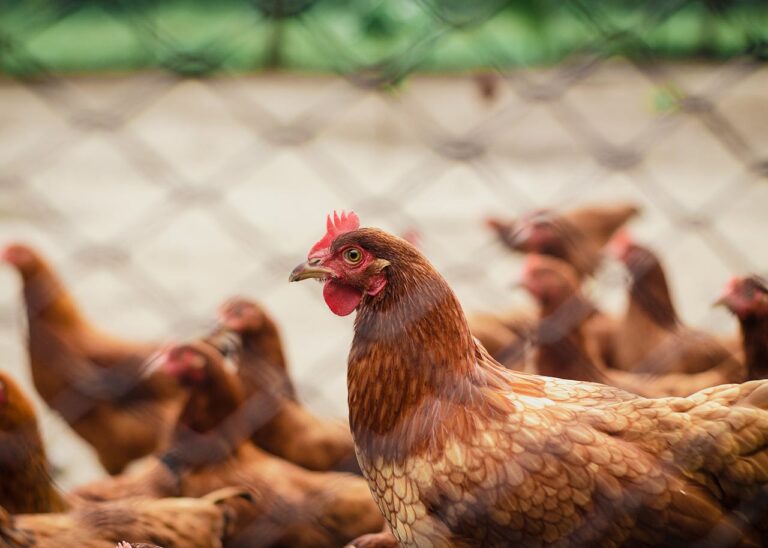
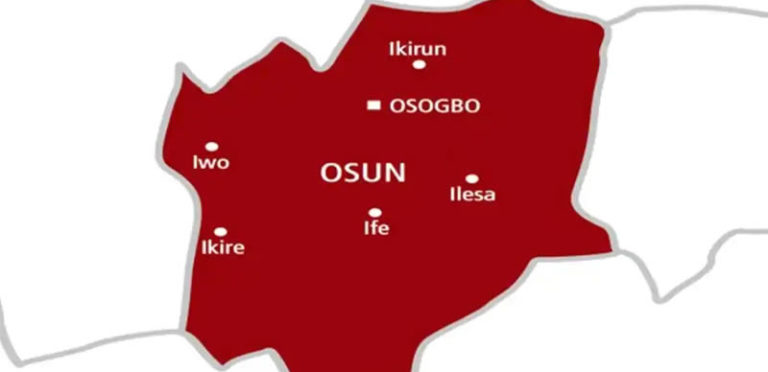
THE family of Sunday Morakinyo, one of the Osun indigenes involved in the ‘death-for-fowl’ case who was pardoned, has claimed that he returned home with a mental disorder.

The family of Morakinyo is seeking help from the Osun state government and the public to support him in his struggle with mental health issues. They claim that his mental ailments began after he was arrested by the police in 2010 for allegedly stealing poultry and eggs and that he was previously in good mental health.

Media outlets reported recently that Morakinyo and another individual Segun Olowookere were taken to court in 2013 for allegedly working together to steal fowl and eggs worth N20,000 from Oguntade Faramade in 2010.

They were found guilty of conspiracy, robbery, and theft in 2014 and sentenced to death by the Osun State High Court.

The ICIR reported that the Osun state governor, Ademola Adeleke, promised pardon for Oloweookere following a public outcry.

The governor fulfilled his promise last week when both Oloweookere and Morakinyo, who got death sentences for stealing a fowl, were granted pardons.

The governor disclosed this in a statement on his X on Thursday, December 26.

Adeleke said that 51 other inmates were also pardoned following recommendations of the State Advisory Council on Prerogative of Mercy.

It was, however, revealed that Morakinyo, upon his release, returned home with a mental illness that reportedly developed after his arrest.

According to Punch Newspaper, Morakinyo’s uncle, Ojo Olaide, who spoke on behalf of the family, said it’s sad to hear that Morakinyo returned home with a mental illness after his release from prison.

He made it clear that Morakinyo was healthy and mentally stable before his arrest, which suggests that his time in prison may have had a significant impact on his mental health.

Olaide reported that Morakinyo was arrested at the market in Oyan for allegedly stealing fowl and eggs, which he denied.

Olaide stated that Segun Olowookere was also arrested and brought to the station and that the family had wanted to bail them out, but the two men insisted that they shouldn’t because they hadn’t committed any crime.

Olaide said that the two men were later transferred to the Okuku Police Division and then to Osogbo and that the case eventually escalated to a robbery charge, which they did not commit.

He claimed that during the trial, the policeman who arrested them testified that Morakinyo and Segun were not involved in the theft and that the actual perpetrators were taken to welfare homes in Osogbo and later released.

Olaide expressed gratitude to Governor Adeleke for pardoning Morakinyo and his co-convict, Olowookere, and said he is hoping the governor will go a step further and provide some support to help Morakinyo get back on his feet.

Telcos propose 100% tariff hike, await approval

THE Nigerian telecommunications companies (TELCOS) have proposed a 100 per cent increase in their tariffs, which they said is subject to approval from the Nigerian Communications Commission(NCC).

The proposal, which has been submitted to the NCC, aims to address rising operational costs, including inflation and increased service delivery expenses.

The disclosure was made by the chief executive officer, MTN Nigeria, Karl Toriola, in a monitored interview on Friday, January 3, on Channels Business Incorporated programme.

The CEO, however, expressed reservations over possible approval of the proposal by the telecom regulator-NCC.

According to Toriola, the proposed tariff hike is necessary for the sustainability of the industry, which has been facing significant financial pressures due to rising operational costs.

“We’ve put forward requests of approximately 100 per cent tariff increases to regulators. I doubt they’re going to approve that quantum of increases because they are very, very sensitive to the current economic situation in the country,” Toriola said.

Despite the challenges, Toriola expressed optimism that regulators would make the right decision, taking into account the realities of the sector.

He stressed that the focus is on ensuring the long-term sustainability of the industry, rather than short-term profitability.

“I believe we’re all on the same side, the policymakers, the regulators, our Chairman of ALTON, Gbenga Adebayo, and the industry. We’re united because we share concerns about a few fundamental issues. First, human rights, are critical to driving any economy. Without a sustainable industry, the broader economy and the well-being of the people will be negatively impacted.”

He noted that the  proposal comes amid rising costs for telecom companies, driven by factors such as inflation, exchange rate fluctuations, and the increasing price of key operational inputs like diesel, power generation, and raw materials.

Toriola highlighted the pressure these rising costs have put on telecom businesses, making it difficult for many companies to maintain profitable operations.

The ICIR, earlier in the week, reported a statement from Telcos warning that service disruptions are imminent unless tariffs are adjusted to account for escalating operational costs.

Expressing further concerns, the Chairman of the Association of Licensed Telecommunications Operators of Nigeria (ALTON), Gbenga Adebayo, described the telecom sector as “under siege,” citing soaring operational costs driven by inflation, volatile exchange rates, and rising energy prices.

He noted that despite these challenges, tariffs have remained unchanged, leaving operators struggling to maintain quality service and expand their networks.

The telcom chief warned that without an immediate tariff adjustment, operators may resort to service shedding, leading to limited availability of telecom services in certain areas.

He also recalled that the  first call for a tariff adjustment was made in April 2024, but no significant progress has been achieved.

The ICIR reports that the federal Minister of Communications and Digital Economy, Bosun Tijani has informed of plans to improve Nigeria’s telecommunications infrastructure which comes with a cost, adding that  a possible tariff review is among the proposals being considered by telecom stakeholders to grow the sector further.