Home Blog Page 4

DNA test confirms body of missing #EndSARS journalist Pelumi Onifade

0

A DNA test has confirmed that an unidentified body at the Lagos State University Teaching Hospital (LASUTH) is that of Pelumi Onifade, a journalist with Gboah TV who went missing during the #EndSARS protests nearly six years ago.

The Lagos State DNA and Forensic Centre made the confirmation on Tuesday at a Coroner Court in Lagos, where investigating magistrate Temitope Oladele announced that the centre had matched the body, tagged No. 1385, to a DNA sample submitted by Onifade’s mother, Adebose Onifade.

The journalist’s parents, who were both present in court alongside their father, Olatunde Onifade, broke down in tears as the magistrate read out the findings.

Onifade was reportedly shot and arrested while covering the protests on October 24, 2020. His body was among six brought to LASUTH on November 3, 2020, on which autopsies were subsequently conducted.

The inquest was convened on the orders of a Federal High Court in Lagos following a wrongful death suit filed by Media Rights Agenda (MRA) against the police and the Lagos State Government, demanding, among others, an investigation into Onifade’s death and the prosecution of those responsible.

Delivering judgment on July 19, 2024, the judge, Ayokunle Faji, directed the Attorney-General to ensure an investigation into the circumstances of Onifade’s death, conduct a coroner’s inquest to ascertain the cause of death and identify and prosecute those responsible.

On May 22, 2026, the coroner ordered LASUTH’s Chief Medical Examiner to produce the autopsy report on the body within 21 days. She also ordered the Director of the DNA and Forensic Centre to submit the corresponding DNA test results within the same period, following LASUTH’s earlier disclosure in a March 24, 2026, report that DNA samples had been collected from the bodies and cross-referenced against samples submitted by families of those who died during the #EndSARS events.

Although the DNA and Forensic Centre complied with the directive, LASUTH had yet to submit its autopsy report as of Tuesday’s proceedings.

MRA’s lead counsel, Alimi Adamu, who appeared alongside Monday Arunsi and Victor John, argued that the family had shown considerable restraint despite repeated police denials of any involvement in Onifade’s death and their insistence that he did not die in their custody.

He added that the need for a second court order was itself evidence of non-compliance with the court’s earlier directives. He also drew attention to the growing concern within the media community over the death of a journalist killed while discharging his constitutional role.

The coroner acknowledged the delay and said the hospital was overwhelmed, adding that she believed the autopsy had already been done, or should have been done. Tensions rose when she cautioned counsel against pushing too hard, warning that she could order the arrest of the Chief Medical Examiner.

The coroner opted against immediate coercive action, directing instead that a final administrative reminder be sent to LASUTH and urging MRA’s lawyers to visit the hospital in person to press for the report rather than relying solely on formal correspondence. She warned, however, that she would invoke the court’s full powers if the hospital continued to delay, including taking measures against the relevant officials.

Expressing sympathy with the family, the coroner acknowledged that the matter had been ongoing long before it reached her court. She told counsel she understood their desire for justice and commended them for their persistence.

The matter was adjourned to July 7, 2026.

Ebola: France reports first case in doctor returning from Congo

0

FRANCE on Wednesday confirmed its first Ebola case in the country during the current outbreak, as a doctor returning from a humanitarian mission in the Democratic Republic of the Congo tested positive.

The Ministry of Health in a statement said the patient has been placed in isolation and health authorities are tracing contacts, adding that the risk to the wider European population was low.

Congo’s Ebola outbreak is linked to the rare Bundibugyo strain of the virus.

It has infected more than 1,000 people and killed 267, generating the largest number of confirmed cases within the first month of any episode of the disease, the World Health Organisation ⁠said this week.

Experts say the disease was probably circulating for months before it was officially declared on May 15.

Early confirmed cases were identified in urban areas, and infections have since ⁠been reported in at least three densely populated displacement camps.

The two largest previous Ebola outbreaks occurred in West Africa in Guinea, Sierra ⁠Leone and Liberia between 2014 and 2016 and in Congo in 2018.

A United States citizen treated for Ebola in ⁠Germany was discharged earlier this month after no virus had been detected in the patient since May 30. (Xinhua/NAN)

‘I don’t see the level of hunger people are talking about’ – Tinubu spokesperson

0

PRESIDENT Bola Tinubu’s Special Adviser on Information and Strategy, Bayo Onanuga, has stirred controversy after claiming he could not see the level of hunger many Nigerians complain about.

This was despite widespread reports of rising food prices, declining purchasing power and growing economic hardship across Nigeria.

Speaking on Arise Television’s Prime Time programme on Tuesday, June 23, Onanuga suggested that narratives about hunger had become entrenched shortly after the Tinubu administration came into office.

“It’s like in the early days of this government. Somebody did a voice-over saying that we are hungry. Since then, people have been saying that.

“I am a Nigerian; I have people working for me privately. I don’t see the level of hunger people are talking about because I see them (the workers) and I keep asking them questions. How are things? How are they adjusting? What are the problems?” he said.

His remarks come at a time when many households are struggling with the effects of subsidy removal, naira devaluation, policies introduced shortly after Tinubu assumed office in May 2023. The policies have fueled inflation, leaving many citizens unable to afford basic necessities, including food.

Rising prices squeeze household budgets

Since 2023, the prices of staple foods have risen sharply across many parts of Nigeria.

Several reports also indicate how many households spend a larger share of their income on food and transportation than they did before the current administration took over power.

The crisis followed the removal of petrol subsidy and other reforms that triggered higher transportation, production and importation costs.

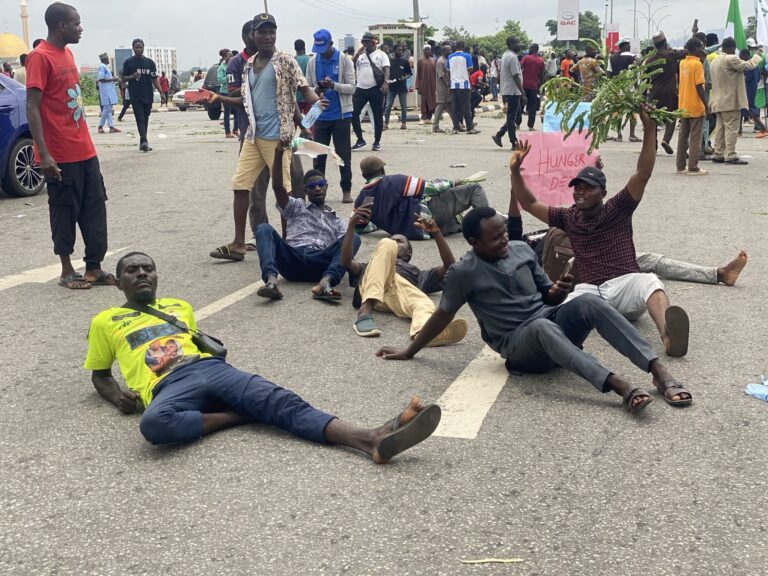
The economic strain sparked nationwide protests in August 2024, with thousands of Nigerians taking to the streets under the #EndBadGovernance banner to protest hunger, inflation and deteriorating living conditions.

Although the Nigeria government introduced several palliative measures, increased minimum wage, the impact of Tinubu’s economic reforms has continued to strain people’s livelihood.

Many Nigerians, including the Nigeria Democratic Congress (NDC) presidential candidate, Obi, have said the minimum wage could no longer guarantee a decent standard of living.

More recently, the cost of Liquefied Petroleum Gas (LPG) rose significantly across major cities, forcing many households to reconsider their energy choices amid worsening economic hardship.

Daily Trust reported that recent market checks showed cooking gas now sells for between N1,800 and N2,000 per kilogramme in several parts of the country, including Lagos, Ibadan, Abeokuta, Ilorin and Port Harcourt.

The concerns raised by Nigerians are also reflected in reports by humanitarian and development organisations.

Reports on food security assessments have consistently warned that millions of Nigerians, particularly in northern states affected by economic reforms, conflict and climate shocks, face varying levels of food insecurity.

In October 2025, the Food and Agriculture Organization of the United Nations (FAO), projected that 34.7 million Nigerians could face severe food insecurity by mid 2026 as climate pressures combine with economic challenges and conflict to reduce access to food.

Student loans

In defending the administration, Onanuga cited the Nigerian Education Loan Fund (NELFUND) as evidence that Nigerians are benefiting from government policies.

“If you are a parent and you have four children in the university, and they are able to access a federal loan which is interest-free, are they not benefiting?” he asked.

However, The ICIR reports that the introduction of NELFUND came amid widespread increases in tuition and other charges across tertiary institutions following the economic reforms introduced by the administration.

Several federal universities reviewed their fees upward between 2023 and 2025, citing rising operational costs. In some institutions, students were reportedly paying two to five times what they paid before the reforms.

The fee increases triggered protests on several campuses, with student groups arguing that access to education was becoming increasingly difficult for children from low-income families.

Nigerians had also argued that while NELFUND provides access to credit, it emerged in response to a financing crisis that was partly driven by the same economic conditions that pushed universities to increase charges.

Oyo, Borno schoolchildren, teachers remain in captivity 40 days after abduction

FORTY days after armed men attacked schools in Oyo and Borno states and abducted dozens of pupils and teachers, the victims have since remained in captivity, leaving families trapped between hope and despair.

The attacks occurred on May 15, 2026. In Oyo, gunmen launched coordinated raids on Baptist Nursery and Primary School, Yawota; Community Grammar School, Ahoro-Esiele; and L.A. Primary School in Oriire Local Government Area, whisked away 39 pupils and seven teachers. The attackers reportedly killed at least one teacher during the operation before marching the victims into the forest.

On the same day, suspected insurgents stormed Primary and Junior Day Secondary School, Mussa, and surrounding communities in Askira-Uba Local Government Area of Borno State, abducting 42 students and teachers.

Since then, relatives in both states have endured weeks of uncertainty, with many saying they have received little information about the condition of their loved ones. Parents, community leaders and civil society groups have repeatedly appealed to authorities to intensify efforts to secure the victims’ release.

Forty days later, the abductees in both attacks are yet to regain their freedom.

The prolonged captivity has transformed the incidents from isolated security breaches into a broader test of Nigeria’s commitment to school safety more than a decade after the Chibok abduction prompted sweeping promises of reform.

In Oyo, the weeks following the attack have been marked by mounting public pressure and an escalating government response.

The continued detention of the victims prompted the Nigeria Union of Teachers (NUT) in Oyo State to embark on industrial action, arguing that teachers could not continue normal academic activities while their colleagues and pupils remained in captivity. The Union insisted that schools won’t reopen in the state until the security situation improves.

As frustration grew, the union expanded its campaign beyond Oyo, organising protests in several states and calling on the Federal Government and security agencies to secure the immediate release of the abductees.

The crisis also attracted federal attention. A high-level delegation comprising security officials and government representatives visited the affected communities to reassure families that efforts were underway to rescue the captives. The visit came amid criticism over the slow pace of progress and growing fears among relatives.

Meanwhile, security agencies intensified operations around the Old Oyo National Park after intelligence reports suggested the abductees were being held within the vast forest. Search-and-rescue operations involving the military, police, Amotekun Corps and other security agencies have focused on the area, although officials say the difficult terrain has complicated efforts to locate the victims without endangering their lives.

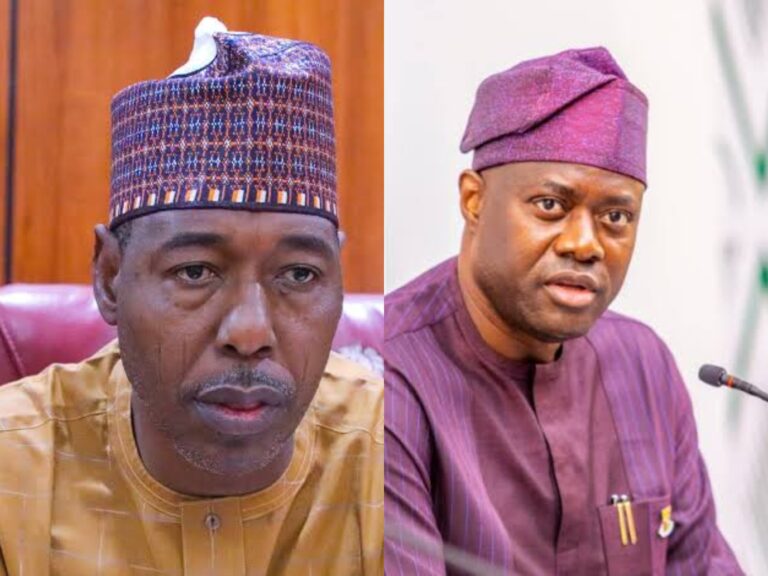
Governor Seyi Makinde later confirmed that intelligence reports pointed to the National Park as the likely location of the abductees and described the terrain as one of the biggest obstacles confronting rescue teams.

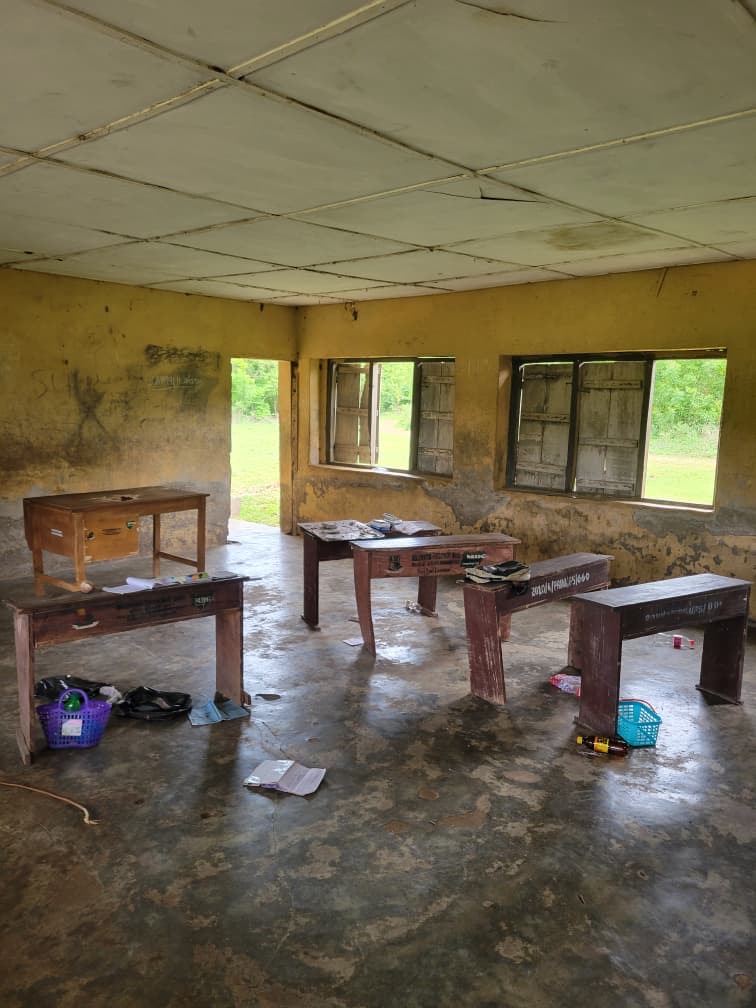
School items left behind by students after terrorist attack in Esin Ele community

“One thing I can say is that our security reports indicate that they remain within the wider Old Oyo National Park axis. This is a vast area that stretches across parts of 10 local government areas in our state, covering approximately 2,500 square kilometres,” Makinde said.

“I mention this not to discourage anyone, but to help us understand the scale of the challenge before us. This is not an issue affecting only Oriire Local Government Area. It is an issue that concerns all of us. The size and terrain of the area require patience, coordination and persistence. It also means that vigilance from members of the public remains extremely important.”

In the latest escalation, the Oyo State Government imposed a 16-hour curfew across 10 local government areas bordering the park.

The restriction, which runs daily from 4 p.m. to 8 a.m., affects Oriire, Oorelope, Irepo, Saki West, Saki East, Atisbo, Itesiwaju, Iseyin, Olorunsogo and Atiba local government areas. According to the government, the measure is intended to strengthen ongoing security operations aimed at rescuing the victims and dismantling criminal networks operating around the forest corridor.

Despite all the efforts by stakeholders, including protests, strikes, and military operations in the state, the captives have yet to return home.

In Borno, the trajectory has been different but equally troubling.

Governor Babagana Zulum visited the affected community shortly after the attack and assured families that efforts were underway to secure the release of the abductees. However, as weeks passed without a breakthrough, frustration began to mount among parents and community leaders.

The NUT later marched through Maiduguri, demanding urgent government action. Led by the union’s National Publicity Secretary, Yusuf Ibn-Tom, the protesters urged both the federal and state governments to intensify rescue efforts and prioritise the safe return of the victims.

Parents and political leaders from Askira-Uba also staged demonstrations, accusing authorities of failing to provide sufficient information about the status of rescue operations. Unlike in Oyo, where officials have publicly disclosed the suspected location of the abductees and announced successive security measures, little information has emerged about the whereabouts of the victims abducted from Mussa.

The absence of regular public updates has fueled anxiety among families who have now spent more than six weeks waiting for news of their loved ones in a state that has arguably witnessed the most terrorists’ onslaughts in Nigeria.

The two incidents have also become a rallying point for wider public discontent over insecurity in the country. On June 12, demonstrators gathered in Abuja and Lagos to demand the safe release of the abductees and call for stronger action against kidnapping and insurgency.

In his Democracy Day address, President Bola Tinubu acknowledged the pain caused by the abductions, saying the mood of the nation had been dampened by the continued captivity of children taken from schools in Oyo and Borno states.

“We remain hopeful for their safe return,” the president said.

He defended his administration’s security strategy, noting that the government had declared a security emergency, approved the recruitment of more than 50,000 police officers and thousands of military personnel, and allocated N5.41 trillion to defence and security in the 2026 budget.

The president also issued a warning to armed groups. “To bandits, kidnappers, and sponsors of terror: surrender or face the full force of the Nigerian State,” he said, adding, “No mercy will be shown to those who trade in the blood of Nigerians.”

But forty days after the attacks, the victims abducted from classrooms in Oyo and Borno remain in captivity.


Despite over 19,000 deaths, 12,000 kidnappings since 2023, Tinubu’s aide accuses media of exaggerating insecurity

THE Special Adviser to President Bola Tinubu on Information and Strategy, Bayo Onanuga, has accused Nigerian media of creating a false impression that Nigeria is overwhelmed by insecurity, despite thousands of killings and kidnappings recorded across the country since the current administration came into office.

Speaking during an in on Arise Television on Tuesday, June 24, Onanuga argued that media reports often portray insecurity as though it has engulfed every part of Nigeria.

“The problem is that the media in Nigeria, they’re even creating the problem. The way they’re reporting security is as if the entire country is consumed,” he said.

His remarks came amid persistent attacks by bandits, insurgents, armed herders and other criminal groups across several states.

Data analysed by The ICIR show that at least 19,980 people have been killed across Nigeria between 2023 and April 2026.

The figures, compiled from the Mass Atrocities Tracker, indicate that violence linked to insurgency, banditry, communal clashes and separatist activities has continued to claim lives despite repeated assurances from the government that security is improving.

A breakdown of the data shows that 4,416 people were killed in 2023. The figure rose to 5,353 in 2024 and increased further to 6,518 in 2025. Between January and April 2026 alone, at least 3,693 people had already been killed.

The data further show that kidnapping remains widespread.

Between 2023 and April 2026, at least 12,362 people were abducted across the country. While 2,653 kidnappings were recorded in 2023, the figure nearly doubled to 5,171 in 2024. In 2025. At least 3,033 people were kidnapped, while another 1,505 abductions were recorded in the first four months of 2026.

Recent incidents have heightened concerns about the country’s security situation. On May 15, gunmen abducted dozens of pupils from Government Day Junior Secondary School in Askira-Uba Local Government Area of Borno State.

On the same day, armed men attacked three schools in Oyo State, kidnapping pupils and teachers in incidents that revived fears of mass school abductions.

However, Onanuga insisted that while security breaches occur, Nigeria is not under siege.

“Don’t let people frighten you that the entire country is under siege. It’s not. There are security breaches,” he said.

The presidential aide argued that many Nigerians continued to travel safely across the country and cited examples of individuals undertaking long-distance road journeys without incident.

He also suggested that many attacks occur at night, adding that said there were longstanding security advisories against night travel.

“Any time I read about either a kidnap or an attack somewhere, sometimes, I look at the time. I say, wow, it happened 8 p.m., it happened 9 p.m., sometimes 1 a.m. A long time ago, the police told people to stop travelling at night,” he said.

The TV host further presented to Onanuga insecurity data from Beacon Security and Intelligence Limited and the Armed Conflict Location and Event Data Project (ACLED), which reportedly showed that terror-related fatalities linked to terror groups increased by 4.6 per cent between 2015 and 2025.

The figures appeared to contradict Tinubu’s recent claim that insecurity-related fatalities had declined by 81 per cent.

Defending the government’s position, Onanuga said the Presidency relied on statistics supplied by the Office of the National Security Adviser.

“The data we’re offering is the data provided by the Office of National Security Adviser. That’s the data we use. Whoever is compiling that, where did they get it from?, he queried.

When informed that the alternative figures were compiled by internationally recognised conflict-monitoring organisations, he questioned their accuracy.

“They may be wrong. The data we have is the data from the Office of National Security Adviser. You cannot say the data is wrong and only this one is right,” he added.

US names ISIS financiers in Nigeria, others

THE United States government has sanctioned a Nigeria-based financial facilitator and several international operatives accused of helping the Islamic State of Iraq and Syria (ISIS) move funds across borders to support terrorist activities worldwide.

Among those identified is a France-based facilitator who provided information concerning the use of explosives to ISIS supporters, a Syria-based operator who used cryptocurrency to transfer funds on behalf of ISIS associates in multiple countries including the United States, and a Nigeria-based facilitator whose money exchange businesses served as conduits for ISIS financing.

In a statement released on Monday, the US Department of State announced sanctions against three individuals and six entities operating across Europe, the Middle East, and West Africa, describing them as key actors in a transnational network that enabled ISIS to finance its operations.

The State Department did not immediately disclose the individual’s identity.

“Today’s designations target three individuals and six entities operating across Europe, the Middle East, and West Africa who have enabled ISIS to move money across borders – exposing a network that spans from France and Syria to Türkiye and Nigeria,” part of the statement reads.

The sanctions form part of President Donald Trump administration’s broader strategy to dismantle ISIS’s financial infrastructure and cut off funding channels used to support attacks, regional affiliates, and extremist activities.

“Under the leadership of President Trump, the United States is dismantling ISIS’s ability to finance terrorism around the world,” it argued.

The US government said the designated network stretched from France and Syria to Türkiye and Nigeria, highlighting the increasingly decentralised nature of ISIS operations and its reliance on intermediaries to move money globally.

“The United States also reaffirms its strong partnership with Nigeria, which joined the United States in the May 16, 2026, operation that resulted in the killing of Abu-Bilal al-Minuki, the number two official in ISIS,” the statement stressed.


Police dismiss reports of relocation of abducted school children, teachers in Oyo

0

THE Police Command in Oyo state has dismissed reports on social media that school children and their teachers abducted in Oriire Local Government of the state have been moved to Kaduna State by helicopter.

A statement by the Police Public Relations Officer (PPRO) in the state, Olayinka Ayanlade, a deputy superintendent of police, on Tuesday in Ibadan, said that the report and video alluding to this were entirely false, unverified, misleading, and devoid of any factual basis.

He added that the report also lacked credibility, substance, and the requisite threshold of authenticity expected of information relating to such a sensitive security matter.

“The said video claimed that the abducted school children and teachers from Ahoro-Esiele and Yawota Communities in Orire Local Government Area of Oyo state have been moved to Kaduna State via a helicopter.

“Members of the public are hereby informed that intensive rescue operations remain ongoing. The Oyo State Police Command, in close collaboration with other security and intelligence agencies, has significantly intensified efforts aimed at ensuring the safe rescue of all abducted victims,” said the command.

It also said it was intensifying efforts towards their prompt reunification with their families, and the apprehension and prosecution of those responsible for the attack.

Ayanlade further stated that the command was deeply concerned about the deliberate spread of misinformation and disinformation by certain individuals.

According to him, these unknown individuals seek to undermine public confidence in the ongoing rescue efforts and the sacrifices being made daily by security personnel working tirelessly to secure the release of the victims.

He added that such actions were not only irresponsible, but also capable of creating unnecessary panic, misleading the public, and obstructing security operations.

“The Oyo State Police Command therefore strongly warns against the dissemination of false, unverified, or malicious information, particularly on matters affecting public safety and national security.

“Individuals or groups found to be originating, promoting, or circulating misleading content intended to cast doubt on the integrity, professionalism, and commitment of security institutions, will be identified and dealt with in accordance with the law, “he said.

Ayanlade urged residents of Oyo State and the general public to remain calm, vigilant, and supportive of ongoing security efforts.

“Citizens are encouraged to rely only on information disseminated through official channels and verified sources while refraining from sharing speculative or unconfirmed reports.

“The command remains steadfast in its commitment to protecting lives and property and assures the public that every available resource is being deployed to secure the safe return of the abducted children and teachers, “he said. (NAN)

Edgar Lungu’s family secures final legal victory in burial row with Zambian govt

A SOUTH African appeals court ruled on Tuesday that the family of former Zambian President Edgar ​Lungu should decide where he is buried.

The appeal court overturned a lower court’s order that ‌Zambia’s government could repatriate Lungu’s body for a state funeral.

Lungu, who led Zambia from 2015 to 2021, died in South Africa a year ago while undergoing medical treatment.

His body has remained in ​South Africa since.

His family and the Zambian government have wrangled ​over whether he should be buried at a site designated for ⁠Zambia’s former presidents in the capital Lusaka, or privately in South Africa as ​his family prefers.

Lungu and his successor, current President Hakainde Hichilema, were longstanding political rivals, ​and his family says Lungu would not have wanted Hichilema to be present at his funeral.

Zambia’s Attorney General Mulilo Kabesha said the government respected the South African court’s decision, though it ​did not agree with the majority judgment.

“We will not exercise our right to ​appeal to the Constitutional Court. We will not take the matter any further,” Kabesha said.

In its ‌judgment ⁠on Tuesday, South Africa’s Supreme Court of Appeal said the Zambian government failed to show it had a legal right under South African law to override the family’s wishes on where and how Lungu should be buried.

It also rejected Zambia’s ​argument that a binding ​agreement had been ⁠reached with the family over the funeral, saying that evidence pointed to ongoing negotiations rather than a final deal.

South Africa’s ​government has said it has an obligation to respect the ​wishes of ⁠Lungu’s family, but it also said it felt a state burial in Zambia would be the most fitting outcome for the former leader.

Lungu drove Zambia deeply into debt during ⁠his ​roughly six years in power.

The country defaulted on ​its international debt in 2020, precipitating his election loss. Hichilema will seek re-election for a second five-year term at an election in August.

(Reuters/NAN)

Kebbi South senator dumps APC for ADC over primary election dispute

THE senator representing Kebbi South Senatorial District, Garba Maidoki, has quit the All Progressives Congress (APC) for the African Democratic Congress (ADC)

He blamed his decision on unresolved disagreements within the ruling party in the state

The lawmaker’s decision was made known during Tuesday’s Senate sitting through a letter addressed to the Senate President, Godawill Akpabio.

The letter was read before members of the Upper Chamber by Deputy Senate President, Barau Jibrin, who presided over the plenary according to a report by TheCable.

Maidoki explained that he arrived at the decision after consulting people in his constituency and reviewing developments within the APC, particularly the controversies that followed the party’s primary elections in his state.

In the letter, he stated: “I am writing to inform Your Excellency, the President of the Senate, and my distinguished colleagues of my defection from the All Progressives Congress, APC, to the African Democratic Congress, ADC.”

He added: “My decision is based on the lingering internal crisis of the APC that has made my political inspiration a source of concern.”

According to the senator, the ADC provides a better opportunity for him to pursue the interests of his constituents and contribute to national development.

“I believe that the ideas of the ADC are better for the benefit of my senatorial district and Nigeria at large,” he said.

Maidoki also criticised the APC’s handling of its recent primary elections in Kebbi, accusing the party of failing to uphold its proclaimed values.

“The All Progressives Congress, APC, has not exhibited its slogan of justice, peace, and unity, especially in Kebbi State during the just concluded primary elections,” he said.

“It is in this regard, therefore, that I wish to inform you of my defection to the African Democratic Congress, which I believe guarantees my political aspiration.”

Following the announcement, the Deputy Senate President challenged the claim that the APC was facing a serious crisis in Kebbi State.

He appealed to the senator to reconsider his decision, assuring him that any disagreements within the party could be resolved through dialogue.

“But I beg to disagree with you here. There is no internal crisis in the APC,” Jibrin said.

“Let me ask that you allow me to intervene to reconcile you and I know there is no problem, there is no internal problem in the APC in Kebbi state. It might be because of family disputes. If you allow me, I can come in to reconcile you.”

Despite the appeal, Maidoki maintained his position and declined the offer for reconciliation.

The senator’s exit comes shortly after he withdrew his membership from the APC ahead of the party’s senatorial primary contest. In a resignation letter dated May 14 and sent to his ward leadership in Rafin Zuru, Zuru Local Government Area, he had already expressed dissatisfaction with what he described as disputes within the party.

Maidoki currently heads the Senate Committee on Legislative Compliance and also serves as Vice Chairman of the Senate Committee on Information and National Orientation.

His move is expected to strengthen the ADC’s presence in Kebbi State as political realignments continue ahead of the 2027 general elections. The development also highlights growing dissatisfaction among some APC members over the conduct of party primaries and internal political arrangements.

The ICIR earlier reported that nine senators from different political parties were among others who announced their defections to opposition platforms, with many citing internal disputes and challenges within their former parties.

Troops rescue 47 from ISWAP enclave in Borno

0

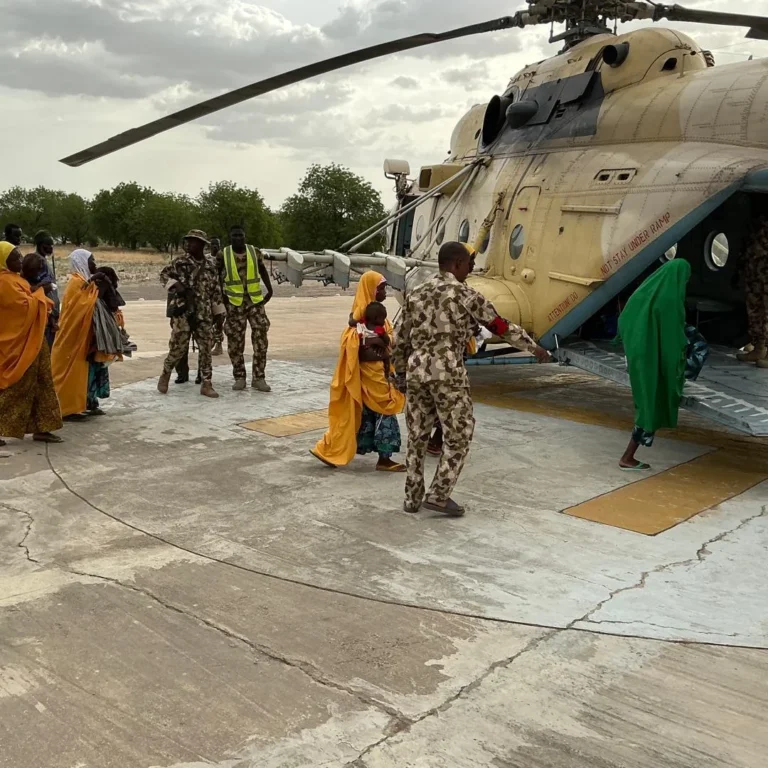
TROOPS of the Joint Task Force (North East), Operation Hadin Kai (OPHK), have rescued 47 persons, mostly women and children, from the Islamic State West Africa Province (ISWAP) enclave in Kangarwa, Kukawa Local Government Area of Borno.

This is contained in a statement issued by the Acting Military Information Officer of OPHK, Mohammed Goni, a captain, on Tuesday in Maiduguri.

Goni said the victims were rescued following sustained offensive operations by troops against ISWAP strongholds in the Lake Chad region.

He said the rescue was made possible through aggressive ground and air assaults that forced the terrorists to abandon their positions, creating an opportunity for the captives to escape from prolonged detention.

The military spokesman added that the rescued persons were receiving medical attention at a secured location, while arrangements are being made to provide them with the necessary humanitarian assistance.

He said relevant agencies are collaborating with the military to facilitate the victims’ rehabilitation and eventual reintegration into society.

Goni noted that the latest rescue underscored the commitment of Operation Hadin Kai to protecting civilians while sustaining efforts to degrade terrorist capabilities in the North-East.

He reaffirmed the resolve of the Theatre Command to intensify offensive operations aimed at dismantling remaining ISWAP networks and restoring lasting peace and normalcy across the region.

The ICIR reports that Kangarwa has long been one of the areas affected by insurgent activities around the Lake Chad Basin. The region has served as a stronghold for ISWAP and other terrorist groups due to its difficult terrain and proximity to several islands and waterways that have historically provided cover for fighters.

Over the years, thousands of residents of communities in Kukawa, Marte, Abadam and other parts of northern Borno have been displaced by insurgent attacks, while many women and children have been abducted during raids on villages and farming settlements.

The latest rescue came amid intensified military operations by Operation Hadin Kai across the Lake Chad region.

Earlier in June, the military announced the rescue of 360 women and children from terrorist enclaves in the North-East, as security forces stepped up efforts to dismantle remaining insurgent networks.

However, despite these gains, ISWAP continues to stage attacks on communities and security formations in parts of Borno State, underscoring the persistent security challenges facing the region two decades after insurgency began in Nigeria.