Home Blog Page 43

Beyond 2027: Prioritise states creation demand for Anioma, Ijebu, Ogoja, Ibadan

0

By Eric TENIOLA

BETWEEN 1960 and 1966, Nigeria operated the regional arrangement. However, between 1967 and 1996, the country had to be split into thirty-six States. The first state creation exercise was undertaken by the regime of Yakubu Gowon, a general, in 1967. Prior to his ascension to power,  Aguiyi Ironsi, a general, was Nigeria’s first military Head of State. 
He dissolved the four regions in the country and subsequently created twelve States on May 5, 1967. Six States were carved out from the former northern region. These were: the North-Western State, the North-Eastern State, Kano State, North Central State, Benue-Plateau State and Kwara State.
The former Western Region was split into two States: Western State and Lagos State. The former Mid-Western Region became the Mid-Western State, while the former Eastern region had three new States carved out: East Central State, Rivers State and the South-Eastern State.
Another state creation exercise took place in 1976 following the ouster of Gowon in a military coup led by Murtala Mohammed, a general.
On assumption of office, Mohammed created the following States: Anambra, Bauchi, Benue, Imo, Niger, Ogun and Ondo, bringing the total number to nineteen from the original twelve States created by Gowon. It took another eleven years (1987) for State creation exercise to be undertaken in the country. That was under the regime of Ibrahim Babangida, a general (1985 – 1993).
In 1987, Babangida created two States, Akwa Ibom and Katsina. He also created nine additional States in 1991. These were: Abia, Enugu, Delta, Jigawa, Kebbi, Osun, Kogi, Taraba and Yobe. Akwa Ibom was carved out from Cross River State, while Katsina State was created from Kaduna State. Similarly, Adamawa and Taraba States were carved out from the former Gongola State, and Enugu State out of Anambra State, while Edo and Delta States replaced the old Bendel State.
Also, Yobe State was created from Borno State, and Jigawa out of Kano State, while Kebbi and Osun States were carved out from Sokoto and Oyo States respectively. Kogi State came from Kwara and Benue States.
Altogether, there were thirty (30) States by 1991. Sani Abacha, a general, became Nigeria’s next military Head of State in 1993 after ousting the Chief Ernest Shonekan-led Interim National Government (ING). Due to stringent agitations for more States, Abacha set up the National Constitutional Conference (NCC) which recommended, among other things, the creation of new States. On October 1, 1996, he created six additional States namely, Ebonyi (from Abia and Enugu States), Bayelsa (from Rivers State), Nasarawa (from Plateau State), Gombe (from Bauchi), and Ekiti (from Ondo).
The movements for the creation of states in Nigeria can be traced back to 1937 when Nnamdi Azikiwe  advocated in his book THE POLITICAL BLUEPRINT OF NIGERIA, a federal form government for the country and the division of the country into eight constituent units based on geographical configuration.
Azikiwe was later joined by Chief Obafemi Awolowo who, in a book, PATH TO NIGERIA FREEDOM published in 1947, proposed a re-division of Nigeria into fen federating units with ethnic, linguistic and cultural affinity as the basis. However, Awolowo writing in 1966 seemed to have modified his stand when he shifted ground and advocated a division of the country into eighteen states—nine in the North and nine in the South based on linguistic and cultural affinity as well as economic viability of states in the federation.
Awolowo’s submission at that time was that the COR state with the population of 717,000 Ibibio; 435,000 Annang; 428,000 Ibo; 251,000 Ijaw; Ogoni 156,000 and Efik 75,000. He alerted that the genuine cause of the minorities in the then Eastern Region should be created.
Chief Awolowo re-echoed this demand on May 1, 1967 in Ibadan at a meeting of Western Region Leaders of Thought on the need for the creation of more states especially COR state meaning Calabar, Ogoja and Rivers states. He told the meeting on that day, “We have been told that an act of secession on the part of the East would be a signal in the first instance for the creation of the COR state by decree which would be backed, if need be, by use of force”.
In 1963 as a result of the 1962 Western Region Crisis the pressure for the state creation which resulted in subsequent declaration of a state of emergency in the former Western Region, the Mid-West Region (now Edo and Delta states), was created out of the then Western Region. The creation of the new Region tended to have intensified and encouraged the demands for the creation of more states in other parts of the country as we have witnessed over the years.
In his May 27, 1967 broadcast, Gowon declared, “This is why the first item in the political and administrative programme adopted by the Supreme Military Council last month is the creation of states for stability. This must be done first so as to remove the fear of domination. Representatives drawn from the new states will be more able to work out the future constitution for this country which can contain provisions to protect power of the states to the fullest extent desired by the Nigerian people.”
Although there is no magic formula for determining the optimum number of states in any federation, certain specific criteria must be spelt out if the entire exercise of State-Creation is to be conducted in a rationale and fair manner.
Any meaningful exercise in State-creation has to be guided by specific and well-defined political consideration. First, there is the need to maintain and strengthen our federal system of government which must continuously reduce suppression and discord in every new step taken. In our earnest attempt to redraw the political map of Nigeria and satisfy the legitimate yearnings and aspirations of the generality of our people, we must guard against the proliferation of States which will not only reduce states to glorified local governments, but more importantly enable the federal government to become stronger, through which process the country may inadvertently revert to a unitary system of government.
Although the creation of new states would bring states government closer to the people thereby making government particularly at the state level, more accountable and more efficient each new state must be in a position to function effectively in a federal structure where the constituent units are usually coordinated and mutually independent.
In applying this political consideration to the present exercise in states creation however, we must remember that the United States of America with fifty States and Switzerland with twenty-five cantons have adhered strictly to the principles of federalism. What is more, both the Constitution and revenue allocation systems have clearly defined the structural, functional and relationships between the various levels of government in Nigeria.
Secondly, there is the need to promote peace and political stability in the country. Today, the issue of State creation is so crucial and fundamental that peace and stability cannot be guaranteed without some action taken about it. Apart from the ever-increasing desire to attract more revenue, political and other appointments and patronage from the federal establishments, the state creation promoters are vigorously envisaging the successful emergence of a political structure that shall perpetually disallow any ethnic group to hold a position which can enable it to dominate all the others put together.
State creation exercise must be sufficiently related to the needs and aspirations of the various groupings in Nigeria. The continued agitations for creation of more states is a direct result from bad government—leadership and discriminatory policies of the various state governments.
Indeed, even if the National Assembly was to make every hamlet in this country a state, there would continue to be demands for more so long as there is a corrupt, autocratic and purposeless government or government or governments particularly at the state level.
The basic motivation in the demands for states creation is the promotion of accelerated and balanced economic development. States creation, it is often argued, makes for the greatest possible diffusion of economic power which in itself guarantees even development. It is also often asserted that some demands are masterminded by few selfish individuals with the hope of becoming big fish in small waters if and when the new state is created.
Be that as it may, certain specific dimensions of economic viability constitute relevant considerations in any sensible exercise in state-creation.
The proliferation of states, for instance, may lead to high administrative cost and acute shortage of high and middle level manpower particularly in the less developed areas of the country.
The present economic trend in the country, the low revenue generating capabilities of the existing states and their heavy dependence on statutory grants from the federal government call for caution and calm assessment of Nigeria’s, economic and political potentialities in the area under consideration.
There are some areas that should have become states by now judging by their past history. I have in mind Ijebu, Ogoja, Anioma, Ghari, Tiga, Okura, Lautai, Ngaba, Katagum and several areas. Tiga state should have composed of Bebeji, Gwarzo, Rano, Tudun-Wada and Rogo, all in Kano state, while Ghari state should have composed of Kazaure, Bichi and Dambatta also in Kano state.
Okura state should have composed of Ankpa, Bassa, Dekina, Idah, Ofu and Omalla while Katagum state should have composed of Shira, Gamawa, Misau, Katagum and Jama’re. Njaba state should have been created from Imo state. Lautai state should have composed of Ringim, Kaugama, Garki, Gumel, Maitagari, Hadeija Keffin-Hausa and Birniwa.
Ibadan state should comprise of the present eleven local government areas. Ibadan is the largest metropolitan area in Nigeria after Lagos and Kano. The city has 11 LGAs. Egbeda, Ibadan North, Akinyele, Ibadan Northeast, Ibadan Northwest, Ibadan Southeast Ibadan Southwest, Ido, Lagelu, Oluyole and Ona-Ara.
With a population of 3.1million and a land area of 3,850 square kilometres (2013), Ibadan city is the largest metropolitan geographical area in West Africa, housing almost half of Oyo State’s population (45 percent). From around 60,000 in the early 1800s Ibadan population grew to 200,000 in 1890, and to a million by 1930, the population is projected to reach 5.6 million people by 2033.
Anioma state was advocated many years ago. I remember in 1979, Senator Nosike Ikpo along with Chief Martin Nwoseh, Chief Michael Agbamuche, A. N. Iduwe and G.N. Nwechue, submitted a strong worded memorandum to the National Assembly. Senator Ikpo was a friend and lobbied his colleagues then for the creation of Anioma state. At that time, Anioma comprised of four local governments areas—Ndokwa, Ika, Aniocha and Oshimili. His argument was that the creation of Anioma state would enhance the participation of the Igbos in a more united Nigeria.

 

As of today, most of the provinces created by the British have become autonomous states except Ogoja and Ijebu. Remo was of course grouped under Ijebu Province while Abeokuta has since become a state capital. Some of these old Provinces have been split into states. Take for example Ondo Province had four divisions namely Ekiti, Okitipupa, Ondo and Owo. Now the old province has been split into two states, Ekiti and Ondo.
The old Calabar Province consisted of Ikot Ekpenne, Uyo, Eket. Now province had become two states—Cross Rivers and Akwa Ibom. Even the old Benue Province comprised of Lafia, Nasarawa, Wukari now has two states—Benue and Nasarawa states.
The only exception in the old Western Region, is Ijebu Province—that has not been granted an autonomous state. So, the demand for Ijebu state is needful. If other Provinces can become autonomous states, why not Ijebu?
Before he died, the Awujale of Ijebuland, Ọba Sikiru Kayọde Adetọna , Ogbagba II, not only canvassed for unity among the Ijebu and Remo people, but he also canvassed for the creation of Ijebu state. It is now left for the leaders of Ijebu and Remo to press on for the legitimate demand of Ijebu state.
The demand for states creation and restructuring should be part of the agenda of the next President of Nigeria. The first task will be to amend the Constitution, so that these issues will be better handled than the tight grip in the 1979 and 1999 Constitutions introduced by the military.
The 1979 Constitution made adequate provision for steps to be taken before states could be created. They are contained in Section 274 of the suspended Constitution.
The same provisions are contained in Section 8 of the 1999 Constitution. Let’s face it, these provisions are insurmountable hurdles and they have been exploited since 1999, by the political class, especially by those who have occupied the positions of Deputy Senate President and deputy Speaker of the house of Representatives for financial gains.
All that should be done by the next elected President is to amend the Constitution so as to lower these hurdles that have made it impossible for states to be created and restructuring equally impossible and other issues. That should be the task of the next President of Nigeria.
Teniola, a former director at the Presidency wrote from Lagos.

Trump pauses attacks on Iran with Hormuz strait still blocked

0

UNITED States President Donald Trump has paused attacks on Iran indefinitely, noting that he would continue the US Navy’s blockade of Iran’s trade by sea.

Trump in a statement posted on social media, revealed that the US decision followed a request by Pakistani mediators until the time their leaders and representatives can come up with a unified proposal and discussions are concluded.

However, even as Trump announced what appeared to be a unilateral ceasefire extension, Reuters reported that the Strait ​of Hormuz remained blocked on Wednesday with three ships reportedly hit by gunfire.

Just hours before Trump called off attacks, he had again threatened to resume military action, saying US forces were “raring to go” before ultimately stepping back from immediate strikes.

Tehran has rejected the move, viewing the blockade as an act of war and insisting it will not reopen the Strait of Hormuz under current conditions. 

The waterway, a critical global energy corridor through which roughly 20 percent of the world’s oil and gas supplies pass, remains disrupted, intensifying pressure on global markets. 

Pakistan’s last-ditch push to salvage the truce saw officials prepare for talks in Islamabad on Tuesday, hoping to secure a breakthrough before the two-week ceasefire lapsed.

Those efforts unraveled when Iran failed to confirm its participation, while a US delegation led by Vice President JD Vance never left Washington, deepening the deadlock in a conflict now nearing two months and leaving no pathway to reopen the Strait of Hormuz.

By early Wednesday, there was still no formal reaction from senior Iranian officials to the ceasefire announcement by Donald Trump, though early signals from Tehran indicated a cautious, and largely skeptical, reception.

Tasnim News Agency, which is affiliated with the Islamic Revolutionary Guard Corps, said Tehran never requested an extension of the ceasefire and reiterated warnings that it could use force to break the US naval blockade.

An aide to Mohammad Baqer Qalibaf, a key figure in Iran’s negotiating team, suggested that the announcement by Donald Trump could be a strategic ploy rather than a genuine shift toward de-escalation.

The war, launched on February 28 by the United States and Israel, rapidly expanded beyond its initial frontlines, pulling in Gulf states that host American military bases and spilling into Lebanon after the Iran-backed group Hezbollah entered the conflict.

The death toll risen to more than 5,000 civilians reported killed across the region.  According to Lebanese state media, in the latest drone strike attributed to Israel killed one person and injured two others in the western Bekaa Valley, although the Israeli military said it had no information on the incident.

Despite a ceasefire agreement announced last week between Israel and Lebanon, Tehran maintains that a sustained halt to hostilities remains a key condition for any broader negotiations with the United States.

 Inside Benue schools where students share classrooms with IDPs 

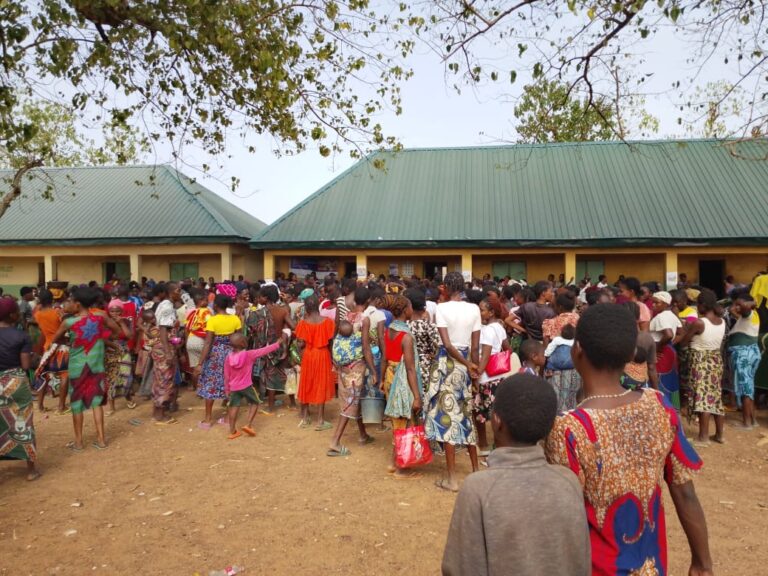
A wave of displacement driven by persistent insecurity has forced some residents in Benue State to take refuge in schools. This story examines their living conditions and how the conversion of schools into IDP camps has led to overcrowding and disrupted education.


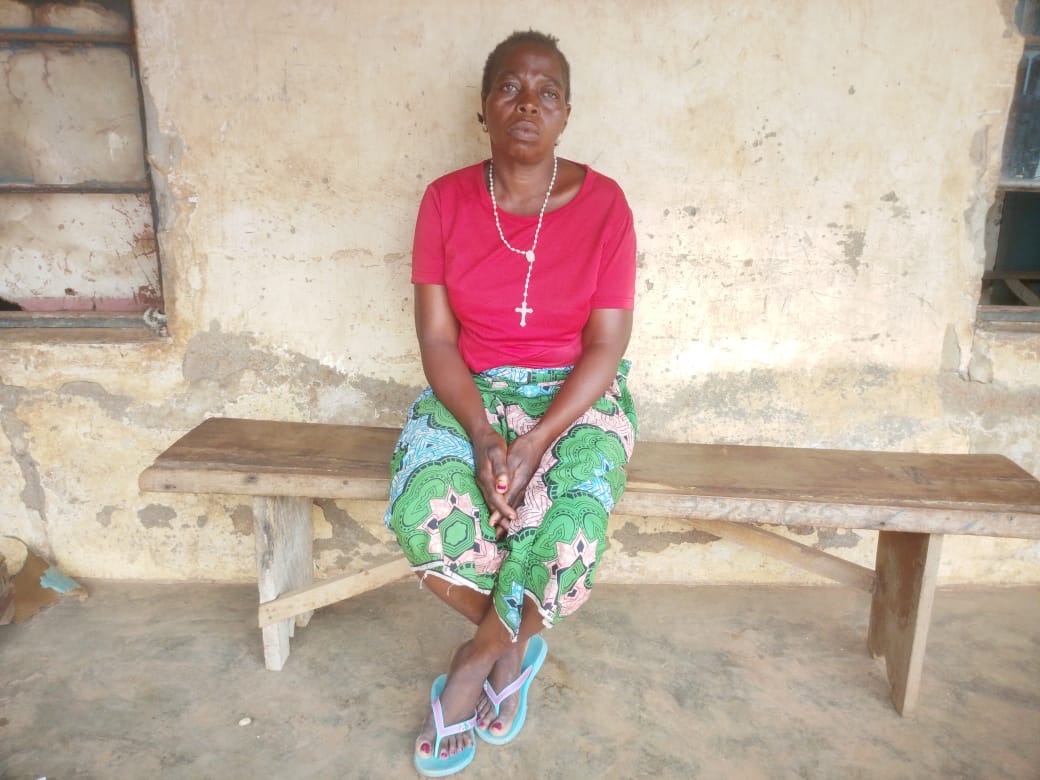
Sukpu Tony now sleeps in a classroom at the RCM Primary School in Agagbe, Benue State. It is one of many buildings across the state where spaces meant for learning have been turned into shelters for victims displaced by violence. At night, his family spreads out on the bare floor inside the classroom. By day, the same school premises are expected to serve as a place of learning.

The 40-year-old farmer ended up in school turned IDP camp after surviving a brutal attack on his village, Mbapupuu, in Gwer West Local Government Area. Gunmen, suspected to be armed herders, raided the community, killing several residents, including members of his family, and leaving him with a life-altering injury after his leg was cut. Believing he was dead, the attackers abandoned him.

He lay there until a passerby found him, still alive. The stranger carried him to safety, and he was later taken to Makurdi for treatment. By the time he recovered, the life he once knew had already slipped away.

Today, he lives with his family at the primary school in Agagbe. The buildings are in poor condition, with damaged roofs, no windows, and families sleeping on bare floors without bedding.

Sukpu Tony

For years, Benue has been one of the epicentres of brutal violence in north-central Nigeria, marked by systematic killings, mass displacement, and the destruction of entire communities.

The victims are largely agrarian communities, whose livelihoods have been shattered by incessant attacks primarily from armed herders.

What began as resource-based disputes over land and water access has transformed into large-scale criminal violence, underpinned by climate pressures, rapid population growth, ethnic-religious tensions, and, more importantly, state failure.

According to the International Organization for Migration (IOM), 219,477 individuals from 59,268 households had been displaced in Benue as of February 2026. Of these, 44 per cent are male and 56 per cent female. The actual figure may be higher, as not all displaced persons are registered.

In Agagbe alone, about 2,652 individuals across 682 households are living at RCM Primary School, where Tony lives. The camp is one of several makeshift shelters across the state.

Between classroom and IDP camp

There are several sites housing internally displaced persons in Agagbe. Two of them are schools, namely RCM Primary School and St. Francis Xavier Secondary School, while the others include the Holy Rosary Camp, an abandoned police station, among others.

When this reporter visited the camp in March, the schools were on holiday, making it difficult to observe how learning takes place alongside displacement. However, a source familiar with daily operations at the camp described how the system operates when the students are in school.

Crowded RCM Primary School

At the RCM Primary School, which serves as the central camp hub, classrooms have been divided between pupils and displaced families. Some rooms are allocated to IDPs, while others are squeezed to accommodate students. Even at that, the available space is not enough.

According to him, the school originally had about eight classrooms in use, but the number is now inadequate for the growing population. Some pupils are forced to stay outside during lessons, while others cannot attend school at all because there is no space to accommodate them.

Across other locations like St. Francis Xavier Secondary School, the situation is similar, with buildings filled beyond capacity. The Rosary’s camp and the abandoned police station also house displaced families, all relying on the same limited infrastructure.

Sanitation facilities are scarce. While Médecins Sans Frontières (MSF) constructed toilets at the RCM Primary School and St. Francis, some sites have none, forcing residents to resort to open defecation.

Water remains a major challenge. The entire community depends on a nearby stream, which is also used by cattle.

“You can even smell the cattle urine in the water,” he said, describing how humans and livestock rely on the same source.

Despite these conditions, there is no alternative supply. During dry periods, the stream reduces significantly, making access even more difficult. Some residents also fear going to fetch water due to the presence of armed men spotted around the area.

The overlap between living spaces and learning environments continues to create tension. School activities are frequently disrupted, especially when visitors arrive at the camp.

“Anytime visitors come, everything becomes disorganised. Sometimes they even close the school for that day,” he said.

Squashed inside classrooms 

For Tony and many others, survival is now a daily struggle.

Putting food on the table for his family and meeting other basic needs has become an everyday struggle for him. Survival in the camp depends largely on chance and the occasional help from outsiders, which rarely comes.

The structure, originally meant for learning, offers little protection. Its roof is partly broken, the windows are missing, and the floor is bare—conditions that have left his children constantly ill.

Water is fetched from a nearby stream that is also used by herders and their livestock. With no alternative source, residents drink from the same contaminated water, exposing themselves to disease.

“We use the same stream with cows. They drink and defecate there, but we have no other option,” he said.

Cooking is equally difficult. With little access to firewood and no proper utensils, preparing meals has become an irregular activity for many families in the camp.

For Tony, displacement is not new. He was first forced out of his home in 2001 and returned in 2002. But the latest wave of violence has made any return impossible. Without relatives in safer areas or the means to rebuild, he remains stuck in the camp with his family.

His wife’s condition further complicates his situation. She has been blind for nearly three years, with no access to medical care or support.

“My wife is blind. There is nowhere to take her for treatment, and nobody is helping us,” he said.

Beyond survival, the disruption to education weighs heavily on families. The same classrooms used as shelters double as learning spaces. Whenever visitors arrive at the camp, lessons are suspended, leaving children without consistent schooling.

“When people come to visit, the children go outside to see what is happening, and teaching stops,” he explained.

With no hospital, limited food, unsafe water, and inadequate shelter, daily life in the camp is marked by hardship. For Tony and many others, the need for help is urgent.

“We are suffering. There is no food, no hospital, nothing,” he said. “They should come and help us because we are living in very bad conditions.”

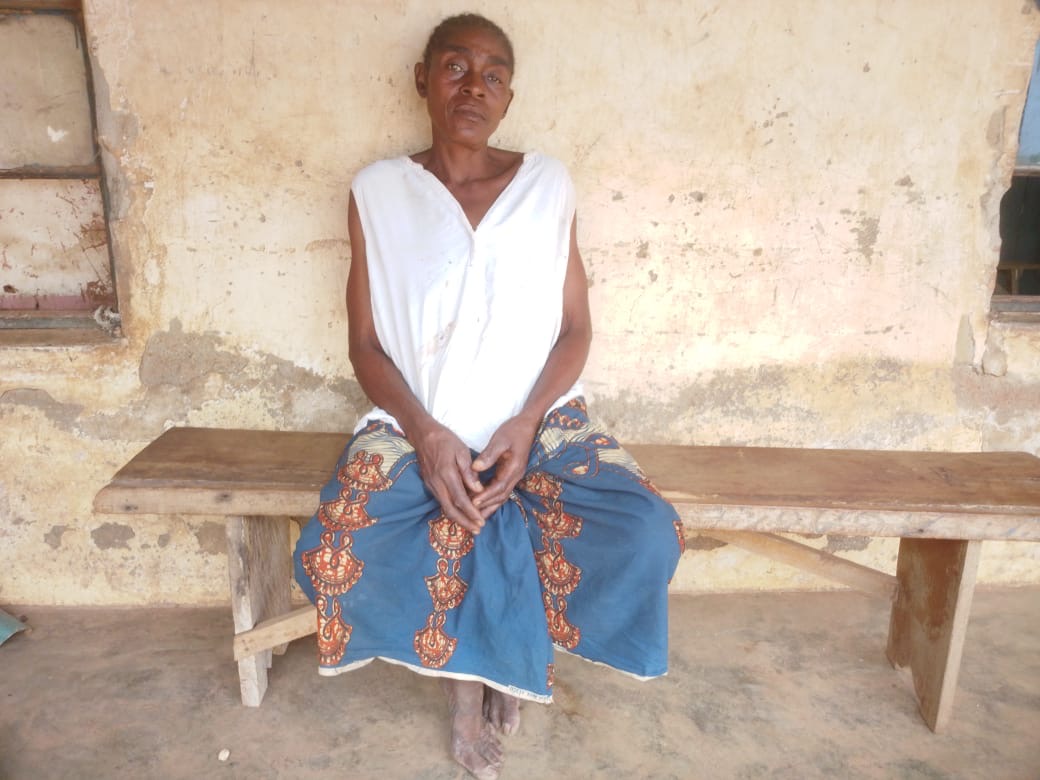
Gyegu Helen, a mother of five who also lives at the camp, was displaced from Tse Adekule in Gwer West after a violent attack that claimed the lives of her husband and several relatives. She was inside one of the classrooms she now shares with her children when this reporter visited the camp.

Life in the camp, she said, is a daily struggle.

“This is how we are living here. The place is too congested, and our children are always falling sick,” she said, pointing at the crowded classroom where families sleep side by side on the bare floor.

Gyegu Helen

Though she has spent years moving in and out of displacement, Helen says this phase has been the most difficult. She was first displaced in 2009 and later returned home, hoping to rebuild. But when attacks intensified in 2021, she was forced to flee once more—this time with little hope of going back.

On the day of the attack, she had been sitting in her compound when panic broke out. “People started running, and I followed them. The Fulani herdsmen were killing,” she recalled.

By the time the violence subsided, her husband and several relatives had been killed, leaving her to care for their children alone.

Breeding space for infectious diseases 

The classroom Helen occupies doubles as a shelter for multiple families, leaving little space for comfort or privacy. The congestion, she said, has contributed to the spread of diseases among children, including a measles outbreak recorded at some point.

Her children are also among those trying to continue their education under difficult conditions. The same classroom serves as both home and school, making learning inconsistent.

“When there is noise or any activity in the camp, the children cannot concentrate. Sometimes, when visitors come, they leave their classes to go and watch what is happening,” she said.

Access to clean water is another pressing concern. Like others in the camp, Helen depends on a nearby stream that is visibly contaminated.

“People defecate in the water, and cattle also drink from it. It is not meant for human beings, but we have no choice,” she said.

The impact is evident in the frequent cases of typhoid and other waterborne diseases affecting families in the camp.

Nyibiam Veronica, 50, a mother of eight from Tse Adekulevillage in Gwer West, lives in a single classroom shared with about 50 people. She said the overcrowded conditions have made the spread of diseases almost inevitable.

In August 2023, the camp recorded a measles outbreak that spread rapidly among children. Other illnesses such as chickenpox, meningitis, and cholera have also been reported.

Nyibiam Veronica

Veronica said she has repeatedly battled typhoid due to poor water and sanitation conditions. “We treat it, and it comes back again,” she said.

Although she acknowledged that the government occasionally provides food, she noted that the supplies are often insufficient. “It is not enough. It would be better if we could return to our farms and provide for ourselves,” she added.

Recounting her displacement, Veronica said the first attack on her community occurred in 2018.

“We were in our compound when the Fulani herdsmen came, shooting sporadically and stealing properties. We were lucky to survive. By the next morning, we decided to leave,” she said. “We want to go back to our communities because that is the best solution. But if the government cannot make that happen now, they should at least make life easier for us here. We will be happy.”

Dim future for children

Across the camp, the line between shelter and school has blurred, with classrooms now doubling as homes for displaced families, undermining education for children who are meant to learn there.

Lessons are frequently interrupted by noise from within the camp. On days when visitors or aid workers arrive, many children abandon classes to watch unfolding activities, leaving teachers unable to maintain order or continuity.

Even more troubling is the number of school-age children within the camp who are not enrolled at all, despite living inside a school environment.

For many families, basic survival takes priority over education. Some parents say they cannot afford uniforms, books, or other materials required for their children to attend classes. One of the displaced persons, Iveren, said her children have been out of school since they arrived at the camp. “I have not been able to buy uniforms for them,” she said, explaining that feeding the family comes first.

Speaking with The ICIR, an Education Advocate, Ibrahim Abdullahi explained that turning classrooms into IDP shelters has immediate and long-term consequences for education in a country like Nigeria, where over 20 million children are out of school. 

“Once a classroom becomes a living space, it loses the structure and environment needed for learning,” he said, adding that, “Overcrowding, noise, and constant movement make it difficult for teachers to teach and for pupils to concentrate. Even where lessons continue, the quality is significantly reduced, and schooling becomes irregular and ineffective.”

According to him, some children are pushed out because there is no space, while others drop out because their families cannot afford basic requirements or because learning conditions are too poor.

“Over time, this creates a generation of children who are physically close to schools but are not meaningfully learning. If this continues, it will widen educational inequality and leave lasting effects on the children’s future.

State Government reacts 

The Information Officer of the Benue State Emergency Management Agency (SEMA), Terma Ager, said the government is taking steps to separate displaced persons from formal school activities in Agagbe.

Ager confirmed that parts of the school, including some teachers’ quarters, are occupied by IDPs, but explained that with the support of camp officials, efforts are being made to ensure learning is not disrupted.

“Like in the morning, most of the IDPs go out to town to seek financial support, some go out for jobs, and others go to the farm. But if you visit during the day, there are still some of them in the camp. Some of their children also attend the school, so there is no disturbance,” he said.

On concerns about disruptions during aid distribution or official visits, Ager said structures have been put in place to manage such situations, including the involvement of camp officials and community leaders.

“Students are expected to remain in class during school hours, while parents and camp leaders handle distributions,” he added.

Ager maintained that the situation is improving, noting that some displaced persons have begun returning to their communities due to improved security.

“The governor is implementing durable solutions. Many IDPs are gradually returning to their villages, especially during the farming season,” he said, adding that large crowds are mostly seen during food distribution exercises.

This reporting was completed with the support of the Centre for Journalism Innovation and Development (CJID)

Why Tinubu sacked Wale Edun, Dangiwa

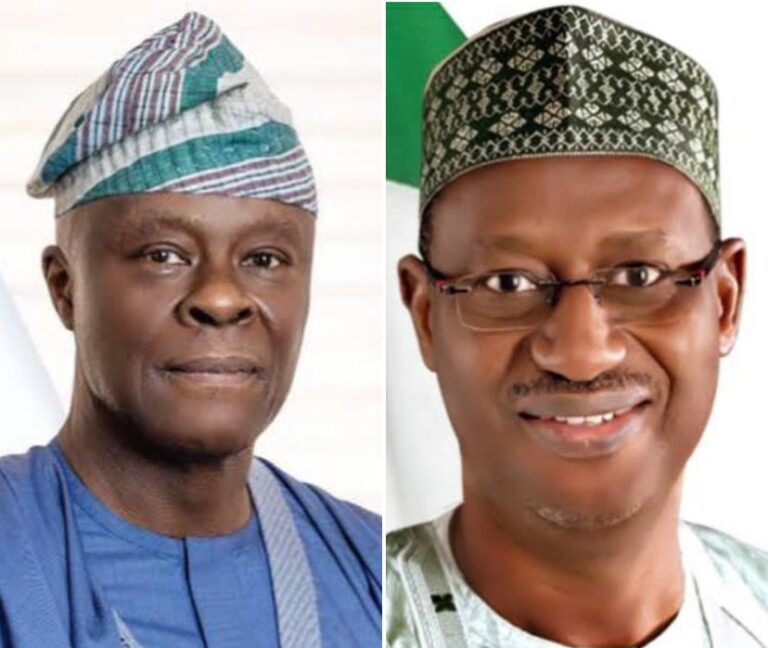
PRESIDENT Bola Tinubu on Tuesday sacked the Minister of Finance and Coordinating Minister of the Economy, Wale Edun.

Edun was sacked alongside the Minister of Housing and Urban Development, Umar Dangiwa.

Sources said the finance minister’s sack was not unconnected with his deteriorating health.

An informed source who pleaded anonymity told The ICIR that “Edun was released to go and attend to his deteriorating health condition. He wanted to go since late last year but was asked to stay on for the president to get a replacement.”

Edun, who just returned from the International Monetary Fund (IMF) Spring meeting in Washington, DC, has been directed to hand over to the Minister of State, Taiwo Oyedele, who is now to take over as Minister of Finance and Coordinating Minister of the Economy.

“This is long overdue; the finance sector was a monumental mess and failure, and appalling to the embarrassment of Mr President,” a public affairs analyst, Kunle Olubiyo, said in reaction to the sack.

Evaluation of Edun’s role as Finance Minister

Edun’s tenure was characterised by poor budget implementation and spearheading hardcore reforms of the Tinubu administration.

Under his watch, fiscal discipline was broken, and Nigeria saw three cycles of budget implementation against the provisions of the Fiscal Responsibility Act.

His tenure oversaw the ignoble and unprecedentedly concurrent implementation of the 2023 budget, 2023 supplementary budget, 2024 budget and the 2025 budget.

His tenure was also characterised by poor releases of the capital component of the budget. For instance, in the 2025 budget, the health ministry got an appropriation of N218 billion, with the release of only N36 million. This poor release in the health sector affected the immunisation of many Nigerian children and related programmes because of poor payment of the counterpart funding from the government.

Since 2023, despite a significant increase in the government’s revenue base through tax reforms, the removal of subsidies, and the floating of the naira, Nigerians have yet to feel the impact of the government’s safety nets, despite claims of conditional transfer releases to about eight million Nigerians, running into billions of naira.

Despite his downside, Edun, widely known as Tinubu’s close ally, oversaw reforms that helped stabilise the naira, build reserves, deliver a trade surplus, and raise gross domestic product (GDP) growth.

The reforms also pushed reserves above $40 billion, and advanced major tax reforms.

Critics point to high inflation under his tenure. Power outages worsened under his watch, as he sat at the Board of Nigeria Bulk Electricity Trading company (NBET) which de-risks power sector investment.

Poor power supply has continued to affect households and the cost of doing business, with fuel prices rising by 65 per cent despite Dangote Refinery operations in the country.

Housing Ministry gets minister designate

Also, Muttaqha Rabe Darma has been named as the ministerial nominee for the Housing and Urban Development Ministry.

The memo also directed Dangiwa to hand over to the Minister of State in the ministry.

The memo stated that “all handing over and taking over processes should be completed on or before the close of business on Thursday, 23rd April, 2026.”

Dangiwa and the failure to close housing deficits

The former minister had noted that the sector needed 55,000 units of housing annually for 10 years, which would take N5.5 trillion to accomplish.

He noted that the government budgeted far less when the sector needed a minimum of N500 billion annually to achieve the renewed housing cities target.

He also struggled with the perennial problem of land administration and the titling crisis, as most land remained unregistered for credits and mortgages.

Most Nigerians struggled to access mortgages with rising interest rates and weak income levels to fund current housing costs.

Cross River confirms COVID-19 case

THE Cross River State Government has confirmed a new case of COVID-19 in the state, marking the first reported infection since 2022.

At a press briefing on Tuesday, the State Commissioner for Health, Henry Ayuk, disclosed that the first reported case of the outbreak involved a  53-year-old Chinese national who worked with Lafarge and flew into the country on March 17 before falling ill.

“The protocols have been followed and confirmed that a 53-year-old Chinese who works in Akamkpa Local Government Area of the state has COVID-19. When this case was reported about three or four days ago, we decided to be careful to confirm and ensure that the processes involved in identifying and confirming every case of COVID-19 are duly followed,” he said.

Ayuk explained that the Chinese’s condition became worse at the medical facility in his office and had to be taken to the University of Calabar Teaching Hospital. He noted that at the UCTH, samples were taken and all protocols followed; it was subsequently confirmed that he had symptoms of COVID-19.

“We are, however, happy to report that he is doing well,” the commissioner said.

Assuring residents that the state’s health system had been strengthened to effectively manage infectious disease outbreaks, the commissioner urged the public not to panic.

“But we are determined that for every ailment, every disease or outbreak, if it is identified here in the state, there should be no alarm. The state will do well in terms of surveillance or containment of an outbreak. Whatever it is, we will do our best to contain it. So, there is no alarm.

Also speaking, the State Epidemiologist, Inyang Ekpenyong, said the emergency response unit hds been activated, with contact tracing already underway to identify and monitor individuals who might have been exposed.

“The incubation period for this virus is usually between two and 14 days, but the Chinese flew into Nigeria from China on March 17 and started developing symptoms on April 10.

“This is well beyond the 14-day incubation period. Like I said, we are doing the line listing of those he may have come in contact with, as part of our containment efforts. We have also activated the emergency response centre and deployed rapid response teams to Akamkpa, where the victim works,” Ekpenyong added.

Tinubu sacks Edun, Dangiwa, elevates Oyedele

0

PRESIDENT Bola Tinubu has approved a minor cabinet reshuffle, removing the Minister of Finance and Coordinating Minister of the Economy, Wale Edun, and the Minister of Housing and Urban Development, Ahmed Musa Dangiwa, from the Federal Executive Council (FEC).

The development was disclosed in a press statement on Tuesday, April 21, by the Office of the Secretary to the Government of the Federation (OSGF) and signed by the Special Adviser on Media and Publicity to the SGF, Yomi Odunuga.

According to the statement, Tinubu directed Edun to hand over to Taiwo Oyedele, who has now been elevated from Minister of State to substantive Minister of Finance and Coordinating Minister of the Economy.

Oyedele will now oversee the nation’s finance ministry and coordinate economic policies under the administration’s Renewed Hope Agenda.

In the Housing and Urban Development Ministry, Dangiwa was directed to hand over to the Minister of State pending the confirmation of Muttaqha Rabe Darma (PhD), who has been named ministerial nominee and minister-designate for the ministry.

The statement noted that all handing-over and taking-over processes must be completed on or before the close of business on Thursday, April 23, 2026.

It said the changes were aimed at strengthening cohesion and synergy in governance while improving service delivery, particularly in the economy.

Oyedele’s elevation came weeks after Tinubu appointed him as Minister of State for Finance, replacing Doris Uzoka-Anite.

The president had, on March 3, 2026, forwarded his nomination to the Senate for confirmation after redeploying Uzoka-Anite to the Ministry of Budget and National Planning as Minister of State.

His appointment followed the successful passage of the administration’s tax reform legislations, which he spearheaded as Chairman of the Presidential Committee on Fiscal Policy and Tax Reforms.

The reforms, considered among the most controversial policies of the Tinubu administration, included the Nigeria Tax Act, the Nigeria Tax Administration Act, the Nigeria Revenue Service (Establishment) Act, and the Joint Revenue Board (Establishment) Act.

Court adjourns El-Rufai’s bail application to June

0

A KADUNA State High Court has adjourned the hearing of the bail application filed by former Kaduna State governor Nasir El-Rufai to the first week of June 2026.

The presiding judge, Darius Khobo, fixed the new date on Tuesday, April 21, after proceedings in the criminal case in which the former governor is facing multiple charges bordering on alleged fraud, abuse of office, criminal breach of trust, conspiracy, and conferring undue advantage.

The case was instituted by the Independent Corrupt Practices and Other Related Offences Commission (ICPC).

Reacting to the judgement, counsel to the defendant, Ukpong Akpan, expressed dissatisfaction with the court’s position.

He described it as unjustified, arguing that the refusal to grant bail appeared to be anchored on the assumption that his client, by virtue of being a former governor, could tamper with investigations.

“The court, in its wisdom, decided that because Nasir El-Rufai is a former governor, he is going to interfere with the investigation, Therefore, he is not entitled to bail in an allegation of financial impropriety. We respectfully disagree,” he was quoted to have said.

The defence counsel stressed that the legal team would take appropriate actions after reviewing the latest development.

“The next step is to take the legal steps required to challenge it. We will respond through the proper legal process. That is what the law requires,” he added.

This is not the first time the case would be adjourned.

Earlier, the court had fixed April 21 for ruling on El-Rufai’s bail application after proceedings were delayed following the filing of an amended nine-count charge by the ICPC.

Backstory

The ICIR reports that El-Rufai was first arraigned before the Kaduna State High Court on fresh and expanded charges filed by the Federal Republic of Nigeria through the ICPC on March 31, 2026.

According to the charge sheet, the offences were allegedly committed between 2015 and 2025 during and after his tenure as governor of Kaduna State.

The prosecution alleged that in December 2016, the former governor induced the Kaduna State Government to approve an alleged N11 billion payment to Indokaduna MRTS JV Nigeria Limited for a light rail project that was never executed.

He was also accused of approving and receiving severance payments exceeding N289 million in 2020 and 2023 above his legal entitlements.

Another count alleged that between March and November 2022, he dishonestly disposed of $1,085,066.38 in World Bank loan funds, which prosecutors said violated the loan agreement.

Other allegations include unlawful contract awards for CCTV installations in Kaduna metropolis, abuse of procurement processes, land allocations to associates, and conspiracy to compromise federal investigators handling an ongoing probe involving Singularity Network Security Limited.

El-rufai secures Federal High Court bail

In a separate but related case before the Federal High Court in Kaduna, El-Rufai had on April 14, secured bail after spending nearly two months in detention.

The presiding judge, Rilwan Aikawa granted him bail after hearing arguments from both the defence and prosecution but ordered that he remain in ICPC custody pending the fulfilment of the bail conditions.

The court imposed stringent conditions, including a N200 million bond with two sureties in like sum.

The sureties were required to include a recognised traditional ruler and a federal civil servant not below Grade Level 15, alongside the submission of landed property documents and the deposit of his international passports with the court.

El-Rufai’s legal troubles began on February 16, 2026, following his arrest by the Economic and Financial Crimes Commission (EFCC). Although he was initially released by the commission, he was later re-arrested by the ICPC over separate allegations.

After spending nearly a month in ICPC’s custody, El-Rufai was arraigned by the commission on a 10-count criminal charge concerning allegations of diversion of public assets and money laundering offences.

The charges include claims that he unlawfully received about N579 million as severance allowance, far exceeding the approved entitlement, and multiple foreign currency transfers suspected to be proceeds of unlawful activities.

The anti-graft agency also alleged that the former governor received $320,800 through several transactions between 2017 and 2023, in addition to other sums in foreign currencies from individuals said to be at large. Prosecutors further accused him of conspiring to conceal the origin of funds in violation of the Money Laundering (Prevention and Prohibition) Act, 2022.

FG files 13-count treason charge against alleged coup plotters

The Federal Government has filed a 13-count charge at the Federal High Court, Abuja, against individuals accused of plotting to overthrow President Bola Tinubu.

Those named in the case include a retired major general, a retired naval captain, a serving police inspector, and three others. They were charged with alleged acts of waging war against the Nigerian state, alongside offences linked to treason and terrorism.

The case follows a series of developments dating back to October 1, 2025, when the government cancelled Nigeria’s 65th Independence Day parade, as speculations connected the decision to an attempt to evade a coup attempt, but the Defence Headquarters (DHQ) denied the claim.

Weeks later, reports indicated that 16 military officers were arrested that month over the alleged plot, with two others declared at large. By January 2026, the DHQ confirmed that investigations had uncovered involvement by certain personnel, stating that due process would be followed in prosecuting those implicated.

Report also linked several civilians, including top politicians, some of whom are currently at large, to the alleged plot.

The Armed Forces of Nigeria (AFN) later confirmed the plot.

A statement signed by the Director of Defence Information Samaila Uba, on Monday, January 26, stated that the officers would face formal trial before a military judicial panel following its investigation, which it said was conducted according to established military procedures. It also said the probe examined all circumstances surrounding the officers’ conduct.

“It would be recalled that the Defence Headquarters issued a press statement in October 2025 regarding the arrest of sixteen officers over acts of indiscipline and breaches of service regulations. The Armed Forces of Nigeria (AFN) wishes to inform the general public that investigations into the matter have been concluded, and the report forwarded to appropriate superior authority in line with extant regulations.

“The comprehensive investigation process, conducted in accordance with established military procedures, has carefully examined all circumstances surrounding the conduct of the affected personnel. The findings have identified a number of the officers with allegations of plotting to overthrow the government which is inconsistent with the ethics, values and professional standards required of members of the AFN,” the AFN said.

While some officers were found with cases to answer, others were cleared of wrongdoing.

Meanwhile, many Nigerians, especially legal experts, cautioned that since the nation operates a democracy, the accused must be tried in the court and not in military tribunal.

The official admittance came after months of public speculation and denials of the aborted putsch by the military. Sahara Reporters, an online news medium, had on Saturday, October 18, claimed that 16 officers arrested and detained by the Nigerian Armed Forces planned to topple Tinubu’s government.

Reports alleged that key government officials, including Tinubu, Vice President Kashim Shettima, Senate President Godswill Akpabio, and House Speaker Tajudeen Abbas, were targeted for assassination.

There has since been pressure from families of the detained officers and their civilian counterparts, calling for transparent proceedings in open court, while also seeking access to them.

APC unveils timetable, fixes nomination fees for 2027 elections

THE ALL Progressives Congress (APC) has released its timetable and schedule of activities ahead of the 2027 general elections, alongside the fees required for aspirants seeking to contest on its platform.

The document, signed by the party’s National Organising Secretary, Sulaiman Argungu, and announced in Abuja by the National Publicity Secretary, Felix Morka, was issued in line with the 1999 Constitution (as amended), the Electoral Act 2026, and the guidelines of the Independent National Electoral Commission (INEC).

Under the arrangement, presidential aspirants are to pay ₦100 million for both forms. This includes ₦30 million for the expression of interest and ₦70 million for nomination. Those seeking governorship tickets will pay ₦10 million and ₦40 million respectively, bringing the total to ₦50 million.

For senatorial contests, aspirants are required to pay ₦3 million for expression of interest and ₦17 million for nomination, amounting to ₦20 million. House of Representatives aspirants will pay ₦1 million for expression of interest and ₦9 million for nomination, making ₦10 million in total. Those contesting State House of Assembly seats are to pay ₦1 million and ₦5 million respectively, with a total cost of ₦6 million.

The party also announced concessions for certain categories of aspirants. Women, young people and persons living with disabilities are to pay only the expression of interest fee and half of the nomination fee for their respective positions.

Activities have already commenced, with the party notifying its state chapters of the election process from April 20, 2026. The sale of forms is scheduled to run from April 25 to May 2, while the deadline for submission of completed forms and relevant documents is May 4.

Screening of aspirants for State Houses of Assembly, House of Representatives, Senate and governorship positions will take place from May 6 to May 8, while presidential aspirants are to be screened on May 9. The results of the screening exercise are expected to be released on May 11, after which appeals will be received between May 12 and May 13.

Primary elections are scheduled to begin shortly after. The presidential primary will hold from May 15 to May 16, followed by the House of Representatives on May 18 and the Senate on May 20. State House of Assembly primaries are slated for May 21, while the governorship primary will take place on May 23.

Appeals arising from the primaries will be handled immediately after each exercise. Presidential primary appeals are fixed for May 18, House of Representatives appeals for May 20, Senate appeals for May 21, State Assembly appeals for May 23, and governorship appeals for May 25.

The APC said the release of the timetable demonstrated its commitment to conducting a transparent and credible primary election process.

“The APC reassures members, stakeholders, and Nigerians of its commitment to conducting a credible and transparent primary election that will further strengthen the Party’s internal democracy and consolidate its progressive ideals,” the party stated.


Retired police officers block Villa gate, demand signing of Exit Bill

0

RETIRED officers of the Nigeria Police Force on Monday, April 20, blocked the entrance of the Presidential Villa in Abuja, demanding that President Bola Tinubu assent to the Police Exit Bill passed by the National Assembly in December 2025.

According to Channels Television, the retirees, under the aegis of the Police Retired Officers Forum of Nigeria, said their protest was against the continued inclusion of the police in the Contributory Pension Scheme, which they described as illegal, fraudulent, inhumane and oppressive.

The Contributory Pension Scheme is a retirement savings system introduced by the Federal Government under the Pension Reform Act, where both employees and employers make monthly contributions into a Retirement Savings Account managed by Pension Fund Administrators.

The scheme was designed to ensure workers receive pensions after retirement, but many retired police officers have consistently complained of poor payouts, delays and hardship under the arrangement.

The ex-officers, led by their National Coordinator, Raphael Irowainu, retired chief superintendent of police, reportedly marched from the Three Arms Zone through the road in front of the Force Headquarters to the Presidential Villa.

They marched with placards, the Nigerian flag and the Nigeria Police Force flag, singing solidarity songs as they blocked Gate 8 leading into the Villa.

This was said to have caused disruption to vehicular movement as they insisted on seeing the President.

Security personnel at the Villa reportedly made efforts to persuade them to vacate the area, but the protesters stood their ground, insisting that they would not leave until their demands were addressed.

Addressing journalists, Irowainu said the protest was aimed at prevailing on Tinubu to sign the Police Exit Bill.

He said once signed into law, the bill would remove the Nigeria Police Force from what he described as a “slavery and untimely death-inducing pension scheme.”

“Our major aim here is to prevail on President Bola Ahmed Tinubu to sign our bill – the bill exiting the police from the Contributory Pension Scheme – passed by the National Assembly on 4th December 2025 and transmitted to him on 16th March, 2026, into law, and nothing more than that.

“The soldiers have been exited, the SSS has been exited, the Air Force has been exited, the Navy has been exited, the National Intelligence Agency (NIA) has been exited. The police, who are the father of them all, are trapped in this obnoxious Contributory Pension Scheme,” Irowainu was quoted to have said.

This is not the first time retired officers have protested over the pension scheme.

They had on Monday, April 13, trooped to the Force Headquarters in Abuja to protest the handling of their pension.

While calling for an immediate exit from the Contributory Pension Scheme, the protesters expressed dissatisfaction with it and said scheme failed to meet their financial needs since they left active service.

Earlier, in July 2025, they staged a similar demonstration at the National Assembly, where many elderly retirees stood in the rain with placards and chanted anti-government songs while demanding their removal from the CPS.

Efforts to address the issue have been made at the legislative level. On October 22, 2025, the House of Representatives passed a bill seeking to remove the police from the CPS. The Nigerian Senate subsequently adopted the bill, raising hopes among retirees.