SECURITY forces have tightened surveillance across the Federal Capital Territory (FCT) and Niger State following intelligence of a planned attack on major public facilities, including the Nnamdi Azikiwe International Airport and the correctional centre in the nation’s capital, according to a report by Associated Press (AP).
The report, published on Wednesday, April 15, said the targets also include a military detention facility in Niger State. According to the AP said the information was contained in a memo dated April 13, which it obtained from the Nigeria Customs Service.
The plot, the report noted mirrors a recent assault in Niger Republic, where militants attacked an Air Force base in Niamey earlier this year.
This development comes barely a week after the United States government ordered non-emergency staff and their families at its U.S. Embassy Abuja to leave Nigeria due to the deteriorating security concerns. The travel advisory also designated more than 20 Nigerian states as no-go areas.
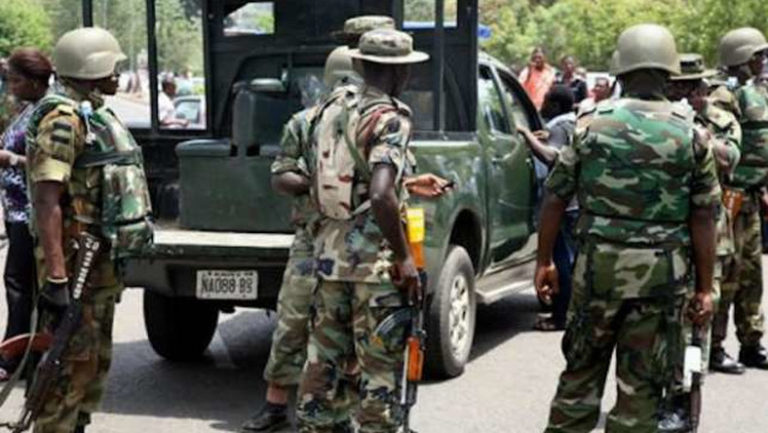
The development also coincided with on the ground, observations by The ICIR which show heavy deployment and heightened military presence around the correctional facility in Kuje Area Council, where security operatives have mounted checkpoints, restricted movement, and conducted searches of uncompleted buildings in recent weeks.
Residents told The ICIR that they began retreating into their homes before 6 p.m. following rumours of a curfew in areas such as Wowo Garage, Chibiri, Shadadi, Shetuko and Kango along the Gwagwalada axis. But the alarm on curfew turned out to be false.
Military trucks and armed personnel have also been stationed around key junctions, particularly along routes leading to the prison, forcing commuters to take longer alternative paths.
Although authorities at the time described the deployment as routine protection of critical infrastructure, residents said the presence of armed troops heightened tension across the area.
The renewed alert came against the backdrop of the 2022 attack on the Kuje correctional facility, which led to the escape of 879 inmates, including dozens of suspected extremists.
The attackers, suspected to be members of Boko Haram, reportedly freed 64 of their members held at the facility.
Since the 2022 attack on the facility in Kuje, alongside several others across the nation under the late President Muhammadu Buhari administration, military has been deployed to protect correctional centres in the country.
Sources confirmed to The ICIR that the correctional centre is the first target of terrorists in the nation’s capital, as the country is currently overwhelmed by insecurity, largely orchestrated by terrorists.
Rising attacks heighten fears
The latest alert comes amid a broader surge in attacks by Boko Haram factions and other extremist groups across northern Nigeria in 2026
In recent months, insurgents have stepped up assaults on military bases, particularly in the North-East, killing soldiers and carting away weapons.
Armed groups have also intensified raids on rural communities in Borno and Yobe states, with residents reporting killings, abductions and arsons.
The repeated attacks have displaced several communities and deepened humanitarian concerns in the region.
THE Corporate Accountability and Public Participation Africa (CAPPA) has hailed the Federal High Court ruling ordering the reinstatement of three University of Ibadan (UI) students.
The organisation in a statement by its Media and Communications Officer, Robert Egbe, described the judgment as a landmark victory for students’ rights and civic freedom in Nigeria.
The organisation expressed satisfaction with its role in supporting the affected students—Aduwo Ayodele, Mide Gbadegesin, and Nice Linus, throughout their legal battle.
“We are proud, not only of Ayodele, Gbadegesin and Linus, but also of our role in helping them assert and defend their rights. We are proud to have stood by them since their ordeal began, amplifying their voices through our advocacy and media networks, and facilitating legal services for them.” CAPPA said.
Backstory
The ICIR reports that the court ruling, delivered by the presiding judge Nkeonye Maha, in Ibadan on Wednesday, April 15, ordered the immediate reinstatement of the students, who were suspended by the university on July 14, 2025, for protesting a hike in tuition fees.
The protest was triggered by a circular issued by the university’s governing council announcing an increase in fees for both new and returning undergraduate students for the 2023/2024 academic session.
The demonstration followed mounting frustration among students over the rising cost of education.
Dissatisfied with their suspension, the students approached the court, arguing that the disciplinary process violated their fundamental rights, particularly their right to fair hearing.
They told the court that they were denied the opportunity to call witnesses or present video evidence during proceedings before the university’s disciplinary committees.
“AN ORDER OF THE HONOURABLE COURT forthwith reinstating the Applicants’ full studentship rights and privileges within the 1st Respondent with immediate effect to wit, attend lectures, write examinations and participate in student union activities for the advancement of their lawful interest.” the applicants sought.
It also sought “the sum of N20 million damages jointly and severally against the Respondents for the infringement of the Applicants’ constitutionally guaranteed rights to dignity of their human person, personal liberty, fair hearing, freedom of thought, freedom of expression, peaceful assembly and association, freedom of movement, and freedom from discrimination guaranteed under the 1999 Constitution of the Federal Republic of Nigeria as amended.”
In her ruling, Maha held that the university’s actions breached the students’ right to fair hearing, setting aside the disciplinary committee’s decision and ordering their full reinstatement with all rights and privileges restored.
The judgment also reinforced constitutional protections for freedom of expression, peaceful assembly, and association.
CAPPA reacts
CAPPA said the ruling sent a strong warning to universities across the country against suppressing dissent.
CAPPA’s Assistant Executive Director, Zikora Ibeh, described the students’ ordeal as part of a broader pattern of shrinking civic space within Nigerian tertiary institutions.
“When students are punished for peaceful protest, the message is that lawful dissent will not be tolerated. What kind of society punishes its young people for caring enough to speak?” she added.
The organisation criticised what it termed the growing use of intimidation, suspensions, and rustications by university authorities to silence opposing voices.
“Universities should be spaces where ideas are contested, where authority is questioned, and where future leaders are trained not just to comply, but to think critically and act courageously. When administrations resort to suspensions, rustications, and intimidation, they turn campuses into zones of fear rather than forums of debate. This is dangerous and unacceptable,” CAPPA stated.
It demanded that policies such as fee hikes be subjected to transparent and participatory processes that reflect the socio-economic realities of students and their families.
CAPPA further linked the recurring protests in Nigerian universities to chronic underfunding of the education sector, warning that the burden of financing education is increasingly being shifted to students.
“Access to education is gradually being determined by wealth rather than merit. Until this structural issue is resolved, protests will persist, and rightly so,” the organisation added.
Reaffirming its commitment, CAPPA said it would continue to support students nationwide in defending their constitutional rights against what it described as institutional overreach.
SOUTH African opposition leader Julius Malema has been sentenced to five years in prison after being convicted of illegally possessing a firearm and discharging it in public.
The conviction stemmed from a 2018 incident during the Economic Freedom Fighters’ (EFF) fifth anniversary rally in the Eastern Cape, where a widely circulated video showed Malema firing multiple shots from a semi-automatic rifle into the air.
The AfriForum, an Afrikaner lobby group that has long been at odds with Malema, filed a case against him after the footage of the incident went viral.
In his defence, Malema argued that the weapon did not belong to him and said the shots were intended to energise the crowd. However, the court rejected this explanation as he was later found guilty in 2025 on several counts, including unlawful possession of a firearm, discharging a weapon in a public space, and reckless endangerment.
According to the BBC, Magistrate Twanet Olivier who delivered the ruling at a court in East London on Thursday said the offence was deliberate rather than impulsive, describing the gunfire as a central feature of the event in question.
The 45-year-old head of the EFF and sitting member of parliament remained composed as the sentence was read but immediately filed an appeal through his legal team, a move aimed at preventing his incarceration while the case is reviewed.
Malema has built a reputation as a fiery and unapologetically radical voice in South African politics, commanding a devoted support base. Outside the courthouse, hundreds of supporters gathered, singing and chanting in solidarity.
Once the leader of the youth wing of the ruling African National Congress, Malema was expelled following a fallout with former president Jacob Zuma. He later founded the EFF, which has since grown into a significant political force, finishing fourth in the country’s 2024 general elections.
After his conviction last year, Malema told his supporters that jail or even death would be “a badge of honour” in pursuit of his political cause. He has pledged to challenge the ruling all the way to Constitutional Court of South Africa.
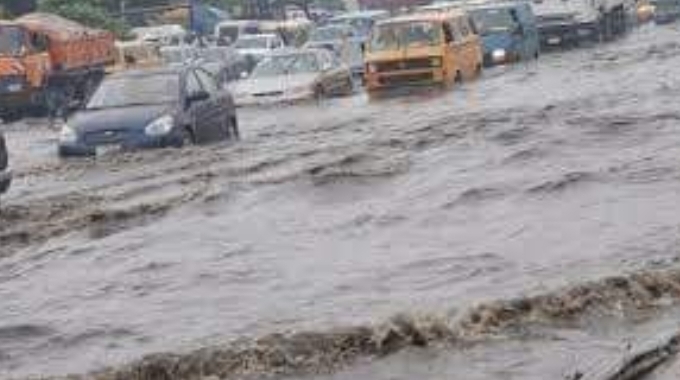
THE Federal Government on Wednesday warned that 33 states and the Federal Capital Territory (FCT) would be at risk of flooding in 2026.
The Minister of Water Resources and Sanitation, Joseph Utsev, an engineer, made the disclosure during the public presentation of the 2026 Annual Flood Outlook (AFO) at the Presidential Banquet Hall in Abuja.
The event was organised by the Nigeria Hydrological Services Agency (NiHSA) and themed, “Smart Water Resources Management: Moving from Oil to Water-Based Economy.”
The warning came as the rainy season begins, with the government listing states such as Lagos, Bayelsa, Delta, Adamawa and Kebbi among those expected to be affected, alongside 28 others.
Utsev stressed the importance of early warnings, noting that timely information could help save lives, protect infrastructure, and reduce economic losses.
He explained that the Federal Government was working to improve flood forecasting and preparedness by upgrading the country’s hydrological monitoring systems.
He also said the ministry was strengthening its partnership with the Nigerian Meteorological Agency (NiMet) to better combine weather and water data, which is essential for providing accurate forecasts that can support farmers, disaster managers, urban planners and other sectors.
Describing the AFO as more than just a scientific document, the minister said it served as a call for action.
He, however, cautioned that predictions alone would not be effective unless communities act on the information, adding that the ministry was collaborating with other agencies to reduce the impact of flooding.
Providing figures from the outlook, Utsev said 14,118 communities in 226 local government areas across the 33 states and the FCT fell within high flood risk zones.
“The states are: Abia, Adamawa, Anambra, Bauchi, Bayelsa, Benue, Borno, Cross River, Delta, Ebonyi, Edo, Enugu, Gombe, Imo, Jigawa, Kaduna, Kano, Kebbi, Kogi, Kwara, Lagos, Nasarawa, Niger, Ogun, Ondo, Osun, Oyo, Plateau, Rivers, Sokoto, Taraba, Yobe, Zamfara, and the FCT,” he said.
In addition, 15,597 communities in 405 local government areas across 35 states – excluding Ekiti – are expected to experience moderate flooding.
“15,597 communities in 405 LGAs, 35 states except Ekiti State, will experience moderate flood risk,” the minister stated.
He added that 923 communities in 77 local government areas across 24 states might face low-level flooding.
“Low Flood Risk: incidences of minimal flood is expected in 923 communities in 77 LGAs in 24 States. The states are Adamawa, Anambra, Bauchi, Bayelsa, Benue, Borno, Cross River, Delta, Ebonyi, Edo, Jigawa, Kaduna, Kano, Kebbi, Kogi, Nasarawa, Niger, Ogun, Ondo, Osun, Oyo, Sokoto, Taraba and Zamfara.”
The report also highlighted the likelihood of flash and urban flooding in major cities due to heavy rainfall, poor drainage systems and weak water management practices. Cities expected to be affected include Abakaliki, Abeokuta, Abuja, Asaba, Benin City, Birnin-Kebbi, Calabar, Ibadan, Kaduna, Kano, Lagos, Makurdi, Nguru, Onitsha, Oshogbo, Port Harcourt, Sokoto, Warri and Yola.
Coastal and riverine flooding is also anticipated in Bayelsa, Cross River, Delta, Lagos, Ogun, Rivers and Ondo states due to rising sea levels and tidal surges, which could disrupt fishing, wildlife and river transportation.
Utsev emphasised the broader importance of water management, stating: “As we transition toward a water-based economy, we must recognise that water security is national security. Effective water governance will play a critical role in ensuring food security, supporting economic diversification, and improving the overall well-being of our citizens.”
He urged state governments, local authorities, farmers and community leaders to take the warnings seriously and begin preparations immediately.
“I therefore call on state governments, local authorities, disaster management agencies, farmers, and community leaders to carefully study the findings and advisories contained in this document and take the necessary steps to prepare for the coming flood season.
“Furthermore, we are encouraging state governments to integrate flood risk considerations into land-use planning, urban development, and infrastructure design. Floodplains must be properly managed, drainage systems must be improved, and communities must be empowered to adapt to changing climate conditions.
“Preparedness remains the most effective strategy for reducing flood risks. When we plan ahead, we protect lives, safeguard infrastructure, and preserve economic gains. Let us commit to building a safer, more resilient and more water-secure nation.”
Earlier, the Director General of NiHSA, Umar Ibrahim Mohammed, said the 2026 AFO aligned with the Federal Government’s Renewed Hope Agenda, particularly in areas such as economic diversification, infrastructure development, climate resilience, food security and sustainable water management.
He described the AFO as a vital planning tool that provides early warnings, supports decision-making and helps coordinate emergency responses nationwide.
According to him, the agency has improved its forecasting process by adopting advanced systems.
“The AFO has evolved into an important national planning instrument that provides early scientific prediction of flood risks in the country, evidence-based guide for decision-makers and platform for emergency coordination among stakeholders.
“In producing this year’s forecast, the agency undertook a comprehensive and data-driven process to provide tailored information for high-risk flood zones and flash floods in urban cities and towns. Building on the success achieved through AFO publications, we have upgraded from reporting flood forecast to flood risk intelligence architecture and from the traditional modelling to Hybrid AI-Integrated Modelling system to improve forecast reliability, reduce false alarms and improve the lead time accuracy.
“Not these alone, the modelling for the 2026 forecast have been conducted in-house. This marks a strategic shift toward enhancing capacity building, manpower development and institutional resilience.”
He also disclosed that NiHSA’s Flood Dashboard had been upgraded into a full decision-support geo-intelligence system that allowed real-time monitoring and analysis of flood situations. The system is supported by a mobile application to make flood alerts more accessible, with trained personnel available to respond to inquiries.
In his remarks, the Director General of NiMet, Charles Anosike, a professor, acknowledged the persistent challenges flooding poses in Nigeria and across Africa, but noted that improved technology was helping to predict and manage such disasters.
He commended NiHSA for its efforts and reaffirmed NiMet’s commitment to working closely with the agency to strengthen flood prediction and response systems. He also called for a shift in development priorities to place greater emphasis on water resource management.
President Bola Tinubu, who was represented at the event by the Minister of Environment, Balarabe Lawal, reiterated the administration’s commitment to improving emergency response and promoting sustainable development.
He said the government recognised the importance of rescue teams in managing disasters and was taking steps to strengthen relevant institutions for quicker and more effective responses.
The president also highlighted the role of communication in addressing emergencies, noting that better coordination and public awareness would improve outcomes.
According to him, ongoing efforts in planning and service delivery would help the country overcome its current challenges and ensure the safety and well-being of citizens.
The event was attended by key stakeholders, including officials from the ministries of Water Resources and Sanitation, Livestock Development, Environment and Women Affairs, as well as the Speaker of the House of Representatives, state governments, service chiefs, development partners and members of the media.
NIGERIA’S headline inflation rate rose to 15.38 per cent in March 2026, reflecting a modest increase from the 15.06 per cent recorded in February.
This is according to the latest data released from the National Bureau of Statistics (NBS) on Wednesday, April 15.
The Consumer Price Index (CPI) increased to 135.4 in March 2026, reflecting a 5.4-point increase from the preceding month (130.0).
In March 2026, the headline inflation rate rose to 15.38 per cent, up from 15.06 per cent in February 2026 and stood at 27.35 per cent in the same month of the preceding year (March 2025).
Accordingly,, the March 2026 headline inflation rate showed an increase of 0.32 per cent compared to that recorded in February 2026.
However, on a month-on-month basis, the rate in March 2026 was 4.18 per cent, which was 2.17 per cent higher than the rate recorded in February 2026 (2.01%).
The percentage change in the average CPI for the twelve months ending March 2026 over the average for the previous twelve-month period was 20.05 per cent, showing a 1.48 per cent increase compared to 18.58 per cent recorded in March 2025.
On a year-on-year basis, in March 2026, the Urban inflation rate was 14.64 per cent. On a month-on-month basis, the Urban inflation rate was 3.16 per cent in March 2026, up by 0.61 per cent compared to February 2026 (2.55%).
The corresponding twelve-month average for the Urban inflation rate was 20.04 per cent in March 2026. This was 0.06 per cent points lower compared to the 20.10 per cent reported in March 2025.
Rural inflation rate in March 2026 was 17.22 per cent on a year-on-year basis.
On a month-on-month basis, the rural inflation rate in March 2026 was 6.73 per cent, up by 6.02 per cent compared to February 2026 (0,71%).
The corresponding twelve-month average for the Rural inflation rate in March 2026 was 19.74 per cent. This was 2.93 per cent points higher compared to the 16.81 per cent recorded in March 2025.
The food inflation rate in the month under review was 14.31 per cent on a year-on-year basis and stood at 25.22 per cent in the same month of the preceding year (March 2025).
However, on a month-on-month basis, the food inflation rate in March 2026 was 4.17 per cent, down 0.52 per cent points from February 2026 (4.69%).
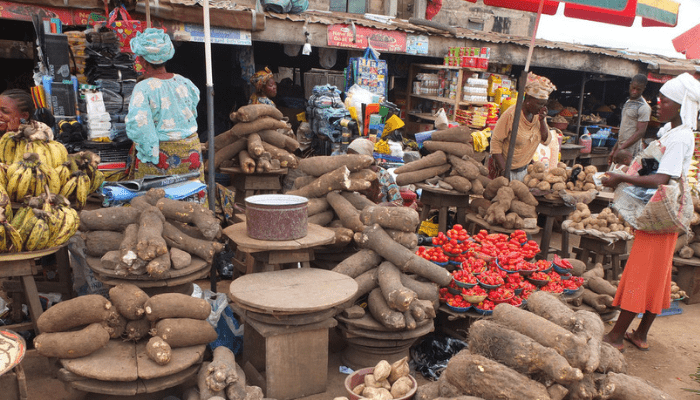
The drop was attributed to the rate of change in the average prices of the following products: yam, ginger (fresh), cassava tuber, groundnuts (shelled), Irish potatoes, avenger (ogbono/apon) – dried ungrinded, tomatoes (fresh), cassava flour sold loose, among others.
The statistics office further said that the average annual rate of food inflation for the twelve months ending March 2026 over the previous twelve-month average was 18.21 per cent, which was 17.81 per cent points lower compared with the average annual rate of change recorded in March 2025 (36.02%).
According to NBS, “All items less farm products and energy” or core inflation, which excludes the prices of volatile agricultural produce and energy, stood at 16.21 per cent in March 2026 on a year-on-year basis; a decline of 10.91 per cent points when compared to the 27.12 per cent recorded in March 2025.
.The NBS explained that the CPI report was based on a rebased methodology, using 2024 as the base year and 2023 as the weight reference period, aimed at better capturing current consumption patterns in the economy.
Overall, the report highlights how the combination of rising fuel prices, particularly the petrol price increase in March and broader structural cost pressures continues to drive inflation, leaving Nigerian households under sustained financial strain.
THE Council for the Advancement of Science Writing (CASW) is accepting applications for the annual Sharon Begley Science Reporting Award.
The Sharon Begley Award comprises a career prize, recognising the accomplishments of a mid-career science journalist, and a grant of at least $20,000 to enable the winner to undertake a significant reporting project.
Applicants should have been working journalists for at least 8–10 years, including significant experience in science journalism, or provide equivalent evidence of commitment to the field.
Organiser says, “CASW established the annual Sharon Begley Science Reporting Award in 2021 to recognise and support reporting and writing that embodies the high standards exemplified by Sharon Begley (1956–2021), a science journalist of unflinching dedication, skill, moral clarity, and commitment to mentoring”.
The Sharon Begley Science Reporting Award is limited to non-technical, print and online journalism in any format.
The deadline for applications is by midnight (ET) April 30, 2026. Interested applicants can apply here.
Despite epileptic power supply in the country, the Nigerian Electricity Regulatory Commission (NERC) has disclosed that the Federal Government paid N418.79 billion subsidy in the fourth quarter (Q4) of 2025.
NERC disclosed in its latest quarterly electricity market report for the fourth quarter.
Power sector governance experts are worried that such a payment, which addresses the market shortfall and liquidity problems in the sector, has been unable to solve concerns of poor power supply.
“The government should intensify market reforms because the electricity subsidy payment is not sustainable. In 2024 alone, N2.8 trillion was spent on that, and it’s not sustainable when you also consider it in the light of generation companies’ debts running into over N6 trillion,” an economist, Kingsley Obiakor, said.
He added: “When government caps tariffs below cost-reflective levels, as seen with different Bands categorisation with only Band A users paying the appropriate tariff, DisCos lose money on every unit sold. So, they can’t invest in meters, transformers, or network upgrades.”
The report noted that the total amount invoiced by the generation companies (GenCos) for energy delivered to each Disco and the Differential Remittance Obligation (DRO)- adjusted Nigerian Bulk Electricity Trading Plc (NBET) invoice to the respective DisCos during 2025/Q4, represented a ₦39.96 billion (-8.71%) reduction in subsidy compared to 2025/Q3 (₦458.75 billion).
Government subsidy, the report said, accounted for 52.30 per cent of the total GenCo invoice, a 6.60 percentage-point decrease from 2025/Q3, when it accounted for 58.63 per cent of the total GenCo invoice.
NERC noted further that the reduction in subsidy payments was due to an increase in energy allocated to Band A customers from 40 per cent to 45 per cent, reflecting the government’s strategic direction to improve the quality of supply to consumers.
In 2025/Q4, the DRO-adjusted invoice from NBET to the DisCos was ₦386.13 billion, while the total remittance made was ₦359.27 billion, which translates to 93.04 per cent remittance performance.
Accordingly, in 2025/Q3, the DRO-adjusted invoice from NBET to DisCos was ₦323.70 billion, and the total remittance was ₦308.25 billion, translating to 95.23 per cent remittance performance.
“In the absence of cost-reflective tariffs, the government undertakes to cover the resultant gap (between the cost-reflective and allowed tariff) in the form of tariff subsidies.
“For ease of administration, the subsidy is only applied to the generation cost payable by DisCos to NBET at source in the form of a DisCo’s Remittance Obligation (DRO)”, the report noted.
The DRO represents the total GenCo invoice that was billed to the DisCos by NBET based on what the allowed DisCo tariffs can cover.
DisCos are expected to remit 100 per cent of the invoices received from the Market Operator (MO) for transmission and administrative service costs, the report noted.
The report also stated that the disaggregated remittance performance of the DisCos to NBET in 2025/Q4 shows that all DisCos except Yola (99.42 per cent), Benin (98.30 per cent), Ibadan (95.58 per cent), Kano (75.14 per cent)25, Jos (49.80 per cent), and Kaduna (40.73 per cent) achieved 100 per cent remittance performance.
Also, quarter-on-quarter analysis shows that Benin and Kaduna DisCos improved remittance performance to NBET in 2025/Q4 compared to 2025/Q3.
Meanwhile, Kano, Jos, Ibadan, and Yola DisCos saw declines in their remittances.
All other DisCos (Abuja, Eko, Enugu, Ikeja, and Port Harcourt) maintained 100 per cent remittance to NBET across the quarters.
The ICIR reports that Nigeria has subsidised power for decades, yet the grid supply still hovers between 4,000 and 5,000 megawatts (MW) for nearly 250 million people while blackout remains chronic.
IN December 2023, the Executive Secretary of the Benue State Emergency Management Agency, James Lorpuu, said there were 14 officially recognised Internally Displaced Persons (IDP) camps in the state, with three more expected to be inaugurated in January, 2024. Months later, both formal and informal displacement sites have increased as insecurity continues to push rural communities from their ancestral lands.
It was 3pm in Ugba IDP camp in Logo Local Government Area of the state. The sun was already at its peak, and the heat was unforgiving. The camp, located about six hours by road and another 10 minutes by water from Makurdi, the state capital, was unusually quiet inside but crowded outside.
The camp was once a functioning public primary school, but its classrooms have now been converted into living spaces for displaced families. Yet very few people stayed indoors. The heat trapped inside the old school buildings had pushed most residents outside, where families gathered under trees or sat in front of their allocated rooms, seeking relief in the afternoon breeze.
Across the camp, children played on bare ground while adults watched from makeshift seats fashioned from planks and stones. Some washed clothes by hand while others cooked in small clusters, using firewood and metal pots. The shortage of rooms was evident. With more families than available classrooms, many displaced persons had built temporary shelters on the school field.
These makeshift huts were constructed with sticks, mosquito nets layered over one another, and pieces of fabric or plastic sheets gathered from anywhere they could find. The structures were small, fragile, and barely tall enough to stand in, offering little protection from heat, rain, or insects.
Benue State Emergency Management Agency
A farmers’ camp
Samuel Butu, the camp manager, confirmed that the settlement currently hosts 422 families, with a total population of 1,459 displaced persons. According to him, virtually everyone in the camp is a farmer, including unmarried adults who were living independently before the attacks.
“All the families here are farmers,” he said. “They came from different villages across Logo and surrounding areas. They lost their homes because of insecurity. None of them planned to live here.”
He explained that most residents arrived with nothing, having fled suddenly during attacks, leaving behind farmlands, houses, and personal belongings. Many have remained in the camp for years, surviving on irregular food aid, small donations, and whatever informal work they can find around nearby communities.
Butu Samuel
Butu said he fled from Ukemberega in Gaambe-Tiev, with his 15 children from two wives, although one of the marriages ended soon after the displacement.
“They attacked my village in 2014,” he said. “They killed many people and chased the rest of us out of our homes.”
Before the violence escalated, Butu said the conflict started with repeated invasions of farmlands.
“They were already coming into our farms with their cattle to eat our crops,” he explained,adding: “Whenever they destroyed our farms, we would report to the village head, and the village head would report to the police.”
But seeking justice only made things worse.
“Whenever the police arrested some of them, the ones who were not arrested would target the villagers who reported. They would attack and kill them on their way to the farms,” he recalled.
According to him, this pattern continued for two years.
“They were killing us one after the other for going to our farms. At some point, we stopped reporting to the police because of fear. We also stopped going to our farms.”
With hunger increasing and fear spreading, the remaining villagers eventually made a collective decision to leave.
Some initially sought refuge in neighbouring communities, hoping they would be safe.
“We went to another village, but about two months after, they invaded that place too and killed people,” Butu said.
That was how he and others ended up in the Ugba camp in 2018. Years later, the idea of returning home remains unthinkable.
“Some of my friends tried to go back to continue farming or even live there. They have not been heard from since then,” he said. “My elder brother also went back, and they killed him.”
As he spoke, Butu’s face remained tense, his eyes fixed on the ground, his hands tightly clasped together. His voice did not rise, but the finality in his tone was unmistakable.
“So, there is no going back,” he concluded, as he stepped away to attend to new arrivals in the camp.
Wife lost, 23 children missing – 65-year-old farmer
Another displaced farmer was Tyo Ugba, quietly eating boiled yams from a small bowl, seated on a woven mat under a large tree in the Ugba camp. Since the afternoon heat had driven most residents outdoors, and like many others, he had taken shelter in the shade.
Beside him sat a woman he later introduced as Dehemban, his youngest and last wife, with their youngest child resting close by. He ate slowly, barely lifting his head, his eyes fixed on the ground as though weighed down by thoughts heavier than the food in his hands.
Tyo is 65 years old and originally from Tse-Ugba village in Logo Local Government Area. Before the attacks, he had 5 wives and 33 children, a large household sustained by farming. Today, only one wife and 10 of his children are with him in the camp.
Angor Msoo and his wife
“I lost one wife. Three have left me and returned to their parents’ houses because of the attacks,” he said. “Out of my 33 children, I can only see 10. The remaining are scattered, and I do not know where they are.”
As he spoke, his voice remained low and steady, but his face told a different story. His shoulders slumped forward, his hands trembling slightly as he gestured toward the people around him. He paused often, as if searching for words that could explain the scale of what had been taken from him.
The attack that scattered his family happened in 2014.
“I had just returned from the farm with some of my children. We were preparing dinner when they attacked and started killing people,” he said. “Some were killed, and some were taken away, including girls.”
When the attackers eventually left, villagers who escaped returned to bury the dead.
“I lost one wife that day. I also buried five of my brothers and several other relatives,” he said.
After that night, returning to normal life was no longer possible. According to Tyo, the community was warned not to go back to their farmlands. For him, that meant losing everything he had built over decades.
“That was how I lost 28 acres of land,” he narrated. “I used to plant soya beans, groundnuts, and other crops. During harvest, I could fill at least 200 bags of different crops.”
Today, those farmlands are out of bounds. The man who once harvested hundreds of bags of produce now depends on survival strategies that barely sustain his family.
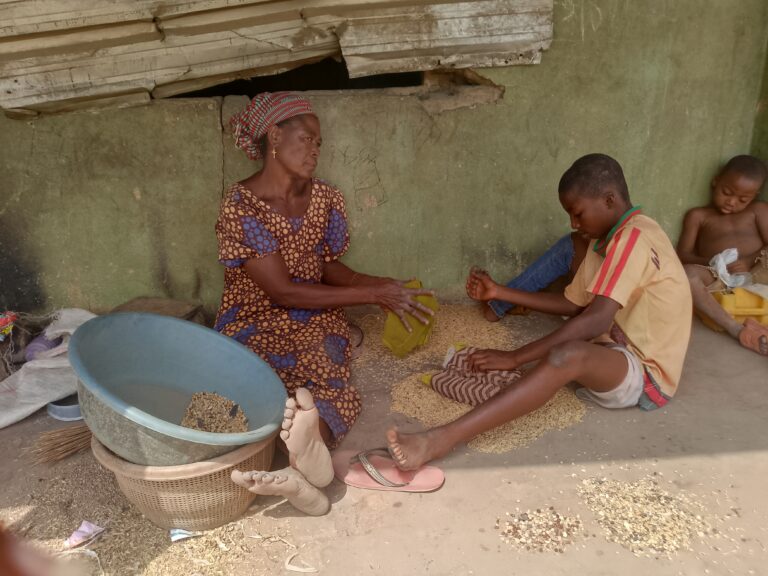
“I cannot work anymore,” he said quietly. “To survive, my wife goes outside the camp to rice mills to pack rice chaff. She sieves it and sometimes gets a bowl of rice for cooking. This is what the wives do here to feed their children.”
Occasionally, food aid arrives.
“Once in a while, the government brings food items, but they are not always enough,” he added.
Dehemban, his youngest wife, sat beside him throughout the conversation, occasionally nodding in agreement. When she spoke, her voice was firm but weary.
“We cannot go back to our ancestral homes and farms because there is no guarantee that anything good is waiting for us there, and it is not safe,” she said. “Since 2014, we have not set foot on our farms.”
“I was pregnant when I came here. Now the child has become an adult.”
‘Unholy bond’ between insecurity and IDP camps
Across the State, insecurity and displacement have become inseparable realities, feeding into each other in a cycle that has turned entire rural communities into transit points for survival. What began years ago as sporadic farmer-herder clashes has evolved into a sustained pattern of armed attacks, killings, and kidnappings that have emptied villages while steadily filling IDP camps.
In local government areas such as Makurdi, Guma, Logo, Gwer West, Agatu, and Kwande, repeated waves of violence have forced tens of thousands of residents to flee their ancestral homes.
The International Organisation for Migration (IOM) recently announced that 215 new IDP arrivals were recorded in Benue State between the 19th and 25th of January 2026.
IOM Nigeria Displacement Tracking Matrix (DTM) showed that among the new arrivals, 194 were IDPs and 21 were farmers. They were recorded at Gbajimba HC (194 individuals) and Abinsi (21 individuals) in Guma Local Government Area.
A woman and her son sieving rice chaff to make lunch in Ugba IDP camp
The DTM’s Emergency Tracking Tool (ETT) assessment further identified “armed bandits attacks (90 per cent) and fire outbreak (10 per cent) as the main triggers for these movements in the state,” noting that, “Among the new arrivals in Benue State, 99 (46 per cent) were children, 63 (29 per cent) were women and 53 (25 per cent) were men. The most urgent needs reported by the new arrivals include non-food items (NFIs), food, health and shelter assistance.”
Humanitarian agencies and conflict monitoring organisations also estimate that tens of thousands of civilians have been killed in Benue State over the past decade in attacks linked to armed groups operating in rural areas. Thousands more are believed to be missing, having either been killed in remote locations, abducted during attacks, or displaced without formal records.
In July, 2025, Amnesty International (AI) said as of 31st of December, 2024, “an estimated 500,182 people had fled to IDP camps in Benue state to escape years of attacks by gunmen,” with more than 10,000 additional people displaced since the beginning of 2025 following series of attacks on communities in Agatu, Gwer West, Guma, Logo, Kwande.
The Director of AI Nigeria, Isa Sanusi, said, “The rampant attacks by gunmen have deprived thousands of people of their rights to life, physical integrity, liberty, freedom of movement, and access to livelihood. Survivors of these harrowing attacks face fresh torment of being displaced in overcrowded, unhygienic camps where disease runs rampant and essentials such as food and clean water are scarce. The situation risks creating humanitarian disaster.”
At the same time, IDP camps across the state continue to grow. Facilities originally designed as temporary shelters have become long-term settlements, housing families who have spent years in displacement with little prospect of return.
Same old story at the IDP camp, Makurdi
From Ugba, the trail of displacement led back into the state capital, to another crowded settlement known as International Market IDP Camp in Makurdi local government. Like Ugba, the camp is populated almost entirely by farmers who once cultivated large expanses of land across rural communities, but now survive on small, informal jobs and humanitarian support.
Just beside the camp’s entrance, a young man was setting up a small haircut stand under a big tree. A customer sat patiently on a plastic chair waiting for a haircut. The barber introduced himself as Benjamin Nyajo, one of the many displaced farmers who now rely on menial work to survive.
Nyajo is from Nyeiv Council in Guma Local Government Area. His village was attacked on September 17, 2021. According to him, the attackers invaded the community in the night, killing residents and burning homes. “They killed my elder brother,” he said. “Nine of my relatives also lost their lives.”
International Market IDP camp Makurdi local government
Nyajo explained that he escaped with his wife and five children on the day of the attack, fleeing with nothing but the clothes they wore on that day.
Before his displacement, he was a full-time farmer cultivating 17 acres of land and planting various crops to support his family. Today, those farmlands remain inaccessible.
“We cannot go back home, and we cannot go to the farm again,” he said. “So now I do any menial job I can find. I am also a barber.” As he spoke, he returned to trimming his customer’s hair, a small act of survival in a life completely rerouted by violence.
Inside the camp, another displaced farmer, Abraham Tar, shared a similar story of loss and forced escape. Tar has two wives and six children, and his village was attacked on April 21, 2021. According to him, residents had earlier received information that armed herders were planning to invade their community, but many dismissed it as a rumour.
“A few days later, around 12 midnight, they came,” he said. “They were breaking down doors and slaughtering whoever was inside.” During the attack, his brother was killed. Tar said he and one of his wives managed to escape through the bush, eventually finding their way to the IDP camp.
Before the attack, Tar said he cultivated over 30 acres of farmland, producing food not just for his family but also for sale. Like many others, his farming life ended abruptly the night violence reached his village.
In 2025, he attempted to return to the community for the first time since the attack. But when he went to inspect his farm and do some hunting, he encountered armed men on the road.
“They told me I was lucky they were in a good mood,” he said. “They said if they had wanted, they would have killed me, and warned me never to come back to the farm.” He said he fled immediately and has not returned to the village since.
At the International Market IDP Camp, farmers have become refugees, productive lands have turned killing fields, and IDP camps are now permanent shelters with no clear path back home. The camps, once meant to provide short-term relief, now serve as long-term endpoints for people whose only crime was living and farming in contested rural spaces.
Delayed response and security vacuum
Residents across multiple communities visited during the investigation complained that security forces often arrive after violence has already ended, limiting their ability to protect residents or prevent loss of life.
In June 2025, a Benue lawmaker, James Umoru, criticised slow military response after a deadly attack in Apa Local Government Area, saying security operatives took more than two hours to reach the scene, long after villagers had buried their dead.
Other lawmakers in the state have voiced similar concerns, alleging that security operatives sometimes fail to engage attackers even when they hear gunshots that eventually lead to deaths.
A woman making palm oil in Abagena IDP camp
Between 2016 and 2018, Amnesty International reported at least 3,641 deaths in farmer-herder clashes, many occurring while security forces were nearby but slow to intervene.
According to the organisation, “Authorities must investigate the slow response time of security forces that has resulted in shockingly high casualties. As part of this process, the security forces’ leadership should scrutinise the role of individual commanders…”
More recent conflict data underscores the scale of insecurity. Over 2.2 million civilians have been displaced in Middle Belt states, including Benue, Plateau and Nasarawa, between 2019 and early 2025, according to research firm SBM Intelligence.
Independent violent conflict tracking also shows that thousands of violent incidents have occurred across Nigeria in recent years, including scores involving farmers and herders in the North Central region. Between 2020 and 2024, a non-governmental organisation, Nextier, announced that more than 2,300 casualties were recorded in 359 such incidents, with the majority in the North Central zone.
Observers argue that these delays compound fear and displacement. When military or police support arrives long after initial distress calls, and sometimes only after villagers have fled, the message sent is one of limited protection rather than deterrence. In rural areas with poor road infrastructure, this problem is worsened, leaving farming communities exposed and helpless.
Abagena camp
Like many other IDPs camps in the state, survival in the Abagena Camp in Guma Local Government Area has become a daily calculation. Angor Msoo, 45, leaves the camp most mornings in search of “whatever jobs” he can find.
He fled his village with only the clothes he was wearing the night his home was attacked. Though none of his nine children was killed, everything else was lost.
“We want to go back to our ancestral home,” he said, “but there is fear because they (armed herders) are still there. I had 20 acres of land, but I can never think of going back there to farm except I want to lose my life.”
A few shelters away, Steven Mom, also 45, recalled the evening his village was attacked in February 2008, around 6 p.m. He once cultivated 15 acres. Today, like Msoo, he lives displaced with his farmland out of reach.
Findings revealed that their stories are not isolated accounts of personal tragedy in the camp. They are symptoms of a long-existing crisis. It is this widening gap between livelihood and displacement that experts and analysts say now defines the security and migration landscape in Benue State.
‘Government lacks political will’
A security analyst, Anselm Ozueh, argued that the core problem is not merely tactical failure but a “lack of political will” to decisively confront insecurity.
“What we are suffering at the moment is a lack of political will to deal with insecurity in the country,” he said, stressing that the scale of displacement and hardship should ordinarily compel firmer action.
According to him, security agencies can only operate effectively within the limits of clear political direction. “The security agency cannot do much if the government has not taken full decisive action,” he said.
Ozueh called for both kinetic and non-kinetic engagement strategies but insisted that without a clear national decision, “a boundary, a line, rules of engagement,” insecurity will persist.
Dehemban and her youngest child
He warned that the absence of such clarity fuels public suspicion. “People begin to wonder if government is weak, incapable, or sympathetic,” he said, adding that no group should appear stronger than the authority of the state. “No tribe or group should be bigger than government power. It has never happened anywhere in the world.”
He described the delays as symptoms of a deeper structural problem. “If the head of a family has not taken a full decision to deal with something, nothing effective will happen,” he said, using a household analogy to explain lapses within the chain of command.
While acknowledging possible logistical and communication gaps, he maintained that decisive executive directives would automatically cascade through military and police hierarchies, from the presidency to defence chiefs, to field commanders.
“The foundation is political will,” he insisted. Without it, he argued, logistical reforms alone would not resolve recurring attacks, displacement, and the growing economic consequences, particularly for food production.
“The first essence of government is to protect life and property. In this case, government is failing in that area.”
Beyond humanitarian crisis
Advocacy groups agreed that the displacement unfolding in Benue has moved beyond a humanitarian crisis and is now reshaping Nigeria’s internal migration map in ways that may deepen economic strain.
Founder of Initiatives for Safe Migration and Social Justice, Seyi Olawuyi, explained that the displacement is causing massive entry into other parts of the country, adding that what appears as mobility is often survival migration, which is a shift from productive agricultural labour to precarious informal urban work. The country, he suggested, loses skilled farming capacity while absorbing underemployed labour elsewhere.
Olawuyi also questioned the state’s response to the violence itself. He called for “proper and thorough investigation” into allegations against individuals accused of sponsoring armed groups, noting the sophistication of weapons often used in attacks. “These issues are usually at their peak when elections are coming,” he added, pointing to patterns that demand deeper scrutiny.
“Sometimes, these herders and their cattle are arrested, but later they are released. The government needs to be serious about this.”
How insecurity impacts labour migration – Expert
A labour migration researcher and Head of Department, Communication, Media & Cultural Studies at the Pan-Atlantic University, Lagos state, Chike Mgbeadichie, during an interview, explained that the crisis in Benue should no longer be framed as episodic violence, but as a structural disruption of labour systems, identity, and state responsibility.
Mgbeadichie noted that the state is experiencing a forced transformation of internal labour migration patterns as farmers who once cultivated dozens of acres are pushed into IDP camps or informal settlements where agriculture is no longer viable. Many, he noted, do not resume farming at all, leading to the removal of livelihood.
This shift, he argued, quietly restructures the labour economy. Displaced agrarian workers are absorbed into low-paying, informal survival jobs, menial labour, petty trading, unstable urban migration, while productive agricultural land remains inaccessible.
The researcher warned that the long-term consequences include the hollowing out of rural productivity and an unstable labour base in both origin and destination communities.
On national food security, he said that as long as farmers cannot return to their farms, there will be an imbalance in food production.
He linked the displacement crisis to broader economic distortions, including rising food prices, supply chain pressures, weakened regulatory oversight, and potential public health risks from compromised food quality.
Benjamin Nyajo works as a barber in front of the International Market IDP
Mgbeadichie further questioned the institutionalisation of IDP camps, noting that as long as these camps remain, the crisis will not end. argued.
“They reduce pressure on government. People stay there; multinationals and international agencies step in, but the underlying problem remains.”
For him, camps risk becoming semi-permanent administrative solutions to what should be temporary emergencies.
“The real measure is not whether people are housed in camps,” he said, “but whether they can safely return, rebuild, and resume their livelihoods.”
Without that, he warned, displacement becomes normalised, and return to ancestral homes and farmlands stays a dream.
Benue Emergency Management Agency mum
Despite multiple attempts to obtain official responses, the Benue State Emergency Management Agency did not provide comments for this investigation.
Emails were sent to the agency requesting data, clarification on the growing number of formal and informal displacement camps across the state, and its efforts to secure lives and farmlands in villages.
A follow-up email was also dispatched after no response was received.
Subsequently, calls were placed to the contact number listed on the agency’s website. A staff member identified by the call application as Mary Lorpuu advised that an email be sent. An email was subsequently sent, but not responded to.
The Head of Administration, Donald Kumbenda, also confirmed over the phone that the agency would reply. As of press time, no response had been received.
This report was commissioned with support from the Centre for Journalism Innovation and Development (CJID) under a journalism support initiative funded by the Royal Norwegian Embassy and is the second of a two-part series. Read first part here
TERRORISTS are staging increasingly audacious incursions into Nigeria’s South-West, turning Ondo State into another testbed for their pernicious operations. While Akure North LGA is the most notorious for banditry and kidnapping in the region, its neighbour, Owo LGA, has had its share of the crises.<
A widow’s pain from kidnappers’ strikes
ENO Offordum, a mother of four and resident of Ilu-Abo, Akure North, is currently mourning the killing of her husband by kidnappers who stormed the community in February 2026.
John Offordum, 36, was about to drive into his home while returning from a burial in his home state, Anambra, when terrorists gunned him down. Another resident, identified as Mama Christianah, and her daughter were also shot. The woman, hit by bullets in the womb, was pronounced dead at the Federal Medical Centre, Owo, according to the Chairman of Ilu-Abo Landlords Association, Johnson Adaja, a clergyman.
During the operation, the gunmen whisked away, a proprietress in the community, who was later freed after coughing up a 15-million-naira ransom. She never returned to the village after regaining her freedom but fled to Lagos, abandoning her school, Adaja said.
For Mama Christianah and Offordum, the Federal Medical Centre could not attend to them because its staff were on strike when they were rushed there.
While the former died at the facility, the latter was moved to Afe Babalola Teaching Hospital, Ado-Ekiti, where he died after two days at the hospital.
Eno Offordum. PC: Marcus Fatunmole/The ICIR
He left behind his 31-year-old wife and children, including a two-month-old boy in perennial pain. He will be buried on April 25, 2026, in his hometown, Unubi, Nnewi South, his wife told The ICIR in Oba-Ile town, near Akure, where she runs her husband’s small shop.
Eno lamented the challenges she would face in fending for the four children, including paying their tuition fees. The children are Godswill (15), Mary (four), Esther (three), and John (four months).
“We were together struggling to make it, but things were not easy,” the woman said.
“Before this thing, the community was not safe because every day, you heard stories of kidnapping, shooting, and killings. He was a businessman selling building materials. My husband was a very calm person. He hardly talked, and he never had a problem with anyone.
“His death has been affecting our four children and me very badly; even to feed is hard for us. We are even thinking about how we will pay school fees because school resumes soon. Life has never been easy for us since my husband’s death. Currently, three of the children are in school,” Eno, an indigene of Ibam, Ini LGA, Akwa Ibom State, added.
The terrorist attack that led to Offordum’s death was one of the deadly onslaughts on Ilu-Abo in 2026, the community monarch, and former Secretary to the Government of the Federation, Olu Falae, told The ICIR.
The attacks and thousands of others across Nigeria are the reasons the country currently ranks as the fourth most terrorism-impacted nation in the 2026 Global Terrorism Index. It has also culminated in more than half of its 36 states being declared unsafe.
John Offordum’s shop in Oba-Ile community now managed by his wife. PC: Marcus Fatunmole/The ICIR
Nigeria sees deadly terrorist and other criminals’ attacks almost on a daily basis, especially in the North-East, North-West, and North-Central. Terrorists, whom the Federal Government once claimed it had degraded, are making a brutal comeback, taking the fight to military bases, and killing scores of soldiers, including generals.
With the additions of other terror groups, namely Lakurawa, the Indigenous People of Biafra (IPOB) and bandits, Nigeria, which also battles herders-farmers conflicts and other crises, has remained more unsafe than ever. The crisis keeps ballooning despite the Nigerian government declaring all criminal groups in the country as terrorists.
From Sokoto to Maiduguri, Plateau to Niger and other parts of the nation, thousands of women, men and children have been left in agony after losing their loved ones, since the beginning of insurgency in the country at the start of this century.
Celestial Church in debt over ransom to secure abducted members
The ICIR contacted more victims of terrorism in Akure North, including the Celestial Church of Christ in Uso community, Owo LGA. They opined that insurgents were attempting to gain entry into the entire South-West through Ondo State.
Two of the church leaders declined to give their names when contacted. They said abductors whisked away 18 members from the church on February 25, 2026, after dropping those who were too weak to trek in the bush.
“It was those people who alerted the rest of us and prompted us to call soldiers. We felt that the soldiers would get them, but they had gone too far into the forest,” one of the leaders said.
Celestial Church of Christ in Uso, Owo LGA. PC: Marcus Fatunmole/The ICIR
The church said it paid the kidnappers N9 million after days of negotiations. The gunmen had demanded N100 million.
“We thank God that they escaped from their captors’ den. We are aware of other incidents where abductees were killed. A pregnant women kidnapped in our church was released and put to bed four days later. We saw an abducted person on social media who gave birth to twins, and her captors threw the babies to dogs.”
The leaders accused the Nigerian government of abandoning the citizens to kidnappers. They said the church still owed debts because it borrowed the ransom.
“We sold cars to raise that money. We took contributions from members to raise that money. We also borrowed from people outside the church. Did anyone in the government contribute a dime to the ransom? The most important thing is that God should take absolute control. This fight is not ours here but God’s,” the church leaders stated.
The 34-year-old worship centre serves as a residence for some of its leaders, while scores of its members come there for prayers daily.
Ex-SGF, now community monarch, Olu Falae, speaks
Olu Falae expressed shock at the turn of events in Nigeria’s security architecture, especially in his village.
The monarch, who was kidnapped by herders on his farm in 2015, showed the reporter a scar on his hand. He narrated how safe he and other Nigerians lived without fear of insecurity when he was growing up.
“At the age of 77, I was kidnapped on my own farm. As a child, I was free to travel throughout Nigeria. That summarises the story for you,” the 87-year-old monarch stated.
He said recent attacks occurred in Ilu-Abo because the community was too accommodating to visitors and was not prepared for the onslaughts. He vowed that his people, with government’s support, were ready to defeat the assailants.
A major road in Ilu-Abo community. PC: Marcus Fatunmole
The ICIR reports that five people were killed in the community, while several others were whisked away by gunmen in the past months, leading to protests by residents and blockage of the Akure-Owo Road.
Ilu-Abo (meaning a place of refuge) is an agrarian village that accommodates every Nigerian who cherishes farming. The community’s land, like that of others in the LGA, is very fertile for agriculture. But it has turned into an epicentre of abductions and killings by terrorists.
The monarch explained that kidnappers had attacked the community three times in recent months, killing and abducting residents.
He blamed the attacks on herders and Fulanis, vowing that his community was prepared to face anyone who dared the current security architecture in the community, including trucks of soldiers, police and Amotekun corps officers who patrol the community day and night and have bases in the village.
Ilu-Abo also has its own security network, which mounts checkpoints in different locations and protects the community.
But the initiative comes with a price for every household, which pays a N5,000 levy monthly to support security operations in the village.
“With what we are doing, we hope that no kidnapping will ever take place here again. If any kidnapper comes, those security forces will deal with him,” Falae said.
There is collusion from within
The monarch, however, revealed that indigenes were colluding with herders to abduct residents in the LGA because “they see the crime as ‘good business”.
For instance, he denounced the attribution of the abduction of nurses at the primary health centre at Oke-Ijebu, Akure, as the handiwork of herders.
“Those were not Fulani people. Fulanis don’t operate in towns. They operate in the bush. These were our own people. They’ve learnt from the Fulani that there’s money in this business.
Oba Olu Falae, former Secretary to the Government of the Federation
“Yes, the Fulanis are the main perpetrators of these criminal acts, but some of our own indigenous people have learnt from them and are making money. They are organising kidnappings on their own. Some are even kidnapping themselves and announcing they’ve been kidnapped to make money.”
A farmer in the community and former supervisory councillor in Akure North LGA, Biodun Adefela, lamented how farmers could no longer farm in Ilu-Abo.
He named several residents who were abducted in the community, including a US-based Nigerian who established a fertiliser firm in the village and was kidnapped. N30 million was paid to rescue him, he stated.
Between 10 and 15 people have been kidnapped since the crisis started. Five others have also been killed; he said, calling for the establishment of a military base near Ilu-Abo to scare the gunmen.
Leaders raise concern over residents’ safety on farms
The security committee in Iju, one of the two towns serving as the headquarters of Akure North, expressed worry about the safety of people on the community’s farms.
The ICIR met some of the town’s Security Committee members, namely Solomon Ogunbuyide (a clergyman and the committee chairman), Kola Omoloju (a former supervisory councillor), Ezekiel Enikanoselu (a chief), and the community youth leader, Ogundeji Jimoh.
They said insecurity was crippling farming activities in the town.
Ogunbuyide said, “This thing is happening every day. The issue of the Fulani coming into the South-West has been on for a long time. In our community here, apart from the experience of Dele Fagoriola (former Akure North LGA chairman who was kidnapped in 2018), we had the children of Baba Gabriel Olotu in 2023, whose son was abducted alongside his bride-to-be.
Some members of the Iju Community Committee Chairman. PC: Marcus Fatunmole/The ICIR
“There was another farmer, Akinmeji from Okitipupa, an engineer, who was kidnapped on his farm in 2020. In the course of searching for Akinmeji, another boy here in the town, Daniel, was killed by the abductors.
Enikanoselu recalled another victim, an Igbira man and his boss’ friend who were kidnapped. The man paid N4.5 million ransom, while his boss friend parted with N2.5 million before he was freed, he stated.
The community has had four incidents of abduction and two killings, said its youth leader.
He explained that herders used the Iju community, bordering Ikere Ekiti, to navigate Ekiti State and other parts of Akure North.
The community appreciated the efforts of security agencies, but said Amotekun, which it said was very effective in the town, lacked the weapons that matched those of the kidnappers.
Insecurity is keeping farmers at home because of kidnappers waiting to whisk them away from their farms for ransom, Omoloju noted.
Olu of Eleyowo
Another monarch in the LGA, Olu of Eleyowo, Adesina Agunbiade, told The ICIR that his community suddenly observed that bandits had stormed the area, abducting people and taking over everywhere.
“Right now, it has become a big problem for us because nobody can go to the farm again. Our children are afraid to go to school, and market women live in perpetual fear.”
Olu of Eleyowo Community, Adesina Agunbiade. PC: Marcus Fatunmole/The ICIR
He appreciated Amotekun and other security agencies for ensuring that the criminals do not have full control of the LGA.
The monarch decried the influx of criminals in forests and communities in the LGA, calling on traditional institutions in the state to rise to the challenge and ensure that insecurity does not subdue the state.
“These kidnappers don’t demand little money. Their ransoms are in millions, and they can keep their hostages for weeks or even kill them. Most times, we ask ourselves where we get such money.”
He confirmed that at least five people had been killed in Ilu-Abo, which borders his community.
“They have taken over our farms. Fulanis are the major perpetrators. They are the herders. The criminals always hide among the cows. They also hide their weapons and personal effects among the cows while transporting them. I’m appealing to the Federal Government to help us. Very soon, it may be very difficult for our children to go to school. People no longer sleep in the community at night.
“During the day, farmers will be unable to go to their farms. We are farmers. You can imagine our agonies. And this is the gateway to the state secretariat and the South-West. The airport is very close to us here. It will be a disaster if these people take over this place and the South-West from us.”
The road linking Eleyowo, Akure Airport to Oba-Ile and Akure town. PC: Marcus Fatunmole
Northern youth behind kidnappings, – Amotekun
The Corps Commander, Ondo State Security Network Agency, Adetunji Adeleye, blamed the crisis on the influx of youth from northern Nigeria. He said the youth without jobs troop into the state, hiding among cows and loads before vanishing into forests and different communities in the state.
“I raised an alarm about a year ago on the heavy influx of young men coming from the North into the state. The majority of them don’t really have any work to do. The best you can find them with is coming with motorbikes, and most of the time, they hide under cows and loads.
“Last year alone, we sent back well over 1,000 of them. The state government would hire trucks and take them back since they don’t know where they were going or why they were coming this way.”
While acknowledging Nigerians’ right to live or choose to work wherever they like in any part of the nation, he expressed fears that allowing jobless youth from the North into the state without restriction could threaten security.
“You are supposed to justify why you are coming, why you are going, and somebody must be able to receive you. There must be work, school or something. The majority of these people came in their thousands into the state. They are the architects of the problems we have today.”
Corps Commander, Ondo State Security Network Agency, Adetunji Adeleye
He explained that Akure North had some of the biggest forests in the South-West, making them a refuge for herders and criminals. According to him, Ondo State is a gateway into the South-West, making attacks high and persistent.
He said the state government had embarked on profiling all herders and occupants of its forests.
While noting that some indigenes of communities were collaborators by providing logistics to kidnappers and other criminals, he expressed Amotekun’s readiness to contain the crisis, working with other sister agencies.
No terrorists in Ondo but there are abductions-Police
The Ondo State Police Command denied the presence of terrorists in the state, while admitting there had been abductions and other attacks.
“For record purposes, we do not have terrorists or bandits in Ondo State,” the command spokesperson, Ayanlade Olushola, a deputy superintendent of police, told The ICIR, when contacted in his office.
When asked by the reporter to name the actors behind recurring kidnapping and other criminal activities in the state, Olushola was evasive.
“The command is aware of pockets of crime we are having, and we have been facing them head-on…The geographical nature of Akure North is the presence of large forests and rocky area. Those forests are places where we have the farmers’ tents and camps,” he stated.
Spokesperson, Ondo State Police Command, Ayanlade Olushola. PC: Marcus Fatunmole/The ICIR
We’re addressing challenges – LG chairman
Chairman of Akure North Local Government, Johnson Ogunbolude, said his administration was working with all security institutions in the state to surmount the challenge.
“We are trying to put up our own local police, that is vigilantes. I have hired a retired general to help me train them. That’s what we’re currently working on. We’re hoping to equip them with kits and ammunitions they will need to carry out their responsibilities.
“I contacted traditional rulers in the local government, and they gave me responsible people who will ensure we have capable local police. I’m assuring our people that with collective support, peace will return to our communities by God’s grace.”
Arewa, Myetti Allah fail to react to allegations
The ICIR contacted Ondo State leaders of Arewa (a group comprising mostly Hausa people) and Myetti Allah, a prominent association of herders.
Goniya Garba is the Arewa leader and doubles as chairman of cattle markets in the state. Similarly, Maunde Aliyu is the state leader of Myetti Allah.
Garba refused to speak with the reporter on the phone excepts he sees him face to face. He said he had to assemble his people with him to address the reporter. He rebuffed all appeals that the reporter was unable to get his phone number while on the field for the report in the state.
The reporter also sent the questions he wanted to ask him to his phone through text and WhatsApp messages. He refused to respond to them.
Likewise, the Myetti Allah leader did not respond to the reporter when contacted on the phone. He listened to the issue but asked the reporter to call him back. He didn’t answer subsequent calls. He also did not respond to text and WhatsApp messages sent to him on the issue.
Akure Airport gate at Eleyowo community. PC: Marcus Fatunmole/The ICIR
Timelines of high-profile abductions, attacks in Akure North, Owo LGAs
The rate of killings and abductions by terrorists has risen sharply in Akure and Owo LGA in recent years.
Notable kidnappings in the LGAs include the abduction of former Akure North LGA, Dele Fagoriola, on his farm in 2018. He was whisked away by herders, and his family paid N1 million ransom to secure his release.
In 2022, terrorists attacked St Francis Catholic Church in Owo, killing 40 people and injuring many others. The suspected insurgents are currently facing trial in court.
Since 2025, kidnappings and killings have risen sharply in the two LGAs.
In March 2025, suspected terrorists swooped on Aba Alajido, Aba Sunday, Aba Pastor and Ademekun communities in Akure North LGA and reportedly killed 20 people.
On January 1, 2026, bandits attacked a police station in Ipele, Owo, and set it ablaze.
On February 19, 2026, gunmen killed the monarch of the Agamo community in Akure North.
Two days later, bandits reportedly swooped on the Eleyowo community in Akure North and abducted a couple.
Less than a week later, terrorists stormed a Celestial Church in Owo and whisked away 18 worshippers.
In March, the Federal Airport Authority of Nigeria (FAAN) and the Nigeria Police Force disagreed over the arrest of four suspected bandits at the Akure Airport by security forces.
Most recently, suspected bandits reportedly killed a woman and her daughter at a poultry farm at Igushi, Ala, Akure North on April 9.
THE African Democratic Congress (ADC) has concluded its national convention with delegates overwhelmingly voting to amend the party’s constitution.
The convention, held on Tuesday in Abuja, featured many stalwarts in the party such as the former vice president, Atiku Abubakar, former governors Peter Obi, Rabiu Kwankwaso, ministers among others.
At the end of voting, the Chairman of the ADC Electoral Sub-Committee and former Governor of Imo State, Emeka Ihedioha, announced the result.
He said 1,576 delegates were accredited, while 11 votes were voided. A total of 1,471 delegates voted ‘yes’ to amend the constitution, representing 94 per cent.
“Distinguished delegates, by virtue of this result announced, it means that the constitution of the African Democratic Congress has today been duly amended by this convention that took place at the Rainbow Event Centre, Abuja,” he said.
Earlier, before voting commenced, the Chairman of the Legal and Convention Processes Committee, Olumide Apata, led the ratification of resolutions on key issues concerning the party at the 97th, 98th and 99th National Executive Committee (NEC) meetings.
Chinedu Idigo, the National Organising Secretary, outlined the resolutions passed, including a waiver of membership requirements, the suspension of zoning provisions for executive positions, and the suspension of the rule requiring that a vacant office be filled by someone from the same zone as the previous occupant.
The 99th NEC meeting of the ADC dissolved the Chief Ralph Nwosu-led National Working Committee with immediate effect, while the David Mark-led NWC assumed full responsibility for running the affairs of the party. The resolution was ratified by the convention.
At the convention, the party also announced the expulsion of factional chairman Nafiu Bala and the member representing Yagba Federal Constituency of Kogi State, Leke Abejide.
It confirmed the expulsion of other members, including Kingsley Temitope, Noman Obinna, Kennedy Odion, Stella Chukwuma, and four others over alleged anti-party activities.
The motion for their expulsion was moved by Binos Yaroe, a senator, and seconded by Abdussamad Dasuki.
At the convention, former vice president Atiku Abubakar accused the Independent National Electoral Commission (INEC) of undermining Nigeria’s democracy, alleging that the electoral body was being used to frustrate the will of the people.
Participants at ADC convention
“I will not end this without indicting the chairman of INEC and INEC itself,” he said. “It is clear, it is obvious, the evidence is there. INEC is being used to scuttle democracy in this country.”
Atiku warned that Nigerians would resist any attempt to undermine democratic governance, drawing parallels with the country’s struggle against military rule.
“We fought the military to bring democracy in this country, and we are going to fight to defend it,” he said.
Also speaking, former Labour Party presidential candidate Peter Obi warned that Nigeria was becoming increasingly divided and drifting towards deeper economic and security crises.
“We need to work as a united Nigeria. For the sake of Nigeria, the country is so divided; we need unity. The present government has ensured that it remains more divided,” he said.
Obi cautioned that worsening insecurity and rising poverty levels were signs of a country in decline, urging Nigerians and political leaders to act in the interest of future generations.
“We have huge debts, and we have borrowed more, and we are heading to disaster… we are drifting,” he added.
Similarly, in his remarks, the party’s National Chairman David Mark said he had, as a member of the Peoples Democratic Party, attended several national conventions, none of which he said matched the organisation of Tuesday’s ADC convention.
He described the convention as an “excellent performance” and said it marked the beginning of the party’s journey to Aso Rock in 2027.
“Today marks the beginning of our journey to the Villa, and all of you here are part of this history. By next year, when we move to the Villa, I will remind you again,” Mark said.