Home Blog Page 507

SWOFON calls for support for women farmers

0
SMALLHOLDER Women Farmers Organisation of Nigeria (SWOFON) has called on the Nigerian government to offer more support to women farmers.
In a press release mailed to The ICIR, on Thursday, August 22, SWOFON expressed deep worry about the escalating food inflation and the lack of support for women farmers, attributing the challenges to why citizens trooped to the streets nationwide earlier in the month to protest against hunger and bad governance, tagged #EndBadGovernance protests.
According to the organisation, the protest was a reflection of the widespread dissatisfaction with economic policies and poor governance in the nation.
It called for an urgent need to address the challenges militating against the nation’s agriculture and other sectors.
The ICIR reported that many Nigerians in several states flooded cities from  August 1 to 10 to protest poor governance and economic hardships occasioned by President Bola Tinubu’s reforms.
In its statement, SWOFON highlighted the role of women farmers in the country as the backbone of Nigeria’s agriculture of which they significantly contribute to food production and rural economies. It said despite their roles, women farmers faced many challenges.
“Despite their vital role, they face numerous challenges, including limited access to farm inputs such as quality seedlings, modern implements, and financial resources. This lack of support restricts their productivity and reduces the overall food supply, thereby contributing to higher food prices and inflation​.

“Recent economic policies, particularly the removal of fuel and electricity subsidies, have exacerbated the challenges faced by smallholder farmers. These measures have led to increased production and transportation costs, which are passed on to consumers as higher food prices. The resulting inflation has put tremendous pressure on households, particularly in rural areas, which is a significant driver of the ongoing protests​”, the statement read.

They appealed for more interventions, while urging the government at both the federal and sub-national levels and other relevant stakeholders to take immediate steps to support women farmers and address the root causes of food inflation.

Part of their demands include access to resources namely quality seedlings, modern farming tools, and credit facilities, implementation of policies to reduce production costs and improve market access for small holder farmers, prioritisation of women in fiscal planning, and provision of training and support to women farmers to adopt sustainable and climate-resilient farming practices.

Others are enhancing women farmers productivity and resilience to climate change and the engagement of women farmers in policy dialogues to ensure that their voices are heard and their needs are addressed in the formulation of agricultural and economic policies.

Among other reports in 2023, The ICIR reported how fuel subsidy removal and declining climate conditions were identified as some of the factors worsening small-scale farming for women in Nigeria.

Kayode Ariwoola retires as Chief Justice of Nigeria

0

CHIEF Justice of Nigeria (CJN), Olukayode Ariwoola, has formally retired on his 70th birthday, marking the end of his tenure as the 22nd CJN.

During his valedictory speech at the Supreme Court complex in Abuja on Thursday, August 22, he said the judiciary must evolve to address contemporary challenges that suit the changing times.

Ariwoola stated the session he signed the new Supreme Court Rules 2024 earlier this month.

He said when he became CJN two years ago, he was struck by the outdated rules governing Supreme Court procedures, which hadn’t changed since 1985.

He noted that while practice directions had been updated periodically, the core rules remained unchanged, prompting a need for revision to align with modern realities and improve justice delivery.

“It was for this reason that I empanelled a rules committee to undertake the arduous task of reviewing the 39-year-old rules and the numerous extant practice directions comprehensively.

“I am glad to report that earlier this month, pursuant to the provisions of Section 236 of the Constitution of the Federal Republic of Nigeria 1999, I signed off on the New Supreme Court Rules 2024,Ariwoola stated.

He emphasised the importance of regularly updating court rules to ensure they remain relevant and effective, adding thatthe rules of procedure of any court are its backboneand must adapt to the changing needs of legal practitioners and the judiciary.

Ariwoola thanked his fellow justices: his likely successor CJN, Kudirat Kekere-Ekun; Inyang Okoro; and Moronkeji Ogunwumiju for their devotion and commitment to the new rules.

He also acknowledged Muiz Banire and the President of the Nigerian Bar Association, Yakubu Maikyau, both senior advocates, for their contribution.

Ariwoola gave a concise overview of the Supreme Court’s caseload during the 2023/2024 legal year (September 2023 to July 2024).

He said total number of cases filed was 1,124 – a breakdown showing civil cases were 435, civil motions 269, criminal cases 219, criminal motions 102, political appeals 89, and originating summons 10.

He added that during the same period, 248 judgments were delivered with 92 judgments in civil and originating summons cases, 81 judgments in criminal appeals, and 74 judgments in political appeals.

Recall that President Muhammadu Buhari swore in Ariwoola in June as the acting CJN.

He was later confirmed as the substantive CJN by the Senate in September 2022.

The swearing-in of Ariwoola followed the sudden resignation of Tanko on health grounds.

Ariwoola was formerly a Justice of the Court of Appeal (2005-2011) and was appointed as a Justice of the Supreme Court in 2011.

The ICIR reported that as the most senior justice of the Supreme Court, Kekere-Ekun was named as Ariwoola’s successor.

The National Judicial Council (NJC) forwarded her name to the President as the recommended candidate for the position of substantive CJN.

Residents arrest suspected kidnapper after allegedly collecting N1.5m

0

A SUSPECTED kidnapper was apprehended by residents of Nepa community in Jos North Local Government Area, Plateau State, after allegedly collecting N1.5 million ransom. 

The suspect, who had demanded the ransom from the victims’ relatives, was taken into custody by local vigilantes before being handed over to the police.

Confirming the development to Daily Trust, Plateau State Police Command spokesperson, Alabor Alfred, said the suspect was under investigation at the anti-kidnapping unit.

One of the local local security guards (vigilante) in the Nepa community, informed the newspaper that the suspect, after being caught by the residents, was immediately turned over to local vigilantes and later moved to the Laranto Police Station.

According to the vigilante, the  kidnapper had abducted two children, aged four and five, and after receiving the N1.5 million ransom, failed to release them immediately.

“The following day, when he returned to an unoccupied building where he was keeping the minors, people passing by heard the kids crying and immediately rushed towards the building. Upon arrival, the kidnapper, who was with the minors, jumped out of the window, but as people screamed and shouted ‘kidnapper,’ men and women from the community came out in large number and caught him.

“The resident then handed him over to the community vigilante group which took him to Laranto police station along with the sum of N1,492,000 that he had already collected from the parents of the victims,” he added.

Over the years, Plateau State, situated in Nigeria’s North-Central region, has been battling insecurity as a result of the activities of bandits and terrorists.

On December 24, 2023, suspected gunmen reportedly killed over 70 people in an attack on several communities in the Barkin-Ladi and Bokkos Local Government Areas (LGAs) of the state.

According to reports, the assailants attacked residences, looted farm produce, and set houses ablaze.

Earlier on January 24, it was reported that at least 15 people, mostly children and women, were killed by assailants in Kwahaslalek village, a community in the Mangu LGA of the state.

The ICIR gathered that Killings continued in the LGA despite a 24-hour curfew declared by the state government.


Health experts raise alarm over proposed bouillon cube fortification amid high sodium intake concerns

0

PUBLIC health experts and other stakeholders in Nigeria have raised serious concerns about the proposed increase in iron and zinc consumption levels through bouillon cubes (commonly known as Maggi).

They warned that higher consumption of iron and zinc through the cubes could lead to elevated sodium levels, which pose a greater health risk.

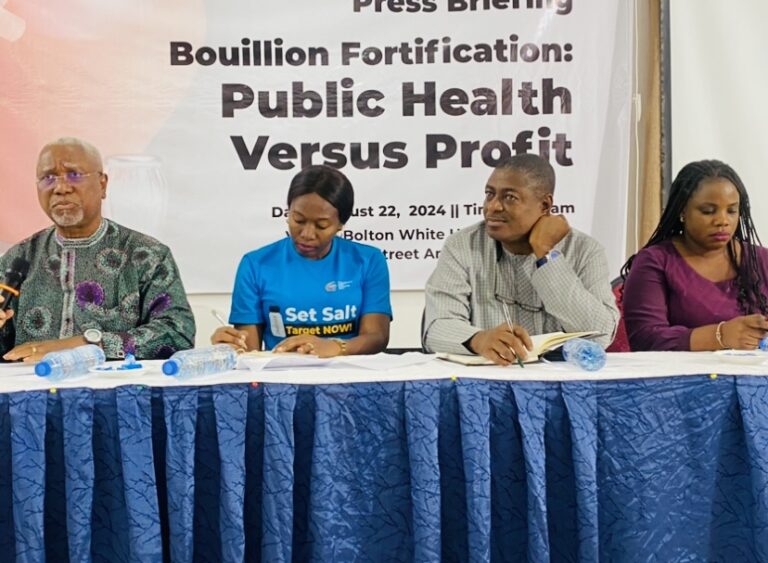
At a press briefing organised by the Corporate Accountability and Public Participation Africa (CAPPA), alongside the Network for Health Equity and Development, NHED in Abuja, on Thursday, August 22, the experts highlighted the dangers associated with the excessive sodium content in bouillon cubes, which they said are consumed by over 90 per cent of Nigerian households.

According to them, Nigerians are at a higher risk of life-threatening conditions like kidney failure, hypertension and cardiovascular diseases if the proposed policy in the recent Consumption and Micronutrient Survey (NFCMS) report is adopted.

A leading public health specialist and NHED Technical Advisor, Jerome Mafeni, CAPPA executive director, Akinbode Oluwafemi, and CAPPA’s food and nutrition scientist, Bukola Odele, pointed out that the high sodium content in the cubes, coupled with the widespread misconception that they are a healthy seasoning alternative, has led to their overuse in Nigeria.

The executive director of CAPPA said the organisation was raising concerns in response to the release of the National Food Consumption and Micronutrient Survey (NFCMS) report.

He noted that some key policy decisions proposed in the report had raised concerns about the intent of the proponents of these ideas.

“Amongst this is the consideration of bouillon cubes (what we commonly call maggi) as a food vehicle for delivering iron and zinc to households in order to combat micronutrient deficiencies in Nigeria. The justification for this policy proposal is based on survey findings that bouillon is consumed by 96 per cent of the populace,” he said.

According to him, due to the fortification of salt with iodine, Nigeria currently sees an average daily salt consumption of up to 10 grammes per day, which he said dangerously exceeded the World Health Organization’s (WHO) recommended limit of two grammes of sodium per day, or less than five grammes of salt per day – equivalent to just one teaspoon daily.

He said fortifying another high-sodium food such as bouillon would put Nigerians at risk of a higher sodium intake.

“Furthermore, certain industry players and their co-travellers are disseminating unverified scientific information, false research claims and spreading deceptive marketing information through social media influencers to promote monosodium glutamate (MSG) and bouillon as nutritious, safe and healthy for human consumption without also informing consumers that these products contain harmful quantities of sodium which could lead to hypertension, heart, and kidney failure,” he added.

High levels of sodium contributing to rise in non-communicable diseases in Nigeria

On his part, Mafeni disclosed that excessive sodium intake was a significant contributor to the rising prevalence of non-communicable diseases (NCDs) in Nigeria.

“Nigeria is currently facing a dual burden of malnutrition and a rising prevalence of non-communicable diseases (NCDs) such as hypertension and cardiovascular diseases,” says Mafeni, adding that “a significant contributor to this health crisis is the excessive consumption of sodium, primarily through processed and packaged foods, including widely used seasonings like bouillon cubes and monosodium glutamate (MSG).

While noting that food fortification might be intended to address micronutrient deficiencies, using high-sodium foods as vehicles for fortification is counterproductive and poses significant health risks. 

Appeal to regulatory bodies

Meanwhile, the public health experts in their briefing urged regulatory bodies to collaborate to monitor these fortification programme to ensure compliance with global standards and best practices, especially in the selection of food vehicles. 

Speaking further, Mafeni stressed that without intervention, the trends would continue to worsen, leading to higher mortality rates, reduced quality of life, and increased healthcare costs.

Stakeholders highlight demands

Highlighting their demands to address the growing health concerns, the stakeholders called for immediate discontinuation of the plans to use bouillon as a food vehicle for fortification.

They also called for the implementation of front-of-pack labels and regulation of the marketing and promotion of high-sodium foods.

Besides, the stakeholders charged the government with implementing effective country-wide salt/sodium reduction interventions.

Media Coverage of Migration calls for applications

Agence Française de Développement (AFD) is launching a call for projects in six countries to recruit a consortium of organisations from the media, research and civil society sectors.

The “Médiamig” programme aims to help improve media coverage of migration issues in Côte d’Ivoire, Jordan, Lebanon, Madagascar, Senegal and Tunisia.


READ ALSO:


The projects will last for three years (2024-2027) and will receive a grant between EUR300,000 and EUR550,000.

International or local organisations with previous experience in media and migration can apply for this grant.

The deadline for the submission of applications is September 20, 2024. Interested applicants can apply here.

Old video of NNPCL boss denying payment of fuel subsidy resurfaces online

As concerns mount over speculations that the Nigerian government is secretly paying fuel subsidy, a video showing the group chief executive officer of the Nigerian National Petroleum Company (NNPC) Limited, Mele Kyari, saying there’s no subsidy on fuel imports has resurfaced online.

The video is circulated following a recent report that the government accepted the NNPCL request to use the 2023 dividends due to the federation paying for petrol subsidy.

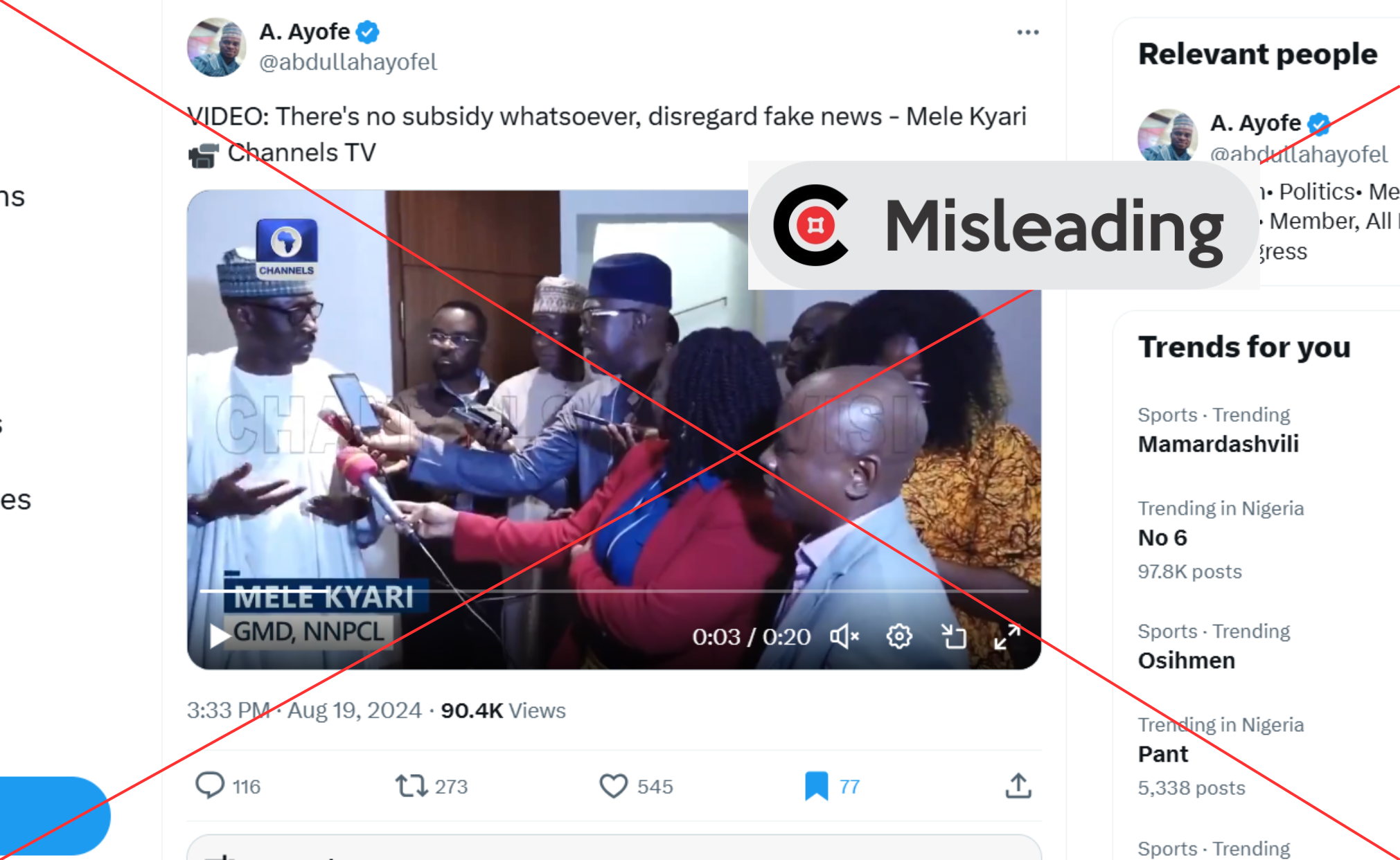
An X user, @abdullahayofel, posted the video with a caption thus:

“VIDEO: There’s no subsidy whatsoever, disregard fake news – Mele Kyari”

The video has garnered over 100,000 views on X, alongside over 500 likes and about 300 reposts as of August 21, 2024.

Another X user, @abj_online posted the video with another caption that read:

“VIDEO: There’s no subsidy whatsoever, disregard fake news – Mele Kyari @MKKyari, GMD NNPCL @nnpclimited clarifies.”

The video has generated more than 33,000 views and over 170 likes plus more than 100 reposts as of August 21, 2024.

THE CLAIM

Recent video shows the NNPCL boss, Mele Kyari, denying payment of fuel subsidy.

THE FINDINGS

Findings by The FactCheckHub show that the claim is MISLEADING, as the video has been online since 10 months ago.

Screenshot of the viral video showing Mele Kyari denying payment of fuel subsidy.

In his inaugural speech on May 29, 2023, the Nigerian President, Bola Ahmed Tinubu, announced the removal of fuel subsidy. The fuel subsidy is a financial support meant to subsidize the price of petrol locally for Nigerians. However, there have been strong indications that the government still spends billions on its payments.

Though the Nigerian government has consistently denied paying fuel subsidy, a recent report by The Cable said the government has agreed to help the NNPCL pay outstanding fuel subsidy contrary to the government’s claim.

This indicates that President Tinubu has allowed the company to use money that was supposed to be shared among the federal, state, and local governments (known as dividends) to cover the cost of the subsidy instead.

Though the NNPCL has denied paying fuel subsidy in a recent statement, the viral video of Mele Kyari has been online since October 9, 2023, according to this Channels TV report.

The video shows when Kyari was addressing State House Correspondents at the Presidential Villa in Abuja in October 2023 where he vehemently denied the return of the fuel subsidy regime.

“There is no subsidy whatsoever. We’re recovering our full cost from the products that we import. We sell to the market; we understand why the marketers are unable to import.

“We hope that they do this very quickly and these are some of the interventions the government is doing. There is no subsidy,” Kyari said.

Kyari’s denial then was to douse speculations over a rise in landing cost of petrol beyond N700 after oil marketers raised the alarm that pump prices could rise to record numbers.

THE VERDICT 

The claim that recent video shows the NNPCL boss, Mele Kyari, denying payment of fuel subsidy is MISLEADING; the video has been online since October 2023.

This fact-check is republished from The FactCheckHub.

N555m fine: Fidelity bank faults NDPC’s data breach allegations

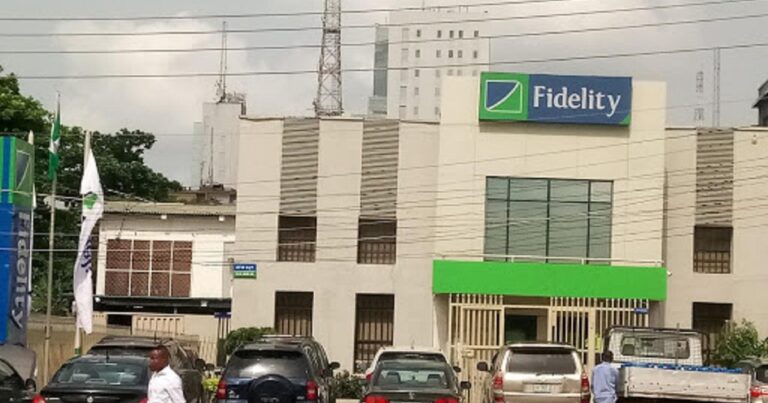
FIDELITY Bank has disputed data breach allegations leveled against it by the Nigerian Data Protection Commission (NDPC).

In a statement issued on Wednesday, July 21, a spokesman for the bank, Meksley Nwagboh, said no data law was violated to warrant the imposition of N555.8m by the commission.

The  ICIR reported that the NDPC had levied Fidelity Bank for violation of some customers’ data and imposed a fine on the financial institution.

The fine equals 0.1 per cent of Fidelity Bank’s annual gross revenue in 2023.

A check on Fidelity Bank’s 2023 audited financial statements shows the bank posted gross earnings of N555.83 billion.

The commission said Fidelity Bank breached the Nigeria Data Protection Regulation (NDPR) of 2019 and the Nigeria Data Protection (NDP) Act of 2023.

The commission also blamed the bank’s lack of cooperation during an investigation before arrival at the penalty.

However, the bank said it conducted itself to the highest ethical standards by ensuring full compliance with extant laws on data protection.

“As a Bank, we remain in discussions with the NDPC over an amicable resolution to this matter,” Nwagboh said in a statement.

Fidelity Bank gave a breakdown of its dealings with the NDPC on the matter and said:

“On April 30th, 2023, we received a notice of investigation from the Nigerian Data Protection Agency (NDPA), now the Nigerian Data Protection Commission (NDPC). The investigation was in respect of a complaint from [name has been withheld to protect the identity of the complainant] who claimed that [name withheld] details were used to open an account in the bank without [name withheld] consent.

“Based on this notice, we conducted an internal investigation into the circumstances around the claim and discovered as follows: An account opening request was received online in the name of [name withheld], and an email was sent to the email address attached to the request informing them about this,”the bank said.

The bank also disclosed that in compliance with its data protection policy, accounts created online without full documentation are not allowed to be operational and are closed after 30 days if the outstanding documents are not provided to authenticate the identity of the person seeking to open the account.

“In compliance with our data protection laws, the account was not allowed to be operational as the passport photograph and BVN were not provided.

“The account was immediately placed on “Post No Debit” status as the applicant was expected to complete the account opening process by providing the outstanding documents for verification within 30 days. This was not done, and the account was eventually closed,” it added.

The bank stated that on May 2nd, 2023, it responded to the NDPC that the bank did not violate any law because there was no data breach and that the account opening process was not completed.

“On our part, we carried out due diligence by immediately blocking the account and subsequently closing the account when we did not receive the outstanding documents. At no point in the process was the account ever operational,” it said while presenting its side of the story.

It further stated that on July 7, 2023, they were invited for a pre-action meeting with NDPC, wherein it restated its position as earlier communicated to the government agency in a letter dated May 2nd.

The bank, noted, however, that despite its explanation and evidence provided to support its claim, the agency said it had concluded to impose a penalty on the bank.

“On 5th December of 2023, we got a letter from NDPC demanding we pay a ‘remedial fee’ of N250 million within 21 days.“We immediately commenced another round of engagements with the Commission as we were convinced, we had not breached any extant law or regulation,” it said.

“While discussions were still ongoing with the NDPC, we received another letter on the 20th of August demanding that we now pay N555.8m naira,” the bank added in the statement.

Media group decries use of free emails by government officials contrary to policy

0

A MEDIA advocate group, Media Rights Agenda (MRA), has expressed concern over the continued use of free email services by government officials to conduct official business.

The group alleged that the practice violated government policy and posed significant risks to national security, data privacy, and the integrity of government operations.

The MRA in a statement issued in Lagos State by its programme officer in charge of cyber-security, Esther Adeniyi, observed that popular free email services, including Gmail, Yahoo Mail, Hotmail, and Outlook.com, did not possess the requisite advanced security features to safeguard sensitive government information adequately.

Consequently, the group said their utilisation by government officials created exposures that might result in data breaches, cyber-attacks, and unauthorised access to sensitive information, potentially jeopardising national security and public trust.

Adeniyi recalled that on February 17, 2022, the Federal Executive Council (FEC) endorsed the National Policy on Nigerian Government Second-Level Domains.

According to the former Minister of Communications and Digital Economy, Isa Pantami, the policy aimed to secure official communications through government-controlled domains.

Adeniyi added that following the policy’s approval, the minister instructed government officials to switch from using generic domains for their websites and emails to the government’s top-level domain, emphasising that using private emails for official purposes would no longer be accepted.

She also recounted that at the formal unveiling of the policy on February 2, 2023, former President Muhammadu Buhari similarly directed all government officials to use relevant government domains for official purposes.

Adeniyi observed that despite the implementation of the policy and numerous directives issued since the Olusegun Obasanjo presidency, as well as recent orders from Buhari and Pantami, a significant number of government officials across all levels continue to flout the rules with impunity.

“The government should invest in secure, government-operated email systems that offer the necessary protections and ensure that all official communications are conducted in a manner that upholds the integrity, security and professionalism of government operations while also better protecting sensitive information, maintaining public trust, and ensuring that the government meets its obligations to the Nigerian people.”

Adeniyi emphasized that using personal email platforms for official communication undermined the Freedom of Information (FOI) Act, 2011, by complicating record-keeping and archiving processes; hindering tracking, auditing, and transparency; and making it difficult to hold officials accountable.

Besides, she said when officials leave public service, their personal email records become inaccessible, creating a “black hole” in government records and rendering the FOI Act inapplicable to those records.

IPMAN blames NNPCL for pump price hike, lingering scarcity

0

THE Independent Petroleum Marketers Association of Nigeria (IPMAN) has blamed the lingering petrol scarcity across the country on the difficulties currently faced in lifting the product from the Nigerian National Petroleum Company Limited (NNPCL).

It also blamed the NNPCL for the premium price of about N850 at which IPMAN is getting petrol from depot owners, resulting in pump price hikes nearing N1,000 in major cities.

The NNPCL is the sole importer of petroleum products and manages the distribution of petrol products to oil marketers.

On Tuesday, August 20 at Channels Television programme, the Chairman of IPMAN, Ore Depot, Shina Amoo, asserted that the NNPCL had distorted the distribution pattern, lamenting that its members have not been getting stock from the NNPCL.

He said the bureaucratic bottlenecks faced by IPMAN members in buying directly from the NNPCL have been on for the past two to three years.

According to Amoo, the little supply available is not well distributed by the NNPCL, hinting that independent marketers currently get petrol at a premium price of between N750 to N850 per litre from depot owners.

He said marketers could get the product at about N570 from NNPCL but that it could take three to five months as against the one week it previously took to load the product.

“If we could get any to load from NNPC directly, when you pay your draft today, you may end up picking that product in the next three to five months. So, the profit would have been eroded.

“So, we all prefer to go and be lining up any private depot. I don’t want to mention their names; they (the depot owner) sell the product at premium N800, N830, and N850. That is the situation at hand now,” Amoo said.

He also expressed worries that NNPCL had abandoned its distribution pattern, and has been shifting petrol products to depot owners, thereby creating a secondary market where members now have to buy at N850 premium from depot owners.

“We previously had an arrangement where we enjoyed a 70/30 supply ratio based on our capacity.

“Independent marketers are spread across villages and urban areas, yet we are not being considered in the supply chain,” Amoo claimed.

Answering a question about who supplies the depot owners, Amoo said, “The NNPC supplies the depots,” stressing that “the year NNPC left distribution pattern, that was the year they (NNPCL) left sincerity.”

“We have been making noise about this distribution pattern long ago,” he maintained.

Explaining the bureaucratic delays faced by IPMAN members, Amoo said, “Previously, after payment, it took a week to load products. Now, the process drags on for three to five months. This has made many of us turn to private depots, even though they charge premium prices.”

He further accused NNPCL of selling insufficient quantities to IPMAN in favour of higher volumes to other groups such as the Depot and Petroleum Products Marketers Association of Nigeria (DAPPMAN) and the Major Energies Marketers Association of Nigeria (MEMAN).

The ICIR can report that IPMAN boasts over 3,000 members and controls a significant share of filling stations in the country.

Petrol scarcity has been resurfacing for over two months, especially in Lagos and Abuja.

In its most recent statement on Saturday, July 27, the NNPCL explained that the situation was being addressed.

It assured that the company was working round the clock with all stakeholders to resolve the challenge and restore normalcy in operations, however, the petrol scarcity has refused to abate.

EndBadGovernance protests: Over 50 journalists attacked, harassed during coverage – CPJ

0

AT least 56 journalists were attacked by security forces or unidentified citizens while covering the #EndBadGovernance demonstrations in Nigeria in August 2024, the Committee to Protect Journalists (CPJ) has said.

The CPJ noted in a report that documentation of the incidents, based on interviews, local reports, and verified media, highlighted significant dangers reporters face during protests in many African countries and the failure of authorities to protect journalists.

The report stated that out of the 56 journalists attacked during the protest, all worked for privately owned media, except one from government-owned Radio Nigeria.

This was as the committee disclosed that more than 40 Nigerian journalists were detained, attacked, or harassed while reporting on presidential and state elections in the country and dozens were attacked during the #EndSARS campaign in 2020.

According to the report, the attacks on journalists in Nigeria are part of a broader trend of violence against the media in Africa, particularly during periods of political unrest.

“In Kenya, at least a dozen journalists have been targeted by security personnel during weeks of youth-led protests since June, with at least one reporter shot with rubber bullets and several others hit with teargas canisters. Meanwhile, Ugandan police and soldiers used force to quash similar demonstrations over corruption and high living costs, while a Ghanaian court banned planned protests.

“Globally, attacks on the press often spike during moments of political tension. In Senegal, at least 25 journalists were attacked, detained, or tear gassed while reporting on February’s protests over delayed elections.”

The ICIR reported that many Nigerians took to the streets nationwide to protest poor governance and economic hardships caused by President Bola Tinubu’s reforms.

However, during the protest, there was widespread attacks on protesters and journalists by both the state, including the police and the State Security Service, SSS and non-state actors as documented by The ICIR and other news platforms. 

The report by the CPJ also indicated that on July 31, police officers harassed a News Central TV crew in Lagos State, forcing the platform to halt its coverage of planned protests at the Lekki toll gate. 

Similar incidents were recorded on August 1 in Abuja, Borno, Kano, and Delta states, where journalists were subjected to arrests, detention, and physical attacks by both security forces and unidentified assailants.

On August 3, at the Abuja National Stadium, The ICIR reported that masked security forces fired bullets and tear gas in the direction of 18 journalists covering the protests, several of whom were wearing press vests.

The journalists include Premium Times reporters Abdulkareem Mojeed, Emmanuel Agbo, Abdulqudus Ogundapo, and Popoola Ademola; TheCable videographer Mbasirike Joshua and reporters Dyepkazah Shibayan, Bolanle Olabimtan, and Claire Mom; AIT reporter Oscar Ihimhekpen and camera operators Femi Kuku and Olugbenga Ogunlade.

Others are the News Central TV camera operator Eno-Obong Koffi and reporter Emmanuel Bagudu; The ICIR’s video journalist Olayinka Fatunbi and reporters Mustapha Usman and Nurudeen Akewushola; and Peoples Gazette reporters Akintade and Ebube Ibeh. 

According to the report, the AIT’s Kuku dislocated his leg while Ademola cut his knees and broke his phone while fleeing from the gun-weilding security operatives.

Similarly, on August 6, in Lagos State, unidentified armed men assaulted four News Central TV journalists, hitting them and their vehicle with sticks.