Home Blog Page 51

Atiku, Obi, Kwankwaso, other ADC leaders protest in Abuja

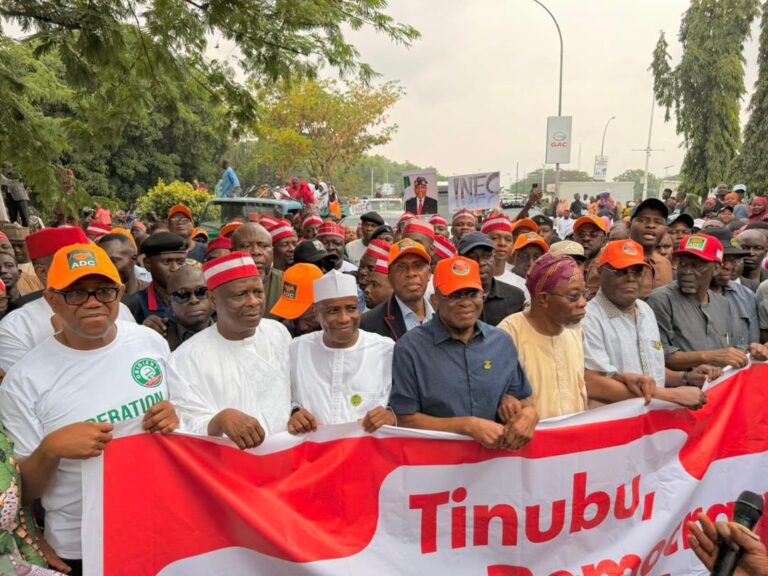
FORMER Vice President Atiku Abubakar, Labour Party’s 2023 presidential candidate Peter Obi, and former Kano State governor Rabiu Kwankwaso on Wednesday joined other opposition figures in Abuja to protest the derecognition of leadership of the African Democratic Congress (ADC) by the Independent National Electoral Commission (INEC)

The protesters, under the auspices of “Save Democracy in Nigeria”, staged peaceful protest against alleged bias by Nigeria’s electoral umpire.

The rally, which also featured former Senate President David Mark, former governors Rauf Aregbesola and Aminu Tambuwal, as well as other political actors, saw demonstrators holding banners with inscriptions such as “Tinubu, let our democracy breathe.”

Participants also gathered under what organisers tagged the “#OccupyINEC Protest,” converging around Maitama Roundabout in the Federal Capital Territory.

The procession included former Minister of Transportation Rotimi Amaechi, former Senator Dino Melaye, activist Aisha Yesufu, and several civil society figures.

In a post shared during the demonstration, Bolaji Abdullahi wrote: “Arise O Compatriots! We are outside!” signalling the commencement of the protest action.

Abubakar also issued a statement describing the action as a peaceful demonstration.

“Myself and other leaders of the ADC are peacefully protesting against the partisanship of the electoral umpire. Our patriotic stance is aimed at safeguarding our democracy and preventing the enthronement of a dictatorship,” he wrote.

Security presence was observed around key routes leading to Maitama, as protesters continued chanting and displaying placards calling for reforms within Nigeria’s electoral system and INEC)

The protest, which organisers said was aimed at “saving democracy,” was ongoing as of the time of filing this report.

Ahead of the protest, the ADC had announced that it would proceed with its planned congresses and national convention despite INEC’s stance. The party insisted that it had complied with all legal requirements, including issuing the mandatory 21-day notice for its internal activities.

Why protesters stormed INEC

On Wednesday, April 1, The ICIR reported INEC derecognising ADC leadership, including its chairman, Mark, and secretary, Aregbesola.

The commission took the decision after reviewing the judgment in Appeal No. CA/ABJ/145/2026, which arose from a leadership dispute within the party.

The commission explained that the decision meant it would no longer recognise Mark or his team as officials of the party pending the final determination of the case before another court – a Federal High Court in Abuja.

The dispute is between Mark and Nafiu Bala Gombe, who claimed he should lead the party as acting national chairman following the resignation of the previous leadership.

INEC’s decision means the ADC might not field candidates in the upcoming elections if the litigations are not concluded.

Consequently, Abubakar, Obi, Kwankwaso and other stalwarts of the party are accusing INEC of working to ensure the ruling All Progressives Congress (APC), which produced President Bola Tinubu, is the only major party that will participate in the polls.

Tinubu will be seeking re-election in 2027.

The ADC National Publicity Secretary, Bolaji Abdullahi, said during an interview on ARISE NEWS on Thursday, April 2, that the party had fulfilled all legal requirements, including notifying INEC ahead of its scheduled activities to enable it to participate in the 2027 polls.

“We have given INEC 21 days’ notice. They have accepted the notice. So, whether they come and continue with our congresses, we’ll continue with our convention,” Abdullahi said.

He further alleged that INEC had misinterpreted the Court of Appeal ruling and was being influenced to destabilise opposition parties ahead of the 2027 general elections, describing the situation as an attempt to undermine democracy.

INEC, however, has maintained that its position on the ADC leadership was guided by ongoing court proceedings and a directive to preserve the status quo pending judicial determination.

Redressing Nigeria’s healthcare and productivity deficits

0


By Adaobi OBIABUNMUO

It is no more news that Nigeria mostly consumes what it does not produce and mostly produces what it does not consume. As the country’s population outpaces the capacity of the economy to provide for everyone, it is important to reverse this trend. The question is how?

At the recent African Business Convention in Lagos on Tuesday, February 3 2026, Raymond Omachi, the Permanent Secretary of the Federal Ministry of Finance (who represented the Minister of Finance and Co-ordinating Minister of the Economy, Wale Edun), claimed the country was on the path to achieving sustainable growth of at least seven per-cent by 2027/28. He attributed this to structural reforms.

This may sound impressive but even a contingent, annual growth rate of seven per-cent of GDP will be inadequate to match or provide for Nigeria’s population growth rate of 3.2 per-cent. Nor can it be assumed that the benefits of this rate of growth, even if it were to materialise, will accrue in equity to everyone or everywhere in the country.

This fact calls attention to the need for the government to address the financing of essential public goods. Among these, healthcare provision ranks as the most critical. In 2023, the International Labour Organization (ILO) cautioned that health spending has long-run impact on economic growth and productivity.

To improve the health outcome for the population nearly 40 years ago, then Minister of Health, Professor Olikoye Ransome-Kuti, launched the first comprehensive National Health Policy in 1988. Then, less than 35% of Nigeria’s population had access to basic health services.

With its emphasis on Health for All, the World Health Organisation (WHO)’s Alma-Ata Declaration of 1978 identified primary health care as a basic human right and essential anchor for achieving Health for All. Nigeria anchored its National Health Policy on access to basic health as a right not charity. In Nigeria, this right is honoured in breach.

The Primary Health Centre (PHC) is the first level of contact of individuals, the family and community in any national health system. Under the stewardship of Professor Ransome-Kuti as Health Minister in 1992, the country established the National Primary Health Care Development Agency, NPHCDA.

Yet, the suffers a proliferation of non-existent or dilapidated PHC. According to the NPHCDA dashboard, there are 26,711 PHC facilities nation-wide. Katsina State has the highest with 1,724 while Bayelsa State has the least with 221.

Unfortunately, these exist mostly in name only. A 2023 report, for instance, reveals how the lives of residents are at risk from the dilapidated PHCs in Shongom LGA in Gombe State. This is not an isolated case. In 2024, the Guardian highlighted Oyo State, where PHCs gasp for breath. Nigerians die avoidably from pregnancy, violence, Malaria and other preventable diseases because of unavailability of functional PHCs.

According to the WHO, health standards are tools for the achievement of the highest quality of care possible. The WHO assesses national health systems in terms of six building blocks; service delivery, health workforce, health information systems, access to essential medicines, financing, and leadership/governance.

Nigeria scores abysmally in each of these elements. As we enter another election cycle, we must ask: how many politicians will truly prioritise the health of the people or disavow health tourism abroad for themselves and their families? Will healthcare feature at all in their manifestos?

Take service delivery, for instance. It is routine in Nigeria for patients to beg family and friends for medical bills or to resort to crowdfunding through social media. The indignity that comes from this is unspeakable. Quite often, death or disability results while the patients wait to mobilise charity.

Or consider health financing. The Abuja Declaration, adopted by the Heads of State and Government of the African Union in 2001, set a target of allocating at least 15% of annual budget to the health sector. WHO identifies Nigeria as one of 15 African countries “making insufficient progress” towards realizing this commitment.

In 2025, Nigeria’s federal government appropriated N2.48 trillion for health, about 5.18% of the budget. Unfortunately, the health ministry received only N36 million from the N218 billion capital allocation in the 2025 budget. In 2026, it is down to 5.15% with N3.5 trillion allocated to health sector from a N68.3 trillion budget.

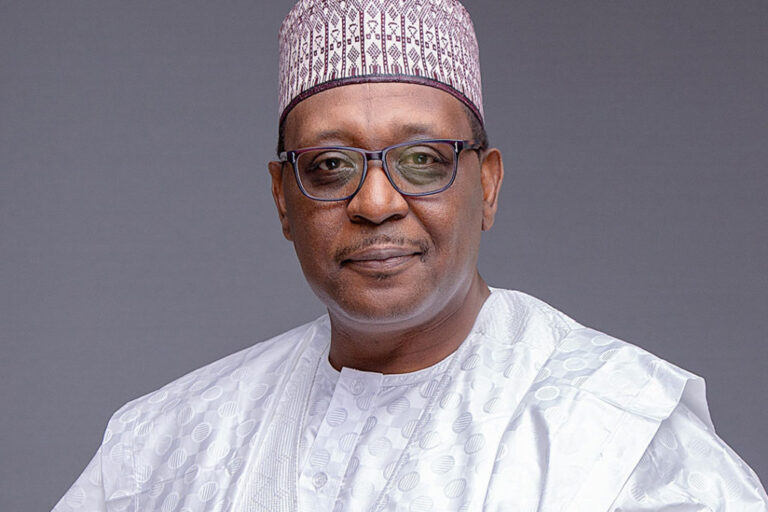
In December 2023, the Tinubu administration launched the National Health Sector Renewal Investment Initiative and was able to secure $2.2B to renovate 17,000 PHCs, train 120,000 frontline health workers, and double national health insurance coverage within three years. In the second quarter of 2025, the President approved the establishment of 8,800 PHCs but, eleven months thereafter, there is no update on how much progress has been made. During the Ministerial Oversight Committee meeting, Health Minister, Prof. Ali Pate, disclosed that the government approved the disbursement of N32B to health facilities under the Basic Health Care Provision Fund and that the government was on its way to expanding the facilities by an additional 5,000.

Access to essential medicines is no different. The National Bureau of Statistics (NBS) in its 2023 National Health Facility Survey report revealed that only 34.3% of drugs are available in PHCs. This implies that 65.7% of essential medicines are not. With the high cost of medication attributed to the policy reforms by the government and the exit of some multinational pharmaceutical firms, the burden on citizens increased. To cushion the effects of inflation in the health sector, the President, in June 2024, signed an executive order suspending, tariffs, excise duties and Value Added Tax (VAT) on specified pharmaceutical machinery and raw materials. Almost two years after the executive order was signed, progress is unverifiable.

Nigeria’s health workforce and information systems are in disrepair. The problems include corruption, inadequate data for planning, and loss of professionals to trans-national migration. In April 2025, Prof. Ali Pate, disclosed that over 16,000 doctors left Nigeria in the last seven years. Nigeria’s government is unwilling and unable to invest in the retention of expensively trained healthcare professionals.

The state of labour unrest in the sector is a pointer to this fact. The National Association of Resident Doctors (NARD) has been in and out of labour disputes with the federal government, and the Joint Health Sector Unions (JOHESU) only suspended its 84 days strike on 6 February following a conciliation agreement with the federal government.

One of the reasons for the strikes is the failure of government to implement the adjusted Consolidated Health Salary Structure in line with the Consolidated Medical Salary Structure (ConMESS). While health professionals are starved of legitimate remuneration, politicians who should appropriate for their wellbeing profiteer from the patrimony.

Government has a clear and non-negotiable responsibility to improve health outcomes for its people and guarantee access to the safety, health, and overall well-being for all. It is clear that the improvement of Nigeria’s health sector is not a priority for government. With such demonstrable lack of interest in improving national productivity, the likelihood of meeting the national growth targets is low.

Government must ensure that existing health facilities meet stipulated minimum standards and are serviceable. Service conditions for healthcare professionals must be addressed, including adequate remuneration and paid leave. All loopholes in the system must be blocked, and public officials must be held accountable to the people they serve. Healthcare policy must return to political and policy salience. This alone can guarantee a population healthy enough to power economic growth.

Obiabunmuo is Programmes Manager at PRIMORG

 

US, Iran agree ceasefire deal, outline conditions

0

THE United States and Iran have agreed to a temporary ceasefire, pausing weeks of hostilities, but the truce is tied to a set of strict and contested conditions that could determine whether lasting peace is achieved.

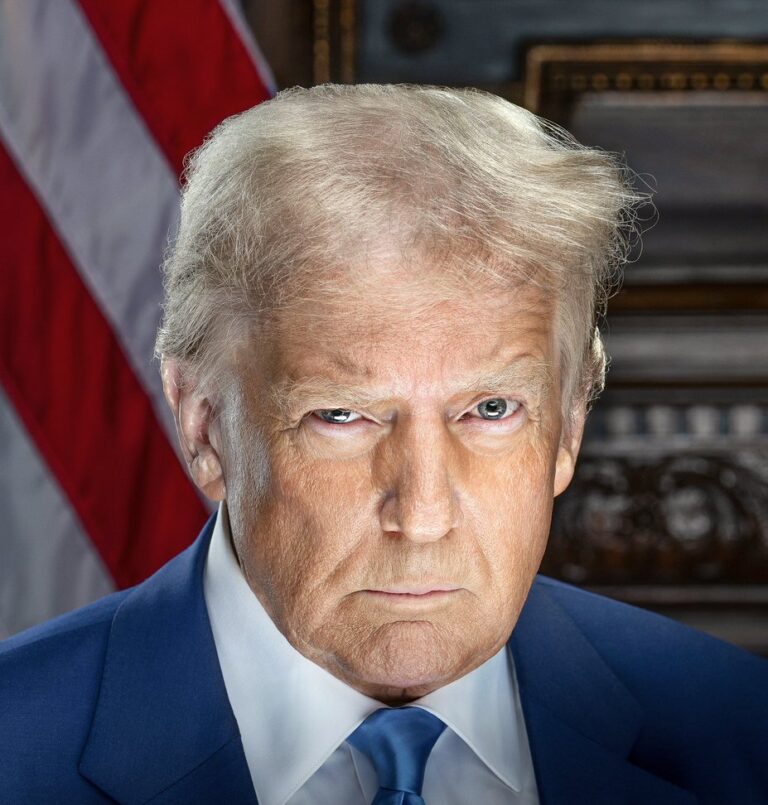
The agreement, announced by the US President Donald Trump on Tuesday, April 6, provides for a two-week halt in military operations.

It followed more than a month of coordinated strikes involving the US and Israeli forces on Iranian targets, and rising tensions that threatened the Middle East.

According to Trump, Washington will suspend further attacks if Tehran ensures the immediate reopening of the Strait of Hormuz.

“Based on conversations with Prime Minister Shehbaz Sharif and Field Marshal Asim Munir, of Pakistan, and wherein they requested that I hold off the destructive force being sent tonight to Iran, and subject to the Islamic Republic of Iran agreeing to the complete, immediate, and safe opening of the Strait of Hormuz, I agree to suspend the bombing and attack of Iran for a period of two weeks,” Trump said in a statement.

The ICIR reports that the Strait of Hormuz is a critical global shipping route for oil and gas, majorly controlled by the Iranian government. It links the oil-rich Persian Gulf to global markets and a significant share of the world’s crude oil and liquefied natural gas passes through this narrow corridor daily, making it vital to global energy supply and prices.

Trump further said the decision to pause military action came after the US had “met and exceeded” its objectives and was close to a broader peace framework.

“This will be a double-sided ceasefire! The reason for doing so is that we have already met and exceeded all military objectives and are very far along with a definitive agreement concerning long-term peace with Iran, and peace in the Middle East.

“We received a 10-point proposal from Iran and believe it is a workable basis on which to negotiate. Almost all of the various points of past contention have been agreed to between the United States and Iran, but a two-week period will allow the agreement to be finalised and consummated.”

Iran, on its part, confirmed it would allow vessels to pass through the strategic waterway during the ceasefire period, with movements overseen by its military.

The breakthrough came after mediation efforts led by Shehbaz Sharif, who said the ceasefire took effect immediately and described it as a step toward long-term stability.

He has invited both sides to Islamabad for further negotiations aimed at reaching a permanent agreement.

“Both parties have displayed remarkable wisdom and understanding and have remained constructively engaged in furthering the cause of peace and stability. We earnestly hope, that the “Islamabad Talks” succeed in achieving sustainable peace and wish to share more good news in coming days,” he added.

Key conditions from both sides

Despite the ceasefire, both countries have outlined demands that highlight deep divisions.

Iran has proposed a 10-point framework as the basis for negotiations. The plan includes:

  • An end to military operations across Iran and its allied regions
  • Lifting US and international sanctions
  • Release of Iranian funds frozen abroad
  • Compensation for war-related damages
  • A commitment not to pursue nuclear weapons

Tehran has also insisted that any final agreement should be backed by a binding international resolution.

The US, however, is pushing its own broader set of conditions, reportedly including limits on Iran’s nuclear activities, restrictions on its military capabilities, and an end to support for regional armed groups.

Agreement does not include Lebanon – Netanyahu

Meanwhile, Israel’s Prime Minister Benjamin Netanyahu said Israel supports the temporary halt in strikes, provided Iran stops attacks and reopens the Strait of Hormuz.

However, he clarified that the ceasefire did not extend to military operations in Lebanon, where Israeli forces remained active against Hezbollah.

However, this contradicts earlier remarks by Pakistan president who said the truce would cover all fronts.

The ICIR reports that previous rounds of diplomacy between Washington and Tehran have collapsed amid renewed fighting.

Early signs among analysts suggested both sides still disagree on key terms particularly over sanctions, regional influence, and control of strategic routes.

War toll and how the conflict escalated

The latest crisis began after US-led strikes targeted senior Iranian military figures and strategic facilities, marking a sharp escalation that Tehran described as a direct act of war.

Both sides have since exchanged missile and air attacks, with casualties reported across Iran and parts of the wider Middle East.

Iranian authorities said scores of military personnel, including high-ranking officers, were killed in the strikes, alongside civilian casualties from subsequent bombardments.

Retaliatory attacks by Iran and allied groups have also led to deaths and injuries in Israel and other locations in the region, although exact figures remain contested.

The conflict has also spilled into neighbouring countries, particularly Lebanon, where fighting between Israeli forces and Iran-backed Hezbollah has killed more than a thousand people and displaced large populations.

Obi, experts fault Tinubu’s ₦3.3tn power sector fund

FORMER Labour Party (LP) presidential candidate, Peter Obi, and key power-sector governance experts have faulted President Bola Ahmed Tinubu’s recent N3.3 trillion settlement plan for the country’s decade-old power sector debt.

The controversy comes after presidential spokesperson, Bayo Onanuga, stated on Sunday that Tinubu had finally approved N3.3 trillion to settle legacy debt owed to power generation companies.

Obi, in reaction, flagged an earlier approval of a similar fund by the Tinubu government in 2024, noting that an announcement without execution could not take Nigeria out of perennial darkness.

“On May 17, 2024, N3.3 trillion was approved for the same purpose. On July 25, 2024, another N4 trillion bond was approved to settle similar debts. There have also been other approvals in between, all targeted at addressing the same power sector liabilities,” Obi said.

He noted that the ‘non-transparent’ approval raised a fundamental question about whether previous announcements were made without execution.

“N3.3 trillion again? Nigeria’s power crisis without end? Each time legitimate concerns are raised, what we see appears more like policy pronouncements without measurable progress,” he stated.

Obi also pointed out that most of the debts were owed by ministries and agencies of the government, including the Presidential Villa.

“It’s important to note that government institutions and agencies, including the Presidential villa, owe a significant portion of these debts. Year after year, budgets were made and funds appropriated. Why then were these obligations not settled when due?

“And from what source will these new payments be made? Are we resorting once more to borrowing to service inefficiencies?” he queried.

Similarly, the Association of Generation Companies of Nigeria (APGC) questioned the approved N3.3 trillion. They raised concerns about how the decision would halt the electricity supply challenge in Nigeria.

The ICIR reports that the Chief Executive Officer of APGC, Joy Ogaji, raised an alarm over the parameter used by the Presidency to arrive at N3.3 trillion verified legacy debt.

The confusion comes amid the recent N501 billion power sector debt resettlement bond announced by the Nigerian government.

While the confusion persists, the majority of Nigerians have continued to suffer from epileptic electricity supply, with only 3,345 megawatts allocated to electricity distribution companies as of April 3rd, 2026.

Like other celebrations in Nigeria, the just-concluded Easter was marred by darkness in several parts of Nigeria as the Minister of Power’s recent pledge to fix the crisis within two-weeks failed to yield the expected results.

Reacting to the development, the President of Nigeria Consumer Protection Network, Kola Olubiyo, raised concerns over the Federal Government’s plan to settle N3.3 trillion in legacy debts. He said the move would not resolve the deep-rooted problems facing the industry.

He said while the payment might appear significant, it failed to address the fundamental issues undermining the sector’s performance.

He noted that discrepancies, as well as conflicting claims and counterclaims surrounding the debt figures, pointed to flaws in the data used to arrive at the estimates.

According to him, the data collection and generation processes lack scientifically verifiable standards.

Olubiyo further warned that such gaps made the debt figures vulnerable to manipulation by human factors and entrenched corruption within the system.

He stressed that without credible data and structural reforms, settling the debt alone would have a limited impact on improving Nigeria’s power sector.

“As good as the payment may sound, it will not in any way address the myriad of challenges bedevilling the power sector.

“The fact that there exist discrepancies and conflicting claims and counterclaims further demonstrates that data collection and data generation that form the basis of the debts’ claims were not generated through scientifically verifiable parameters.

“Hence the susceptibility of the data/debt claims to human elements and endemic individual corruption,” he said.

US strikes on Iran’s Kharg Island raise fears of wider conflict

0

IRAN’S main oil export hub, Kharg Island, came under attack on Tuesday, April 7, in what appears to be one of the most serious escalations in the standoff between the United States and Iran.

Multiple sites on the island were hit, with early footage showing smoke rising from the area. US officials said the strikes targeted military positions, including air defence systems, and did not directly hit oil facilities.

Kharg Island is central to Iran’s economy. It handles the vast majority of the country’s crude exports, largely because other parts of Iran’s coastline are too shallow for large tankers. In practical terms, if Kharg Island is knocked out, Iran’s ability to sell oil to the world will be severely limited.

Its location also makes it vulnerable. The island sits within range of U.S. military assets in the Gulf, including bases in Kuwait and Saudi Arabia, putting it firmly within reach in any confrontation.

The strikes come at a tense moment around the Strait of Hormuz, one of the world’s most important oil routes. A significant share of global crude passes through the waterway, and any threat to traffic there tends to rattle markets quickly.

There have been series of warnings from President Donald Trump. He had openly floated the idea of targeting Kharg Island in earlier remarks.

In the past week, Trump also issued and repeatedly delayed deadlines for Iran to reopen the Strait of Hormuz. His latest warning was more direct, suggesting that if Iran failed to comply, the U.S. could go after critical infrastructure, including power plants and bridges.

Tehran has so far refused to give ground, with Iranian officials rejecting a temporary ceasefire proposal and instead calling for a permanent end to the conflict. At the same time, authorities have urged civilians to help protect key facilities, a sign that the country is bracing for further strikes.

The rhetoric on both sides has intensified sharply, and the gap between them appears wide.

For now, the US appears to be stopping short of directly hitting oil exports. But by striking around Kharg Island, it has edged closer to Iran’s most sensitive economic target.

If that line is crossed, or if the Strait of Hormuz is fully disrupted, the consequences would likely be felt far beyond the region, especially in global energy markets.

The ICIR reported that Iran threatened retaliation after a top commander of the Islamic Revolutionary Guard Corps, Majid Khademi, was killed in a US–Israeli strike at the weekend.

Iran said the attack targeted its security leadership, while the Israel Defense Forces described Khademi as a key figure in external operations and internal crackdowns.

His death was seen as a major blow to Iran’s intelligence system. In response, Tehran warned of stronger retaliation if further strikes occur.


Tension as protest trails funeral of victims of Angwa Rukuba attack

TENSION flared in Jos North Local Government Area (LGA) of Plateau State on Tuesday, April 7, as protests over the arrest of three youths briefly disrupted the funeral service for victims of attack on the Angwan Rukuba community by gunmen on Palm Sunday.

The protest also followed a fresh update that the death toll from the attack had climbed to 33.

According to a Channels Television’s report, the burial turned chaotic when women and youths stormed the church premises where service was being conducted for them and demanded the immediate release of the detained youths.

The protesters insisted the arrested persons were innocent, alleging that security operatives picked up the wrong individuals while the real attackers remained at large.

The situation quickly escalated as they threatened to halt the burial until their demands were met.

Reacting to the arrest amid the unrest, the Plateau State Government, through the Chief of Staff at Government House, Jos, Jeremiah Satmak, confirmed that the three youths earlier arrested had been released following public pressure.

He also disclosed that the death toll had increased from 28 to 33 after some of the injured victims died in hospital.

Satmak condoled the bereaved families and said security agencies were working to uncover the motive behind the killings and ensure the perpetrators are brought to justice.

Youth leader confirms release, increased death toll

Meanwhile, speaking with The ICIR, the Angwa Rukuba Youth Leader, Christopher Sani, confirmed that the three youth that were earlier arrested had been released by the military.

He explained that they were released following the protest and agitations of the residents.

He also noted that the deaths from the attack increased to “about 33,” adding that “two died yesterday and another two before yesterday.”

Attack on Angwa Rukuba

The ICIR reported that a deadly attack on March 29 in Gari Ya Waye community, Angwan Rukuba by gunmen claimed at least 28 lives.

The attack quickly led to reprisal attack in the community, with some passerby and traders caught in the melee.

The state government consequently imposed a 48-hour curfew on Jos North LGA.

Although the curfew was later eased, fresh clashes erupted across several parts of the LGA, including Nasarawa Gwong, Bauchi Road, Farin Gada and the Gada Biyu axis.

The ICIR reported that retaliatory attacks spread across communities, with youth groups clashing in multiple locations as security operatives struggled to contain simultaneous incidents.

Residents shut shops and fled affected areas amid fears of further attacks, while videos circulating online showed chaotic confrontations on streets.

The violence also reportedly took on a sectarian dimension in some flashpoints, which further deepened insecurity in the area.

Kebbi Assembly Speaker, Zuru, dies in Egypt

0

THE Speaker of the Kebbi State House of Assembly, Mohammad Zuru, is dead.

Zuru reportedly died on Monday in Egypt after a brief illness, according to a statement by the state House of Assembly.

The statement was signed by an official of the House, Murtala Diri, and shared via his official Facebook page on behalf of the Assembly.

Until his death, he represented the Zuru constituency and served as Speaker of the 10th Kebbi State House of Assembly. He was elected to the position on June 8, 2023, and was regarded as a prominent political figure within the Zuru Emirate.

“Speaker of the Kebbi State House of Assembly, Rt. Hon. Mohammed Usman Zuru (Lifiddan Zuru), has passed away. He died in the early evening of Monday, 6th April, 2026, while receiving medical treatment in Cairo, Egypt.

“The late speaker, representing Zuru Constituency was a prominent political figure from Zuru emirate, served as the Speaker of the Kebbi State 10th Assembly. His death is a significant loss to his constituents, the state’s legislative body, the political community, as well as the state and the country in general,” the statement read.

Also, confirming his death to Punch Newspaper, an aide to the state governor on communication and strategy, Idris Zuru, described the incident as shocking.

“The death of the Speaker, Rt. Hon. Muhammad Usman Zuru, came to us as a rude shock. It is a painful loss not only to Kebbi State but to the entire nation,” he said.

ADC accuses INEC of plot to block party from fielding candidates

0

THE African Democratic Congress (ADC) has accused the Independent National Electoral Commission (INEC) of deploying “administrative landmines” to prevent it from fielding candidates in the upcoming elections.

In a statement on Monday, April 6, by its National Publicity Secretary, Bolaji Abdullahi, the party said the current situation appears deliberately designed to exclude it from participating in the polls.

The party said its position was backed by “documentary evidence,” including INEC records, attendance logs, monitoring reports, and excerpts from the commission’s sworn affidavit, which it claimed establish “a clear and consistent record of events.”

“We are compelled to raise serious concerns about a developing situation that appears designed to prevent the African Democratic Congress (ADC) from fielding candidates in the upcoming elections,” the statement said.

According to the ADC, INEC had received formal notice of its July 29, 2025, National Executive Committee meeting, monitored the proceedings, and subsequently updated its records to reflect a new leadership led by David Mark as National Chairman and Rauf Aregbesola as National Secretary.

The statement further cited INEC’s sworn affidavit before the Federal High Court in a suit involving Nafiu Bala Gombe, which, according to the ADC, affirmed that the leadership transition had been completed and recognised, and that such internal party matters fall outside judicial interference.

However, the party expressed concern that despite this record, INEC has now taken a contrary position by refusing to receive any correspondence from the ADC pending the determination of a case before the Federal High Court.

“Yet, despite this clear documentary trail, INEC has now taken the position that it will no longer receive any correspondence from the ADC pending the determination of a matter before the Federal High Court. This is where the contradiction becomes dangerous,” the party said.

The ADC argued that the decision conflicted with provisions of the Electoral Act, which imposes strict timelines, including a 21-day notice requirement and deadlines for submission of documents.

With INEC fixing May 10 as the submission deadline, the party said INEC’s refusal to accept its correspondence would prevent the commission from complying with the law.

It warned that this creates an “impossible position” and a pathway to “artificial non-compliance” that could be used to justify excluding the party from the elections.

The ADC also rejected INEC’s claim that its April 1 decision was meant to protect ongoing court proceedings, arguing instead that the commission had undermined the judicial process by intervening in a matter already before the court.

“We therefore call on the commission to immediately reverse this position, resume the acceptance of all lawful correspondence from the ADC, and uphold its constitutional responsibility to ensure a level playing field for all political parties,” the statement added.

The party urged Nigerians to remain vigilant, warning of “dangerous machinations to subvert Nigeria’s democracy.”

Background

The latest dispute followed INEC’s decision to stop recognising the ADC leadership led by Mark, citing a Court of Appeal ruling and a pending case before the Federal High Court in Abuja.

The commission had also removed the party’s leaders from its official portal on April 1, a move the ADC described as biased and an undue interference in its internal affairs.

Speaking during an ARISE NEWS on Thursday, April 2, Abdullahi said the party had complied with all legal requirements, including notifying INEC ahead of its congresses and convention.

He accused INEC of misinterpreting the court ruling and acting under external pressure to weaken opposition parties ahead of the 2027 general elections, alleging that the commission had “succumbed to intimidation.”

The ADC maintained that its leadership transition followed due process and that internal party disputes should not attract external interference.

The party has vowed to proceed with its planned congresses and convention, despite the standoff.

The ADC is widely seen as a key opposition platform to the ruling All Progressives Congress (APC), which produced President Bola Ahmed Tinubu in 2023.

Concerns have grown that if the crisis persists, it could limit political competition, particularly as the Peoples Democratic Party (PDP) also faces internal challenges following a wave of defections.

Several prominent political figures, including former vice president Atiku Abubakar, former governors Peter Obi, Nasir El-Rufai, Rabiu Kwankwaso, and Rotimi Amaechi, are ADC members.

Iran vows retaliation after top commander killed in US-Israeli strike

0

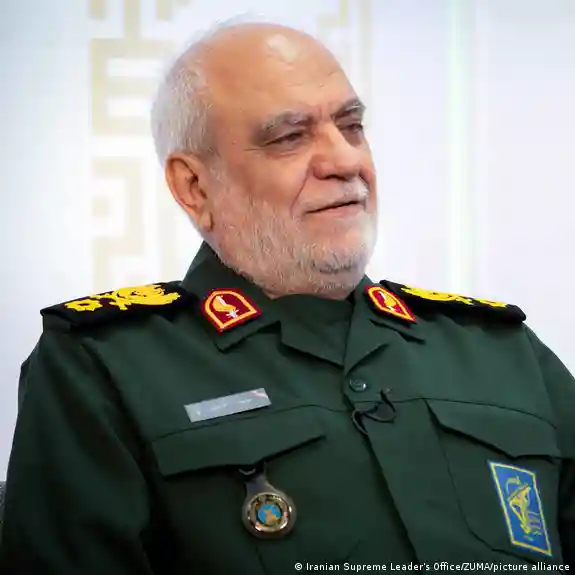
IRAN has threatened retaliation after a top commander of the Islamic Revolutionary Guard Corps (IRGC), Majid Khademi, was killed in a United States-Israeli strike.

State media, quoting the Guards, said Khademi, head of the IRGC intelligence arm, died in a dawn attack described as a “criminal terrorist” operation by the “American-Zionist enemy.”

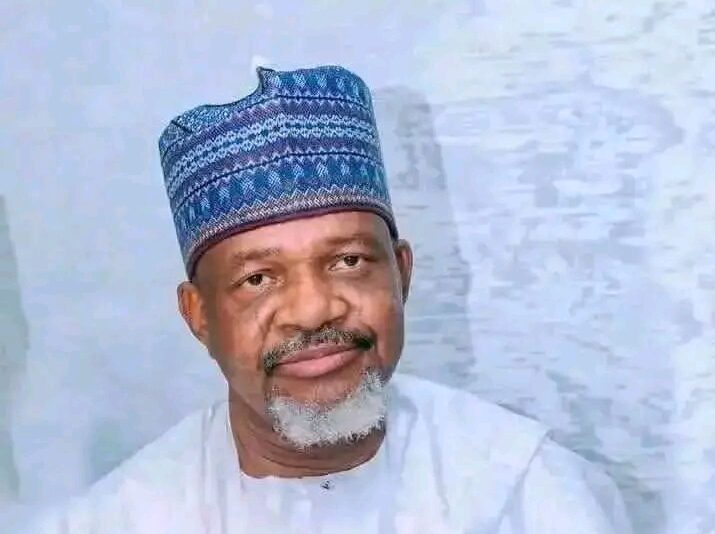
Khademi, appointed in 2025, is the latest senior Iranian figure eliminated in a string of strikes. He previously led the Guards’ Intelligence Protection Organisation and spent decades in intelligence and counter-espionage roles.

His killing is seen as a major hit to Iran’s security architecture.

The IRGC intelligence unit plays a central role in surveillance, counterintelligence and internal security, reporting directly to the country’s leadership.

Also confirming his death, Israel Defense Forces, in a statement on Monday, April 6, said Khademi was a key operative involved in external operations and internal crackdowns.

“Khademi was one of the IRGC’s most senior commanders and had accumulated extensive experience over many years.

“Khademi worked to advance terrorist attacks worldwide, and was responsible for monitoring Iranian civilians as part of the regime’s suppression of internal protests,” the statement read.

Meanwhile, Tehran has warned of “more devastating” retaliation if further strikes hit its territory or civilian infrastructure.

“Major General Majid Khademi, the powerful and educated head of the Intelligence Organisation of the Islamic Revolutionary Guard Corps, was martyred in the criminal terrorist attack by the American-Zionist enemy… at dawn today,” said the Guards in a post on their Telegram channel.”

The strike came amid continued tensions across the region, with Iran, Israel and the United States exchanging threats and attacks.

Over the weekend, US President Donald Trump threatened to launch attacks on Iranian infrastructure, including power plants and bridges, if Tehran fails to reopen the Strait of Hormuz, a critical global oil route.

The warning followed Iran’s seizure of the waterway, through which about a fifth of the world’s oil supply typically passes, consequently disrupting global energy supply.

The price of whistleblowing: Mubarak Bello’s fight for justice

0

By Godwin Onyeacholem

“YOU have two options now: To live or to die.” That was the chilling message with which a senior police officer confronted Mubarak Bello, a 38-year-old whistleblower and father of four young children, whose revelation has left the Katsina State police command fiercely rattled since 2019.

Bello, a civilian staff in the finance unit of the state command had exposed three layers of massive fraud perpetrated by the command’s high-ranking but heavily corrupt police officers:

  1. a payroll inflated with thousands of phantom officers;
  2. illegal “tax” deductions ranging from N5,000 to N80,000 levied on officers’ monthly salaries;
  3. and a fraudulent loan scheme through fake companies in which loanees were fraudulently deducted long after repaying the loans.

Since Bello reported the grand-scale swindle to relevant authorities including the Independent Corrupt Practices and Other Related Offences Commission (ICPC) and the Economic and Financial Crimes Commission (EFCC), his universe has gone downhill. As this piece goes out, he is buffeted by a continuous stream of virulent retaliation launched, in a classic case of institutional betrayal, by his employers, the police, a critical organ of the state whose duty it is to preserve law and order and protect people who expose criminal conduct, but has now turned themselves into a tool of deliberate, mean-spirited oppression of a whistleblower.

And strangely enough even if unconsciously, the whistleblower’s punishment by the police is equally kept alive by no less similarly pivotal state organs, notably ICPC and EFCC, with their seeming acquiescence to an obvious illegality as shown by their failure to investigate the whistleblower’s disclosure and ensure his safety as global best practice recommends in such cases. These two institutions ought to know better, even if the police have chosen to go rogue.

In actual fact, both the ICPC and EFCC, and indeed other state-empowered institutions having anything to do with whistleblowing, need to be deeply schooled on the essentials of whistleblowing as a mechanism for achieving transparency and accountability in public and corporate governance. The consistent standard in whistleblowing management which has clearly eluded these institutions is that once a whistleblower submits a report to relevant agencies, the whistleblower is entitled to full protection from varied and non-exclusive forms of reprisals from any quarter, even as the accuracy of the disclosure is undergoing assessment.

So, in Bello’s case, ICPC, EFCC, SSS, and even the federal ministry of justice and the Police Service Commission (PSC) which received the whistleblower’s disclosure, it’s fair to say they all dropped the ball scandalously by failing to prevent the reprisals repeatedly launched at him. It’s even worse that Bello’s disclosure was found to be full of merit at a glance, yet nothing of substance came out of it. The wrongdoers in the police have not been brought to account, and the whistleblower is left to suffer all kinds of mistreatment.

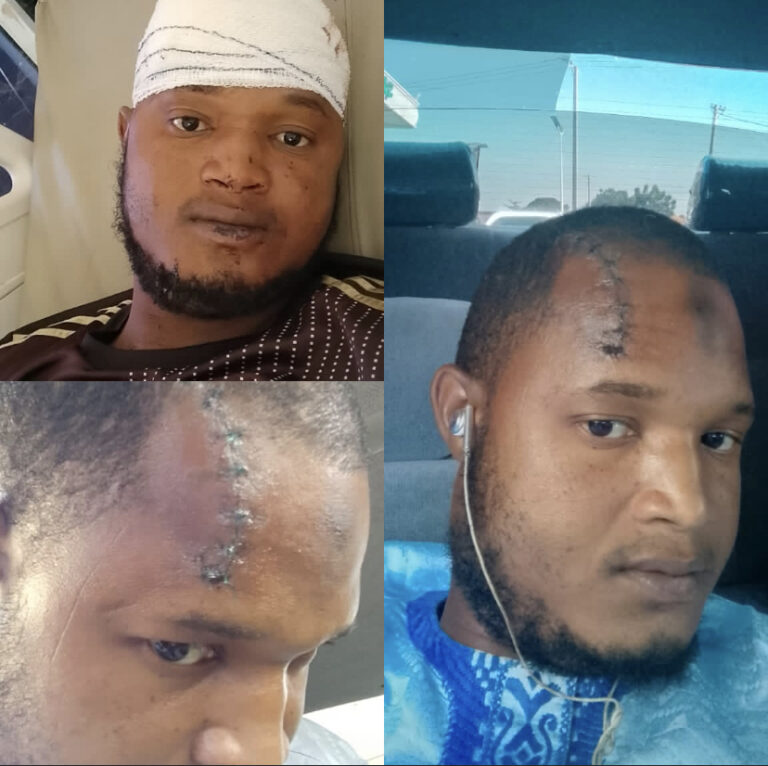
At one point Bello was arrested by the police, tortured and released after eight days without a formal charge, but his car was seized and is still with the police. His house was ransacked and valuable property removed by operatives from the State Intelligence Bureau (SIB). He had been physically attacked many times by a combination of policemen and hired ruffians and, in one instance, almost left for dead with a big gash on his forehead. The scar left by the stitched wound on his face is an enduring mark of state cruelty not only against the whistleblower, but also against truth-telling.

Not done yet, the police turned the screw by slamming him with two separate lawsuits alleging spurious charges intended to shut him up, the latest is an upcoming re-arraignment at the federal high court in Katsina initiated by the inspector general of police. As is well known, lawsuits are a slippery terrain for whistleblowers. They are often long and costly, and their outcome, decided by a judge, are always unpredictable. More than anything, Bello is traumatized by the retaliatory court cases before him, and occasionally he fights off the distress by showing frustrations and resentment toward his lawyers understandably.

When Katsina became increasingly unsafe due to constant harassments, he fled the town and relocated his wife and children to where he thought they would be safest inside the city. He was wrong. His persecutors traced the house, and constantly stormed it to ask his wife his whereabouts. One night, they broke into the house and violated the woman. As Bello narrated the hideous crime, he broke down and tears of anguish filled his eyes.

To be fair to ICPC, they once attempted to act by writing to the police to release the indicted officers for questioning. But the police, then headed by Kayode Egbetokun, ignored them and ICPC quietly retreated with their tails between their legs, and leaving the familiar impression that “our hands are tied,” an expression commonly trotted out in Nigeria by weak, ineffectual institutions and state officials lacking the will to act in accordance with the law.

Shockingly, the same incapability was demonstrated by President Muhammadu Buhari whose administration introduced the whistleblowing policy to fight corruption, and to whom the whistleblower had the privilege of narrating his story at the height of his persecution, was unable to save the whistleblower despite his well-advertised aversion to corrupt practices. After the whistleblower shared his concern with Buhari during a rare private meeting, the best the administration did for Bello was to send him to a safe house in Kaduna. Bello spent three months there and left on his own out of frustration. He wanted justice, not the luxury of a secluded sprawling safe haven.

If the whistleblower’s experience shows anything, it is evidence of a considerable amount of state failure as seen in the collapse or ineffectiveness of the moral clarity of Nigeria’s leadership in key institutions. For example, the police failing to maintain law and order, and the anti-corruption agencies not having the nerve to tackle corruption and protect citizens who report wrongdoing.

Because of the uncertainty and delays surrounding his court cases, Bello is expectedly afflicted with legal abuse syndrome (LAS), a kind of post-traumatic stress disorder related to a psychic injury often found in individuals assaulted by legal abuses and betrayals. This has left him nursing suicidal thoughts sometimes. Fortunately, he is already seeing a psychologist, thanks to the Coalition of Whistleblower Protection and Press Freedom (CWPPF) which had mounted a feisty advocacy for the safety of the whistleblower.

The coalition, among others, includes the African Centre for Media and Information Literacy (AFRICMIL), which is the lead organisation in the advocacy, Centre for Journalism Innovation and Development (CJID), International Centre for Investigative Reporting (ICIR) and Hope Behind Bars (HBB). In separate interventions, CWPPF and AFRICMIL had sent petitions to the Inspector General of Police and the Chair of ICPC highlighting the need to protect the whistleblower and guarantee his safety. Neither has responded to the petitions.

The police had been battling with extreme ferocity trying to persuade the whistleblower to disclaim his disclosure. The officer who accosted him offered money which Bello rejected, opting instead to stand by with the truth in the face of mortal danger. Seeing that the whistleblower won’t budge, the police journeyed with cash and plenty of gift items to Tsauri, a village in Kurfi Local Government Area of Katsina State, to meet with Bello’s father and persuade him to convince his son to shut up for good.

That is not the way to go. The police should be searching themselves and clearing the dregs that have put their reputation in a bad light. They should regenerate themselves as society’s pillar of rectitude, not a branch of corruption, dishonesty and wickedness.

To this end, the new Inspector General of Police, Olatunji Disu, should quickly terminate ongoing judicial retaliation deployed against the whistleblower by withdrawing the two frivolous suits and stopping all other forms of harassments against him and his family. Anything short of this will be grossly unfair and morally wrong, as well as an assault on public interest whistleblowing.

Above all, the Nigeria Police Force must guarantee the safety of Mubarak Bello and his family. The whole world is watching!

The Platform to Protect Whistleblower in Africa (PPLAAF) is deeply appreciated for its support in this campaign.

Godwin Onyeacholem is Program Manager at the African Centre for Media & Information Literacy.