Home Blog Page 56

ICPC takes El-Rufai into custody as court adjourns case

0

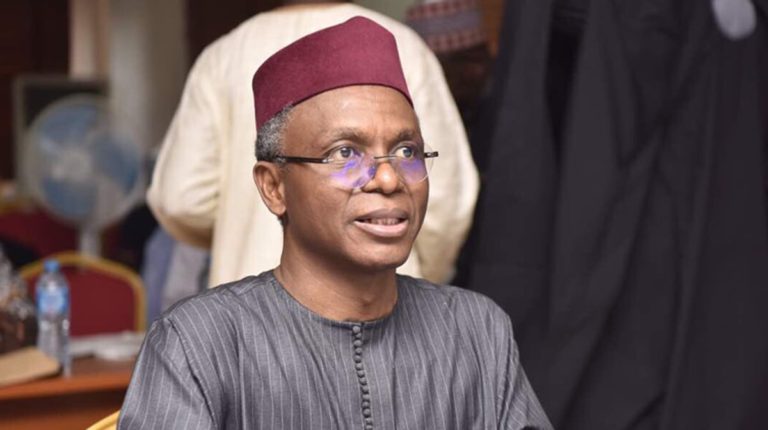
THE Independent Corrupt Practices and Other Related Offences Commission (ICPC) has, again, taken former Kaduna State governor, Nasir El-Rufai, into custody.

The latest development followed proceedings at the Federal High Court in Kaduna, on Tuesday, March 31, where his case was adjourned to Wednesday, April 1.

The decision also came on the same day El-Rufai was arraigned before the Kaduna State High Court on fresh and expanded criminal charges filed by the ICPC.

At the state court, he was docked alongside a co-defendant over a 10-count charge bordering on alleged fraud, conspiracy, abuse of office, and criminal breach of trust. The charges include allegations that he induced the Kaduna State Government to approve about N11 billion for a light rail project that was never executed.

Recall that The ICIR reported that El-Rufai was being prosecuted by the ICPC at the Federal High Court, alongside a co-defendant over allegations bordering on corruption, abuse of office, and money laundering.

The charges before the Federal High Court include claims that he unlawfully received about N579 million as severance allowance far exceeding the approved entitlement and multiple foreign currency transfers suspected to be proceeds of unlawful activities.

The anti-graft agency also alleged that the former governor received $320,800 through several transactions between 2017 and 2023, in addition to other sums in foreign currencies from individuals said to be at large. Prosecutors further accused him of conspiring to conceal the origin of funds in violation of the Money Laundering (Prevention and Prohibition) Act, 2022.

The court had on March 24 adjourned ruling on his bail application to March 31 after to March 31 after the counsels to the accused and litigants presented arguments. While the defence urged the court to grant bail on constitutional grounds, the prosecution opposed it, citing the gravity of the charges and the risk of interference with ongoing investigations.

The case was consequently adjourned to March 31. El-Rufai was, however, released by the ICPC, on Friday, March 27, to attend her mother burial.

Speaking after the case at the Federal High Court was adjourned the commission spokesperson, Okor Odey, told The ICIR that the former governor has been taken into custody.

“He is now in our custody. He will be going to the court from our custody tomorrow,” Odey said.

Case at State High Court adjourned to April 10

Meanwhile, the proceedings at the Kaduna State High Court, earlier today, were stalled after the absence of the second defendant, Amadu Sule (Leda), prevented the arraignment from going ahead as scheduled.

Consequently, the case was adjourned to April 10, 2026, for continuation of proceedings.

According to the charge sheet marked KDH/KAD/ICPC/01/26 obtained by The ICIR, the defendants were accused of offences allegedly committed between 2015 and 2025 during and after El-Rufai’s tenure as governor.

Prosecutors alleged that in December 2016, El-Rufai, while serving as governor, induced the Kaduna State Government to approve an alleged N11 billion payment to Indokaduna MRTS JV Nigeria Limited for a light rail project that was never executed.

He was also accused of allegedly approving and receiving severance payments exceeding N289 million in 2020 and 2023, above his legally entitled entitlements, an act prosecutors say amounts to abuse of office and corruption.

In another count, the prosecution alleged that between March and November 2022, El-Rufai and another person at large dishonestly disposed of $1,085,066.38 in World Bank loan funds, allegedly in violation of a loan agreement.
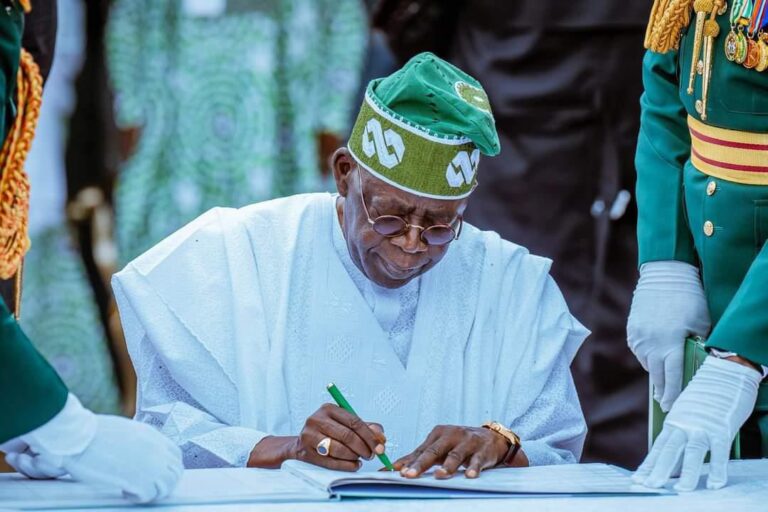
Only 10 of Tinubu’s ambassadors have been accepted – Presidency

0

NIGERIA’S attempt to reassert its presence in the global diplomatic community may be under threat, as only 10 out of over 60 ambassadors and envoys deployed by President Bola Tinubu have been accepted weeks after their nomination.

The countries that have accepted the officials are the United Kingdom, France, the United States, Ireland, Qatar, the Republic of Benin, Ethiopia, Djibouti, Senegal and Sierra Leone.

The development was confirmed on Monday by the spokesperson of the Ministry of Foreign Affairs, Kimiebi Ebienfa.

“Responses from other countries are still being awaited,” the added in a statement.

Before any ambassador can officially resume duty, the receiving country must first agree to accept them, a step known in diplomacy as agrément.

Ebienfa explained that efforts were ongoing to get the remaining countries on board, noting that the next major step would be the formal induction of the officials.

“The date for the induction ceremony will be announced in due course once it is finalised and confirmed by the Presidency,” he said.

The Federal Government had, toward the end of 2025, submitted a list of 65 ambassadorial nominees to the National Assembly. Although they were screened in December, their postings could not be completed until each host country signs off on the appointments.

For nearly three years, many of Nigeria’s foreign missions have operated without substantive ambassadors, relying instead on lower-ranking diplomats to keep them running. That gap had raised concerns in diplomatic circles about Nigeria’s visibility and influence, especially in key partner countries.

THE ICIR reported that Nigeria began to face challenges with the ambassadors’ posting just a few days after Tinubu approved the deployment.

India and a few other countries were reportedly hesitant to accept some of these ambassadors. Their alleged rejection was said to be because the president had less than two years to end his current tenure.

According to reports, officials explained that India followed a diplomatic rule of not accepting ambassadors from governments that are close to the end of their term.


Tinubu seeks N’Assembly approval for ₦9tn budget increase, $6bn external loans

PRESIDENT Bola Tinubu has asked the National Assembly of Nigeria to approve a N9 trillion increase to the 2026 budget, alongside fresh external borrowing totalling $6 billion to support government spending, infrastructure, and debt obligations.

The President’s request has also raised several questions regarding the benefits of subsidy removal and the current oil windfall from proceeds driven by the US-Iran conflict, as Brent crude is now selling at about $118 per barrel compared to the budgeted benchmark of $64.85 for the 2026 appropriation.

The requests were conveyed in separate letters read on the Senate floor by the Senate President, Godswill Akpabio, during Tuesday’s March 31 plenary.

Tinubu, who was seeking to raise the proposed 2026 budget from N58.4 trillion to N67.4 trillion, cited the need to strengthen fiscal transparency and ensure effective implementation of key national programmes.

“The proposed adjustment is aimed at strengthening fiscal transparency and ensuring the effective implementation of priority national programmes,” part of the letter read.

Tinubu said the upward review will allow the government to settle outstanding legal commitments from previous budgets, properly account for existing public debt, and accommodate critical priority projects while maintaining macroeconomic stability.

He added that the adjustment is also aimed at aligning the financing plan to reduce pressure on the domestic financial market.

The ICIR reported that Tinubu had in December 2025, presented the 2026 federal budget of N58.18 trillion to the National Assembly on December 19, 2025, with a ‘conservative’ crude oil benchmark of $64.85 per barrel.

“The 2026–2028 Medium‑Term Expenditure Framework and Fiscal Strategy Paper sets the parameters for this budget. Our projections are based on a conservative crude oil benchmark of US$64.85 per barrel; crude oil production of 1.84 million barrels per day; and an exchange rate of N1,400 to the US Dollar for the 2026 fiscal year,” he said.

The budget carries a deficit of N23.85 trillion, representing 4.28 per cent of gross domestic product (GDP).

$6bn external loans

In addition to the budget increase, Tinubu requested legislative approval to secure external loans amounting to $6 billion in two separate letters addressed to Akpabio.

In the first letter, the president sought approval from First Abu Dhabi Bank in the United Arab Emirates for a $5 billion structured total return swap financing programme.

According to him, the facility would be disbursed in tranches to support budget implementation, infrastructure development, and liquidity management.

“The purpose of this letter is to request for the approval and resolution of the national assembly pursuant to the provisions of section 21(1) and 27(1) of the debt management office establishment act 2003 to establish a structured total return swap (TRS) derivative external financing programme from First Abu Dhabi Bank of the United Arab Emirates of up to $5 billion which will be made available to the Federal Republic of Nigeria in tranches,” the letter read.

Tinubu noted that the funds would also be used to repay more expensive domestic and external debts and meet urgent financial obligations.

He acknowledged that the borrowing would increase Nigeria’s public debt stock, which he put at $110.3 billion (about ₦159.2 trillion) as of December 31, 2025, but said the phased drawdown would help minimise pressure on debt servicing.

In another separate letter, the president also requested approval for a separate $1 billion loan facility arranged by Citibank, London, to finance the reconstruction and rehabilitation of the Lagos Port Complex and Tin Can Island Port.

“The rehabilitation of the ports project is a strategic modernisation initiative of the Federal Government of Nigeria through the Nigerian Ports Authority to restore and upgrade two of Nigeria’s most vital ports, namely Tin Can Island Port complex and Lagos Port complex, Apapa, which have reached critical engineering failures,” the letter read.

Tinubu added that the ports handle the bulk of Nigeria’s seaborne trade and are vital to efforts to diversify the economy beyond oil.

Following the presentation, Akpabio referred the requests to the Senate Committee on Local and Foreign Debts for further legislative consideration.

From burial to court: ICPC files fresh 10-count charges against El-Rufai in Kaduna

0

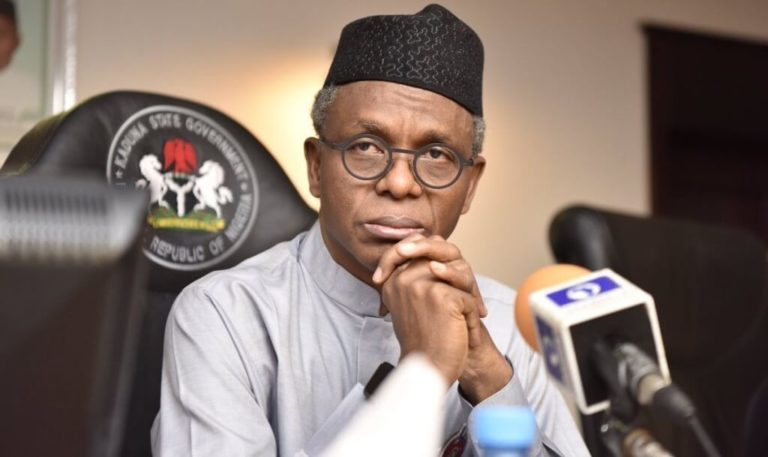
FORMER Kaduna State Governor, Nasir Ahmad El-Rufai, has been brought before the Kaduna State High Court on fresh and expanded criminal charges bordering on alleged fraud, abuse of office, conspiracy, and criminal breach of trust.

The former governor was arraigned on Tuesday alongside one co-defendant, Amadu Sule (Leda), in a case filed by the Federal Republic of Nigeria through the Independent Corrupt Practices and Other Related Offences Commission (ICPC).

The latest arraignment came amid ongoing legal proceedings in which El-Rufai is also being prosecuted by the ICPC alongside co-defendant Joel Adoga, over allegations bordering on corruption, abuse of office and money laundering, which is still pending at the Federal High Court in Kaduna.

In the case, the Federal High Court in Kaduna recently adjourned the hearing of El-Rufai’s bail application to March 31, 2026. The court’s decision followed arguments from both prosecution and defence counsel, with defence lawyer, Ukpon Akpan, urging the court to grant bail to his client on constitutional grounds.

The prosecution opposed the application, arguing that the charges were serious and that bail could hinder ongoing investigations.

El-Rufai was, however, released by the commission, on Friday, March 27, to attend her mother burial.

According to the charge sheet marked KDH/KAD/ICPC/01/26 obtained by The ICIR, the defendants are accused of offences allegedly committed between 2015 and 2025 during and after El-Rufai’s tenure as governor.

Prosecutors alleged that in December 2016, El-Rufai, while serving as governor, induced the Kaduna State Government to approve an alleged N11 billion payment to Indokaduna MRTS JV Nigeria Limited for a light rail project that was never executed.

He was also accused of allegedly approving and receiving severance payments exceeding N289 million in 2020 and 2023, above his legally entitled entitlements, an act prosecutors say amounts to abuse of office and corruption.

In another count, the prosecution alleged that between March and November 2022, El-Rufai and another person at large dishonestly disposed of $1,085,066.38 in World Bank loan funds, allegedly in violation of a loan agreement.
“Count 4: That you MALLAM NASIR AHMAD EL-RUFAI (M) and one other person (now at large) on or about March, 2022 to November, 2022 at Kaduna, Kaduna State within the jurisdiction of this Honourable Court, whilst being the Governor of Kaduna State, entrusted with dominion over the sum of $1,085, 066.38 [One Million, Eighty Five Thousand, Sixty Six United States Dollars and Thirty Eight cents- which was part of the funds obtained as loan by the Kaduna State Government from the World Bank] dishonestly disposed the said property in violation of the loan agreement and you thereby committed an offence punishable under section 300 of the Kaduna State Penal Code 2017,” the count 4 charge read.

The charge further alleged that in October 2025, El-Rufai and his brother, Bashir Ahmad El-Rufai (now at large), allegedly conspired outside Nigeria to offer monetary inducement to federal investigators to compromise an ongoing probe involving Singularity Network Security Limited.

“COUNT 5: That you, MALLAM NASIR AHMAD EL-RUFAI (M), BASHIR AHAMAD EL- RUFAI (M) (now at large), sometime in October, 2025, at Dubai, United Arab Emirates (outside Nigeria) and Cairo, Egypt (outside Nigeria), did conspire amongst yourselves to corruptly give a monetary benefit to investigators working for the Federal Government of Nigeria, at Abuja, Nigeria, on account of favour to be shown by the said investigators in order to compromise an ongoing investigation involving SINGULARITY NETWORK SECURITY LIMITED and its staff, and you thereby committed an offence contrary to Sections 26(1)(c) and 66(1) and punishable under Section 9(1)(b) of the Corrupt Practices and Other Related Offences Act, 2000.”

Other counts also accuse him of unlawfully awarding contracts worth billions of naira for CCTV installations in Kaduna metropolis in alleged violation of procurement laws, and of conferring unfair advantage on associates through state contracts and land allocations.

Additional allegations include conspiracy to conceal the origin of funds and violations of the Money Laundering (Prevention and Prohibition) Act, 2022.

The ICIR reported that El-Rufai’s arrest by the ICPC, followed earlier invitations by the Economic and Financial Crimes Commission (EFCC), where he had appeared for questioning over alleged financial improprieties during his tenure as governor between 2015 and 2023. He was later re-arrested after initially being granted bail following two nights in EFCC custody.

In a separate development, the Kaduna State House of Assembly had in 2024 indicted him over alleged diversion of N423 billion in public funds and recommended further investigation by anti-graft agencies.

The ongoing legal battles have drawn public attention, with supporters and political allies describing the proceedings as politically motivated, while authorities maintain that the cases are based on documented allegations of financial misconduct.

Violent protests hit South Africa over alleged Igbo king coronation

TENSION erupted in KuGompo, Eastern Cape, South Africa, on Monday as protests over alleged coronation of an Igbo traditional leader escalated into violence, property destruction, and looting.

Media reports indicate that the protest was organised by one of South Africa’s political parties called ActionSA alongside traditional leaders and residents against claims that a Nigerian man, Solomon Eziko, had been crowned as a traditional leader of the Igbo community in the province.

They claimed that the crowning violated South Africa’s constitutional and traditional governance systems.

According to SABC News, ActionSA’s Eastern Cape chairman, Athol Trollip, said the party stood firmly with recognised traditional authorities, insisting that due process must be followed in matters of cultural and traditional governance.

The protesters reportedly destroyed vehicles and vandalised buildings believed to be owned by foreign nationals, as they marched through affected areas demanding urgent government intervention and warned that inaction could trigger wider unrest.

Some participants issued threats of armed resistance, while others called for the deportation of Nigerians allegedly linked to the incident.

Videos circulating online showed protesters smashing vehicle windscreens and damaging property, prompting criticism from residents who questioned the justification for the destruction.

The Economic Freedom Fighters (EFF) emphasised that only South Africa’s Department of Cooperative Governance and Traditional Affairs (COGTA), through a process involving presidential approval under the Traditional and Khoi-San Leadership Act of 2019, has the authority to recognise kings or queens. The party described any self-declared coronation, particularly by a foreign national as both unlawful and provocative, while also calling for those responsible for the violence to be held accountable.

“It is not to be taken lightly, nor should it be declared by individuals without any legal authority. Coronation of a foreign king in the Eastern Cape, this irresponsible act has led to a rightful and justified outcry by the people of KuGompo, the Eastern Cape, and South Africa at large,” the group said.

However, Nigeria’s High Commission in South Africa clarified that no Igbo traditional ruler was crowned, noting that the gathering in East London was merely a cultural event intended to celebrate Igbo heritage, not to establish political or territorial authority.

The commission acknowledged that cultural practices such as festivals, masquerade displays, and chieftaincy titles could be misunderstood outside Nigeria, stressing that the event carried no political agenda and did not challenge South Africa’s sovereignty or traditional institutions.

While expressing regret over the tensions caused, the Nigerian mission called for calm and mutual understanding, highlighting the longstanding diplomatic ties between both countries.

The ICIR reports that this is the second time Igbo kingship coronation causing crises outside Nigeria in recent times.

The ICIR reported that the “Nigerians must go” protest in Ghana was triggered by the installation of a Nigerian traditional leader, Eze Chukwudi Ihenetu, as the “Eze Ndi Igbo Ghana” King of the Igbo People in Julu last year.

Ghanaian youth groups and cultural advocates opposed the installation, saying that the presence of a foreign monarch undermined Ghana’s sovereignty and traditional chieftaincy institutions.

The title ‘Eze Ndi Igbo’ is widely recognised within Igbo diaspora communities as a symbolic representation of cultural leadership.

The protesters urged the Ministry of Chieftaincy and Religious Affairs to intervene and clarify whether Ghanaian law allowed foreigners to assume royal titles within the country.

What FONER’s inauguration means for power sector regulations

On Wednesday, March 25, the Nigerian Electricity Regulatory Commission (NERC) inaugurated the Forum of Nigeria’s Electricity Regulators (FONER) to facilitate coordination and effectiveness in electricity regulation.

The inauguration seeks to promote regulatory alignment between the states and the NERC in accordance with the unbundling of the electricity sector under the Nigerian Electricity Act, 2023, as amended, which has given states regulatory responsibilities in the electricity reforms.

The ICIR reports that the forum is also meant to address regulatory conflicts that could arise from tariff resets and complications of state regulatory responsibilities.

It should be noted that NERC previously rejected the Enugu Electricity Regulatory Commission (EERC) over its controversial Multi-Year Tariff Order, which reduced the tariff for Band A to N160.4 per kilowatt-hour from N209, effective from August 1, 2025.

NERC’s intervention comes amid the confusion in the country’s electricity industry after EERC announced a tariff drop mandating MainPower, Enugu Distribution Company, to comply.

Analysts say that EERC’s action generated controversies that needed constant check through seamless harmonisation of regulatory procedures between states and NERC.

NERC Chairman, Musiliu Oseni, who spoke at the inauguration and the first-quarter 2026 regulatory meeting with State Electricity Regulators (SERs), described the initiative as a major step in Nigeria’s transition to a multi-level electricity market.

He stressed that the initiative was aimed at enhancing coordination and effectiveness in electricity regulation across Nigeria.

He described the initiative as a major step in Nigeria’s transition to a multi-level electricity market and emphasised the need for collaboration to prevent regulatory loopholes within the sector.

“We must work collaboratively to avoid regulatory arbitrage by operators. I charge all of us to carry out this mandate with the utmost responsibility. Pursuant to Section 230(9) of the Electricity Act 2023, I hereby declare the Forum of Nigerian Electricity Regulators duly inaugurated,” he said.

FONERS’ focus and experts’ concerns

FONER is expected to drive key regulatory objectives, including fostering dialogue between NERC and SERs, promoting harmonised approaches in tariff setting, market operations, and consumer protection, and supporting capacity-building through peer learning.

The forum will also serve as a consultative platform for electricity market reforms while advancing transparency, accountability, and national regulatory benchmarks.

A power sector governance expert, Kunle Kola Olubiyo, told The ICIR that the forum would ensure states address issues regarding conflicts of interest in the sector.

“We had issues recently, whereby Enugu State Regulatory Commission had a conflict of interest with NERC on the tariff to Enugu electricity consumers.

“The forum is focused on creating harmony and seamless corroboration in cost of electricity and tariff-related issues and overall progress of the sector,” Olubiyo said.

He stressed the importance of alignment of technical experience and expertise of appointees of states regulatory commission on improving the sector.

NERC’s Chairman, Musiliu Oseni, Chijioke Okonkwo of the Enugu State Electricity Regulatory Commission, and Aisha Mahmud are members of the FONER.

Oseni serves as chairman of FONER, while serves as vice chairman, and Mahmud is secretary.


UK hikes visa fee up to £222 starting April

0

THE United Kingdom is set to significantly increase visa fees to £222 across multiple categories, affecting visitors, students, workers, and individuals seeking permanent residency, as part of a broader push to curb immigration.

According to the UK Home Office, the new fee structure will take effect on April 8, also introducing an “emergency brake” on student visas for migrants from Afghanistan, Cameroon, Myanmar, and Sudan.

UK Home Secretary, Shabana Mahmood, informed that the decision followed a surge in asylum applications from citizens of those countries.

Among the proposed actions, the government plans to offer up to £10,000 to failed asylum seekers who voluntarily leave the country, noting that migrants found working illegally will lose access to taxpayer-funded accommodation.

Under the revised fee system, short-term visit visas up to six months will increase from £127 to £135. Longer-term visit visas will also see notable hikes: two-year visas will rise to £506, five-year visas to £903, and ten-year visas to £1,128.

Similarly, applications for British citizenship will become more expensive, with naturalisation fees increasing from £1,605 to £1,709. Settlement visa costs will also rise, with the standard route increasing from £1,938 to £2,064.

Meanwhile, family-related applications, fees for individuals requiring care from relatives in the UK will jump by £222 to £3,635, while settlement visa fees for refugee-dependent relatives will increase to £452, and Skilled worker visa fees for applications made outside the UK for up to three years will rise from £769 to £819, with similar percentage increases applied to longer-term visas and dependants.

The ICIR reported in early 2025 that the UK announced a rise in visa fees for students, tourists, and other travellers, from £363 to £490, reflecting a 35 per cent rise.

Tuggar resigns as foreign affairs minister, eyes Bauchi governorship

0

NIGERIA’S Minister of Foreign Affairs, Yusuf Maitama Tuggar, has resigned from the cabinet of President Bola Ahmed Tinubu, as he moves to pursue the governorship of Bauchi State ahead of the 2027 general elections.

The resignation was confirmed on Monday in a brief statement by the Ministry of Foreign Affairs.

The statement, signed by the ministry’s spokesperson, Kimiebi Ebienfa, stated, “The resignation of the Honourable Minister of Foreign Affairs is confirmed.”

Former presidential aide, Bashir Ahmad, also referenced the development in a post on X, noting that the minister would be stepping down and bidding farewell to the Federal Executive Council.

“The Foreign Affairs Minister, Yusuf Tuggar, will bid farewell to the Federal Executive Council today as he steps down from his position to pursue the governorship of Bauchi State,” Ahmad wrote.

Although Tuggar has yet to personally announce his decision, indications of his planned exit had been circulating for some time.

Sources said Tuggar submitted his resignation on Monday, with the letter expected to be formally acknowledged at a meeting of the Federal Executive Council.

His exit comes just ahead of the March 31, 2026, deadline set by President Tinubu for political appointees seeking elective office in 2027 to resign from their positions.

The move effectively clears the path for Tuggar to focus on his gubernatorial ambition in Bauchi State, an intention that had earlier been confirmed by his media aide, Alkasim Abdulkadir.

According to Abdulkadir, the minister has long shown interest in the race.

“The minister is interested and aspires to run for the governorship seat of Bauchi State,” he had said.

Tuggar, who hails from Gamawa Local Government Area of the state, previously served as Nigeria’s ambassador to Germany before his appointment as foreign affairs minister in 2023.

With his resignation now confirmed, attention is expected to shift to his formal declaration and the emerging political contest in Bauchi as preparations for the 2027 elections heat up.

 US signals visa restrictions review for Nigeria

0

THE United States Mission to Nigeria has said visa restrictions are not permanent, travel policies remain under review and can be eased if security and identity management standards improve.

In a statement shared on X on Monday, March 30, the mission noted that strengthening systems around screening, vetting, and information-sharing would enhance global safety, suggesting that Nigeria could see changes in its status if it meets required benchmarks.

“Visa restrictions are not permanent, and travel policies are subject to review. Strengthening security and information-sharing standards for screening, vetting, identity management, and immigration make all of us collectively safer,” the statement read.

Analysts said that Washington appears to be encouraging Nigeria to strengthen its systems in areas such as identity management, border control and migration tracking, and data sharing on travellers and security risks, noting that this positions the restrictions less as punitive measures and more as leverage to push reforms.

Indicating that whether the restrictions are eased will likely depend on how quickly Nigeria addresses the concerns raised by US authorities and rebuilds confidence in its travel documentation and security processes.

The development comes amid growing concerns over a travel policy introduced by former US President Donald Trump in December 2025, which placed Nigeria on a list of countries facing partial entry restrictions into the United States.

On December 16, 2025, the White House announced a sweeping expansion of US travel restrictions affecting dozens of countries. Nigeria was not fully banned but placed under partial restrictions, limiting Nigerians’ entry for several visa categories, including B-1/B-2 business and tourism visas, and F, M, and J student visas,  citing concerns over national security, visa overstays, and gaps in identity verification systems.

Nigeria was grouped among about 15 countries facing partial restrictions, while others, mostly in Africa and the Middle East, faced outright bans.

The US government argued that the move was necessary due to “persistent deficiencies” in screening and information-sharing frameworks among affected countries.

Washington cited terrorism threats, religious violence, and instability as part of the broader justification for tightening immigration controls involving Nigeria.

In late December 2025, US forces conducted coordinated airstrikes with Nigerian authorities targeting Islamic State militants in Sokoto State, a few days after recalling several ambassadors across Africa, including its envoy to Nigeria, Richard Mills Jr.

The recall was part of a wider policy shift by the Trump administration affecting nearly 30 diplomats globally, aimed at restructuring the foreign service and installing new envoys aligned with its agenda.

Following his departure in January 2026, the US embassy in Abuja has since been led by a chargé d’affaires, reflecting a temporary downgrade in diplomatic representation.

Opposition gets boost as Kwankwaso officially joins ADC

0

THE former Kano State governor, Rabiu Musa Kwankwaso, has on Monday, March 31, formally joined the African Democratic Congress (ADC) given the opposition the needed boost ahead of the 2027 general elections.

This marked a significant shift in Nigeria’s evolving political landscape ahead of the 2027 general elections.

The development was publicly acknowledged by former Vice President Atiku Abubakar, who shared an image of Kwankwaso holding the ADC membership card. Captioning the post, Atiku wrote: “When men of conviction come together, power trembles. Welcome aboard, @KwankwasoRM.”

Some of the notable dignitaries at the ceremony were the ADC interim chairman, David Mark, former Labour Party presidential candidate Peter Obi, Rotimi Amaechi, John Oyegun, Rauf Aregbesola and Aminu Tambuwal.

Kwankwaso’s defection came days after he announced his resignation from the New Nigeria Peoples Party (NNPP), where he served as national leader and presidential candidate in the 2023 elections.

He had described the move as a “difficult decision,” citing the need for strategic political realignment.

“I seize this opportunity to express my profound gratitude for the honour and privilege of serving as the party’s national leader and its presidential candidate in the 2023 general elections. As a committed and bona fide member of the party, this was not an easy decision to make.”

He said the current political climate informed his decision to leave the party for another platform.

“I extend my deepest appreciation to the national chairman, Ajuji Ahmed and the entire National Working Committee for their steadfast support throughout my time. I also thank the Board of Trustees (BoT), the National Executive Committee (NEC), and all levels of leadership across the party — from the ward to the state level, as well as the legacy members of the party and all followers of the Kwankwasiyya Movement for their dedication and commitment to our shared mission.”

Before his formal registration, the Kwankwasiyya Movement had directed its members nationwide to join the ADC, signalling a coordinated shift. The group said the decision followed consultations and was aimed at advancing democratic values and building a broader political coalition.

It urged members to follow suit across their wards, local government areas, and states.

The ICIR reports that the move is part of ongoing realignments among opposition figures seeking a united front against the ruling party.