Home Blog Page 56

Nigeria’s Presidential Election in 2027 Could be Uncontested

0

By Chidi Anselm Odinkalu

As Africa approached the turn of the Millennium, the leaders of the continent were well on the way to reaching a consensus that “democracy, good governance, respect for human and peoples’ rights and the rule of law are prerequisites for the security, stability and development of the continent.”

To many, this meant the conduct of elections. Indeed, two decades later, the African Court on Human and Peoples’ Rights would affirm that the only legitimate basis for the exercise of political power on the continent is “regular conduct of free and transparent elections … through universal suffrage.”

Around the same time, the leadership of the continent in the Organisation of African Unity (OAU) was grappling with the meaning of “free and transparent elections.” Senior ambassadors of the OAU reached a decision recommending to the organisation to outlaw “manipulation of the constitution aimed at preventing a democratic change of government” or “any form of election rigging and electoral malpractice, duly established by the OAU or ascertained by an independent and credible body established for that purpose.”

One decade earlier, in 1989, the OAU deployed to observe the referendum on the independence of Namibia, marking the first that the continental organisation would observe an election in Africa. Until then since its creation in 1963, the OAU did not much concern itself with the business of how governments came to power anywhere in the continent. In the first decade of its involvement in election observation, the OAU did not see an election that it did not agree with.

This was a source of comfort for rulers all over the continent. In Nigeria, for instance, Sani Abacha, the four-star general who ruled Nigeria from November 1993, did not have anything against the idea of an election as long as it did not lead anyone into the misapprehension of a contest.

By June 1998, General Abacha was on the cusp of transitioning the country into elective governance. In the election that would have been overseen by him, there were five recognised parties. These were: the Democratic Party of Nigeria (DPN); United Nigeria Congress Party (UNCP); National Centre Party of Nigeria (NCPN); Grassroots Democratic Movement (GDM); and the Congress for National Consensus, CNC.

All five parties shared one presidential candidate in General Sani Abacha.

The death of General Abacha in June 1998 sadly frustrated that plan but opened up a playbook in election management that had, until now, not been seriously revisited in Nigeria.

By the time the All Progressives Congress (APC) came to power in Nigeria in 2015, the African Union (AU), successor to the OAU, had logged about 500 election observer missions around the continent. Over that period, the OAU/AU still did not see an election that it did not approve of.

The AU did, however, evolve some underlying principles to govern elections, which were eventually embodied in a continental charter on democracy, elections and governance. These require the existence of independent election management bodies to manage the elections, such as Nigeria’s Independent National Electoral Commission, INEC. They also require respect for “political pluralism and tolerance”, another way of saying that elections should not exclude competitive candidates.

The AU usually deploys observer missions to these elections. Where there are disputes, the AU also requires an independent judiciary to resolve them.

This is usually done by way of election litigation. Cases around elections can occur before or after the vote. Historically, in Nigeria, this distinction is very important. Regular courts oversee pre-election litigation but only election petition tribunals can adjudicate on disputes over the outcome of an election.

Until 2007, that distinction appeared well settled.

However, following the 2007 cycle of elections, the Supreme Court awarded the governorship election in Rivers State to Rotimi Amaechi who was not even on the ballot in the vote. He had been manipulated out of the party primaries in an act of party political impunity. In response, the Supreme Court hijacked the election outcome on his behalf by judicial fiat in a case that had in fact originated as a pre-election dispute.

That case raised the significance of pre-election disputes in Nigeria and consolidated the transfer of the right to vote in Nigeria from citizens to the judges. By 2019, the Supreme Court awarded the Governorship election in Zamfara State to a well-beaten candidate after disqualifying the winner in a pre-election dispute and precluding his party from the contest by refusing to order a re-run.

Under colour of law, African governments have increasingly used the courts to re-make elections as largely free of contest. Six months ago, for instance, the president of Côte d’Ivoire, Alassane Ouattara, used the courts to ban all competitive candidates from the presidential election. When the result was announced, the election management body awarded him some 90% of the votes.

This past week, retired President of the Court of Appeal, 82 year-old Isa Ayo Salami, floated the idea of such un-contested elections for Nigeria in remarks that simultaneously disparaged his former colleagues in the judiciary while also querying why they sanctioned the candidacy of Peter Obi of the Labour Party in the 2023 general elections.

It is worth recalling that in 2011, a committee of the National Judicial Council chaired by former President of the Court of Appeal, Umaru Abdullahi, considered a consolidated set of petitions concerning the conduct of Isa Ayo Salami in the Sokoto State governorship election in 2007. One of the complaints included “call logs that throughout the month of September up to October 2010 when the judges wrote and delivered the judgment in Ekiti,…. Justice Salami,…. and the person he claimed to be Justice Salami’s said agent….were in close telephone contact by voice or SMS with the counsel to [Action Congress] candidate and official of the party.”

The Committee in the end did not have to make a finding on this but the allegations of close affinity between the former judge and the party that is now the All Progressives Congress (APC) are not new.

Isa Ayo Salami has floated a kite which could consummate an Abacha-style election under a ruse of law. The Electoral Act 2026 creates ample room for such mischief. Among other things, the Act, which became law on 19 February, requires all parties to maintain “a digital register of its members containing the name, sex, date of birth, address, State, Local Government, ward, polling unit, National Identification Number and photograph in both hard and soft copies.”

The logic of keeping this register in hard copy defies understanding. The staggering cost and logistics – not to mention waste – of doing so should not detain us at the moment. The Act goes further: the parties must submit the register (presumably both hard and soft copies) to the INEC at least 21 days before party primaries, which must occur between 23 April and the end of May. In effect, the parties, which have until now not been required to have digital registers, must create them in less than two working months. The cost of failure to do this is will be disqualification of their candidate(s) from the contest.

In 1979, the Federal Electoral Commission tried to disqualify Nnamdi Azikiwe of the Nigeria Peoples Party (NPP) and Aminu Kano of the Peoples’ Redemption party (PRP) from the presidential elections. The courts saved them.

Nigeria’s judiciary has evolved but not necessarily for the better in the intervening period. There is ample room for pre-election judicial mischief in the 2026 Electoral Act, which the courts could easily use to preclude competitive candidates from the contest.

It will be surprising if this is not deployed to block competitive candidates from the presidential election in January 2027. The irony is that the president whose claim to fame is his advocacy against military rule, could be the person who eventually appropriates the methods of Nigeria’s maximum military ruler to make himself the only competitive candidate in an uncontested election in 2027.

A lawyer and a teacher, Odinkalu can be reached at chidi.odinkalu@tufts.edu


Political realignment: Kwankwaso dumps NNPP

0

A former Governor of Kano State, Rabiu Kwankwaso, has resigned from the New Nigeria Peoples Party with immediate effect.

Kwankwaso, who was the party’s presidential candidate in the 2023 general election, announced his resignation in a statement issued on Sunday, citing the need for strategic realignment in the country’s political space.

“I wish to formally announce my resignation from the New Nigeria People’s Party (NNPP) with immediate effect,” he said.

The former governor described his exit as a difficult decision, noting his longstanding role in the party.

“I seize this opportunity to express my profound gratitude for the honour and privilege of serving as the party’s national leader and its presidential candidate in the 2023 general elections. As a committed and bonafide member of the party, this was not an easy decision to make.”

He said the current political climate informed his decision to leave the party for another platform.

“I extend my deepest appreciation to the national chairman, Ajuji Ahmed and the entire National Working Committee for their steadfast support throughout my time. I also thank the Board of Trustees (BoT), the National Executive Committee (NEC), and all levels of leadership across the party — from the ward to the state level, as well as the legacy members of the party and all followers of the Kwankwasiyya Movement for their dedication and commitment to our shared mission.”

He added that collaboration with party members would continue despite his exit.

“We shall continue to collaborate and work together towards charting a better and more prosperous future for our dear nation.”

The development comes a day after The ICIR reported that the Kwankwasiyya Movement had directed its members nationwide to join the African Democratic Congress, signalling a major political shift by supporters of  Kwankwaso.

In the earlier statement, the movement said Kwankwaso had concluded arrangements to align with the party and would formally register, while urging members to follow suit across their wards, local government areas, and states.

Economic challenges, reforms reasons for my low key birthdy, says Tinubu

0

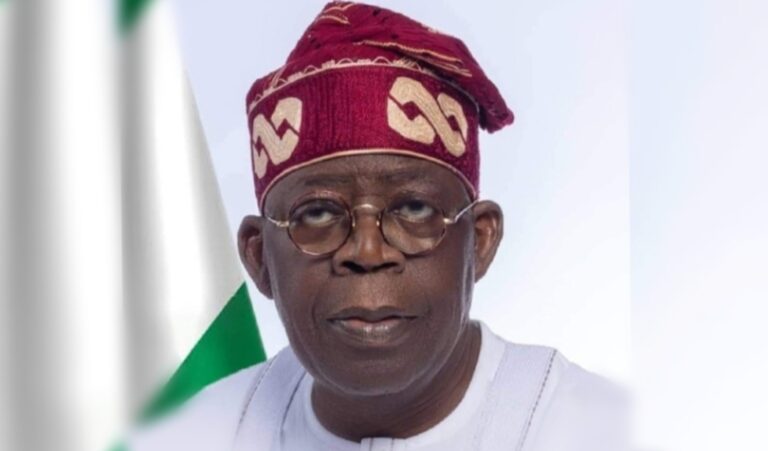
PRESIDENT Bola Tinubu on Sunday said he deliberately chose to mark his 74th birthday quietly in line with the current mood of the nation, acknowledging ongoing economic challenges linked to his administration’s reforms.

In a personally signed message to Nigerians, Tinubu said, “Consistent with my tradition of marking my birthday in line with the mood of the nation, I resolved to observe this year’s birthday low-key.”

The President noted that the country had faced significant difficulties since the commencement of key reforms but expressed optimism about gradual improvements.

“As I mark this special day, I am reminded of the challenges we’ve faced since we initiated our reforms. I’m glad that our sacrifices have not been in vain, as we can see a glimmer of light at the end of the tunnel, despite the temporary setback caused by the ongoing Middle East crisis,” he said.

Tinubu also used the occasion to thank Nigerians for their support and solidarity, stating that recent gains recorded by his administration were a collective effort.

“The credit for the positive outcomes we have achieved does not belong solely to me, our Renewed Hope team, or our government. We achieved the gains together.”

He added that the country would overcome its challenges with continued public support.

President Bola Tinubu assumed office in May 2023 and has since implemented a series of economic reforms, including the removal of fuel subsidies and foreign exchange policy adjustments, which his administration says are necessary to stabilise the economy.

The policies, however, have triggered rising living costs, sparking public concern and debate over their short-term impact.

In recent months, the government has maintained that key economic indicators are improving, citing declining inflation figures, increased investor confidence, and trade surpluses.

The administration argued that these developments signal early gains from the reforms, even as many Nigerians continue to grapple with high food prices and cost-of-living pressures.

Kwankwaso to join ADC on Monday – Kwankwasiyya

0

THE Kwankwasiyya Movement has directed its members nationwide to register with the African Democratic Congress following plans by its leader, Rabiu Kwankwaso, to join the party.

In a statement on Saturday by its spokesperson, Habibu Mohammed, the group said Kwankwaso had concluded arrangements to align with a coalition seeking to unseat President Bola Tinubu.

“The Kwankwasiyya Movement wishes to formally inform all its members across Nigeria and the general public that our Supreme Leader, Senator Rabiu Musa Kwankwaso, has concluded all necessary arrangements to join the African Democratic Congress (ADC),” the statement read.

The movement said the former Kano State governor would formally register with the party on Monday in Kano.

“In furtherance of this decision, he will officially register with the party on Monday, 30th March 2026, at his residence, Gidan Kwankwasiyya, Miller Road, Kano, by 12pm.

“Consequently, all members of the Kwankwasiyya Movement are hereby directed to proceed and register with the African Democratic Congress (ADC) in their respective wards, local government areas, and states immediately thereafter. Members are also encouraged to fully engage in all party activities and contribute actively toward the growth, development, and success of the party at all levels.”

The group described the move as being in the interest of its members and the country.

“This strategic decision, as always, has been taken in the best interest of the movement, our state, and the nation at large. It reflects our unwavering commitment to the advancement of democratic values, good governance, and the collective aspirations of the people.

“We emphasise that democracy must be protected, and the will of the people must always be respected. The Kwankwasiyya Movement remains resolute, united, and committed to building a better and more inclusive Nigeria.”

Kwankwaso’s planned defection is unfolding amid growing political realignments ahead of the 2027 general elections, with opposition leaders exploring a common platform to challenge the ruling All Progressives Congress (APC)

Reports indicate that the former Kano State governor has held consultations with key figures across party lines as part of efforts to build a broader coalition.

The move is also coming against the backdrop of shifting loyalties within Kano politics, particularly following the defection of Governor Abba Kabir Yusuf from the New Nigeria Peoples Party (NNPP) to the APC earlier in 2026.

Yusuf, a close ally and political protégé of Rabiu Kwankwaso, had risen to power on the back of the Kwankwasiyya structure, making the divergence in their political paths a significant development in the state’s political landscape.

Tension mounts around Kuje Prison as soldiers surround facility, nearby communities

0

THE Kuje Custodial Centre, popularly known as Kuje Prison, and its surrounding communities in Abuja, Nigeria’s capital, are currently gripped by fear, The ICIR reports.

This follows a heavy deployment of security personnel and restrictions on movement in parts of the area.

Scores of soldiers and other security officers from the Nigeria Police Force (NPF) and Nigeria Security and Civil Defence Corps (NSCDC) have taken over the area since the evening of Friday, March 27.  However, the Nigerian Correctional Service (NCoS) has insisted that the Kuje Custodial Centre remains safe, adding that the presence of soldiers around the facility is not unusual.

Although the exact reason for the heavy security presence could not be confirmed, the correctional centre was previously attacked in 2022, leading to its fortification and remodeling by the Federal Government.

During that incident, the Nigerian Correctional Service reported that 879 inmates escaped, while five people, including an officer of the NSCDC and four inmates, lost their lives. The attackers, suspected to be members of Boko Haram, reportedly freed 64 of their members held at the facility.

Since the 2022 attack on the facility in Kuje, alongside several others across the nation under the late President Muhammadu Buhari administration, military has been deployed to protect correctional centres in the country.

Unusual military presence in Kuje Prison since Friday, March 27, 2026

On Saturday morning, heavily armed soldiers, accompanied by sniffer dogs, were seen combing the Shetuko community located behind the facility. The soldiers and other security operatives formed strategic perimeters across parts of the community and conducted searches in several uncompleted buildings.

On Friday night, military personnel armed with whips and weapons were observed preventing motorists from parking along the Pasali/Shedadi Junction opposite the Prison Road.

By Saturday morning, both motorcycles and vehicle were not allowed to drive through the Prison Road which leads to Shetuko community and surrounding areas around the correctional centre.

Shetuko residents have since been going through the Freedom Estate, a burden that adds about two kilometres to their journey if they are heading to the centre of Kuje, or going out of the town. Soldiers in trucks, were seen around the junction.

Some residents who spoke with The ICIR said commercial motorcyclists had doubled their fares in response to the situation. Others, who previously opted to walk due to rising petrol prices and increased transport costs, said the new restrictions had made movement significantly more difficult.

The ICIR contacted the spokesperson for the NCoS, Jane Osuji, over the development. She said soldiers had been protecting the facility and their presence was normal.

“Security agencies, if you have been covering them, you don’t expect them to give you information about their operations. It is for your protection. It’s not everything that’s supposed to be out there, for the benefit of the people. Because of the current insecurity around the country, we just need to trust and believe that they have our interest at heart. They are working for us; it is for our benefit.

“Kuje Custodial Centre is safe. There is nothing that is unusual about soldiers being in and around the custodial centre. They have been there with us. As far as I am concerned, as I am speaking with you, there is no emergency or security concerns other than the fact that the custodial centre has to be protected as required.”

Transatlantic slave trade is the gravest crime against humanity – why the UN declaration matters

0

By Kwasi Konadu, Colgate University

THE resolution passed by United Nations General Assembly on 25 March 2026 seeking recognition of the transatlantic slave trade as the “gravest crime against humanity” potentially creates a broader definition of crimes against humanity in international law and allows for restitution claims against perpetrators. The resolution could elevate the legal and moral standard for what counts as the worst crimes against humanity, and compel more people to legally pursue reparations or compensation cases and thus deter such crimes.

Proposed by Ghana, it was adopted with 123 votes. The United States, Israel and Argentina voted against it. Fifty-two countries abstained, among them the UK and European states.

There has never been a single “gravest crime” designation applied to one human event or condition. Instead, international law defines categories of crimes considered the most serious. Examples are genocide, war crimes, crimes of aggression, and crimes against humanity. Being classified under these categories triggers severe legal consequences. These include global prosecution, lifelong accountability, international sanctions, and reparation claims.

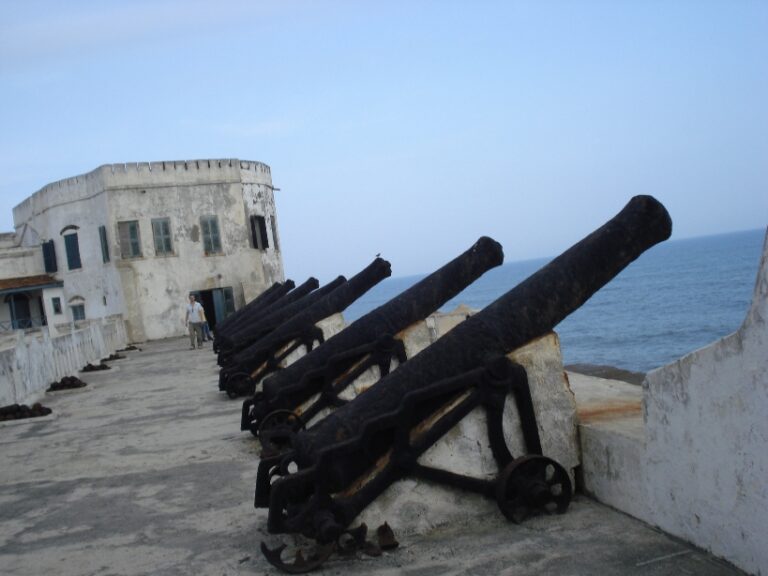
Ghana’s declaration views transatlantic slavery and its system of forced African labour as the worst crime ever committed. It explains how millions of Africans were abducted, treated like property, and abused because of their race.

The declaration points out that the effects of slavery still influence inequality and racism today. It calls on all nations to recognise what happened, teach its history honestly, and remember the victims. It also works towards fixing the lasting damage, including institutional and monetary reparations.

I am a professor of history who has researched and written extensively on the slave trade and its impact. I argue that Ghana’s resolution represents more than a moral or diplomatic statement. It marks a decisive step in an ongoing effort of historical reclamation and political transformation. It asserts that the histories of enslavement, displacement and organised theft are foundational to the modern world.

More importantly, it insists that recognition must lead to action. For contemporary Africa, this moment is about leveraging historical truth to reshape present conditions and future possibilities within a global system still marked by the legacies of transatlantic slaving.

Slavery shaped the modern world

Transatlantic slaving was not an isolated historical episode but a foundational process that made the modern world. Between the 15th and 19th centuries, over 12 million Africans were forcibly removed from their homelands. It was a massive, organised system of theft that left African societies dealing with long-term demographic, political and economic disruptions.

During the 1800s slavery changed form. It became tied to European imperialism. Powerful nations such as Britain and France took over land in Africa and other regions. The countries that had been major slave traders became the leading imperial powers in Africa. For example, French forces in the late 1800s still captured people and forced them into service. Laws in French west Africa didn’t truly end slavery. They simply allowed colonial governments to take over land.

The colonising countries often claimed they were bringing “civilisation”. Similarly, European colonisers in central Africa – especially under Belgian rule in the Congo Free State (1885-1908) – caused massive suffering and death. Around 10 million people died over about 40 years.

The creation of diaspora communities

Over the course of transatlantic slaving, Africans participated, resisted, adapted, and preserved cultural and intellectual systems that would later shape diaspora communities and their bonds with Africa. Those bonds included shared historical experiences, cultural practices, religious systems, political ideas and intellectual traditions that travelled and transformed across the ocean.

Recent calls for reparatory justice emerge from this long-standing network of connections.

Ghana’s resolution comes out of a convergence of continental and diaspora political efforts. African states and Caribbean nations have increasingly coordinated their positions on historical injustice and reparations.

Ghana’s resolution was built on earlier declarations:

The Ghana declaration sets a precedent. It seeks to redefine the moral language of the international order. Elevating it as the gravest crime underscores slavery’s scale and duration. Its systemic nature establishes it as the fundamental architect of global capitalism, racial hierarchies and modern state formation.

Why it matters

The Ghana declaration recognises the centrality of transatlantic slavery and compels a reassessment of how modern inequalities are explained and addressed.

For contemporary Africa, this recognition carries material implications. The aftermath of transatlantic slaving are evident in patterns of underdevelopment, external dependency and unequal integration into global markets. A formal recognition at the highest level of international governance strengthens the basis for claims to reparatory justice.

Such claims may take multiple forms. These may include investment in infrastructure, education and health systems. There could also be reforms to global financial institutions that boost mobilising resources within African borders.

Equally significant is the resolution’s role in consolidating pan-African and diasporic solidarity. By aligning African states with Caribbean nations and broader diaspora communities, it reactivates a political consciousness rooted in shared histories and strategic alignments.

A unified transatlantic African bloc possesses greater leverage within – and outside – international institutions and can more effectively advocate for systemic transformation.

The Ghana resolution also functions as a global educational intervention. Public understanding of transatlantic slaving often remains fragmented or minimised. This is true particularly in regions where some groups or historical individuals benefited from it.

By placing this issue before the United Nations General Assembly, Ghana compels a broader confrontation with the scale and consequences of transatlantic slaving. This is essential for historical accuracy as well as for shaping near future policies and coordinated actions.

Resistance lies ahead

The resolution will face resistance. Some nations such as the United States and Great Britain remain wary of the legal and financial implications of a “gravest crime” recognition. The subject of reparations for them is contentious and untenable. These tensions reveal enduring asymmetries in global power and the difficulty of translating moral or historical claims into enforceable outcomes.

Yet resistance itself underscores the resolution’s significance. It exposes the extent to which historical injustices remain embedded in contemporary political and economic power arrangements.The Conversation

Kwasi Konadu, Professor in Africana & Latin American Studies, Colgate University

This article is republished from The Conversation under a Creative Commons license. Read the original article.

El-Rufai’s release for mother’s burial sparks legal debate

0

FORMER Kaduna State governor, Nasir El-Rufai, was released from detention by the Independent Corrupt Practices and Other Related Offences Commission (ICPC) on Friday following the death of his mother, Hajiya Umma El-Rufai.

The late matriarch reportedly passed away in Cairo, Egypt, after a brief illness.

The former governor was released on administrative bail to allow him to bury his mother.

However, the ICPC’s decision has been questioned by prominent Nigerians, including lawyer Inibehe Effiong and senior journalist Richard Akinola.

In a post on Facebook, Effiong queried: “A person who’s remanded by an order of a court cannot be released legally without recourse to the court. ICPC Nigeria, can you clarify the procedure adopted in this case? El-Rufai’s motion for bail is slated for Tuesday, March 31, 2026.

“How was his release processed? Is this another government magic that the legendary Fela sang about?”

Similarly, while sympathising with El-Rufai for losing his mum, Akinola wrote, “Mallam Nasir El-Rufai, unfortunately lost his mother yesterday while on court remand in ICPC custody.

“El-Rufai’s bail application has not yet been heard. The court ordered that he be remanded in the ICPC custody pending the hearing of his bail application next week. So, under which order did the ICPC release him for his mum’s burial? I don’t get it.

“It would have been a different thing if he had not been charged to court, hence, ICPC could have released him on compassionate grounds, even though he was being illegally held. But since the court is seized of the matter, the agency cannot whimsically release him.”
An impeccable source at the ICPC, who pleaded anonymity for the “sensitivity of the matter” told The ICIR Saturday morning that the embattled governor “was granted temporary leave to go and bury his mother on compassionate ground.”
When asked if the court granted the leave, the source declined to comment further but said, “it’s the burial of a mother we are talking about.”

The ICIR reported that the ICPC arraigned El-Rufai, and one Joel Adoga before the Federal High Court in Kaduna over alleged money laundering and corruption-related offences earlier this week.

The 10-count charge, marked FHC/KD/73/2026, was filed on behalf of the Federal Republic of Nigeria at the Kaduna Judicial Division.

According to the charge sheet dated March 18, 2026, the ICPC accused El-Rufai of unlawfully taking possession of N289.8 million as severance allowance on two occasions in September 2020 and January 2023, bringing the total to about N579 million, far above the legally entitled sum of about N20 million.

Among others, the commission alleged that the former governor reasonably ought to have known that the funds formed part of the proceeds of unlawful acts, including corruption, thereby violating provisions of the Money Laundering (Prevention and Prohibition) Act, 2022.

El-Rufai’s arrest, detention, mounting allegations

El-Rufai’s arrest followed an earlier invitation by the Economic and Financial Crimes Commission (EFCC), where he reportedly presented himself on February 16 over alleged financial improprieties during his tenure between 2015 and 2023.

In 2024, the Kaduna State House of Assembly indicted him over the alleged diversion of N423 billion in public funds and recommended investigation by anti-corruption agencies.

El-Rufai, who was initially granted bail after spending two nights in EFCC custody, was subsequently re-arrested by security operatives. A Federal High Court in Abuja later declined to entertain his bail application, ruling that it was premature until he is formally arraigned.

Some Nigerians, including his allies in the African Democratic Congress (ADC), namely former vice president Atiku Abubakar and former Anambra State governor Peter Obi had urged the EFCC to charge him in court after describing his arrest and detention as politically motivated.

Tinubu, others mourn former governor’s mother’s passing

In a statement by his Special Adviser on Information and Strategy, Bayo Onanuga, President Bola Tinubu condoled with the family.

He said, “I commiserate with Mallam Nasir El-Rufai on the passing of his beloved mother,” adding that “the loss of a mother is a deeply painful experience.

“As someone who has also lost a mother, I share your grief and understand the depth of your loss.”

The National Security Adviser, Nuhu Ribadu, Kaduna State Governor Uba Sani are among other influential Nigerians who have commiserated with the embattled governor.

“I have fond memories of shared moments with her and her motherly care. At a time like this, words can offer little comfort for such a profound loss.

“My heartfelt condolences to Mallam Nasir El-Rufai and the entire family. May Almighty Allah forgive her shortcomings, grant her eternal rest in Aljannah Firdaus, and give the family the strength to bear this loss,” he wrote on his Facebook page.


APC convention: Tinubu admits electricity woes, rejects one-party state claims

1

PRESIDENT Bola Tinubu has said his administration is tackling Nigeria’s persistent electricity crisis while dismissing claims that his party – the All Progressives Congress (APC) – is pushing the country towards a one-party state.

Speaking on Friday at the fourth Elective National Convention of the APC in Abuja, Tinubu acknowledged ongoing problems in the power sector, including debts and outdated infrastructure.

“We continue to face legacy issues such as electricity supply, debts to GENCOs and gas suppliers, and antiquated transmission infrastructure,” he said.

The president disclosed that the government had unveiled plans to improve electricity supply through structural reforms.

“Recently, we announced plans to address this by establishing the Grid Asset Management Company, which will inject approximately 1,600 megawatts into a new grid corridor,” Tinubu stated.

On concerns about Nigeria drifting into a one-party system, the president said the APC did not support such an arrangement, stressing the importance of opposition in a democracy.

“Let me reiterate, especially to those who often lament and misunderstand us: we do not seek a one-party state,” he said.

Tinubu’s claim came amid the fact that 32 of Nigeria’s 36 governors are his party members.

He added that democratic growth depends on active political competition and constructive criticism.

“Democracy thrives on vibrant and healthy competition. As a statesman and political leader, I believe in a credible opposition—one that can challenge, question and help refine policies. That is how statecraft improves, and good governance is achieved. That is how nations advance,” he said.

The president, however, criticised opposition parties over their stance on the Electoral Act 2026, describing their attacks as unhelpful.

“While we welcome criticism, the constant attacks by opposition groups on the Electoral Act 2026 are a disservice to the Nigerian people,” Tinubu said.

He maintained that the law followed due processes, including public hearings, and reflects efforts to strengthen Nigeria’s electoral system.

Tinubu said his administration remained committed to upholding the rule of law, ensuring credible elections, and building a “stronger, secure, and united nation.”

The ICIR reported that Tinubu had staked his re-election bid on constant electricity supply. The president is currently overwhelmed with myriad problems in the electricity sector, with electorates calling him out on the failed promise.

The president had said during the presidential campaign in 2023, “If I do not provide steady electricity in my first four years, do not vote for me in the second term…”

His promise has put him on the spot and has elicited reactions from Nigerians, including opposition party stalwarts especially as Nigerians continue to suffer erratic power supply.

Similarly, political developments in recent months have triggered debates over the strength of opposition parties, following defections of some opposition heavyweights, especially governors into the ruling APC.

The trend has raised concerns among critics about the possibility of weakening opposition voices, a key element in a functioning democracy.

Kano deputy governor resigns

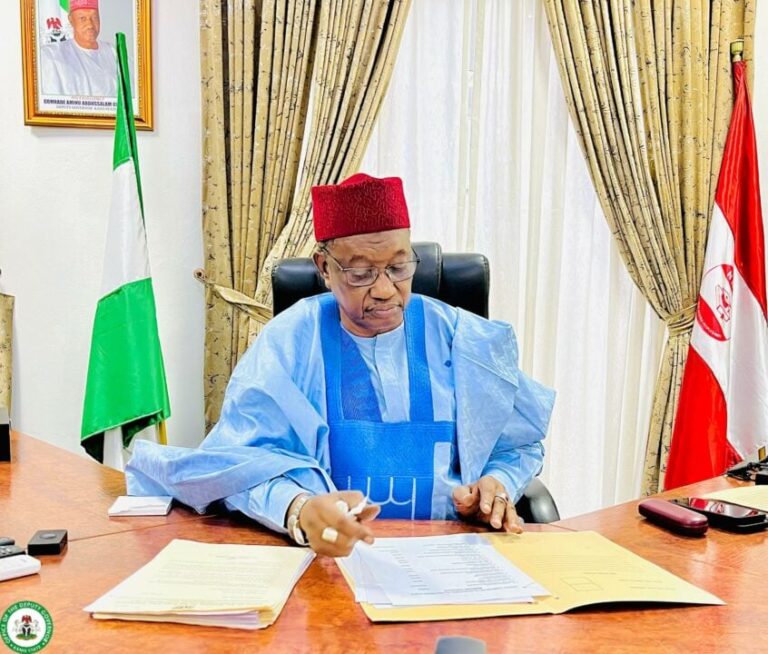
KANO State Deputy Governor, Aminu Gwarzo, has resigned.

His resignation followed ongoing impeachment proceedings initiated against him by the state House of Assembly.

His resignation was announced on Friday, March 27, in a statement issued by the spokesperson of the Kwankwasiyya Movement,  Habibu Mohammed.

“The Kwankwasiyya Movement wishes to formally inform the general public, the good people of Kano State, and the entire nation that the Deputy Governor of Kano State has tendered his resignation from office,” the statement said.

The ICIR reports that the development came weeks after the state House of Assembly began moves to impeach him, while a Federal High Court sitting in Kano declined his request to halt the process.

The Kwankwasiyya Movement said Gwarzo’s decision to step down was taken in the interest of stability and to allow governance in the state to function without disruption.

It added that prevailing circumstances had limited his ability to fully carry out the responsibilities of his office.

However, the statement stressed that the resignation did not amount to an admission of the allegations levelled against him, maintaining that he remained confident of his records in public service.

“For the avoidance of doubt, this resignation does not in any way constitute an admission of the allegations raised against him by the Kano State House of Assembly. The deputy governor maintains his innocence and firmly believes that his records in office and public service remain a testament to his integrity and commitment to the people,” the movement added.

According to the group, Gwarzo has also resolved to dedicate more time and energy to the Kwankwasiyya Movement, particularly in strengthening its structures, rebuilding strategies, and engaging in critical political realignments ahead of the 2027 general elections.

The impeachment process against Gwarzo was initiated earlier in March after he was accused of gross misconduct, abuse of office, and breach of public trust.

Lawmakers accused him of diverting funds during his tenure as Commissioner for Local Government, alleging that he received monthly payments from the state’s 44 local government councils between 2023 and 2024, amounting to hundreds of millions of naira.

Additional claims included the alleged collection of further funds under the guise of special assignments, as well as authorising payments running into hundreds of millions of naira to a pharmaceutical company, actions the assembly said violated procurement and fiscal regulations.

The impeachment notice, reportedly backed by a significant number of lawmakers, met the constitutional threshold required to commence the process.

The crisis followed heightened tensions in the state after Governor Abba Yusuf’s defection from the New Nigeria Peoples Party (NNPP), largely controlled by Kwankwasiyya’s leaders, to the All Progressives Congress (APC). The move, The ICIR reported, triggered divisions within the state’s leadership.

Wike allocates land, waives title fees for FCT traditional rulers

0

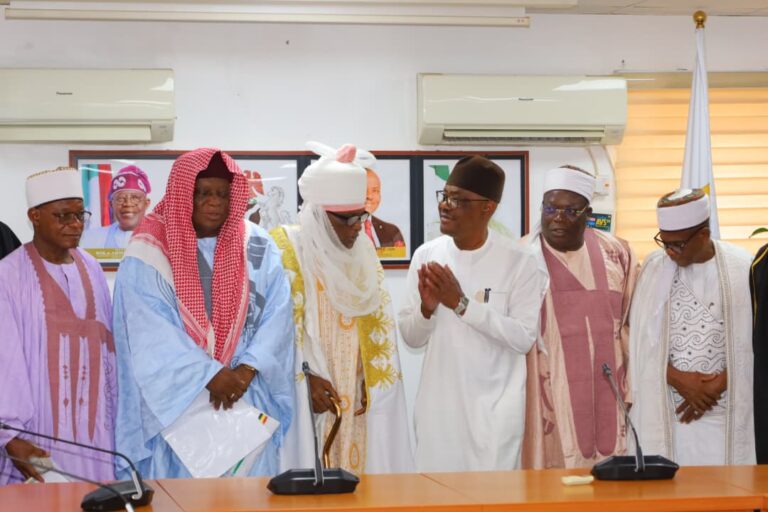
THE Minister of the Federal Capital Territory, Nyesom Wike, has approved land allocation to members of the FCT Council of Traditional Rulers.

He also granted a waiver on all statutory fees tied to the titles.

Speaking at a ceremony in Abuja on Friday, Wike said the decision followed directives from President Bola Ahmed Tinubu, stressing the need to recognise and honour indigenous communities in the nation’s capital.

“We cannot deny the fact that there are indigenous people who were here before the creation of the FCT. The President said we must extend a hand of fellowship to you. We must give honour to whom honour is due. If those who make peace cannot be appreciated with land, who should be?” Wike said.

He said it would be unjust to require traditional rulers to pay for land their communities have occupied for generations.

“The president has also said I should waive the payment of statutory fees. We cannot give you the task to go and look for money to pay,” the minister said.

He also pledged to provide utility vehicles to traditional rulers across the territory to enhance their effectiveness in community leadership, as part of efforts to support their functions.

He further highlighted ongoing infrastructure development in satellite towns, including the dualisation of the Airport–Kuje road, the Bwari–Zuba link road, and projects in Apo/Karshi and Gwagwalada, as well as the completion of the Arab Road network.

The FCTA under Wike has been tough with people who have allegedly breached laws relating to land use in the nation’s capital.

The ICIR reported that the FCTA recently released the names of 1,095 individuals and organisations whose properties’ titles were revoked over their failure to settle statutory land charges.

The FCTA said in a notice that enforcement actions would begin after the 14-day final grace period ended on November 25.

Most of the affected properties listed in the properties were mostly in highbrow neighborhoods such as Asokoro, Maitama, Garki, and Wuse area of the nation’s capital.

According to the administration, of the revoked titles, 835 properties defaulted on ground rent payments while 260 failed to pay violation and land use conversion fees.

Among those affected were former governor of Kano, Abdullahi Ganduje; former governor of Cross River, Donald Duke; wife of former President Goodluck Jonathan, Patience Jonathan; former Senate President, David Mark; and former deputy governor of Osun State, Iyiola Omisore.

The ICIR also reported in February that Wike approved the nullification of 485 land documents in the nation’s capital due to failed verification. 

He said the affected land titles had been removed from the regularisation database, after an extensive review conducted by the Department of Land Administration in collaboration with the Abuja Geographic Information Systems.

The cancelled documents cover various area councils and layouts, including Ushafa Village Expansion Scheme, Ushafa Extension, and Dawaki Extension 1 in Bwari Area Council; Kurudu-Jikwoyi Relocation, Kurudu Commercial, Karu Village Extension, Nyanya Phase IV Extension, Jikwoyi Residential, Sabon Lugbe, and Lugbe I Extension in Abuja Municipal Area Council; and Kuchiyako One layout in Kuje Area Council.