Home Blog Page 59

Middle East crisis: Trump insists Tehran seeks deal, Iran refutes claim

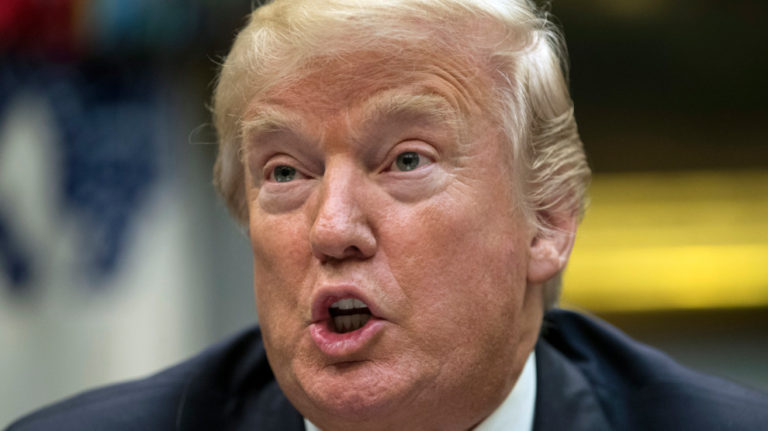
UNITED States President Donald Trump has insisted Tehran is seeking a deal to end nearly a month of intense fighting.

Trump stated this just hours after Iran Foreign Minister Abbas Araqchi claimed his country was only reviewing a US ceasefire proposal. Araqchi said his nation was not negotiating and had no plans to enter talks to end the war.

However, the US president maintained his earlier stance, noting that Iranian leaders were already negotiating behind the scenes. He suggested they were eager for a deal but too fearful to admit it publicly, warning they faced threats both internally and from the United States.

An Iranian embassy official in Islamabad said talks in Islamabad were still on the table and Pakistan was the preferred destination for Tehran, although nothing had been finalised.

According to Reuters, the US proposed a 15-point for negotiation, reportedly delivered via Pakistan. The plan calls for Iran to reopen Hormuz, dismantle its highly enriched uranium stockpiles, curb its missile programme, and cut support for regional allies.

However, Israeli officials doubt Iran will accept such terms and fear US negotiators may soften their stance. Israel is also pushing to retain the right to launch pre-emptive strikes under any agreement.

The ICIR reported that Iran launched multiple waves of missile strikes on Israel on Tuesday, hours after Trump declared a five-day ceasefire.

Trump had said the US was in talks with Iran but Iran’s Parliament Speaker, Mohammad Baqer Qalibaf, whom an Israeli official and two other sources identified as the Iranian-side interlocutor in the talks, wrote on X that no negotiations had taken place.

Iran’s elite Revolutionary Guards (IRGC) said they were launching new attacks on US targets, dismissing Trump’s remarks as “psychological operations” that were “worn out” and had no effect on Tehran’s campaign.

This latest development underscores the worsening trends in a conflict that erupted on February 28, where thousands have been killed across the Middle East following coordinated US-Israeli strikes on Iran. Tehran has repeatedly retaliated with attacks on Israel, US bases, and Gulf nations.

Leadership in Iran has also been thrown into turmoil as Supreme Leader Ayatollah Ali Khamenei was killed in an early Israeli strike, with his son Mojtaba stepping in, though he has since been wounded and largely unseen.

Meanwhile, the closure of the Strait of Hormuz, through which roughly 20 per cent of the world’s oil passes has triggered what analysts are calling the worst energy shock in modern history. Fuel shortages are spreading globally, supply chains are buckling, and governments are considering emergency measures reminiscent of the COVID-19 era.

The ICIR reported that Trump’s decision to step back had earlier lifted equities and pushed oil prices sharply below $100 a barrel, reversing a market slump triggered by his weekend threats and Iran’s warnings of retaliation, but those gains came under pressure on Tuesday after Iran’s parliament speaker denied that any negotiations had taken place, casting doubt on the market’s earlier optimism.

On Tuesday, US Treasury yields climbed and the dollar recovered as markets continued to absorb the shock of energy supply risks tied to Iran’s threat to shipping in the strait.

Brent crude futures rose 4.2 per cent to $104.21 a barrel, rebounding from a roughly 10 per cent drop the previous day, while US crude gained 4.3 per cent to $91.93 per barrel.

ENDSARS: Pelumi Onifade’s case stalls as LASUTH fails to produce key report

The long-running inquest into the death of Nigerian journalist Pelumi Onifade suffered another setback on Tuesday after the Lagos State University Teaching Hospital (LASUTH) failed to comply with a court order to produce a crucial report on an unidentified body linked to the case.

Consequently, Magistrate Temitope Oladele of the Lagos State District Coroner’s Court adjourned the proceedings to April 7, 2026.

She granted LASUTH what she described as a “final opportunity” to submit findings on a body tagged ‘1385.’

These were contained in a statement by Media Rights Agenda on Wednesday, March 25, signed by its Communications Officer, Idowu Adewale.

Part of the statement reads, “The Coroner Court investigating the death of Mr Pelumi Onifade, a young journalist with Gboah TV, who was reportedly shot while covering the #EndSARS protests on October 24, 2020, has adjourned the matter to April 7, 2026, following the failure of the Chief Medical Director (CMD) of the Lagos State University Teaching Hospital (LASUTH) to comply with the Court’s order to produce a report on the whereabout of an unidentified body tagged 1385 which LASUTH was said to have been received from the Ikorodu General Hospital on November 3, 2020 and conducted post-mortem examination on later that month.”

The ICIR reported in 2025 that the court ordered the hospital to release necessary documents relating to the deposit, release or current status of the journalist remains within seven days of receipt of the order to representatives of the MRA, following an application by MRA’s lawyer.

According to MRA, the order, first made on November 18, 2025, directed LASUTH to produce “a comprehensive and specific report” relating to the body.

After repeated failure by LASUTH to produce the report, on March 3, 2026, the MRA’s counsel, Alimi Adamu observed that the order was directed generally at LASUTH and not to any specific official of the hospital, which would make enforcement difficult, and applied for a fresh order directed specifically to the CMD. 

The judge granted the application and issued a fresh order directing the chief medical director “to give a report of the body with the tag number 1385 said to have been received on behalf of LASUTH on 3rd November 2020 from Ikorodu General Hospital, within fourteen (14) days of receipt of this order.”

When the matter came up on March 24, the hospital did not produce the report and was not represented in court by any official or lawyer, the MRA said.

The organisation urged the court to invoke enforcement by issuing a “Form 48”, a legal notice requiring the CMD to show the reason a contempt proceeding should not be initiated against him, due to the frustration by the repeated non-compliance.

“Although Mr. Alimi Adamu, lawyer to Media Rights Agenda (MRA) and the Onifade family, applied to the court to issue a “Form 48” (notice to show cause why order of court should not be enforced by committal proceedings) against the CMD for the continued disobedience of the court’s order in the light of the hospital’s repeated failure to produce the report, the investigating magistrate, Mrs Temitope Oladele, said she wanted to give the medical director a final opportunity to comply with the order.”

Adewale explained that Oladele declined the second application and directed the legal team to follow up with LASUTH to ensure compliance before the next hearing.

The ICIR reported that Onifade, a young reporter with Gboah TV, was allegedly shot while covering protests against police brutality in October 2020. His death became one of the most troubling cases linked to the nationwide demonstrations that called for an end to abuses by security forces.

The coroner’s inquest stemmed from a landmark ruling delivered on July 19, 2024, by Ayokunle Faji, a judge of the Federal High Court in Lagos. In that judgment, the court ordered the Lagos State Government to investigate Onifade’s death, identify those responsible, and ensure they are prosecuted.

The suit, filed by MRA, had challenged both the police and the Lagos State Government over what it described as a failure to properly investigate the killing.

For Onifade’s family and press freedom advocates, the continued delays now compounded by LASUTH’s failure to comply with court orders highlight the persistent obstacles to justice in cases involving state institutions.

As the court reconvenes in April, attention will once again turn to whether LASUTH will finally produce the report that could shed light on the fate of body “1385”—and possibly bring the country closer to answers in a case that has lingered unresolved for over five years.

FG benefits more from naira-for-crude deal than Dangote – Official

0

The Chief Executive Officer (CEO) of Dangote Petrochemical Refinery, David Bird, said on Wednesday that the Federal Government is the primary beneficiary of the Naira-for-crude swap deal, highlighting foreign exchange gains from the strengthening of the naira as the government’s main advantage.

Bird, who disclosed this on Arise Television’s “The Morning Show”, argued that the federal government had made more money from the deal, which has ensured foreign exchange stability and de-dollarisation of the economy, and strengthened the naira.

“Crude-for-Naira is not there to benefit the Dangote Refinery. The deal is to provide resilience to foreign exchange. It is for the benefit of the country to process domestic crude in a domestic currency, “Bird said.

He affirmed that the swap deal helped the Nigerian economy to rely less on dollars for its transactions and stabilise the foreign exchange market, which had previously experienced volatility.

“The deal wasn’t put in place to benefit Dangote Refinery, as we still purchase at international crude rates and at international pricing template, although without foreign exchange problems, “Bird stated.

The CEO further expressed regret over the inability of the Nigerian government to meet its domestic crude allocation contract-agreement, despite paying the international benchmark pricing cost.

“The government needs to be more transparent in its crude allocation to the company to meet domestic consumption. Currently, we get five cargoes monthly allocation as against 13-15 cargoes monthly pre-agreed contract. The 13-15 cargoes monthly is what is required to meet the domestic consumption, which we are not getting currently,” he stated further.

Bird explained that the shortfall from the government had prompted the company to buy at a higher cost at the international crude market, while urging the government to maintain the pre-contract agreed terms on crude allocation.

“Not only do we not get the full pre-contract allocation, but we also don’t get the crude grade preferences. However, given our preference for Nigerian grades, we find them at a $18 higher price premium in the international crude market despite being denied the full domestic allocation at home.

He noted that the global test for crude had given much preference for the Nigerian crude in the international market

He suggested that the Nigerian National Oil Company should have more strategic reserves in partnership with industries to think ahead to manage uncertainties like the United States-Iran War.

“Disruptions in supply chains are conversations that must be sustained in gas, coal, critical minerals and the government has to lead the role in thinking the unthinkable.

The ICIR reports that the United States-Iran conflict has put intense pressure on Nigerians buying fuel at an average of N1,400 currently in several parts of the country.

According to oilprice.com brent crude currently sells for $100 per barrels leaving more money in the hands of the Nigerian government, with most Nigerians tightening their belt to adjust to the rising transport and food costs.

This is even as Nigerians continue to seek pricing-relief from the government, with transport costs and other logistics going higher by the day.

Experts dismiss Adelabu’s pledge to fix electricity in two weeks

NIGERIANS may have to wait longer for solutions to epileptic power supply in the country, despite the two-week assurance from the Minister of Power, Adebayo Adelabu.

Some power sector governance experts who spoke against the backdrop of the minister’s assurance said there were no quick remedies to Nigeria’s power sector problems.

On Tuesday, March 24, the minister of power, whose performance has been rated very low by Nigerians, apologised for the poor power supply and promised that the problems would be solved in two weeks.

“I want to apologise, coming from me as a minister of power, for this temporary issue that is leading to hardship being experienced,” he said.

Adelabu said the apology was necessary given the dry season, which has caused extreme heat and disrupted businesses, schools, and industries.

He said the Federal Government had taken decisive steps to address persistent gas supply challenges in the power sector, noting that the Middle East tension had created a market for Nigerian gas companies, as they are uninterested in vending to the Nigerian power sector due to indebtedness as a result of over N6 trillion debt.

The Minister’s assurances have raised several unanswered questions about the sector, which has been crawling and riddled with debts despite privatisation.

A power sector governance expert, Dan Kunle, believes the minister speaks theory and his knowledge about the sector is not deep enough.

“The crisis was building up since 2015 when the electricity tariffs were frozen for several years, and investors left. Even GENCOs at some point declared force majeure because of growing debts. The producers of gas are handicapped as they need a firm gas-take-and pay contract agreement that is irrevocable.”

Kunle said the gas debts were signs that gas offtake agreements were not honoured and had accumulated over time, worsening the current power problems.

He argued further that the privatisation of the power sector wasn’t properly sustained post -privatisation with the government freezing tariff severally for political reasons, which scared investors.

He stressed the importance of privatising the Nigeria Gas Company to operate on a business basis level.

“Manitoba, which has the concession to manage TCN left back to Canada and TCN has been underperforming. It’s a value chain problem in the power sector. No quick fixes, and we must do the right thing,” he stressed.

Kunle believes that the entire electricity structure has to be overhauled.

Another power sector governance expert, Kunle Kola Olubiyo, told The ICIR that the inability of the Nigerian government to honour debt obligations to the power generation companies remained a major concern for the sector.

“The gas producers are owed arrears of about N6 trillion. This is even the cost of gas already supplied and sold to gas thermal and gas fired power generation plants. The gas producers said they were not willing to sell more gas to the electricity sector because of violations of gas take-off contracts,” he stated.

Despite privatisation, the Nigerian Independent System Operator (NISO) has not released more than 5000 megawatts of power to distribution companies over time.

The ICIR reports that the 11 power Distribution Companies (DisCos) on Tuesday, March 24, received 2,793 Megawatts(MW) of electricity from the Nigerian Electricity Supply Industry (NESI).

A breakdown of the 2,793MW sent by Nigerian Electricity Supply Industry (NESI), the nation’s power system operator, showed Abuja DisCo receiving 503MW. It was followed by Ikeja DisCo, 497MW; Eko DisCo, 424MW; Ibadan DisCo 314MW; Benin DisCo, 212MW; Enugu DisCo, 203MW; Port Harcourt DisCo, 183MW; Kano DisCo, 142MW; Kaduna DisCo, 133MW; Jos DisCo, 119MW; and Yola DisCo 63MW.

Police arrest man for shouting ‘no water, no light’ during Bago’s Suleja visit

0

THE NIGER State Police Command has confirmed the arrest of a 38-year-old Suleja resident, Hamisu Abdullahi, after he protested the lack of basic amenities during a visit by the state Governor Mohammed Bago.

The incident occurred at the Emir of Suleja’s palace shortly after Eid-el-Fitr prayers, where the man was said to have shouted “no water, no light” in the presence of the governor.

According to report, police spokesperson, Wasiu Abiodun, a superintendent of police, said the suspect was taken into custody for actions considered capable of disrupting official activities during the Sallah visit.

“One Hamisu Abdullahi, 38, of Suleja, was arrested and transferred to the State Criminal Investigation Department (SCID), Minna, on March 20, 2026, for suspected thuggery and attempting to disrupt government activities during the Sallah visit,” he said.

Abiodun added that Abdullahi was later granted bail while investigations into the matter continued.

Confirming his release, the suspect’s brother said Abdullahi regained freedom Tuesday evening after spending several days in detention.

Abdullahi, an electrician and father of four living in Unguwan Bayi area of Suleja, was initially held at the Suleja police division before being moved to the State Criminal Investigation Department in Minna.

He alleged that he paid N50,000 to secure his release, according to a report by Sahara Reporters.

“I was released on bail on Tuesday evening. The police at the CID office police headquarters collected N50,000 from me for bail, and I was locked up at the Suleja police division the very day the incident happened on the orders of Bago before I was moved to CID in Minna on Saturday,” he said.

He further stated that he had been directed to report back to the police headquarters in Minna as part of his bail conditions.

Abdullahi also claimed that he was physically assaulted by one of the governor’s aides at the scene before his arrest.

“An aide to the governor slapped me in the presence of the governor the day the incident happened at the Emir’s palace before asking police to take me into their custody,” he further alleged.

The Chief Press Secretary to the governor, Bologi Ibrahim, said he was not aware of the incident when contacted.

The ICIR reports that Bago has faced significant criticism and allegations of misuse of power, particularly on issues bothering on media freedom, handling of dissents, and authoritarian behavior.

Key instances include his closure of Badeggi FM Radio in August 2025. accusing it of inciting the public against his administration. This action was condemned and viewed by civil society organisations, including Amnesty International and Nigeria’s leading opposition party – the African Democratic Congress (ADC) as an attack on press freedom.

The governor ordered security operatives to seal the station and revoke its license without going through the National Broadcasting Commission (NBC) legally designated with such power.

A video circulated in July 2024 showing the governor ordering his security detail to slap and arrest an Islamic cleric during a ceremony in Minna. This sparked outrage, with many viewing it as a clear abuse of power and a violation of human rights.

Reports have highlighted the arrest of citizens, including a student, for criticising the governor on social media. A former All Progressives Congress (APC) gubernatorial aspirant was reportedly detained for over two weeks in November 2025 following criticism of the state’s agricultural policies.

The International Press Institute (IPI) Nigeria added Bago to its “Book of Infamy” for actions deemed detrimental to journalism, specifically for crackdown on the media.

These actions have prompted calls for intervention from civic groups, including petitions to the United States government requesting a visa ban and the freezing of the governor’s assets, citing a “persistent pattern of human rights violations” and “disregard for democratic principles”.

Earlier this week, the International Press Institute Nigeria called on Bola Ahmed Tinubu to caution the governor over actions it said could negatively affect press freedom.

In a statement signed by its Deputy President, Fidelis Mbah, and Legal Adviser, Tobi Soniyi, the organisation expressed concern that recent developments in the state might limit the ability of journalists and media organisations to carry out their duties.

EFCC evicts Malami, family from Abuja residence amid court battle

0

Former Attorney-General of the Federation, Abubakar Malami, has accused the Economic and Financial Crimes Commission (EFCC) of violently ejecting him and his family from their Abuja home.

He described the action as a blatant disregard for due process, given the ongoing litigation between him and the Nigerian government.

Addressing journalists on Tuesday, Malami said EFCC operatives invaded his Maitama residence on Monday and returned the following day with heavily armed reinforcements to complete what he termed a “forceful and unlawful takeover.”

“Yesterday, without further recourse to the court, without seeking an order to seal my properties, without seeking an order to evict my family members and me from the property, without seeking a court order for the appointment of a receiver manager, the EFCC came to effect a forceful eviction. They were unable to conclude the process yesterday and reinforced this morning with a lot of personnel that are armed and indeed forcefully took over possession of my family residence,” he said.

Malami explained that the property, his family home at No. 2 Koronakh Close, off Amazon Street, Maitama, was linked to an interim forfeiture order granted on January 6, 2026, insisting that the order did not empower the EFCC to remove occupants or assume immediate possession.

“The most interesting part of the order was that there was no clear directive or instruction… that the premises would be taken over forthwith or perhaps is being sold, or perhaps evicting the occupants,” he said.

He said he had challenged the forfeiture at the Federal High Court, with the matter adjourned to April 20, 2026. He stressed that the commission’s actions risked undermining judicial authority.

“It is only natural, logical and judicial that no party is expected to overreach by taking unilateral steps that would place a court in a situation of purposelessness. Execution of court orders and processes is an exclusive function of court bailiffs and sheriffs… and is not in any way the prerogative of a party to the litigation,” he stated.

Malami further argued that only court-appointed bailiffs, not litigants are legally empowered to enforce such orders, describing the EFCC’s conduct as “judicially unprecedented” in Nigeria’s legal system.

He alleged that the decision could have political undertones since the incident occurred shortly after his release from detention and amid a surge of public support and visits.

“The fact that these things happen at a time when I was receiving tremendous goodwill messages… can certainly be a basis for people to insinuate perhaps political persecution,” he said.

The former minister vowed to challenge the eviction in court, insisting that legal remedies would be pursued to address what he called an abuse of power.

Meanwhile, the EFCC spokesperson, Dele Oyewale, pushed back against Malami’s claims when contacted by The ICIR.

He said the operation was lawful and grounded in a valid court order.

“He was not forcefully ejected. His family was not forcefully ejected. What the commission did and is still doing is to enforce Section 5 (B) of the Process of Crime Act, POCA, which allows for possession of property that is forfeited by a court order. So, 57 of such properties were forfeited by a court order.

“It’s an interim forfeiture order. And what the commission is doing is to give effect to that section of the POCA Act,” Oyewale added.

Responding to Malami’s claim that the matter was still before the court and should not have been enforced, the EFCC maintained that the existence of an ongoing case would not invalidate a standing court order.

“As long as that court order is subsisting and there is no contrary order of the court against it, it is still standing. There is a forfeiture order. If there is an order of the court, if that order has not been factored, if that order has not been reversed, it is subsisting. So, I don’t know what he’s talking about,” he added.

Oyewale also questioned whether Malami had secured any counter-order nullifying the forfeiture, arguing that without such legal reversal, the commission was within its rights to act.

The ICIR reported that Malami served as the AGF from 2015 to 2023 under the late President Muhammadu Buhari, where he became one of the most influential figures in the cabinet and a central actor in several major legal and political decisions.

He was also widely regarded as one of Buhari’s most loyal allies, often defending controversial government policies and legal actions. Malami was also central to the administration’s alleged selective anti-corruption drive, with critics accusing him of selective prosecution and political interference.

His tenure courted controversies, including allegations of financial irregularities, handling of recovered looted funds and legal interpretations that shaped the Buhari administration’s posture on human rights and press freedom.

In 2020, he was accused of interfering in the prosecution of some high cases such as the Malabu Oil case, former Senate President Bukola Saraki and former Gombe State Governor, Danjuma Goje.

Also in August 2020, a coalition against corruption called on Buhari to probe Malami for allegations ranging from financial sleaze involving him and his family to influence peddling.

Recall that shortly after leaving office in August 2023, the Independent Corrupt Practices and other related offences Commission (ICPC) probed him over allegations of corruption and abuse of office.

IWMF seeks entries for Elizabeth Neuffer Fellowship

THE International Women’s Media Foundation (IWMF) seek applications for the 2027 edition of the Elizabeth Neuffer Fellowship.

The Fellowship provides academic and professional opportunities to advance the reporting skills of women and nonbinary journalists who focus on human rights and social justice.

The Fellowship was created in memory of The Boston Globe correspondent and IWMF Courage in Journalism Award (1998) winner Elizabeth Neuffer, who died while reporting in Iraq on May 9, 2003.

In collaboration with Neuffer’s family and friends, the IWMF started this fellowship to honour Neuffer’s legacy while advancing her work in the fields of human rights and social justice.

The programme is designed for women and nonbinary journalists with at least three years of professional experience in journalism working in print, broadcast, or digital media, either as a staff journalist or as a freelancer.

Organiser says, “All nationalities are welcome to apply, but non-native English speakers must have excellent written and verbal English skills in order to fully participate in and benefit from the programme”.

The fellow will complete research and coursework at MIT’s Centre for International Studies and journalism internships at The Boston Globe and The New York Times. The flexible structure of the programme provides fellows with opportunities to pursue academic research and hone their reporting skills.

The application deadline is April 19, 2026. Interested applicants can apply here.


Bauchi Radio demands DPO suspension over attack on reporter

0

THE MANAGEMENT of Albarka Radio 97.5 FM has demanded that the Bauchi State Police Command suspend Jamilu Kabir, a superintendent of police (SP) and the Divisional Police Officer of Bununu Division.

The call followed an attack on one of its reporters during the Sallah celebrations in the state at the weekend.

The station also demanded that the officer face strict penalties if found guilty of assaulting the reporter.

The reporter was reportedly “brutalised by the DPO and his team” while trying to enter the Sallah Durbar area in Bununu, Tafawa Balewa Local Government Area.

Several media organisations and civil society groups, including the Nigeria Union of Journalists, Media Rights Agenda, the West Africa Editors Society, called for a proper probe into the incident.

In a statement, the General Manager of Albarka Radio, Dauda Ciroma, said the assault was a “vicious, unprovoked and dehumanising assault,” adding that “This act of high-handedness, overzealousness and sheer irresponsibility disguised as policing is not only condemnable but has no place in any civilised society.

“To attack a journalist carrying out his lawful duty is to attack the very soul of democracy and a violation of press freedom as enshrined in the Constitution of the Federal Republic of Nigeria.”

The station warned that the attack had strained the relationship between it and the police.

“It is imperative to state that the cordial relationship between Albarka Radio and the Bauchi State Police Command is being tested by the reckless actions of the erring DPO and his men. While we acknowledge that their conduct does not represent the entire police force, we insist that the full weight of the law must be applied as a deterrent.”

The Bauchi State Police, through spokesperson Nafiu Abubakar, said the Commissioner had condemned the attack and set up an investigation.

Alleged corruption: El-Rufai detained till March 31 as court adjourns bail hearing

0

A FEDERAL High Court sitting in Kaduna has adjourned the hearing of the bail application filed by former Kaduna State governor, Nasir El-Rufai, to March 31, 2026.

The adjournment followed proceedings on Tuesday, March 24, during which counsel to both the defence and prosecution presented arguments for and against the application.

At the hearing, defence counsel, Ukpon Akpan, urged the court to grant bail, citing the defendant’s constitutional rights and the need to prepare adequately for trial.

However, the prosecution opposed the request as he argued that the charges were serious and that granting bail could interfere with ongoing investigations.

The ICIR reported that the former governor was being prosecuted by the Independent Corrupt Practices and Other Related Offences Commission (ICPC) alongside one Joel Adoga over allegations bordering on corruption, abuse of office, and money laundering.

Background

According to court documents sighted by The ICIR, the charges, marked FHC/KD/73/202, stemmed from allegations that El-Rufai unlawfully received about N579 million as severance allowance in two tranches in 2020 and 2023, far exceeding the legally approved entitlement of about N20 million.

The ICPC further alleged that the former governor received $320,800 through multiple transfers into his domiciliary account between 2017 and 2023 from different individuals, funds it claims were proceeds of unlawful activities.

In additional counts, prosecutors accused him of receiving other foreign currency payments, including $305,300 and $155,800 from individuals said to be at large.

The commission also alleged that he conspired with his co-defendant in 2019 to conceal the origin of $10,000 paid into his account.

It noted that these actions contravened provisions of the Money Laundering (Prevention and Prohibition) Act, 2022.

El-Rufai’s arrest, detention, mounting allegations

El-Rufai’s arrest by the ICPC followed an earlier invitation by the Economic and Financial Crimes Commission (EFCC), where he reportedly presented himself on February 16 over alleged financial improprieties during his tenure between 2015 and 2023.

In 2024, the Kaduna State House of Assembly indicted him over the alleged diversion of N423 billion in public funds and recommended his probe by anti-graft agencies.

El-Rufai, who was initially granted bail after spending two nights in EFCC custody, was subsequently re-arrested by security operatives. A Federal High Court in Abuja later declined to entertain his bail application, ruling that it was premature until he is formally arraigned.

Some Nigerians, including his allies in the African Democratic Congress (ADC), namely former vice president Atiku Abubakar and former Anambra State governor Peter Obi had urged the EFCC to charge him in court after describing his arrest and detention as politically motivated.

WHO demands swift global action to end tuberculosis

0

THE World Health Organization has called for urgent global action to end tuberculosis (TB), saying the disease remains one of the world’s deadliest infectious killers despite being preventable and treatable.

The call comes as the world marks World TB Day 2026 today March 24, with the campaign themed “Yes! We can end TB: Led by countries, Powered by people.”

In a statement, the WHO said ending TB was no longer just an aspiration but an achievable goal.

“The theme of World TB Day 2026 – ‘Yes! We can end TB!’ –  is a bold call to action and a message of hope, affirming that it is possible to get back on track and turn the tide on the TB epidemic, even in a challenging global environment,” the global health body said.

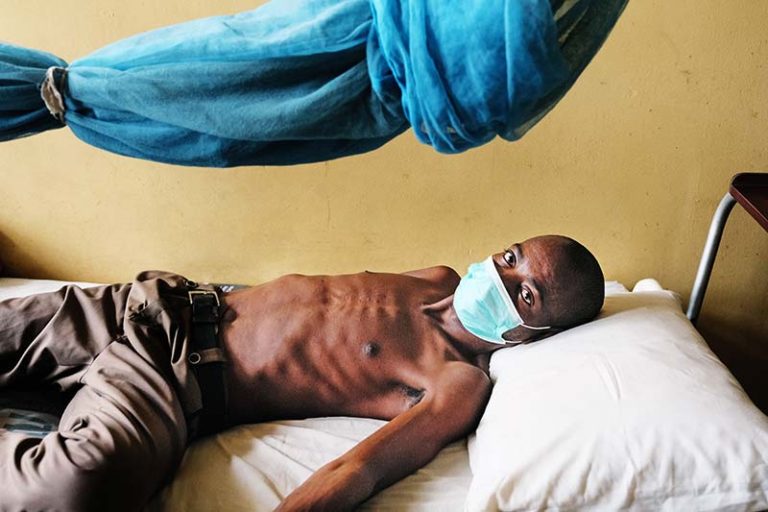
According to the organisation, an estimated 10.7 million people fell ill with TB in 2024, while 1.23 million deaths were recorded within the same period. Despite these figures, it noted that about 83 million lives have been saved since 2000 through global TB interventions.

The agency warned that progress has slowed in recent years, cautioning that without urgent action, global targets to eliminate the disease might not be met. It emphasised the need to “accelerate efforts” and get the global response back on track.

Reinforcing the global call for collective action, WHO Goodwill Ambassador for TB and HIV/AIDS, Peng Liyuan, said tuberculosis remained a major infectious disease that had long endangered people’s health, urging stronger international cooperation to tackle the burden.

Speaking at a WHO World TB Day event, she commended efforts made so far, noting that global actions had helped to “reverse the recent upward trend in global TB cases.” She also paid tribute to health workers, volunteers, and stakeholders worldwide, and lauding hose who have “devoted themselves to this worthy cause.”

Highlighting national efforts, she said China had made notable progress through coordinated government action, innovation, and expanded healthcare access, contributing to a steady decline in TB incidence.

She further underscored the role of community engagement, especially among young people, describing volunteers as ‘sparks’ that ignite progress in public health, with millions contributing to awareness campaigns and outreach efforts over the years.

The WHO also explained that TB was driven by broader social and economic factors, adding that the disease thrives in conditions of poverty, inequality, and limited access to healthcare.

It called for increased investment in TB programmes and described funding as both a health and economic priority. According to the organisation, “every dollar invested in TB yields significant returns,” reinforcing the case for stronger financial commitment from governments.

The agency further stressed the importance of expanding access to modern tools, urging countries to scale up the use of rapid diagnostics and ensure timely treatment for those affected.

It also advocated for people-centred care, calling for services that are accessible, affordable, and stigma-free, while actively involving communities and civil society in the response.

Reinforcing the role of national governments, the WHO said efforts to end TB must be “led by countries and powered by people,” with stronger domestic ownership of TB programmes.

Peng called for unity across nations and sectors, urging stakeholders to “act, support and participate in global efforts against TB.”

He added that collective commitment was key to building confidence and hope in the fight against the disease.

The organisation also urged individuals and communities to support awareness efforts, reduce stigma, and encourage early testing and treatment.

THE ICIR reports that Nigeria has the highest tuberculosis (TB) burden in Africa and ranks sixth globally, with approximately 590,000 annual infections and 268 daily deaths.

While over 361,000 cases were reported in 2023 (a 26 per cent increase from 2022 due to enhanced tracking), significant under-reporting remains. The disease often hits children and those with HIV.