Home Blog Page 591

Nigeria and Uganda | Into the woods

By Uchenna Igwe in Nigeria, James Onono Ojok in Uganda, and ZAM

WESTERN “green” funds used for “merrymaking with ministers” while forests are cut down 

Amid hundreds of millions paid by donors to the Ugandan government for forest-saving projects, a powerful logging syndicate linked to the same government continues the desertification. In Nigeria, also despite much “green” funding, the government itself clears out the trees. Forest communities are impoverished in the process.

 Selling out the trees and the poor

  • Forests in Nigeria and Uganda disappeared faster during deforestation programmes.
  • Amid millions spent to “save trees”, large elite timber logging networks were given free reign by authorities.
  • Bans on using wood impoverished communities while letting timber tycoons off the hook.

“We are hostages here,” says William Amanzuru, who tries to stop the felling of trees in northern Uganda’s Zoka Forest, where he lives. “They come with guns to tell you to cut your tree, but even without guns, the ten dollars they pay will already be enough. People here choose to eat either breakfast, lunch or dinner.”

Extra painful, says the local activist and chairman of Friends of Zoka Forest, is that the trees are being felled amid worsening heatwaves, wilting crops, and dying cattle. “The heat is unbearable; the food prices are sweeping up. We know we are harming ourselves, but what is the alternative? That is why I say we are hostages.”

The “they” Amanzuru refers to are the timber loggers from the syndicates that have been deforesting northern Uganda for the past twenty or thirty years, mostly for charcoal, Uganda’s most-used cooking fuel, called “black gold” here. During this period, they have destroyed more than half of the tree cover in this region, once one of the green lungs of the world. According to several activist groups and an international research report, the kingpins are military and security top officials and politicians, even ministers. President Museveni himself, too, has pointed at “top security officials” in a recently promulgated, supposedly environmentally friendly, ban on the cutting of trees for charcoal burning in northern Uganda.

“The ban has simply eliminated the competition.”

“But they are still not acting against the syndicate. The ban has simply eliminated all competition for them,” says Amanzuru. “Because now small people and individuals get arrested while the trucks still pass through all roadblocks without a problem, at a rate of five per day here. I see them, I point at them, but the district military officers tell me they see nothing.”

His observations are confirmed by villagers ZAM interviewed in several other districts, all once heavily forested areas, now fast desertifying.

Speaking in the sun amid land full of stumps, Ocen Procelia of Omel, Lumu Bosco of Amuru, and Bosco Oloya of Paicho Sub-County in Gulu are just some of the hundreds of local people here who go ever deeper into still-forested areas to cut trees for charcoal, burn them, then deliver the household fuel to the trucks. “We get two, three bags and find the trucks down the road, and sell them there,” they say. The ban has made the trucks in some areas go underground, “with bags of charcoal hidden under other goods,” but they still ride.

Army escorts

Arthur Owor of the activists group Save the Trees in Gulu, the region’s capital, says that, while army escorts of logging trucks were a common sight before last year’s ban, “now they just hide the load or allocate Uganda Revenue Authority and Forestry Commission stamps saying the wood is from Southern Sudan.”

In contrast to the protection he says the syndicate receives, it is rather his own group that must fear the authorities. “It’s why we don’t register as an NGO. They can close you down once you do.” Uganda’s autocratic government has closed down many NGOs that spoke out already, he says. “The ones that remain just plant a few trees and are very careful not to upset the government.”

The generals “could stop it if they wanted to.”

There are plenty of rumours about the syndicate kingpins, among which features, prominently, the name of President Museveni’s own brother, a general, Salim Saleh (born Caleb Akandwanaho). Saleh, the most powerful man in the army, has owned land here ever since his army bulldozed the forests in the early 2000s to flush out Joseph Kony’s Lord’s Resistance Army. Associates of Saleh were often seen in northern Uganda after the war, when, despite many local protests, high ranking individuals in Uganda’s military and government, commonly nicknamed ‘the untouchables’, grabbed land in the region (see inter alia ZAM’s 2017 report “The general and the naked woman” and this this article on land grabs in northern Uganda) for their own farms and plantations.

Even now, Saleh and another general live here, as well as a former defence force commander, the head of military intelligence, and a minister. There is no indication that these individuals are personally involved in the syndicate, but, says Amanzuru, “They could stop the trucks if they wanted to.”

A long ribbon of donors adorns the Environment Ministry’s website

Ironically, the Ugandan government that commands the army has received hundreds of millions of dollars in “green” funding to halt deforestation in the past two decades. A long ribbon of donors, from Australia to the EU to Canada to the UN, adorns the website footer of the country’s Ministry of Water and Environment. (see box Green Funding). But these projects, usually localised tree-planting or sustainable forestry efforts, have hardly made a dent in the deforestation, which has continued at a rate of 7-10 per cent in the past two decades in the region, while the “black gold” trade roars.


Green funding and financing

Disclaimer: despite an extensive internet search we were unable to find much clarity amid the avalanche of voluminous project proposals, multi-funder, multi-year programmes, and intermittent reports. We also probably missed a lot, especially in the regional divisions per country. The below rough estimate therefore contains only country amounts, allocated from the early 2000s.

Uganda

Nigeria


Tractors and caterpillar trucks

Moving focus from the east of Africa to the west, four thousand kilometres away, the Ebony, Apa, and Madrid hardwood trees of Oban Forest, a national park in Nigeria’s Cross River state, are very different from the Africana Afrizella and Shea Nut found in Uganda’s northern mountains, but the deforestation story follows the same beats. Except here, large agri-businesses openly and legally have received forest-clearing concessions from the government.

A dilapidated construction area in Oban Forest shows the remnants of a huge sawmill, placed there by the DANSA Agro Allied company in 2015. DANSA, which was granted a concession by the Cross River government in that year, was part of the stable of Nigerian businessman Aliko Dangote, Africa’s richest man. Up to 2018, when it closed, the company was allowed to clear forest for a pineapple plantation, which, as the sawmill and many locals testify, turned into a fully-fledged timber-logging operation. “When you talk of the area that was given to Dangote, the acreage of land that he destroyed was enormous,” says local environmental activist Felix Itambu. “There were tractors, caterpillar trucks, and other equipment that created destruction with each print it made on the ground.”

The government received millions to “get ready” for forest protection

Here, too, the destruction took place amid a “green” project meant to halt deforestation in the state, where 50 per cent of Nigeria’s remaining forest is located (only 10 per cent of Nigeria’s original forest cover remains). In 2008, Nigeria received US$4 million from the UN “Reducing Emissions from Deforestation and Forest Degradation” (REDD+) project, and later another US$3,7 million, also for REDD+, from the World Bank. These funds were for the project’s “readiness” phase, meant to improve the institutional capacity of the Nigerian government, so that it could then move on to curbing deforestation in Cross River. Theoretically, during this next phase, local communities would then be enabled to make a living from sustainable forest management with funds from so-called “carbon credits”.

Police terror

But as millions were spent on workshops, trainings, commissions, consultancies, and conferences on state level to discuss the above and get “ready”, the Cross River government – like Uganda – started by simply policing local villages. It immediately imposed a total moratorium on all logging activities in the state and established an Anti-Deforestation Task Force (ATF), which went about enforcing the ban swiftly, violently, and selectively.

A 2016 Premium Times article vividly described how local families with small timber businesses, who were on average using one sawing machine to provide wood to local markets and had been able to make decent lives for themselves in that way, quickly became impoverished. The Premium Times also reported that people were arrested even for cutting firewood in their own backyard for household cooking or eating bush mango or afang (a vegetable) from the forest.

While the ATF sowed terror among the locals, the trucks of the large-scale loggers were legally allowed to leave. “If they [government officials] saw you with even one log of wood, they would arrest you, but DANSA was loading out trucks of wood every day,” says local environmental activist Felix Itambu.

Large agri-businesses like DANSA are often granted concessions for “salvage logging,” ostensibly to clear land for plantations, but timber extraction and processing is so profitable that these “plantations” are often logging operations under a different name. Monoculture poses significant environmental harms to the native forests it supplants. In Cross River, it is the primary driver of deforestation.

DANSA map
DANSA map

More concessions

And it wasn’t only Dansa. In 2013, with the REDD+ readiness phase in full swing, Wilmar palm oil had received a concession too, encroaching on and polluting the forest with its waste. After that, large forest areas were cleared away by the state government for a cocoa plantation, a casino project, and a (later abandoned) superhighway.

A 2022 report by a Nigerian research organisation found that at least 21 salvage logging companies and 55 private plantations have conducted unregulated timber extraction activities in the area.

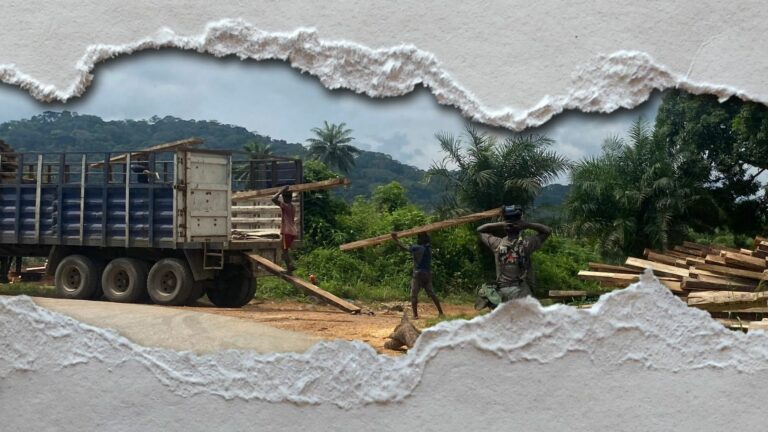
Logging by those without concessions also continued. The State Forestry Commission, meant to monitor wood leaving the forest, was widely reported to be involved in corrupt activities, with one article from 2017 describing how an impounded truck with rare hardwood trees was ordered released by the Commission itself. In 2020, the chairman of the Anti-Deforestation Task Force accused the then-Forestry Commission chairman of releasing three impounded vehicles with wood. His successor, Forestry Commission director Frank Eja, stated in an African Arguments interview as recently as January 2023 that the commission itself was still “helpless and handicapped” as “every day, over 120 trailers carrying timber leave the state by road alone.” He added that “each trailer must pay N500,000 (about US$1,100) as a fee” and alleged that this money ends up being shared among top officials in state government.

As Eja was giving his interview in 2023, another green project had been ongoing for five years in Cross River state: US$20 million for sustainable fuel management, in partnership with the very same Forestry Commission.

“We get nothing”

All we see when we visit Oban Forest, supposedly Cross River’s most protected forest area, in December 2023, is ongoing logging. “They [loggers] come to the community and say we want to extract ebony. And the community will tell them, give us N100,000 for one year. They pay 100,000 and then go and extract ebony,” says a villager who asks to remain anonymous. N100,000 is about US$87, an amount the man in Oban says is “nothing”. “They make N200,000  from selling this same tree. It is hazardous. There is nothing that we are getting from it.” But there simply isn’t an alternative anymore.

 We pay US$400 for every truck

The income stream from the logging to the Forestry Commission also keeps flowing. Though – to the relief of many – new Cross River Governor Ben Ayade lifted the moratorium on logging and dissolved the Anti-Deforestation Task Force in August last year, the Oban Forest is still covered by a national parks logging ban. “We pay N500,000, (US$400), for every truck,” says logger *John Agbor, interviewed as he and his crew are loading the timber that they sawed over the past three months, camping here in the reserve. The Forestry Commission stamp imprinted “with an official hammer that bears the forest commission’s seal,” declares his load good to go.

As we see the dawn rise over the forest, the truck fires up and leaves. It is one of what will be several today.

Political will

In Uganda, meanwhile, Permanent Secretary Alfred Okot Okidi of the Environment Ministry insists in an interview that his country has the “political will” to stop the illegal logging. “Maybe there are powerful people involved, but who in this country is more powerful than the President? The President is the one who has the political will. He has promised to allocate two thousand new environmental protection police officers to the country to fish out the culprits.” Currently there are only 161 environmental protection officers in Uganda.

Who is more powerful than the president?

However, like in Nigeria, more police is unlikely to solve the problem. Besides bad governance, corruption, monoculture tenders and the power of resource-trading mafias, the main cause of the forest project failures may well be the economics of a patronage system, where state coffers are mostly filled from the sale of natural resources. Before the ban on logging, royalties from timber extraction in the forest reserves were shared 50/50 by the host communities and the Cross River state government. It had hoped to compensate that loss with the UNREDD+ financing, but that did not happen (see the complaint by the former Cross River spokesperson that “that money never reached us” in the comments box.)


Comments

“We never got that money”

Asked why Nigeria’s Cross River state cut large forests areas for polluting and logging business partners in the midst of a REDD+ preparation phase, former state government spokesman Christian Ita says “we never got that (REDD+) money,” adding that “spending on consultants by the UN doesn’t amount to giving money to the state.” Nigerian “focal person for REDD+” Bridget Nkor said in response to questions that the “programme was not a failure since capacity and readiness were built (…) but funds were never released to the state for further activities.” She also said that “issues of communities worse off after the programme should never arise” since (the programme) was “never implemented.”

From Uganda, only army spokesperson Akiki Deo responded, saying that regarding “officers who were allegedly involved in logging, unfortunately no one came to substantiate or incriminate them” and that “the military leaders residing in the area are there like any other citizens.” Asked whether he had passed on specific questions inviting General Salim Saleh, the president’s brother, to comment on allegations regarding his involvement in timber logging, Deo said “he (Saleh) doesn’t speak to the media.”

In both countries, most state officials who were asked to comment did not respond to questions sent by email and whatsapp. Neither did the World Bank, the FAO, or the UN REDD+ secretariat.


On the Ugandan side, local districts that previously made money from forest taxes, and who have now lost that source of revenue, may well look for bribes in return for stamps and permits. Moreover, how can the charcoal trade in this country really be stopped if most citizens, 70 per cent at latest count, still need it for cooking? Since the ban issued by the President, charcoal prices have risen steeply here in the north, where 40% of the “black gold” for sale in the capital Kampala comes from, further feeding the tree-cutting frenzy.

In this country there is one table where the ministers and generals eat

“We need alternative income, and we need electricity,” says Zoka Forest activist William Amanzuru. “But we don’t get the irrigation that would help us to plant and farm, let alone electricity. Our president doesn’t come with plans and timelines for such development. In this country we only have one large table where the ministers and generals eat, and all around them their officials are thronging for crumbs.”

A thin rim of trees

Since Uganda and Nigeria began receiving funds for curbing deforestation, the loss of tree cover and primary forests have both increased significantly.

Amanzuru believes that, as long as the state functions the way it does, its green donor partnerships are just “merrymaking at conferences.” He says, “The Environment Ministry website is not Uganda. That is window shopping with people who bring money to the ministry. They take pictures and smile at fancy hotels, where the minister speaks. The minister will talk at the COP (1) on how Uganda has a charcoal ban and they will visit with dozens of people, but there won’t be anyone from here. People here don’t even know that that is happening.” The only solution he sees is direct support to local communities. “If they can help us with irrigation, that will be great.” Friends of Zoka Forest gets €20,000 per year for this purpose from a western NGO, he says, “and it really helps.”

The beneficiaries are rich and well-connected

Fellow activist Arthur Owor of Save the Trees in Gulu district agrees that small initiatives that partner directly with communities help more, even if on a very limited scale, than the big programmes that suffer from “elite capture,” as he puts it. “All these (projects from the Environment Ministry website) will sound like news to the locals.” His group knows of some beneficiaries, he says, but they “are rich and well connected.” The last observation echoes a statement by district official Martin Anywar in Kitgum, a hundred kilometers up the north east, that a recent FAO US$5 million tree planting programme in his area allocated funds to “people who are already rich.”

As we leave Gulu’s forest district, we see a thin rim of just planted trees on the riverside. It is the one sign of a project implemented by the Environment Ministry that we have come across.

*Name changed

  1. COP, which stands for Conference of the Parties, is an annual meeting where United Nations member states convene to assess progress in dealing with climate change.

The Nigerian part of this story was produced with support from the Rainforest Journalism Fund in partnership with the Pulitzer Center.

This is republished from ZAM.

Seven more abducted Kogi varsity students regain freedom

0

THE Kogi State Police Command has confirmed that seven more abducted students of the Confluence University of Science and Technology, Osara, Okene, have regained freedom from their captors.

A statement by the state police public relations officer, William Aya, a superintendent of police, on Thursday, May 16, stated that 21 students had been freed with the latest number of those rescued. 

However, the number of students abducted has yet to be ascertained by the police.

The students who were reading in the school halls in the night for their upcoming examination were abducted on Thursday, May 9.

Confirming the development on Sunday, May 12, Aya was quoted by The Punch as saying, “So far, 14 of them have been rescued, Our men are in the bush trying to find the rest.”

The bandits reportedly entered from the surrounding bush, entered three lecture halls, and fired shots into the air to intimidate the students.

Meanwhile, Aya on Thursday, credited the release of the students to the Inspector-General of Police, Kayode Egbetokun, noting that the IGP had deployed the air component of the the police security apparatus, as well as the state’s technical intelligence unit to secure the release of the students.

The state Governor Ahmed Usman Ododo had earlier assured of the safe return of the students, adding that the government had “activated the security architecture to track the kidnappers and ensure the abducted students are rescued and the abductors apprehended.”

Abduction of students has become a source of concern in Nigeria, where the number of out-of-school children is very high.

In 2023, The ICIR reported that Nigeria had 19.7 million out-of-school children and was the country globally with the third highest number of children deprived of education according to the United Nations Educational Scientific and Cultural Organization (UNESCO) 2020 Model Estimates.

On Thursday, March 7, 137 students and their principal were reportedly abducted by terrorists from the LEA Primary School in Kuriga, a community within the Chikun Local Government Area of Kaduna State.

The incident generated public outcry, with several leaders, including President Bola Tinubu, calling for their immediate release.

Abduction of schoolchildren became common in Nigeria, especially in the North, after nearly 300 students were abducted by terrorists from a school in Chibok, Borno State, in 2014.

Findings by The ICIR show that bandits and terrorist groups have disrupted the Nigerian education system, kidnapping over 1,000 students in the last decade.

Within the past three administrations, the abduction of school children has generated millions in ransom for kidnappers, leaving citizens with no hope of a possible end to the menace.

Student abduction occurs in primary, secondary and tertiary institutions in Nigeria.

Among the tertiary institutions where students have been whisked away are Federal University Dutsin Ma, Katsina State, in 2023; Federal University, Gusau, in Zamfara State, in 2022, and the Federal College of Forestry Mechanization, Afaka, in 2021.

Dangote refinery to source 24m barrels crude oil from US 

0

DANGOTE Refinery is set to purchase at least 24 million barrels of United States’ (US) crude oil over the next one year amid Nigeria’s crude oil production shortfalls. 

Bloomberg revealed the plan in a report, stating that refinery issued a term tender to buy two million barrels per month of West Texas Intermediate Midland crude for a year starting in July.

This amounts to 24 million barrels of US crude in one year that the $20 billion refinery established by Africa’s richest man, Aliko Dangote, will purchase over the period.

The tender will close at 3 p.m. on May 21, indicating how Nigeria’s crudes are struggling to compete against American supply, it stated.

The 650,000 barrels per day production, expected to reach full capacity by the end of this year, sources one-thirds of its feedstock from the US.

In December 2023, Dangote Refinery received its first one million barrels of Agbami crude grade from Shell International Trading and Shipping Company Limited (STASCO), after it failed to come on stream in August of that year as planned.

Besides crude oil production shortfalls, Nigeria’s known four refineries have been in comatose with the hope that Dangote Refinery will serve as a major step towards increasing the country’s local refining capacity.

Nigeria struggles to meet its Organization of Petroleum Exporting Countries (OPEC) quota and domestic supply demands, despite being one of Africa’s leading crude oil producers.

The ICIR reports that the Nigeria Upstream Petroleum Regulatory Commission (NUPRC) directed crude oil production companies to supply to domestic refineries and export only after domestic demands have been met.

This move could benefit the Dangote refinery to procure crude oil from local suppliers rather than depend on imports.

In April, the refinery began diesel and aviation jet fuel sales to domestic marketers, slashing the litre price to as low as N1,000 from about N1,300 the product was previously sold.

The ICIR reported how production at the refinery could influence a 15 per cent price reduction of petrol, earn huge foreign exchange savings and meet the country’s local consumption demand.

Emirates resumes flight operations to Nigeria October 1

EMIRATES flight operations will officially resume services in Nigeria on October 1, 2024.

According to a statement by the Arab Emirate on Thursday, May 16, the flight will be operating a daily service between Lagos and Dubai, and offering customers more choice and connectivity from Lagos to, and through, Dubai.

It noted that the service would be operated using a Boeing 777-300ER, with EK783 departing Dubai at 0945hrs and arriving in Lagos at 1520hrs.

It further stated that the return flight EK784 would leave Lagos at 1730hrs and arrive in Dubai at 0510hrs the following day.

“We are excited to resume our services to Nigeria. The Lagos-Dubai service has traditionally been popular with customers in Nigeria and we hope to reconnect leisure and business travellers to Dubai and onwards to our network of over 140 destinations. 

“We thank the Nigerian government for their partnership and support in re-establishing this route and we look forward to welcoming passengers back onboard,” the statement quoted the Emirates’ deputy president and chief commercial officer, Adnan Kazim, saying.

The statement noted that with the resumption of operations to Nigeria, Emirates would be serving 19 gateways in Africa, operating 157 flights per week from Dubai.

Emirate stated it had built strong bilateral trade relations with Nigeria, being a major economic hub in Africa, over the years.

The airline added that with the resumption of daily passenger flights, its cargo arm, Emirates SkyCargo, would further bolster the trade relationship by offering more than 300 tonnes of bellyhold cargo capacity, in and out of Lagos weekly.

The ICIR reported how the Minister of Aviation and Aerospace Development, Festus Keyamo, disclosed that Emirates Airline had officially written to the Nigerian government to resume flight operations into the country before June 2024.

Keyamo disclosed this on Arise TV’s “The Morning Show” on Monday, April 8, noting that he had received a letter from the airline on the planned resumption.

He, however, said that the first announcement in October 2023 over the proposed resolution of the face-off between both nations was not fake news but was ‘hasty’.

In 2020, Emirates suspended flight operations to Nigeria — for the second time in the year – over its inability to repatriate its revenue trapped in the country.

Similarly, the airline had suspended all flights from Nigeria effective September 1, 2022, due to what it called the challenges in repatriating its funds.

The Central Bank of Nigeria (CBN)  earlier confirmed the clearance of verified backlog owed foreign airlines, which totalled $136.73 million.

Stop raising interest rates to fight inflation, CPPE tells CBN

THE Centre for the Promotion of Private Enterprises (CPPE) has urged the Central Bank of Nigeria (CBN) to stop increasing the benchmark interest rate to address rising inflation.

The CPPE Chief Executive Officer, Muda Yusuf, made the call in a statement on Wednesday, May 15 and suggested that the CBN adopt a more flexible monetary policy stance.

He said the apex bank’s monetary policy committee (MPC) needed to pause its monetary tightening measures despite the worsening inflation figure reported in April.

The call is pertinent to allow businesses recover from the shocks of the recent bullish rate hikes, while fiscal policy tools are addressed to tackle supply side factors in the inflation dynamics, said the Centre.

Nigeria’s headline inflation rate climbed to 33.69 per cent in April from 33.20 per cent in March, according to the National Bureau of Statistics (NBS) data on Wednesday, May 15.

Yusuf argued that the persistent inflationary pressures had been a cause for concern as it stoked households’ purchasing power and the operating costs for businesses.

The call opposed the CBN’s repeated stance in continuing to apply orthodox monetary policy measure in addressing the country’s surging inflation.

In a recent conversation, the CBN Governor, Olayemi Cardoso, said the apex bank’s orthodox policies would continue to be implemented to tame inflation.

There are already agitations that the apex bank would raise the benchmark interest rate when its committee meets next week, Monday and Tuesday, May 20 and 21.

According to the NBS, Nigeria’s inflation rose on a year-on-year basis by 11.47 per cent relative to 22.22 per cent in April 2023, but it slowed down on a month-on-month basis.

The statistics office stated that the headline inflation rate in April 2024 was 2.29 per cent, which was 0.73 per cent lower than the 3.02 per cent recorded in March 2024.

Despite the month-on-month decline, Yusuf said the key inflation drivers were yet to significantly moderate.

“These include the naira exchange rate, transportation costs, logistics challenges, insecurity in farming communities and structural bottlenecks to production.

“These are largely supply side issues which are being addressed by the fiscal authorities,” the CPPE boss said.

He, again, expressed worries that the apex bank had not yielded to the CPPE’s calls to put an exchange rate benchmark for the computation of import duty, which he argued had continued to be a significant concern to businesses and a major inflation driver.

“We again urge the Central Bank of Nigeria to peg the rate at between N800  and N1,000 per dollar to be reviewed quarterly.

“This is necessary to reduce the pass-through effect of heightening trade cost on inflation,” Yusuf said.

The CPPE boss had earlier requested the apex bank to adopt a quarterly framework starting at the rate of N1,000/$ to minimise volatility in the Customs duty exchange rate, suggesting that the adoption be carried out in line with the present administration’s commitment to bolstering investors’ confidence and driving economic growth.

Mohbad: Autopsy result fails to ascertain cause of death

THE result of autopsy conducted on the body of late Nigerian artiste, Ilerioluwa Aloba, popularly known as Mohbad, has reportedly failed to ascertain the cause of his death.

According to a forensic scientist and pathologist from the Lagos State University Teaching Hospital (LASUTH), Prof. Sunday Osiyemi, who spoke to the coroner on Wednesday, May 15, the conclusion was attributed to several reasons.

Part of the reasons he told the coroner,  Adedayo Shotobi, a magistrate, included it taking a long time, about 21 days before the autopsy was conducted by which time, the body had decomposed.

Also providing more clarification on the result, Wahab Shittu, a senior advocate, while addressing journalists at the coroner’s inquest held in Lagos State noted that the pathologist in charge of the autopsy told the coroner that the deceased’s body had decomposed by the time the test was conducted.

“The pathologist said the body ought to have been exhumed within 12 hours after it was buried to avoid decomposition.

“So, in summary, what he is saying is that the cause of death cannot be ascertained and when you say the cause of death cannot be ascertained, it means it is suspicious, it is not clear, no particular reason”, Shittu said.

He added that the pathologist further stated that the cause of the artiste’s death might be attributed to the reaction of certain drugs administered to him before he died, noting that he did not know if it was those drug that led to the singer’s  death.

However, he said the court was yet to see the full report that would lead to the final verdict.

The ICIR reports that Mohbad passed away on September 12, 2023, and was buried a day after, after which his body was exhumed for autopsy to aid the investigation into his death.

Dapo Abiodun to spend N950m monthly as welfare packages for his office amid state’s huge debt

OGUN State Governor Dapo Abiodun’s office will spend N11.4 billion on welfare packages and another N1.2 billion on travel and transportation from the state coffers in 2024 amid the state’s huge debt. 

This is according to the state’s 2024 appropriation bill reviewed by The ICIR

The welfare and travel packages is for the governor’s office.

The ICIR reported that the N703 billion budget titled “Budget of Sustained Growth and Development” comprised N415.66 billion for capital expenditures and N287.37 billion for recurrent expenditure.

Abiodun said the budget had consolidated revenue costs of N27.35 billion, personnel costs of N95.05 billion, overhead expenses of N105.88 billion, and public debt charges of N59.09 billion.


Read also:


The government earmarked N109.21 billion for education, representing 16 per cent and N81.18 billion for the health sector, representing 12 per cent of the budget, while N28.88 billion, representing four per cent, was budgeted for housing and community development.

Abiodun explained that agriculture and industry would gulp N14.21 billion, representing two per cent, while N22.87 billion, representing three per cent, was budgeted for recreation and culture.

Governor’s spending  

Findings by The ICIR showed that the governor earmarked N11.4 billion (N11,423,592,000) for his welfare packages and N1.2 billion (N1,178,695,804) for his travel expenses as the state continues to struggle with debt.

This means the governor will expend an estimated N950 million monthly as a welfare package while spending roughly N98 million monthly on travel expenses if the budget is fully implemented. 

According to the National Bureau of Statistics (NBS), Ogun state recorded the highest domestic debt as of December 31, 2023, which was N278.7 billion (N278,675,120,734).

It came behind Lagos and Delta states on the list of states with the highest domestic debt that year. 

Expenditures for Dapo Abiodun’s office / Source : Osun budget document

Domestic debt refers to the money owed by the government to creditors within the country. Being highly indebted domestically suggests that the state may face financial challenges in managing its debt burden and meeting its financial obligations to the state.

Even though residents and observers in the state have been raising concerns over the situation, the state government has always insisted that they have not exceeded the state’s debt limit.

Further analysis of the budget by The ICIR showed that the governor allocated N1.1 billion (N1,102,682, 252) for fuel and lubricants for his office and N967 million ( N967,393,999) for refreshments and meals.   

The governor also plans to spend N861 million (N861,183,338) for “special days and celebration” and N14 billion (N14,020,948,839) on “contingency”.

In total, N64 billion (N64, 193, 544, 562) was allocated for the governor’s office in the budget. This is higher than the amounts budgeted for the Ministry of Environment (N10.6 billion), the Ministry of Transportation (N6.3 billion), the Ministry of Rural Development (N8.7 billion ) and the Ministry of Environment (N4.9 billion) combined.

This implies that the governor’s office was allocated a substantial amount of the state’s resources compared to other critical sectors such as environment, transportation, and rural development.

Abiodun had attributed the state’s substantial debt to the depreciation of the naira against the dollar and his predecessor, Ibikunle Amosun, who allegedly left him with a debt of N142 billion.

However, the governor’s seeming extravagant spending could exacerbate the state’s debt crisis despite claims that it is targeted at funding critical infrastructure projects.

GroundUp seeks applications from journalists 

GroundUp, an organization that publishes news that matters, is accepting applications for its fellowship.

The programme seeks to assist journalists who have reporting ideas to implement.

To apply, applicants must pitch projects on the following themes: prisons and the justice system, labour, mining, and climate change.

Other topics from journalists are also welcome.


Read Also:

Media Monitoring Africa accepts application for Isu Elihle awards

African Fact-Checking Awards open application 

Application opens for Daphne Caruana Galizia Prize for Journalism


The fellowship runs for three to six months. The first two weeks of the fellowship will be based at GroundUp’s office in Cape Town, South Africa. GroudUp will cover travel and accommodation for fellows living outside of Cape Town.

Fellows will receive ZAR42,500 per month.

The deadline is May 31.

To apply click here.


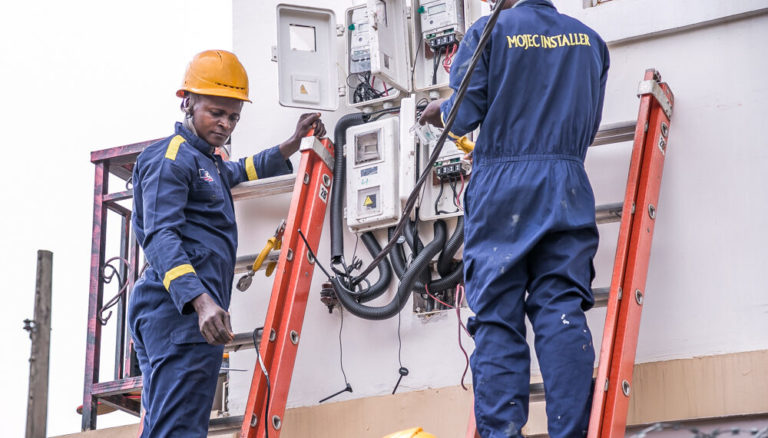
Senate approves Tinubu’s $500mn loan request for mass metering

THE Nigerian Senate has approved a $500 million loan request by President Bola Tinubu for metering electricity users.

The fund was approved for the Bureau of Public Enterprises (BPE) after considering the report of the committee on local and foreign debt, presented by Haruna Manu, the committee’s vice chairman.

The $500 million loan is part of the $7.94 billion loan that President Bola Tinubu sought the Senate’s approval for on November 1st, 2023 under the 2022-2024 external borrowing plan.


Read Also:


The President also sought approval for another  €100 million.

However, the Senate approved borrowing $7.4 billion during its special plenary on December 30 after considering the report of the committee on local and foreign debt.

Manu, while presenting the report, said the remaining part of the loan ($500 million) for the BPE could not be approved because the agency did not appear before the committee.

Speaking further, he reiterated that the terms and conditions under which the loan was brought would not in any manner compromise the sustainability of Nigeria’s economic growth or hinder the integrity and independence of Nigeria as a sovereign nation.

“The Committee recommends that the Senate do approve the ongoing negotiations of the external borrowing for $500m for BPE; that the terms of the loan from the funding agency be forwarded to the National Assembly before execution”, the committee’s vice chairman said.

After considering the report, Senate President Jibrin Barau, the deputy Senate President approved the loan request.


READ ALSO:


The ICIR reported how the  11 electricity distribution companies (DisCos) relied on unmetered customers to earn profits, with the Federal government’s mass metering intervention moving at snail’s speed.

The Nigerian Electricity Regulatory Commission, (NERC) in its data showed that there were 13.37 million registered electricity consumers as of the end of March 2024.

Out of that figure, only 5.989 million have meters, representing 44.78 per cent, and showing a deficit of some 7.4 million without the meter.


Tinubu spent N90bn on 2024 hajj subsidy– Shettima

0

VICE President Kashim Shettima has revealed that President Bola Tinubu spent N90 billion to subsidise the costs for Nigerians participating in the 2024 Hajj pilgrimage. 

Shettima disclosed this, on Wednesday, May 15, at the inauguration of the 2024 National Hajj operation, held at the Sir Ahmadu Bello International Airport, Birnin Kebbi, Kebbi State capital.

Hajj is one of the five pillars of Islam. It involves Muslims pilgrimaging to Mecca to worship their God.

The spiritual exercise is only obligatory for all Muslims who are physically, mentally and financially capable of undertaking the act of worship, provided their absence does not cause hardship for their family.

The ICIR gathered that the National Hajj Commission of Nigeria (NAHCON) recently increased the fare for the 2024 Hajj due to the devaluation of the naira.

Initially stated as N4.5 million, the fee was adjusted to N4.6 million for pilgrims from the northern region and N4.8 million for those from the southern region.

Speaking on Tinubu’s impact on the pilgrimage, Shettima said: “President Bola Tinubu also works round the clock to control the downwards spiral of our local currency to bring relief to our pilgrims and other Nigerians, a move that eventually succeeded in lowering the fare. The President approved the release of N90 billion to subsidise the pilgrimage cost for this year’s hajj.”

According to him, the President attached immense importance to religious pilgrimage due to its role in transforming the behavioural and other spheres of lives of believers beyond performing the pilgrimage

“Due to this high regard, the government took time to carefully select men of integrity with administrative acumen and records of selfless dedication to manage the affairs of the National Hajj Commission of Nigeria in the interest of Nigerian pilgrims.

“Government at the highest level monitors all arrangements meant for the wellbeing of our pilgrims in Saudi Arabia and within the country before embarking on the journey.

“We are aware of the provision put in place for the safety, security and comfort of the Nigerian contingent to the 2024 hajj of our pilgrims.”

The vice president also called on the pilgrims not to relent in praying for the success of the Tinubu administration and the progress of the country.

Earlier in his remark, the Sultan of Sokoto, Sa’ad Abubakar III, charged Nigerian pilgrims with discipline to project the image of Nigeria positively.

He also applauded the Tinubu-led federal government for its effort to ensure that the 2024 hajj takes place.