Home Blog Page 635

OWM releases longlist of successful entries for 2024 awards

0

THE One World Media (OWM) Awards has shortlisted successful entries for its 2024 awards.

This award by One World Media is an annual project which celebrates the best journalism and documentaries from across the global South in different categories.

The awards received over 500 entries from 117 countries of which successful candidates have been selected into 15 different categories.

Read Also:

CCNow opens entries for 2024 journalism awards

ICIR funded report wins African award for Nigerian female journalist

Asake, Burna Boy, Davido, others nominated for 26th MOBO awards

The categories

Innovative Storytelling Award: Formerly the Digital Media Award, this category has a total of 10 shortlisted candidates. It recognises creative and innovative techniques and content that extends knowledge and understanding of the topic and engages with audiences. Entries should be using new technologies and platforms, such as TikTok, gaming, data, VR, AR, XR or AI.

Environmental Reporting Award: With a total of 10 candidates, this award category recognises impact and creativity in telling an environmental story. Entries should cover at least one of these areas: urban development, climate crisis, energy, environmental health, environmental justice, food, water, wildlife and zero waste and can be in any medium, including news, online, audio, print or film.

Feature Documentary Award: This category has eight successful candidates and it recognises impact and storytelling that is character-driven and creative. Entries must be more than 40 minutes long.

Freelance Journalist of the Year Award: This category was formerly the “International Journalist of the Year Award”. There are five candidates under this category and it is set to recognise consistent, impactful reporting that brings a story to audiences in a compelling way. Entrants can be working in any medium, including news, online, audio, print or film.

Correspondent of the Year Award: Formerly the International Journalist of the Year Award, this award recognises consistent, impactful reporting that brings a story to audiences in a compelling way. Entrants can be working in any medium, including news, online, audio, print or film.

News Award: This category recognises exclusive content or an investigation that led the news agenda. Entries can be online, broadcast or in print. It has 10 candidates.

New Voice Award: The Award category recognises impactful storytelling that brings a story to audiences in a compelling way. Entrants should be 32 years of age or under as of 16th February 2024 and can be working in any medium, including news, online, audio, print or film. There are 10 candidates under this category

Print Award: The former category ‘Popular Features’ has now merged with the Print Award and there are 10 candidates under this category. The Award recognises impact, exclusive content or new perspectives. Entries must be articles of 750 words or longer.

Podcast & Radio Award: With nine successful candidates, this category recognises impact, and stories that have a compelling narrative. Entries should be broadcast on radio or online.

Refugee Reporting Award: The Award recognises compelling stories that generate empathy, understanding and are reported on accurately and fairly. Entries can be in any medium, including news, online, audio, print or film. It had 10 candidates.

Short Documentary Award: This award category has 10 candidates and it recognises impact and storytelling that is character-driven and creative. Entries must be under 40 minutes.

Press Freedom Award: Formerly the Special Award. This award category recognises outstanding reporting that informs the public, provides an outlet for local people’s voices, creates a space for critical information and holds those in power to account. It has 10 successful entries.

Student Award: This category is for media, produced by a student as part of a journalism or filmmaking course at a university or film school that deals with stories or topics in the global South. The award recognises creative and compelling storytelling. It has 10 successful entries.

Current Affairs Award: It was known as the Television Documentary Award and supported by the European Bank (for reconstruction and Development). It has 10 successful entries. The Award recognises impact, exclusive content and considered analysis of a current affairs issue. Entries can include a specific episode of a strand or a topical, news-led documentary.

Women’s Solutions Reporting Award: It is sponsored by the European Investment Bank and also has a total of 10 successful entries. The award recognises empowering stories of girls and women who successfully tackled challenges faced by women and society at large, such as women’s financial and economic inclusion, addressing the impact of the climate crisis, increasing access to education, healthcare or democracy. Entries can be in any medium, including news, online, audio, print or film.

Police hand over wanted Delta monarch Ogenerukeywe to military

0

THE Delta State Police Command has handed over the traditional ruler of Ewu Kingdom in Ughelli South Local Government Area of the state, Clement Ikolo Oghenerukevwe, to the military.

Both the commissioner and the state public relations officer, Bright Edafe, confirmed the development to newsmen, on Friday, March 29.

The monarch surrendered himself to the police on Thursday, March 28, shortly after he was declared wanted by the military over the killing of 17 soldiers in the Okuama community in the state.

He was said to have arrived at the police command headquarters at exactly 6:41 pm.

The monarch, while speaking with newsmen before he turned himself in, denied allegations of being involved in the killing of the soldiers, noting that it was against his Catholic belief.

“I am very surprised that my name as the monarch of the kingdom will appear in the list of wanted persons. I have no hand in the killings, I have no hand in encouraging anybody to kill anybody, it is against my philosophy as a human being and my faith as a Catholic.

“It is a serious crime against humanity and they need to look at the appropriate places and do a thorough investigation to know all those who have committed this and bring them to book and let justice prevail.

“I am not a party to this, and like I said earlier, the state government is aware of the turbulence I have been going through. As I speak, an arrangement was made by the government to invite the opponents recently just before these happenings,” he had said.

On Thursday, March 28, the Nigerian Defence Headquarters declared eight persons, including the monarch, wanted in connection with the killing of four officers and 13 soldiers on March 14, 2024, in Okuama.

The Director of Defence Media Operations, Edward Buba, during a press conference in Abuja urged Nigerians, particularly those living in Delta and neighbouring states, to provide the military with reliable information to aid in the arrest of the eight people who are allegedly responsible for the soldiers’ death.

Buba reiterated the military’s resolve to free all victims kidnapped and abducted in Nigeria. 

He added that the military was committed to apprehending the soldiers’ killers.

The announcement was made public a few hours after President Bola Tinubu and other dignitaries witnessed the soldiers’ funeral at the National Military Cemetery on Wednesday, March 27.

The ICIR reported that Tinubu awarded scholarships and houses to the slain soldiers’ children and families.

Tinubu led governors, federal lawmakers, military high echelons, government functionaries, relatives, and friends of the soldiers and officers to the funeral.

The soldiers were said to be on a peace mission to the warring towns of Okuama and Okoloba when they were attacked.

NED seeks application for media projects’ grants

0

THE National Endowment for Democracy (NED) is seeking applications for projects that advance democratic goals and strengthen democratic institutions.

This opportunity is open to independent media organisations, civic groups, including newly established democracies, semi-authoritarian countries, highly repressive societies and countries undergoing democratic transition.

The grant amounts vary, depending on the size and scope of the projects, but the average grant lasts 12 months and is around US$50,000.

Read Also:

National Endowment for Democracy offers grants for media projects

NED’s Reagan-Fascell Democracy Fellowship programme opens

NED offers worldwide grants for media projects

One World Media hosts worldwide competition

Buhari signs Finance Bill into law

NED is interested in proposals from organisations for nonpartisan programmes that seek to: promote and defend human rights and the rule of law, support freedom of information and independent media, and promote accountability and transparency.

Interested applicants from Africa can apply here. The deadline for application is June 3.

CBN issues banks’ recapitalisation guidelines, raises minimum capital base to N500bn

THE Central Bank of Nigeria (CBN) on Thursday, March 28, 2024, unveiled new minimum capital requirements for banks and pegged the minimum capital base for commercial banks with international authorisation at N500 Billion.

The directive came two days after the Tuesday, March 25, monetary Policy Committee meeting urging Nigerian banks to expedite action on the recapitalisation of their capital base to strengthen the financial system.

The last time the CBN increased the capital base for banks was in 2005, when the current Anambra State Governor, Charles Soludo, was the apex bank chief. The capital base was raised from ₦ 2 billion to ₦ 25 billion at the time.

Read Also:

The acting director of the CBN’s Corporate Communications Department, Hakama Sidi Ali, who confirmed this development late Thursday, March 28, said the new minimum capital base for commercial banks with national authorisation would be N200 billion, while the new requirement for those with regional authorisation would be N50 Billion.

Ali also disclosed that the new minimum capital for merchant banks would be N50 billion, while the new requirement for non-interest banks with national and regional authorisations was N20 billion and N10 billion, respectively.

A circular to this effect signed by the director, Financial Policy and Regulation Department, Haruna Mustafa, to all commercial, merchant, and non-interest banks and promoters of proposed banks stressed that all banks were required to meet the minimum capital requirement within 24 months commencing from April 1, 2024, and terminating on March 31, 2026

According to the circular, the move, initially disclosed by the CBN Governor, Olayemi Cardoso, in his address to the Annual Bankers’ Dinner in November 2023, was to enhance banks’ resilience, solvency, and capacity to continue supporting the growth of the Nigerian economy.

To enable them to meet the minimum capital requirements, the CBN urged banks to consider injecting fresh equity capital through private placements, rights issues and/or offers for subscription; mergers and acquisitions (M&As); and/or upgrade or downgrade of license authorisation.

Furthermore, the circular disclosed that the minimum capital shall comprise paid-up capital and share premium only. It stressed that the new capital requirement shall not be based on the shareholders’ fund.

“Additional Tier 1 (AT1) Capital shall not be eligible for meeting the new requirement. Notwithstanding the capital increase, banks are to ensure strict compliance with the minimum capital adequacy ratio (CAR) requirement applicable to their license authorisation.

“In line with extant regulations, banks that breach the CAR requirement shall be required to inject fresh capital to regularise their position,” it added.

The CBN circular said the minimum capital requirement for proposed banks shall be paid-up capital, adding that the new minimum capital requirement shall apply to all new applications for banking licenses submitted after April 1, 2024.

It noted that the CBN would continue to process all pending applications for banking licenses for which a capital deposit had been made and/or an approval-in-principle (AIP) had been granted.

However, it said that the promoters of such proposed banks would make up the difference between the capital deposited with the CBN and the new capital requirement no later than March 31, 2026.

Meanwhile, the CBN said all banks were required to submit an implementation plan (clearly indicating the chosen option(s) for meeting the new capital requirement and various activities involved with their timelines) no later than April 30, 2024.

The CBN also disclosed that it would monitor and ensure compliance with the new requirements within the specified timeline.

Nigerian bandits strategically target school children for kidnappings – here’s why

0

By Oluwole OJEWALE, Institute for Security Studies

IT is every parent’s worst nightmare: armed criminals attacking their child’s school, kidnapping students and teachers.

In some parts of Nigeria, this scenario is not just the stuff of nightmares – it has become all too common in the past 10 years. The most famous incident was the mass abduction of 276 students from a girls’ school in Chibok, a town in Borno State, north-east Nigeria, in 2014. That incident led to global outrage and the “bring back our girls” campaign.

But it was not the last.

Most recently, on 7 March 2024, criminal groups (commonly described as bandits) attacked in Chikun Local Government Area of Kaduna State in north-west Nigeria. They abducted about 286 students and teachers at the LEA Primary School Kuriga. A few weeks later, Kaduna state authorities announced the release of 137 of the abducted students.


Read Also:

My research interests include violence, organised crime, conflict and security governance. In a recent study I analysed the dynamics of violence by bandits against educational facilities in north-west Nigeria. My study captured 52 incidents from 2013 to May 2023.

My findings can assist the law enforcement and security agencies to understand the variations in the spatial distribution, extent and intensity of attacks, and to identify alternative strategic responses.

Why schools and students are targets

The fieldwork part of my research was carried out in Zamfara, Sokoto, Niger, Kebbi, Katsina and Kaduna states from 9 February to 16 September 2023.

I conducted in-depth qualitative interviews with teachers, education officials, residents, victims, bandits and defectors from banditry.

I also used information from the Armed Conflict Location and Event Data project.

Three key reasons emerged for the targeting of schools and students:

  • failure of governance
  • large forest zones
  • children’s vulnerability.

Failure of governance: The strategic targeting of educational facilities and students should be viewed and analysed in the context of pervasive failure of governance and diminishing presence of government. This enables a surge in violence against civilians generally.

In remote villages and towns, state security agents are virtually non-existent and surveillance remains very poor.

A few of the security officials I interviewed confirmed that the situation had degenerated due to negligence by the government. Schools in most of the communities were not guarded.

Large forest zones: Schools are vulnerable to bandits in the north-west where large forest zones have become safe havens for armed groups.

Most schools are located at the outskirts of villages and in remote parts of the forests where bandits operate freely. The bandits keep the abducted students in the nearby forest.

Children’s vulnerability: Their physical and mental immaturity, limited abilities and dependence on adults makes students vulnerable. Kidnappers are known to demand ransom payments.

The bandits also carry out mass attacks and kidnapping of students to foster a climate of fear and propaganda. The large-scale kidnapping captures significant media spotlight, painting the government as incapable and emboldening the bandits.

Real and potential impacts of banditry on education

Attacks and kidnapping for ransom by bandits affect learning and students in three principal ways:

  • loss of lives
  • increasing burden of fear and sexual violence
  • forced displacement and decreasing school enrolment.

Loss of lives: My study showed violence against educational facilities and students by the bandits began to rise from 2020. From 2013 to 2019, attacks against students and educational facilities by bandits were intermittent. They surged to 25 incidents and 25 fatalities in 2021.

There were 15 reported incidents and three fatalities in 2022. The focus of bandits remains illicit profit from kidnapping and not necessarily the killing of victims. That is why incidents are often higher than fatalities. A total of 51 people have been killed as a result of attacks against schools and students from 2013 to 19 May 2023.

Burden of fear and sexual violence: School girls are becoming victims of rape by bandits. They bear direct physical harm, trauma and social ostracism as a result. Some lack access to healthcare services.

Forced displacements and decreasing enrolment in school: These developments raise very serious concerns among most residents in the north-west. They confirmed hundreds of students dropped out of schools due to the activities of bandits in their communities annually.

Others who decided to enrol changed their minds, thereby increasing the population of out-of-school children in those communities. Some school children were forcefully displaced into Kaduna, Zaria, Kano, Sokoto and other cities. They become homeless children living in public spaces.

Out-of-school children could become a recruitment pool for violent extremism groups and criminal gangs, creating another security challenge in years to come.

Strategic options for resilience

Addressing the challenges of attacks against educational facilities and students requires at least three strategies:

  • security sector reform
  • safe school initiatives
  • social support and healthcare delivery to victims.

The forest areas and other unregulated spaces that serve as sanctuaries for the armed groups must be made secure. This would be part of the holistic solution government can find by partnering with the affected communities.

The government can revitalise the Safe School Initiative programme, which was launched by the federal government in 2021, to rebuild, rehabilitate and restore a conducive learning environment.

The initiative failed as originally conceived and implemented between 2014 and 2018 because of the misplaced coordination of the task. It should be led by the education ministry, not the finance ministry.

For the Safe School Initiative to be truly effective, communities must be at the heart of its execution. They possess invaluable knowledge and situational awareness about the dynamics of insecurity in their areas.

Lastly, the state must update its current approach to countering armed banditry to include preventive methods of psychotherapy and primary healthcare support to female students who have become victims.The Conversation

Oluwole Ojewale, Regional Coordinator, Institute for Security Studies

This article is republished from The Conversation under a Creative Commons license. Read the original article.

KFC apologises for discriminating against customer with disability

0

FAST-FOOD outlet KFC Nigeria has tendered a public apology to a customer Debola Daniel whom it subjected to discrimination at its Murtala Mohammed International Airport (MMIA), Lagos branch due to his disability. 

In a statement via its official X handle on Thursday, March 28, KFC Nigeria expressed regret at the incident, stating that it was taking necessary steps to address the issue.

“We deeply regret the frustration and distress experienced by our guest and extend sincere apologies to those affected. In response, we are urgently implementing inclusion training for all our employees. This incident is not reflective of our standards, and we will act swiftly to rectify it.

“We are actively exploring actions to equip our team members and restaurants better to ensure that every guest feels genuinely welcomed and that we deliver empathetic customer service that proactively addresses the diverse needs of each guest,” the statement read.

Daniel shared his encounter at KFC via his X handle on Wednesday, March 27, stating that a staff member refused him entry into the fast-food because he was in a wheelchair.

“I entered the restaurant with four other travel companions consisting of my brothers and wife. The security personnel at KFC, Samuel, greeted me by name as I’ve been there multiple times. Just as we were about to sit, the lady at the till – who was apparently the manager – called out loudly, ‘No Wheelchairs Allowed!’.

“Our group paused in confusion before my brother, Taiwo, asked what she meant. She refused to listen to reason and stood her ground that at @kfc @kfcnigeria Murtala Muhammed branch, wheelchairs and wheelchair users of all shapes and sizes were not permitted in the premises, and we should leave immediately,” Daniel recounted.

Following his experience, the Federal Airports Authority of Nigeria (FAAN) shut down the outlet in line with the Lagos State law on People with Special Needs.

The Federal Competition and Consumer Protection Commission (FCCPCC) also released a statement condemning the outlet’s discrimination of the customer.


READ ALSO:


Nigeria passed the Discrimination Against Persons with Disabilities (Prohibition) Act, 2018 into law in January 2019.

The Act prohibits all forms of discrimination against persons with disabilities and imposes a fine of N1 million for corporate bodies and N100,000 for individuals or a term of six months imprisonment for violation concurrently.

It also guarantees the right to maintain a civil action for damage by the person injured against any defaulter, among other provisions.

FAAN shuts KFC at MMIA for discriminating against person with disability

0

THE Federal Airports Authority of Nigeria (FAAN) has shut down operations of the KFC outlet at the Murtala Muhammed International Airport (MMIA) Lagos State following allegations of discrimination towards a disabled person who sought to use the facility.

In a press statement issued on Thursday, March 28, by the Director of Public Affairs and Consumer Protection at FAAN, Obiageli Orah, the closure is in compliance with Lagos State law concerning people with special needs.

“In line with Lagos State law on People with Special Needs, Part C , section 55 of  General Provisions on Discrimination which states that, “A person shall not deprive another person of access to any place, vehicle or facility that members of the public are entitled to enter or use on the basis of the disabilityof that person”, the management of the Federal Airports Authority of Nigeria (FAAN) has closed the KFC facility at the Murtala Muhammed International Airport in Lagos with effect from March 28, 2024”, the statement read in part.

The FAAN explained that the closure of the KFC facility at MMIA was a result of an investigation by a management team led by the Managing Director of FAAN, Olubunmi Kuku, in response to a social media report by a passenger with reduced mobility (PRM) alleging discriminatory treatment.

While FAAN extended an apology to the affected passenger for the distress caused, it demanded that KFC management issue a written, apology to the affected passenger, affirming non-discrimination be prominently displayed at the entrance of their MMIA facility.

“The authority has instructed that the KFC management should tender an unreserved apology, in writing, to the affected PRM and a policy statement of non-discrimination be written and pasted conspicuously at the door post of their facility at MMIA before it resumes operation”, the statement read.

Kaduna records 32,297 tuberculosis cases in 2023

0

THE Kaduna State Government has said that 32,297 tuberculosis cases were recorded in the state in 2023.

The state Commissioner for Health, Umma Kaltume-Ahmed, stated this at a press conference to mark the 2024 Tuberculosis Day on Thursday, March 28, in Kaduna.

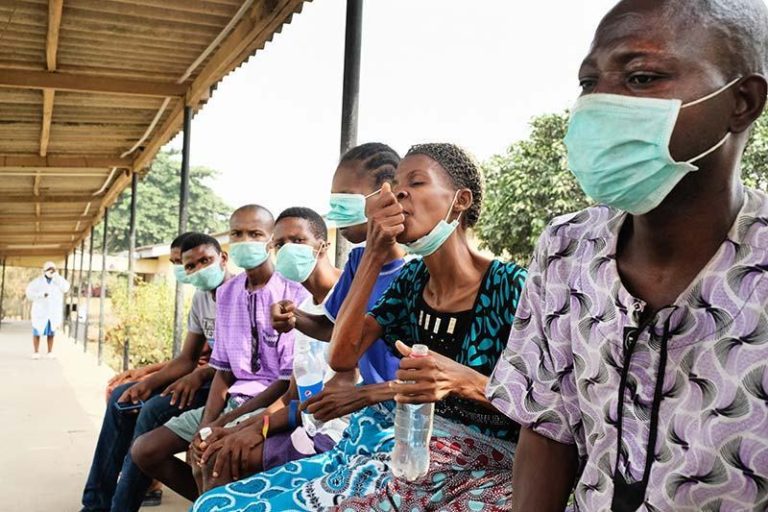
Tuberculosis, caused by bacteria (Mycobacterium tuberculosis) and most often affecting the lungs, is spread through the air when people with lung TB cough, sneeze or spit.

According to the World Health Organisation, about 10 million people fall ill with tuberculosis (TB) yearly. 

WHO noted that despite being a preventable and curable disease, 1.5 million people die from TB each year – making it the world’s top infectious killer.

Speaking on this year’s World TB Day, the commissioner said the commemoration with the theme, ‘Yes, We Can End TB,’ and the slogan, ‘No Gree For TB, Check Am O,’  was a follow-up call to the commitment made by global leaders at the 2020 United Nations high-level meeting on TB in New York.

This commitment, she said, was aimed at ending the TB epidemic by 2030 through supporting increased access to prevention, diagnosis, and treatment, sustainable financing, research, and ending stigma and discrimination against people with TB.

She also said TB case detection in the state had increased from 21,557 cases in 2022 to 32,297 in 2023, representing a percentage increase of 49.8 per cent.

According to her, the case detection rate in the state represented 159 per cent of the state TB case detection target.

She further stressed that the development showed a significant improvement in case finding compared to 53 per cent obtained in 2022, attributing this to the improved support the state TB programme received from the state government and the development partners.

While also highlighting that the global efforts to combat TB had saved about 66 million lives since 2000, Kaltume-Ahmed, said COVID-19 pandemic significantly affected the success rate.

Punish DIA officers who detained, tortured FirstNews Editor, journalists urge Tinubu

0

NIGERIAN media community, comprising the Nigerian Union of Journalists (NUJ), the International Press Institute (IPI) and the Nigerian Guild of Editors (NGE) have called on President Bola Tinubu to punish officers of the Defence Intelligence Agency (DIA) who were behind the detention and torture of FirstNews Editor, Segun Olatunji.

They made the call at a press briefing on Thursday, March 28, in Abuja, while announcing Olatunji’s release, and condemning the military’s action.

“If officers in a military institution like DIA could hack a journalist’s telephone, mishandle his wife, abduct him, detain him secretly, and disobey senior officials of the Federal Government, then our democracy cannot be said to be safe. Although our colleague has now been released, we are calling on President Tinubu to ensure that these officers are punished for their bad behaviour.

“By all standards, the actions of the DIA, General Musa and Major General Undiandeye are against the provisions of Nigeria’s 1999 Constitution and other international instruments to which Nigeria is a signatory – which forbid the detention of any citizen or resident beyond 48 hours, except with a valid court order,” the IPI president Musikiliu Mojeed said on behalf of the group.

IPI, NGE, NUJ press conference
IPI, NGE, NUJ at the press conference

He described the actions of the DIA as a direct attack on press freedom and urged journalists to remain united and continue to support one another.

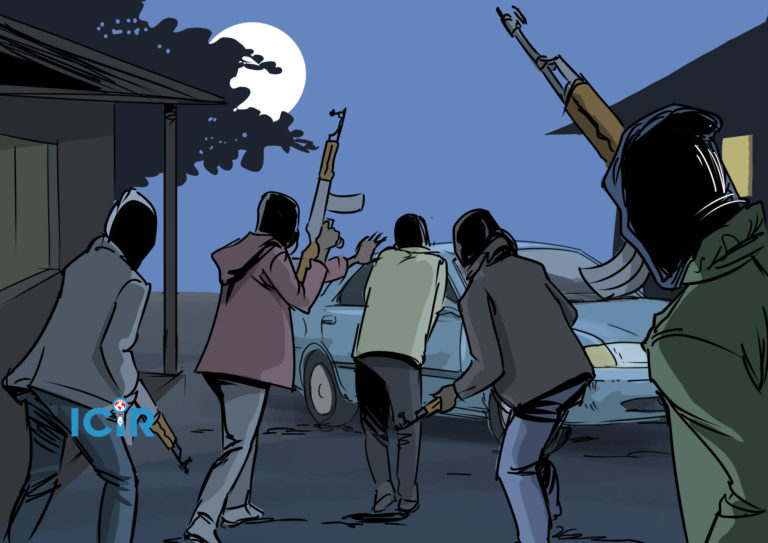
Olatunji was abducted from his home in Lagos by armed men in military uniform on Friday, March 15 and his whereabouts were kept secret for over a week.

His detention is linked to a report “Revealed: Defence Chief running office like family business – Public Interest Lawyers,” which was published by his organisation.

The IPI, NGE and NUJ representatives, Mojeed, Iyobosa Uwugiaren and Chris Isiguzo, disclosed that efforts to find out his location and secure his release initially proved abortive, despite the involvement of top government officials including the National Security Adviser (NSA) Nuhu Ribadu and the Minister for Information and National Orientation Agency Mohammed Idris Malagi.

“For days, the leaderships of the IPI, the NGE and the NUJ frantically searched for Mr Olatunji. We interacted with the presidency, the Nigeria Police Force (Lagos and Abuja), the Nigerian Army, the Defence Intelligence Agency, the Ministry of Interior, the Defence Headquarters, the Office of the National Security Adviser, the Ministry of Information and National Orientation, and the State Security Services (SSS).

“Other security agencies were also contacted. But all the efforts failed until last night. The military claimed the journalist was not in their custody. They lied to us and top government officials whose interventions we sought,” Mojeed stated.

On Wednesday, March 27, IPI Nigeria, in a statement, called on Tinubu to direct the military hierarchy to immediately release the abducted journalist or charge him to court if he was being accused of any offence.

Olatunji was released Thursday morning as the DIA officials handed him over to members of the media community by the roadside in Abuja.

He was present at the briefing and shared his ordeal with journalists.

My life not safe – Olatunji

Narrating how he was abducted in Lagos and flown to Abuja by men in military uniforms, first believed to be non-state actors, Olatunji expressed fear for his life.

“Given the series of events, I want to say that my life is not safe. Because they know my house. They could have arrested me in my home town on March 8.

“I was there for an ICT programme by my senator, and they would have arrested me there because someone there told me how they had been trailing me, how I entered the NUJ bus at my home town, how I alighted at Abeokuta and the particular time I alighted,” he said.

He noted that the soldiers had arrived in three vehicles at his Lagos residence after apprehending his wife from her shop and forcing her to lead them to him.

Olatunji said he was blindfolded throughout the flight to Abuja and kept in a cell where his hands and feet were tightly cuffed.

He and his wife’s phones were confiscated, and he was interrogated while being detained by the DIA.

Olatunji is one of many journalists who have been attacked, especially by state actors in Nigeria.

The ICIR reported that at least 39 journalists were harassed by state and non-state actors in 2023 alone.

FirstNews Editor freed hours after IPI indicted military of his abduction

1

FIRSTNEWS editor, Segun Olatunji, has been released by the Defence Intelligence Agency (DIA) hours after the Nigerian chapter of the International Press Institute (IPI) accused the military of his abduction.

According to reports, Olatunji was released to the General Secretary of the Nigerian Guild of Editors, Iyobosa Uwugiaren and the Deputy Editor of The Nation Newspapers, Yomi Odunuga, under a bridge in Asokoro, Abuja, on Thursday, March 28.

On Wednesday, March 27, The ICIR reported that the IPI claimed that the missing editor was in the custody of the DIA.


Read Also:

The IPI later quoted the Minister of Information, Mohammed Idris, as confirming that the missing journalist is in the custody of the military.

Idris confirmed that top military officers revealed that their men arrested and detained Olatunji, who had been missing for 12 days while addressing officials of the Nigerian Guild of Editors, IPI and Nigerian Union of Journalists (NUJ) on Wednesday, March 27.

The Minister stated that the DIA had reportedly committed to releasing the journalist the following day. 

The ICIR reported that the IPI, in a statement jointly signed by its Nigerian president, Mojeed Muskilu, and the institute’s legal adviser, Tobi Soniyi, called on President Bola Tinubu to direct the military hierarchy to immediately release the journalist or charge him to court if he has committed any offence.

According to the IPI, the rule of law demands that an accused person is allowed to defend himself in a court of law within a reasonable time.

The IPI said multiple checks revealed that Olatunji was in the DIA’s custody, an agency that reports directly to the Chief of Defence Staff (CDS) Christopher Musa.

The IPI noted that Olatunji’s abduction had triggered speculations among journalists and human rights activists around the world that the Nigerian military might be keeping some vital information away from the public concerning the journalist’s safety.

It urged the international community to pay attention to the unjust detention of Olatunji by the Nigerian military.

Olatunji was abducted from his home in Lagos by armed men in military uniform.

According to reports, armed men in two unmarked vans arrived at his home in Lagos on March 15. 

The men, two of whom dressed in military camouflage, introduced themselves as officers of the Nigerian Army and forced Olatunji to go with them. They declined to tell his wife, who witnessed the abduction, where he was being taken.

The abductors did not leave any information behind as to where they were taking him or what his offence was. He was kept incommunicado until he was release.

The management of FirstNews suspected that the journalist’s disappearance was connected to a series of reports his organisation had recently published. 

Olatunji’s experience is just one example of the many press attacks in Nigeria.

Journalists in the country often face harassment, intimidation, and violence for their work.

The lack of safety and security for journalists in Nigeria is a significant concern for the freedom of the press in the country.