KADUNA State Governor Uba Sani has said his government could not pay salaries due to the debt he inherited from his predecessors.
He stated this on Saturday, March 30, claiming he inherited about $587 million from his predecessor.
Sani also said N85 billion and 115 contract liabilities were inherited from the previous administration, making it difficult to pay workers their salaries.
He, however, noted that his administration was working to find a way around the situation.
“Despite the huge debt burden of $587m, N85bn, and 115 contractual liabilities sadly inherited from the previous administration, we remain resolute in steering Kaduna State towards progress and sustainable development. We have conducted a thorough assessment of our situation and are sharpening our focus accordingly.
“It gladdened my heart to inform you that despite the huge inherited debt on the state to date, we have not borrowed a single kobo,” Sani said.
He also said the devaluation of the naira was making it more difficult to pay back the debt.
He noted that a huge chunk of the federal allocation was being channelled towards debt servicing, leaving the state with inadequate funds to pay salaries.
In 2021, former governor of the state Nasir El-Rufai disengaged about 4,000 workers, saying he was not elected just to pay salaries.
El-Rufai said the high wage bill overstretched the state’s finances, and federal allocations were not being increased.
“In the last six months, personnel costs have accounted for between 84.97 per cent and 96.63 per cent of FAAC transfers received by the Kaduna State government. In March 2021, Kaduna State had only N321 million left after settling personnel costs,” El-Rufai had said.
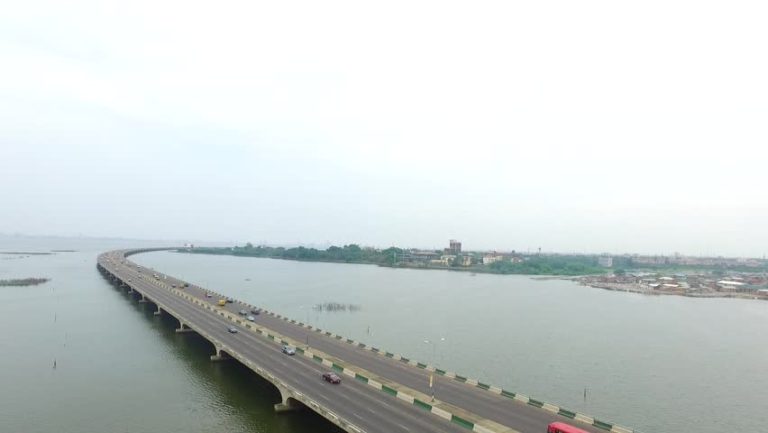
MINISTER of Works David Umahi has said the Third Mainland Bridge in Lagos State would be re-opened for public use on Thursday, April 4.
He said this on Saturday, March 30, while inspecting projects in the state along with some lawmakers.
“In the next seven days, the bridge will be opened to ease traffic. Officially, President Bola Tinubu will be commissioning the rehabilitated road when he will be inaugurating the construction of the coastal road,” the minister said.
Lagos State Commissioner for Transportation Oluwaseun Osiyemi also disclosed that the bridge would be re-opened by Thursday via a post on his official X handle.
“Dear Lagos residents, We’re pleased to share that the Third Mainland Bridge will resume full operations on April 4, 2024, following extensive repairs. We thank you for your cooperation and patience,” he noted.
The bridge was closed in November 2023 following an announcement by the Federal Ministry of Works that comprehensive repairs were to be carried out on it.
It was opened briefly between December 21 and January 9 to allow for ease of mobility due to the traffic often associated with the festive period.
“The closure is part of the ongoing work that started in November 2023, focusing on fixing the ramps, and now, the remaining parts of the bridge will also be repaired,” Osiyemi had said in January.
Measures have been taken to lessen the transport challenges resulting from the closure.
The repairs on the bridge are being carried out by China Civil Engineering Construction Corporation (CCECC). The contract was awarded for N21 billion, according to Umahi.
The minister, however, said there was a need for additional costs to cover asphalt, solar light, and CCTV installations, among others.
There had been reports that the bridge was shaking. However, The ICIRreported that the Ministry of Works described them as rumours and urged road users to ignore them.
THE Rivers State House of Assembly has accused the state governor, Siminalayi Fubara, of dishonesty and threatened to resume impeachment proceedings against him.
The House also accused the governor of breaching the Constitution.
The Speaker of the House, Martin Amaewhule, announced this on Saturday, March 30, in Port Harcourt, the state capital.
Amaewhule was accompanied to the briefing by 26 members of the Assembly.
It is immediately unclear if all 26 lawmakers are among the 27 members of the state Assembly who defected from the Peoples Democratic Party (PDP) on December 11, 2023.
The state Assembly has 32 members. Five have been loyal to the governor.
The aggrieved lawmakers accused Fubara of not keeping his end of the bargain regarding the Presidential Peace Accord.
They said they had suspended their earlier notice of Fubara’s impeachment because they respected President Bola Tinubu and hoped the governor would have a change of heart.
They insisted that if the governor kept up what they called “constant Constitutional breaches,” they would reopen the impeachment process against him.
“Their new strategy is to use another arm of government, lobbyists, attack dogs and the mainstream and social media to bring the House to disrepute and consummate their agenda. In this regard, various individuals, groups, and media mercenaries have been recruited to actualise their objectives.
“The latest of the new groups recruited against the 10th Assembly is the Former Rivers State PDP Presidential Campaign Council. In a press conference on the 26th of March 2024, signed by Abiye Sekibo, this group inferred that the House is an illegal and unconstitutional Assembly,” the lawmakers stated.
They accused the group of lying against the Federal Capital Territory (FCT) Minister, Nyesome Wike, who, according to them, worked tirelessly for the victory of President Tinubu and Fubara.
They claimed that Rivers State remained the only state without an Appropriation Law and that the governor had abandoned the state’s laws.
“They must not forget that the Rivers State House of Assembly has the mandate of the people and that we swore an oath of allegiance to the Constitution to do the needful, including the Impeachment of the Governor as a last resort. So, if it becomes a last resort, in accordance with the law, we will not hesitate to do so because no individual is bigger than Rivers State, including the governor,” the members threatened.
They assured the people of the state of their commitment to stand up for them and urged the people to remain prayerful against what they described as tyranny and dictatorship in the state.
The ICIRreported on Thursday, January 25, that a court in Abuja remanded some Fubara’s loyalists over the vandalisation of the State House of Assembly complex.
Five supporters of the governor were charged before a judge of the FHC.
They were accused of being involved in the October explosion that destroyed the Assembly building.
The ICIR reported that Fubara claimed police and military officers shot at him on his way to the state House of Assembly in the early hours of Monday, October 30.
Fire engulfed the complex on Sunday, October 29, around 10 p.m.
It was subsequently quenched by the Fire Service and security agents, who prevented it from consuming the entire building.
The crises followed reports of the House’s impending impeachment of the governor.
FORMER Kwara State deputy governor, Peter Kisira, is dead.
He died in the early hours of Saturday, March 30.
He was 74.
The announcement of his passing was contained in a statement signed by Rafiu Ajakaiye the chief press secretary to the state Governor AbdulRahman AbdulRazaq.
According to the statement, Governor Abdulrazaq expressed sadness at his death and extended his condolences to the deceased family.
He urged Kisara’s family to take comfort in his legacies and role in public service.
“Kwara State Governor, AbdulRaman AbdulRazaq, is sad to receive reports of the death of the former Deputy Governor of the state, Elder Peter Kisira, in the early hours of today, Saturday.
“On behalf of the people and government of the state, Governor AbdulRazaq sends his heartfelt condolences to the people of Baruten and the family of Elder Kisira, whom he urges to take solace in his fine legacies as a public servant and a bureaucrat who rose to the rank of permanent secretary in the state’s civil service,” the statement partly read.
Kisara was deputy governor to the immediate past governor of the state, Abdulfattah Ahmed, between 2011 and 2019.
His former principal, Ahmed, was arraigned by the Economic and Financial Crimes Commission (EFCC) over allegations of mismanaging public funds to the tune of N10 billion during his time as governor.
The ICIRreported that he had spent days in the EFCC custody before his arraignment.
Another former deputy governor of Kwara State, Simon Sayomi, died in December 2020.
Sayomi had died after a brief illness at the age of 95.
He served as deputy governor between 1999 and 2003.
STAKEHOLDERS have identified red flags in online and related businesses and suggested ways to avoid falling victim.
Speaking on an X space by The ICIR on Friday, March 29, which focussed on “Investment Scam: Red Flags to Look Out for Before Investing in Business”, stakeholders reiterated the need for adequate enlightenment and checks at appropriate regulatory institutions before investing in any business. Listen to it here.
One of the speakers, a spokesperson of the Economic andFinancial Crime Control, Dele Oyewale, provided insights on identifying fraudulent investment companies.
He noted that the investor must carry out sufficient research before investing.
“Do due diligence about the profile of the company and people that have invested and check if they are fully registered with regulatory agencies like EFCC, CBN, ICPC, among others. Failure of this is responsible for why people fall victims”, he said.
Oyewale explained that the EFCC often enlightened Nigerians, investigated cases, recovered funds and ensured that those found guilty were charged.
Another speaker, the deputy director of Public Enlightenment Division, Independent Corrupt Practices and Other Related Offences Commission, Oluwasina Babasola, shared some red flags to look out for to avoid falling victim to investment scams.
“When you’re offered a high return on the normal thing you’re doing, especially in this time where the economy is not favourable, be on alert. Do not succumb to pressure from family members; rather, seek advice.
“Also, do not go into any business that is done in secrecy and shows a lack of transparency,” he noted.
He added that another factor that makes people fall victim to investment scams is the religious factor, where some religious leaders use their platform to promote false businesses. He emphasised the need for media organisations to educate the public enough and call out companies involved in these scams.
A journalist with The ICIR, Mustapha Usman, who had investigated companies that defrauded people through investments, said some victims revealed that close allies, particularly family members, introduced them to the business.
Advising the public during the session, the speakers said that people who fall victim to investment scams should ensure they write a petition to the EFCC or any other regulatory agency, stating how the investment was made, the people involved, and proof of payment.
They further advised that people should be adequately enlightened before investing while calling on finance journalists to give insights on investment and how to go into it.
One of the most recent investigations by The ICIR shows that a logistics company that operates in Lagos and Abuja, Greywolf Logistics, which partners with Fespan Travels and Tours, subjected no fewer than 72 investors to awful experiences through its investment platform.
The investigation revealed that the companies are not registered with the Securities and Exchange Commission (SEC), a government agency mandated to regulate and develop the Nigerian capital market, but only registered with the Corporate Affairs Commission (CAC) in 2022.
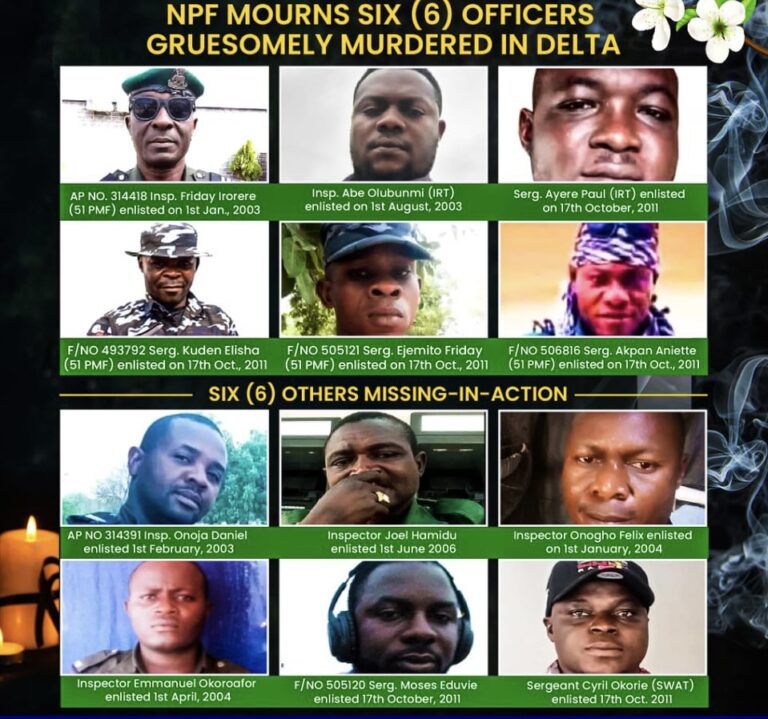
THE Nigeria Police Force (NPF) has arrested eight suspects over the killing of six policemen in Ughelli, Delta State on Friday, February 24.
The slain officers were on a mission to rescue their colleagues who were earlier ambushed at the exact location where they were attacked and killed in the state.
Six of the officers on rescue mission were killed, while six others were declared missing.
The Force spokesperson, Olumuyiwa Adejobi, announced the suspects’ arrest on Saturday, March 30, in a statement.
According to the police, the arrest came after a thorough investigation.
“Five suspects were initially arrested shortly after the incident, and an additional three suspects have been apprehended, at different locations, following the statements and cooperation of the initially arrested suspects, bringing the total number of arrests to eight.
“The arrested suspects are currently in custody and are assisting with the ongoing investigation,” Adejobi stated.
The NPF said it was committed to ensuring that all those responsible for the attack are brought to justice swiftly.
The NPF further assured that the suspects would soon have their day in court, with credible evidence, once investigations are concluded.
It noted that it was deeply saddened by the heinous act of violence against its officers who were diligently performing their duty to protect and serve the community.
The Force sympathised with the families of the fallen officers.
The ICIR reported on March 23 that the NPF expressed sadness over the gruesome murder of the six officers while investigating the disappearance of three of their colleagues in the Ohoro Forest, Delta State.
The police confirmed that six other officers who participated in the patrol were missing in action.
A statement by Adejobi on March 23 noted that the “brave officers tragically fell victim to a cowardly ambush by armed assailants while undertaking a mission to investigate the disappearance and rescue of three of their colleagues in the Ohoro Forest, Delta State.”
Adejobi also noted that the bodies of six of the slain officers were recovered after a fierce search conducted by a combined team of police officers and other security outfits.
He further said the Inspector General of Police, Kayode Egbetokun, had mandated the expedited processing and payment of all entitlements due to the families of the fallen officers, in a bid to alleviate their pains.
Meanwhile, the Anambra State Police Command said it had raided some camps belonging to insurgents who attacked some police formations in the state.
This was disclosed in a statement issued by the command’s spokesman, Tochukwu Ikenga, on Saturday.
Ikenga added that the police-led joint security force carried out the raid on Friday, March 29, as directed by the state Commissioner of Police, Aderemi Adeoye.
He added that operatives of the command recovered six explosive devices during the raid.
SOCIO-ECONOMIC Rights Accountability Project (SERAP) has urged President Bola Tinubu to intervene in the intimidation of a journalist and founder of the Foundation for Investigative Journalism (FIJ) Fisayo Soyombo, by the Nigerian Police Force (NPF).
In a statement via the organisation’s official X handle on Friday, March 29, SERAP also demanded an end to the harassment of a member of FIJ’s Board of Trustees Bukky Shonibare and threatened legal action if the situation persists.
“We urge President Tinubu to immediately direct the Inspector-General of Police to stop harassing and intimidating journalist ‘Fisayo Soyombo simply for doing his job. The police have reportedly declared him wanted apparently to silence him.
“Authorities must immediately stop harassing Soyombo and members of his Foundation for Investigative Journalism (FIJ) and allow him and his group to carry out their legitimate work. We’ll take appropriate legal action if the threat, harassment and intimidation of ‘Fisayo Soyombo and Bukky Shonibare are not immediately stopped,” the statement partly read.
On Tuesday, March 26, FIJ posted on X that Shonibare had been invited by the police for questioning on issues around cybercrime.
According to FIJ, the invitation might be in connection with an investigation on the role of the Nigeria Customs Service (NCS) in smuggling activities within the country.
By Friday, the media organisation reported that Shonibare visited the Nigeria Police Force National Cybercrime Centre (NPF-NCCC) and was interrogated on issues around FIJ’s operations.
Shonibare, who was accompanied by the FIJ’s legal counsel, said she was allowed to return home after making a statement but was asked to return to the police with Soyonbo.
FIJ had published a report alleging that smugglers could bring in all sorts of goods into Nigeria as long as they bribe Customs officials.
He alleged that officials of the NCS only publish names of smugglers who refuse to bribe them.
The ICIR contacted the Federal Public Relations Officer (FPRO) on the issue, but he has yet to respond to a message sent to his phone number.
Many journalists have been harassed, especially by state actors in Nigeria. The ICIRreported that at least 39 journalists were harassed by state and non-state actors in 2023 alone.
IN the wake of Boko Haram menace in Nigeria, especially in the Northeast, many victims were displaced from their homes. Different camps were created by governments, non-governmental organisations and some concerned individuals, where internally displaced persons were accommodated. In this report, Muhammad Abubakar Tahir writes about how Boko Haram displaced persons recovered their losses after just 10 years of venturing into fishing and other businesses in Jigawa state.
Ahmadu Keya, an Internally Displaced Person (IDP) from Doron-Baga in Borno state, said he begged for what to feed his family for a while after they arrived at a makeshift shelter at Hadeja in Jigawa state following their displacement by Boko Haram insurgents from Baga in Borno state.
Ahmadu Keya, an Internally Displaced Person (IDP) from Doron-Baga in Borno State.
Keya said before the attack in 2014 he was an established in fish farming at Doran Baga. Besides the fish business, he engaged in wet and dry season farming of rice, beans, wheat and other vegetables.
He added that while he was at Doron Baga he made supplies to his numerous customers across the southern part of the country and Abuja, the Federal Capital Territory. So, life, for them was good.
That was until a devastating attack on Baga by Boko Haram insurgents that left scores dead or wounded. Keya and others were lucky to escape the bloody attack. He said most of them (IDPs) came to Hadeja without anything, having been hurriedly sent packing from their homes by the insurgents. When they arrived, they did not even have shelter and other amenities.
A small camp where remaining IDPs live with their wives
However, in just 10 years, unlike the story of many IDPs who suffered a similar fate and are scattered in camps across Nigeria, Keya’s story, along with that of some others who fled from Borno to Hadeja, has dramatically changed.
“Many members of our group who were into the fish business in Hadeja had their own houses, cars and several plots of land as the fish value chain provided job opportunities for many people,” Keya reminisced.
“The people who got opportunities across the value chain include among others people who buy from fishermen, those who dry the fish, another set of buyers engaged in the sale to other parts of Nigeria and so on,” he continued.
Corroborating this position, Haruna Ahmed Gaidam, popularly known in Hadeja Fish Market as Kawu Haruna, who is also an IDP from Malanfatori Abadam LGA, Borno state, said he has spent about 12 years in Hadeija. He was among a few others who first came to survey places for the relocation of a section of the Baga fish market due to the then persistent attacks by insurgents and they found Hadeija to be the most suitable place.
According to him, despite initial relocation challenges, his business has been thriving and he has developed a good rapport with key stakeholders in the area.
“The Hadeija residents have been very hospitable to us which has led to several marriage relationships where our members own properties in the area,” he said.
Contrary to the position of some IDPs on relocation back to Borno state, Kawu Haruna insists on staying in Hadeija rather than going back to Borno state.
He, therefore, urged the Jigawa State government to explore better ways of regulating the market and provide additional infrastructure such as security lights and drainages at the market to strengthen security and prevent loss occasioned by flooding during the rainy season. He further appealed to the state government and other stakeholders to caution security agencies over arbitrary arrests and unnecessary interference at the market: instead. Such arrests and interrogations, he said, should be through the market leadership.
Haruna Ahmed Gaidam, popularly known in Hadeja Fish Market as Kawu Haruna
The chairman of the Association of Fish Marketers at the Hadeija Fish Market, Haruna Shuaibu, described the influx of the IDPs as a blessing and a good development.
He said there were no serious challenges at the market due to the influx, stressing that the insurgency and subsequent arrival of IDPs from Borno and Yobe states have brought more buyers across the country since Maiduguri markets are not accessible to them (buyers).
“We have profiled the IDPs who were into the fish business according to their local governments and communities. As a union, we have established a committee that would verify individuals before they are allowed to practice in the market.
“We have people from 12 local governments of Borno and Yobe states who are now doing business in Hadeja Fish Market. Before the arrival of the IDPs, the market had over 3,000 members. At the moment, I don’t know the exact number of members in our register.
“What I know is that there are a lot of people doing different businesses in our market. For instance, some were selling empty cartons for fish packaging, some were just agents arranging vehicles to convey the fish to different places, others are mechanics and so on,’’ Shuaibu said.
He commended some interventions earlier made to the association and also appreciated the government’s plan to build a new fish market in Hadeija and urged it to encourage people to invest in the area of processing and packaging of fish products.
Some of the IDPs during their fish business in Hadejia
Another IDP in the market from Gashua, Yobe State, Abubakar Labaran, said the Boko Haram crisis seriously affected his community, which forced him to relocate to Hadeja in 2014 and now says that he has settled and established a family there and become successful in the sale of engine oil and other petroleum products.
Another IDP, Malam Salisu Zahiri, from Doro Local Government Area in Borno State, an auto mechanic who has spent over 10 years in Hadeja, is so well established that he has 12 employees working for him.
However, despite reasonable daily earnings from his business, he also appealed for additional support from the government on his business such as access to credits to help his business grow even bigger
Also speaking to our reporter, Malam Aba-Borr Baga said he relocated to Hadeja from Baga in Borno State due to the Boko Haram crises over 10 years ago. He said he has been able to sustain his family of two wives and 19 children as an auto mechanic, adding that he also has eight apprentices under him.
He explained that many people from Baga moved to Hadeja due to the crises.
smoked fish
“We have now naturalized in the area; personally, I have married four of my daughters here in Hadeja and our younger children were able to attend both Western and Islamic education,’’ he said.
Unlike others who say they are now settled in Hadeja and would never return to Borno State, Baga says that he wants to go back, in spite of the relative prosperity he now enjoys. He said most of the IDPs from Baga who reside in Hadeja were his friends and neighbours there before their displacement and that “they are emotionally attached to Borno State.”
He added that many of them went back to Borno State during the 2023 general elections to exercise their franchise as they were registered to vote there.
“This indicates our attachment to our home state; we want to return to our original habitat, hence our appeal for the intervention of government and other stakeholders on this to help us return home.”
In November 2021, the Borno State government said IDPs will not be forced to relocate to their ancestral homes, noting that only those who have shown interest will be returned. The governor also said the majority of the IDPs were willing to be relocated, adding that they would be supported with cash and means of livelihood. Governor Babagana Zulum of Borno State has approved the construction of 1,000 housing units for the resettlement of displaced people of Darajamal and Mayanti communities in Bama Local Government Area of the state.
However, it is not every IDP in Hadeja who has hit gold. Malam Sani Hamisu, an IDP, while speaking to our reporter said he was a fish merchant trading from Hadeja to some parts of Niger Republic but he lost the capital for the business.
Hamisu added that he later went into the transportation of the fish to Niger Republic and, again, harsh economic conditions frustrated his business. He is considering returning home.
According to Hamisu, some of the friends (the IDPs) who stayed at Yobe State were receiving incentives from the state government and they support those in Jigawa with food they receive from the government.
Alhaji Sulaiman, another IDP from Malamfatori Abdan LGA, said he came to Hadejia after his community was attacked by Boko Haram in 2014.
“I was displaced with members of my family where I had been living with them in Maiduguri. Initially, we lived in a displaced persons camp, but subsequently, I rented a house for my family and paid my children’s school fees because we could not allow our children to miss a good education. We are now living in a government-owned market and getting our daily bread, as well as paying little revenue to officials of the market.
While speaking on the issue, the Chairman, ‘Hadeija ina Mafita’ a community development association, Isah Billami, said the IDPs have enhanced and strengthened businesses and other economic activities in Hadeja in addition to bolstering the population of the area. He said besides economic benefits to the area, their presence has adulterated some moral values of the area due to some cultural differences.
Front view of Hadejia IDP Camp which was closed as of now
Billami added that some of the IDPs in Hadeija brought a strange, alien and distasteful character to some innocent people, especially youth in the area, those alien and distasteful characteristics include rising incidents of gays in the community, drug abuse and proliferation of prostitutes dens. These led to high incidents of thefts and other criminal activities which devastated the moral character of so many youths in the area. Considering the vulnerabilities of these IDPs so many people especially men explore their vulnerabilities and engage their girls mostly underage into prostitution.
while commending efforts of security agencies on cleansing the IDP camps through the arrest of drug abuse dens and houses used for luring youth into immoral acts, Billami said the economic benefits of their presence outweigh the negative effects. He further explained that they enhance economic activities in the area through the fish business most fish merchants would also buy grains and other commodities.
On increasing criminality activities due to the influx of IDPs, Kawu Haruna among Camp officials, added that the leadership of the IDPs were collaborating with relevant security agencies to weed out bad eggs at the IDP camp in Hadeja. Stressing that it was very displeasing how bad some of the IDPs were, but still, the bad eggs among the IDPs were still very minor.
A Conflict and Security analyst Yahuza Getso gave his perspective on how IDPs could have made it in business business within a decade of their displacement.
“Their activities had significantly strengthened businesses and brought many direct and indirect employment. Further, their coming has fostered good relationships and marriages between them (IDPs) and Hadeja residents. Several IDPs own stores in the market, some now own houses and cars. But, as would be expected, some of them are still struggling to put body and soul together.
He said the government should encourage the IDPs who showed interest to return to their state, most of whom were not actively engaged in their former businesses.
According to him, the presence of IDPs from Borno and Yobe states is a booster to Hadeja Fish Market, which is directly linked to the general economic development of the area.
Getso noted that the rising cases of some social vices being experienced in Hadeja is not peculiar to the area alone and it has no link with the presence of IDPs in the area. He, therefore, urged the government to step up efforts to address the identified challenges.
When contacted DSP Shiisu Lawal Adam, Police Public Relations Officer (PPRO) in Jigawa State Command, said the state command has not received reports of criminal activity allegedly perpetrated by any IDP. He further explained that the IDPs were hosted by traditional leaders of the community and such leaders did not file reports against them. He, however, urged the IDPs to maintain good character and morals to become ambassadors for their state.
Efforts to speak to Abdulkadir Bala T.O Chairman, Hadeija LG Council were not successful as he was said to have travelled out of his constituency when the reporter went calling. Both the Vice-chairman and Secretary of the council said they were not allowed to speak to the press over the issue unless they received direction from the Chairman.
Between 2014 and 2015, Boko Haram did a lot of damage to Doron Baga, which is an extension of Baga, a popular town known for its fishing business. Amnesty International describes these attacks as the “largest and most destructive.” The terrorist group attacked Doron Baga and its neighbouring town, Baga, simultaneously, leaving behind about 2,000 people dead and over 3,700 structures damaged or totally destroyed.
Since the beginning of Nigeria’s conflict with the Islamist armed group Boko Haram in 2009, more than 2.2 million people have been displaced in the country’s northeast according to Human Rights Watch, Over 25,000 people in Nigeria are registered as missing by the International Committee of the Red Cross (ICRC) as of August 2022.
In areas where humanitarian access is restricted by insecurity, IDPs are not able to receive aid, which increases their vulnerability, including food insecurity, and lack of access to health and other basic services. This also exposes them to protection risks, including gender-based violence. Findings by our reporter revealed that the IDPs in Hadejia have access to health facilities, both Western and Islamic education and other social amenities With a minor risk of gender-based violence.
*This report republished from WikkiTimes was done with the support of the International Centre for Investigative Reporting, under its Promoting Democratic Governance in Nigeria Project.
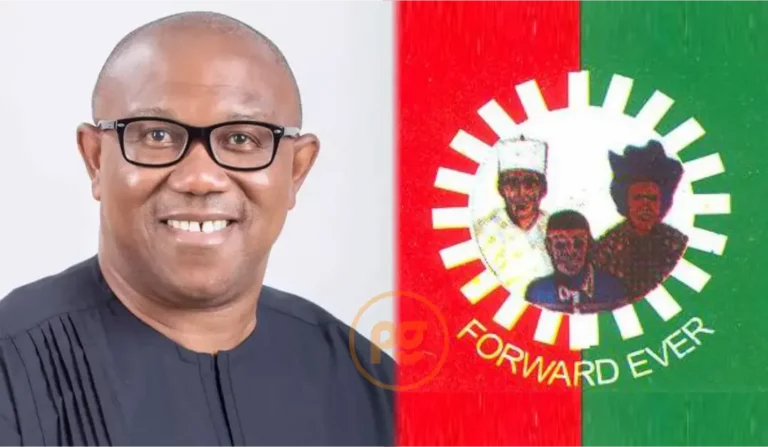
The Labour Party (LP) presidential candidate in the 2023 general election, Peter Obi, has explained the reason he was not at the party’s convention held in Nnewi, Anambra State, on Wednesday, March 27.
Obi gave the explanation while addressing his supporters on X Space on Friday, March 29.
He said he missed the convention because the party leadership, led by Julius Abure, failed to consult widely with important party stakeholders before holding the convention.
In addition, Obi said he was more committed to creating a new Nigeria than a new Labour Party.
He emphasised the necessity of doing the right thing to save the party.
Besides, he reiterated the demand for an organisational structure to guide the ‘Obedient’ movement.
“It is the standard practice around the world where movements form themselves into blocs and are part of the political process,” he stated.
Two rival factions, headed by Abure and Lamidi Apapa, had been claiming leadership over the LP in the last year.
However, theCourt of Appeal, Abuja Division, on March 6, affirmed Abure as the party’s national chairman.
A Justice at the Federal Capital Territory High Court, Hamza Muazu, had 2023 granted an ex-parte order, ordering that Abure and two other national officers stop parading themselves as leaders of the party for allegedly forging national documents.
Delivering judgment in the appeal filed by Abure challenging the court’s decision, Hamman Barka, leading a three-member panel of justices of the Court of Appeal, held that Abure’s appeal had merit and was accordingly allowed.
The ICIRreported how Abure was re-elected as the party’s chairman on Wednesday, March 27.
The Nigerian Labour Congress (NLC) immediately opposed the convention and Abure’s re-emergence as the party’s leader.
Similarly, the party’s Board of Trustees (BoT) took overthe party’s leadership hours after the convention and described the convention as a charade.
THE One World Media (OWM) Awards has shortlisted successful entries for its 2024 awards.
This award by One World Media is an annual project which celebrates the best journalism and documentaries from across the global South in different categories.
The awards received over 500 entries from 117 countries of which successful candidates have been selected into 15 different categories.
Innovative Storytelling Award: Formerly the Digital Media Award, this category has a total of 10 shortlisted candidates. It recognises creative and innovative techniques and content that extends knowledge and understanding of the topic and engages with audiences. Entries should be using new technologies and platforms, such as TikTok, gaming, data, VR, AR, XR or AI.
Environmental Reporting Award:With a total of 10 candidates, this award category recognises impact and creativity in telling an environmental story. Entries should cover at least one of these areas: urban development, climate crisis, energy, environmental health, environmental justice, food, water, wildlife and zero waste and can be in any medium, including news, online, audio, print or film.
Feature Documentary Award:This category has eight successful candidates and it recognises impact and storytelling that is character-driven and creative. Entries must be more than 40 minutes long.
Freelance Journalist of the Year Award:This category was formerly the “International Journalist of the Year Award”. There are five candidates under this category and it is set to recognise consistent, impactful reporting that brings a story to audiences in a compelling way. Entrants can be working in any medium, including news, online, audio, print or film.
Correspondent of the Year Award:Formerly the International Journalist of the Year Award, this award recognises consistent, impactful reporting that brings a story to audiences in a compelling way. Entrants can be working in any medium, including news, online, audio, print or film.
News Award: This category recognises exclusive content or an investigation that led the news agenda. Entries can be online, broadcast or in print. It has 10 candidates.
New Voice Award: The Award category recognises impactful storytelling that brings a story to audiences in a compelling way. Entrants should be 32 years of age or under as of 16th February 2024 and can be working in any medium, including news, online, audio, print or film. There are 10 candidates under this category
Print Award:Theformer category ‘Popular Features’ has now merged with the Print Award and there are 10 candidates under this category. The Award recognises impact, exclusive content or new perspectives. Entries must be articles of 750 words or longer.
Podcast & Radio Award: With nine successful candidates, this category recognises impact, and stories that have a compelling narrative. Entries should be broadcast on radio or online.
Refugee Reporting Award: The Award recognises compelling stories that generate empathy, understanding and are reported on accurately and fairly. Entries can be in any medium, including news, online, audio, print or film. It had 10 candidates.
Short Documentary Award: This award category has 10 candidates and it recognises impact and storytelling that is character-driven and creative. Entries must be under 40 minutes.
Press Freedom Award:Formerlythe Special Award. This award category recognises outstanding reporting that informs the public, provides an outlet for local people’s voices, creates a space for critical information and holds those in power to account. It has 10 successful entries.
Student Award: This category is for media, produced by a student as part of a journalism or filmmaking course at a university or film school that deals with stories or topics in the global South. The award recognises creative and compelling storytelling. It has 10 successful entries.
Current Affairs Award: It was known as the Television Documentary Award and supported by the European Bank (for reconstruction and Development). It has 10 successful entries. The Award recognises impact, exclusive content and considered analysis of a current affairs issue. Entries can include a specific episode of a strand or a topical, news-led documentary.
Women’s Solutions Reporting Award:It is sponsored by the European Investment Bank and also has a total of 10 successful entries. The award recognises empowering stories of girls and women who successfully tackled challenges faced by women and society at large, such as women’s financial and economic inclusion, addressing the impact of the climate crisis, increasing access to education, healthcare or democracy. Entries can be in any medium, including news, online, audio, print or film.